




Abstract
The global leather market is worth more than $270 billion annually, and provides an important and accessible source of manufacturing exports for countries in the Global South. Leather is the source for a range of apparel items, including handbags, belts, shoes, wallets, gloves, and various other products, such as furniture, car seats, and luggage. Behind all leather goods is the tannery industry, with much of the raw materials processing located in the Global South (Lund-Thomsen, 2009, Journal of Business Ethics, vol. 90, p. 57). Unlike most synthetic fibers, which are derived from plastics and associated with the petrochemical industry, leather has the potential for a comparatively lighter footprint because it is based on natural and renewable materials not associated with the carbon emissions of fossil fuels. However, leather has suffered from various concerns, including animal rights and toxic effluents. It is ranked as the fourth most dangerous global industry to human health, with many tanneries in the Global South lacking basic protection for the workers and leaching toxic chromium into rivers (Green Cross and Pure Earth, 2016, World’s worst pollution problems: The toxics beneath our feet). This article explores the prospects for reducing the environmental footprint of tanneries in the Global South, focusing on the Sustainable Manufacturing and Environmental Pollution (SMEP) program, a series of projects in South Asia (SA) and Sub-Saharan Africa (SSA) that explore ways to reduce manufacturing pollution. The article lays out a series of technical and managerial interventions that would vastly reduce the negative impacts on human health and the natural environment.
Why Focus on Leather
The value of the global leather market was estimated at $271.21 billion in 2021 and has been steadily increasing over the past five years (Statista 2021). The Sustainable Manufacturing and Environmental Pollution (SMEP) program is a series of projects in South Asia (SA) and Sub-Saharan Africa (SSA) funded by the UK Government at ₤24.6 million designed to reduce pollution and promote the transition to a more circular production process. The SMEP approach focuses on reducing manufacturing waste at the source, rather than remediation or cleaning up products after they are discarded. SMEP identifies three key steps in the manufacturing process where interventions are needed: in substituting or removing harmful inputs; in improving process efficiency; and in developing by-product capture and treatment. The first step requires reducing input waste, including energy and materials. The second step involves upgrading technology and reducing waste through an examination of the entire process, including transport, inventory systems, and quality control. The last step includes examining ways to recycle or reuse waste products for reuse in the manufacturing process (PA Consulting, 2019, pp. 15–19). Leather was selected as an industry of interest for the program as it is the fourth most polluting industry in the world after used lead acid battery recycling, mining and ore processing, and lead smelting (Sustainable Manufacturing and Environmental Pollution Programme [SMEP], 2018, p. 11). It ranks among the top four industries in SSA based on the number of establishments and among the top 10 for export value according to the SMEP Baseline Report (Stockholm Environment Institute [SEI] and University of York, 2020, p. 23). It is also among the top five industries for export value in Bangladesh, Nepal, and Pakistan (pp. 55, 62). The baseline report highlights the lack of detailed historical data, or ongoing valid environmental monitoring data on industries in the two regions (p. 50). There are no objective in depth studies of environmental interventions, making assessment of current initiatives, such as the effectiveness of a series of common effluent treatment plants (CETPs) in the regions (p. 75). In the rest of this article, we provide a profile of the leather industry and then examine the challenges and opportunities for mitigating its environmental footprint in the two regions, informed by the SMEP projects.
Leather Production Shifts South
Leather remains a ubiquitous material source for apparel, luggage, and other goods, including luxury items around the globe. Yet, most consumers are unaware of where their leather comes from or the conditions of its production. Most leather is derived from cowhides and other animal skins. The leather industry (Leather Dictionary, 2021) estimates that while 75% of leather was used in shoes in 1950, by 2013, that ratio declined to 53.6%. Among the other major categories, leather for clothing took 14.4%, furniture leather took another 13%, car leather 10.7%, and approximately 8.3% went to other uses. As the industry has gradually shifted the Global South, concerns have increased around the labor and environmental conditions of production.
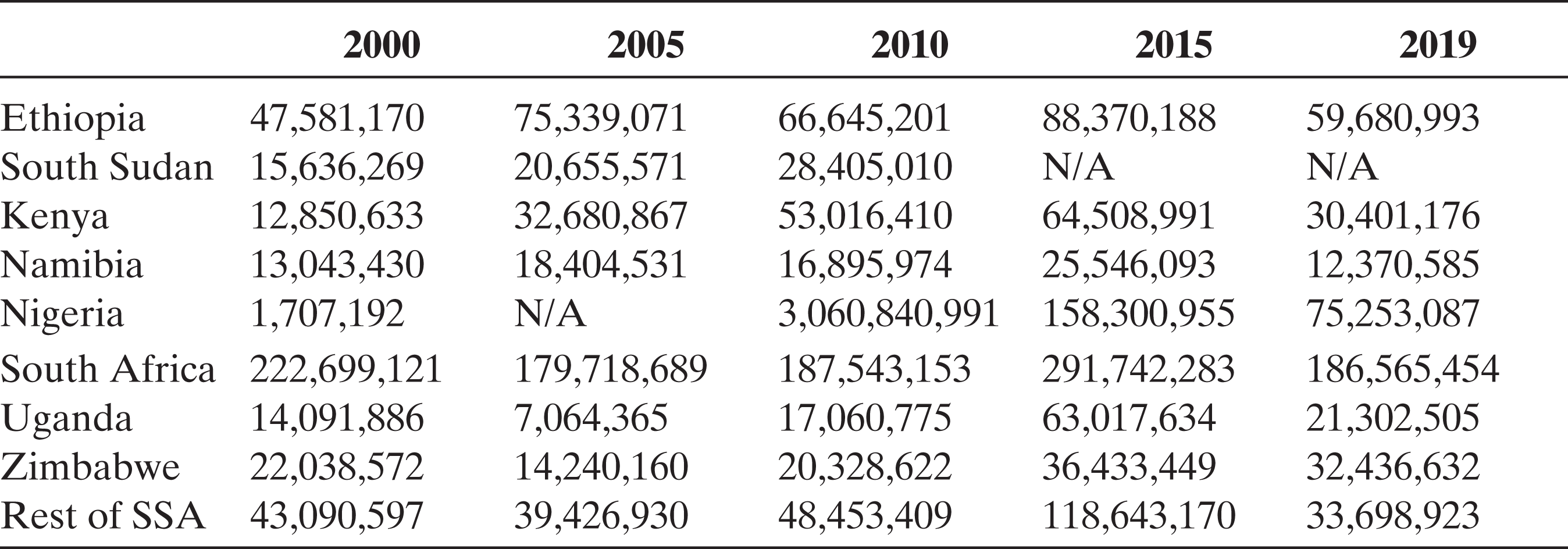
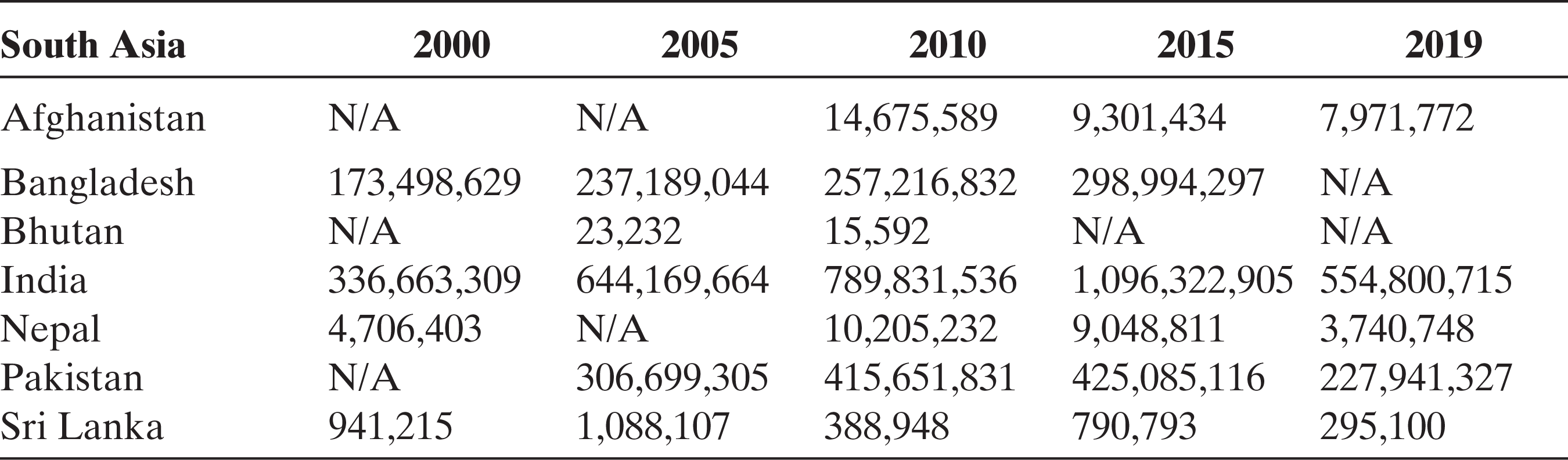
The global trade in leather and raw hides is dominated by countries such as China, Italy, the USA, and Brazil. In 2019, China and Italy were the main importers of raw hides and leather at 18% and 12%, respectively. In short, China and Italy depend heavily upon imports of raw materials from the Global South for their leather industries. In SSA and SA, India, Pakistan, South Africa, and Nigeria play important roles in the global trade of raw hides and leather (Conseil National du Cuir, 2021). Tables 2–3 highlight the changes in the value of raw hides and leather trade in the two focus regions over the last two decades (as recorded in the UN Comtrade Database in 2022).
The shift of raw leather production to the Global South has been accompanied by reports around the negative health and environmental consequences (Human Rights Watch, 2012). So far, there are no viable substitutes for leather. Animal rights concerns have led to the development of a plant-based leather substitute industry. Sources of these substitutes include plant fibers and recycled synthetic fibers such as polyester. Substitutes lack the economies of scale do not match the unique characteristics of leather product, such as firmness and longevity, so more R&D is needed to improve synthetic substitutes before this represents a threat to the leather market. Synthetics are also more expensive to produce. However, some industry analysts project rapid growth in the coming years for leather substitutes and report the adoption of such materials by leading auto manufacturers for upholstery leather seating (Infinium Global Research, 2021).
Environmental Challenges and Solutions in the Tannery Process
Tannery waste has serious environmental consequences for air, water, and soil, if untreated. These are reflected in the tannery production process. Rydin (2012) points to an array of chemicals that are used, including calcium hydroxide, sodium chloride, sodium sulphide, acids, carbonates, and sulphates, particularly chromium sulfate. Kokkinos and Zouboulis (2020) point to hazards throughout the production process. Without proper treatment, negative effects can be borne through three basic methods such as gaseous emissions, wastewater, and solid waste. Gaseous emissions are airborne particles and chemicals that come principally during the cutting and preparing of hides, as well as when workers handle chemical reagents. Large amounts of water are used in the soaking, liming, and de-liming processes to remove hair from the hide, which involves highly alkaline chemicals. Wastewater contains high levels of organic waste as the excess material is discarded. Solid waste is produced in copious quantities, including hair, grease, oils, fleshing, and trimming waste, all of which is labeled tannery “sludge.” Perhaps, the most important concern is the widespread technique of chrome tanning, which is used in 80–90% of all leather production, according to Oruko et al. (2020, p. 370). The same authors point out that just a medium-sized tannery can discharge over 300 million cubic meters of waste liquor and tanning sludge with high levels of chromium per day.
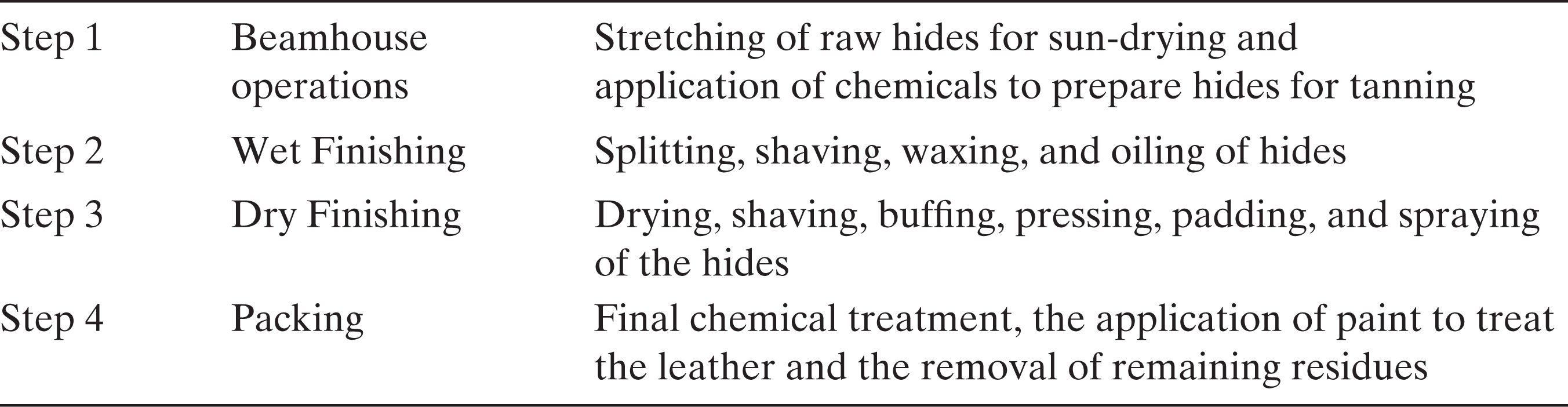
As demonstrated in Table 1, there are four basic steps to the tanning process, each of which creates its own environmental risks. The first is called beamhouse operations. In this step, the raw hides are stretched onto frames to dry in the sun. At this stage, chemical agents are used to preserve the hides and skins. The second stage is tanning, or converting the raw hides and skins into leather. This is accomplished through two stages. First, wet finishing, which includes “splitting, shaving, waxing, and oiling” the hide. This is followed by dry finishing, which is “drying, shaving, buffing, pressing, padding, and spraying” it further. The final stage is crust and finishing or “packing”, whereby workers may use final chemical treatment and paint to treat the leather, as well as cleaning the residue. Throughout the process, workers can be exposed to dust and over 40 chemicals and toxic or poisonous substance, including “chromate and bichromate salts, aniline, butyl acetate, ethanol, benzene, toluene, calcium salts, chlorine, surfactants salts, sodium sulfide, sulphuric acid, organic matters, and dyes” (Rabbani et al., 2021). We can add to this the final stage of waste treatment and recycling of tannery wastes.
Basic Steps in the Tanning Process
Both solid organic waste and liquid wastewater resulting from the above processes contain high levels of salinity and pollutants, particularly chromium, that are toxic to plant, animal, and human life at high concentrations (Ahmad et al., 2020) are generated. In particular, the tanning process uses trivalent chromium to treat rawhides and, if preventative measures are not applied, this becomes hexavalent chromium in the oxidation process, which is a carcinogen. Tannery wastewater is poorly biodegradable, with high salinity and levels of sulfates and chlorides. The solid organic waste can also act as growth center for pathogenic vectors (Green Cross and Pure Earth, 2016, p. 26; Hansen et al., 2021). As Oruko et al. (2020, p. 373) point out, chromium negatively affects marine ecosystems, plant life, and thereby animals and humans exposed to it. Chromium has been traced to higher levels of morbidity, respiratory, and gastrointestinal disease around SA tannery districts. The good news is that there are a series of technical solutions that have been suggested to reduce waste and its toxic effects on human health and the nearby environment.
An Array of Solutions for Tannery Waste
There is ongoing experimentation with the tanning process to reduce environmental contamination. There are several well-known methods for reducing waste, particularly chromium. To reduce toxic airborne pollution, Kokkinos and Zoubroulis (2020) recommend the use of liquid reagents, and long with proper ventilation with filters or scrubbers to capture particles. Zhao and Chen (2019) suggest the following steps to reduce wastewater contamination. The first step is to develop screening and grilles to remove solid waste materials such as hair. Aeration can then be used to separate out water from oils. Because tannery wastewater is often alkaline, pH neutralization is required through adding chemicals to the wastewater. Coagulation methods of adding other chemicals can further separate remaining solids in the water. Kokkinos and Zoubrolis (2020) add the need for a pre-treatment of waste by applying chemical reagents to reduce the toxicity of chemical residues. Physiochemical treatment through settling/sedimentation and chemical reagents should be followed by biological treatment to metabolize organic matter.
For solid waste, there are different requirements based on the stage of production during which they are produced. There is the possibility for recovery and reuse of some materials, such as glue, collagen, inorganic salts, and hair/wool. However, most solid waste will likely end up in landfills, according to the authors, though there are emerging potential alternatives, including composting, anaerobic digestion, combustion for energy recovery, chromium recovery, and use as an additive for ceramics or for reuse in the tanning process (Kokkinos & Zoubroulis, 2020).
There are ongoing experiments to recover chromium for reuse int eh tanning process, including direct recycling, chemical precipitation, coagulation, solvent extraction, exchange processing, and ion exchange (Oruko et al., 2020, p. 379). Nur-E-Alam et al. (2020) argue that adsorption is cheap, safe, and effective at removing a variety of chemicals from wastewater using readily available agricultural residue. Micro-electrolysis, photocatalysis, and electrodialysis are more advanced techniques for removing chemical ions. In terms of removing biological contamination, common methods include oxidation technology, using a sequencing batch reactor, anaerobic, and microalgae treatment. Anaerobic treatment creates methane, which can be used as a fuel source.
Other options are available for handling solid waste. Alibardi and Cossu (2016) find that with aerobic stabilization techniques followed by compaction and drying, the biodegradability of the solid waste is improved. In a similar vein, Lazaroiu et al. (2017) suggest that animal fat from tanneries can be used to create biodiesel or biogas. Agustini et al. (2018) find that methane from animal waste can be used to produce biogas and recycled to reduce the energy and heating needs for tanneries. Velusamy et al. (2020), by contrast, argue for incineration of solid waste to create electricity. Juel and Al Mizan (2017) offer a third option-creating bricks from the solid sludge which they argue are safe and competitive with normal bricks.
Oruko et al. (2020, p. 377) report on various ongoing experiments to find substitutes for chrome in the tanning process. These include urea, melamine, phenol, and formaldehyde; however, there are concerns about their health effects. Thus, they suggest a combination of organic substances such as vegetable-syntans, D-amino acids, aldehydes, biocatalysts and other syntans with inorganic metals, nanocomposites and biopolymers, which are being tested for their potential.
There is also an attempt to examine if vegetable-based tannins can substitute for the use of chromium. Rolence China et al. (2020) report on the testing of various barks for tannins in Tanzania with mixed results. They find the Acacia xanthopholoea bark to be the most promising candidate. Alternatively, Ma et al. (2017) find that using a bioleachate for tannery sludge can create a reusable tanning agent thus dramatically reducing the use of chromium. There are reports of using less harmful silica-based chemicals to replace chromium. However, both processes are more expensive and less efficient than chrome processing at present, though luxury car makers are increasingly turning to vegetable-based tanning and leather that is recyclable due to customer concerns about sustainability (Ross, 2021).
Daddi et al. (2017) suggest that clustering all leather operations close to livestock farms in the same industrial district can allow the firms to share the costs of waste treatment facilities. In a similar methodological vein, Giannetti et al. (2015) suggest examining different mitigation pathways from the lens of optimizing both energy and materials use, including possibly recycling chemical residue waste. In SA, several cities combine municipal with industrial waste treatment through a common effluent treatment plant (CETP); this offers the possibility to link such operations with leather production.
There are some nascent efforts at examining remediation of tannery contaminated environments. Oruko et al. (2020) suggest an array of emerging techniques for remediation, including bioremediation to reduce or eliminate chemical contaminants (chromium); phytoremediation using plants to detoxify soils; to physiochemical methods to transform dangerous residues into less toxic forms. Bashir et al. (2021) suggest that adding biochar to soil helps to mitigate chromium contamination. Sallam et al. (2017) suggest a polymer-clay composite. Meanwhile, others suggest that certain types of plants can absorb some of the toxic chemicals from tanneries (Bareen & Tahira, 2011; Saeed et al., 2012).
Unfortunately, there are no studies yet that empirically compare the various treatment options in terms of advantages and disadvantages, or accessibility to countries with lower technical and managerial capacity. More research is needed to examine the tradeoffs of these different techniques, which naturally would have to be adapted for local conditions and capacities.
Challenges for Tannery Treatment in South Asia and Sub-Saharan Africa
South Asia: With a Focus on Bangladesh
As reflected in Tables 2 and 3, the leather industry in SA is one of the most active industries in the world, reflecting large amounts of activity in Bangladesh, Pakistan, and India. In each of these three giant contributors, there are serious concerns about tanneries. We focus on Bangladesh, the main locus of SMEP activity.
Raw Hides and Leather Exports from Sub-Saharan Africa (SSA) (US$)
Raw Hides and Leather Exports from South Asia (SA) (US$)
The Bangladesh leather industry has acquired a negative reputation for the working conditions of its tanneries, and so has received the most attention. The leather sector is increasingly important to the economy, having surpassed US$1 billion in annual exports in 2014. It contributes 4% of exports and employs some 50,000 workers (Al-Muti, 2017, p. 11). According to the Government of Bangladesh, the leather industry is the country’s 2nd largest foreign exchange earner, contributing 4% of total exports. It employs 600,000 people directly and another 300,000 indirectly. As a result, the Government declared it the “product of the year” in 2017. It hopes to increase the size of the sector to US$5 billion by 2024 (Ministry of Industries, 2019, p. 31).
The area around Hazaribagh was the traditional home to 95% of the 150 formally registered tanneries, from where an estimated US$663 million in leather goods were exported in 2012 (Human Rights Watch, 2012). Saha and Azam (2021, p. 77) suggest that there are 220 tanneries in the country, but only 113 “are effectively in function.” Of these, 20 are large, 45 are medium, and 53 are small. In terms of source material, 56% comes from cows, 30% from goats, and the rest from buffalo. From 2017, 123 of the tanneries, including the largest ones, shifted to the Tannery Industrial Estate (TIE) in Savar. The government offers cash subsidies as a percentage of the value of exported leather goods, presumably an effort to increase local value-added. While there are environmental and health safety laws on the books, they are not enforced. Moreover, there are reports of the use of child labor (Human Rights Watch, 2012).
Green Cross and Pure Earth (2016, pp. 4, 22) of the health effects of industries found that tanneries were the fourth most toxic industry, after used lead acid battery recycling; mining and ore processing and lead smelting. In Bangladesh, 85,000 tons of rawhides and skins are processed annually. Processing one metric ton of rawhides produces 200 kg of leather, 250 kg of non-tanned solid waste, 200 kg of tanned waste, and 50,000 kg of wastewater. Together these create 8 kg of chromium. Over 8,000 workers in the regions suffered from gastrointestinal, dermatological, and other diseases.
The Bangladesh leather industry creates an estimated 75 tons of solid waste and 21,600 cubic meters of liquid waste daily (Al-Muti, 2017, p. 13). Consistent with Human Rights Watch (2012) and other studies, Rabbani et al. (2021) find water samples with toxins well in excess of national standards. There is also a lack of ventilation, exposing workers to toxic dust. Akhtar and Shumul (2012, p. 141) echoing numerous other reports, including studies from India, Pakistan, Ethiopia, and Sudan (Butt et al., 2021; Chandrasekaran et al., 2014; Gebrekidan et al., 2013; Kashyap et al., 2021; Mahamudul Hasan et al., 2016; Mohamed & Musa, 2017; Shahzad et al., 2006) find that just 20% of Bangladeshi tanneries have adequate exhaust fans, only 30% wear shoes, 12% gloves, and just 4% aprons or masks. As a result, 90% of tannery workers die before the age of 50; 58% suffer from ulcers; 31% from skin diseases; 17% from malnutrition; 11% from rheumatic fever; 23% have persistent coughs; and 19% from jaundice. Yet, most workers seem unaware of the hazards of the job, and do not use personal protective equipment. Most production is done by contract workers of subcontractors, and thus, the purchasing company is not directly employing and so not responsible for most of the workers making the leather (Rabbani et al., 2021), making it difficult for them to organize for better working conditions.
The Bangladeshi government has hopes for its new tannery site in Savar, 20 km west of Hazaribagh, and where they hope to develop a central wastewater treatment plant. The move was delayed for several years due to resistance by existing tanneries who demanded compensation to pay for the costs of relocation (Human Rights Watch, 2012). The impetus for the shift was pressure from the EU whereby import restrictions would be put in place on Bangladeshi leather absent effluent treatment facilities (Harris, 2016, p. 26). As of 2020, Hasan et al. (2020) report that a central effluent treatment plant (CETP) had been constructed at Savar; however, water samples revealed continuing high and dangerous discharge of toxic elements, including chromium. The authors suggest that the plant is not operating at standard, and that unauthorized dumping from tanneries is taking place. Another source notes that the plant is only equipped to deal with effluent from which chrome has already been separated. Companies are supposed to send discharges to Effluent Pumping Stations, where chrome can be recovered for recycling. However, the stations were not operational as of the time of writing in 2017. The same was true for the solid power generation system, designed to create electricity from solid waste. Despite not being equipped to do so, the CETP was accepting effluent with chrome content, and such was probably being discharged into the Daleshwan River. The report noted that what happened to the solid waste was “unclear” (Arbeid, 2017, p. 41).
The SMEP study of Bangladesh highlights the urgency for change in tannery practices as the EU will no longer permit the sale of leather products polluted with chromium (VI) (SMEP, 2021b, p. 9). The report offers a pointed assessment of the Savar tannery CETP. It states that the plant is not yet up to Bangladeshi standards. It locates the problem as emanating primarily from tannery process technologies, “such as excess desalting, hair-save unhairing method, water management, and chemical conservation method(s)” (SMEP, 2021b, p. 12). It further notes that water consumption at more than 40 cubic meters per ton of wet salted hides processed exceeds the 1997 Bangladesh Environmental Conservation rule of 30. Thus, new water management techniques are needed, including monitoring, batch vs. running water usage and reusing and recycling water where possible (SMEP, 2021b, p. 13). Furthermore, there is insufficient knowledge about CETP management by both the government and private sector. A Chinese contractor developed the CETP, with construction supervision by the Bangladesh University of Engineering Technology; however, plans for local maintenance are not yet fleshed out. This includes the need for pre-treatment of the water before it reaches the CETP, and not charging tanneries for water usage possible solutions. Furthermore, there is a lack of regular consultation among industry stakeholders (p. 14). At present, there are no provisions for dealing with solid waste, missing the opportunities for valuable byproducts (p. 15). Improving the situation will require significant technical and financial resources, including more training of key stakeholders. One crucial step is requiring the use of small amounts of vegetable tanning agents, which will reduce the resulting amounts of chromium. Finding substitutes for oxidation agents used to bleach leather is still required. Stakeholders should be educated to reduce oxidation agents wherever possible (p. 19). The last recommendation of the study is to establish a Leather Working Group (LWG), the international industry organization certification system for the tanneries, requiring attendance at a few days of training, which could be complimented by exchange visits to certified tanneries in India. It is important that the certification process take place as part of a wider industry dialogue between the government and tanneries. (pp. 22–23).
The report concludes that the sector needs to be re-organized to improve environmental standards compliance. This includes formalizing single-stage processors into small- and medium-size businesses, creating tannery clusters around CETPs. About half of the tanneries conduct just one stage of the tanning process (SMEP, 2021c, p. 9). New techniques are also needed, such as reducing salt by cold storage preservation of hides; using filtration during the unhairing process monitoring water use; and employing solar panels for energy usage possible solution. The report calls for the creation of a sector database, including ongoing environmental monitoring data (pp. 3–4, 35–36). There is a growing appetite for knowledge in the country. This is reflected in a new research collaboration between the University of Veterinary and Animal Sciences and a Chinese University. There is also a National Institute of Leather Technology in Korangi, founded by industry and government in 1998. However, more funding is needed for advanced studies of the sector (p. 13), including expanding further training of skilled personnel.
The conditions appear to be similarly hazardous in India and Pakistan. Amarnath and Krishnamoorthy (2001) find similarly serious negative effects on local agriculture from tannery waste in Tamil Nadu state, where 53% of the Indian industry is located. The same is true for Pakistan, where leather is the third largest export earning industry. A World Bank report (Sanchez-Triana et al., 2012, pp. 195–210) notes the familiar bifurcation in the industry between small and large tanneries, where the smaller operations lack knowledge and means to reduce effluents. Moreover, there is little pressure from local customers who purchase items from small tanneries nor activity by provincial authorities to meet national environmental quality standards (NEQS), which most firms see as unattainable. There appears to be an “institutional void” in the government in terms of taking responsibility for upgrading the sector in both economic and environmental terms (Wahga et al., 2017). As in Bangladesh, a Common Effluent Treatment Plant (CETP) was set up in 2001 outside of the Kasur Tannery district. It was funded by the UNDP and the Punjabi government. The plant was effective in reducing organic materials by 50%. A second plant was established in the Korangi Industrial Areas of Karachi with support from the Ministry of Commerce and the Netherlands government (Qureshi, 2005, p. 93).
Sub-Saharan Africa (SSA)
The leather industry is far smaller in SSA, but it is of growing importance to certain countries in the region, as reflected in Tables 2–3. In this section, we review the limited current analysis of the region, highlighting information from the two main countries of SMEP’s focus, Ethiopia and Kenya. As in SA, we find that the economic growth in the industry is not matched by adequate improvements in waste treatment. Oruko et al. (2020, pp. 379–380, 382) found via a 2018 questionnaire in SSA, that while 70% of the countries in the region use physical and chemical treatments, the effect is limited because the methods are rudimentary. For example, some countries allow the waste to dry into sludge in order to reduce discharge into water bodies. The effluent generally goes straight to water bodies, and in some to municipal wastewater treatment facilities that are ill-equipped to handle it. Solid waste is often simply dumped in landfills, where through leaching and rain it can enter into water systems. In other instances, it is burned with few safeguards. In short, there is scant evidence of treatment across the region, despite promising experiments in biological treatment, and microfiltration. Simply put, African governments and the private sector lack the capacity to implement such technologies.
In a general review of impediments to light manufacturing in the region, including leather, the World Bank (Dinh et al., 2012, pp. 60–61, 123) finds that lack of access to high volumes of quality skins and to finance impede the quality and quantity of inputs needed for developing larger leather manufacturing enterprises. They link this to land holding patterns including traditional rights which limit economies of scale in cattle raising and lead to inconsistent quality hide skins. They also state the need for low-cost energy and the need for better infrastructure as well as improved skills for exports. UNIDO (2003, pp. 21–22; 2010, p. 37) reaches similar conclusions that lack of quality standards and materials impede the African leather industry, together with poor access to basic infrastructure and capital for exports. There are few training programs and low-level technology in the industries. Beyond these is a lack of understanding and facilitation to reach export markets. Thus, it calls for more foreign direct investment. Improvement of the handling of environmental waste would be necessary to attract investment. Despite these challenges, significant growth in both the Kenyan and Ethiopian industries has occurred, as reflected in Tables 2 and 3 (Pasquali, 2021).
Though leather exports are up, few tanneries in the region have managed to upgrade to finished products (Grumiller, 2019, p. 10). In response, current Ethiopian government policies include the banning of raw hides and skins in 1986; a 150% tax on the export of pickle and wet blue leather materials in 2008; and of a 150% tax on semi-processed exports in 2012. This led to the establishment of the Leather Industry Development Institute. In recent years, several agro-processing parks have arisen, including ones owned by Chinese and Taiwanese manufacturers. The tanning and leather industry employed approximately 5% of the manufacturing workforce in 2017. As of 2018, there were 23 tanneries making finished leather, 21 footwear manufacturers, 4 gloves producers and more than 43 leather goods and garments producers (SMEP, 2021a, pp. 14–15, 18–19).
However, there are serious environmental issues accompanying the leather sector’s growth in Ethiopia. A study in Addis Ababa found that 35.5% of tannery workers suffered from occupational asthma. A study of vegetables grown near tanneries also showed significantly high concentrations of metals, including chromium. At present, the industry does not separate out solid waste, thus creating the environmental hazards discussed above. Plans include the establishment of an industrial park, the Modjo Leather City, which is envisaged to create a common wastewater and solid waste treatment plant (SMEP, 2021a, pp. 20–21). The study recommends a follow up study to examine how to reduce the toxic content of waste material to develop a comprehensive waste management plan for tanneries. This could include occupational and health safety training and studies around the feasibility of anaerobic digestion and safer ways to produce glue. Byproducts could include biogas. However, it also highlights the challenge of raising the capital for a CETP and new processing technologies, particularly in the absence of enforced health and safety rules (SMEP, 2021a, p. 23).
In Kenya, tanneries are estimated to create 15% of industrial emissions (SMEP, 2021a, p. 4). The International Trade Center (2010, pp. 2–2) finds a lack of sufficient and consistent good quality hides and skins. More recently, a Kenyan government report states that the Government is investing US$62 million into the establishment of a Leather (industrial) Park in Kinanie. It will be part of an Export Processing Zone and be designed to ensure compliance with EU environmental regulations (International Trade Centre, 2018, pp. 26–27).
Tanzania is another potential hub for leather making given its large cattle population. The sector was privatized in the 1990s. There are currently nine tanneries operating with a capacity to process 4.6 million hides and 12.8 million skins per year. However, they are only operating at 86% capacity for hides and 61% for skins. Just 9%–10% of these are processed into leather, the rest is exported as raw hides and skins or semi-processed wet-blue leather. The lack of environmental controls has led to widespread damaging of local water bodies (REPOA, 2020, pp. 20–21). A World Bank review of manufacturing in Tanzania (Dinh & Monga, 2013, pp. 65–71, 110) reports on the government’s leather strategy initiated in 2007 to revive the sector as part of the Industrial Development Strategy 2025. The country has the third largest livestock population after Sudan and Ethiopia, but only 60% of hides are collected for processing. The rest are defective or used for traditional purposes. As in other African countries, most herders are smallholders, impeding economies of scale, and improvements in quality of the hides. On top of this is higher material waste and higher infrastructure costs, including electricity and transport. Worker and management skills, as well as access to finance for equipment and inventory are lacking. Across the region, the local sector is swamped by cheaper imports of leather products. In terms of environmental regulations, the proposed strategy suggests the promotion of new cleaner technologies, audits, and the development of CETPs (United Republic of Tanzania, n. d., pp. 38, 41, 53, 56, 61).
The pollution challenges associated with tanneries are also evident in South Africa. Oruko et al. (2021) investigated soils at tannery dump sites in Kenya and South Africa and found high risks from soil contamination that could adversely affect local agriculture. While there are readily available treatment options, they are not being adopted because of low margins, poor enforcement of regulations, and the lack of waste treatment options. As a result, much of the solid waste is illegally dumped in open or public spaces to avoid responsibility.
Conclusion
While recognizing the deleterious nature of the leather industry as practiced in the Global South at present, we have also highlighted the important potential it offers for economic development. The intense competition from rivals in China, Italy, and, to a lesser extent, India, who enjoy economies of scale and better access to finance and infrastructure, seemingly relegate other countries to providers of raw materials. More importantly, the incumbents have developed the technology and know-how for producing elaborate leather goods as well as the distribution channels for profitable sales well beyond the current capacity of late developing producers.
As seen in the example of Ethiopia, a well-thought out industrial policy can help to grow the sector, improving value-added through concerted efforts and government support. The elements of that policy include a long-term sectoral strategy, government fiscal support, the development of a knowledge and training institute, incentives for value added processing, and consultation between the private, public, and international trading sectors. What has been missing from the conversation so far is the promotion of sustainability.
There is growing resistance among Western buyers, including large automakers, to purchase leather made under hazardous conditions, particularly those linked to chrome tanning. In the EU requirements for global standards to be met in the production process for any imports. Thus far, the potential substitutes for leather have not yet met the grade. There is still a (limited time) opening for Global Southern producers to shift their techniques to assuage potential buyers about the safety of their practices. However, local conditions mitigate outside pressures. There is no evidence that the local consumers demand sustainable practices, or that workers, mostly on temporary contract, can organize to demand safer conditions.
There are a plethora of technical solutions to address such issues, as reviewed. These range for simple and straightforward such as ventilation, and basic worker occupational safety, including personal protective equipment. There are also substitute techniques, such as vegetable tannins, chemical additives, and bioleachates, but each have their tradeoffs, and the opportunity costs among them are not yet fully investigated. Nor is their transferability in all cases to the Global South clear. Perhaps, the core problem around feasibility of implementation is the bifurcated nature of the industry in the Global South, where the formal larger enterprises who export are under pressure and have the potential to shift production, but the larger informal and less organized sectors, from livestock providers to the multitude of small and medium tanneries producing for local markets are much less capable and organized for change. As discussed in the other articles, there is no adequate price for externalities, including natural inputs such as water, or outputs such as effluents. Simply put, a business case for changing practices is desperately needed.
Another solution is to provide basic occupational health services clinics in the tannery zone. When Médecins Sans Frontiéres did this in 2016 in Bangladesh, 3,200/5,000 (64%) eligible workers came in for at least one consultation or treatment over a 6-month period. Lund-Thomsen’s (2009) study of international projects designed to improve the environmental footprint of tanneries in Pakistan reveals the crucial role that civil society can play in pressuring authorities to regulate the sector and contributing to monitoring and enforcement. He recommends international actors help to organize civil society stakeholders and that attention be paid to the distributional effects on tanneries of regulations.
The holy grail solution favored in practice by many governments in the Global South appears to be to try to cluster tanneries into an industrial district, one which could have companies from different industries in the same location, in order to apply circular economy principles of reuse and recycling. The centerpiece of such efforts is a common treatment plant. However, as the SMEP studies reveal, CETPs so far have underperformed. They have not been built to accept all forms of tannery waste, nor have they required tanneries to shift their techniques to meet such requirements. As the SMEP points out, changing techniques such as oxidation processes, using cold storage to reduce salinity, and reusing chromium from wastewater could make serious dents into the waste problem. An even bigger gap lies in the complete neglect of solid waste, reflecting the lack of markets for byproducts.
Despite the array of available solutions, health and safety regulations, wastewater treatment, and health and safety treatment for workers are still not regularly enforced (Rabbani et al., 2021). Padda and Asim (2019) studied which factors affected tannery firm compliance with a cleaner production program (CPP) in Pakistan, designed to improve environmental standards from 1999–2005. The CPP was funded by the Governments of Norway and Pakistan, and the Pakistan Gloves Manufactures and Exporters Association. The CPP was a voluntary program designed to spread information and skills into the sector via local centers around helping firms to adopt an environmental management system. They find that larger firms and those exporting were more likely to adopt environmental standards. The CPP had no effect on improving labor standards. Regulatory enforcement as well as international pressure had positive effects. The education levels of tannery owners was also an important factor. The authors suggested that firm adoption over the long-term was not linked to the CPP, because owners saw the support as temporary in nature. Most are so pressed by low profit margins that they cannot afford to be proactive on externalities.
The private sector clearly must embrace the values and systems around sustainable production, but this has yet to happen in the two regions. Turki et al. (2017) found that the introduction of environmental management principles made a difference to the practices of Tunisian tanneries. However, there is no evidence around the adoption of such principles more widely across the private sector. Both factors suggest that industries in the Global South could benefit from external assistance to reduce tariffs on their products and help towards solving these waste issues. Needed interventions range from improving government and private sector capacity to providing capital and technology.
All of this suggests a new and more concerted effort is required among both internal and external stakeholders to solve the leather waste problem, including financial and technical assistance to build local capacity. Creating requirements for production standards on imports is but a first step to the transformation needed. The next steps are to build wastewater and solid waste treatment plants, and to support the diffusion of both technical and managerial shifts in the production process towards sustainable and locally accessible and appropriate practices.
Footnotes
Declaration of conflicting interests
The authors declared no potential conflicts of interest with respect to the research, authorship, and/or publication of this article.
Funding
The authors disclosed receipt of the following financial support for the research, authorship, and/or publication of this article: The development of this article was made possible with partial funding from UK-Aid as part of the SMEP programme.