




Abstract
Global plastics waste is an issue of ever-increasing urgency. Estimates suggest some 79% of plastic waste is dumped into the environment, where it is likely to have devastating effects on ecosystems and human health. Marine plastic pollution is a particularly challenging issue, as plastics take decades to break down, and do so into micro- and nanoparticles that affect marine ecosystems and the food web. The plastics pollution problem is magnified in the Global South, where rising production and consumption coexist with underdeveloped waste treatment systems and large volumes of imported plastic waste.
This article examines the reasons for the failure to curb plastic waste in Sub-Saharan Africa (SSA) and South Asia (SA), target regions of the Sustainable Manufacturing and Environmental Pollution (SMEP) program funded to address such issues. The article examines the challenges in shifting manufacturing processes and natural materials substitution for reducing plastics waste. It recommends greater external financial and technical support for waste treatment, stakeholder consensus and awareness-building, regulatory policies that reduce the price and convenience differentials between plastics and substitute materials, and a push towards enforcement of environmental regulations.
Keywords
Introduction
Since their widespread introduction in the 1950s, plastics have revolutionized materials across sectors. Derived from polymers based on petrochemicals, plastics offer a hydrophobic (“water resistant”) stable, sturdy, and lightweight material that can easily be molded into a wide variety of shapes and forms, and levels of firmness at a low cost. Such properties allow for major reductions in costs and improved functionality for a wide variety of products, from lightweight auto and electronics components to widespread use in construction, including as durable pipes. In addition to these applications in durable products, single use packaging applications of plastics have also been essential for the expansion of food and industrial food preparations trade, distribution and consumption over the last decades. Single-use plastics (SUPs) are those that are not easily recycled, and thus create a burden for waste management. Ironically, the durability of plastics is at the core of the problem. Plastics are the primary material for packaging which is mostly dumped in landfills after use (Valavanidis, 2016).
Plastics are ubiquitous throughout the economy, given their capability to be molded into different shapes and features at low cost, their unique material properties including being lightweight and hydrophobic. The bulk of plastics use is found in single use packaging. In 2015 alone, the world used 147 million tons (Mt) of it—more than twice that of building and construction (65 million); textiles (59 million); consumer and institutional products (42 million), transportation (27 million) or electrical/electronic equipment (18 million) (Geyer et al., 2017). A robust trade in plastic waste has historically taken place, with the West and Japan being the primary exporters, and countries in the Global South, particularly Malaysia and Thailand, being the primary importers, though the latter are increasing their resistance to accepting waste, creating new dilemmas for plastic waste management (Pacini et al., 2021; UNCTAD, 2021).
Of the estimated 6.3 billion tons of plastic waste thus far produced around the world, only about 9% has been recycled. Another 12% has been incinerated, while the rest (79%) has been dumped into the environment. Plastic waste constitutes 80% of all marine litter, and an estimated 4.8–12.7 million metric tons of plastics are released into the oceans each year. Globally, over 84% of drinking water samples contain microplastics. Over 40% of waste comes from products discarded after 1 year or less of use. Large “macro-plastic” waste such as the infamous islands floating in the Pacific Ocean can also expand the reach of pathogens, by acting as a new pathway for expansion of microorganisms. Fossil-fuel based plastics may take thousands of years to degrade. Once they gradually degrade, they may breakdown into microplastic components, including toxic chemicals that can be mutagens and carcinogens. The effects of micro- and nanoplastics and chemical additives are poorly understood, yet they are expected to pose severe health hazards for marine ecosystems and the food web. Annual costs of plastic pollution are estimated at US $2.2 trillion, including US $1500 billion in ocean damage, US $695 billion in greenhouse gases, and approximately US $25 billion in land pollutants (Editorial, 2017; Forrest et al., 2019; Geyer et al., 2017; Landrigan et al., 2020; UNEP, 2021).
The global challenges are daunting, in that plastic waste tends to be dealt with only after it has been discarded. Such an approach is failing miserably in the Global South, where limited solid waste management capacities lead to its dissemination across natural environments and urban locations. South Asia, Southeast Asia and Sub-Saharan Africa (SSA) are regions of particular concern, with 80%–90% of waste being mismanaged (Jambeck et al., 2015). This article discusses attempts to reduce plastic waste in South Asia (SA) and SSA, including plastic bag bans or levies, and why they have had limited effectiveness if not accompanied with other policies to enable reuse, substitution, recycling, and waste management. A case study of the Sustainable Manufacturing and Environmental Pollution (SMEP) program, funded by the Government of the UK for ₤24.6 million and implemented from 2018 to 2023, explores ways to reduce plastic waste. The mitigation approach focuses on the possibility of manufacturing processing changes, as well as the development of natural substitutes to plastics which would be non-toxic, biodegradable, and conducive to local productive capacity development, such as paper, cloth or materials derived from banana leaves.
The SMEP case study finds some potential for creating substitutes from local materials, but also reveals major obstacles to practical viability, ranging from the energy costs and potential price effects on agricultural prices by producing such alternative goods, to the limited functionality for plastic product substitutions beyond, for example, bags, water bottles, or sachets. A combination of global investment and guidance in developing waste treatment facilities, policies that incentivize the use of substitutes as well as reflect the true costs of plastics, and stakeholder consensus-building, including local consumer awareness, are necessary steps to address the plastic waste issue.
The Challenge of Material Substitutes
The lure of finding material that is biodegradable and locally sourced offers the possibility of creating a circular economy approach to packaging and other plastic applications. It might also add in local economic activity and employment. However, finding readily usable substitutes for plastics is not easy. Paper straws, for example, deteriorate rapidly, and creating bamboo straws, while reusable, would be more expensive (Schnurr et al., 2018). Similarly, paper and cloth bags are more expensive and require 40% more energy to produce. Beyond this is the issue that paper bags are still generally single use. Reusable cloth bags are also less sanitary due to reuse (Schnurr et al., 2018). Therefore, government intervention to support R&D is vitally needed to develop better substitutes, and investigate ways to breakdown plastics, such as the use of bacteria capable of digesting it, or safe ways to convert plastics into fuel such as through pyrolysis, or for reuse in construction materials, including roads, the subject of current experiments (Neo et al., 2021).
The development of alternative, organically produced bioplastics does not provide a ready fix. Bioplastics make up less than 1% of the estimated 360 Mt of plastics produced every year. In 2019, production was only 2.11 Mt; however, interest and production are growing fast. Nonetheless with lower footprint feedstocks such as sugarcane, bio-plastics could have lower GhG emissions. However, massive increases in bioplastics production could put pressure on land use depending on the renewable feedstock utilized and the agricultural practices used to produce it (Zheng & Suh, 2019). Moreover, bioplastics are at present generally more expensive to manufacture given the lack of consideration of externalities (see Article 1). Some biomaterials may not have the same properties as petrochemical-based plastics, creating barriers to entry. Serious recycling challenges hold for bioplastics as well. For example, only certain types of bioplastics can be recycled when mixed with petrochemical-based plastics. The degradability of many bioplastics is limited, and, as with petro-based plastics, requires a necessary waste infrastructure. Negative effects from some degraded bioplastics on marine life have been reported, albeit at a lower level than petro-plastics (Mazhandu et al., 2020). Furthermore, while some consumers are interested in finding environmentally friendly plastic substitutes, they are not able to distinguish between bioplastics that efficiently degrade and those that do not. There are also concerns over the long-run about whether ramping up the manufacture of bioplastics would increase food prices (Filiciotto & Rothenberg, 2021; Folino et al., 2020; UNEP, 2021; Vanapalli et al., 2021).
Policy and Regulatory Tools for Plastic Waste Reduction—Simple in Theory
A number of general approaches to solid waste apply to plastic waste. Deme et al. (2022) provide four categories of options for improving the sustainable use of plastics. The first is the “price-based” option, which refers to both research and development (R&D) to reduce the prices of substitutes and improve their qualities, as well as introduction of taxes and regulations to increase the costs of plastics. The second category is the “rights-based” option, which focuses on extended producer responsibility that would include providing pathways for plastics waste disposal. The third is the “regulation-based” option, which would include bans and/or mandatory recycling. Finally, the “behavioral approach” option involves providing information and nudging social values to encourage greater consumer and producer awareness that could lead to better choices. According to Lau et al. (2020), if all the possible reduction pathways are followed, including reducing consumption, increasing reuse, waste collection and recycling, and accelerating innovation and design in plastics and plastic products production, an estimated 78% of overall waste can be reduced.
There are also ready to use plastic pollution technologies that could reduce an estimated 90% of marine pollution. These range from stormwater and wastewater filters that catch debris through filters to remove microplastics. Simple alternatives such as using laundry balls can capture microfibers before they enter the wastewater stream. For larger waste such as those in the oceans or rivers, large-scale booms, drones and robots as well as boats and vessels can capture the waste. However, funding such operations as well as establishing responsibility in the high seas are serious obstacles (Schmaltz et al., 2020).
Increasing concerns about plastic waste have led to a growing number of trade restrictions, ranging from government procurement favoring green options to bans and quantitative restrictions on imports (UNCTAD, 2020a). Tudor and Williams (2021) examine the wide range of domestic regulatory actions that have been taken to reduce plastics use. These range from the negative, for example, outright bans, fines or charges, to the positive (incentives), for example, container deposit schemes, water refill stations, and free or low-cost paper or cloth bags or coffee cup substitutes. Regulations are likely to be impeded by the lobbying power of large food and beverage, agricultural, plastics, and petrochemical companies, and unlikely to be fully harmonized across countries. A seemingly simple option is to ban SUPs, including plastic bags, straws, and cutlery, as was done by Canada in 2019, such regulations also exist in Costa Rica, Taiwan, Belize, India, and the USA (California and Florida). Likewise, the Netherlands, Tanzania, Australia, Italy, South Korea, New Zealand, the UK, the USA, and Canada also banned microbead plastics, which are used in personal care products, cleaning products, printer toners, industrial abrasives, and medical applications (Schnurr et al., 2018; Watkins et al., 2019).
In theory, extended producer responsibility (EPR) should allow for dedicated consistent funding to waste management activities. EPR can be assessed in proportion to producer responsibility. However, EPR often faces implementation and effectiveness challenges. These include a lack of subsidies or other financial support to promote recycling, such as increasing landfill charges and waiving taxes for recyclers. Moreover, EPR is often designed at the national level, but must be implemented at the local level, by municipal actors. EPR regulations are also often too general, allowing manufacturers ample loopholes to avoid effective responsibility (GSMA, 2021, p. 20). EPR has yet to achieve critical mass in the Global South.
The Deeper Challenges of Shifting Business and Society
Clearly, business and policymakers need to work together to find solutions if policy and regulatory action is to be effective. Yet, developing new business models is equally fraught, as seen with the three major challenges around recycling.
The first is the economic challenge, as the costs of using virgin materials is generally cheaper than recycling, including the costs of collecting, sorting, and cleaning plastic waste. Recycling of basic products such as personal protective (medical) equipment (PPE), among many other products is seriously challenged by the use of multiple types of plastics, which are labor-intensive to separate. This points also to the lack of clear signals to consumers about how to manage the different types of plastics waste, and which types of plastics can be recycled together. A step forward would therefore be to create single (“mono-material”) or a very limited set of polymer plastic products, to ease reuse or recycle. “Closed loop” recycling occurs when the same product, such as a bottle, is used for the same purpose. An equally important one is contamination of plastics from organic waste, which reduces the scope for closed loop recycling. Most plastic occurs through “open-loop” recycling, whereby an attempt is made to breakdown plastics into the basic polymers and then made into new products. Breaking polymers down further into monomers through chemical recycling has so far proven to be too expensive, and is water- and energy-intensive. Such processes are more expensive than original manufacture in the absence of accompanying supportive policies such as mandatory separation of materials and supporting recycling waste infrastructure. The disposal of PPE and other medical waste related to the coronavirus poses an additional hazard as pathogens can linger on plastic surfaces for days (Vanapalli et al., 2021). In fact, plastics can usually only be recycled once or twice before the polymers degrade. Incineration, meanwhile, creates toxic fumes if not properly treated, including greenhouse gases, though in theory it can be used for steam generation, through co-processing or refuse-derived fuel (Bucknall David, 2020; Mazhandu et al., 2020). Gradus et al. (2017) argue that incineration is significantly cheaper than recycling, considering the costs of separation, cleaning, and re-formation of plastic waste, if it’s used to generate energy. However, it requires large capital investments into waste to energy facilities, including emissions controls, which act as barriers to implementation in developing countries.
Another avenue of research points to the possibility for reuse of plastic waste. For example, hard plastics have been shown to be useful in concrete composites, though in limited proportions to avoid losing tensile strength (Mohammadhosseini et al., 2021). There are also experiments in “upcycling” or repurposing plastic waste for other uses, such as playground equipment or backpacks. Yet, such examples are few and far between, indicating that there is not a “natural” business case for a reuse industry without more significant policy interventions. Plastics policies may thereby lead to a reverse or “rebound effect” whereby increased recycling or environment-friendly waste options spur on greater production and consumption (Karasik et al., 2020; Martinho et al., 2017). Moreover, such initiatives create a paradoxical position of promoting businesses that need plastic waste.
Authors such as Roy et al. (2021) argue that behavioral change has to be at the heart of any shift in plastics consumption. Their argument leans towards consumer pressure on businesses to provide alternatives and to reduce waste, which would also lead to consumer acceptance of higher priced materials. Behavioral change is much more challenging than the current policy interventions presupposed. Multi-layer packaging provides benefits for food safety and is an important part of marketing, particularly around food, and as such—businesses may be reluctant to reduce its use. Using alternative more reusable materials such as metals may be a harder sell to consumers as well as such materials do not share the same advantageous properties of plastics, such as being cheap, lightweight, and easily moldable. Furthermore, not every consumer shares the same values towards sustainability, and many may be reluctant in practice to trade off price for sustainability even if they state otherwise (Boz et al., 2020).
Additional Challenges for Plastics Management in Africa and South Asia
While the amounts of plastic waste produced are much higher in the West, the amount of mismanaged pollution is considerably higher in the Global South. For example, while 98% of the US’ waste stream is managed, only 12% is in India. Countries in South and Southeast Asia account for the largest amounts of plastic emissions into the ocean, including the Philippines, India, Malaysia, China, and Indonesia in rank. Asia released an estimated 52 Mt in 2015, while the estimate for Africa is 17 Mt. The former has 65% mismanagement rate, while the estimate for Africa is an astounding 88.5% (Lebreton & Andrady, 2019).
The two regions of interest, SSA and SA, have been at the forefront of the introduction of regulatory and fiscal policies for the management of plastics with direct implications for local production of plastics. Much of the action has centered on plastic bag bans, so we focus our review on an evaluation of those efforts. Previous studies have suggested that the anti-plastic bag push has flowed from the Global South to the Global North (Behuria, 2019; Clapp & Swanston, 2009). This is also consistent with the fact that most of the countries that have instituted plastic bag bans are in the Global South (Barrowclough & Eugui, 2021; Behuria 2019). In a recent study, 36 African countries were found to have introduced plastic ban regulations (Attafuah-Wadee & Tilkanen, 2020). Likewise, in Asia, many countries have introduced similar regulations, including levies (UNEP, 2018). In SA, Pakistan, Bangladesh, India, and Bhutan have banned plastic bags (UNEP, 2018).
In practice, policy and regulatory initiatives so far have been largely ineffective. The challenges faced by nations in the Global South regarding the implementation of plastic ban policies (Attafuah-Wadee & Tilkanen, 2020; Karasik et al., 2020), can be summarized as follows:
Policy framework and enforcement challenges. Unfavourable market for alternatives to plastic products. Opposition from plastics producers and the broader manufacturing sector. Consumer behaviour, coupled with weak government engagement with stakeholders—target groups can sometimes be seen as passive objects of policy.
Africa
Plastics are deeply integrated into African economies. The informal economy uses them to package smaller retail products that are at affordable price points and quantities for consumers. We still need to develop smaller reusable packaging for such markets. Moreover, it is essential to transport fresh drinking water, given the frequent lack of water infrastructure. However, there is a dire lack of waste infrastructure, meaning that plastic waste is accumulating at increasing rates in the region. Plastic waste has been linked to livestock deaths and has clear effects on marine ecosystems in the region (Adam et al., 2020). African studies suggest wide-ranging effects of plastics pollution on ecosystem services. In marine environments, plastics affect entire food chains including from zooplankton and mollusks to fish and aquatic birds. Microplastics have been found to reduce the ability of animals to digest food, blockage of windpipes, and damage of gastrointestinal tracks, among other effects. They may also absorb chemicals that are carcinogenic (Akindele & Alimba, 2021).
Regarding policies, Deme et al. (2022) and others note serious challenges in microplastic management in Africa (see also Adam et al., 2020; Babayemi et al., 2019). Even though most of the countries on the continent have taken steps, such as banning single use plastics for bags, they note, first of all, that banning has no effect as it is not accepted by consumers or businesses. Second, there is a lack of coordination between the public and private sector. Third, there is a lack of price and other regulatory shaping of incentives that would lead to changes in waste disposal; simply put plastics remain cheaper and more convenient.
Behuria (2019) argues that African states are motivated towards plastic bags bans in good part to maintain a good image among Western tourists. However, the lack of enforcement of plastic ban and lack of support for recycling means that local substitute materials companies have a hard time competing, as paper and cloth bags are more costly to produce. Thus, governments’ prevarication can be explained by the confluence of competing pressures among different sectors, from tourism and external advocates on the one hand to local plastics and, more prominently, food and beverage producers on the other. There is not enough local popular support for regulation to enforce such bans in any sustained manner.
For example, even as Rwanda banned plastic bags, there was little consultation with stakeholders, and no improvement in the availability of recycling technologies or substitute materials. As a result, people have been smuggling in plastic bags from neighboring countries (UNEP, 2018, pp. 49–51). Behuria (2021) explains that the business power of plastics industries is the starting place, including whether there is a tourism industry, which is a big consumer of plastic bags. In Kenya, manufacturing industries wielded much greater power to initially hold off the ban. However, the Kenyan government’s concern about its environmental image related to tourism led it to push through the ban over such opposition in 2018. In Uganda, the prominence of the petrol industry helps to explain its failure to implement such a ban. Chitotombe (2014) reinforces this analysis by noting that in Zimbabwe, the plastic bag levy has been ineffective, as it lacks popular support and ignores the pressing needs of the informal sector. The levy placed on bags, even if enforced, is too low to make a difference, and smuggling of bags in from neighboring Mozambique is rife.
Public authorities in SSA also face stiff opposition from industrial stakeholders that either prevent the introduction or stifle the implementation of intervention policies for plastics. Due to the high demand for employment in the developing world, plastics manufacturers are able to wield their structural power in opposition to plastic ban policies. This has been the case in Southern and East Africa where plastic manufacturers and their industry associations have argued against plastic ban policies, highlighting job losses, business closures, loss of export revenue, and higher operational costs for other local manufacturers (Behuria, 2021; Chitotombe, 2014; Pensulo, 2019). Through these arguments, manufacturers’ associations in Kenya and Uganda have created serious resistance. In Kenya, policy initiatives have encountered similar headwinds. In 2004, the Ministry of Health began an investigation of plastic bag options, which are used in rural areas for defecating given the lack of sanitation. Parliament then passed a motion to replace plastic with sisal bags. A 2005 UNEP report highlighted the negative effects of plastic bags on livestock, as disease vectors, and for clogging drainage systems. This led to the banning of plastic bags up to 0.03 mm in thickness in 2007, extended to 0.06 mm in 2011. In 2017, plastic bags were banned in Kenya and by the East African Legislative Assembly for the region. However, the Kenyan Association of Manufacturers argued that enforcement would lead to 70,000 job losses and severe financial distress for numerous firms. Industry successfully lobbied against government efforts in 2018 to ban all SUPs. Thus, norm diffusion and enforcement remain truncated in the region (Shipton & Dauvergne, 2021).
Kombiok et al. (2021) emphasize behavioral obstacles on top of the lack of basic waste infrastructure and collection services. In their study of Tamale, Ghana households, they find 63% of households disposed of plastic unsafely and suggest that underlying factors were both wealth and education. Along with regulatory enforcement and provision of substitutes, they see public education as a key part of any solution set. In South Africa, the government instituted a charge for plastic bags in 2003, which led to a short-term decrease in usage. However, the charge for bags was dropped after 3 months due to push back from plastic bag manufacturers. Similar behavioral challenges are found by Stoler et al. (2015) in Ghana. They report that even when piped water was provided to urban slum individuals, they tended to prefer to continue purchasing packaged “sachet” water. In contrast to the effects of such charges in the E.U., the South African shift had differential effects on low income groups. Though overall usage is down, it appears consumers are willing to pay the extra fees rather than use substitutes such as cloth bags, at least at the level of the charges set (Dikgang et al., 2012). Iroegbu et al. (2020) summarize the problems in South Africa, which might apply more widely as the following: (a) there are systemic corruption and political patronage systems which undermine regulation, (b) there is a lack of environmental values across the population, and (c) there are few well-functioning systems around waste management, including waste treatment and recycling. The authors call for an approach that twins new policies with a mass education campaign to shift values.
As Deme et al. (2022) state, “most African countries do not have clear plastic waste management frameworks to protect environmental and human health while simultaneously addressing socio-economic problems.” They note that wastewater treatment plants are likely the most important source of microplastics, since most African countries lack adequate facilities. Some 34 countries have banned single-used plastics and more than 16 have banned the use plastic bags. Yet, plastic producers have continued as before. There is minimal effort to sorting and recycling, with estimates reaching about 10% of all plastic waste. Simply put, there is not much of a recycling industry for plastics in the continent. Thus, most waste is disposed of through landfills, burning or dumping into waterways. On top of this, there is little positive effort to engage circular economy actors who might find other uses for plastics or for investigating and promoting substitutes.
South Asia
Dauvergne (2018) notes that Asia is the greatest region of concern regarding plastic waste. First, plastic production is booming in the region. China accounted for 28% of polyurethane and thermoplastics production in 2015. The rest of Asia accounted for another 22% of global production. Asia furthermore accounts for an estimated 60% of global marine plastic pollution. Second, until recently Asia, and particularly China, have been the largest importers of plastic waste. Finally, there are severely limited waste collection facilities.
The Bay of Bengal bounded by India (north/northwest) and Bangladesh (north) is one of the areas of greatest concentrations of plastics pollution. The Ganges delta is estimated to contribute over 3 Mt of plastic waste per year. After the Yangtze, the Ganges is estimated to be the second most polluted river in the world. India and Bangladesh both passed regulations banning the use of plastic bags in 2002. However, there is no binding agreement on marine pollution between the two countries. Some consider that corruption and lack of enforcement impede the effective application of existing domestic regulations (Raha et al., 2021).
Pakistan produces an estimated 1.32 Mt of plastic annually. While there are 6,000 producers, most plastic is made from imported primary materials. One half of plastic waste is untreated. An estimated one third of the waste enters the Arabian Sea via the Indus. Nearly 6% of all solid waste is plastic, and most is openly dumped, often near bodies of water. As is the case throughout the region, an army of informal pickers handles most of the waste. Plastic blockage of drains has led to repeated flooding of major cities such as Karachi and Lahore. As a result, in 2019, Pakistan banned plastic bags; however, there has been resistance from both businesses and consumers, rendering it ineffective (Ali et al., 2021; Irfan et al., 2020; Umer & Abid, 2017).
India produced approximately 17 Mt of plastic waste in 2019, of which 85% was mismanaged. Plastic consumption has grown 20-fold in the last 30 years. Packaging accounts for 50% of usage, as compared to just 40% of in Europe, indicating a degree of wastefulness. Much of the plastic waste goes to municipal solid waste, 90% of which is mismanaged and openly dumped. Prime Minister Modi’s Clean India (Swachh Baharat) campaign, initiated in 2014, created a new agenda around the environment. In 2019, India banned plastic waste imports. In June 2020, India introduced an extended producer responsibility framework for plastic management. There are some 100 formal and 10,000 informal plastic recycling centers in the country, with formal employment estimates of 100,000. Formal recyclers mechanically sort and recycle bulk plastic waste, much of it collected by an estimated 1 million “ragpickers’ who informally handle waste, including plastic. Some plastic waste is mixed with bitumen and used in laying out roads. Yet, only 45 companies had registered EPR plans by 2018. Beyond these legal issues is the dearth of waste, recycling, reuse, and waste to energy facilities. In 2021, the Environment Ministry issued a notice that most SUPS, including polystyrene and expanded polystyrene commodities, as well as extending to polythene bags under 120 microns, would be banned as of July 1, 2022. However, the new approach largely ignores the informal sector (Dhanshyam & Srivastava, 2021; Neo et al., 2021; Pani & Pathak, 2021; Roy, 2021).
In Bangladesh, environmental activists began to raise concerns around plastics pollution in the 1990s, leading to the 1995 Bangladesh Environmental Conservation Act, which allowed the government to restrict the manufacture and sale of plastic bags. However, there was limited enforcement amid effective resistance by industry groups until 1998. In that year, major flooding led to awareness that plastic bags were clogging drainage systems; decreasing agricultural yields; and acting as vectors for disease transmission, based on a Ministry of Environment-commissioned study. Public campaigns continued until 2020 when the High Court ruled that the government could ban SUPs in response to a writ petition by environmental coalitions (Shipton & Dauvergne, 2021). Still, the plastic bag ban is not enforced, due in part to a lack of cheap alternatives (UNEP, 2018, p. 55).
The SMEP Approach to Plastics Pollution Mitigation in the Global South
The SMEP program included a project specifically focused on plastics waste mitigation. According to the SMEP main report (UNCTAD, 2020b, pp. 19, 26, 46, 52), rubber and plastic products are the fourth largest industry by number of employees in SSA, however, food and beverages, with their ample use of plastic packaging, is the largest in terms of number of establishments, employees, and value added. In SA, textiles, apparel, food and beverages are the top three industries in terms of number of establishments, value added, and exports, and top four in terms of number of employees; all are heavy plastics users. Yet, there is a dearth of information across the two regions about plastic waste in manufacturing in that, most statistics in the two regions only refer to municipal solid waste. The baseline report highlights the lack of safety protocols within the largely informal recycling efforts, including chipping and melting of plastics in poorly ventilated areas. The report offers a map of the areas for intervention in the projects, which is reproduced in Figure 1.
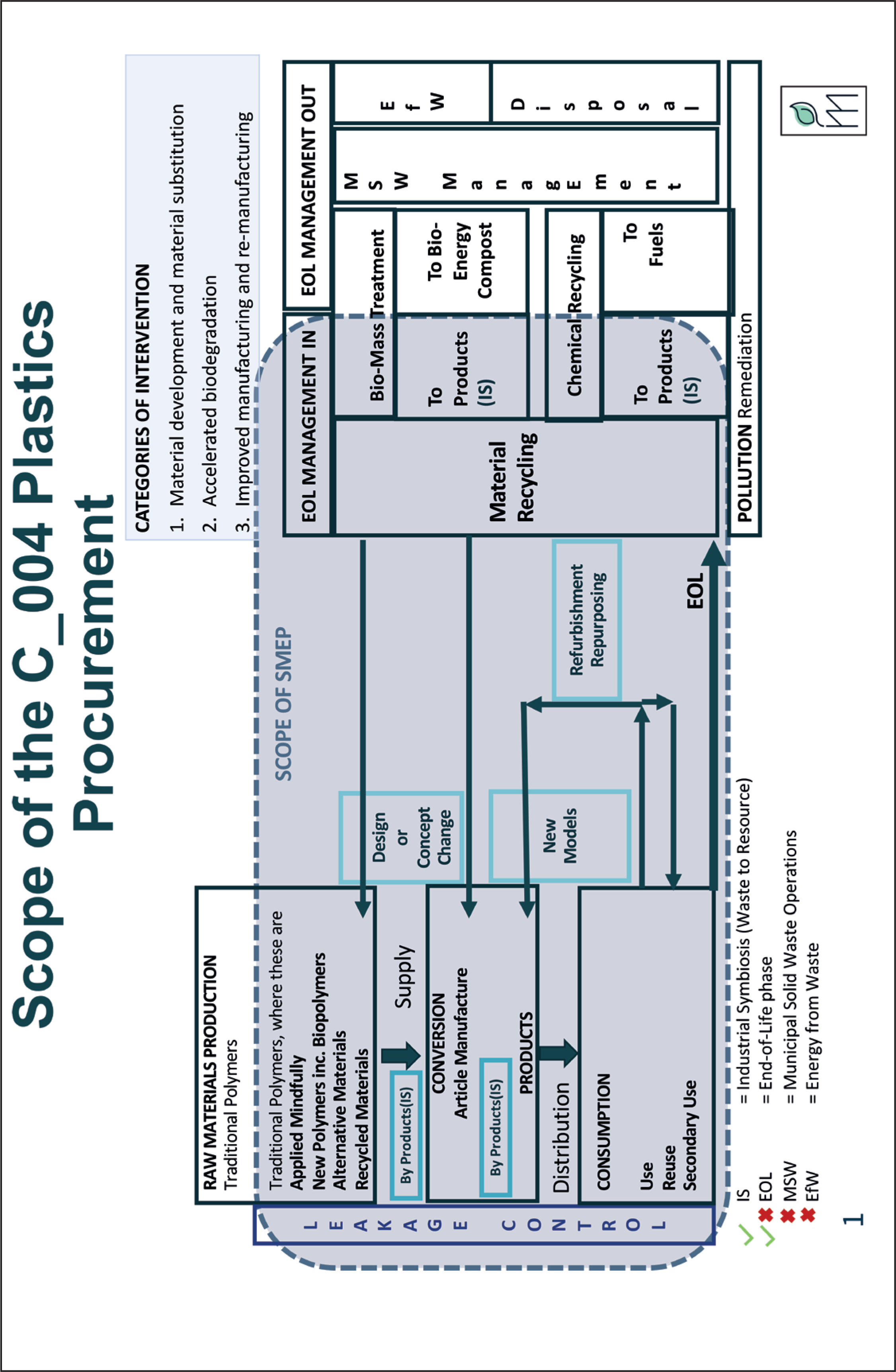
SMEP commissioned a study of potential substitutes for single use plastics (SUPs) in Bangladesh, Kenya, and Nigeria (UNCTAD, 2022). The report begins by noting that less than 10% of plastic is recycled in Africa, and only 5% in SA, comparable to the figures from the literature noted above. Some 13% of municipal solid waste in SSA is from plastic. Similarly, the SA rivers the Indus, Meghna, Brahmaputra, and Ganges together account for 19% of global marine plastic pollution. Within SSA, Nigeria and South Africa account for the largest amounts of plastic imports, estimated at 39 Mt and 27 Mt in 2017, respectively. These two countries also are the only places with significant domestic production, with the top eight countries across Africa producing 15 Mt of primary plastics cumulatively from 2009 to 2015. SA, by contrast, produces 17–20 Mt annually, though it remains a net importer, except for India.
The report notes that food and beverage packaging are the leading sources of pollution in both regions, with large proportions of the population relying upon plastic water sachets and bottles for drinking water. In Nigeria, there are over 1,500 sachet water factories in Lagos alone, and 60 million sachets are consumed daily in the country. There are not comprehensive data, but a Bangladesh study from 2019 found that 95% of SUPs in waste dumps were from food and personal care packages, of which 35% were non-recyclable water sachets. In fact, per capita consumption of SUPs increased from 2.07 kg in 2005 to 3.5 kg in 2014, particularly in bottled water, creating at least 3,000 tons of plastic waste per day, about 8% of total waste in Bangladesh. The same study found that restaurants, airlines, and high-end residential hotels were the largest sources of SUP pollution. In another study of African beach waste, plastic grocery bags, bottles, and food wrappers were the most frequently collected plastic waste items (UNCTAD, 2022). Yet, almost all the recycling across the two regions takes place through informal systems, leading to both hazardous and inadequate handling of waste, with much of it, particularly outside the large cities, ending in open dumps. South Africa is the only country in SSA with a PET bottle to bottle recycling plant.
Policy responses have had limited effectiveness. Bangladesh introduced a plastic bag ban, but there are still an estimated 14 million bags used in Dhaka daily. By contrast, Kenya has enforced fines to both companies and individuals attempting to circumvent its plastic bag ban, and 80% of the population is now estimated to have stopped using them. However, attempts to ban SUP bottles was met with resistance by local industry, which instead introduced an industry-funded collection and recycling scheme. Since there are few collection points, the policy has had limited success. Nigeria also banned plastic bags through the Plastics Bag Prohibition Bill 2018; however, the law is not well-enforced, and its lack of exception for water sachets makes it impractical (pp. 18–19).
Thus, the SMEP project explored the possibility for substitute materials for SUPs (UNCTAD, 2022). They concentrated on materials that were locally available and with which local entrepreneurs already showed the capability of creating substitute products. Any potential candidates also needed to be locally compostable, without special treatment facilities. The study focused on four main product categories that contribute the most to plastic waste: grocery bags, plastic take-out containers for food and beverages, plastic plates, cutlery, straws, and plastic bottles for water and other beverages. A wide array of potential feedstocks was tested out for these purposes including plant-based fibers such as (a) jute, cotton, bamboo, wood, paper, and banana leaf; (b) clay; (c) glass and aluminum; and (d) stainless steel. The environmental viability of the materials was tested out using a life cycle analysis. Regarding greenhouse gas emissions for production, reusable plastics performed better. However, considering the costs of land and water pollution, plastics are far worse.
While the report emphasizes the importance of adjusting any life cycle analysis (LCA) to the local context, for example, to include local substitute materials costs and availability, some general conclusions were offered regarding different potential alternative feedstocks. Paper bags or straws have the lowest footprint, followed by corn and jute. However, paper decomposition can create significant emissions and water eutrophication, and therefore, treatment strategies are urgently needed. Plant-based alternatives, such as plantain leaf and wheat, tend to use more water in their production than paper, though there are exceptions, such as Nigeria, where wheat straws were optimal, or Bangladesh, where jute bags are also attractive. Therefore, the report recommends looking into whether agricultural waste may provide alternative feedstocks.
In terms of bottles, the report concludes that glass or aluminum should be used, as there are no suitable bio-based alternatives. This point more generally highlights the challenges for making alternatives to SUPs attractive to consumers. This would include the prices increases that the report estimates as significant. In Bangladesh, for example, paper bags would cost an estimated three times as much as plastic ones, and straws four times as much. Aside from plant-based materials being more expensive than paper, it would also be more challenging to scale up such operations. One exception might be bamboo which can be made into straws relatively cheaply. On the other hand, while glass and aluminum beverage containers can be made for recycling, the conclusion from the report is that there appear to be no viable options for replacing sachets that can match their price and convenience. In sum, while there are some promising substitute materials, they all cost more than plastic for consumers, and thus policy interventions are required. The upside is that, since most plastic is imported, substitutions could also have a beneficial effect on the balance of trade and local production and employment—they might even provide export potential in some instances (UNCTAD, 2022).
Conclusion
Undermining the plethora of policy initiatives including bans on SUPs across the two regions is the reality of lax enforcement. Enforcement in turn reflects a lack of social consensus around the measures and a problem of externalities, with weak regulations and enforcement negatively affecting neighboring countries. Global and regional efforts to regulate non-recyclable plastics and packaging, harmonize regulations, and reduce plastic waste trade are still in early stages and subject to the same issues. Thus, pathways that make a business case for plastic reduction and substitution are desperately needed. These might include investigating more effective EPRs, as is being tried in Zimbabwe now.
There are many calls for a global plastics treaty which could gain traction in the future. These can be matched with creating import duties on plastic feedstocks, reducing barriers to trade for plastic substitutes, and engaging in green public procurement. Similarly, reducing or phasing out fossil fuel subsidies, which effectively undermine the competitiveness of substitute products would be an important piece to send the right signals to the market. However, the power of existing petrochemical/plastics and plastic-using industries and the resistance of consumers in many cases have hindered the implementation of well-meant regulatory reform.
Looking forward, serious efforts around data and information, including R&D and monitoring indicators, are needed to develop a more robust life cycle-based data and labeling system reflecting true environmental implications of choices to buyers. Such a system would be foundational for an effective extended producer responsibility system as well. Ramping up substitutes would require serious investments in both expanding feedstock cultivation and setting up alternative production systems that are less energy intensive, and ultimately competing on price. Developing agro-waste feedstocks, as suggested by SMEP, needs R&D. On top of this are serious challenges due to lack of waste infrastructure and know-how throughout the Global South. Foreign assistance can be most effective in supporting the creation of viable waste management systems, including the significant investments needed for new infrastructure, particularly wastewater management (SMEP, forthcoming, pp. 108, 130, 134–140). Above all, SMEP signals the need for continuing efforts to shift values among global and societal actors towards a new consensus for action to render effective the many policy darts thrown at the plastic waste problem.
Footnotes
Declaration of conflicting interests
The authors declared no potential conflicts of interest with respect to the research, authorship, and/or publication of this article.
Funding
The authors disclosed receipt of the following financial support for the research, authorship, and/or publication of this article: The development of this article was made possible with partial funding from UK-Aid as part of the SMEP programme.