




Abstract
Immigrant entrepreneurs are increasingly reliant on digital information sources for crucial business choices. This study investigates how digital information sources shape the information-seeking behaviour of Finnish and Vietnamese immigrants situated in Finland, and examines the influence of digital information sources on business operations and expansion. Our results indicate that digital information sources give entrepreneurs timely access to market tendencies and regulatory updates, bolstering business progress. This research presents practical approaches to surmount obstacles such as information overload and source reliability, suggesting continued investigation to explore digital information source effects across diverse cultural and industrial settings, refining digital instruments for varied entrepreneurial environments. We extend theoretical knowledge on information seeking to the domain of entrepreneurship by demonstrating how entrepreneurs choose and employ digital information sources based on informational requirements, alternating between static and interactive resources.
Keywords
1. Introduction
The shift towards digital information sources (hereinafter: DIS) has transformed how entrepreneurs gather information for decision-making, moving from traditional methods like face-to-face networking to immediate and scalable digital sources [1,2]. Current literature has highlighted how digital information proficiency impacts entrepreneurial development and success [3]. However, existing research in Library and Information Science still generally lacks an examination of entrepreneurs’ information-seeking behaviour (hereinafter: ISB) within digital environments [4]. It remains unclear which DIS entrepreneurs currently use, how these sources support their business activities and what challenges they encounter. Understanding these aspects could guide policymakers and practitioners in designing technologies that effectively address entrepreneurs’ needs and promote business growth. This research aims to bridge these gaps by examining two key questions:
Research Question 1 (RQ1). How do DIS influence the information access and success of entrepreneurs?
Research Question 2 (RQ2). What obstacles do they face when using DIS?
This article presents an in-depth examination of entrepreneurs’ information-seeking behaviour (ISB), focusing on both local Finnish entrepreneurs and immigrant entrepreneurs represented by a Vietnamese group in Finland. We selected these two groups because they operate within the same entrepreneurial environment, sharing common challenges and opportunities in the Finnish market. Despite the differences between the two study groups, we concentrate on the shared patterns in how these groups seek and utilise digital information, shedding light on the universal role of ISB in entrepreneurial success. Using a diverse dataset, the study highlights the common strategies and obstacles entrepreneurs encounter when they search for, assess and interpret digital information. Ultimately, this study seeks to offer practical solutions and strategies to enhance digital information use among entrepreneurs, promoting business development through effective information practices.
2. Literature review
Over the past decades, DIS have dramatically changed how entrepreneurs find answers to their business needs and gather information. DIS refer to any resources, repositories, or tools that enable the storage, access, retrieval, creation, and sharing of data and knowledge electronically through digital means [5]. These sources include databases, websites, online journals, e-books, digital libraries, web-based tools, and platforms that facilitate not only the dissemination of information but also the collaborative generation and exchange of information across distributed networks such as the Internet [6]. An example of DIS is the search engines (e.g. Google) as one of the most powerful tools for accessing information and knowledge [2,7]. Other researchers also declared the important use of institutional websites, e.g. e-government, business organisations, industry institutions, etc., while emphasising the governments’ efforts worldwide in improving these platforms [8,9].
Most importantly, digital technologies empower the interaction of information sources, through effective communication tools (e.g. Slack and Telegram) and social media platforms (e.g. Twitter and LinkedIn), or e-commerce platforms (e.g. Spotify, Airbnb). With the rise of social media, entrepreneurial networks have grown exponentially. Entrepreneurs no longer depend on physical events, that is, seminars, workshops and exhibitions, to make business connections [3]. Instead, they can easily and freely expand their influence and reach other potential stakeholders (investors, partners, professional assistants, employees) from different industries, in different roles, and at different types of companies, even from different nations [10,11]. Several entrepreneurship scholars argued recently in 2022 that digital networks, with their distinct characteristics, can often be more effective in offering support to entrepreneurs than traditional networks [12]. First of all, digital platforms connect start-ups to communities of like-minded entrepreneurs who share valuable insights, experiences and market information [6], as well as those peers who might face similar challenges [13]. This access to a broader network enables start-ups to benefit from collective knowledge for the decision-making process or solving problems [14–16].
Furthermore, online communities are often characterised by anonymity, meaning that there are typically no pre-existing relationships between those seeking support and the community members providing assistance. While anonymity might reduce the perceived trustworthiness of the support, it offers privacy for entrepreneurs to overcome their ‘fear of losing face’ or spoiling too much information when discussing sensitive topics [17]. Finally, these platforms offer new modes of entrepreneurial learning, both through passive observation and active, discursive engagement [18]. These passive learners adopt an ‘observation mode’, quietly absorbing knowledge by monitoring the collaborative interactions of others without direct engagement [19]. For immigrant entrepreneurs, engaging in diverse online activities plays a crucial role in overcoming the challenges associated with the liability of newness, which refers to the difficulties new businesses face due to their lack of established relationships and market presence [20]. In addition, the breadth of online activities undertaken by individuals tends to be positively correlated with the strength and size of their local network connections [21]. This suggests that the more entrepreneurs actively engage in various Internet-based activities, the stronger their relationships and integration within their local networks become [17]. Furthermore, regarding e-commerce platforms, entrepreneurship scholars have recently referred them to ‘one-stop shops’ for information, with strategic curation emerging as a key strategy for maximising platform value [22]. This approach is essential for attracting and engaging entrepreneurs, thus driving the platform’s commercial success [23].
DIS reduce barriers to accessing broader knowledge spillovers and enable entrepreneurs to leverage critical information to overcome resource constraints without requiring substantial investment [14,24]. As a result of technological advancements and the ongoing digitalization process, DIS have become widely developed and adopted as a new form of information provision and management. Compared to traditional information sources which limit access through time and space, DIS are always available for users with advanced capabilities, such as filtering, notification and translation [11,25,26]. These digital sources offer convenient access to high-quality information from administrative information regulations (e.g. regulations) to market demands (customers, suppliers, partners), that are supplemented by expert advice and analysis [3]. Entrepreneurs leverage DIS to efficiently gather actionable market insights [27]. This process of informed decision-making reduces risk and promotes strategic agility, helping businesses navigate new and unforeseen challenges [1,15].
Although the abundance of online information facilitates learning and connectivity, it also raises concerns about credibility due to unclear information origins and quality [28,29]. Negative emotions, including uncertainty, anxiety and cognitive dissonance, often prevent users from embracing digital technologies, underscoring the important role of trust [30]. The Internet’s information landscape is generally characterised by inherent uncertainty and potential vulnerability [28]. It is often marked by weak social connections and considerable noise, such as false, inaccurate, or deceptive information [31]. Information science scholars such as Lucassen and Schraagen [32] further underscored the substantial scepticism that individuals exhibit towards digital information. While this cautious behaviour can shield them from potentially misleading information, it also impedes access to high-quality, credible and notably quick-access information, thus hindering their decision-making process. In addition and along the same lines, Savolainen referred to cognitive challenges related to selecting and accessing information sources, such as low self-efficacy, poor search skills, or inability to deal with information overload [33]. These barriers can lead to inefficiencies in identifying and utilising relevant information, as individuals may feel overwhelmed or lack confidence in their ability to navigate complex digital landscapes. Consequently, such challenges not only hinder effective decision-making but also increase the possibility of reliance on insufficient information sources. As recently pointed out by Attah-Boakye et al. and Cuvero, both in 2023, digital tools alone are insufficient, rather it is ultimately the entrepreneurs’ skills and discernment ultimately determine how effectively these technologies and information sources are leveraged to support strategic decisions [6,34].
Several scholars have emphasised the significance of entrepreneurs’ everyday information behaviour, particularly their information-seeking practices, source preferences, strategies for managing information overload, and factors shaping their use of different information sources [4]. Established theories of information behaviour – such as those by Wilson [35], Savolainen [33], Harati and Isfandyari-Moghaddam [36] and Bates [37] – offer valuable frameworks for analysing entrepreneurs’ information behaviour. However, as highlighted in recent syntheses of information behaviour research [38–40], these theories remain largely rooted in library and educational contexts [41]. Extending their application beyond these traditional domains is crucial for their establishment: it strengthens Generalisability, clarifies boundary conditions, enhances empirical robustness and fosters cross-disciplinary insights, this, expanding the practical utility of information behaviour theories.
3. Methodology
This research adopts a qualitative methodology to explore the ISB of entrepreneurs in Finland, aiming to provide nuanced theoretical and practical insights. Qualitative methods are well-suited to the goals of this study by revealing the complex meanings behind individuals’ actions, behaviours, beliefs and relationships [42]. By adopting a qualitative approach, this research adheres to the methodological practices commonly used in entrepreneurship studies and the social sciences, which stress the importance of capturing the depth and complexity of human experiences [42].
3.1. Data collection
The design of interview questions was guided primarily by the study’s research questions, which focus on understanding how DIS influence entrepreneurs’ information access and success, as well as the obstacles they encounter. However, informed by previous research emphasising the importance of both digital and traditional information sources in entrepreneurial information-seeking behaviours [4,22,31,43], the opening question was intentionally designed to be broad and open-ended: ‘What sources of information are you aware of and currently using?’. This phrasing was deliberately chosen to avoid leading participants towards digital sources only and to allow them to naturally introduce any sources—digital or traditional—that they consider relevant [44]. Building on this initial open inquiry, further questions were formulated to explore the information sources mentioned by participants in greater depth. These follow-up prompts included questions such as (1) ‘Why do you choose these sources?’, (2) ‘What type of information do you usually obtain from them?’, (3) ‘How do these sources benefit your entrepreneurial activities?’ and (4) ‘What challenges do you face when using these sources?’. In addition, spontaneous follow-up questions were used when necessary to encourage participants to elaborate or clarify their responses. Employing open-ended questions, we captured the underlying values and assumptions of participants’ experiences that might not surface through quantitative methods [45].
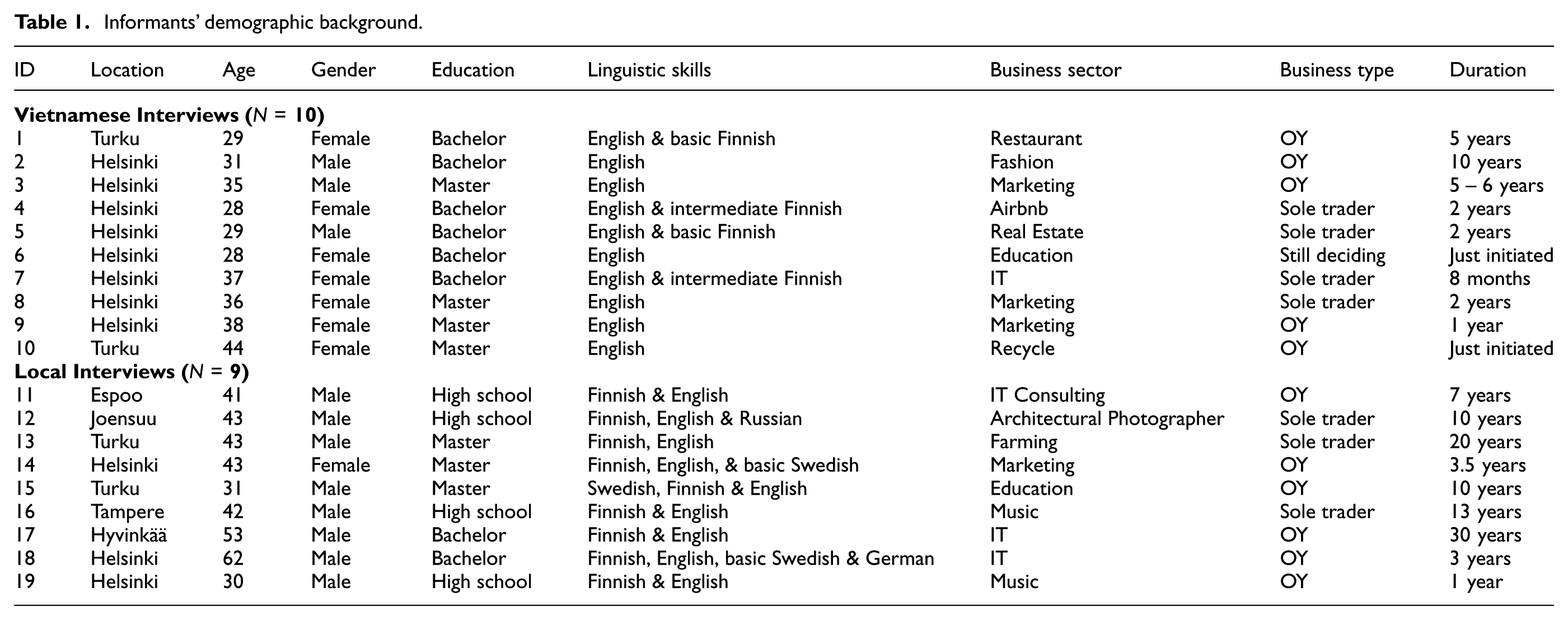
To recruit participants, we targeted both local and immigrant Vietnamese entrepreneurs who own or co-own a business in Finland. The interview candidates were selected based on these criteria: (1) they are either native Finnish or Vietnamese immigrants living in Finland and (2) they must own or co-own a business in Finland, which includes both sole traders and various forms of business entities. We used snowball sampling, where initial participants refer others from their networks [46]. The final sample included 10 Vietnamese and nine Finnish entrepreneurs, with interviews conducted over video calls in Vietnamese, English, or a mix, based on participant preference. Each interview was audio-recorded (with consent) and transcribed to ensure accuracy. Ethical transparency was maintained, with participants fully informed about data handling. The interviews, lasting approximately ninety minutes each, provided a comprehensive exploration of the research questions. The Vietnamese subgroup is predominantly female, while the Finnish subgroup is predominantly male. When combined, the overall sample reflects a relatively balanced gender distribution. The participants aged 28 to 62 years. Notably, immigrant entrepreneurs were younger (average age 33) than Finnish entrepreneurs (average age 43). A summary of the interview participants’ demographic information is presented in Table 1.
Informants’ demographic background.
3.2. Data analysis
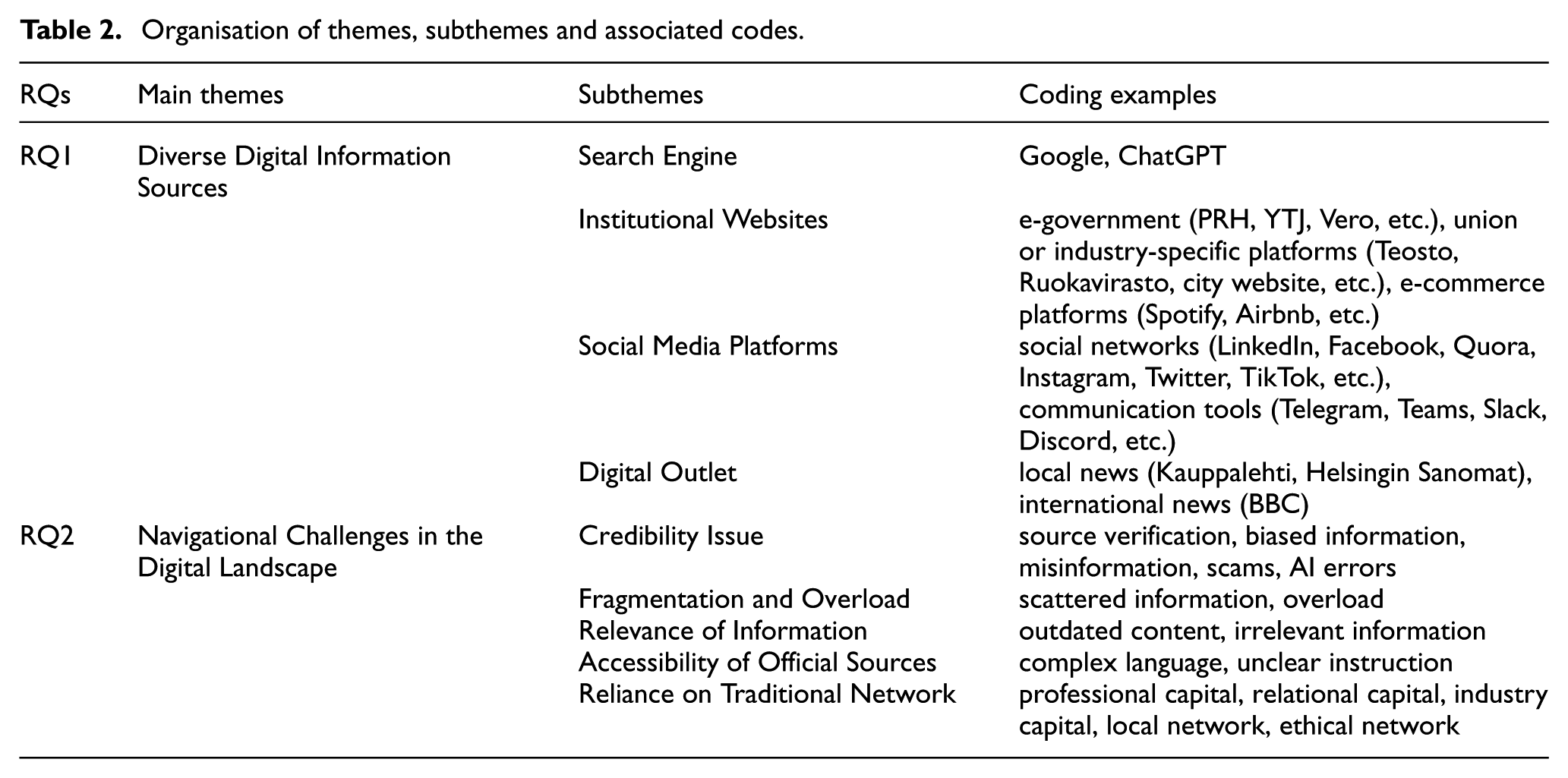
Regarding data analysis, we began by cleaning the data to remove extraneous words and noises that may have been inadvertently captured during the transcription process. The qualitative data collected from the interviews were analysed using NVivo software for systematic organisation [47]. Following Braun and Clarke’s (2006) six-phase framework [48], the analysis began with a familiarisation phase, during which transcripts were read multiple times to develop an in-depth understanding of participants’ perspectives. Initial codes were generated inductively, grounded in the actual language used by participants. For example, when entrepreneurs described platforms like Google or ChatGPT as key tools for accessing information, these excerpts were coded as ‘Google’ or ‘ChatGPT’. Similarly, references to LinkedIn, Facebook, e-government portals and industry-specific websites were coded to reflect their perceived utility. These descriptive codes were then grouped into subthemes as ‘Search engines’, ‘Social Media Platforms’, ‘Institutional Websites’ and ‘Digital Outlets’, which later were consolidated into the theme ‘Diverse Digital Information Sources’. This theme captures the range and strategic use of digital tools in supporting entrepreneurial activity – directly addressing the first research question RQ1 on ‘How do digital information sources influence the information access and success of entrepreneurs?’.
Similarly, and to address the second research question RQ2 on ‘What obstacles do they face when using digital information sources?’, we segmented data on obstacles to informing such as ‘misinformation’, ‘information overload’, ‘fragmented sources’ and ‘complex language on government websites’. They were coded accordingly and categorised into subthemes, which were later developed into the theme ‘Navigational Challenges in the Digital Landscape’. This process involved the identification of recurring concepts and systematic categorization to facilitate a comprehensive analysis [49]. Table 2 outlines the hierarchical organisation of themes, subthemes and associated codes developed through the data analysis process. NVivo facilitated this process by enabling efficient code management, clustering of related concepts and visualisation of connections across the dataset. Throughout the analysis, themes were refined by reviewing coded extracts for coherence and relevance to the research questions, ensuring that findings authentically reflected the voices of participants and the realities of their experiences with digital information.
Organisation of themes, subthemes and associated codes.
To enhance the trustworthiness and quality of the research, we also followed the strategy suggested by Loh [50] four elements of quality rigour: credibility, transferability, dependability and confirmability. Personal identifiers were anonymized to protect participants’ privacy [45]. By adopting a qualitative approach, this research aligns with the methodological practices commonly used in entrepreneurship studies and the social sciences, which emphasise the importance of capturing the depth and complexity of human experiences [42].
4. Results
4.1. Diverse DIS
First of all, entrepreneurs in this study reported frequent use of Google to initially search for information, allowing them to quickly grasp the basic concepts related to their business concerns. With straightforward keyword searches, they can find resources tailored to their business needs. Interviewee 11 noted, ‘I think Google has changed their algorithm, making it much more helpful and easier to reach the right information very quickly’. Moreover, Google often serves as a tool for specific tasks such as finding business partners. To illustrate, Interview 8 found her first accounting firm through Google searches. Interviewee 18 further pointed out that ‘Google has so far been supporting me enough, the questions that I make, it can answer’, underscoring Google’s reliability when official sources fall short.
Beyond Google, entrepreneurs increasingly utilise AI-driven platforms, such as ChatGPT, to streamline their information-gathering processes. For example, Interviewee 18 shared how he used ChatGPT to generate specific insights by asking it to list reasons for adopting an iPaaS (Integration Platform as a Service) platform that can support marketing strategies or product positioning. Our Interviewee 19 mentioned utilising this tool to obtain concise summaries of the latest technologies or applications, along with an overview of their advantages and disadvantages, aiding decisions on potential technology investment in their business context.
E-governmental websites are the primary sources for entrepreneurs seeking administrative information, such as business registration and taxation. Key platforms include PRH (Finnish Patent and Registration Office), YTJ (Business Information System) and Vero (Finnish Tax Administration). Vietnamese entrepreneurs observed the significant advantages of Finland’s e-government system, noting its transparency and comprehensive online presence, which contrasts with less accessible systems back home. Interviewee 10 explained, … in Vietnam, most of the information, we can’t find on the official channel. We find from the surrounding network, from our relationship. But in Finland, we just do as the law and as the requirement listed on the websites. (Interviewee 10)
Local entrepreneurs similarly praise the improvements in e-government platforms, noting the platforms’‘better and clearer’ usability (Interviewee 12), including user-friendly mobile interfaces and interactive chat services. However, they continue to rely on human agents rather than automated technologies like chatbots for more personalised support.
Entrepreneurs also benefit from institutional websites, such as union or industry-specific platforms (e.g. Teosto
1
and Ruokavirasto
2
). These websites offer resources tailored to specific industries and additional features such as training sessions, newsletters and email notification systems, allowing members to stay informed about important updates. Interviewee 19 additionally emphasise the government’s collaborative efforts with these institutional websites to enhance information distribution, Government also offers a lot of places where Finland has been using money to create this kind of helpful sites and projects around the music industry. For example, when we were creating our recording deals and publisher deals, contract papers, we sought out the information from one of these Finnish governmental sponsored places. (Interviewee 19)
Moreover, entrepreneurs demonstrate flexibility in utilising institutional websites for market research or studying their potential partners and competitors, thus shaping their business planning and strategy. Interviewee 5 illustrated, Every city has a city website, e.g., Vantaa. fi. And there you can see all different ongoing projects and upcoming projects for the city … where I get very local information about the place that I’m thinking of investing the money in real estate. (Interviewee 5)
Entrepreneurs operating on e-commerce platforms, such as Airbnb (Interviewee 4) and Spotify (Interviewee 19), highlighted the comprehensive and easily accessible nature of the information provided on these websites providing tailored support to their specific business models. Interviewee 4 described the extensive resources Airbnb provides for hosts, covering legal compliance and optimization tips. Likewise, Interviewee 19 praised Spotify’s transparency on royalty and content policies, noting it helps musicians understand the platform’s operational guidelines.
… when I post on Facebook, this is my problem and people advise me based on their experience I feel that it’s faster for me to get the advice from Facebook group than search Google. For Google, you have to share several different keywords, then you might get some better results. But this is quite time-consuming, and it is not sure if I can get the answer suiting for my specific case. (Interviewee 8)
In addition, group chats on platforms such as Telegram, Teams, Slack and Discord facilitate communication for immigrants to ‘discuss and chat about ideas, share contributions, and get feedback.’ (Interviewee 8). These groups are typically private, comprising individuals from the same industry who share a common interest. Compared to immigrant entrepreneurs, local entrepreneurs are generally less active on social media when seeking information. The most popular platforms among them are Twitter, Instagram and LinkedIn which they use to follow industry trends. In the music sector, entrepreneurs frequently turn to discussions on Twitter to stay informed about industry changes, Reading the comments is where you find all the useful stuff … so we check that information and sometimes participate if we know something. (Interviewee 19)
Marketing entrepreneurs similarly use social media to stay current, with Interviewee 15 explaining, ‘Marketing changes every year, and things get outdated very fast, so for marketing matters, I try to find reliable people who have done what I want to do and follow them on social media, especially on YouTube’. Overall, these platforms allow passive tracking of market and competitor developments without requiring direct engagement.
Many entrepreneurs use LinkedIn as a valuable tool for building professional networks and refining their sales strategies. Entrepreneurs research and gain insights into their customers and decision-makers within target organisations by reviewing their work history, as Interviewee 18 explained ‘When I do sales, I need to understand who holds certain roles in the customer segment I’m targeting. I go into LinkedIn, handpick the interesting ones, and then reach out to them’. For these entrepreneurs, LinkedIn offers a more specialised network of contacts. Although they often know key figures in the industry, LinkedIn provides additional layers of information about businesses, their operations, and how they present themselves. Meanwhile, for immigrant entrepreneurs, LinkedIn is particularly valuable for expanding their professional network, connecting them with potential partners, mentors and customers worldwide. The process is explained by Interviewee 3 who noted that I have found many partners and mentors and advisors on LinkedIn. I use LinkedIn to reach out to them … it is the starting point where I find people. It is another place where I find information and seek wisdom. (Interviewee 3)
Interviewee 8 echoed this sentiment, explaining that LinkedIn removes ‘language and geographical barriers’ to finding mentors in similar business fields abroad. Finally, local entrepreneurs also turn to digital news outlets like Kauppalehti, Helsingin Sanomat and BBC to monitor industry shifts and anticipate changes in government policy to identify new business opportunities or adjust their strategies accordingly in a fluctuating market environment, as Interviewee 11 described, I’m calculating the choices we have, for example, thinking about different structures for our company. When the next government is in place, the situation might change, particularly with taxation. (Interviewee 11)
Our Interviewee 14 noted digital news when discussing market entries and exits that impact their business operations, I read the news about the company shutting down from newspapers, for example, these interviews of Oda’s CEO from Norway. We need to check it out if they are coming back or try to find information about that. Oda wasn’t our customer, but we collect data from Oda for other companies that sold products for Oda. (Interviewee 14)
In contrast, immigrant entrepreneurs show limited reliance on digital news, with only Interviewee 1 mentioning news sites like Yle 3 for planning ‘labour schedules and opening hours’ around transportation strikes. The limited reliance on digital news among some entrepreneurs may be attributed to the size and scope of their companies, which suggests that smaller businesses may not feel the immediate impact of broader political or economic developments, as Interviewee 17 stated, ‘I don’t know if it might change my mind on something. But as we are a small company, five persons, what’s happening outside doesn’t affect us too much’.
4.2. Navigational challenges in the digital landscape
The digital environment, characterised by its open and dynamic nature, presents unique challenges for both immigrant and local entrepreneurs regarding the quality of information. This was captured in the overarching theme of Navigational Challenges in the Digital Landscape, which encompasses four key subthemes: concerns over information credibility, fragmentation and overload, accessibility of official sources, and reliance on personal networks for verification. Entrepreneurs often expressed scepticism about the trustworthiness of digital information. Several participants raised concerns about the credibility and bias of content found on social media and online forums. As Interviewee 14 noted, ‘it could be biased’, while Interviewee 7 shared, ‘when I seek for information … there’s like always a question of its credibility … it’s hard to tell where what is the truth, and you have to look deeper to verify’. These concerns extended to AI-generated content. Interviewee 19 described how ChatGPT suggested software that ‘didn’t even exist’ highlighting the risk of fabricated or misleading outputs. In some cases, misinformation within niche communities added further complications. For example, Interviewee 13, a participant from the farming sector, observed that decisions were sometimes made based on rumours rather than official sources. Others, like Interviewee 19 in the music industry, reported encountering scams, explaining, ‘scammers … sell services to artists claiming they will increase exposure but just bots running campaigns’. Many also expressed frustration with the scattered availability of digital information, observing that information may be incomplete or fragmented across multiple sites. As Interviewee 15 remarked, ‘there might not be enough information on a certain website’ and navigating through these various sources often results in ‘information overload’ (Interviewee 17). The relevance and applicability of digital information also emerged as a significant challenge for entrepreneurs. Participants expressed frustration that, even when information appeared relevant, it was often either outdated or too generic to support concrete decision-making. As Interviewee 18 pointed out, some sources are simply ‘outdated’, while Interviewee 15 explained, ‘Even when I find relevant data, there’s not exact information about how I should apply in our company’s case in our business’. In some cases, the issue extended beyond relevance to inaccuracy, particularly in the context of AI-generated content. Local entrepreneurs, feel the impact of low-quality information, with Interviewee 17 criticising social media as overly commercialised, saying that ‘Facebook is consumer-oriented … LinkedIn has lost its value for professional insights’. These accounts illustrate the gap between accessing information and being able to use it effectively in real-world entrepreneurial contexts. Finally, both immigrant and local entrepreneurs often struggle with the complexity of official information sources, especially regarding their language. These platforms were often described as overly technical or bureaucratic: It’s kind of you need to have a doctoral degree before you can even understand what they’re saying … the information is quite hard to understand basically. Because sometimes the information provider forgets that they are distributing information to people who are not familiar with the concept. (Interviewee 18)
Notably, when encountering these challenges, many entrepreneurs rely on their traditional networks to interpret or validate the digital information they encountered. These networks often consist of professional capital (accountants, lawyers, business advisors, etc.), relational capital (family and friends) and industry capital (mentors, entrepreneurial peers, colleagues, etc.), When you search online, it can be anything, and I’ve found completely wrong answers there … Often I verify the information with my networks. I have plenty of other entrepreneurs around music industry who I’m talking with and I’m sharing the information … to find any possible solutions. (Interviewee 19)
4.3. Entrepreneurs’ information-seeking practices through digital sources
From the observations through the interviewees, we summarise the patterns of entrepreneurs’ ISB using DIS and suggest a diagram that visualises this process. When entrepreneurs need information, their first instinct is often to perform a quick search on Google [2]. This initial search typically generates a variety of landing pages, including e-government websites, social media discussions, blogs and other digital sources. Entrepreneurs do not reach the information through a predefined plan for which source to consult. They often rely on the sources that offer immediacy, least cost of effort and broad accessibility, that is, Google or ChatGPT. This behaviour exemplifies the unplanned aspect of the information-seeking model, where environmental stimuli, such as the variety and accessibility of search engine results, play a pivotal role in guiding entrepreneurs towards relevant and useful information [35,36]. Following an initial search, entrepreneurs land on a specific source (e.g. an official website, blog, forum, or social media post). They then review these sources to gather preliminary insights while maintaining passive interaction for low-cost. If the information found there is sufficient, the search concludes, and the information is applied to decision-making. Otherwise, if they do not find a clear answer or need further clarification, they may turn to more interactive options, such as reaching out to digital customer service through chatbots or live agents, posting questions on social media, or consulting both digital and traditional networks for more detailed and contextual information [18,31]. Once they receive additional information or guidance from these interactive sources, entrepreneurs may return to the original search results to verify or expand on what they have learned. This back-and-forth process between static and interactive sources enables them to refine their understanding and make well-informed decisions.
During this unplanned information-seeking process, entrepreneurs engage in exploratory browsing, evaluating and selecting sources based on their immediate impressions, perceived credibility, or alignment with their emergent needs. For example, they might click on a governmental website for authoritative guidance or a blog that offers relatable, experience-based insights. The serendipitous nature of this process often results in discovering information that they might not have initially considered or actively sought [36]. When this happens, their information-seeking strategy shifts with greater emphasis placed on verifying the credibility of the newfound information. This additional verification step is influenced by factors such as the nature of the information, its relevance to current needs, and their trust in the source or connections who shared it. This flexible approach reflects how entrepreneurs strategically adapt their information-gathering processes based on the context, reliability and immediacy of information sources, balancing quick access with careful verification [33,35].
In contrast, entrepreneurs may bypass the Google search entirely, going directly to known digital sources when they have a knowledge and understanding of where reliable information resides. This direct approach is particularly effective when they have established sources they trust for specific types of information. Over time, unplanned searching helps entrepreneurs build familiarity with digital sources and strengthens their information-seeking skills [51]. Yet, even when they consult a known and trusted source for a specific purpose, such as verifying a regulatory detail, they often encounter new information that leads to further unplanned exploration. Importantly, the shifts between these stages are not random, but are driven by specific challenges encountered during the search process. For instance, when entrepreneurs question information quality (e.g. misinformation, disinformation, inaccurate information), they engage in iterative cross-checking, moving back and forth between sources to compare perspectives and verify accuracy. In addition, when official sources contain complex or bureaucratic language, they will seek help from chatbot, customer services or personal connections to translate and contextualise the information for their specific situation. Similarly, when entrepreneurs face information overload or inconsistency, entrepreneurs draw on their personal networks and social communities for support. These challenges therefore function as triggers that explain why entrepreneurs transition between particular source types, transforming the information-seeking process from a linear sequence into a dynamic, adaptive cycle. This pattern resonates with Bates’ Berrypicking Model [37], in which information seekers gather insights in small increments as their understanding and information needs change during the search. In our context, entrepreneurs similarly ‘pick’ pieces of information across diverse digital and interpersonal sources, adjusting their strategies as new uncertainties or gaps emerge. The process continues until informational adequacy is reached—that is, when the entrepreneur feels sufficiently confident to make a decision.
In Figure 1, we depict a processual model that resulted from our investigation. It captures the entrepreneurs’ information-seeking practices that rely on digital sources, extending theoretical knowledge on information-seeking to an entrepreneurial context.
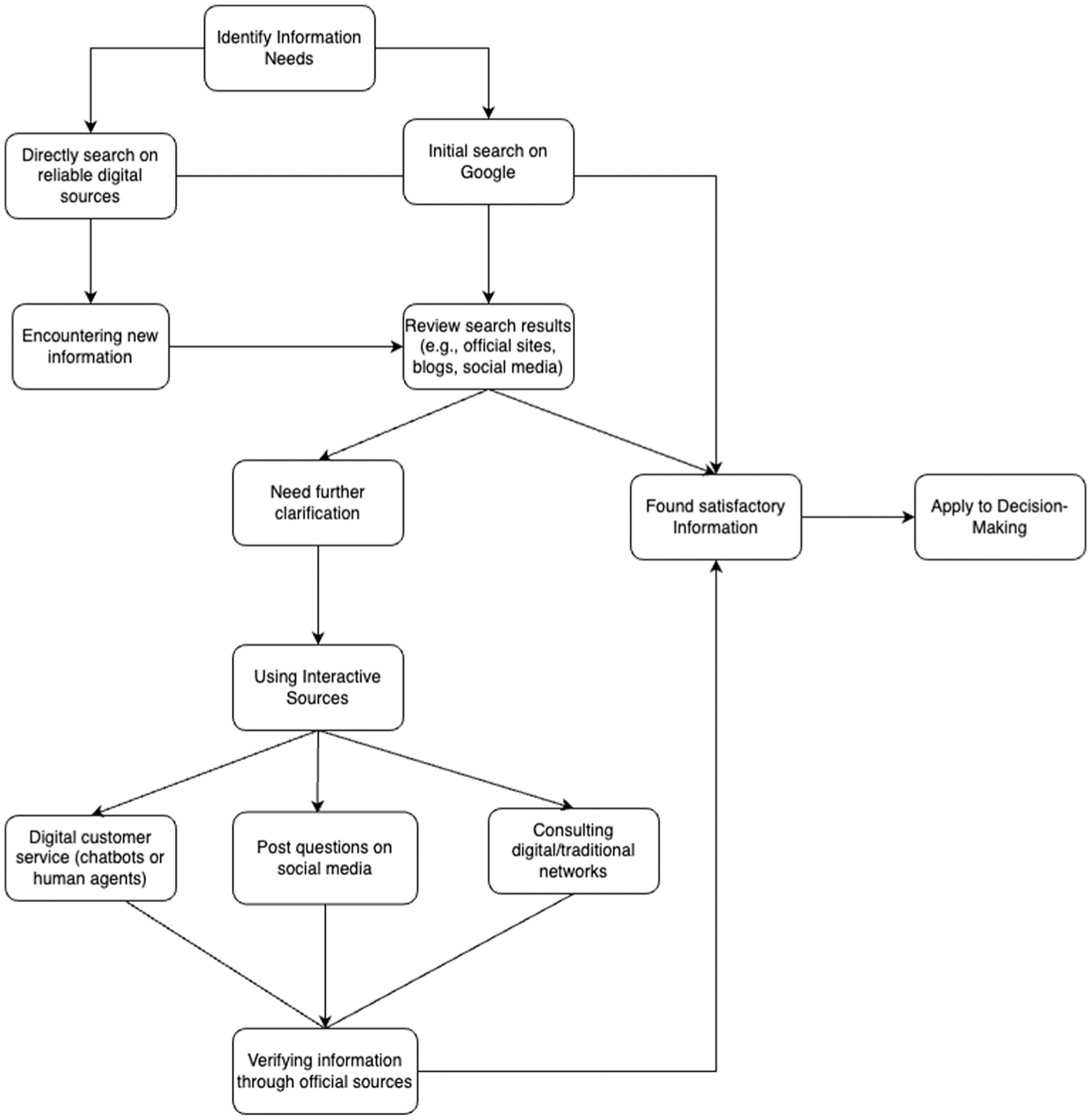
Entrepreneurs’ information-seeking practices through digital sources.
5. Discussion
5.1. Key results
Respondents highly valued the advantages brought about by DIS, noting that they have removed many barriers, such as distance, cost and workforce, making information more accessible and inclusive for both immigrant and local entrepreneurs (Evansluong et al., 2023; Wang et al., 2020). According to our results, DIS equips entrepreneurs with important insights which are often challenging to access through the more conventional non-digital approaches. For example, comparing business concepts, testing ideas or modelling business plans would be much more challenging without DIS [31]. In addition, many entrepreneurs turn to DIS to track information such as market trends, and customer preferences, that are typically scarce, fragmented, or unavailable in offline settings [26]. Similar to previous study, entrepreneurs efficiently gather relevant information from multiple DIS [25], including search engine [2,7], governmental websites [8], social media [11,14,20] and industry-specific platforms [15,22], then integrating these resources to develop a more comprehensive understanding of their business environment. These findings align with previous research that DIS foster entrepreneurs to strategically tackle emerging opportunities and challenges [31], enhance their data-driven decision-making process [1,15] and strengthen competitive advantage helping them adapt to evolving market conditions [6].
Analysing the influence of DIS on entrepreneurial success suggests that these sources help entrepreneurs build interpersonal connections, which serve as an important networked source of information, such as peers, mentors and industry experts, without requiring the major capital investments that are often theoretically expected [13,14,24]. These connections give them access to high-quality information to solve business concerns and exchange knowledge, and collaboration [12,16]. Particularly, digital user profiles on social networking sites provide signals that influence decisions about forming partnerships and networking strategies by shaping perceptions of credibility, legitimacy and approachability, guiding how others assess and approach potential partners [10]. This support also encourages entrepreneurs to test and expand their ideas, leading to innovations and opportunities [11,31]. While in most cases, digital information might not immediately resolve the specific problems of entrepreneurs, the collaborative information-seeking environment often encourages interaction and reflection, allowing them to combine factual knowledge with personal experiences for a more thorough grasp of complex problems [12,31]. Entrepreneurs who actively engage in these networks benefit from collective intelligence for diverse feedback and problem-solving, enhancing their resilience [14–16]. While Schou et al. previously emphasised that active interaction enhances effective learning [18], the findings of this study suggest that entrepreneurs can still gain valuable insights through passive observation of online discussions [c.f., 18,19]. Moreover, DIS enable entrepreneurs to efficiently gather market intelligence. To illustrate the analysis of competitors’ social media activities, entrepreneurs can identify emerging demands, and benchmark performance, while also learning about strengths and weaknesses of their own operations [27]. Such inclusion further prevents them from costly mistakes and supports the ongoing refinement of their business strategies to face new challenges [1,3,15].
Furthermore, platforms like Airbnb and Spotify reflect the transformative type of DIS, which exemplify the diverse roles digital platforms can play within the entrepreneurial landscape [22]. These platforms provide structured, operational data that is more directly tied to a specific industry, with regulations, market movements and customer preferences. For instance, Airbnb hosts can view data on occupancy rates, seasonal demand and pricing strategies, while Spotify provides insights into listener behaviour, engagement metrics and market reach for content creators. This centralization of comprehensive information resources greatly simplifies the information-seeking process, reducing the time and effort needed to access key information and enhancing the overall efficiency of entrepreneurs’ operations [22,23].
A noteworthy insight is the competitive evolution within the digital information landscape. As digital platforms try to attract users, they are driven to enhance service quality [9,22]. Features such as user reviews, ratings and verification processes are added to build credibility and reduce the perceived risks associated with online interactions [e.g. 11,23,25,26]. Other advanced functionalities such as multilingual support, relevant content filtering, automatic notifications, and especially hybrid support with both human agents and AI technology enhance the democratisation of information [34]. Entrepreneurs’ comments highlight the value of responsive and accessible support systems that provide them with immediate answers to specific inquiries and ensure high-quality information. In addition, compared to the local entrepreneurs, immigrant entrepreneurs engage more with professional communities and groups on platforms like LinkedIn. Although they did not mention how social media helps them integrate better into the local networks [21], respondents emphasised its role in fostering them stepping out of the ethnic and relational circles and mitigating the limitation of the network in the host country as in Evansluong et al. [20]. This inclusive approach ensures that entrepreneurs from diverse backgrounds have equal opportunities to succeed, which is crucial for immigrant entrepreneurs [17].
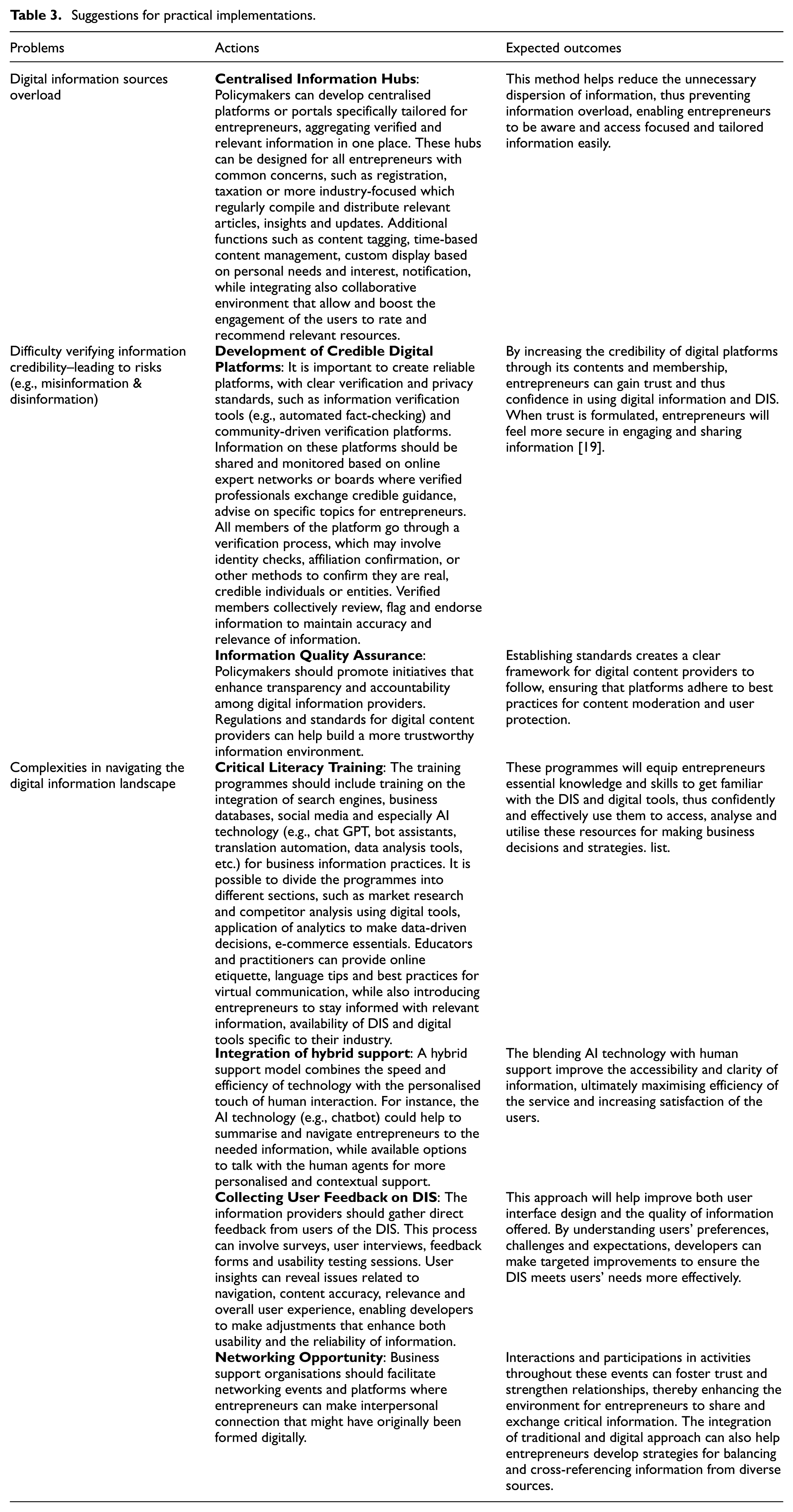
Furthermore, DIS have brought many advantages for entrepreneurs, however, we observed that, overall, the respondents are acutely aware of the potential risk associated with relying on digital information. Despite the potential richness of information accessible through digital platforms, the perceived reliability of this information is often questioned due to the anonymity and the varied credibility of online sources, as highlighted in Kelton et al. (2008) and Metzger and Flanagin’s (2013) studies [28,29]. Our research points out that entrepreneurs also face other dark sides of DIS, such as information overload [33,52], misinformation, disinformation and complication of information distributed due to the different mindsets between information providers and receivers or unfamiliarity with the DIS [31,32]. These findings also align with Savolainen’s exploration of cognitive barriers, illustrating how entrepreneurs struggle with fragmented and complex information, inaccessible language and issues of quality, such as relevance and credibility. These challenges significantly influence their ability to effectively interpret and utilise digital information, limiting their potential to inform sound decision-making and strategic actions. Based on our findings, traditional information sources remain irreplaceable for the closeness, trust and deeper interpersonal interactions they offer [31]. Such interpersonal relationships provide access to qualitative, detailed insights, consultations, recommendations and referrals that digital platforms may not fully capture as recently pointed out by Lamine et al. in 2019 [43]. Along these lines, this context-specific and detailed information complements the existing generalisation of information available online [53]. In response to this drawback, we recommend several practical mitigation strategies, as outline in Table 3.
Suggestions for practical implementations.
5.2. Theoretical contribution
This study contributes to the established theory on information-seeking behaviour (ISB) [19,33,35,36,38,39], among others] by refining and extending its application to the high-stakes, fast-moving context of entrepreneurial decision-making in digital environments. While ISB theory has generated a variety of models, relatively few address how digital transformation, characterised by rapid technological change, evolving digital information ecosystems and emerging user practices, reshapes everyday information behaviour in real time [40]. Rather than proposing an entirely new paradigm, we build on existing ISB frameworks to better account for the realities of modern entrepreneurship.
Our findings suggest that entrepreneurs adopt flexible, improvisational strategies under conditions of uncertainty, resource constraints and urgency, which diverge from traditional linear, or stage-based ISB models. Specifically, we propose a process-oriented model that captures how entrepreneurs dynamically move between static (e.g. governmental websites, databases) and interactive digital sources (e.g. chat apps, social platforms, AI tools), and complement these with interpersonal support (e.g. peers, mentors, communities) based on situational needs (see Figure 1). This hybrid approach reveals under-recognised ISB patterns in a digital context, such as cross-platform verification, passive observation, discursive engagement and experiential validation. Therefore, these findings not only address a critical gap in ISB theory by responding to the complexities of digital information environments but also offer a foundation for future empirical testing and theory development.
Furthermore, we reconceptualise DIS as social infrastructure by viewing them as platforms through which entrepreneurs form ties, signal credibility and engage in collective sensemaking. By doing this, we extend their theoretical function beyond content delivery to include trust calibration, collaborative learning and network formation. Finally, this study supports and extends prior research on digital information quality [5,28,52] by showing how entrepreneurs actively evaluate the reliability, relevance and credibility of information across platforms, navigating both the opportunities and cognitive challenges of increasingly complex digital information ecosystems.
5.3. Limitation and avenues for future research
This study has several limitations that should be acknowledged. First, the research focuses on the ISB of entrepreneurs in a specific national context, that is, Finland and with two backgrounds, that is, Vietnamese and Finnish. This scope may limit the Generalisability of the findings to entrepreneurs with other ethnic backgrounds, in other regions with different economic or cultural environments. In addition, while the study identifies critical challenges associated with DIS, such as credibility issues and information overload, it does not explore these challenges in-depth, particularly the impacts of demographic information, e.g. age, gender, educational background, location, year of immigration, different types of entrepreneurs, industry-specific differences or differences between early-stage and established entrepreneurs.
For instance, our observations indicate that those in the marketing field tend to seek more information from digital communities compared to participants from other professional backgrounds. These industries may differ in terms of information availability, regulation, network interaction and digital tool adoption. Therefore, the proposed model should not be interpreted as universally applicable across all entrepreneurial sectors. This limitation leaves room for future research to investigate how industry-specific constraints and practices influence digital information behaviour.
In addition, examining the unique DIS engagement needs of different entrepreneurial subgroups, such as early-stage versus mature ventures, or tech-focused versus traditional sectors, could reveal unique information-seeking patterns and challenges, providing a more granular understanding of DIS applications in entrepreneurship, thus expanding our understanding of how to tailor digital information strategies to support diverse entrepreneurial needs.
While existing studies emphasise identifying similar patterns, future research could address this limitation by examining entrepreneurial ISB in diverse cultural contexts (Finnish and Vietnamese), allowing for a comparative analysis of critical variations in motivations, approaches and challenges faced by each group in using DIS. We also recommend further research to test and refine the framework of the DIS utilisation process, exploring its effectiveness across various contexts and identifying key factors that influence its implementation and outcomes. The model could expand on the analysis of DIS’ characteristics, particularly in terms of their accessibility and quality, under the influence of the contextual circumstances of entrepreneurs [51]. Specifically, studies could explore how factors such as information literacy, digital literacy, the urgency of information needs, and the nature or type of information sought impact the usability and effectiveness of DIS. Longitudinal studies may also offer valuable insights into how entrepreneurs’ engagement with DIS evolves over time, for instance, in response to market changes or business growth.
Furthermore, building upon the 2017’s study of Hansen and Widén [19], we propose a future study of how information culture (norms, values and practices) influences collaborative information-seeking behaviours on digital platforms, including e-commerce and virtual communities. This expansion beyond traditional organisational contexts can uncover how these cultural factors mediate collaboration and information sharing, offering insights to optimise platform design and user engagement. From a complementary perspective, and regarding the challenges of DIS faced by entrepreneurs, future research could develop inclusive studies on cognitive barriers and their adaptive strategies as the digital information environment evolves [33]. Particularly, they could investigate effective frameworks that aim at enhancing entrepreneurs’ digital literacy, for example in areas like search optimization, credibility assessment and navigating complex or fragmented digital landscapes.
Another promising avenue for future research would be to swap the perspective and investigate how entrepreneurs shape their businesses through the use of digital sources. After all, both entrepreneurs and digitalization are recognised agents of change. It would be interesting to explore how the business’s day-to-day operations, the business model and the business strategy have evolved through the use of digital sources. This might require cooperation between information scientists and scholars from entrepreneurship and business venturing.
Finally, as we affirm the indispensable role of traditional information sources in the digital era, we encourage future research to explore the intersection between digital and traditional information sources. This research should aim to capture the full spectrum of information sources that entrepreneurs utilise, examining how these sources complement each other and contribute to a more comprehensive resource network. By investigating how digital and traditional sources interact, overlap, and support entrepreneurial decision-making, future studies can offer deeper insights into how entrepreneurs leverage diverse information landscapes to enhance their strategies and potential.
6. Conclusion
Prior research has demonstrated that companies often choose densely populated areas to take advantage of diverse sources of knowledge in close geographical proximity [6]. However, entrepreneurs frequently lack the financial means to set up operations in these high-cost regions, limiting their ability to benefit from this proximity. Eventually, information from traditional information sources is not enough to satisfy the entrepreneurs’ need for information and DIS appear to be an alternative strategy [11,14]. In this article, we unfold the growing importance of DIS that entrepreneurs utilise to support their business decisions and analyse the multifaceted impact of DIS on entrepreneurs’ ISB. By examining how both immigrant and local entrepreneurs in Finland use digital tools, we shed light on their shared strategies and patterns in digital information practices, while also acknowledging contextual factors that influence engagement styles.
From a more practical perspective, this study offers insights and suggestions for policymakers, support organisations and digital platform developers seeking to improve information access and inclusivity for entrepreneurs. We also identify key challenges entrepreneurs face when engaging with DIS, such as information overload, reliability concerns and digital skill gaps, and suggest the importance of maintaining an effective balance between digital and traditional sources. These findings open pathways for further research into how digital ecosystems can be designed to better support entrepreneurial resilience, especially across diverse user groups.
