




Abstract
This paper describes the findings of a research project conducted in six adult prisons in New South Wales, Australia that sought to study the information needs and information seeking practices of adult Australian prisoners. Through data gathered from 106 prisoner surveys, the paper identifies the information needs of Australian adult prisoners across six information domains: legal, education, spirituality, health, prison life, and re-integration. For each information domain, participants were asked to identify their preferred source or sources of information from eight possible information sources: prison libraries, tablet devices, staff, family/friends, health services, television/radio, books etc. not from the prison library, or other. The number and nature of unmet information needs are also explored and described. The data gathered enables a study of the different information needs and behaviours of female and male prisoners, and prisoners from across various security levels. The paper finds a significant level of unmet information need in the lives of Australian adult prisoners across all information domains studied. Prisoners are heavily reliant on sources of information that are likely to be non-expert such as custodial staff, other inmates, and family and friends to attempt to meet their information needs about significant critical issues such as their ongoing legal matters and their health. The information needs are similar for female and male prisoners, however their information seeking practices differ, with male prisoners being more likely to have support from family and friends as information sources than female prisoners. Prisoners living in minimum security prisons are least likely to identify a need for spirituality-related information compared with prisoners living in other security classifications and are most likely to seek information regarding their reintegration back into their communities as they plan for their release.
Keywords
Introduction
Understanding the information needs of people living in prisons is critical not only to support the provision of appropriate prison library services but also in enabling access to needed information sources and resources through other formal and informal means. Previous studies have identified prisoner information needs. Some of these studies were conducted to support the development of prison library services (e.g.: Emasealu, 2018; Garner and Krolak, 2023; Kelmor, 2016) and others to demonstrate the inadequacy of existing prison libraries (e.g.: Chandani, 2019; Eze and Dike, 2014; Norton and McGowan, 2023. This current Australian study seeks to test the findings of previous studies of prisoner information needs and the categories of information they identified and bring in a greater diversity of participants than earlier studies. The choice of word used here to describe people living in prison is worth noting. Various terms such as ‘inmate’ (Norton and McGowan, 2023), ‘incarcerated persons’ (Stinglhamber et al., 2022) and ‘persons deprived of liberty’ (United Nations Office on Drugs and Crime, 2006) are used in existing publications. The choice of the term ‘prisoner’ is used here to comply with the convention established by the United Nations General Assembly (2016), and the International Federation of Library Associations and Institutions (Garner and Krolak, 2023).
The current study was undertaken in New South Wales, Australia with adult participants. There are 115 custodial correctional facilities in Australia (Australian Institute of Health and Welfare, 2021), with 38 of these located in New South Wales (Corrective Services New South Wales, 2020). The average daily count of prisoners housed in Australian prisons in 2022 was 41,029 people, with 12,436 of these housed in New South Wales prisons, making New South Wales the Australian state with the most people living in corrective custody. Across Australia, 93% of prisoners are male and only 7% are female (other gender identities are not considered in the official description of Australian prisoners), and 38% are unsentenced (Australian Bureau of Statistics, 2023). In New South Wales, the reoffending rate of people leaving prison is 28.8%, making a reduction in this rate a priority for the New South Wales government. To assist in this goal, it is recognised that desistance from crime is a complex issue involving housing, employment, health, and educational factors and Corrective Services New South Wales identifies each of these as areas of support needed by people before and as they exit corrective services (Corrective Services New South Wales, 2022).
In their book ‘Information needs Analysis’ Dorner et al. (2015) define an information need as one articulated by a specific group in a specific context. They relate this definition to various perspectives including Maslow’s (1954) Hierarchy of Needs, and Nicholas and Herman’s (2009) categorisation, concluding that while Nichols and Herman categorise information need into physiological, psychological and cognitive needs, Maslow’s five level hierarchy provides the structure by which to conceptualise them into physiological, safety, belongingness, esteem and self-actualisation. Dorner et al. (2015) argue that understanding information need at a basic level and the categories into which information need can fall cannot be used without specific reference to the context in which the information needs occur. This is particularly relevant to prisoners who are a socially excluded group, with previous studies showing that they have limited access to the information they need, with many of their needs not being articulated, understood or addressed and many remaining unmet. If we are to accept Dorner et al.’s (2015) alignment of information needs with Maslow’s level of need, which relate closely to the deprivation experienced by prisoners, the loss of support, and the need to learn new survival skills whilst in prison as well as prepare for life outside once released, the importance of identifying, acknowledging and resolving the information needs of prisoners becomes apparent.
Project goals
The current study sought to test the findings of previous studies of prisoner information needs (Canning and Buchanan, 2019; Emasealu and Popoola, 2016a; Eze, 2016; Rafedzi and Abrizah, 2016; Sambo et al., 2017; Tarzaan et al., 2015) and the categories of information they identified, and brings in a greater diversity of participants than these previous studies. As suggested in Canning and Buchanan’s (2019) identified areas for further research, this current project seeks to understand the areas of information need, and sources of information used by both male and female prisoners serving sentences in minimum, medium and maximum-security prisons. The following research questions were developed to guide the research:
RQ1: What are the information needs of Australian adult prisoners?
RQ2: What information sources do prisoners use when attempting to meet their information needs?
RQ3: To what degree do prisoner information needs go unmet?
The research data was gathered to enable each of these goals to be examined for an influence of gender and security classification on prisoner information needs, and preferred sources of information chosen in an attempt to meet those needs.
Literature review
In the 1970s to the 1990s the study of prisoners’ information needs focused on physical library collections within prisons, and identified health, education and legal information as the key categories of need (Burt, 1977; Scott, 1979; Stevens, 2013). These studies were fundamental to the development of prison library services. Other studies have enabled an understanding of information needs to be developed further from the perspective of the information user – the prisoners themselves. Campbell (2005) applies Wilson’s (1997) model of information behaviour to prisoners and identifies three key categories of information need based on the importance of surviving while in prison (rules, routines and rights), knowing the law (legal), and what they can do with their lives when they are released (education, housing, employment). Campbell does not identify the sources of information needed by prisoners but does identify three key barriers related to satisfying their information needs. These are the psychological barriers associated with incarceration, demographic barriers, for example someone with low levels of literacy will rely on personal contacts or television for their information, and timing and access related to the limited opportunities that prisoners have to seek information. Subsequent studies have supported and expanded the information need categories from those proposed by Burt (1977), Scott (1979), and Stevens (2013). A number of recent studies have been conducted in Nigerian prisons (Emasealu and Popoola, 2016a; Eze, 2016; Eze and Dike, 2014; Ijiekhuamhen and Aiyebelehin, 2018; Joseph and Olayinka, 2019; Omagbemi and Odunewu, 2008; Onwubiko, 2022; Sambo and Ojei, 2018; Sambo et al., 2017; Tarzaan et al., 2015). While these studies primarily focus on information needs and access in relation to Nigerian prison library services, they contribute to the overall understanding of the information needs of prisoners.
Omagbemi and Odunewu (2008) identify information needs that include news/current affairs, legal, religion, psychology, recreation, vocational and educational needs. Their study, conducted across four prisons in Nigeria found that the prison library is the main resource available for information seeking, with prisoners reporting that their library collections are unable to meet their needs. Eze (2016) and Tarzaan et al. (2015) identify a similar range of information needs in their studies conducted in Nigerian prisons. Eze’s study, conducted across seven prisons reports that the needs of prisoners are similar to the needs of people not living in prisons, and that only prisoners’ legal and spiritual/religion-related information needs appear to be met to some extent, with information needs relating to education, vocation, recreation, self-development, health and finance not adequately met. The inclusion of spirituality and religion contributes to the categories of information need previously established. Eze identifies barriers that impede information seeking. They include prison policies and laws that restrict certain reading materials (censorship); staffing problems (inadequate numbers of qualified library staff and lack of training for available workers); poor funding of the library and the prison as a whole; inadequate facilities and materials, and overcrowding that leaves no space in which to use information effectively. The prison library was the only information source considered with no other potential sources discussed. Tarzaan et al. (2015) conducted a study of 90 prisoners in a medium security prison and identified their information needs as relating to legal, health, religion, education (basic literacy, vocational education, legal education, health education, religious education), recreation, and vocational information. Some sources used by prisoners to attempt to satisfy their information needs were billboards/posters, television, lawyers, religious bodies, and prison wardens. Barriers to information seeking included the high cost of information materials, the high rate of illiteracy, language issues, the lack of awareness of information services, and the lack of a prison library or other information service. Each of these studies conclude by stating that the services provided are inadequate to meet the information needs of the prisoners and that many of their needs remain unmet.
Three further studies contribute to our understanding of prisoners’ information needs, adding financial information, and coping with prison-life to those identified in earlier studies. Emasealu and Popoola’s (2016a) study across two prisons focusses on the information needed for psychological wellbeing of the prisoners. It identifies the prisoners’ information needs as legal aid, continuing education, professional development, finance, health, and survival and coping with prison. Participants reported that many library resources (i.e. dictionaries, encyclopaedias, bibliographies, directories, maps, and novels) were difficult to access and that such materials were often in poor condition, outdated, or irrelevant to prisoners’ actual information needs. Emasealu’s (2018) study was conducted across two prisons and identified the prisoners’ information needs as current affairs, education support, skill acquisition, survival and coping, health, study and lifelong learning, psychological need, economics information, vocational training and legal aid. The study identifies the barriers to information seeking as the library being too far from the prisoners’ cells; the environment is not conducive; staff are unfriendly; there are strict rules limiting access, and limited resources (irrelevant materials that do not meet information needs). Onwubiko’s (2022) study was conducted across seven prisons and gathered data from both prisoners and staff. The findings present the staff members’ view of what the prisoners need, which include education, spiritual growth, health, legal issues (prisoner rights and court issues), vocational (to learn about career options), relaxation and recreation, and finance (how to source money), emotional growth (understanding of life and self). Only the responses of the staff are provided. Barriers to meeting information needs were identified as including the uncomfortable nature of the prison, prison policies, staffing problems, inadequate finding of the library, limited opportunities and time to use the library. In each of these three studies the only information source considered is the prison library and no further potential sources are investigated.
Ijiekhuamhen and Aiyebelehin (2018) conducted their study across six prisons. They identified the categories of prisoners’ information needs as including legal help on reducing or ending their sentences, health, finance, information about family members and external supporters, spiritual and moral needs, rights in prison, skill acquisition, prison rules, literacy/education needs, life after prison, and information about news and current happenings. As well as the prison library, a range of other sources were identified that included family members and friends, lawyers, radio and television, physicians and nurses, prison wardens, church/mosque, newspapers, and prison visitors. The study established that the barriers to the access and use of information by the prisoners were the restriction of family members and friends from the prisoners, having no one to ask, poor prison policies, inadequate library materials, no access to online sources, the uncomfortable nature of the prison, insufficient funds to access legal aid, and the hostile nature of the prison wardens. The study by Joseph and Olayinka (2019) focusses on the information needs and library services for the reform and rehabilitation of prisoners to support their reintegration into society after their release. Conducted across two prisons it identifies the prisoners’ information needs as skill acquisition; rights in prison; life after prison; spiritual; family and friends; legal; health; entrepreneurship; social/entertainment. Barriers were identified as funding and spatial limitations that inhibit prisoners from seeking information, prison libraries are underfunded and lack conducive space for reading and independent study, inadequate library collections, the censorship of collections, physical restrictions on library access, and lack of technologies. This is the only study that presents findings that indicate how well the prison library is meeting the individual categories of information need, rather than looking at information needs with an homogenous focus.
Sambo et al. (2017) conducted their study across four prisons, identifying the prisoners’ information needs as health, financial, spiritual and moral, life after prison, legal issues, family and friends, literacy education and vocational training information, skill acquisition, prisoners’ rights while in prison, and prison rules. Prison library services were generally perceived as inadequate by prisoners, with the majority addressing their needs instead through religious bodies, family or friends, prison staff or health professionals. Barriers included the uncomfortable nature of the prison, the lack of time allowed for interaction with information services, lack of access to the library, unfavourable buildings, prison policies including censorship, the lack of current material and professional staff, and the lack of funding for the prison library. Sambo and Ojei (2018) conducted their study across six prisons. The prisoner information needs they identify are rights in prison, security information, medical, education and skill acquisition, life after prison, spirituality and moral, financial, family/friends, legal issues. While it is stated that the information needs differ according to literacy and educational level of prisoners, the study does not present that evidence. The barriers that the study identifies cover all of the problems confronting the prisoners, rather than just those related to information seeking. In each of these studies the information source is the prison library with only the Ijiekhuamhen and Aiyebelehin (2018) study providing insight into other sources that are used by the prisoners to satisfy their information need.
Studies that have contributed to our understanding of the information needs of prisoners have also been conducted in prisons in countries such as Croatia (Bajic, 2015; Faletar et al., 2022; Tanacković et al., 2021), Malaysia (Rafedzi and Abrizah, 2016; Rafedzi et al., 2014, 2016), Sri Lanka (Chandani, 2019, 2020), Ghana (Mfum, 2012) and India (Sharda and Tiwari, 2021). Each of these studies identified a list of information needs that aligned with the previous and later studies. Rafedzi and Abrizah’s (2016) study of the information needs of juvenile prisoners reported that variations in the level of information need were related to the stage of sentence and were greater at the beginning of the sentence. It was also the only study that found that all of the information needs were adequately met. In the United States Drabinski and Rabina (2015) and Rabina et al. (2016) sought to identify the information needs of prisoners through discourse analysis of the questions posed to the prison information service of the New York Public Library. The needs identified focused on self-help (wanting to improve their own circumstances while in prison, prisoner rights, education and legal matters, medical care) and re-entry (preparation for re-entry upon release from prison), while it concludes that the information needs of the users often are created by the prison itself. In a more recent study of the information behaviours of male prisoners in a maximum-security Scottish prison, Canning and Buchanan (2019) found that prisoner information needs could be described in the following seven categories: education, health, prison routines, legal, finance, housing, and employment. These align with many of the earlier and subsequent studies that have identified the information needs of prisoners.
While the studies contribute to the broad understanding of prisoner information needs, there is an overall lack of empirical data to support an in-depth analysis of the findings in many of these studies, with only a few providing details of the gender, age and educational level of the prisoners involved. Where these details have been provided, they fall short of aligning the demographic details with the findings. Canning and Buchanan (2019) identified this limitation in the previous studies, stating that their lack of demographic data leads to prisoners being approached as an homogenous group, which can lead to generalisations and assumptions being made that may not hold true when the cohort are viewed with their demographic differences in mind. Many of the studies do not specify the gender of the prisoners who participated in their studies. Some do, however, specify that their study was comprised of entirely male participants (Canning and Buchanan, 2019; Chandani, 2019, 2020; Gama et al., 2020; Rafedzi and Abrizah, 2016; Rafedzi et al., 2014, 2016), female prisoners (Sambo and Ojei, 2018) and both male and female prisoners (Bajic, 2015; Drabinski and Rabina, 2015; Emasealu, 2018; Emasealu and Popoola, 2016a; Gbashima et al., 2016; Ijiekhuamhen and Aiyebelehin, 2018; Joseph and Olayinka, 2019; Nwakasi et al., 2022; Onwubiko, 2022; Reisdorf et al., 2022; Sambo et al., 2017; Scott, 1979). Those that included both male and female prisoners reported that the number of females was a very low percentage compared to the number of male participants, ranging from 25% to as low as 5%. Scott (1979) was the only study that aligned gender with the study findings noting that the women were less interested in all types of information and only considered understanding the law to be important, and that more women than men wanted information on getting along with others.
The age of the study participants is inherent in the nature of some of the studies such as those conducted with juvenile prisoners in correctional schools where the ages range from 13 to 21 (Rafedzi and Abrizah, 2016; Rafedzi et al., 2014, 2016) and where the prisoners are described as students but the ages are not stated (Burt, 1977). Emasealu and Popoola (2016b) and Scott (1979) describe the participants in their study as ‘young’ but do not specify the ages. Canning and Buchanan (2019), Chandani (2019), Joseph and Olayinka (2019), Gama et al. (2020) and Nwakasi et al. (2022) each specify the age range of their study participants however none of these studies align the age of the participants with the study findings. Likewise, few studies provide details of the ethnicity, of the study participants. Those that do include Nwakasi et al. (2022), Rafedzi and Abrizah (2016), Canning and Buchanan (2019), and Reisdorf et al. (2022), however none of the studies align the ethnicity of the participants with the study findings. Studies by Omagbemi and Odunewu (2008), Emasealu and Popoola (2016a), Rafedzi and Abrizah (2016), Sambo et al. (2017), Canning and Buchanan (2019), Emasealu (2018), Sambo and Ojei (2018), Reisdorf et al. (2022) and Nwakasi et al. (2022) each provide the education levels of the prisoners involved in the study but again do not align the educational level of the participants with the study findings.
A small number of studies indicate that information needs are common across the various security levels of prisons, with a small number providing details of the security level of the prisoners who participated in the study. Stevens (2013) described his 1995 study (Stevens and Usherwood, 1995) as having been conducted across three prisons of varying security levels, Chatman (1999), Canning and Buchanan (2019) and Chandani (2019, 2020) each specify that their participants were from a maximum security prison. Both Tarzaan et al. (2015) and Gbashima et al. (2016) specify that their participants were from a medium security prison. Despite the provision of the security levels details the studies did not align the security level of the participants with the study findings. In the Stevens (2013) study, the author did not attempt to explore the information needs of participants, but did note the degree of difficulty in meeting information needs increased as the security level of the research sites increased, making the point that stricter regimes and higher levels of distrust between prisoners and custodial staff in higher security prisons resulted in greater barriers to satisfying information needs. This distrust in the information sources available to prisoners was also recognised by Couvillon and Justice (2016) in their study of letters sent to a Texas medical centre library by prisoners. The participants in this study believed the health information and medical services available to them were unreliable, creating a preference for health information seeking from sources beyond the prison. No studies were found that explored the information needs of prisoners in Australia, and only one study (Joseph and Olayinka, 2019) identified the ability of the prison library to meet the individual identified categories of information need.
Methodology
Research sites
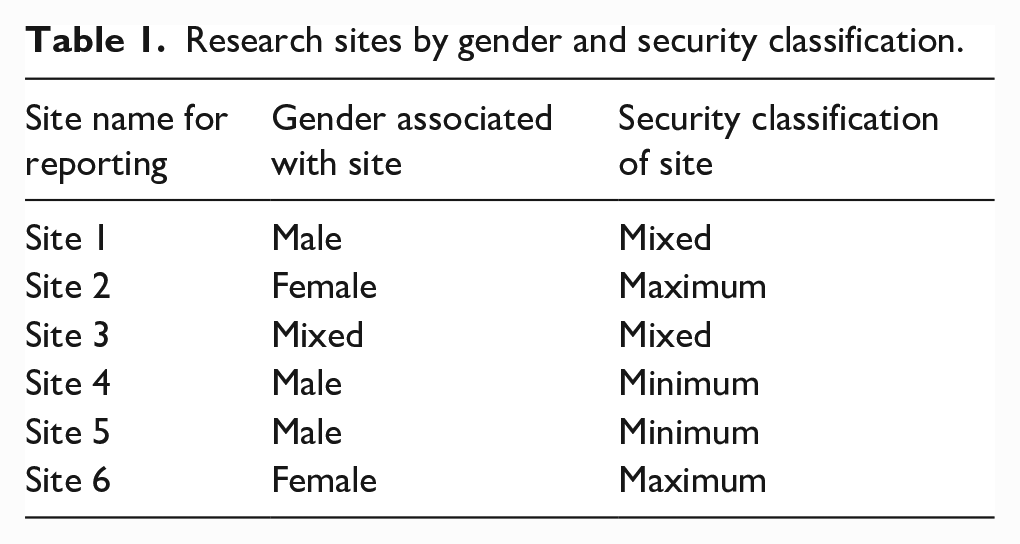
To answer the research questions, six correctional institutions in New South Wales were selected to provide access to participants. Corrective Services New South Wales indicated which prisons were able to accommodate the research, allowing for an even distribution of surveys across security levels and genders. The number of surveys to be distributed at each site was negotiated between the researcher and Corrective Services New South Wales, being mindful of the potential disruption to the day-to-day activities of the prison and the workload of prison staff who would be responsible for the allocation and collection of the surveys. To comply with the required ethical standards, the actual names of prisons are not used in this reporting. They are instead identified by number. In addition, it should be noted that Australian correctional facilities allocate individuals to either ‘female’ or ‘male’ prisons without recognising other possible gender identifications. The following table indicates the genders and security classification of each site, where ‘Protection’ is used to indicate a facility where prisoners are living in protective custody as they are at risk of harm from other prisoners, often due to the nature of their offences (Table 1).
Research sites by gender and security classification.
Data gathering
The gathering of data for this study has been given full approval by a university Human Research Ethics Committee. As agreed with Corrective Services New South Wales, 240 surveys were distributed across all six research sites with each site receiving 40 surveys to distribute. As Australian prisons do not provide internet access to their prisoners, the surveys were printed on paper and were distributed and collected manually by prison staff who were delegated the task by each site’s general manager. The surveys sought to explore the incidence of need across the most commonly identified information needs from previous research on prisoner information needs (Canning and Buchanan, 2019; Emasealu and Popoola, 2016a; Eze, 2016; Rafedzi and Abrizah, 2016; Sambo et al., 2017; Tarzaan et al., 2015). Participants were asked to identify previous or current information needs in the following information areas: legal, education, spirituality, health, prison life, and reintegration. For each information area, participants were asked to identify their preferred source or sources of information from the following options: Prison library, tablet device, staff, family/friends, health service, television/radio, books etc. not from the prison library, or other. Participants selecting ‘other’ were asked to identify the source they had used to meet their information need through free text, making this the only open question in the survey. Participants were also asked to identify if they had never needed information from each area, and if they have had an information need that had not been met across each information area. Each site was successful in the gathering of data through the surveys except for Site 5 which returned no surveys. The return rate across all six sites was 44.6%, amounting to 106 surveys returned. Fifty-two participants were living in prisons for women, while 54 participants were living in prisons for men. Fifty-one participants were living in maximum-security prisons, 25 were living in minimum security prisons, and 30 were living in prisons with mixed security levels.
Data analysis
Quantitative data from the paper surveys were transferred to a spreadsheet for a basic analysis through counting the number of participants experiencing information needs across each area, their preferred information sources when attempting to meet those needs and the total number of unmet needs. The number of participants who did not experience an information need for each information area was also counted. Free text responses associated with the use of the source option ‘Other’ were either allocated to one of the listed information sources if appropriate or noted as a unique response if this allocation was not possible. Observations were made of response differences across each security classification level and by gender.
Findings
The following findings were gathered from the quantitative and free text data taken from participant surveys. Quantitative survey data has been used to generate tables of incidence of information need, and sources interrogated. The quantitative data illustrate the findings for each information area, followed by an illustration of participant experiences for each gender, and then for each security classification.
Legal information
Participants indicated they had a need for legal-related information related to their case notes, charges, court dates and court processes, legal rights, sentencing tables, parole, legal paperwork, immigration matters, appeals, bail, compensation, family law, understanding legal terminology, gaining or granting Powers of Attorney, and in receiving assistance from government-supported legal aide. The following chart indicates the percentage of participants across all research sites who sought legal information from various sources. It also indicates the percentage of participants who were unable to satisfy their needs for legal information, and those who stated they did not have this information need.
Figure 1 indicates that across all sites, 32% of participants sought their legal information from other prisoners, 24% from family and friends and 15% from staff. Twenty-six percent used other sources that included their legal representative or government-supported legal aide. Twelve percent used their library and 8% their tablet device. Twenty-five percent did not find the legal information they needed. Twelve percent reported that they did not need legal information. While the prison libraries satisfied some of the legal information needs, there is a significant reliance on other prisoners, family and friends and staff for legal information. Unmet information needs are also significant in number.
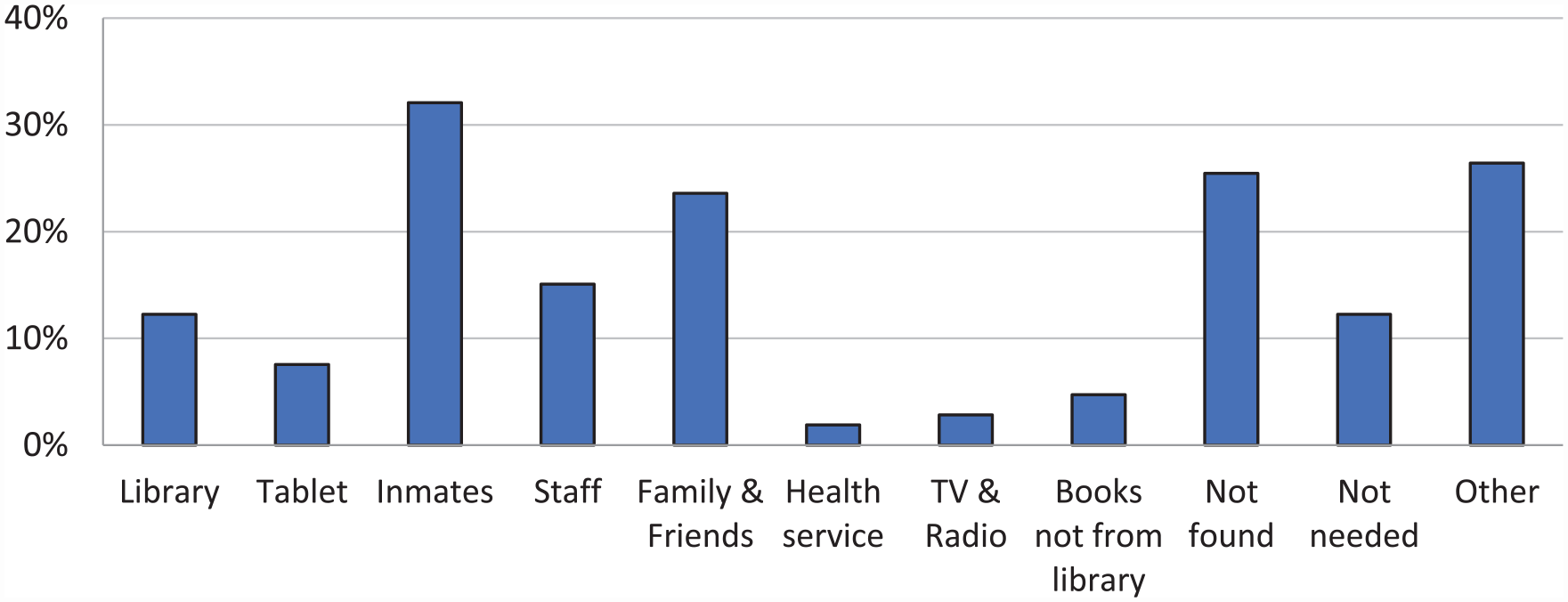
Percentage of inmates seeking legal information from various sources – all sites.
Education-related information
The education-related information that participants needed related to basic literacy, computer and typing skills, English language and general education classes, university and vocational education courses, traineeships and apprenticeships, general life skills programmes such as parenting and first aid, and programmes to prepare for life after release. As well as formal education programmes and classes, participants were also interested in education-related information about a variety of topics including Buddhism, psychology, science, history, current affairs, music, health, religion, food and literature. The following chart shows the percentage of participants across all sites studied that used each source to satisfy their need for education-related information.
Figure 2 indicates that across all sites, 30% of participants sought their education-related information from staff, 28% from other prisoners and 20% from family and friends. Fifteen percent used their library and 6% their tablet device. Twenty-nine percent did not find the education-related information they needed. Ten percent reported that they did not need education-related information. While prison libraries satisfied some of the education-related information needs, there is a significant reliance on staff, other prisoners and family and friends for education-related information. Unmet information needs are also significant.
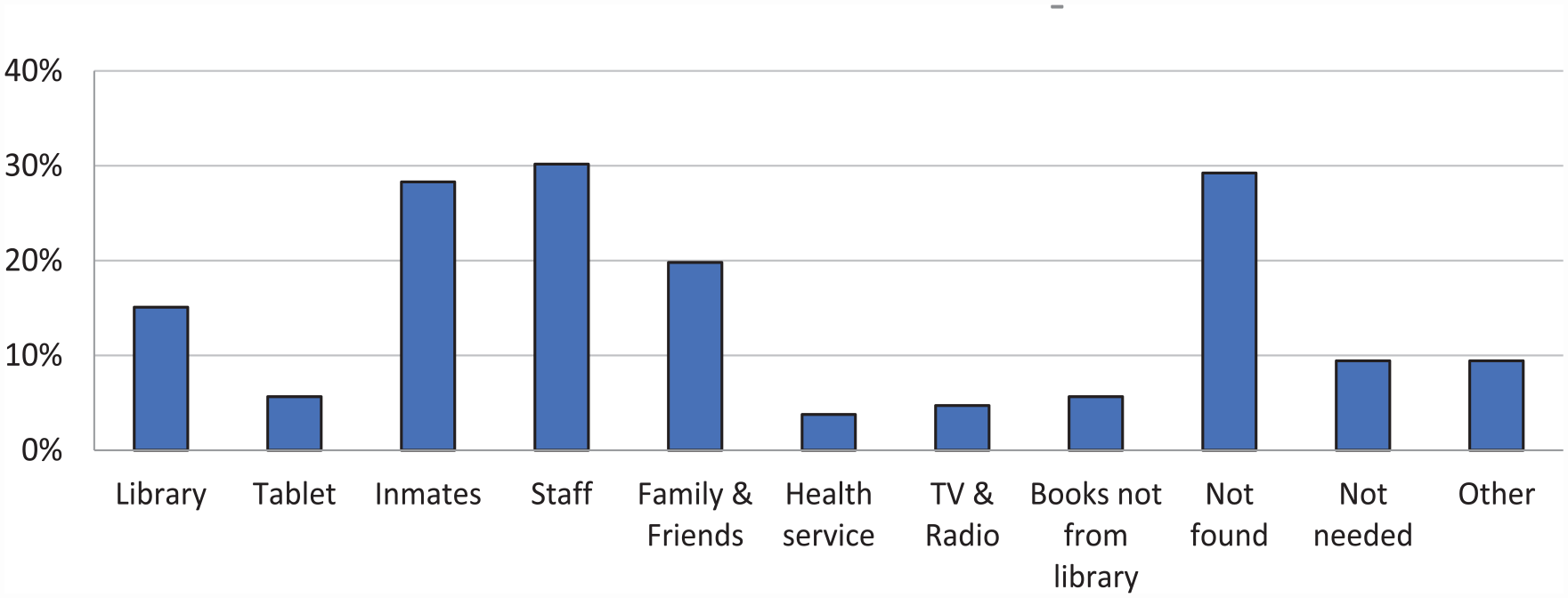
Percentage of inmates seeking education-related information from various sources – all sites.
Spirituality-related information
The spirituality-related information that participants needed related to spiritual programmes, coping with loss, assistance with religious texts, accessing rosary beads, Bibles, Islamic texts, Bible study classes and personal programmes run by the chaplain, and general information about Christianity, Hinduism, Buddhism and Muslim religions. The following chart shows the percentage of participants across all sites studied that used each source to satisfy their need for spirituality-related information.
Figure 3 indicates that across all sites, 41% of participants sought their spirituality-related information from staff. In all cases this referred to the prison chaplain. Twenty-three percent sought their spirituality-related information from other prisoners, and 10% used their library. Seven percent did not find the spirituality-related information they needed. Thirty-five percent reported that they did not need spirituality-related information. No participants used their tablet for their spirituality-related information needs. The prison chaplain was the primary source of spirituality-related information. While the libraries satisfied some of the spirituality-related information needs, there was also significant reliance on other prisoners. Many of the participants did not need spirituality-related information.
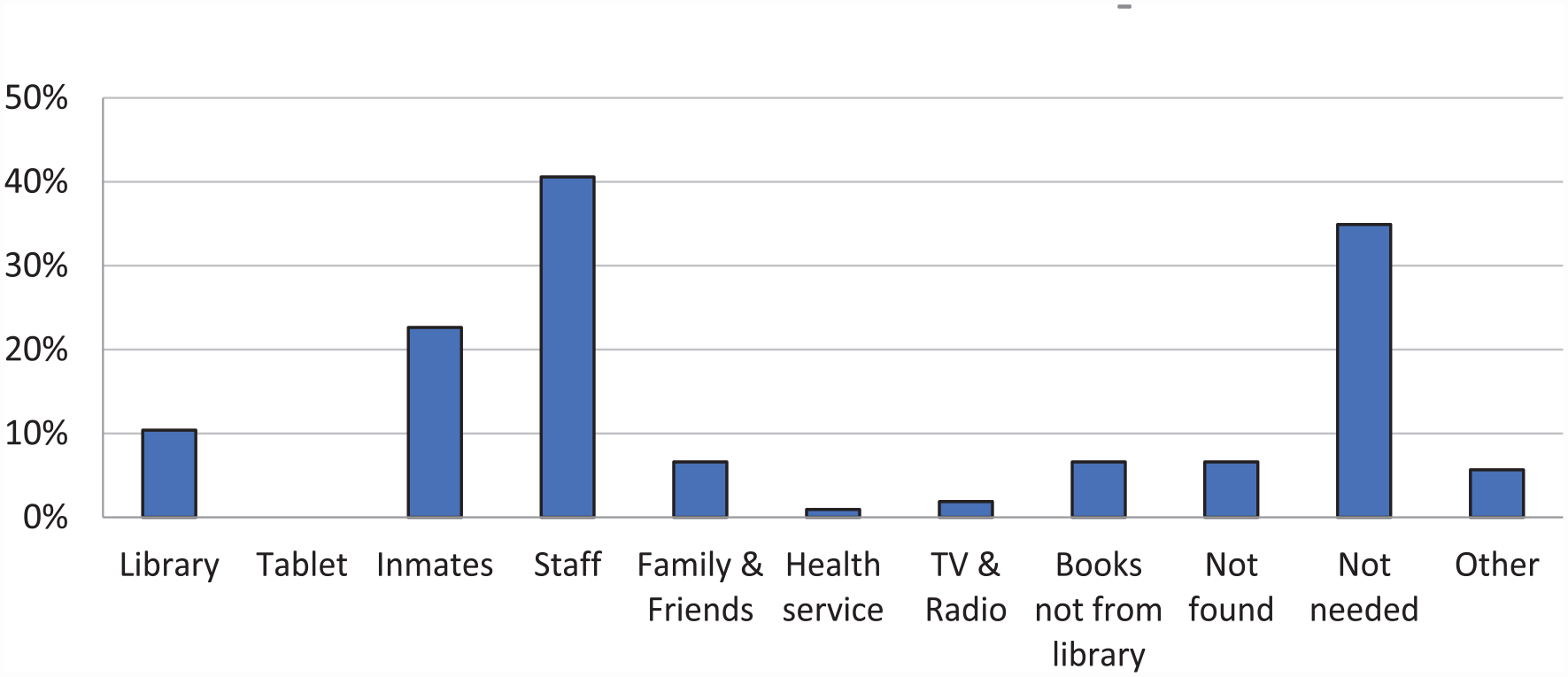
Percentage of inmates seeking information about spirituality from various sources – all sites.
Health-related information
The health-related information that participants needed related to their medications, exercise routines and fitness, mental health in general, and specifically anxiety, stress, trauma, Post-Traumatic Stress Disorder and depression. Personal health records, psychological counselling, drug withdrawal, rehabilitation programmes, and safe health practices were other common health-related information needs. Prisoners also needed information about specific conditions including bipolar disorder, skin checks, hay fever, insomnia, diet and weight management and pregnancy. The following chart shows the percentage of participants across all sites studied that used each source to satisfy their need for health-related information.
Figure 4 indicates that across all sites, 37% of participants sought their health-related information from the provided health service, 29% from staff, and 19% from other prisoners. Eight percent used their library and 4% their tablet device. Twenty-eight percent did not find the health-related information they needed. Five percent reported that they did not need health-related information. The health service was the primary source of health-related information. While the libraries satisfied some of the health-related information needs, there was also significant reliance on other prisoners for spirituality-related information. Very few participants stated they did not need health-related information.
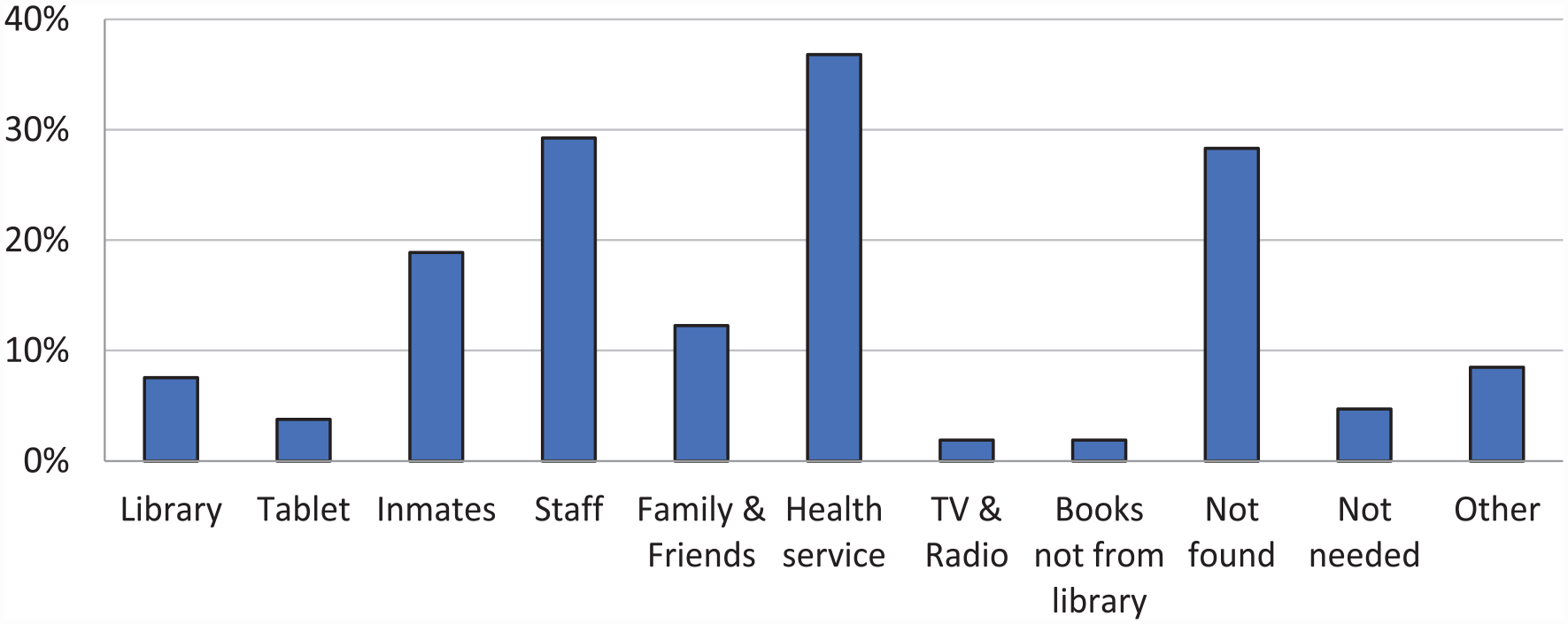
Percentage of inmates seeking information about their health from various sources – all sites.
Prison life-related information
The information regarding prison life that participants needed related to prison rules, regulations and schedules, prisoners’ rights while in jail, accessing details of their personal prison accounts and ways to manage them, accessing resources and services, accessing and completing request forms, using the prison phones and computers, and where to go for advice. The following chart shows the percentage of participants across all sites studied that used each source to satisfy their need for information related to prison life.
Figure 5 indicates that across all sites, 55% of participants sought their information related to prison life from other prisoners, 31% from staff, and 8% from family and friends. Five percent used their library and 6% their tablet device. Thirteen percent did not find the information they needed that related to prison life. Eleven percent reported that they did not need information related to prison life. Other prisoners were the primary source of information related to prison life. While the libraries satisfied some of the information needs about prison life, there was also significant reliance on staff for this information. Many of the participants did not need information related to prison-life. This was often the experience of participants who had served previous terms of imprisonment.
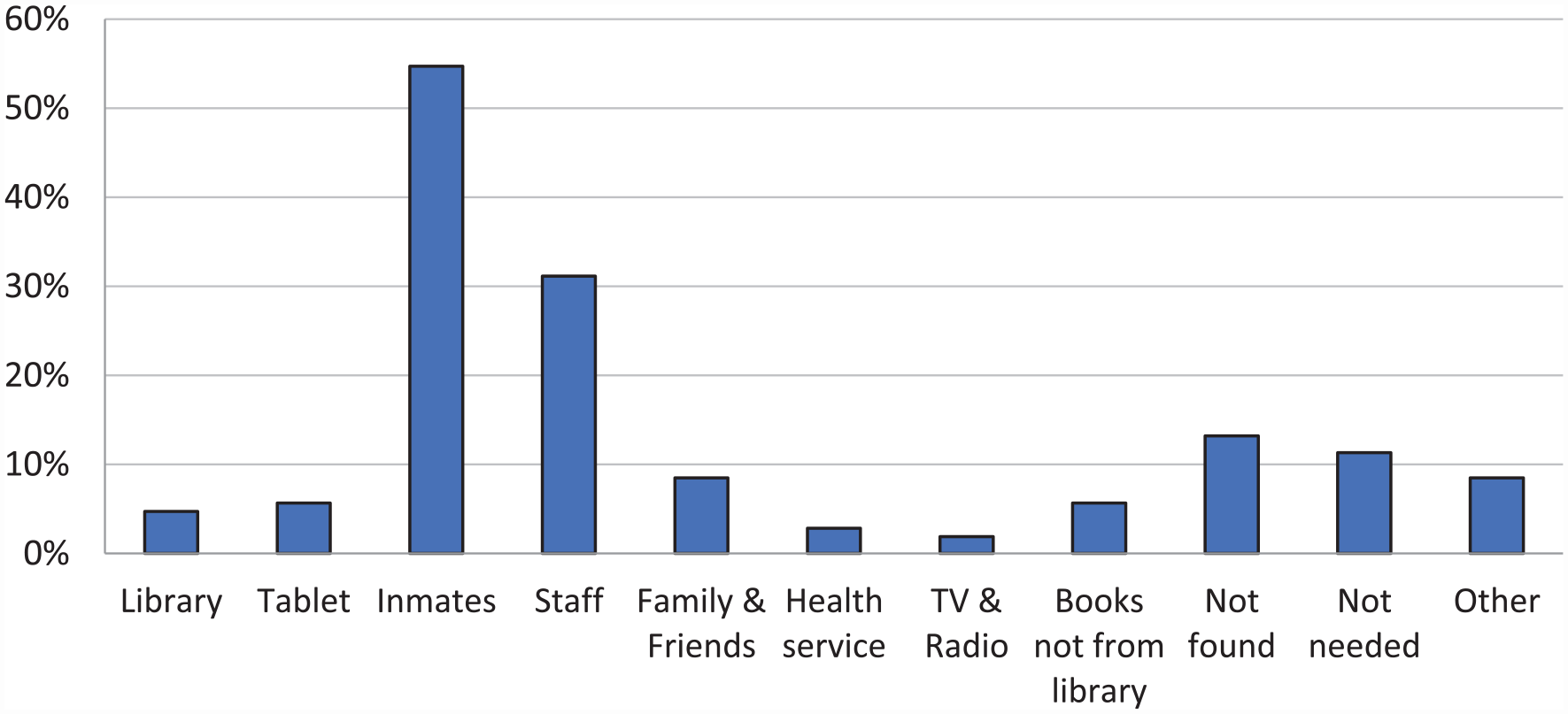
Percentage of inmates seeking information about prison life from various sources – all sites.
Reintegration information
The information regarding reintegration that participants needed related to parole conditions, housing and housing lists, employment and job seeking, financial entitlements, benefits and general support after release, banking, drivers’ licences, education options to prepare for release and after release, and other general support services. The following chart shows the percentage of participants across all sites studied that used each source to satisfy their need for information related to reintegration.
Figure 6 indicates that across all sites, 33% of participants sought their information related to reintegration from staff, 22% from family and friends and 15% from other prisoners. Four percent used their library and 4% their tablet device. Twenty-one percent did not find the information they needed that related to reintegration. Nineteen percent reported that they did not need information related to reintegration. While the libraries satisfied some of the information needs about reintegration, staff were the primary source of information related to reintegration. Other prisoners and family and friends were also significant sources of the reintegration information needed by participants. A significant number of participants reported not needing reintegration information, in many cases because they were not near the end of their sentences.
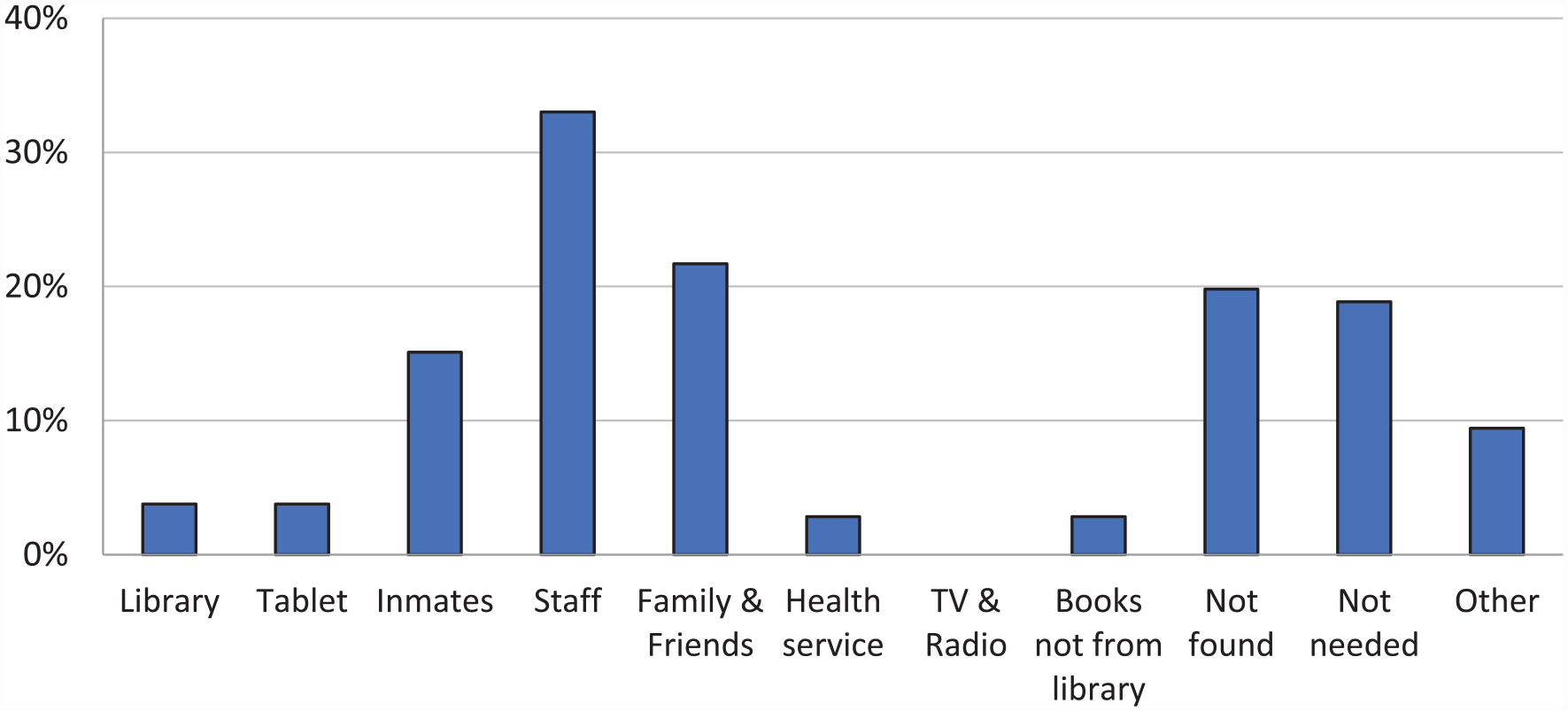
Percentage of inmates seeking information about reintegration from various sources – all sites.
Differences by gender
The participant sample was comprised of 52 females and 54 males. This disparity, although small, would render a simple count of information seeking practices between genders an inaccurate measure of any observable differences between the genders. Therefore, the analysis uses ratios to observe the difference in information seeking. The following table and chart use data adjusted for sample size and indicates the ratio of information sources used in an attempt to meet information needs, by gender.
The gender-related data in Figures 7 and 8 tell us that for every one male using a prison library to meet an information need, there are 0.561 females doing the same. Put more simply, the data indicates that male participants were nearly twice as likely as female participants to use their library to meet an information need. It is important to note that this result, along with the result relating to tablet devices, cannot be used as an indication of preference. It is instead an indication of availability: men are more likely to use a prison library as an information source because the participants in the prisons for men studied were provided better access to libraries than the women were offered in their prisons. Likewise, the data indicates that for every one male prisoner using a tablet device in an attempt to meet an information need, there are 2.192 women doing the same. Again, this is not an indication of preference but is an indication of availability of tablet devices. Where the data can tell us something about preference is in an analysis of the use of sources that are available to all genders: other prisoners, staff, family/friends, health service, television/radio, books etc. not from the library, and other. The male participants were more likely to turn to other prisoners as a source of information than female participants, although not significantly so. Males are also more likely to seek information from their health service, and books etc. not from the library than females, but again, the differences between genders are not significant. The choices of information sources by male and female participants were most significantly different when considering prison staff, family/friends, and television/radio as information sources. Male participants were more likely to seek information from family and friends, and the television or radio than female participants, while female participants were more likely than male participants to seek information from prison staff.
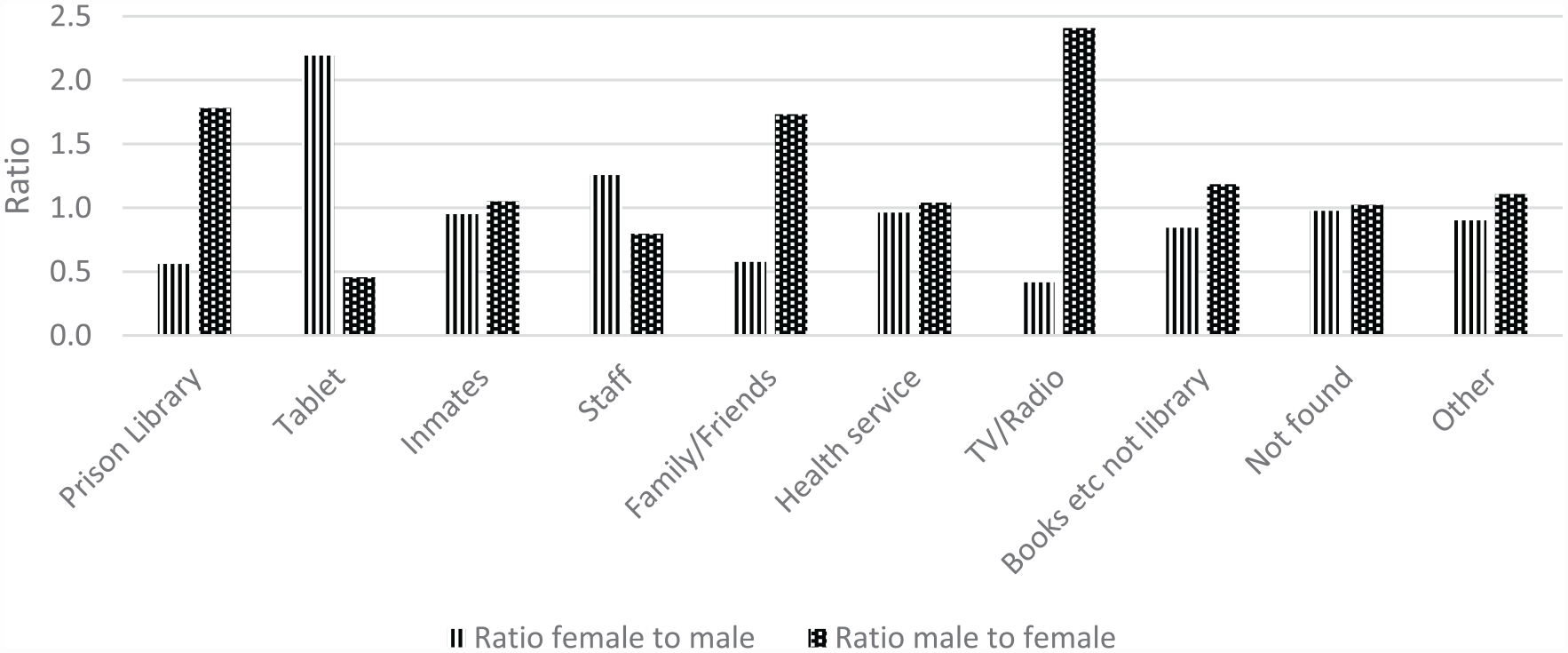
Ratios of sources used in an attempt to satisfy information needs, by gender, adjusted for sample sizes.
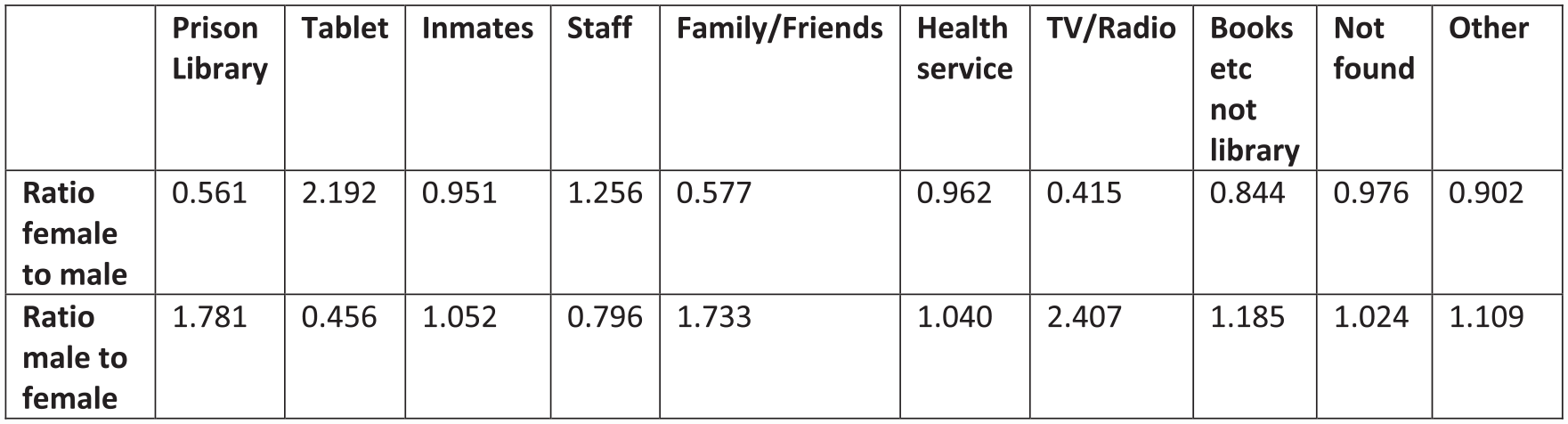
Ratio of female to male, and male to female of sources used in an attempt to satisfy information needs.
The type of information needed by each gender is simpler to examine. The following chart shows the need for each type of information studied by gender.
Figure 9 indicates that female participants had slightly higher needs for legal, spirituality, health, and prison life-related information, while male participants had slightly higher needs for education and reintegration-related information.
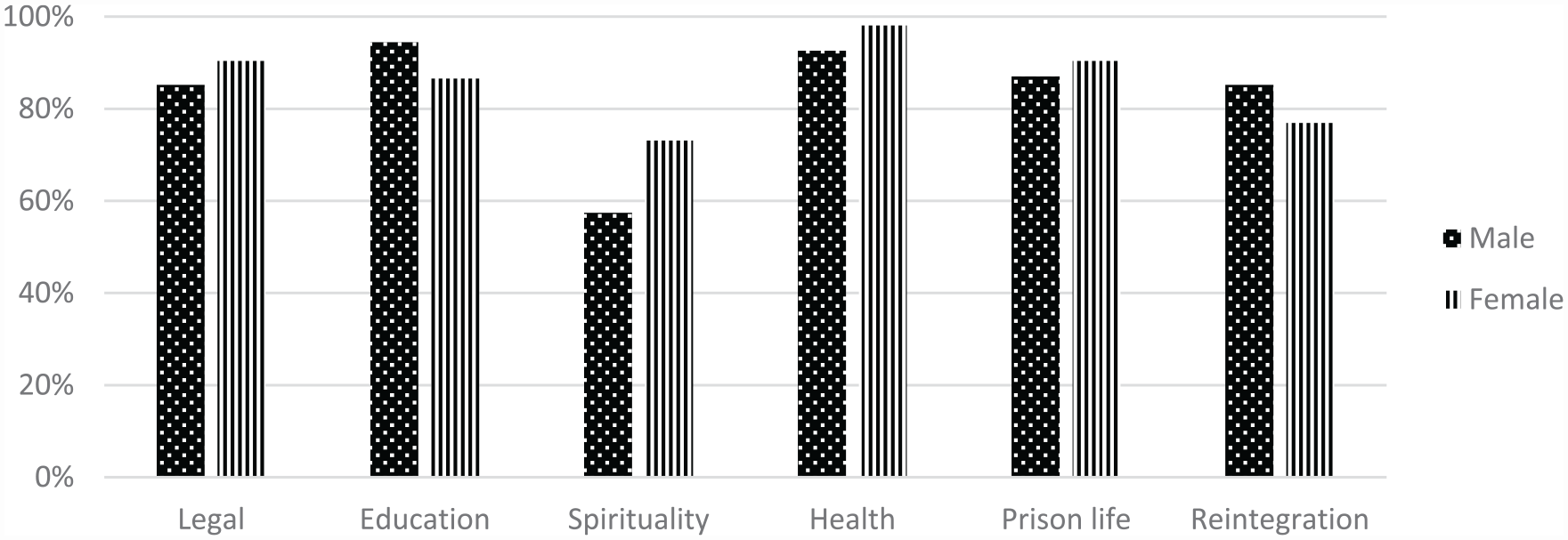
Percentage of inmates who needed information, by gender.
Differences by security classification
Participants were living in maximum-security prisons, minimum security prisons, and mixed-security prisons. The following chart indicates the percentage of participants from each classification who had experienced a need for information in each information area.
Figure 10 indicates that across most information types, the classification level of participants had little impact on their information needs. The two exceptions are for spirituality-related information where minimum security participants are less likely to express an information need than participants from other security classifications, and reintegration-related information where minimum security participants are more likely to experience this information need than participants from other security classifications.
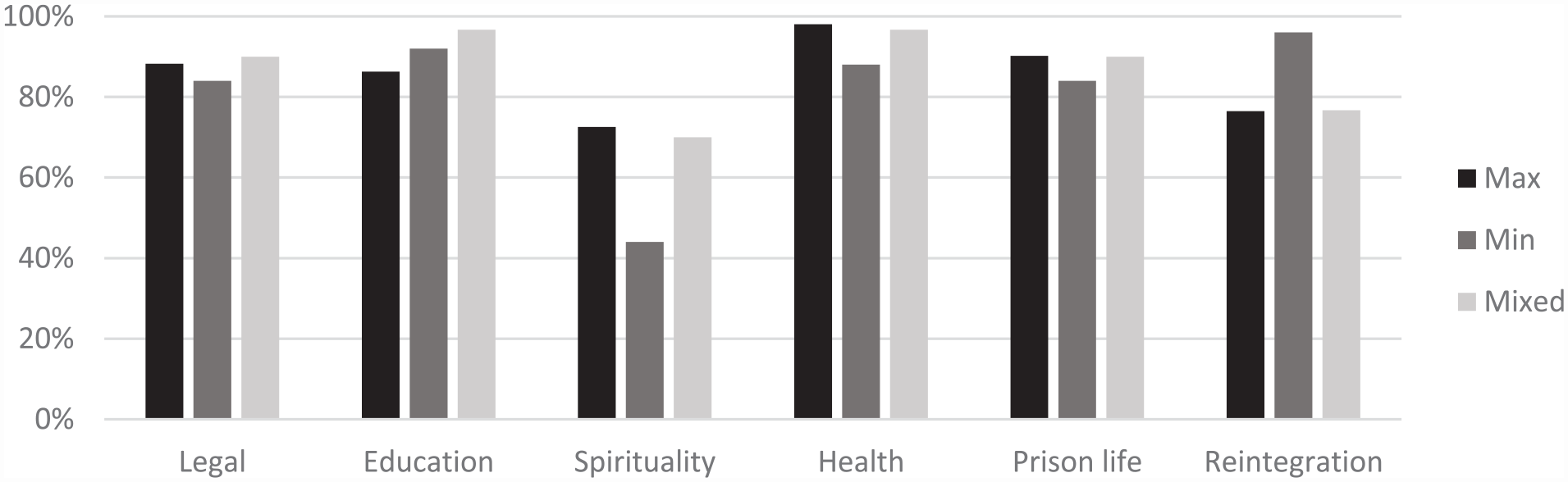
Percentage of inmates who needed information, by security classification.
Unmet information needs
There were unmet information needs across all participant groups and all information types. The following table shows the number of participants who indicated they had an information need across each information type, the number of participants whose information need was not able to be satisfied, and the percentage of participants with information needs who were not able to satisfy those needs.
Figure 11 indicates that participants had experienced information needs that remained unmet across each of the six information areas. Information needs relating to education were the most likely to remain unmet, with 32% of participants unable to meet their education-related information needs. Participants were most successful in meeting their spirituality-related information with only 10% of participants unable to meet their information needs in this area.
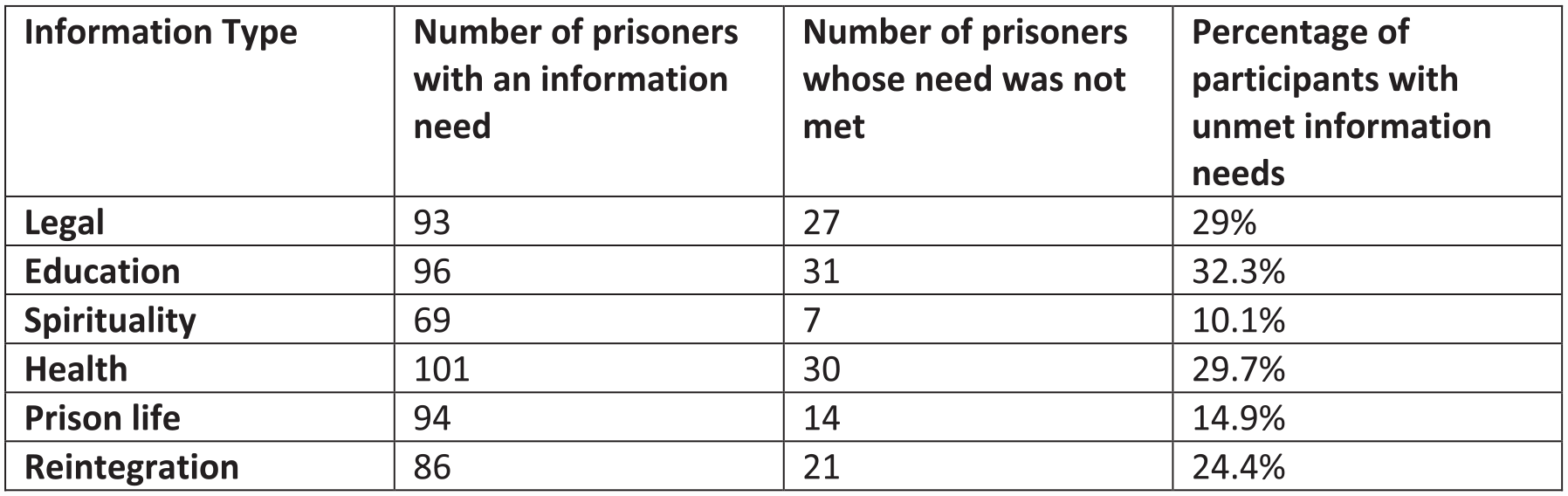
Unmet information needs by information type.
Use of prison libraries to meet information needs
All participants who answered this project’s survey were asked to rate the ability of their prison library to meet their information needs, choosing between the options ‘very well’, ‘quite well’, ‘not at all well’, and ‘don’t use’. The following chart illustrates the results from this question.
Figure 12 indicates that 58% of participants describe their prison library’s ability to meet their information needs as ‘not at all well’. Only 8% of participants describe their prison library as meeting their information needs ‘very well’. Eighteen participants reported they never use their prison library; 12 of these participants reported they do not use a library because they are never provided with access to one.
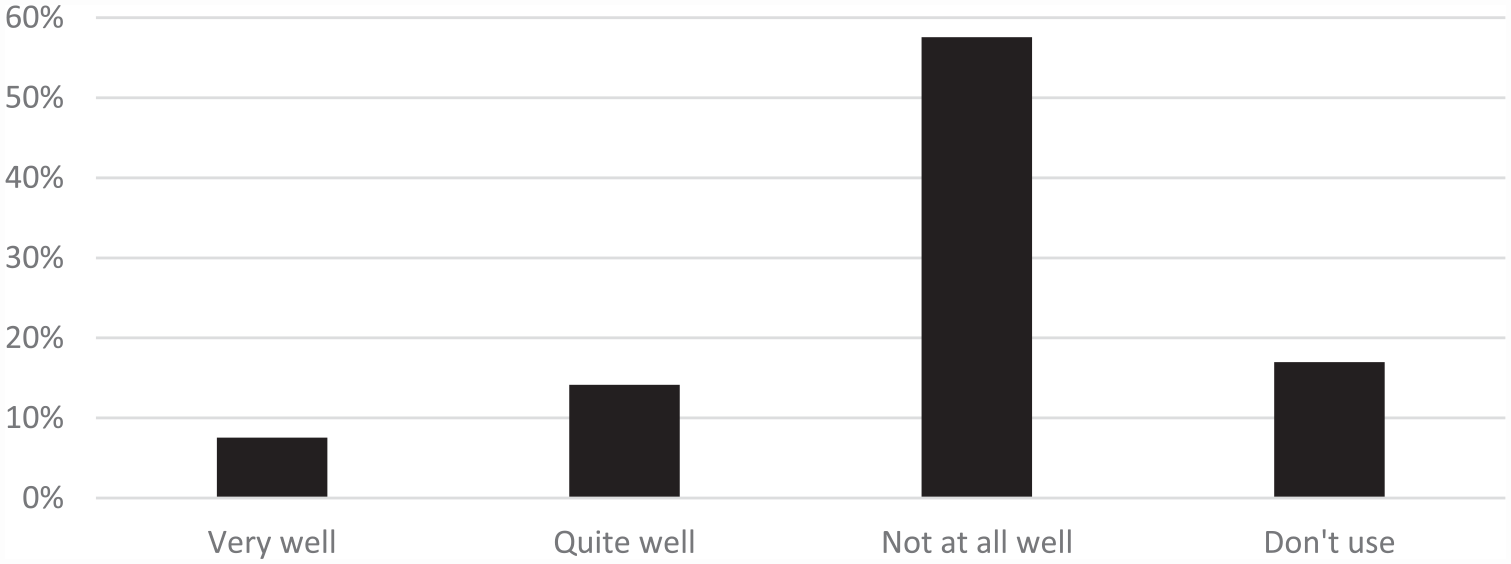
Percentage of inmates rating ability of library to meet their needs – all sites.
Discussion
As in the information worlds outside prisons, the capacity for an individual to meet their information needs is dependent on the accessibility of information resources that can meet those needs. Unlike many information worlds, the information world of people living in prison is severely compromised by the banning or severe restriction of access to most of the information sources that many of us outside prison take for granted. The participants of this study expressed information needs across all six of the explored information areas: legal, education, spirituality, health, prison life, and reintegration, and the participant group experienced a significant number of unmet information needs across each of these areas.
These findings support those of similar research based in countries other than Australia, such as the research undertaken by Canning and Buchanan (2019) and Eze (2016). One point of departure between the findings of Eze (2016) and the findings of the current project related to the need for spirituality-related information. Eze’s participants stated they had a ‘very high need’ for spirituality-related information, placing this area of information in the most highly sought-after category of that study. In contrast, information about spirituality was of the least interest to Australian participants (see Figure 10). This is perhaps characteristic of the Australian population with 39% of Australians reporting they have no religion in the most recent population census (Australian Bureau of Statistics, 2022) compared with only 2% of Nigerians reporting the same (Office of International Religious Freedom, 2022). Despite the low level of interest in spirituality-related information compared with other prison populations, of those participants who did express a need for this information, 41% chose the prison chaplain as their preferred source. The inclusion of chaplains in prisons is supported by Rule 65 of the Nelson Mandela Rules (United Nations General Assembly, 2016) that states that a fulltime chaplain should be employed at all prisons for each religion represented by a sufficient number of prisoners. The contribution of prison chaplaincy is explored in a Welsh study which notes this contribution extends beyond the provision of religious services, to a broad system of support to both prisoners and prison staff, particularly those in crisis (Todd and Tipton, 2011). This finding raises the possibility that the use of chaplains as an information resource is likely to extend beyond just spirituality-related needs.
Participants in the current study frequently reported information needs regarding their health. Specifically, they commonly sought information to support the management of anxiety, stress, trauma, Post-Traumatic Stress Disorder and depression. The two most utilised information sources interrogated in an attempt to meet these needs were the provided health service (37% of participants), and staff (29% of participants). Of the participants experiencing a health information need, 28% were unable to find what was needed. The provision of mental health care in Australian prisons has been described as complex, under-resourced and insufficiently funded compared to services provided to the general public (Davidson et al., 2020). This is despite 40% of prisoners reporting a diagnosis of a mental health disorder at some stage of their lives (Australian Institute of Health and Welfare, 2022). The high levels of reliance on prison staff as a source of health-related information, and the high levels of unmet health information needs including information about mental health is perhaps inevitable in a prison environment that has been described as needing considerable improvement in terms of its provision of mental health care to prisoners (Australian Government Productivity Commission, 2020). While the healthcare services provided to Australian prisoners remains under-resourced and under-funded, prisoners experiencing health-related information needs can be better supported through appropriately stocked prison libraries, as access to suitable magazines, books and brochures has been identified as one means to improve health outcomes for prisoners (Novisky et al., 2022). A well-stocked and accessible library could result in a lessening of prisoner reliance on prison staff for health-related information and may reduce the level of unmet health information needs.
The need for information about health issues often extends into the re-entry and reintegration process for prisoners who need to continue their health care after they have been released from custody (Mellow, 2022). The need for health-related information at the point of re-entry can include information regarding accessing funds for health care, eligibility for medical insurance and benefits, locations of healthcare providers, introductions to drug and alcohol programmes, and pharmaceutical providers and the processes required to receive prescriptions for medications. The challenges faced by people leaving prison extend beyond healthcare to include securing accommodation and employment, reconnecting with family, and learning to live independently after periods of institutionalisation (Carey et al., 2022). It is recognised that the support given to people as they prepare to leave prison, and in the time that follows their release is essential to reducing the chances of them returning (Herrlander Birgerson and Dwyer, 2023). Of the participants in the current study who had at some time needed reintegration information, 21% never received the information they needed. With 33% of participants turning to prison staff in an attempt to meet their reintegration-related information needs, providing information resources from external service providers who can support people as they leave prison could perhaps be beneficial to prisoners, and reduce the burden placed on prison staff.
Prison staff were also identified as a major source of information enquiry for prisoners seeking information about life and education in prison. Other prisoners were also commonly interrogated sources for this information, particularly regarding information about prison life. Adjusting to prison is a challenge to all prisoners, regardless of their past experiences with incarceration. Butler (2019) identifies these challenges as including adjusting to new routines and expectations, a lack of privacy, changes in status, loss of control over one’s own life, changes to what can be owned, and in the amount of emotional support available to them from those around them. The importance of the role of custodial staff in the success or otherwise of people adjusting to prison life is highlighted by Vuolo and Kruttschnitt (2008) who found the role of prison staff to be critical. With 55% of participants in the current study seeking prison life-related information from other prisoners, and only 31% of participants seeking this information from prison staff, it could be argued that encouraging prisoners to learn about prison life from well-prepared staff may be advantageous in assisting people to adjust to prison life. As 30% of participants in the current study are also turning to prison staff to find information about education within prison, and 29% never finding what they need, it could also be argued that prison staff could be prepared better to answer education-related information queries. Again, prison libraries can be used as educational resource centres to support opportunities for informal learning, literacy attainment and improvement, and as a conduit into formal learning opportunities within the prison by providing information about what classes are available.
The legal information seeking processes of participants indicates problematic practices are undertaken by prisoners as they attempt to meet these needs. Thirty-two percent of participants sought legal information from other prisoners, while only 26% of prisoners were able to seek legal information from a legal professional. A heavy reliance on other prisoners for legal advice suggests poor access to legal service providers such as the government-funded Legal Aid and private legal representatives. This is a proposition supported by a Law Council of Australia and The Justice Project (2018) that found there are critical gaps in the provision of legal services to prisoners in Australia, particularly in regard to legal cases other than those that resulted in the current period of incarceration, such as family, probate and civil law matters. Poor access to legal support services while in prison is likely to explain the dependence on other prisoners as sources of legal information. Martinez-Aranda (2023) uses the phrase ‘precarious legal patchworking’ to describe the process prisoners without strong legal support must undertake to find the legal information and assistance they need. She argues that such a process is fragile and can lead to worse legal outcomes than what might be expected had appropriate legal support been available. The provision of legal information resources to prisoners through their prison library is mandated by Principle 2.3.6 of the Guiding principles for Corrections in Australia (Corrective Services Administrators' Council, 2018) that states: ‘Prisoners are provided with library services for legal, recreational and educational needs’. Improved access to legal resources through prison libraries may allow prisons to comply with this Principle more closely and may reduce prisoners’ reliance on other prisoners when attempting to meet their legal information needs.
The data from this study indicates that there are differences in the information seeking behaviours of female and male prisoners with female prisoners expressing a higher need for legal, spirituality, health, and prison life-related information than male prisoners. In contrast, male prisoners are more likely to seek education and integration-related information than female prisoners. Their choices of information sources also differed with female prisoners preferencing prison staff as a source of information compared to male prisoners, and male prisoners preferencing family and friends, and radio and television as information sources compared to female prisoners. A United States study (Kelmor, 2016) that looked at the requests for legal information by both male and female prisoners also found differences in the information needs of male and female prisoners. The research found male prisoners will focus their legal information seeking on their specific cases, while female prisoners focus on legal matters pertaining to their children, domestic abuse, marital status and restraining orders. The choice of family and friends as a preferred information source for male prisoners is reflected by Hickert (2022) in a study that found male prisoners are more likely to maintain relationships and receive visits from female partners than female prisoners are from male partners. Female prisoners are less likely to have support from a male partner during their incarceration than male prisoners are from female partners, thereby reducing their opportunities to request and receive information from male spouses and partners. In a Danish study of prisoner visitation patterns, Anker and Wildeman (2021) also found that female prisoners are less likely than male prisoners to receive visits from family. This was particularly true for females without parenting responsibilities. The results of these studies support the observation that male prisoners are more likely than female prisoners to attempt the satisfaction of their information needs through family and friends, while female prisoners are more likely to seek information from prison staff. It is possible this occurs because female prisoners lack the opportunities to call on family and friends for help with the same ease as male prisoners.
This study is unable to determine the preference of prison libraries and tablet devices as sources of information compared to other information sources as there was no equality of access to these sources across the cohort. Therefore, the use of prison libraries and tablet devices in participant attempts to satisfy information needs was not determined by preference alone but was also heavily influenced by access and availability. All research sites studied did provide some access to their prison libraries for some prisoners, but 12 participants reported they are not granted access to their library. For those prisoners who do have access to a prison library, these libraries are not meeting their users’ information needs at all well. Participants reported that very poor access to their library was common, with most access to books and reading being facilitated through satellite collections housed in cell blocks. In some cases, these satellite collections were refreshed from time to time, but there was no capacity to request specific books or genres to be included in these collections. These satellite collections were not provided to meet the information needs of prisoners but are instead comprised of books for recreational reading. Clearly there are opportunities for prison libraries to develop their collections in ways that better meet their users’ needs. This paper can serve as a starting point to understanding what those needs are, but as with all library collections, a thorough user-needs analysis would support the development of suitable collections in prison libraries.
When considering the information sources that prisoners use to attempt to meet their information needs, Chatman’s (1991) study of information behaviours of people living in ‘small worlds’ such as prisons provides an interesting lens through which to consider the data of this current project. Chatman’s theory provided six propositions that describe how information is sought in small worlds, the final two stating that members of a small world will not cross the boundaries of that world to seek information unless that information is considered critical, collectively relevant, and that life in the small world is seen as no longer functioning. The data being considered in this current study indicates that the members of the small worlds of the prisons studied here are frequently moving beyond the boundaries of their small worlds to seek information from family and friends, health services, television and radio, and books not found in their prison libraries. Some of the information sought could be considered ‘critical’, but this is not always the case. A further discussion of the current data in the light of Chatman’s theories can be found at (Garner, 2022).
This study has explored the information needs of Australian adult prisoners, the sources they utilise in their attempts to meet those needs, and the degree to which those needs remain unmet. The data indicates that their information needs are significant, but their capacity to meet those needs is severely constrained by the lack of access to suitable information sources such as prison libraries that are developed to meet the information needs of their users. Denying or restricting access to information is an abuse of human rights as determined by the United Nations General Assembly (1948) as specified in Article 19 that states ‘Everyone has the right to freedom of opinion and expression; this right includes freedom to hold opinions without interference and to seek, receive and impart information and ideas through any media and regardless of frontiers’ (emphasis added). This is further supported by the Nelson Mandela Rules (United Nations General Assembly, 2016), Rule 64 that states ‘Every prison shall have a library for the use of all categories of prisoners, adequately stocked with both recreational and instructional books, and prisoners shall be encouraged to make full use of it’. Denying or restricting access to any source of information in an environment that is already experiencing information poverty can be viewed as contravening these two key documents and an abuse of human rights.
Limitations and further study
The findings from this current study align well with similar studies conducted in other countries, but also allow an additional understanding of the information needs and seeking behaviours of different genders, and across different levels of security to be examined. It should be noted however that the patterns of information behaviours observed during this study were highly influenced by the individual prisons in which the participants were living. The regimens and physical conditions of each prison determine the degree of access to information provided to their prisoners. Further study could be undertaken by applying the methodology in this study to participants living in other prisons to enable further testing of the findings described here. Further additional study could include the testing of the many theories of information behaviours against data relating to prisoner information seeking. As a cohort deprived of many of the information sources often taken for granted such as the internet, and access to other people beyond their own small world, their information behaviours may be indicative of those of others living in closed communities such as some religious and cultural communities, military personnel undertaking active duty, and those living in other institutional environments.
This report has described the information experiences of Australian adult prisoners from a quantitative perspective. What this paper does not explore is the qualitative exploration of the research. The stories told by participants of the effects of their information poverty on their wellbeing, mental health, and sense of self-worth are not told here. The dehumanising effects of incarceration are well described by writers such as Armour (2012) and Piper and Berle (2019). The dehumanising effect on prisoners of having so little agency in being able to meet their information needs is an experience not illustrated by quantitative reporting, but a story that needs to be told through future research.
Footnotes
Acknowledgements
The gratitude of the author is extended to the men and women living in the prisons visited for this project and who chose to spend time with me and to tell me their stories. Their experiences are important, and their voices are worthy of being heard. I am grateful for the opportunity to pass on some of what they have shared with me.
Declaration of conflicting interests
The author declared no potential conflicts of interest with respect to the research, authorship, and/or publication of this article.
Funding
The author disclosed receipt of the following financial support for the research, authorship, and/or publication of this article: This work was supported by Dr Sue Henczel who provided research assistance for this paper. This project was funded by Charles Sturt University and conducted with the support of Corrective Services NSW and the Department of Justice and Communities NSW who authorised and facilitated access to the prisons and prisoners that became the participants of this research.
