



Abstract
The study aimed to investigate whether mental well-being and generativity predict retirement preferences. Longitudinal data (n = 201) were drawn from the Jyväskylä Longitudinal Study of Personality and Social Development (JYLS). Life satisfaction, psychological well-being, social well-being, and generativity were assessed at ages 42, 50, and 61. Preferred retirement age and willingness to continue working after retirement were assessed at age 61. Bivariate and multivariate logistic regression models were deployed. The results showed that individuals with higher generativity at ages 42 and 61, as well as higher life satisfaction, psychological well-being, and social well-being at age 61, were more likely to prefer later retirement age (i.e., at or after the national minimum retirement age). Those with higher generativity at age 61 were more likely to be willing to continue working post-retirement. Some gender-based differences were observed. Men, but not women, with higher generativity and social well-being at age 42 were more likely to prefer post-retirement working. To conclude, generativity and mental well-being may be relevant in extending the working careers of aging employees.
Keywords
Introduction
People are living longer, on average, and older people today are functioning better physically (Koivunen et al., 2021), cognitively (Munukka et al., 2021), and psychologically (Kekäläinen et al., 2024) compared to older cohorts. In OECD (2023) countries, the average healthy life expectancy at age 65 is about 10 years, meaning that around the time when individuals generally retire, there are many years of active life remaining. Although an active life can also be maintained in retirement, individuals’ working careers can potentially be extended, as doing so can yield benefits in terms of well-being (Dingemans & Henkens, 2015), health (Zhan et al., 2009), and even longevity (Yin et al., 2021). Extending working careers also benefits society by ensuring a sufficient labor force (OECD, 2023). To better understand how to support the labor market participation of older adults before retirement actually occurs, it is important to identify the characteristics of those who wish to retire later or continue working after retirement. Consequently, this study investigated whether the multiple dimensions of mental well-being and generativity, assessed from middle adulthood onwards (age 42, 50, 61), are linked to retirement preferences at the beginning of late adulthood (age 61).
Preferred Retirement Age
Retirement is a complex, dynamic, and individual process, which may be defined in multiple ways (Fisher et al., 2016). When it is not defined as a single, one-time event, the process of retirement evolves over time, starting from the stage of thinking about retirement (preference), followed by the decision to retire (intention) and, finally, the act of retiring (Beehr, 1986). Similarly, the timing of retirement (i.e., retirement age) can be assessed from various perspectives, that is, as preferred, expected/intended, and actual retirement age (e.g., Esser, 2005; Sousa-Ribeiro et al., 2021). In particular, the preference for retirement is expected to reflect the motivational aspects of retirement, since it has been argued to be based on intrinsic considerations and may be free from considerations of the possible consequences of retirement (e.g., financial consequences) (Esser, 2005). Therefore, preferred retirement age is an important indicator of retirement timing in terms of how to support later retirement and the working lives of older adults (Örestig et al., 2013). The preferred retirement age also reflects the actual retirement age (Solem et al., 2016). In this study, we investigated retirement timing from the perspective of the preferred retirement age.
Similar to the predictors of actual and intended retirement (Fisher et al., 2016; Scharn et al., 2018; Topa et al., 2018), various individual factors, such as age, education, and health, have been found to be relevant predictors of preferred retirement age (Pak et al., 2021; Sousa-Ribeiro et al., 2021; Wilckens et al., 2022; Wöhrmann et al., 2020). However, less is known about how mental well-being relates to retirement preferences. Earlier studies suggested that low life satisfaction was associated with intentions to retire early among women (von Bonsdorff et al., 2010), while positive affect at work was related to later intended retirement age (Claes & Van Loo, 2011). Furthermore, poor mental health has been suggested to predict early retirement (Olesen et al., 2012; Topa et al., 2018).
Based on these earlier findings, positive dimensions of mental well-being could be relevant predictors of retirement preferences, especially later retirement preferences. Positive dimensions are not just the opposite of ill-being; rather, they include dimensions such as emotional well-being, psychological well-being, and social well-being, which form the tripartite model of mental well-being proposed by Keyes (2005). Being satisfied with one’s life (an indicator of emotional well-being; Diener, 1984), having feelings of purpose and meaning in life (an indicator of psychological well-being; Ryff, 1989), and being able to contribute to society (an indicator of social well-being; Keyes, 1998) may act as resources for individuals to work longer. More specifically, life satisfaction encompasses various domains of life, such as work and leisure (Diener et al., 1999). Consequently, if individuals are content with their current life, including their career and leisure activities, they may be inclined to maintain their current lifestyle. Career satisfaction predicts work fulfillment (i.e., personal fulfillment through work), which is considered a key motivator for continued employment (Templer et al., 2010). In the meta-analysis by Topa et al. (2009), job dissatisfaction was one of the strongest work-related predictors of planning to retire. Self-fulfillment also relates to psychological well-being (i.e., eudaimonic well-being), as it is seen as living following one’s true self and realizing one’s potential (Waterman, 1993). In addition, meaning in life can be found through experiencing meaning in one’s career (Steger & Dik, 2009), possibly contributing to working longer. High multidimensional mental well-being (including emotional, psychological, and social well-being) has been linked to stable careers (i.e., working in one’s field without many interruptions) (Kokko & Feldt, 2018). Mental well-being has also been found to be a resource for a physically active lifestyle (Kekäläinen et al., 2020; Kim et al., 2020), which may contribute to better work ability (Mänttäri et al., 2021) and, consequently, to working longer. To our knowledge, there are no studies on how mental well-being predicts (later) preferred retirement age.
Working in Retirement
In addition to the timing of retirement, the completeness of retirement is an important aspect of the type of retirement (Beehr, 1986). Bridge employment can be defined in broad terms as any kind of paid work after retirement, but there are many definitions based on, for example, the field of research (see Beehr & Bennett, 2015). Bridge employment also has several forms. For example, working after retirement can occur immediately after retirement or after being retired (delayed), and an individual can work in the same occupation as before retirement or in a different one (Beehr & Bennett, 2015). Also, work-related activities can be conducted as unpaid work through volunteering.
As with retirement timing, various individual factors, such as age, education, wealth, and health, have been suggested to predict bridge employment decisions (Beehr & Bennett, 2015; Carlstedt et al., 2018; Dingemans et al., 2017; von Bonsdorff et al., 2017). Similarly, there is limited knowledge regarding how mental well-being relates to work-related activities in retirement. Concerning volunteering, better mental health (Ahn et al., 2011) and higher emotional well-being (Thoits & Hewitt, 2001) have been found to predict volunteering. Regarding bridge employment, few studies examining the negative dimensions of mental well-being have been conducted, with mixed results. Psychological distress was found to predict full retirement over bridge employment (Bennett et al., 2016), but depression and stress were not associated with the intention to work in retirement (Beutell & Schneer, 2021).
Closely related to mental well-being (Reinilä et al., 2023) is generativity, a concern for guiding and ensuring the well-being of the next generation (Erikson, 1963), which is expected to be linked with retirement preferences. Along with parenting, generativity can be expressed through the sharing of knowledge and experience when working, mentoring, or volunteering (McAdams, 2001; McAdams & de St Aubin, 1992). The meta-analysis by Doerwald et al. (2021) showed that higher generativity was positively linked to multiple work-related outcomes, such as work motivation, occupational self-efficacy, job and career satisfaction, and negatively to job strain. In addition, it has been suggested that work meaningfulness may explain the link between generativity and intentions for working in retirement (Peng et al., 2020). However, the evidence of the relationship between generativity and work-related activities in retirement is mixed. Based on previous literature, generativity strivings were associated with continuing to work after retirement (Zhan et al., 2015). Generative meaning of work (e.g., passing knowledge on to the next generation) was negatively linked to intentions to not work at all and intentions for paid post-retirement work (Micheel, 2021). It was also negatively associated with actual employment during retirement (Fasbender et al., 2016). Furthermore, the same studies had mixed results concerning the link between generativity and volunteering during retirement, as the generative meaning of work was positively related to unpaid post-retirement work (e.g., volunteering; Fasbender et al., 2016; Micheel, 2021), but generativity strivings were not (Zhan et al., 2015). Due to limited knowledge around the links between retirement preferences, especially preferred retirement age, we included generativity as a possible predictor of both preferred retirement age and the willingness to continue work-related activities after retirement in the present study.
The Context of the Study
The pension system in Finland includes an earnings-based pension and national and guaranteed pensions (Finnish Centre for Pensions, n.d.). The old-age pension is the most common form of earnings-based pensions, which starts to accumulate at age 17 for employees and age 18 for the self-employed. The old-age retirement age depends on the year a person was born, and it rises gradually. For example, the lowest old-age retirement age for persons born in 1959 is 64 years and 3 months. Retirement age is linked to life expectancy for those born after 1965. However, those working in the public sector, such as comprehensive school teachers and police officers, have had the option of an occupational (gradually increased since 2018) or personal retirement age (63–65). A partial old-age pension is possible after the age of 61. Individuals can continue to work after the nationally mandated retirement age until the age of 68–70, depending on their birth year. For those born in 1959, the pension can be accumulated until the age of 69. Working can be continued at a later age, but the pension is no longer accumulated. In 2022, 25% of Finnish retirees (including those who received full old-age, partial old-age, or disability pensions) worked while drawing a pension (Finnish Centre for Pensions, 2023).
Although pension systems vary between countries, there are also similarities, such as the flexible retirement age. In Sweden, for example, the earliest age at which one can begin drawing earnings-related national pensions is 63 (Swedish Pensions Agency, 2023). Work can continue until age 69, or even later, if agreed upon with the employer. In the United States, the full retirement age is 66–67 years, and early retirement with benefit reductions is possible from age 62 (Social Security Administration, n.d.). Individuals can continue to work after the full retirement age, but after the age of 70, working no longer contributes to the benefit payments.
The Present Study
The present study aimed to investigate the predictors of retirement preferences at the beginning of late adulthood. The purpose was to investigate whether multiple indicators of mental well-being (i.e., life satisfaction, psychological and social well-being) and generativity (measured at ages 42, 50, and 61) predicted later preferred retirement age (i.e., at or after the national minimum retirement age) or a willingness to continue working after retirement (assessed at age 61).
Although there is a limited amount of knowledge on whether mental well-being and generativity predict retirement preferences, we hypothesized that those with higher mental well-being and generativity would more likely prefer a later retirement age and be willing to continue working in retirement. As the preferred retirement age increases with age (Sousa-Ribeiro et al., 2021), the predictors of retirement intentions assessed at age 61 could be more relevant than those assessed almost 20 years earlier. However, since retirement is a process that evolves over time (Beehr, 1986), it is important to investigate whether there are factors that might be relevant to retirement preferences even before actual retirement decisions are made.
Methods
Participants
This study was based on the Jyväskylä Longitudinal Study of Personality and Social Development (JYLS), which began in 1968 (Pulkkinen, 2017). Twelve randomly selected second-grade school classes from Jyväskylä, Finland, formed the initial sample, with a 100% initial participation rate (initial N = 369) (Pulkkinen, 2017, p. 17). Since then, the study has followed the same 8-year-old participants (born mainly in 1959) at six major data collection points when they were 14, 27, 36, 42, 50, and 61 years old.
In this study, we utilized data from the three most recent follow-ups, where the participants were 42 (conducted in 2001), 50 (2009), and 61 (2020–2021) years of age. These follow-ups were ethically approved by the Ethical Committee of Central Finland Health District (Nos. 42/2000 and 10E/2008) and the Ethical Committee of the University of Jyväskylä (13 December 2019). The participants provided informed consent for their participation in these follow-ups (Kokko et al., 2024; Pulkkinen, 2017, p. 21). The samples of these follow-up phases have been shown to represent relatively well the initial sample and the Finnish age cohort born in 1959 (Kokko et al., 2024; Pulkkinen, 2017, p. 20).
The study sample consisted of 201 (women n = 104; men n = 97) participants, who, at age 61, provided information about their preferred retirement age or willingness to continue working after retirement (the main outcomes). Information about the outcomes and predictors was collected using mailed Life Situation Questionnaires and questionnaires during psychological interviews.
Measures
The preferred retirement age was assessed at ages 50 and 61 with one question: “At what age would you want/would you have wanted to retire?” The preferred retirement age was then dichotomized to 1 = earlier (desire to retire before the national minimum retirement age, which is 64) and 2 = later preferred retirement age (desire to retire at or after the national minimum retirement age, which is 64). The age of 64 and 3 months is the lowest old-age retirement age for Finnish adults born in 1959 and, therefore, age 64 was used as a limit value in this study. The willingness to continue work-related activities after retirement was probed at ages 50 and 61 with one question: “Would you like to continue/have you continued activities similar to work after retirement?” The answer options were 1 = no and 2 = yes. Questions related to retirement were posed to all the participants, regardless of whether they were working or had retired. In this study, we used the term “willingness to continue working after retirement” when referring to this variable, although the question was slightly different for those who had retired.
Predictors of the preferred retirement age and the willingness to continue working after retirement consisted of mental well-being indicators, namely life satisfaction, psychological and social well-being, and generativity. The predictors were measured at ages 42, 50, and 61 using the same items utilized in each data collection phase. The participants reported their satisfaction with seven areas of life (choice of occupation, the content of leisure time, financial situation, housing, present intimate relationship or lack thereof, present occupational situation, and present state of friendships) (Kokko, Korkalainen, et al., 2013). The response scale varied from 1 = very dissatisfied to 4 = very satisfied. The mean value for overall life satisfaction was calculated based on the seven items. Cronbach’s alphas varied between .63 (at age 50) (Kokko, Korkalainen, et al., 2013) and .68 (at age 61) (Reinilä et al., 2023). Psychological well-being was evaluated using a shortened form of the Scales of Psychological Well-being (Ryff, 1989), which consist of 18 items covering six components of psychological well-being (autonomy, environmental mastery, personal growth, positive relations with others, purpose in life, and self-acceptance). The response scale varied from 1 = strongly disagree to 4 = strongly agree, with higher scores indicating higher psychological well-being. The average value of the 18 items was computed, and Cronbach’s alphas were between .75 (at age 42) and .77 (at age 50) (Kokko, Tolvanen, Pulkkinen, 2013). Social well-being was measured by the Scales of Social Well-being (Keyes, 1998), which assesses five domains of social well-being (acceptance, actualization, coherence, contribution, and integration) using 15 items. The 4-point response scale ranged from 1 = strongly disagree to 4 = strongly agree, with higher scores representing higher social well-being. The mean score of the 15 items was calculated, and Cronbach’s alpha values varied between .75 (at age 42) and .79 (at age 50) (Kokko et al., 2015). Generativity was evaluated with 10 items from the Generativity Scale (e.g., “I spend a good deal of time sharing my experience and know-how with younger people”) (Ryff & Heincke, 1983). The 4-point response scale ranged from 1 = strongly disagree to 4 = strongly agree, with higher scores representing higher generativity. The mean value of the 10 items was calculated, and Cronbach’s alpha was .72 in each measurement wave (Reinilä et al., 2023).
We included information about the participants’ gender, education, self-rated health, and financial situation as covariates in the analyses. Gender and education were dichotomous variables (gender: 0 = man, 1 = woman; level of vocational education: 0 = vocational courses or less, 1 = vocational school, vocational college or polytechnic or university). Self-rated health was measured at ages 42, 50, and 61 with one question: “What has your state of health been during the past year?” The 5-point response scale varied from 1 = excellent to 5 = extremely poor. The response scale was reversed to reflect higher values as constituting better health. The financial situation was assessed with one question: “How do you consider your current personal financial situation or that of the family you have set up?” at ages 42 and 50, and “How do you consider the current financial situation of your household?” at age 61. The 4-point scale ranged from 1 = extremely tight financial situation to 4 = extremely good financial situation.
Data Analysis
The analyses were conducted with IBM SPSS Statistics versions 28–30. Independent samples t tests were used to examine the differences in the predictor variables in the groups based on the preferred retirement age and the willingness to continue working after retirement. A paired samples t test was used to assess the average change in preferred retirement age between ages 50 and 61.
Binary logistic regression analyses were used in the main analyses to investigate whether life satisfaction, psychological and social well-being, and generativity assessed at ages 42, 50, and 61 predicted preferred retirement age assessed at age 61 or the willingness to continue working after retirement, also assessed at age 61. In the models, the later preferred retirement age was compared to the earlier preferred retirement age (reference), and the willingness to continue working after retirement was compared to the unwillingness to continue working after retirement (reference). The models were adjusted for gender, education, financial situation, and self-rated health. First, we conducted bivariate models, where each of the predictors from each measurement wave was set to predict the outcome variable in question while adjusting for gender, education, financial situation, and self-rated health. Since the predictors of retirement preferences may differ between genders (e.g., von Bonsdorff et al., 2010), we tested the interactions between gender and each predictor variable at this step. If the interaction term was significant, we conducted the analysis separately for both genders. The results of the interaction models are shown in the supplementary materials (Supplementary Table S1). In addition to the bivariate models, three multivariate models were conducted for both outcome variables, with the predictors from each age stage (42, 50, 61) in separate models.
In addition, for sensitivity purposes, we conducted the same analyses only for those who were not retired, excluding those who were on a part-time or full-time pension at the time the predictors were measured (age 42: n = 2; age 50: n = 9; age 61: n = 36). The results of the sensitivity analyses are presented in the supplementary materials (Supplementary Tables S2 and S3).
Results
Descriptive Results
At age 50, the average preferred retirement age was 59.9 (SD = 4.8) and ranged from 49 to 80 years. At age 61, the average preferred retirement age was 62.2 (SD = 3.7) and ranged from 45 to 70. The preferred retirement age increased by an average of 2.6 years from age 50 to age 61, t(df) = 7.67 (149), p < .001. When the variable was dichotomized, 17% (n = 27) of the participants at age 50 preferred later retirement, whereas at age 61, the proportion was 38% (n = 72). At ages 50 and 61, 58% (n = 104) and 55% (n = 98), respectively, of the study sample were willing to continue working or had continued working after retirement.
Table 1 presents the variations in the mental well-being indicators, generativity, financial situation, and self-rated health measured at ages 42, 50, and 61, along with the distribution of gender and educational background among the two groups based on their preferred retirement age and willingness to continue working after retirement measured at age 61. Those who preferred later retirement had on average higher psychological well-being (p = .043) and generativity (p = .023) at age 42 as well as higher social well-being (p = .009) and generativity (p = .010) and better self-rated health (p = .028) at age 61. Participants who had completed vocational school or college, polytechnic, or university preferred later retirement more frequently than those who had completed vocational courses (p = .010). Those who were willing to work or had continued working after retirement had, on average, better self-rated health (p = .043) at age 50 as well as higher social well-being (p = .041) and generativity (p = .007) and better self-rated health (p = .027) at age 61.
Descriptive Statistics for the Study Variables.
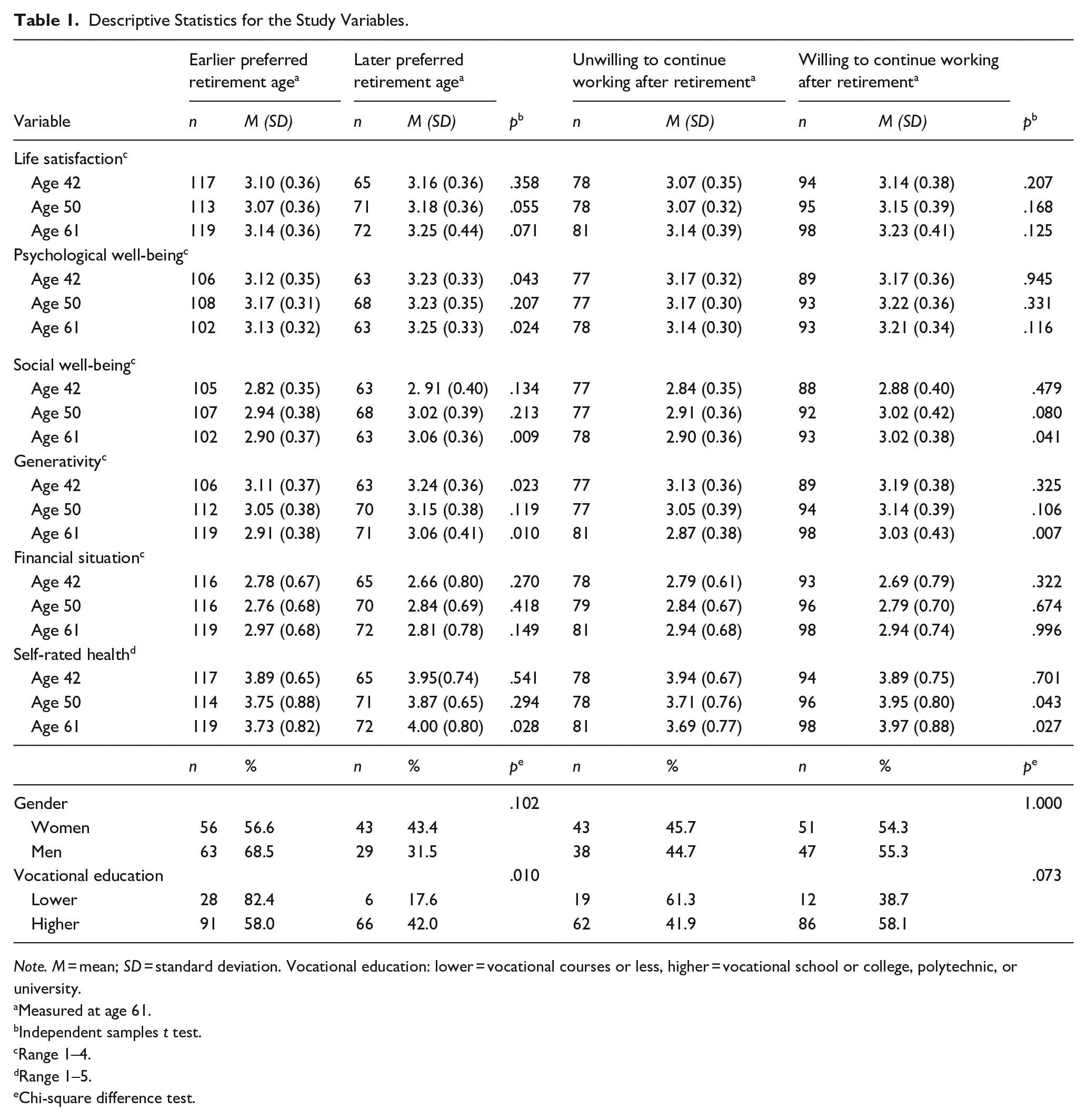
Note. M = mean; SD = standard deviation. Vocational education: lower = vocational courses or less, higher = vocational school or college, polytechnic, or university.
Measured at age 61.
Independent samples t test.
Range 1–4.
Range 1–5.
Chi-square difference test.
Predictors of Later Preferred Retirement Age at Age 61
Based on the interaction analyses, there were no significant interactions between the predictors of later preferred retirement age and gender (Supplementary Table S1). The results of the bivariate models, which included data from both genders, showed that generativity at ages 42 and 61, as well as life satisfaction, psychological well-being, and social well-being at age 61 were independent predictors of later preferred retirement age (Table 2). The higher the levels of generativity, life satisfaction, psychological well-being, and social well-being, the more likely the individual was to prefer later retirement (generativity at age 42: OR = 2.86, 95% CI = [1.12, 7.32]; generativity at age 61: OR = 2.96, 95% CI = [1.27, 6.91]; life satisfaction at age 61: OR = 3.40, 95% CI = [1.28, 9.04]; psychological well-being at age 61: OR = 3.17, 95% CI = [1.004, 10.00]; social well-being at age 61: OR = 3.25, 95% CI = [1.24, 8.51]). In the multivariate models, which included all predictors for each age stage, only life satisfaction at age 61 remained as a statistically significant predictor of later preferred retirement age (OR = 4.61, 95% CI = [1.39, 15.26]) (Table 2).
Bivariate and Multivariate Binary Logistic Regression Models Predicting Later Preferred Retirement Age (Reference: Earlier Preferred Retirement Age).
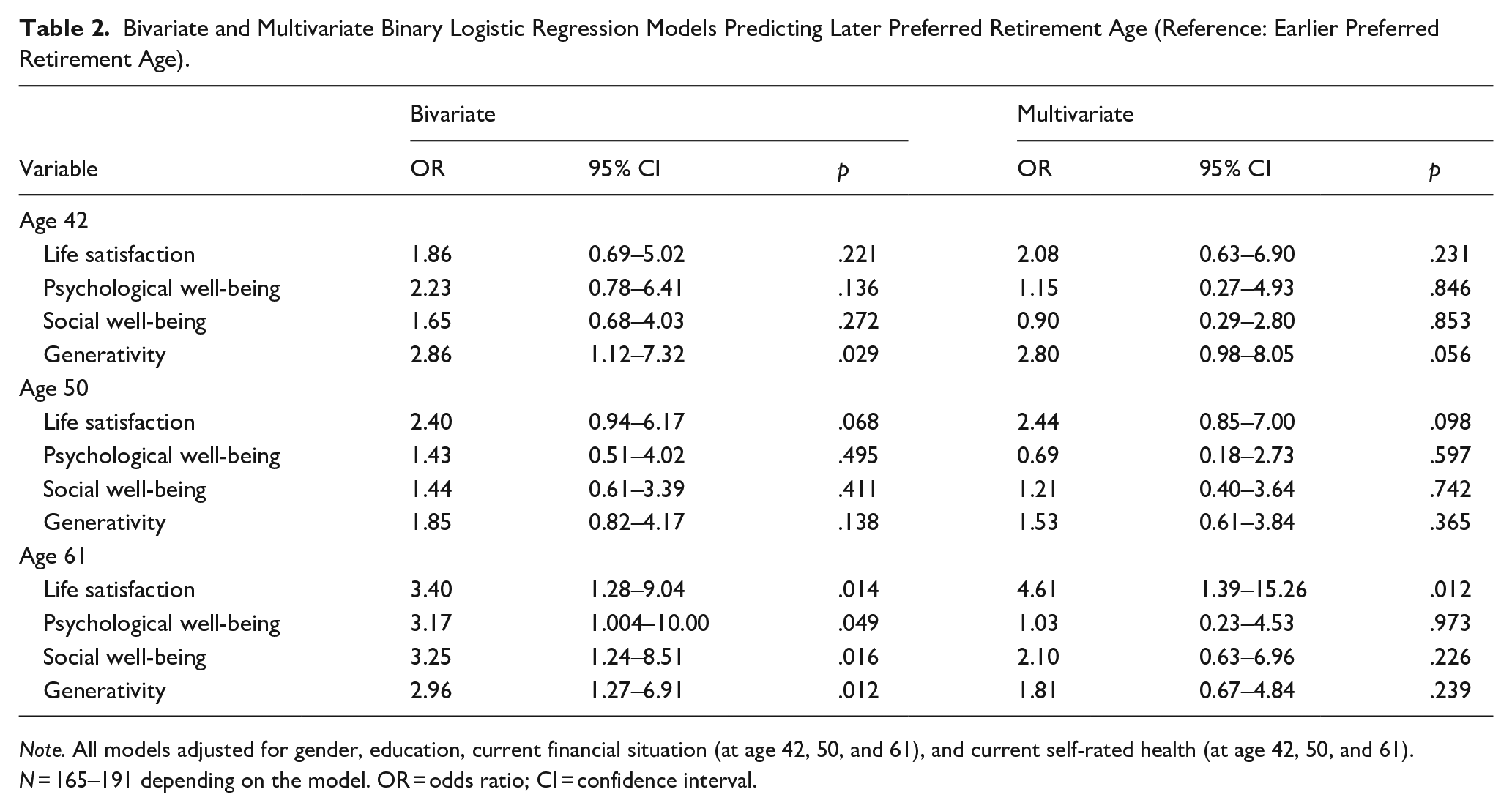
Note. All models adjusted for gender, education, current financial situation (at age 42, 50, and 61), and current self-rated health (at age 42, 50, and 61). N = 165–191 depending on the model. OR = odds ratio; CI = confidence interval.
Predictors of Willingness to Continue Working After Retirement at Age 61
There were few significant interactions between the predictors of willingness to continue working after retirement and gender, that is, generativity (p = .037) and social well-being at age 42 (p = .021) (Supplementary Table S1). Consequently, these two bivariate analyses were conducted separately for both genders. According to the results, generativity at age 42 predicted the willingness to continue working but only in men (men OR = 4.23, 95% CI = [1.14, 15.78], p = .032; women OR = 0.70, 95% CI = [0.21, 2.30], p = .555). In addition, social well-being at age 42 was found to predict the willingness to continue working after retirement, albeit only in men. The likelihood of being willing to continue working after retirement was higher among men with a higher level of social well-being (men OR = 5.19, 95% CI = [1.19, 22.70], p = .029; women OR = 0.58, 95% CI = [0.18, 1.88], p = .368). The bivariate models where data for both genders were included showed that generativity at age 61 was a statistically significant predictor of the willingness to continue working after retirement (Table 3). The higher the level of generativity at age 61, the more likely the person was to be willing to continue working after retirement (OR = 3.01, 95% CI = [1.34, 6.76]).
Bivariate and Multivariate Binary Logistic Regression Models Predicting Willingness to Continue Working After Retirement (Reference: Unwillingness to Continue Working After Retirement).
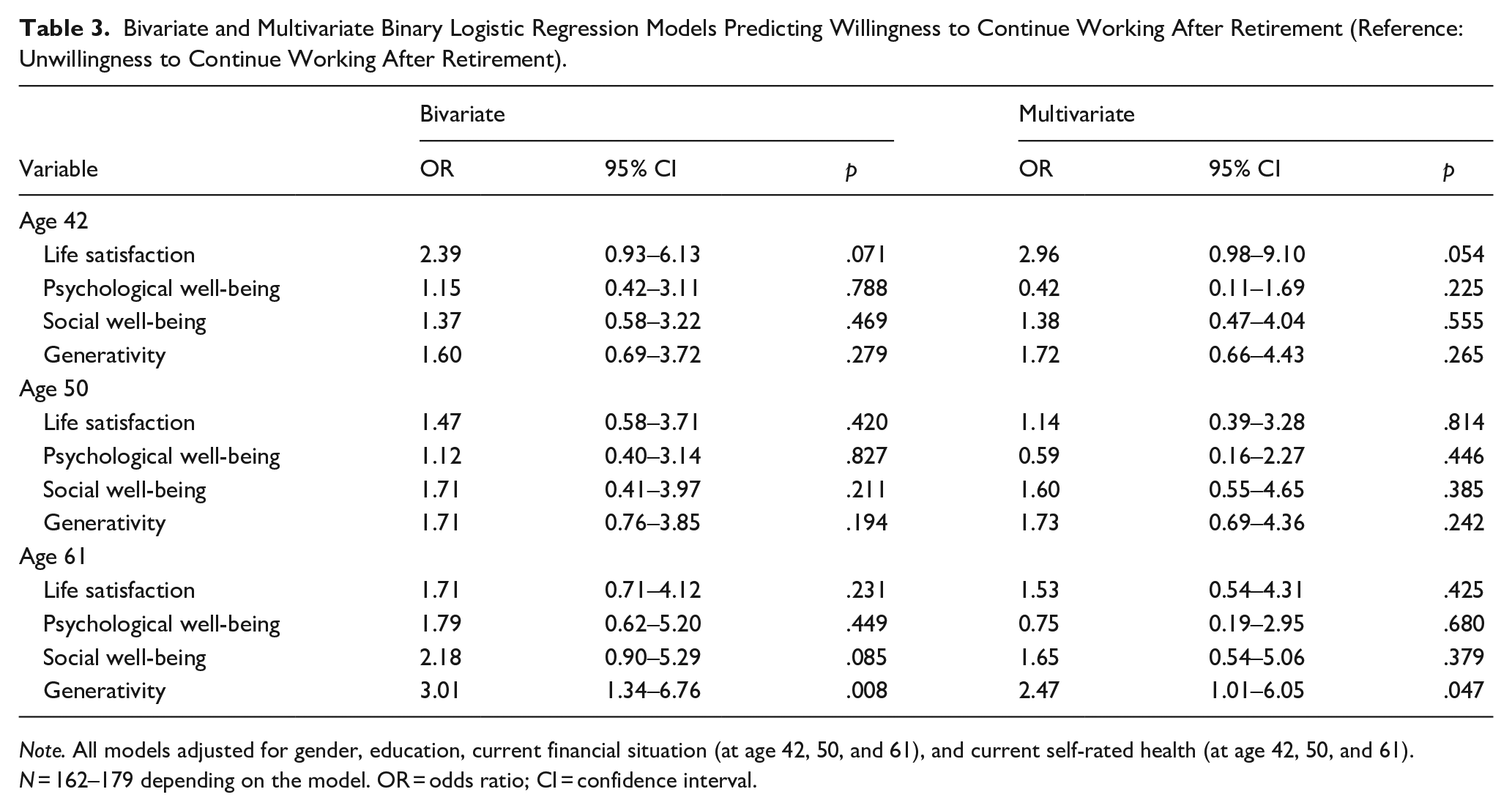
Note. All models adjusted for gender, education, current financial situation (at age 42, 50, and 61), and current self-rated health (at age 42, 50, and 61). N = 162–179 depending on the model. OR = odds ratio; CI = confidence interval.
In the multivariate models, generativity at age 61 was found to predict willingness to continue working after retirement (Table 3). Individuals with higher levels of generativity at age 61 were more likely to be willing to continue working after retirement (OR = 2.47, 95% CI = [1.01, 6.05]).
Sensitivity Analyses
For the sensitivity analyses, we conducted binary logistic regression models for the sample, excluding those who were retired at age 42, 50, or 61 (Supplementary Tables S2 and S3). In predicting the later preferred retirement age, the results were mainly similar to those of the analyses involving the whole sample (Supplementary Table S2). Few differences concerned the bivariate analyses, where psychological (OR = 3.08, 95% CI = [0.94, 10.14]) and social (OR = 2.66, 95% CI = [0.95, 7.41]) well-being at age 61 were no longer a statistically significant predictor of preferred retirement age. Conversely, life satisfaction at age 50 became a significant predictor in the bivariate analyses (OR = 3.23, 95% CI = [1.17, 8.86]).
The same sensitivity analyses were conducted for the willingness to continue working after retirement (Supplementary Table S3). Generativity at age 61 was no longer a statistically significant predictor of willingness to continue working after retirement in the multivariate model (OR = 1.91, 95% CI = [0.74, 4.93]). However, social well-being at age 61 became a significant predictor in the bivariate model (OR = 2.92, 95% CI = [1.06, 7.99]).
Discussion
This study examined the predictors of retirement preferences by focusing on the preferred retirement age and the willingness to continue working after retirement. The results showed that higher generativity at ages 42 and 61, as well as higher life satisfaction, psychological well-being, and social well-being at age 61 predicted later preferred retirement age at 61 when the predictors were investigated separately (bivariate analyses). However, only life satisfaction at age 61 remained as a significant predictor when mental well-being indicators and generativity were included in the same model (multivariate analyses). In addition, generativity at age 61 predicted the willingness to continue working after retirement in the bivariate and multivariate models. Some differences were observed between men and women. Higher generativity and social well-being at age 42 predicted the willingness to continue working after retirement in men but not in women.
Generativity was a significant predictor of both later preferred retirement age and the willingness to continue working after retirement. Although the link between (preferred) retirement age and generativity has hitherto not been studied, the positive association is plausible. If a person is concerned about sharing knowledge with others and sees it as important to guide younger people (Ryff & Heincke, 1983), they may be more willing to prefer later retirement, since work is an important arena in which to express generativity (McAdams, 2001; McAdams & de St Aubin, 1992). Interestingly, generativity predicted the preferred retirement age both longitudinally (age 42) and contemporaneously (age 61). Thus, providing possibilities for individuals to express generativity starting from middle adulthood may be relevant in terms of supporting working careers.
Concerning the link between generativity and post-retirement work, the previous literature provides mixed support. For example, the generative meaning of work was positively related to intentions for and actual unpaid post-retirement work and negatively associated with intentions for and actual paid post-retirement work (Fasbender et al., 2016; Micheel, 2021). Conversely, generative strivings were positively associated with actually working in retirement, but not related to volunteering (Zhan et al., 2015). Our results support the findings of the ambiguous relationship between generativity and working after retirement. In the whole sample, generativity at age 61 predicted the willingness to continue working after retirement, but when the retired individuals were excluded from the analyses, generativity was no longer a significant predictor in the multivariate model. However, the nonsignificant results may also be due to the reduced sample size in the sensitivity analyses, and it could not be directly concluded that generativity was not linked to actual working during retirement. Also, a comparison of the results to those of the existing literature was not straightforward due to the diversity of the generativity and retirement measures used. Both generativity and retirement are complex constructs that include multiple dimensions (Fisher et al., 2016; McAdams & de St Aubin, 1992), so the results may have been influenced by the variables used, in addition to the samples.
The results suggest that individuals with higher life satisfaction, psychological well-being, and social well-being were more likely to prefer later retirement. Life satisfaction at age 61 remained as the only significant predictor of later preferred retirement age in the multivariate analyses. These results align with those of previous studies suggesting that job dissatisfaction is linked to planning to retire (Topa et al., 2009) and intentions for early retirement (von Bonsdorff et al., 2010), and career satisfaction is linked to a motive to continue working (Templer et al., 2010). The life satisfaction scale (Kokko, Korkalainen, et al., 2013) used in this study also measures satisfaction with the choice of an occupation and the present occupational situation. It is, thus, not surprising that if an individual is satisfied with their current life, including their work life, they will be more willing to continue working longer. Concerning the role of psychological and social well-being, meaning in life can be experienced through work (Steger & Dik, 2009), and those who feel that they are part of society and that they have something to offer to the world and see potential in society (Keyes, 1998) may be more willing to remain in work longer compared to those with lower social well-being. Although social well-being was not associated with willingness to continue working after retirement in the whole sample, the link was found when the analyses were conducted separately for men and women. Men with higher social well-being and generativity at age 42 were more likely to be willing to continue working after retirement. These findings support that of Hess et al. (2021), which suggested that generativity-related motives for working in retirement, such as social contacts, transfer of knowledge, and participating in training, were more common among men than women. It is also plausible that social well-being was found to predict retirement preferences along with generativity, since both denote feelings of being able to contribute to others (Keyes, 1998; Ryff & Heincke, 1983). However, these constructs are not synonymous, since generativity is focused on contributing to younger generations, whereas social well-being includes wider contributions to others and society.
Concerning the sensitivity analyses, the results showed that when the retired individuals were excluded from the analyses, those with higher life satisfaction at age 50 were more likely to prefer a later retirement age. One possible explanation for the finding that life satisfaction at age 50 was associated with preferred retirement age only in the sensitivity analyses is that there is greater variation in the association between life satisfaction and preferred retirement age among this group (n = 9) who were retired at age 50 due to the various reasons for retiring early. Among those who retire early, there may be those who would have wanted to retire later but were unable to do so, for example, for health reasons, and those who are satisfied with being able to retire early, for example, because they can afford to do so or because of the physical strain of work. In support of this, one study found that involuntary retirement was related to lower life satisfaction, while voluntary retirement was associated with higher life satisfaction (Hershey & Henkens, 2014). In addition, social well-being at age 61 became a statistically significant predictor of willingness to continue working after retirement in the sensitivity analyses, but conversely, it was no longer a statistically significant predictor of later preferred retirement age. Larger samples are needed in future studies to better understand the links between social well-being and retirement preferences.
There are some limitations to be considered. The sample size was relatively small, although representative of the Finnish age cohort born in 1959 (Kokko et al., 2024; Pulkkinen, 2017, p. 20). Due to the sample size, we may not have detected all statistically significant effects. Consequently, larger samples are needed in future research, especially in the investigation of the links between mental well-being and retirement preferences. Larger samples could also enable the study of predictors of retirement preferences in different occupational groups. The self-employed, in particular, could be an interesting group to study, as they have a higher probability of working during retirement (Hess et al., 2021). In addition, more research on the mechanisms linking generativity, mental well-being, and retirement preferences is needed. For example, the role of different work-related variables, such as managing duties, should be investigated.
When generalizing the results, the characteristics of the study sample should also be considered, that is, native Finns born mainly in 1959. In addition, it is notable that multicollinearity may have been evident in the multivariate analyses, since psychological well-being, social well-being, and generativity predicted preferred retirement age only in the bivariate analyses but not in the multivariate analyses (Table 2). Furthermore, it has been shown that different mental well-being indicators and generativity are linked to each other (Reinilä et al., 2023). Concerning the mental well-being variables, the used life satisfaction scale had relatively low Cronbach alphas (.63–.68). In addition, although the aim was to investigate whether mental well-being and generativity were relevant factors in retirement preferences, the sample also included retirees. However, the number of retirees among the analyzed sample varied from two (age 42) to 36 (age 61), and we conducted separate sensitivity analyses (Supplementary Tables S2 and S3) for those who were not retired. Finally, when measuring the willingness to continue working after retirement, the question we used here did not differentiate paid work (i.e., bridge employment) and volunteering. This may have influenced the results, since the predictors of bridge employment and volunteering may differ. For example, generativity predicted bridge employment but not volunteering in a study by Zhan et al. (2015).
The strength of this study lies in the longitudinal data spanning nearly 20 years, which allowed us to study the longitudinal predictors of retirement preferences. Although most of the observed associations were found at the cross-sectional level (at age 61), there were also factors, such as generativity and social well-being, with predictive value up to two decades later. In addition, the role of mental well-being in the area of retirement preferences has received less research attention, especially considering that mental well-being consists of multiple dimensions and that low mental well-being is not equivalent to mental health problems, such as depressive feelings (Keyes, 2005). Furthermore, we shed light on the association of mental well-being and generativity on two retirement preference variables, that is, later preferred retirement age and willingness to continue working after retirement. Retirement preferences have been suggested to be relevant factors in extending working careers and increasing the participation of older workers in the labor market (Örestig et al., 2013). Finally, being able to assess retirement preferences close to the time when retirement decisions are made was one advantage of this study, since preferred retirement age has been shown to increase with age (Sousa-Ribeiro et al., 2021).
In conclusion, this study found indications that generativity and mental well-being may be relevant factors in predicting retirement preferences and that the contribution of generativity and social well-being to retirement preferences may extend nearly 20 years. Consequently, providing individuals with possibilities, for example, to mentor, share knowledge and skills, and contribute to others (Keyes, 1998; Ryff & Heincke, 1983) could be important in working life. However, the links between generativity, mental well-being, and retirement preferences were not all unambiguous, since the gender-specific and sensitivity analyses without the retirees showed partly different results compared to those of the whole-sample analyses. Altogether, since continuing to work can provide benefits not only to individuals (Dingemans & Henkens, 2015; Yin et al., 2021; Zhan et al., 2009) but also society (OECD, 2023), the investigation of the predictors of retirement preferences will be essential in future studies.
Supplemental Material
sj-docx-1-jbd-10.1177_01650254251368788 – Supplemental material for Mental well-being and generativity as predictors of retirement preferences at the beginning of late adulthood: A longitudinal study
Supplemental material, sj-docx-1-jbd-10.1177_01650254251368788 for Mental well-being and generativity as predictors of retirement preferences at the beginning of late adulthood: A longitudinal study by Emmi Reinilä, Tiia Kekäläinen, Milla Saajanaho, Mikaela von Bonsdorff and Katja Kokko in International Journal of Behavioral Development
Footnotes
Acknowledgements
The authors would like to thank those who have participated in the JYLS over the years as well as Professor Lea Pulkkinen, who initiated the JYLS in 1968 and directed it until 2012.
Ethical considerations and informed consent statements
The Ethical Committee of the Central Finland Health District (data collections 2001 and 2009) and the Ethical Committee of the University of Jyväskylä (data collection 2020–2021) ethically approved the JYLS data collections. The study participants gave written informed consent to participate during each data collection phase.
Funding
The author(s) disclosed receipt of the following financial support for the research, authorship, and/or publication of this article: This work was supported by the Finnish Cultural Foundation (grant to Emmi Reinilä), Samfundet Folkhälsan (Mikaela von Bonsdorff), and the Research Council of Finland (grant no. 323541 to Katja Kokko; no. 349336 to Mikaela von Bonsdorff). The three most recent JYLS data collection phases were funded with grants provided by the Research Council of Finland (2001: grant nos 40166 and 44858 to Lea Pulkkinen; 2009: no. 127125 to Lea Pulkkinen and no. 118316 to Katja Kokko; 2020–2021: no. 323541 to Katja Kokko).
Declaration of conflicting interests
The author(s) declared no potential conflicts of interest with respect to the research, authorship, and/or publication of this article.
Data availability statement
The data from the data collection phases in 2001 and 2009 are stored in the Finnish Social Science Data Archive (FSD) ( ), where the data from the latest data collection (2020–2021) will also be stored by the end of 2025. Due to data sensitivity and privacy of the participant data, the data are not publicly available. The pseudonymized datasets can be made available to external collaborators once the data usage and publication conditions have been agreed upon. The data can be requested by following the protocol described on the website of the FSD.
Supplemental material
Supplemental material for this article is available online.
References
Supplementary Material
Please find the following supplemental material available below.
For Open Access articles published under a Creative Commons License, all supplemental material carries the same license as the article it is associated with.
For non-Open Access articles published, all supplemental material carries a non-exclusive license, and permission requests for re-use of supplemental material or any part of supplemental material shall be sent directly to the copyright owner as specified in the copyright notice associated with the article.
