




Abstract
Communicating with adolescents about climate change can be challenging if we want to safeguard their emotional well-being. Here, we evaluate the emotional impact of climate change communication that is informed by self-determination theory (SDT). We conducted two experiments with samples of ethnically diverse adolescents from the United States to examine adolescents’ emotions when reading needs-aligned, needs-misaligned, and needs-neutral (control) communication about climate change. Adolescents who read needs-aligned communication reported less anxiety compared with adolescents who read needs-misaligned (Study 1) and needs-neutral (Study 2) communication. Unexpectedly, compared with adolescents who read needs-neutral communication, adolescents who read needs-misaligned communication reported more positive emotions (i.e., enjoyment, pride) when learning about climate change (Study 2). Our research provides initial evidence that SDT can inform climate change communication strategies that buffer adolescents from experiencing anxiety.
Keywords
Climate change threatens the short- and long-term well-being of young people around the world (Intergovernmental Panel on Climate Change [IPCC], 2022; United Nations Children’s Fund, 2021). Educators, policymakers, and parents face a critical task: communicating with youth about climate change to prepare them for an uncertain future. But how can they do so? Learning about climate change and its harmful impacts is an inherently emotional process (Ojala, 2013), and it can have negative consequences for adolescents’ emotional well-being (Clayton et al., 2023). Although preventing anxiety is not per se a goal of climate change communication, concern about provoking taxing levels of anxiety can present a barrier to communicating with youth about the topic (Baker et al., 2021; Verlie et al., 2021). Here, we evaluate the potential for self-determination theory (SDT; Ryan & Deci, 2017) to guide efforts to communicate with youth about climate change. In two experiments, we examine how needs-(mis)aligned communication styles affect adolescents’ emotional responses to information about climate change. By needs-(mis)aligned communication, we refer to communication that is intended to affirm (or deny) adolescents’ basic psychological needs for competence, autonomy, and relatedness.
Climate Change Communication and Adolescents’ Emotions
Efforts to communicate with adolescents about climate change range from individual conversations between parents and their children to (inter)national campaigns promoting environmental awareness and behavior (e.g., Ragavan et al., 2021; Simmons, 2022; United Nations Educational, Scientific and Cultural Organization [UNESCO] & United Nations Environment Programme [UNEP], 2016). The urgency of these efforts reflects the reality that climate change will disproportionally affect today’s generation of young people (IPCC, 2022; Thiery et al., 2021).
At the same time, communication about climate change is also relevant to adolescents’ emotional well-being (Clayton et al., 2023). Recent research in large samples of adolescents from around the world found that most adolescents are worried or anxious about climate change, some of them extremely (Hickman et al., 2021). For example, 75% of adolescents considered the future to be “frightening”. Although worry and anxiety can be considered adaptive responses to the realistic threat that climate change presents (Clayton, 2020), such experiences can threaten young people’s well-being and mental health (Crandon et al., 2022; Hayes et al., 2018; Wu et al., 2020). Indeed, adolescents who report higher levels of climate anxiety experience lower well-being (Ogunbode et al., 2022). A systematic review found consistent associations, especially among youth, between climate anxiety and symptoms of depression, anxiety, stress, insomnia, lower self-reported mental health, and functional impairment (Boluda-Verdu et al., 2022). Even if chronic climate anxiety is particularly harmful, adolescents’ in-the-moment emotions are also implicated in their emotional well-being (Reis et al., 2000; Thomaes et al., 2017). Accordingly, socializing agents (e.g., teachers, parents) may be reluctant to address climate change with youth out of concern that such communication will cause painful or overwhelming negative emotion (Baker et al., 2021; Reitsema et al., 2022; Verlie et al., 2021). A better understanding of the direct emotional impact of climate change communication is therefore needed to help socializing agents initiate open and constructive conversations about the topic.
So far, relevant research in the field has focused almost exclusively on adults (e.g., Brosch, 2021; Mah et al., 2020; Moser, 2007; Myers et al., 2012), whereas adolescents are particularly emotionally involved in climate change (Hickman et al., 2021; Hufnagel, 2017; Ojala, 2023). Moreover, adolescents tend to be sensitive to how information about risk (e.g., the dangers that come with substance abuse, dangerous driving) is communicated to them (Abbott et al., 2020; Steinberg, 2015), and this sensitivity may well generalize to communication about the dangers that come with climate change.
Our understanding of how to tend to adolescents’ emotions when communicating about climate change remains limited to a few correlational studies. In one investigation of how adolescents perceive their parents’ and friends’ communication about environmental issues, two general patterns emerged: one “positive,” being solution-oriented and supportive, and the other “negative,” being doom-and-gloom oriented or dismissive (Ojala & Bengtsson, 2019). Adolescents who experienced more positive communication were more likely to exhibit problem- and meaning-focused coping strategies (e.g., thinking of how one can engage in mitigation efforts, appreciating that people increasingly take climate change seriously) in response to their concerns about climate change. By contrast, adolescents who experienced more negative communication were more likely to de-emphasize the problem as a means of coping. A study on how adolescents perceive their teachers’ communication about climate change yielded similar results: when adolescents experienced their teachers as communicating in a more solution-oriented way and respecting their emotional responses to information about climate change, adolescents expressed more constructive hope for the future (Ojala, 2015). On the contrary, when adolescents experienced their teachers as communicating in a gloom-and-doom manner and not taking their emotions seriously, adolescents expressed more hope based in denial (e.g., they felt hope concerning climate change because they failed to see climate change as caused by human behavior). The few studies available thus illustrate how diverse forms of climate change communication have implications for how adolescents respond to and cope with climate change.
In this study, we expand this emerging line of research theoretically and methodologically. Theoretically, we draw upon SDT as a framework for understanding and devising climate change communication for youth. Methodologically, we use an experimental approach to investigate the causal impact of SDT-informed climate change communication on adolescents’ emotional states.
An SDT Perspective on Climate Change Communication With Adolescents
SDT offers a meta-theory that accounts for human development and motivation (Ryan & Deci, 2017). We propose that SDT’s conceptualization of basic psychological needs offers a useful framework for understanding and tending to adolescents’ emotions when communicating about climate change (cf. Pelletier et al., 1998; Wullenkord, 2020).
According to SDT, human beings have basic psychological needs for autonomy, competence, and relatedness. Autonomy refers to feeling free to live according to one’s own values and interests; competence refers to feeling effective in one’s pursuits; and relatedness refers to feeling connected to significant others. Autonomy, competence, and relatedness are considered basic psychological needs because of their centrality to human functioning and well-being. While these needs are evident across the lifespan, they may be especially pertinent to understanding adolescent development and well-being, given their relevance to adolescents’ key developmental tasks (e.g., exploring identity, redefining social roles; Griffin et al., 2017; La Guardia & Ryan, 2002). When adolescents function in contexts that tend to their basic psychological needs, their natural developmental propensities for growth and well-being are also supported (Reis et al., 2000; Rodríguez-Meirinhos et al., 2020). Conversely, when adolescents function in contexts that are misaligned with their basic needs, they are at risk of becoming disengaged and experiencing emotional and psychological ill-being (Balaguer et al., 2012; Chen et al., 2015; Vansteenkiste & Ryan, 2013). For instance, research has shown that the link between parents’ caregiving styles and adolescents’ emotional well-being is explained by the extent to which parents support adolescents’ basic psychological needs (Abidin et al., 2022).
From an SDT perspective, climate change communication that is attuned to adolescents’ basic psychological needs could support their proactive responses and emotional well-being in this context (e.g., Kaplan & Madjar, 2015; Williams et al., 1999). Indeed, one study found that parents can facilitate older adolescents’ engagement in pro-environmental behavior by communicating pro-environmental expectations in an autonomy-supportive manner (Grønhøj & Thøgersen, 2017). Similarly, another study found that SDT-informed textual materials about recycling and ecology can promote older adolescents’ engagement in the topic (Vansteenkiste et al., 2004).
However, research has not yet evaluated the impact of SDT-informed communication on the emotions adolescents experience when learning about climate change. SDT raises the possibility that needs-aligned communication can buffer adolescents from experiencing taxing negative emotions when faced with information about climate change. Indeed, when adolescents’ basic psychological needs are supported, they are more capable of responding openly and non-defensively to stressful information and events (i.e., integrative emotion regulation; Roth et al., 2019). Simultaneously, SDT suggests that needs-misaligned communication about climate change may incline adolescents to become distressed or “tuned out” as a means of warding off psychological discomfort (Wullenkord & Reese, 2021). Indeed, when adolescents’ basic psychological needs are unsupported, they are more likely to become overwhelmed (i.e., dysregulated) and avoidant in response to stressful information and events (i.e., suppressive regulation; Brenning et al., 2022). Thus, SDT provides a framework for understanding the emotional consequences of climate change communication, as well as for devising communication that is emotionally supportive.
Overview of Present Research
In two experiments (one pre-registered), we examined the impact of different climate change communication styles (i.e., needs-aligned, needs-misaligned, or needs-neutral communication) on adolescents’ emotional states, using validated scales (Harmon-Jones et al., 2016; Raccanello et al., 2022). We focused on the impact of these communication styles on anxiety in particular, given its pervasiveness as an emotional response to climate change (Clayton, 2020; Wu et al., 2020).
In both experiments, participants were high school students from the United States. Adolescence is a critical developmental stage for the present research purposes, as it is a time when youth are at increased risk of emotional distress surrounding climate change (Hickman et al., 2021; Otto et al., 2019; Wu et al., 2020). We conducted our studies through the Character Lab Research Network (n.d.), a consortium of schools across the United States that works collaboratively with scientists to advance research on the well-being of youth. We conducted the experiments in public high schools that predominantly serve adolescents from lower socio-economic and ethnic minority backgrounds (Character Lab, n.d.). As such, our research contributes to efforts to diversify developmental science by including historically under-represented groups in research (Fakkel et al., 2020; Syed et al., 2018).
In Study 1, we evaluated the effects of needs-(mis)aligned messages that were presented directly after information about climate change. In Study 2, pre-registered on OSF (https://osf.io/pxrwz), we evaluated the effects of needs-(mis)aligned messages that were incorporated into information about climate change. Both experiments were part of larger research projects that included additional measures not relevant to this study’s purposes. The ethics review board of the faculty of Social and Behavioral Sciences at Utrecht University approved both studies (Study 1: protocol 20-466 and Study 2: protocol 21-390).
Study 1
Study 1 evaluated the impact of needs-(mis)aligned communication on adolescents’ emotional responses to information about climate change. We did not pre-register hypotheses, but instead explored whether the needs-aligned communication would provoke less anxiety compared with needs-misaligned and needs-neutral communication, as would be theoretically consistent with SDT (Brenning et al., 2022).
Method
Participants
Participants were 141 American adolescents (Mage = 16.43, SDage = 1.00; 51.80% female; 71.60% Hispanic, 15.60% White, 10.60% Black, 2.80% Asian, 1.40% American Indian, 0.70% Pacific Islander), recruited via the Character Lab Research Network. From an initial sample of 199, we excluded 58 participants prior to data analyses for failing an attention check item (i.e., If you are reading this, select “a lot”; N = 53) or having incomplete data on the primary outcome variable, anxiety (N = 5). Excluded participants did not differ from those included with respect to age, grade level, ethnicity, or gender (ps ⩾ .182). We report findings for the full sample in the Supplemental Material.
Procedure
Study 1 was conducted in January 2021. Participants completed an online experiment during the school day. As a result of COVID-19 restrictions, some schools were operating remotely. Thus, approximately half of the participants (i.e., 56.4%) completed the experiment at home, while others completed the experiment in the school building.
Climate Change Communication
Participants were randomly assigned to a needs-aligned, needs-misaligned, or needs-neutral control condition. In all conditions, participants received information about climate change derived from a real-world, online article outlining “where we are” with respect to climate change (BBC News, 2020). We selected this article because it includes information about climate change that adolescents may typically come across in the media or at school. For instance, it reported on the United Nations’ warning that the earth’s climate should not become more than 1.5°C hotter than it was in the 1800s; that the 20 warmest years on record were in the past 22 years; and that countries’ inaction on climate change could have catastrophic consequences. Although the article contains discouraging information, it is written in a factual, neutral style that does not directly touch upon the three psychological needs. Following this information, participants in the control condition completed the emotions measure. Participants in the needs-aligned and needs-misaligned conditions read an additional message before they completed the emotions measure.
The needs-(mis)aligned messages consisted of three sentences that either affirmed or denied adolescents’ autonomy, relatedness, and competence with respect to pro-environmental engagement (e.g., competence [mis]alignment was communicated with these sentences: Your actions and the decisions of your generation will make a difference to the future of our planet vs. Your actions and the decisions of your generation might not make a difference to the future of our planet; see Supplemental Material for full content). These messages were designed to reflect needs-relevant sentiments that adolescents may realistically encounter in the context of climate change. For example, adolescents may feel pressured to exhibit pro-environmental behavior (restricting their sense of autonomy; Pelletier et al., 2011); alienated from those who identify as environmentalists (restricting their sense of relatedness; Gibson-Wood & Wakefield, 2013; Mock, 2017); or unable to contribute to climate change mitigation (restricting their sense of competence; De Meyer et al., 2020; Loria, 2018). We designed the manipulations to challenge or reinforce these concerns.
Emotional States
We assessed adolescents’ emotional states using the Discrete Emotions Questionnaire (DEQ; Harmon-Jones et al., 2016), a validated, well-established measure of state anxiety and other emotions. The DEQ consists of 32 items (i.e., emotion adjectives), comprising eight emotion subscales: anger, disgust, fear, anxiety, sadness, desire, relaxation, and happiness. Participants reported how they momentarily experienced each of these emotions. For example, the items for the anxiety subscale included “Dread,” “Anxiety,” “Nervous,” and “Worry.” Items were rated on a 7-point Likert-type scale ranging from 1 (not at all) to 7 (an extreme amount). All emotion subscales exhibited good internal consistency (ranging from α = .75 to .94; Table 1).
Descriptive Statistics and Correlations Among Study 1 Emotions.
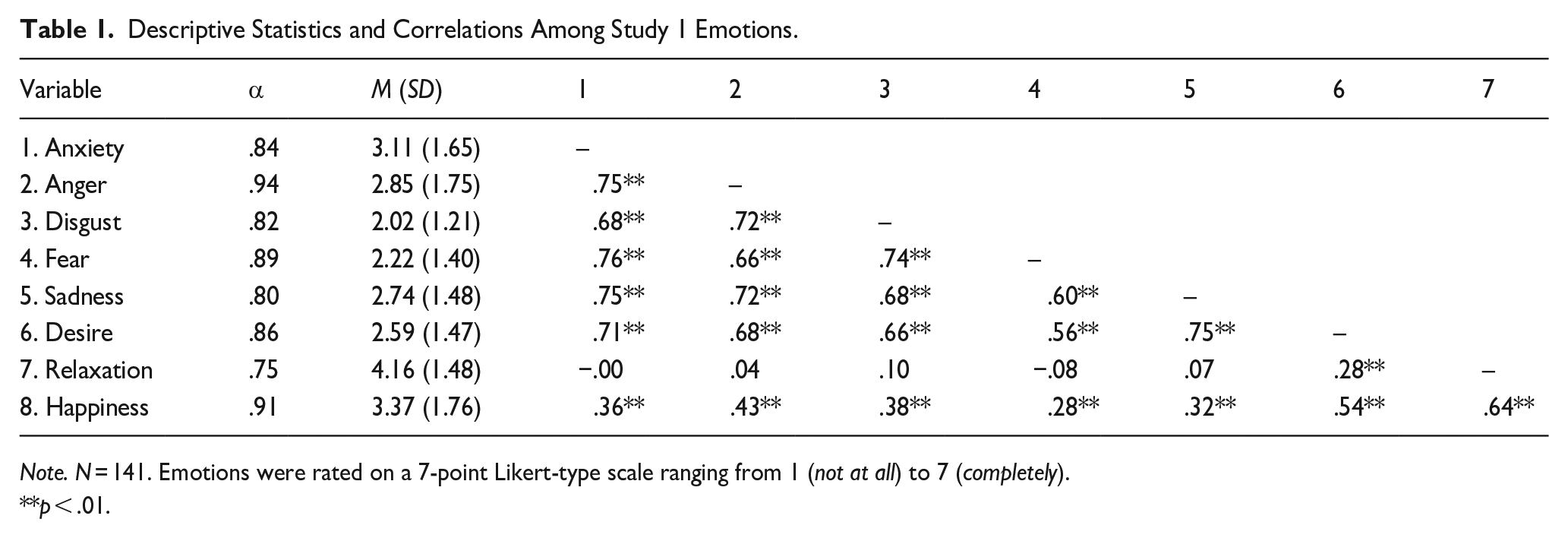
Note. N = 141. Emotions were rated on a 7-point Likert-type scale ranging from 1 (not at all) to 7 (completely).
p < .01.
Results
Preliminary Analyses
Table 1 displays descriptive statistics and zero-order correlations among the emotions measured in Study 1. Random assignment to conditions was successful: there were no condition differences in age, grade level, gender, ethnicity, or location (ps ⩾ .342). In addition, participants’ age, gender, and location were not associated with differences in their reported emotions (ps ⩾ .057), with one exception: older participants reported higher levels of relaxation (r = .17, p = .049). We controlled for age in our relaxation analyses accordingly.
Primary Analyses
We conducted a series of analyses of covariance (AN[C]OVAs) to explore whether participants’ emotions differed between conditions (Figure 1 and Table 2). Participants in the needs-aligned condition did not experience different emotions than their counterparts in the control condition (ps ⩾ .576, Bonferroni adjusted). They did, however, report less anxiety than their counterparts in the needs-misaligned condition (F(2, 138) = 4.66, p = .011,
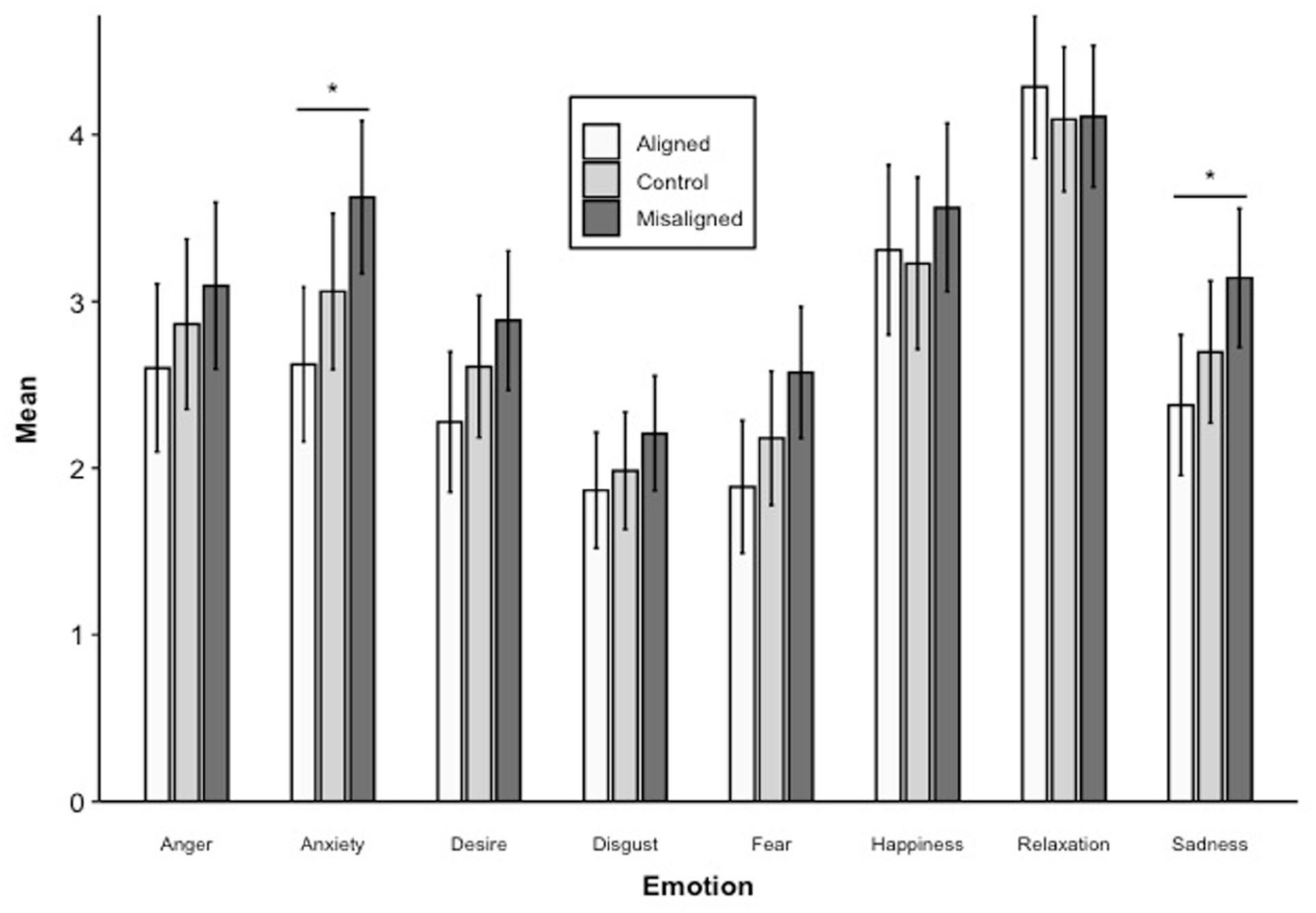
Study 1: Adolescents’ Emotions by Condition.
Study 1: Mean Values, Standard Errors, and Confidence Intervals of Emotions by Condition.
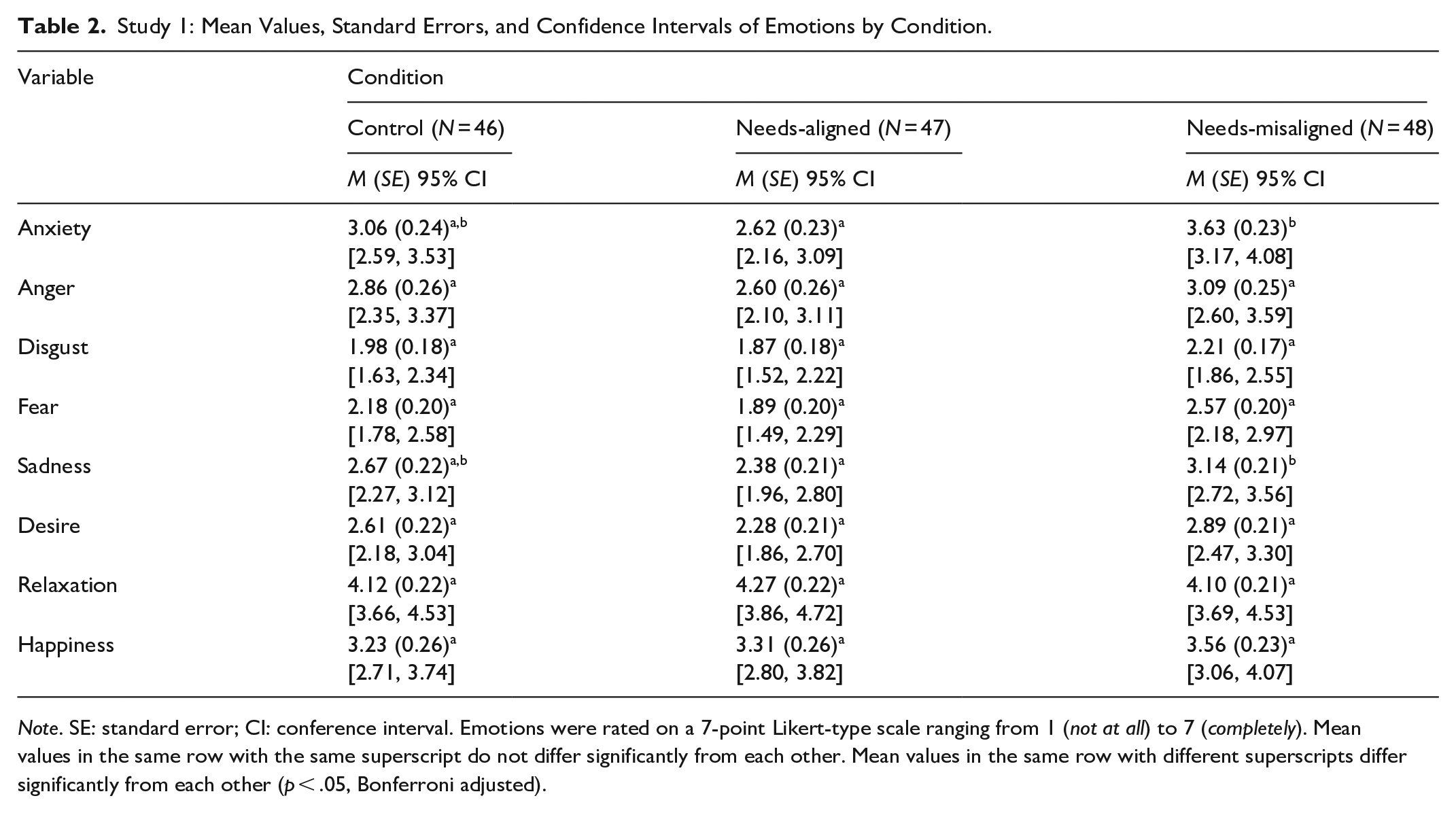
Note. SE: standard error; CI: conference interval. Emotions were rated on a 7-point Likert-type scale ranging from 1 (not at all) to 7 (completely). Mean values in the same row with the same superscript do not differ significantly from each other. Mean values in the same row with different superscripts differ significantly from each other (p < .05, Bonferroni adjusted).
Discussion
Study 1 provides initial evidence to suggest that needs-(mis)aligned communication can influence the emotions adolescents experience as they learn about climate change. Specifically, we found that adolescents’ experiences of anxiety and sadness depend on whether climate change communication tends to—or rather disregards—their basic psychological needs. To conceptually replicate and extend these findings, we conducted Study 2.
Study 2
Building on Study 1, Study 2 evaluated the impact of needs-(mis)aligned messages on a broader range of emotions and in a larger sample of adolescents. In addition, Study 2 tested the effects of needs-(mis)aligned messages that were integrated into the information about climate change (rather than as a follow-up message, as in Study 1). We pre-registered the hypothesis that adolescents in the needs-aligned condition would experience less anxiety compared with adolescents in the control and needs-misaligned conditions, with adolescents in the needs-misaligned condition experiencing the most anxiety.
Method
Participants
Participants were 270 American adolescents (Mage = 16.20, SDage = 0.95; 55.60% female; 57.00% Hispanic, 14.80% White, 12.60% Black, 7.80% Asian, 0.40% American Indian, 0.80% Pacific Islander, 4.10% Other), again recruited via the Character Lab Research Network. Following our pre-registered exclusion criteria, we excluded 201 participants from an initial sample of 471 for failing an attention check item (i.e., If you are reading this, select “a lot”; N = 186), or having incomplete data on the primary outcome variable, anxiety (N = 15). 1 Excluded participants did not differ from those included with respect to age, grade level, or ethnicity (ps ⩾ .138). Excluded participants were, however, more likely to be boys than girls (t (438.49) = −2.83, p = .005; Cohen’s d = −0.27). We report findings for the full sample in the Supplemental Material.
Procedure
Study 2 was conducted in October and November 2021. Participants completed the online experiment while at school.
Climate Change Communication
As in Study 1, participants were randomly assigned to a needs-aligned, needs-misaligned, or needs-neutral control condition. Participants in all conditions read the same information about climate change that we presented in Study 1, and they completed the emotions measure thereafter. Rather than providing needs-(mis)aligned messages at the end of the information (as in Study 1), Study 2 integrated these messages into the information about climate change. The needs-(mis)aligned messages were the same as in Study 1, apart from slight alterations to suit the new format (see Supplemental Material).
Emotional States
To broaden the spectrum of measured emotions, we assessed emotional states with the Achievement Emotions Adjective List (AEAL) for secondary school students (Raccanello et al., 2022), a validated scale designed specifically for use with adolescents. The AEAL consists of 30 items (i.e., emotion adjectives), divided over 10 emotion subscales: anxiety, anger, shame, hopelessness, boredom, enjoyment, pride, hope, relief, and relaxation. Participants reported how they momentarily experienced these emotions. For example, the items for the anxiety subscale included “Anxious,” “Nervous,” and “Worried.” Items were rated on a 7-point Likert-type scale ranging from 1 (not at all) to 7 (completely). All subscales exhibited good to excellent internal consistency (ranging from α = .82 to .98; see Table 3).
Descriptive Statistics and Correlations Among Study 2 Emotions.
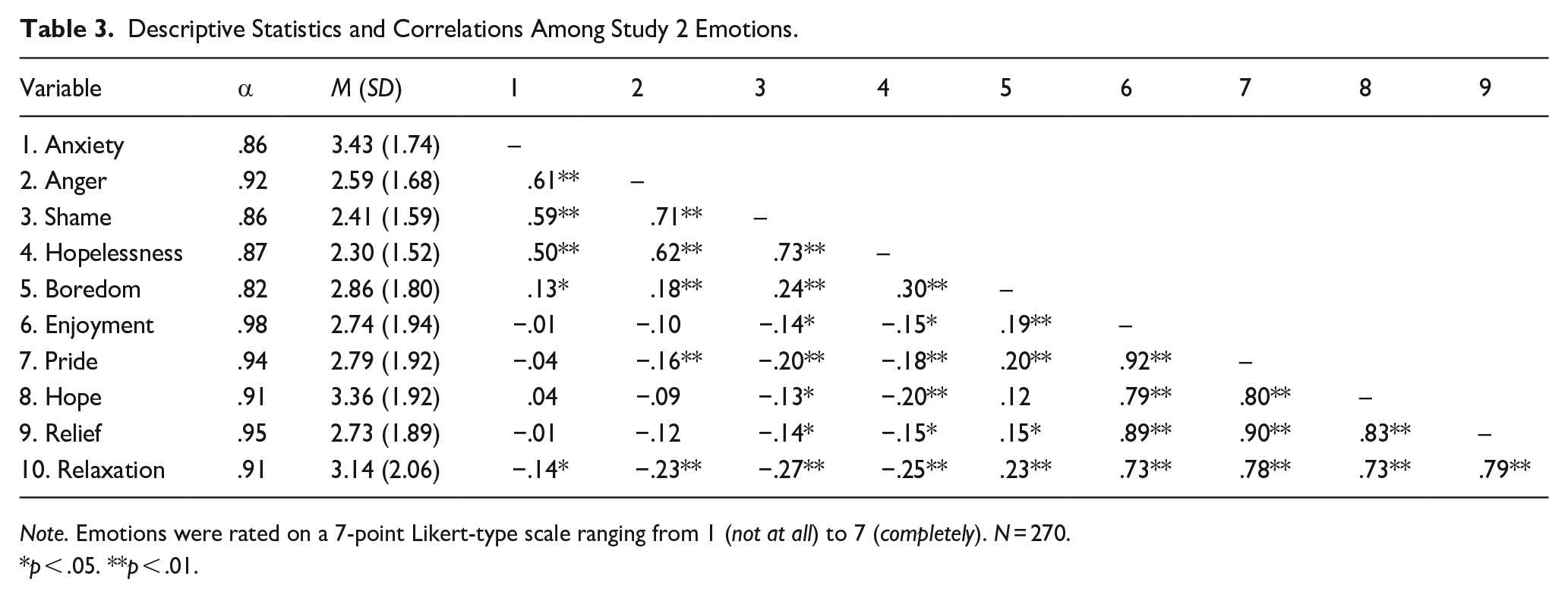
Note. Emotions were rated on a 7-point Likert-type scale ranging from 1 (not at all) to 7 (completely). N = 270.
p < .05. **p < .01.
Results
Preliminary Analyses
Table 3 displays descriptive statistics and zero-order correlations among the emotions measured in Study 2. Random assignment to conditions was successful: participants in the three conditions did not differ in terms of age, grade level, gender, or ethnicity (ps ⩾ .258). Participants’ age was not associated with their reported emotions (ps ⩾ .455). Girls tended to report stronger emotions for all measured emotions (ps ⩽ .051). Thus, we controlled for gender in all analyses.
Primary Analyses
We used a series of ANCOVAs to test if emotions differed between conditions (Figure 2 and Table 4). Adolescents in the needs-aligned condition did not experience different emotions compared with their counterparts in the needs-misaligned condition (ps ⩾ .427, Bonferroni adjusted). However, adolescents in the needs-aligned condition did report less anxiety than those in the control condition (F(2, 255) = 3.53, p = .031,
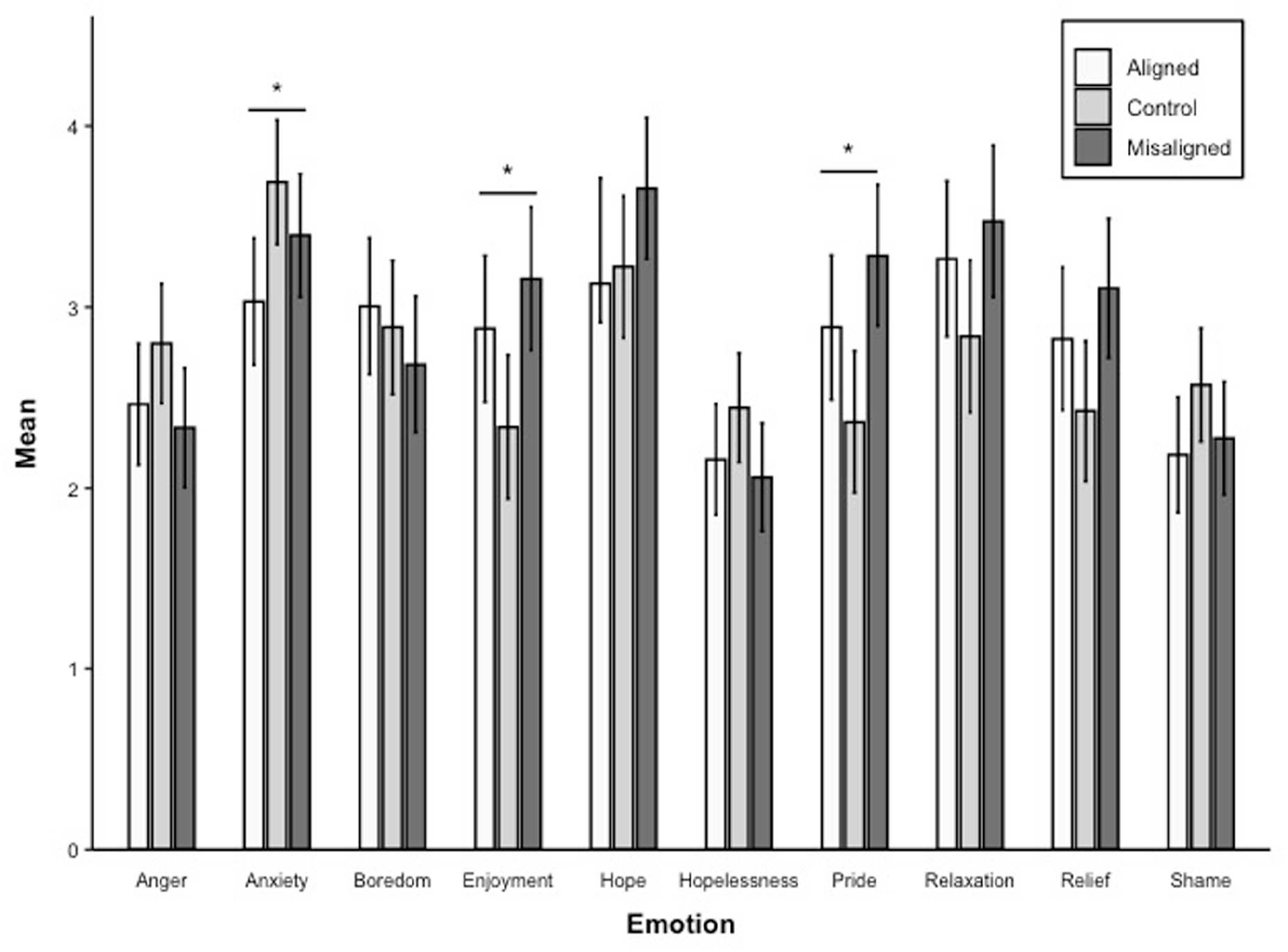
Study 2: Adolescents’ Emotions by Condition.
Study 2: Adjusted Mean Values and Standard Errors of Emotions by Condition.
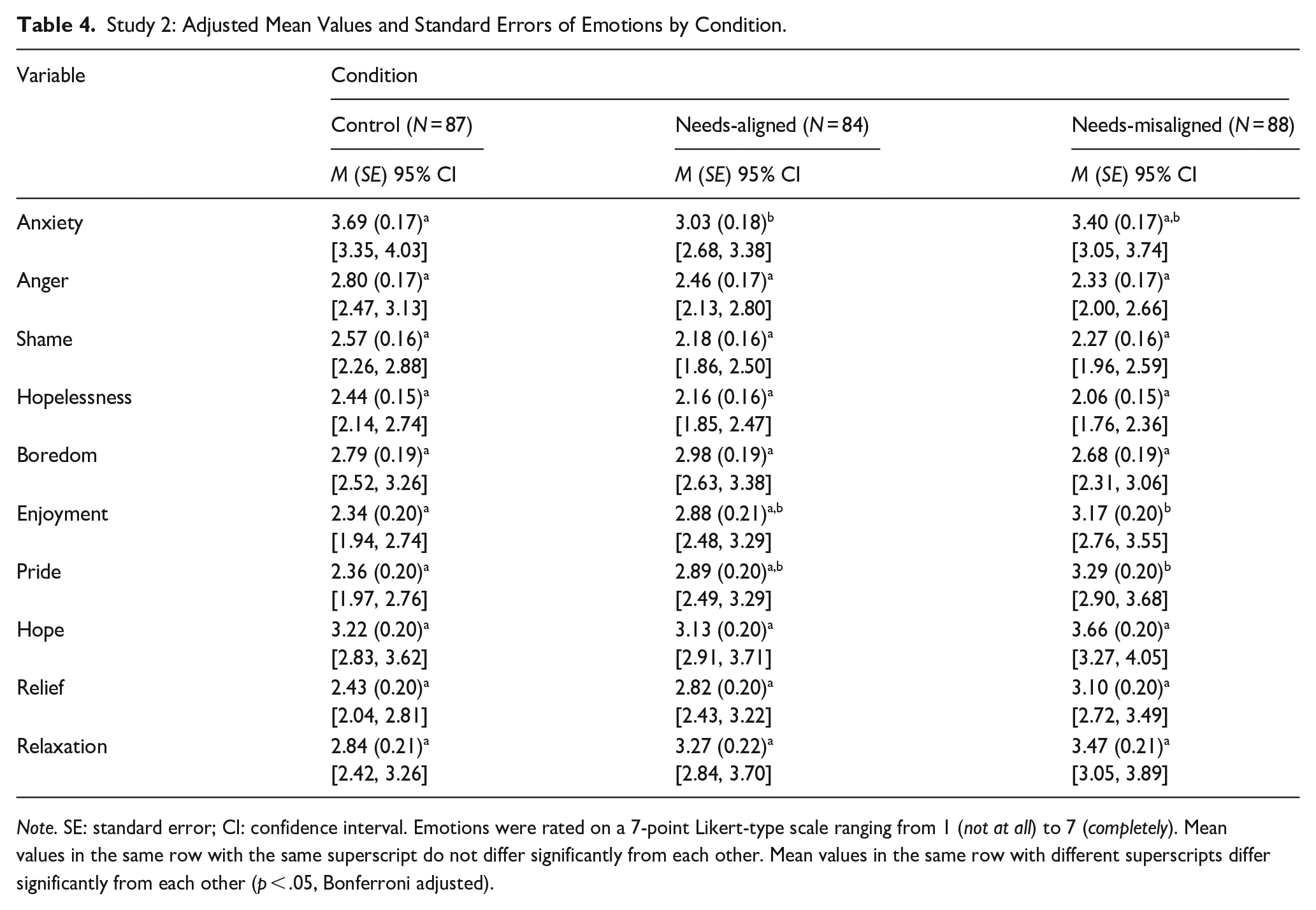
Note. SE: standard error; CI: confidence interval. Emotions were rated on a 7-point Likert-type scale ranging from 1 (not at all) to 7 (completely). Mean values in the same row with the same superscript do not differ significantly from each other. Mean values in the same row with different superscripts differ significantly from each other (p < .05, Bonferroni adjusted).
Further exploratory analyses revealed that, compared with adolescents in the control condition, adolescents in the needs-misaligned condition experienced more enjoyment (F(2, 255) = 4.26, p = .015,
Discussion
Study 2 provides further evidence that needs-(mis)aligned communication can affect adolescents’ emotions when learning about climate change. In particular, needs-aligned communication appeared to buffer adolescents from experiencing anxiety compared with adolescents who only read information about climate change. Unlike in Study 1, adolescents who read needs-misaligned communication did not experience the most anxiety. Rather, exploratory analyses indicated that these adolescents experienced more positive emotions compared with adolescents who only read information about climate change. We speculate that these positive emotions may reflect adolescents’ emotional disengagement or “tuning out” from information about climate change.
General Discussion
The present research suggests that communication styles that are more (or less) attuned to adolescents’ basic psychological needs can affect adolescents’ emotions as they learn about climate change. Across both studies, adolescents experienced relatively low levels of anxiety when communication was aligned with their basic psychological needs for competence, autonomy, and relatedness. That said, we also found inconsistencies across studies. Needs-aligned communication led to lower anxiety compared with needs-misaligned (but not needs-neutral) communication in Study 1, while it led to lower anxiety compared with needs-neutral (but not needs-misaligned) communication in Study 2. In Study 2, needs-misaligned communication led adolescents to report more enjoyment and pride when learning about climate change compared with the needs-neutral communication. Although some results were unexpected, our findings are largely consistent with core tenets of SDT.
Theoretical Implications
That needs-aligned climate change communication appears to buffer adolescents from experiencing anxiety dovetails with evidence that needs-aligned environments can facilitate adolescents’ emotionally resilient engagement with stressful information (Brenning et al., 2022; Roth et al., 2019). In addition, it is consistent with evidence that needs-aligned environments can prevent adolescents from experiencing anxiety in the long-term (Yu et al., 2016). Our research thus bolsters evidence that needs-aligned environments can support adolescents’ daily emotional well-being, as reflected in momentary experiences of positive and negative affect (Reis et al., 2000; Thomaes et al., 2017). Importantly, it provides first evidence of this effect in the field of climate change communication.
An unexpected finding in Study 2 was that needs-misaligned climate change communication led adolescents to report more positive emotions (i.e., enjoyment and pride). One possible explanation is that needs-misaligned communication led adolescents to engage less deeply with the information about climate change. Although this interpretation is speculative, it would be consistent with previous research: one study found that, when reading information about recycling and ecology, participants who read needs-misaligned materials reported more superficial processing and less deep processing compared with participants who read needs-aligned materials on the same topic (Vansteenkiste et al., 2004). Our interpretation also aligns with evidence that individuals whose basic psychological needs are frustrated in the context of climate change are more likely to engage in self-protective strategies, such as climate change denial (Wullenkord & Reese, 2021). We emphasize, although, that this interpretation is speculative: our study was not designed to test the degree to which adolescents processed or engaged with the information we provided.
Practical Implications
Adolescence is a critical time for understanding the emotional impacts of climate change communication. First, such communication can be especially emotionally impactful in adolescence. Adolescence is a time when the emotional system becomes sensitized, such that adolescents are prone to experiencing negative emotions relatively frequently and intensely (Larson et al., 2002; Moeller et al., 2020). Second, such communication can be especially personally relevant in adolescence. Adolescents are increasingly able to anticipate and reflect on how their future lives will unfold (McCue et al., 2019; Nurmi, 1991). Accordingly, learning about the threats of climate change can be personally meaningful and emotionally salient to them (Hickman et al., 2021; Wu et al., 2020). Third, such communication can be especially formative in adolescence, a period when pro-environmental norms, values, and identities crystallize (Balundė et al., 2020; Otto et al., 2019; Vollebergh et al., 2001). Thus, effective climate change communication that supports adolescents’ emotional needs may foster adolescents’ climate-related coping and engagement over time (Ojala, 2015; Ojala & Bengtsson, 2019).
The present findings, though preliminary, have potential implications for how to communicate about climate change with youth. They inform socializing agents (e.g., parents and teachers) who wish to raise climate change awareness in youth while limiting negative emotions, and especially anxiety. To communicate in a needs-aligned way, socializing agents could, for example, highlight how adolescents have managed to shift public discourse on climate change (affirming competence), by coming together as a unified generation (affirming relatedness), and speaking out for changes that challenge the inaction of authorities (affirming autonomy). Similarly, when developing public awareness campaigns or other policies targeting youth, organizations and governments could adopt needs-aligned communication styles while broaching this topic. Such initiatives could draw from SDT-based communication guidelines designed for the health sector (e.g., Martela et al., 2021).
Strengths, Limitations, and Future Research
Our research has several strengths. While large-scale climate education programs and awareness campaigns target adolescents (UNESCO, 2020; UNESCO & UNEP, 2016), the emotional impact of such communication has rarely been studied. The present work enriches understanding of how different forms of climate change communication can emotionally affect adolescents. As such, we address calls for insight into how to design climate change communication that is responsive to adolescents’ emotional needs (Baker et al., 2021; Ojala, 2023). Although preliminary, our research demonstrates the potential for SDT to inform and guide climate change communication for youth. Using experimental designs, our research also provides causal evidence, which is important for policy development.
Our research also has limitations. First, the effects we found were small and partially inconsistent between studies. Future research should help better understand the robustness and boundary conditions of our findings. Such research could also test our speculative interpretation that needs-misaligned communication may incline adolescents to emotionally disengage from the reality of climate change. In addition, our samples were comprised of American adolescents from public high schools that predominantly serve youth from lower socio-economic and ethnic minority backgrounds. While these samples strengthen developmental science by representing historically under-represented groups (Fakkel et al., 2020; Syed et al., 2018), future research should test the generalizability of our findings to individuals of other ages, socio-economic groups, and world regions (e.g., regions that are already more directly subjected to tangible climate impacts). Adding measures of other climate-specific emotions to such research (e.g., apathy, insecurity; Oberauer et al., 2023) could provide an even more fine-grained understanding of adolescents’ emotional responses in this context.
Our research focused rather narrowly on adolescents’ short-term emotional responses directly after learning about climate change. Future work could evaluate how the impacts of more prolonged experiences of needs-(mis)aligned communication (e.g., implemented throughout environmental education programs) may accumulate over time, with potential downstream consequences for youth’s well-being and mental health. Such research could also include pro-environmental engagement outcomes and address whether or how emotional processes drive (or inhibit) adolescents’ pro-environmental behavioral dispositions and lifestyles.
We did not examine the psychological mechanism that drives the emotional effects of our needs-(mis)aligned communication. Importantly, our ongoing research suggests that the experimental manipulations do not affect adolescents’ self-reported levels of need satisfaction and frustration (see Supplemental Material). One possibility is that our needs-(mis)aligned communication affected adolescents’ emotions simply by making them more optimistic (or pessimistic) about the consequences of climate change. However, we found no condition differences in adolescents’ experiences of hope or hopelessness (measured in Study 2). Thus, our findings are not consistent with this possibility. Future research is needed to identify the psychological processes that account for why needs-(mis)aligned climate change communication affects adolescents’ emotions.
Finally, our research did not examine individual differences that moderate the emotional impacts of needs-(mis)aligned communication. Understanding such individual differences will inform the development of tailored climate change communication (Chapman et al., 2017; Doell et al., 2021). Thus, future research could identify subsets of individuals who are more (and less) responsive to needs-(mis)aligned communication about climate change.
Conclusion
Climate change presents a fundamental threat to the well-being of today’s young people, making it a critical topic to address with youth directly (Sanson et al., 2019). However, doing so is challenging for socializing agents who are concerned about exacerbating youth’s negative emotions (Baker et al., 2021). Our findings, while preliminary, suggest that SDT provides a valuable framework for developing climate change communication strategies that support adolescents’ emotional needs.
Supplemental Material
sj-docx-1-jbd-10.1177_01650254231190919 – Supplemental material for Supporting youth emotionally when communicating about climate change: A self-determination theory approach
Supplemental material, sj-docx-1-jbd-10.1177_01650254231190919 for Supporting youth emotionally when communicating about climate change: A self-determination theory approach by Jenna Spitzer, Stathis Grapsas, Astrid M. G. Poorthuis and Sander Thomaes in International Journal of Behavioral Development
Footnotes
Funding
The author(s) disclosed receipt of the following financial support for the research, authorship, and/or publication of this article: This research has received funding from the European Research Council (ERC) under the European Union’s Horizon 2020 research and innovation program (grant agreement no. 864137, awarded to Sander Thomaes). This research was supported by Character Lab and facilitated through the Character Lab Research Network, a consortium of schools across the United States working collaboratively with scientists to advance scientific insights that help kids thrive.

Supplemental Material
Supplemental material for this article is available online.
Notes
References
Supplementary Material
Please find the following supplemental material available below.
For Open Access articles published under a Creative Commons License, all supplemental material carries the same license as the article it is associated with.
For non-Open Access articles published, all supplemental material carries a non-exclusive license, and permission requests for re-use of supplemental material or any part of supplemental material shall be sent directly to the copyright owner as specified in the copyright notice associated with the article.
