




Abstract
Although studies have documented the importance of basic psychological need satisfaction in parent–child relationships, a gap remains in understanding how parent and adolescent need satisfaction are associated. Using two longitudinal intergenerational data sets (200 parent–adolescent dyads and 408 mother–adolescent dyads; two waves), we examined whether (a) parents’ need satisfaction predicts adolescents’ need satisfaction (parental needs effect), (b) adolescents’ need satisfaction predicts parents’ need satisfaction (child’s needs effect), and (c) parental perception of adolescent’s need satisfaction predicts adolescents’ need satisfaction (parental perception effect). Findings from cross-lagged path models analogous to actor–partner interdependence models only supported parental perception effects: Parents’ T1 perception of their adolescent’s need satisfaction predicted their adolescent’s T2 self-reported need satisfaction, especially for autonomy and competence needs. Findings highlight the importance of parents’ perceptions, which may benefit the design of new interventions for basic psychological needs.
Introduction
Adolescence is a developmental period marked by numerous changes, not only for adolescents but also for their parents. The parent–child relationship undergoes shifts and transitions into adolescence, as children gain more independence and autonomy and parents find themselves adapting their practices to include more conversation, negotiation, and joint decision-making (Maccoby, 1984). While adolescence involves numerous developments in the parent-child relationship, the relationship remains an important source of social and emotional support (Laursen & Collins, 2009).
Self-determination theory (SDT), one of the most influential theories of human motivation and personality, also views the parent–child relationship as important to support adolescents’ well-being and optimal development, specifically through the fulfillment of their basic psychological needs (Ryan & Deci, 2000, 2020). SDT posits that humans have basic psychological needs of autonomy, competence, and relatedness (Ryan & Deci, 2000, 2017). The need for autonomy refers to the need to make decisions and act per our interests, beliefs, and values (Ryan & Deci, 2000, 2017). The need for competence is the need to have mastery over our lives and knowledge about how to attain our goals or avoid certain outcomes (Connell & Wellborn, 1991). Finally, the need for relatedness refers to the need to feel connected to and cared for by significant others (Connell & Wellborn, 1991; Ryan & Deci, 2000, 2017). Many studies showed that greater adoption of need-fulfilling practices by parents, such as supporting their adolescent’s autonomy, providing structure, and involvement in the relationship, is associated with greater fulfillment of their adolescents’ need for autonomy, competence, and relatedness (Costa et al., 2016; Ratelle et al., 2021; Wang et al., 2007).
Recent developments in SDT research have gone a step further in examining need-fulfillment in adolescents, finding that parenting practices do not explain the entirety of parents’ influence on adolescents’ basic psychological need satisfaction (BPNS). Studies point to parents’ own BPNS as directly associated with their adolescents’ BPNS, indicating an intergenerational effect above parenting practices (Costa et al., 2019). This finding may be best understood within family systems theory, which states that the psychological and emotional health of one individual, especially a child, cannot be separated from their family (e.g., Minuchin, 1985). SDT also recognizes the importance of the relational context, but studies about BPNS that include multiple members of a family or members of a subsystem, such as the parent–child relationship, are rare. Only a handful of studies have examined or reported on how parental BPNS is associated with adolescent BPNS. One is an experimental study among Belgian mother–adolescent dyads showing that the self-reported BPNS of adolescents and mothers were positively and moderately correlated during a recorded conversation (Wuyts et al., 2018). The others are cross-sectional studies reporting moderate positive associations between parents’ and adolescents’ overall BPNS in Italian (Costa et al., 2019; Lo Cricchio et al., 2021), Spanish (Rodríguez-Meirinhos et al., 2021), and Japanese (Nishimura et al., 2021) dyads. Taking a systemic lens, even a sub-systemic one, such as the parent–child relationship, would be a useful step forward after the investigation of individual BPNS in SDT literature.
Examining closely the links between parents’ and adolescents’ BPNS could guide interventions aiming to improve adolescents’ mental health, parent–child relationships, and family dynamics. As suggested by Rodríguez-Meirinhos et al. (2021), parents’ psychological needs are connected to those of their children and could be a lever of intervention to help clinically referred adolescents. This line of intervention could lead to better psychological well-being in parents as well as more positive parenting due to the mental space and energy that parents will derive from having their needs satisfied (van Der Kaap-Deeder et al., 2019).
While previously mentioned studies provide a promising starting point to examine the potential intergenerational links in parent–child BPNS, they present critical limitations. First, studies have not yet examined how parents and children or adolescents influence each other over time, as study designs were all cross-sectional. In addition, these studies generally assumed that parents’ BPNS influenced their children’s BPNS (parental needs effect), but the opposite effect is also plausible: Children’s or adolescents’ BPNS could influence parents’ BPNS (child’s needs effect). More informative study designs are imperative to determine the direction of the associations, accurately understand family dynamics, and even plan interventions targeting motivational or well-being outcomes in parents and children or adolescents through BPNS. Longitudinal studies are thus an important next step for SDT and to elucidate the intergenerational transmission and interplay of BPNS between parents and their children.
Second, these studies usually combine all three basic psychological needs into one larger BPNS concept. Although it is true that the three types of BPNS are generally positively correlated (Nishimura & Suzuki, 2016), studies in the student–teacher and romantic relationships literature showed that the associations between relationship members are not necessarily the same across the three types of BPNS. For example, one study found that romantic partners’ competence need satisfactions were not significantly correlated within couples while the other need satisfactions showed significant associations (Patrick et al., 2007). Furthermore, it is possible for intergenerational effects to be particularly strong for relatedness need satisfaction given that parent–child relationships are inherent sources of relatedness.
Addressing the two stated limitations is fundamental to the progress of SDT and our understanding of BPNS interplay in parent–child relationships. However, we believe expanding on the theory and previous studies is also important. Following family systems theory and SDT, every person in a system or a family will have a subjective view of others (Minuchin, 1985). Therefore, parents’ impact on their adolescents’ BPNS could also stem from how they perceive their adolescents’ BPNS. Their perception may influence their own behavior, parenting practices, and BPNS as well as how they support their adolescents’ BPNS. Logically, parents will act upon their perceptions of their adolescents. However, their perception could also influence their adolescent’s BPNS.
Very few studies in the literature have investigated how parents’ perception of their children affects their children. Taking inspiration from the literature on parent–child and teacher–student relationships, we can see how adults’ perceptions can affect both children or adolescents and adults themselves. For example, a study showed that teachers’ behavior was influenced by their perception of their students’ behavioral and emotional engagement in class (Skinner & Belmont, 1993). Similarly, parental expectations were also an important predictor of children’s academic achievement and adjustment (e.g., Briley et al., 2014; Murayama et al., 2016). However, the possibility that parental perceptions of their children’s BPNS influence their children’s actual BPNS, referred to hereafter as the parental perception effect, has never been addressed in the literature.
Overall, there is a lack of research in SDT focusing on people’s perceptions of someone else’s BPNS. This could be because of the conceptualization of need satisfaction, which refers to an internal and subjective assessment that may be difficult to observe. However, studies examining other internal psychological concepts such as anxiety and depression and their clinical assessment show that parental perceptions of their children can bring unique and valid insights. A study by Ohtani et al. (2022) demonstrated that parental perceptions of adolescent depressive symptoms affected adolescents’ self-reported symptoms over time: Greater parental reports subsequently led to greater self-reported depressive symptoms in adolescents. Although this effect was not explained by the parenting variables that the authors had included in the study, they suggested it could have been due to adolescents being vulnerable to what their parents believe about them, influencing their emotions and behaviors, or parents’ own negative emotions when faced with their adolescent’s perceived depression that could then have influenced their adolescent’s emotional state. Alternatively, Ohtani et al. (2022) mention the possibility that parents could have been able to detect their adolescents’ symptoms before they were fully understood and reported by adolescents. In any case, parents offer a perspective we should pay more attention to. Similarly, understanding parents’ perceptions of their children’s BPNS could provide insight into their child’s need satisfaction. Bois et al.’s (2005) study nicely began to explore this idea. Their study showed that mothers who perceived their children as highly competent in physical activity had children who subsequently reported greater physical activity competence. The authors proposed that their parental perception effect could be explained by children being influenced by mothers’ perceptions through patterns of interactions. As very few studies examined parental perception effects, it is difficult to confirm the mechanisms that explain how parents’ perceptions affect their adolescents’ BPNS. Extending upon these results, we examine the parental perception effect in relation to BPNS to advance SDT theorizing, research, and intervention.
Overview of the Studies
The overarching aim of this article is to explore the potential interplay between parents’ BPNS and their adolescents’ BPNS. Importantly, we examine these associations by attending to the fundamental limitations in the existing literature discussed above. We adopted a longitudinal design in which parents and adolescents were assessed over two time points to gather information about the causal direction between parents’ and adolescents’ BPNS. This design allowed us to specify both directions of lagged effects in a single model, although it still suffers from various confounders (time-varying confounders, stable traits; Usami et al., 2019). Finally, we included parents’ perception of adolescents’ need satisfaction to explore the potential role of parental perceptions in shaping adolescents’ need satisfaction, providing a fuller picture of the parent–child dynamics.
The first study (Study 1) of this article uses a longitudinal design to explore all associations between parents’ BPNS, parents’ perception of their adolescents’ BPNS, and adolescents’ BPNS. Although we expected to find some associations as speculated above (e.g., parental needs effect, child’s needs effect, parental perception effect), we investigated them through open research questions (nonpreregistered) given the lack of empirical literature directly addressing these research questions. Following the results from the first study, we formulated specific hypotheses and ran a preregistered second study (Study 2) to confirm our predictions in a larger sample. In our Supplementary Materials, we additionally examined whether autonomy support and psychological control, two central and determining sets of parenting practices, mediated some of the associations hypothesized in Study 2.
Study 1
Methods
Participants and Procedure
This study was approved by the ethics committee of the last author’s psychology department and is part of a larger project investigating parental effects on adolescent motivation. Parent–adolescent dyads were randomly selected from a large database managed by a private Japanese research firm. The firm had recruited participants primarily through advertisements in printed nationwide newspapers and magazines. The database includes participants who gave consent to be recruited for studies when they registered with the firm. Participants were selected from different parts of Japan, with no regional restrictions. Adolescents needed to be between 13 and 15 years of age at the time of the first assessment to participate. This age group was selected because it represents the beginning of adolescence, a critical period when parents and adolescents face numerous changes in their parent–child relationship due to the developmental changes that adolescence brings such as puberty and individuation.
Participants then received their questionnaires by regular mail, first in February 2017 (T1) and then in March 2018 (T2; about 13 months interval). Families were sent a letter containing two separate envelopes—one for the parent’s questionnaire and one for the adolescent’s questionnaire. Instructions demanded that parents and adolescents fill them out independently of each other and put them back in their respective envelopes to mail them back. The parents’ questionnaire further instructed them to refrain from looking at their child’s responses. The match between parents’ and adolescents’ questionnaires was confirmed using adolescents’ date of birth (asked in both questionnaires). We report the name of all measures included in these questionnaires in our online Supplementary Materials (along with datasets, codebooks, analysis codes, outputs, and supplementary analyses here: https://osf.io/utr8s/?view_only=41d16a307a17480c841e1ab00fb84290). Participants received monetary compensation for their participation. We recruited as many participants as allowed by the funding received to run the study. The sample consisted of 200 parent–adolescent dyads (78% mothers, Mage = 46.53, SD = 4.57; 55% girls; Mage = 14.31, SD = 0.86) with a median annual family income of 6,000,000 to 6,999,999 yen (about US$53,110.27 to US$61,961.97), which corresponds to the national household income average (Statistics Bureau of Japan, 2021). There was a 26% attrition rate from T1 to T2 (comparisons between participants who remained vs. those who dropped out are available in our Supplementary Materials). A sensitivity power analysis was conducted in G*Power 3.1 (Faul et al., 2007) for the associations between our predictors and our outcomes. As structural equation modeling (SEM) essentially tests partial regression coefficients, which are very similar to partial correlations (Murayama et al., 2022), we conducted the sensitivity analysis based on (partial) correlations. Our sample after attrition (148 pairs) provided 80% power to detect a partial correlation of .23. For example, if parental perception at T1 and adolescents’ need satisfaction are correlated at r = .23 after controlling for all baseline measures and covariates, our sample size would allow us to detect the effect with SEM at a power of around 80%.
Measures
Basic Psychological Need Satisfaction
At T1 and T2, parents answered two versions of the basic psychological need satisfaction subscale from the Japanese version of the Basic Psychological Need Satisfaction and Frustration Scale (BPNSFS; Nishimura & Suzuki, 2016)—one about themselves and one about their perception of their adolescent’s need satisfaction (“By imagining what your child would think about, please rate the following items from 1 to 5 regarding which number is true of your child”; in other words, parents were asked to respond as their adolescent would). Adolescents reported their own BPNS by filling out the same subscale. The frustration subscale of the BPNSFS was not administered to participants. Four items measured the satisfaction of each basic psychological need (total of 12 items): autonomy (e.g., “I feel my choices express who I really am”), competence (e.g., “I feel confident that I can do things well”), and relatedness (e.g., “I feel connected with the people who care for me, and for whom I care”). The items were answered on a 5-point Likert-type scale, ranging from 1 = completely disagree to 5 = completely agree. Across both time points and the three versions of the subscales, Cronbach’s alphas ranged between .77 and .84 for autonomy, .84 and .90 for competence, and .78 and .87 for relatedness.
Sociodemographic Characteristics
Annual family income was reported by parents at T1 using the response scale from 1 = less than 2,000,000 yen to 12 = 15,000,000 yen or more. This scale was used as a control variable since family income is associated with BPNS (Di Domenico & Fournier, 2014; Diener et al., 2010). We also collected information about the age of parents and adolescents, as well as parents’ relationship with their child (father or mother) to include them as covariates. There are some indications in the literature that sex (Leversen et al., 2012; Tian, Chen, & Huebner, 2014) and age (Orkibi & Ronen, 2017; Tian, Han, & Huebner, 2014) are associated with different levels of need satisfaction. Furthermore, associations between parents’ BPNS and their adolescents’ BPNS have been found to differ between mothers and fathers (Costa et al., 2019), reinforcing the importance to control for parents’ role with the child (mother or father).
Analytical Strategy
To explore the associations between parents’ and adolescents’ BPNS, we ran cross-lagged path models with latent variables, in which parents’ self-reported BPNS, their perception of their adolescent’s BPNS, and their adolescent’s self-reported BPNS at T1 predicted the same variables at T2. The models were analogous to actor–partner interdependence models; details about how the measurement models were built can be found in our Supplementary Materials. We ran a separate model for autonomy, competence, and relatedness. In all our final cross-lagged models, we controlled for family income, age and sex of adolescents, age of parents, and parents’ relationship to the adolescents (father or mother) by regressing all T2 latent variables on the T1 covariates. Models were run with full-information maximum likelihood to manage missing data in R (R Core Team, 2020) using the statistical package lavaan (version 0.6-9; Rosseel, 2012). Standardized betas and their associated p values are reported for regression coefficients.
Results
Descriptive Statistics and Correlations
Table 1 shows the sample size, mean, and standard deviation for each variable. Correlations between all variables included in the cross-lagged models can be found on the journal’s online Supplementary Files (displayed in an interactive correlation matrix; please read the accompanying text file to interpret the matrix).
Descriptive Values for Both Study Samples
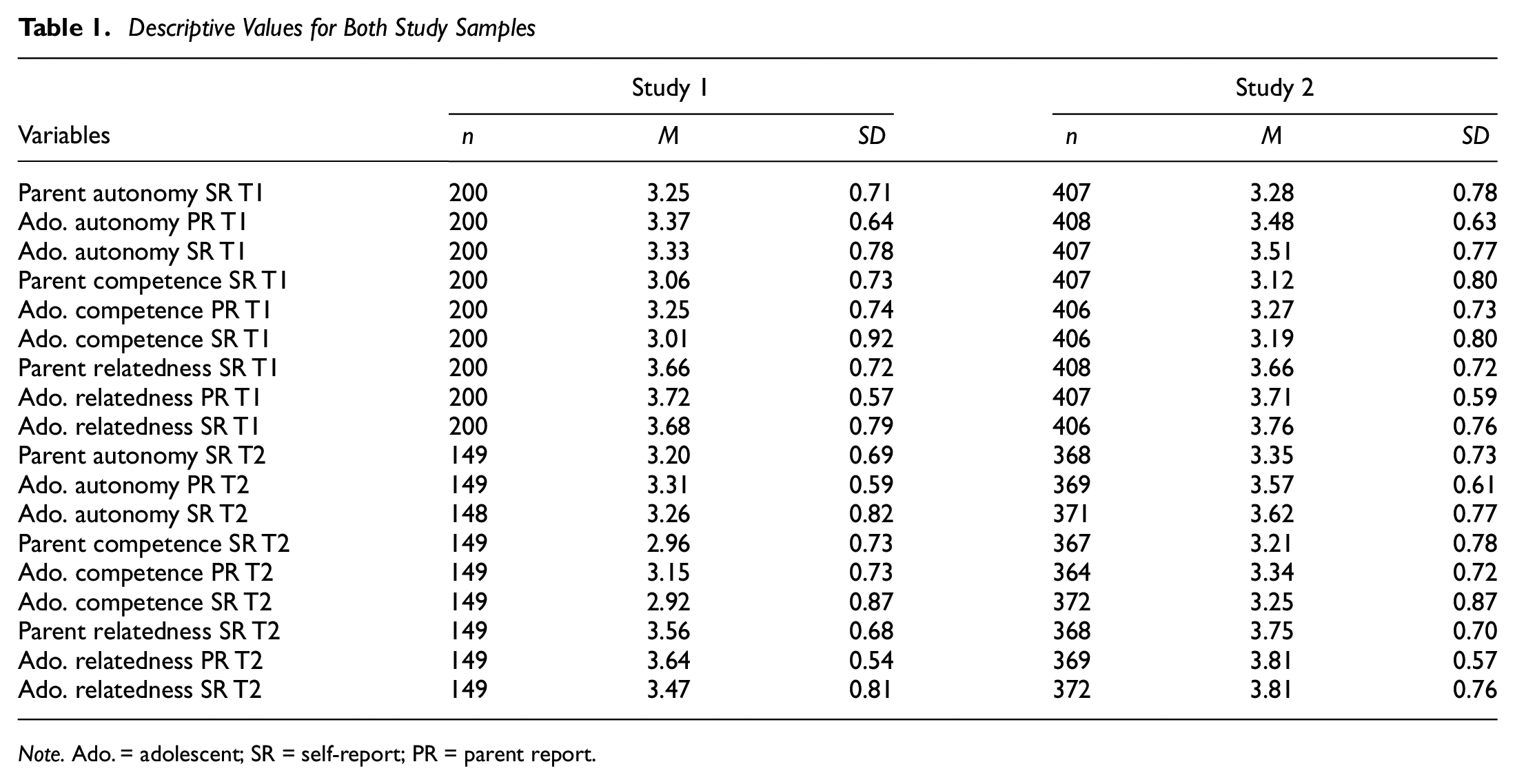
Note. Ado. = adolescent; SR = self-report; PR = parent report.
Measurement Models
Details about the tested measurement models can be found in our Supplementary Materials. All measurement models were built by progressively adding constraints. Models A through C all presented good fits for each need and supported measurement invariance. The last models, Models C, were used in our structural models.
Structural Models
Autonomy
The cross-lagged model was built on the last measurement model by adding cross-lagged and autoregressive paths to Model C, as well as regressing T2 latent variables onto covariates. This model showed a good fit for all indices: χ2(351) = 395.83, p = .049, comparative fit index (CFI) = .973, Tucker–Lewis index (TLI) = .969, root mean square error of approximation (RMSEA) = .026, standardized root mean square residual (SRMR) = .064. In terms of the parental needs effect, parents’ autonomy need satisfaction was not significantly associated with adolescents’ self-reported T2 autonomy need satisfaction (see Figure 1). For the child’s needs effect, adolescents’ self-reported autonomy satisfaction at T1 did not significantly predict parents’ self-reported need satisfaction at T2. However, findings showed a parental perception effect, where parents who perceived their adolescent as having more autonomy need satisfaction at T1 predicted greater autonomy satisfaction as reported by their adolescent at T2, β = .30, p = .006, 95% confidence interval (CI) = [.09, .52]. Results also showed that the more parents felt that their autonomy needs were satisfied at T1, the more they perceived their adolescent’s autonomy needs to also be satisfied at T2, β = .20, p = .021, 95% CI = [.03, .37]. Parents’ perception of their adolescents’ autonomy needs at T1 did not predict their own need satisfaction at T2 and adolescents’ self-reported autonomy satisfaction at T1 did not significantly predict parental perception of adolescents’ need satisfaction at T2.
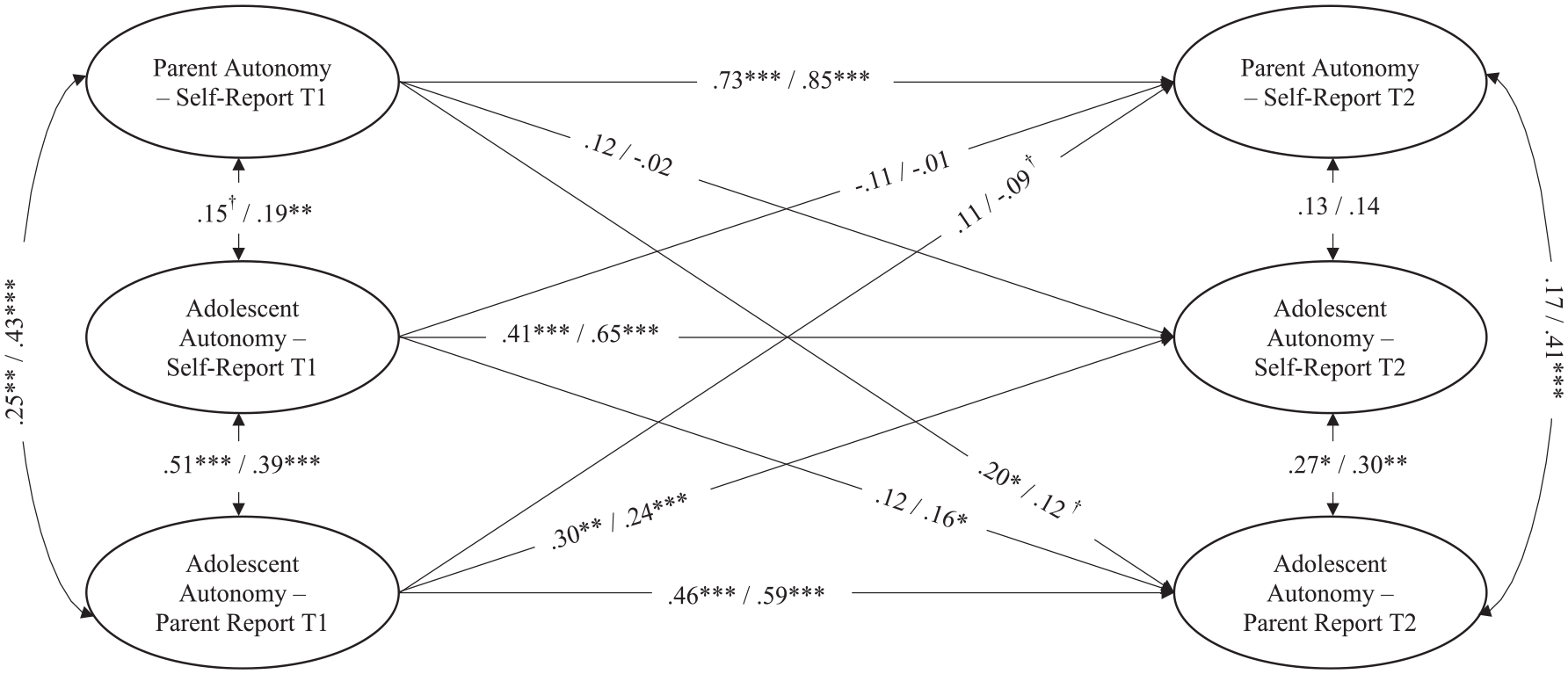
Cross-Lagged Path Models for Autonomy Need Satisfaction in Studies 1 and 2
Competence
We built a final model, again adding our cross-lagged and autoregressive paths and covariables to the last measurement model for competence satisfaction (Model C). This model also demonstrated a good fit: χ2(351) = 440.92, p = .001, CFI = .963, TLI = .958, RMSEA = .036, SRMR = .063. Parents’ self-reported competence satisfaction at T1 did not significantly predict their adolescents’ self-reported satisfaction at T2 through a parental needs effect (see Figure 2). Similarly, adolescents’ self-reported competence satisfaction at T1 did not significantly predict their parents’ own T2 need satisfaction, therefore not supporting a child’s needs effect. Findings did, however, show a parental perception effect, as greater parental perception of adolescents’ need satisfaction at T1 predicted greater adolescent self-reported competence need satisfaction at T2, β = .27, p = .040, 95% CI = [.01, .52]. None of the other effects were statistically significant.
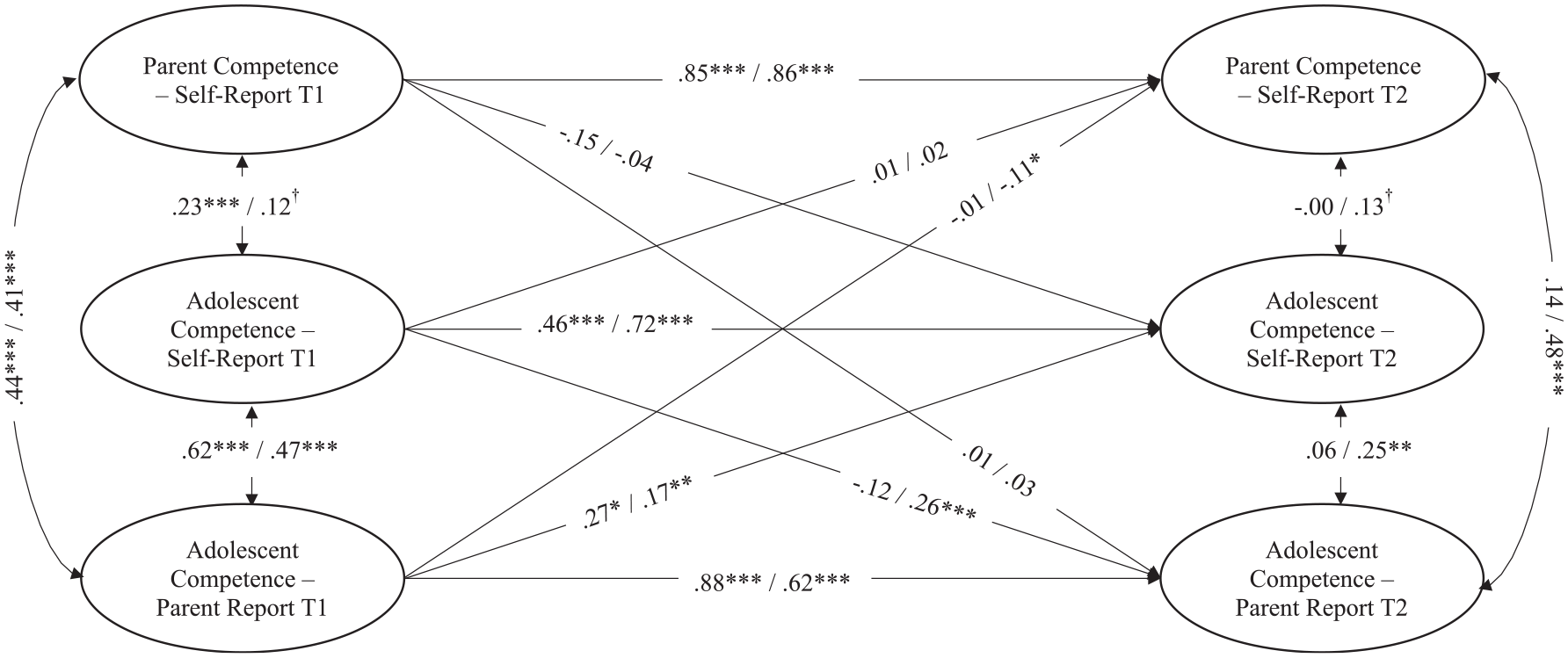
Cross-Lagged Path Models for Competence Need Satisfaction in Studies 1 and 2
Relatedness
The final model including the latest measurement model (Model C), cross-lagged and autoregressive paths, and control variables showed a good fit: χ2 (351) = 477.74, p < .001, CFI = .940, TLI = .932, RMSEA = .044, SRMR = .062. Results showed that parents’ own need satisfaction at T1 did not significantly predict their adolescent’s self-reported T2 relatedness need satisfaction through a parental needs effect (see Figure 3). Adolescents’ self-reported relatedness need satisfaction at T1 was also not significantly associated with parental need satisfaction at T2, thus not supporting a child’s needs effect. Findings again indicated a parental perception effect, where the more parents perceived their adolescent as feeling connected to others at T1, the more adolescents then reported their relatedness needs as satisfied at T2, β = .30, p = .004, 95% CI = [.10, .50]. Parents’ perception of their adolescents’ relatedness needs at T1 positively predicted their own relatedness needs at T2, β = .23, p = .011, 95% CI = [.05, .40]. None of the other paths were statistically significant.
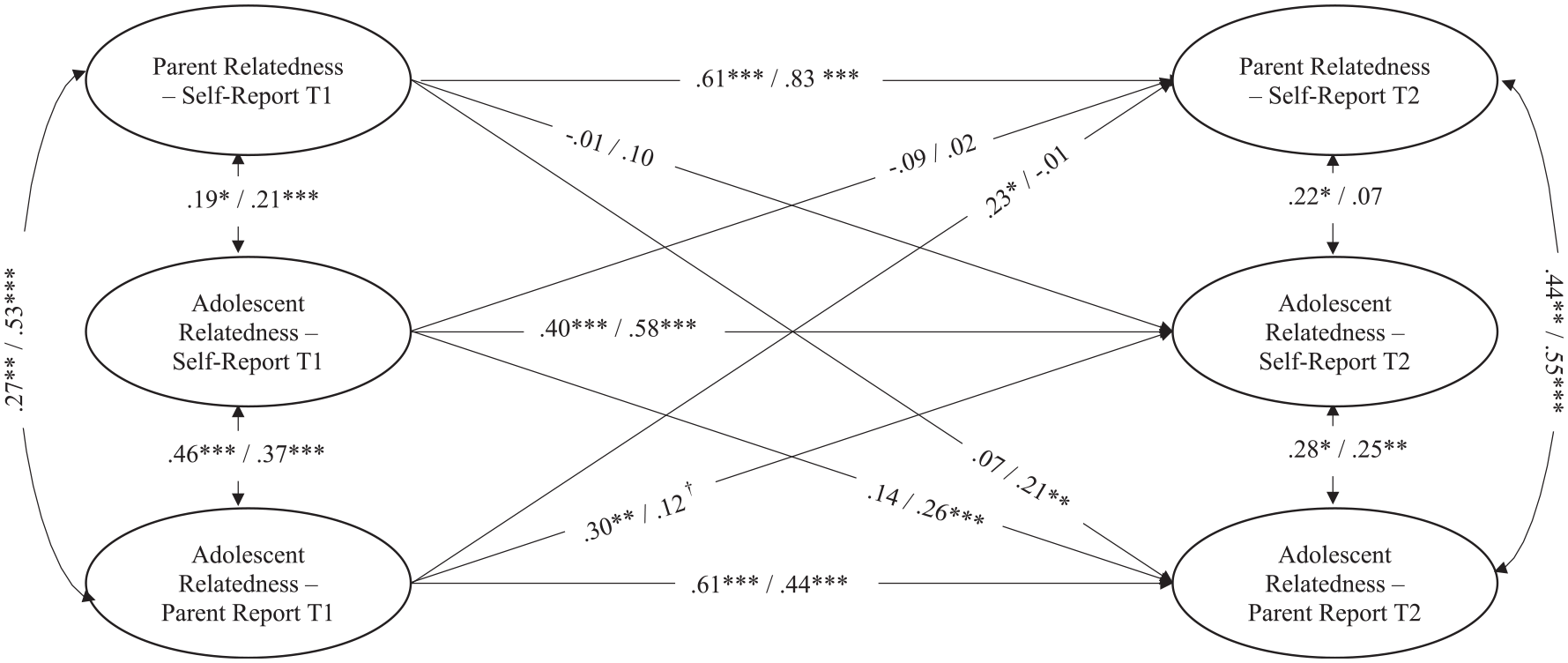
Cross-Lagged Path Models for Relatedness Need Satisfaction in Studies 1 and 2
Study 2
Objectives and Hypotheses
In this preregistered study (see here: https://doi.org/10.17605/OSF.IO/BA6KG), we initially proposed to replicate some of our main findings in a larger sample: the association between parents’ T1 and adolescent’s T2 autonomy need satisfaction (see hypothesis 1 below), and the association between parents’ perceptions of their child’s BPNS at T1 and their child’s self-reported BPNS at T2 (see hypothesis 2 below). However, upon reanalyzing our pilot data with additional model constraints for this article, the association between parents’ T1 and adolescents’ T2 autonomy need satisfaction was no longer significant although the size of the effect was similar. As there is a strong theoretical rationale supporting the association between parents’ and adolescents’ autonomy need satisfaction, we maintained our preregistered Hypothesis 1. To further explain these associations, we also explored their mediation by autonomy support and psychological control in our Supplementary Materials (Hypothesis 3).
Following the analyses of the first sample and before the obtention and analysis of the second sample of mother–adolescent dyads, we formulated and preregistered the following hypotheses:
Methods
Participants and Procedure
Participants were recruited with the same procedure used in the first study. They received their questionnaires in October 2019 (T1) and February to March 2020 (T2; 5-month interval). This study was also part of a larger study examining parental effects on adolescents’ motivation, and a list naming all scales included in the questionnaires is available in our online Supplementary Materials (https://osf.io/utr8s/?view_only=41d16a307a17480c841e1ab00fb84290). The data set used in this study is also used in another study by Tanaka et al. (2023) to investigate adolescents’ depressive symptoms. The questionnaires included in this study are the same as in Study 1, with the addition of scales about autonomy-supportive and controlling parenting practices (used to test the mediation hypotheses in our Supplementary Materials). The sample included 408 mother (Mage = 44.84, SD = 4.49) and adolescent dyads (52% girls; Mage = 13.73, SD = 0.90) with a median annual family income of 5,000,000 to 5,999,999 yen (about US$45,926.55 to US$55,111.84). As mothers’ and fathers’ BPNS can be differentially associated with their child’s BPNS (Costa et al., 2019) and their level of autonomy support (measured for our supplementary analyses) can differ in their interaction with their children (Ratelle et al., 2017), this study focused only on mothers’ reports. There was a 9% attrition rate between time points (attrition was examined in our Supplementary Materials). As explained in Study 1, we based our sensitivity analysis on partial correlations as proxies for SEM. A sensitivity power analysis for the associations between our predictors and our outcomes with a two-tailed partial correlation test conducted in G*Power 3.1 (Faul et al., 2007) showed that our sample after attrition (371 pairs) provided 80% power to detect a correlation of .14.
Measures
Basic Psychological Need Satisfaction
As for Study 1, mothers answered two versions of the 12-item satisfaction subscale from the Japanese version of the Basic Psychological Need Satisfaction and Frustration Scale (Nishimura & Suzuki, 2016) at T1 and T2—one about themselves and one about their perception of their adolescent’s need satisfaction. Adolescents reported their BPNS using the same scale. Cronbach’s alphas for the three versions of the subscales at each time point ranged between .79 and .87 for autonomy, .83 and .89 for competence, and .81 and .88 for relatedness.
Sociodemographic Characteristics
Using the same scales as in Study 1, mothers reported their family’s annual income and their age and adolescents reported their age and sex.
Analytical Strategy
All preregistered statistical analyses have been conducted and are reported in this article or in the Supplementary Materials. To answer our preregistered hypotheses, we first replicated the same cross-lagged models from Study 1. We then tested the mediation effects of autonomy-supportive and controlling practices as reported by mothers and adolescents on the parental needs effect and the parental perception effect in cross-lagged models (Hypothesis 3 in our Supplementary Materials).
Results
Descriptive Statistics and Correlations
The sample size, mean, and standard deviation for all variables can be found in Table 1. Correlations between all variables of interest are reported in an interactive matrix that can be found in the journal’s online Supplementary Files. The overall pattern is similar to the associations found in Study 1 and indicates positive associations between parents’ and adolescents’ BPNS.
Measurement Models
Following the same analysis plan as in Study 1, we started by creating measurement models for each basic psychological need. As shown in our Supplementary Materials, Models A to C for autonomy, competence, and relatedness all presented good fit indices and supported measurement invariance.
Structural Models
Autonomy
To test Hypotheses 1 and 2, a structural model was created by adding cross-lagged and autoregressive paths to the latest measurement model (Model C) and regressing T2 latent variables onto control variables. This final model indicated a good fit: χ2(330) = 582.63, p < .001, CFI = .942, TLI = .935, RMSEA = .045, SRMR = .057. Results for autonomy need satisfaction did not support the parental needs effect predicted by Hypothesis 1, as parents’ autonomy satisfaction at T1 did not significantly predict adolescents’ self-reported autonomy satisfaction at T2 (see Figure 1). However, findings supported the parental perception effect from Hypothesis 2. The more parents perceived their adolescents as having their autonomy needs met at T1, the more adolescents subsequently reported need satisfaction at T2, β = .24, p < .001, 95% CI = [.12, .37].
Aside from hypothesized associations, results showed that parents’ need satisfaction at T1 was marginally positively associated with their perception of their adolescent’s need satisfaction at T2, β = .12, p = .052, 95% CI = [−.00, .23]. Parents’ perception of their adolescent’s need satisfaction marginally and negatively predicted their own level of need satisfaction at T2, β = −.09, p = .072, 95% CI = [−.19, .01]. Adolescents’ self-reported need satisfaction at T1 positively predicted parents’ perception of their adolescent’s autonomy satisfaction at T2, β = .16, p = .021, 95% CI = [.02, .30]. Finally, adolescents’ self-reported autonomy need satisfaction at T1 did not significantly predict parents’ satisfaction at T2, therefore not supporting a child’s needs effect.
Competence
The final cross-lagged model showed a good fit: χ2 (330) = 605.22, p < .001, CFI = .948, TLI = .941, RMSEA = .047, SRMR = .055. Results did not support the parental needs effects predicted in Hypothesis 1, but supported the parental perception effect from Hypothesis 2 by showing that parents’ perceptions of their adolescent’s competence satisfaction at T1 positively predicted adolescents’ satisfaction at T2, β = .17, p = .003, 95% CI = [.06, .28] (see Figure 2).
Other associations showed that parents’ perception of their adolescent’s need satisfaction at T1 negatively predicted their own need satisfaction at T2, β = −.11, p = .027, 95% CI = [−.21, −.01]. Adolescents’ self-reported competence satisfaction at T1 positively predicted their parents’ perception of their needs at T2, β = .26, p < .001, 95% CI = [.12, .39], whereas parents’ own need satisfaction at T1 did not predict their perceptions. Finally, the results did not support a child’s needs effect.
Relatedness
The final model containing the cross-lagged and autoregressive paths and control variables also demonstrated a good fit: χ2 (330) = 500.67, p < .001, CFI = .962, TLI = .957, RMSEA = .038, SRMR = .052. Results did not support the parental needs effect from Hypothesis 1, as parents’ self-report at T1 did not significantly predict adolescents’ self-reported relatedness satisfaction at T2 (see Figure 3). For the second hypothesis about the parental perception effect, results showed that parents’ perception of adolescents’ need satisfaction at T1 only marginally predicted adolescents’ relatedness satisfaction at T2, β = .12, p = .097, 95% CI = [−.02, .26].
Findings also indicated that parents’ own need satisfaction at T1 positively predicted their perception of their adolescents’ relatedness need satisfaction at T2, β = .21, p = .002, 95% CI = [.08, .33], but the reverse association was not significant. Adolescents’ self-reported relatedness satisfaction at T1 positively predicted parents’ perception of their adolescent’s satisfaction at T2, β = .26, p < .001, 95% CI = [.14, .37]. Again, the results did not support a child’s needs effect.
General Discussion
Our first exploratory study and our second preregistered confirmatory study aimed to address a gap in the literature by developing a better understanding of the interplay of basic psychological needs between parents and adolescents over time. Our studies provided overall support for the parental perception effect, in which parents’ perception of their adolescent’s BPNS positively predicted their adolescent’s BPNS, especially for the need satisfaction of autonomy and competence. On the contrary, the two studies did not find a reliable parental needs effect (parental BPNS predicting adolescent BPNS) or child’s needs effect (adolescent BPNS predicting parental BPNS).
Associations Between Parents’ and Adolescents’ Needs
Based on previous SDT study findings (Costa et al., 2019; Lo Cricchio et al., 2021; Nishimura et al., 2021) and family systems theory, we expected to find associations between some of the BPNS of parents and adolescents. However, while our correlational analysis basically replicated the significant positive correlations between parents’ and adolescents’ BPNS (see our online interactive correlation matrices) found in the literature (e.g., Lo Cricchio et al., 2021; Nishimura et al., 2021; Rodríguez-Meirinhos et al., 2021), the results from our two longitudinal analyses did not detect such influence over time. More specifically, parents’ need satisfaction did not reliably predict adolescents’ need satisfaction (no parental need effect) and adolescents’ need satisfaction did not predict parents’ need satisfaction (no child’s needs effect) while controlling for initial BPNS. To summarize, while parents’ and adolescents’ BPNS are correlated as predicted by family systems theory and research in SDT, we found no evidence of parents’ BPNS influence on their adolescents’ BPNS over the period of time we measured in adolescence.
These somewhat surprising results could be explained in several ways. For example, they could be explained by the possibly stronger influence parents exert in younger children’s than adolescents’ lives. While previous studies either used a sample of children or only observed cross-sectional associations in parent–adolescent dyads (Costa et al., 2019; Lo Cricchio et al., 2021; Nishimura et al., 2021; Rodríguez-Meirinhos et al., 2021; van der Kaap-Deeder et al., 2015), this article examined the changes in BPNS between parents and adolescents over a specific length of time. By adolescence, parents’ influence on their children may have stabilized. Furthermore, during adolescence, both parents and adolescents may have less influence over each other’s need satisfaction as adolescents become more independent (Smetana et al., 2015) and find increasingly more global need-fulfillment in other relationships such as friendships. Previous cross-sectional studies’ associations between parent and adolescent BPNS could also be explained by a variable present in the parent’s and adolescent’s shared environment that has yet to be measured (e.g., relationship closeness). Another explanation relates to our examination of the parental and child’s needs effect within a specific time frame in adolescence (i.e., 13 months and 5 months). The cross-lagged model that we used has a critical assumption that the effect emerges at the second assessment period. While our studies tested the possibility that these effects can be observed over longer periods of time, it is possible that the parental and child’s needs effects take place in a shorter time frame, as suggested by the correlations observed in cross-sectional studies or daily need-supportive parenting influences on BPNS found by van der Kaap-Deeder et al. (2017), and then dissipate over time (Voelkle et al., 2012). Despite the nonsignificant effects observed in the current data, future studies should still test these effects more comprehensively at different ages and encompass different lengths of time.
The Parental Perception Effect
This study was the first to examine parents’ perception of their adolescent’s need satisfaction (parental perception effect). Our findings showed that parents’ perceptions of their adolescent’s need satisfaction, especially autonomy and competence needs, predicted their adolescents’ need satisfaction over time. In other words, the more a parent thought their adolescent’s needs were satisfied, the more their adolescent reported increased need satisfaction months later. This finding is similar to the studies by Bois et al. (2005), where mothers’ views of their child’s physical activity competence predicted the child’s view of their own competence a year later, and by Ohtani et al. (2022), where parental perception of adolescents’ depressive symptoms predicted adolescent-reported symptoms months later.
Similar to what Ohtani et al. (2022) found, this pattern of findings could refer to a Pygmalion effect (Rosenthal & Jacobson, 1968) where adolescents were influenced by their parent’s perceptions of their own need satisfaction. While studies investigating both parental perceptions and children or adolescent perceptions are rare, similar effects appear in the literature on adults’ expectations of children and adolescents. For example, students whose teachers have higher expectations of their future success are more likely to have higher academic achievement and graduate from college (Boser et al., 2014; Szumski & Karwowski, 2019). Another small study investigating the development of children’s anxious cognitions found similar results: Mothers’ expectations of their child’s anxious cognitions predicted the changes in children’s anxious cognition over time (Creswell et al., 2006). Adolescents are vulnerable to their parents’ views and perceptions (Bouchey & Harter, 2005; Ohtani et al., 2022), but our two studies cannot ascertain how (i.e., by which mechanisms) parents’ perceptions influence their adolescents. This transmission of perceptions could happen through a self-fulfilling prophecy or the adolescents’ internalization of their parent’s view of their need satisfaction. This process could also happen as part of normal developmental discrepancies, with parents leading their adolescents to develop more autonomy, competence, and relatedness from their greater perceptions of adolescents’ autonomy, competence, and relatedness.
An alternative explanation could be that parents have a more accurate perception of their adolescent’s true need satisfaction, which adolescents only recognize later (see Ohtani et al., 2022). For example, parents could perceive their adolescents as having high autonomy satisfaction, being able to make developmentally appropriate choices in line with what they perceive as their values and beliefs, whereas adolescents, not yet fully aware of their own identity, values, and beliefs, only realize later that they are acting in accordance to their own volition. In this scenario, parents would recognize their adolescents’ autonomy need satisfaction earlier than adolescents and reflect that perception to adolescents, influencing their perceptions over time. However, this explanation would not reflect a pure parental perception effect, as parental perception is a consequence, rather than an antecedent, of adolescents’ need satisfaction. Still, need satisfaction is highly subjective and it can be difficult to conceive that parents can better assess adolescents’ internal lives than adolescents themselves.
Limitations and Future Directions
We should note some limitations of the current work. First, we improved on the literature by looking at the interplay of BPNS longitudinally with two time points. However, extending our research to three or more time points would be important to examine how the development of BPNS happens over time. Recent studies have shown that models with more than two time points can potentially control for various types of confounders (Lüdtke & Robitzsch, 2021; Usami et al., 2019). For example, random-intercept cross-lagged models (Hamaker et al., 2015), which require at least three time points of data, control for certain types of unmeasured time-invariant confounders, allowing us to make a better causal inference (Murayama & Gfrörer, 2022). Furthermore, applying our model to data collected at shorter or longer intervals could help understand how parents’ and adolescents’ BPNS influence each other (Rohrer & Murayama, 2021). Interestingly, our two studies tested the models at different time intervals (5 and 13 months) and obtained similar results. However, collecting daily or weekly measures (e.g., van Der Kaap-Deeder et al., 2019) could yield different results about their interinfluences. In addition, testing the models at different ages could be highly informative to make better causal inferences and assert whether parents really have more influence at younger ages.
Second, both studies used samples of Japanese parents and adolescents, which could limit the generalizability of our findings. Although SDT positions BPNS as universal, some cultural differences have been found in the ways these needs are fulfilled. Whereas research generally shows great overlaps between relationship descriptions across different cultures, relationship differences have been suggested in the literature (Laursen & Collins, 2009; Smetana et al., 2015). For example, research suggests that the parent–child relationship undergoes a lower decrease in closeness in Japanese adolescents than in U.S. adolescents (Rothbaum et al., 2000; Smetana et al., 2015). Testing our models in different cultures would help establish whether the effects we found are universal or if they depend on characteristics of the parent–child relationship that vary by culture.
Conclusion and Implications
Overall, our studies did not find that parents’ or adolescents’ BPNS led to changes in the other’s autonomy, competence, and relatedness needs satisfaction. However, findings from both studies highlighted the importance of parents’ perceptions of their adolescents and have key implications for theory and interventions. Our results reaffirm the importance of considering the social context for SDT and the usefulness of a systemic lens to examine basic psychological needs. Furthermore, as SDT often emphasizes the subjective perception of one’s own BPNS, the perceptions of others, such as with the parental perception effect, have not been studied enough considering their apparent impact. Our findings also reiterate that different developmental periods may offer alternate paths of interinfluences between parents and children in terms of basic psychological needs. Finally, our studies indicate that parental perceptions should be considered in future interventions targeting adolescents’ emotional, social, and academic adaptation. Assessing parents’ perceptions of adolescents could provide important information to guide interventions and explain the maintenance of certain perceptions of autonomy, competence, and relatedness that underpin various negative emotional and behavioral outcomes in adolescents (Rodríguez-Meirinhos et al., 2021). Finally, as Ohtani et al. (2022) suggested, parents could also be made aware of their influential power and use it to positively support their children.
Supplemental Material
sj-rtf-1-spp-10.1177_19485506231153012 – Supplemental material for Transmission of Basic Psychological Need Satisfaction Between Parents and Adolescents
Supplemental material, sj-rtf-1-spp-10.1177_19485506231153012 for Transmission of Basic Psychological Need Satisfaction Between Parents and Adolescents by Vanessa Kurdi, Noriaki Fukuzumi, Ryo Ishii, Ayame Tamura, Naoki Nakazato, Kazuhiro Ohtani, Shin-ichi Ishikawa, Takashi Suzuki, Michiko Sakaki, Kou Murayama and Ayumi Tanaka in Social Psychological and Personality Science
Footnotes
Handling Editor: Bar-Anan
Declaration of Conflicting Interests
The author(s) declared no potential conflicts of interest with respect to the research, authorship, and/or publication of this article.
Funding
The author(s) disclosed receipt of the following financial support for the research, authorship, and/or publication of this article: This study was supported by Japan Society for the Promotion of Science KAKENHI Grants 16H06406 and 18K18696 awarded to N.F., R.I., A. Tam, N.N., K.O., S.I., T.S., M.S., K.M., and A. Tan; Fonds de recherche du Québec—Société et culture postdoctoral fellowship 255679 awarded to V.K.; FY2022 Japan Society for the Promotion of Science Postdoctoral Fellowship for Research in Japan (Short-Term) awarded to V.K.; Leverhulme Trust Research Leadership Award RL-2016-030 awarded to K.M.; and Alexander von Humboldt Professorship endowed by the German Federal Ministry of Education and Research awarded to KM.
Ethical Approval
This research was approved by the ethical committee of the Faculty of Psychology at Doshisha University.
Informed Consent
Participants were fully informed about the nature of the study and consent was obtained for everyone included in the study.

Supplemental Material
Supplemental material is available in the online version of the article.
Author Biographies
References
Supplementary Material
Please find the following supplemental material available below.
For Open Access articles published under a Creative Commons License, all supplemental material carries the same license as the article it is associated with.
For non-Open Access articles published, all supplemental material carries a non-exclusive license, and permission requests for re-use of supplemental material or any part of supplemental material shall be sent directly to the copyright owner as specified in the copyright notice associated with the article.
