




Abstract
This paper investigates the role of social media in mobilizing environmentalism amid authoritarian restrictions, focusing on the Vietnam coastal pollution of 2016. It contributes to current academic debates by showing how elements that are apparently mundane and irrelevant become the stage for political action within social media. We examined the interface of connective actions (social media activism) – collective actions (protests) and the role of food symbolism in translating digital activism into physical resistance that bridges the distance between rural and urban areas. Data were collected from Facebook and Twitter, as well as semi-structured interviews, policy documents, and national newspapers and broadcasts. Food symbolism, exemplified by #ichoosefish, helped personalize grievances and materialize protest actions amid the government’s countermeasures. The results further show that by using social media, especially Facebook, the activists managed to rationalize their political engagement in a non-participatory context and mobilize protests during political restrictions by arguing that their ‘apolitical’ actions were motivated by food-based grievances associated with personal, environmentalist and nationalist concerns. Food symbolism is thus essential in transitioning from connective actions to collective actions.
Introduction
What was the ‘motivation’ behind my demand for transparency?! [. . .] I can’t simply remain silent. I have the right to [. . .] demand transparency [. . .] #dontbesilent #ichoosefish #deadfish #deadsea [. . .]
Accompanying this Facebook status (source unrevealed according to the ethics procedure of this research) was a picture of a stoic-looking man, standing in a public park in Hồ Chí Minh City, holding a banner that read ‘FISH NEED CLEAN WATER. PEOPLE NEED TRANSPARENCY #Dontbesilent’ (collected data, original emphasis). This post was among hundreds of public Facebook post showcasing social media users in Vietnam’s frustration against an environmental disaster that took place earlier. In April 2016, fishermen in Hà Tĩnh Province woke up to then-inexplicable dead fish along the Kỳ Anh Beach, nearby to where the steel factories of Formosa Hà Tĩnh Steel Corporation (FHSC) are located (VN Express, 2016). The dead fish were soon recorded in adjacent provinces (CKV, 2016; Green Trees, 2017). This caused an uproar as the following 3 months saw locals in the affected provinces and concerned environmentalists in Hà Nội and Hồ Chí Minh City take to the to the streets to express their frustration and demand transparency from the government with regard to the Vietnamese coastal pollution (BBC Vietnam, 2016; Gia Minh, 2016).
On April 25, 2016, FHSC’s representative controversially responded to reporters with ‘Do you want to catch fish and shrimp or [work at] steel factories. Pick one!’ (Tuoi Tre Online, 2016). This remark inspired the hashtag #toichonca (#ichoosefish in English), which later became trendy on Facebook and Twitter (currently known as X) for concerned social media users who wanted to express their frustration over the consequences of the fish death and how it was handled by the government. The hashtags became synonymous with the critiques and activism against not only FHSC, but also the Vietnamese government’s handling of the pollution (Ives, 2016). It was only on June 30, 2016, that the ‘culprit’ was officially identified by the government, confirming the circulating suspicion that FHSC’s untreated waste was the cause of the death of fish (VN Express, 2016).
On its own, the quoted Facebook post seems innocuous enough as an illustration of a citizen voicing opinions. However, in Vietnam, the act of publicly challenging the (single-party) government is highly provocative and subject to police response, and public expression confronting the government is strongly discouraged by the state (Thayer 2014). Vietnam has the most restricted cyberspace in Southeast Asia, extensively cracking down on cyber dissidents deemed a threat to regime stability (Sinpeng, 2019). The aforementioned quote illustrates an uncharacteristically provocative response of citizens, both online and offline, to the government’s handling of what came to be known internationally as the 2016 ‘Vietnamese marine disaster’ (Cantera, 2017). The disaster apparently connected the pragmatic urgency of threatened (food) resources with the politics of expressing civic discontent. While environmental protests are not uncommon in Vietnam (Ortmann, 2017), the public reaction to the disaster was quite atypical, with both rural and urban citizens taking their dissatisfaction to the streets (BBC Vietnam, 2016; Gia Minh, 2016), using fish imagery as a ‘catchy’ and viral discursive element. Using Facebook and Twitter, the activists constructed a critical narrative demanding responsibility from FHSC as well as local and central governments (Valentine, 2016). Via Facebook, urban activists also managed to disseminate calls for gathering and protesting in public spaces (Don Le, 2016).
The coastal pollution is an environmentalism case where the combination of food symbolism, namely dead fish imagery, and the many connotations assigned to food by activists, and the social media-based activism contributed to a rare manifestation of physical protests in authoritarian Vietnam (Nguyen Van Quoc & Trell, 2023). This paper investigates how activists relied on the seemingly apolitical ‘fish’ to construct an environmentalist message supporting protest actions and calling for government transparency, focusing on the relationship between social media and the ‘radical potential in digitally mediated resistance’ (Matulis and Moyer, 2018: 385).
Theoretically, we engage with the ‘terrain that lies between quiescence and open rebellion’ (Fröhlich and Jacobsson, 2019: 1148), between open, declared and disguised, low-profile or undeclared forms of resistance under authoritarianism. Building on studies in similar contexts about ‘liminal’, ‘embedded’ and ‘disguised’ activism (Fröhlich and Jacobsson, 2019; Fu, 2017; Ho, 2008; McCarthy, 2013), our analysis focuses instead on how social media platforms and food symbolism facilitated direct confrontations between citizens, who tend to maintain a low profile under otherwise ‘normal’ circumstances, and the communist government. We thus highlight the interface between collective actions (protests) and connective actions (social media activism) and how this interface played important role in bridging the urban and rural spaces of resistance to provide a substantial momentum for political expression and activities. We also showcase how elements that are apparently mundane and easily taken for granted can become the stage for political action within social media.
Theoretical framework
Framing environmental conflicts and actions
All collective actions go through the process of appealing to and bringing together potential proponents/adherents. The intricacy of this process depends on the diversity of the would-be supporters’ socio-political backgrounds (Wetzel, 2010). Activists’ ability to generate meaningful movement frames that can aptly resonate with supporters and simultaneously maintain such resonance is critical to a movement’s success (Wetzel, 2010). Frames are used to make sense of reality through enriching a once ambiguous or complex situation by adding meaning (van den Brink, 2009). Collective action frames are ‘sets of beliefs that serve to create a state of mind in which participation in collective action appears meaningful’ (Klandermans, 1997: 17) to express political stances, advance and align agendas with potential allies, and forge a collective identity among participants (Taylor, 2000; Wetzel, 2010).
Since environmental issues are continuous struggles concerning the definition and meaning of the problems themselves (Hajer, 1995: 8), frames are critical for the discursive construction of environmental issues/conflicts, the dynamics of mobilizing processes behind the performed environmentalist actions and transformation of grievances as speculation of perceived (environmental) injustice (LeFebvre and Armstrong, 2018). Recent forms of political activism are characterized by the displacement of collective action frames by personal action frames in many protest cases. These new forms of activism more strongly resonate with grievances pertaining to personal lifestyle values, such as economic injustice, environmental protection or human rights, rather than party politics or ideology (Lee et al., 2015). The shift in form of activism is relevant in cases of social media-based mobilization (Bennett and Segerberg, 2012) where emphasis is placed on ‘the aggregation of diverse expressions of identity, rather than alignment of meaning structures or the forging of collective identity’ (van Haperen et al., 2018: 410). This results in connective actions as it allows the possibility to interact with others about individual orientations. This disseminates personal action frames on digital media networks without a presupposition of frame alignment (van Haperen et al., 2018).
Food symbolism as personalization of environmental disasters
Grievances, referring to perceived illegitimate inequality, injustice and general moral indignation about a state of affairs (LeFebvre and Armstrong, 2018), do not inherently trigger actions (Gamson 1992). It is the interpretation of these grievances that leads to people participating in activism (Snow, 2004), for instance, environmentalist actions. In this sense, environmental disasters that pose threats to food resources can be sensationalized through the multiple issues symbolized by the notion of food.
Foods do not intrinsically symbolise. They are used to symbolise. [. . .] What does ‘symbolic’ infact mean? [. . .] Objects, ideas, oractions, are called symbolic when they represent something beyond their obvious identities. (Fiddes, 1992: 41)
More specifically, the ‘urgency of food provisioning’ and ‘deep material interests in survival drive over food’ provoke struggles for rights, security and justice, and thereby condition ‘collective action and contentious politics’ (Herring 2015: 29). Thus, food-related issues are easily linked to perceived injustice (Bohstedt, 2010) and can function as a catalyst for demands beyond itself (Bush, 2010) and social changes (Miller, 2008).
In addition, food possesses high cultural resonance due to the manifold cultural meanings and discourse surrounding food practices and preferences in human societies (Counihan and van Esterik, 2013; Herring, 2015). It is ‘the symbolic medium par excellence’ (Lupton, 1996: 1), as succinctly put by Greene (2011: 59):
Food is a crucial ingredient [. . .] in everyday life and is inextricably linked to the economic, social and political circuits of culture. [. . .] It is symbolically associated with the most deeply felt human experiences, and thus expresses things that are sometimes difficult to articulate in everyday language.
Since commensality is key to social construction and the social rules that govern behaviour (Morrison, 1996), food can provoke issues of conscience and philanthropy through the virtue of solidarity (LaFollette, 2005), of structural inequality (Sbicca, 2018) or of systematic oppression (Sbicca, 2012). Food allows individuals to position themselves within society, since it constitutes racial (Slocum, 2010), social (Greene, 2011) and national identity (Ichijo et al., 2019). Such fertile soil of socio-political metaphors facilitates a highly dynamic ‘food’ connotation that conveniently lends itself to discursive environmental politics, where actors to create narratives that resonate with everyday concerns (Hajer and Versteeg, 2005). On the one hand, the fact that food-related issues can be framed as political in markedly different ways means that environmental discourses can draw from food as a discursive material (Harper, 2003). On the other hand, environmental justice ‘represents a search for community empowerment, and its advocates have frequently embraced a number of community food security issues’ (Gottlieb, 1996: 25).
The discussed literature suggests that food provides a platform for expressing environmental concerns through personalized tropes and metaphors, even with a view to a collective cause. This observation aligns with Bennett and Segerberg’s (2012) discussion on the personalization of participation. Specifically, food can be conductive to personalization through its role in action framing, since its omnipresence in lifestyle choices allows political issues associated with food consumption to be brought forward through various forms of activism that may prioritize public experiences of the self rather than of collective solidarity (Bennett and Segerberg, 2012).
Between connective and collective actions
Personalization can also be observed in the use of various types of digital media (Bennett and Segerberg, 2011). The growing demand for personalized relations with causes and organizations makes digital technologies increasingly central to the organization and conduct of collective action. In particular, social media has been at the forefront of contemporary activism (Gerbaudo, 2012), at least for those who can afford the accessbility, considering internet availability (van Haperen et al., 2018) and governmental censoring (Thayer, 2014). The proliferation of digital activism has led to both enthusiasm and scepticism from scholars because social media can contribute considerably to facilitating, coordinating and galvanizing political actions (Matulis and Moyer, 2018). Bennett and Segerberg (2011) conceptualize activism in the digital sphere as connective actions, which are more individualized and technologically organized than collective actions such as protests. Connective actions also do not as strongly require a collective identity framing or the levels of organizational resources to respond to opportunities as collective actions do (Bennett and Segerberg, 2011), as:
Communication technologies aimed at personalizing engagement with causes facilitate organizational communication and coordination at the same time as they enable flexibility in how, when, where, and with whom individuals may affiliate and act. (Bennett and Segerberg, 2011: 771)
Thus, when investigating social media activism (associated with connective actions in this paper), it is important to also pay attention to how individuals interact and engage with social media Technology affordances refer to the capabilities of technology and the choices individuals make in using them (Selander and Jarvenpaa, 2016). These affordances extend the modes of production and interaction/engagement between users and content/data; for example, direct messaging allows information seeking and exchanging behaviour during a crisis, while ‘share’ and ‘like’ functions allow impersonal interaction and noncommittal engagement (Selander and Jarvenpaa, 2016). Since social movements and protests are essentially visual phenomena, Facebook and Twitter facilitate citizen journalism practices that allow activists to communicate with a wider audience of potential allies and sympathizers, regardless of geographical distance.
The role of social media in provoking criticism against perceived injustice is enhanced under authoritarianism where physical activism is often restricted. Vu (2017) discussed how the Group 6700 People relied on Facebook to reach participants and organize ‘peaceful’ walks in Hà Nội to protest the city government’s decision to cut down decades-old trees on the city’s main roads. Through social media, activists can expand ‘political space for public participation’, and ‘orchestrate collective actions and [. . .] empower people and raise their awareness of their citizenship rights’ (Gillespie and Nguyen, 2019: 988). As such, the boundary between virtual and physical activism has been less distinguished compared to previous protests in Vietnam. In this paper, we are interested in not only how social media facilitated the connection between urban and rural protestors through personalized grievances, but also the socio-spatial implications of digital spaces where identity work – anything people do, individually or collectively, to give meaning to themselves and others (Schwalbe and Mason-Schrock, 1996) – and exercise of citizenship took place.
To this end, the rhetorical use of food symbolism, as associated with #ichoosefish, in response to the coastal pollution is an instance of connective actions contributing to a rare occurrence of multi-scalar protests in Vietnam. In the following sections, we shall illustrate how the combination of food symbolism and social media helped activists express and transform their grievances regarding the coastal pollution into protests amid the government’s countermeasures. Our investigation is informed by literature on collective and connective actions, aiming to enhance our understanding of how connective actions can contribute to collective actions through framing and mobilization (Figure 1). We use resonance to understand the mobilizing capacity of social media activism to enhance the chances that future allies relate to and/or sympathize with the proffered frames (Benford and Snow, 2000; Kubal, 1998; McDonnell et al., 2017). Frame resonance, namely the extent to which the participants’ reasoning corresponds with that of the staging organizations, is explored by comparing the discourse of the frame articulators (activist content creators on social media) and the frame receivers (audience of the content and potential supporters; Ketelaars, 2016).
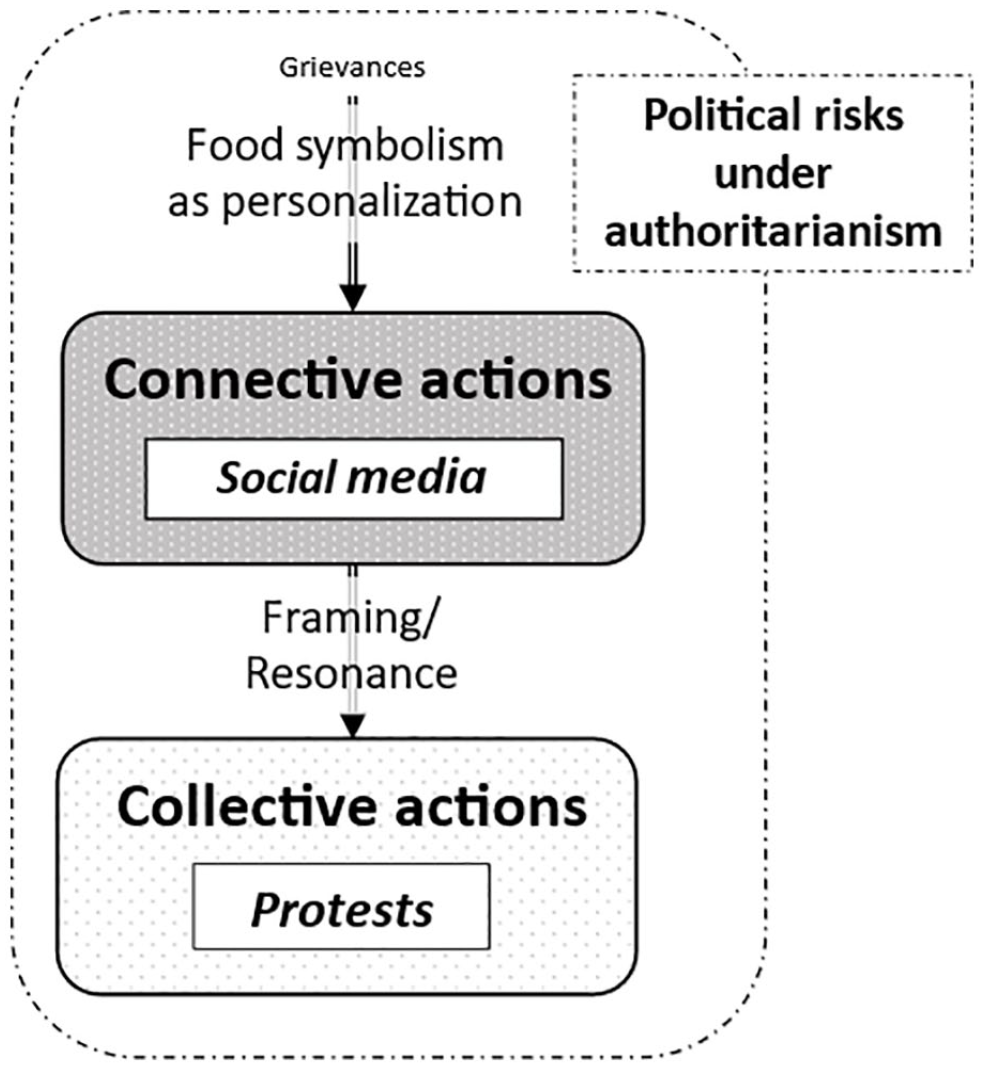
Theoretical framework.
Methodology
Research context
The fish death was a rare occasion as protests in Vietnam exceeded local scale and manifested on a national level, in both urban and rural areas (cf. Ortmann, 2017: 139). Following the first wave of dead fish observed in Kỳ Anh Commune of Hà Tĩnh Province in early April 2016, the pollution spread southwards to other coastal provinces. This had a domino effect as protests took place in not only these coastal provinces, but also in Hà Nội, Hồ Chí Minh City (among other cities), and, due to FHSC being a Taiwanese corporate, Taipei (Figure 2). The provinces marked as ‘affected’ refer to those recognized by the government as such in the compensation scheme (Viết Long, 2018). In reality, protest(s) took place in Nghe An as well, as locals felt they were also entitled to the compensation (Doãn Hòa, 2018). A common characteristic of these protests was the use of #ichoosefish and fish-inspired imageries by activists, both online and offline, in pursuit of their agendas.
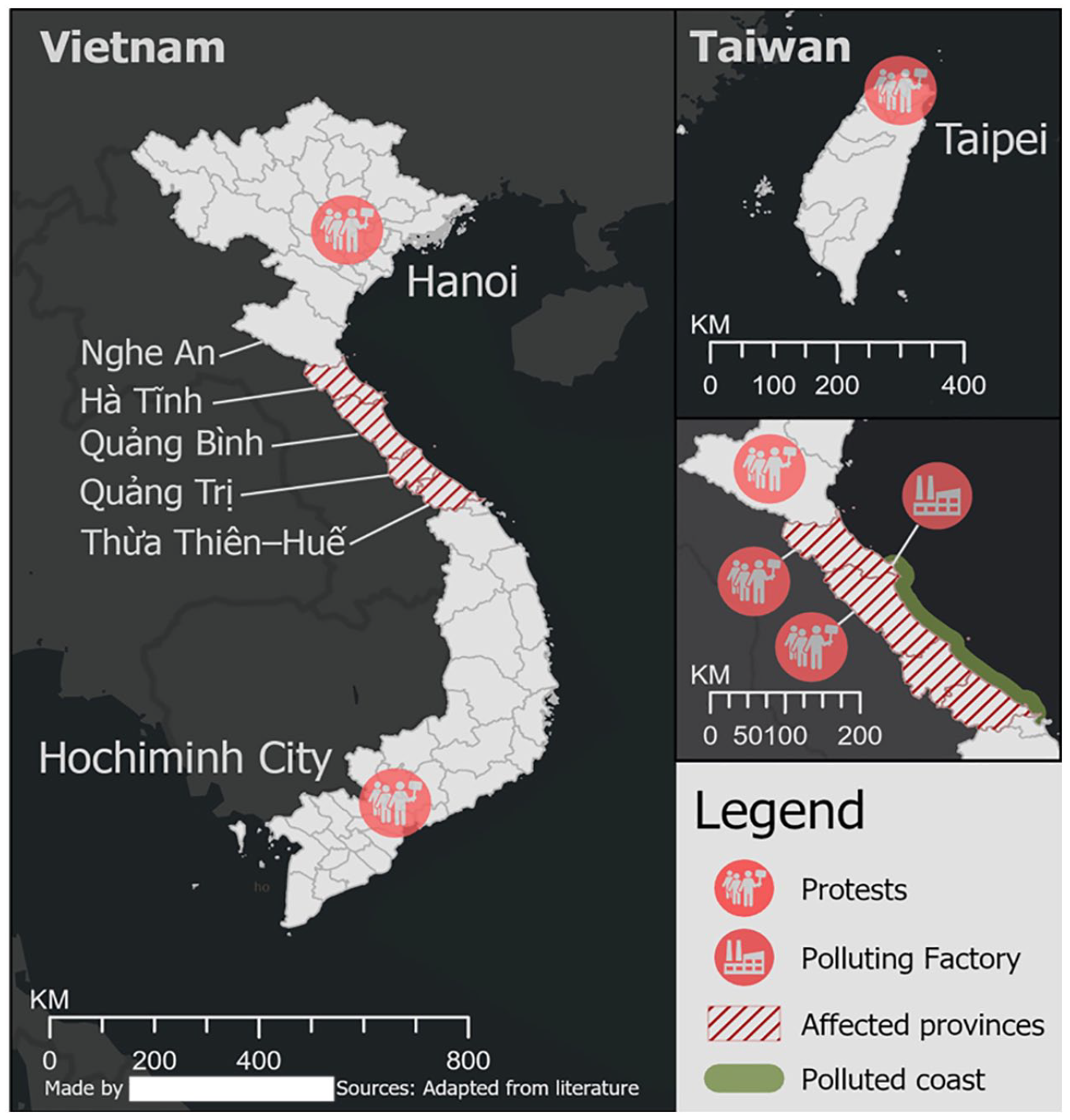
Locations of FHSC steel plants and rural and urban protests.
The centrality of dead fish imageries to the activists’ narratives suggested the role of food symbolism in mobilizing actions. The coastal pollution is thus a case of how digital agonism (Matulis and Moyer, 2018) built on food’s cultural and political embeddedness and was transformed into multi-scalar on-the-ground resistance. It serves as a peek into the otherwise ‘smooth’ surface of civil participation in Vietnam to generate discussion on the mobilizing capacity of social media and food-related concerns in authoritarian contexts. The social media data discussed in this paper were published between early April to late June 2016, during which physical protests took place in both urban and rural Vietnam before FHSC admitted to causing the pollution on June 30, 2016 (Thanh Nien News, 2016).
Data collection
This paper draws from three sources of data: qualitative semi-structured interviews with activists, data from Facebook and Twitter and policy documents and news released by the national government (Figure 3). Further details on data collection and analysis are provided in Supplemental Appendix A.
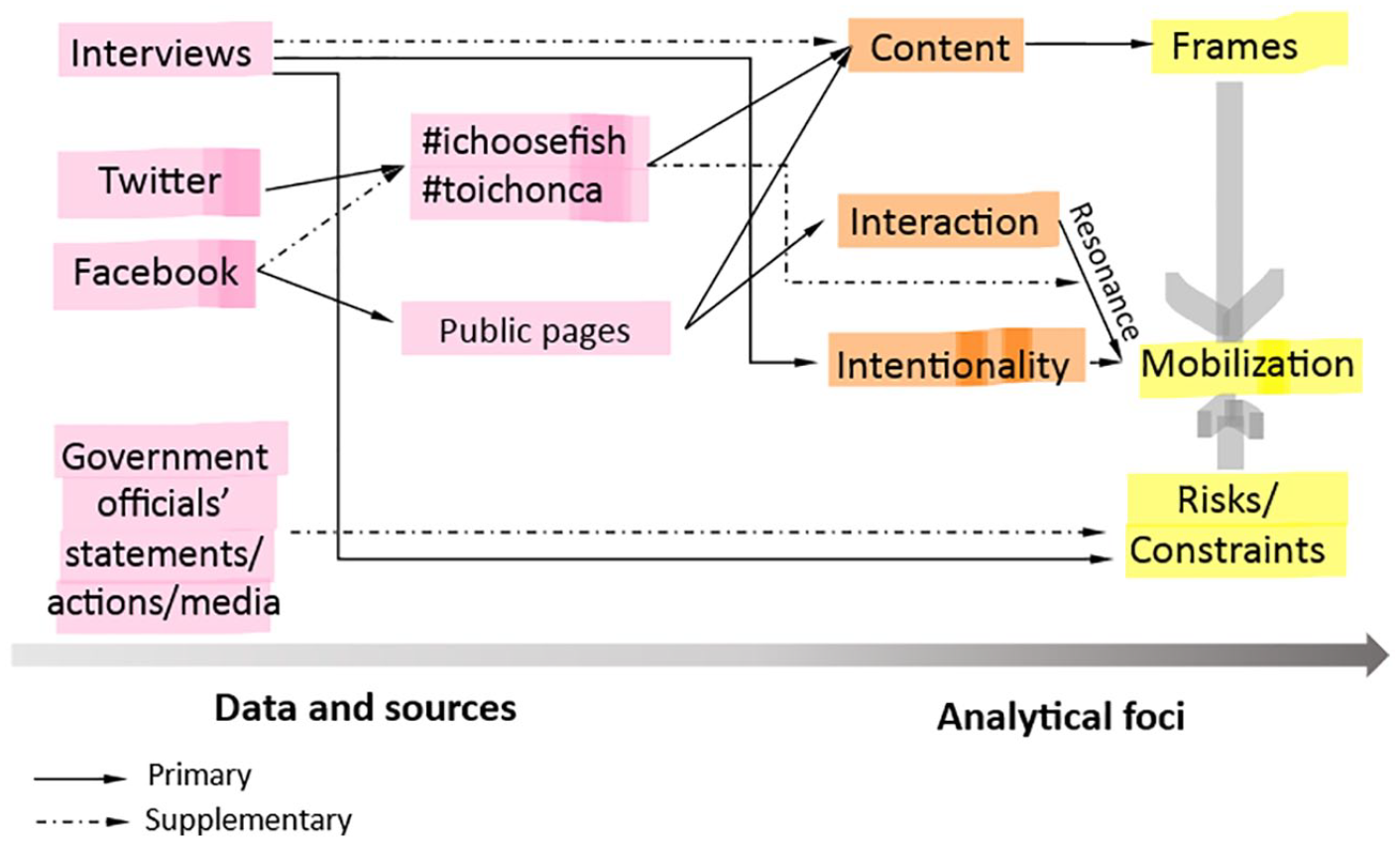
Overview of the research design.
This research draws from 12 semi-structured interviews conducted in Vietnam in 2018 and 2019 out of 20 interviews conducted for the overall research project. The interviews are numbered based on the original list of interviewees, which include numbers higher than 12. Interviewees included NGO workers who joined the protests, independent activists, and NGO workers who did not protest. Such selection facilitated an understanding of both the motivation to participate in protests and the barriers to doing so. The sampling was response-driven (Goodman, 2010). The key informants were identified through desk research and networking with NGOs in Vietnam. Rural activist recruitment was deemed unsafe due to the state’s monitoring of the disaster area during the fieldwork and the key informants’ reluctance to recommend interviewees. Thus, all interviewees were based in urban areas; four interviewees, though, were involved with protests in both urban and rural areas.
To better contextualize the constraints against promulgation of the activists’ beliefs and narratives, we looked into the government’s argumentation, as represented by official dispatches, decisions, announcements, and broadcasts from the national government (Supplemental Appendix A). The documents were collected through secondary research using Lawsoft (https://thuvienphapluat.vn/en/gioithieu.aspx) – a paid service offering full access to Vietnamese legal documents. From the Vietnam Television network’s archive, news programmes broadcasted between April and June 2016 that included relevant commentaries to the coastal pollution were collected.
Informed by the interviews and the description by all interviewees of the relevant role of social media in their mobilizing actions, a data collection strategy was established for social media analysis (Table 1). Facebook was the main platform where activists popularized their problematization of the coastal pollution and called for actions, either from the government or like-minded citizens. Notably, three public Facebook pages were named by the interviewees as main sources of activist agenda setting and calls for actions, whose data were collected using a modified Facebook public pages scraper (originally developed by kevinzg at https://github.com/kevinzg/facebook-scraper). To ensure anonymity, the pages were assigned pseudonyms in this paper, namely, Yellow, Blue and Red.
Social media data used in analysis.
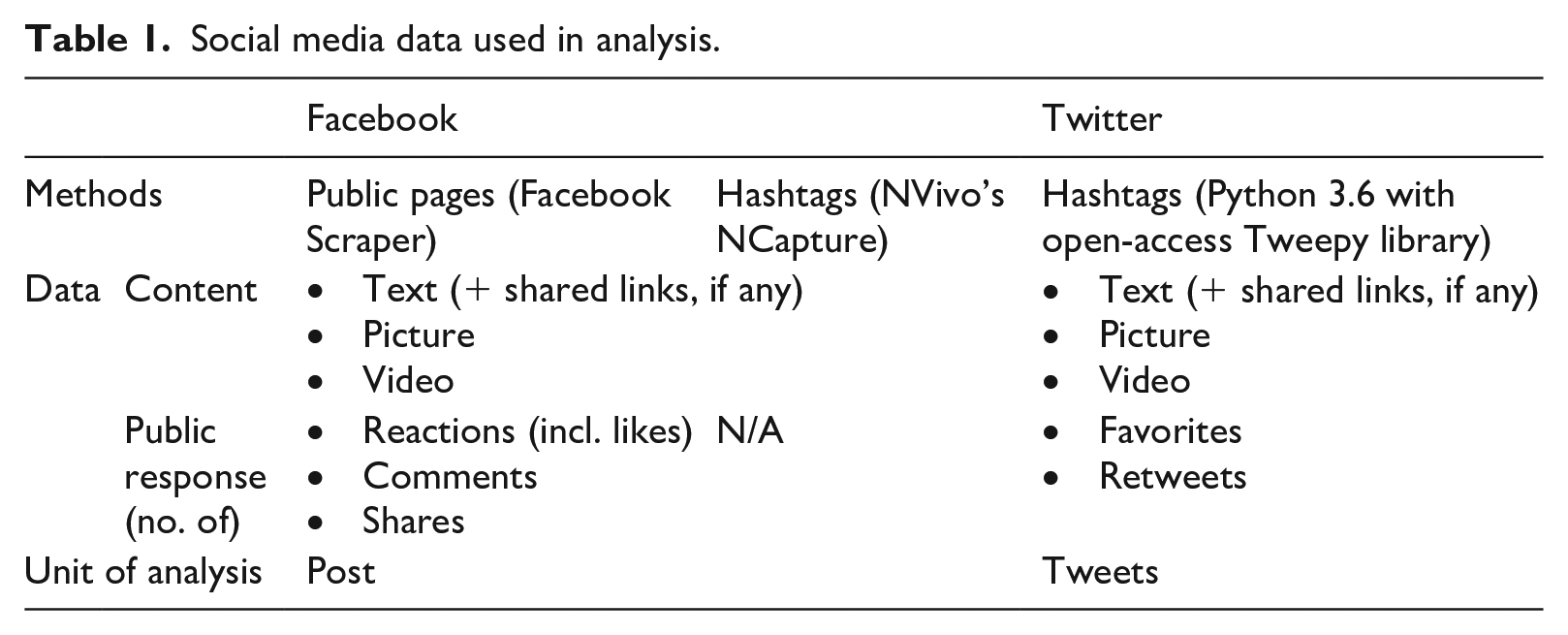
We also employed #ichoosefish and the Vietnamese #toichonca to collect data from a larger variety of Facebook users (thus in addition to, but excluding, posts from the three aforementioned pages), who might have played less of a leadership role during the mobilization process. However, due to Facebook privacy restrictions, a thorough hashtag-based scraping is impossible ((based on email consultation with a Texifter consultant on November 14, 2018). Consequently, the hashtag-based data were manually collected using the Facebook search function. To support the data collected from Facebook, Twitter data using the same hashtags were collected using historic data API.
Data analysis
Interviews were analysed first to inform the social media analysis. Thematic analysis (Boyatzis, 1998) was conducted to gain an understanding of the intentions and rationales behind frame articulators’ use of social media to frame the disaster and call for actions, and the frame receivers’ assessment of such a call on their participation (Supplemental Table 3). The policy documents and news were analysed, using the same coding scheme, in comparison with findings from interviews and social media to further investigate the differences between the state and civil society.
Regarding social media analysis, the Facebook data analysis followed three steps. Firstly, content analysis using the framing part of the coding scheme helped identify how activists framed the coastal pollution, as well as how the imageries and connotations of dead fish were employed in this framing process. Secondly, to understand how food symbolism contributed to the activists’ call for actions, NVivo’s Matrix Coding was used to map out how contrastingly the three Facebook activist pages constructed their own arguments with the same starting point of ‘fish death’. Thirdly, following Ketelaars (2016), frame resonance was measured by comparing the discourse of the frame articulators (content creators of the Facebook pages) and the frame receivers (audience of the pages and potential protestors). The degree of resonance was measured by collating daily responses to posts. Resonance was also further explored through the extent to which protest participants (via interviews), and Facebook users (via hashtags), as opposed to the three chosen pages with more mobilizing capacity, used the same arguments and referred to the same concepts, actors and institutions as the frame articulators on the Facebook pages.
The Twitter data analysis followed three steps. Firstly, we conducted a content analysis where individual tweets were attributed to coding themes using a list of indicators developed from the Facebook content analysis (Supplemental Table 4). Secondly, the frequency of each theme was calculated. Thirdly, Twitter activity (favourites and retweets) for the individual coding groups was combined into daily totals for the period between April 25 and June 30, 2016. The raw number of favourites and retweets per day were summed to measure response from Twitter users. It was decided not to weight favourites and retweets differently as a suitable weighting could not be established.
Results
In this section, we first detail how food symbolism was essential for the activists’ pro-action argumentation and the defence of the legitimacy of such actions. Next, we analyse the public response to social media content and compare these findings to the insights from the interviews to highlight the role of Facebook and Twitter in activating connective and collective actions. Descriptive statistics are provided in detail in Supplemental Appendix B.
Framing fish death and legitimizing actions through food symbolism
We first investigated the problematization of fish death on social media. Among the three Facebook pages, ‘fish death’ was used by activists to provoke a strong sense of urgency, calling for actions to be taken up either by the government or by supportive Facebook users (Supplemental Appendix C). The content centralized around providing timely updates on the coastal pollution case (e.g., the latest announcements on possible causes, which officials got involved in handling the disaster, or promises made by the governments), the disaster’s impacts, and protest-related content (Supplemental Appendix D1). The pollution was discussed in close relation to the consequences suffered by those whose livelihoods relied on fishing, trading, and tourism activities, predominantly affecting rural inhabitants. Activists of the pages connected the disaster to pragmatic and livelihood-related concerns (Supplemental Appendix D2). The concept of ‘Nationalism’ was also specified in relation to anti-China sentiments.
While FHSC’s was emphasized as the polluter, the burden of responsibility was attributed to the government, mostly at national level (Supplemental Appendix D3). The blame was mostly linked directly to the national government, although the specific addressees varied, ranging from the party leaders and ministers to local officials who had benefited from national-level politics. In addition, questions of responsibility were expressed indirectly in various manners, most noticeably by connecting the disaster to other issues that provoked concerns over the government’s willingness to accept accountability. The social media content also pressured government-affiliated media, experts, and celebrities to form a multifaceted demand for the government to respond to the disaster in a more punctual and transparent manner. The Yellow and Blue pages favoured attributing responsibility directly, whereas the Red page took a different approach.
In comparison, looking at the collected Tweets, reports and opinions on police actions were also dominant; however, unlike the Facebook results, the government was not the main target of criticism (Supplemental Appendix E). A possible explanation for this difference is that the format of a Tweet requires content creators to be brief and concise, leading to a preference for ‘tangible’ topics that can easily be supported by attention-grabbing visuals, particularly the disaster aftermath, protests and police reactions.
Following insights into problematization process, we turned to how social media users justified actions against the government’s counter-framing. From April to June 2016, the government-backed newspaper only reported on the rural protests (CAND, 2016) while remaining silent on the urban ones. Policy documents mainly focused on criticizing local governments’ ‘slow’ response (Supplemental Appendix A, Supplemental Table 2, A6, A7), denouncing protestors’ motivation (A7), and highlighting the fairness of a compensation scheme negotiated between the government and Formosa (all). These focal points concurred with the frame articulators’ argument that the government was failing to identify the ‘culprit’. The leaders of rural protests were deemed ‘enemies of the state’ for colluding with foreign forces to overthrow the government (Supplemental Table 2, N12, N13), fitting into the narrative of previous rural unrest (Chinh, 2016). In Hà Nội and Hồ Chí Minh City, protesters were confronted by police who were portrayed on Facebook as ‘oppressive’, ‘inhuman’ and ‘against [their] own countrymen’. The frame articulators interpreted the protestors’ perseverance, despite police ‘oppression’, as evidence that they were motivated not by financial offerings from ‘foreign forces’, but rather a strong commitment to ensuring accountability from the government and by extension FHSC (Supplemental Appendix D4).
Furthermore, the frame articulators also sought to justify protest participation by defending its non-violent purposes as well as methods (Supplemental Appendix D4). Between the pages, Blue emphasized the non-violent argument, while Yellow and Red adopted other strategies to counter not only the police’s rationales for ‘oppression’, but also the government’s counter-framing against protestors. Yellow and Blue explicitly endorsed non-protest measures, such as petitioning or boycotting, as complementary to protests to further prove the ‘good-willed’ motivation of the protestors.
The problematizing and justifying framing discussed above pointed to the central role of food symbolism in motivating activism. NVivo Matrix Coding (Supplemental Appendix F1) depicted the nuances in which food symbolism (Greene, 2011) provided rhetorical material for frame articulators to justify and mobilize participation in both protesting and non-protesting actions. The environmental ‘peaceful’ protests endorsed by Yellow was largely inspired by the belief that the government bore the responsibility of undoing the damages caused by FHSC (Supplemental Appendix F2).
In contrast, Blue approached the fish death as an issue where the government had shown little efficacy, and while protests were well justified, the focus was on non-protest solutions (Supplemental Appendix F3). With the Red page, the emphasis shifted towards the theme of protests, using the fish death and the government’s response as an additional example, among others discussed on their page, to illustrate the collective power of protesting as a means to bring about political change (Supplemental Appendix F4). As such, the calls for actions were largely motivated by food symbolism identified in relation to the activists’ perception of the government’s responsibility and (in)efficacy in the disaster, and by a deliberate response to accusations of reactionary agendas.
Criticism against FHSC was formed in relation to the government rather than the pollution’s consequences. As part of the government’s apparatus (Thayer, 2014), the police were depicted at the center of the grievances, the responsible authority, and the concerned citizens with politically ‘undesirable’ methods of resistance. The non-protesting actions complemented action repertoire, which can be interpreted as an effort to denounce criticism from state-supporters.
From media to protests – between connective and collective actions
As discussed in the methodology section, we investigated resonance as public support for online calls for actions and resonance as protestors’ argumentative alignment with frame articulators. Regarding public support for online calls for actions, on the Facebook pages, calls for participation in the protests on May 1 and 8, 2016, as well as smaller ones, were largely justified based on environmental concerns, the fulfilment of citizen duties, and the benefits of the potential protestors themselves, as well as their compatriots in the coastal areas (Supplemental Appendix D5). The hierarchy of rationales did not seem to correspond to that of problem identification as discussed. While environmental pollution appeared less frequently as a core issue, environmental protection seemed to be the largest motivation. The next two major motivations appealed to supporters personally, reinforcing their sense of citizenship as defined through taking part in collective actions and ensuring that similar disasters (with inadequate government reactions) would not occur in the future.
It is important to note that these results only applied to posts explicitly endorsing participation in protests, and frame receivers might have gotten their motivation from other posts in a self-interpreting manner. For instance, ‘transparency’ was not featured in posts calling for participation in protests, despite being mentioned in the main slogan (‘Fish needs clean water; people need transparency’) of the protests. However, the substantial blame ascribed to the government could be interpreted as contributing to a demand for transparency. Comparing the pages, the motivation differed in accordance with each page’s stated mission, which were as follows: Yellow – environment, Blue – people/citizens’ well-being, and Red – politics in Vietnam.
Public response to the three Facebook pages’ content reached its peaked around the protests in Hà Nội and Hồ Chí Minh City on the weekends of May 1 and 8, 2016 (Supplemental Appendix G1). There were three subsequent peaks in response. The first time was on May 23, when former POTUS Barack Obama visited Vietnam as part of his official trip to Asia (Thayer, 2016). The second peak coincided with another wave of protests on June 7. The last peak on June 16 was largely connected to an activist’s live footage of a ‘Formosa empire’, accusing FHSC of building ‘a Chinese city’ within Vietnam. Since the average like/reaction ratio was 89.51% (Supplemental Appendix G2), it is safe to assume that the resonance between frame articulators and frame receivers on Facebook was high. These results show that the resonance increased not only during the build-up of protests but also in response to factors rooted in Vietnam’s international politics. In comparison, the public response to the Twitter content only peaked twice around the protests on May 1 and May 15. Afterwards, the popularity of the two hashtags remained consistently low (Supplemental Appendix G3).
We now turn to resonance as protestors’ argumentative alignment with frame articulators. Interviewees mostly emphasized the role of Facebook as a key platform for mobilization. In comparison, Twitter was not the first choice for mobilizing actions among ordinary Vietnamese. This might be connected to the popularity of Facebook in Vietnam, or, as suggested by interviewees, the efforts of some independent activists to bring greater international attention to the coastal pollution. In their assessment, the interviewees responsible for content on the Facebook pages were positive about the platform’s ability to attract supporters to physical protests, yet they were sceptical of its ability to pressure the government for long-term changes.
For interviewees who decided to support the online calls for protests, Facebook played a critical role in their participation: ‘For people on Facebook, those who live in cities like us, most of the emotions, information, and motivation came from there [Facebook], which contributed to a lot of decisions to join’ (Interview 17). Interviewees also demonstrated an awareness of the political sensitivity surrounding the coastal pollution, and, similar to the Facebook framing, remained attentive to defending the ‘rightful’ motivation of citizens to take action.
It’s true, though, that the ‘I choose fish’ has created a precedent for the fact that environment is a big deal, and everyone can have an agenda. [. . .] The government is fully aware that environmental issues are extremely political. [. . .] They already assumed that [we are anti-government] in the beginning, so we have to prove that we are not anti-government or reactionary. (Interview 16) The citizens had to learn about it [taking actions] themselves. Initially, they started seeing that fish died massively, and everyone started to gossip and make a fuss about it. Eventually, people started looking for the reasons. They looked into the reasons on the internet [. . .]. [The reason was that] The broadcast, the conservative, official newspapers, hundreds of them, none of them dared speak out. (Interview 8)
These findings show that both connective and collective actions can take place in cases of environmental disaster in oppressive political settings, with suggestions that the former can influence the latter’s materialization. The social media activism generated momentum for the then-upcoming peaks of on-the-ground protests, as well as assisted with the behind-the-scenes organization of these protests. Simultaneously, the collective actions of protests provided information and visual materials based on which online activists attempted to maintain public attention by highlighting the coastal pollution case.
Discussion
Connective actions: nudging or replacing collective actions under authoritarianism?
According to current literature, it is important to avoid overly optimistic claims about the influence of social media-based mobilization on activism as well as governments’ attitudes and reactions towards such activism (Foust and Hoyt, 2018). Critics have also cautioned against glorifying such a role of social media, since the Internet is ‘neither inherently oppressive nor automatically emancipatory’ (Warf and Grimes, 1997: 259), and social media can be subject to both ‘noble and nefarious’ agendas (Diamond, 2010: 71). The results of this study showed that while measuring causality was difficult, there was a clear link between connective and collective actions, from both frame articulators and receivers’ perspectives. Frame articulating activists conditioned a form of connective actions, characterized by loose organizational linkages, technology deployments, and personal action frames (Bennett and Segerberg, 2012). These personal action frames were, however, grounded in an internalized communal perception of food in relation to national, cultural and environmental identity, facilitated by the affordances of social media, especially Facebook. This allowed activists to cut across the rural-urban dichotomy to garner a more substantial momentum for their advocated cause.
It is important to note, however, that ‘unless they can also dismantle existing structural power, [social media] provide only temporary and fleeting moments of progress’ to activism (Matulis and Moyer, 2018: 402). The activism in this case nevertheless proves that even under a stifling political climate, political expressions, online and especially offline, can still be triggered and materialized by concerned citizens as part of a broader, less formal civil society. In conjunction with the 2015 Green Trees movement (Vu, 2017) and 2018 protests against China’s special economic zones and cybersecurity laws (Reed, 2018), the coastal pollution issue formed a trifecta where social media-mobilization led to resistance against government restrictions on environmental issues. The ‘emergent counterpublic’ (Matulis and Moyer, 2018: 395) in this case suggests that activists on social media can indeed contribute to the physical expression of political dissatisfaction in a manner that remains as politically ‘insensitive’ as possible.
Food symbolism as a translator of connective actions into collective actions
Social media platforms, through a variety of affordances, can be used to manipulate and transform images to befit certain socio-political agendas (Mattoni and Teune, 2014). In the case of this study, these functions facilitated the role of food symbolism in allowing frame articulators on Facebook to convey their environmentalist perspective. Through the visual affordances of Facebook, the activists exploited the visual distinctiveness (Soh, 2020) – mass dead fish and defeated-looking fishermen – of the disaster to portray the case as more than just a local environmental concern. As activists engaged with tropes of national security to ‘reciprocate the dominant framing of the political elite’ on Facebook (Soh, 2020: 103), they were expanding activism from affected provinces to a national level, albeit predominantly in major cities.
The promise of social media as means of technical liberation is not, however, without complexity. The translation of digital agonism (Matulis and Moyer, 2018) into actions with broader and/or longer-term (tangible) impacts is often hindered by economic, social and psychological barriers. For instance, Shahin and Ng’s (2022) insights from India identified three weaknesses in connective actions initiated by diverse groups on Twitter – individualization, excessive flexibility and negative emotional culture – which prevented such actions from achieving more impactful outcomes. Dumitrica and Felt (2020) categorized technological and interaction barriers that hinder the effective incorporation of social media into activists’ communication repertoires, highlighting the need for adaptation and conformity rather than active shaping of the medium itself. To overcome these challenges, it is essential to strengthen the ‘weak public’ formed through online connections by reintroducing collective identity into the conversation within the context of digitally orchestrated networks, their affordances and their limitations (Gerbaudo and Treré, 2015). Our results suggested that such collective identity can be forged through food symbolism. The critical role of fish sauce in Vietnamese cultural identity (Avieli, 2011) helped trigger discussions on the coastal pollution beyond the polluted-polluter boundary, as it touched upon issues of food safety and anti-China sentiment on a national scale. The hashtag #ichoosefish transcended culinary preferences to signal an intricate connection between fish as food resource and being Vietnamese (Allison, 2013). The sense of personalized victimhood allowed the activist framing to enhance not only sympathy-based resonance but also cultural resonance from the frame receivers (Buijs et al., 2011).
Conclusions
This paper set out to understand how food symbolism and social media helped activists express and transform their environmental grievances into spaces of resistance amid political restrictions in Vietnam. The findings thus contribute to the literature on how the connective–collective connection can broaden opportunities for contentious actions and expressions. While social media activism is not without criticism, it serves as an outlet for individuals who are concerned and eager to make political statements and take actions when conventional collective activism is discouraged. By leveraging food symbolism, social media enhance the resonance of calls for actions to mobilize digital discourse of angst and anxiety into mass protests that would otherwise be impeded under authoritarian restrictions.
This transformation also provides an empirical understanding of how both connective and collective actions can take place in cases of environmental disaster in oppressive political settings. However, it is important to acknowledge that this transformation is still influenced by the government’s treatment of social media and the market’s response to such attitudes. For example, Facebook agreed to censor posts after facing the threat of slower traffic from the Vietnamese government (Pearson, 2020). The role of state-sponsored internet commentators, who actively construct counter-framing against political actions and advocate unquestionable trust in the government, should also be considered as a major force of discouragement against online activism (Hookway, 2017).
Compared to, for instance, how the military in Sudan shut down the Internet to cover up the June 3 massacre (Bhatia et al., 2023), access to Internet and social media was not completely restricted in the case of the Marine Disaster. Against this background, the results illustrate how the protestors designed ingenious and locally relevant strategies to circumvent the limitations imposed on their access to digital communication channels. Furthermore, the findings support Gondwe’s (2022) call for decontextualization in researching bottom-up changes by not assuming and presenting Vietnam as illiberal and merely exemplar of ‘authoritarianism’, but as a dynamic ground for political actions rooted in components of cultural and national identity.
This study has several limitations. Firstly, using historical data means deleted posts could not be accounted for (e.g. Matulis and Moyer, 2018). Privacy settings and availability of commenters, posters and other types of interactions at the time of data collection may have differed from the reality in the period between April and June 2016, resulting in potential changes in the numbers of reactions, comments and shares. Secondly, only public content was analysed, which did not allow us to address how private communication on Facebook via Messenger might have contributed to mobilization.
Thirdly, the content and the response generated occurred in an accumulative manner, meaning the earlier content could have influenced how the audience responded to subsequent posts, making the relationship between each post and its publicity complex. Finally, scholars residing ‘in democratic states but maintain[ing] citizenship in authoritarian countries-of-origin may be forced to self-censor in order to maintain access to and protect their family members in the home country’ (Chen and Moss, 2018: 675), which influenced the authors’ research design and responses from the interviewees.
Future research should further explore these influences, as well as the complexity of the positioning of involved actors beyond the duality of frame articulators versus receivers, protest organizers versus supporters or urban versus rural activists. However, it is important to raise concerns regarding the process of ‘academically exposing’ the networking and organizational strategies of the at-risk activists and other actors. Therefore, this paper advocates, practically, that future studies use this case comparatively to other cases fuelled by food politics in Vietnam as well as other countries with reasonably comparable institutional and cultural settings to determine the degree of similarity regarding the roles of food symbolism and social media in triggering larger-than-expected counterpublics. This would complement the contribution of this paper, which is showing how elements that are apparently mundane and irrelevant become the stage for political action within social media
Supplemental Material
sj-docx-1-mcs-10.1177_01634437241229165 – Supplemental material for More than keyboard heroes? #ichoosefish, disaster framing, and environmental protests in Vietnam
Supplemental material, sj-docx-1-mcs-10.1177_01634437241229165 for More than keyboard heroes? #ichoosefish, disaster framing, and environmental protests in Vietnam by Thai Nguyen Van Quoc, Elen-Maarja Trell and Gunnar Mallon in Media, Culture & Society
Footnotes
Acknowledgements
This paper was made possible by the kind activists and locals who were willing to support the first author during fieldwork. The authors also give thanks to the anonymous reviewers and their feedback.
Declaration of conflicting interests
The author(s) declared no potential conflicts of interest with respect to the research, authorship, and/or publication of this article.
Funding
The author(s) disclosed receipt of the following financial support for the research, authorship, and/or publication of this article: This work has been supported by the Faculty of Spatial Sciences’ PhD Scholarship Programme.

Supplemental material
Supplemental material for this article is available online.
References
Supplementary Material
Please find the following supplemental material available below.
For Open Access articles published under a Creative Commons License, all supplemental material carries the same license as the article it is associated with.
For non-Open Access articles published, all supplemental material carries a non-exclusive license, and permission requests for re-use of supplemental material or any part of supplemental material shall be sent directly to the copyright owner as specified in the copyright notice associated with the article.
