




Abstract
Douyin, which is also known as the Chinese version of Tiktok, is currently the most valuable digital advertisement platform in China. One of the most significant features of this short-video platform is the heavy reliance on algorithmic production and distribution of media. In this emergent configuration, algorithms and data shape the production and circulation of media beyond social networks. Such a system develops by meshing grassroots and professionally generated content, leading to the audience engaging in the production of commercial content for profit. My essay explores the political context and economic logic that underpins these developments. It draws specifically on official reports from Douyin, as well as interviews with users, including individual users and Multiple Channel Network (MCN) employees. This essay proposes the idea of the ‘data attraction model’ based on the investigation of the emergence of new forms of algorithmic production and distribution. It argues that the data attraction model is characterised by an extreme logic of flexible accumulation, which is radically transforming the content production of participatory media in China
Introduction
The Chinese version of TikTok, Douyin, is the fastest growing popular participatory short-video platform in China today. As the data in Pengpai News (2020) shows, the number of daily active Douyin users reached 600 million in August 2020, nearly half of China’s population. Such popularity brought the advertising revenue of 60 billion RMB for Douyin in 2019, equivalent to 923 million USD (Liu, 2020a). Bytedance, the parent company of Douyin, became the largest digital media company in China in terms of revenue from digital advertisements. About 60% of this advertisement revenue comes from Douyin (CNBC, 2019; Fortune, 2020).
This marks a seismic change for the industry, potentially leading to the end of social media itself. The way content is distributed in Douyin relies heavily on an algorithm, instead of users socialising with each other. This means that Douyin is a part of algorithmic media (McKelvey, 2014; Medium, 2019; Napoli, 2013), as opposed to traditional social media. From a historical perspective, we’re witnessing broader trends where algorithmic recommendations are used to distribute information and media. In the last decade, algorithms have emerged to shape the spread of information and media in participatory media platforms, like Facebook. In 2009, for example, the company implemented a sorting order for its newsfeed, involving an algorithmic recommendation system (Cooper, 2021). Currently, many digital media platforms have established a hybrid system, wherein the information is distributed primarily by users’ social networks, but with the aid of algorithms (Gillespie, 2018; Moore, 2018).
Compared with traditional social media platforms, Douyin’s unique algorithm-centred mechanisms follow a fundamentally different logic, discouraging sociality and prioritising algorithmically distributed content. Such a mechanism further deeply affects production, distribution and monetisation. This can be seen both internally, within Douyin, and externally, changing how content on the platform is produced and consumed and the ramifications this has for wider society. Algorithmic analysis of users’ data is used to generate digital labels and recognise digital modularity, which may include anything from memes and jokes to songs and filters. This data, and various specific forms generated from it, are then used by Douyin to guide future consumption and production. Such a development deconstructs the social media attention economy model, where human influencers are the major attraction, replacing them with the content classified by digital modularity and labels.
In this essay, I call this new attention economy the data attraction model. It’s exemplified mainly by Douyin, but can be increasingly seen in a number of both Chinese and Western digital media platforms. In this model, how much attention that content can attract is based on digital labels and modularity, recognised by machine learning and dynamic data, such as finishing rate, viewing times, and likes. 1 Such a radical development is devastating the fundamental structure of social media and the business model built on it. The attention economy of traditional social media is human-centred. Key Opinion Leaders (KOLs), influencers and online celebrities are the core attraction in a network and the distribution of content is via sociality (Abidin, 2016; Franco, 2019). The typical business model based on this condition is Multiple Channel Networks (MCN), also commonly known as online celebrities’ agencies, which have been thriving in China since 2015. MCNs’ primary role is to help boost online celebrities and KOLs influence by helping them gain more attention and monetise their content with advertisements and sponsorships. MCN companies’ common practices on social media platforms takes advantage of digital social mechanisms. Using interactivity between influencers, these companies guide the audience’s attention, synergising and amplifying the attention value of their clients.
However, Douyin’s data attraction model reduces the role of humans. For example, even if an account doesn’t have many followers, the algorithm can still spread the video to a wider audience if it receives the right series of data. Therefore, soon after launching, Douyin attracted a huge number of people to monetise their short videos, because it disrupted the monopoly that MCN companies have built, seemingly providing a fairer environment for users – reflecting its slogan, that ‘everyone has 15 seconds of fame’. As the white paper of Douyin in 2020 stated, 22 million users generated a revenue of 41.7 billion RMB in total for themselves for the whole year (Douyin and Juliang, 2020). However, the attention economy it builds for its users is precarious, due to flexible accumulation. Flexible accumulation is a term first proposed by Harvey (1991) to describe the precarious economic connections across national boundaries, when large corporations deepened their exploitation of cheap labour in developing countries in the neoliberal era. This essay builds on Harvey’s definition, emphasising the precarious economic channels resulted from the application of algorithms.
The algorithm decides who will see the video and for content producers, viewing figures are like a lottery. No matter how many followers an account has, the view count of a single video cannot be guaranteed. Therefore, this opaque algorithmic system considering huge amount of data, has made sponsorship far more flexible and precarious for individual content producers. In this process, Douyin deconstructs the concept of online celebrities and the premise that individual human users are the primary attraction. From another angle, it has democratised the concept of online celebrities – everyone can be an online celebrity, because the attention of the audience is redistributed, using data.
In light of these shifts, this essay explores how Douyin’s data attraction model is reshaping the attention economy. When Douyin began to attract a huge number of users to actively engage in advertising-revenue-oriented content production, users attempted to trick the algorithm to generate profit. These practices then became norms for the data attraction model. Based on existing research and news reports on algorithmic media, I conducted several semi-structured interviews with eight Douyin content producers, three of whom were company-based and five were individual influencers. The income of these interviewees is primarily from advertisement sponsorship via Douyin. I used personal contacts to find three of them and met the rest during the remainder of my research. These interviewees produce different kinds of popular content and sell related commodities on Douyin. This includes content about pets, books, parenting, cosmetics and digital devices. Despite these differences, the strategy they deploy on Douyin illustrates a common logic, which exposes how algorithmic media has profoundly reshaped participatory media production. These interviews were conducted in December 2020 via video calls in Chinese and extracts from the transcripts have been translated into English.
These interviews illustrate how the thriving data attraction model is fundamentally changing the attention economy of participatory media. The model, powered by algorithms and the datafication of human users, has resulted in a new kind of flexible accumulation logic, which has led to real-time, short-term sponsorship between advertisers and Douyin content producers. This essay highlights something that current discourse on the algorithmic trend does not always consider. Human users reinforce the logic of the algorithm by deliberately behaving in a way that is compatible with its growth. In this process, users are alienated from the behaviour created by the digital tag system. This may be compensated with economic profit, reinforcing both precarious economic trends and an individualistic drive for profit.
By analysing this political and economic shift in participatory media, this essay contributes to the broader discussion about the application of algorithms in the media economy. It looks at the trend towards using algorithms in China based on Chinese studies and practices, providing an alternative to Western discourse. Studies on the rise of American algorithmic media focus mainly on two trajectories, the first being Professional Generated Content (PGC), such as Netflix (Napoli, 2014), and secondly a gradual transition in social media platforms, where the algorithm is slowly reshaping both the business model and participatory media culture (Couldry and Mejias 2019; Moore, 2018; Noble, 2018; Russell, 2019). This trajectory has confined many significant discussions to theoretical debate, especially the philosophical explanation for the changes to media culture. For example, Prey (2017) examines how commercial algorithmic media, primarily music streaming platforms, shape algorithmic individuation based on Gilber Simondon’s theory. A similar body of research is Fisher and Mehozay’s (2019) essay, which suggests the algorithm recognises individuals beyond their particular social category, instead recognising a performative individual based on their behavioural data.
Meanwhile, the discussions on the current algorithmic trend attach great importance to the deployment of the algorithm reshaping capitalism and the existing unfairness embedded in the capitalism system (Bucher, 2018; O’Neil, 2017; Zuboff, 2019). More detailed research explores how capital, advertisers in particular, take advantage of new algorithmic media, shaping neoliberal cultural and economic trends. For example, Gaw’s (2021) essay illustrates that how the computational logic of Netflix constructs users’ tastes on the platform. Or the study of Carah and Angus (2018) on the algorithmic culture of brands, which illustrates that capitalising on the participatory nature of brand culture is the key to understanding the use of mechanical media to make judgements about cultural life.
However, Douyin’s case illustrates how the algorithm can reproduce the logic of flexible accumulation on a massive scale. Such a discussion builds on platform capitalism in general (Srnicek, 2016), but with the features of the attention economy, specific to the digital era (Wu, 2016). The mass of users, which are often considered to play a passive role, manipulated by the algorithm, are now actively catering to algorithmic distribution in content production. This demonstrates how the algorithmic system is reshaping the deployment of human labour and reinforcing capitalist ideology.
MCNs and the social media era: synergising attention with influential nodes in the network
Before discussing the data attraction model, this section historicises MCNs as an institutional form of the common attention economy in China. Lin (2009) writes, ‘the internet industry is the second half of the economic reforms’, referring to when the internet was first publicly used in China, in 1995. Online media was crucial for the liberalisation of the Chinese economy. Not only because major players in this field are mostly private companies, but also due to its function in the development of a market economy. MCNs exemplify the commodification of users’ attention on Chinese social media. In 2014, a YouTube employee named Jed Simmons proposed that the term MCN should be standardised. According to YouTube’s current definition, an MCN is ‘an organisation that works with video platforms to offer assistance to a channel owner in areas such as product management, programming, funding, cross-promotion, partner management, digital rights management, monetisation and sales, and audience development’ (YouTube Help Center, 2021). In the US, from 2013 to 2015, MCNs attracted the attention of Hollywood: in 2013, an MCN called AwesomenessTV was purchased by DreamWorks for 33 million USD (Wallenstein, 2013). Later, similar acquisitions happened between Otter Media and Fullscreen (Jarvey, 2018), and Disney and Maker Studios in 2014 (Spangler, 2014). These large media conglomerates usually regarded the MCN as an auxiliary part for traditional media. Eventually, MCN companies became tightly controlled. The most famous case is the acquisition of Maker Studios in 2014 for 675 million USD (Patel, 2017). As Disney executives said, the company is aiming to leverage Maker’s YouTube influence with other digital properties for Disney’s brand. Disney aims for influencers within Maker Studios to align with the company’s brand and target audience, ‘trimming the fat’ of the Maker influencers who don’t fit this image. Initially, the MCN had more than 60,000 creators, but after Disney’s cuts in 2017, it became a company with only 300 people. Finally, Maker Studios was closed as an individual company and sits within the Disney Digital Networks division (Chamberlain, 2017).
Maker studios’s failure led to Western analysts announcing that ‘Maker Studios hints at an end to the MCN era’ (Chamberlain, 2017; Patel, 2016). However, Chinese MCNs show a different story. They emerged from China’s liberalising economy and were distinct from the large, monopolised media entities of the US. Initially, the commercial value of participatory media had yet to be fully recognised. This was until Papijiang became hugely successful in 2015. Posting her comedy roast videos, Papijiang soon gathered more than 7 million followers on Weibo, attracting investors. In March 2016, Guangyuan Capital, Zhenge Funding, Xingtu Capital and Luojisiwei invested 12 million RMB (around 1.9 million USD) in Papijiang (Sohu, 2016). This soon stimulated the establishment of Papi Tube, the MCN company founded by Papijiang and her co-founder, Yang Ming, which later became one of the most influential MCN companies in China (Ma, 2019).
In 2015, there were only 150 MCN companies in China, but this number soon surged to over 20,000 by 2019 (TopKlout, 2019). According to a report from Social Beta, the major services of MCNs in China include synergising digital content, providing support for distribution management, and connecting content producers with advertisers (TopKlout, 2019). Chinese MCN companies also provide assistance on content production. As the CEO of Onion Media, a famous MCN company in China, said, what MCN companies do for content producers is transition User-Generated Content (UGC) into Professional-User Generated Content (PUGC). Primarily, this means making content compatible with monetisation. Crucially, it preserves unprofessional, grassroots aesthetics. This includes using mobile phone video quality and a casual, unprofessional style of cutting and editing (Nie, 2019). MCNs became an important factor in maintaining a sustainable relationship between content producers (usually individual non-professional producers), advertisers and the platform. In contrast to the trend in the US, MCNs began to play a leading economic and ideological role. They helped shape the aesthetics of a new kind of content, while dominating the monetisation of the new attention economy.
MCNs thrived because of the lack of connection between advertisers and individual users on social media, particularly after 2015. They found success in capitalising on and manipulating the audience’s attention. MCNs established a powerful institutionalised production and distribution mode. A common strategy of MCN companies is to treat KOLs from the same company as allies. When an ally has an influential KOL, the company may guide the attention of the audience to this new KOL. This may be through reposting messages, coproduction or mentioning them in a post. This model is deeply rooted in the nature of social media. Audience attraction is guided through following, replying, and direct social interaction with other users.
A 2015 report from GQ illustrated this business model on Weibo, the Twitter-like Chinese micro-blog website. It highlighted how MCNs’ synergy-effect created a monopoly on the attention economy on this platform. A kind of KOL emerged from Weibo in 2015, the ‘Witty Talker’ (Chinese: 段子手), making comedic statements within the platform’s 140 word limit. 90% of ‘Witty Talkers’ with millions of followers belonged to only three MCN companies, totalling 300 million followers (Zeng, 2015). These companies mainly helped connect these accounts with advertisers, providing Integrated Marketing Campaigns (IMC) for brands. Through reposting, replying, and other deliberate connections across different accounts, the attention of certain demographics were easily captured.
Douyin’s algorithmic system: the game changer driven by data and algorithms
The astonishing ad revenue of Douyin soon attracted both grassroots companies and MCNs. In 2020, more than 97% of MCN companies dabbled in short video platforms (TopKlout, 2020). Douyin is definitely a platform these companies engaged in, but its algorithmic system is fundamentally reshaping the production, distribution and monetisation of user generated content.
Douyin is a participatory algorithmic short video platform where users are regarded both as content producers and consumers. The data of users’ consumptions and productions are collected, analysed, and are used to understand every user’s interest and further guide every sector in this ecosystem. The data-mining process shapes a sustainable loop, which is realised by different components in the system design. Its immersive User Interface (UI) design only allows users to watch the current video or skip it. Compared with the traditional menu layout, the immersive UI design evades situations where users are given multiple options, enhancing the accuracy of data extracted. The immersive UI removes ‘the need to constantly shift from consumption to decision, it creates a longer and more engaged chain of consumption’ (Choudary, 2020). Thus, users provide a wider range of quantifiable feedback and are engaged for longer. In turn, this huge amount of data is used to construct an even more engaging experience. As Cao (2019), the chief algorithm designer of Byte Dance said, based on big data, the algorithm of Douyin can calibrate a detailed picture of a user’s tags, which is crucial in constructing tailored recommendations by reducing ‘information redundancy’ and maximising the time they stay on the platform. A general sports fan and a die-hard follower of a specific football team may regard the news on two different football teams totally differently, so one of them may switch off. The algorithm detects the nuance in these two users’ behaviour, keeping them online for longer. Cao Huanhuan (2019) and Zhang Yiming (2016), the founder of ByteDance, are both deeply convinced that for extending the audiences attention, this process of mechanical selection is far more effective than social distribution, because data mining can massively reduce ‘information redundancy’ (Zhang, 2016). 2 The Douyin ‘following’ function is therefore subordinate – it is deliberately marginalised by the UI design, which separates ‘recommendations’ from ‘following’ content. Therefore, the default algorithmically-generated content soon catches the attention of the users, unless the user manually switches the app to ‘following’ mode.

At the top of the screen, Douyin offers three separate tabs: ‘videos in the same city’, ‘following’ and ‘recommendation’. Image from the author’s screenshot on December 15th, 2020.
In this sense, Douyin dovetails the current universal observation on the trend towards algorithmic media. Firstly, algorithms create a decision output system based on the analysis of enormous quantities of data, which are gathered from a media environment of extreme interactivity (Napoli, 2014). The audience’s engagement with the media leaves a growing array of capturable and quantifiable traces to make the algorithm increasingly accurate, continuously recommending increasingly attention-grabbing content. This process also heightens the probability of users making consumer purchases while viewing, increasing the advertisement value (Bhargava and Velasquez, 2020; Choudary, 2020; Deibert, 2019; Hoanca, 2020; Leslie, 2016; Wang, 2019).
For content producers the data extracted from the audience can also actively function as a demand predicator and a content creator (Napoli, 2014). Considering the participatory nature of Douyin, data are specifically meant to function in two forms for producers. The first is digital modularity. The algorithmic extraction of a user’s data can directly recommend this as hashtags, templates or music, to guide and help the users to produce content. These are digital labels on each account, based on machine learning.
The term digital modularity is from Manovich’s (2002) description of the features of digital media, wherein media elements, such as images, sounds, and shapes, are represented as collections of discrete samples. In Douyin’s case, these modularities are always digital stickers, hashtags, filters and background music. They are then recommended to users as predictors to guide their content production to achieve higher viewing figures. Douyin provides an easy-to-use tool for content producers to take advantage of these modularities. Recommendations enable users to create their own content with ease. It makes the process standardised and formulaic, motivating the creation of a huge amount of content. Users can extract the background music or sounds of a popular video and overlay their own video. Jianyin (Chinese as 剪映), the editing app developed by Douyin’s parent company, Bytedance, provides guidance on these modularities based on the real-time data and trends. The number of daily active users of Jianyin reached the highest of all mobile editing apps in September 2020, at 62.53 million (Chinaz, 2020). This simple editing tool has rapidly made short-video production into an accessible task. Simultaneously, these videos are more similar to other videos that users’ have previously seen and are thus relevant to the algorithm.
Using the example of a recent hashtag video on Douyin in November 2020, #thechangingsky (Chinese: 天空变幻技术流), which has acquired 250 million views, this video captures a person ‘throwing’ a picture from his phone to the sky and the sky turning to stardust. The background music and dialogue is taken from the Japanese animation film, Your Name. If the user is recommended this hashtag, or they want to shoot this video themselves, they can easily find the template in Jianyin, before importing their own personal footage. In this process, the users don’t even need to edit the length to sync with the sound, since the system has set a fixed length for the video. Short video editing is automated, based on the references and material provided by the algorithmic system.
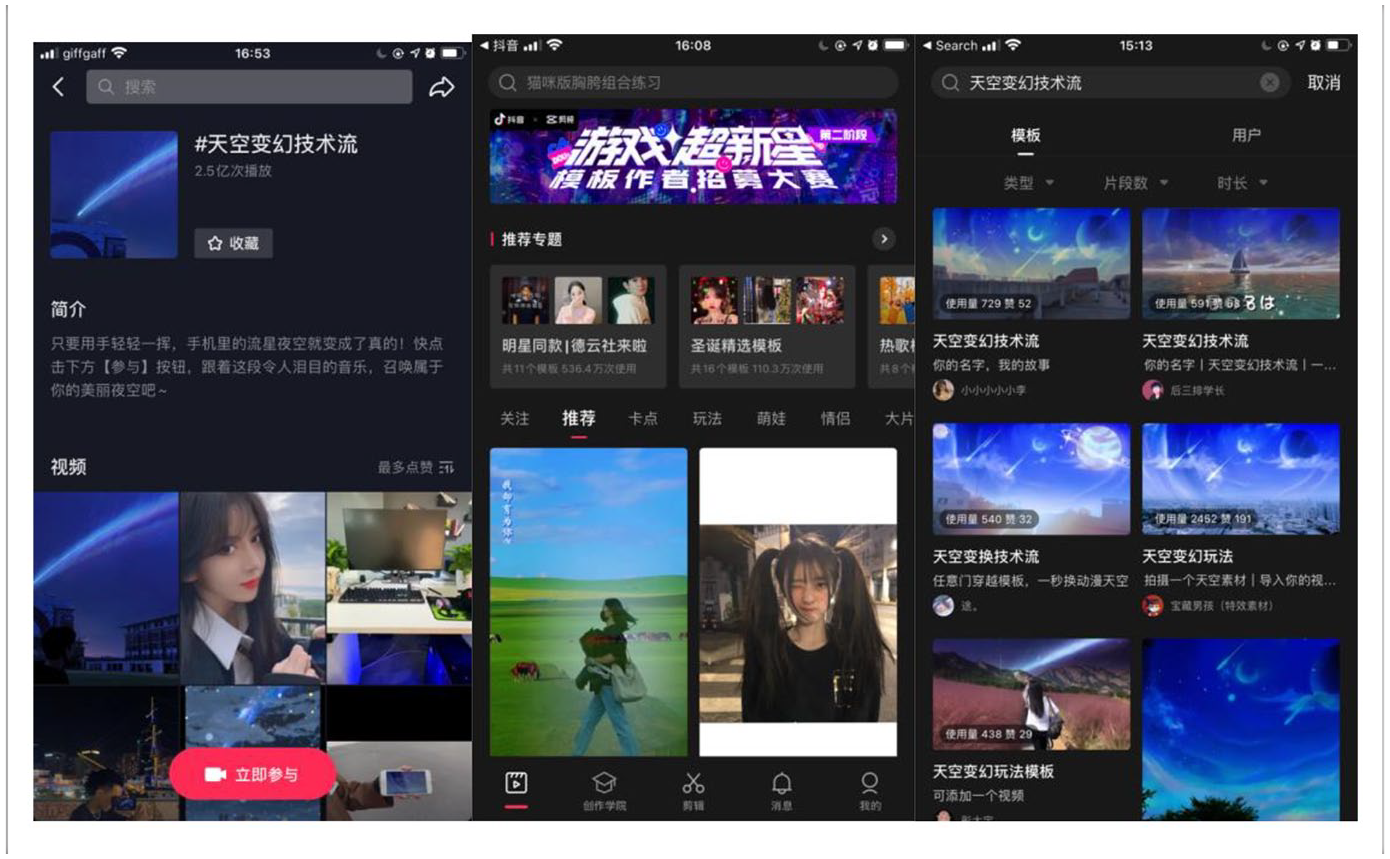
The images above were extracted by the author from Douyin and Jianyin on November 20th of 2020. The left one is Duoyin’s hashtag page of #thechangingsky; the centre image is Jianyin’s front page on the tab ‘cut with the sample template’, and the right one shows ‘the changing sky’ templates on Jianyin.
The second data category, digital tags, are hidden. The tags are generated from machining learning from video content, represented by short descriptions of the content such as ‘pets’, ‘food’ and ‘vlog’. They play an important role in both targeting the audience and automatically connecting sponsorships to accounts. These digital tags can be viewed in Star-Chart (Chinese as 星图), which is a transparent platform based on real-time data on Douyin, facilitating the cooperation between advertisers and content creators. This provides extremely detailed information on Douyin’s accounts, such as the viewing data, demography of its followers and the number of comments. It means advertisers can tailor their marketing campaigns with content creators while Douyin benefits from every cooperation with the 5% advertisement fee.
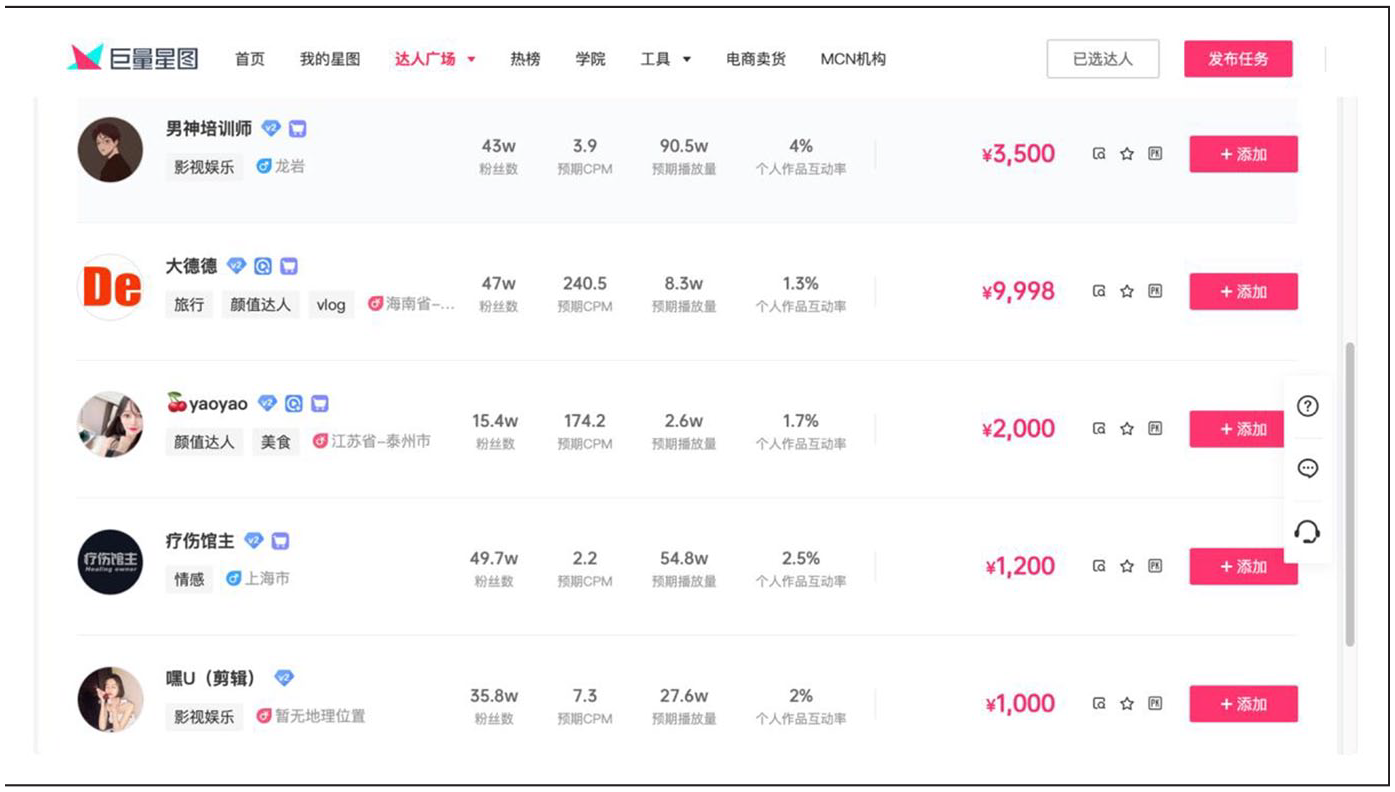
On Star-Chart, the system illustrates individual accounts tags, number of followers, the estimated viewing amount, interactive rate, estimated Cost Per Millie (CPM), and the budget. Therefore, the advertisers can easily select the suitable KOL for their products. The image is screenshot by the author on Nov 20th of 2020.
Douyin’s official guidance accounts, such as Juliang classroom (Chinese as 巨量课堂), Dou+ assistant (Chinese as Dou+助手), and Douyin Academy (Chinese as 抖音学院), provide users with instructions for developing their Douyin accounts. They openly illustrate how the system labels accounts according to the content they distribute and encourages users to produce their content to comply with this. Juliang classroom’s instructions suggest that users preserve their own account tags, while participating in Douyin’s official tasks. 3 Digital tags massively influence the performance of each video and account, making them crucial to successful monetisation.

Juliang class, a Douyin official account on guiding users to produce videos: This video teaches users how to complete platform seasonal activity without influencing the tags of the account. Image from the author’s Douyin screenshot on November 15th 2020.
Douyin has constructed an algorithm-centred ecosystem, containing easy-to-use production tools, an accessible and transparent monetisation platform and an algorithm for automatically distributing the content based on data analysis. Not to mention the numerous official guidelines on the platform to motivate users to produce content that caters to the distribution system to gain ad revenue. The whole platform is built around algorithms and data that closely intertwine production, consumption and monetisation. Dynamic real-time data is automating human labour and becoming key to deciding the performance of every video.
This algorithmic system has decentralised the audience’s attention on any influential human nodes, giving more of a chance to grassroots content. The increasing amount of advertisement revenue and the incredible number of users seeking their share indicates the significance of such a transition. When Star Chart began in 2019, individual users with over 100,000 followers could register on its platform. This has irritated a number of MCNs, as it further deprives them of their distributive power (Sohu, 2018). Market reports also confirm this phenomenon. Industrial insights usually categorise KOL users into four tiers according to their number of followers: head (more than 10 million followers), shoulder (5–10 million), waist (1–5 million) and tail (100,000–1 million). However, the waist and tail KOLs took more than 90% of advertisers’ sponsorships in 2019 (Caas Data, 2019).
Working for the algorithm: Douyin as a production model
This ecosystem has caused a huge shift during the social media era. This system compels users seeking profit to adopt certain behaviours. However, out of this system, commercial practices are emerging that involve playing the algorithm against itself. There are two trajectories that show this trend. The first is seen in individual accounts, which are usually low in production value and run by just one or two people. The second is company-based, primarily MCN accounts with the capacity to produce a huge amount of content.
Data attraction and ‘winning the lottery’: being digital tags and data on Douyin
Compared with the social media distribution pattern, Douyin’s ‘decentralisation’ focuses on the attraction of individuals, while simultaneously centralising data groups. This feature means the results of the distribution framework are completely unforeseeable, creating a more precarious business model for content producers. As Cao (2019) states, the algorithm and the data pool far exceed the comprehension and processing capacity of any human. This dynamic creates an unpredictable and competitive situation for the performance of individual videos and monetisation alike.
All my interviewees mentioned such a ‘lottery-winning experience’. One interviewee, working for NetEase Cloud Note’s PR account, stated that ‘I was the only one taking charge of account in 2016-2017. I once produced three videos at the same time, and they were rather similar on teaching Excel tips, but one of them got 400,000 likes, while the other two only have 20. I sent these three videos out only a few seconds apart’. 4 Such unpredictable results also influence the income model for these individuals. Through Star-Chart, advertisers usually maintain flexible cooperation with short term or single contracts with individuals or even on just one occasion, to avoid risk. An interviewer working in the advertisement company said, ‘previously, we evaluated the influencer by their number of followers, but now it’s more detailed and up-to-date, such as the average viewing data for their most recent five videos’.
To get the best exposure, Douyin content producers deliberately and proactively adjust the content of their works to cater to the algorithm. One important way to increase exposure is to willingly be ‘labelled’ and trigger the algorithmic system to distribute content to potential customers. A common strategy of content producers is to produce homogenous ‘vertical content’ (Chinese as 垂直内容) as this can allow the algorithm to recognise obvious tags of an account and distribute the content to targeted customers. One of my interviewees made her account strictly about cats, telling me that ‘if you want to profit from pet-related advertisements, just keep to this theme. Don’t post anything unrelated. Because it will be easier for the system to label your account and distribute the content to people who are interested in this tag, while recommending you to relevant advertisers. Otherwise your videos will have terrible viewing figures. It’s also very important to browse pets videos yourself, so the system will reinforce this tag for you’. 5

My interview’s accounts on vertical content in cats. The author took this screen shot on Nov 16th 2020.
Except for the flexibility in sponsorship, another feature of the data attraction model is the encouragement of an extreme, individualistic production mode against a traditional company-based one. An ex-MCN employee described such a situation: Branding and Public Relations (PR) campaigns managed by corporation can hardly be quantified comprehensively. Therefore, they do not directly generate platform fees for Douyin. Data mining is aimed at effectively and accurately calculating the behaviour of individual users and motivating extreme, unregulated competition. However, ‘brands or corporate accounts usually only work for themselves, without competing for sponsorships. Therefore, the platform usually won’t benefit from a platform fee from these accounts’. 6 Usually, only large companies can afford a long-term PR campaign, yet individual users often seek a quicker turnover by placing a specific product into their videos.
Therefore, the company accounts and individual accounts are treated differently. ‘Official corporations’ accounts sometimes are even punished by the algorithm’, as this ex-MCN employee said, ‘usually if the system detects the logo or any advertising content in the video not registered on Star-Chart, this video will have incredibly low viewing figures, maybe even in the single figures’. 7 In this context, a new kind of practice has emerged called ‘surrogate operations’ (Chinese as 代运营). Surrogate operation companies create accounts for brands, in disguise as individual grassroots creators, watching related videos daily, making comments, leaving likes and behaving like a real human user, unlike a company account for advertising or public relations. 8 One example is my interviewee who is now is running a surrogate operating account, named Yang Xiaohei (Chinese: 杨小黑), resembling a grassroots-created account producing romantic comedy stories between a young girl and boy. In fact, this is an account made for a laptop brand. The surrogate operation company signed a contract with the laptop brand for 3 months and produced content for this account. Meanwhile, when asked if such a corporation is registered via Star-Chart, he said, ‘this is a grey zone, we do register on Star-Chart in any case, but this can be negotiated between our team and the brand, and we register the lowest price on the system to minimise the payment’. At the same time, if the cooperation is not registered on Star-Chart, the logo can only occasionally appear in the video. As he said, this is the organisation being careful to evade punishment by the algorithm. 9
Matrix Accounts: the compromise of MCN companies in algorithmic platform
For MCNs, Douyin fundamentally overhauls the game rule when social bonding between users are reduced, and every users’ production ability is largely enhanced. This brings a dilemma for MCNs, as what one of my interviewees who just began a start-up MCN in 2020 with 10 million followers. She described the following situation: when the streamlined production tools and the algorithmic distribution system replaced the human-manipulated attention economy, grassroots accounts therefore hesitated to work with MCNs, which usually ask them to share a big percentage of their ad revenue. Another interviewee, who is currently running a vertical content account about parenting, also expressed this kind of concern, saying she refused invitations from MCNs, as they cannot help her produce content, attract an audience or gain profit. ‘You don’t need specialised knowledge to edit. The algorithm is automatic, and they [MCNs] cannot provide content with my level of idiosyncrasy. MCN companies tend to produce mainstream content’.
Some MCNs’ answer to the flexible algorithmic distribution system is a unique practice involving ‘Matrix Accounts’ (Chinese as 矩阵账号). The creation of a matrix account includes a huge group of similar accounts (with similar names, content and styles), with the intention of trying to increase the possibility of exposure for a single brand. The book dealer Fandeng Reading (Chinese as 樊登读书会) can be regarded as the most successful example of this (CNBData, 2020). In 2019, it accumulated more than 100 million followers in its matrix with hundreds of different accounts (CNBData, 2020).
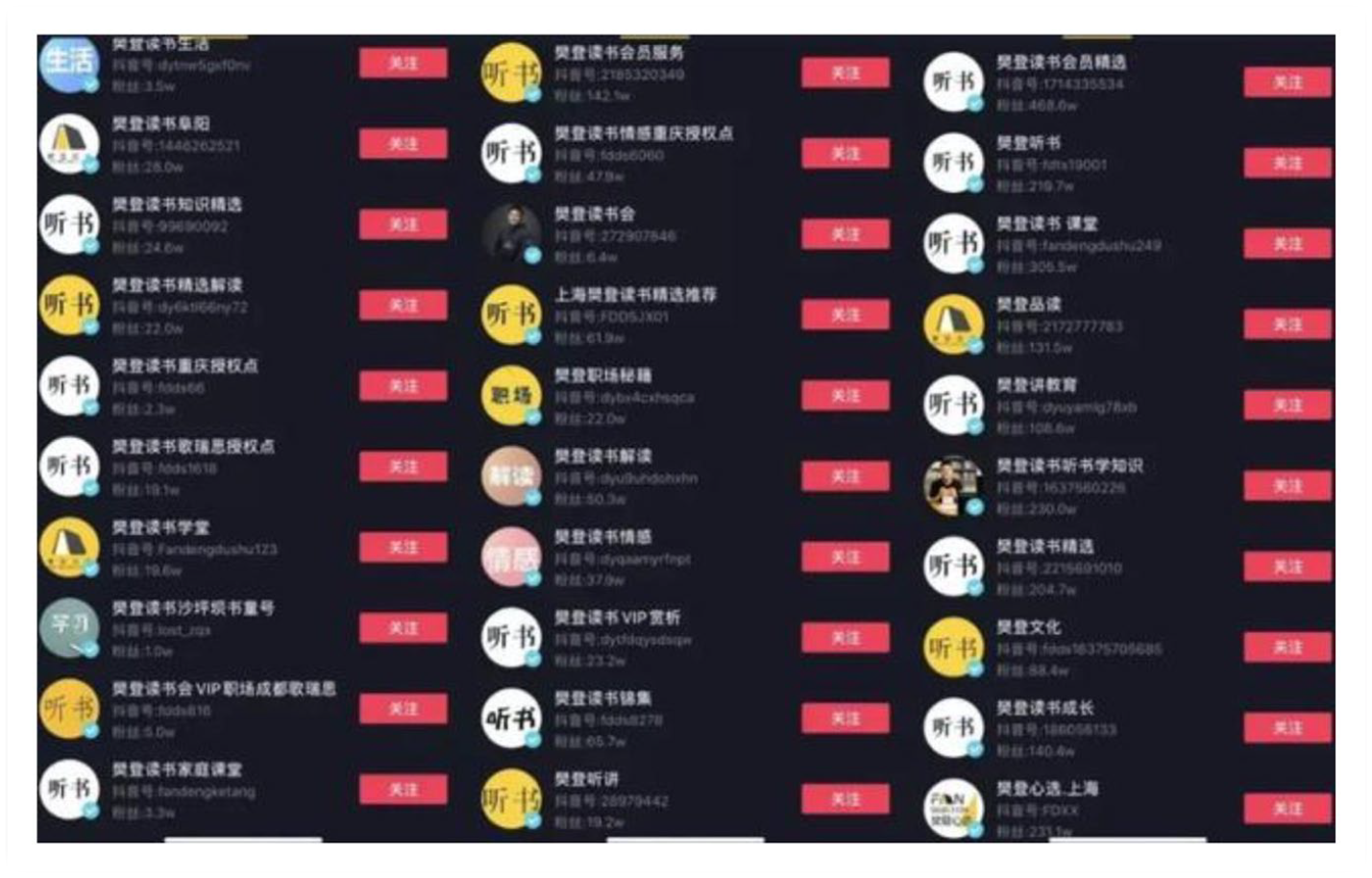
A part of Fandeng’s matrix accounts, this image is extracted from Liu’s (2020b) report on Fandeng’s malicious marketing.
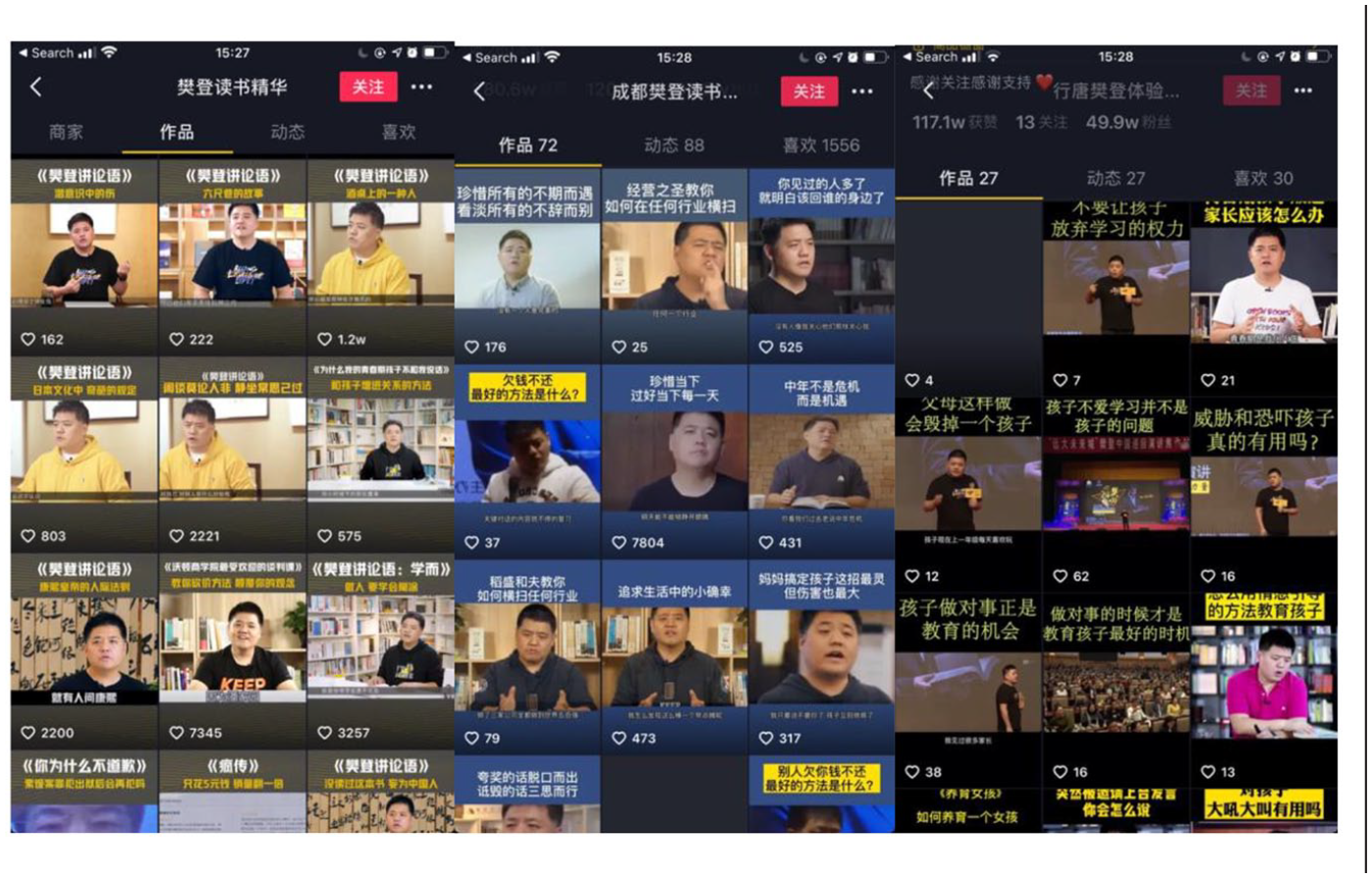
These are three different accounts in Fandeng’s Matrix. The person in all the videos is the same. This is also a feature of Matrix Accounts, the homogeneous content struggles to attract the audience to remember a single brand or IP. These images are from the author’s screenshot on 20th Nov 2020.
Although many of the accounts in this matrix have been shut down for ‘malicious marketing’, 103 related accounts could still be found on Douyin in February 2020 (Liu, 2020b). Incubating Douyin accounts on a mass scale, thus increasing their changes of accumulating views, is the core logic underlying Fandeng’s matrix accounts. As analysts say, ‘the times a single video is recommended may not be high, but more accounts can accumulatively get more attention. If the number is large enough in the data pool, a user will eventually see two to three accounts with Fandeng’s name. That’s the goal of Fandeng Reading groups’ (Liu, 2020b). Dong Shiyi, the new media manager of Fandeng also mentioned in the interview that the essence of Douyin is ‘repetition and imitation’, and this is the way that users can struggle for attention on Douyin (Liu, 2020b).
In this way, the Matrix account can be regarded as both a workaround for Douyin’s ideology and compromise to the algorithmic context. Fandeng’s struggle is against the decentralising and individualistic logic of Douyin from the mode of production and monetisation: Firstly, its matrix accounts don’t aim at profiting from other advertisers, they only aim to promote Fandeng’s single brand (Sohu, 2020). Meanwhile, the matrix accounts’ production model aims to produce a large amount of content, which adopts a Fordist, assembly-line approach to content production, requiring the capacity to produce a huge number of videos and rapidly distribute them using different accounts. Another MCN company based in Hunan, specialising in the production of Matrix accounts, sheds light on the production mode of matrix accounts. This MCN company cooperates with Ant Books (Chinese as 蚂蚁书苑) and runs matrix accounts for selling the books they publish. Three to five people, including screenwriters, camerapeople, performers, and coordinators work as a unit. Every month, 30 new Douyin accounts will be started with 30 new SIM cards. The specialised personnel in their respective production sectors can quickly produce enough content to keep a daily update pace for these 30 accounts. This involves making 25 to 30 short videos per day. The mass production mode makes the content in this group of accounts highly similar in form. ‘We have a text template to fill in according to the book we want to sell, therefore, every video’s script is a fill-in-the-blank task’. Each video’s timeframe, editing format and the anchors’ dress and makeup are all also standardised. 10
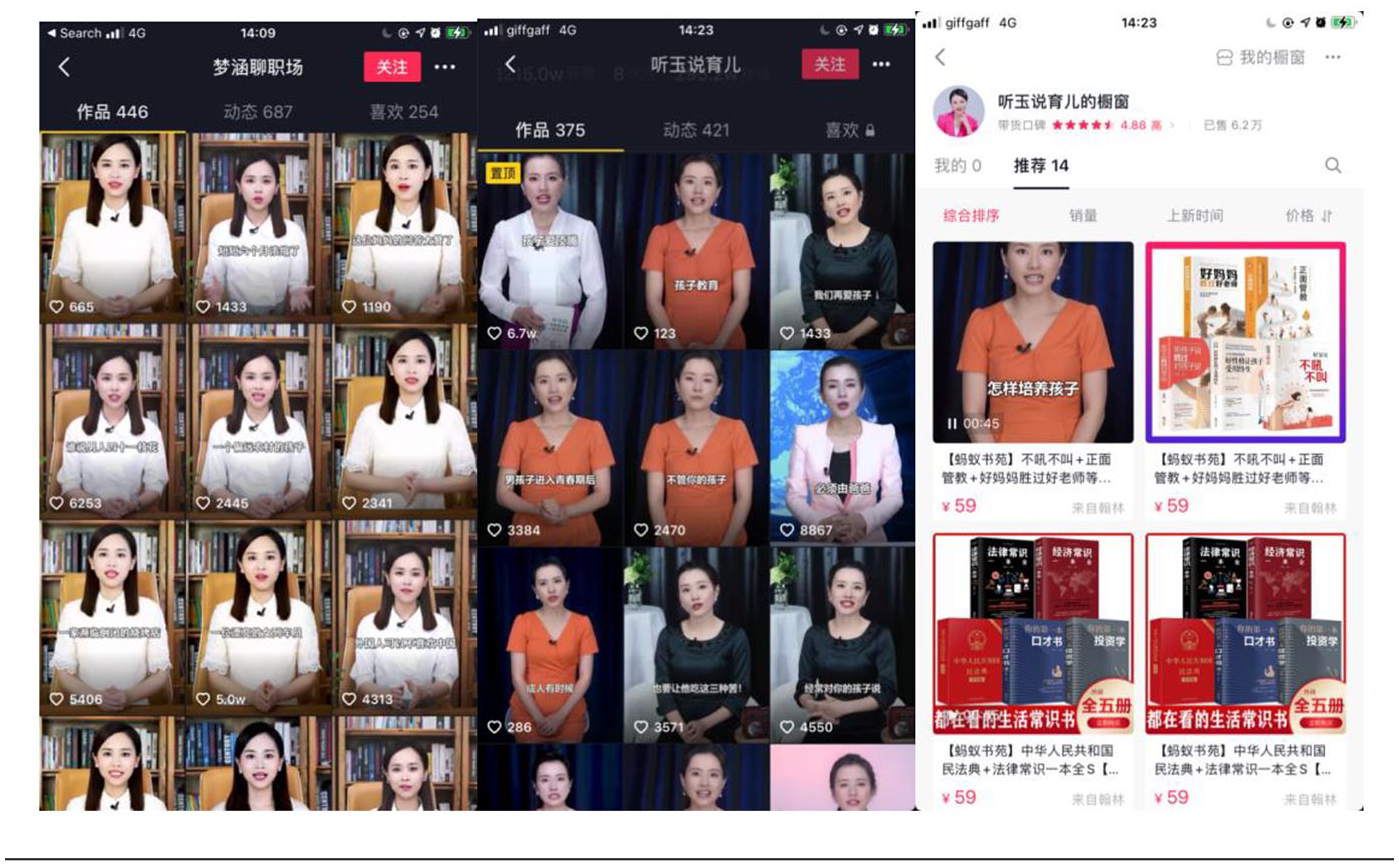
From the left to the right: The first two are accounts in Ant Book’s matrix. In every short video, the anchor will perform the script, written by the scriptwriter, to introduce a point of view in a book to entice the reader to buy the book. The third picture is the product in these accounts’ recommendations; all of them are Ant Books. These pictures are from the author’s screen shot on 30th Nov
Most of these accounts will be discarded if they cannot reach a certain number of followers within a month, usually 300,000. The interviewee summarises this production pattern as ‘using the advantage of numbers to win the algorithmic lottery’ since the basic logic of matrix accounts is accumulating the recommendation frequency, and then the attention of the audience. 11
Matrix accounts are the result of streamlined mass production, characterised by cooperation between human labours and masses of data. In many senses, this production mode does not follow the individualistic ideology designed by Douyin. This can be observed from many details: for example, in my interview, the specialised video editor producing matrix accounts mentioned that they only use traditional video editing tools like Premium for dealing with the large volume of short videos instead of Jianyin. 12 They also have stable commercial sponsors outside Star-Chart. 13
However, matrix accounts, just like other producers, also need to submit to the algorithmic distribution system. According to the interview, every matrix account needs to experience a process called ‘petting’ (Chinese as 养号) before posting any content. The operator must log in the blank account and watch related videos (such as book recommendations) for 2 to 3 days, like a genuine user. 14
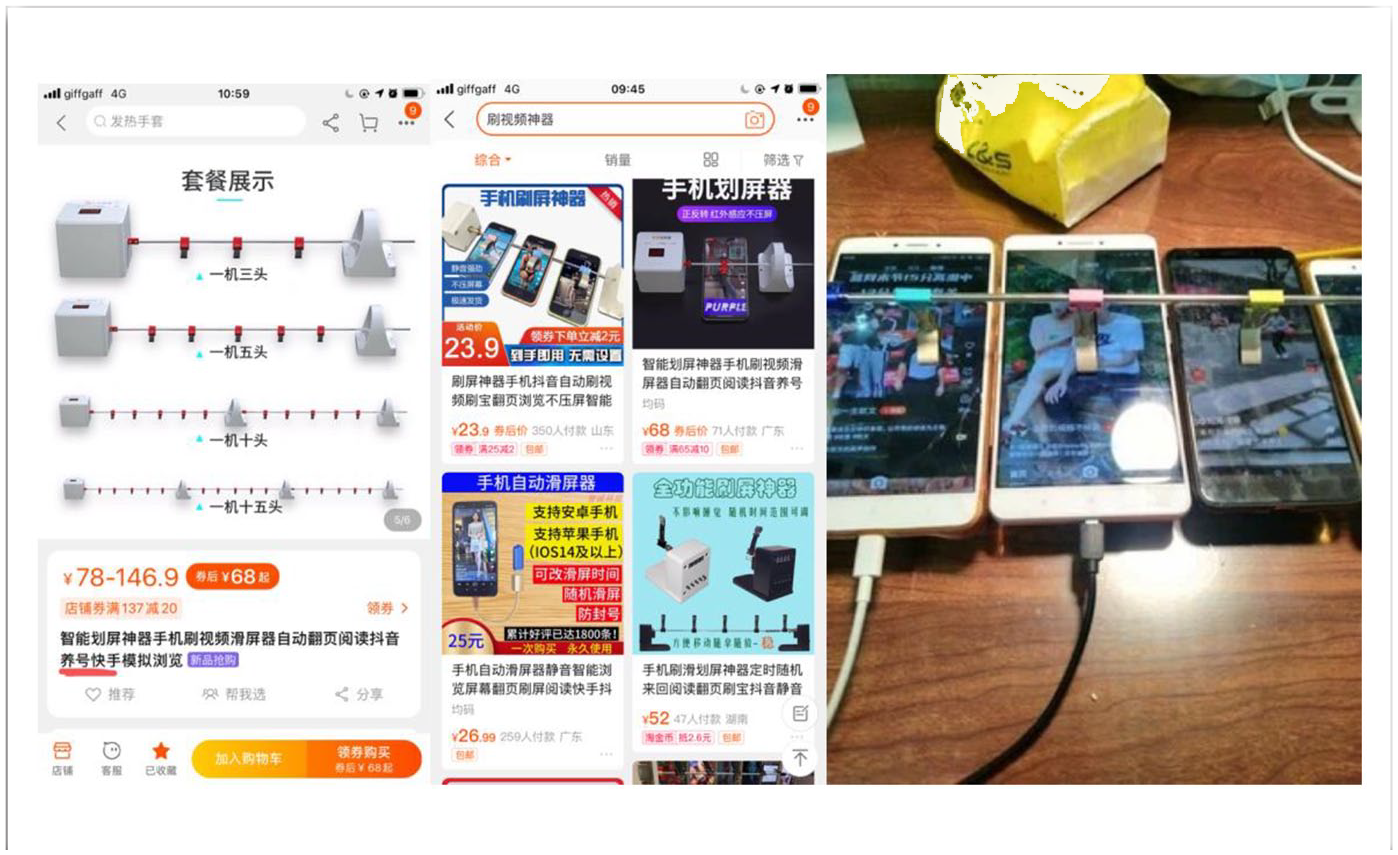
A small machine called Automatic Douyin Swiper is popular on Taobao. According to the description of the commodity, this can be used for petting Douyin accounts. This machine can imitate the real user swiping the screen when the gadgets between the docks rotates. Fifteen accounts at most can be petted at most at the same time.
Petting the accounts essentially tricks the algorithm into tagging the account with vertical content, making the system recommend the content to target audiences. Manual optimisation of video content also gains more exposure for future videos. For example, if one of the videos is chosen by the algorithm and achieves high viewing exposure, its pattern, including the text, background music, and editing techniques, will be summarised and used as a new template for further rounds of production. 15
Conclusion
Douyin shows an important turning that the algorithm increasingly takes the dominating place in the participatory media platform. It has fundamentally transformed how the attention economy functions and the context in which it exists. Such a phenomenon is not only reshaping the attention economy, it is profoundly changing video media and generating new and absurd commercial practices in China. This algorithmic trend in participatory media can now be seen across the globe, for example, Tiktok, the non-Chinese answer to Douyin, is increasingly popular among the younger generation in the West, so we may see the impact of these ground-breaking economic and cultural changes elsewhere.
By analysing Douyin as a typical algorithmic media platform, this essay illustrates that the algorithm deployed in the media system has devastated the previous attention economy model of sociality, bringing a new data attraction model with extremely flexible accumulation logic: it’s reflected both in the small-sized, in most cases individual production units, because datafication is more straightforward, and the short-term sponsorship for real-time dynamic data that provides immediate indicators for ad revenue.
This research draws attention to the new development of the production side of algorithmic participatory media. Many previous studies focus on PGC production (e.g. Lobato’s, 2019 Netflix Nations); or how the audience consume social media content, which has now been reshaped by algorithmic media. But Douyin illustrates a new phenomenon, where the boundary between grassroots content and professional production has become blurred. The advancement in digital media production tools and algorithmic distribution means that grassroots users now can now monetise their content in a professional way. Such a new condition has led to the discussion of an unprecedented development in new media: algorithmic media is now, to a remarkably large extent, marketing a capital-driven production model to the public.
By reviewing various practices that both individuals and companies try to attract more attention on Douyin, this essay also illustrates how algorithmic media is broadly pursuing a liberal framework in the attention economy. An anarchic, super competitive environment, which allows all the users to gain immediate profit, but also limits the accumulation for individual labourers. Therefore, this essay focuses on Douyin as a specific case, discussing how the algorithm reshapes the attention economy, hoping to inspire future studies of the theoretical developments within the algorithmically-mutated capitalism system.
Footnotes
Acknowledgements
I want to give special thanks to Professor Lee Grieveson for his trust and constant support for my MA and PhD projects and for his critical reading of this manuscript. I also want to thank Professor Lisa Parks and the late, beloved Professor Wang Jing at MIT for their kind help during my studies in Boston, and Alfie Chapman who has carefully proofread this essay.
Funding
The author received no financial support for the research, authorship, and/or publication of this article.
