



Abstract
Training functional living skills is crucial for students with intellectual and developmental disabilities (IDDs) because they are directly related to their independence. The aim of this study was to explore the effect of an augmented reality (AR)–based video prompting (VP) teaching model on the learning of functional living skills among elementary school students with intellectual and developmental disabilities. A multiple-probe, across-subjects, single-case research design was adopted to recruit three participants, namely, fifth- and sixth-grade students with IDDs in a special education program in an elementary school in Taichung City. The independent variable was the AR-based VP teaching model, and the dependent variable was the participants’ performance of functional living skills (cooking rice in a rice cooker). The results indicate that the intervention had immediate, maintenance, and generalization effects on all three participants. In addition, the participants noted that the teaching model relaxed and motivated them. The teachers also indicated that the teaching model motivated the students, resulted in positive learning outcomes, and strengthened the students’ ability to learn independently. Through this AR-based VP teaching model, students with developmental disabilities can improve their functional living skills.
Keywords
Introduction
The independence of students with physical and mental disabilities is a crucial topic in special education. Training in functional living skills is essential to ensuring independence and improving quality of life (Howe et al., 1998; LaRue et al., 2016). Functional living skills encompass social skills, vocational skills, behavioral control, and the acquisition of disciplinary knowledge (Bennett & Dukes, 2014). Students’ proficiency in functional living skills is directly related to their independence. Students with intellectual and developmental disabilities (IDDs) often struggle to learn functional living skills (Cannella-Malone et al., 2006). Strategic support and training in school can ensure their independence and improve quality of life after graduating and entering the workplace (Cihak et al., 2017). However, insufficient training in living skills training can lower self-esteem and quality of life and result in learned helplessness, which creates burdens for their caregivers (Bridges et al., 2020; Curtis, 1989). As technology has advanced in recent years, the use of technology-based interventions in teaching functional living skills has become increasingly feasible in on-site instruction, including video-based instruction (VBI) and augmented reality (AR) (McMahon et al., 2016; Syriopoulou-Delli et al., 2021). These approaches provide additional options for functional living skills instruction. Using AR for living skills training of IDD students is a potential approach (Bridges et al., 2020). AR plays a dual role as both a teaching tool and assistive technology, which not only facilitates independent learning but also enhances motivation and enjoyment in the learning process (Baragash et al., 2022).
Functional Living Skills
Certain limitations on cognitive development cause difficulties for students with IDDs learning functional living skills. The proportion of students with IDDs who can lead independent lives is lower than that of their peers (Braun et al., 2009). Functional living skills include cleaning, cooking, and self-care, which are skills necessary for independent living in a family or community (Cronin,1996; Vascelli et al., 2021). Students with IDDs should learn functional living skills to lighten the burdens on their caregivers, improve their self-esteem and ability to self-determine, facilitate interaction in their communities, help them adapt to society, and ensure employment (Falvey, 1989).
This study taught cooking. Most studies on the teaching of cooking skills have recruited senior and vocational high school students or young adults and involved skills such as cooking noodles (Van Laarhoven et al., 2010), making bread gratin (Horsfall & Maggs, 1986), preparing food in the microwave (baked potatoes; Jones & Collins, 1997), and making buttered toast (Hughes et al., 1996). Few studies have investigated elementary school students, and the skills, such as making juice (Schuster & Griffen, 1991), chocolate milk, and waffles, have been relatively simple (Fiscus et al., 2002). Interventions such as picture prompting (Van Laarhoven et al., 2010), self-instruction (Hughes et al., 1996), constant time delay (Fiscus et al., 2002; Schuster & Griffen, 1991), and least prompting procedure (Jones & Collins, 1997) have been used. The experimental teaching has mostly had immediate and maintenance effects, and few studies have yielded generalization effects.
Video-based Instruction and Video Prompting
Video-based instruction (VBI) is an evidence-based teaching strategy effective in various fields, such as disciplinary teaching, social interaction, behavioral control, and living skill training (Park et al., 2019). VBI has two theoretical bases. One is social learning theory, which suggests that individuals can acquire skills or change their behavior through observational learning and imitation and emphasizes the importance of positive behavior and role models (Delano, 2007). The other basis is multimedia learning, in which learners’ attention is drawn to words, pictures, and actions to improve their motivation to learn and ensure positive outcomes (Hughes & Yakubova, 2019). Videos can be filmed from a bystander’s point of view (POV) or a first-person POV (Hughes, 2019). VBI can involve video modeling (VM) or video prompting (VP). The difference between VM and VP is that VM emphasizes the integrity of actions and that students imitate actions after watching a video. In VP, however, videos are divided into short clips. The students begin practicing immediately after watching a clip and only proceed to the next clip when after gaining proficiency in the skill in the first clip. In both VM and VP, students imitate actions demonstrated by an individual in the video. The advantages of VM and VP are that they provide immediate feedback, repetition, and cost effectiveness (Banda et al., 2011). In VM and VP, demonstrations can be presented by adults, teachers, peers, or the learners. Numerous studies have employed VM and VP for training in cooking skills for students with autism or intellectual disabilities and revealed that they are more effective than education using static images (Mechling & Gustafson, 2008; Van Laarhoven et al., 2010) and that voice-overs (Mechling & Collins, 2012), self-direction (Heider et al., 2019), and least-to-most prompting (Murzynski & Bourret, 2007) can strengthen their effects. VM and VP are often compared in research, and the results are that both have teaching effects (Park et al., 2019). However, VP is usually more effective and suitable for students with IDD than VM. Because VP’s videos are shorter than VM, the required cognitive load is lower. (Cannella-Malone et al., 2006, 2011; Shepley et al., 2018).
Augmented Reality
AR enriches and provides meaningful multimedia content by superimposing virtual data onto the physical environment (Azuma, 1997). Unlike virtual reality (VR), the virtual information in AR is perceived as existing in a real-world environment, rather than a completely virtual world (Bower et al., 2014). A typical AR system comprises three key features: a fusion of real and virtual environments, real-time interaction, and precise 3D registration between virtual and real objects (Azuma, 1997; Yuen, 2011). In AR, markers are commonly used to trigger and anchor virtual content within the real-world environment (Yuen, 2011). Examples of commonly used AR markers include QR codes, GPS-based markers, pictures, and 3D objects. The virtual contents refer to the various modes in which AR can be presented, including text, sound, 2D images and videos, and 3D models and animations (Bridges et al., 2020). AR applications and technology link the real environment and virtual contents together. With the widespread use of mobile devices, AR can be displayed on most handheld and wearable devices, including AR glasses or helmets, providing an interactive interface that merges the real and virtual environments (McMillan, 2017; Stephenson & Limbrick, 2015).
Augmented reality (AR) has been confirmed to have great potential in education, leading to the development of popular teaching programs utilizing AR in mathematics, natural science, and literacy (Akçayır & Akçayır, 2017). This trend has also been observed in AR-related studies involving students with special needs, as AR has been found to have a positive effect on skills of on reading, math and science (Özkubat et al., 2022). Specifically, studies have shown that AR can increase students' concentration, interest, and independence in learning (Bower et al., 2014). In addition to its application in improving cognitive skills in special needs students, AR has also been used to enhance functional living skills, including personal hygiene (Cihak et al., 2016), daily activities (Koushik & Kane, 2022), navigation (Smith et al., 2017), and daily arithmetic (Kellems et al., 2021; Wu, 2022). Furthermore, research has indicated that AR can help individuals with disabilities make appropriate decisions and adhere to social norms (Baragash et al., 2022).
Purpose
Strategies of training students with IDDs in functional living skills are essential. Most studies have recruited teenagers or adults, and few have recruited elementary or preschool students (Syriopoulou–Delli, & Sarri, 2021; Genc-Tosun & Kurt, 2017). Early training in daily living skills can strengthen individuals’ ability to live independently and prevent negative effects; this is the motivation of this study. Previous studies suggested that VP was more suitable for students with IDD than VM, and AR would provide a suitable interface for IDD (Cannella-Malone et al., 2011; Shepley et al., 2018). Based on the above reason, we explored the effect of AR-based VP teaching model on learning functional living skills among students with IDDs in elementary schools. This led us to ask the following questions: 1. Whether the strategy immediately improves students’ functional living skills? 2. Whether students can maintain their functional living skills after participating in a program based on the strategy and its generic effects? 3. What is the social validity of the strategy for students and their teachers in special education?
Method
Participants
Participants were recruited after this study was approved by an institutional review board. Three students with IDDs were recruited; they had moderate intellectual disability and attended a special education program in elementary school. They demonstrated proficiency in fine and gross motor skills, were capable of independently pouring water into a cup using a kettle, could operate basic electrical switches, could watch videos unassisted for at least 3 minutes, and were able to troubleshoot or ask their teachers for assistance in the event of any playback issues. Additionally, we selected participants without any vision or hearing impairments. Table 1 profiles the participants.
Participants’ information and characteristics.

Note. PPVT-R = Peabody Picture Vocabulary Test-Revised Edition; WISC-IV = Wechsler Intelligence Scale for Children-4th Edition.
Procedure
The Independent Variable
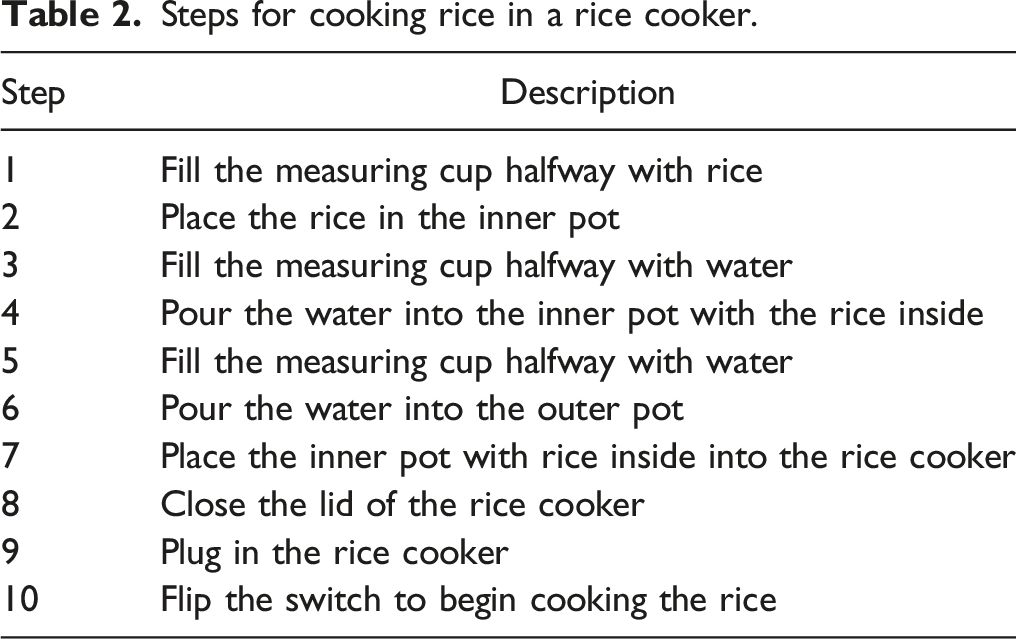
Steps for cooking rice in a rice cooker.
The Dependent Variable and Assessment Method
The dependent variable was the performance of the functional living skill, namely, cooking rice in a rice cooker. The participants' performance was evaluated according to the procedure of steps described in Table 2, whereby a score of 2 points was awarded for independently completing each step, 1 point for completing steps with verbal prompting, and 0 points for incorrectly completed or omitted steps. The checklist comprised 10 steps, with a total score of 20 points (Table 2). The percentage of correct steps in the procedure can be obtained by dividing the score by the total score (20 points). A higher percentage of steps completed correctly indicated more satisfactory immediate or maintained learning outcomes.
The assessment procedures were identical during the baseline, intervention, maintenance, and generalization phases. At the experiment site, which was equipped with all necessary cooking equipment and supplies but did not include AR cards and step prompts, the subject was evaluated. The teacher (evaluator) provided no instruction or prompts regarding the steps, but simply reminded the subject to start using the equipment and rice cooker. If the participants performed the correct steps independently, the teacher did not interfere or provide feedback, but let they continue. Each correct and independent step performed by the participants was awarded 2 points. If the participants made an incorrect step or did not respond, the evaluator asked them to pause and verbally prompted the step, such as “Fill the measuring cup halfway with rice.” If the participants correctly performed an action with verbal prompts, they received 1 point. If the participants still did not respond or made an incorrect step, the teacher instructed them to turn around and then completed that step. The participants received 0 points for that step. Next, the participants were asked to proceed with the following step until all steps were completed. Finally, the evaluator calculated the score and accuracy based on the steps in Table 2.
The dependent variable in the generalization period was the performance of preparing steamed eggs in a rice cooker. A higher percentage of correctly completed steps indicated a more satisfactory generalization effect. The scoring method for the generalization phase was the same as that for the baseline phase, but the target skill was changed from using a rice cooker to cook rice to using a rice cooker to steam eggs. We chose to use steaming eggs as the target skill for generalization because this skill is similar to cooking rice using a rice cooker, except that eggs are used instead of rice. Just like in the baseline phase, we presented the necessary items for cooking steamed eggs on the table and asked the participants to make steamed eggs using the rice cooker without any prompts.
Research Design
We explored the effect of AR-based VP teaching model on the learning of functional living skills. A multiple-probe, across-subjects, single-case research design was adopted (Ledford & Gast, 2018). We adopted a multi-probe design to minimize potential test fatigue and frustration among participants. The probes were conducted at an average frequency of once every 5 sessions during the baseline period, and were administered to participants who had not yet received the intervention. The experiment comprised baseline, intervention, maintenance, and generalization periods.
Baseline Sessions
During the baseline period, no intervention was administered, and only assessment probes were utilized. The order of participant involvement was randomized, as none of the participants required urgent intervention. Alex was the first participant to undergo continuous probes during the baseline period. If Alex demonstrated a consistent performance in three successive probes, the intervention period would commence, and the AR-based VP teaching model would be introduced.
Intervention Sessions
The intervention was scheduled for 30 minutes, three times a week, during lunch breaks on Monday, Wednesday, and Friday. Before the experiment, we informed the participants of the safety hazards of rice cookers (e.g., safely plugging them in and unplugging them), that two assistants would be present as a precaution, that withdrawal from the study was allowed at any time and would not be punished, and that the experiment would end if the participants experienced physical discomfort. The first 5 minutes of the lesson will be dedicated to a motivation activity. The instructor will review the usage of AR cards and the dangers associated with electrical appliances. In the next 15 minutes, the main activity was focused on teaching the predetermined steps for cooking with a rice cooker. We arranged each session according to the sequence of steps in Table 2, each consisting of an average of 3 steps. The number of steps included in the lesson could be adjusted to suit the participants’ pace. First, the teacher played the full demonstration video. Next, the teacher placed the required AR cards on the table and verbally instructed the students, “You can now use the AR cards to learn cooking rice.” The students picked up the first AR picture card and scanned it with RAVVAR on the handheld device, and the corresponding clip was played. After watching the video, the students began to perform the corresponding cooking steps. For example, if the current lesson was on the first three steps of cooking rice, the first AR card the student picked up was the step “Fill the measuring cup halfway with rice.” After watching the video, the student would then proceed to pick up the measuring cup and scoop up half a cup of rice. During the process, the students could use the AR card to re-watch the videos at any time. Upon completing each step correctly, the teacher would give verbal praise, saying “good job!” The students then proceeded to pick up the next AR picture card, “Place the rice in the inner pot,” and repeated the process until all the cards had been scanned, and the correct steps had been performed. During the main activity, the teacher did not actively intervene in the process, except when the student encountered difficulties, such as performing the wrong steps, not following the correct sequence of watching the video before performing the steps, or pausing for more than 10 seconds during the process. To facilitate students learning, the teacher employed a least-to-most instruction prompting sequence that comprised various modes of prompting and guidance. These included verbal prompting (directing the participant to re-watch the clip), physical prompting (returning the AR card to the participant to replay the clip), or live demonstration of the step. Immediately after the main activity, we conducted a 10-minute evaluation of the cooking rice process.
When Alex consistently completed all tasks correctly, the second participant, Bella, began the consecutive baseline phase. Once Alex had completed all tasks correctly at three consecutive points, his intervention ended and the maintenance phase began. Bella then began the intervention phase after reaching stability in the baseline phase. The experiment followed the same procedure as when the participants completed all tasks.
Maintenance and Generalization Sessions
Due to time constraints, the maintenance and generalization periods were evaluated in separate sessions on the same day, two weeks after the experimental teaching. The maintenance session was conducted in the morning, followed by the generalization session in the afternoon. For both phases, a minimum of three data points were collected.
Materials
Video Prompting
The video prompting was made by filming the steps in Table 2 from a first-person POV in accordance with standards for video demonstration–based teaching (Sigafoo et al., 2007). Special education teachers demonstrated the tasks. The cooking utensils (e.g., measuring cup and rice cooker) in the video were the same as those used in the experiment. The clips began with an announcement of each step and a description thereof and ended with the sound of applause and positive feedback such as “You’ve completed the task. Well done!” Each clip was approximately 10–30 s long, and the entire video was approximately 4 minutes long.
AR Interface
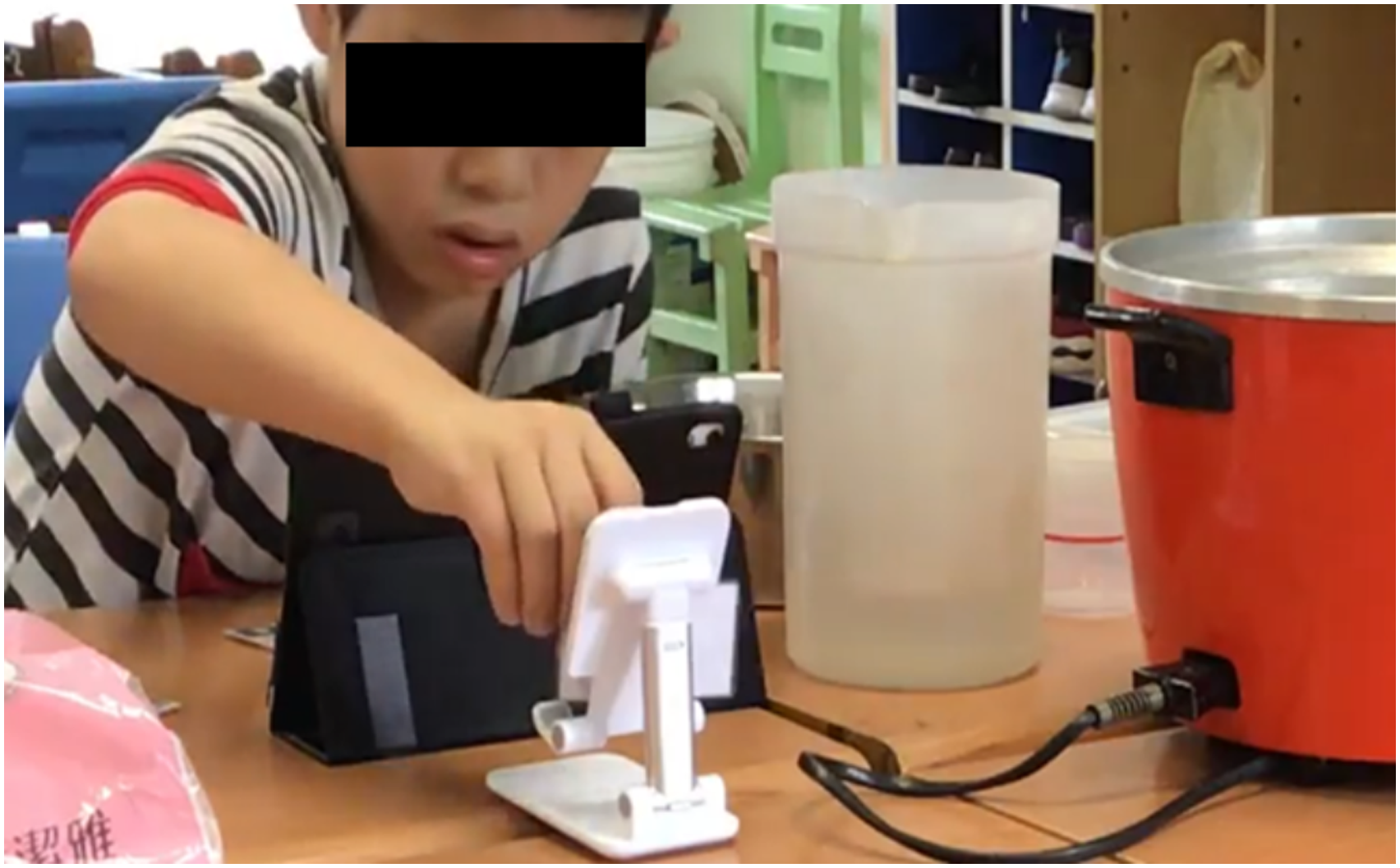
This study’s present type of AR was a 2D video. We applied physical picture cards scanned using AR on a handheld device to play a target video (virtual information). We used RAVVAR, an AR software program, as the interface. RAVVAR enables AR on smartphones or tablets, is Android compatible, and offers a straightforward interface. We uploaded the AR recognition pictures and clips of the demonstration onto the backend of the RAVVAR website and paired them with links (http://www.ravvar.us). The service of RAVVAR was terminated in 2022. In the application, users can scan AR recognition pictures with their devices’ camera and play the corresponding clips without touching the screen; this reduces the difficulty of playback (in Figure 1). We used AR as a platform for VP video presentation. Participants could scan the pictures and present the related videos, as shown in Figure 2. AR cards trigger the VP clip on tablets. The participant (Alex) used AR cards to play and watch VP during the intervention.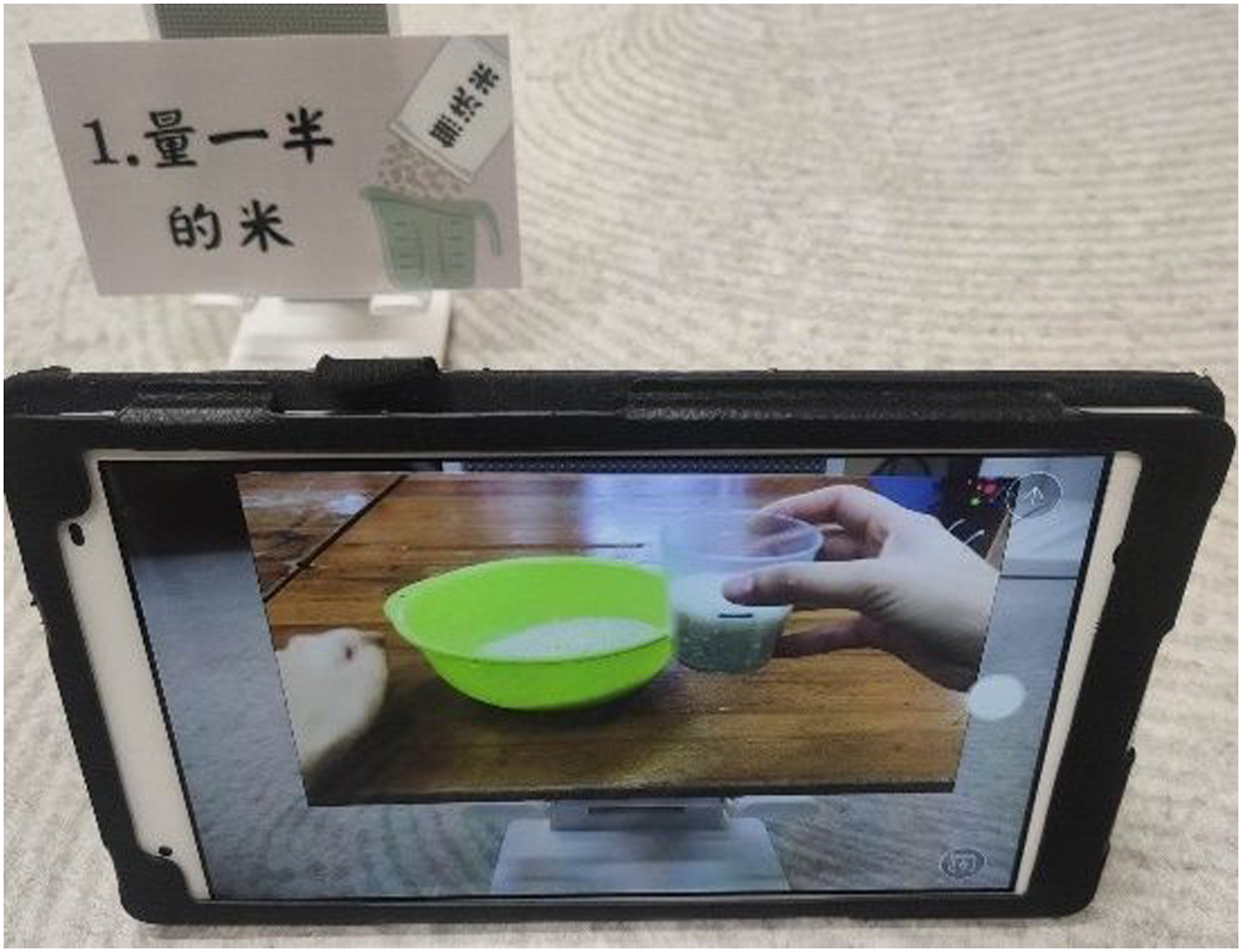
Interobserver Agreement
An observer conducted an interobserver reliability test by grading the participants three times in each phase of the assessment; the grades were then compared to those given by the original assessor. The number of times that the assessor and observer provided the same score was divided by the number of grades. The interobserver reliability of each participant during each phase of the assessment was 100%.
Procedural Fidelity
To determine procedural fidelity, the observer observed each participant three times during the intervention and determined whether the procedure followed the checklist; procedural fidelity for each participant was 100%.
Social Validity Interviews
After the experiment, we conducted interviews with the participants and their teachers. We used simple questions and graphics to help participants understanding and communicating. The questions for the participants were (1) “Did you like the program?”, (2) “Would you like to learn more skills by using AR and videos?”, (3) “How did you do?”, (4) “Would you recommend this program to a friend?”, (5) “Which part of the program did you like the most?”, (6) “Which part of the program did you like the least?”, (7) “Will you try to cook rice in a rice cooker at home?”, and (8) “Would you like to continue participating in the program?” For the first three questions, the participants were asked to answer by pointing at pictures with a scale ranging from “strongly disagree” (1 point) to “strongly agree” (5 points). The last five questions were open ended. The questions for the teachers are as follows: (1) “Is the program well designed?”, (2) “How did the students perform?”, (3) “Have the students’ ability and motivation to cook rice in a rice cooker improved?”, (4) “Does the program increase students’ level of independence?”, (5) “How effective was the program?”, (6) “Would you like to incorporate the program into your teaching?”, and (7) “Do you have any suggestions?”
Data Analysis
We performed a visual analysis and Tau-U analysis of the results. Visual analysis is often used to analyze data within and between stages of a single process. By using systematic and quantitative parameters, each stage is analyzed to objectively assess learning outcomes (Ledford & Gast, 2018). The Tau-U analysis tests effect size by measuring the significance of the effect of the independent variable on the dependent variable. It is performed using nonparametric statistics and is suitable for testing a small sample (Parker et al., 2011). Tau-U values ranging from 0.93 to 1 indicate a large effect size, those between 0.66 and 0.92 indicate a moderate effect size, and those below 0.65 indicate a small effect size (Ok et al., 2021; Parker & Vannest, 2009).
Results
Figure 3 presents the accuracy performance of the participants in each step and period. The results indicate that the intervention had an immediate effect on all three participants. The mean accuracy after the intervention was 84.8% (standard deviation: 3.2), which is higher than that in the baseline period (23.3%, standard deviation: 21.4). In the maintenance period, a maintenance effect was observed for all participants, with a mean accuracy of 93.3% (standard deviation: 8.8). A generalization effect was also observed for all participants, with a mean accuracy of 63.0% (standard deviation: 3.2). Accuracy in performing cooking tasks across all participants.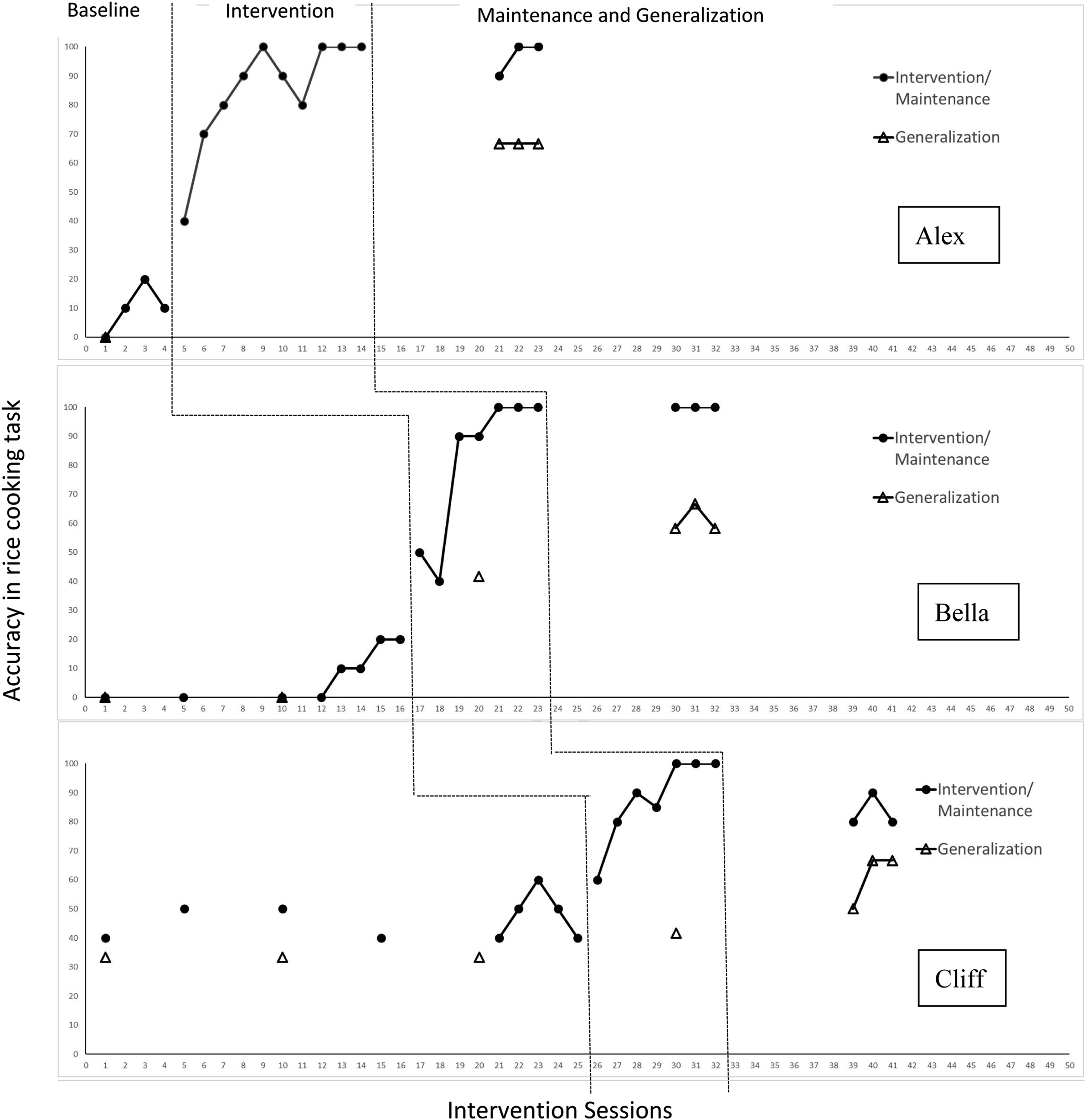
Alex
Alex had a mean accuracy of 10% in the baseline period, indicating consistent performance, which improved during the intervention period. When accuracy was 100% three consecutive times, the intervention period ended. In the intervention period, 10 teaching sessions were performed, and Alex had a mean accuracy of 85%. The trend showed an unstable upward trajectory with a trend stability at 60%. The level range was from 40 to 100. Two weeks after the intervention period, an assessment was conducted in the maintenance period, and the mean accuracy was 96.7%, indicating consistent performance. In the generalization period, the accuracy was 66.7%, which was higher than that in the baseline period. This indicates that the intervention had a generalization effect. The mean change from the baseline period to the intervention period was 75%, and the overlap of the two periods was 0%, indicating that the intervention had an immediate effect. The mean change from the intervention period to the maintenance period was 11.67%, and the overlap percentage was 100%. Performance remained unchanged, suggesting that the intervention had a satisfactory maintenance effect.
Alex’s Tau-U in the baseline period was 1 compared with that in the intervention period, indicating a large effect (90% confidence interval [CI] [0.418, 1], p = .005); the intervention had a strong positive effect on Alex’s accuracy. The Tau-U in the intervention period was 0.4 compared with that in the maintenance period, indicating a small effect (90% CI [−0.249, 1], p = .031). This indicates that after the intervention, Alex’s were not affected, and the intervention had a maintenance effect. The Tau-U in the maintenance period was 1 compared with that in the baseline period, indicating a large effect (90% CI [0.225, 1], p = .034). This indicates that the intervention improved Alex’s skills considerably.
Bella
Bella’s initial probe value was 0 in the baseline period. After Alex’s intervention, continual probes for Bella were performed in her baseline period. Bella had a mean accuracy of 12% in the baseline period, and her intervention began after Alex’s ended. In Bella’s intervention period, the accuracy increased, but was the trend of increase unstable with a trend stability at 28.6%. The level range was from 40 to 100. After accuracy was 100% three consecutive times, the intervention period ended. In the intervention period, seven teaching sessions were conducted, and Bella had a mean accuracy of 81.4%. Two weeks after the intervention period, an assessment probe was conducted in the maintenance period, and the mean accuracy was 100%, indicating consistent performance. In the generalization period, the accuracy was 61.1%, which was higher than that in the baseline period. This suggests that the intervention had a generalization effect. The mean change from the baseline period to the intervention period was 69.4%, and the overlap percentage was 0%, which indicates that the intervention had an immediate effect. The mean change from the intervention period to the maintenance period was 18.6%, and the overlap percentage was 100%. Performance was unchanged, suggesting a maintenance effect even after the intervention.
Bella’s Tau-U in the baseline period was 1 compared with that in the intervention period, indicating a large effect (90% CI [0.421, 1], p = .005); the intervention had a strong positive effect on Bella’s accuracy. The Tau-U in the intervention period was 0.57 compared with that in the maintenance period, indicating a small effect (90% CI [−0.116, 1], p = .172). This indicates that Bella’s skills were unaffected for a period after the intervention. The Tau-U in the maintenance period was 1 compared with that in the baseline period, indicating a large effect (90% CI [0.264, 1], p = .025). This indicates that the intervention improved Bella’s skills.
Cliff
Cliff’s initial probe value in the baseline period was 40%. After Bella’s accuracy reached 100%, continual probes for Cliff were performed in his baseline period. Cliff had a mean accuracy of 48% in the baseline period, and his intervention began after Bella’s intervention ended and her accuracy decreased. The stability level was 40%. In Cliff’s intervention period, the accuracy increased in an unstable upward trend; the stability level was 42.9%. The level range was from 60 to 100. After accuracy was 100% three consecutive times, the intervention period ended. In the intervention period, seven teaching sessions were conducted, and Cliff had a mean accuracy of 87.9%. Two weeks after the intervention period, an assessment probe was conducted in the maintenance period, and the mean accuracy was 83.3%. In the generalization period, the accuracy was 66.7%, which was higher than that in the baseline period. This indicates that the intervention had a generalization effect. The mean change from the baseline period to the intervention period was 39.9%, and the overlap percentage was 14.4%. The mean change was positive, and the overlap rate was low, indicating an immediate effect. The mean change from the intervention period to the maintenance period was −4.5%, and the overlap percentage was 100%. Although the mean change slightly decreased, the overlap rate remained high. This suggests a satisfactory maintenance effect.
Cliff’s Tau-U in the baseline period was 0.971 compared with that in the intervention period, indicating that the intervention had a large effect (90% CI [0.393, 1], p = .006). The Tau-U in the intervention period was −0.381 compared with that in the maintenance period, indicating a small effect (90% CI [−1, 0.306], p = .362). This indicates that Cliff’s skills were maintained and unaffected after the intervention. The Tau-U in the maintenance period was 1 compared with the baseline period, indicating a large effect (90% CI [0.264, 1], p = .025). This suggests that the intervention improved Cliff’s skills.
Social Validity
The first three questions were graded quantitatively to understand the students’ opinions on the program. A score of 1 to 5 points was given to each question. The mean scores of the first and second questions were 5 points, which indicates that the students were highly interested in the program and motivated to learn. The mean score for the third question was 4.3 points, indicating that the participants were generally satisfied with their performance. The participants indicated that they would recommend the program to their friends. During the program, one participant enjoyed using the tablet and AR picture cards, and the other two felt a sense of achievement in cooking independently. All the participants indicated that they would use a rice cooker to cook at home. They also expressed a high willingness to participate in similar programs because they enjoyed it and found it different from others.
The teachers’ feedback was similar to the participants’. The teachers had a positive view of the program and described its effectiveness. They indicated that the program was suitable for elementary school students with IDDs because the steps were specific and interested the students in learning and because using AR picture cards to play videos was intuitive. The students were intrigued and quickly learned how to use the system. The intervention improved the participants’ skills considerably and helped them identify rice cookers and their purpose. The teachers agreed that the program was effective, and they were willing to use AR-based VP teaching model for teaching in the future. Teachers suggested that the teaching model can teach living skills stepwise (e.g., cleaning and folding clothes) and help students master skills or apply them to other scenarios.
Discussion
The proportion of AR cards used independently by the participants.

We selected skills similar to cooking rice in a rice cooker, such as making steamed eggs in a rice cooker, to explore the generalization effect of the teaching model. The results indicate that the participants understood the basics of rice cookers and could cook rice and making steamed eggs independently and correctly. For the generalized task, all participants had an accuracy of 50% or higher. The egg-beating and stirring skills required to make steamed eggs were taught in previous lessons but not properly demonstrated during the experiment. Overall, the teaching model had a partial generalization effect.
Implications for Practice
According to the results of this study, it is confirmed that the AR-based VP teaching model has noticeable immediate and sustained effects on the cooking skills training of IDD students. This study provided another teaching model of teaching life skills to choose for special education teachers. The advantage of using this teaching model was that the AR environment could attract students' attention and reduce students’ cognitive load and operation error rate when operating the tablet to watch VP. On the other hand, the step-by-step demonstration video content provided by VP allowed students to watch it repeatedly and maintained consistent teaching content in the repeated process, reducing the teaching load of teachers under repeated teaching in traditional teaching. When teachers apply the AR-based VP teaching model in the future, they should pay attention to the following points, which can make teaching more effective: 1. Design easy-to-understand AR images. 2. When using AR, teachers can first demonstrate and then let students practice the operation of AR until they can operate independently. 3. VP videos should be accompanied by subtitles and audio so that students have more clues to learn. 4. The number of VP steps included in the teaching content of each lesson can be adjusted according to the subjects' ability.
Research Limitations and Suggestions for Future Development
Because of the small sample (n = 3), the results cannot be applied to other students. Studies should increase the sample size to support our results and recruit participants with various disabilities to determine the effectiveness and generalization effect of the teaching model.
Due to time constraints, the effects on generalization and maintenance could only be observed two weeks after the intervention. It is unclear whether extending the observation period would impact the effectiveness of the intervention. To determine whether the intervention has sustained effects, long-term observations can be conducted.
The intervention was implemented in an isolated, simulated environment. Although the setting and tools were similar to those in a real environment, we could not determine whether the students could apply the skills they learned to real environments. Studies should assess the generalization effect of the intervention in a real environment.
Since this study discussed the packaged teaching effect of the AR-based VP teaching model, this study cannot discuss and clarify the single impact of AR or VP. We suggest identifying and comparing the differences in teaching effectiveness in future research.
After conducting the instructional experiment, this study immediately proceeded with assessment, which could not rule out the influence of practice effects on the immediate outcomes. Future studies should consider spacing out the instructional and assessment periods to avoid the influence of practice effects.
Although the RAVVAR service was terminated in 2022, teachers can still find AR software with similar functions for teaching in the future, such as EyeJack Creator or ARTIVIVE.
Conclusion
This study contributed to proposing an AR-based VP teaching model and verifying the effectiveness in improving the functional living skills of students with IDDs. The intervention had considerable immediate and maintenance effects and partial generalization effects on the three participants. Both the students and teachers had a positive view of the intervention and acknowledged its effectiveness. The strategy is viable for teaching elementary school students with IDDs.
Footnotes
Acknowledgments
The author would like to thank Miss Lin and Wu for helping arrange the environment for the experiment in the school.
Author Contributions
Chu-Lung Wu: Conceptualization, methodology, funding acquisition, investigation, project administration, software, supervision, validation, visualization, and writing—original draft, Writing—review and editing.
Yi-Hsuan Tsai: Software and writing—original draft.
Funding
This work was supported by the National Science Council of the Republic of China (Taiwan) for the funding support [grant numbers MOST 107-2511-H-142-001-MY3].
