



Abstract
During the COVID-19 pandemic, Congress invested $190 billion in public schools through three waves of Elementary and Secondary School Emergency Relief (ESSER) grants. However, there is limited research on how school districts spent pandemic aid and how education leaders prioritized these resources to achieve strategic goals. In this research note, we present evidence on how principals strategically allocated ESSER II funding to address learning interruptions and the needs of students during the COVID-19 pandemic. Our analysis leveraged school-level budget data, including detailed expenditure items, from a large urban school district in the U.S. South, supplemented by qualitative interviews with principals. We find that principals devoted most of their federal relief aid to staffing, with a notable increase in instructional coaches compared to before the pandemic. This finding suggests that principals prioritized the improvement of teaching and learning amidst significant challenges and uncertainties caused by the pandemic and indicates a potential area for ongoing investment in schools.
Keywords
The federal government infused $190 billion into public elementary and secondary education to address the deleterious effects of the COVID-19 pandemic on schools. This unprecedented investment was distributed to states through three waves of Elementary and Secondary School Emergency Relief (ESSER) grants (Gordon & Reber, 2022). School systems spent a significant amount of this federal aid on educational technology to facilitate remote learning, as well as on equipment to mitigate the virus’s transmission and reopen schools safely (Stadler, 2023). Perhaps more interesting, however, is understanding how schools invested in resources to address learning interruptions and the needs of students during and beyond the pandemic.
In most U.S. school systems, district leaders dominate budget and resource allocation decisions. Yet, principals in a growing number of school districts have been given significant authority and flexibility to allocate resources, in what is known as weighted student funding or student-based budgeting (Levin et al., 2019). Advocates of decentralizing budgeting control have argued that school leaders are more informed about the needs of their students and staff; therefore, they can allocate resources more strategically than central office staff can (Goertz & Stiefel, 1998). Moreover, evidence from other studies on principal decision-making during the pandemic has suggested the importance of school leadership during this period of significant challenge and uncertainty (De Voto et al., 2023; Jackson et al., 2022).
In this research note, we analyze how principals in a large urban school district in the U.S. South allocated the second wave of ESSER funding (ESSER II) during the 2021–2022 school year of the COVID-19 pandemic. We address the following research questions:
How did school principals allocate ESSER II funding to address the effects of the pandemic on students?
In what ways did spending patterns vary by school level and socioeconomic composition?
How did ESSER funding influence resource allocation decisions made by principals?
Our study offers three valuable insights into school-level finance and resource allocation decisions during the COVID-19 pandemic. First, because researchers do not typically observe student exposure to school-level spending (Atchison et al., 2017), the findings provide insights into how students experienced federal pandemic relief aid and how principals strategically deployed ESSER funding to address student needs. Second, descriptive analyses show that principals used ESSER funding to substantially increase staffing for instructional coaches, underscoring the perceived importance of school-based roles focused on improving teaching and learning. Finally, qualitative evidence suggests how school leaders conceptualized the strategic goals of their federal pandemic relief aid.
Data and Method
We leveraged detailed budget data for 115 schools in a large urban school district, where principals exercise control over resource allocation through student-based budgeting. The school-level budget data included personnel and nonpersonnel expenditures funded by ESSER II, as well as the district’s general and categorical funds, such as Title I. Although most publicly available budget data include aggregate revenue or spending measures, our dataset allowed us to examine item-level expenditures at the school level. In addition, our expenditure items contained detailed descriptions and justifications, indicating how the spending would support strategic goals associated with the novel consequences of the COVID-19 pandemic.
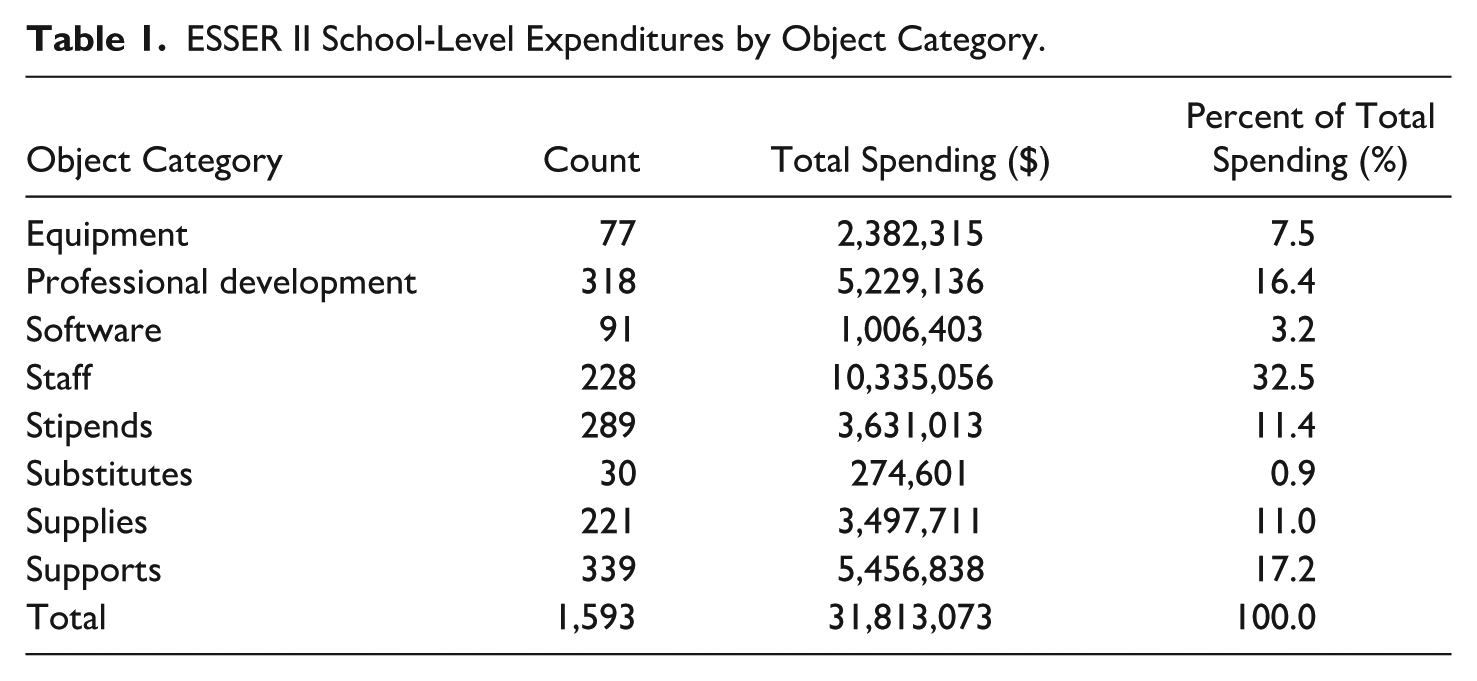
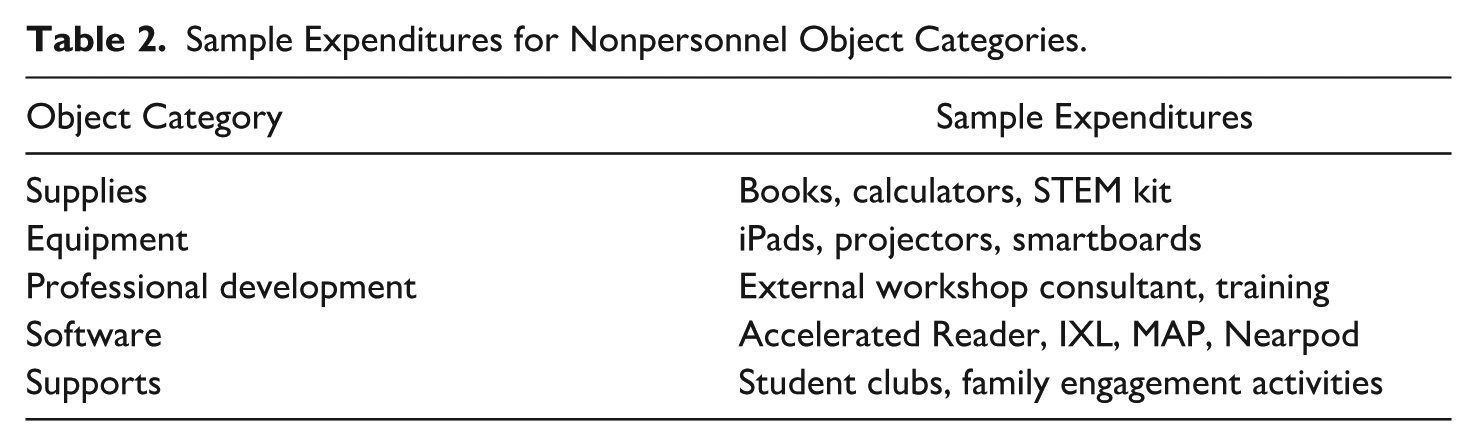
To analyze the budget data, our research team assigned object-of-expenditure codes to each budget item according to its use. Using an iterative coding process that leveraged the title of the line-item expenditure and budget justification details, we established the following object codes: equipment, professional development, software, staff, stipends (i.e., additional pay for staff), substitutes, supplies, and supports. As shown in Table 1, we summarize the ESSER II expenditures by object category. Personnel expenditures for staff, stipends, and substitutes are self-explanatory; however, we list sample expenditure items for nonpersonnel objects in Table 2. For example, under the “supplies” object code, principals allocated funds for items such as books, calculators, and STEM kits, while under the “supports” object code, principals allocated funds for student clubs and family engagement activities.
ESSER II School-Level Expenditures by Object Category.
Sample Expenditures for Nonpersonnel Object Categories.
ESSER expenditures also included program-level categorization codes selected by principals that can be interpreted as the strategic goals of the spending. The district created four programmatic codes—“addressing learning loss,” “addressing unique student needs,” “purchasing educational technology,” and “providing mental health support”—to align with their pandemic recovery efforts. Principals could select one or more codes for each item. Expenditures focused on “addressing learning loss” were intended for all students. In contrast, expenses designated as “addressing unique student needs” were targeted toward specific subgroups such as economically disadvantaged students and English language learners. Within these two categories, principals used ESSER II funding for additional staff, such as tutors, and to provide teachers with additional paid planning time. Within the program category of “purchasing educational technology,” principals allocated resources for nonpersonnel expenses such as laptops, tablets, and software. For the “providing mental health support” category, principals typically hired additional mental health professionals, such as counselors and social workers. Principals also used this category to label costs associated with a district initiative that assigned staff members to check in regularly with students and their family members during periods of virtual learning.
Some ESSER expenditures did not receive one of the four programmatic expenditure codes. These uncategorized items primarily included teacher leadership stipends and the hiring of additional certificated staff. To provide a comprehensive analysis, the research team classified these expenditures under an “other” category.
We supplemented the budget data with an exploratory qualitative analysis of semi-structured interviews with 13 principals across the district. The interview data come from a broader research project that examines how principals engage in budgeting and resource allocation decisions. For this research note, we drew from interview data about principals’ resource allocation during the pandemic and the role of ESSER funding.
How Did Principals Allocate ESSER II Funding?
Congress established the ESSER II Fund in December 2020 as part of the Coronavirus Response and Relief Supplemental Appropriations Act, which provided an additional $54.3 billion in emergency relief funds to states. Our data showed that the district central office spiraled approximately $31.8 million of its $104 million in ESSER II funding directly to schools (see Table 1). Every school received a base amount of ESSER II funding, with some schools receiving additional funding based on the number of students from economically disadvantaged backgrounds. The average school received about an additional $437 per pupil via ESSER II during the 2021–2022 school year. The standard deviation of additional per-pupil funding across the district was $277; a school at the top of the ESSER II funding distribution received nearly $2,000 in additional funding per pupil.
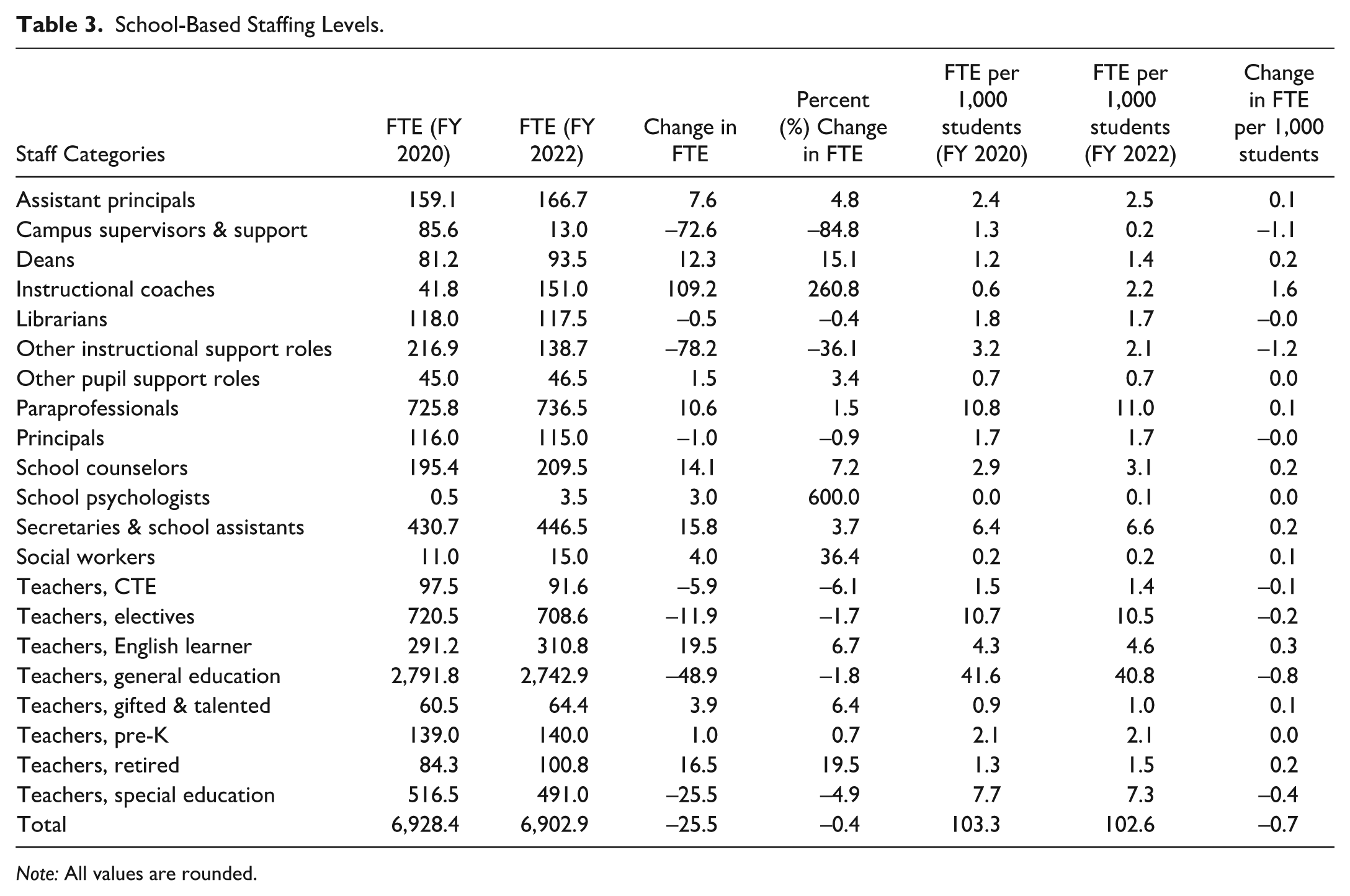
Figure 1 shows that principals overwhelmingly spent the most money on staffing, which is consistent with typical expenditure patterns of school districts (National Center for Education Statistics, 2023). In total, district principals spent an average of 32% of ESSER II funding on staffing. Table 3 shows that principals used much of their ESSER II funding to hire additional instructional coaches compared to the last academic year before the pandemic. From school year 2019–2020 to school year 2021–2022, staffing of school-based instructional coaches increased by 109.2 full-time equivalents (FTEs), reflecting a more than twofold increase.
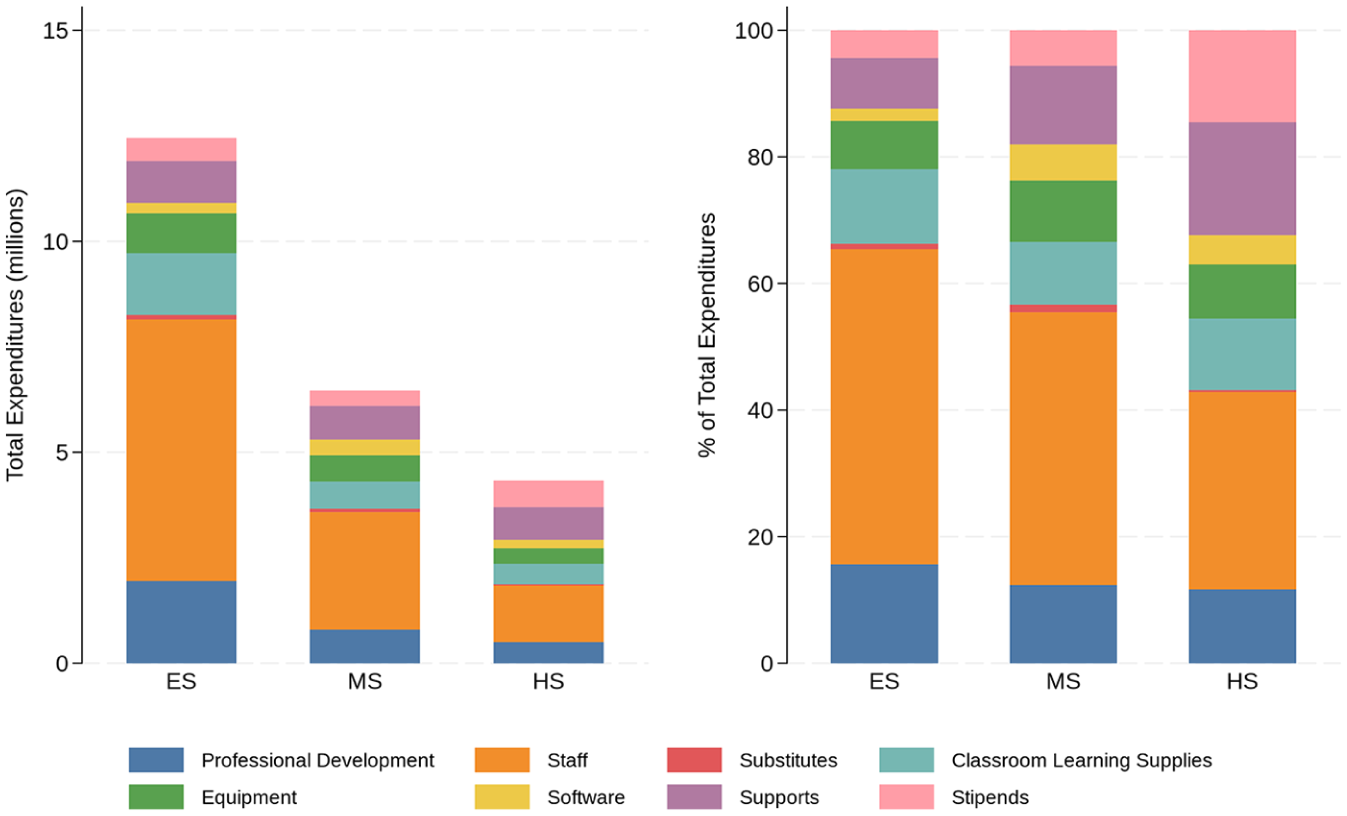
ESSER II Allocations on Objects by School Level.
School-Based Staffing Levels.
Note: All values are rounded.
Figure 2 shows that school-based staffing for school psychologists also increased by a large percentage (600%), which corresponded to an overall increase of 3.0 FTEs across all district schools. However, this increase may not be practically meaningful because school psychologists often serve multiple schools within a district or are not classified as school-based roles. This analysis does not include district positions assigned to the central office.
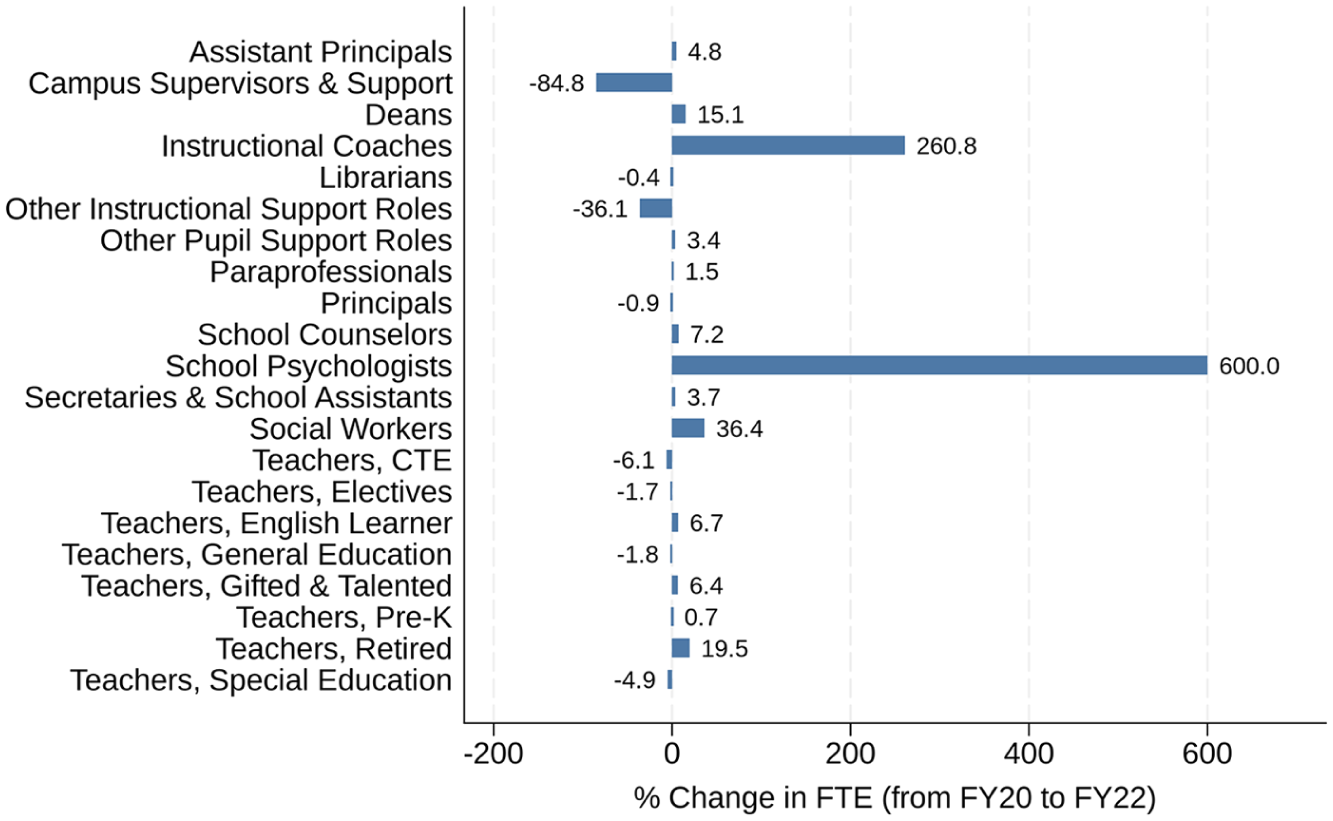
Change in School-Based Staffing Levels.
How Did Spending Patterns Vary?
Spending patterns differed by school level and socioeconomic composition. For example, Figure 3 shows that elementary school principals prioritized “addressing unique needs,” whereas high school principals focused most on “addressing learning loss.” Elementary school principals spent 43% of their ESSER funds on “addressing unique needs,” and high school principals spent 41% on “addressing learning loss.” Figure 4 shows that schools with a higher concentration of economic disadvantage spent more on addressing unique needs (42%). In contrast, schools with lower economic disadvantage allocated resources toward “addressing learning loss” (36%) and providing mental health support (11%).
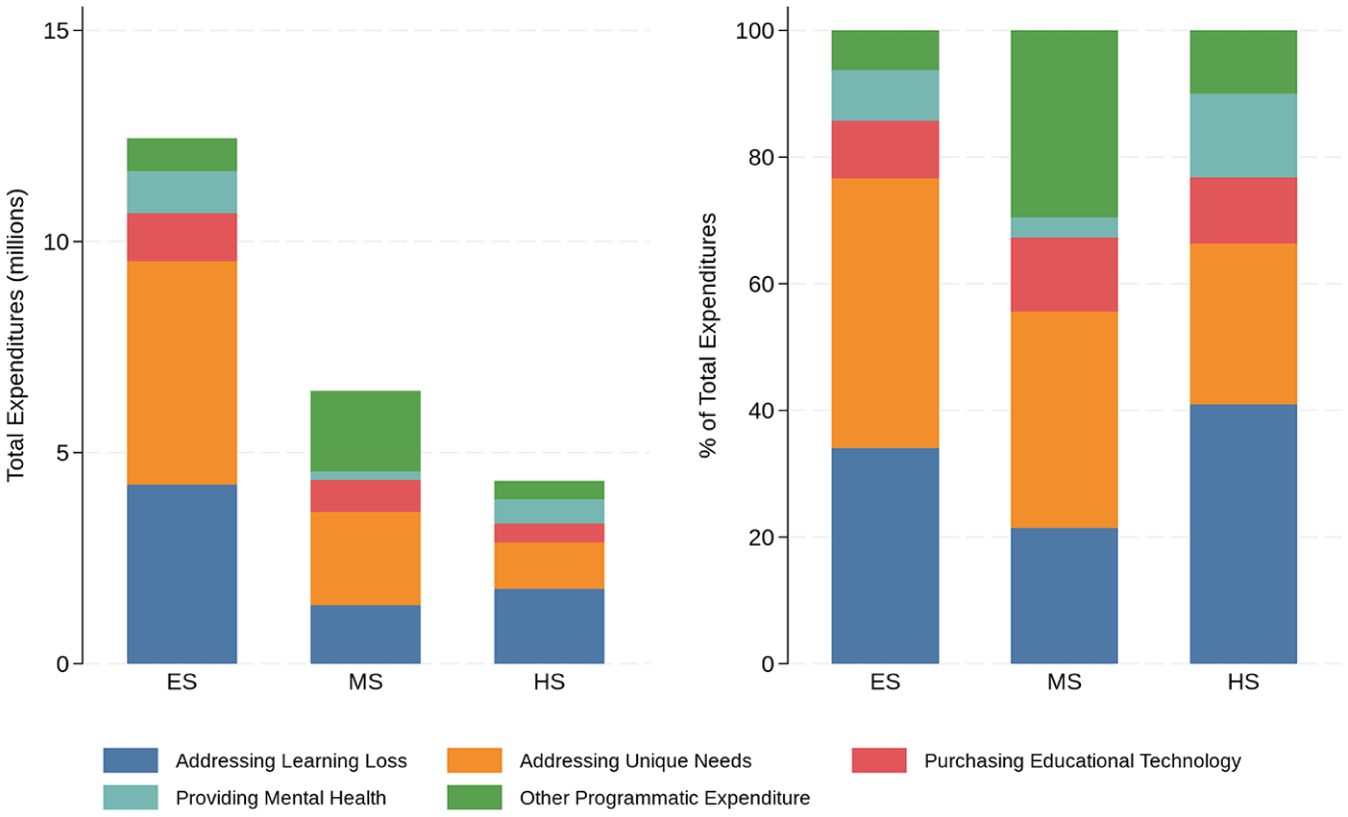
ESSER II Allocations on Programs by School Level.
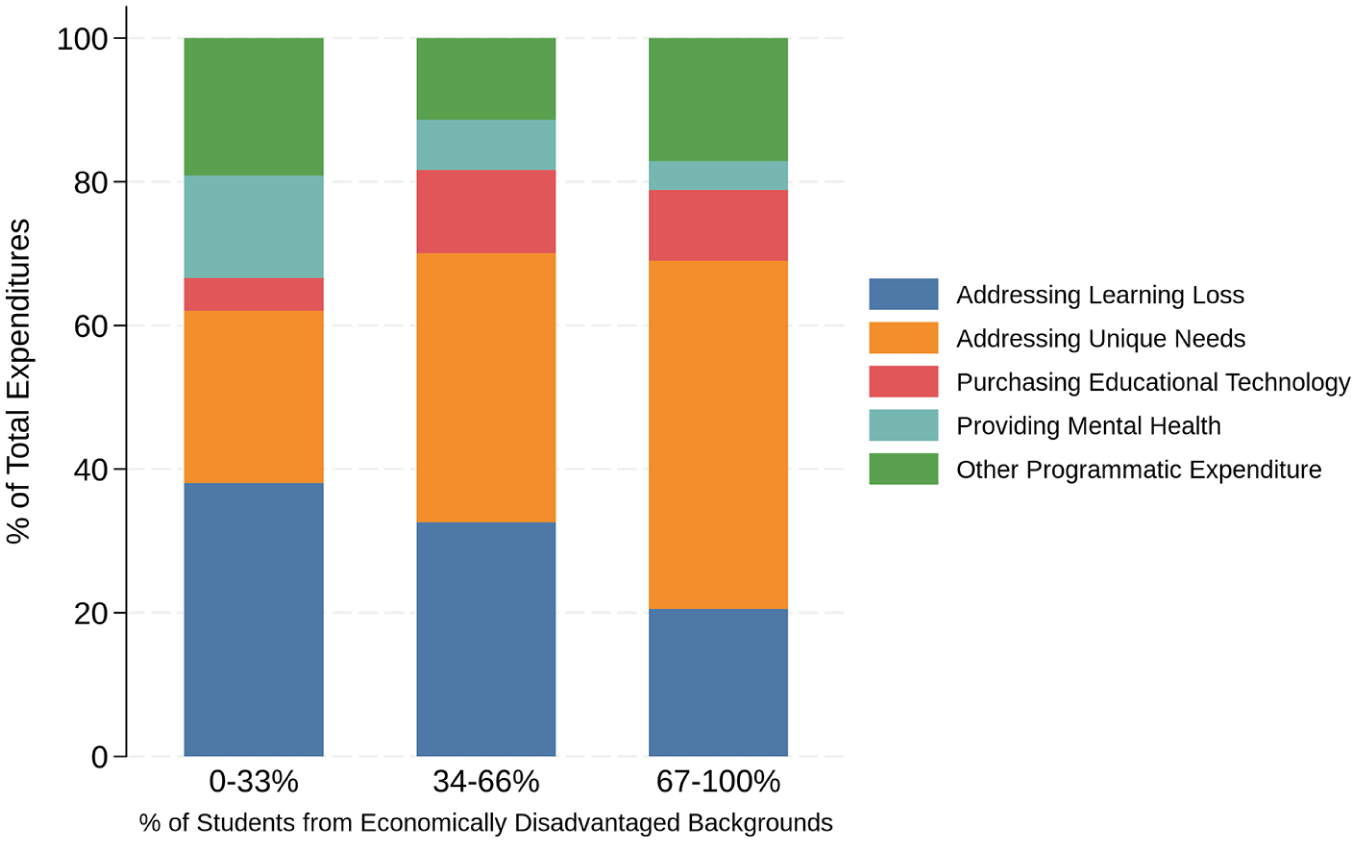
ESSER II Allocations on Programs by School Economic Disadvantage.
How Did ESSER Funding Influence Resource Allocation by Principals?
The exploratory analysis of principal interview data suggested that ESSER funding enabled principals to invest in support staff and supplies needed to navigate the uncertainty of the pandemic. One elementary school principal’s experience with ESSER funding, for example, highlighted the critical role this relief aid played in staff retention and expansion to meet student needs during the pandemic. She stated, “I had to cut two positions. Now I was able to put them back in with ESSER funds.” Another elementary school principal echoed this sentiment when he stated, “I would not have been able to bring all of my personnel back from last school year because of a few cuts that were made. But with the addition of ESSER funds, I was able to bring those positions back, and a few more positions.” These sentiments highlighted the impact of ESSER funding in allowing schools to not only recover lost positions but also enhance their educational staff, allowing them to respond directly to the immediate student needs created by the pandemic.
At the middle school level, the focus shifted toward enhancing direct support for students and their families as well as teachers. One middle school principal described how ESSER funding allowed the recruitment of “three tutors, three teacher residents,” who were integral in maintaining educational continuity through “home visits” and “virtual learning spaces.” Another middle school principal stated, “Our main focus. . .was capacity building, and just plain and simply being able to pay teachers to plan outside of working hours. . .and then we’ve set aside like tutoring money, for tutoring for teachers to do tutoring. . ..” These sentiments reflected a strategic use of ESSER funding to invest in capacity building and support systems that enabled students and teachers to have the necessary resources for effective learning and teaching.
High school principals used ESSER funding to enhance student support structures and address learning disruptions. One high school principal discussed how she hired an attendance clerk to help “maximize the number of students at school each day” and address the “student engagement and attendance challenge” caused by the pandemic. She also discussed how she used ESSER funding to address student learning interruptions when she stated, “We brought in some additional programs that will offer opportunities for kids to get some additional support, both during the school day, but then outside of the school day.” These ESSER-funded initiatives sought to not only increase student presence within schools but also enhance the quality and reach of educational support to bridge educational gaps widened by the pandemic. Overall, principals expressed their belief that ESSER funding bolstered educational staffing and resources amid the pandemic and helped minimize the pandemic’s negative impact on student learning and engagement.
Discussion
Our research note makes three contributions to the research on school finance and resource allocation across schools during the COVID-19 pandemic. First, we show that principals with significant flexibility to allocate resources at the school level tended to allocate their pandemic relief aid by bolstering staffing with additional instructional personnel—especially instructional coaches—which aligns with data showing growth in instructional coaching programs across the country (Redding et al., 2024). Second, we show that spending patterns differed by school level and socioeconomic composition, indicating that principals adopted varied strategies in allocating resources to support students. Third, interviews with principals illustrate how they targeted resources directly toward emerging priorities, such as tutoring and attendance, which have persisted beyond the pandemic.
Although we analyze only a single wave of ESSER funding, our findings suggest that districts will likely face difficult decisions in the years to come. These findings are relevant in the current policy environment, given the recent expiration of the final wave of ESSER funding. The absence of ESSER funding will require education leaders to make tough trade-offs about which types of expenditures or staffing are most helpful in supporting student learning and flourishing in schools. Furthermore, our study highlights the continued need for fiscal data at the school level and for developing a more granular understanding of how students are exposed to resources within schools.
Footnotes
Author Note
Portions of these findings were presented as a paper at the 2024 Association for Education Finance and Policy annual conference.
Declaration of Conflicting Interests
The authors declared no potential conflicts of interest with respect to the research, authorship, and/or publication of this article.
Funding
The authors disclosed receipt of the following financial support for the research, authorship, and/or publication of this article: We received funding from the William T. Grant Foundation (OR201088).
