




Abstract
Background:
In the wake of COVID-19 and protests against racial violence, scholars of education, alongside educational organizations, called for innovative responses to address racial injustice, but one solution was consistently mentioned across educational spaces: the need for educators to reimagine education in a postpandemic/endemic world. And yet, even though the importance of (re)imagination in deterring educational issues was greatly emphasized in academia and popular culture, scholarship detailing ways to activate teachers’ imaginations was limited.
Purpose:
Considering the role of imagination and creativity in the fight for racial justice, the purpose of this article is to examine how arts-based pedagogies in the teacher education classroom might provide space for preservice teachers to cultivate their imaginative proclivities toward racial justice.
Research Design:
To engage in this analysis, the author employs a thematic analytic process undergirded by the concept of activist art pedagogy and supported by a conceptual framework that bridges abolitionist teaching and the Archaeology of Self. The combination of the framework and analytic method was used to analyze visual artifacts and meta-reflections created by preservice teachers who constructed multiple aesthetic responses to class readings.
Conclusions or Recommendations:
Findings suggest that critical arts-based inquiries helped preservice teachers to personally connect to and question the historical roots of racial justice. Further, findings indicate that arts-based inquiries can engage preservice teachers’ creative proclivities toward a reimagination of their roles and responsibilities as racial justice–informed teachers.
Keywords
“Historically, pandemics have forced humans to break with the past and imagine their world anew. This one is no different. It is a portal, a gateway between one world and the next. . . . we can walk through lightly, with little luggage, ready to imagine another world.”
In the wake of COVID-19 and the 2020 summer of racial reckoning, calls for the centralization of imagination in the movement toward racial justice reverberated across almost every public and social sphere, especially in the field of education. As examples, Milner and his collaborators (2021) proposed that the pandemic combined with societal unrest due to the murder of Black people at the hands of police officers gave teachers “an incredible opportunity to leverage this momentum and reimagine their curriculum, instructional, assessment, and relational practice with students in support of racial justice” (p. 48). In proceedings from a 2021 workshop, members of the National Academies of Science, Engineering, and Medicine (2021) stated the need to reimagine the system of education toward a focus on racial justice and to reform collective beliefs about schooling, teachers, and teaching. Bolding and colleagues (2022) asserted that transforming systemic inequities in education required a radical imagination, or the creative capacity to envision societies founded on ideals of justice, freedom, and love even amid systemic injustice and state-sanctioned violence. Similarly, Perhamus and Joldersma (2020) argued that engaging in antiracist pedagogical practices involves the critical examination of the past and present alongside a radical reimagining of traditional structures toward the creation of more equitable educational futures. Collectively, these calls asked educators to use the pandemic as a portal (Roy, 2020) and to use their imaginations to envision and construct new educational worlds that leave the luggage of racial violence behind.
And yet, educators were drastically unprepared to create the gateway between this world and the next. After numerous racial protests resulted in a wider acknowledgement of the need for focused racial justice content in schools, educational organizations witnessed a surge in requests for assistance in the curation and creation of culturally sustaining materials, and booksellers were inundated with demands for books that focused on racial diversity and equity (Gilbert, 2021; Scheyder, 2020). Students across the country reported that even after the murders of George Floyd, Breonna Taylor, Ahmaud Arbery, Tony McDade, and Rayshard Brooks, conversations about race and racism were limited in schools (Daniels, 2021). Their observations of the lack of racial curricula substantiated larger conversations about in-service and preservice teachers’ discomfort and underpreparedness in teaching about race and racism (Marrun et al., 2023; Martell & Stevens, 2018; Toliver & Hadley, 2021). So, even though the pandemic provided space to pause and take the time to imagine and create the educational worlds young people deserve, the creation of new portals was blocked by the “disimagination machine” that is the neoliberalist body politic of education in a racist and capitalist society (Giroux, 2014).
If, however, one’s ability to (re)imagine is critical to moving the field of education toward racial equity, what, then, can teacher educators do to assist the next generation of teachers in developing their imaginative capabilities? What can teacher educators do to stir educators’ imaginations toward the goals of racial justice? In this article, I consider these questions by exploring how teacher educators might employ arts-based pedagogies to provide space for preservice teachers (PSTs) to cultivate their imaginative proclivities toward racial justice. To do this, I use a conceptual framework that bridges abolitionist teaching (Love, 2019) and the Archaeology of Self (Sealey-Ruiz, 2022) to analyze visual artifacts and meta-reflections created by PSTs who constructed multiple aesthetic responses to class readings. In doing so, I showcase the transformative, portal-building potential of arts-based pedagogies in teacher education.
Literature Review
Imagination and Creativity in Teacher Education
Creativity and imagination have long been theorized as essential to personal and social change (Goessling et al., 2020). As an example, Greene (1995) explored the subject of imagination and social change and determined that imagination is the ability to create visions of what should or might be in a socially unjust society. She resolved that people can only see the true cruelty of the world if they have the capacity to imagine otherwise worlds in which life is more just for all. This view of imagination as transformational was supported by Kelley (2002), who contended that even though the sordid conditions of everyday life often inhibit imaginative capabilities, imagination is required to visualize alternative possibilities that thrust this world beyond the bleakness of the current moment. Alongside arguments about the role of imagination as a justice practice, Stetsenko (2018) argued that creativity is a fundamental aspect of social change. She clarified that
creativity, like freedom, is always about dissent, that is, about resistance, discord, challenge, critique, and ultimately, about the acts of questioning and moving beyond what is given, a process that transcends (or deconstructs) the status quo and its entrenched structures, phenomena, and elements. Creativity is thus akin to defiance and disobedience, even rebellion, on a par with the revolutionary energy of transformative agency that furnishes our world and is the province not of the select few but of all human beings. (p. 431)
In positioning creativity as rebellion and dissent and locating creativity as a trait within all human beings, Stetsenko, like Greene and Kelley, situated creativity as a foundational requirement for any movement toward social justice.
The importance of creativity and imagination for social change has prompted multiple researchers to promote the inclusion of creativity-related experiences in the teacher education classroom (Kettler et al., 2018; Lee & Kemple, 2014; Stojanovska & Petrova-Popovski, 2021). For instance, Kimhi and Geronik (2020) advanced the notion that PSTs’ creativity can be fostered through hands-on learning activities that promote risk taking and require collaboration, negotiation, and problem solving. They concluded that teacher education programs must bring creativity-related experiences to PSTs to counter the didacticism and creative suppression of higher education and to prepare “creative teachers capable of leading future change within the education system” (p. 515). Shockley and Krakaur (2021) affirmed these findings, highlighting that even though many teacher preparation programs focus on constructing rigorous educational course sequences grounded in subject matter content and methods, making space for creative processes in teacher education can assist PSTs in broadening their cultural competencies and enhancing their ability to engage in culturally relevant problem solving. Anderson and others (2021) corroborated these recommendations, advising that even though many teachers possess the potential to engage in creativity-informed pedagogies, scaffolded creative exercises in teacher training programs can enable PSTs’ creativity to grow, help them become comfortable with creative risk taking, and develop their potential to become creative educators.
Together, these scholars suggest that even though numerous barriers to the inclusion of creative and imaginative activities, assignments, and discussions in higher education exist (e.g., lack of time and opportunities to be creative, limited pedagogical knowledge about creative processes, regulated and often inflexible curricula, and balancing external demands and expectations) (Shockley & Krakaur, 2021), teacher educators must help PSTs engage their imaginative processes and build their creative capacities by including creativity-related exercises in the classroom. In doing so, PSTs have room to counter traditional educational methods and processes, build their cultural competencies, engage in pedagogical risk taking, and prepare for the possibilities of educational change.
Engaging the Arts Toward Critical Consciousness
Although people showcase their creativity and imagination in various ways, one particularly useful site for engaging both concepts is through the generation of artistic works (e.g., drawing, sculpture, textile, painting, literature, photography, etc.). The arts enable people to employ their imaginations toward the consideration and representation of lived experience, and they make space for people to reframe and unframe the realities of the past and present in order to create more equitable futures (Desai & Chalmers, 2007; Love, 2019). The arts can also provide ways for people to explore, interpret, and react to the world, and they can assist people in creatively envisioning situations outside of their own personal and social realities (Nathan, 2008). Moreover, the arts provide an alternative way for people to show what they know and believe, because aesthetic works can help people express that which cannot be easily conveyed using conventional language processes (traditional essay, speech, and other academic written/verbal methods) (McNiff, 1998). In essence, the arts give people a means to “draw from the imaginal to make the invisible visible through artistic production” (Beyerbach & Ramalho, 2011, p. 203), thereby providing an outlet and container for imagination, emotion, and expression when other forms of communication might render those thoughts and ideas imperceptible to self and others.
Considering the myriad benefits of artistic production, art education theorists suggest that artmaking is essential to move people toward critical consciousness. For instance, Walker (2003) argued that artists who use artmaking to explore ideas are more prone to engaging the ideological and intellectual flexibility necessary to ask questions about themselves and the world: What is the world like? Why is it the way it is? How do I relate? What are my views and beliefs? What more can I learn through artmaking? And what can l say about the world and myself with artmaking? (p. 6)
Walker’s stance is mirrored by scholars like Mernick (2021) and Williams (2020), who note that art can help people reflect on their personal beliefs, develop the capacity to form connections across seemingly disparate ideas, notice and critically question what they see in the world, and slow their thinking to participate in a process of critical becoming instead of intellectual finality. The notion of art as essential to critical consciousness is also suggested by Dewhurst (2011), who stated that, through the process of creation, people can use art to portray or reflect upon traditional power structures, address and dismantle those structures, and produce the sociopolitical conditions necessary to disrupt systems of injustice. Ibrahim and colleagues (2021) corroborated this idea, finding that people who participate in art creation are “well-positioned to actively reflect on their personal beliefs and develop a structural awareness of fairness in relation to the social systems they’re a part of” (p. 423). Collectively, these scholars indicate that art is a way for people to understand and challenge their personal beliefs and a way to explore their imaginations in hopes that their creative capacities become more flexible. This elasticity is essential for developing critical consciousness because “once we know what our real beliefs are, we can allow them to evolve and change if they do not serve us” (Allen, 1995, pp. 3–4).
Dewey (1934) argued that “only imaginative vision elicits the possibilities that are interwoven within the texture of the actual. The first stirrings of dissatisfaction and the first intimations of a better future are always found in works of art” (pp. 345–346). In other words, the imagination is essential to create portals between possibility and actuality, and one way to develop these portals to more equitable futures is through the creation of art, especially as it enables people to challenge personal and social practices that sustain injustice (Bell & Desai, 2011). Even though the arts are essential for the development of those “first stirrings of dissatisfaction,” artistic creation is largely missing from teacher education spaces, even when the larger goals of teacher education courses are situated in ideas of social justice.
Critical Arts-Based Inquiries in Teacher Education
Some teacher educators foreground PSTs’ creation of aesthetic products (music, dance, performance, literary writing, film, poetry, collage, and other artistic modes) that allow them to engage in perspective taking, participate in individual/collective interpretation, and encourage their learning across multiple modalities (Barone & Eisner, 2006; Chappell & Chappell, 2016; Finley, 2014). Although these scholars focalize a general orientation toward artistic production in the classroom, other teacher educators employ critical arts-based inquiries in hopes that the aesthetic creations will “lead to a (re)engagement with the world of the ‘other,’ a disruption of socially constructed perceptions of difference, and a (re)awakening and (re)examination of attitudes and beliefs” (Bagley & Castro-Salazar, 2019, p. 945). Critical arts-based inquiries make room for PSTs’ previous understandings and misunderstandings to go through a process of metamorphosis, a change provoked by the handling of aesthetic tools and the manipulation and reformation of sociocultural meanings through art. The key to critical arts-based inquiry, then, is for the artist to create a product that comments on societal injustice, disrupts the sociocultural foundations they have come to know, and constructs the educational world anew.
Arguments that discuss the need for PSTs to engage in the critical interpretation of artistic products (i.e., books, film, television, comics, etc.) are well documented, but scholarship about how PSTs move toward social justice through their own aesthetic productions are few (Kraehe & Brown, 2011). As examples, Jones and colleagues (2022) helped PSTs use visual aesthetic creations to make meaning from their community-engaged work with local youth. From this experience, PSTs learned to pause and reflect on their pedagogical practices, and they became knowledgeable of “new forms of activism, engagement, and social discourse between students and community members” (p. 241). Scholars like McKay and Manning (2019) and Buckley-Marudas and Martin (2020) engaged their students in aesthetic reflection, prompting students to use poetry, collage, and digital storytelling to explore their teaching identities and experiences and increase their empathy for young people. Jointly, their work implies that arts-based reflection can help PSTs observe the multifaceted and complex nature of teaching and identify areas of pedagogical strength alongside areas of potential growth. Although these authors centralize PSTs’ analysis of their teaching lives in hopes that personal excavation can lead toward educational change, Kraehe and Brown (2011) resolved that even though arts-based learning experiences cannot structurally change society at-large, they do offer ways to challenge and shape one’s reality. Their findings suggest that engagements with the arts enabled PSTs to build critical sociocultural dispositions, construct knowledge about social injustice in schools, and think differently about their own and others’ views of the world.
Ultimately, critical arts-based inquiries offer ways for PSTs “to notice, name, and respond to previously invisible or overlooked qualities of what they see and experience (Kraehe & Brown, 2011, p. 493). They make space for PSTs to create with a political purpose in mind, one in which they challenge instances of injustice, stand in opposition to conventional ideals in society, and confront the status quo.
Conceptual Framework
Abolitionist Teaching and Imagination
The work of abolitionist teaching is often connected to K–12 classrooms and used to identify and classify the teaching practices of elementary and secondary school educators. However, this method of teaching is also useful for teacher educators, especially those who are interested in assisting PSTs in moving toward educational change. Specifically, abolitionist teaching centers the upliftment of Black, Indigenous, Latinx, Asian, and multiracial survival, resistance, healing, imagination, freedom, and joy. Love (2019) defines it as:
the practice of working in solidarity with communities of color while drawing on the imagination, creativity, refusal, (re)membering, visionary thinking, healing, rebellious spirit, boldness, determination, and subversiveness of abolitionists to eradicate injustice in and outside of schools. (p. 2)
To engage in this practice is to be willing to fight against racial injustice, engage in courageous conversations, tear down traditional educational structures, and act in ways that uplift the diverse collective of students that populate the classroom. Thus, abolitionist teaching is not strictly an approach to pedagogy; it is a reformation of the pedagogical process centered on how educators build solidarity with each other, with students, and with communities across social, cultural, and geographical space. For teacher educators, an abolitionist teaching approach can be used to fight back against hegemony and educational institutions steeped in racial oppression.
Due to education’s racist underpinnings, abolitionist teaching also requires imagination and creativity: the imagination to use theories of racial justice to create new curriculum, to love students of color despite the stereotypical ways they have been rendered in popular discourse, to cultivate a classroom that acts as a homeplace for all students, and to abolish the systems that hinder the genius of racially minoritized peoples. In fact, as Sabati and others (2022) argue, abolitionist teaching asks educators to “actively imagine and bring into being future-presents that are founded in an unshakable radical ethic that centers love and the humanity of all peoples” (p. 188). Moving toward radical change in education requires teachers who can imagine worlds that are grounded in social justice, focused on uplifting the most marginalized populations, representative of people’s full humanity, and situated in the power of a beloved community. Imagination and creativity via abolitionist teaching can eradicate feelings of dispiritedness and hopelessness over the constant violence and turmoil of the present and grant people the capacity to envision solutions that challenge injustice in this world and the next. For teacher educators, then, abolitionist teaching can be a space to help PSTs to individually and collectively visualize ways to move beyond “what is” and imagine “what can be.” It can be a means to develop PSTs’ creative and imaginative skills toward justice, so they can create portals to racially just worlds.
Archaeology of Self
In addition to helping PSTs engage their imaginative and creative abilities, teacher educators must also assist them in developing their capacity to become racially literate, because racial literacy . . . promotes deep self-examination and requires actions that can lead to sustainable social justice and educational equity for all students, and Black students in particular. Without it, teachers, teacher educators, and their students will continue to find themselves powerless in systems based on race. (Mentor & Sealey-Ruiz, 2021, p. 20)
In other words, sustainable social justice efforts must be accompanied by deep self-work. To engage in this study of self, Sealey-Ruiz (2022) proposes that educators help students (PSTs and otherwise) to examine issues of race and racism in their own lives, explore contemporary and historical instances of racism in education, investigate how race and racism might impact their pedagogical processes and commitments, and consider how they might create spaces of racial justice in schools. This process is called the Archeology of Self (AoS).
AoS connects to the practice of archaeology, which is the study of human history and prehistory through the excavation of artifacts. Specifically, AoS considers the educator to be both the archaeologist and the artifact, where the educator must learn to excavate their own histories and prejudices about students, communities, teachers, teaching, and schools in order to learn how their past might influence their present and their future. Much of this excavation work is individual, as the educator looks through their past, but it is also collective because teachers must learn how their individual ways of being, thinking, and doing in the world impact the worlds of others. Thus, educators engaging in AoS must learn how to consider their past experiences and examine those experiences toward a reimagination of the future. In a study aimed toward the consideration of how teacher educators can employ arts-based methods to provide space for PSTs to cultivate their imaginative proclivities toward racial justice, AoS is essential because no amount of imagination or creativity will lead to racial justice if PSTs do not make time to also engage in an examination of the self.
Method
Background and Context
The findings from this article come from a larger, two-year qualitative case study (Yin, 2017) that explored how PSTs in a young adult literature (YAL) course used class assignments and discussions to engage in social justice conversations. The course took place in fall 2021 at a large Research 1 university in the mountain region of the United States, and it is offered every fall to graduate and undergraduate English education students. The 2020–2021 school year was predominately online due to quarantine, so the fall 2021 class was the first in-person class in the post-COVID quarantine era. So, it was an ideal time to consider how the PSTs, on the latter end of quarantine, might use their imaginations to envision and construct new educational worlds that left the luggage of racial violence behind.
Aims of the YAL course included the following objectives: reflect on reading as a cultural practice; analyze and critically evaluate texts across a variety of literary genres using various critical theories; and consider how text selection and pedagogical practice can be used for social justice. To meet these aims, essential questions for the course included items such as: (1) How am I implicated in the struggle for justice against oppression? (2) What is my story, and how does it exist alongside the stories of others? (3) How do I choose content and pedagogical practices that support students in questioning what counts as normal and different and that challenge dominant narratives? Thus, the objective of the course was to assist PSTs in practicing pedagogical reflexivity and discovering ways to challenge the traditional, hegemonic landscapes of education.
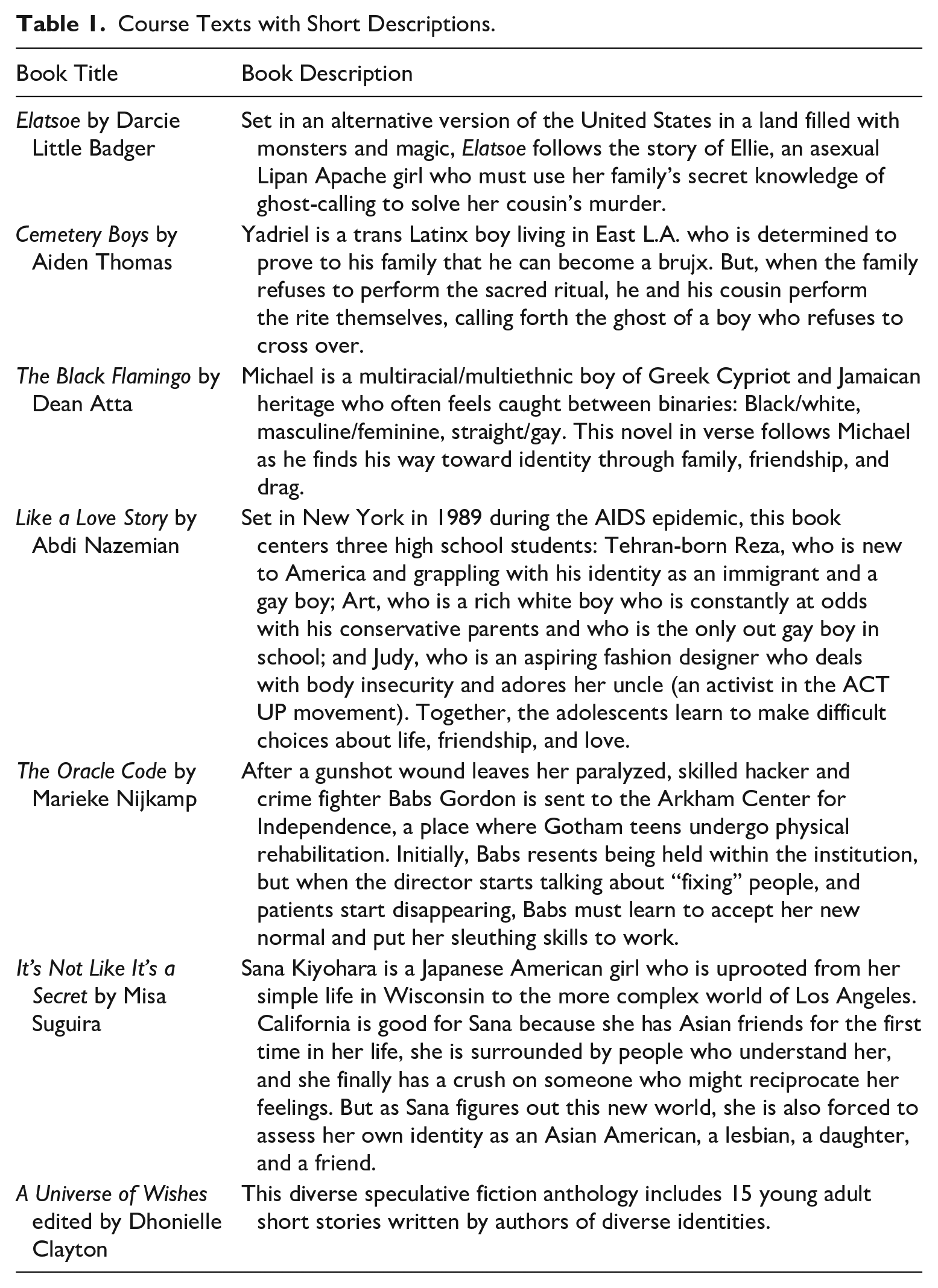
To help PSTs meet course goals, readings for the course included YAL (see Table 1) and critical theories (e.g., critical race, postcolonial, feminist, disability studies) alongside readings related to the teaching of YAL. Assignments ranged from narrative essays (YAL autobiography) and reflection statements (midterm and final self-reflections) to critical artifacts (in response to literature and class discussions) and teaching exercises (co-teaching demonstrations and lesson planning). In essence, this course made space for PSTs to critically read and respond to YAL and engage in reflexive practices to consider their roles as future secondary English educators.
Course Texts with Short Descriptions.
Research Participants
All students enrolled in the Fall 2021 YAL course provided written consent for participation in the study, granting me permission to collect all documents submitted for the course and conduct two 30-minute individual interviews. Although I understand identity to be a fluid construction, participants at the time of this study included nine undergraduate (third-year) and nine graduate PSTs who self-identified (via social identity wheel) as nonbinary (2), women (13), and men (3). Of the students, 12 identified as white, 3 identified as biracial, 1 identified as Black, 1 identified as Latinx, and 1 preferred not to disclose their racial identity.
Although I do not presume to know the PSTs’ constructions or thoughts about racial justice prior to the course, the secondary English education program prided itself on the use of a conceptual framework that was grounded in teaching for equity and justice. This conceptual framework focused on three interconnected themes: (1) power, privilege, and positioning; (2) culture and diversity; and (3) agency and change. Specific to these themes were calls for PSTs to explore their social identities and note how they are implicated in the struggle for justice against oppression; to consider how they might choose content that revealed, named, and disrupted white supremacy and anti-Blackness; and to contemplate how they could actively unsettle systemic racism and oppression in their schools and communities. These calls and themes guided all courses in the program, so PSTs would have been exposed to these ideals prior to entry into the YAL course even if they were still early in their journey toward racial justice.
Data Generation
Including the whole of the data is beyond the scope of this paper, so I centered my analysis on the 51 visual products (e.g., digital/physical collages, paintings, comic strips) the PSTs created alongside the accompanying meta-reflections they wrote for the Critical Artifacts assignment. I center the visual submissions because, as Desai and Chalmers (2007) argued, pedagogies of possibility require an understanding of the politics of images—how images “construct meaning about the world in particular ways” (p. 8). Because my aim was to consider how the PSTs’ aesthetic creations reflected current social, cultural, and political ideologies and signified their thoughts around race and racism, an analysis of visual works was paramount. The description of the larger assignment is as follows: We will read several academic texts to understand, analyze, and critique how big ideas related to storytelling work within the YA fiction we read together. After we’ve completed the reading of each text (7 in total), I want you to generate an artifact that demonstrates your ability to think critically, carefully, and creatively about the texts. How you present this artifact is up to you, so it can be a collage, painting, poem, screenplay, imagined conversation, song, traditional essay response, etc. The resulting artifacts will be shared with your classmates and serve to guide and enhance our classroom conversations. As you construct each artifact, think about the following questions: (1) Why might this novel be considered political? What might we need to know and do to defend our choices to teach this text? (2) What is the relationship between storytelling and ideology? Storytelling and truth? Storytelling and representation? Storytelling and power, privilege, and positioning? (3) How might this story be an example of counter-storytelling? (4) What discomforts arose for you, or which might arise for students you’re working with? How did you acknowledge this discomfort or how might you help others acknowledge the discomfort? After (or during) your artifact creation, I want you to write a meta-reflection that describes your artistic work, explains how it connects to the YA book, and clarifies how it considers the questions above. There is no length requirement for the meta-reflection.
As shown in the description, the PSTs created seven artifacts that corresponded to the reading of the seven YAL texts required for the course, and although each product was to represent their ability to think critically and creatively about the course texts, I did not dictate the format for the artifacts, so PSTs could use any structure. In fact, whereas some students chose to predominantly submit artistic writing for their artifacts (e.g., poems, screenplays, stream-of-consciousness wonderings), others exclusively submitted visual artistic products (e.g., collage, diorama, painting). Regardless of format, students had to ensure that each submission included a meta-reflection that explored how their artistic work addressed the questions.
For the visual creative products, PSTs’ meta-reflections often accompanied the artifact as either a separate file or a submission comment in the Canvas Learning Management System (LMS). I did not give the PSTs a length criterion for this assignment, so meta-reflections varied. As examples, sometimes, students submitted LMS comments, and the remarks would be paragraphs long (i.e., 10 or more sentences), but because the PSTs wrote their meta-reflections like social media comments rather than in a traditional paragraph structure, formal writing elements were absent from their reflections. Additionally, when some students submitted meta-reflections in a Word document, the statements would range anywhere from one to five pages in length, with some students directly answering each of the reflection questions and others engaging more deeply with the questions. Regardless of length, the goal of the meta-reflection was not to see how much the PSTs chose to write, nor to grade the assignment based on how many words and paragraphs the PSTs used to engage in reflection. Instead, my hope was that their meta-reflections (no matter the length) and artistic works (no matter the medium) would help them bring forth conversations that aligned with the program’s conceptual framework. In asking the PSTs to complete the meta-reflection as partner to the critical artifact, my goal was to help them connect to the text personally and pedagogically, associate the text with sociopolitical issues, and consider how they might challenge those issues in their future classrooms.
Data Analysis
To analyze the PSTs’ visual artifacts, I engaged in a thematic analytic (Braun & Clarke, 2006) process undergirded by Dewhurst’s (2014) delineation of activist art pedagogy, an approach that seeks to engage learners in a critical examination of injustice by supporting them in creating artistic works that imagine new, justice-informed realities and have the potential to shift the learner artist’s sociocultural and political interactions. I began by familiarizing myself with the data, aesthetically responding to the PSTs’ visual artifacts and engaging in multiple readings of the students’ reflective commentary. Next, following Dewhurst (2014), I examined the PSTs’ artwork and reflective texts for aspects of connecting, questioning, and translating.
Connecting refers to how learners connect their personal and social experiences to underlying systems of inequality and social justice. In this phase of the analysis, I looked for words, phrases, and visuals that connected elements from the course novels to the PSTs’ racialized interactions and experiences or to issues of racial injustice in larger society. In analyzing the data for points of connection, I noted how students used personal anecdotes, social commentary, and text-to-text associations to foreground personal and societal experience with race and racism. So, coding included elements such as the following: personal connection, education connection, family/friend connection, societal connection. This phase of analysis also resulted in the following in vivo codes: race, racism, antiracism, racial stereotype, and racial justice.
In the next phase of analysis, I focused on questioning—how PSTs used inquiry to extend their connections to increase their critical awareness of racial injustice. To examine artifacts for this aspect of the analysis, I searched for moments when PSTs addressed the following questions slightly modified from Dewhurst’s (2014) text: (1) What images, symbols, or words are associated with racial injustice? (2) How does racial injustice compare to another injustice? (3) Who benefits from racial injustice? Who loses? Why? (4) What must change to challenge racial injustice? What would it take? What are the barriers? In searching for implicit (questions not directly answered but embedded in written text or artwork) and explicit (questions directly answered in the written text or artwork) responses to these questions, I observed how students pursued inquiries that assisted them in making sense of the histories and contemporary realities of social injustice. As an example, one student, Cedar, stated the following in reference to The Oracle Code: “Some discomforts that arose for me were tied to the trust we put in doctors and our medical system and how those systems are largely tied to money and dominant value systems.” In my analysis, I noted how the medical system and doctors could be symbols of racial injustice, especially as he mentioned how medical systems are often tied to dominant values (white, cisgendered, able-bodied, men). In an analytic memo, I wrote that this comment implies that those who benefit from this system are those who embody dominant identity categories.
In the final phase of analysis, I concentrated on translations, or how PSTs communicated their ideas through creative artwork. This part of the analysis allowed me to focus on the art produced by the PSTs, with specific attention to the materials (tape, glue, paper, digital, paintbrush, clay tools), methods (collage, portrait, painting, 3D model), and approaches (mimetic, expressive, pragmatic, aesthetic, or formal) used to convey their ideas. After initially analyzing their artwork, I focused on how each student described their work in the reflective response. In doing so, I explored how the art communicated a specific stance on racial justice and how their reflective commentary showed their movement from connection to translation. An example of this process is represented in Figure 1.
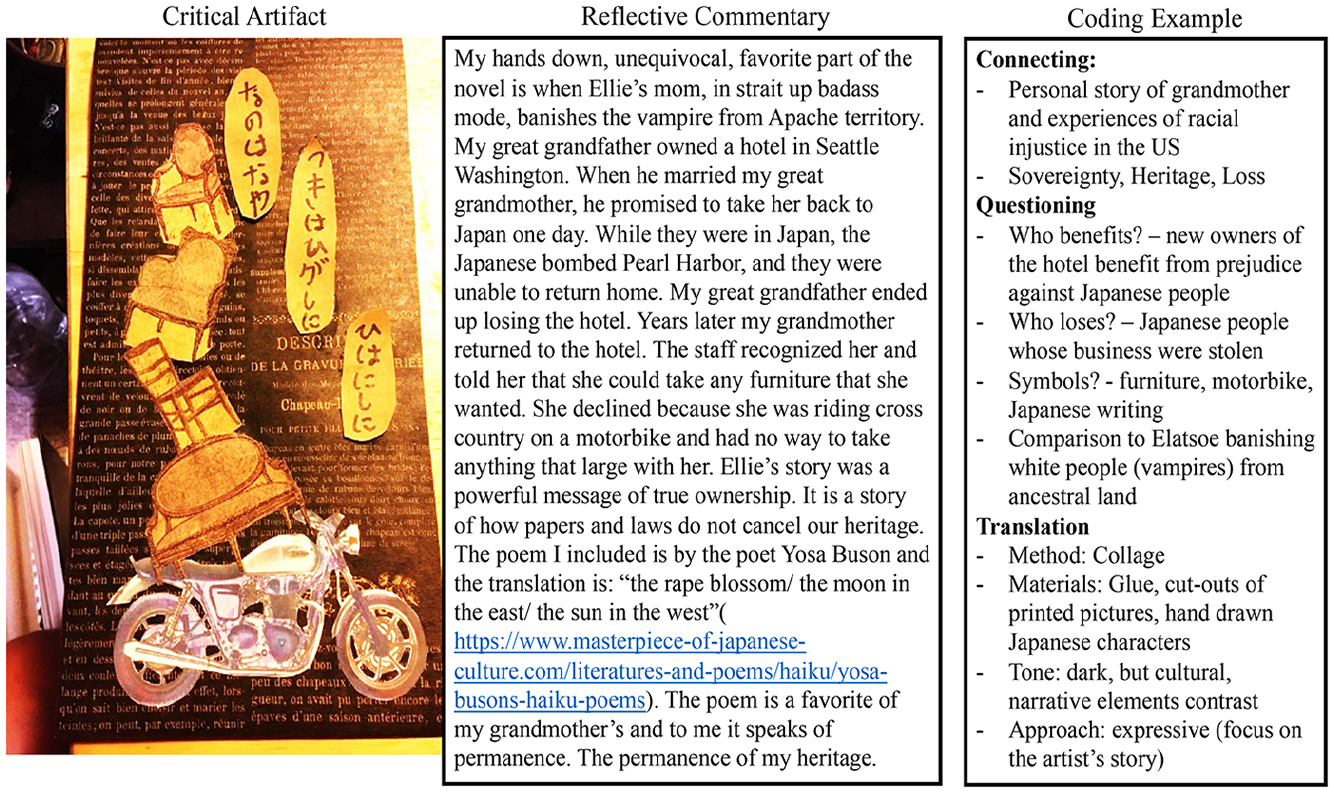
Frodo Coding Example.
Once I constructed initial codes, I collapsed the codes into themes and reviewed the themes against the whole of the data. I revised the themes based on the reviewing process, but I maintained a connection to Dewhurst’s original categories (connecting, questioning, translating), because it helped to showcase the specific activist art pedagogy moves made by the PSTs. By thematically analyzing the critical artifacts using an activist art framework, I was able to examine how the PSTs used their artwork to engage in discussions that highlighted racial justice while also employing imaginative tactics aimed toward challenging that injustice.
Researcher Positionality
As a Black cis-het woman and teacher educator who centers Black youth, imagination, Afrofuturism, and social justice in the context of English education, the metaphor of the pandemic as a portal resonated with me. I was excited that educators across fields might have the opportunity to come together and dream of something better, to imagine and create an educational system grounded in goals of racial justice. However, as I taught PSTs during the pandemic, I began to see how much traditional luggage—to use Roy’s (2020) metaphor—they were carrying. We would read new YAL texts and explore how they might be used in their future classrooms, discuss pedagogical innovations that could enhance their classroom teaching, and examine new possibilities for assessment that might challenge injustice in testing. And yet, at the end of the semester, they would tell me that although the conversations were invigorating, there was no way they could implement any of it in their future classrooms. A collective fear of bans over divisive concepts and confusion about the place of political issues (i.e., race, gender, sexuality, ability, ethnicity) in classrooms implied that a reimagining of education was still out of reach. So, as a teacher educator whose research, teaching, and community advocacy are steeped in a care of Black life and Black futures, I wondered how I might assist the next generation of teachers to pause, to reflect, to imagine, to create. As a person who consistently grapples with race in the social imagination, I wondered how I might make space for PSTs to engage their imaginations toward racial justice. This research was birthed from these wonderings.
Findings and Discussion
Dewhurst (2014) noted the difficulty of untangling aspects of connecting and questioning in activist art pedagogy, especially as artists move back and forth between the two, but she also contended that the overlap is a natural means of extending the artist’s understanding of social justice issues and that the separation of these characteristics calls attention to the artist’s progression in their understandings of social justice. So, in the following sections, I separate the PSTs’ moves toward connection and questioning with the understanding that there are explicit connections between the two. Additionally, rather than placing the artistic translations in a separate section, I include the aesthetic products as companions to the PSTs’ reflective words. In this way, I maintain the format in which the PSTs submitted their critical artifacts.
Personally Connecting Webs of Racial Injustice
A key condition for a movement toward racial justice includes a commitment to self-transformation alongside an “intellectual engagement with the problems of aggrieved populations confronting systems of oppression” (Kelley, 2002, p. 9). This means that engaging in creative and imaginative processes toward the action of racial justice relies on a person’s ability to engage in the Archaeology of Self (AoS), to reflect on their own sociocultural and political experiences and positionalities and their ability to identify links to underlying racist systems that influence the larger world (Sealey-Ruiz, 2022). Throughout the course, many of the PSTs used personal anecdotes in their meta-reflections to articulate connections between the texts and their personal and social experiences of racial injustice. For instance, Robin, a white woman, included the following in the meta-reflection that accompanied her critical artifact for The Black Flamingo: I chose to create an homage to my friend [redacted]. I met [him] in middle school, and we became fast friends. He was one of the first openly and expressive gay people my age I had ever met. While I was reading The Black Flamingo, I could not help but think back on our friendship and experiences growing up and in school. While I would not compare [us] to Michael and Daisy, the archetypal friendship of a gay boy and lesbian girl had many parallels in our queer experiences growing up.. . . This novel made me think of how much [he] would have enjoyed a novel like this in high school. While we read quite a few novels from Black and mixed-race authors, to incorporate sexuality or gender as a part of that narrative was something never spoken about. [The author] discusses the complexity of race and sexuality in a way that many of my peers and friends were also yearning for in a classroom space. This counter-story expands the narrative of who a young Black or mixed-race boy can be for himself, in books, and the media. Though it takes place in the UK, his story connects a much larger and global experience.
Robin includes a personal story on her friendship with someone whose social identities mirror the story’s main character. She names connections between her personal life and the characters in the novel, and she notes the intersecting oppressions that relegate people who identify as queer and Black to the margins of classrooms via text selection or text erasure. The representation of queer youth is overwhelmingly raced as white, and the blatant omission of queer youth of color’s stories “further reinforces a racist, classist, and heteropatriarchal hierarchy of power” (Boatwright, 2019, p. 385). Robin comments on this fact, as she recognizes the lack of literary representation offered to one of her best friends and to herself. Her reflective narrative provides a backdrop to the artistic product she created (Figure 2)—a collage that incorporates photographs she took of her friend alongside words and phrases that, in her words, relate to the book and embody her friend’s “strength, passion, and character as an individual.”
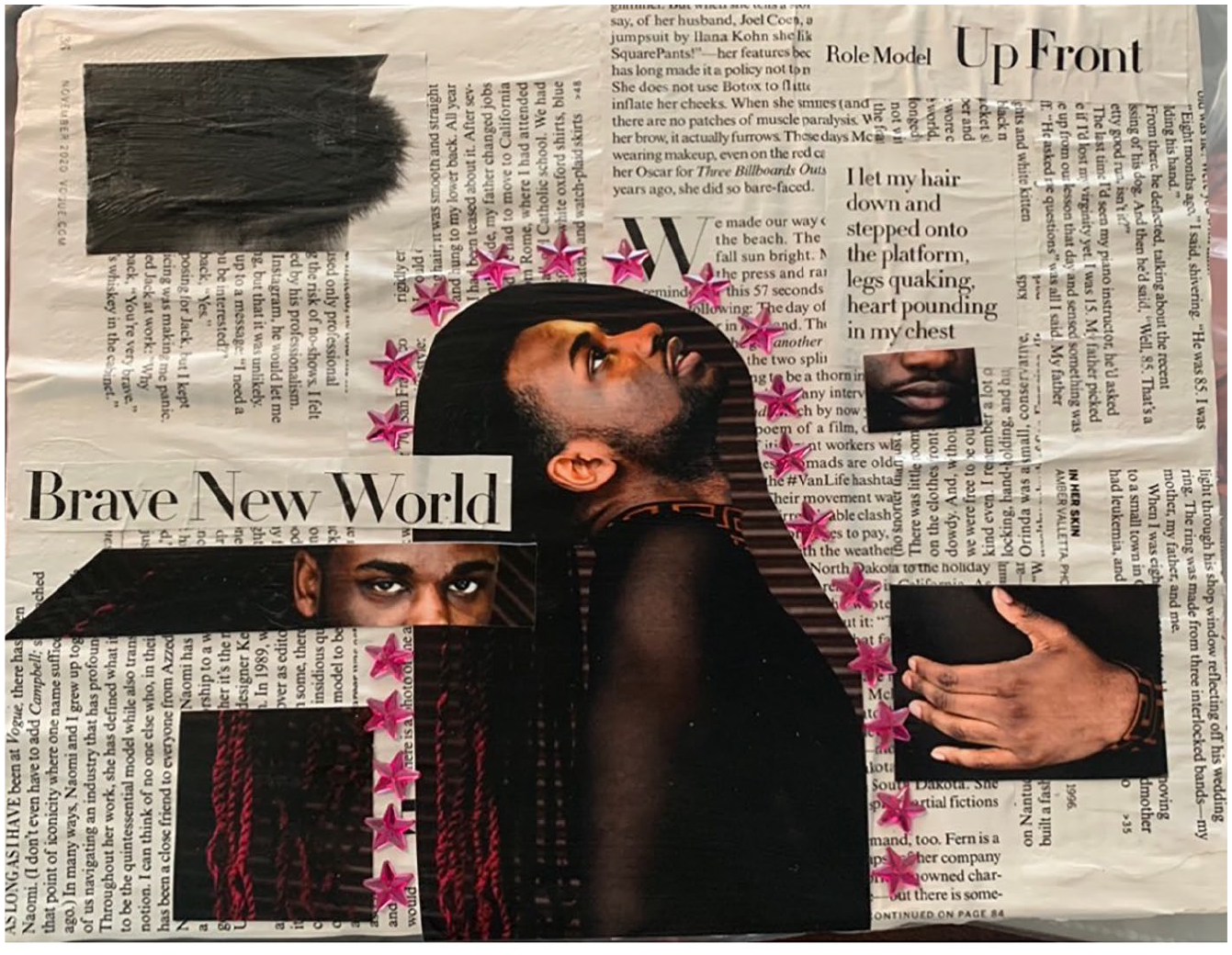
Robin’s Artifact for The Black Flamingo.
Robin’s personal anecdote was not unique; many students recalled specific experiences that helped them connect course readings, personal experience, and racial justice. River, who identifies as a Filipino and white woman, made a personal connection to linguistic dominance in her meta-reflection for Cemetery Boys, commenting how, in her experience, English is often presented as the default in young adult literature (YAL).
One thing I really loved about this book is that it doesn’t really bother to do translations for the Spanish in the book (save for a few occasions). Often times, especially in YA, authors will have a bilingual character in their books that have dialogue in their languages other than English, and they will include clunky translations after the fact to accommodate the English reader (imagine something like “‘Hola amiga!’ I yelled, greeting my friend,” or “‘Haz tu tarea hijo,’ my mom admonished. She was always telling me to do my homework”). It’s always made me feel a little uncomfortable as an English speaker to be a part of the community that often demands the rest of the world speak or understand my language. It was really cool to have this book question that and not always make concessions for English readers. At one point, Julian also speaks on how he stopped using Spanish because it felt too intimate to use without his father being there to talk with him, and I also feel like that can speak to the casual erasure of language, especially in schools and in the United States in general.
Even though River did not explicitly name race, race and language are intricately intertwined (Alim et al., 2016), with English-speaking often racialized as white and Spanish-speaking often stereotyped as Brown (Rosa & Flores, 2017). River makes connections to her own experiences by referring to the over-reliance on English-speaking/white readers in YAL and highlighting the limited spaces in which Spanish is left to stand on its own. She also notes her own complicity in being a part of a community that demands the use of English over other languages. This connection between race and language came together in River’s artifact (Figure 3), a digital painting that prominently centers the Spanish phrase “Hay niñas con pene, niños con vulva, y transfóbicos sin dientes,” a powerful quote left untranslated in the book and in her artistic creation.
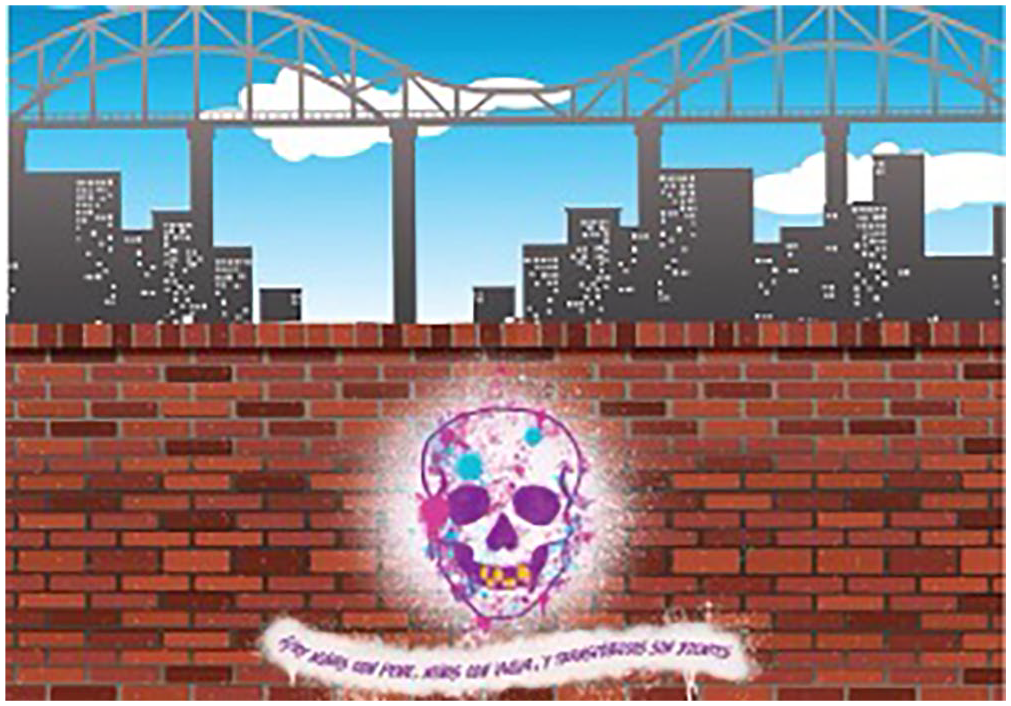
River’s Artifact for Cemetery Boys.
Other PSTs also discussed vulnerable connections in their meta-reflections, especially related to their discomforts. For example, Morgan, who identifies as an Asian and white woman, stated that she experienced unease because she lacked the knowledge to make meaningful connections. In reference to Elatsoe, she said: “I didn’t really understand what was going on. I don’t know a lot about the [I]ndigenous people [so] I almost felt like I shouldn’t be reading something like that.” Due to her lack of knowledge, she suggested that discussions about Indigenous cultures must be included in the classroom. Another student, Diane, who is a white woman, also experienced discomfort in relation to Elatsoe: I definitely saw how I am complicit in oppression and literally living on colonized land. It sometimes is easier to remove myself from the hurt that I perpetuate from participation in systems. However, this book made me reflect on my own implications.
In both instances, the PSTs acknowledged their complicity in the oppression of racialized Others, and they reflected on how they personally perpetuate injustice.
In Morgan’s reflection, she discussed her lack of awareness of Indigenous peoples, thereby pinpointing a personal lapse (i.e., failing to find texts written by and about Indigenous peoples) and an educational injustice (i.e., failure of schools to uplift texts by and about Indigenous peoples). She presents these connections in an abstract digital photo (Figure 4a) that comments on the power of storytelling and how the powerful control which stories/truths are told and which are hidden. Diane also recognized her complicity by explicitly stating her role as a colonizer who operates on lands stolen from Indigenous people, a trait that she has historically tried to ignore. In her critical artifact (Figure 4b), a medium-sized diorama, she confronted her own complicity by including handwritten sticky notes throughout the model that include textual excerpts critiquing whiteness and challenging colonization.
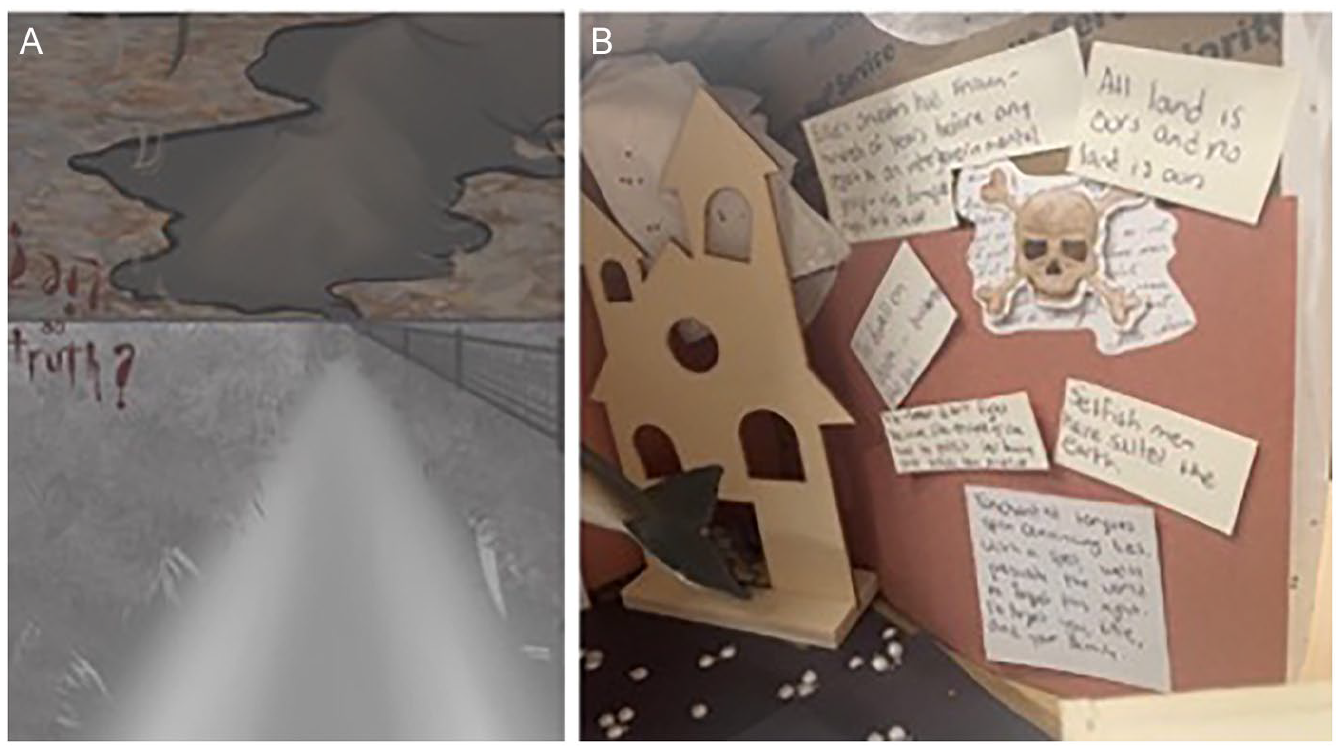
Morgan’s and Diane’s Artifacts for Elatsoe.
In each of these examples, students used both visual artifact and meta-reflection to make personal connections to the larger concept of racial justice. They linked course readings to personal and societal stories, and they used those connections to compose aesthetic products that commented on racial injustice and challenged their prior experiences with race and racism in education. They used art to represent how they were critically and creatively engaging with text, but they also used it to engage in a practice of archeology (Sealey-Ruiz, 2022), digging into their past and present to examine how they, too, have participated in or witnessed racial injustice in their lives. Dewhurst (2014) stated that although traditional art projects “might elicit responses such as a desire to tell a story, make something beautiful, or express an emotion,” engaging in critical arts-based work allows artists to discuss “links or relationships between their own experiences and identities, the themes of injustice or inequality they intended to impact, and a sense of their own responsibility to act” (loc. 730). Through the critical artifacts, PSTs were able to consider their orientation toward racial justice, excavate their personal lives for details about race and racism, investigate larger issues of social injustice in which they are complicit, and (re)imagine the roles they might occupy to challenge racial injustice in education.
Questioning the Historical Roots of Racial Injustice
Challenging injustice necessitates an understanding of the histories of inequality. For PSTs, this means going beyond personal and societal connections and moving toward an understanding of the roots of injustice in an effort to sever the bonds of inequity that strangle the contemporary field of education. To move from connecting to questioning, then, requires an inquiry into the structural components of racial injustice. As Love (2019) acknowledged, educators have often attempted to “tweak” the system, relying on small adjustments to the field, but many alterations are short lived “because the systems and structures of oppressing dark people were not abolished at the root” (p. 90). Lasting social change is reliant upon a person’s ability to ask questions that lead them to identify and upend the roots of injustice.
Although all students utilized questioning in their reflective and artistic responses, many focused on the historical ways in which society attempts to classify people racialized as non-white and gendered as non-men as outliers to dominant society. For example, in her digital drawing in response to a short story within the Universe of Wishes collection ( Sci-fi and fantasy usually have this sense of being otherworldly.. . . From what I understand most of these stories work in a way as to warn the present of what can happen if X happens, and yet there is always hope for something better. [A Universe of Wishes] changes by making these protagonists, that are usually white or an estranged being, into characters that are relatable.. . . I chose to draw this artifact to still have some of the essentials of sci-fi but add to it someone who is Latinx and understands their ancestral lineage and how that culture and group of people have helped fight for what is right. In understanding that, we understand the character and the pride they take in being who they are, in which case readers would also identify with and hopefully be proud of.
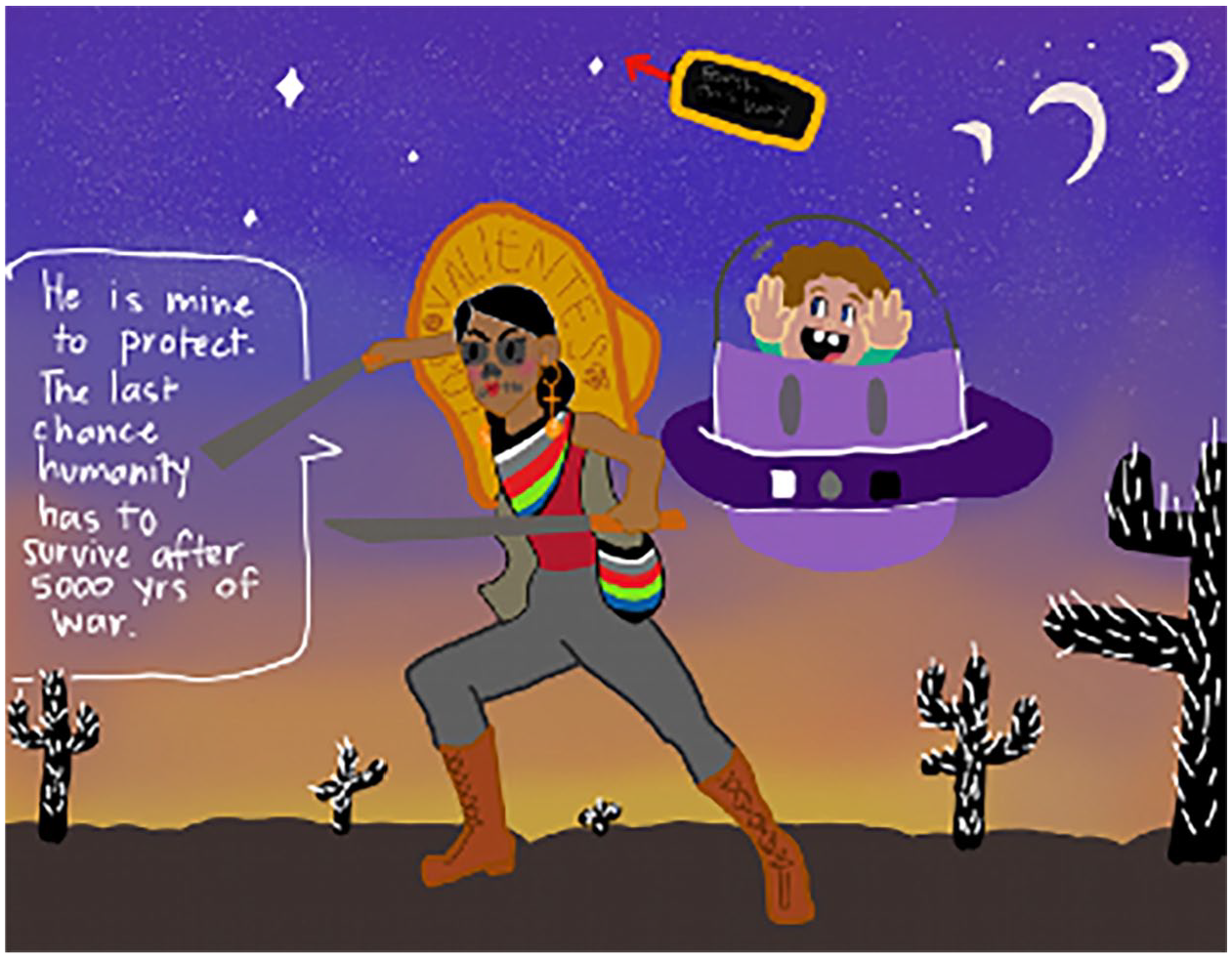
Marigold’s Artifact for Universe of Wishes.
Marigold pinpointed that science fiction and fantasy often symbolize whiteness as heroic, but she acknowledged the need to change the racial identity of the characters to ones that are “relatable.” Marigold, a Latinx woman, challenged the idea of whiteness as default, as inherently relatable. Rather than stay at the phase of acknowledgement, however, she creates an aesthetic response in which a Latinx woman is the hero, emphasizing the historical legacy of Latinx people who fought for justice and protected humanity. She grasps at the roots of the myth of whiteness as the only relatable hero figure and argues that Latinx people have a history of heroism that must be accounted for to promote pride in young readers.
Brooklyn, a Black woman, also approached the history of racialized injustice in her meta-reflection for Cemetery Boys by focusing on the historical erasure of Latinx trans people. Although the artistic work (Figure 6) has references to myriad moments in the YA text, she reflected most on the main character’s gender and racial identities, which are tightly bound in the novel.
Julian telling Yadriel that he is not the first trans brujx is a quote I wanted to highlight because it brings out the truth of how long trans people have been around and that their identity isn't something “new” just because people are hearing of it for the first time or don’t immediately grasp the idea. Julian is shining the light on how even Yadriel, someone who identifies as trans, has only experienced cis normative stories. . . . Julian and Yadriel talk a lot about the identities and complexities of their lived experiences through the book, making the book political in its naming of non-cis, non-heteronormative people and expressions. [They] are two darker-skinned Latinx boys with a rich cultural and religious background who have queer identities, which is not a representation we see often in YA or even queer YA [literature].
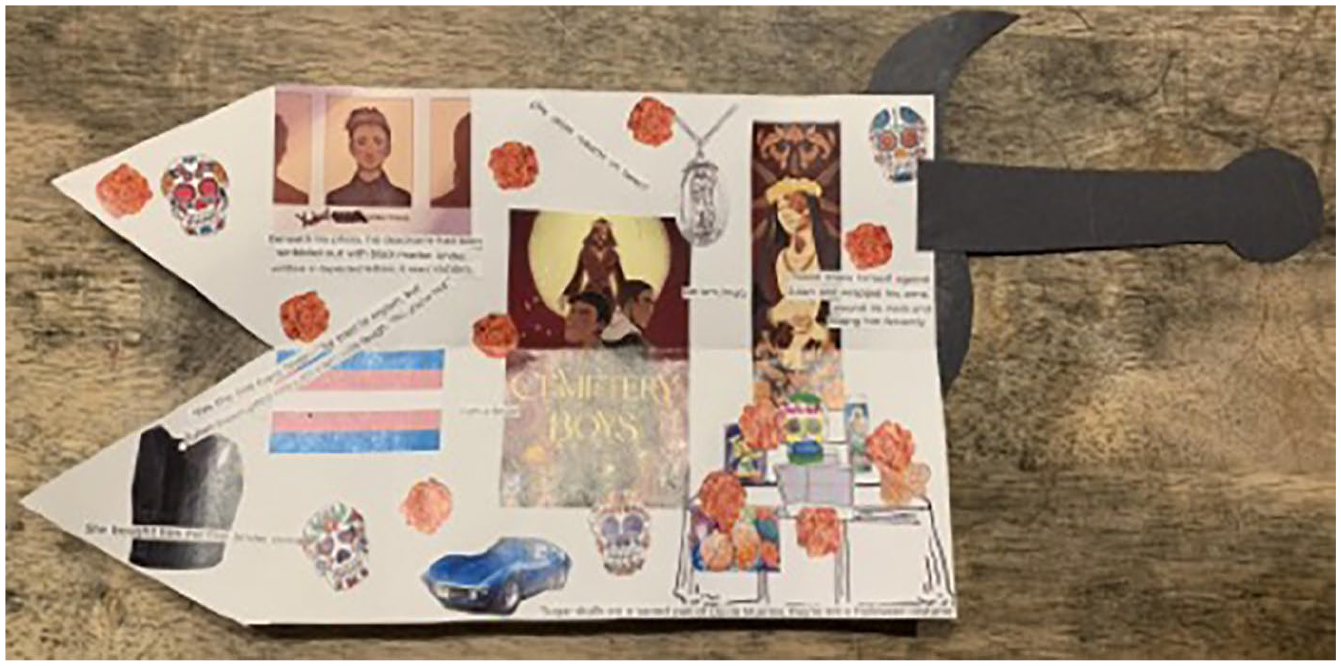
Brooklyn’s Artifact for Cemetery Boys.
Brooklyn emphasized the fact that growing up in a world that privileges white cis-heteronormative stories and expressions means that the stories of queer, dark-skinned Latinx boys may seem rare. She proposed that representation in YAL, generally, and queer YAL, specifically, caters to whiteness and thus erases the histories and contemporary realities of trans people of color. By prominently highlighting this moment in the text, however, she questioned the hold that whiteness has on YAL and suggested the importance of learning the stories of queer minoritized people who are often erased from the historical record.
Frankie’s approach to historical questioning brought forth commentary on white settler colonialism in the United States. In their digital artistic piece ( The image I created is the personification of Manifest Destiny getting torn apart in the underworld, surrounded by ghost dogs. Elatsoe addresses land rights and [I]ndigenous genocide. In the novel, Willowbee is framed not just as a singular town but as an entity that moves across the country and rewrites history as it does so. The immense amount of damage that the decedents of Nathaniel Grace have done is clear by the number of ghosts that meet Allerton in the underworld. Elatsoe positioning itself against manifest destiny is political because that was one of the many justifications for white settlers to take over the Americas. It is against the hegemonic, white norm. . .it is a good novel to explore the history of the country, the stories that we tell/are told, and why shifting perspectives on what we understand to be true can be hard.
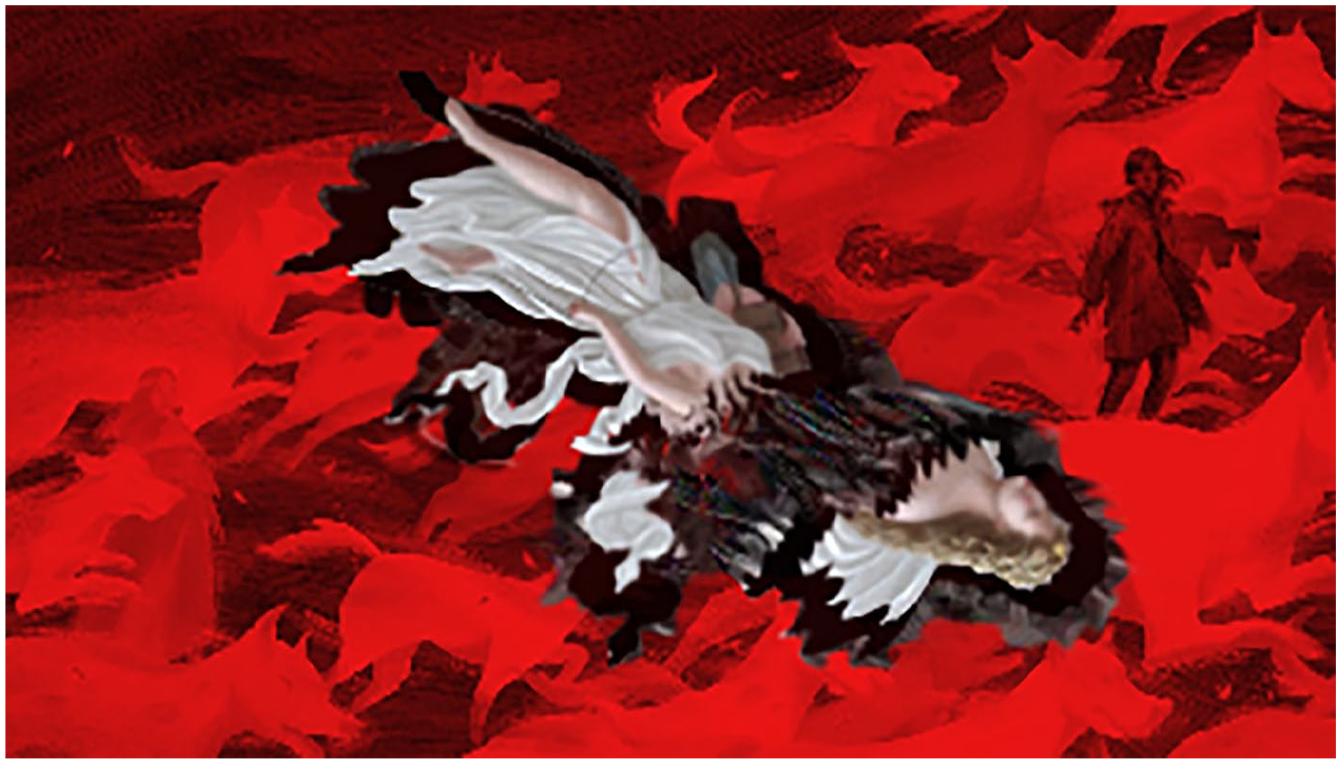
Frankie’s Artifact for Elatsoe.
Manifest Destiny, or the belief that white American expansion throughout the Americas was justified and ordained by God, was used to violently remove Indigenous peoples from their lands. Frankie, a nonbinary white PST, acknowledged this history and considered how white people have benefited from racial injustice. Rather than stop their commentary at this level, they also created an image in which the personification of Manifest Destiny is torn apart by Indigenous ghost dogs. In this way, they proposed that challenging racial injustice requires people to recognize the ghosts of those who are violently murdered (both physically and spiritually) by whiteness and demand that people find ways to tear the roots of injustice apart.
The artifacts created by these students are representative of the larger group, and they exemplify how the PSTs accessed critical consciousness by considering personal connections and questioning society’s historical foundation. They showcase the importance of asking critical questions of self and society and inquiring into the historical legacies in which racial injustice is grounded. In doing so, they demonstrate their thinking about who benefits and who loses in a world grounded in dominant, white ideals, and they present images and symbols highlighting their growing thoughts around racial injustice in schools and beyond. Abolitionist teaching (Love, 2019) demands that educators be willing to fight against injustice and tear down traditional educational structures, but doing so requires educators to question the historical roots of injustice and know which structures must be dismantled. The PSTs engaged in this questioning journey by using their artistic works and meta-reflections to contemplate what it would take to grasp at the roots of injustice and pull those weeds out of the soil.
Translating Ideas of Racial Justice via Critical Arts-Based Pedagogy
Love (2019) argued that art “inspires for a better world [that] is rooted in intense design, research, and musings” and it “helps people remember their dreams, hopes, and desires, for a new world” (pp. 109–110). The critical artifacts made space for PSTs to engage in this form of abolitionist artwork, rooting their aesthetic creations in intense research (of personal and societal connections to racial injustice), musings (over the possibilities of education), and design (in the translation of their research and musings into creative works of art). They connected the stories of racial injustice to events in their own lives and to occurrences of injustice they saw in society at large. They also questioned the world around them to grasp at the roots of injustice and consider how they might counter the historical violence enacted against racialized Others. Through the combination of art and meta-reflection, they showcased their desires for a new world, commented on what has been lost or erased in education due to racial injustice, and stirred their imaginations to break with racist educational tradition. Through art, they opened pathways toward racial justice. They connected to their imagination, engaged their creativity, and showcased their visions for a more equitable educational future in a postquarantine world.
The use of art to (re)activate the PSTs’ imaginations toward racial justice also made space for them to engage in an AoS, to excavate their own racialized experiences in the world and consider other people’s racialized experiences. Sealey-Ruiz (2022) noted that teacher education programs often fail to provide “the fertile ground needed to plant your ideas and grow your understanding about how to bring forth the change your school and classroom need” and that they fail to assist PSTs “with the skills and language to recognize and combat anti-Blackness, to witness how pervasive it is in society and especially in our schools” (p. 25). However, through the creation of artistic works, the PSTs were able to dig into their personal beliefs; consider connections between race, racism, young adult text, and personal life story; and participate in a process of critical reflection. In this way, the critical artifacts provided a fertile ground for PSTs to excavate their lives and journey toward an AoS, and they also offered a bountiful soil in which to plant the stirrings of dissatisfaction that could lead to an expansion of imagination and a development of portals toward racially educational worlds.
Through the creation of critical artifacts, PSTs were able to consider how racial injustice impacts their lives and the lives of others and think through possible ways to challenge racial injustice in their future classrooms. They were able to engage in creative risk-taking that enabled them to reimagine more just pathways to education, paths that made space for the histories of minoritized Others, broke down stock narratives preventing racialized Others from being centered in classrooms, and challenged the histories of whiteness upon which the institution of education rests. In critiquing the current state of education and imagining alternative possibilities to curriculum and instruction as represented through their reflections and artistic works, the PSTs showed movement toward a reimagining of education centered in racial justice. They considered the lack of queer of color representation in YAL and imagined how they might alter their text selection practices. They noted the dominance of whiteness in stories and in classrooms and thought about how they might creatively counter whiteness as represented in curriculum. They pondered how history is represented and how stories are told. In this way, the artifacts made space for PSTs to comment on societal injustice, disrupt the sociocultural foundations of whiteness they have come to know, and imagine the institution of education anew.
Considerations: Embracing Difficulty in Arts-Based Pedagogies
At the end of the semester, students completed final self-reflections, an assignment that aimed to help them review all they accomplished in the course and consider how course content assisted them in responding to the essential questions that guided the secondary education program. Although students could reflect on any of the course assignments and discussions, the critical artifacts were often noted. Some students, like Frankie, explained: The most successful part of this course has been the freedom we have been given to express our learning in the critical artifacts. . .within these artifacts I also formed a strong understanding of counterstories and how they can be used to challenge and empower students through their reading practices.
River claimed that It would be easy for me to just read the books and enjoy them, create something that represents my personal growth through reading, and move on. I have been challenging myself by thinking outside of myself and trying to imagine students going through this work themselves.
Arden also pointed out that “the critical artifacts are extremely powerful, seeing the way my peers interpret the works allows me to understand how different we all think, and how different everyone’s minds are.” Additionally, Riley reported that the creative artifacts “pushed me to determine what I expected of myself as an educator. Getting to read a book through my own artistic perspective helped in many ways to put myself into the shoes of others.” Even though the composition of creative artifacts was challenging, students reported that it was a worthwhile and powerful endeavor. They were able to build knowledge of racial justice via counter-stories, engage in perspective-taking as they learned from their peers, and challenge themselves to grow in their knowledge of self and others.
Although beneficial for many PSTs, the focus on arts-based pedagogies was difficult for others. For instance, Cedar, said, “I feel like I could have been more creative with some of my cultural artifacts”; others, like Finley and Morgan, mentioned that one of the most challenging parts of the course was finding different ways to compose their creative products. PSTs, like Brooklyn, acknowledged that “thinking of and executing the critical artifact usually takes me hours” and Margaret noted that sometimes, it felt as though her “creativity [had] been tapped dry.” Other students, like Frodo, felt as though their creative artifacts “did little to dismantle the white heteronormative patriarchy.” Based on the PSTs’ commentaries, even though the students continuously attempted to engage in creative, critical, and self-work, many struggled with the task. It was difficult for them to access their creative abilities, and they consistently wrestled with how to utilize their creative proclivities in service to racial justice. Thus, even though a creative space was offered, and many took the opportunity to engage in artistic and creative works, some felt like they were pulling from empty creative reserves or that their imaginative creations were not enough to dismantle racial injustice in the real world.
Thus, like other scholars who have foregrounded creativity-related experiences and utilized critical arts-based pedagogies in teacher preparation courses, I found that engaging in this form of teaching was not easy. However, the difficulties differed from issues expressed by some arts-based scholars (e.g., lack of time and opportunities to be creative, limited pedagogical knowledge about creative processes, regulated and often inflexible curricula, and balancing external demands and expectations) (Shockley & Krakaur, 2021). The PSTs had ample opportunities for creativity, and, as a scholar-artist, I do have knowledge about various creative processes. Moreover, there was a lot of flexibility in the course even amidst external demands, and I was able to ensure that subject matter content and methods were highlighted alongside a centralization of the arts. The difficulty was in the PSTs’ beliefs that they lacked enough creativity and imagination to engage in the consistent creation of artistic products alongside the view that their art was not doing enough to make social change. These assessments of their creative ability suggest the need for more teacher educators to embrace the difficulties of including arts-based pedagogies so that PST exposure to creative and imaginative pedagogies is not bound to one course. The imagination requires much to combat traditional structures of education, so teacher educators must work diligently to provide ample creative opportunities, thus allowing PSTs’ imaginative reserves to be filled. We must learn to develop our imaginative capacities so we can construct multiple creative pathways in our own classrooms. We must consider how we might learn, generate, and walk through imaginative portals ourselves, so we can guide PSTs on their imaginative, creative, and artistic journeys.
Conclusion: A Call to Teacher Educators
In one of her final critical artifacts, Frodo wrote the following meta-reflection about the definition and purpose of art: What is art? Well, I think that is a difficult question to answer. . .art is a feeling. It is not a very precise or satisfying answer. But I do think that is why art is so powerful in terms of protest. Art is striking and recognizable. Unlike a written story, art can transcend all languages. I don’t really know if I am getting close to an answer here, but I will leave it at, artists have the power to make others feel.
Frodo’s definition aligns with Love’s (2019) conception of artistic works: art “is one of the key ingredients to a better world. . .art first lets us see what is possible. It is our blueprint for the world we deserve and the world we are working toward” (pp. 99–100). Together, Frodo and Love situate art as a vague belief, an emotional state, an expressive reaction; a way to convey meaning unbound by words, by language, by time; a formidable method of showcasing personal beliefs about the larger world; and a method for considering and depicting what might need to change if we aim to create better worlds in the future. Together, they position art as a way to stir the imagination toward justice, toward the creation of portals to more equitable worlds.
The PSTs in the YAL course used art to depict and reflect upon oppressive racial structures, those they have experienced in their own lives, those they have witnessed in the lives of others, and those they learned about through the reading of YAL. They used their meta-reflections to consider how they might address or even dismantle those structures of oppression, and they used their art to show what the world might look like if those structures were demolished. In this way, the generation of art provided PSTs with a medium through which they could challenge the ordinariness of racism in education, a space in which they could question the racial disparities present in the English language arts classrooms, and a method through which they could reimagine their future classrooms as spaces of racial justice. Even though it was sometimes difficult for PSTs to activate their creative proclivities, once stimulated, the PSTs engaged in the imaginative processes that educational leaders outlined as essential for movement toward racial justice in education. They reimagined their relationship with English curriculum and instruction, as Milner et al. (2021) and members of the National Academies (2021) instructed. They showcased their creative capacity to envision more justice-oriented worlds, as Bolding and colleagues (2022) suggested. They examined their past and present while also considering more racially just futures, tasks proposed by Perhamus and Joldersma (2020).
Thus, as I conclude this article, I consider Frodo’s definition of art alongside Love’s (2019), and I return to the questions I presented in the introduction of this article: If one’s ability to (re)imagine is critical to altering the field of education, what, then, can teacher educators do to assist the next generation of teachers in developing their imaginative capabilities? What can teacher educators do to stir educators’ imaginations toward the goals of racial justice? Based on findings from this research, I respond with a call for teacher educators to include critical arts-based pedagogies as foundational elements in the teacher preparation experience. We must make space for future teachers to imagine, to dream, to create. We must cultivate numerous occasions in which PSTs can use art to see what is possible, to transcend the disimagination machine that is traditional education. We must provide opportunities for PSTs to create art that makes others feel, that stirs feelings within themselves.
Roy (2020) stated that we . . . can choose to walk through [the portal], dragging the carcasses of our prejudice and hatred, our avarice, our data banks and dead ideas.. . . Or we can walk through lightly, with little luggage, ready to imagine another world. And ready to fight for it. (par. 49)
Teacher educators must be proactive in helping PSTs to (re)awaken their imaginations, leaving the dead carcasses of racial injustice and the dead ideas of white supremacy behind. We must consider how we might support PSTs to carry art, imagination, and justice with them to the educational future, to the world beyond our teacher preparation classrooms. To ensure that educators have the creative and imaginative capacity to use the next moment of critical pause—caused by a new pandemic or any other world-changing event—and walk through lightly toward a racially just educational future, we must provide a fertile ground for them to excavate the self and question the historical record. We must make space for them to engage with the arts in hopes that they stir their imaginations toward the creation of better educational worlds, to walk through portals with little luggage, ready to dream up and fight for a liberatory future.
Footnotes
Declaration of Conflicting Interests
The author declared no potential conflicts of interest with respect to the research, authorship, and/or publication of this article.
Funding
The author received no financial support for the research, authorship, and/or publication of this article.