



Abstract
Counterfactual reflection (CFR)—thinking about “what might have been if”—can enhance learning from experience, but only if the CFR is high-quality. Yet, what shapes differences in CFR quality remains largely unknown. Because managers typically reflect on experiences by concomitantly considering relevant factors and their collective interdependencies, we suggest that CFR quality is causally complex. To investigate this possibility, we interviewed 129 managers. In these interviews, they reflected on recently concluded business-to-business negotiations. Using fuzzy-set qualitative comparative analysis, we find three equifinal configurations of negotiation factors associated with high-quality CFR and eight associated with low-quality CFR. Drawing on the interviews, we identify managers’ ability to disentangle causal linkages in their past negotiation and their motivation for high-quality CFR in the present as plausible mechanisms underlying differences in CFR quality. We find high-quality CFR only following experiences where managers possess high levels of both situation-specific ability and motivation. In contrast, experiences that leave managers feeling unable or unmotivated due to high satisfaction, indifference, or defensiveness, are linked to low-quality CFR. Overall, our study advances understanding of why there are differences in CFR quality by linking past experiences with managers’ abilities and motivation. From a managerial perspective, we suggest that organizations avoid “one size fits all” approaches to CFR. Instead, we recommend actionable measures for both reflecting managers and their supervisors to address the specific reasons that prevent managers from engaging in high-quality CFR after their negotiation experiences.
Keywords
After a negotiation, it is not one factor that drives . . . my reflection. It is a complex process chain.
Counterfactual reflection (CFR)—thinking about “what might have been” if a situation had been handled differently—can enhance learning (Morris & Moore, 2000). However, CFR does not act like a lever that one can move to enhance learning. Rather, the functional theory of counterfactual thinking (FTCT; Epstude & Roese, 2008; Roese & Epstude, 2017) and studies built upon it (e.g., Kim & Summerville, 2023; Petrocelli & Harris, 2011; Smallman, 2013) reveal that only a specific type of CFR, which we refer to as “high-quality CFR,” promotes learning.
Despite the established link between high-quality CFR and learning (e.g., Kray, Galinsky, & Markman, 2009), how past experiences link to high- or low-quality CFR remains largely unknown (Smallman & Summerville, 2018). Recent work unveils individual aspects of tasks and situations that appear to influence the quality of subsequent CFR efforts (e.g., Roese, Smallman, & Epstude, 2017; Yang, 2024). However, while these studies focus exclusively on individual effects, our interview evidence (as our introductory quotation illustrates) and the literature suggest that managers reflect by concomitantly considering multiple relevant factors and their collective interdependencies (Byrne, 2016; Kahneman & Miller, 1986). Accordingly, we suggest that CFR quality is causally complex (Misangyi, Greckhamer, Furnari, Fiss, Crilly & Aguilera, 2017).
To examine this possibility, we conducted interviews with 129 managers, asking each to reflect on a recent business-to-business (B2B) negotiation. A complex interplay of negotiation setup (e.g., power), process (e.g., negotiation behaviors), and goal-attainment (e.g., economic outcome satisfaction) factors characterize B2B negotiation experiences (Jang, Elfenbein, & Bottom, 2018). To generate insights into how these factors interact, we departed from CFR research’s traditional linear perspective in favor of a configurational one (Furnari, Crilly, Misangyi, Greckhamer, Fiss, & Aguilera, 2021). This perspective avoids various assumptions inherent in linear approaches, enabling it to capture conjunction (i.e., multiple factors combining to lead to an outcome), equifinality (i.e., an outcome reachable via more than one configuration of factors), and asymmetry (i.e., reversing the factors that led to the outcome does not reverse the outcome; Misangyi et al., 2017).
Our research question is: How are different configurations of negotiation factors associated with managers’ decisions to engage in high- or low-quality CFR? We examined this question using a case-oriented abductive configurational approach (Witt, Fainshmidt, & Aguilera, 2022). This approach involved juxtaposing insights from the FTCT and negotiation literature with our interview data, allowing us to propose a theoretically and empirically grounded guiding framework of negotiation factors associated with high- or low-quality CFR. Based on the 129 interviews, we used fuzzy-set qualitative comparative analysis (fsQCA; Ragin, 2008) to systematically investigate how these negotiation factors combine in distinct configurations associated with high- or low-quality CFR. We complemented the fsQCA with an in-depth analysis of the interviews to uncover the underlying logic (i.e., mechanisms) explaining why these configurations of negotiation factors are associated with managers’ decisions to engage in high- or low-quality CFR (Furnari et al., 2021; Whetten, 1989).
Our fsQCA revealed three configurations associated with high-quality CFR and eight associated with low-quality CFR. We grouped them into five distinct archetypes with differing underlying mechanisms. Drawing from our interviews, we concluded that (1) managers’ perceived ability to disentangle the causal linkages of past experience (i.e., their factual reflection ability) and (2) their motivation to engage in high-quality CFR 1 link past experiences to differences in CFR quality. Both ability and motivation relate to past experience, meaning that they are situation-specific rather than stable traits (Van Iddekinge, Aguinis, Mackey, & DeOrtentiis, 2018). Only experiences associated with high ability and high motivation link to high-quality CFR. Indeed, experiences associated with either low ability or low motivation are linked to low-quality CFR.
Our primary contribution is to the CFR literature. We shift away from the question of whether differences in CFR quality exist (e.g., Petrocelli, Seta, Seta, & Prince, 2012) to investigate why these differences exist (Smallman & Summerville, 2018). Using a case-oriented configurational approach, we associate past experiences characterized by configurations of negotiation factors with managers’ abilities and motivations. Thus, we reveal the “underlying logic” (Whetten, 1989: 491) that clarifies the association between certain experiences and managers’ decisions to engage in high-quality CFR and between others and the decision to engage in low-quality CFR. By revealing why managers decide to engage in high- or low-quality CFR, we advance the understanding of how to unlock CFR’s potential for learning and thereby “expand [the] existing theoretical conversation in the [CFR] literature/field by adding to an existing theory” (McNamara & Schleicher, 2024: 3), in this case, the FTCT. To achieve this, we also “leverage a novel methodology” (McNamara & Schleicher, 2024: 6), namely a configurational approach, to shed new light on the phenomenon of CFR quality.
A secondary contribution is to the ongoing debate regarding the interplay between ability and motivation in influencing outcomes. While past research proposes a multiplicative relationship (e.g., Vroom, 1964), a meta-analysis by Van Iddekinge et al. (2018) suggests that ability and motivation have an additive effect. Our finding that high-quality CFR only follows experiences that have associations with both high ability and high motivation indicates that ability and motivation are both necessary for high-quality CFR, yet individually insufficient. This points to a multiplicative effect of ability and motivation on CFR quality.
From a managerial perspective, we suggest that organizations avoid “one size fits all” approaches to CFR in favor of actionable measures that focus on the specific reasons that managers do not engage in high-quality CFR following different negotiation experiences, namely low ability and/or low motivation due to high satisfaction, indifference, or defensiveness. For example, to overcome low ability, reflecting managers should use analytical tools such as causal mapping or journaling apps to improve their understanding of causal linkages in their past negotiations. To address low motivation, supervisors can expose managers to negotiation scenarios outside their comfort zones. The goal is to inspire them to reevaluate their standard negotiation processes critically and engage in high-quality CFR.
Literature Review And Theoretical Background
Counterfactual Reflection
CFR is the process of revisiting past situations and identifying what could have gone differently. Individuals engaging in CFR compare reality to an imagined reality and formulate counterfactual thoughts that center on “if only” or “what if” (Epstude & Roese, 2008).
CFR and learning
FTCT broadly posits that CFR can benefit individuals in learning from experiences (Epstude & Roese, 2008). We define learning as changes in a person’s cognition resulting from previous experiences (Levitt & March, 1988). Next, we discuss extant studies of CFR’s effects, organized along four learning outcomes: better anticipation, quicker response, emotional and social maturity attainment, and technical knowledge acquisition. 2 Online Supplement A presents a summary table of the cited literature.
Better anticipation in similar situations following CFR is indicated by Morris and Moore’s (2000) finding that CFR improves individuals’ ability to anticipate potential challenges when landing an airplane in a flight simulator. In terms of response times, Roese (1994), Markman, McMullen, and Elizaga (2008), and Dyczewski and Markman (2012) found that participants who engage in CFR after solving an anagram solve a subsequent anagram faster and find more correct words than those who do not engage in CFR. A third learning outcome associated with CFR is the development of emotional and social maturity, including communication and conflict-resolution skills. In a series of three experiments, Galinsky, Seiden, Kim, and Medvec (2002) show that subjects who engaged in CFR after a simulated business-to-consumer negotiation invested more time in preparing for a subsequent negotiation simulation and improved their negotiation performance. Similarly, Kray et al. (2009) found that subjects who engaged in CFR following a simulated business-to-consumer negotiation generated more creative agreements and achieved greater economic outcomes in subsequent simulations. Regarding technical knowledge acquisition, Nasco and Marsh’s (1999) field experiment suggests that CFR improves student performance on a subsequent exam, attributable to an increased study effort leading to the acquisition of technical knowledge.
CFR studies have predominantly focused on analyzing the antecedents and consequences of CFR quantity; only more recently have studies started to address differences in CFR quality. Online Supplement A contains an overview of the antecedents and consequences of CFR quantity and quality. Next, we provide a more detailed discussion of CFR quality, the focus of our study.
CFR quality
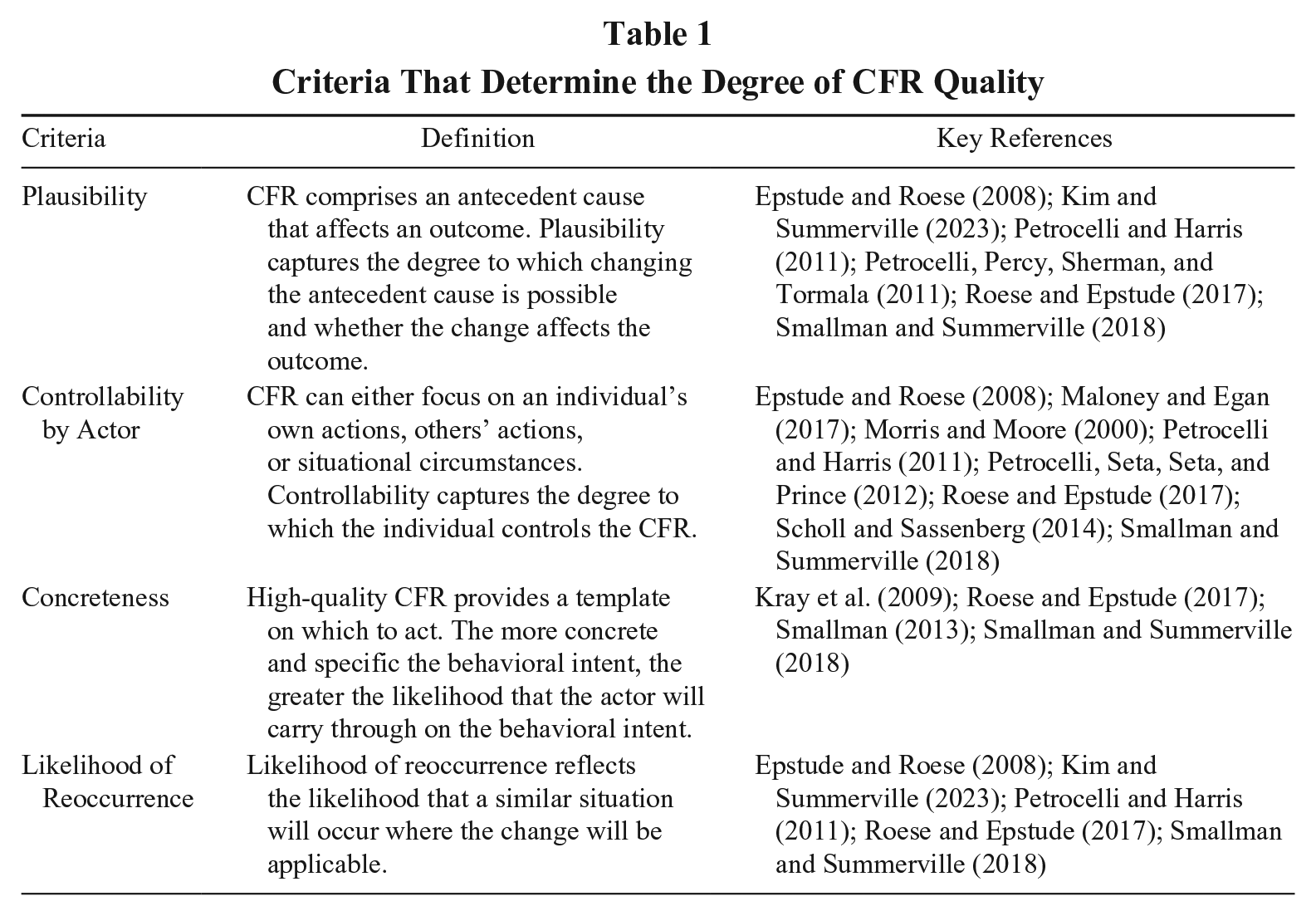
The extant CFR literature suggests that high-quality CFR—the kind that benefits learning—relies on four defining criteria: plausibility, controllability, concreteness, and likelihood of reoccurrence (e.g., Petrocelli, Percy, Sherman, & Tormala, 2011; Smallman & Summerville, 2018). For instance, in a series of experiments, Smallman (2013) found that concrete (i.e., specific and detailed) CFR has greater learning benefits than more general CFR. Ferrante, Girotto, Stragà, and Walsh (2013) and Mercier, Rolison, Stragà, Ferrante, Walsh, and Girotto (2017) show that spontaneous CFR focuses on aspects beyond the individual’s control. They conclude that such CFR is of low quality; individuals can only realistically implement CFR on controllable aspects and, consequently, learn and improve task performance. More recently, a series of four experiments by Kim and Summerville (2023) has shown that the likelihood of a situation reoccurring is positively correlated with high-quality CFR (see also Petrocelli et al., 2011).
Beyond these four defining criteria, some research has focused on individual antecedents of CFR quality, suggesting that the nature of the task or situation upon which an individual reflects is relevant. In a series of experiments, Petrocelli et al. (e.g., Petrocelli & Crysel, 2009; Petrocelli & Harris, 2011; Petrocelli, Rubin, & Stevens, 2016; Petrocelli et al., 2012) suggest that individuals engage in low-quality CFR following simple tasks such as coin-flipping and blackjack games. Relatedly, Roese et al. (2017) found that high-quality CFR occurs more often after self-initiated situations than after other-initiated situations. Recently, Yang (2024) demonstrates that CFR will most likely lead to learning if goals are moderately difficult. Yet, research has not investigated how the multidimensional nature of past experiences—considering multiple factors and their complex interdependencies—influences CFR quality. Specifically, the underlying mechanisms that connect these experiences to differences in CFR quality remain largely unclear (Yang, 2024).
Overall, the literature underscores that (1) despite a strong link between CFR and learning, not all CFR benefits learning equally, and (2) the quality of CFR depends on the experiences (e.g., situations, processes) upon which individuals reflect. Thus, in alignment with the premises of FTCT (Epstude & Roese, 2008), we conclude that the four criteria in Table 1 collectively determine CFR quality (Roese & Epstude, 2017; Smallman & Summerville, 2018).
Criteria That Determine the Degree of CFR Quality
Our second conclusion is that the type of experience (e.g., situations, processes) upon which individuals reflect shapes CFR quality. Notably, however, all previous CFR studies have used linear research designs to isolate and study the net effects of single factors on CFR quality. Nonetheless, managers typically reflect by concomitantly considering factors and their interdependencies (Byrne, 2016). Moreover, experiences themselves are usually characterized by multiple factors and their interdependencies. Therefore, we expect that it is configurations of factors characterizing past experiences that influence CFR quality. That is, we assume CFR quality to be a causally complex phenomenon (Ragin, 2008). Consequently, we use a configurational approach to investigate the configurations of negotiation factors that are associated with managers’ decisions to engage in high- or low-quality CFR. We draw on the negotiation literature to identify and organize the relevant factors that characterize the B2B negotiation experience.
Negotiation Literature
B2B negotiation situations are characterized by three broad categories of factors: (1) negotiation setup factors that set the stage for the at-the-table interaction, (2) negotiation process factors that appear during the negotiation, and (3) negotiation goal-attainment factors that describe the negotiation outcome (i.e., agreement or impasse) immediately after the interaction at the table (Lax & Sebenius, 2006).
Setup factors describe the basic negotiation situation. Firm-level setup factors include such structural factors as the power balance between the negotiation parties (Lax & Sebenius, 2006; Schweinsberg, Thau, & Pillutla, 2022). Negotiators’ abilities, personality traits, and demographics (Elfenbein, 2021) are individual-level factors. Task-related setup factors include stakes (i.e., the importance of the negotiation) and issue complexity (i.e., the number of different negotiation issues to discuss). These factors are largely defined before and modified during the negotiation (Lax & Sebenius, 2006). Firm-, individual-, and task-level factors collectively outline the who and what of the negotiation, shaping the point of departure and influencing the overall negotiation dynamics (Jang et al., 2018).
Process factors describe the how of the negotiation and include negotiators’ actions during the preparation phase and at the table. The preparation phase involves activities like performing market research, acquiring technical product or service details, setting targets, and crafting the agenda (Jang et al., 2018). While most occur before the parties meet, they significantly impact the subsequent negotiation phase (Lax & Sebenius, 2006). We broadly categorize at-the-table actions as distributive negotiation tactics that involve adopting a value-claiming approach focused on winning and integrative tactics focused on value creating and all parties’ mutual benefit (Hüffmeier, Freund, Zerres, Backhaus, & Hertel, 2014).
Negotiation goal-attainment factors mark the end of the negotiation as “deal,” “no deal,” or “impasse” (Jang et al., 2018; Schweinsberg et al., 2022). This endpoint can be assessed using economic and non-economic terms (Curhan, Elfenbein, & Xu, 2006). The economic dimension is the objectively measurable negotiation result—for instance, the money spent buying a product (Thompson, 1990). The non-economic dimension captures the negotiator’s satisfaction with the economic result and the negotiation process (Curhan et al., 2006).
Building on these insights from the negotiation literature and the assumption that CFR quality is a causally complex phenomenon, we suggest that (1) negotiation setup, process, and goal-attainment factors combine to form configurations associated with managers’ decisions to engage in either high- or low-quality CFR (i.e., conjunction); (2) more than one configuration of negotiation setup, process, and goal-attainment factors can be associated with managers’ decision to engage in either high- or low-quality CFR (i.e., equifinality); and (3) high- and low-quality CFR are two distinct phenomena, so reversing the configurations associated with high-quality CFR does not result in low-quality CFR (i.e., asymmetry) (Ragin, 2008; Schneider & Wagemann, 2012).
Methodology
Configurational Approach and fsQCA
Contrary to correlational approaches that assume a “general linear reality” (Abbott, 1988: 169) wherein the average net effects of individual factors influence dependent variables, configurational research assumes that multiple factors combine to collectively bring about outcomes (Furnari et al., 2021). To illustrate the benefits of using a configurational approach for our study, we draw from a relatable bakery analogy presented by Ketchen, Kaufmann, and Carter (2022). A linear approach could identify the most important necessary ingredients across all popular baked goods. Sugar and flour would likely emerge as statistically significant ingredients, while others (e.g., butter, chocolate, and baker’s cheese) would not. However, a baker’s task centers on recipes that combine ingredients to create tasty treats like croissants. Using a configurational approach (e.g., fsQCA) makes identifying such recipes possible. For example, flour, sugar, butter, and chocolate, but not baker’s cheese, could combine to produce a chocolate croissant. A recipe for a cheese croissant would identify flour, (a little) sugar, butter, and cheese, but not chocolate. Unlike the linear approach that uncovers two statistically significant ingredients (i.e., flour and sugar) important across all baked goods, a configurational approach uncovers two distinct recipes for combining multiple ingredients to create different baked goods. Based on past research (Byrne, 2016; Kahneman & Miller, 1986) and our interview data, we suggest that managers reflect on experiences in terms of configurations (recipes), rather than single variables (ingredients).
Table 2 summarizes the case-oriented abductive configurational approach we used to examine our research question, and Figure 1 displays the guiding framework. Scoping aims to establish relevant causal conditions and requires grounding the selection of causal conditions in theory and case knowledge (Misangyi et al., 2017). The CFR literature suggests that the experience being reflected upon influences CFR quality (Roese & Epstude, 2017). In our investigation, we drew on managers’ reflections on their recent business to business (B2B) negotiations. Negotiation research has identified setup, process, and goal-attainment factors as characterizing B2B negotiations (Lax & Sebenius, 2006); thus, we suggest that these factor categories jointly influence CFR quality.
Research Approach
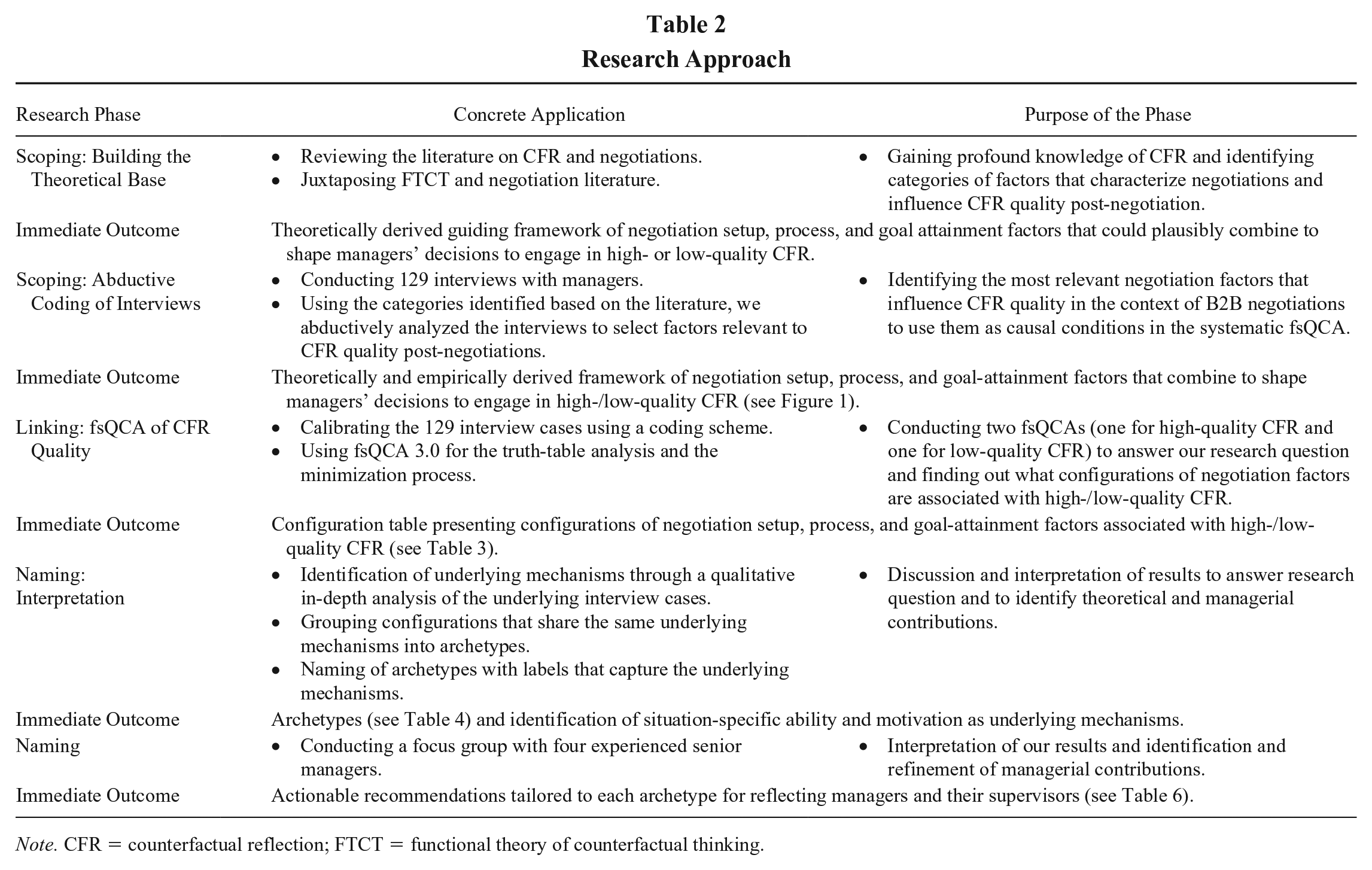
Note. CFR = counterfactual reflection; FTCT = functional theory of counterfactual thinking.
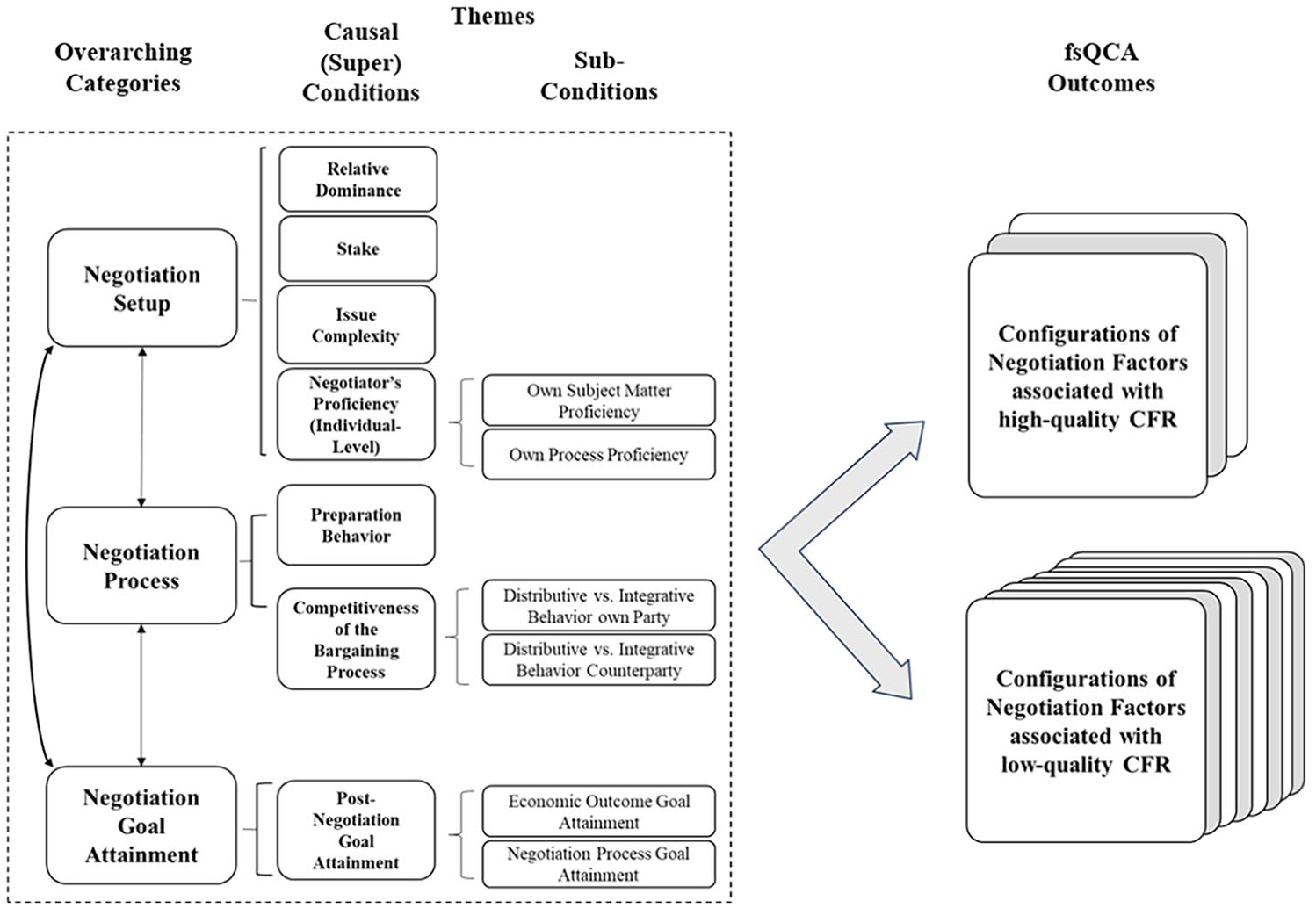
Configurational Framework for High- and Low-Quality CFR
We conducted semi-structured interviews with B2B managers wherein we engaged in an iterative process of comparing theoretical insights and emerging empirical findings. The interviews were initially broader in scope, but as we refined our guiding framework, their scope narrowed to the focal factors. We ended data collection after 129 interviews; an appropriate sample size for a case-oriented fsQCA (Berg-Schlosser & de Meur, 2009; Ragin, 2008). Each interview represents one case conceptualized as a configuration of negotiation factors (Misangyi et al., 2017).
To accomplish linking, we used the neo-configurational method fsQCA (Misangyi et al., 2017) to determine how different configurations of negotiation factors are associated with high- or low-quality CFR among our 129 cases. fsQCA allows us to account for the complex interdependencies among factors and uncover conjunction, equifinality, and asymmetry, thereby offering three unique advantages over linear approaches (e.g., regression analyses):
(1) Conjunction: We lack prior expectations about how negotiation factors combine in configurations associated with high- or low-quality CFR. A linear approach would require modeling all possible interaction terms, resulting in an overly complex model with higher-order interactions that is challenging to interpret (Fainshmidt, Witt, Aguilera, & Verbeke, 2020). Additionally, modeling higher-order interactions requires a large sample size. Our medium-sized sample of 129 qualitative cases would limit our ability to include more than two interactions with significant effect sizes (Vis, 2012).
(2) Equifinality: fsQCA is better equipped than linear approaches to account for multiple configurations that lead to the same outcome (Fainshmidt et al., 2020; Meuer & Rupietta, 2017). Linear approaches estimate a single solution based on variables’ average effect. However, while one configuration leading to an outcome may require a specific factor, another configuration leading to the same outcome may necessitate the absence of that factor. In linear approaches, these effects would “wash out,” meaning that the factor does not appear to matter at all (Miller, 1987; Short, Payne, & Ketchen, 2008).
(3) Asymmetry: fsQCA relaxes the assumption of underlying symmetric distributions that is inherent in linear approaches, allowing for asymmetry (Schneider & Wagemann, 2012).
Naming involved circling back to our interview cases and the literature to “evoke the essence of configurations” by identifying their underlying mechanisms and naming them with labels that “capture the whole” (Furnari et al., 2021: 790). To identify mechanisms, we combined our fsQCA with an in-depth qualitative analysis of the interviews. We grouped the 11 configurations identified through fsQCA into five archetypes based on their shared mechanisms to focus the discussion on the “underpinning interpretative scheme” (Greenwood & Hinings, 1993: 1057).
To enhance validity, we conducted post-hoc interviews with a subsample of 12 of our original interviewees and 16 new interviewees to discuss the interpretation of our findings. Online Supplement L provides a sample overview. We conducted a post-hoc focus group with four senior managers to sharpen our findings’ managerial implications (Online Supplement N provides details on the sample and process).
Data Collection and Sample
Empirical context
The B2B negotiation context, wherein the focal interviewee is either a buyer or a sales manager, is highly suitable for investigating how different experiences link to CFR quality for two reasons:
(1) B2B negotiations are integral to buyers’ and sales managers’ work. They conduct B2B negotiations regularly and continuously (Aldrich & Herker, 1977). These negotiation experiences are often comparable (Brito & Miguel, 2017), enabling buyers and sales managers to apply learning extracted from one negotiation to others. This satisfies event repeatability, a key factor of CFR quality (Smallman & Summerville, 2018).
(2) FTCT stresses that CFR is goal-directed (Epstude & Roese, 2008). One criterion for evaluating buyers and sales managers is their negotiation performance. Therefore, improving negotiation performance is a major goal of B2B buyers and sales managers.
Case selection and sample
As CFR is a subjective cognitive phenomenon (Roese & Epstude, 2017), we decided to conduct semi-structured interviews. We recruited 129 managers (65 buyers and 64 sales managers). We prompted interviewees to reflect on and share details of a specific recent procurement or sales negotiation experience that they could recall vividly. The negotiation experiences reflected upon by the interviewees arose from tasks assigned to them as part of their work duties. Each interviewee selected one negotiation experience to focus on. Thus, the negotiation reflected upon was partly other-initiated and partly self-initiated. To ensure relevance, we limited our sampling frame to managers who reflected on B2B negotiations wherein a post-negotiation implementation phase followed (e.g., software setup, maintenance contract for machinery; Woelfl, Kaufmann, & Carter, 2023). We excluded purely transactional one-off buys, team negotiations, and interviewees who negotiated on behalf of nonprofit organizations. Each interview represented one case in the fsQCA (see Online Supplement B for a sample overview).
Data collection
Between November 2021 and May 2022, we conducted video interviews that lasted between 30 and 75 minutes. Using the critical-incident interviewing technique (Chell, 2004), we asked interviewees to recall and reflect on one specific B2B purchasing or sales negotiation. In developing the interview protocol (see Online Supplement C), we obtained input on scope and content from two B2B negotiation experts. Using the resulting protocol, we conducted pre-test interviews with five key informants from different industries to ensure appropriate scope and content validity. We further refined the interview protocol based on emerging insights during the early data-collection phase. To improve interviewees’ recollection of the negotiations, we followed recommendations from the event-reconstruction method (Grube, Schroer, Hentzschel, & Hertel, 2008). We started with recall-cue questions pertaining to the general negotiation setup (e.g., who and what; e.g., Woelfl et al., 2023). We then asked probing questions about the negotiation setup, process, and goal-attainment factors. After ensuring we had a detailed understanding of these factors, we followed with a “reflection block” in which we asked the interviewees about actions or inactions that they would change in retrospect. We included additional questions to identify whether the managers derived specific insights from the recalled negotiation experience.
Scoping: Toward A Configurational Framework
Interview Analysis and Findings
We analyzed the interview data using an abductive approach (Timmermans & Tavory, 2012), continually iterating between our emergent codes and the FTCT and negotiation literature. Extensive note-taking accompanied the interviewing process (Grodal, Anteby, & Holm, 2021). As is typical with cross-case comparisons, we compared these notes across interviews to identify emerging themes that informed subsequent interviews. Discussions about these notes and emergent themes revealed that the three categories of negotiation factors derived from the literature (i.e., setup, process, goal-attainment) applied to the data.
Next, we familiarized ourselves with and structured the qualitative data. We initiated an open-coding phase, assigning codes as labels to the interview data (Saldaña, 2021). These open codes were close to interviewees’ expressions, but not in vivo (e.g., “Power Disadvantaged”). We compared the first-order codes and condensed them into second-order themes based on emergent patterns (Gioia, Corley, & Hamilton, 2013). To reduce the number of first-order codes, we followed Grodal and colleagues’ recommendation to engage in an active categorization process of “dropping, merging, splitting, relating, and sequencing” (2021: 607). To illustrate, the emerging theoretical themes included “Interviewee’s Subject-Matter Experience” and “Negotiation Process Satisfaction.” Using deductive logic, we categorized these emerging themes. Our three overarching coding categories were the theoretically derived categories of negotiation setup, process, and goal-attainment factors (Gioia et al., 2013). For example, we categorized “Interviewee’s Subject-Matter Expertise” as a negotiation setup factor and “Negotiation Process Satisfaction” as a negotiation goal-attainment factor.
Engaging in an iterative process, we continuously used new insights to refine our interview protocol, first-order codes, and second-order themes (Kennedy & Thornberg, 2018). This led us to develop a coding book that we applied to later interviews. Online Supplement D shows the resulting data structure, including exemplary quotations for the first-order codes and associated second-order themes along the three overarching coding categories (Gioia et al., 2013).
Defining the Outcome and Causal Conditions
Limiting the number of causal conditions in fsQCA is necessary to avoid overly complex, overfitted models (Schneider & Wagemann, 2012). We derived 10 second-order themes, but a maximum of seven causal conditions works well with our sample size (Marx & Dușa, 2011). We thus followed established guidelines (Berg-Schlosser & de Meur, 2009; Greckhamer, Furnari, Fiss, & Aguilera, 2018) for combining individual second-order themes with theoretically meaningful higher-order constructs to form “superconditions,” each of which encompasses more than one relevant theme to avoid conceptual overlap (Greckhamer et al., 2018). We arrived at three superconditions: individual negotiator’s proficiency, competitiveness of the bargaining process, and negotiation goal-attainment. From our interview analysis, we derived the remaining four themes—dominance, stake, complexity of the (negotiation) issue, and preparation behavior—that we could not meaningfully combine without sacrificing important insights. These were retained as stand-alone causal conditions.
We established four setup factors as causal conditions: (1) relative firm-level dominance; (2) stake; (3) issue complexity; and (4) individual negotiator’s subject matter and negotiation process proficiency. The two process factors were (5) preparation behavior; and (6) bargaining process competitiveness. The single goal-attainment factor, post-negotiation goal attainment, was the seventh causal condition. Online Supplement E summarizes how each causal condition links to the CFR literature. Next, we defined our focal outcome (CFR quality) and the seven causal conditions.
Focal outcome: Counterfactual reflection quality
We assessed CFR quality using four criteria (plausibility, controllability, concreteness, and likelihood of reoccurrence; e.g., Smallman & Summerville, 2018), as detailed in the section “Literature Review and Theoretical Background” and illustrated by Table 1. All four criteria collectively determine CFR quality, but if a single criterion is not met, CFR is “low-quality.” CFR quality is highest in cases where the individual’s CFR refers to plausible changes of past actions that were within the actor’s control, concretely formulated, and transferable to similar situations.
Setup factors: Dominance
This setup factor captures the power of one party relative to the other party. In the context of B2B negotiations, bargaining power is central and is often defined as one party’s dominance over the other (Cheng, Craighead, Crook, & Eckerd, 2021; Kim, Pinkley, & Fragale, 2005). Dominance is contingent on one party’s possession of resources that the other requires (Pfeffer & Salancik, 1978). If either party has an alternative, this limits its dependence on the other, akin to the concept of the “best alternative to the negotiated agreement” (BATNA; Kim et al., 2005).
Setup factors: Stake
Individuals engage in CFR if a situation is important to them, but they refrain from engaging in high-quality CFR if it has no relevance (Kim & Summerville, 2023). Therefore, the causal condition “stake” captures the importance of the negotiation. The stakes are high if the firm urgently needs the product or service and the outcome of the negotiation affects its bottom line—that is, the relative dollar amount involved in the negotiation has a major impact on the firm (Yan & Gray, 1994).
Setup factors: Issue complexity
This factor captures the complexity of the negotiation subject. Complexity is conceptualized as the number of elements in a system, how much they differ, and how they relate to/interact with each other (e.g., Choi & Krause, 2006). In the B2B negotiation context, there are various negotiation issues, such as price, quality, or delivery terms that pertain to the products, software, or services under discussion. Having more linked negotiation issues creates a higher level of issue complexity (Sebenius, 1983). This condition is relevant from a CFR perspective as a higher number of negotiation issues leads to greater CFR efforts (Naquin, 2003).
Setup factors: Negotiator’s proficiency (supercondition)
Our interviews underscored that proficiency (i.e., competencies and skills) influences CFR quality (Roese et al., 2017). In B2B negotiations, the knowledge a buyer or sales manager has about the subject matter (i.e., what is being negotiated) and their negotiation process proficiency (i.e., how to negotiate) are both key to success (Bals, Schulze, Kelly, & Stek, 2019). Thus, building on established frameworks, we consolidated subject-matter expertise and process proficiency into one supercondition.
Process factors: Preparation behavior
Behavior in the preparation phase emerged as relevant to CFR quality in our interviews. Notably, FTCT suggests that CFR often focuses on preparation (Roese & Epstude, 2017), and the negotiation literature suggests that the amount and quality of preparation impact negotiation results (Lax & Sebenius, 2006). We conceptualize preparation behavior as time, effort, and actions invested before interacting with the other party.
Process factors: Competitiveness of the bargaining process (supercondition)
This factor captures behaviors at the negotiation table. CFR focuses on past actions (Epstude & Roese, 2008), so behaviors at the table are relevant when reflecting on past B2B negotiation experiences. Following Hüffmeier et al. (2014), this supercondition captures the degree to which the parties at the table use distributive versus integrative negotiation tactics. We operationalized each party’s competitiveness as the interviewee’s perception of the respective shares of distributive moves. The competitiveness of the bargaining process is greater if distributive behaviors from both parties dominate the process. Within this supercondition, we also capture whether the parties have mutual interests. High (low) degrees of competitiveness express the low (high) mutual interest of both parties.
Goal-attainment factor: Post-negotiation goal attainment (supercondition)
Outcome valence is a key driver of CFR efforts (Roese & Epstude, 2017). Post-negotiation goal attainment incorporates both the tangible economic outcome and the intangible satisfaction with the negotiation process. Following Curhan et al. (2006), this supercondition captures the degree to which the economic outcome and the negotiation process fulfill, exceed, or negatively violate a negotiator’s expectations.
Application Of Fsqca
Calibration of the Outcome and Causal Conditions
Calibration is a critical step within fsQCA to capture relevant variations among interview cases (Misangyi et al., 2017). We assessed these variations according to the degree to which our focal outcome and the seven causal conditions were present in a case. We assigned eight set-membership scores between 0 (i.e., fully outside of the set) and 1 (i.e., fully inside the set; Schneider & Wagemann, 2012). The first author and a researcher who remained unaware of the purpose of the research coded all cases and assigned set-membership scores for the eight sets. Intercoder reliability ranged from 0.78 to 0.95 (Cohen, 1968; Landis & Koch, 1977). After discrepancies were discussed, 100% inter-coder agreement was reached (e.g., Crilly, 2011). Moreover, the first author coded all cases twice to ensure high intra-coder reliability (stability; Campbell, Quincy, Osserman, & Pedersen, 2013).
Calibration strategy for the outcome CFR quality
We assessed CFR quality using the four criteria summarized in Table 1 (plausibility, controllability, concreteness, and likelihood of reoccurrence). Prior literature has not discussed how to combine these four quality criteria. Therefore, we conducted two rounds of additional interviews with six managers and five academics to validate the assessment of our focal outcome and establish a calibration strategy. Throughout this process, we discussed the ability of the four criteria to define CFR quality accurately, and considered potential ways to operationalize them. Details appear in Online Supplement F.
To assign set-membership scores for the outcome “high-quality CFR,” we used one final calibration strategy. In Step 1, we treated all four CFR-quality criteria as “must-criteria,” such that if one was not present, we calibrated the CFR as “low quality” and the case received a set-membership score of 0. In Step 2, we assessed the degree of overall CFR quality based on the individual degrees of plausibility, controllability, concreteness, and likelihood of reoccurrence. For each criterion, we assigned a score of 0.33 (“more outside than inside the set”), 0.67 (“more inside than outside of the set”), or 1 (“fully inside the set”). Since all four criteria vary in degree and can compensate for one another to achieve high degrees of overall CFR quality, the final set-membership score for CFR quality was the average of the four individual scores per criterion. Thus, we assessed the final CFR quality score on a four-value fuzzy-set scale (1; 0.67; 0.33; 0). Online Supplement G shows illustrative quotations.
Calibration of causal conditions
We followed a qualitative calibration strategy that involved developing a coding scheme based on insights from the 129 interviews and the literature. We defined qualitative anchors for each causal condition and used a four-value fuzzy-set score (1; 0.67; 0.33; 0) to differentiate between four different set-membership states (de Block & Vis, 2018). For each causal condition, we developed a separate coding scheme that included a definition for each of the four membership states. Online Supplement H provides summary tables showing the qualitative anchors and representative sample quotations.
Necessity and Sufficiency Analysis
We used fsQCA 3.0 (Ragin & Davey, 2017) to analyze necessary and sufficient conditions. We first conducted a necessary-condition analysis (Schneider & Wagemann, 2012). Conditions are necessary if there is no case where the condition is present and the outcome is absent. Based on the 0.9 consistency threshold, none of the seven causal conditions was necessary for the focal outcomes, managers’ high- or low-quality CFR. We thus concluded that none of the negotiation factors by themselves could explain high- or low-quality CFR. Rather, the negotiation factors are so-called INUS conditions 3 —insufficient to cause the outcome by themselves, but a necessary part of a configuration of conditions to cause the outcome (Schneider & Wagemann, 2012). Detailed results of the necessary-condition analysis and the truth tables are available upon request.
To find configurations sufficient for the outcome, we used the truth table algorithm in fsQCA 3.0. We ran separate analyses for low-quality and high-quality CFR. For each, we constructed a truth table that listed all logically possible configurations of factors, with each configuration being one truth table row. As we have seven causal conditions, each truth table consists of 128 rows (i.e., 27).
The Boolean minimization requires setting a frequency cutoff, a raw consistency cutoff, and a proportional reduction in inconsistency (PRI) cutoff. Following research with similar sample sizes, we selected a cutoff of 1 for both outcomes (e.g., Bettinazzi, Jacqueminet, Neumann, & Snoeren, 2024). To determine the critical cutoff values for raw consistency and the PRI, we followed emerging standards and chose a raw consistency cutoff of above 0.8 and a PRI of above 0.5 (Greckhamer et al., 2018).
The robustness of the configurational results is a key indicator of reliability. In line with emerging standards, we assessed the results’ robustness by using higher/lower raw consistency thresholds, higher PRIs, and higher frequency cut-offs (e.g., Villani, Linder, de Massis, & Eddleston, 2024; Waldkirch, Kammerlander, & Wiedeler, 2021). We also conducted four alternative robustness tests to assess the results’ sensitivity to changes in the fsQCA outcome. Overall, our robustness checks suggested that our results remained substantially unchanged (see Online Supplement I).
To test the sensitivity of our results when splitting the sample according to managers’ roles (buyer or sales manager), we conducted a series of additional post-hoc analyses, including a Chi-squared test and four additional fsQCAs (one each for high-quality and low-quality CFR for both the buyer and sales manager samples). Overall, these analyses indicated that results remained mostly the same when the buyer and the sales manager cases are separated. Online Supplement K presents details.
Findings
Table 3 presents the configurational analysis results for low-quality and high-quality CFR. Filled circles indicate the presence of a causal condition and crossed-out circles indicate its absence (Ragin & Fiss, 2008). Moreover, we differentiated between core conditions (large circles) and peripheral conditions (small circles; Fiss, 2011). We used both core and peripheral conditions for the interpretation of the configurational results (e.g., Dwivedi, Joshi, & Misangyi, 2018; Lewellyn & Muller-Kahle, 2022).
Configurational Results Low-Quality CFR Versus High-Quality CFR
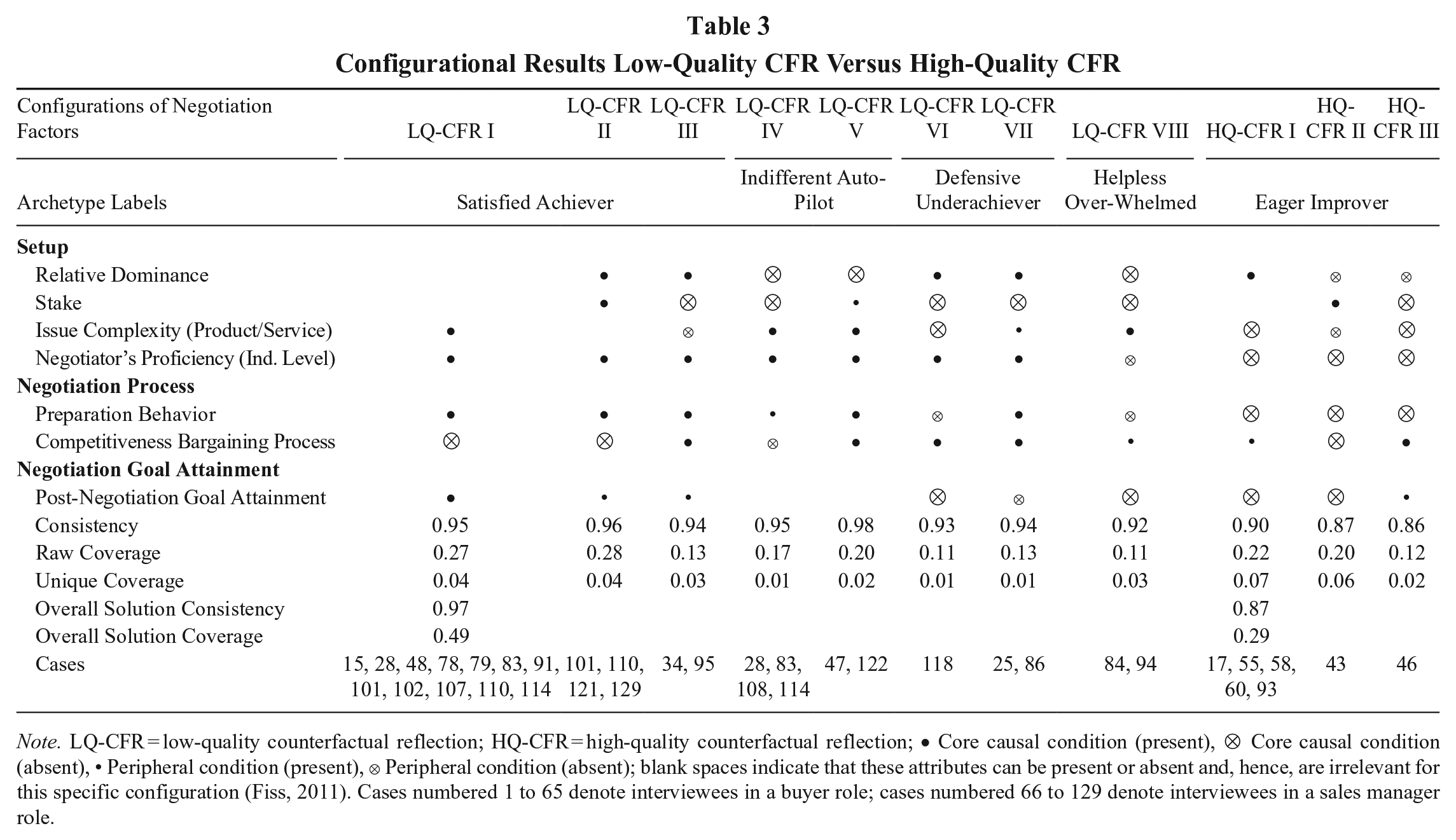
Note. LQ-CFR = low-quality counterfactual reflection; HQ-CFR = high-quality counterfactual reflection; • Core causal condition (present), ⨂ Core causal condition (absent), • Peripheral condition (present), ⊗ Peripheral condition (absent); blank spaces indicate that these attributes can be present or absent and, hence, are irrelevant for this specific configuration (Fiss, 2011). Cases numbered 1 to 65 denote interviewees in a buyer role; cases numbered 66 to 129 denote interviewees in a sales manager role.
We assessed the results’ reliability using solution consistency and solution coverage (Misangyi et al., 2017). The solution consistency was 0.97 for low-quality CFR and 0.87 for high-quality CFR, and the solution coverages were 0.49 and 0.29, respectively. 4 These scores are comparable to those obtained by other fsQCA studies (e.g., Bettinazzi et al., 2024; Lewellyn & Muller-Kahle, 2022; Villani et al., 2024), and the identified configurations qualify as reliable paths to high- or low-quality CFR (Schneider & Wagemann, 2012).
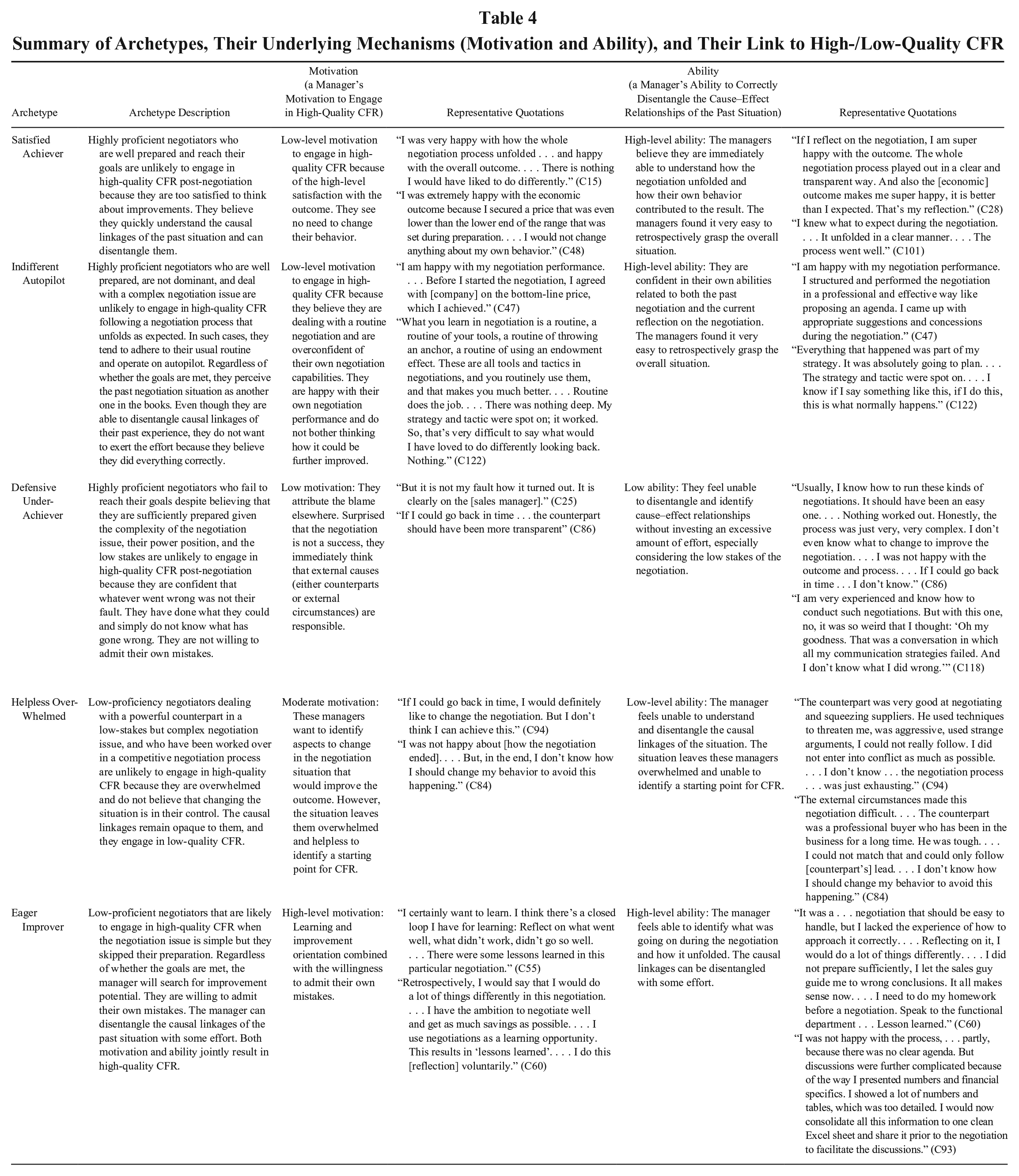
Returning to the interview cases underlying the individual configurations from Table 3 allowed us to “evoke the essence” (Furnari et al., 2021: 790) of each configuration by carving out the underlying mechanisms. We identified differences in (a) managers’ situation-specific ability to disentangle cause–effect relationships of the past experiences, and (b) managers’ situation-specific motivation to engage in high-quality CFR. We grouped the 11 configurations we identified using fsQCA into five archetypes based on their common underlying mechanisms. An archetype denotes a group of configurations that “are logically consistent with one another” (Witt et al., 2022: 152). We grouped the eight configurations associated with low-quality CFR into four archetypes and the three configurations associated with high-quality CFR into one archetype. Following recommendations by Furnari et al. (2021), we named these archetypes with labels that reflect the underlying mechanisms. Table 4 summarizes the archetypes, their ability, their motivation, and illustrative quotations. Using illustrative case examples, we next focus on the five archetypes to explain and interpret our findings with a focus on the underlying mechanisms (Greckhamer et al., 2018).
Summary of Archetypes, Their Underlying Mechanisms (Motivation and Ability), and Their Link to High-/Low-Quality CFR
Configurational Archetypes for Low-Quality CFR Post-Negotiation
Satisfied Achiever
This archetype is characterized by high levels of negotiator proficiency, preparation behavior, and goal attainment. Drawing from our interviews, we found that this configuration of factors leaves managers unmotivated to engage in high-quality CFR, largely because they have achieved their goals. Regardless of the stakes attached to their negotiation, these managers are too satisfied to see a need for improvement. They experienced what appeared to them as a straightforward negotiation situation and can easily understand the causal linkages involved and how their own behavior contributed to the outcome. The following quote from case C28 exemplifies such a situation: If I reflect on the negotiation, I am super happy with the outcome. The whole negotiation process played out in a clear and transparent way. Also, the [economic] outcome makes me super happy; it is better than I expected. That’s my reflection. (C28)
Indifferent Autopilot
This archetype describes a situation where a highly proficient though not dominant manager prepares well for a negotiation that unfolds as she or he expects. In such cases where stakes can be high (see Table 3 LQ-CFR V) or low (see Table 3 LQ-CFR IV), the manager relies on established routines. Independent of the stakes, the manager lacks motivation to thoroughly reflect on the process post-negotiation as it was in line with previous experiences. The resulting reflection is superficial because the Indifferent Autopilot does not consider it worthwhile to thoroughly reflect on a negotiation perceived as straightforward and characterized by correct actions. Although these managers can disentangle the causal linkages of the past situation, they have no motivation to do so. The following quotation from case C122 exemplifies such a situation: “It was absolutely going to plan. . . . There was nothing deep. My strategy and tactic were spot on; it worked. So, that’s very difficult to say what would I have loved to do differently looking back. Nothing” (C122).
Defensive Underachiever
The Defensive Underachievers did not reach their goals, despite possessing high levels of negotiating skill. High levels of dominance, negotiator proficiency, and bargaining process competitiveness, combined with rather low stakes, characterize this archetype. Issue complexity and preparation behavior are aligned, such that managers dealing with a complex issue invest heavily in preparation (see LQ-CFR VII), but managers dealing with a less complex issue do not (see LQ-CFR VI). With this configuration of conditions present, Defensive Underachievers are unlikely to engage in high-quality CFR because a disconnect appears between the perception of being a proficient negotiator and what actually happened at the table.
Defensive Underachievers believe that they are good negotiators and that they know how to run these low-stake negotiations. However, when a negotiation does not work out as expected, it creates a mental gap between what they believe about themselves and what actually happened. To reduce this cognitive dissonance, Defensive Underachievers selectively process information, trivialize the situation, and assure themselves that whatever went wrong was not their fault (Festinger, 1957; Hinojosa, Gardner, Walker, Cogliser, & Gullifor, 2017).
5
They are not willing to admit their mistakes; instead, they are defensive and quickly attribute blame to either the counterpart or external circumstances. Furthermore, they believe they cannot unravel the cause–effect relationships of the negotiation situation without investing excessive effort, especially considering the low stakes of the negotiation. Consequently, they do not untangle the causal linkages between the negotiation setup, their own behavior, and the undesirable outcome. The result is low-quality CFR. Case C86 illustrates a situation in which the sales manager had vast experience in negotiations and was a subject-matter expert, but resorted to blaming the counterpart for a negotiation gone awry: I know how to run these kinds of negotiations. It should have been an easy one. . . .However, . . . nothing worked out. . . . I don’t even know what I should change to improve the negotiation. If I could go back . . . the counterpart should have been more transparent. (C86)
Helpless Overwhelmed
This archetype describes a low-proficiency manager who must deal with a powerful counterpart bent on a competitive bargaining process. The Helpless Overwhelmed feels worked over by the powerful counterpart. This manager, who lacks sufficient technical understanding, is assigned to a complex negotiation issue. Although consulting technical experts could remedy the lack of technical understanding, the Helpless Overwhelmed fails to do so and fails to prepare thoroughly in other aspects. This may be because the negotiation’s stakes are rather low. Nevertheless, even before a negotiation, Helpless Overwhelmed managers believe that they lack the ability to handle the situation. The negotiation becomes a self-fulfilling prophecy 6 and unfolds as the overwhelmed negotiator expects: lacking both power and negotiation skills, the counterpart outmaneuvers them. Despite wanting to improve, the manager feels unable to figure out what to do differently because she or he cannot untangle the causal linkages of the past situation, resulting in low-quality CFR. Case C94 illustrates such a situation: “The counterpart was very good at negotiating and squeezing suppliers. He used techniques to threaten me, was aggressive, used strange arguments, I could not really follow. . . . I don’t know. . . . The negotiation process . . . was just exhausting” (C94).
Although low-quality CFR results in both scenarios, there is a key difference between the Helpless Overwhelmed and the Defensive Underachiever archetypes. Defensive Underachievers believe that they are great negotiators, but a disconnect occurs between this self-perception and how the negotiation unfolds. The Helpless Overwhelmed does not experience such cognitive dissonance if the negotiation unfolds as expected. The Helpless Overwhelmed has low self-efficacy (Bandura, 2012) and the negotiation experience turns into a self-fulfilling prophecy.
Configurational Archetype for High-Quality CFR Post-Negotiation
Eager Improver
Managers with low proficiency who skipped or rushed the preparation phase engage in high-quality CFR following situations with low issue complexity. Following such experiences, Eager Improvers will likely reflect thoroughly on how their behavior contributed to the negotiation outcome. They are willing to admit their own mistakes and are motivated to improve. The Eager Improver feels able to disentangle the causal linkages of the past negotiation. After some deliberation, they can recognize mutable aspects within their control that could have improved the process, the outcome, and their subsequent negotiation performance. The three individual configurations underlying this archetype highlight that high-quality CFR is interestingly independent of the power balance, stakes, or attainment of goals. Regardless, the Eager Improver feels able to disentangle causal linkages and is motivated to engage in high-quality CFR. Case C58 illustrates a situation in which a low-proficiency manager was able to disentangle the causal linkages of the past: I came into that negotiation without knowing the huge differences between direct and indirect sourcing. I was in indirect sourcing for so long . . . [that I] thought I would be all right. . . . But it turned out that direct sourcing is a whole different story. I ended up in a situation that I was absolutely unprepared for. . . . I did not check with the key account managers, the production department, or the accounting department—I had no full picture of the supplier’s situation. Not taking care of the preparation—it sounds so trivial, so easy to avoid. . . . In the end, it was a great learning opportunity. This situation will not happen to me again. . . . What I should have done is to prepare better by checking with all the departments involved about whether there are any open positions or any other issues. I always do that now, in case you are wondering. (C58)
Ability and Motivation: Building Blocks for the Mechanisms Underlying the Archetypes
An in-depth analysis of the interview cases underlying each configuration led us to uncover that the building blocks for the underlying mechanisms connecting configurations of negotiation factors with CFR quality are managers’ (1) situation-specific ability to disentangle causal linkages of past experience and (2) situation-specific motivation to achieve high-quality CFR. 7 Managers decide to engage in high-quality CFR following situations where they have the ability, with some effort, to disentangle the causal linkages of the past negotiation experience and the motivation to engage in high-quality CFR (Eager Improver). Conversely, managers decide to engage in low-quality CFR following experiences that leave them (1) very satisfied with the result (Satisfied Achiever), (2) indifferent about the result and process (Indifferent Autopilot), (3) defensive and unwilling to admit their own mistakes (Defensive Underachiever), or (4) unable to correctly disentangle the causal linkages of the past situation (Helpless Overwhelmed).
To validate these interpretations, we conducted 28 post-hoc interviews. Our interviewees readily identified ability and motivation as the building blocks for the underlying mechanisms that explain differences in CFR quality. To illustrate, we offer the following quotation from an experienced B2B negotiator (additional quotations appear in Online Supplement L): I can absolutely relate to ability and motivation as the underlying reasons. This mirrors my own experience. Over the course of my career, I have been all five types of negotiators [archetypes] and also experienced colleagues who have been unmotivated either because they were too satisfied or because they thought “I know it all.” (Post-hoc interview N02)
Discussion
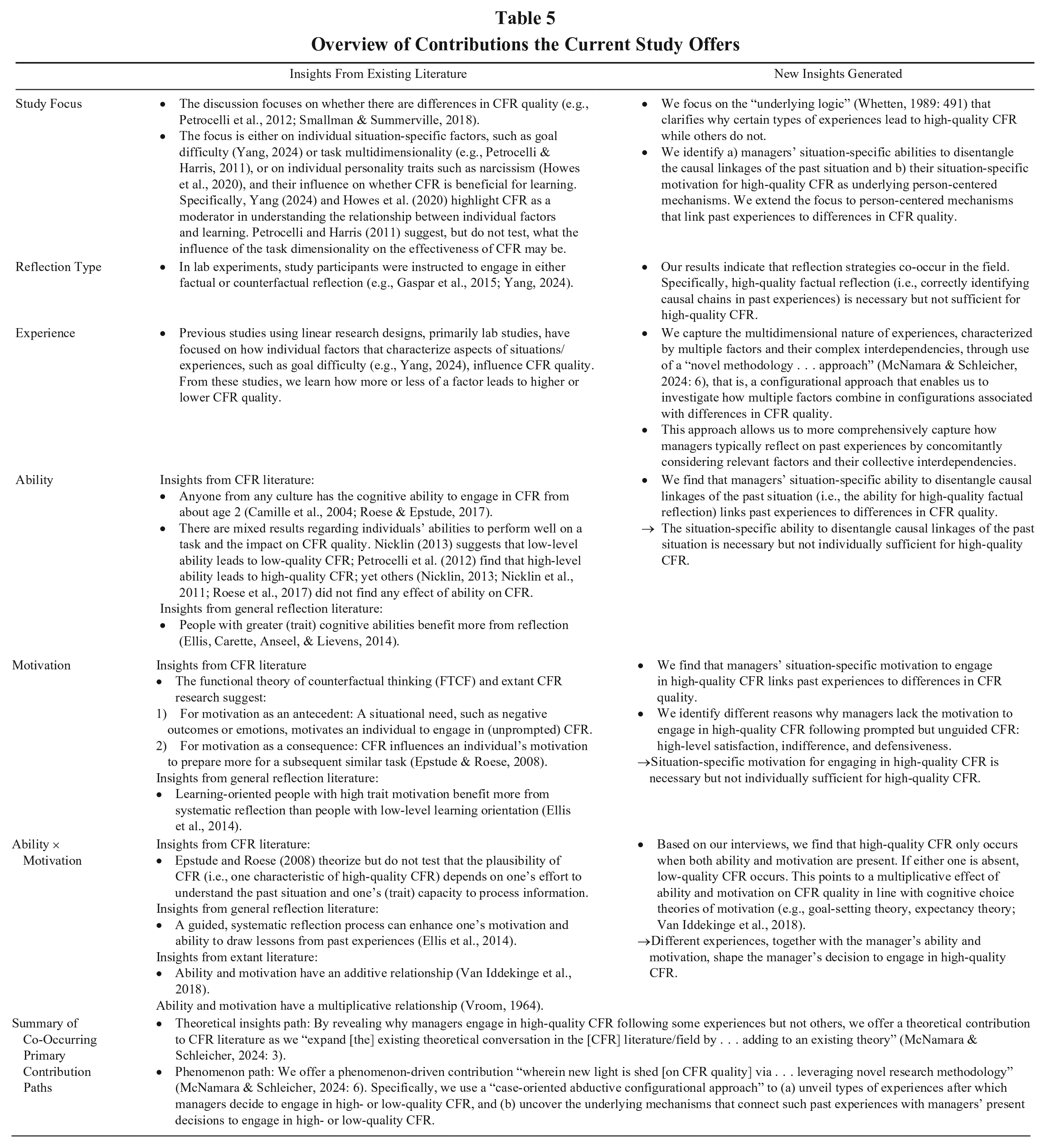
Learning is key to organizational success (Gong, Zhang, & Xia, 2019) and high-quality CFR promotes learning (Roese & Epstude, 2017). However, managers do not engage in high-quality CFR following all experiences. Understanding which experiences—characterized by configurations of negotiation factors—shape managers’ decisions to engage in high- or low-quality CFR and how makes it possible to create better learning opportunities for managers through targeted interventions and, consequently, to increase organizational success. Therefore, we address the research question: How are different configurations of negotiation factors associated with managers’ decisions to engage in high- or low-quality CFR? The answer offers potentially important contributions for researchers as well as insights for managers seeking to improve learning in their organizations. Table 5 summarizes our contributions to the literature.
Overview of Contributions the Current Study Offers
Contributions to the Literature
We offer theoretical and phenomenological contributions to the CFR literature that jointly “form the basis for [our] overall contribution” (McNamara & Schleicher, 2024: 2). We “expand [the] existing theoretical conversation in the [CFR] literature/field by adding to an existing theory” (McNamara & Schleicher, 2024: 3), the FTCT. We offer new theoretical insights by shifting investigation away from whether there are differences in CFR quality to why different types of experiences give rise to either high- or low-quality CFR (e.g., Kim & Summerville, 2023; Smallman & Summerville, 2018). We conceptualize CFR quality as a causally complex phenomenon for which we “leverag[e] [a] novel methodology” (McNamara & Schleicher, 2024: 6)—a case-oriented abductive configurational approach. This enables us to unveil the types of experiences that are associated with high- or low-quality CFR and uncover the underlying mechanisms that connect experiences with managers’ present decisions to engage in high-quality CFR or not. With that combined theoretical and phenomenological contribution, we offer scholars and managers viable pathways to high-quality CFR.
The neo-configurational method fsQCA (Misangyi et al., 2017) enabled us to account for complex interdependencies among factors and reveal configurations of negotiation factors that shape managers’ decisions to engage in high- or low-quality CFR. We unveiled three configurations of negotiation factors associated with managers’ decisions to engage in high-quality CFR, and eight configurations associated with managers’ decisions to engage in low-quality CFR. Our findings underscore the notion of CFR quality as a causally complex phenomenon.
Moreover, adopting a configurational approach allowed us to uncover asymmetric patterns in the identified configurations (e.g., Fiss, 2011). Doing so reconciled earlier mixed findings from the literature regarding the influence of individual factors such as proficiency or goal attainment on CFR quality. For instance, we found that low proficiency is associated with both high-quality CFR (e.g., Eager Improver) and low-quality CFR (e.g., Helpless Overwhelmed). Using linear approaches, Roese et al. (2017); Nicklin, Greenbaum, McNall, Folger, and Williams (2011); and Nicklin (2013) found no significant effect of proficiency because the opposing effects “washed out” (Miller, 1987; Short et al., 2008). Additionally, we corroborated earlier findings that individual conditions such as stake and goal attainment influence CFR quality (Kim & Summerville, 2023; Roese & Epstude, 2017). However, in contrast to those earlier findings, we found that these factors can only account for differences in CFR quality in conjunction with other factors. Only a configurational approach could reveal these nuances (e.g., Fiss, 2011; Schneider & Wagemann, 2012). Online Supplement M summarizes the new insights into the association between characteristics of past experience and CFR quality that our configurational analysis provides.
Our contribution to the CFR literature and FTCT includes uncovering the building blocks of two underlying mechanisms that connect past experiences and CFR quality: (1) managers’ situation-specific ability to disentangle causal linkages of the past situation, and (2) managers’ situation-specific motivation to engage in high-quality CFR. We thus advance an understanding of achieving high-quality CFR by revealing the “underlying logic” (Whetten, 1989: 491) of why managers decide to engage in high- or low-quality CFR following different types of experiences. This is an important shift in the focus from either individual situation-specific factors, such as goal difficulty (Yang, 2024) and task multidimensionality (Petrocelli & Harris, 2011), and individual personality traits, such as narcissism (Howes, Kausel, Jackson, & Reb, 2020), to situation-specific person-centered mechanisms linking past experiences and CFR quality.
Our study’s implications also extend to the connection between factual and counterfactual reflection. Whereas previous studies advanced the field by experimentally assigning subjects to use either factual or counterfactual reflection (e.g., Gaspar, Seabright, Reynolds, & Yam, 2015; Yang, 2024), our study—in which managers reflect on real-life events—indicates that factual and counterfactual reflections co-occur in the field. Specifically, our study suggests that high-quality factual reflection (i.e., correctly disentangling causal linkages in past experiences) seems to be a necessary but not sufficient condition for high-quality CFR.
Finally, we provide additional insights into the ongoing debate regarding the interplay between ability and motivation in influencing outcomes. Past research suggests a multiplicative relationship (Vroom, 1964), although a meta-analysis by Van Iddekinge et al. (2018) points to an additive relationship between ability and motivation. We found that high-quality CFR only follows experiences associated with both high-level ability and high-level motivation. Thus, our findings indicate that neither motivation nor ability can compensate for the other’s absence. Ability and motivation are both necessary—yet individually insufficient—for high-quality CFR. This points to a multiplicative effect of ability and motivation on CFR quality.
Implications for Managers
Most managers engage less in reflection than they should, perhaps because reflection does not come naturally (Lanaj, Foulk, & Jennings, 2023). To derive actionable recommendations for reflecting managers and their supervisors that promote high-quality CFR, we systematically discussed our findings with a focus group of four senior managers (Online Supplement N details the focus group participants and process). The key is for organizations to refrain from one-size-fits-all approaches to CFR and instead to tailor measures to specific negotiation experiences and managers’ individual ability and motivation. Table 6 provides archetype-specific measures that managers and their supervisors can take. Next, we summarize measures addressing low-level motivation and ability across archetypes.
Recommended Measures for Managers and Their Supervisors per Archetype
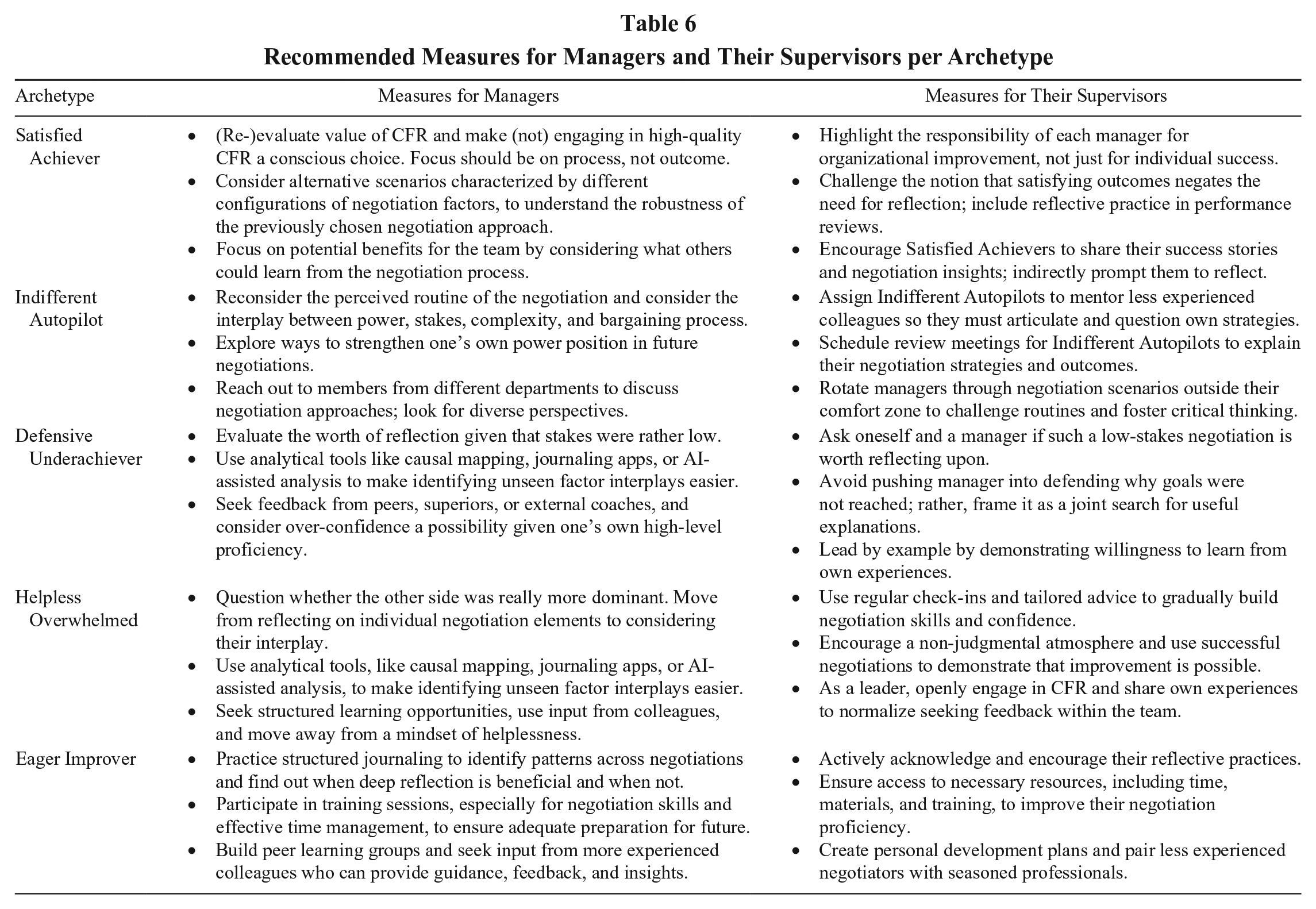
When motivation to engage in high-quality CFR is low (i.e., for the Satisfied Achiever, Indifferent Autopilot, and Defensive Underachiever), reflecting managers should start by critically evaluating the value of CFR and decide consciously, rather than incidentally, whether investing effort in factual and/or counterfactual reflection is worthwhile. Two measures can assist with this decision. First, reflecting managers should focus less on outcomes and more on the negotiation process and the interplay of various negotiation factors. Second, reflecting managers should, as one focus group participant put it, “demonstrate team playing” and consider what others can learn from their negotiations. By shifting the perspective from their own improvement to the learning potential of others (Hardy & Van Vugt, 2006), reflecting managers can gain greater motivation to move beyond a superficial understanding of their own negotiation experiences and leverage their insights for the benefit of the broader organization.
Their supervisors should challenge less motivated managers to go beyond their routines and achievements to analyze their negotiation processes more deeply. As one interviewee remarked, “If I am in the auto-pilot mode, I need to be challenged, something new needs to be added to the game, [so] that I pause and reflect again” (N08). Supervisors can achieve this by purposefully exposing managers to new situations or pairing them with less experienced colleagues. Moreover, by emphasizing each manager’s responsibility for organizational improvement, not just individual success, supervisors can motivate passive managers to “think slow” (Kahneman, 2011) instead of focusing on outcomes and simplistic insights that cannot improve future results. Two practical strategies for supervisors involve providing personalized guidance directly and engaging the manager in training sessions and exchanges with others (Rogers, Christian, Jennings, & Lanaj, 2023) as a subtle way of prompting high-quality CFR about one’s own practices. This subtle approach appears particularly useful for managers who are defensive when asked to explain why they have not achieved their goals (i.e., Defensive Underachievers).
Reflecting managers with a relatively low-level ability to untangle cause and effect in past negotiations (i.e., Defensive Underachievers and Helpless Overwhelmed) should focus on systematically reflecting on past experience to identify cause-and-effect relationships accurately. Analytic tools such as causal mapping, journaling apps, or artificial intelligence (AI)-assisted analysis can facilitate such systematic reflection. AI tools could function as co-pilots to overcome low-level ability (von Krogh, Roberson, & Gruber, 2023). For example, machine-learning algorithms could be trained on a company’s historical negotiation data (e.g., negotiation setups, tactics used, and outcomes). Once trained, AI can identify patterns and analyze new negotiation data in real-time to help managers explain their understanding of the “concepts tied together by causality relations” (Weick & Bougon, 1986: 106) and further stimulate high-quality CFR.
Supervisors should provide individualized guidance and support for managers low in ability, including regular check-ins, tailored advice, and development exercises that suit the manager’s level of proficiency. Further, supervisors should promote self-improvement by regularly emphasizing the value of structured reflection (i.e., causal mapping, journaling) to uncover causal linkages between decisions/behavior and results. Moreover, supervisors should model reflective practices to demonstrate their value and show the necessity of shifting the focus from blame to learning. One interviewee from our post-hoc interviews, who leads a large sales team, pointed out that it is important to him “to lead by example [and engage in CFR] and to establish an atmosphere where concerns and so on can be openly shared. It is not about finger-pointing. If I open up first, my team will open up” (C 90). Cultivating such a non-judgmental atmosphere as part of a psychologically safe environment (Edmondson & Bransby, 2023) encourages managers to reflect on and practice their ability to understand the cause–effect relationships in their negotiations, which can enhance their CFR quality.
Interestingly, the focus-group participants felt that ability gaps were generally easier to close than motivation gaps. They also viewed closing ability gaps as primarily being a task for the reflecting manager, whereas improving motivation was seen as the supervisor’s responsibility. Further, the group agreed that “it is important to actively acknowledge and encourage the Eager Improver types of managers” who are low in neither ability nor motivation. This “recognition can be a powerful motivator to continue [engaging in high-quality CFR] and also a motivator for other managers” to start engaging more in CFR.
Limitations and Avenues for Future Research
Our research design has limitations, each of which offers opportunities for future research. First, although we revealed three equifinal configurations of negotiation factors associated with managers’ decisions to engage in high-quality CFR, and eight associated with managers’ decisions to engage in low-quality CFR, we did not measure learning directly. Instead, we relied on a sizable body of work that has established a CFR–learning link (e.g., Kray et al., 2009; Morris & Moore, 2000). Using configurational logic, we determined that high-quality CFR might lead to performance improvements only in certain combinations with other factors, such as an organizational culture of continuous learning and growth. Thus, we encourage future researchers to adopt a configurational approach using performance improvement as the outcome and CFR quality as one of the causal conditions.
To gather rich and realistic data on managers’ lived experiences, we conducted semi-structured interviews (Suddaby, 2006). One limitation is that interviews yield retrospective accounts that are subjective constructions of reality (Howard-Grenville, Nelson, Vough, & Zilber, 2021) and can result in hindsight biases (Lamont & Swindler, 2014). Further, interviewees may want to create positive images of themselves (e.g., as great negotiators). Therefore, we encourage further research based on real-time data, such as observing managers in their daily work.
Our study design did not account for differences in the implementation phase or the relationship duration or type. While no statistically relevant relationship emerged between these factors and CFR quality, 8 we cannot rule out their influence. This leads us to encourage future researchers to investigate the potential influence of these factors by using research designs with more controlled settings, such as lab studies. Such designs would expand the scope of CFR research and control for factors such as the implementation phase or relationship duration. Further, such an approach would make it possible to specifically account for attitudes, levels of general or emotional intelligence, and personality traits such as conscientiousness, agreeableness, overconfidence (Howes et al., 2020), humility, and self-efficacy. 9
Our main analyses combined data from managers in buyer and sales roles. Post-hoc analyses did not reveal substantial differences between buyers and sales managers, and our focus group participants agreed that buyers and sales managers are largely alike: “I’ve seen these overly satisfied, blame shifters, or eager managers on both sides—in that sense, purchasing and sales in B2B are like two peas in a pod” (Online Supplement K shows details). However, there is debate over whether buyers’ and sales managers’ mirroring of each other’s strategies depends on the power balance (e.g., Schuh, Raudabaugh, Kromoser, Strohmer, Triplat, & Pearce, 2017), or whether buyers generally adopt a transactional view of exchanges (Murfield, Ellram, & Giunipero, 2021) while sales managers hold a more relational view (Homburg, Müller, & Klarmann, 2011). These differing strategic objectives may influence their negotiation behavior (Geiger, Durand, Saab, Kleinaltenkamp, Baxter, & Lee, 2012) and, in turn, their CFR quality. This may be why we did not find evidence of the Helpless Overwhelmed archetype among buyers. We encourage future researchers to illuminate the nuances of buyer-supplier differences and their implications for negotiations and CFR quality.
We defined and treated CFR quality as a composite construct based on existing literature (e.g., Roese & Epstude, 2017; Smallman & Summerville, 2018). However, of the four dimensions (plausibility, controllability, concreteness, and likelihood of reoccurrence), plausibility created a modest (albeit not dramatic) push to code CFR quality as high-quality CFR. Therefore, future researchers should unpack the composite construct “CFR quality” into its four dimensions and investigate the effects surrounding each.
As a set-theoretic approach, fsQCA is not subject to the omitted variable bias; thus, control variables are not required (Fainshmidt et al., 2020). However, the method only permits a limited number of causal conditions to avoid model overspecification (Marx & Dușa, 2011). We therefore encourage future scholars to identify additional factors that may, in conjunction, influence the quality of CFR. Other negotiation factors include relationship type, relationship duration, team dynamics, the implementation phase, industry dynamics, and whether a routine item is purchased or sold.
B2B negotiations, upon which the managers in our study reflected, are complex decision-making tasks. We expect that our findings could potentially extend to other complex managerial decision-making contexts such as launching new products, reacting to defective products and making hiring decisions for key roles in the organization. We would expect to see similar configurations and archetypes in such contexts, and the archetype-specific measures we propose for reflecting managers and their supervisors may be applicable there too. Nevertheless, advancing the understanding of underlying reasons for differences in CFR quality requires future research in other managerial decision-making contexts.
Conclusion
Learning from past experiences is pivotal for organizational success, and high-quality CFR is an important means of achieving this. Our findings underscore the importance of considering managers’ situation-specific ability and motivation, and the complex interdependencies between the factors characterizing past experiences as the underlying mechanisms connecting past experiences to CFR quality. We hope that our study provides a foundation for future research to investigate the utility of CFR quality following different types of experiences, especially studies using configurational perspectives. Indeed, there is a need for further inquiry into how CFR can fuel improvements in learning and important outcomes like organizational performance.
Supplemental Material
sj-docx-1-jom-10.1177_01492063241271244 – Supplemental material for A Configurational Perspective on the Quality of Managers’ Counterfactual Reflections
Supplemental material, sj-docx-1-jom-10.1177_01492063241271244 for A Configurational Perspective on the Quality of Managers’ Counterfactual Reflections by Katja Woelfl, David J. Ketchen and Lutz Kaufmann in Journal of Management
Footnotes
Acknowledgements
We are grateful to Sali Li for his editorial guidance and to two anonymous reviewers for their constructive feedback. We thank Craig Carter, Lei Huang, Jaclyn Koopmann, Jeremy Mackey, and Kristen Shockley for their insightful suggestions. An earlier version of this paper was presented at the 2023 Academy of Management Conference.

Supplemental material for this article is available with the manuscript on the JOM website.
Notes
References
Supplementary Material
Please find the following supplemental material available below.
For Open Access articles published under a Creative Commons License, all supplemental material carries the same license as the article it is associated with.
For non-Open Access articles published, all supplemental material carries a non-exclusive license, and permission requests for re-use of supplemental material or any part of supplemental material shall be sent directly to the copyright owner as specified in the copyright notice associated with the article.
