



Abstract
We take a process perspective to review the literature on corporate responses to social activism and argue that theoretical advances have not kept pace with the extensive and expanding scope of the literature. We identify three critical assumptions in the literature, which we believe can be traced back to two overarching issues: a mechanistic conceptualization that ascribes limited reflexivity to managers and an overreliance on variance theorizing. In order to tackle these challenges and propel future research, we suggest a research agenda that revolves around an enhanced role for managerial reflexivity in theory development and a stronger emphasis on the process-oriented view of the relationship between activism and response.
Social activism, involving collective action through social movements or socially oriented shareholder proposals, has become a prevalent and pivotal managerial issue in corporate life (B. G. King & Pearce, 2010; Schneiberg & Lounsbury, 2017). Social activists are increasingly directing their efforts toward firms, urging them to consider stakeholder interests when formulating corporate policies (Briscoe & Gupta, 2016; Den Hond & De Bakker, 2007). Corporate responses to social activism have garnered attention from organizational scholars for more than two decades (Cao, Liang, & Zhan, 2019; Davis & Thompson, 1994; Odziemkowska & Dorobantu, 2021; Waldron, Navis, & Fisher, 2013; Weber, Rao, & Thomas, 2009). Scholarship in this area has found that firms respond to social activists’ demands with a wide range of behavioral adaptations, from simply neglecting activism campaigns (Piazza & Perretti, 2020) and resisting change (Kellogg, 2012) to conceding to activists’ demands (Luo, Zhang, & Marquis, 2016) and collaborating with activists (Odziemkowska, 2022).
Despite its proliferation, the theoretical development pertaining to the activism-response phenomenon has not kept pace with the extensive and expanding scope of the literature. More specifically, while studies in this area have individually provided crucial insights into how firms adapt their behaviors to social activism, our knowledge in this area remains theoretically fragmented because we know little about how those decisions “happen” (cf. March, 1994). Unless we unpack the black box of corporate decision-making, important research questions remain open, such as why firms respond differently to the same activism campaigns that pose similar levels of threat (Waldron et al., 2013) and how firms choose one approach over another when formulating strategies in response to social activism (Bonardi & Keim, 2005). Thus, despite the great strides that have been made in empirical investigations, theoretical efforts that could help synthesize extant findings are still lagging behind. Given this lack of theory development, our theoretical understanding of corporate responses to social activism remains incomplete—which, in turn, hinders empirical progress in this field.
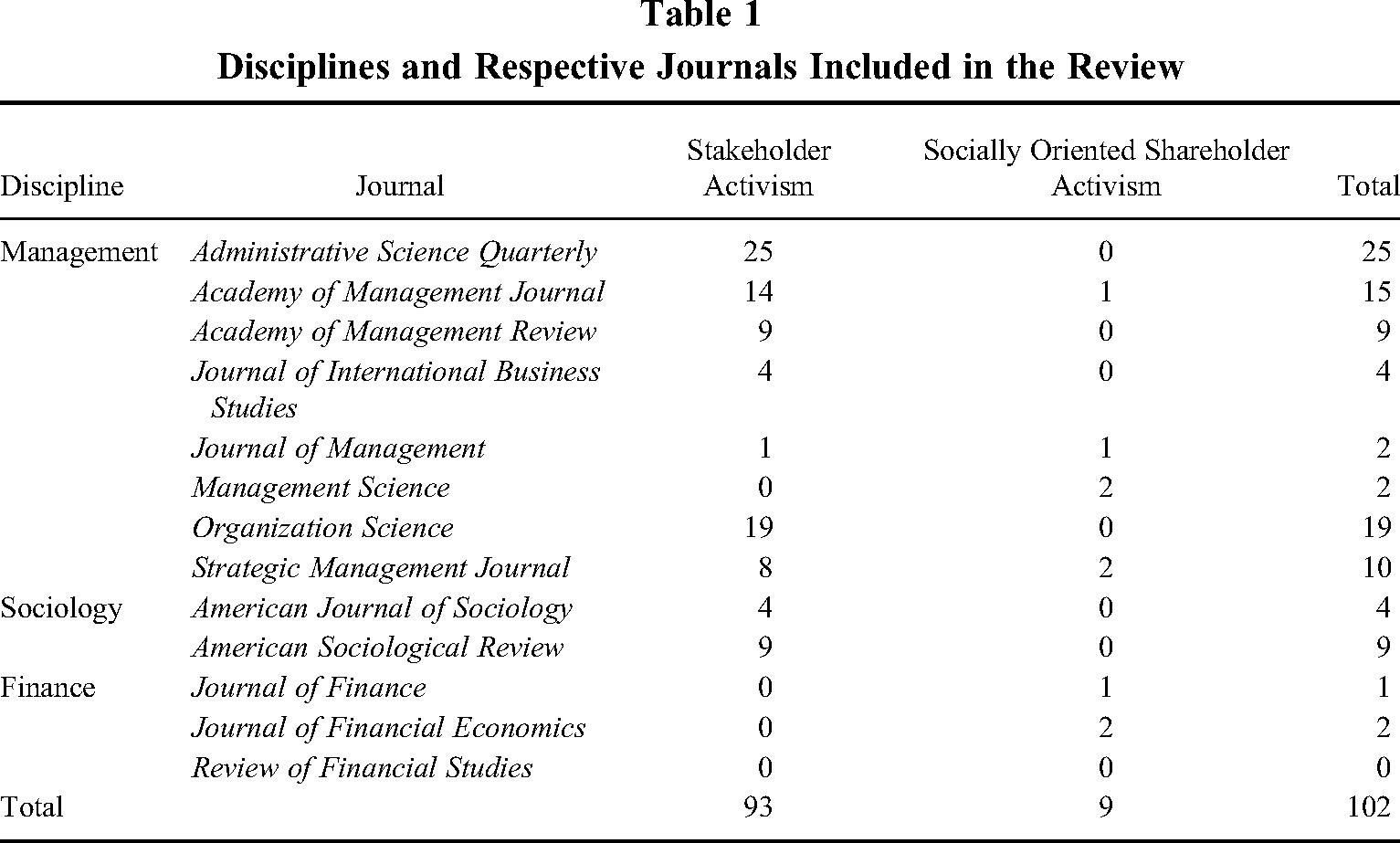
We view corporate responses to social activism as a sensemaking process—that is, a process through which firms work to understand the situations in which they are embedded (Maitlis & Christianson, 2014)—because firms must notice the activism cues, interpret them in their own way, and take action to address the activist challenges accordingly. Thus, in our review, we adopt a process-oriented perspective to decompose corporate responses to social activism into three steps—noticing the activism cues, framing the implications of the activism, and acting in response to activism—and use this sensemaking-based framework to organize our review (see Figure 1). We identified a sample of 102 articles published in the top-tier management, sociology, and finance journals (see Table 1 for an overview; the list of articles is available upon request) that publish most social activism research (Briscoe & Gupta, 2016; B. G. King & Pearce, 2010).
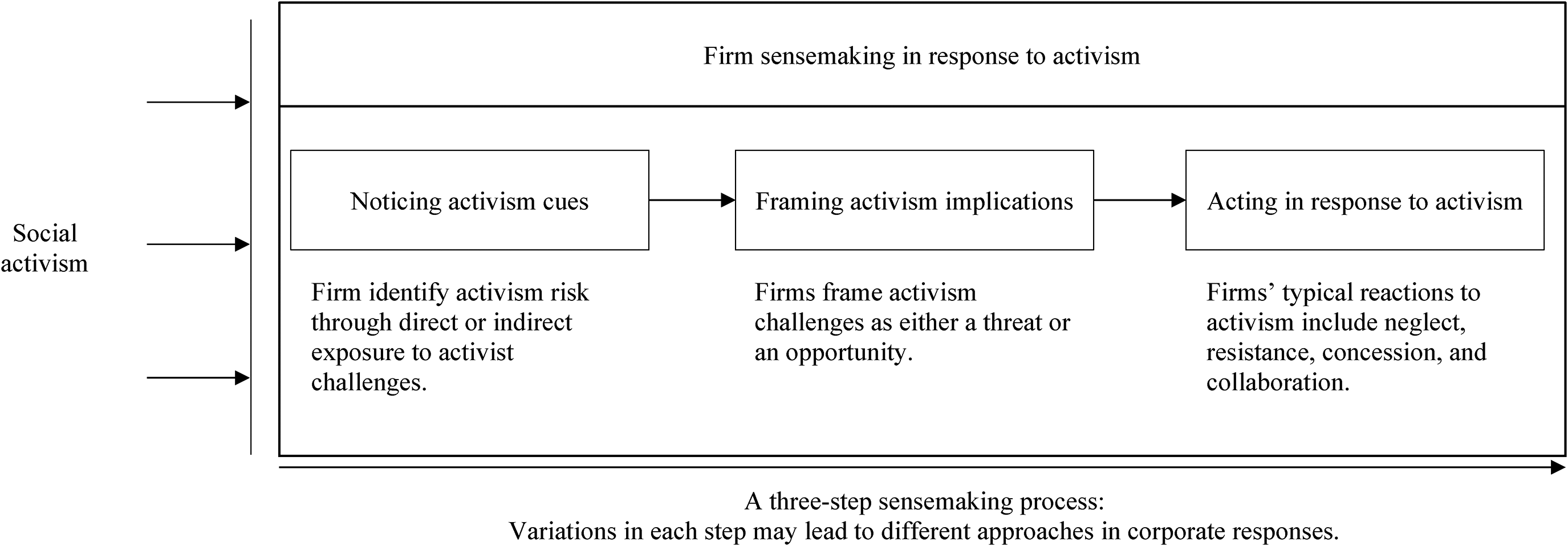
Corporate Responses to Social Activism: A Process Framework That Guides Our Review
Disciplines and Respective Journals Included in the Review
We identify three critical assumptions made by extant literature that might have hindered the progress of scholarly understanding of corporate responses to social activism. First, regarding the decision-making step of noticing activism cues, a central feature of extant conceptualization is that firms are backward-looking actors, making decisions based on experiences (e.g., Hiatt, Sine, & Tolbert, 2009; Luo et al., 2016; McDonnell, King, & Soule, 2015), rather than forward-looking actors, making decisions based on expectations (for rare exceptions, see Odziemkowska & Dorobantu, 2021; Yue, Rao, & Ingram, 2013). That is, extant research has routinely conceptualized firms as passive reactors to activism threats that materialize (Waldron et al., 2013; Waldron, Navis, Aronson, York, & Pacheco, 2019), with little discussion of how firms proactively preempt the risk of social activism before it materializes into active threats. This view of corporate passive responses to social activism stands in sharp contrast with the typical view of firms in strategic management, wherein firms are strategic actors that anticipate threats and make strategic moves to avoid problems (Barney, 1986; Chen, 1996; Teece, 2007).
Second, regarding the decision-making step of framing activism implications, extant research has largely black-boxed the framing process itself, paying attention to the interpretative outcomes of managerial framing (e.g., Ingram, Yue, & Rao, 2010; Pacheco, York, & Hargrave, 2014; Sine & Lee, 2009; Vasi & King, 2012) but not the decision-making process with regard to how managers make sense of the activism implications before they characterize activism as a threat or an opportunity. The conceptual omission of the process of framing (as opposed to its outcomes) reflects an overly routinized conceptualization of corporate sensemaking of activism challenges, with a limited role for managerial reflexivity, wherein managers introspectively examine the situations in which they find themselves (Suddaby, Bruton, & Si, 2015). For example, nearly all research assumes that social activism is either a threat or an opportunity to firms (e.g., Bartley & Child, 2014; Hiatt et al., 2009; Lee, Struben, & Bingham, 2018; Rao, Yue, & Ingram, 2011) and that firms will automatically take actions to either mitigate the threats or exploit the opportunities (e.g., Hadani, Doh, & Schneider, 2018; Odziemkowska, 2022; Tian, Tse, Xiang, Li, & Pan, 2021; Yue et al., 2013). However, less is known about why some firms frame a given activism campaign as a threat while others frame it as an opportunity. This conceptual omission may hold promise to explain why firms respond differently to social activism—a crucial unanswered question in the literature.
Third, regarding the decision-making step of acting in response to activism, extant literature has predominantly focused on empirically investigating the relationship between social activism and the array of strategic choices that firms make in response to it (e.g., Hadani et al., 2018; McDonnell & Cobb, 2020; Minefee & Bucheli, 2021; Piazza & Perretti, 2020; Reid & Toffel, 2009), assuming away the search process that leads to a behavioral response (cf. Posen, Keil, Kim, & Meissner, 2018). This lacuna leaves several important questions open, such as why firms initiate a search for solutions when challenged by stakeholder activists, how firms select one search outcome over others, and, more importantly, why the same type of social activism leads to one type of response when observed in one study but a different response when observed in another.
We argue that the three aforementioned issues can largely be attributed to an ongoing reliance on a research paradigm that prioritizes variance theorizing—a form of theorizing that emphasizes “the linking together of concepts expressed as dependent, independent, mediating and moderating variables . . . with a focus principally on explaining variance in outcomes” (Cloutier & Langley, 2020: 1-2)—while overlooking the crucial role of reflexivity in managerial decision-making. To address these concerns, we propose a research agenda that revolves around a revised paradigm characterized by two significant shifts. First, we suggest that the literature should be advanced by granting a more prominent role to managerial reflexivity (Archer, 2010; Suddaby, Viale, & Gendron, 2016) in the activism-response relationship, departing from the traditional conceptualization found in current research. Embracing a reflexivity perspective entails recognizing that managerial behaviors are shaped by underlying beliefs that influence their interpretations of social activism (Weick, 1995). This perspective allows for a deeper exploration of the relationship between different courses of action and the reasons behind firms’ ultimate choices (Posen et al., 2018) when responding to social activism in specific situations. Making more room for reflexivity in future research will shift scholarly attention to how decisions “happen” (March, 1994), which has historically been understudied in the literature.
As our second suggested shift, we propose that scholars may benefit from taking a process approach (Langley, Smallman, Tsoukas, & Van De Ven, 2013) to aid theory development. The vast majority of current studies employ a variance approach in theorizing, which typically treats the firm decision-making process as a black box and simply examines the correlation between a particular type of activism and a specific response that firms may initiate, concluding the process (e.g., Gupta & Briscoe, 2020; McDonnell, 2016; Odziemkowska & Henisz, 2021; Piazza & Perretti, 2020). A process perspective instead centers on opening up the black box and elaborating on how decisions unfold dynamically (Langley, Mintzberg, Pitcher, Posada, & Saint-Macary, 1995) when firms respond to social activism.
Building on these two important shifts, we propose a research agenda that we believe can help advance current scholarship on corporate responses to social activism, including calling for more research on anticipating and preventing activism, recognizing managerial heterogeneity in decision-making, extending the process model we used in this review, exploring the nonunitary nature of firms, and conducting inquiries in different contexts. We believe these research programs will enable a richer understanding of why firms act the way they do in response to social activism.
Scope of the Review and Distinctiveness From Other Reviews
Scope of the Review
To locate the relevant literature for this review, we followed prior research in using a structured process (Posen et al., 2018) while limiting our search to top-tier management, sociology, and finance journals (DesJardine, Zhang, & Shi, 2023).
We used a curated list of keywords to identify works relevant to two different types of social activism campaigns: stakeholder activism (McDonnell & Werner, 2016; Vasi & King, 2012) and socially oriented shareholder activism (Acharya, Gras, & Krause, 2022; Del Guercio & Hawkins, 1999). For stakeholder activism literature, our keywords comprised “social movement,” “activism,” “activist,” and “collective action”; for socially oriented shareholder activism, they comprised “shareholder activism,” “shareholder proposals,” and “shareholder resolution.” We used these keywords to search the abstracts of the articles published in our selected journals. This research resulted in 410 articles (as of December 2022).
We then read each of these articles and excluded those that (a) were exclusively about stakeholder or shareholder actions (e.g., Albuquerque, Fos, & Schroth, 2022; Claus & Tracey, 2020); (b) were about financial shareholder activism (e.g., Francis, Hasan, Shen, & Wu, 2021; Shi, Connelly, Hoskisson, & Ketchen, 2020); (c) were about collective actions by firms, independent of the activism context (e.g., Greve & Yue, 2017; Russo, 2001); (d) covered activism targets that were not firms (e.g., Lounsbury, 2001; Mora, 2014); or (e) were books or literature reviews rather than research articles (e.g., Briscoe & Gupta, 2016; DesJardine et al., 2023). This resulted in a final sample of 102 papers (see Table 1 for an overview), with 93 (nine) articles on corporate responses to stakeholder (socially oriented shareholder) activism.
In Figure 2, we present the distribution of studies reviewed in our article. Davis and Thompson (1994) conducted one of the earliest investigations into firm adaptation in response to social activism. Research on this topic gained significant momentum after 2005, when Administrative Science Quarterly organized a special issue on social movements and organizations (Davis, McAdam, Scott, & Zald, 2005). Since then, scholars have devoted substantial attention to this literature, resulting in a robust body of work.
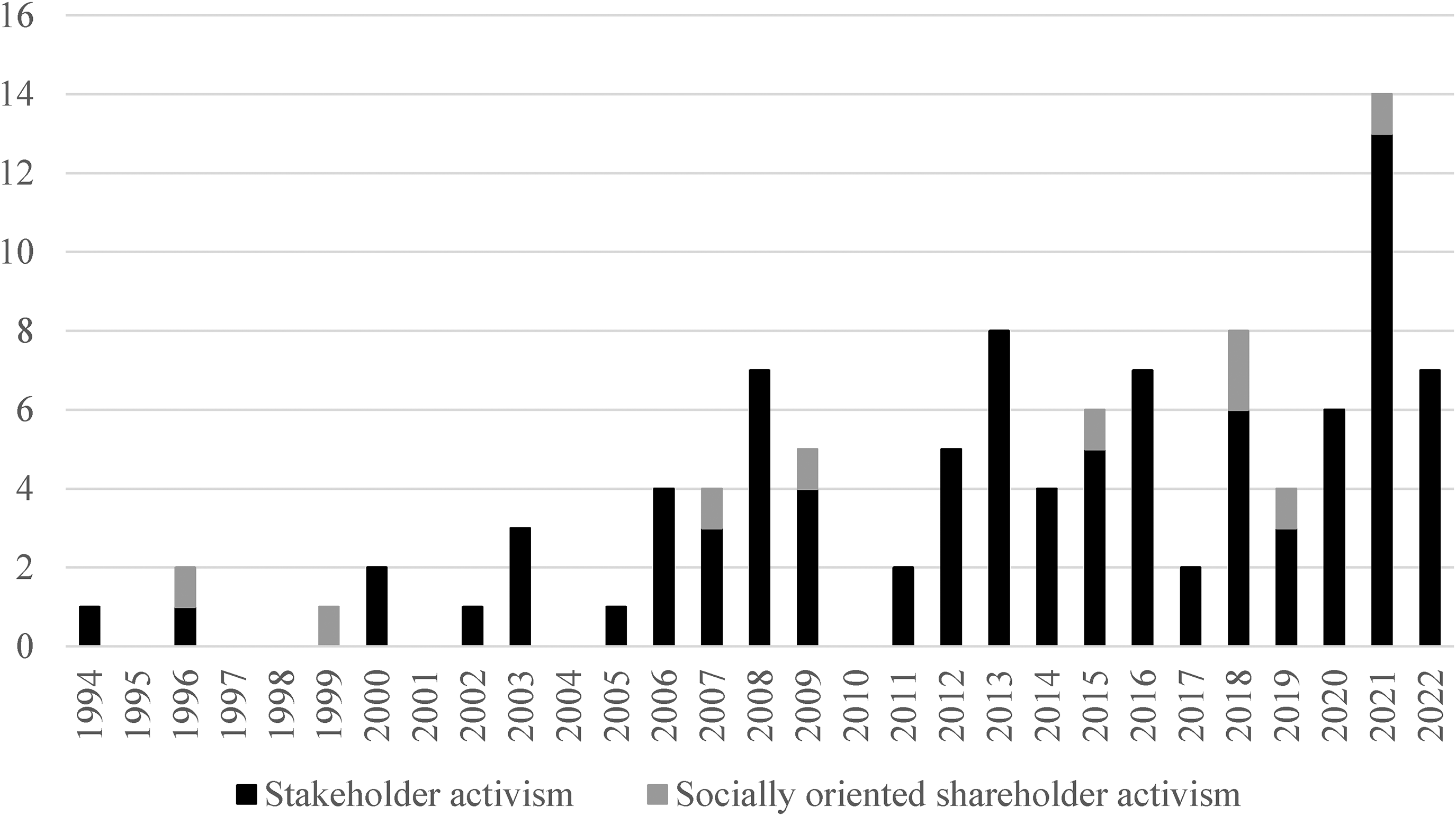
Distribution of Papers Included in the Review Over Time
The literature has evolved in two distinct ways. First, there has been a notable shift in research focus, from how firms defensively repair the damage caused by social activism (e.g., Delmas & Toffel, 2008; Smith, 1996) to how firms proactively collaborate with activists to address the grand challenges of our times (e.g., Bridoux & Stoelhorst, 2022; Odziemkowska, 2022). Second, research methodology has changed from a predominantly quantitative approach (e.g., David, Bloom, & Hillman, 2007; Reid & Toffel, 2009) to a more qualitative orientation (e.g., Buchter, 2021; Minefee & Bucheli, 2021).
Distinctiveness from other reviews
To the best of our knowledge, there is as yet no review of corporate responses to social activism. Two close variants are (a) Briscoe and Gupta's (2016) work on how stakeholder activists initiate activism that targets firms and (b) Goranova and Ryan's (2013) work on how shareholder activism occurs and impacts firm adaption. Our review is distinct in several ways. First, in contrast to Briscoe and Gupta, we focus on how firms, as a vital type of decision-maker omitted from their review, take actions to respond to activism that stakeholders initiate. Second, as distinct from Goranova and Ryan, who predominantly focus on shareholders’ financial activism, we focus on social activism initiated by stakeholders and/or socially oriented shareholders and how it impacts firm adaptation. Overall, we hope our review will advance scholarship on corporate responses to social activism by synthesizing the literature and proposing a research agenda.
In the next sections, we follow Posen et al.'s (2018) approach to structure our review and develop a research agenda. First, we employ a process model to thoroughly examine the existing literature and identify its underlying assumptions. Next, building on the identified assumptions, we proceed to outline a set of overarching issues that we believe have the potential to integrate and unify the various assumptions made in previous studies. Finally, on the basis of these overarching issues and their associated assumptions, we propose a number of potential avenues for future research, which we think can advance scholarly understanding of corporate responses to social activism.
Extant Work on Corporate Responses to Social Activism
We conceptualize corporate responses to social activism as a sensemaking process (Weick, 1995) and use this lens to organize our review. We follow Weick (1999: 42) in defining sensemaking as a process of corporate responses to events in which firms “develop some sort of sense regarding what they are up against, what their own position is relative to what they sense, and what they need to do” (also see Fiss & Hirsch, 2005: 31). Our main assumption is that in order to effectively respond to activism campaigns, firms will need to construct cues that they receive from the stakeholder environment and retrospectively make sense of what has occurred before formulating effective responses to activism campaigns. Yet, recent research on firm-stakeholder relationships suggests the plausibility of conceptualizing corporate responses to social activism as a sensemaking process (e.g., Basu & Palazzo, 2008; Waldron et al., 2019).
To facilitate our review, we split the literature into three subjects in focus that follow an analytical process model of corporate responses to social activism: (a) noticing activism cues, (b) framing activism implications, and (c) acting in response to activism. This analytical process represents a simple application of Weick's (1995) sensemaking model in the activism context.
Noticing Activism Cues
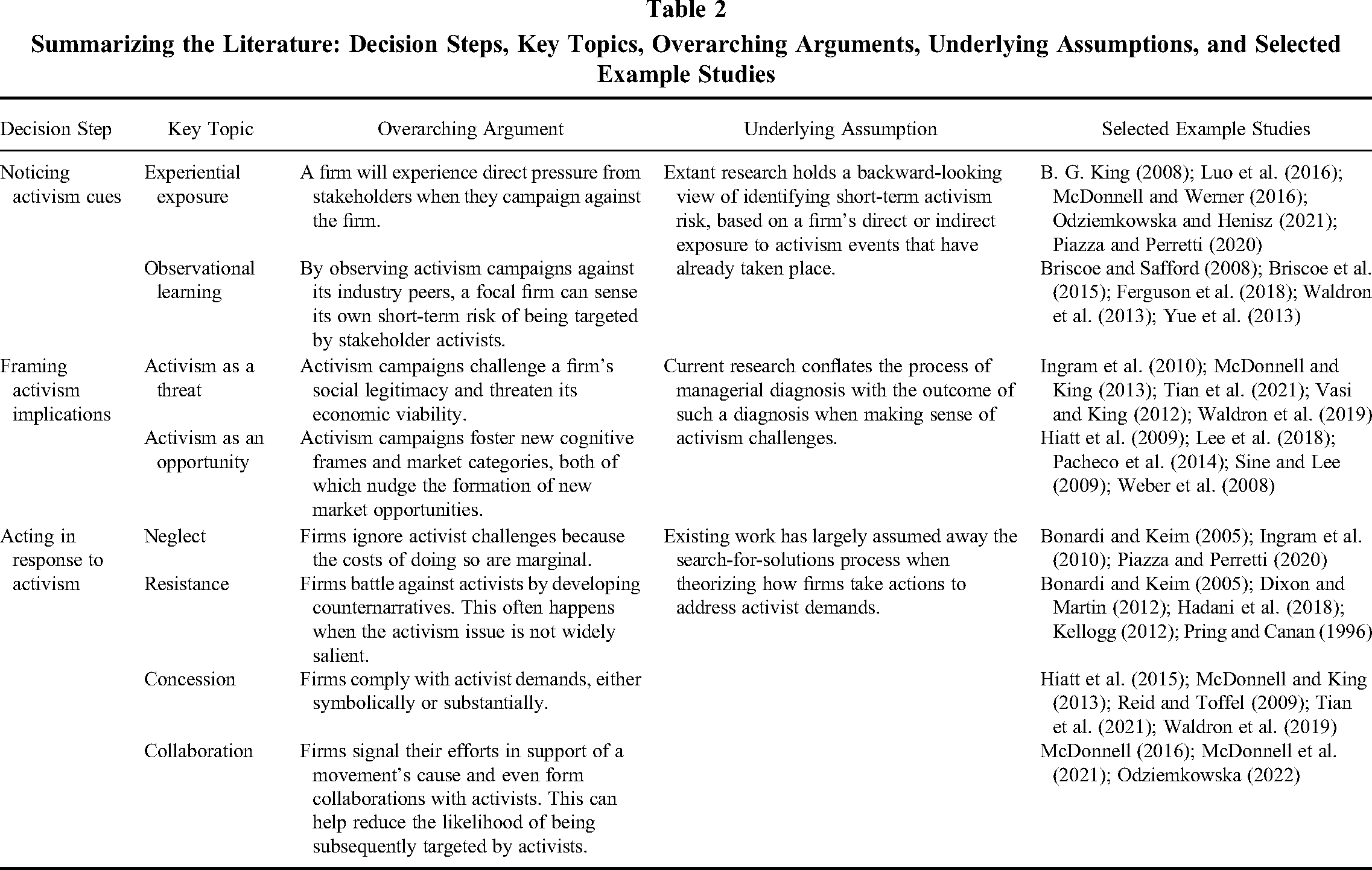
Whether a firm will respond to social activism is conditional on whether it notices the challenges mounted by activists. We categorize the research in this domain into two distinct topics, each centered on a different means of detecting activism cues: experiential exposure and observational learning. We highlight a key assumption underlying extant research: a backward-looking view of exposure to short-term activism risk, wherein firms mainly notice activism cues either through being targeted by activists themselves (Luders, 2006; McDonnell & Cobb, 2020) or by observing how peer firms are being targeted (Briscoe & Safford, 2008; Yue et al., 2013). We highlight the need to develop a forward-looking view of activism risk identification, wherein firms anticipate long-term activism risk and take action to prevent its occurrence. Table 2 summarizes the key arguments and assumptions in this research stream and lists selected example studies.
Summarizing the Literature: Decision Steps, Key Topics, Overarching Arguments, Underlying Assumptions, and Selected Example Studies
Experiential exposure
The most common channel through which firms notice activism cues is direct exposure to stakeholder pressures (Crilly, Ni, & Jiang, 2016; Del Guercio & Hawkins, 1999; Delmas & Toffel, 2008; Odziemkowska & Henisz, 2021; Surroca, Tribó, & Zahra, 2013; Vasudeva, Nachum, & Say, 2018; J. Zhang & Luo, 2013), wherein activists use social movement tactics or shareholder proposals to elicit changes in corporate behavior (David et al., 2007; DeCelles, Sonenshein, & King, 2020; DeJordy, Scully, Ventresca, & Creed, 2020; Ferguson, Dudley, & Soule, 2018; Flammer, 2015; Ingram & Inman, 1996; Reinecke & Ansari, 2021; Rowley & Moldoveanu, 2003).
Through social movements, activists drag firms “through the mud” with negative media coverage (Eesley, Decelles, & Lenox, 2016: 2425), naming and shaming firms to raise public awareness of both the issues and the targeted firms (Bartley & Child, 2014). These campaigns are often confrontational and radically reformative (Boone & Özcan, 2014; Buchter, 2021; Kudesia, 2021; Massa & O’Mahony, 2021; Negro & Olzak, 2019; Vaccaro & Palazzo, 2015), and it is hard for firms to ignore the ramifications of these aggressive attacks (McDonnell & Werner, 2016; Oh, Shapiro, Ho, & Shin, 2020; Vasi & King, 2012). To better co-opt a favorable stakeholder environment, firms have started establishing “stakeholder coordinator” roles to monitor relevant stakeholder sentiments (Wijk, Stam, Elfring, Zietsma, & Hond, 2013).
Alongside social movements, activists also employ corporate social responsibility (CSR) proposals as a strategic tool to advocate for socially responsible policies and practices within firms (David et al., 2007). These proposals are typically presented during annual general meetings or proxy voting processes (Goranova & Ryan, 2013). While many proposals are not approved by management (Flammer, 2015), they signal the evolving social norms in what is deemed socially appropriate by stakeholders. Moreover, recent research suggests that activist proposals can trigger ripple effects, prompting peer firms to strengthen their own CSR commitments (Cao et al., 2019).
Apart from direct exposure to social movements or activist proposals, firms can also sense the activism risk in the regulatory environment (Fremeth, Holburn, & Piazza, 2022; McDonnell & Werner, 2016), wherein stakeholders mobilize and engage in social movements that make use of the state as a strategic lever to advocate against firms (Hiatt, Grandy, & Lee, 2015; Marquis & Bird, 2018). These campaigns can have significant ramifications for firms because regulations not only shape resource flows across firms (Bronzini & Piselli, 2016; Hadani et al., 2018) but also exert a normative influence on firm behaviors (Lenox, 2006; Short & Toffel, 2010; L. Zhang, 2022).
Observational learning
A small but growing literature has focused on how firms identify short-term activism risk through an observational channel (Briscoe, Gupta, & Anner, 2015; Ferguson et al., 2018; Waldron et al., 2013). Firms do not experience any activism against them via this channel but rather observe how activists are campaigning against their peer firms and therefore sense the short-term risk of being targeted by activists if they do not adapt their behaviors (Briscoe & Gupta, 2016). For example, Yue et al. (2013) found that Target often interprets the protests targeting Walmart's new stores as an indicator of potential activism risk within a specific region, and then strategically chooses to establish its own new stores in regions where the perceived risk of activism is minimal. As another example, Briscoe and Safford (2008) found that firms that are not the direct focus of activism interpret a targeted firm's compliance with activist demands as an indication of potential activism risk for themselves if they fail to implement similar changes that align with the activists’ objectives.
In addition to observing peer situations, firms can also identify short-term activism risk by learning from public sentiment toward certain issues (Tian et al., 2021; Vasi & King, 2012; Yiu, Wan, Chen, & Tian, 2022). For example, Tian et al. (2021) found that during the 2012 anti-Japanese social movement in China, Chinese firms that were dependent on international business cautiously downsized or even terminated their business activities with Japanese firms so as to avoid being targeted by anti-Japanese activists.
Review summary
Most studies in this area have routinely focused on social activism that has materialized into active campaigns that may have ramifications for firms (Briscoe & Gupta, 2016). The result of such theorizing is a focus on how firms defend themselves in response to activist campaigns. However, as Parker, Krause, and Devers (2019: 254; italics in original) noted, “the everyday reality for most firms consists not of responding to such crises but, rather, avoiding and preventing them in the first place.” Current theorizing reflects an implicit assumption in extant research that short-term activism cues are noticed only in retrospect, leaving open the question of whether firms can anticipate long-term activism risk before it gradually materializes into active campaigns.
Answering such a question requires us to take a forward-looking view of how the risk of future activism is perceived, which will trigger a fundamentally different mechanism with regard to firm responses. Backward-looking theorizing centers on a defensive mechanism, wherein firms defend their positions in response to immediate activist challenges. However, forward-looking theorization focuses on a preventive mechanism, wherein firms use precautionary actions to snuff out activism before it begins to emerge.
The absence of theorizing on such a forward-looking view is largely due to empirical challenges in identifying would-be activism risk, which is ex ante in nature and therefore unobservable in reality. However, a recent article by Odziemkowska and Dorobantu (2021) suggests one way to overcome this challenge and make progress. The authors find that when mining firms make site-specific investments, they often strategically sign a contract with local communities to prevent the risk of long-term holdup from these communities. We believe a forward-looking view of sensing would-be activism risk holds great promise to advance current literature, and we will return to this topic later.
Framing Activism Implications
In the literature on how firms frame the implications of activist challenges, we identify two separately evolving research streams, wherein firms see social activism as either a threat (McDonnell & King, 2013; Minefee & Bucheli, 2021; Rao et al., 2011) or an opportunity (Durand & Georgallis, 2018; Haveman, Rao, & Paruchuri, 2007; Hiatt et al., 2009). In our review, we find that extant research tends to conflate the diagnostic analysis and framing outcome of activism implications. That is, the diagnostic analysis in the process of framing activism implications has been abstracted away from current conceptualization. Instead, extant research simply assumes that firms adopt a predefined view of what activism means for them—either a threat or an opportunity (Luo et al., 2016; Oetzel & Getz, 2011; Tian et al., 2021). Such a conceptual gap leaves a fundamental question unanswered in the literature: Why do some firms frame activism as a threat while others see it as an opportunity? We believe a deeper understanding of this question requires us to move beyond a highly mechanistic view of activism framing that involves minimal managerial reflexivity and will benefit from richer theorizing about how managerial diagnosis and interpretation unfold in the framing process. Table 2 summarizes the key arguments and assumptions in this research stream and lists selected example studies.
Activism as threat
Activism can pose differing yet consequential threats to firms (B. G. King & Soule, 2007; Martin & Dixon, 2010; McDonnell & Werner, 2016). The most common interpretation of activism implications is how activism campaigns threaten firms’ economic viability (Luders, 2006; Vasi & King, 2012; Waldron et al., 2013). This is because activism campaigns, especially protests and boycotts, can pose significant threats to the resources held by the targeted firms (Dorobantu & Odziemkowska, 2017; Oh et al., 2020). For example, in response to activist attacks, the government may choose to end their relationships with firms by reimbursing their campaign contributions and terminating their contractual agreements (McDonnell & Werner, 2016). As another example, when a firm makes site-specific investments that can potentially cause negative externalities, local communities will engage in collective actions to disrupt the firm's operations in the affected sites (Odziemkowska & Dorobantu, 2021). These and other activism-led interruptions will ultimately have ramifications for firm performance (Dorobantu, Henisz, & Nartey, 2017; Vasi & King, 2012).
Activism can also pose legitimacy threats to firms (Ferns, Lambert, & Günther, 2022; Kivleniece & Quelin, 2012; Osterman, 2006; Rao, Monin, & Durand, 2003; Stevenson & Greenberg, 2000; Wowak, Busenbark, & Hambrick, 2022). As distinct from economic threats that directly affect a firm's operations, legitimacy threats occur when activists create reputational pressures that undermine a firm's public image (Hiatt & Park, 2022; McDonnell & King, 2013). For example, Luo et al. (2016) found that Chinese firms that are ranked lower regarding their donations to disaster relief are more likely to feel reputational pressures, which creates the impetus for society at large to question their socially responsible image. In contrast to economic threats, legitimacy threats impose social sanctions (as opposed to economic costs) on the firms under activist attack (Minefee & Bucheli, 2021; Tian et al., 2021), which could ultimately impose indirect economic costs on the firms if they ignore such threats (Odziemkowska & Dorobantu, 2021). Recent research also suggests that legitimacy threats posed by activism campaigns can provoke uncomfortable dissonance for corporate insiders, resulting in the turnover of elite employees (McDonnell & Cobb, 2020). Thus, in firms that often see activism risk as a legitimacy threat, managers constantly monitor the stakeholder environment (Wijk et al., 2013) and assess whether stakeholders perceive their firms as intended, thereby determining the need for any actions to align stakeholder perspectives (Luo et al., 2016; McDonnell & King, 2013; Waldron et al., 2013).
Activism as opportunity
Targeting firms to elicit stakeholder-friendly changes can also raise public awareness of the issues related to activism campaigns (Lee, 2009), such as climate change (Ansari, Wijen, & Gray, 2013; Schifeling & Soderstrom, 2022), diversity and inclusion (Akchurin & Lee, 2013; Chuang, Church, & Hu, 2016; Wang, Whitson, King, & Ramirez, in press), and human rights (Bird, Short, & Toffel, 2019; Minefee & Bucheli, 2021). By raising public awareness of certain issues, social activism stimulates new cognitive frames (M. D. King & Haveman, 2008; York, Hargrave, & Pacheco, 2016), promotes new categories (Hedberg & Lounsbury, 2021; Schneiberg, King, & Smith, 2008), and even facilitates supportive regulation for positive changes (Fremeth et al., 2022; Lee, 2009). These outcomes foster sociocognitive elements that create a new market and support its functioning (Hargrave & Van de Ven, 2006).
Building on these arguments, a small but growing literature is dedicated to how firms view social activism as an opportunity for market formation (Lee et al., 2018; Vasudeva et al., 2018). For example, Hiatt et al. (2009) found that social movements that delegitimated alcohol consumption updated individuals’ attitudes and beliefs about drinking, and in turn, these sociocognitive changes created opportunities and demands for firms to produce nonalcoholic drinks. Ample evidence has been found for activism-driven market formation, such as in the energy (Pacheco & Dean, 2015; Sine & Lee, 2009) and food (Lee, 2009; Weber, Heinze, & DeSoucey, 2008) industries.
Review summary
Despite a focus in the existing literature on how firms make sense of the implications of activism, managerial reflexibility is assigned such a limited role that firms are often conceptualized as taking a predefined view of activism campaigns as either a threat or an opportunity. This conceptual gap reflects an implicit assumption that activist campaigns have a clear mapping to a particular problem (opportunity) that is so well structured that no managerial diagnosis (anticipation) of the problem (opportunity) is necessary for the decision-making process. This assumption, however, stands in stark contrast with the broader literature on decision-making (March, 1994), which argues that a causal diagnosis of the problems (opportunities) encountered is crucial for searching for solutions (Posen et al., 2018). As Mintzberg, Raisinghani, and Théorêt (1976: 274) noted, “diagnosis is probably the single most important routine [in decision-making], since it determines in large part, however implicitly, the subsequent course of action.” We believe integrating managerial diagnosis into the current conceptualization of framing activism implications will enable a richer understanding of the heterogeneity in corporate sensemaking of the activism implications.
Acting in Response to Activism
Extensive research has been dedicated to investigating this topic in the literature. In our review, we decompose the literature along the lines of four principal types of response strategies: neglect, resistance, concession, and collaboration. In doing so, we identify a critical assumption that has held back research progress. That is, existing studies tend to abstract away a key decision that firms may make when responding to activism—that is, to search for solutions. The conceptual omission might hold a key to a fundamental question that remains unanswered in the literature: Why do firms respond differently to social activism? We believe the direction of search may be a key factor in explaining such heterogeneity. Table 2 summarizes the key arguments and assumptions in this research stream and lists selected example studies.
Neglect
In the presence of substantial threats from activism campaigns and the consequential ramifications, prior studies have found that firms may simply ignore these activist challenges and continue as before. For instance, Piazza and Perretti (2020) found that despite the antinuclear protests that swept the United States from 1970 to 1995, many utility firms redoubled their efforts to complete the proposed nuclear power plants.
Neglect could be a risky choice, but firms tend to rationalize their decisions with a cost-benefit analysis (Luders, 2006). If the profitability of neglecting activists’ demands outweighs the costs, firms are likely to disregard the demands and continue to act as before (Bonardi & Keim, 2005). If the costs of neglect loom larger than the profits, however, firms are more likely to heed activists’ demands (Piazza & Perretti, 2020). For instance, when Walmart encounters aggressive protests against its proposed new stores, it presses on only when the opening is highly likely to be profitable; if profitability is less certain, it will withdraw its proposals (Ingram et al., 2010).
Resistance
Rather than simply ignoring activist campaigns, firms sometimes join battle with stakeholder activists over the issue at hand (Isaac, 2002; Kellogg, 2012). Extant research has identified two main approaches that firms use to resist activism attacks. The first is the creation of counternarratives, as aptly illustrated by an example mentioned by Bonardi and Keim (2005). In 1996, ABB won a bid to build a large dam in Malaysia. Concerned about environmental consequences both within Malaysia and beyond it, nongovernmental organizations organized protests and boycotts against the project and ABB. The firm reacted by issuing denials in the press that the project would bring about any environmental harm, stressing that the project was being carried out at the behest of the Malaysian government. Similarly, Minefee and Bucheli (2021) find that firms use counternarratives to prevent their reputation being tarnished.
The second approach is the use of nonmarket strategies to silence activist critics. For example, using a sample of S&P 500 firms, Hadani et al. (2018) found that firms likely engage in political activity to enlist the regulatory support of the U.S. Securities and Exchange Commission to legally omit social activists’ proposals. As another example, Pring and Canan (1996) found that firms often use strategic lawsuits to intimidate and silence activists through baseless but expensive legal proceedings.
Concession
Concession is the most common strategy that firms use to respond to activist campaigns (Waldron et al., 2013). However, the concessions they make can be either substantial (Briscoe, Chin, & Hambrick, 2014) or merely symbolic (McDonnell & King, 2013). Symbolic concessions amount to little more than face work, wherein firms ostensibly conform to activists’ expectations by promising to alter contested practices (Azar, Duro, Kadach, & Ormazabal, 2021) but without implementing any material changes further down the road (Waldron et al., 2013). Tactics used in such concessions include expressing the desire to adopt stakeholder-friendly policies (McDonnell & King, 2013), agreeing to change controversial behaviors (Waldron et al., 2019), and publishing reports that promote favorable endeavors related to social responsibility (Hiatt et al., 2015).
Other firms, however, do make substantial changes to their practices rather than merely managing impressions. These changes include reducing carbon footprints (Wijk et al., 2013), establishing diversity policies to support LGBTQ groups (Briscoe et al., 2014), donating to support disaster relief (J. Zhang & Luo, 2013), and engaging in self-regulation (York, Vedula, & Lenox, 2018).
Collaboration
A small but growing literature suggests that firms sometimes seek to collaborate instrumentally with activists (McDonnell, Odziemkowska, & Pontikes, 2021; O’Mahony & Bechky, 2008). Firms often take this option when they have been chronically targeted and lost ground to activists (McDonnell, 2016). The benefit of collaboration is twofold. On the one hand, firms can repair their damaged image by supporting activist campaigns for positive change (Odziemkowska, 2022). Doing so significantly reduces the likelihood of future activist attacks (McDonnell, 2016). On the other hand, through collaborations, firms use activist campaigns as a vehicle to gain competitive advantage in the market by sponsoring boycotts that protest the contested social practices of their competitors (McDonnell, 2016).
Review summary
While the repertoire of responses documented in extant studies significantly advances our understanding of how firms adapt their behaviors in response to social activism (Kellogg, 2011; Kim, Shin, & Jeong, 2016; McDonnell et al., 2015), it also raises a challenging question that extant research has not fully answered: Why does a given type of social activism lead to one type of corporate response when observed in one study but a different type of response in another?
This question reflects an important assumption underlying extant literature. That is, current research has predominantly treated the search process itself as a black box, examining the behavioral outcomes of organizational search rather than the decision-making process behind it. More specifically, most empirical studies view firms’ behavioral responses as being “pulled down” from the available repertoire of response strategies and deployed strategically to resonate with activists’ demands (cf. Posen et al., 2018). Much less attention has been given to how firms might have “built up” their response strategies from scratch in the first place.
Addressing this gap may require us to give more room to theorizing managerial reflexivity in the search process, with a particular focus on the direction of search as opposed to its behavioral outcomes. Such a theoretical focus also promises to illuminate the circumstances under which firms choose a particular response over the potential alternatives.
Toward a Research Agenda
We have taken a process perspective to review the literature on corporate responses to social activism. In this section, we first summarize the critical issues that we believe have held back research progress and then suggest a research agenda to address these issues and enable future progress in our understanding of corporate responses to social activism.
Issues in the Extant Literature
Through our process-oriented review, we have identified several underlying assumptions in the existing conceptualization of corporate responses to social activism. In this section, we discuss two overarching issues that we believe encompass the concerns mentioned throughout our review. Although they are interconnected, for clarity we discuss them separately.
A mechanistic conceptualization that involves limited managerial reflexivity
Existing research commonly depicts corporate responses to social activism as an overly routinized process that neglects managerial reflexivity. In such a conceptualization, for instance, the traditional perception of firms is that they categorize social activism as either a threat or an opportunity and then mechanically select a predefined response from their repertoire. However, such an overly routinized conceptualization is problematic for at least two reasons. First, the implications of an activism campaign against a firm can be ambiguous, as extensive research indicates that different firms interpret the same type of activism campaign (e.g., environmental campaigns) in different ways, with some perceiving the campaigns as a threat (Hiatt et al., 2015) and others as an opportunity (Sine & Lee, 2009). Second, and relatedly, firms can address activist challenges in many different ways. However, an excessively routinized conceptualization overlooks a crucial question regarding corporate responses: Where should firms look for ways to address the threat that activism poses?
The key concern underlying a mechanistic conceptualization of corporate responses to social activism is that it overlooks the essential element of managerial reflexivity in decision-making. Managerial reflexivity refers to managers’ introspective examination of the situations in which they find themselves (Suddaby et al., 2015). By engaging in a reflective process, managers can comprehend the activism challenges they face and assess the solutions available to them. In the absence of theorizing on how managerial reflexivity helps decision-making unfold step by step, current research tends to conflate different elements of firms’ responses to activism (e.g., searching for solutions and implementing plans). For example, when prior studies observe a correlation between activism challenges and corporate concessions, what are they really observing? Do the observed corporate actions reflect a particular search process, or are they the end result of a multifaceted search process involving undisclosed and ultimately unsuccessful attempts to enlist political backing in order to resist activism (Sutton, Devine, Lamont, & Holmes, 2021)? This neglect of managerial reflexivity in decision-making and a mechanistic conceptualization of the activism-response link has prevented us from understanding why firms respond to activism campaigns differently.
Overreliance on variance theorizing
Extant research has primarily relied on a variance theorizing approach, focusing on covariation between the factual presence of activism campaigns and the behavioral responses of the firm (Luo et al., 2016; McDonnell & King, 2013; Tian et al., 2021). While this approach has significantly advanced our understanding of firms’ response repertoires, it has two potential drawbacks that we believe may hold back further research progress.
First, the use of variance theorizing means extant studies rely on observable actions to build and test their theories. As a consequence, the literature has abstracted away the unobservable decision-making process that leads to the observable actions taken by the firm. This decision-making process involves (1) managerial diagnosis of activist challenges (making sense of the challenges) and (2) managerial search for solutions that will address activist challenges (identifying tools to address the challenges), including the direction of the search and the methods employed to assess alternatives. On the one hand, the conceptual omission of managerial diagnosis echoes the assumption we discussed in the Framing Activism Implications section, wherein scholars focus more on the interpretative outcomes of managerial framing than on the diagnostic process through which managers make sense of the implications of activism before they characterize it as either a threat or an opportunity. On the other hand, the conceptual omission of managerial search for solutions reflects the underlying assumption we discussed in the Acting in Response to Activism section, wherein scholars focus more on behavioral outcomes than on the search process that led to a particular response being chosen over the alternatives. The obscurity surrounding decision-making processes raises an unanswered question in extant literature: why a given type of activist challenge leads to one specific response at some firms but a differing response at others.
Second, and relatedly, because current research relies on using observable activism activities to test theories of corporate responses, it has commonly taken a backward-looking view of corporate responses to social activism—a key assumption that we identified in the Noticing the Cues section. In many ways, this retrospective view has benefited activism-response scholarship, enriching our understanding of how firms accommodate activist challenges (McDonnell & King, 2013; Odziemkowska, 2022) or explore new markets associated with activism campaigns (Hiatt et al., 2009; Sine & Lee, 2009). However, our current understanding is limited to how firms react to activism (against either the focal firm or its peers) when it arises, leaving open the question of whether firms take proactive actions to prevent long-term activism risk before it materializes into an actual threat. This appears to be a crucial conceptual gap, because firms are strategic actors that anticipate and take actions to forestall potential threats before such threats materialize (Barney, 1986; Chen, 1996; Teece, 2007).
Process Theorizing and Managerial Reflexivity: Overarching Concepts in the Proposed Research Agenda
Building on the two fundamental issues we have identified, we propose two overarching concepts that serve as the foundation for the research agenda we will propose. First, we suggest that current scholarship will benefit from taking a process-based theorizing approach (Langley et al., 2013) that captures how corporate decisions unfold in response to social activism. Second, and relatedly, we suggest that future research will profit from giving more room to managerial reflexivity in its conceptualization of corporate responses to social activism.
Unlike variance theorizing, which focuses on the covariation between variables, process theorizing emphasizes “how and why things emerge, develop, grow, or terminate over time” (Langley et al., 2013: 1). As such, process theorizing focuses on evolving phenomena, with particular attention to temporality and changes over time—aspects that are largely absent from variance theorizing (Cloutier & Langley, 2020). Focusing on evolving phenomena can help open the black box of the decision-making processes that lead to corporate responses to social activism. For example, it enables research to (a) add detail to our picture of corporate decision-making by incorporating the ambiguities around the managerial diagnosis of activism challenges, (b) unravel the dynamic unfolding of the corporate search for solutions, and (c) delve into the evaluations of available solutions that lead to a final response strategy. Overall, process theorizing helps advance current scholarship by investigating how analytical decisions unfold over time in response to activist campaigns.
Reconceptualizing the activism-response relationship with a particular emphasis on managerial reflexivity can also help advance extant scholarship. To do so, researchers need to recognize in their theorizing that managers may embody two important forms of reflexivity (Shen & Cho, 2005): latitude of objectives (i.e., the range of organizational outcomes available to pursue) and latitude of actions (i.e., the range of strategic behaviors available to execute). Latitude of objectives emphasizes the cognitive diversity in managerial goals and intentions, while latitude of actions underscores the broad behavioral repertoire available to managers in pursuing those goals (Parker et al., 2019). Thus, managerial latitude of objectives might illuminate firms’ divergent perceptions of activist campaigns as threats or opportunities. Similarly, managerial latitude of actions could help elucidate why the same type of activist campaign elicits varied responses across different firms.
In the following sections, we explain in more detail how a process-theorizing approach with a stronger emphasis on managerial reflexivity will broaden and enhance our understanding of corporate responses to social activism. We begin by highlighting the importance of managerial reflexivity and exploring how firms anticipate and proactively address activism risk before it materializes into active campaigns. Subsequently, we discuss how incorporating managerial reflexivity into decision-making processes enhances our understanding of why firms exhibit varied responses to activism. Moreover, we encourage future research to delve into the nonunitary nature of firm decisions and explore how decision-makers with conflicting interests may create new avenues for studying corporate responses to social activism. Alongside these three directions, we advocate for extending the process model employed in this literature review to investigate how firms engage in the search for solutions prior to responding to social activism—an area that has yet to be explored in research. In conclusion, we call for further research to conducting inquiries in different contexts. Figure 3 provides an overview of the logical connections between the identified issues and the proposed research agenda.
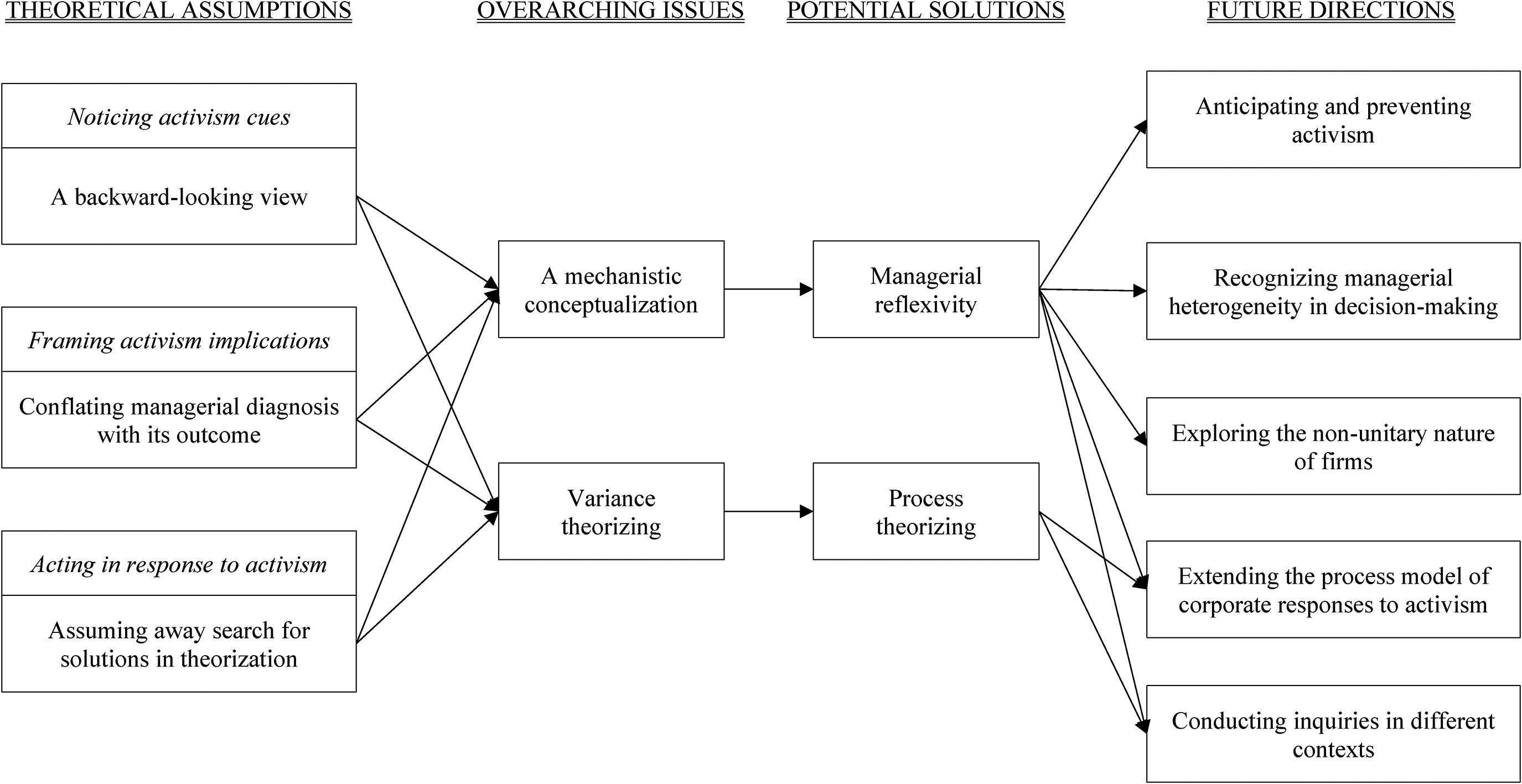
Logical Connections Between the Review and the Proposed Research Agenda
Anticipating and Preventing Activism
Much work in extant research has taken a backward-looking view of corporate responses to social activism, wherein firms react to activism challenges only once these challenges have become active. Little is known about whether firms anticipate activism risk and take preemptive actions to snuff out activism that otherwise would have happened (for rare exceptions, see Odziemkowska & Dorobantu, 2021; Yue et al., 2013). This appears as an important conceptual gap because, as Gavetti, Greve, Levinthal, and Ocasio (2012: 9) noted, “important decisions often result from deliberate attempts to anticipate future environments.”
While research into how firms learn from activist campaigns mounted against their peers represents a first step in this direction, much work remains to be done. For instance, we do not know whether and how firms notice would-be activism risk if social activists have yet to initiate any campaign. Additionally, the possibility of peer-focused activism is often a short-term risk that requires immediate change, yet we do not know whether and how firms anticipate and therefore prevent long-term activism risk. Thus, developing theories on how firms anticipate and prevent would-be activism can significantly advance current scholarship. For example, it would open up new avenues for research on firm-stakeholder interactions in the premovement period, which has so far escaped theoretical and empirical investigation.
More specifically, this stream of research will advance a long-range, forward-looking view of corporate responses to social activism, wherein firms anticipate long-term activism risk and take proactive steps to address it. In doing so, it will shift scholarly perspectives on the activism-response relationship from a reactive mechanism toward a preventive one. Relatedly, understanding how firms prevent activism from materializing may also enrich our understanding of why some firms are more likely than others to be challenged by activists: Firms that take preventive actions might be less likely to encounter activist attacks. Such investigations will enrich our understanding of corporate self-regulation on controversial sociopolitical issues (Hambrick & Wowak, 2021; Hou & Poliquin, 2023).
However, empirical examination in this area may encounter a crucial challenge: The risk of social activism that would have happened is often difficult to observe, given its ex ante nature. One promising solution is to exploit natural experiments that expose some firms to a higher (or lower) risk of would-be activism. For example, firms used to employ strategic lawsuits to discourage stakeholder-led protests and boycotts (Pring & Canan, 1996). These lawsuits, known as strategic lawsuits against public participation (SLAPPs), are intended to intimidate and silence critics who have spoken against the plaintiff in a public forum. More recently, some state legislatures in the United States have begun to enact anti-SLAPP laws that preclude individuals or firms from exploiting potential threats of litigation to silence critics. This staggered enactment across different states creates an opportunity structure that favors activism because it protects stakeholder activists from the threat of costly legal proceedings. As such, scholars have started to use anti-SLAPP laws as an empirical proxy for an increased risk of would-be activism and to investigate how firms take precautions to snuff out the risk of such activism before it materializes (e.g., Wu, Bruton, & Krause, 2023).
Another promising direction to overcome the unobservable nature of ex ante activism risk is to conduct qualitative research to provide inductive insights into how firms anticipate and prevent such risks. By interviewing executives and social activists, qualitative research can uncover valuable information about firms’ strategies to anticipate and mitigate potential activism risk, such as strategic communication with stakeholders. It can also explore the role of governance structures in shaping a firm's ability to effectively anticipate and prevent activism risk. Through detailed qualitative analysis, researchers can gain a nuanced understanding of the complex dynamics and contextual factors influencing firms’ anticipation of would-be activism risk, thus advancing our knowledge and providing practical insights for firms navigating these challenges.
Recognizing Managerial Heterogeneity in Decision-Making
Rather than decision-making proceeding mechanistically as a linear unfolding of a noticing-framing-acting framework, each step within the process can be influenced by managerial attributes and experiences. Extant research, however, has been largely silent on how managerial attributes and experiences may condition how firms notice, frame, and respond to activism challenges. This conceptual omission stands in sharp contrast with findings from the strategic leadership field, which has long understood that managerial attributes and experiences can have a profound impact on corporate decision-making (Hambrick & Mason, 1984; Krause, Roh, & Whitler, 2022). Strategic leadership plays an even more important role when managers have the discretion to command their firms to engage with stakeholders in ways that differ from their peer firms’ approach (Hambrick & Wowak, 2021). Thus, future research may find it promising to draw on strategic leadership literature and use managerial reflexivity as a theoretical lever to explore firms’ idiosyncratic responses to social activism.
First, by accommodating managerial reflexivity into theorization, our understanding of corporate decisions can be informed by the understudied ambiguity that surrounds the relationship between activism challenges and corporate responses. The fact that activism challenges can be framed as either threats or opportunities suggests that activism challenges are open to interpretation. This interpretative ambiguity might also hold a key to explaining why firms respond to activism differently.
Second, researchers can also open up their conceptualization of decision-makers to history and experience and examine how historical interactions with stakeholder activists will impact how firms frame activists’ challenges and therefore search for solutions. For example, it would be interesting to explore whether negative experiences, stemming from failures to meet activist challenges, will nudge managers to expend more effort on accommodating activist demands in their decision-making. As another example, future research could explore whether managers who have successful experiences with activist challenges are more likely to make overconfident assessments and encounter decision errors in response to concurrent activism campaigns.
Overall, drawing on strategic leadership literature and recognizing managerial heterogeneity in decision-making will open up new avenues for exploring the heterogeneity in corporate responses to social activism. This presents an opportunity for an integrative theoretical contribution (Okhuysen & Bonardi, 2011) by combining the highly complementary yet often disconnected streams of leadership and activism research.
Exploring the Nonunitary Nature of Firms
Given that extant work tends to neglect managerial reflexivity, it also tends to assume unitary decision-making when firms respond to activism campaigns. However, unitary decision-making stands in sharp contrast with the well-established evidence that decision-makers are actors with diverging interests (Cyert & March, 1963; C. M. Zhang & Greve, 2019). Research has long demonstrated that multiple groups of decision-makers with divergent interests may have a profound impact on how firms approach the problems they encounter and search for solutions (Joseph, Klingebiel, & Wilson, 2016). Thus, it seems reasonable that the constellation of diverging interests within a firm's decision-making body may affect how the firm interprets activism challenges and therefore how it develops a response strategy.
While such a research inquiry remains peripheral to the literature on corporate responses to social activism, recent work by Minefee and Bucheli (2021) suggests one way to make progress. The authors’ findings reveal distinct interests among different decision-making bodies within Shell when it faced activism threats from human rights campaigns during the apartheid regime in South Africa in the 1980s. Shell's South Africa subsidiary prioritized survival by seeking crisis management solutions. Meanwhile, subsidiaries in other countries aimed to protect their reputation from being tarnished by the events in South Africa. Headquarters primarily focused on preventing a precedent for future global boycotts being set. In many ways, these findings suggest the plausibility and the promise of advancing our scholarship by exploring the nonunitary nature of firms.
Apart from the headquarter-subsidiary relationship, future research may find it fruitful to explore how other factors underlying the nonunitary nature of the firm may help advance our understanding of why firms may react differently to activist challenges. These factors include business-group affiliations (Vissa, Greve, & Chen, 2010), organizational structures for decision-making (centralized vs. decentralized structures; Joseph et al., 2016), and CEO-board dynamics (Gulati & Westphal, 1999).
Extending the Process Model of Corporate Responses to Social Activism
The conceptualization of the firm's decision-making process in current literature overlooks a potentially critical aspect regarding responses to social activism. That is, when a firm encounters activism challenges, it is not presented with a response strategy but rather must search for solutions before it takes action. However, extant research tends to abstract away this search process, assuming such actions are readily available. This assumption stands in sharp contrast with research on organizational search (Greve, 2018; Posen et al., 2018), which has long demonstrated that firms will need to actively look around to discover a solution to the problems they face. Despite the plausibility of search for solutions in response to activism challenges, extant research on the activism-response relationship has not yet incorporated insights from the organizational search literature.
To adopt a behaviorally realistic approach, it seems necessary to redefine the process of responding to activism threats as comprising two distinct stages: (1) actively searching for potential solutions and (2) making a final decision by selecting from the considered alternatives (Posen et al., 2018). By theorizing search for solutions as a key step in decision-making in response to activism challenges, researchers can shine a light on an unanswered question in the literature: why firms respond to activism differently. The potential answers may point to the fact that firms that encounter similar activism campaigns can still search in different directions. As a result of a multidirectional search, firms may accumulate a pool of response tactics from which to select their final strategy. No research to date has investigated how firms choose one particular action over the alternatives that they could have taken in response to activist challenges. Advances in this area could also enable a richer and more complete understanding of why firms respond the way they do.
Conducting Inquiries in Different Contexts
Extant research is mostly done in democratic contexts, wherein individual actors are encouraged to engage in bottom-up campaigns on a matter of public concern. However, this seldom occurs in authoritarian states because grassroots initiatives are often politically repressed (Marquis, Zhou, & Yang, 2016). As a consequence, social activism in authoritarian states often takes forms other than social movements and activist proposals. For example, Luo et al. (2016) found that stakeholders in China use the internet as a platform to undermine firms’ public image by generating social comparisons based on different firms’ philanthropic donations to help with disaster relief. Such a social comparison is distinct from the “naming and shaming” tactics that are often used by stakeholders in democratic contexts (Bartley & Child, 2014), because these online activists do not specifically focus on or single out any particular firms for public scrutiny. However, they may still pose severe threats to a firm's public image, especially when the firm is unfavorably compared in the online rankings, which encourages firms to monitor such a risk and adapt their behaviors accordingly.
While research contextualized in authoritarian states remains peripheral to the literature on corporate responses to social activism, conducting more research in this area may offer unique insights. For example, focusing on firm behaviors in authoritarian states can also be a good opportunity to develop indigenous theories. As Bruton, Zahra, Van de Ven, and Hitt (2022: 1059) noted, “unlike universal theories, indigenous theories seek to explain questions, phenomena, or even specific situations in their unique contexts. In doing so, indigenous theory opens significant new research domains and offers unique and often nuanced understandings of different contextualized settings not possible with existing theories.”
Realistically speaking, indigenous studies often take a phenomenon-driven approach to understand the firms and their behaviors in a specific context (Bruton et al., 2022; Morris, Aguilera, Fisher, & Thatcher, 2023). Such an approach, while highly recommended in strategy research (Graebner, Knott, Lieberman, & Mitchell, 2023), has so far escaped scholars’ attention when studying corporate responses to social activism. In the future, scholars may find it fruitful to conduct phenomenon-driven research that may help develop indigenous theories to further extend the frontiers of current scholarship.
Conclusion
Taking stock of relevant studies in business research, we have reviewed the current state-of-the-art literature on corporate responses to social activism. We viewed corporate responses to social activism as a sensemaking process and therefore used a noticing-framing-acting framework to structure our review. In doing so, we identified common themes and underlying assumptions associated with each theme. Emergent from this review is a call for research that places a stronger emphasis on process theorizing and ascribes a more central role to managerial reflexivity. We then discussed several avenues that future research may follow to further advance our understanding of how firms respond to social activism.
