




Abstract
The accident at Fukushima Daiichi nuclear power plant on 11 March 2011 released radioactive material into the atmosphere, and contaminated land in Fukushima and several neighbouring prefectures. During rehabilitation, it is important to accurately understand and determine individual external doses to allow individuals to make informed decisions about whether or not to return to the affected areas. Personal dosimeters (D-Shuttle), used together with a global positioning system and geographic information system device, can provide realistic individual external doses and associated individual external doses, ambient doses, and activity patterns of individuals in the affected areas of Fukushima. This study involved more than 250 affected residents. The results help to determine realistic individual external doses, and corresponding time–activity patterns and airborne monitoring ambient dose rates, which can be used to predict future cumulative external doses after residents return to their homes in evacuation areas. In addition, insights gained by the study can help to explain the role of individual external dose measurements for affected residents in postaccident recovery, based mainly upon the experience gained in measuring, assessing, and communicating individual external doses.
1. INTRODUCTION
The accident at Fukushima Daiichi nuclear power plant in March 2011 released radionuclides into the environment and contaminated large areas of land in Japan. Seven years since the accident, radiation levels have decreased greatly due to physical decay, weathering, and decontamination operations. Although evacuation orders were lifted in April 2017 in many of the 12 municipalities (approximately 146,000 residents) from which all or part of the population was forced to evacuate after the accident, some residents are still not permitted to live permanently in their former residences. In addition, only a limited number of residents have returned to their original residences in areas where the evacuation order has been lifted (e.g. Fukushima Prefecture, 2017; Minamisoma City, 2017). Reasons for not returning include limited social infrastructure and employment opportunities, and concerns about remaining radiation (Reconstruction Agency, 2016). Approximately 60% of the evacuated residents responded that important information that would help them to decide whether or not to return to the evacuation areas included future radiation risks and the effectiveness of decontamination efforts (Reconstruction Agency, 2016). Thus, radiological conditions in the evacuation areas remain a concern of former residents deciding whether to return to their former residences.
The Japanese Government based the decontamination work and criteria for lifting the evacuation orders on additional individual external dose estimates using ambient dose levels. Calculation of additional individual external dose assumed that the background radiation (i.e. the national average exposure due to natural sources of radiation) was 0.04 µSv h−1, that individuals spend 16 h indoors and 8 h outdoors each day, and that the shielding effect of a wooden house is 0.4 (Ministry of Environment, 2011). Thus, the additional individual external dose was calculated by the additional ambient dose multiplied by a coefficient of 0.6. These assumptions result in the actual individual external dose received that is less than the estimated dose. Evidence also indicated that most of the measured dose from external radiation was less than the estimated dose calculated by the government-proposed model (e.g. Nomura et al., 2014; Naito et al., 2015, 2016, 2017; Miyazaki and Hayano, 2016). In the postaccident recovery phase, estimating realistic individual external doses is important to allow individuals to make informed decisions about their radiological protection if they choose to return to restricted areas.
In general, the monitoring programmes in Fukushima have used glass badge dosimeters to obtain the individual external dose. Although glass badge dosimeters are useful for large-scale personal monitoring and can gather large amounts of data safely and quickly, they clearly cannot identify when and where the radiation exposure occurred. To take appropriate dose reduction measures and to develop an individual external dose model that can estimate future doses in the affected Fukushima areas, it is necessary to identify when, where, and how much external exposure occurs, and to quantitatively relate individual external dose and ambient dose rates to behaviour patterns of individuals living in the affected areas. Accurate information on individual external doses is needed by government policy makers, people providing health care and radiation dose mitigation advice, and affected citizens.
A semiconductor silicon personal dosimeter, ‘D-Shuttle’ (Chiyoda Technol Corporation, Tokyo and National Institute of Advanced Industrial Science and Technology, Tsukuba, Japan), was used along with a global positioning system (GPS) and geographic information system (GIS) device to compare individual external doses and airborne-based ambient dose rates in Fukushima (Naito et al., 2015, 2016, 2017). Using a series of studies, valuable information was obtained that provided an understanding of realistic individual external dose levels and their variability in relation to time–activity patterns in Fukushima and radiation exposure, that could help predict future individual external doses of people with different time–activity patterns. This paper summarises the results of studies involving measurement, assessment, and communication of individual external doses obtained using D-Shuttle. In addition, role and limitations of personal dosimetry in the postaccidental recovery phase are discussed.
2. MATERIALS AND METHODS
2.1. Study participants and area
Approximately 250 residents of Fukushima Prefecture participated in the study. Locations of their homes are shown in Fig. 1. The study was conducted over approximately 3 - to 14-day periods between September 2013 and May 2017.
Study area and locations of participants’ homes. Some participants measured their individual external doses more than once. Maps were created using ArcGIS Version 10.2. (Environmental Systems Research Institute, Inc. Redlands, CA, USA).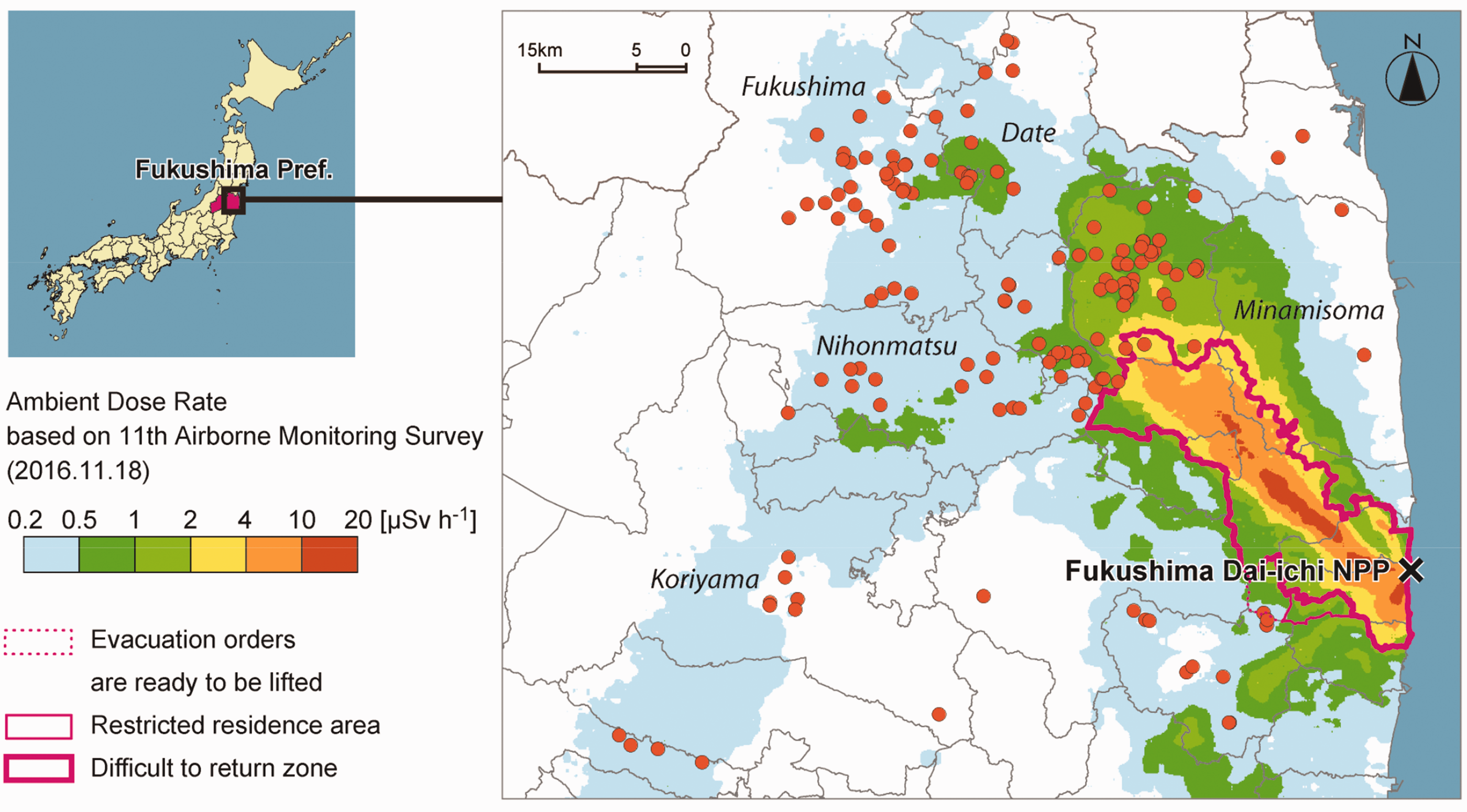
2.2. Determinations of individual external dose, ambient dose, and time–activity patterns
Personal dosimeters incorporating GPS receivers with time–activity diaries and GIS were used to determine when, where, and how much external exposure occurred. D-Shuttle was used to determine the hourly and total external dose (Fig. 2).
The D-Shuttle personal dosimeter (left) and global positioning system receiver (‘i-gotU’) (right) used in the study.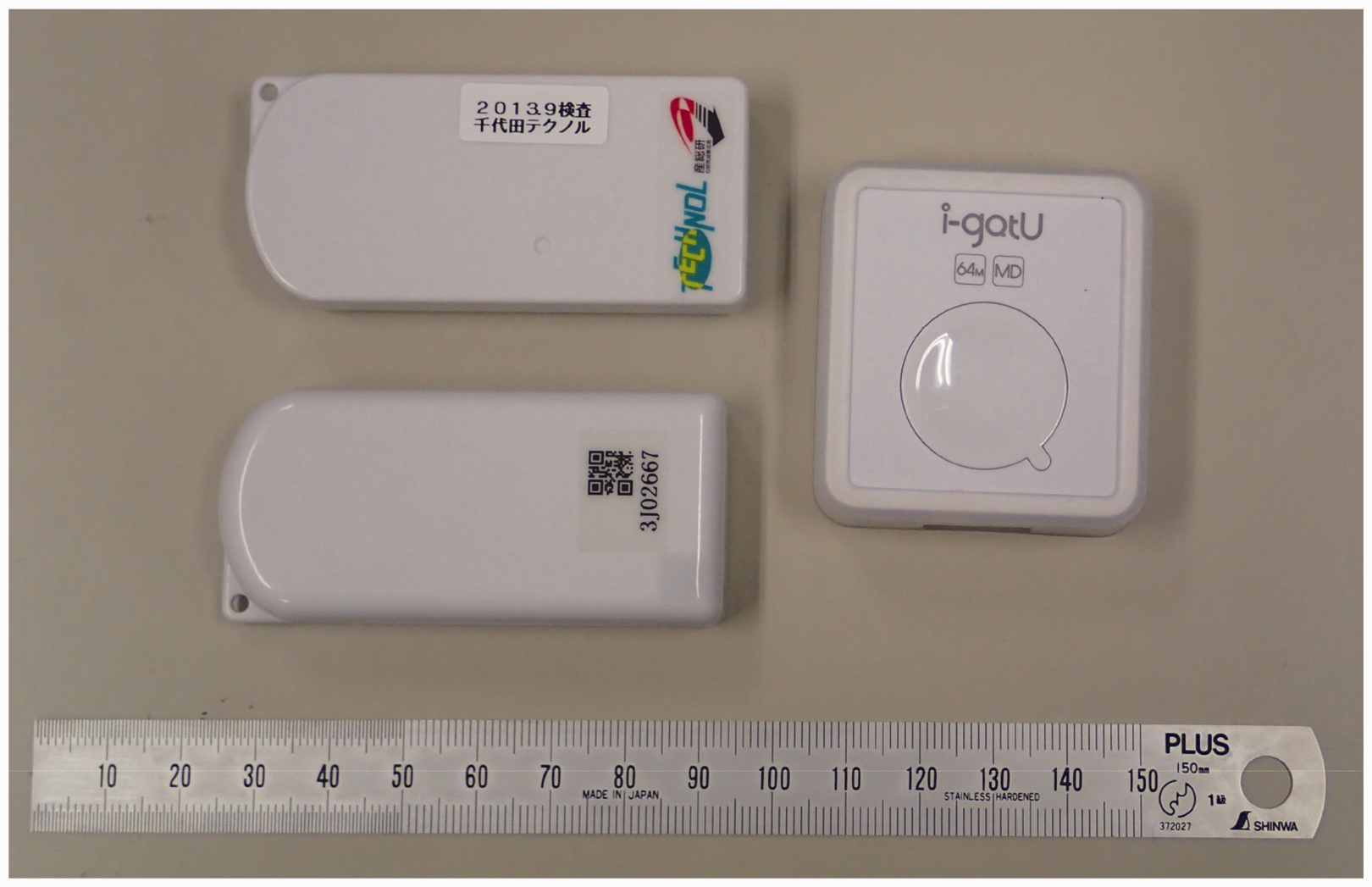
D-Shuttle consisted of a silicon semiconductor and could measure total dose ranges of 0.1 µSv to 99.9999 mSv. The sensitivity of D-Shuttle was calibrated with a 137Cs photon source at the Oarai Research Centre, Chiyoda Technology Corporation. The values measured by D-Shuttle were expressed as personal dose equivalent [Hp (10)]. Since Hp (10) values measured under the conditions encountered in the affected areas in Fukushima were comparable with the effective dose of isotropic or rotational irradiation geometries (e.g. Hirayama, 2013), the individual dose measured using D-Shuttle was considered to be a realistic indicator of the effective dose from external radiation exposure. D-Shuttle is recognised as a good tool for understanding individual external doses in affected areas. Miyazaki discussed the lessons learned from measuring individual radiation dose in the affected areas using D-Shuttle (Miyazaki, 2017).
The i-gotU GPS device (GT-600, MobileAction Technology Inc., Taiwan, Japan) is a commercial receiver with a data logger (Fig. 2), and was used to determine the location of study participants at short time intervals. In addition to GPS, self-reported weekly time–activity and location diary data were used to fill any gaps in the GPS data, and to determine indoor and outdoor positions. The GPS and time–activity diary data were used to determine the location and activity of the subjects.
Airborne monitoring surveys determined the ambient radiation dose (NRA, 2013). By relating the individual external dose measured by D-Shuttle with the ambient dose based on the airborne monitoring survey, values for ambient dose were adjusted for the study periods accounting for physical decay. Both the individual external dose measured by D-Shuttle and the ambient dose based on the airborne monitoring survey include doses resulting from artificial radionuclides (i.e. 134Cs and 137Cs) and from natural radionuclides. Analyses of the relationship between individual external dose and ambient dose used the additional doses resulting from artificial radionuclides. To calculate additional individual external dose and additional ambient dose, 0.54 mSv year−1 (i.e. 0.06 µSv h−1), a value obtained by Chiyoda Technol Corporation, was subtracted from the value measured by D-Shuttle, and 0.04 µSv h−1, a value determined by the Japanese Government, was subtracted from the ambient dose rate based on the airborne monitoring survey.
2.3. Responses to measured individual external doses from study participants
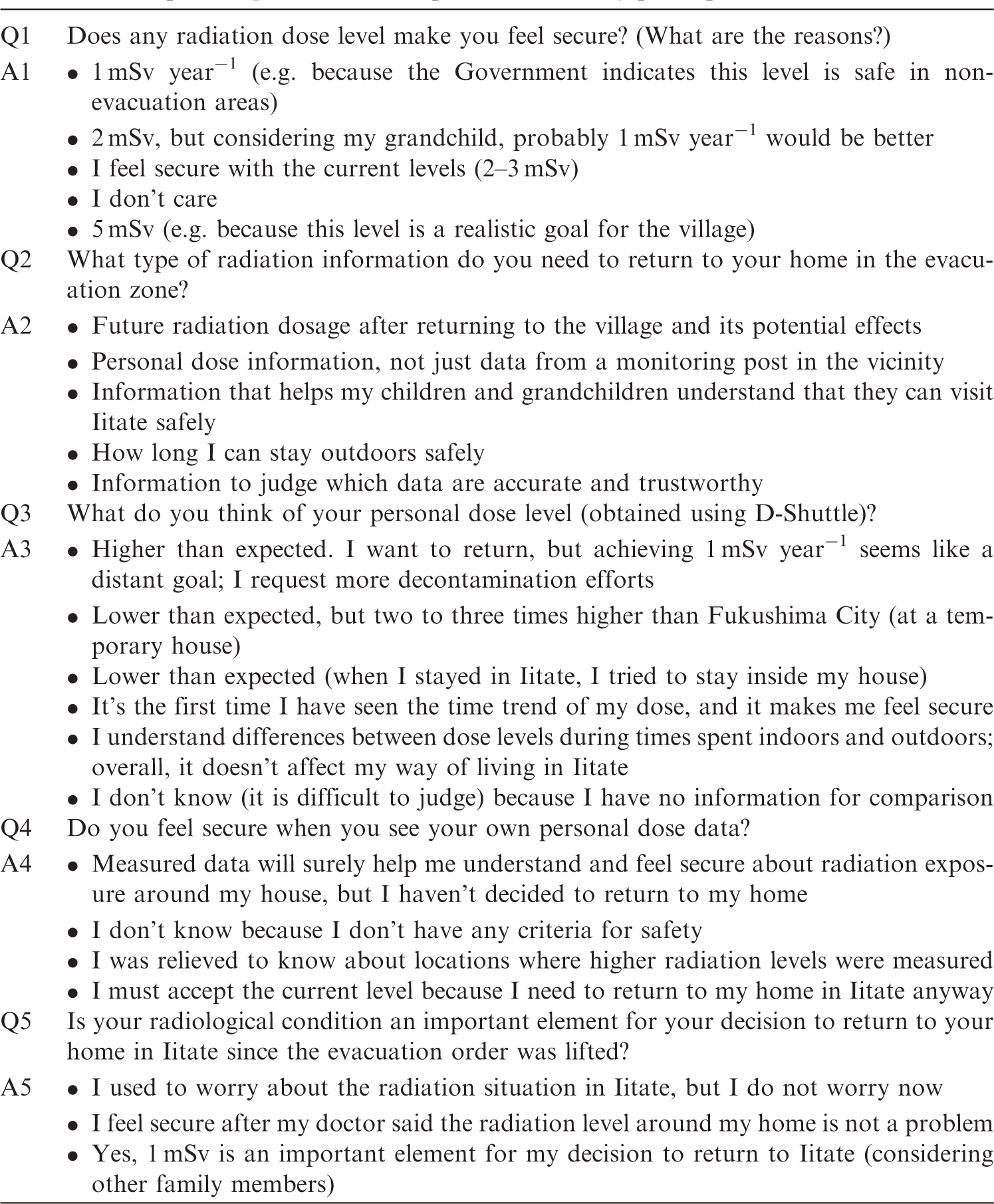
To investigate the participants’ responses to measured individual external dose information, participants answered a series of questions. Questions included the first impression of personal measured data, perception of safety, and influences on the decision to return to the evacuation zone. This investigation was conducted for participants from Iitate Village, because the entire village was designated as an evacuation zone after the Fukushima accident. The sample consisted of 20 Iitate residents who temporarily visited or worked in the village during the study period. Face-to-face interviews were conducted in the village when individual data measured for each participant could be explained. Each interview took approximately 10–20 min.
3. RESULTS
3.1. Examples of individual external dose obtained using the D-Shuttle
Fig. 3 shows examples of individual external dose measurements obtained using D-Shuttle. The profiles of individual external dose measurements depended on activity patterns and locations. Marked differences were observed for an orchard worker (A), who worked ouside in the orchard during the day and stayed indoors at night, and a construction worker (D), who worked outdoors in an evacuation zone during the day and stayed in a house located outside of the evacuation zone at night. A profile of a part-time worker (B) indicated that the radiation levels were greater at home than away from home; however, no similar significant differences were found in the profile of a housewife (C) living in Fukushima City. Such examples suggest that D-Shuttle provided useful information for residents to understand the radiation situation in their daily life, and integration with GPS/GIS technologies allowed identification of peak exposure locations and times. To determine effective individual external dose reduction measures, there was a need to identify source contributions to the cumulative external doses, and this provided useful information. For example, working outdoors contributed more than 70% of the cumulative individual external dose for Subjects A and D, while staying at home contributed significantly to the cumulative individual external dose for Subjects B and C.
Comparisons between individual external dose rate (blue line) obtained using the D-Shuttle and ambient dose rate (red line) based on airborne monitoring surveys. A, B, C, and D represent an orchard farmer, part-time worker, housewife, and construction worker, respectively (modified from Naito et al., 2015).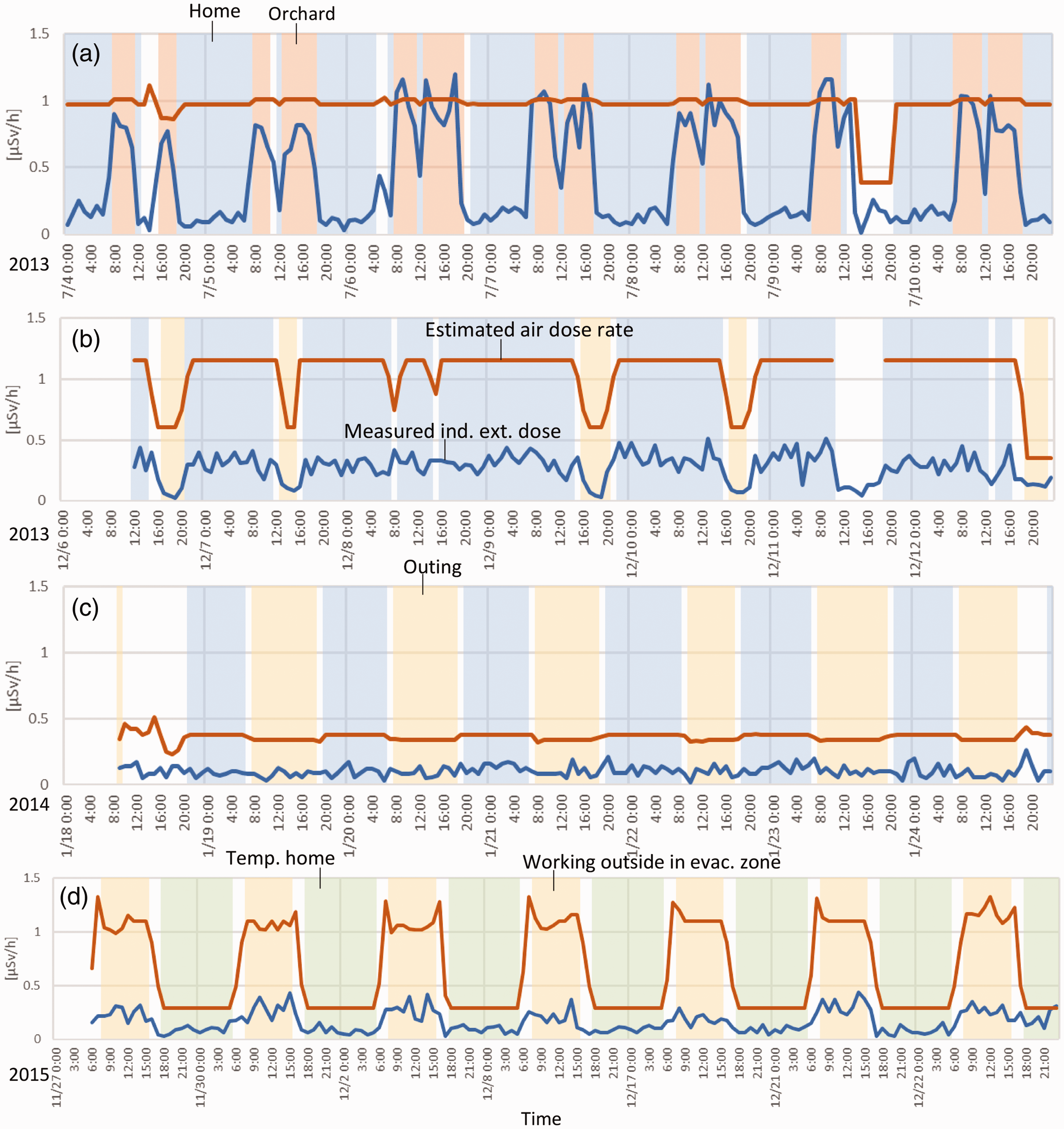
3.2. Relationship between individual external dose and ambient dose
The relationship between average additional individual external dose obtained using D-Shuttle and average additional ambient dose based on the airborne monitoring survey is shown in Fig. 4. The relationship between average additional individual external dose obtained using D-Shuttle and exposure ratio (ER) is presented in Fig. 5 (Naito et al., 2015, 2016, 2017). The ER is defined as the ratio of the additional individual external dose to the additional ambient dose. Individual external dose data, which allow location of the ambient dose data, were used in this analysis. The additional individual external doses obtained using D-Shuttle averaged 18% and 14% of the corresponding ambient dose based on the airborne monitoring surveys for study participants mainly from the non-evacuation zone and evacuation zone, respectively. These results indicate that the average additional individual external doses were significantly lower than the average additional ambient doses based on the airborne monitoring survey, and support the findings of Miyazaki and Hayano (2016) who reported that actual radiation doses were approximately 15% of the measurements obtained by helicopter in Date City, Fukushima.
Relationship between average additional individual external dose rate and average additional ambient dose rate for non-evacuation and evacuation zones. Red regression line represents the line used by the Japanese Government. Distribution of exposure ratio (ER) for time spent at home and outdoors in the non-evacuation zone and evacuation zone.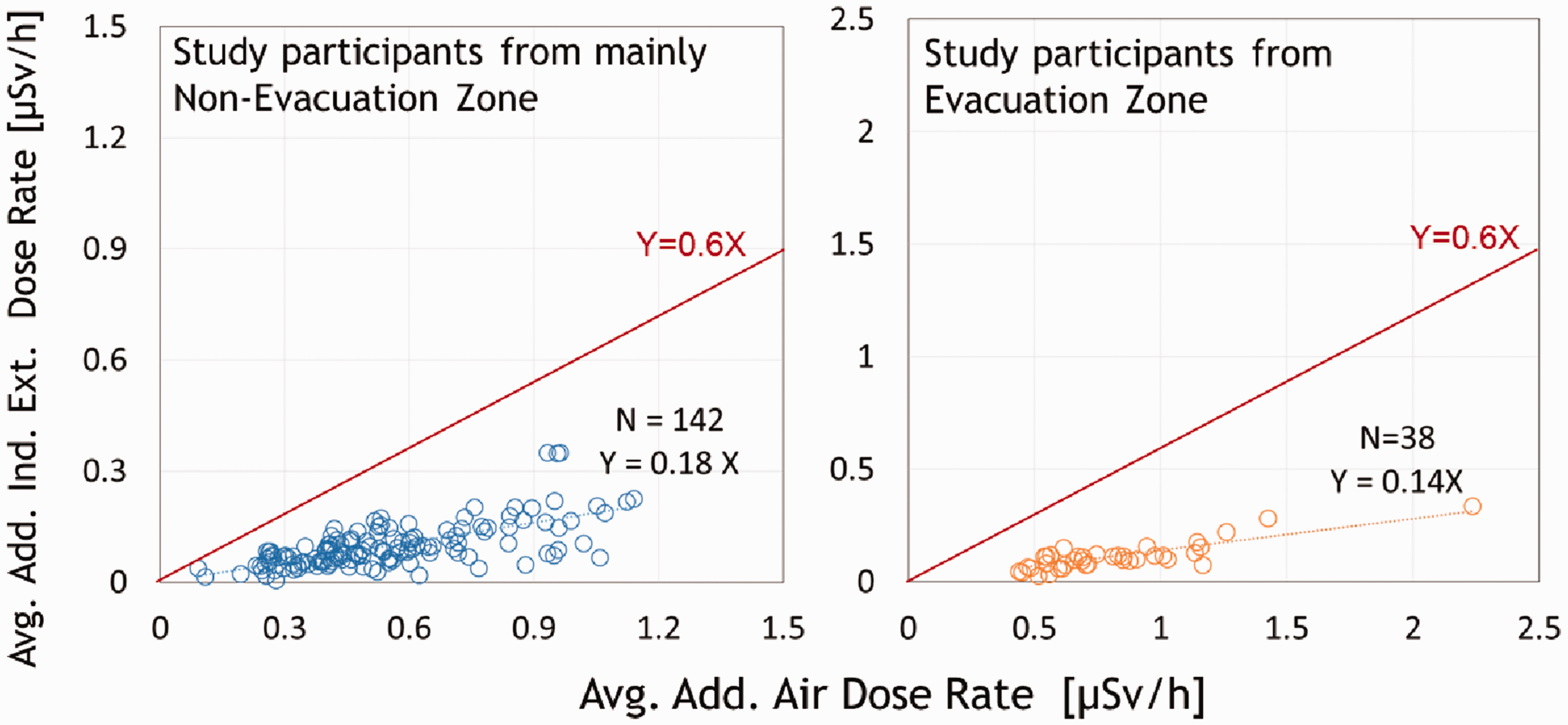
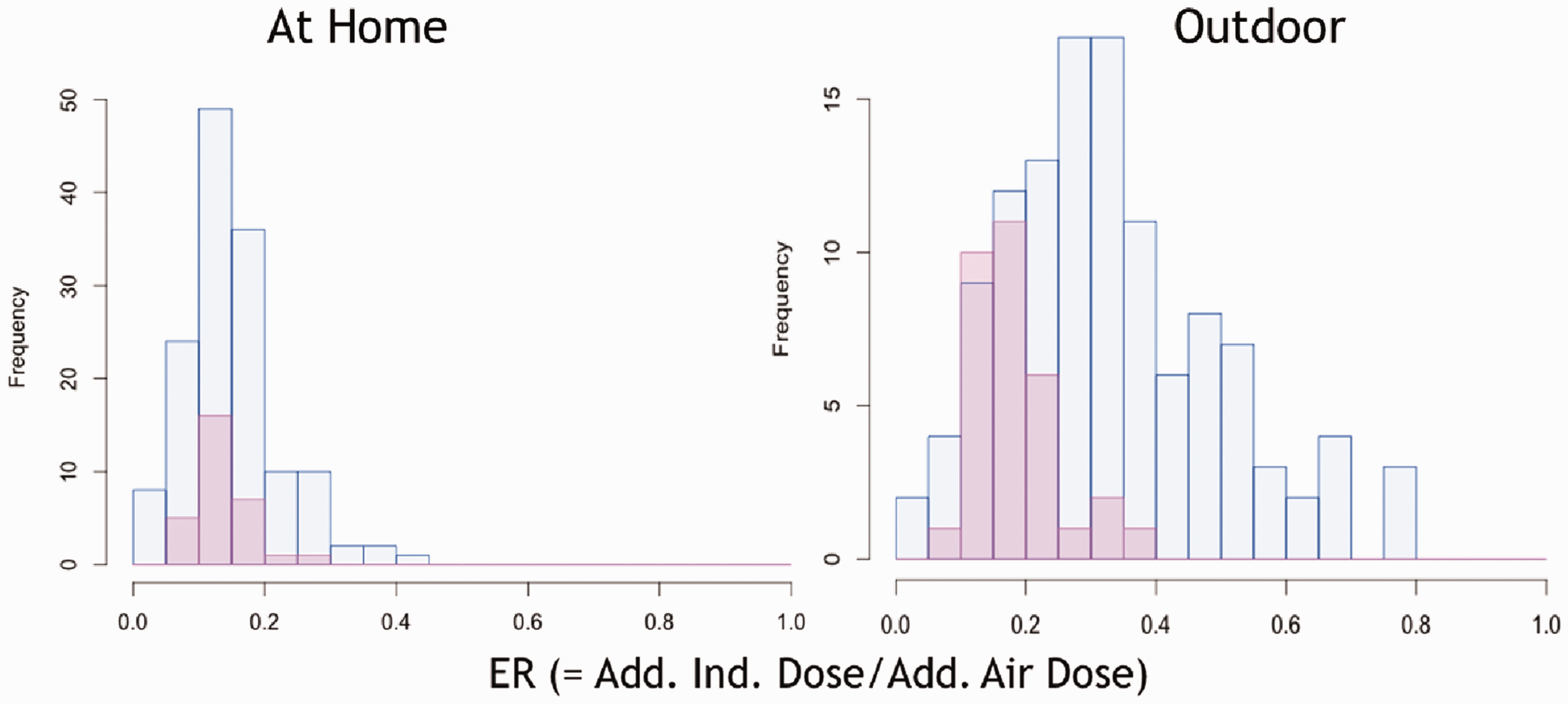
The distributions of ERs for time spent at home were similar in study participants from the non-evacuation and evacuation zones, while distributions of ERs for time spent outdoors were not similar. The median ER was 0.18 (range 0.08–0.36) for time spent outdoors within the evacuation zone, whereas the median ER was 0.32 (range 0.01–0.80) for time spent in the non-evacuation zone. The average ER for time spent outdoors exhibited large variation, likely due to the decrease in ambient dose rates in residential areas resulting from decontamination efforts in the evacuation zone. The airborne monitoring system did not detect this decrease, and thus contributed to lower individual external doses, which then provided lower ER values for time spent outdoors in the evacuation zone.
3.3. Participants’ responses to measured individual external dose
Examples of questions and responses from study participants.
4. DISCUSSION
4.1. Role of individual dosimetry in postaccident recovery
Individual external dose measurement is essential for a realistic assessment and the ability to manage individual doses during postaccident recovery. The conservative estimation method proposed by the Japanese Government may be an appropriate choice given the lack of actual measurement data during the initial stages after the accident. However, during postaccident recovery, understanding and estimating realistic individual external doses is important for those who want to make decisions based on their radiological protection as they decide whether or not to return to restricted areas. Previous studies demonstrated that the individual external doses measured by personal dosimetry are generally much lower than those determined using a simple model with ambient dose data. For residents, measurements of individual external doses were used to promote understanding of their current radiological conditions, the ability to protect against radiation exposure, and a reduction of anxiety about radiation. When results of individual external dose measurements were explained thoroughly by the appropriate personnel, individual dosimetry was particularly effective to reduce the anxiety levels of the residents living in areas where the annual external dose was expected to be less than the long-term government goal (i.e. 1 mSv year−1). If the measured external doses were less than 1 mSv, the residents generally considered their living environment to be ‘safe.’
The most effective way to develop and select effective radiation dose mitigation strategies is to attribute exposures to locations, activities, and sources. Studies using D-Shuttle, which can record hourly cumulative doses, illustrated that spatial–temporal radiation exposure assessment using GPS/GIS technologies allowed identification of exposure levels, locations, and times. Identifying source contributions to the total external doses based on measured values was also important in determining effective dose reduction measures. According to Naito et al. (2015), remaining at home contributed at least half of the total cumulative dose for most volunteers in the study. To understand the dose profiles of individuals, and to examine effective dose reduction measures, obtaining relative source contributions for periodic time intervals was important. However, expecting participants to carry dosimeters and GPS devices with time–activity diaries at all times for an entire year is unrealistic. Combining representative time–activity patterns for several occupations with dose measurements and time–activity data obtained from this type of study could provide valuable information for dose assessments of people living in areas contaminated by the nuclear accident (e.g. Takahara et al., 2014).
Accurate information on individual external doses is needed, not only by affected residents, but also by authorities, people providing health care, and people providing radiation dose mitigation advice. Measurements of individual external dose could help authorities to understand the dose distribution of the population, and to aid in determining the need for additional large- or small-scale protection measures (Miyazaki, 2017). In addition, the authorities could use individual external dose data to inform the public about actual radiological situations. The ER obtained using D-Shuttle and airborne monitoring was used to estimate potential annual individual external doses in all administrative districts of Iitate after the evacuation order was lifted (Naito et al., 2017). In fact, individual external dose data obtained using the D-Shuttle and an exposure model developed using measurement data helped the activities of the Investigation Commission of Decontamination for Iitate Village and Yamakiya District of Kawamata Town. The results provide practical, valuable information for understanding and estimating realistic individual external doses in the affected areas in Fukushima, especially for evacuees who want to know their individual external doses after returning to their original homes. This suggests that understanding specific time–activity patterns of the daily lives of people in the village would allow the formulation of realistic radiation exposure scenarios, leading to an examination of the need for further radiation reduction measures.
In Iitate Village, collecting edible wild plants (‘sansai’) and wild mushrooms is an important traditional seasonal event for many people. The number of people collecting sansai and mushrooms has decreased significantly since the incident at Fukushima Daiichi nuclear power plant due to concerns about radiation effects from internal and external doses in Kawauchi Village, where the evacuation order was lifted in 2016. What would be the additional individual external dose obtained when collecting wild plants and mushrooms in the mountains? What is the relationship between ambient dose rate and personal dose rate in areas that have not undergone decontamination, such as the mountains? What is the additional individual external dose when working in agricultural fields in the village? Data needed to answer these questions are indispensable for improving realistic dose assessment, for understanding radiological conditions, and for adopting protective measures for everyday life in the village. Individual dosimetry, such as obtained using D-Shuttle, may help to answer these questions to address the actual needs and concerns of the affected residents.
4.2. Caveats for the use of personal dosimetry during postaccident recovery
In this study, engaging and communicating with various stakeholders from the planning stage of the study led to the use of individual dosimetry (i.e. D-Shuttle) along with GPS and GIS technologies to provide valuable information for both the residents and authorities for understanding the external radiation situation in the daily lives of people in the affected areas of Fukushima. Although measuring individual external dose with individual dosimetry may help to determine realistic doses, some caveats should be noted. Miyazaki (2017) and Ando (2016) also reported some issues experienced during the use of individual dosimetry to help residents in the affected areas in Fukushima.
Results of questionnaires about radiation dose showed that people’s responses towards individual external dose measurement data varied. Even when measurement values were the same, some participants felt relieved and some felt uneasy. Some residents were concerned when the peak dose was greater than the reference value in their time series data. This was especially true for residents who received measurement results by mail, with no direct communication with people providing health care and radiation dose mitigation advice. These results suggest that communicating and explaining measurement results and the meaning of measurement data properly and promptly is important to residents. In addition, a system needs to be in place to help the human response to residents’ anxiety about the radiation measurement results.
Measurement by personal dosimetry itself may not provide realistic solutions to mitigate external doses. The selection of food items affects the internal dose. Thus, self-directive measures may help to manage internal doses. Changes in lifestyle can help to reduce external dose, but societal support (e.g. decontamination efforts) may also be needed. The vertically segmented administrative systems made implementation of external dose reduction strategies difficult. Developing a system or mechanism that could respond to measurement results and recommend or implement external reduction options requires the support of the authorities.
Once the regulatory reference value (e.g. 20 mSv year−1 and 1 mSv year−1) has been set and penetrated to the public, revising the initial criteria is very difficult. When the affected residents measure individual external dose, they usually compare their measured value with the reference value (e.g. 1 mSv year−1). Some experts also use the reference value to explain radiological situations for the affected residents. If the measurement values are below the reference value, the affected residents, in many cases, feel secure. The reference value has a strong impact on people’s lifestyle and decisions in the affected areas (Ando, 2016). The meaning and impact of the regulatory reference values which may be compared with measurement values should be considered and discussed.
Individual external dose data obtained using personal dosimetry are valuable to authorities. Authorities are responsible for determining realistic individual external dose situations and informing the public about the results. D-Shuttle has been used in several municipalities of Fukushima but, unfortunately, the measurement data obtained were mainly for those who wore the device, not for authorities. As the data obtained by D-Shuttle contain personal information, using those data for public purposes is difficult. Authorities need to prepare well-designed strategies to obtain and use the measurement data of individual external dose while protecting personal information.
5. CONCLUSIONS
Measurement of individual external dose by personal dosimetry is essential for understanding realistic radiation situations and planning effective measures during postaccident recovery. Use of D-Shuttle demonstrated that individual external measurement data can be used for residents and authorities during the postaccident recovery phase. Effectively utilising individual dose measurement data to develop protection measures during the postaccident recovery phase requires well-designed systems that involve not only measurement, assessment, and communication about radiation exposure, but also address limitations.
Footnotes
Acknowledgements
The authors wish to thank all the participants in this study for generously helping to obtain radiation dose and GPS data in this research. This work was supported by JSPS KAKENHI Grant Numbers 15H02854.