




Abstract
In 2009, the European Commission published the report of the high-level expert group that had been mandated to consider the scientific challenges posed by the issues of low dose effects of ionising radiation, and to formulate proposals for research policy evolution in this field at European level. This report formulated a first draft of a strategic research agenda. International scientific cooperation and an integrated approach are essential for the further development and enhancement of the international framework of radiation protection. This paper reflects on the results which have been gained through this integration approach: strategic research agendas have been established, policies and action plans have been developed for infrastructures and training education, several ambitious research projects have been launched, and a first draft of a European ‘joint road map’ for radiation protection research will be published. Reflecting on the challenges that lie ahead, this paper also presents the initiatives that the five European research platforms (MELODI: low dose research; ALLIANCE: radioecology; EURADOS: dosimetry; NERIS: emergency preparedness; EURAMED: radiation protection in medical applications) have jointly presented to the European Commission and Euratom member states to further enhance radiation protection research.
1. THE EUROPEAN STRATEGY FOR LOW DOSE RADIATION EFFECTS RESEARCH
The international radiation protection framework, as developed several decades ago under the auspices of the International Commission on Radiological Protection (ICRP), and applied through harmonised legislation across Europe in particular, is sophisticated due to the considerable body of scientific evidence upon which it is based, and efficient as shown by the significant reduction of individual dose in most planned exposure situations across the world in the last two decades.
This does not mean that it cannot and should not be improved further. Indeed, research is still indispensable to:
reduce uncertainties and knowledge gaps in radiobiology, which matter in the area of low dose and very low dose rate exposure; improve the radiation protection ‘tool box’ for certain existing exposure situations, for some radiological emergency scenarios, as well as in the wide and fast-growing field of medical exposure, considering the evolution of society towards more individualisation of care and risk management; educate and train new generations of experts and researchers, on whom the radiation protection system will always depend because of its scientific foundations; and maintain, improve access to, and develop scientific infrastructures in the wider sense of the term, including transnational large cohorts required by modern epidemiology.
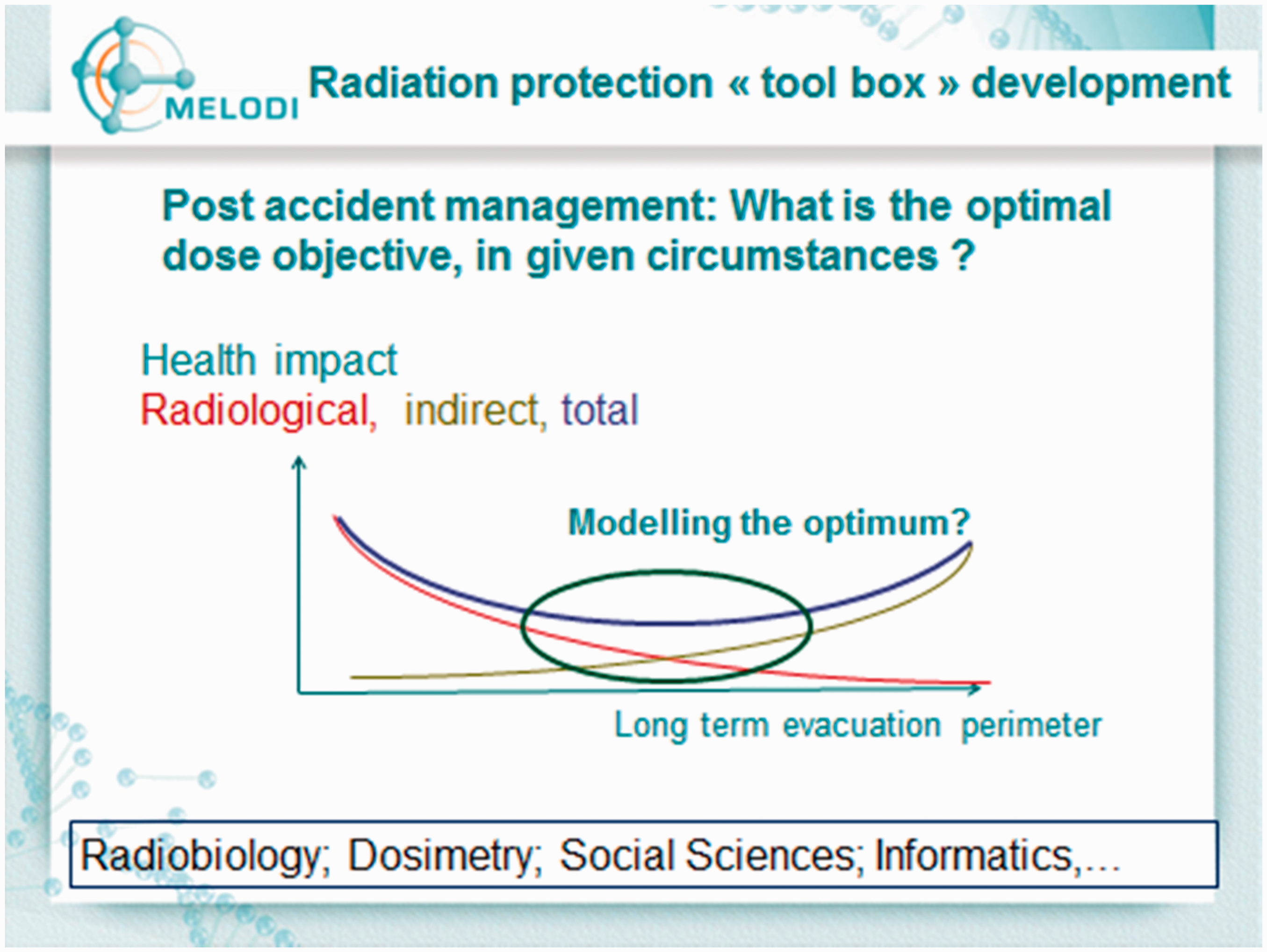
Some of the remaining research targets are extremely complex in nature as they can only be explored by investigating fundamental biological mechanisms (see Fig. 1), with research projects designed in such a way that it will be possible to validate any promising results through adequate molecular epidemiology to make operational use of such results for radiation protection purposes. Another source of complexity is related to the need to consider an individualised approach to risk. This is obvious in the case of patients where access to operational data on individual radiation sensitivity would change the outlook on exposure optimisation (and maybe justification). Social sciences will also need to be mobilised to investigate how individuals interact with a protection system designed for groups when confronted with existing exposures, which require protection measures, in the context of today’s open, knowledgeable, and connected societies. Such knowledge would, for example, be likely to modify the approach to radiological protection for the medium- and long-term management of lightly contaminated territories following an accident (see Fig. 2).
Low dose and (very) low dose rate biological effects are regulated not only by the eventual consequences of DNA damage in the impacted cells, but also by the functional level of response mechanisms that are activated by the radiation-induced stress. Today’s advances in fundamental biology allow such mechanisms to be investigated, with the goal of selecting appropriate biomarkers that could then be tested in molecular epidemiology cohorts in order to refine the dose/dose rate and effects relationship in low or protracted exposure scenarios. It is also likely that such biomarkers would be influenced by individual characteristics (genetic, epigenetic, environmental), providing avenues for considering individual sensitivity (e.g. for optimal planning of patient radiotherapy protocols). Public health detriment following long-term evacuation of populations from areas affected by radiological contamination due to a nuclear accident includes not only radiation-induced pathologies (which can remain rare if effective emergency measures have been implemented in time, including management of the food chain), but also pathologies induced by the socio-economic consequences of evacuation, which may be the dominant factor. As such, decisions on long-term evacuation should not focus solely on dosimetric assessments resulting from contamination levels in the territories concerned, but should also consider the foreseeable socio-economic-related consequences in order to aim for an optimally low total health impact. However, today’s models and information systems do not allow such an approach to be implemented, hence the need for multi-disciplinary research. Moreover, the availability of information on individual radiation sensitivity could further influence personal or family decisions in such a context, allowing a more individualised approach to the policy of return of inhabitants in less-contaminated zones.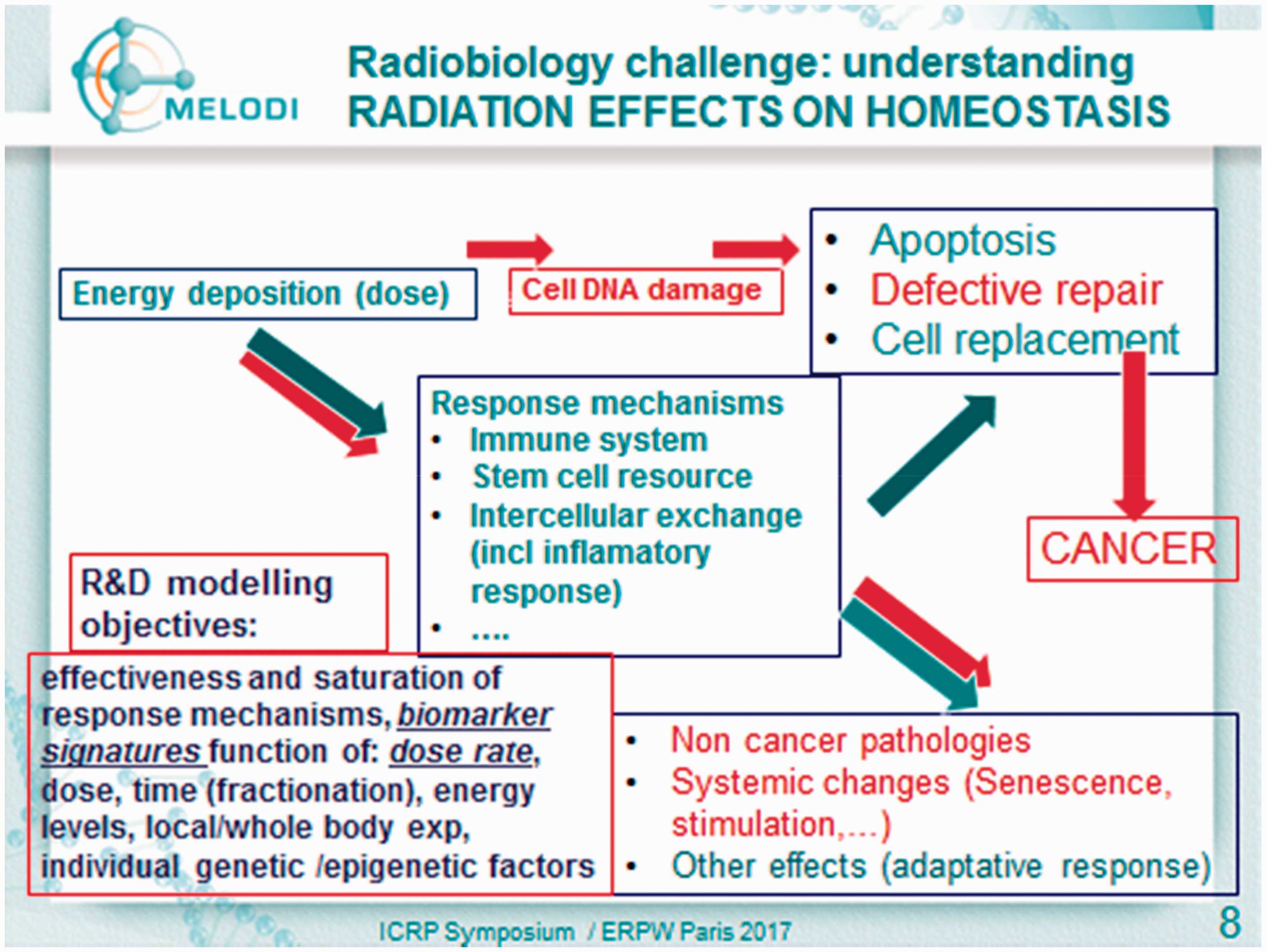
This sheer scientific complexity requires that radiation protection research benefits from:
a pooling of resources (scientific and financial) for a significant period of time, measured in decades rather than years, allowing radiobiologists to work hand in hand with fundamental and medical biologists as well as clinicians (who are funded via different channels in Europe); and a shared scientific strategy and an efficient budget allocation system to encourage multi-disciplinary cooperation, avoid dispersion or duplication of effort or discontinuity in progress, and promote excellence.
These conditions have, in principle, been recognised in Europe for almost a decade, and the success of research platforms in gathering scientific communities across disciplines of interest for radiation protection research is the first notable result of the policy engaged by Euratom to better integrate European research in this field.
Consensual strategic research agendas have been established, and are used effectively to define research call priorities. This has led members of the scientific community to recognise that cooperation and competition could be combined to a certain point, in accordance with the values of scientific excellence. Policies and action plans have been drawn up for infrastructures and training education. Several ambitious research projects have been launched, such as the latest CONCERT programme, which includes institutions from the majority of European Union (EU) member states, with a total budget approaching 40 M€. Soon, a first draft of a European ‘joint road map’ for radiation protection research will be published, and submitted for comments by the scientific community as well as by stakeholders. This road map will aim to provide three important sets of information in support of research strategies across Europe.
‐ An understandable and explicit link between societal concerns with respect to ionising radiation exposure and related research goals. This is important to legitimise public spending in this field of research. ‐ Medium-term, consensus-based research strategies to credibly achieve the agreed priorities. This is important to achieve an optimal use of funding resources. ‐ Elements of justification for a stable funding system for research, capable of addressing medium-term objectives. This is important to ensure the continuity and coherence of funding schemes at national and EU level.
2. FUTURE WORK
The next steps in Europe include the following actions.
Scientific targeted workshops and exploratory research and pilot study projects, funded with the support of the CONCERT programme and complementary projects (Euratom calls 2018/2019). These workshops will be aimed at establishing consensus on detailed research strategies to address specific and complex scientific objectives identified in the research road map, in preparation of future calls at EU and national level. The first of these workshops will be organised and co-funded by MELODI in 2018, in cooperation with EURAMED and EURADOS, with support from CONCERT, to develop a joint research action plan to address the scientific issues related to individual radiation sensitivity. This will take the form of a 3–4-day meeting of senior experts in the field, by invitation from platforms (20–30 people), followed by the elaboration of a consensus-based deliverable that will be published in a peer reviewed journal. It is anticipated that such a deliverable will help the European Commission and EU member states to better target some future research calls in radiation protection. It will also be useful with the view of updating relevant strategic research agendas (i.e. MELODI, EURAMED, and, possibly, ALLIANCE). Preparing for a joint platform technical secretariat. In a formal letter addressed to the European Commission in Spring 2017, the radiation protection research platforms made the proposal to set up a small joint technical secretariat, which would reinforce their multi-disciplinary capability to organise and support scientific dialogue across the scope of their respective fields, in support of the European policy of integration of research for radiation protection. Such a secretariat would be staffed by experts and administrative support personnel loaned by the platform member organisations. A ‘Euratom European joint programme +’ for radiation protection research in the 9th framework programme. The platforms have also expressed their willingness to participate in discussions aiming to improve the funding instruments associated with the future European 9th Euratom framework programme, which will succeed Horizon 2020, on the basis of experience gained through broad multidisciplinary projects such as OPERRA, CONCERT, and MEDIRAD. Last, but not least, international scientific cooperation mechanisms remain essential to maintain and consolidate consensus on the foundations and application of the worldwide radiation protection system as we know it today. These mechanisms have historically tended to operate downstream of research itself (e.g. through the United Nations Scientific Committee on the Effects of Atomic Radiation, ICRP, and the International Radiation Protection Association). There have been exceptions, such as the long-standing US/Japan cooperation on atomic bomb survivor cohort research, post-Chernobyl and post-Fukushima dedicated research projects, the development of a few transnational cohorts of exposed workers, and the Euratom research programmes. However, in the last few years, interest has grown for developing thematic cooperation on low dose effects and radiobiology. The USA and Japan have initiated international workshops to discuss how such research coordination could best be set up, taking into account the specificities of national (European) objectives, programmes, and funding mechanisms. Provided that some policy support is given to such initiatives, it seems clear that the fast development of information technologies and a wider sense of ‘connected societies’ will help transform such intentions into reality.
3. CONCLUSION
There is a broad consensus that the international radiation protection system is robust and performing well to address risks associated with most planned exposures. It is, however, sometimes forgotten that this performance owes a lot to the contribution of experts and supporting scientific infrastructures and training capabilities to implement this system. This protection system could encounter severe challenges in the face of public opinion on issues related to low-dose-rate risks affecting large populations, where existing exposure following a major radiological accident, for example, could be viewed as being dealt with inadequately, at a time when modern societies place care and protection for individuals at the forefront, as well as care for the integrity of the ecosystem. The use of radiation in the medical sphere could become even safer, as well as more effective, if new science-based tools (such as operational biomarkers) are able to consider individual parameters of radiation sensitivity. These aspects justify ongoing and sustained research efforts to maintain high-level scientific competencies, and to resolve – over the medium term – the remaining complex problems in Europe and worldwide that the international radiation protection system has yet to address.