




Abstract
The Norwegian Radiation Protection Authority and representatives from the CERAD Centre of Excellence participated at the majority of the International Commission on Radiological Protection dialogue seminars in Fukushima between 2011 and 2015. The open and sharing structure of the seminars contributed to an unprecedented understanding of the challenges faced by the general public affected by radioactive contamination due to an accident at a nuclear power plant. Most importantly by presentations from people in Fukushima, but also by presentations from lay people in Norway and Belarus who shared their experiences from the Chernobyl accident at several seminars. The seminars created new friendships and connections, which inter alia led to several exchange visits between affected people in Norway and Japan where worries and experiences could be shared in an open and reflective manner. The mix of actors (various experts, authorities, local populations) created joint learning across sectors and levels, representing an invaluable source of knowledge for organisations involved in nuclear and radiological emergency preparedness and planning.
1. WHY NORWAY?
Norway does not have any nuclear power plants, only two small research reactors. However, many neighbouring countries have nuclear installations and nuclear-powered vessels close to Norwegian territory. Further, Norway was the country outside of the former Soviet Union that experienced the greatest consequences from the Chernobyl accident in 1986 (Liland et al., 2009). Mitigating actions are still necessary in Norwegian agriculture and reindeer herding due to the radioactive fallout 30 years ago. A strong national nuclear and radiological emergency preparedness organisation is thus in place to deal with any incident or accident involving nuclear or radiological material affecting Norwegian territory, citizens, and interests abroad. In a changing world, we need to learn from both the past and the present to evolve concurrently with societal changes. The accident at Fukushima Daiichi nuclear power plant was an important learning point for Norway, as for most other countries in the world. The invitation from the International Commission on Radiological Protection (ICRP) for Norway to participate in the Fukushima dialogue seminars was thus most welcome. It provided the opportunity to learn, in-depth, about the challenges faced by officials and inhabitants in Fukushima Prefecture, representing an invaluable source of knowledge for organisations involved in nuclear and radiological emergency preparedness and recovery planning.
2. IMPRESSIONS FROM THE ICRP FUKUSHIMA DIALOGUE SEMINARS
The first seminar revealed a great deal of anger and frustration among the participants. There was a serious lack of trust in national authorities and a general feeling among people that they were not receiving correct or sufficient information. The Japanese public was not educated regarding radiation protection issues, and faced a difficult time trying to learn and understand what it was all about. Media representatives presented the dilemma of highly contradictory messages from different experts on the health risk of radiation – how could the general public know which experts to trust? Given the lack of sufficient governmental actions, some local professionals and volunteers started their own measurement campaigns and decontamination actions. Co-operation between the authorities and various other organisations was clearly not working satisfactorily in the beginning. Experience from Norway and Belarus on the handling of the Chernobyl accident was presented and much appreciated by the participants. They also appreciated the opportunity to meet and express their views in a wider group facilitated by an international organisation, where they all participated at an equal level. Japan does not have a tradition for open public debates, and the value of dialogues, such as this, was appreciated more and more over the years.
The seminars covered different topics and the experiences of different people over time, providing an excellent way to learn about the wider consequences of radioactive fallout and the diversity of views within a population. The experience shared by participants from Belarus and Norway added to that diversity, highlighting both similarities and differences in people’s perceptions of the situation across countries, and that there are several ways to recovery.
Over time, the understanding of this complex issue and possible solutions increased among the participants. The anger and frustration decreased gradually, and a more positive attitude developed over the years as knowledge increased, areas were cleaned, culture and traditions were resumed, and experience was shared with others. Some people have been important driving forces for this recovery, such as Ryoko Ando (the founder of the non-governmental organisation Ethos in Fukushima), Dr. Makoto Miyazaki from Fukushima Medical University (who performs measurements on people and discusses the results with them), Takahiro Hanzawa from Date city (involved in decontamination actions locally), and Prof. Ryugo Hayano from the University of Tokyo (who developed BABYSCAN for measuring babies). These individuals have been instrumental (in several ways other than those mentioned) in helping people in Fukushima to understand the situation and their own exposure to radiation, and regaining confidence that there is a future for towns and villages in Fukushima Prefecture. Many other private individuals have been driving forces, too, for local initiatives that have also contributed to empowerment of the citizens.
Even if the situation has improved over the years, challenges remain and will remain for many years. It seems, however, that people are regaining control of their lives and taking back their futures. It has been said that the positive development was more pronounced in the towns that took part in the dialogue seminars than in other areas. One participant said that after moving in and out of Fukushima Prefecture for the last 5 years, it was time to make a decision and settle down for good. Some people have already settled elsewhere and do not want to return to Fukushima Prefecture. Others are eager to move back to their hometown and cannot wait to be granted access by the authorities. A large majority of people have still not decided if they will move back or not. The very strict decontamination level set by the authorities (<0.23 µSv h−1 external dose rate) to allow people to move back has resulted in very slow recovery of the territory. Personal dosimeters, such as D-shuttle dosimeters, worn by the inhabitants show that the doses received are much lower than the calculated 1 mSv y−1 based on external dose rates of 0.23 µSv h−1. The legal implementation of this limit leaves very little room for optimisation, which is one of the fundamental principles in radiation protection. It also impairs the possibilities of the local people to participate in recovery actions and make their own informed choices.
The compensation scheme for evacuees, although necessary, creates suspicion and frustration among people and adds to the burden they already feel every day. Some participants reported that they feel stretched to their limit every day. Worries about the future, especially that of the health of children, remain. More than 2700 babies and small children have been measured using the BABYSCAN, and none showed detectable levels of radiocaesium (Hayano et al., 2015). Measurements of children and adults are helpful for people to regain control of the situation and trust in a future for Fukushima Prefecture. A misconception that lingers on, unfortunately, in Japanese society is that women from Fukushima who give birth in the future will have children with genetic disorders. There is no scientific evidence to support such a belief, yet people from Fukushima experience stigma and discrimination. One can only speculate why the Japanese authorities have not taken necessary actions to counteract such a misconception.
3. EXCHANGE VISITS BETWEEN JAPAN AND NORWAY
Through participation at the ICRP Fukushima dialogue seminars, new contacts were established between Japan and Norway. The presentations on post-Chernobyl management in Norway created interest among the affected people in Japan. A first visit by local Japanese inhabitants to Norway took place in September 2012. The Norwegian Radiation Protection Authority (NRPA) facilitated visits to the contaminated territories where they met farmers and employees at local food monitoring and control offices. They learned about the history after Chernobyl, and talked to farmers who are still implementing mitigating actions to produce meat and milk below the food intervention levels. They were shown measurements of foodstuffs and live animals (Fig. 1). NRPA acted solely as a facilitator, and did not interfere with the questions and answers exchanged between the participants. Instead, NRPA listened carefully and learned a lot from both the questions asked and the answers given. In addition, NRPA explained about the management of radioactivity in Norway and answered any related questions.
Discussions between Japanese and Norwegians on measurements of live animals prior to slaughtering (photo: Astrid Liland).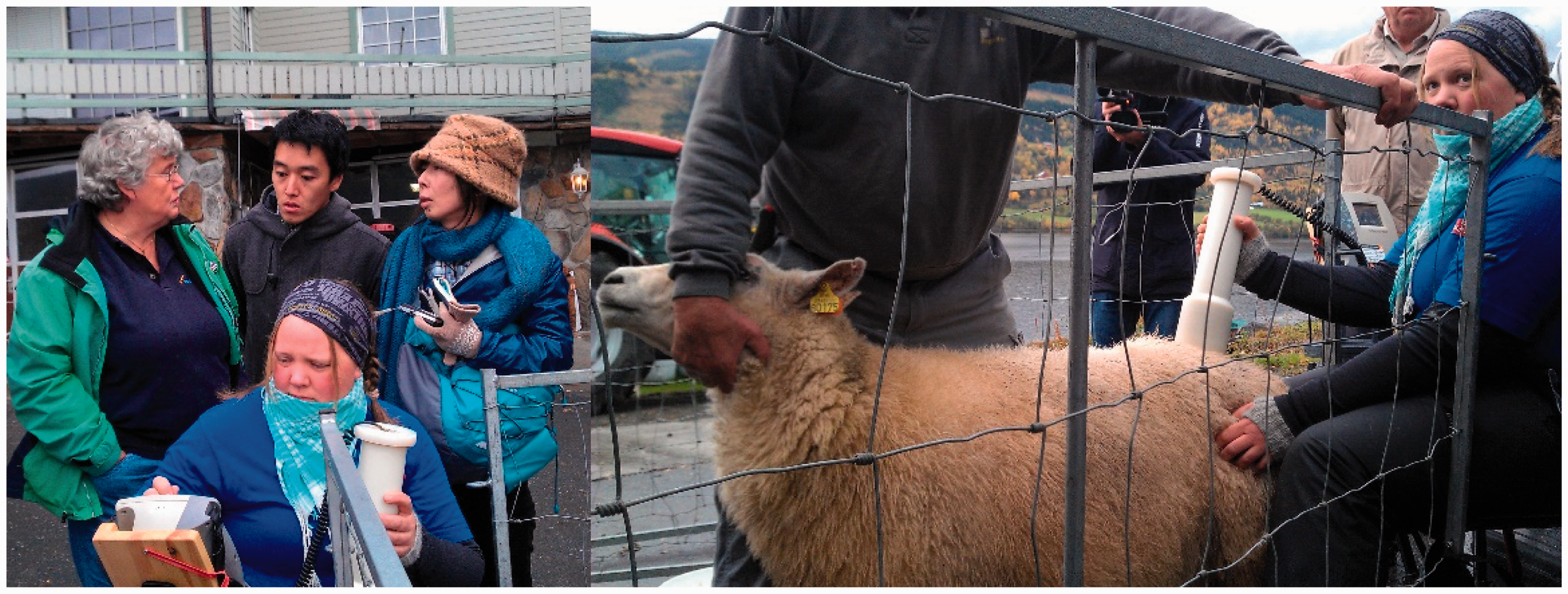
Through financial support from the Norwegian Ministry of Foreign Affairs/Norwegian Embassy in Tokyo, the exchange visits continued. In May 2014, three farmers, one cheese producer, and a reindeer herder took part in the eighth ICRP dialogue seminar and presented their post-Chernobyl experiences (Fig. 2). They later visited Fukushima farmers and a waste disposal facility.
Norwegian participants (in the middle) together with the other participants at the eighth dialogue seminar in Minamisoma (photo: NRPA).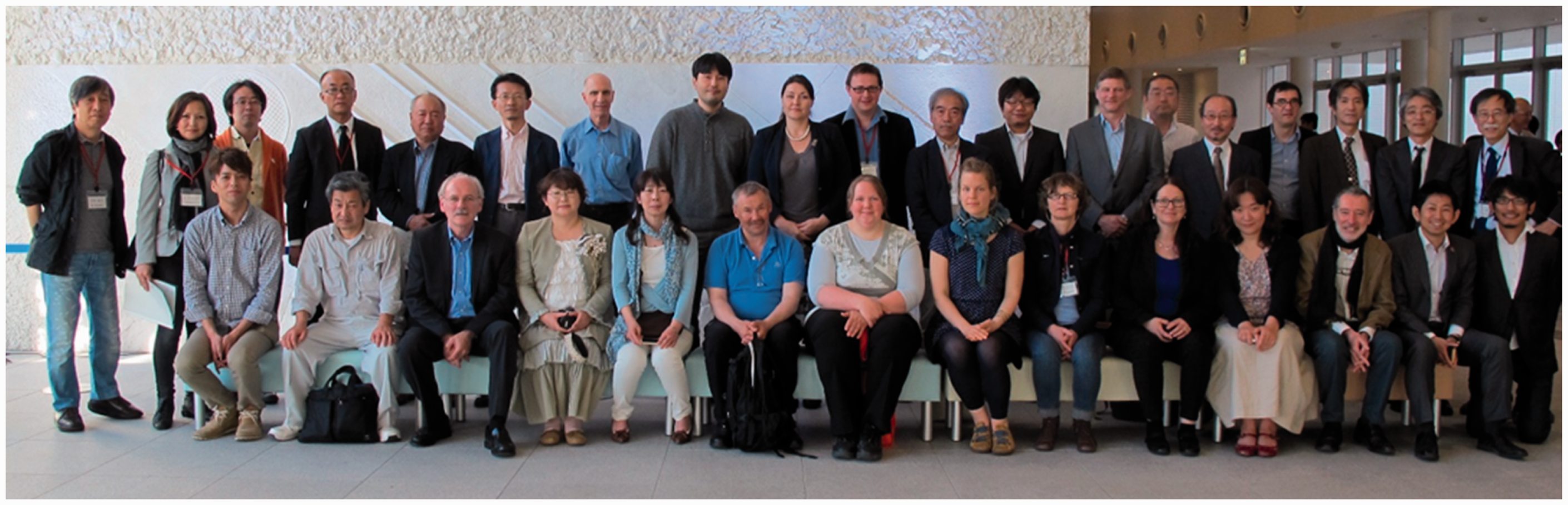
A return visit was arranged in September 2014 when farmers and local people from Fukushima Prefecture visited Norway. They talked to a reindeer herder and several farmers, as well as food safety officials in the contaminated territories, and experienced live monitoring of sheep and reindeer (Fig. 3).
People from Fukushima Prefecture observing the live monitoring of reindeer prior to slaughtering (photo: Astrid Liland).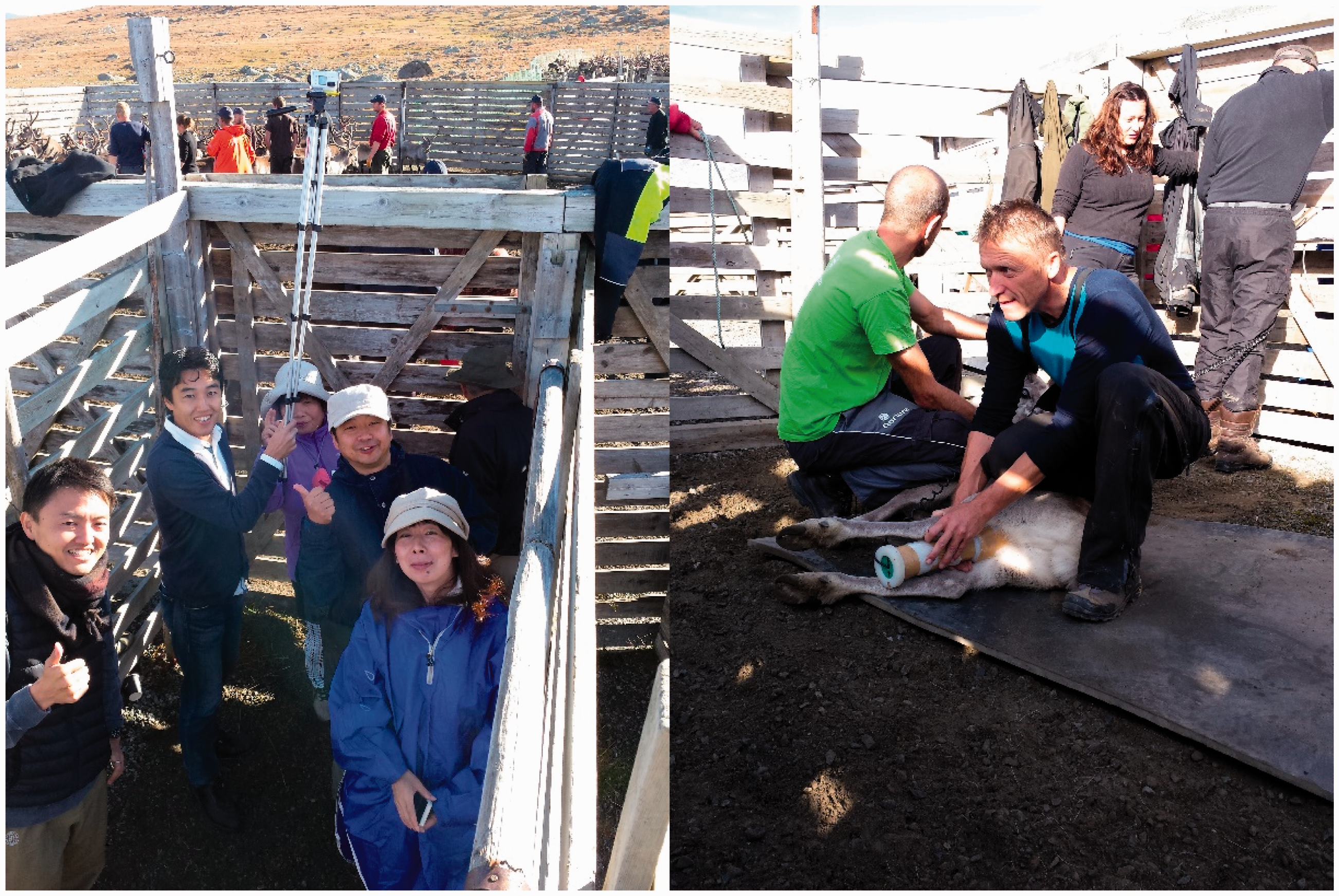
Exchange visits between affected people in different countries are valuable as they show solidarity with each other and can learn from each other's experiences. When authorities arrange meetings, they usually have a strict agenda for specific topics and only those topics are discussed. For exchange visits, there is an open agenda where any topics can be raised by the participants. This gives a broader view of the challenges faced by local inhabitants, as all questions and comments are welcome. A listening regulator can learn a lot from the questions and answers given, and can investigate in more detail with the inhabitants when something is unclear or puzzling. Taking part in exchange visits has been rewarding both professionally and personally.
4. WHAT DID WE LEARN?
Experiences from the dialogue seminars have strengthened the view of NRPA as a regulator that nuclear emergency preparedness planning must include plans for the late phase and the implementation of mitigating actions other than evacuation and iodine prophylaxis. Failure to plan beyond the evacuation phase was one of the reasons why recovery following the accident at Fukushima Daiichi nuclear power plant has been so slow. The testimonies from the Japanese people clearly show how the radioactive fallout affects everything in their life, and how the unpreparedness/lack of knowledge has added to their struggle. Reports were given on increased mortality among elderly people in Fukushima Prefecture due to evacuation (Yasumura et al., 2012), and increased frequency of diabetes, hyperlipidaemia, and hypertension in evacuated citizens (Nomura et al., 2016). This questions the justification of evacuation in less contaminated areas. On the other hand, people from the most contaminated areas face permanent relocation as they have been told that they will probably not be allowed to move back in their life time.
When comparing the actions taken in Norway (Liland and Skuterud, 2013) and Belarus after Chernobyl and in Japan after Fukushima, it is clear that there are different ways to recovery. There are similarities and differences in the societal consequences of the accidents; the reasons for these require further investigation. It seems clear, however, that the active involvement of inhabitants in mitigating actions leads to faster recovery with a greater degree of trust than setting the people aside while authorities take actions on their own. The solutions to a situation that challenges the whole society lies in the involvement of a wide variety of stakeholders. It is also necessary to educate people about radiation issues and risk management so that they can make their own informed choices. This should be supported by opportunities for personal radiation measurements, where the results can be discussed with trusted health personnel in their hometowns. Organising venues where people can meet and share their worries has been very important in Japan, as they have no tradition for open debates. Sharing the worries lessens the individual burden.
The ICRP dialogue seminars have certainly created new contacts and friendships of value on both a professional and personal level within Japan and between Japan and other countries (Fig. 4). I am personally most grateful for being invited to the seminars where I could listen to all the brave people of Fukushima, and where Norway and Japan could share their experiences with long-lasting radioactive contamination. The Norwegian participants have learned so much on many levels that inspire us to continue, and evolve, our work in nuclear emergency preparedness and radiation science.
New friendships – Jacques Lochard, Ryoko Ando, and Prof. Ryugo Hayano. Prof. Ohtsura Niwa in the background (photo: Astrid Liland).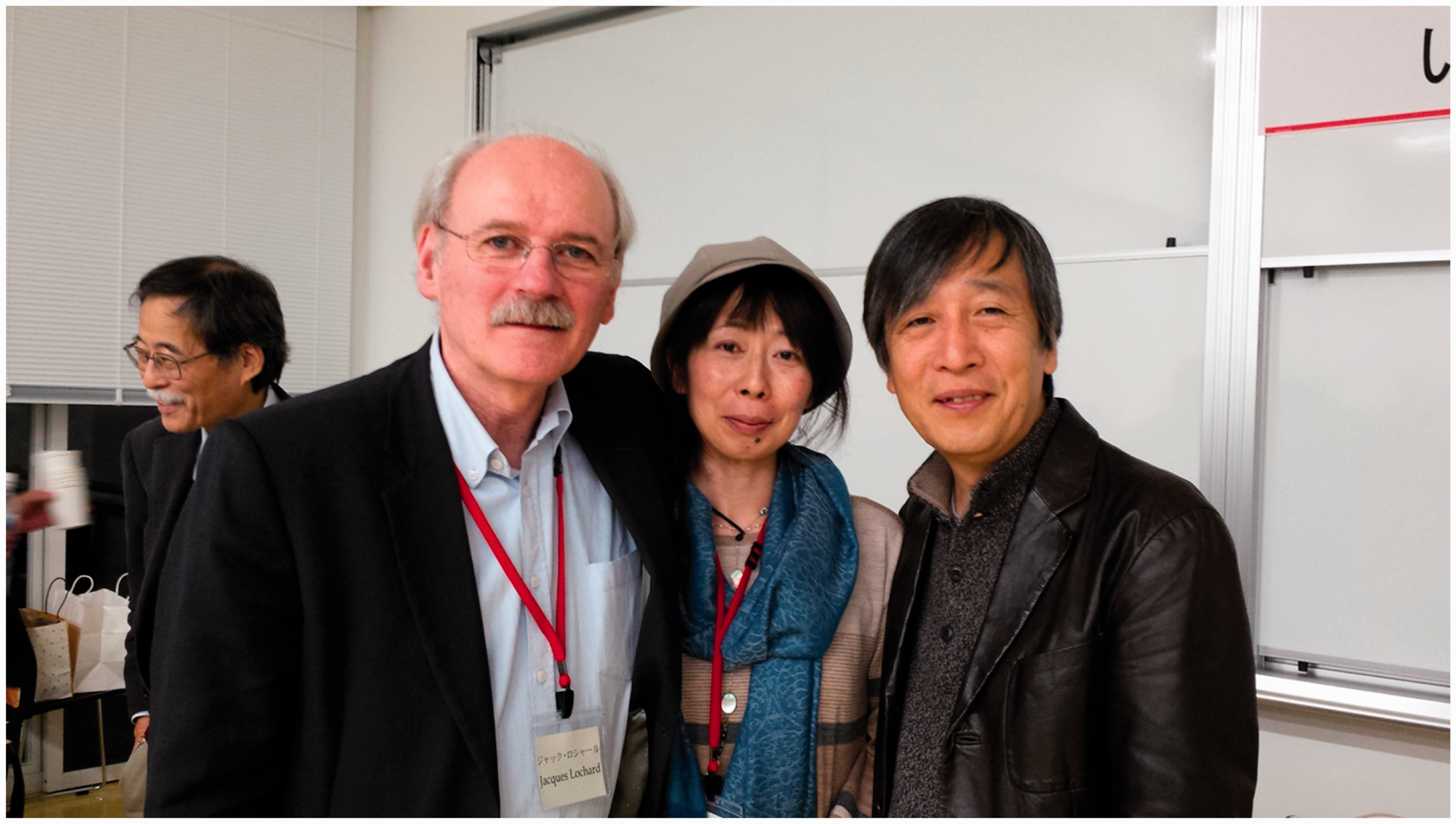
Footnotes
ACKNOWLEDGEMENTS
We would like to thank ICRP (particularly Jacques Lochard and Prof. Ohtsura Niwa) for inviting us to take part in the Fukushima dialogue seminars, all the participants for sharing their views on this challenging issue, the Norwegian and Japanese people who took part in the exchange visits, and the Norwegian Ministry of Foreign Affairs/Norwegian Embassy in Tokyo for financial support.