




Abstract
Iitate, a village in Fukushima Prefecture, suffered little damage from the Great East Japan Earthquake that struck on 11 March 2011. However, all village residents were belatedly ordered to evacuate 1 month after the accident at Fukushima Daiichi nuclear power plant. My family and I had to evacuate to the city of Fukushima, located 40 km from our home in Iitate. This came at a time when my husband and I were planning to start research on Natsuhaze (a type of blueberry grown in Japan) after his retirement. There were conflicting reports. On one hand, the media reported that it was not possible to live in Fukushima. The village of Iitate organised a lecture by an expert to assuage the fear of the residents. The evacuation order 1 month after the disaster contradicted what the expert was saying, and appeared to amplify distrust among the residents. I tried to arrive at my own judgement by measuring the ambient radiation dose in and around my house. Participating in the International Commission on Radiological Protection dialogue seminars provided accurate understanding of the situation. Measurement of radiation doses of wild plants that my husband’s father had been cultivating for over 30 years has given me many insights, and I had no concerns about returning to Iitate.
1. SIX MONTHS AFTER THE DISASTER
I live with my husband and his parents. At the time of the accident at Fukushima Daiichi nuclear power plant, my husband was a principal at a prefectural senior high school. He was due to retire at the end of March 2011, but his retirement was postponed for 4 months in the wake of the disaster. Besides working as a high school teacher, my husband breeds and registers new varieties of potatoes and pumpkins. He had a field for breeding experiments. In late March 2011, before the evacuation order was issued, my son sent us an e-mail saying, ‘Soil in Iitate is badly contaminated. Father should stop experimenting. He shouldn’t produce anything in the field.’ My husband and I discussed this and decided to look for a potato field outside Iitate. After we learned that an evacuation order was about to be issued, we asked an acquaintance to look for a field for seed potatoes with a house nearby for evacuation. We felt that my husband’s parents, who made a living as farmers in Iitate, needed a house as well as a field to enable them to live a meaningful life.
My father-in-law, who was 85 years old at the time, had been cultivating wild plants and wildflowers (Fig. 1) for more than 30 years, developing new methods for cultivation and propagation. Some of the wild plants he grew were popular items in supermarkets in Tokyo. It must have been frustrating to leave home and leave his crops untended, just at a time when he was planning to start full-scale cultivation of his wild plants. As looking after his wild plants and wildflowers kept him going, we encouraged him to return home every weekend to look after the plants after we had evacuated. For safety precautions, we measured the ambient radiation dose in the field and knew that radiation levels were not a concern for short stays. NHK, Japan’s national public broadcaster, made a documentary about my father-in-law, which was titled, ‘For the day when I will eventually return home.’ The title of this programme inspired me to prepare for our return to Iitate while we were displaced.
Wildflowers near home.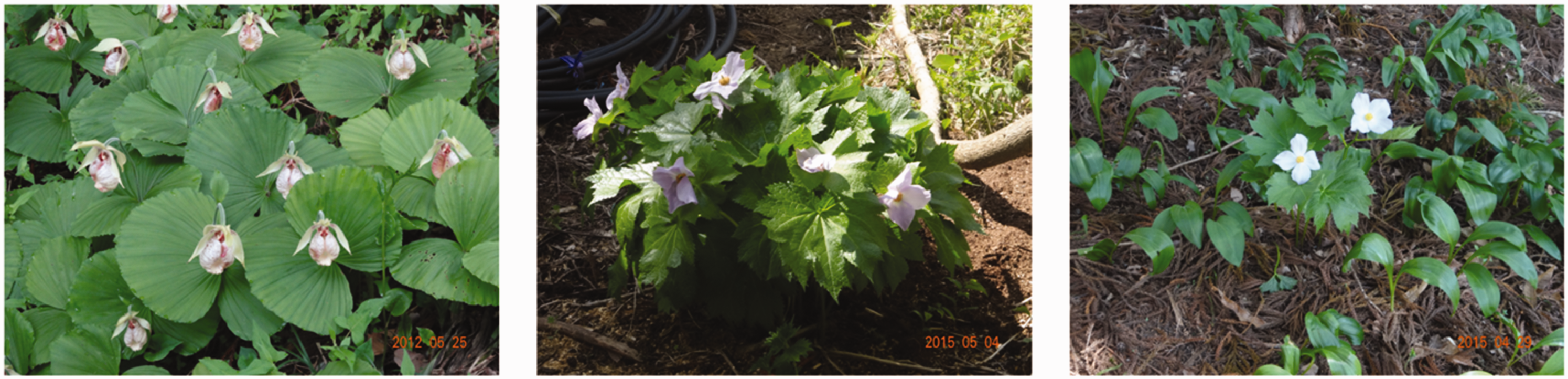
2. SIX MONTHS TO 1 YEAR AFTER THE DISASTER (OCTOBER 2011–MARCH 2012)
For me, the nuclear accident occurred at a time when my husband and I were planning to start research on Natsuhaze (Vaccinium oldhamii – Miq., a type of blueberry grown in Japan, Fig. 2) in April 2011 after his retirement. We had transplanted more than 100 Natsuhaze trees that grew on our premises in the mountains to the fields in November and December of the previous year. Although we could no longer look after the trees after evacuation, we met a farmer who grew Natsuhaze near the house we evacuated to. We bought some Natsuhaze berries from the farmer, made jam from them, and sent the jam to acquaintances. This led to development of an agricultural business model for Natsuhaze.
Natsuhaze.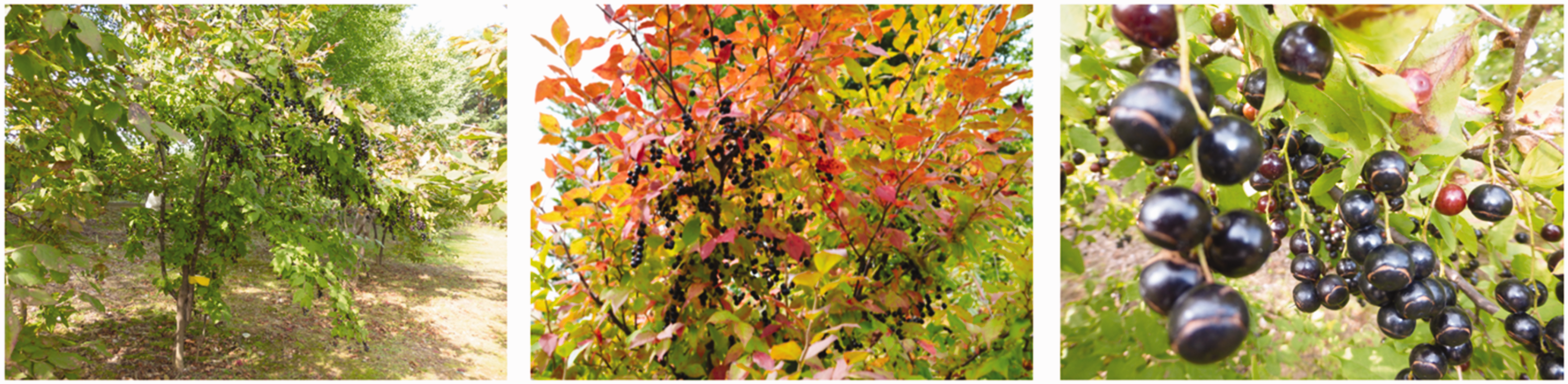
3. ONE YEAR AFTER THE DISASTER (APRIL 2012–MARCH 2013)
As it became possible to measure the radiation dose of foods in Iitate’s municipal hall at the end of 2011, we asked for measurements of three types of wild plants in May 2012. The results were 3422 Bq kg−1 for ostrich fern, 805.2 Bq kg−1 for victory onion, and radiation was not detected for hosta. These results showed that the radiation dose was not as high as expected, and that it differed between types of wild plants. Some wild plants had radiation doses <100 Bq kg−1, the level that was considered safe for distribution. Contrary to the widely held notion that ‘wild plants have a high radiation dose’ and ‘consumption of wild plants should be avoided’, the results showed that some wild plants were edible; this gave us hope for the future. My husband’s parents were delighted when I put some edible wild plants on the table. They smiled and said, ‘It’s as if we are back in Iitate.’ It struck me that there was no reason to cause them unnecessary anxiety and deprive them of their joy.
I joined a gathering of other people thinking about returning to Iitate for exchange of information. It was at this gathering that I was asked to participate in the third International Commission on Radiological Protection (ICRP) dialogue seminar. I spoke on the theme of ‘dialogue on food’, reporting on my experience of measuring the radiation doses of wild plants in Iitate municipal office, and expressing my hope of using the technology to measure radiation levels of foods when I returned to Iitate. I also met Professor Ohtsura Niwa, who showed me how to measure radiation doses. The following year, I was able to measure radiation levels of foods.
As for Natsuhaze, I was advised to apply for the Cabinet Office’s project for regional employment creation through restoration assistance. My application was accepted and we established Nikoniko Sugano Nouen, Limited Liability Company in February 2013. This allowed us to start preparing for processing of Natsuhaze berries in Iitate.
4. TWO YEARS AFTER THE DISASTER (APRIL 2013–DECEMBER 2015)
Study on radiation doses of wild plants (unit: Bq kg−1; location: Azashichiro, Kusano, Iitate).
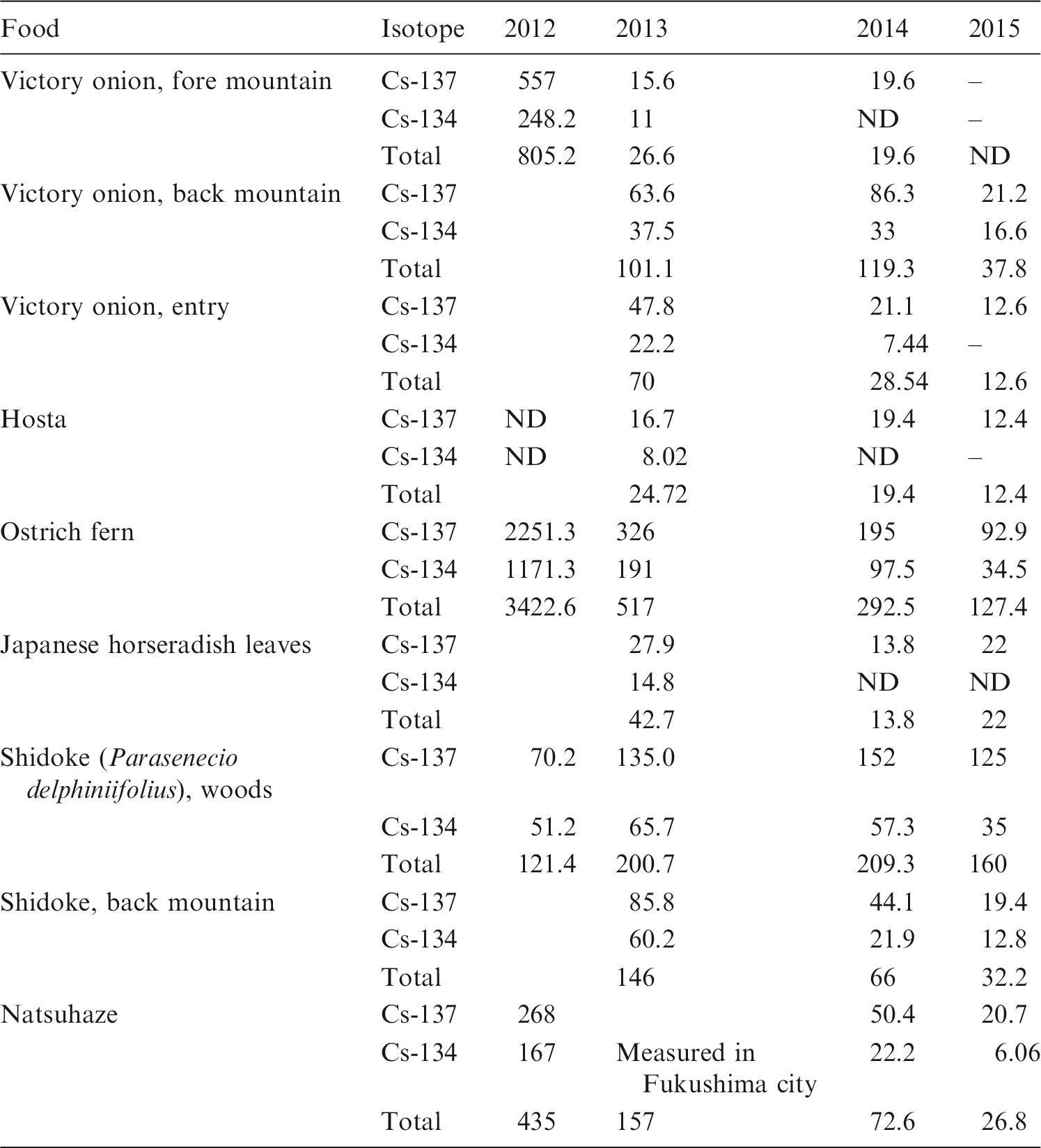
Blank spaces indicate that no measurements are available.
In September 2013, I accompanied an organisation that was going to Belarus to deliver electrocardiographs in an effort to assist Belarus with supply of medical equipment. In Belarus, a woman in her thirties who had returned to her hometown after being relocated after the Chernobyl disaster, and an elderly couple who refused to move out of the forced relocation zone told me about their experiences. A local hospital director told me that thyroid cancer among children was the only disease that showed a clear increase after the nuclear accident. He said that the introduction of heart examinations increased the number of patients diagnosed and treated for heart conditions, but the increase was unrelated to the nuclear disaster. In September 2014, the Norwegian Radiation Protection Authority invited me to visit a mountainous region in Norway. The Norwegian Government and local residents told me that the livestock are inspected for radiation dose before shipment, and shipped if the dose is below the reference value. If the dose is not below the reference level, the livestock are clean fed for 3 months before they are re-inspected for shipment. I thought this was rational. The Japanese livestock farmer Mr. Takeshi Yamada, who was also on the trip to Norway, said that because the radiation dose of feed must be <100 Bq kg−1 in Japan, he was having to import the feed he used on his farm. It appeared to me that this type of a barrier might discourage livestock farmers from resuming their businesses. I was told that, unlike in Japan, the farmers in Norway generally trusted the Government, but things could have been different if the Chernobyl disaster had occurred in today’s information society. A female dairy farmer in her early thirties, who was at primary school at the time of the disaster, said, ‘I wasn’t worried because my parents stayed calm and we studied about nuclear accidents and radiation at school. I wasn’t worried about going into dairy farming, or about getting married, or about getting pregnant.’ This made me realise the importance of education. I felt the need to help the children of Iitate acquire knowledge so that they would not become unnecessarily worried, and would have the resources to counter prejudice and discrimination that they might face in the future.
5. TOWARDS THE DAY OF RETURNING TO IITATE IN MARCH 2017
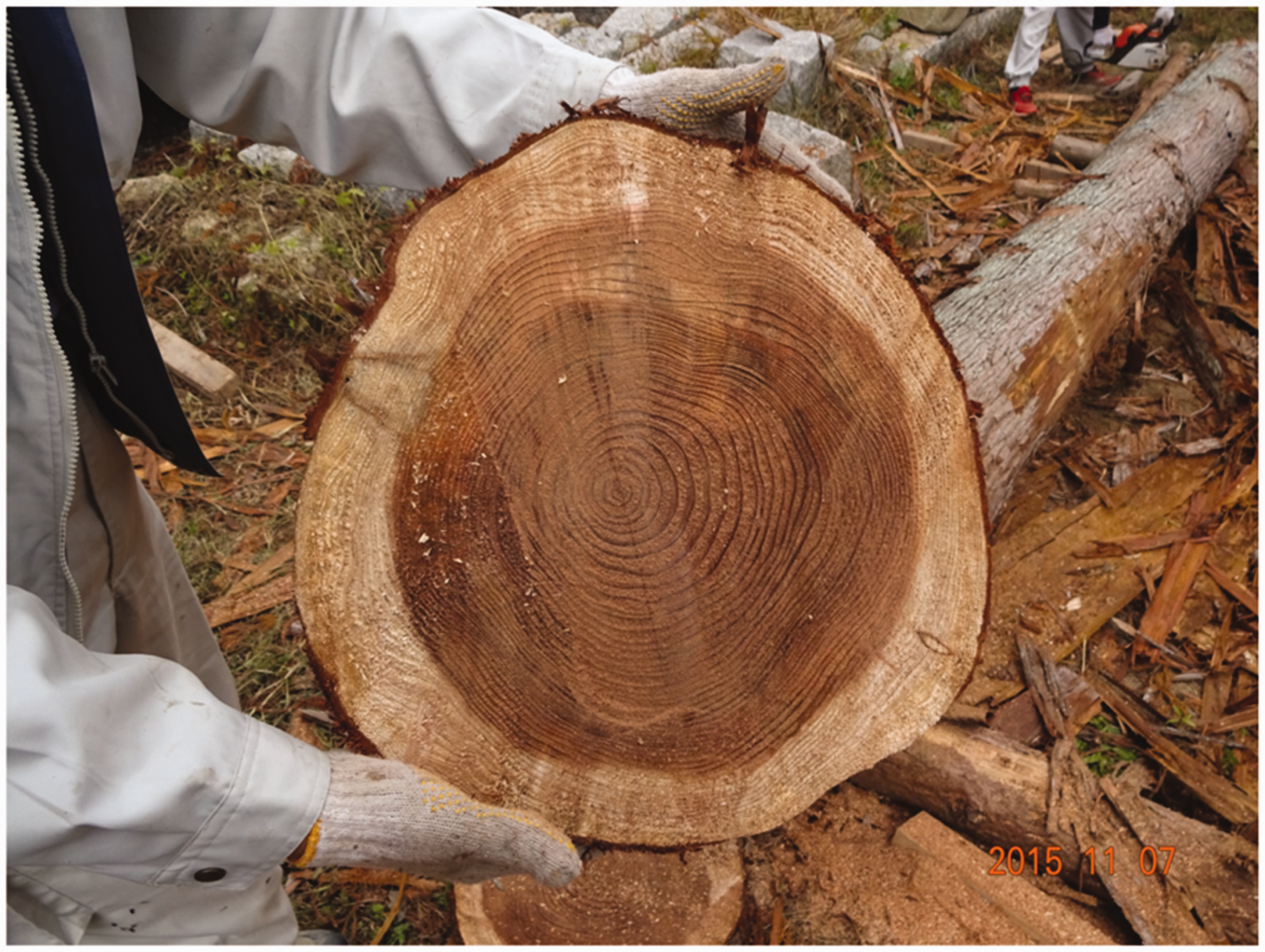
There is a Japanese cedar forest outside the premises of our home in Iitate that acts as a windbreak. In the autumn of 2014, the trees were cut down for decontamination. The trees were planted by ancestors more than 60 years ago when my husband was born, so that their children could use the trees to build a house if necessary. It was regrettable to simply let the trees rot. When I spoke to the president of a construction company about this, he proposed building a house using the cedar trees as a symbol of the restoration of Iitate, and it was decided that most of the trees would be used for building our house (Fig. 3). The radiation dose of the trees was measured with the support of Mr. Junichiro Tada (Fig. 4). Trees are part of our family history. I thought that if people in other villages learned that they could build houses using trees felled for decontamination, this could lead to revival of local forestry and encourage more people to return to their villages. I also wanted to set the narrative about the situation in Iitate for communicating to the rest of the world. For me, building a house using the trees felled for decontamination is one of the outcomes of the ICRP dialogue seminars.
The heartwood is placed side by side to form a wall. Cutting the tree to measure the radiation dose.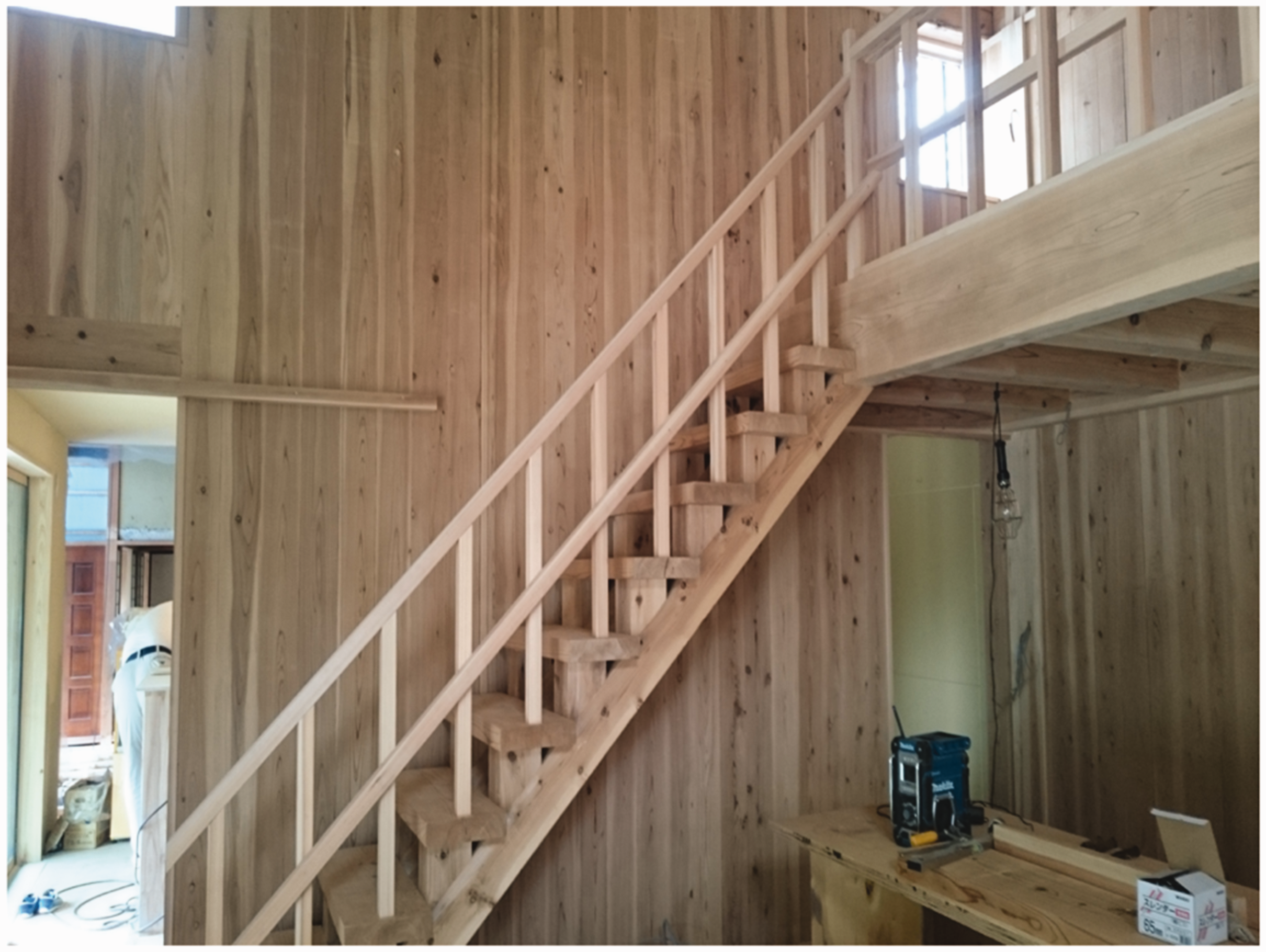
As a member of the education board of Iitate, the most difficult issue is how to re-open the schools in the village. Kindergartens, primary schools, and a junior high school in Iitate have temporary school buildings outside the village, and approximately half the number of students originally enrolled in the schools go to these schools on school buses from where they have evacuated. The plan is to re-open the schools in Iitate in April 2018. On this issue, the village authorities and parents will need to promote dialogue in the spirit of ‘Madei’, which means ‘with sincerity’ in Iitate.
6. CONCLUSION
The experiences that I have gained from more than 5 years in displacement may prove to be useful in the face of a future event, although I obviously hope that an event such as the Fukushima nuclear disaster will never happen again. The Great East Japan Earthquake of 11 March 2011, the tsunami, and living in displacement following the nuclear disaster have taught me that: (1) anything can happen in life; (2) measurement and data are important to have an accurate grasp of the situation; (3) networking with people through the ICRP dialogue seminars enabled me to take measurements; and (4) my family spurred me to action. It was important to have an accurate grasp of the situation so that my family could live in peace, and taking measurements was necessary to understand the situation. These measurements also provided hope. The data became a ‘shield’ from inaccurate information and false rumours, and protected my family and I from unnecessary anxiety.