Abstract
As a photographer living in Tokyo, I have been visiting Suetsugi village regularly to take photographs and show the printed photographs to the residents. What is the role of photography? What does it mean to be involved in the life of Suetsugi through photography? This article discusses some of the answers to these questions 5 years after the accident at Fukushima Daiichi nuclear power plant.
1. MAKING STEPS TO RECOVERY VISIBLE
I work as a photographer in Tokyo. At the time of the accident at Fukushima Daiichi nuclear power plant, my daughter was just 1 year old, and I was looking for reliable information on which to base my actions. Among a wide array of information on the Internet, I found the International Commission on Radiological Protection’s (ICRP) Publication 111 (ICRP, 2009). Using social media, I worked with experts to interpret the document. Eventually, I began to acquaint myself with residents of Fukushima Prefecture on social media sites.
Motivated by my interest in the real situation of those residents, I decided to attend a local workshop on radiation that was organised in Hisanohama district in Iwaki city in December 2011. The residents were taking notes and listening intently to the lecturers as they thought seriously about how they should deal with the issue of radiation. When the time came to share information about their own situation, they were no longer smiling as they had been at the beginning of the workshop. They spoke, some in tears, of their concerns about and anger towards the situation that appeared to be unfairly and undeservedly forced on them. A resident, who was subject to discrimination as a victim of the disaster, made a comment that struck me particularly: ‘We cannot see radioactivity, but we cannot see through what other people think either.’ I realised that those of us living in Tokyo knew very little about the hardship that these residents were facing. At the same time, I began to explore how I could help them as a photographer.
I next met Mr. Shinya Endo of the Society for Protecting Suetsugi and other residents of Suetsugi village, which represents the northernmost part of Hisanohama. Having decided to rebuild their lives by themselves, and mistrustful of the Japanese Government and Tokyo Electric Power Company, the Society for Protecting Suetsugi has produced a radiation map of their village by measuring radiation doses of their houses and fields, and radioactive materials in the soil. Their activity was why I began to visit Suetsugi regularly to take photographs of the lives of the residents and to show them the photographs.
Radiation and what is in people’s minds are invisible. I thought I could make visible the lives of people who live in Fukushima and their paths towards restoration.
2. Photographs
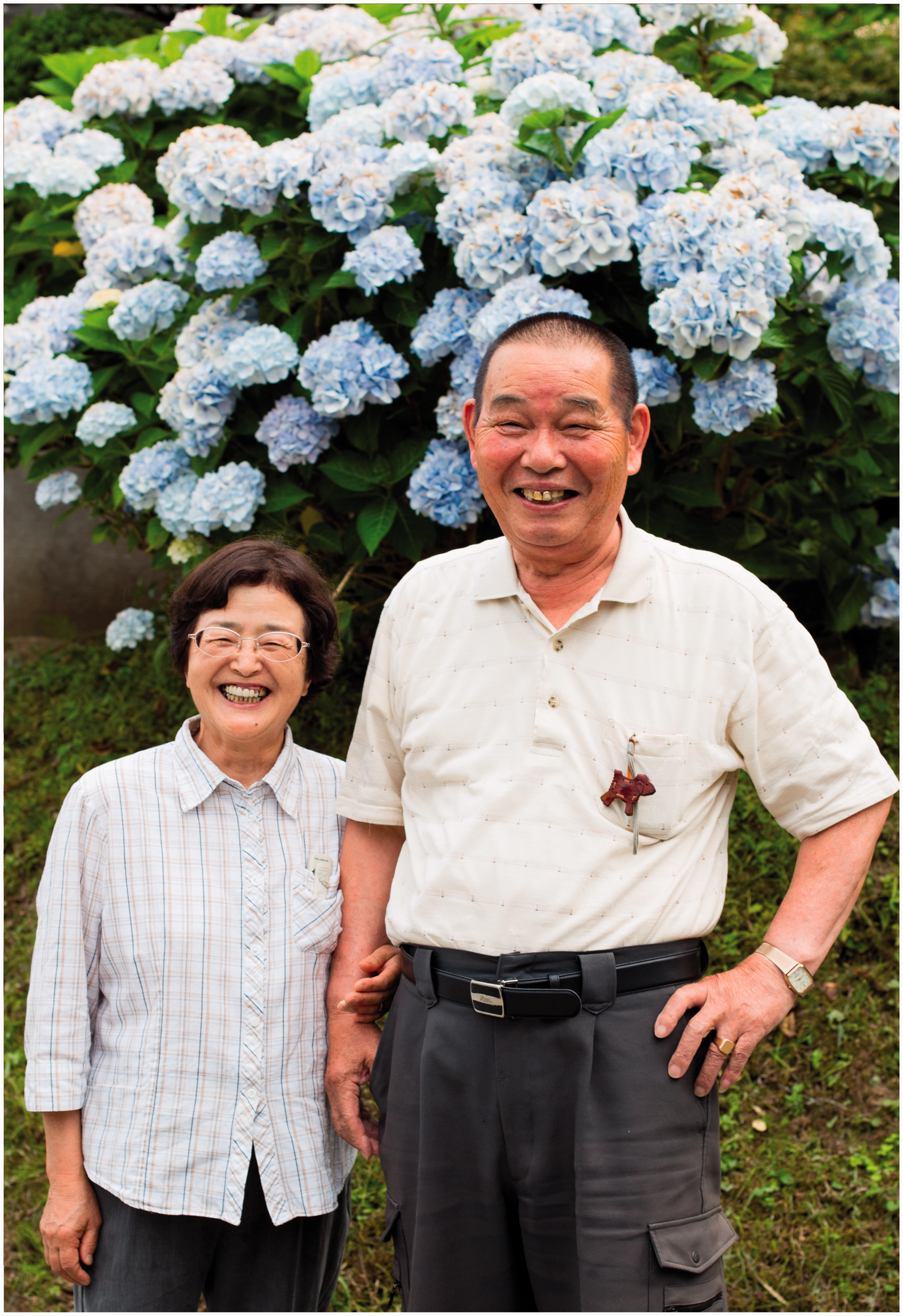
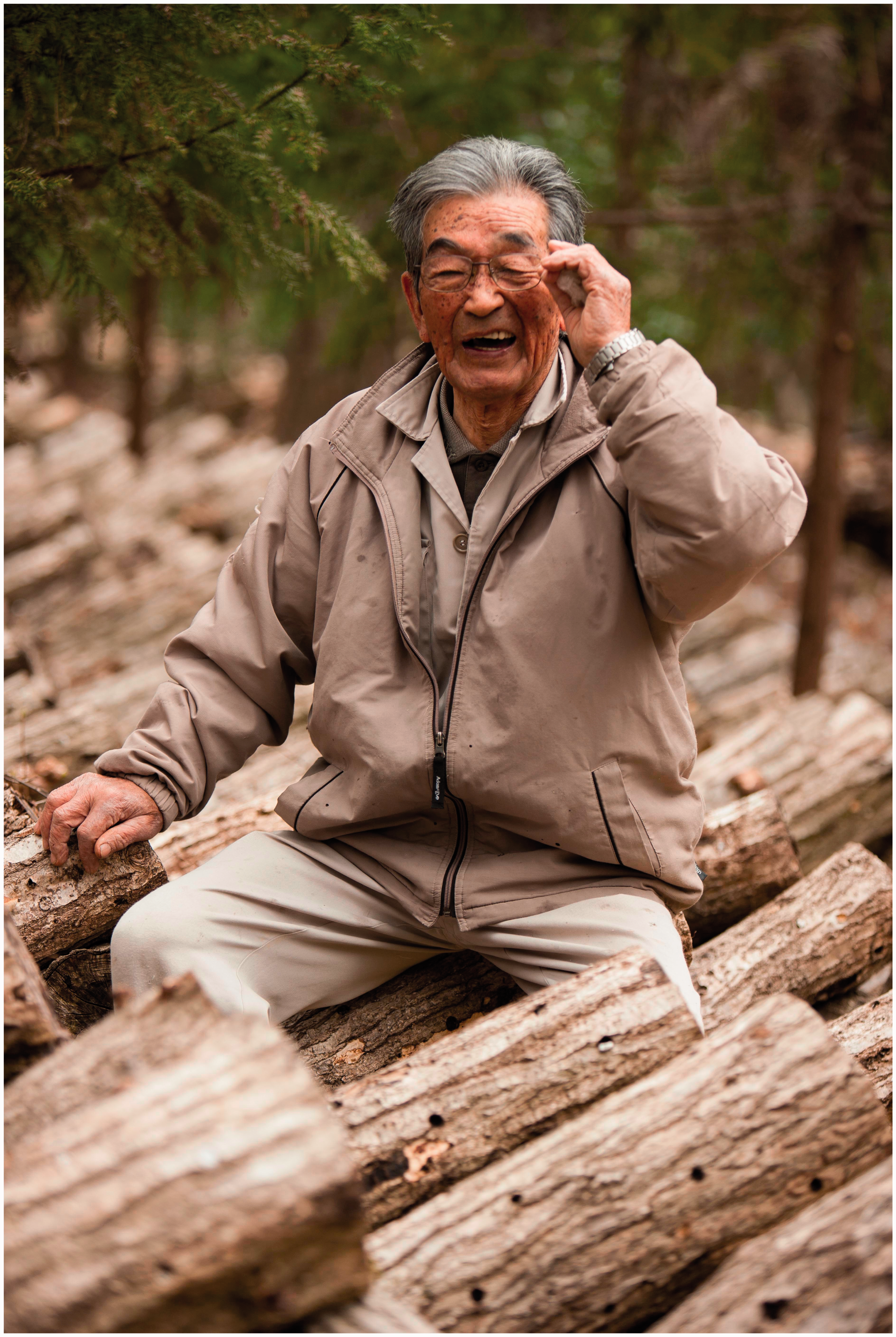
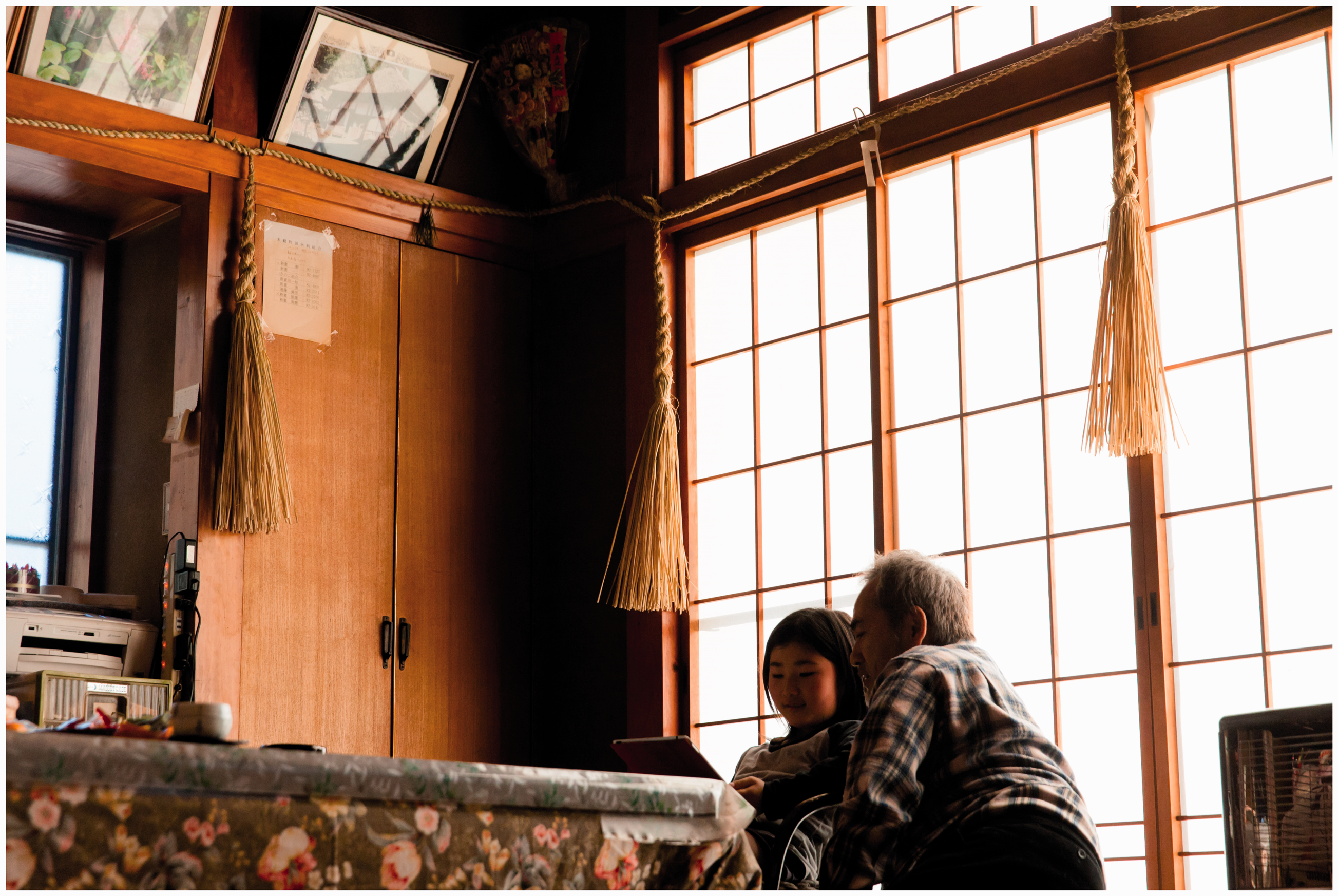
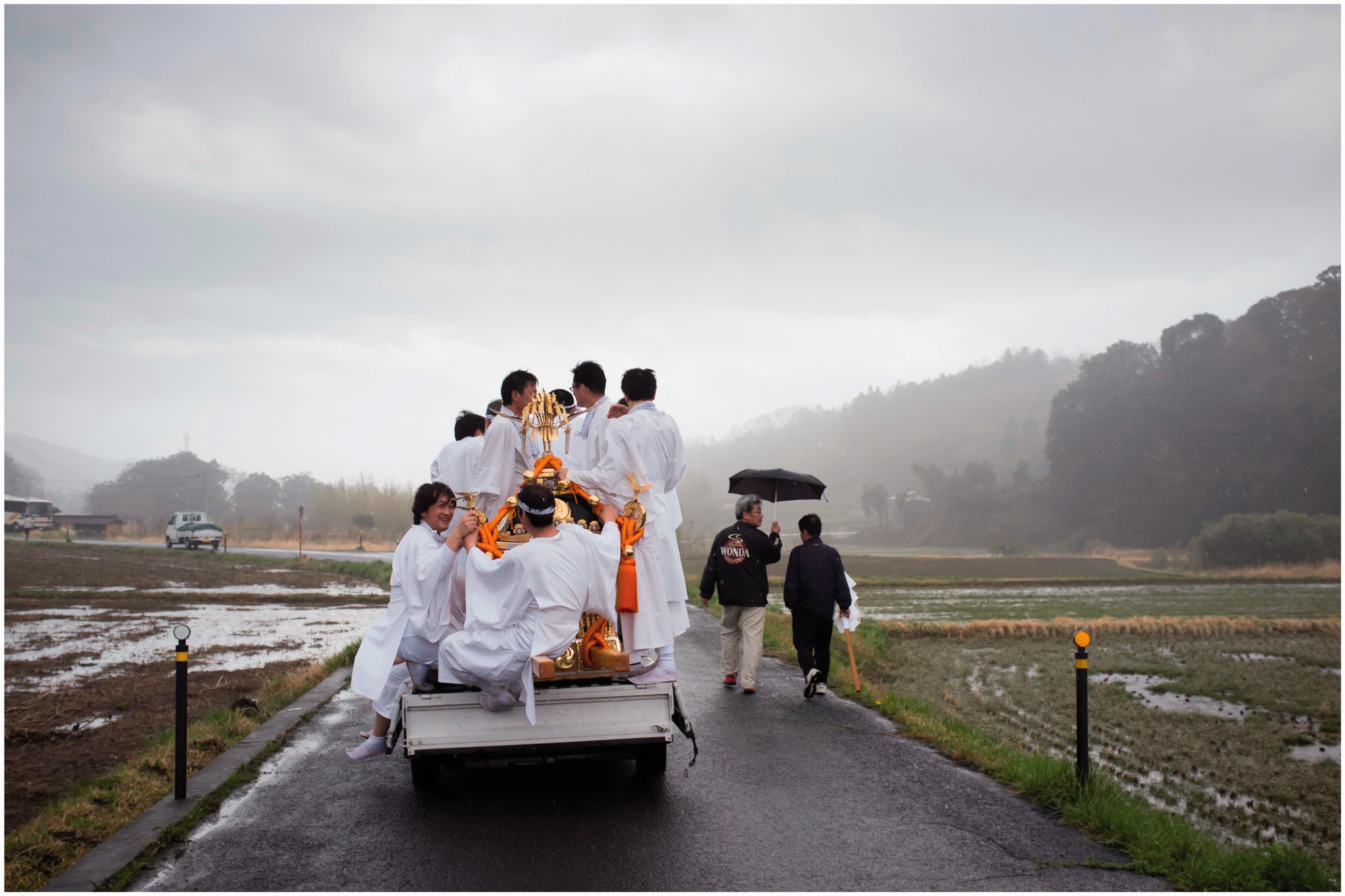
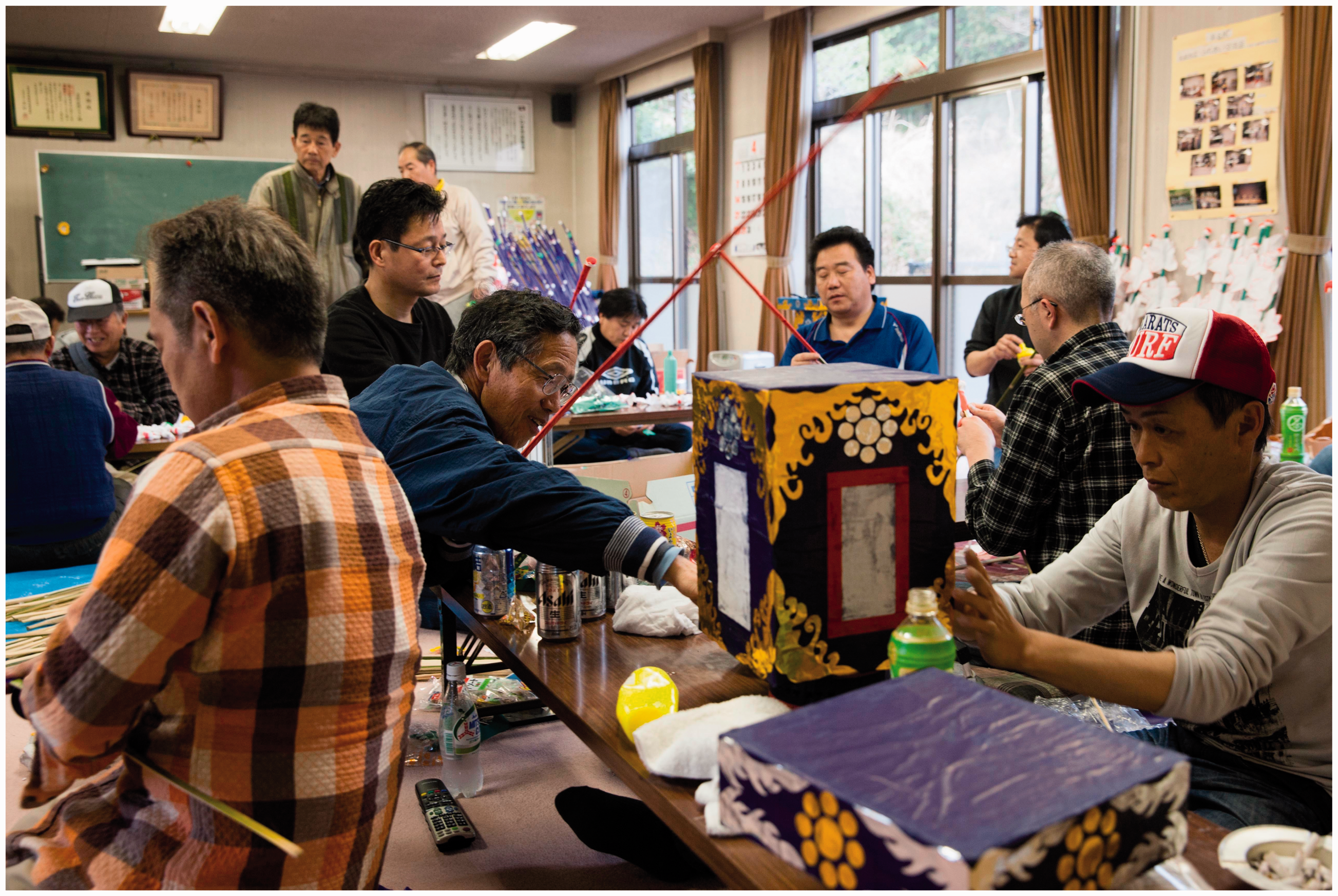
October 2012: Mr. Shinya Endo smiles in front of his rice field nearing harvest. He continued to plant rice even after the Great East Japan Earthquake. Surrounding the field are weeds that have grown yellow flowers in a fallow field. As most residents stayed away from farming this year, the yellow flowers were everywhere in Suetsugi. On the way to the rice field, Mr. Endo said, ‘This sea of yellow flowers looks pretty.’ When we arrived at the field of rice shining in gold, he said, ‘My field looks beautiful, doesn’t it?’ In the year of the earthquake, the radiation from the rice in his field measured 200 Bq kg−1 at most. In 2012, the radiation from the rice shown in the photograph declined to <7 Bq kg−1 for a bagful of rice. Although the radiation levels were not known at the time of the shoot, he told me the radiation measurement results when I visited to hand him the printed photographs. By shooting and handing him the printed photographs, I was able to support him in making visible his perseverance, efforts, and the positive outcomes. July 2013: Mr. and Mrs. Endo smile as they stand side by side in front of hydrangea flowers. Hydrangea blossom can be seen as one drives north from Iwaki station, and on a hill to the left as one enters the village of Suetsugi. Mr. Yutaka Endo and his wife Masako look after the hydrangeas. They began planting the hydrangeas a few decades ago when Mr. Endo came up with the idea to please visitors to Suetsugi. Now, the hydrangea flowers almost cover an entire hillside. Mrs. Endo has a dosimeter for integral dose measurement in her shirt pocket. After returning from evacuation, she felt desperate and argued with Mr. Endo that she did not want to live in Suetsugi. Nearly 1 year after returning to Suetsugi, she regained confidence when she realised that radiation exposure could be reduced by cutting down on the time spent outside looking after the hydrangeas. She said, ‘It gave me knowledge that we could live in Suetsugi and look after the plants.’ The dosimeter, the people supporting them, and, above all, their own efforts contributed to putting smiles on their faces at the time of the shoot. April 2015: Mr. Mamoru Niitsuma sits on top of shiitake mushroom logs. He is a past recipient of the Minister of Agriculture Prize. ‘That has been my pride,’ said Mr. Niitsuma. Last year, the radiation levels of his shiitake mushrooms finally fell below 70 Bq kg−1, which is the level considered fit for market distribution. However, his mushrooms did not make it to the market. The local government instructed him to discard his mushroom logs. The life of the logs is 5 years at most. Mr. Niitsuma continues to grow mushrooms, in small amounts, that are a source of pride. New Year’s Eve 2014: Mr. Motoyoshi Niitsuma shows his daughter how to use the iPad, in the small amount of time she had to spend with her father before leaving Suetsugi before the New Year, returning to Onahama city, 30km south of Suetsugi, where she was, and remains, evacuated. The room is decorated with the traditional straw festoons for the New Year. ‘We are probably the only household in Suetsugi that still hangs the straw festoons for the New Year,’ says Mr. Niitsuma. He decided to stay in the house and continues to live in Suetsugi. April 2013: A small truck makes its way across the village in drizzle, carrying the sacred mikoshi palanquin and carriers. There is clear sky ahead. They are participating in the spring festival at Miwatashi shrine. The festival had been held every year, even during the Second World War, until it had to be suspended in 2011 following the Great East Japan Earthquake. It resumed last year in a somewhat modified format, and this will be the second festival since the earthquake. The festival is a cultural symbol of the village. April 2013: Residents from three local districts gather to make hanagasa flower umbrellas for the festival. Each district makes their own flower umbrellas, but due to depopulation in the wake of the earthquake, the three districts had to join forces to preserve the festival. Each district has their own tradition in the making of the flower umbrellas. ‘That’s how you make your flowers.’ ‘Our umbrella looks more impressive.’ The participants find joy in exchanging information about flower umbrellas, which would have been rare before the earthquake. Although affected by the earthquake, the local culture is preserved.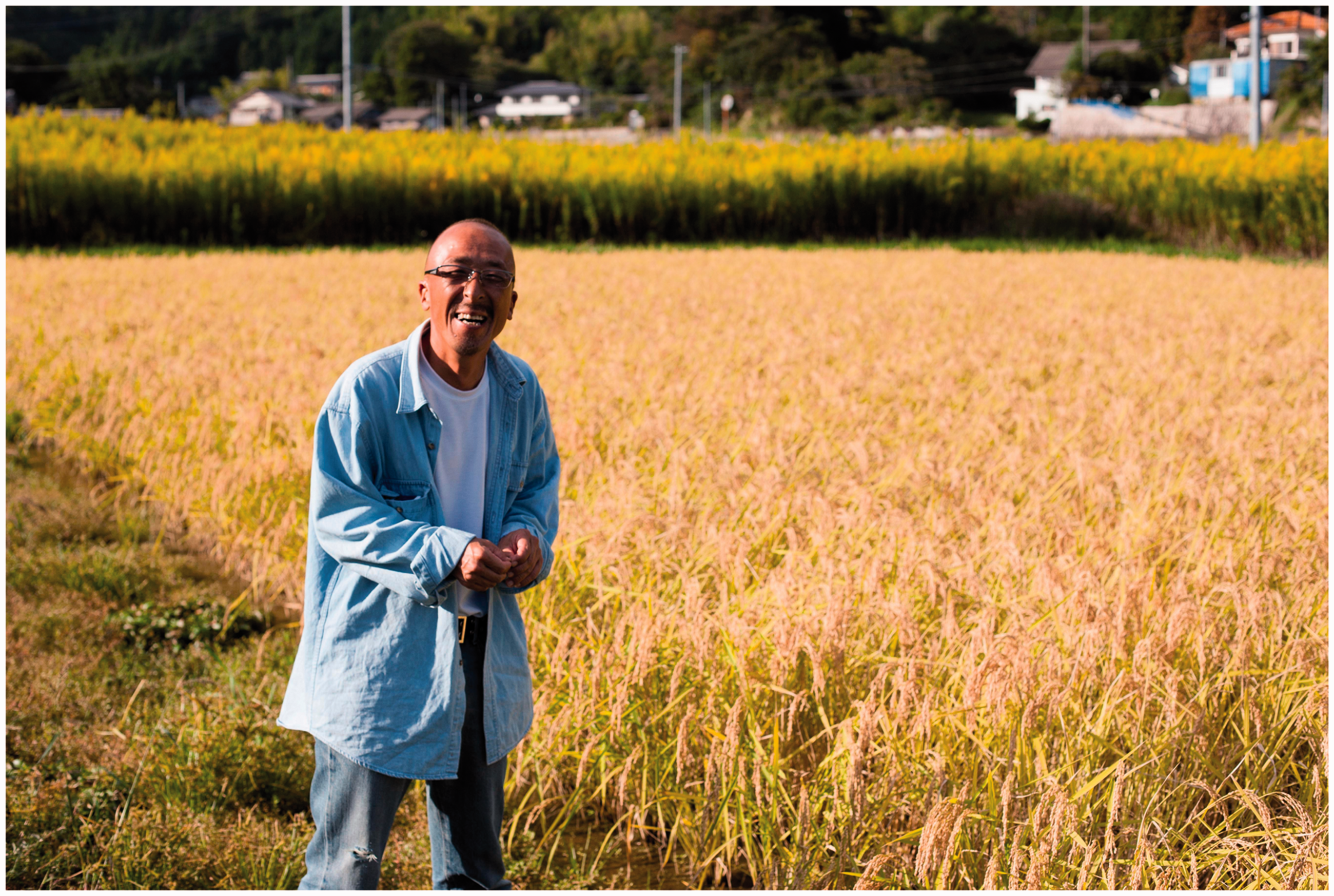
3. SHOWING THE PHOTOGRAPHS AT AN EXHIBITION
I printed the photographs I took in Suetsugi and showed them to the residents when I visited the village. After I began taking photographs of the festival, the number of people who were shot in the photographs increased dramatically, which created a need to organise an exhibition. I gathered the photographs I had taken and exhibited them in May 2014 at the village hall and at the village railway station. At the exhibition, I saw the residents happily explaining each photograph to the visitors.
4. ROLES
Based on my activities to date, I see my role in Suetsugi as follows.
• An outsider observing the people, their lives, and culture with respect
Through photography from an outsider’s perspective, I want to make visible the scenes that are often difficult for insiders to appreciate.
• Continued involvement as an outsider
I want to continue to involve myself not only as a photographer, but also as a friend from the outside. I think there is meaning in having an outsider who does not live in Suetsugi paying regular visits simply because of his fondness for the village.
• Disseminating information
I felt that disseminating information about Suetsugi through the exhibition contributed to increasing the confidence of the people of Suetsugi. I believe I have a role to play in disseminating information about Suetsugi, not just within the community but also outside the community.
5. FINALLY
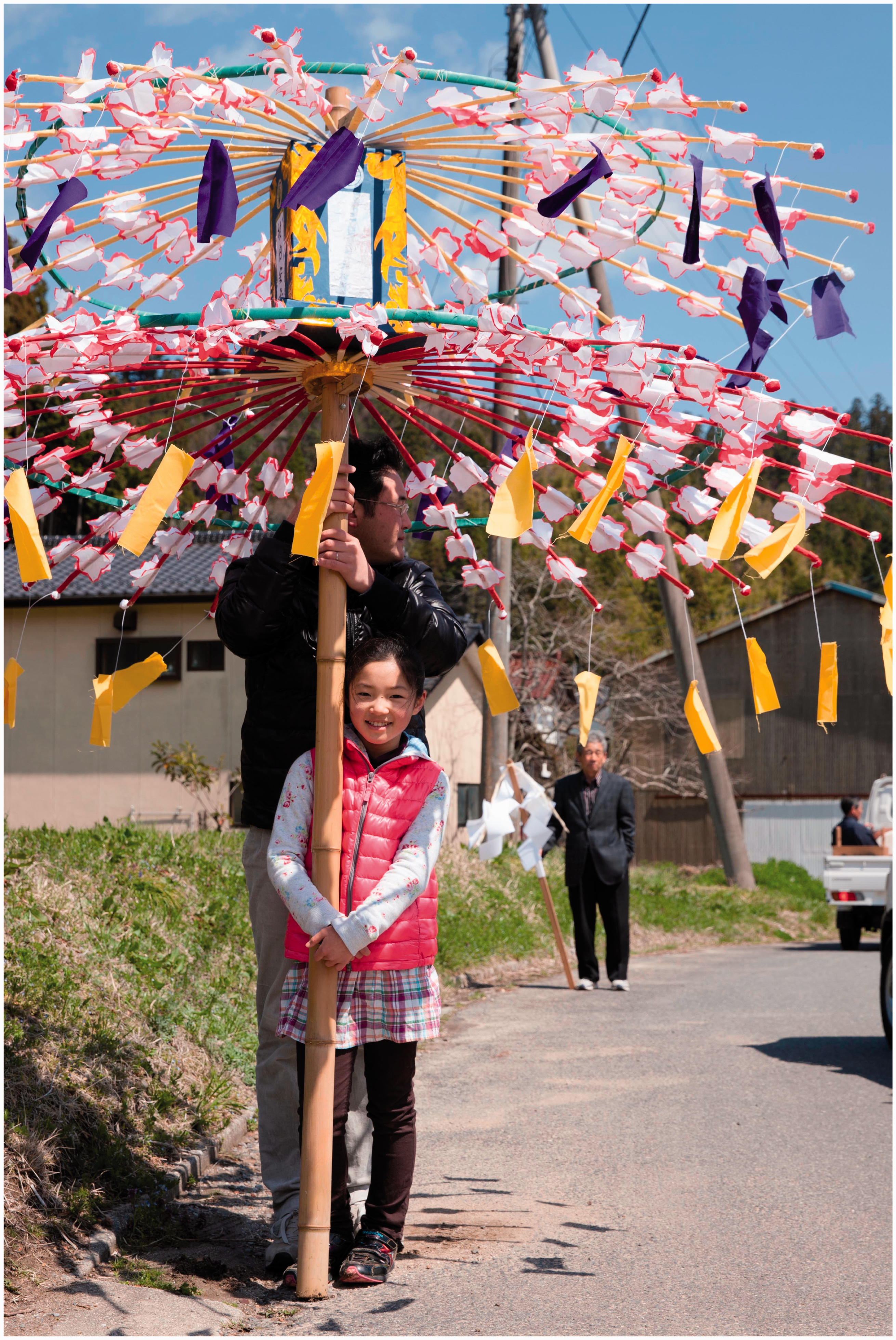
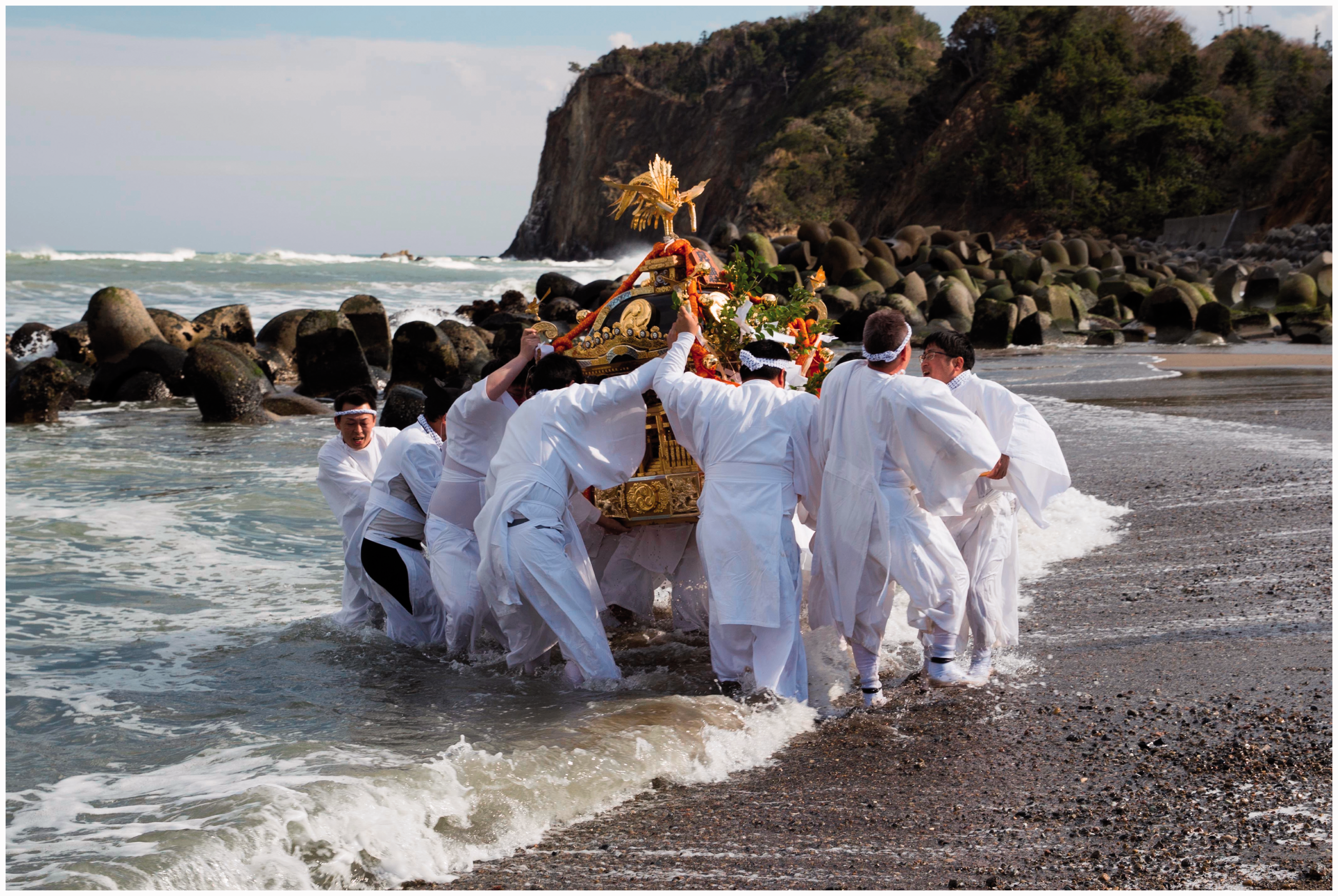
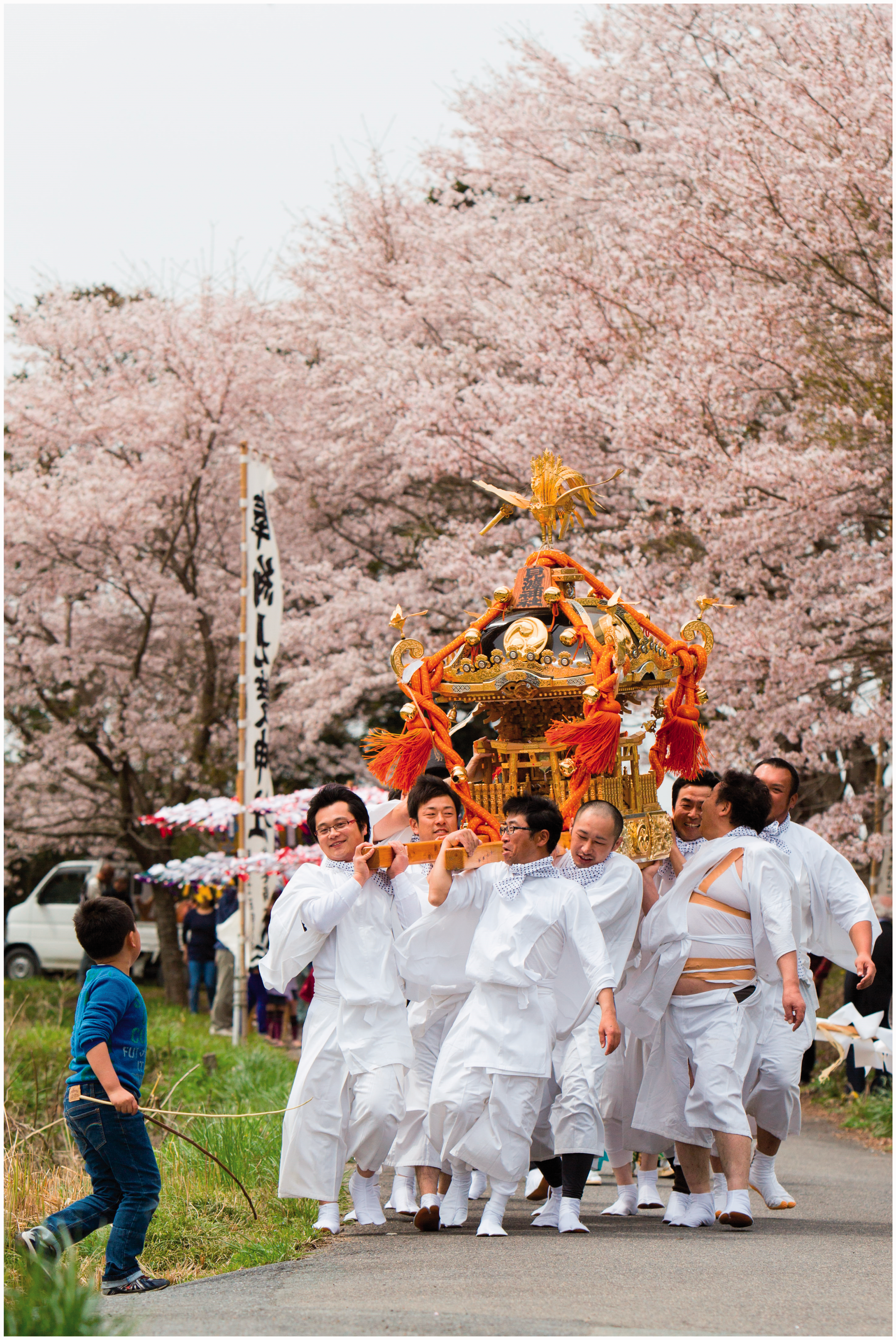
April 2014: A father and daughter put down the flower umbrella for a rest. The girl’s grandfather, who lived in a newly developed residential area in Suetsugi before the Great East Japan Earthquake, had never been a carrier of the flower umbrella. He volunteered after the earthquake because the earthquake had ‘brought home the importance of maintaining community ties’. Despite the difficulty, the festival has created new ties. April 2014: The carriers toss the mikoshi palanquin up and down and to and fro in the sea for the first time in 4 years since before the Great East Japan Earthquake. The tradition of carrying the palanquin in the sea dates back to the Second World War. ‘Let’s enter the sea, shall we?’ ‘I’d rather not.’ ‘It’s damn cold.’ ‘Go, go, here we go!’ The tones of the carriers were partly happy and partly scared, but when they brought the Mikoshi back to the shore, they were proud of their little achievement. April 2016: The mikoshi palanquin departs under the cherry blossom. Only approximately half of the carriers now live in Suetsugi. Some live in cities to attend college. Others have been displaced by the disaster. However, all have returned to preserve the festival. ‘It’s the first time we have the cherry blossom coincide with the festival!’ ‘What a beautiful day for a festival!’ The joyful voices of the residents resound far and wide.