




Abstract
This paper does not necessarily reflect the views of the International Commission on Radiological Protection. The author passed away on 13 November 2015.
1. Introduction
Committee 1 of the International Commission on Radiological Protection (ICRP) addresses issues pertinent to tissue reactions, risks of cancer and heritable diseases, radiation dose responses, effects of dose rate, and radiation quality. In addition, it reviews data on the effects of radiation on the embryo/fetus, genetic factors in radiation response, and uncertainties in providing judgements on radiation-induced health effects. Committee 1 advises the Main Commission on the biological basis of radiation-induced health effects and how epidemiological, experimental, and theoretical data can be combined to make quantitative judgements on human health risks. The emphasis is on low radiation doses (<100 mGy), in the form of detriment-adjusted nominal risk coefficients, where the long-term risk of ionising radiation is too small to be convincingly demonstrated epidemiologically, or does not exist. Committee 1 reviews data from radiation epidemiology studies and from publications on the molecular and cellular effects of ionising radiations relevant to updating the basis for the 2007 Recommendations in Publication 103 (ICRP, 2007). This work is undertaken through several Task Groups described below. Committee 1 members have expertise in epidemiology, physics, statistics, medical sciences, animal sciences, molecular and cellular biology, biophysics, genetics, and omics technologies, and many serve on other relevant radiation-related committees including the United Nations Scientific Committee on the Effects of Atomic Radiation (UNSCEAR), the US National Council on Radiation Protection and Measurements (NCRP), and a host of low-dose radiation research programmes worldwide.
Fig. 1 shows the members of Committee 1 at the 2014 meeting in Beijing, China. This meeting was hosted by Committee 1 member Quanfu Sun, and former Committee 1 member Ping-Kun Zhou. Since this meeting, the Vice Chair of Committee 1 Alice Sigurdson has retired, and Simon Bouffler took over as Vice Chair at the meeting in Seoul, South Korea in 2015. Andrez Wojcik (Stockholm, Sweden) has joined Committee 1 and brings much-needed expertise to the committee. A summary of the discussions at the Beijing meeting is presented in the minutes available on the ICRP Committee 1 website (http://www.icrp.org/members_file.asp?id=7). Discussions included overviews on current activities and projected future plans of the Radiation Effects Research Foundation (RERF); International Agency for Research on Cancer (IARC); Electric Power Research Institute (EPRI); Central Research Institute of Electric Power Industry (CRIEPI); UNSCEAR; NCRP; Southern Urals Biophysics Institute (SUBI); various European Union programmes including SOLO, SOUL, Low Dose Research Towards Multidisciplinary Integration, Epidemiology and Radiation Biology, PROCARDIO, CARDIORISK, Multidisciplinary European Low Dose Initiative (MELODI), and Open Project for European Radiation Research Area (OPERRA); and the US Department of Energy’s Low Dose Radiation Research Program. An update on Fukushima included discussion of thyroid ultrasound examination in children, and the psychological/social impacts of the mental health survey were also presented to Committee 1.
Committee 1 participants at the 2014 meeting in Beijing, China. Back row left to right: Quanfu Sun (China), William F. Morgan (USA; Committee 1 Chair), Michael Hauptmann (Netherlands), Dan Stram (USA), Simon Bouffler (UK), Dominique Laurier (France), Wolfgang Dörr (Austria; Task Group 92 Chair), Nobuhiko Ban (Japan, Working Party on Detriment Chair), Sisko Salomaa (Finland), Alice Sigurdson (USA, Committee 1 Vice Chair), Anna Merkulova (interpreter for T. Azizova). Front row left to right: Nobuyuki Hamada (Canada, Assistant Scientific Secretary), Ranajit Chakraborty (USA), Margot Tirmarche (France; Task Group 64 Chair), Richard Wakeford (UK), Preetha Rajaraman (India), Tamara Azizova (Russia), Werner Rühm (Germany; Committee 1 Secretary; Task Group 91 Chair).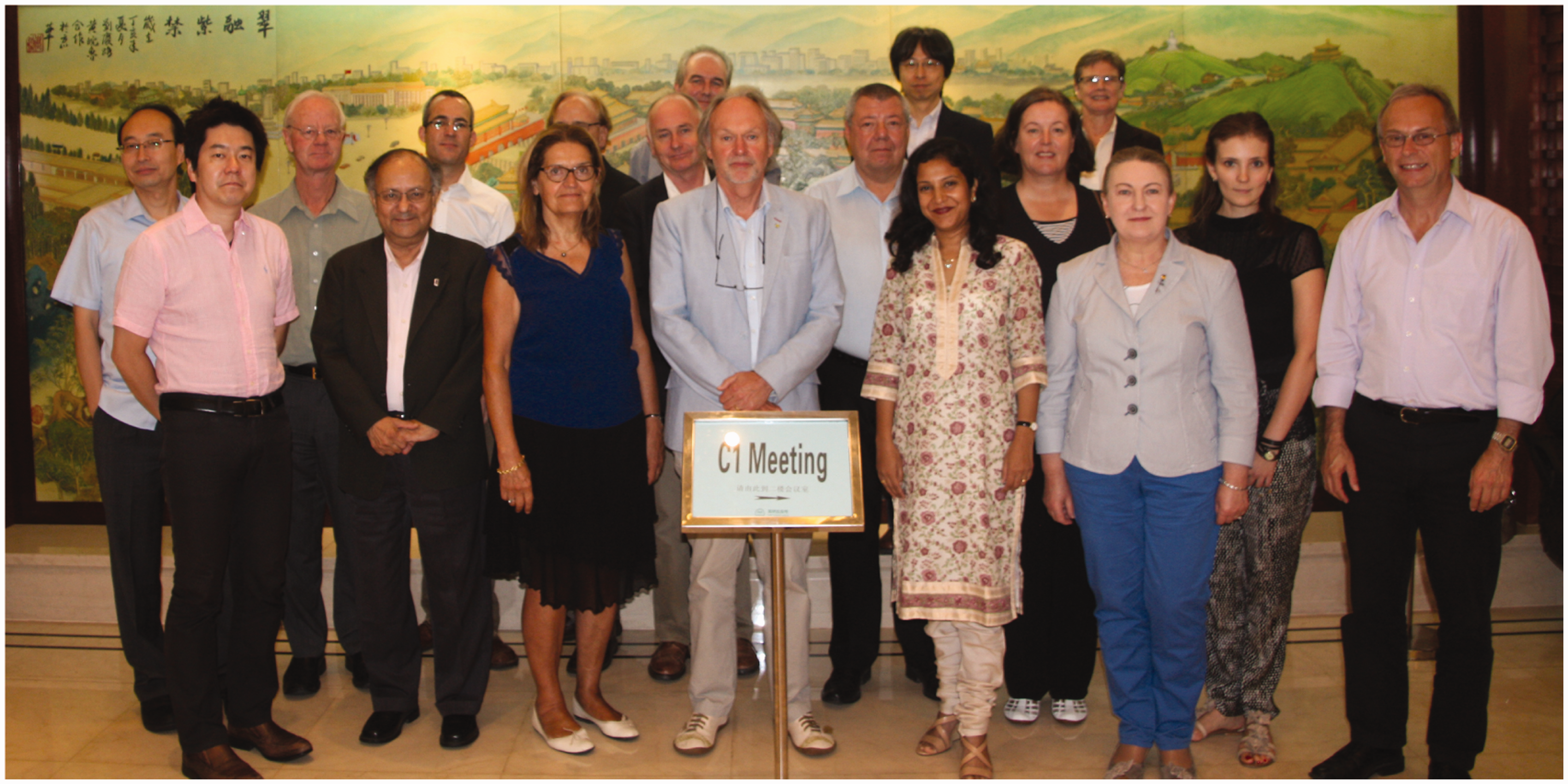
In addition to being aware of, and able to speak about, recent publications and issues in their own area of expertise, Committee 1 members are expected to be aware of publications synthesised by various bodies (e.g. UNSCEAR and NCRP), as well as advances in high-profile research programmes [e.g. the European Union’s research programmes (MELODI and OPERRA) and the host of innovative programmes that have been, or are, supported by these over-site groups; RERF, which studies radiation effects in the atomic bomb survivors from Hiroshima and Nagasaki; SUBI; and the US Department of Energy’s Low Dose Radiation Research Program]. A useful example of how this works is the recent report on human radiosensitivity published by researchers at Public Health England in the UK and presented to Committee 1 by Simon Bouffler (http://www.hpa.org.uk/Publications/Radiation/DocumentsOfTheHPA/RCE21HumanRad iosensitivity/).
Individual radiosensitivity is a key issue. As scientific advances in omics technologies (transcriptomics, genomics, proteomics, metabolomics, lipidomics etc.) and personalised medicine move forward at a rapid pace, it is conceivable that we may be able to predict an individual’s sensitivity, or resistance, to ionising radiation in the future. The fiscal, legal, and ethical implications for medicine, employment etc. are enormous, and will affect radiological protection either directly or indirectly in the future.
ICRP is fortunate to have world-class experts from many of these organisations and/or committees represented on Committee 1. In addition to monitoring publications from these various organisations and/or committees, Committee 1 considers the use of biologically based dose–response models for assessing the effects of low-dose ionising radiation exposures. In addition, Committee 1 monitors epidemiological data, non-cancer (cataracts, cardiovascular, cerebrovascular and central nervous system) and potential hereditary effects, advances in radiation-induced DNA damage recognition, DNA repair, and the potential impact of epigenetic effects.
Committee 1 makes a judgement call given the facts and data available regarding whether or not a block of research warrants a specific Task Group. An overview of the ‘statement of task’ is presented by the Committee Chairs to the Main Commission, and a decision is made regarding the need for establishment of a Task Group. The Task Group will consider the evidence in detail and make recommendations based on scientific principles, philosophy, and policy. Any document prepared by a Task Group must be approved by the sponsoring Committee and the Main Commission, and be sent out for public consultation. As many Task Group members have ‘day jobs’ and Task Group membership is voluntary, this can be a complicated and protracted experience.
2. Committee 1 task groups and working parties
Currently, there are two Task Groups and one Working Party under the auspices of Committee 1. Significantly, the report of Task Group 75 has been completed and published as Publication 131 (ICRP, 2015).
2.1. Task Group 75: Stem cell biology with respect to carcinogenesis aspects of radiological protection
Task Group 75 reviewed stem cell/progenitor cell biology and radiobiology with reference to mechanisms of radiation carcinogenesis. The goal was to:
consider the tissue weighting factors and previous ICRP reports for specific tissues; compare the response of stem and associated cells in different tissues in terms of respective risks of cancer, and elucidate the likely stem cell role; and use current knowledge of stem cell responses and carcinogenic risks from homogeneous acute irradiations to project stochastic risks for short-range radiation and chronic irradiation scenarios.
Publication 131 (ICRP, 2015) highlights the need for detailed insights into fundamental biological processes, particularly in stem cells, to inform judgements on risk extrapolation and risk estimation for radiological protection. ICRP acknowledges the sterling leadership of the Chair, O. Niwa, and his hardworking committee: M.H. Barcellos-Hoff, R.K. Globus, J.D. Harrison, J.H. Hendry, P. Jacob, M.T. Martin, T.M. Seed, J.W. Shay, M.D. Story, K. Suzuki, and S. Yamashita, plus the numerous consultants, readers, and reviewers who all had a significant impact on this report.
2.2. Task Group 64: Cancer risk from alpha emitters
Task Group 64 produced Publication 115, entitled ‘Lung cancer risk from radon and progeny, and statement on radon’ (ICRP, 2010), and is now extending this to consider cancer risks from other alpha emitters including plutonium, uranium, thorotrast, and radium. This is a joint effort by Committees 1 and 2, and will use the recently published risk coefficients of lung cancer for a life-long risk calculation in order to compare risk from these alpha emitters with that from radon and also from external exposure(s). Selection of the appropriate model systems, accounting for differences between males and females, as well as smokers and non-smokers, is also being undertaken. The specific topics being addressed are as follows.
Tissue that is not subject to mechanical transport or absorption into blood. This leads to longer retention in the lung than considered initially, and will likely change the estimate of dose to the lung regions in different proportions for plutonium nitrate or oxide inhaled by smokers and non-smokers. Uranium exposures: Task Group 64 will consider data from the CURE project, looking at a relationship between an observed excess of lung cancer or other pathologies and related organ dose. Comparison with external gamma exposures: estimation of the risk of lung cancer related to external radiation can be obtained from several populations with different ‘profiles’ of exposure, including the atomic bomb survivor studies and the nuclear workers studies (IARC study), for comparison of the risk of lung cancer induced by alpha emitters (radon decay products, plutonium) with that observed after external exposure.
2.3. Task Group 91: Radiation risk inference at low-dose and low-dose-rate exposures for radiological protection purposes. Use of dose and dose-rate effectiveness factors
Task Group 91 met in Kyoto, Japan in 2015 (Rühm et al., 2015), and is making significant progress. The detriment-adjusted nominal risk coefficients recommended by ICRP have largely been based on data obtained from the atomic bomb survivors in Japan. As their exposure was a single acute exposure, and because it was thought that the most plausible biological model for the dose–response relationship should be linear quadratic (which implies a larger slope at high doses than at low doses), many international and national relevant bodies have used a dose and dose-rate effectiveness factor (DDREF) for estimates of these coefficients at low doses. A value of 2 has been used by ICRP for low-dose and low-dose-rate exposures. With more epidemiological information becoming available, and with modern techniques of Bayesian analysis, UNSCEAR has recently re-evaluated all the available information and has estimated risk coefficients that are similar to the ICRP estimates using high doses and a DDREF value of 2. However, the Biological Effects of Ionizing Radiation (BEIR) VII Committee (NAS, 2005), also using a Bayesian approach, recommended a DDREF of 1.5. Task Group 91 will review the available information on the estimation of risk coefficients and recommend:
whether it is desirable to continue to estimate risk at low doses by assessing the slope of the dose response at high doses and then applying a DDREF reduction factor. The alternative is to adopt the UNSCEAR approach of inferring the risk coefficients at low doses by using all available information and techniques of Bayesian analysis for estimating the best expert judgement; and whether such coefficients are applicable to acute, protracted, and prolonged exposure to ionizing radiation need a particular correction.
In the first phase, the work focussed on reviewing the literature on DDREF; relevant molecular, cellular, and animal data; and data from exposed human cohorts. Based on the collected material, Committee 1 decided during its 2014 meeting that the Task Group should:
go beyond the BEIR VII analysis of animal data and include additional data that were not available for BEIR VII; perform a meta-analysis of total solid cancer data from epidemiological cohorts and comparison with the Life Span Study (LSS) data (it was recognised that this would be a considerable amount of work); perform a meta-analysis on selected cancer sites (again, it was recognised that this would be a considerable amount of work; recent discussions among the Task Group led to the decision to postpone this action until total solid cancers were analysed successfully); and perform an analysis of dose–response curves (linear vs linear-quadratic) in the LSS and decide whether or not the UNSCEAR approach not to use a DDREF is justified.
2.4. Working Party on Circulatory Disease Detriment
The Working Party on Circulatory Disease Detriment is closely related to Task Group 91, and the goal is to make a ‘what-if’ calculation of circulatory disease detriment. After discussing assumptions and conditions for the calculation, it was agreed that work would be continued as follows:
detriment should be calculated separately for heart disease and stroke; the Japanese atomic bomb survivor study and the most recent meta-analysis by Little et al. (2012) are likely candidates of epidemiological studies on which the calculation is based; while there is no evidence of dose-rate effect, calculation could be conducted with and without a DDREF; and the first step should be focussed on nominal risk estimates, and then adjustment for severity will be considered.
Currently, efforts are being made to collect detailed information from the atomic bomb survivor study, and baseline incidence data from different reference populations. A summary of mechanistic considerations is also being prepared to provide a rationale for assumptions in the calculation.
3. Future activities to be monitored by Committee 1
Radiation sensitivity and individual susceptibility. Committee 1 will continue to evaluate studies indicating the presence of certain gene variants that may increase the risk of cancer (e.g. BRCA1, BRCA2), and make the genome unstable. Sequencing and omics technologies related to individual radiosensitivity. Screening recommendations for individuals with known genetic alterations (e.g. BRCA or ATM carriers). High background radiation areas. There has been progress in describing the incidence of cancer in a cohort study in Kerala, India as well as a cohort mortality study in Yangjiang, China. In Yangjiang, both cataract and Down’s syndrome were reported, and ongoing studies in Kerala and Yangjiang involve cerebrovascular disease and thyroid nodules, as well as the incidence of cancer. Committee 1 will continue to follow these studies. Computer tomography in children, acknowledging the considerable shortcomings associated with such studies. Impact of epigenetics on radiological protection. European Radiation Dosimetry Group (EURADOS) strategic research agenda that identifies five challenges (www.eurados.org):
^ towards updated dose concepts and quantities; ^ towards improved radiation risk estimates deduced from epidemiological cohorts; ^ towards an efficient dose assessment in case of radiological emergencies; ^ towards integrated personalised dosimetry in medical applications; and ^ towards improved radiation protection of workers and the public. Transfer of risk. Variations in background cancer incidence rates are important and are a problem for the transfer of risk. This is compounded by the lack of cancer registries in some parts of the world (e.g. Africa). Committee 1 will continue to follow the efforts of the World Health Organization. Education and communication. As evidenced by the Fukushima accident, there is a need for a clear, consistent strategy for educating and communicating with regulators, clean-up personnel, and the general public. Committee 1 acknowledges the excellent work of Committee 4 in this regard, and proposes more interactions with Committee 4 to communicate an effective ICRP message in the future.