




Abstract
This paper does not necessarily reflect the views of the International Commission on Radiological Protection.
1. Introduction
Assessing the impact of emergency releases on the environment requires detailed knowledge of the exposures and subsequent prediction of the likely effects, with both aspects posing challenges of their own. The first challenge in exposure assessment is establishing radionuclide concentrations in the marine media – seawater, particulate matter, and seabed sediments – either by field monitoring or by means of dispersion modelling (Aoyama et al., 2012; Choi et al., 2013; Honda et al., 2013). In an area such as Fukushima, the problem is compounded by complex biogeochemical conditions (Buesseler et al., 2011; Vives i Batlle, 2011, 2012b). A mixture of radioisotopes with different decay half-lives is involved, and a good characterisation of the source term is required if dispersion modelling is intended (Bailly du Bois et al., 2012). Next, the uptake and turnover of radionuclides by the marine biota need to be determined. In the initial release phase, where monitoring data are not always available, the problem should be modelled dynamically because organisms are likely to be at disequilibrium with fluctuating activity concentrations in the environment (Vives i Batlle et al., 2008a; Kryshev and Sazykina, 2011; Psaltaki et al., 2013).
Once activity concentrations in biota are known, the problem becomes one of dose estimation. An international system for the radiological protection of the environment has been developed that provides the framework for such calculations (Beresford et al., 2007; Brown et al., 2008; ICRP, 2008a, 2009). There is some degree of consensus on dose rates that are unlikely to cause effects to flora and fauna. For example, the International Commission on Radiological Protection (ICRP) has proposed a ‘derived consideration reference level' of 4–40 μGy h−1 for the most sensitive Reference Animals and Plants (RAPs) (ICRP, 2008b). The ERICA methodology proposes a screening dose rate at the ecosystem level of 10 μGy h−1 (Beresford et al., 2007; Brown et al., 2008; Andersson et al., 2009). The United Nations Scientific Committee on the Effects of Atomic Radiation (UNSCEAR) concluded that dose rates up to 400 μGy h−1 to a small proportion of individuals in aquatic populations would not have a detrimental effect at the population level (UNSCEAR, 1996).
The radiological protection system for the environment is put to the test when applied to emergency situations, due to four factors. The first factor is the aforementioned dynamic nature of the releases, preventing the use of equilibrium transfer parameters. Secondly, there is a need to assess exposures and effects for indigenous biological species which can be far removed from RAPs defined in the standard system (ICRP, 2008a). Thirdly, in an emergency situation, it is important to distinguish at least two phases differing in terms of the level and type of exposure to living organisms: an acute exposure or high dose phase over the few weeks after the accident, and a chronic exposure phase at lower dose where contamination levels of the environment change much more slowly, on a scale of months to years. Relevant acute and chronic benchmarks must be applied in each case. Lastly, radiation exposures in emergency situations may occur in combination with other contaminants and environmental stresses such as the Great Japan Tsunami itself, making the consequences of the radiation exposures themselves difficult to assess.
The present paper attempts to evaluate the immediate and ongoing impact of the accident at Fukushima Daiichi nuclear power plant following the earthquake and tsunami on 11 March 2011. The aspects influencing the ongoing analysis and re-assessment of the radiological impact of accidental releases of 131I, 134Cs, and 137Cs to marine biota are addressed, regarding both the immediate aftermath and subsequent period of the accident. Lessons and recommendations about how to assess and interpret exposures of, and effects on marine biota following an accidental discharge of radioactivity have been derived, and these are revisited for the benefit of investigators.
2. Assessment of Exposures to Non-Human Biota
2.1. Description of the accident
The reactor failures at Fukushima Daiichi nuclear power plant resulted in a major emergency release of radionuclides to the surrounding environment. A full description of the accident is given elsewhere (IAEA, 2011; PMJHC, 2011; IRSN, 2012; Povinec et al., 2013). Approximately 80% of the radioactive fallout occurred over the Pacific Ocean (Stohl et al., 2011). The magnitude of the marine release was realised shortly after the accident (Buesseler et al., 2011; Garnier-Laplace et al., 2011; IRSN, 2011; Vives i Batlle, 2011; Bailly du Bois et al., 2012; Tsumune et al., 2012). 131I and radiocaesium were the main radionuclides released into the marine environment, although 129Te, 129 mT, 132Te, 136Cs, and 133I were also released along with trace amounts of plutonium isotopes (Zheng et al., 2013).
Due to contaminated water releases and the settling of airborne radioactive particles, some 1016 Bq of 137Cs found their way into the Pacific Ocean, mainly between 11 March and 8 April 2011. Radionuclides spread widely over the coastal zone, decreasing by a factor of approximately 103 over the first 30 km from the release point and diminishing by factors of approximately 30 (137Cs) and 200 (131I) over the ensuing few weeks after the accident (Buesseler et al., 2011; Garnier-Laplace et al., 2011). By early June 2011, the short-lived radioisotopes had largely disappeared and 134Cs and 137Cs were the dominant radionuclides. Directly discharged 134Cs and 137Cs were transported predominantly southwards along the coastline (Aoyama et al., 2012), and quickly transported to the deep sea in the western North Pacific (Honda et al., 2013). Continued effluents from land resulted in sustained contamination levels in the area during July 2011, and activity concentrations in seawater fell sharply thereafter. Modelling simulations predicted enhanced surface 137Cs activities offshore in the Kuroshio–Oyashio current zone up to 6 months after release and an order of magnitude less after 1 year (Dietze and Kriest, 2012), and this was confirmed by observation (Buesseler et al., 2012).
A fraction of the radionuclides released remains adsorbed to seabed sediments near the coast. Scavenging by in-falling biogenic particles and turbulent mixing are the likely causes (Shiomoto et al., 1998; Alekseev et al., 2006; Vives i Batlle, 2011). Most of this adsorption is estimated to have occurred during the first month, and radionuclides are expected to remain associated with sedimentary deposits for a long time (Choi et al., 2013). The association of radiocaesium with sedimentary deposits is of key importance, as it determines a pathway for the external exposure to benthic organisms.
2.2. Initial screening studies
An initial screening study suggested that maximum dose rates to marine biota in the immediate aftermath of the accident could have reached 0.2–5 Gy day−1, with the highest exposures attributed to macroalgae (Garnier-Laplace et al., 2011). This study assumed equilibrium of the biota with the highest seawater activity concentrations measured. Another early assessment, also assuming equilibrium but carried out over the time period March–May 2011 (and consequently not assuming the maximum activity concentrations of the previous study), indicated that dose rates to fish and molluscs from the local coast did not exceed 420 μGy h−1 and were generally in the order of 80 μGy h−1 (Kryshev and Sazykina, 2011). At the level of exposure estimated in the former study, some radiation effects (mutagenic and reproduction) would be expected (Garnier-Laplace et al., 2011). However, as the dose rates reported were based on equilibrium with maximum concentrations, it was soon recognised that exposures may have been lower (Buesseler et al., 2011; Vives i Batlle, 2011) by at least one order of magnitude according to an early modelling study (Kryshev et al., 2012).
During the accident, radioactivity was released as a series of pulses and equilibrium between activity levels in the water, the sediments and the marine biota cannot be assumed. This is illustrated by a compilation of activity concentrations of 131I, 134Cs, and 137Cs in seawater sampled in March–July 2011, reported by Tokyo Electric Power Company (TEPCO, 2011) and reprinted elsewhere (Buesseler et al., 2011). This shows that activity concentrations in seawater peaked after about 20 days, falling two orders of magnitude in 60 days (data for the first 12 days post-accident are not available). Additional activity concentrations in sediment between April and July 2011 (MEXT, 2011) indicate that activity concentrations in sediment do not have a similar decreasing trend post-peak, demonstrating the resilience of radionuclides in sediments (Fig. 1). The isotopic ratio 134Cs/137Cs in these samples is 0.97 ± 0.14 for seawater but somewhat lower at 0.81 ± 0.05 for sediment.
Activity concentrations in seawater at four coastal stations near Fukushima (amalgamated) compared with activity concentrations in surface sediment (MEXT, 2011; TEPCO, 2011).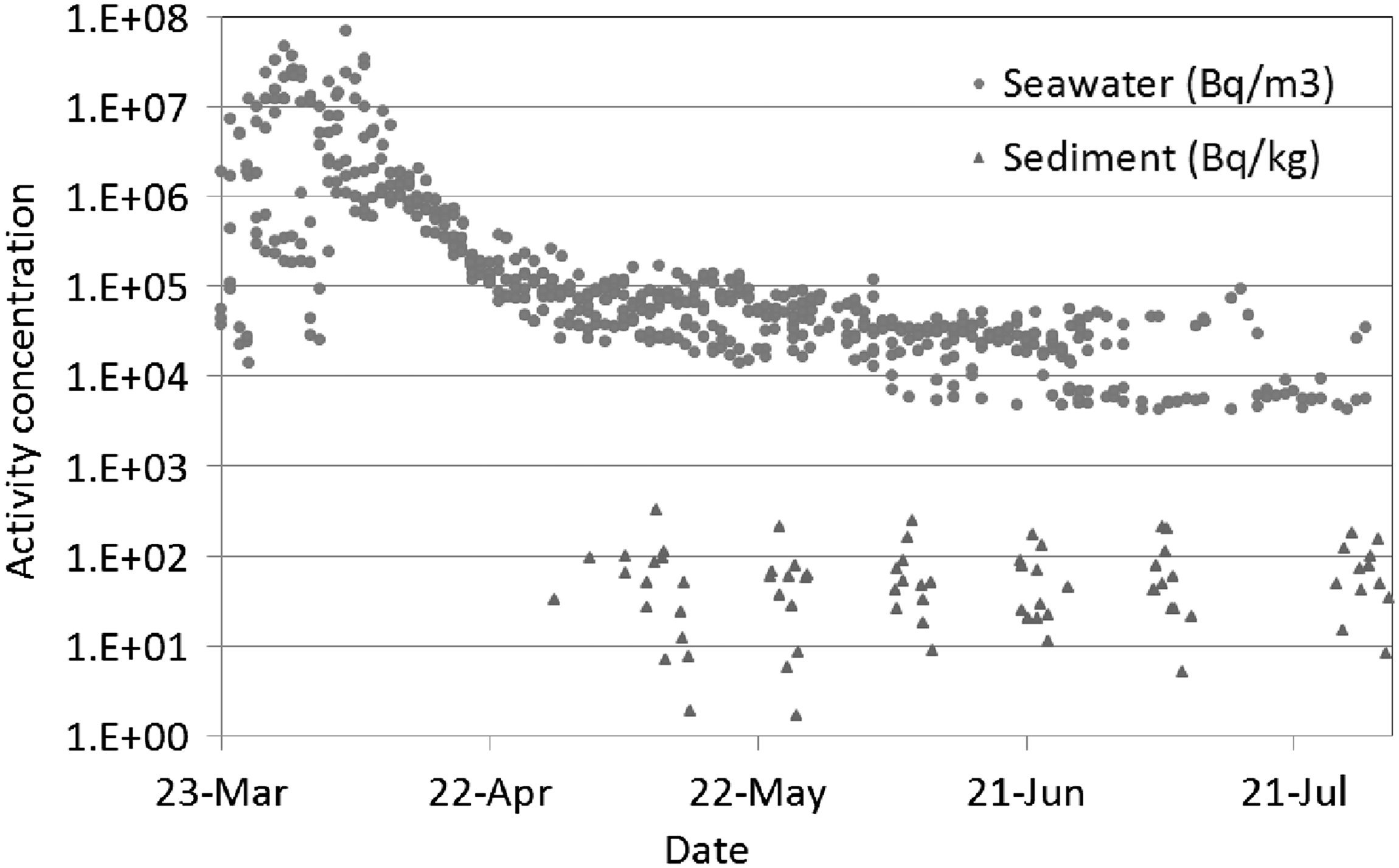
2.3. Assessment with monitoring data
Marine biota was not monitored immediately after the accident. Some of the earliest data actually originate from a Greenpeace survey of fish, algae, and molluscs sampled on 3–9 May and 23–24 June 2011 at various local ports as well as offshore from Fukushima Daiichi nuclear power plant (Greenpeace, 2012). The data show that the most exposed organisms were those receiving 131I at locations closest to Fukushima Daiichi nuclear power plant (geometric mean approximately 103 Bq kg−1, range 2–1.2 × 10⁵ Bq kg−1), particularly macroalgae. 134Cs and 137Cs were found to be in lower concentrations and in similar proportions (geometric mean approximately 102 Bq kg−1, range 1–1.4 × 10³ Bq kg−1). This suggests that radioactivity levels in marine biota were below the maximum concentrations assumed by equilibrium models in some previous studies (Garnier-Laplace et al., 2011).
The earliest dose estimates using the above data were revised by assigning a marine reference organism to each of the species sampled, using the ERICA methodology (Beresford et al., 2007; Brown et al., 2008) as a basis. The activity concentrations were multiplied by a ‘dose rate per unit concentration’ (DPUC) value for internal exposure, derived from a template ERICA assessment simulation for the relevant reference organisms. External dose rates were calculated similarly via external exposure DPUCs in combination with activity concentrations in the medium. This simple method captures the default parameters of the ERICA approach, such as dosimetry and occupancy factors. The highest internal dose rates calculated were 12.7 μGy h−1 for 131I, 0.13 μGy h−1 for 134Cs and 0.19 μGy h−1 for 137Cs (Fig. 2). The highest external dose rates calculated were 0.006 μGy h−1 for 131I, 0.075 μGy h−1 for 134Cs, and 0.035 μGy h−1 for 137Cs. Exposure in seaweed dominated, followed by molluscs and fish (Fig. 2).
Internal dose rates for marine biota sampled in early April and May 2011 (Vives i Batlle and Vandenhove, 2014). The time scale on the abscissa represents days since the accident.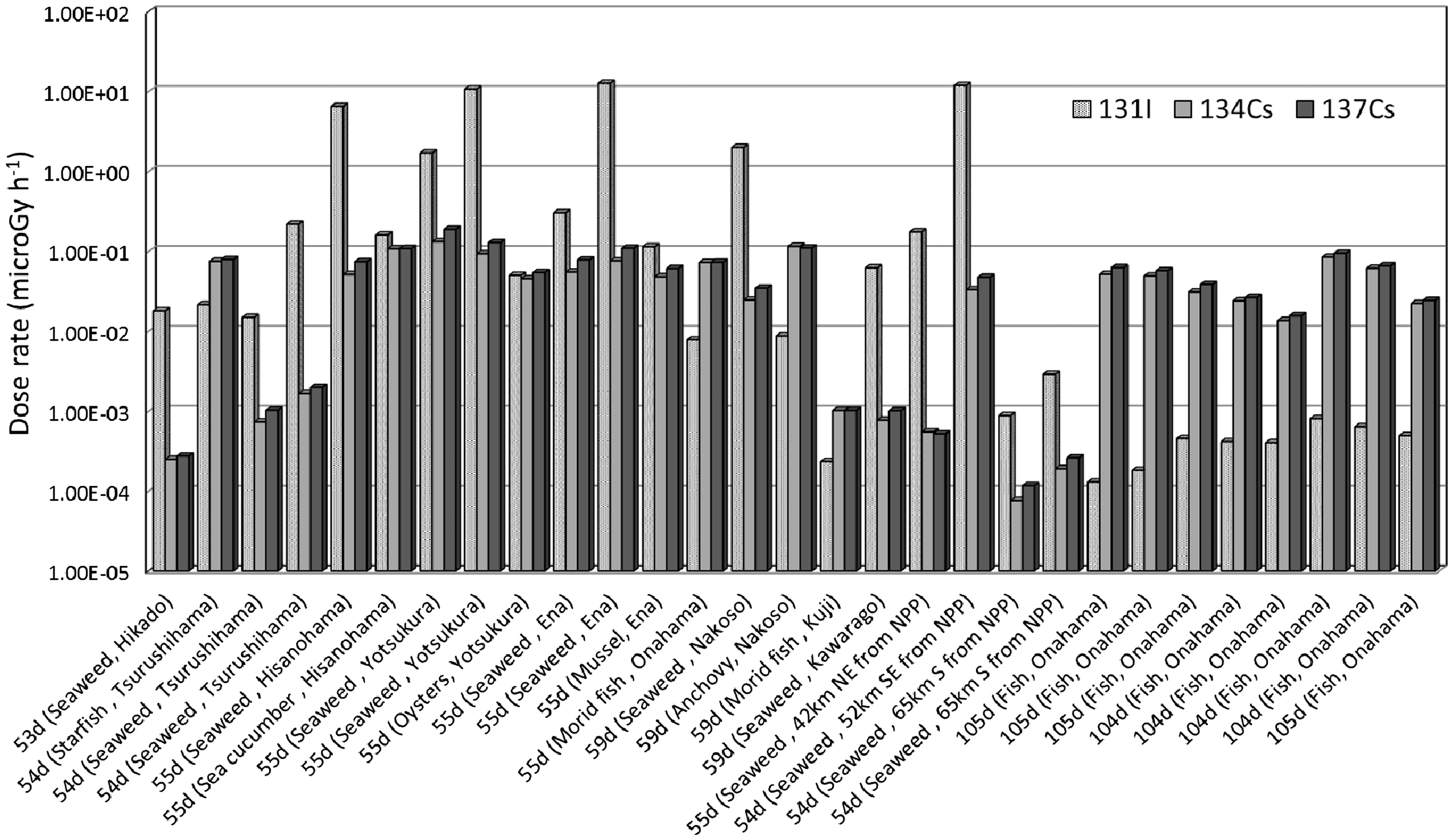
2.4. Dynamic transfer modelling
Confirmation that the dose rates received by the biota would have been less than estimated in the earlier studies came from the modelling of radiation doses to marine biota using a dynamic transfer approach, which was applied to the first month after the accident where biological monitoring data are not available. Instead of assuming that the activity concentration AO (Bq kg−1) in an organism of mass M is proportional to the activity concentration AW (Bq m−3) in a surrounding volume of water V, the biota is modelled as reacting to ambient concentrations with a time delay. This is determined by the half-time of clearance following an intake of radioactivity. The key parameters are the biological half-life of elimination TB1/2 and the equilibrium concentration ratio (CR). In its simplest form, the process can be represented by a simple model with two rate constants, kW for uptake and kO for elimination:
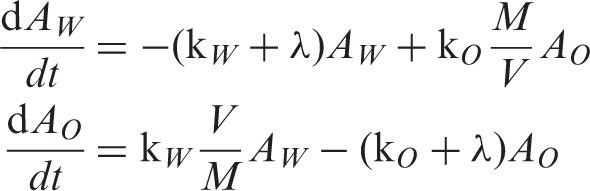
These equations have simple solutions and models designed to solve them, and more complex forms involving metabolism and/or the allometry of multicomponent release are described elsewhere (Sazykina, 2000; Vives i Batlle et al., 2007). The D-DAT assessment model and associated biokinetic parameter database (Vives i Batlle et al., 2008a; Watts et al., 2008) were used in this work, incorporating the ERICA dosimetric approach, with predefined activity concentrations in seawater as the starting point. An example of the modelling results is given in Fig. 3.
Modelling predictions for the Fukushima Daiichi northernmost discharge point.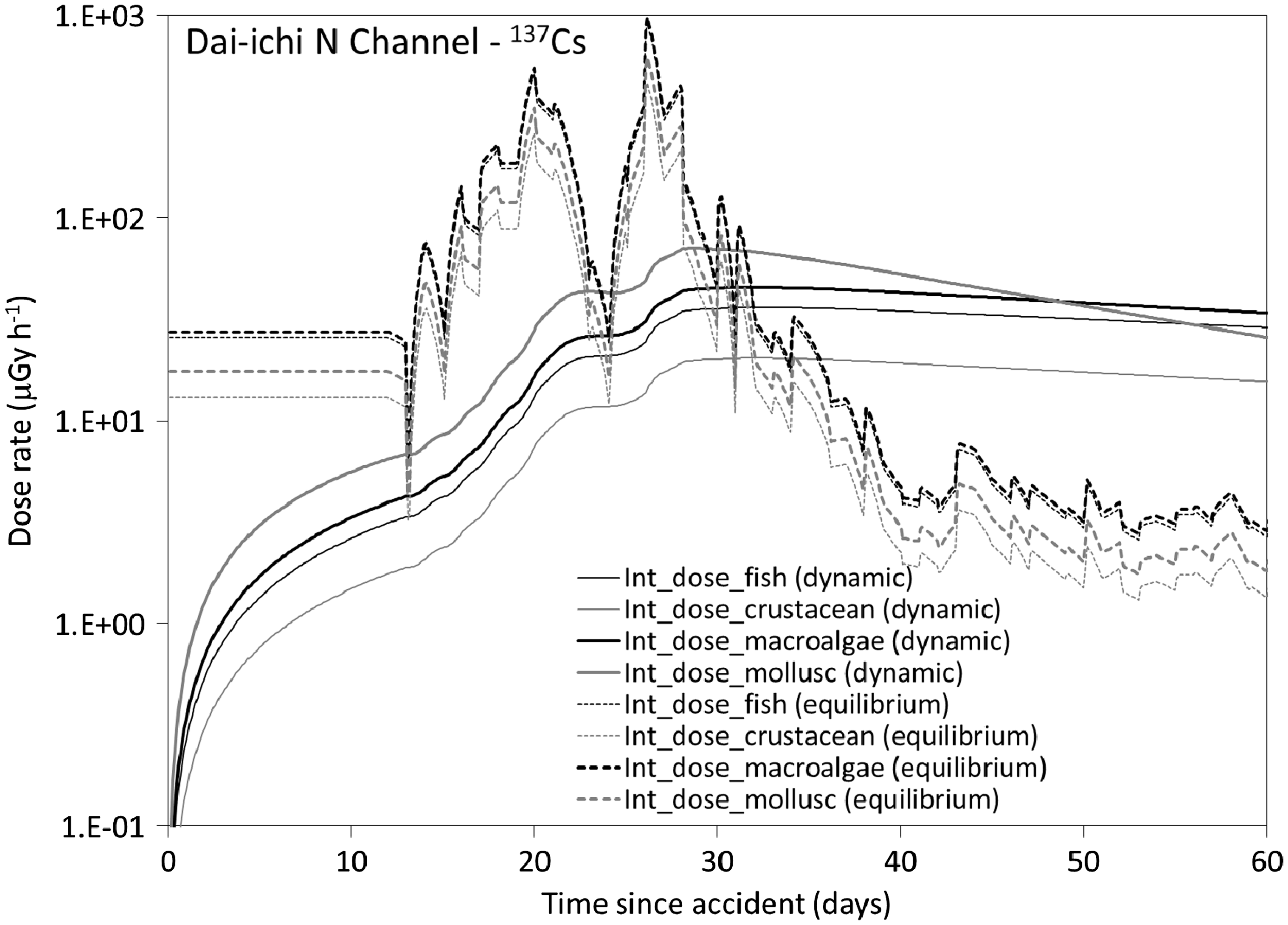
The model predicts 131I internal dose rates of 20–25 mGy h−1 for macroalgae and 15–60 μGy h−1 for other species in the vicinity of the Daiichi stations, with a factor 30–40 times lower in the more distant Daiini and Iwasawa shore stations. 134Cs and 137Cs internal dose rates at Fukushima Daiichi nuclear power plant were calculated to range from 10 to 70 μGy h−1 for all species (20 times lower in the more distant stations). The most exposed organism was macroalgae, receiving 131I near the Daiichi outlets, peaking 20–30 days post-accident and falling rapidly thereafter. Organisms outside Fukushima Daiichi nuclear power plant were predicted to have received <4 μGy h−1 of radiocaesium exposure and 750 μGy h−1 of radioiodine exposure (mostly in macroalgae). The internal dose rate dominates two to three orders of magnitude over external dose rate. This calculation only considers the external exposure from seawater because no sediment monitoring data were available in the immediate aftermath of the accident. However, the build-up of radionuclides in sediment would not have equilibrated, and thus the error incurred would not have been high (this has been verified in later studies).
The 131I cumulative doses over the initial 60-day period were modelled to be 6.5 Gy for 131I for macroalgae and two to three orders of magnitude lower for fish, crustaceans, and molluscs for the stations nearer to Fukushima Daiichi nuclear power plant. The 131I cumulative doses at the same station were 20–50 mGy, highest for molluscs. Outside the vicinity of Fukushima Daiichi nuclear power plant, cumulative doses were predicted to have been 460 mGy for 131I and <3 mGy for 134Cs and 137Cs.
Where concentrations in the water increased sharply, dynamically modelled doses are lower than doses using the equilibrium CR approach due to the delayed build-up of activity in the biota. The opposite occurs over the subsequent late period, due to delayed retention. This is consistent with previous dynamic transfer modelling studies involving authorised 99Tc pulses released by the Sellafield plant in Cumbria, UK (Vives i Batlle et al., 2008a). The differences between equilibrium and dynamic modelling are most pronounced for the biota with biological half-lives of >10 days (fish and molluscs), indicating a two-fold overestimation of magnitude by the equilibrium approach. The dynamic model brings the predicted dose rates more in line with dose rates calculated directly from monitoring data (within an order of magnitude for radiocaesium and a factor of two for radioiodine).
The above analysis is limited to a small monitoring dataset, exemplifying the issues faced when investigating emergency releases to the environment. Starting with screening studies and simple maximising assumptions, the assessment is refined as more data become available. A more comprehensive study of the situation is required, and this materialised with the UNSCEAR assessment in the case of Fukushima.
2.5. The UNSCEAR assessment
UNSCEAR decided early after the Fukushima accident to assemble a team of 60 international experts from 18 countries to assess radiation exposures and health effects due to the accident at Fukushima. Four expert groups (measurements, source term and dispersion, assessment of doses, and risk analysis) were established, with Japan providing an extensive dataset to the Committee.
The in-depth study undertaken by UNSCEAR resulted in updated estimates of radiation doses to humans and the environment. The assessment of exposures to marine biota covered exposures from the beginning of the accident to August 2012, based on an extensive dataset of over 500 sediment and 6000 seawater data points as well as 5000 samples of organisms from 210 species, supplemented by modelling of dynamic transfer to biota using the D-DAT model, among others. The doses and associated effects of radiation following the accident were evaluated against the Committee’s previous evaluations of such effects (UNSCEAR, 1996, 2008).
At the time of writing this paper (November 2013), the full report with detailed scientific annexes had not yet been released, but it has since become available (UNSCEAR, 2014), followed by scientific publication of the marine biota assessment (Vives i Batlle et al., 2014). The study concluded that exposures of non-human biota following the accident were, in general, too low for acute effects to be observed. A possible exception of a transient nature is the relatively contaminated area in the vicinity of the discharge point, where effects on sensitive endpoints in individual plants and animals might have occurred in the weeks following the accident. However, impacts on population integrity would have been unlikely due to the short duration and the limited space area of the initially high exposures. Beyond that area, the potential for effects on biota was much lower.
2.6. Current situation
In recent times, it has been confirmed that radionuclide levels in fish off Fukushima are highly variable but remain elevated, potentially associated with delayed emissions. Radiocaesium levels up to several thousand Bq kg−1 in benthic fish have been reported, exceeding the Japanese radioactivity in food limit of 100 Bq kg−1 (Buesseler, 2012; Buesseler and Aoyama, 2012). A recent report from the Fukushima nuclear operator (TEPCO, 2013b) analysed local marine biota for evidence of changes in activity concentration in 2013. This report shows that seawater contamination near Fukushima Daiichi nuclear power plant has decreased from approximately 105 Bq l−1 in March 2011 to a few Bq l−1 in late 2012. Around 600 Bq kg−1 total Cs were found in sediment 1 km offshore from Ukedo, Namie Town, and sediment Cs levels have not changed significantly, remaining at a few hundred Bq kg−1. In late February–early March 2013, levels of radiocaesium as high as 5 × 10⁵ Bq kg−1 were found occasionally in greenling from fishing baskets and in gill nets at the port entrance to Fukushima Daiichi nuclear power plant.
Using the ERICA methodology, the highest internal dose rates (greenling samples of 17/02/13, 21/02/13, and 04/03/13) can be calculated to be 17–44 μGy h−1 for 134Cs and 32–82 μGy h−1 for 137Cs. Most dose rates are clearly below this maximum: the data are log-normally distributed (σ = 0.59, μ = 0.32), and the calculated median is eμ = 1.38 μGy h−1 with 95% of results under 50 µGy h−1 (Fig. 4). The external dose rates estimated with limited seawater and sediment data are significantly lower at 0.12 μGy h−1 for 134Cs and 0.05 μGy h−1 for 137Cs.
Histogram of dose rates to marine biota sampled in 2013 (TEPCO, 2013b).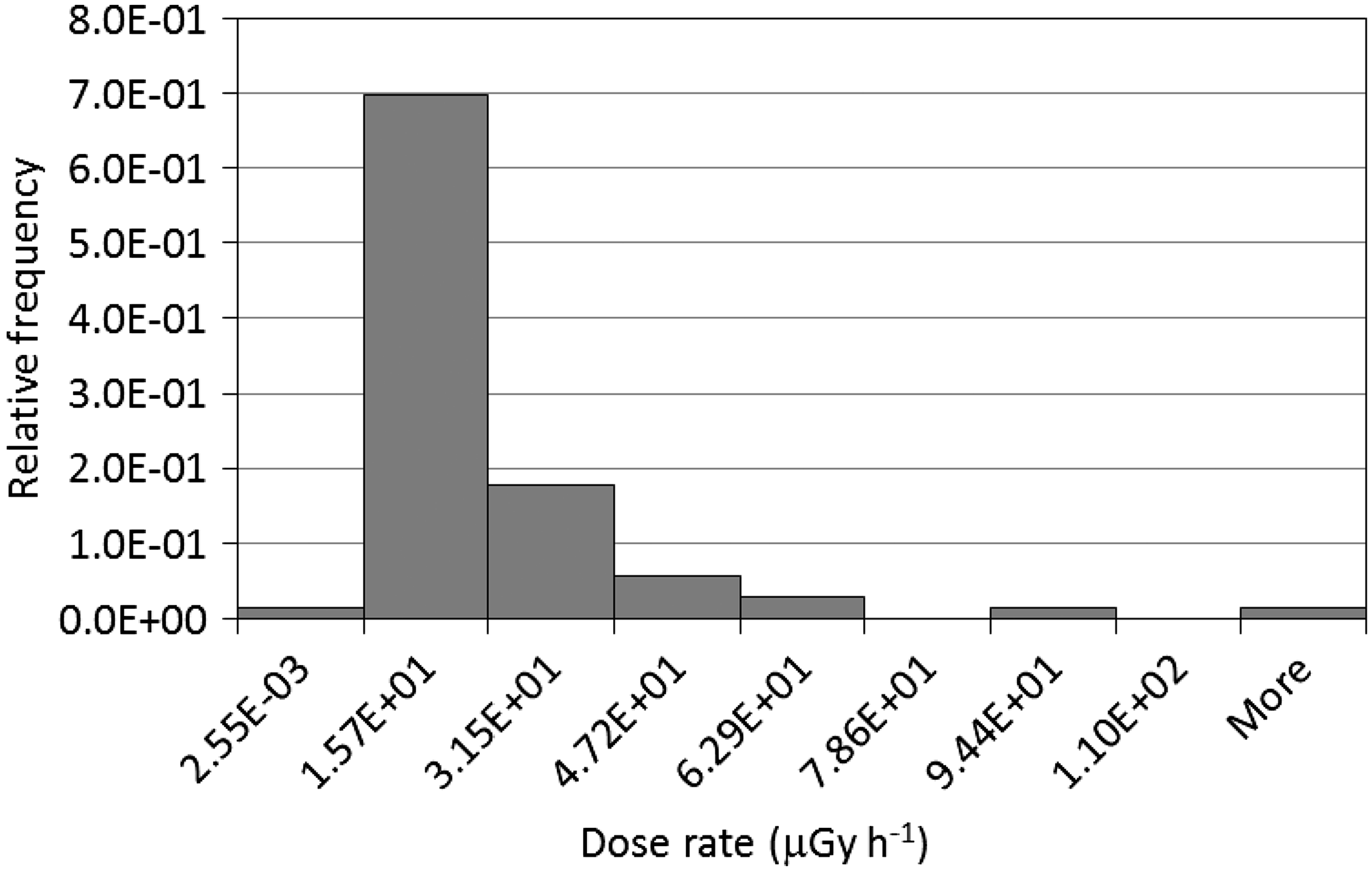
The highest dose rates in marine biota from 2013 were still below the 400 μGy h−1 UNSCEAR benchmark for the most exposed individuals of an aquatic population, below which population detriment is not expected. From this preliminary analysis, it seems unlikely that sporadic high concentrations in greenling close to Fukushima Daiichi nuclear power plant signal significant exposures to whole fish populations. However, the highest estimates are of the same order of magnitude as radiation dose rates giving a 10% effect in comparison with a control (EDR10) in some species and endpoints (Knowles and Greenwood, 1994, 1997; Garnier-Laplace et al., 2010), and they exceed the ERICA screening dose rate of 10 μGy h−1. Although the biota analysed at these locations are not under threat at the population level, a follow-up study is clearly advisable in order to evaluate exposures and effects in organisms inhabiting local hot spots more systematically.
3. Assessment Interpretation and Discussion
In the case of Fukushima, it seems reasonable to assign a 2-month period for the acute phase of the accident, based on the presence of short-lived 131I at that time, inducing high dose rates in some biota. During this period, there is the possibility that so-called ‘acute effects’ (rapid biological alteration leading to irreversible damages) would have occurred to the most exposed marine organisms, but there is no firm scientific evidence that they did indeed occur. During the late (or chronic) phase, radiocaesium isotopes remained. The potential effects in marine species during this phase are difficult to predict because they are scarcely documented. For example, limited data available for fish indicate that dose rates lower than 4000 μGy h−1 are unlikely to affect survival. The lowest value of chronic dose rate with a 10% effect on reproduction is 47 µGy h−1 in plaice (Garnier-Laplace et al., 2010). For marine invertebrates, the lowest value of EDR10 is found at 36 µGy h−1 for annelids (Knowles and Greenwood, 1994). To the author’s knowledge, there are no chronic effects data for marine plants in the literature.
With the information available, it is concluded that the doses likely to have been incurred in the chronic phase are generally below the levels necessary to cause a long-term measurable effect on biota populations, as suggested by other researchers (Buesseler et al., 2012). In the acute phase, one would only expect transient effects for macroalgae exposed to 131I close to the discharge point, but these effects have not been confirmed, to date, by actual observation. At locations further away from Fukushima Daiichi nuclear power plant, exposures fell below the thresholds for which population effects are deemed likely. This includes the elevated concentrations in some individual greenling specimens, as stated previously.
3.1. Uncertainties and limitations
Exposure assessments to non-human biota are affected by uncertainties in both dose estimates and effects benchmarks. A previous study (Vives i Batlle and Vandenhove, 2014) showed that the uncertainties in dosimetry calculations are approximately ± 25% for internal exposures and ± 150% for external exposures. The model-based assessment has an additional uncertainty estimated to be within a factor of two (unpublished data), mainly due to uncertainties in the TB1/2 and CR parameters.
Initial assessment efforts have several limitations. A number of radionuclides known to have been released are absent from the biota monitoring data (i.e. 89Sr, 90Sr, 129Te, 129mTe, 136Cs, and the actinides). Exposures from sediment are not included in external dose calculations for the acute phase of the accident. The TB1/2 and CR parameters used in the studies described so far are generic rather than site-specific, but a recent publication containing TB1/2 values for radiocaesium in 16 species of Fukushima marine biota (Iwata et al., 2013) offers the prospect to improve this. In general, the monitoring data available for assessment in the aftermath of an emergency are often limited, and a publicly available, quality-assured, comprehensive database would be a major benefit. Efforts such as the Fukushima Monitoring Database (IAEA, 2012) or the Historical Artificial Radionuclides in the Pacific Ocean and its Marginal Seas database (Aoyama and Hirose, 2004), which include global and local radionuclide data associated with the Fukushima accident, are highly welcome.
The scarcity of radiation dose effect data with which to establish a clear benchmark for assessment adds a new dimension to the problem. Applying radiation dose benchmarks to an accidental situation covering an acute and a chronic phase is still novel and fraught with difficulties, especially when comparing and contrasting average exposures with doses to the most exposed organisms. There is also a need to develop studies to observe any potential effects in the field.
The radiological protection system for non-human biota is designed to protect at the population level. However, the possibility of more subtle effects at the individual level cannot be ruled out completely. Long-term effects over several generations, for instance on reproduction, are also possible in theory (Vives i Batlle, 2012a). In addition, non-human biota have a wide range of interspecies radiosensitivity, and they may react according to a complex interplay between absorbed doses (or dose rates) and radiotoxic responses, expressed at different levels of biological and ecological organisation. Although not yet observed, future studies should keep watch for these possible effects.
3.2. Ongoing and future issues for consideration
In October 2013, radioactivity leaked from storage tanks at Fukushima Daiichi nuclear power plant, emphasising the difficulties encountered by the operators in the management of the crisis (TEPCO, 2013a). There is a possibility that some effluent could enter the sea through the groundwater system. A range of abatement measures are being proposed to address this problem (Coughlan, 2013), but the possibility of enhanced radioactivity concentration at some coastal points cannot be excluded.
Meanwhile, dispersion of radionuclides through water will continue, and some radionuclides will continue to migrate to the benthic environment where bottom-dwelling species will continue to become exposed. There is a need to conduct long-term and long-range dispersion modelling studies to determine the residence times and deposition rates of Fukushima radionuclides in the North Pacific Ocean. These studies should cover radionuclides such as plutonium, which has received little attention to date (Zheng et al., 2013).
Detailed fieldwork is also needed in order to validate modelling studies and to calculate the radionuclide inventories in sediments. Investigations in estuaries are important because they are highly dynamic environments with particular biogeochemical characteristics affecting potentially sensitive, brackish species.
Lastly, there is a need to conduct long-term effect studies in tandem with revisiting current assessments in order to assess the potential effects of environmental radiation at the population level.
3.3. Ethical considerations
Fukushima is, and will likely remain, the main problem for marine radioecology over the next 20 years. In the meantime, the challenge of communication during nuclear emergencies remains a concern (Perko, 2011), and the scientific community has a role to play in informing the public in a trustworthy, fair way about its meaning and its consequences. Amid the journalistic stories and political positioning, there is a need to remain objective, producing scientific papers aimed at a scientific audience with the objective of helping Japan to deal with the consequences of the Fukushima accident.
The impact to the overall environment, including the abiotic component, is far beyond the scope of current studies. However, radiation dose as a magnitude cannot capture impacts to the actual value that mankind assigns to the environment. For example, ‘small’ dose rates of 2 μGy h−1 imply a numerically large 137Cs activity concentration of 104 Bq kg−1 in fish which, using the ERICA CRs and sediment/water distribution coefficients (FREDERICA, 2006; Beresford et al., 2007; Brown et al., 2008) would be in equilibrium with 105 Bq m−3 in water and 5 × 10⁵ Bq kg−1 in sediment. Such levels are comparable to levels offshore Sellafield at their peak period during the late 1970s (Vives i Batlle et al., 2008b), and cannot be dismissed. The applicability of the radiation protection framework to the abiotic environment is a matter of legitimate scientific debate (IAEA, 2002) which ought to continue with Fukushima.
4. Conclusions
This paper has described ongoing efforts to investigate the impact of the Fukushima nuclear accident on marine biota, including retrospective assessments of the first year and perspectives. It has been shown that the radiation doses received by marine biota in Fukushima are generally below the amounts necessary to cause a measurable effect on populations. It would seem that the possibility of effects on non-human biota is, at most, constrained in space to the vicinity of Fukushima Daiichi nuclear power plant, and in time to the initial phase of the accident when radioiodine exposures to marine biota (especially to macroalgae) were at their peak.
If this paper has reduced some of the initial estimates of exposures from previous studies, it has also indicated that enhanced levels of radioactivity in biota persist in the vicinity of Fukushima Daiichi nuclear power plant. There is a need to characterise local hotspots and assess the exposures to the most exposed biota. There are other areas where assessment is not complete. For example, our current understanding of the biological impacts of radiation on chronically exposed marine biota is based on limited effects data for the range of exposures considered.
The assessment of environmental impacts of Fukushima tests the international system for environmental protection from radiation. There are several reasons for this. Firstly, the transfer of radioactivity from environmental media to biota was initially a highly dynamic process, rendering the equilibrium transfer approach inapplicable during the acute phase. Secondly, the wide range of Japanese indigenous species that need to be covered is a challenge to the RAPs predefined in the assessment system (ICRP, 2008a). Lastly, application of radiation dose benchmarks to an accidental situation covering an acute and a chronic phase is novel and, as such, requires further development.
Ultimately, the environmental impact of Fukushima to the marine environment remains an open subject and a challenge for marine radioecology in the decades to come, signalling the direction for future investigations.