




Abstract
The International Commission on Radiological Protection’s (ICRP) system to protect the living components of the environment is designed to provide a broad and practical framework across different exposure situations. The framework recognises the need to be able to demonstrate an adequate level of protection in relation to planned exposure situations, whilst also providing an ability to manage existing and emergency situations in an appropriate way. In all three exposure situations, the release of radionuclides into the natural environment leads to exposures of non-human biota (wildlife), as well as having the potential for exposures of the public. How the key principles of the ICRP system of radiological protection apply in each of these exposure situations will be discussed. Using examples, we will demonstrate how the overall approach provides a mechanism for industry to assess and demonstrate compliance with the environmental protection objectives of relevant (national) legislation, and to meet stakeholder expectations that radiological protection of the environment is taken into consideration in accordance with international best practice. However, several challenges remain, and these will be discussed in the context of the need for additional guidance on the protection of the environment.
1. Introduction
The International Commission on Radiological Protection (ICRP) has stated that the primary aim of its 2007 Recommendations is to ‘contribute to an appropriate level of protection for people and the environment against the detrimental effects of radiation exposure without unduly limiting the desirable human actions that may be associated with such exposure’. More specifically for the environment, the aim is ‘preventing and reducing the frequency of deleterious radiation effects to a level where they would have negligible impact on the maintenance of biological diversity, the conservation of species, or the health and status of natural habitats, communities and ecosystems’ (ICRP, 2007).
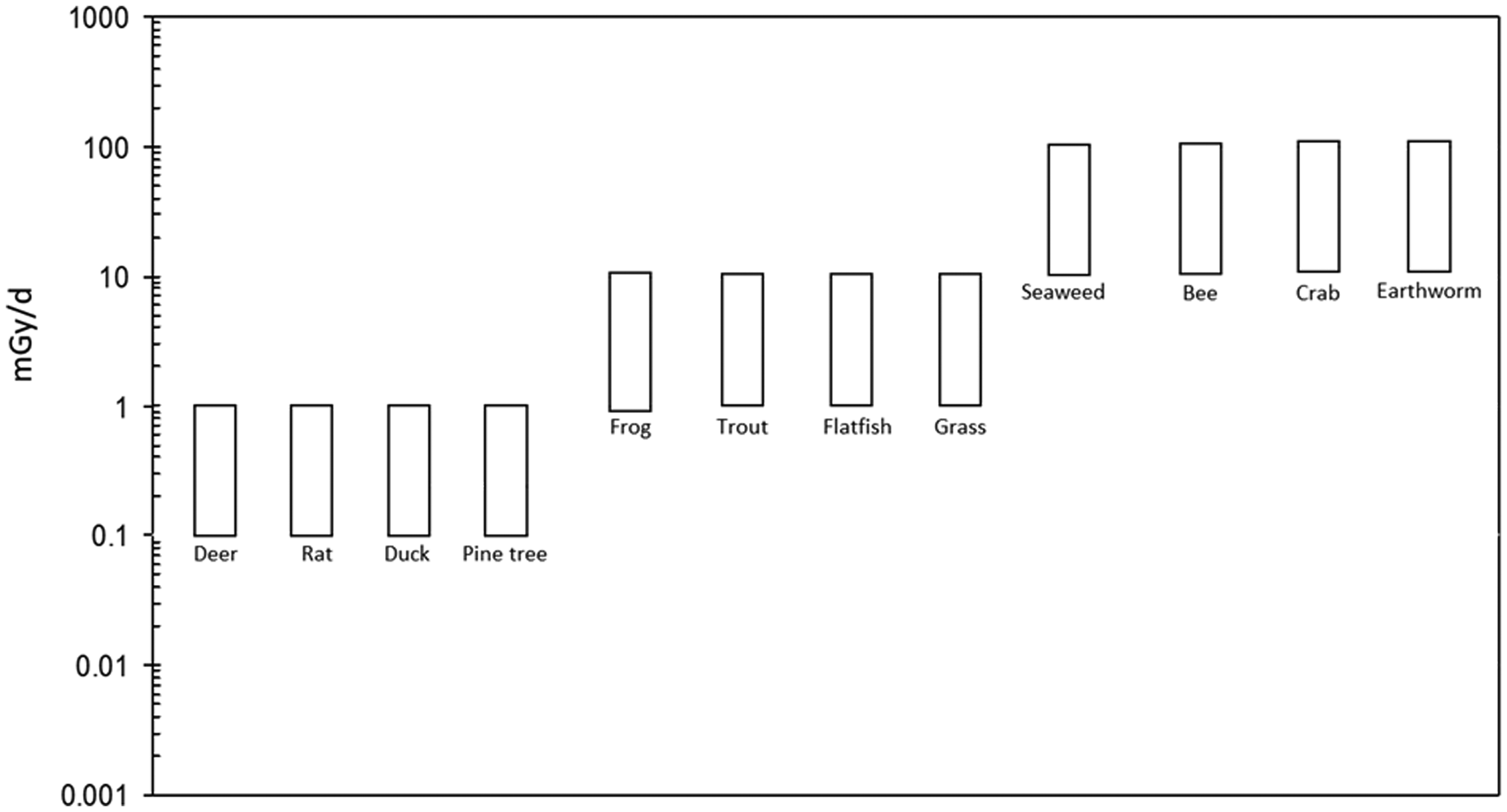
In Publication 108 (ICRP, 2008), ICRP set out its approach to the protection of both humans and the environment in relation to the three exposure situations (Fig. 1). ICRP describes how the system of radiological protection should be integrated to ensure human and environmental protection (ICRP, 2008). For example, while radiological protection for humans is subject to the application of dose limits, constraints, and reference levels according to the exposure situation, for the environment, there are 12 Reference Animals and Plants (RAPs) that have been used to define numeric criteria [derived consideration reference levels (DCRLs)]. DCRLs are defined as ‘a band of dose rate within which there is likely to be some chance of deleterious effects of ionising radiation occurring to individuals of that type of Reference Animal or Plant, derived from a knowledge of defined expected biological effects for that type of organism that, when considered together with other relevant information, can be used as a point of reference to optimise the level of effort expended on environmental protection, dependent upon the overall management objectives and the exposure situation’. Fig. 2 shows the ICRP DCRLs for each RAP.
Schematic approach to the protection of both humans and the environment in relation to any exposure situation (ICRP, 2008). Derived consideration reference levels for environmental protection for each Reference Animal and Plant (RAP) (ICRP, 2008, 2014).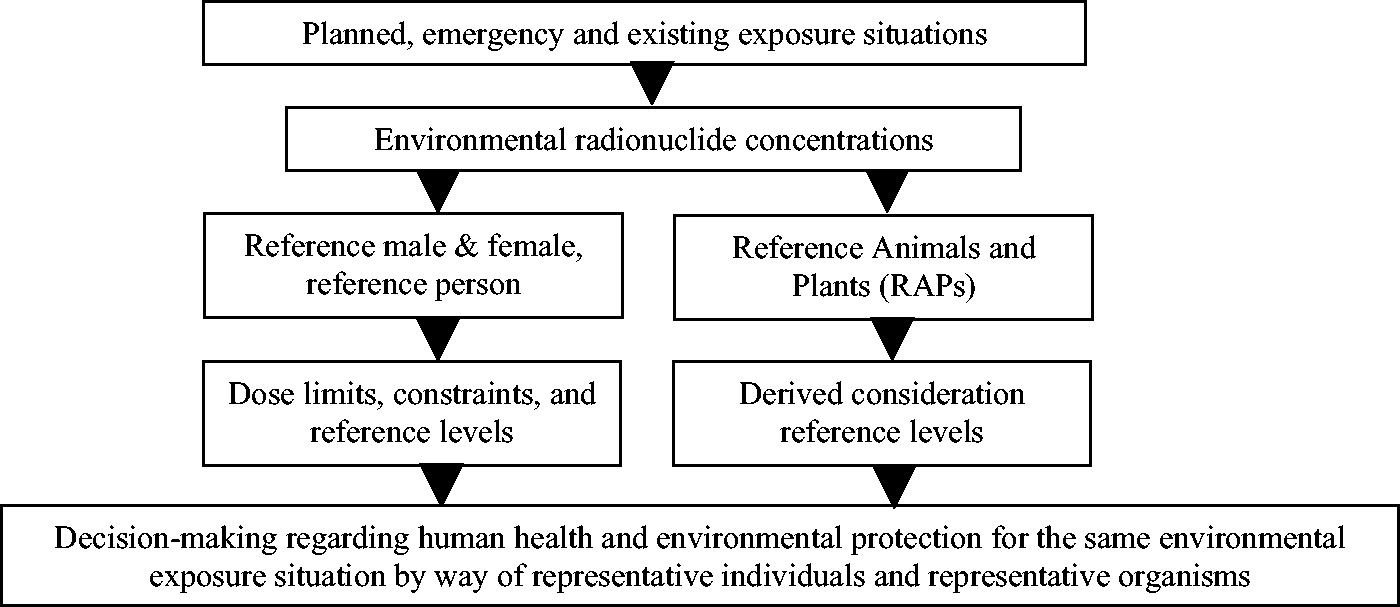
While dose criteria are expressed differently for humans and the environment, their use has the same purpose, namely to aid decision making on the appropriate level of protection to apply, while addressing the fundamental ethical principle of doing more good than harm (ICRP, 2014). That said, it is recognised that applying these dose criteria when carrying out dose assessments, and deciding on the implementation of a protection strategy, is highly dependent upon factors such as the exposure situation and its prevailing circumstances, relevant endpoints for the management processes, and non-radiological factors.
The RAPs have defined anatomical, physiological, and life-history information, and provide the basis to model the relationship from dosimetry to radiation effects for the set of 12 organism types (deer, rat, bee, earthworm, duck, frog, trout, marine flatfish, crab, pine tree, grass, and seaweed). It is important to remember that these are not necessarily the objects of the protection, but allow for consideration of the impacts on biological diversity, species’ health, and natural habitats.
Given the different component parts, it is important to provide advice and guidance on how the radiological protection principles can be applied in the context of environmental protection under the three exposure situations recognised by ICRP (2008). The three exposure situations are as follows.
Planned exposure situations – exposure situations resulting from the operation of deliberately introduced sources. Planned exposure situations may give rise to exposures that are anticipated to occur (normal exposures) and exposures that are not anticipated to occur (potential exposures). Emergency exposure situations – exposure situations resulting from a loss of control of a planned source, or from any unexpected situation (e.g. a malevolent event), that requires urgent action in order to avoid or reduce undesirable consequences. Existing exposure situations – exposure situations resulting from sources that already exist when a decision to control them is taken.
1.1. Applying the DCRLs in planned exposure situations
The concept for planned exposure situations, as outlined in Publication 124 (ICRP, 2014), is that we should not ‘plan’ radiological protection that could potentially lead to harm to non-human biota in just the same way as we aim to prevent harm to humans, bearing in mind that the DCRL represents a ‘band of dose rate’ within which there is some chance of deleterious harm occurring (Fig. 3). The Commission has recommended that the lower boundary of the relevant DCRL band should be used as an appropriate reference point for the protection of the different types of non-human biota. It has been noted that cumulative impacts from multiple sources may need to be considered depending upon the prevailing circumstances being assessed.
Schematic approach to the protection of the environment under planned exposure situations (ICRP, 2014), showing that, ideally, discharges would not result in dose rates in, or above, the derived consideration reference level (DCRL) region. RAP, Reference Animal or Plant.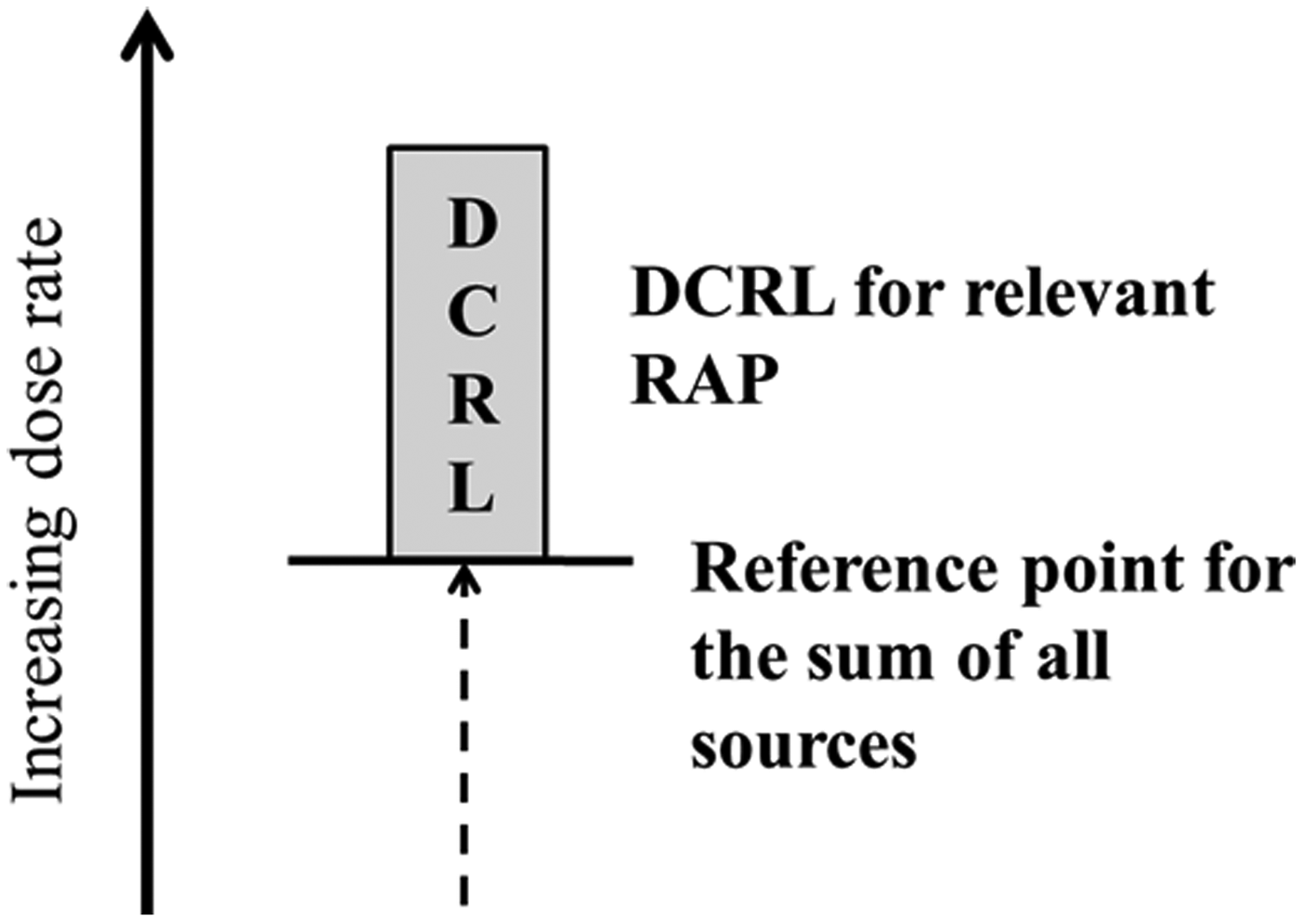
1.2. Applying the DCRLs in emergency and existing exposure situations
For emergency exposure situations where control of the source has not been obtained, the estimated dose rates to non-human biota can be compared with the DCRL band (Fig. 4a) and used in communicating the likely risks to non-human biota that may be affected by exposure to radiation. It is unlikely that, during an incident, any specific activities will be taken to protect non-human biota present in an affected area. However, any initial decontamination/clean-up activities during the emergency phase that may reduce the dose rate for humans are likely to have the same consequential reduction in dose rate to non-human biota. Ideally, the choice of decontamination/clean-up methods should consider the non-radiological impacts (e.g. any chemicals used in the clean-up, physical removal of habitat including soil and flora) on non-human biota.
Schematic approach to protection of the environment under (a) emergency and (b) existing exposure situations (ICRP, 2014). (a) The potential use of a severe effects level, in relation to the derived consideration reference level (DCRL), to relate exposure of non-human biota following an accidental or emergency release of radionuclides into the environment. Severe effect levels are often used in chemical risk assessment and have been considered by the International Commission on Radiological Protection to be approximately equivalent to a band of doses two orders of magnitude above the DCRL band. (b) The intent to move progressively towards (if above) and into the DCRL during the existing exposure situation.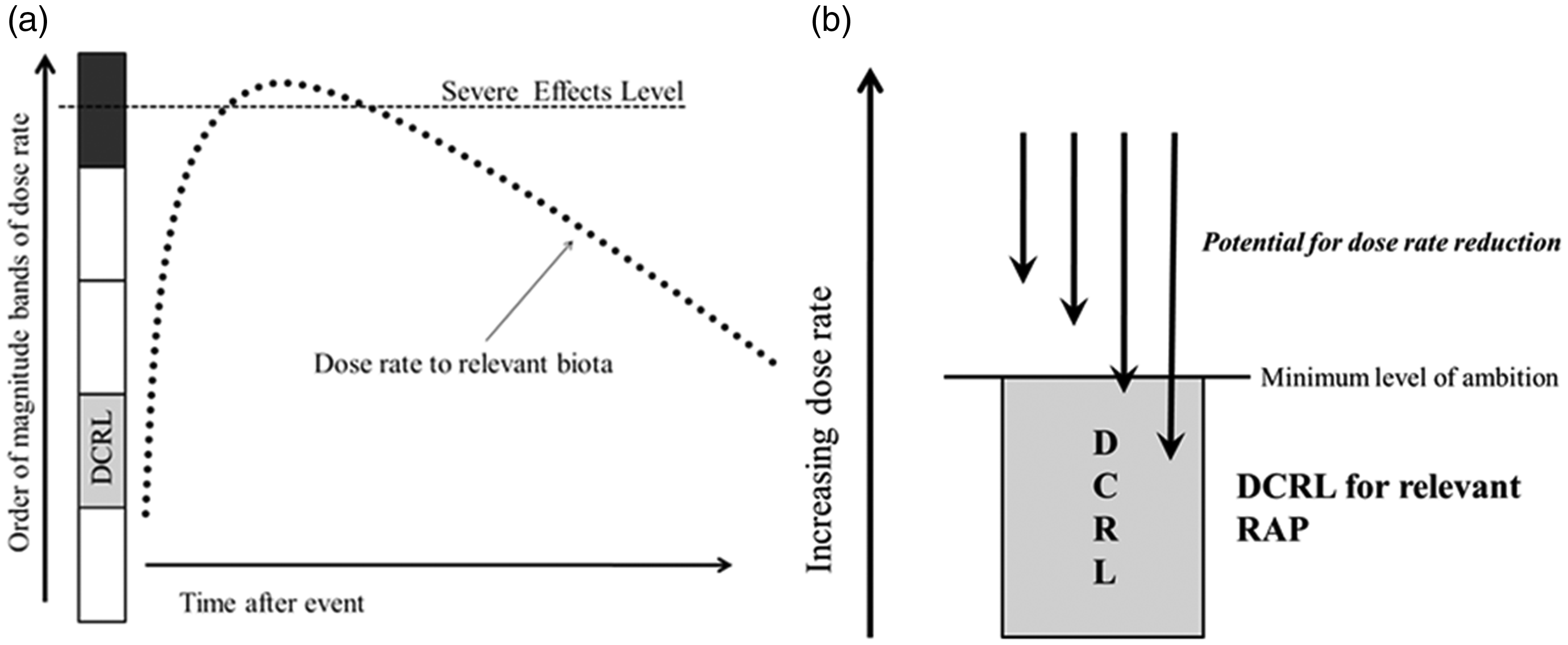
Using the DCRL bands, the consequences of dose rate reductions resulting from decontamination/clean-up activities can be assessed from a radiological perspective. The Commission stated in Publication 124 (ICRP, 2014) that if the dose rates to non-human biota are above the relevant DCRL band, they recommend that the aim should be to reduce exposures to levels that are within the DCRL bands for the relevant populations (Fig. 4b). However, the Commission also recognises that it may be difficult, or impractical, to significantly reduce the concentrations or quantities of radioactive material that exist in the affected environment. Thus, in the case of existing exposure situations, the DCRLs are to be used as the criteria for mitigating environmental exposures, just as reference levels are used for mitigating individual exposures for human protection in such situations.
2. Examples Of Applying Icrp’s System For Radiological Protection Of The Environment Under Different Exposure Situations
2.1. Applying the DCRLs in planned exposure situations
There are now a number of examples of radiological dose assessments for non-human biota for currently operating or planned sites. Some examples drawn from the UK are for:
non-nuclear sites (e.g. hospitals, research facilities) (Allott et al., 2009; Environment Agency, 2019a); new-build nuclear power plants (e.g. Hinkley Point C, UK) (Environment Agency, 2012); and permit variations (e.g. the nuclear licensed site at Sellafield in Cumbria, UK) (Environment Agency, 2019b).
As an example, in their latest habitats assessment review using permit data from 2017 in England and Wales, the Environment Agency (2019a) showed that all 218 terrestrial sites assessed had a dose rate <0.1 mGy day−1 (i.e. the lower boundary of the DCRL for the terrestrial RAPs). Similarly, all 129 assessed marine sites and 80 of 81 assessed freshwater sites were below 1 mGy day−1, which is the lower boundary of the DCRL for freshwater and marine RAPs. On further investigation, the one freshwater site had dose rates of 1.008, 0.8, and 0.5 mGy day−1 for insect larvae, vascular plants, and molluscs, respectively. These are all below the nearest appropriate RAP DCRL [e.g. while not aquatic, Reference Bee and Reference Earthworm (10 mGy day−1) for insect larvae; Reference Grass (1 mGy day−1) or Reference Seaweed (10 mGy d−1) for vascular plants; and Reference Crab as the nearest RAP for molluscs (10 mGy day−1)]. This also highlights some of the difficulties in applying the most appropriate RAP to the different wildlife species found in different environmental compartments.
More recently, non-human biota dose assessments are being conducted to explore ‘what if scenarios’ when considering decommissioning and radioactive waste disposal options. For example, in the petroleum industry, would more harm be done by removing radioactively contaminated pipelines from the seabed than by leaving them in situ based on the estimated radiological exposures to humans and non-human biota? In the UK, the environmental regulators have issued guidance on how nuclear licensed sites might be released from radioactive substances regulation (Environment Agency, Natural Resources Wales and Scottish Environment Protection Agency, 2018), and set out the requirements for waste management plans and site-wide environmental safety cases which include consideration of the options for disposal/decommissioning.
Generally speaking, radiological dose assessments for planned exposure situations provide reassurance that the dose rates to non-human biota are or will be low and below any threshold level that might be applied nationally (in the case of England and Wales, for example) or using the appropriate DCRL. This is perhaps not surprising given the controls on discharges that are applied for the public. In some cases (e.g. Allott et al., 2009; Environment Agency, 2019a), the dose assessments have been conducted for multiple sites (approximately 350 designated conservation sites). Often these assessments for planned exposure situations are conducted on a conservative basis by considering the dose rates arising from:
discharges at the permitted limits; modelling approaches which do not take into account or limit dispersion in the environment; and use surrogate data where there are missing data, usually based on picking similar or conservative alternatives (e.g. where data are missing for radionuclide transfer), or picking transfer data from a similar organism type or similar radionuclide (e.g. from within the same group in the periodic table).
There are still knowledge gaps and improvements to the dose assessment methodology that can be applied. However, for the most part, as the conservatively estimated dose rates are well below any thresholds being used, these assessments can be accepted. However, for some site assessments, data are lacking because of gaps in our knowledge of radionuclide transfer (e.g. across all ecosystem types – temperate, arid, tropical, etc.). This was the case in Australia for assessments being conducted for the Ranger uranium mine in the Alligator River Region (ARR).
The ARR in Northern Australia is an area of past and present uranium mining activity. It is one of the most diverse biological regions in Australia with a wet–dry tropical climate, and around two-thirds of this area is the Kakadu National Park (a World Heritage site). Ranger uranium mine, which commenced operation in 1980, is located in the ARR. To support activities planning for the closure and rehabilitation of the Ranger uranium mine, concentration ratios (transfer parameters) for the wild plants and animals used by local Aboriginal people (‘bush foods’) and for non-human biota in their own right were required. Limited data from this type of ecosystem were available in the late 1970s, and the Environmental Research Institute of the Supervising Scientist (ERISS) of the Supervising Scientist Division of the Commonwealth Department of Agriculture, Water, and the Environment was established to undertake research and monitor the operation of Ranger uranium mine and other mining activities in the ARR.
ERISS has been undertaking research and monitoring to independently assess the environmental impacts of uranium mining in the region for around 40 years. ERISS has established a database for the storage and handling of data on natural series radionuclide and metal concentrations in Northern Australian bush foods and environmental media from the ARR (Doering and Bollhöfer, 2016). Colloquially referred to as ‘BRUCE’ (Bioaccumulation of Radioactive Uranium-series Constituents from the Environment), the database contains over 57,000 concentration values (Doering and Bollhöfer, 2016). Although not specifically designed for non-human biota, the scope of BRUCE now includes biota tissue samples of wildlife not usually eaten as bush foods (but could be of potential importance to estimate exposures to non-human biota). BRUCE can also be used to determine organism-to-media concentration ratios for some organism types for use in non-human biota dose assessment tools, and is an example of how new data can be collated. These transfer data have now been used to help prepare the mine closure plan by Energy Resources of Australia Ltd for the Ranger uranium mine (ERA, 2019).
Compilations of data for transfer parameters, such as BRUCE, compliment and extend international data collections such as the IAEA (2014a) and ICRP (2009) handbooks, which collate data on freshwater, marine, and terrestrial ecosystems to facilitate radiological dose assessments for non-human biota. Online databases for transfer (http://www.wildlifetransferdatabase.org/; Copplestone et al., 2013) and effects (http://www.frederica-online.org/mainpage.asp; Copplestone et al., 2008) are available and underpin these handbooks for non-human biota.
2.2. Applying the DCRLs in emergency and existing exposure situations
Fortunately, large-scale radiological incidents occur infrequently, with Chernobyl and Fukushima being two of the best known incidents. Lessons can be learned from these events, and past accidents are currently the focus of a systematic review which is exploring the extent to which decisions regarding the clean-up considered the impact on the environment. Future integration of environmental considerations into protective action decisions may lead to early consideration of the environment. For example, planning where to place new facilities from the point of view of potential radiological impacts on non-human biota, or incorporating radiological considerations of the environment in emergency preparedness planning and in any potential longer-term recovery options that might be applied.
Existing exposure situations may occur following a nuclear or radiological emergency, or from the presence of historic contamination, past industrial practice (IAEA, 2014b), or as a result of naturally occurring radioactivity. The key point with existing exposure situations is the need to make a decision to bring the situation under improved radiological management based on the contamination levels and the associated radiation exposure to the public and the environment (ICRP, 2007; IAEA, 2014b). Two examples will be highlighted below where decisions of radiological management are either being considered or are required.
There are a number of sites where nuclear weapons tests were conducted, mainly during the 1950s and 1960s. For example, there were three nuclear detonations during the 1950s on the Montebello Islands, Western Australia, and radiological contamination is still present on the islands (Johansen et al., 2019) as there have been no major remediations of the area.
The Montebello Islands have mainly been assessed for human exposure alone, with the exposure criteria related to transient island visitors (Cooper et al., 1990). However, since the nuclear weapons tests, the Montebello Islands have been relatively undisturbed, and they now act as a refuge for endangered species such as flatback (Natator depressus) and hawksbill (Eretmochelys imbricata) sea turtles (Pendoley et al., 2016). Additionally, the Montebello Islands now serve as a refuge for critically endangered species of mammals (rufous hare-wallabies, Lagorchestes hirsutus) which have been translocated from the mainland (Langford and Burbidge, 2001). The conservation decisions have therefore brought species of high conservation value into areas contaminated with radioactivity, resulting in a need for both non-human biota and human dose assessments (tourists and researchers studying the species mentioned are spending increasing amounts of time on the Montebello Islands). Previous dose assessments have only considered humans.
When undertaking an integrated human and non-human biota assessment, consideration must be given to how people and the biota use the environment. For example, tourists tend to spend time in the intertidal area of the Montebello Islands and might only visit once; researchers may make repeated visits; and the turtles may visit the foredunes to lay eggs, which are then potentially exposed to radionuclides as they incubate in contaminated sands. Mammals might spend time in the more heavily contaminated areas where the weapons were detonated. Johansen et al. (2019) measured radionuclide levels in tissues from different biota, and showed that those coming into contact with the contaminated island soils typically had higher levels of radionuclide accumulation. The need to consider aspects such as these in the context of existing exposure situations was discussed further in Copplestone et al. (2017).
Integrated assessments will help inform any management decisions on the need for radiological protective measures on the Montebello Islands, and these should consider the potential damage to the islands’ unique ecosystems. However, there are potential problems with this as the RAPs and DCRLs have few marine organisms and do not include a representative reptile, which potentially leaves gaps when defining appropriate risk assessment criteria.
In Australia, the past decade has seen significant advances in demonstrating radiation protection of non-human biota for planned and existing exposure situations. However, in the gas and petroleum industry, there is an emerging issue that highlights the need to connect environmental decision making with radiological risk assessment methods in an integrated manner. Decommissioning activities for offshore petroleum projects have been increasing, with operations expected to expand significantly in the next decade [estimated at US$210 bn (IHS Markit, 2016)]. The issue of removing or leaving seabed pipelines contaminated with radioactive scales remains a challenge for the industry and regulator to assess. For example, leaving contaminated pipelines in situ may have a radiological (and non-radiological) impact on wildlife, while removing the contaminated pipelines creates a human exposure pathway, land disposal challenge, the potential loss of marine life communities, and has a significant cost implication, although there may also be conflict with international agreements on dumping at sea to be considered. Balancing these factors requires an appropriate approach to an integrated human and non-human biota dose assessment, which needs to consider such things as: the species potentially impacted (are they transient or sessile, endangered or endemic?); the geographic and population scale of the impact on the biota; levels of radioactive (and non-radioactive) contaminants present in the pipe; whether the pipe remains intact or corrodes, with breakthrough occurring at some time in the future; potential transfer of radioactive contaminants through the marine food chain to the human consumer; and are the DCRLs and RAPs appropriate for assessing the benthic species found around the pipelines?
3. Conclusions And Future Steps
Radiological assessments of non-human biota are increasing in number and scope, and the international framework for radiological protection of the environment is enabling discussion, the writing of guidance, and standardisation of best practice. Assessments are being undertaken for a range of different planned and existing exposure situations including routine discharges, decommissioning scenarios, and contaminated environments. In the latter assessments, understanding the potential radiological consequences to non-human biota is helping to bring environmental considerations into decisions on remediation.
There remain challenges with our current assessment approaches, not least in terms of detailed guidance and recommendations for integrated human and non-human biota assessments under different exposure situations. There are also gaps and controversy in our scientific knowledge of radiation effects on non-human biota and, given the number of species that we need to consider, there are still gaps in our knowledge of radionuclide transfer (e.g. across all ecosystem types – temperate, arid, tropical, etc.). Activities are underway to address a number of these aspects. An integrated approach to radiological protection facilitates communication and dialogue over our continuing use of radioactive materials, and ensures that both human and environmental health is being considered when we make decisions regarding the management of, for example, radioactive wastes.