




Abstract
Infectious disease outbreaks are expected to predict support for conservative policies. However, earlier studies (January–June, 2020) reached conflicting findings regarding the association between COVID-19 threat and policy preferences in the United States. We revisit this issue by analyzing five nationally representative surveys conducted during the relatively severe periods of the pandemic (August 2020–December, 2020; total N = 82,753). Using Bayesian inference, we find strong evidence that subjective (e.g., fear of infection and pandemic outrage) but not objective (e.g., local cases and deaths) threat predicted support for liberal policies (e.g., immigration and universal health care). Meta-analyses revealed that the estimates depend on the type of subjective (.05 ≥ r ≤ .60) or objective (.00 ≥ r ≤ .14) COVID-19 threat. We propose an emotion-mediated dual-process model of pathogen management suggesting that infectious disease outbreaks activate both avoidance and caregiving motives that translate, respectively, into support for right-wing and left-wing policies.
Keywords
Introduction
By the end of 2020, about a year after the first case was confirmed in the United States, the novel COVID-19 virus had infected over 20 million Americans (Pei et al., 2021) and caused over 300,000 deaths (Ahmad & Anderson, 2021). In response to the pandemic, the U.S. government implemented measures restricting movement on Americans, placed temporary limits on immigration, and provided economic relief programs to alleviate the pandemic burdens (U.S. Department of Homeland Security, 2020; U.S. Department of the Treasury, 2020).
At the same time, there has been much interest in understanding whether the COVID-19 pandemic was linked to politically conservative or liberal (i.e., left-wing or right-wing, as is the case in Europe and elsewhere) outcomes (i.e., attitudes, values, policy preferences, vote choice). To date, this question has generated conflicting findings in the United States and Europe (Brandt et al., 2023; Kim et al., 2021; O’Shea et al., 2022; Stern & Axt, 2021); (Anghel & Schulte-Cloos, 2022; Freitag & Hofstetter, 2022), which limits establishing firm conclusions to help make predictions about how future pandemics will affect political outcomes. In fact, there have been few systematic efforts to investigate the association between real-world infectious disease threat and political outcomes to help clarify the direction and size of the effects. The current study, therefore, confronts a critical issue of contradictory findings and unresolved questions in the pandemic-politics literature. Consequently, we provide the first systematic and comprehensive assessment of the association among objective and subjective COVID-19 threat and policy preferences.
The unstable association between COVID-19 threat and political outcomes is rather puzzling given that influential models in social, political, and evolutionary psychology suggest that infectious disease outbreaks should predict endorsement of conservative outcomes (Schaller et al., 2021; Terrizzi et al., 2013). Was the COVID-19 pandemic associated with preference for liberal or conservative outcomes? A definite answer to this question has been hampered by narrow or imprecise assessment of COVID-19 threat and political outcomes, as well as the use of small or unrepresentative samples that increase the risk of both false negatives and false positives. These limitations pose a great challenge to the quest to ascertain the precise population estimates to establish whether the presence of meaningful associations depends on how political outcomes and COVID-19 threat are assessed.
COVID-19 threat can be assessed with a variety of measures (see Figure 1). Past studies that assessed COVID-19 threat with either collective-level objective indicators (Stern & Axt, 2021) or subjective measures (Kim et al., 2016; O’Shea et al., 2022) have produced conflicting results. A common thread linking these studies is that they were conducted during the early pandemic months (January–June, 2020) when there were relatively fewer COVID-19 cases and deaths. For instance, between January and May 2020, about 1.7 million cases and about 100,000 deaths were reported in the United States, but there was a rapid increase in the number of cases and deaths in the subsequent months (Ahmad & Anderson, 2021; Pei et al., 2021), which might have shaped people’s perception of the pandemic.
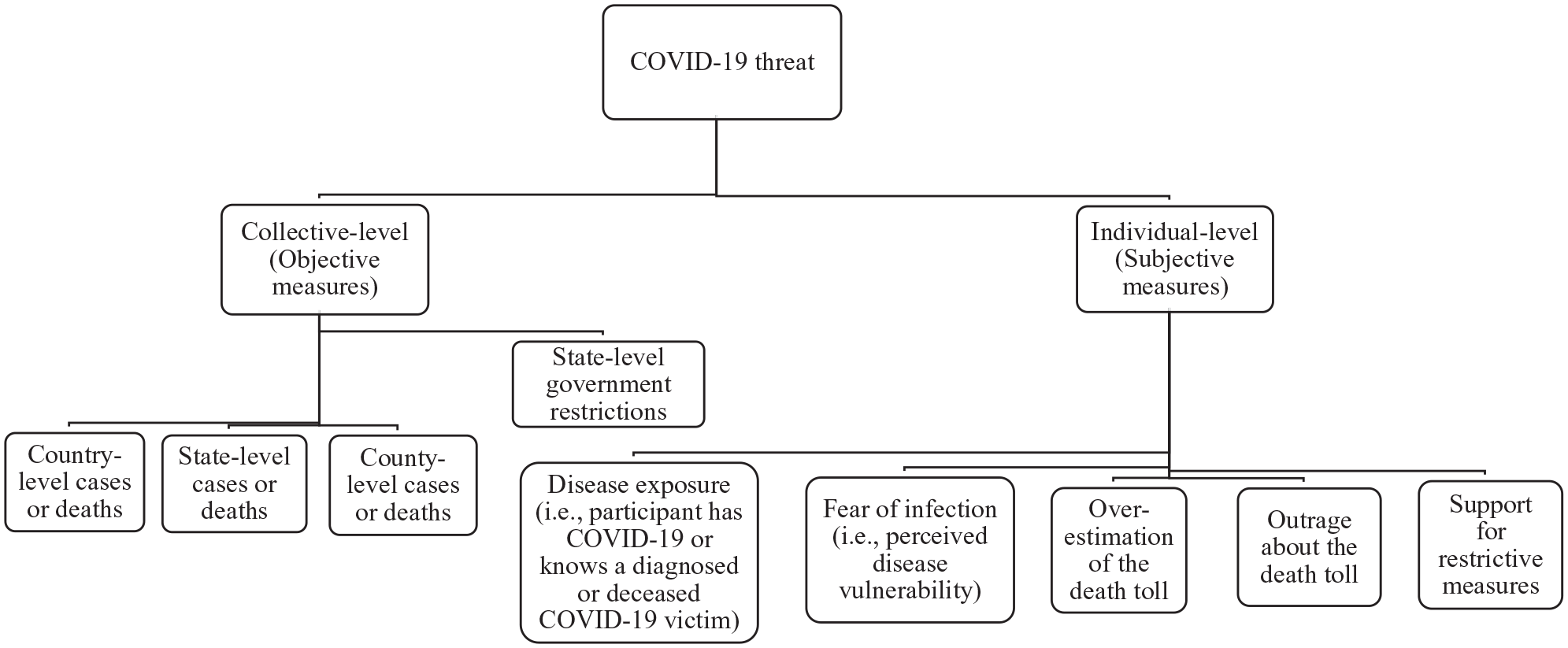
Objective and Subjective COVID-19 Threat Measures Used in the Current Study.
We recommend that any attempt to clarify the precise nature of the COVID-19 threat–politics link should consider the type of threat, the political outcome measure, and the period in which the study was conducted. Our current approach to address the complex variations in the COVID-19 threat–politics boundary conditions discussed thus far is to vary the threat type but keep the political outcome measure and the pandemic period constant. To this end, we examine whether from August to December, 2020, objective and subjective COVID-19 threats were associated with policy preferences (i.e., the extent to which people support political issues including immigration and health care).
Our approach allows us to advance current understanding of the pandemic–politics link in several ways. First, we rely on several large nationally representative surveys from the United States to provide precise population estimates of the COVID-19 threat–politics link. Second, our use of multiple threat and policy issue measures ensures generalizing the findings to specific measures from these categories. Next, we use Bayesian statistics to provide intuitive probabilistic estimates to establish whether the evidence for meaningful associations is robust to several potential covariates. We then use frequentist meta-analysis to aggregate correlation estimates to provide a framework for calibrating effect sizes in the context of infectious disease threat and policy preferences. Finally, given the dearth of psychological models linking infectious disease management and intergroup relations, we provide a modest review of the existing pandemic-politics literature and rely on insights from the behavioral immune system (BIS) theory (Schaller, 2011) and hominid pathogen control hypothesis (S. E. Kessler, 2020) to propose an emotion-mediated dual-process model of pathogen management. Our model describes care-avoidance dilemmas arising during infectious disease outbreaks and clarifies the dynamic processes by which aversive and affiliative emotions evoked in response to pathogen threat shape the adoption of right- or left-wing disease management policies.
The BIS Theory and the Politics of Pathogen Threat
A long-standing question in social and political psychology is whether real-world infectious disease outbreaks are associated with political outcomes. This question is usually investigated through the lens of the BIS theory (Beall et al., 2016; Schaller et al., 2021; Terrizzi et al., 2013). The BIS theory argues that humans have evolved a set of adaptive psychological defense mechanisms—called the BIS—which detect pathogen cues and prevent infection. When confronted with situations indicative of potential infection, the BIS automatically activates emotional (e.g., disgust, fear, anxiety) and cognitive (e.g., risk perception) reactions that trigger relevant beliefs and behaviors that prevent pathogen spread. The BIS is believed to vary in strength across individuals and can be assessed as a stable personality trait (Terrizzi et al., 2013) with the perceived vulnerability to disease (Duncan et al., 2009) or disgust sensitivity scales (Tybur et al., 2009). It is assumed that individuals with a strong BIS are more disgust-sensitive and fearful of infection and thus highly motivated to avoid situations indicative of pathogen threat. The converse is true for individuals with a weak BIS.
The BIS has consequences for intergroup relations and social interactions. When activated, the BIS enhances cohesion among familiar ingroups, increases avoidance of unfamiliar outgroups, and heightens aversion to homosexual and promiscuous sexual practices (Ackerman et al., 2018; Faulkner et al., 2004; Murray et al., 2013). It is believed that conservative sociocultural beliefs and behaviors facilitate disease management because they prevent infection to oneself or ingroup members. While the BIS is not an ideological system, it activates right-wing disease management responses to the extent that xenophobia, ethnocentrism, and sexual restrictiveness serve group-protective functions of minimizing infection spread. Consequently, empirical evidence anticipates a natural affinity between pathogen threat and expression of social conservatism (Terrizzi et al., 2013).
According to the BIS theory, pathogen threats faced by humans in early ancestral environments shaped the emergence of negative but adaptive intergroup avoidance attitudes and behaviors that served pathogen management functions (Faulkner et al., 2004; Schaller, 2011; Schaller et al., 2021). The BIS theory is, however, relatively silent on to what extent caring for sick people and providing large-scale health care interventions serve pathogen control functions. Yet, evolutionary theorists argue that the advent of infectious diseases also gave rise to caregiving behaviors and collective health care practices that served pathogen mitigation functions (Curtis et al., 2011; S. E. Kessler & Aunger, 2022; S. E. Kessler et al., 2017, 2018). These perspectives are corroborated by empirical evidence that pathogen threat is linked to favorable attitudes toward health care programs and support for health care policies that alter disease transmission (Lee et al., 2010; Singh, 2023). Although these findings indicate that infectious disease threats also activate health care and caregiving cognitions and attitudes, they are yet to be integrated into the current broader psychology literature on pathogen management. Accordingly, the current research does not only focus on associations between COVID-19 pandemic and intergroup relations, but it also seeks to clarify the links between COVID-19 threat and support for health care policies.
Indeed, current BIS research focuses on how trait pathogen threat (i.e., disgust sensitivity and perceived risk of infectious diseases) shape political attitudes (e.g., prejudices, stereotypes, stigmatization; Terrizzi et al., 2013). But this is not the aim of the current research. Our argument is that if the BIS is truly an evolved pathogen management system as hypothesized, then existing theories should be able to make predictions and specify boundary conditions under which real-world infectious disease outbreaks influence political outcomes and intergroup relations. Ideally, one would want to examine how dispositional and situational sensitivity to pathogen threat shape political outcomes. However, our current focus is to examine how situational pathogen threat, namely, the COVID-19 pandemic, is linked with support for social and economic policies relevant for infectious disease management.
Applying the BIS Theory to the Ebola and COVID-19 Pandemics
Since its inception, the BIS theory has been applied to common parasitic infectious diseases that occurred in small-scale societies. However, recent attempts to apply the BIS theory to the Ebola and COVID-19 pandemics have produced findings largely inconsistent with the BIS predictions. A common thread connecting these studies is that “threat” and “political outcome” have been assessed with a wide range of different and imprecise measures, which may partially account for the contradictory results.
Ebola Pandemic
In the case of the Ebola pandemic, because of the few numbers of cases (11) and deaths (2) reported in the United States (Infectious Disease Society of America, 2014), prior studies assessed the association between Ebola threat and political outcomes with subjective rather than objective threat measures. One study found that subjective measures of Ebola threat, indexed as internet search volume of the term Ebola, predicted votes for more conservative leaders in the United States (Beall et al., 2016; Schaller et al., 2017). Furthermore, concerns about the Ebola pandemic and perceived risk and severity of the disease were associated with xenophobia and anti-immigration policies (Kim et al., 2016, 2021; Martin, 2020).
However, there are some contradictory findings regarding the Ebola outbreak and conservatism. Critics found no link between the Ebola outbreak and votes for conservative candidates (Tiokhin & Hruschka, 2017). There is also evidence that experimental manipulations that increase the salience and perceived risk of the Ebola disease had no effect on anti-immigration attitudes, but the effect was significant only when the disease was politicized by Republicans (Adida et al., 2018; also see Supplementary Online Materials for discussion on politicization of infectious diseases). Another study found that the salience and perceived risk of the Ebola disease significantly predicted opposition to foreigners coming to the United States to receive aid, but at the same time predicted support for government sending aid to poor countries, an indication that the disease threat evoked both avoidance and prosocial/affiliative motives toward outgroups (Peterson et al., 2017).
Furthermore, longitudinal studies aimed at tracking changes in political attitudes during the onset of the pandemic (Inbar et al., 2016) or studies using Ebola threat search volume (Campante et al., 2020) found that evidence linking the Ebola pandemic and political attitudes is limited to anti-immigration but does not generalize to anti-homosexual attitudes. In sum, although past evidence that the Ebola outbreak may have evoked xenophobic and ethnocentric responses in line with the BIS theory, to date, there is no consistent evidence that pandemics are reliably linked to a broad range of conservative social policies (especially, anti-immigration and sexually restrictive attitudes or policies).
COVID-19 Pandemic
Fortunately, but sadly, the COVID-19 pandemic has provided another unique opportunity to revisit the notion of a “natural” association between threat and conservative outcomes to better evaluate the political consequences of infectious diseases. Similar to the Ebola pandemic, preliminary correlational, experimental, and repeated cross-section evidence from the United States linking objective and subjective COVID-19 threat and political outcome have been rather inconclusive (for reviews, see Brandt et al., 2023; Vartanova et al., 2021). Some studies support the BIS predictions that COVID-19 threat was associated with conservatism (Connor, 2020; Kim et al., 2021; Pazhoohi & Kingstone, 2021; Rosenfeld & Tomiyama, 2021), whereas other studies found that it was associated with liberalism (O’Shea et al., 2022) or voting for Democratic candidate Biden (Aviña & Semra, 2021). Still, there is evidence that the onset of the pandemic led to endorsement of both conservative and liberal outcomes (Brandt et al., 2023) or was not meaningfully associated with any political outcome (Stern & Axt, 2021). These conflicting findings set the stage for investigating the political consequences of the COVID-19 pandemic.
The Context Mismatch Hypothesis
If pathogen threat triggers innate disease-avoidance mechanisms that enhance right-wing pathogen management attitudes and preferences, then we will expect that large-scale infectious diseases such as the Ebola and COVID-19 pandemics will have provided consistent evidence to support the BIS predictions. However, some scholars have provided some ideas to account for the puzzling observations in light of the current conflicting evidence (Ackerman et al., 2021). We refer to these ideas as the Context Mismatch Hypothesis (CMH). The CMH asserts that because past BIS studies mostly focused on common infectious diseases, the BIS theory may not readily apply to large-scale pandemic diseases. This claim is founded on these two assumptions: First, it assumes that there are qualitative differences in the transmission of common infectious pathogens versus pandemic pathogens. Second, it suggests that there are qualitative differences between sparsely populated preindustrial historical contexts in which the BIS responses evolved to facilitate disease-avoidance responses versus densely populated global networks reminiscent of modern contexts.
There is indeed some empirical evidence supporting the claim that pandemic versus nonpandemic pathogens may not always align with political outcomes. For example, O’Shea et al. (2022) found that nonpandemic pathogens and germ aversion (i.e., infectability concern) predict conservatism whereas fear of the COVID-19 pandemic is associated with liberalism. Apparently, the mismatch between common pathogens and pandemic pathogens explains why past BIS research has produced relatively consistent findings with respect to the political consequences of nonpandemic infections, whereas contradictory findings have been observed in the case of the Ebola and COVID-19 pandemics.
Still, key questions remain unresolved: How are real-world infectious disease threats associated with political outcomes? Are people more likely to support liberal or conservative political outcomes to manage large-scale infectious disease threats? There has been little systematic enquiry to address these questions and the existing studies on the Ebola and COVID-19 pandemics have failed to reach an adequate consensus. Given its theoretical and practical implications, it is imperative to establish the size and direction of the COVID-19 threat–politics link. Even if the effects range from “small-to-trivial” and thus “not meaningful” as suggested by some researchers (Stern & Axt, 2021), it is useful to quantify the strength of the evidence and uncertainty in the estimates to obtain deeper insights into the effect sizes to be expected in future studies. While the literature continues to expand rapidly, we first provide a modest review of the major studies on the COVID-19 threat–politics link from the United States.
Uniform Association Between COVID-19 Threat and Political Outcomes
The scramble to understand the political consequences of the novel COVID-19 pandemic has also been guided by the uncertainty-threat model that asserts that conservative more than liberal belief systems help people manage existential threats and cope with feelings of insecurity and uncertainty (Jost et al., 2003). Because the model rests atop the idea that social (e.g., immigration) and economic (e.g., redistribution) ideological policy issue dimensions are tightly linked (Azevedo et al., 2019), it anticipates a uniform association between threat and conservative policies, regardless of the specific type of threat or the specific type of policy issue. Consistent with this view, preliminary studies show that COVID-19 threat predicts endorsement of anti-immigration attitudes and policies (Kim et al., 2021; Moran et al., 2021; Reny & Barreto, 2022) and traditional gender roles and stereotypes (Rosenfeld & Tomiyama, 2021). However, there are also some indications that people endorse liberal beliefs to cope with uncertainty and threat (Brandt et al., 2021; Eadeh & Chang, 2020; Fiagbenu & Kessler, 2022; Fiagbenu et al., 2021a). Consistent with these findings, one study found that COVID-19 threat enhanced preference for universal basic income (Nettle et al., 2021). These findings suggest that left-wing policies may also help alleviate existential threats.
The studies reviewed thus far suggest that COVID-19 threat was associated with conservative or liberal outcomes in the United States. The inconsistent findings indicate the existence of a uniformity model such that a threatening stimulus (T) is uniformly associated with policy preferences (P). However, the direction of this uniform relationship may yield two different competing hypotheses. In fact, to date the uncertainty-threat model has promoted only one direction of the uniformity model by investigating whether physical threats are associated with support for conservative policies (Jost et al., 2007, 2017). However, the body of literature reviewed thus far points to a potential association between COVID-19 threat and support for liberal policies. From the uniformity model therefore, we test two competing hypotheses to clarify whether COVID-19 threat is associated with preference for more conservative (i.e., threat-conservatism hypothesis) or more liberal (i.e., threat-liberalism hypothesis) policies.
Differential Association Between Threat and Political Outcomes
The uniformity model of threat and ideology contrasts with the ideological affordance hypothesis. The discrepancy in both perspectives has to do with disagreements regarding whether ideology is best conceptualized as a unitary or differentiated entity. Despite evidence that social and economic ideological issue dimensions are tightly linked (Azevedo et al., 2019) and perhaps redundant (Jost et al., 2009), there is also evidence that they represent two distinct dimensions underlying ideological belief systems (Feldman & Johnston, 2014). The two-dimensional account of ideology has sparked interest in a domain-specific, problem-focused view of threat and policy preferences leading to the proposal that the relationship between threat and policy preferences is a function of the nature of the threatening stimulus and type of political outcome used to assess individual differences (Brandt et al., 2021; Crawford, 2017; Eadeh & Chang, 2020; Fiagbenu et al., 2021a; Fiagbenu & Kessler, 2022).
Particularly, the ideological affordance hypothesis (Eadeh & Chang, 2020) argues that specific policies are especially tuned to address specific types of threats. One form of the argument states that conservative social policies (e.g., anti-immigration) are more suitable for addressing physical threats (e.g., crime, international terrorism) than liberal social policies, whereas liberal economic policies (e.g., universal health care) are more appropriate for addressing economic threats than conservative economic policies. To date, much of the research on the pathogen threat has mostly been linked with social conservatism (Terrizzi et al., 2013), while little is known about its links with economic policy preferences. Given that the COVID-19 pandemic poses physical (e.g., illness) as well as economic (e.g., unemployment) threats, the ideological affordance hypothesis anticipates that COVID-19 exposure will positively predict conservative social (vs. liberal) policies but negatively predict conservative (vs. liberal) economic policies.
Clarifying COVID-19 Threat and Political Outcomes
Clearly, preliminary research on the COVID-19 threat–politics link has not supported any of the above-mentioned hypotheses (see Stern & Axt, 2021; Vartanova et al., 2021). One reason is that prior studies did not take a systematic approach to address the question. The problem is compounded by the fact that existing theories do not clarify whether the pandemic–politics link depends on the type of threat, or the political outcome measure used to assess individual differences. Some studies have relied on attitude measures including evaluations of social groups (i.e., anti-immigrant prejudice) or support for policy issues (e.g., immigration, redistribution). Other studies have focused on political values that capture a desire for conformity over personal autonomy (i.e., right-wing authoritarianism, RWA) or preference for group-based inequality (i.e., social dominance orientation, SDO; Moran et al., 2021; Nettle et al., 2021; Pazhoohi & Kingstone, 2021; Peng, 2022; Stern & Axt, 2021). Some other studies have focused on vote choice (Algara et al., 2024; Aviña & Semra, 2021). Indeed, these studies have all led to different conclusions with respect to the pandemic–politics link. Our systematic approach to address the current limitations is to assess the relationship with precise measures of COVID-19 threat and policy issue preferences.
COVID-19–Politics Links During the First 5 Months of the Pandemic
At the onset of the pandemic, researchers relied on different measures to assess the link between COVID-19 threat and political outcomes. Using MTurk data collected from late January through early April 2020, Rosenfeld and Tomiyama (2021) found support for the threat-conservatism hypothesis by showing that pandemic health risks were associated with endorsement of traditionally conservative gender stereotypes. Similarly, using MTurk data, collected from February to March 2020, Kim et al. (2021) also found that to COVID-19 vulnerability was associated with anti-immigration policies.
However, O’Shea et al. (2022), using Project Implicit data collected in late March, found support for the threat-liberalism hypothesis by showing that concerns about COVID-19 threat were associated with support for general liberal social and economic policies (measured as single-item liberal-conservative issue self-placement). One limitation of their finding is that general measures of policy issues ignore the qualitative differences between specific social and economic issues (Feldman & Johnston, 2014). For instance, one may want to know how COVID-19 threat is associated with sexually restrictive or health care policy issues. This information cannot be gleaned from O’Shea et al.’s (2022) findings or other prior studies.
Further support for the threat-liberalism hypothesis comes from Stern and Axt (2021), who conducted the largest cross-sectional analysis to date with the Project Implicit data to clarify whether multiple objective measures of COVID-19 threat were associated with a broad range of political attitudes and issues. They found that during the early stages of the pandemic (February–June 2020), the link between COVID-19 threat (i.e., state-level cases and deaths) and political outcomes did not reach the predetermined threshold for meaningful associations to be established (i.e., the effect sizes were r/β < .10 for more than half of the outcome measures). Nevertheless, inspection of some of the effect sizes that exceeded the threshold indicates that COVID-19 threat was associated with liberal outcomes (see Stern & Axt, 2021, Table 10, p. 1693 and Table 13, p. 1695). The authors further concluded that “findings from exploratory models that excluded covariates . . . indicated that greater threat was often associated with less conservative political attitudes within all levels of analysis” (Stern & Axt, 2021, p. 1696).
The Link Among Objective, Subjective Threats, and Political Outcomes
The major studies from the United States have independently used objective and subjective threat measures to reach conflicting findings regarding the COVID-19 pandemic–politics link. But another question still lingers: To what extent are objective and subjective measures correlated? At first blush, one would assume that both measures should be strongly correlated and thus interchangeable and redundant. But the fact that they are differentially associated with political outcomes indicates that there might be qualitative differences between objective and subjective COVID-19 threats. The latter considers subjective fears and concerns about succumbing to the virus, while the former ignores the preferences and behaviors of individuals who have been diagnosed with the virus or perceive themselves vulnerable to infection. This raises the possibility that collective and individual-level threat measures may not always align with political outcomes.
Using data from six European countries, Freitag and Hofstetter (2022) found a small association between country-level COVID-19 cases and COVID-19-induced fear (r/β = .04–.18). Country-level COVID-19 deaths, however, did not significantly predict COVID-19-induced fear. These discrepancies were revealed in political outcomes whereby country-level cases and deaths predicted anti-immigrant attitudes, whereas COVID-19-induced fear predicted pro-immigrant attitudes. Furthermore, mediation analysis showed that country-level cases indirectly predicted pro-immigrant attitudes via COVID-19-induced fear. These findings highlight the mediational role of subjective COVID-19 threat in clarifying the link between objective COVID-19 threat and political outcomes.
Given the unreliable association between objective COVID-19 threat and political outcomes in the United States (Stern & Axt, 2021), one could ask whether there is any indirect association through subjective threat. Theoretically, higher infection and mortality rates should increase perceived vulnerability to infection, which should in turn shape policy preferences. We are not aware of any study that has examined the indirect effect of objective threat on policy preferences through perceived COVID-19 infection and self-reported disease exposure. We explore this open question in the current study (see Supplementary Online Materials for mediation results).
Study Overview
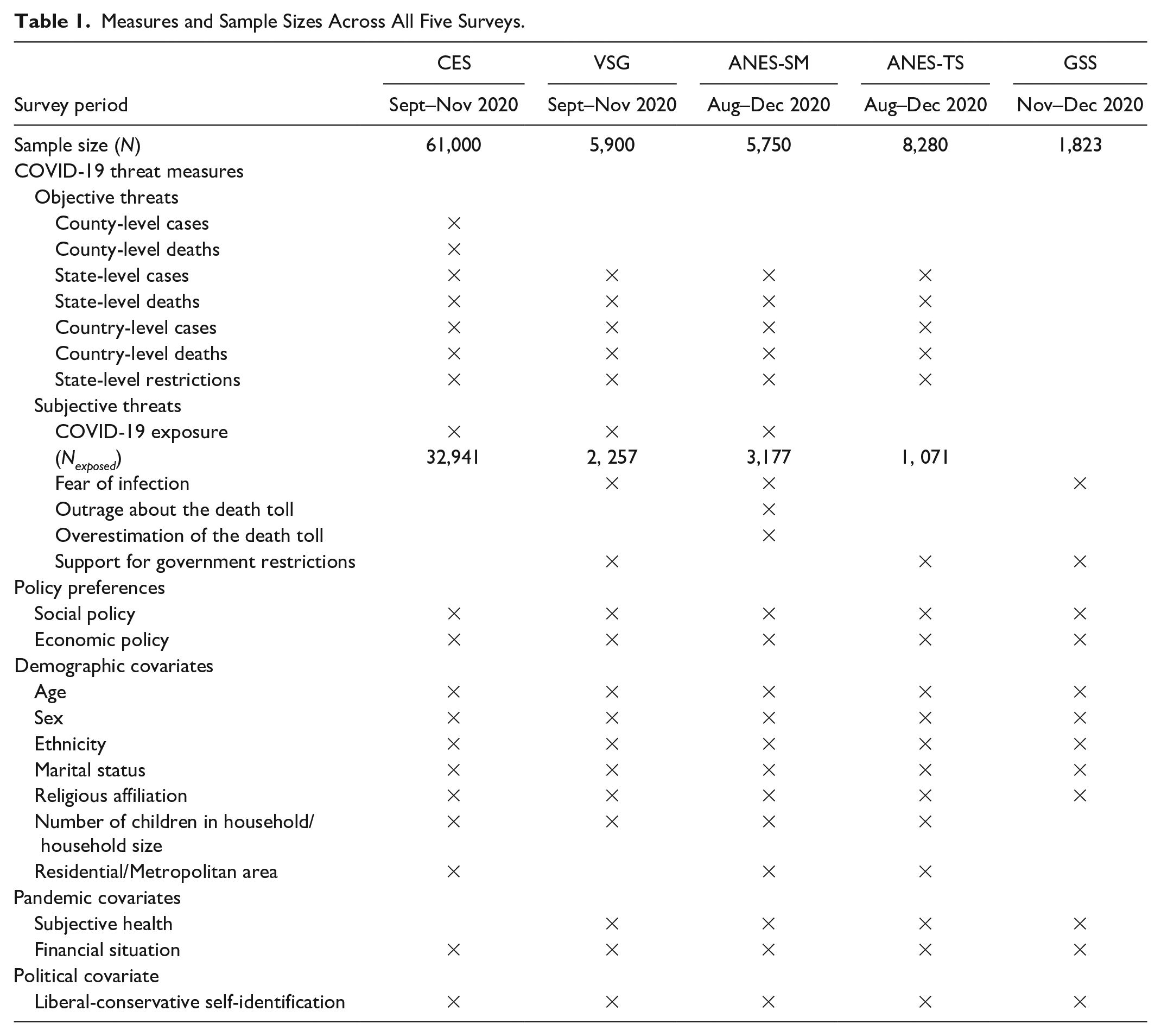
We analyzed five surveys (see Table 1) to provide better understanding of the association between COVID-19 threat and policy issues. Given the conflicting findings in the literature, we tested three competing hypotheses—threat-conservatism hypothesis, threat-liberalism hypothesis, and the ideological affordance hypothesis—to evaluate which of them is supported by the current data. We targeted these surveys because to our knowledge, they are among the largest databases of Americans’ political opinions collected 8 to 12 months after the onset of the pandemic. Second, the surveys are nationally representative samples of the American adult population and contain a broad range of qualitatively different subjective COVID-19 threat measures, which provide several advantages over previous nonrepresentative national samples with narrow threat measures. We integrated these surveys with data from objective COVID-19 threats (see Table 1), which enables us to compare our findings with past research (Freitag & Hofstetter, 2022; Stern & Axt, 2021).
Measures and Sample Sizes Across All Five Surveys.
For each survey, we used Bayesian statistics to infer whether evidence supporting meaningful links between COVID-19 threat and policy preferences is robust to several covariates. We then use frequentist meta-analyses to pool all zero-order correlations to evaluate whether the estimates depend on the COVID-19 threat or policy measure. We also provide meta-analytic estimates to examine whether the findings generalize to specific pathogen-relevant policy domains, namely, immigration, sexual restrictiveness, universal health care, and redistributive/social welfare policies.
Method
Data
We compiled surveys from several independent sources to construct a cross-sectional data set of COVID-19 threat and policy measures at the individual and collective levels. Table 1 shows a summary of the measures. A full description of the surveys and measures can be found in the Supplementary Online Materials. Replication data and analysis codes can be found at the OSF website: https://osf.io/8f9pw/.
Five individual-level, nationally representative surveys from August to December, 2020 were obtained from the (a) Congressional Election Study (CES; https://dataverse.harvard.edu/dataset.xhtml?persistentId=doi:10.7910/DVN/E9N6PH), (b) Voter Study Group (VSG; https://www.voterstudygroup.org/data), (c) American National Election Study Time Series Study (ANES-TS; https://electionstudies.org/data-center/2020-time-series-study/), (d) American National Election Study Social Media Study (ANES-SM; https://electionstudies.org/data-center/2020-social-media-study/), and (e) General Social Survey (GSS, https://gss.norc.org/). Data from country-, state-, and county-level COVID-19 cases and deaths from August to December 2020 were obtained from The New York Times (NYT) COVID-19 database (https://github.com/nytimes/covid-19-data), whereas data from state-level stay-at-home orders (i.e., state-level restrictions) from March to May 2020 were obtained from Huntley et al., 2022.
Data Analyses
We integrated both collective-level and individual-level measures. Each participant received a score indicating whether (1) or not (0) their state implemented stay-at-home orders from March to May 2020. Each participant received a score indicating the number of COVID-19 cases or deaths that had been confirmed in the United States (i.e., country-level), their state or county of residence, at the time they completed the survey. The data set consisted of participants from all 50 states as well as the District of Columbia and from 1,930 counties. Because COVID-19 cases and deaths were all positively skewed, we natural-log-transformed them to normalize their distributions to reduce bias in the estimates (McClelland, 2014; Webster et al., 2021).
For each sample, we conducted zero-order frequentist correlations between COVID-threat measures and policy preferences. Next, we conducted Bayesian regressions (see Supplementary Online Materials for methods and specifications) to evaluate how much evidence supports meaningful associations between threat and policy measures after controlling for covariates. To create a common metric for interpreting model estimates, we standardized all continuous variables while leaving binary variables unstandardized.
We did not have any specific hypothesis about the order of entering the covariates or whether some covariates explain more variance in the outcome measures than others. Following the Bayesian method, our focus was to visualize the main predictors to confirm whether they fell into the accept, reject, or undecided regions of the evidence threshold when covariates were entered step by step. We therefore created four regression models. In Model 1, we assessed the association between each COVID-19 threat measure and policy preferences without covariates. In the subsequent models, we adjusted for demographic covariates (Model 2), demographic + pandemic-related covariates (Model 3), and demographic + pandemic-related + political covariates (Model 4). We included these covariates because they are potentially correlated with COVID-19 threat or policy measures. We present a summary of Model 4 (the most important model and key test of our hypothesis given the cross-sectional data) below.
Results
Zero-order correlations and regression estimates among COVID-19 threat and policy issues can be found in the Supplemental Online Materials.
We found largely no meaningful associations between objective COVID-19 threat and policy preferences (see correlations and meta-analysis in the Supplemental Online Materials). We, therefore, conducted regression analyses for only the threat and policy issues in the VSG and CES surveys that had relatively meaningful correlations (r >.10). For the individual-level variables, we conducted regression analyses for the threat and policy issues in all the surveys regardless of the size of the correlation estimates.
Objective COVID-19 Threat Measures
In both the VSG and CES surveys (Figure 2), there was a trend showing that COVID-19 threat (i.e., country and county COVID-19 cases and deaths) was associated with preference for less conservative policies, but the evidence was not meaningful.
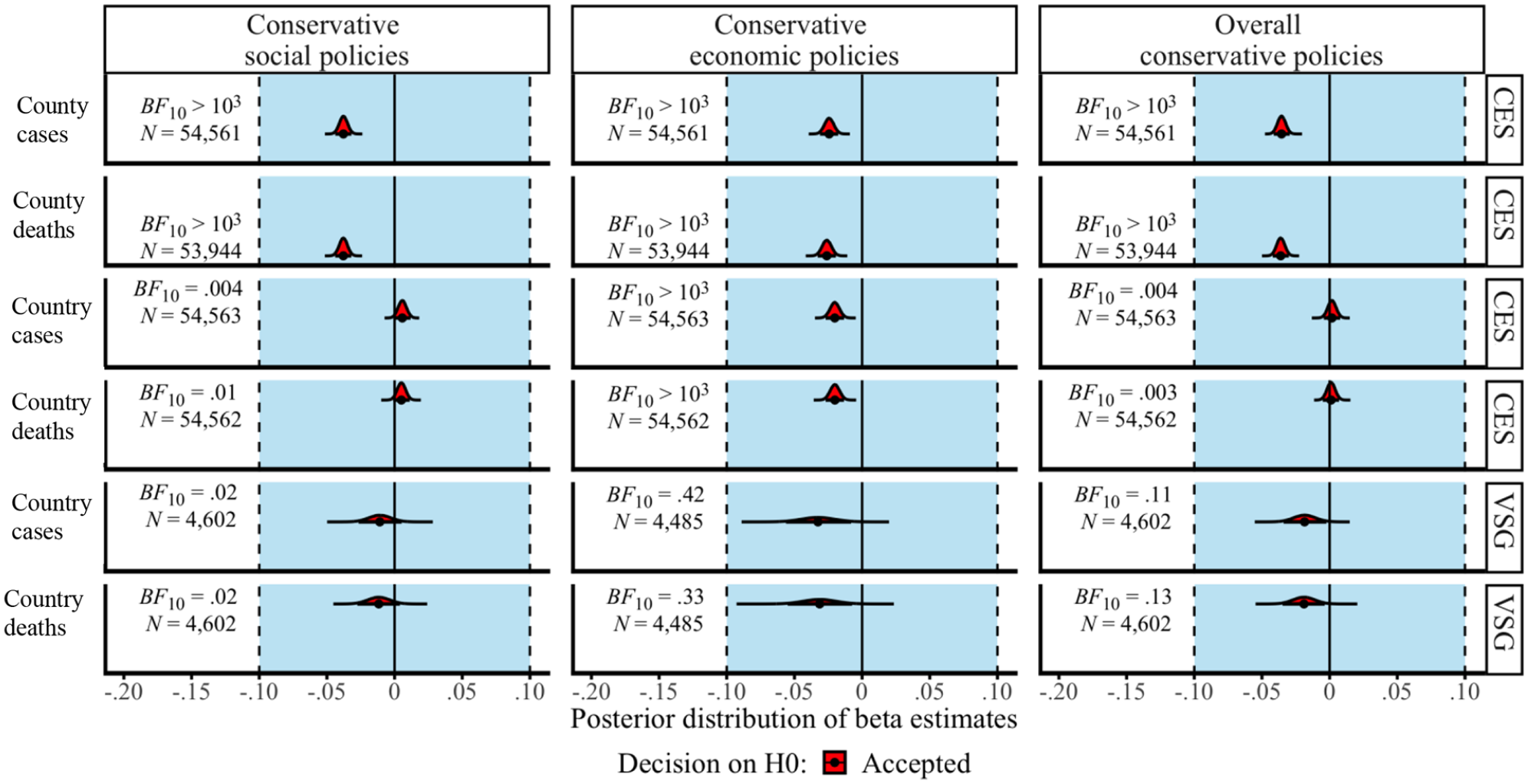
Associations Between Objective COVID-19 Threat and Policy Preferences From the CES and VSG Surveys.
Exposure to the COVID-19 Virus
We found that COVID-19 exposure was meaningfully associated with preference for less conservative social policies in the CES, VSG, and ANES-SM surveys (Figure 3). This pattern was not consistent for conservative economic policies as shown by the greater uncertainty in the estimates. Nevertheless, the three surveys provide evidence that individuals who reported being exposed to the virus were less likely to support overall conservative policies. In contrast, the evidence from the ANES-TS survey was not meaningful. Moreover, the results show that surveys with large sample sizes (i.e., large number of individuals exposed to the virus) produce the most precise and stable estimates as shown by the narrow credible intervals. For example, ANES-TS survey had the lowest number of exposed individuals (see Table 1), which may explain its unreliable evidence.
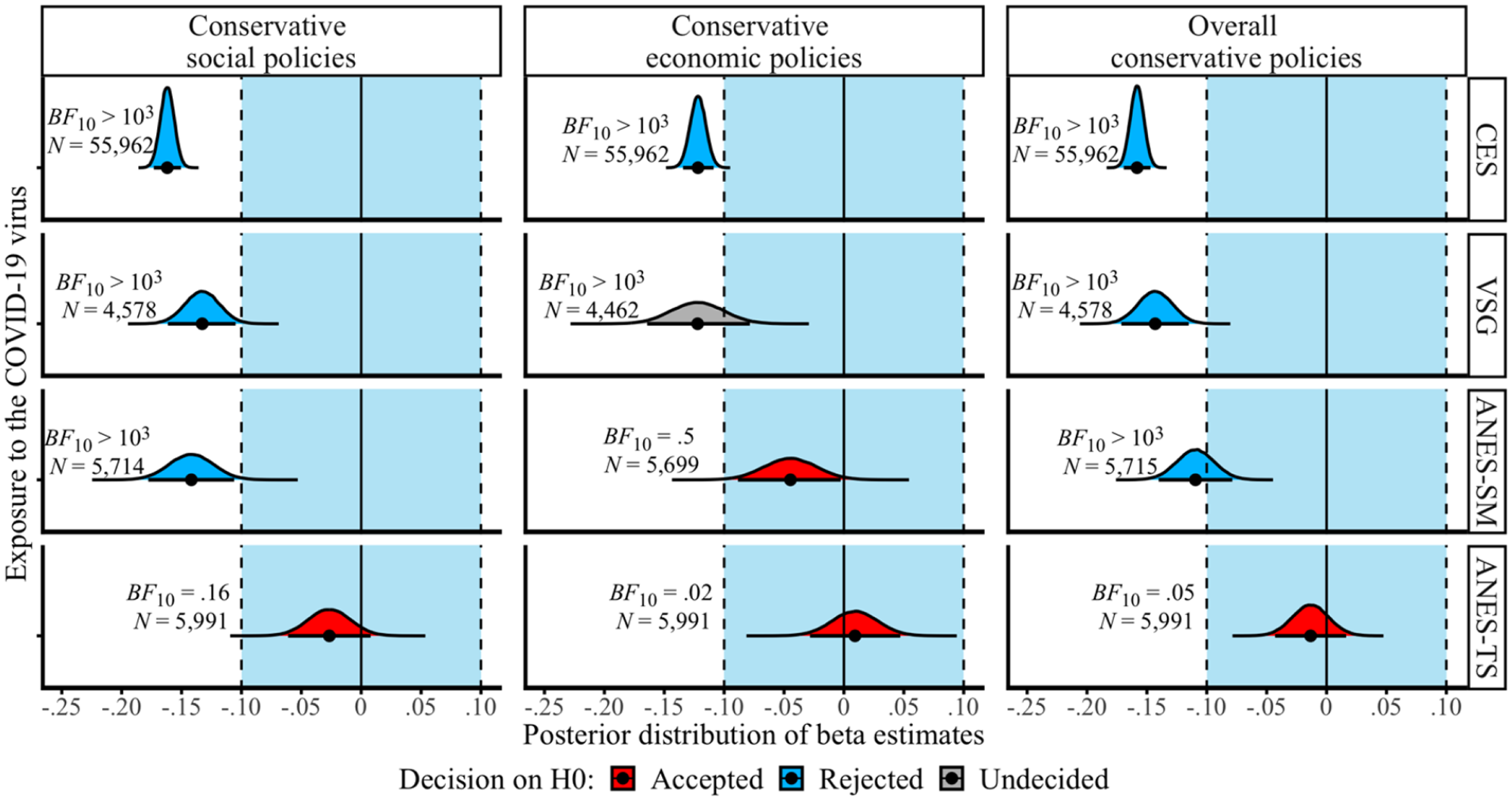
Associations Between COVID-19 Exposure and Policy Preferences From the CES, VSG, ANES-SM, and ANES-TS Surveys.
Fear of COVID-19 Infection
Across the VSG, ANES-SM, and GSS surveys, we found meaningful associations between fear of infection and preference for less conservative policies (Figure 4). Again, the width of the credible intervals indicates that the precision of the estimates depends on the sample size.
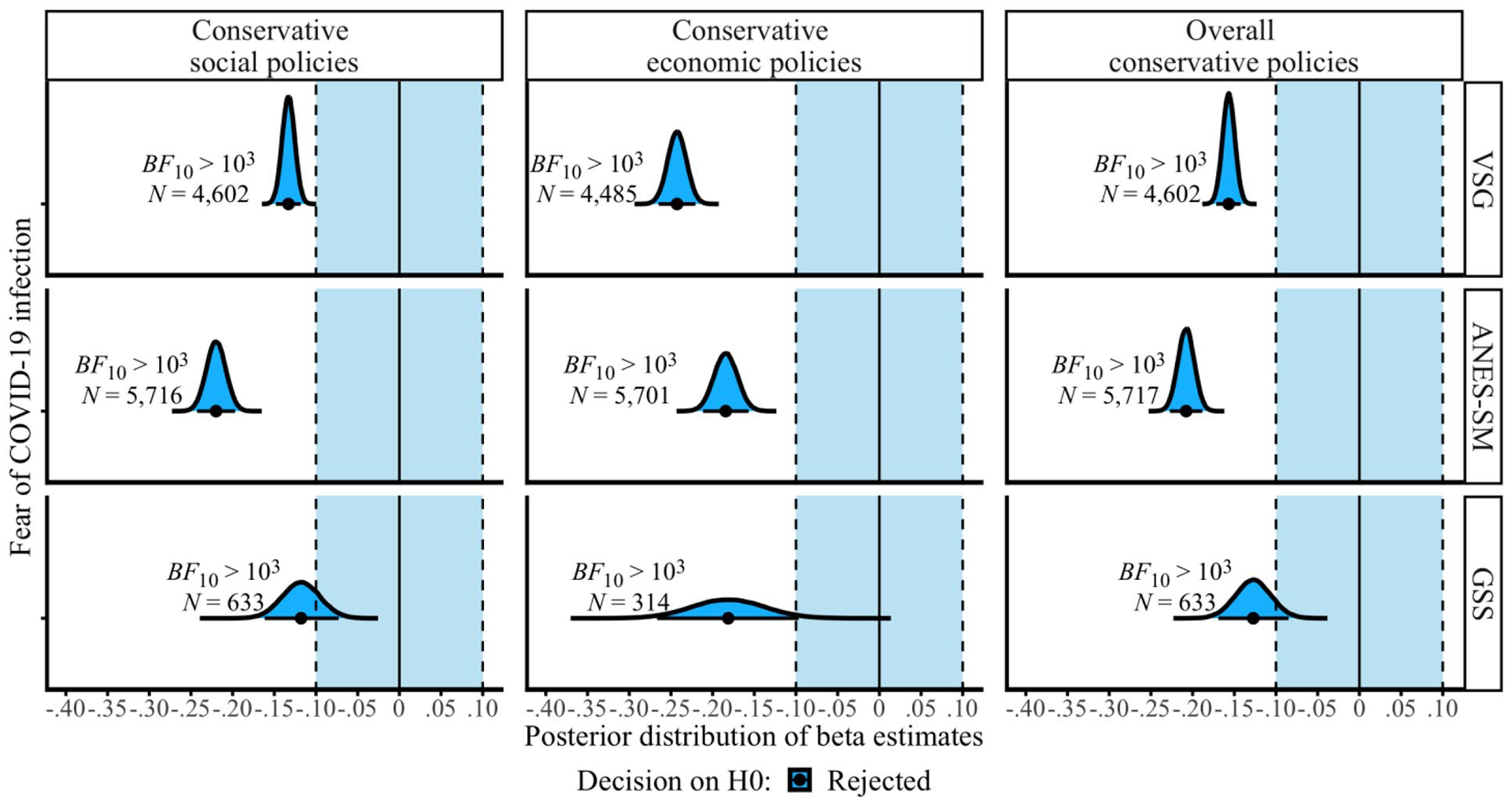
Associations Between Fear of COVID-19 Infection and Policy Preferences From the VSG, ANES-SM, and GSS Surveys.
Support for COVID-19 Restrictions
In the VSG, ANES-TS, and GSS surveys, we found that support for restrictions predict preference for less overall conservative policies (Figure 5). The results show that the uncertainty in the estimates increases when the sample size decreases.
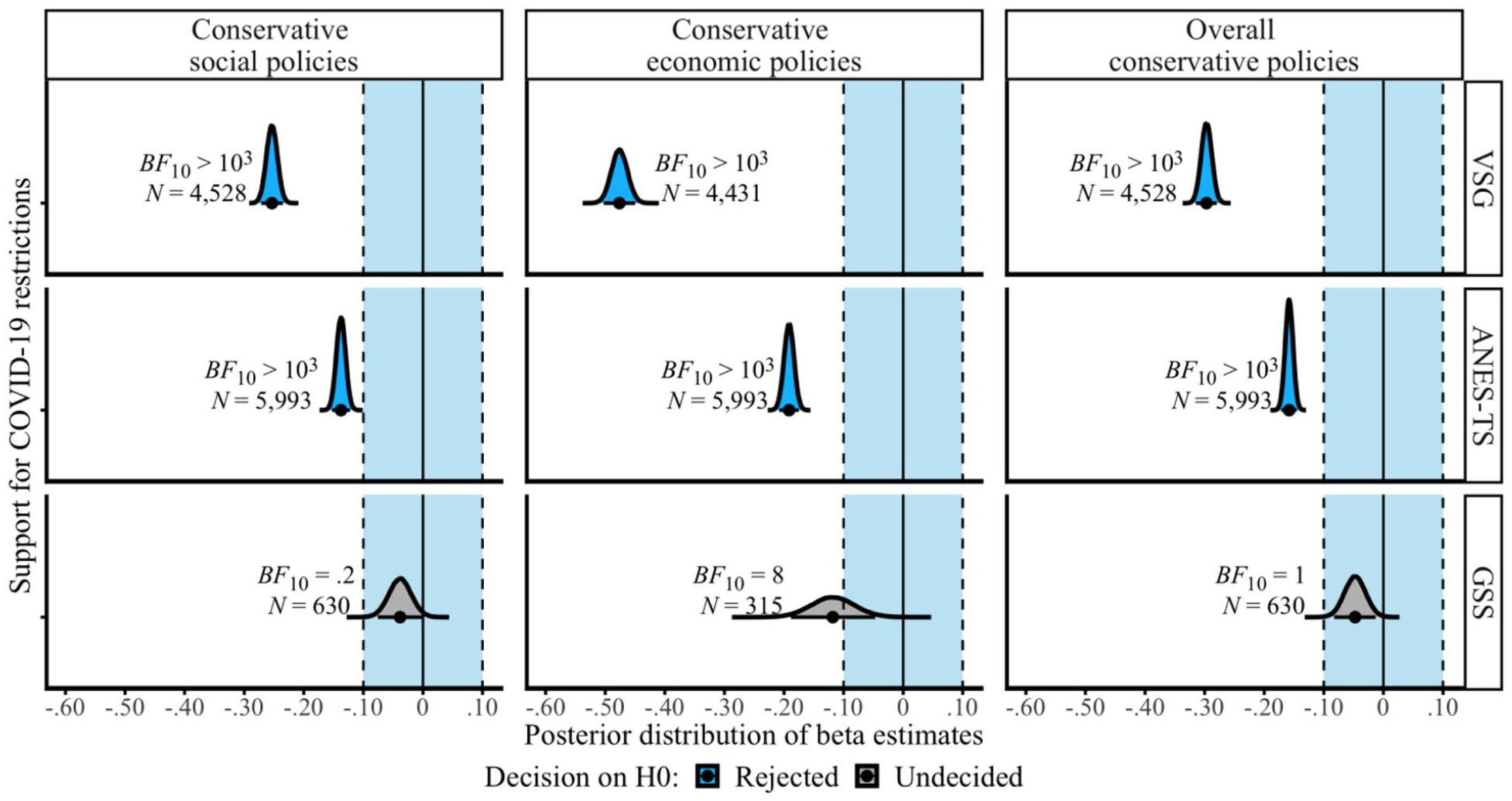
Associations Between Support for COVID-19 Restrictions and Policy Preferences From the VSG, ANES-SM, and GSS Surveys.
Overestimation and Outrage About the COVID-19 Death Toll
We found that people who overestimated the COVID-19 death toll or expressed greater outrage about the number of deaths were less likely to endorse conservative policies (Figure 6).
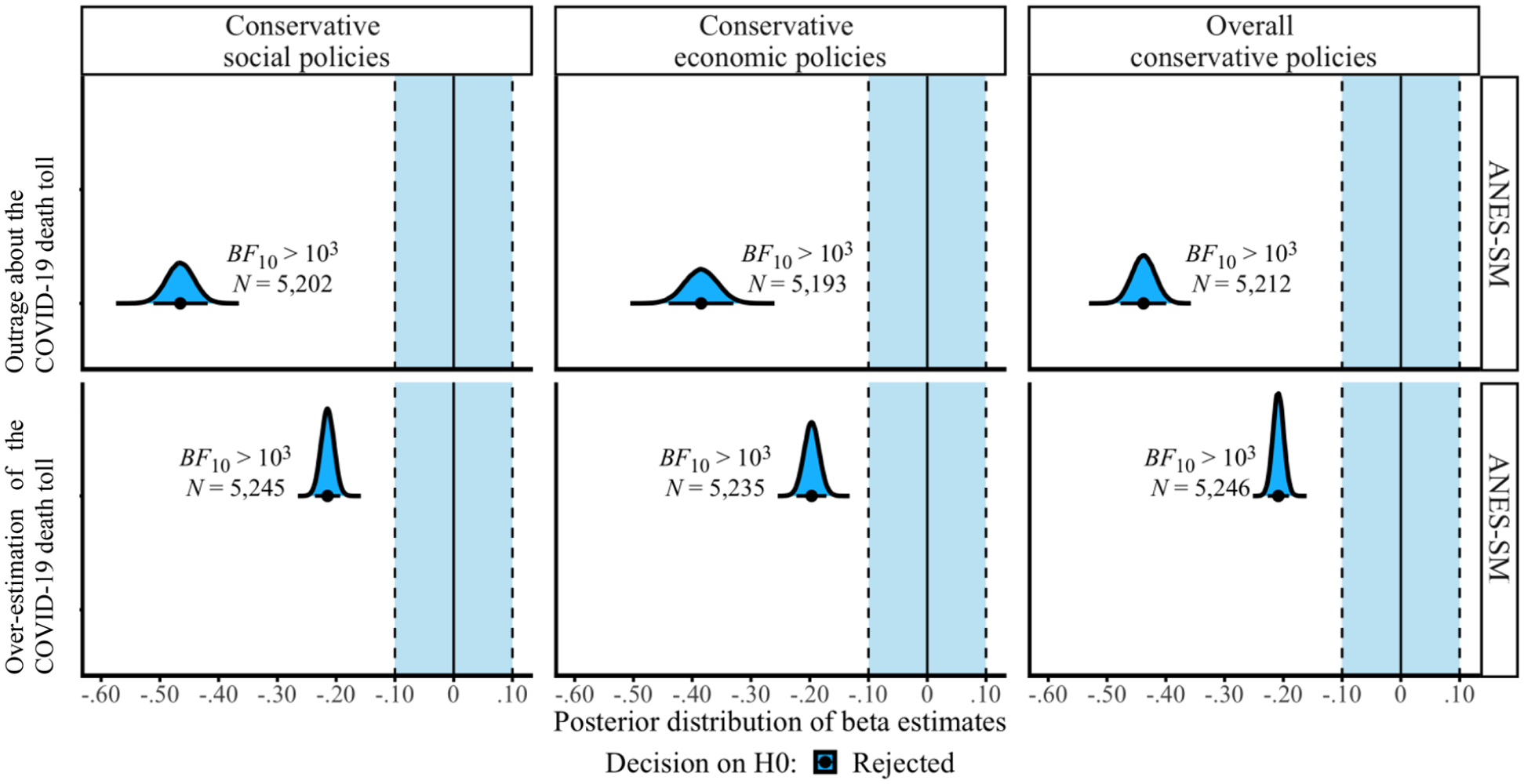
Associations Between Overestimation and Outrage About the COVID-19 Death Toll and Policy Preferences From the ANES-SM Survey.
Meta-Analyses
The average estimates between subjective COVID-19 threat and policy preferences across all surveys are shown in Figures 7 to 9. The results show that all subjective threats are significantly associated with less conservative social and economic policy preferences. These estimates are also significant for specific social (i.e., immigration and sexual restrictiveness) and economic (i.e., health care, and social welfare) policies. The average estimates for objective threat and policy preferences can be found in the Supplementary Online Materials.
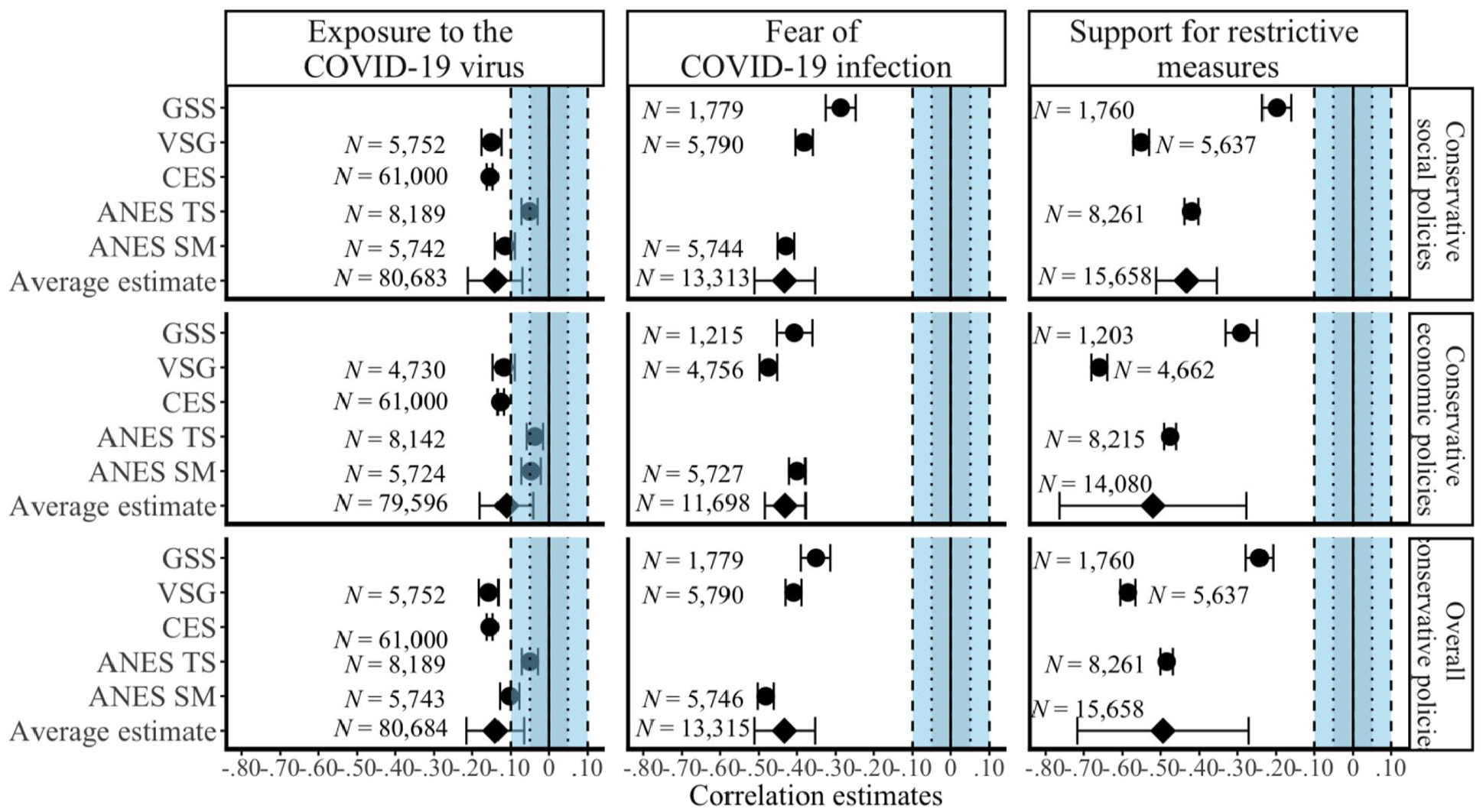
Meta-Analytic Estimates Showing the Association Between Subjective COVID-19 Threat and Policy Preferences Across All Surveys.
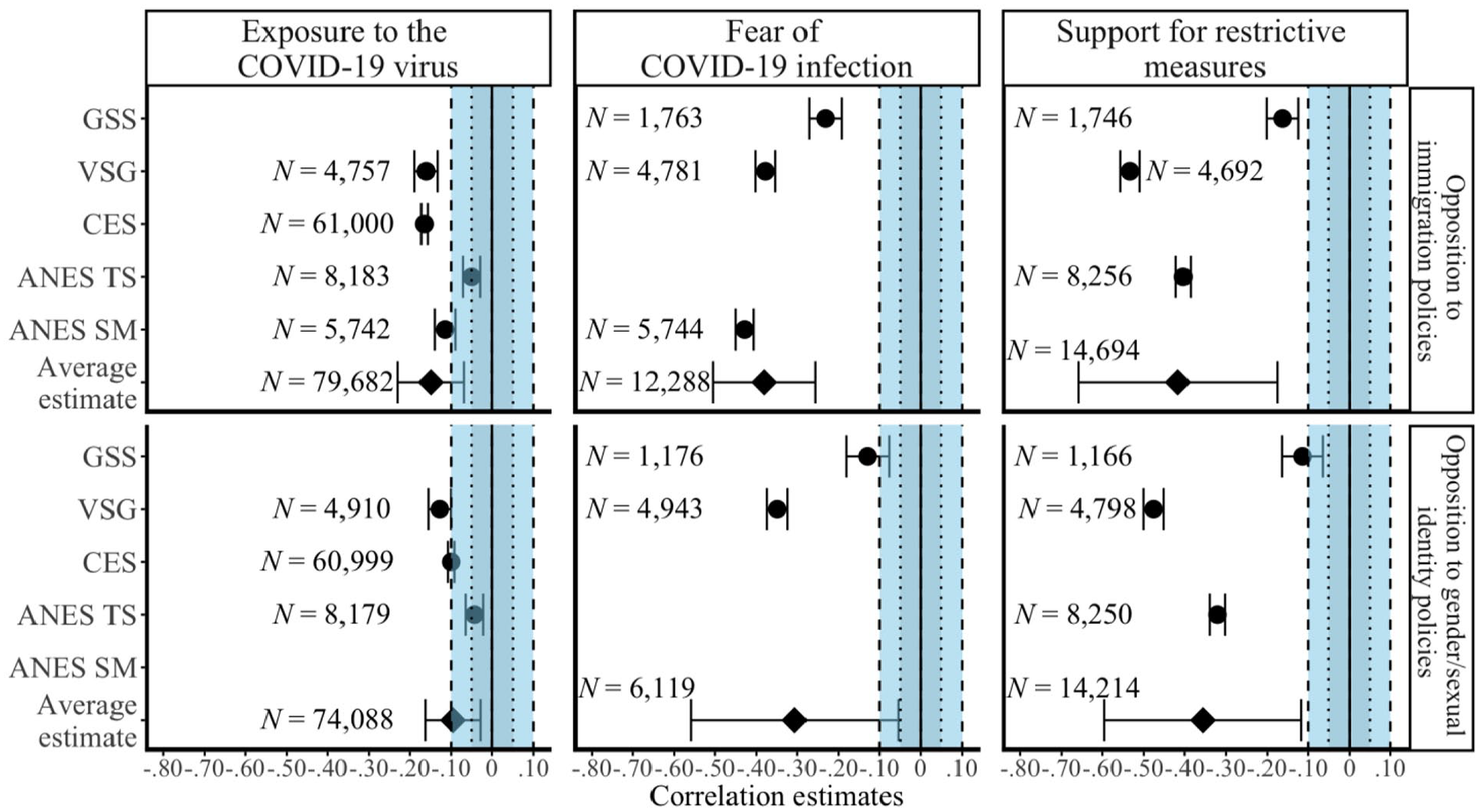
Meta-Analytic Estimates Showing the Association Between Subjective COVID-19 Threat and Specific Social Policy Preferences Across All Surveys
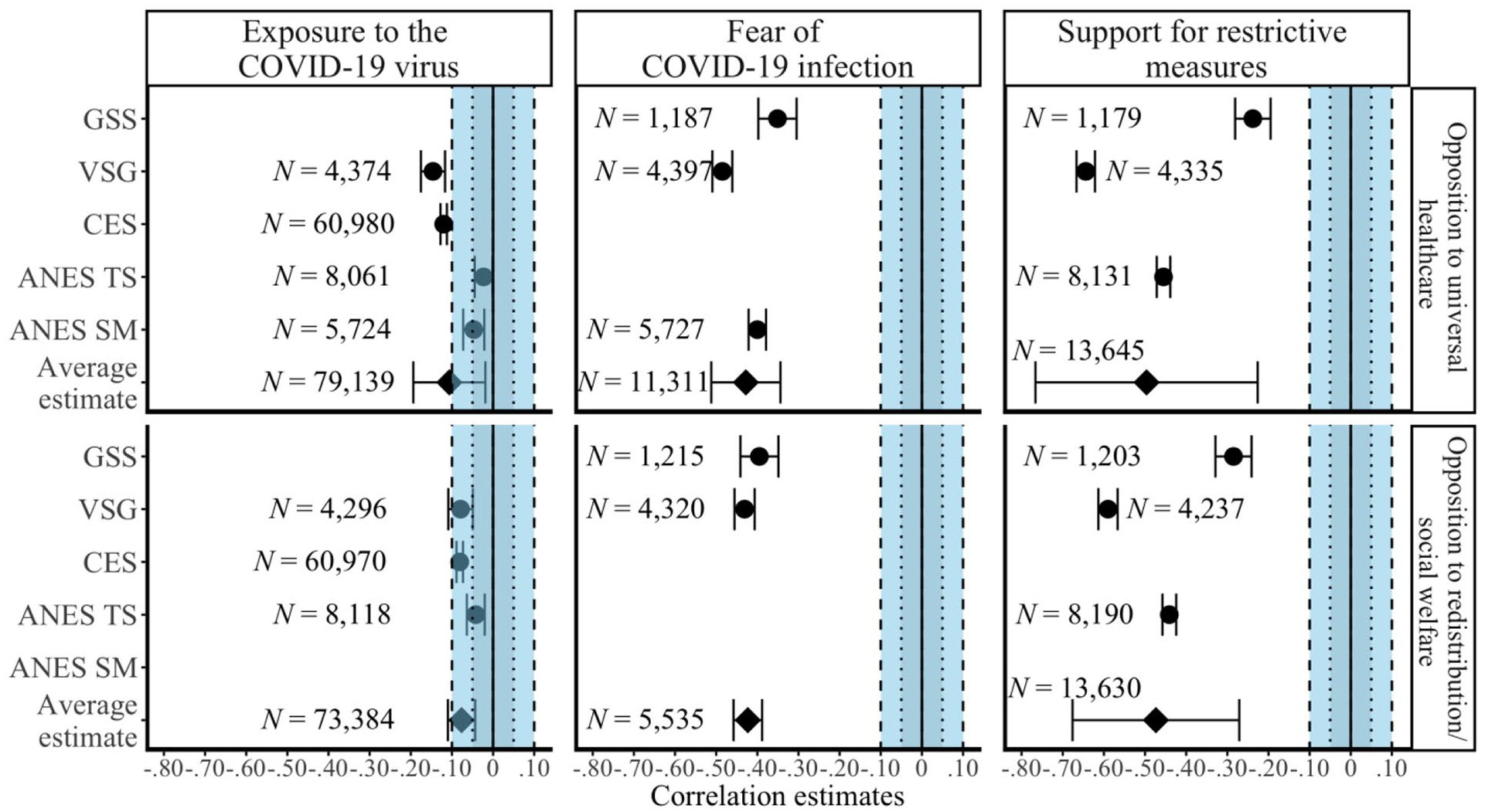
Meta-Analytic Estimates Showing the Association Between Subjective COVID-19 Threat and Specific Economic Policy Preferences Across All Surveys
Discussion
The COVID-19 pandemic threatened lives and livelihoods. When people are faced with existential threats, they endorse conservative or liberal beliefs to restore their sense of security (Eadeh & Chang, 2020; Fiagbenu & Kessler, 2022; Greenberg & Jonas, 2003; Jost et al., 2003). Especially, when faced with disease threat, people tend to endorse social conservatism to mitigate disease transmission (Schaller et al., 2021; Terrizzi et al., 2013). Was the COVID-19 pandemic associated with preference for conservative or liberal policies in the United States? We addressed this question with data from five nationally representative surveys using subjective and objective COVID-19 threat measures. Our aims were to (a) reassess the long-standing notion that existential threats are linked with preference for conservatism than liberalism (Jost, 2020; Jost et al., 2003; Terrizzi et al., 2013), (b) test other competing predictions in the existing literature (see Eadeh & Chang, 2020), (c) determine whether the pathogen threat–politics link depends on objective or subjective threats, (d) evaluate the robustness of the estimates to potential confounds, (e) clarify whether subjective COVID-19 threats mediate the association between objective COVID-19 threat and policy preferences, (f) provide meta-analytic estimates to inform future evaluations of effect sizes, and (g) advance a speculative model of pathogen management to guide future studies seeking to disentangle the psychological processes that give rise to both left- and right-wing policy preferences during infectious disease outbreaks.
Summary
We find that the association between COVID-19 threat and policy preferences depends on how threat is assessed: Subjective but not objective threat meaningfully predicted policy preferences. Mediation analyses (see Supplementary Online Materials) suggest that objective COVID-19 threat indirectly predicts less conservative policy preferences via subjective threat pathways. These novel findings highlight the indirect relationship between objective COVID-19 threat and policy preferences. The findings support the theoretical notion that increase in number of infections and deaths influences subjective reports of disease exposure and perceived threat of disease vulnerability, which in turn leads to endorsement of left-wing pandemic mitigation policies.
We also found that the subjective COVID-19 threat independently predicts less conservative policy preferences. This supports the threat-liberalism but not the threat-conservatism hypothesis. The lack of support for the ideological affordance hypothesis may reflect the fact that the COVID-19 virus is not clearly a physical or economic threat but rather a multidimensional threat that has both physical and economic consequences. It appears, then, that liberal rather than conservative policies were perceived to be more effective at managing the pandemic.
The present evidence supporting the threat-liberalism hypothesis challenges earlier findings that COVID-19 threat was associated with support for conservative policies (Kim et al., 2021) or was not meaningfully associated with political outcomes in the United States (Brandt et al., 2023; Stern & Axt, 2021). The findings also provide novel extensions to past studies showing links between the COVID-19 pandemic and liberalism (Conway et al., 2021; O’Shea et al., 2022; Peng, 2022).
The BIS theory anticipates that pathogen threat would predict xenophobia and ethnocentrism (which we assessed as anti-immigration policy support), as well as a broader range of conservative political outcomes, including traditionalism, religious fundamentalism, RWA, and SDO (Schaller et al., 2021; Terrizzi et al., 2013). There is some evidence that the subjective COVID-19 threat significantly predicted these conservative political outcomes during the early periods of the pandemic (March–April 2020; Kim et al., 2021; Pazhoohi & Kingstone, 2021). We provide further analyses (see Supplementary Online Materials) using measures only available in the ANES-TS survey to confirm that COVID-19 threat was negatively associated with all these conservative outcomes, including less prejudice against immigrants and homosexuals, which provide further support for the current findings.
Revisiting the Pandemic–Politics Puzzle
It is indeed true that during the early stage of the pandemic, the world shifted toward conservative policies, as seen by many countries including the United States closing their borders to noncitizens (Connor, 2020; Ipsos, 2020; Kim et al., 2021; Pazhoohi & Kingstone, 2021; U.S. Department of Homeland Security, 2020). This is consistent with BIS predictions that infectious disease threat evokes xenophobia and ethnocentrism. The BIS theory also indicates that perceived vulnerability to disease predicts SDO (Hodson & Costello, 2007; Terrizzi et al., 2013), an ingroup bias linked to economic conservatism (Pratto et al., 1994). But the current research suggests that the link between disease threat and policy preferences may have reversed after 8 to 12 months of pandemic onset. These observations raise two critical questions:
Why did fear of the COVID-19 virus—a foreign threat—predict support for immigration and positive evaluations of immigrants, especially at a relatively high point of the pandemic considering the perceived potential infection risks assumed to be associated with foreign groups?
Why would Americans support social welfare policies aimed at providing equal and affordable access to universal health care, when redistribution will have threatened the stability and certainty provided by the established system of group-based hierarchy and socioeconomic status-quo?
Question 1 raises the issue of whether pathogen threat promotes avoidance or contact with perceived pathogen carriers and strangers. The BIS theory argues that xenophobic and ethnocentric responses to disease threat are adaptive because they serve pathogen management functions (Schaller, 2011; Schaller et al., 2021). Nevertheless, the BIS does not always promote wholesale avoidance because doing so incurs costs of missing out on opportunities for other adaptive goals such as social affiliation (Sacco et al., 2014; Schaller, 2011). The flexible nature of the BIS, therefore, enables resolution of competing interests between pathogen avoidance and potentially rewarding opportunities (Sacco et al., 2014; Sawada et al., 2018). Moreover, individuals are more likely to engage in infection-risky interpersonal contact with valuable close friends or even strangers (Tybur et al., 2020). Consequently, when there is a conflict between avoiding a potential pathogen carrier or seeking valuable social interactions, the BIS tips the scale in favor of affiliation, even if there is a risk of infection.
The BIS theory, therefore, suggests that pathogen avoidance can be relaxed when social targets are highly valued or when contact will yield other adaptive benefits. Extending these perspectives to intergroup relations raises the possibility that pathogen threat may promote intergroup contact if foreign groups are deemed valuable sources of cooperation and affiliation, and if benefits of intergroup contact will be balanced by perceived infection risks. By extension, Americans’ pro-immigrant attitudes and support for increased immigration may reflect their perception of immigrants and immigration as valuable during the pandemic.
Question 2 raises the issue of whether pathogen salience enhances motivation to care for infected individuals and potential pathogen carriers. In fact, one unaddressed issue in current BIS research concerns the fate of potential pathogen carriers after they have been avoided. Are they neglected to succumb to their infection or are they provided care to recover? These questions do not only tap into how individuals think about health care provision during infectious disease outbreaks, but they also reflect the care-avoidance dilemmas that are created by disease outbreaks.
Evolutionary theorists argue that infectious diseases shaped the emergence of individual caregiving behaviors and collective health care practices that served disease management functions (Curtis et al., 2011; S. E. Kessler & Aunger, 2022; S. E. Kessler et al., 2017, 2018). Although caregiving behaviors evolved for the benefit of close relatives, they were also likely directed toward caring for strangers and also included large-scale collective health care strategies that were provided as a public good in a social welfare system (S. E. Kessler, 2020). Whereas the inclusive fitness benefits of kin-care are obvious and accrued directly to the caregiver, the fitness gains of stranger-care or collective health care practices likely accrued directly or indirectly to the caregiver (S. E. Kessler, 2020). Thus, stranger-care or collective health care may have been maintained by complex mechanisms such as reputational benefits, direct (caregiver receiving payment from the care-recipient), indirect reciprocity (caregiver receiving payments from someone else) or group-level benefits whereby societies that implemented large-scale public health practices and adhered to cooperative hygiene norms outcompeted those that did not (Curtis et al., 2011; S. E. Kessler & Aunger, 2022).
The existing evolutionary evidence suggests that pathogen threat is linked with implementation of health care strategies to reduce disease transmission. These views are corroborated by empirical evidence that pathogen salience increases support for health care programs (Lee et al., 2010; Singh, 2023). Similarly, in small-scale societies, providing health care to infected and sick individuals is critical to mortality reduction (Sugiyama, 2004). The notion that individual caregiving and collective health care systems evolved in response to pathogen threat to facilitate disease management raises the possibility that health care provision is an integral and relevant aspect of BIS functions. By extension, the pandemic may have activated affiliative and caregiving motives in Americans, which led them to support health care and social welfare policies to reduce disease spread.
To Avoid or to Care for the Sick: A Dual-Process Model of Pathogen Management
Murray and Schaller (2016) conceptualize the BIS as “a motivational system that evolved as a means of inhibiting contact with disease-causing parasites” (p. 76). Although avoiding potential pathogen carriers is adaptive, it may be costly in the long-term. For instance, in cases where there is no opportunity for complete isolation, repeated interactions between healthy people and potential pathogen carriers will likely increase chances of disease spread, especially when the disease is highly contagious. As repeated encounters are a common feature of human societies, it follows that if left unchecked, pathogens will proliferate and increase disease transmission (S. E. Kessler et al., 2017). Consequently, because avoidance behaviors may not always be effective strategies for pathogen mitigation (especially in cases of repeated encounters and high infections rates), another optimal pathogen mitigation strategy is to approach infected people to care for them (e.g., cleaning wounds, providing medication) or invest in caregiving and health care measures (S. E. Kessler & Aunger, 2022; S. E. Kessler et al., 2017, 2018).
We suggest that an evolved pathogen management system such as the BIS could be reconceptualized as comprising two pathogen-mitigating subsystems: an avoidance and a caregiving subsystem. Adopting a dual-process view of BIS function to include other strategies that prevent disease transmission beyond avoidance mechanisms may help address the current conflicting findings in the pandemic-politics literature.
Briefly, the avoidance-based BIS system triggers mechanisms (e.g., aversive emotions such as disgust, fear, anxiety) that limit contact with strangers or perceived pathogen carriers to protect oneself and ingroup members. This is reflected in negative intergroup relations such as xenophobia, ethnocentrism, and sexual restrictiveness. In contrast, the caregiving BIS system activates processes (e.g., affiliative emotions such as empathy, sympathy) that provide interpersonal care to perceived pathogen carriers (whether kin and nonkin) and encourage contributions to large-scale collective health care and social welfare systems designed to promote well-being and suppress pathogen spread. The avoidance and caregiving BIS systems are adaptive and work in tandem to mitigate pathogen transmission (see Supplementary Online Materials for proposed mechanisms of the dual-process model of pathogen management).
Stimulus Sampling and Calibrating Effect Sizes in the Pathogen-Politics Literature
The current research is the first to aggregate effect sizes linking the association between real-world infectious disease threat and policy preferences in the context of a worldwide pandemic. The meta-analytic evidence provides insight to the precision and stability of the population estimates across different threat measures. The meta-analytic estimates between fear of COVID-19 infection and overall liberal policy support (r = .30–40; see Figure 7) are comparable with estimates found between trait-level measures of pathogen sensitivity and conservative attitudes (see Table 3 in Terrizzi et al., 2013). In other words, situational and dispositional pathogen threat assessments produce similar correlation sizes with political outcomes, although in opposite directions. Comparatively, the estimates between COVID-19 exposure and overall liberal policy support produced relatively smaller effect sizes (r = .05–.15; Figure 7).
The meta-analytic estimates between COVID-19 restrictions and overall liberal policy preferences in Figure 7 range from r = .30 to .60. COVID-19 restriction is a suboptimal threat measure because while strictly not a traditional political outcome measure, it still captures some aspect of political preferences, which might explain the relatively larger effect sizes compared with other threat measures. Note, however, that although not a meta-analytic estimate, the estimate for outrage about the COVID-19 death toll and policy preferences (Figure 6) is comparably as large as the estimate for COVID-19 restriction and policy preferences.
Apparently, the association between COVID-19 threat and political outcomes depends on how threat is assessed: Subjective but not object threats meaningfully predict policy preferences, and effect sizes vary with the type of subjective threat (see Figures 7–9). This demonstrates the value of stimulus sampling in political psychology research (Fiagbenu et al., 2021b; T. Kessler et al., 2014). Assessing multiple threat measures within the categories of collective-level objective threat (e.g., disease cases and deaths) and individual-level subjective threats (e.g., disease exposure, perceived risk of infection, support for restrictions) increases the generalizability of the findings to measures from each threat category. The difference in the correlation estimates across the threat measures should serve as a guide to researchers that qualitative differences in disease threat measures have consequences for political outcomes. Because of their unique characteristics, assessing individual differences with a narrow range of threats distorts findings, which may lead to biased conclusions (e.g., Freitag & Hofstetter, 2022; Stern & Axt, 2021).
Finally, it is unclear what constitutes a small, medium, or large effect size in research on pathogen threat and policy preferences, making it difficult to establish criteria for judging the “practical meaningfulness” of findings. We hope that the present effect sizes will serve as reference for future research. While the estimate between COVID-19 exposure and policy preferences are relatively smaller, studies have shown that COVID-19 exposure predicted voting for Biden in the 2020 elections (Aviña & Semra, 2021), which suggests that “small effect” sizes can be theoretically and practically relevant and may even have large societal consequences (Funder & Ozer, 2019).
Limitations and Future Directions
Some limitations and nuances in the current research deserve to be highlighted. First, the results reveal that, depending on the survey, the evidence supporting associations between subjective COVID-19 threat and policy preferences was sometimes strong, weak, or nonexistent as revealed by the Bayes factors and Region of Practical Equivalence (ROPE) indices. The discrepancies in the results may reflect differences in threat and policy issue measures or sample sizes across the surveys. For example, in the ANES-TS sample in Figure 3 there was virtually no evidence linking COVID-19 exposure and policy preferences. We attribute this finding to the smaller number of COVID-19 exposed individuals in this survey (see Table 1).
Moreover, the ANES-SM results in Figure 3 revealed no meaningful evidence that COVID-19 exposure was associated with economic policy preferences. The single-item issue measure (i.e., health care) used to assess economic policy preferences might have caused a deflation in the estimates of the true value. Comparatively, the estimates were more precise when two items (i.e., immigration and gun control) were used to assess social policy preferences and even more robust when all three items were combined to assess overall policy preferences. Similarly, in the GSS survey in Figure 5 we suspect that the single-item COVID-19 restriction measure deflated the estimates from the true value, which may explain the indecisive evidence. We hope that these measurement challenges will inform future studies seeking to establish robust associations between COVID-19 threat and policy preferences.
Moreover, because we relied on cross-sectional surveys collected from the first 8 to 12 months after the onset of the pandemic, the current conclusions may only apply to this period. Future studies should clarify whether the findings generalize to later periods of the pandemic. Furthermore, the cross-sectional designs cannot unravel the causal mechanisms linking COVID-19 threat. Recent repeated cross-sectional designs did not find systematic effects of pandemic onset on political attitudes (Brandt et al., 2023). Considering the differences in effect sizes between objective and subjective threat measures, future longitudinal designs should also consider comparing changes in political outcomes with respect to the type of threat measure.
Ultimately, we did not examine any psychological mechanisms that might explain the association between COVID-19 threat and policy preferences. But we note that political cues and emotions play critical roles in shaping the pandemic–politics link. For example, our dual-process model of pathogen management provides some theoretical insights and predictions into how emotions and disease politicization could influence support for policy preferences among conservatives and liberals (see Supplementary Online Materials).
Past BIS research focused on the links between dispositional pathogen threat sensitivity (i.e., disgust sensitivity and germ aversion) and attitudes (e.g., prejudices, stereotypes, stigmatization) toward non-normative social groups (e.g., homosexuals, immigrants). Our research primarily focused on the association between situational COVID-19 pathogen threat and support for economic and social policies. But that is not to say that the BIS is broadly related to political ideology. One may need to differentiate between BIS-relevant political issues that are functional for pathogen mitigation (e.g., immigration, sexual restrictiveness, health care, and social welfare) and BIS-irrelevant political issues (e.g., abortion, gun control) that have relatively little to do with pathogen mitigation. Hence, our meta-analysis focused on BIS-relevant policy issues. Why then was disease threat associated with BIS-irrelevant policy issues? One possibility is that in many cases, policy issues are strongly correlated such that support for one strongly predicts support for another. This makes it plausible that pathogen threat may activate support for both BIS-relevant and irrelevant political outcomes. Experimental findings are required to support this assertion.
Our dual-process model draws from the current BIS theory. Unlike Ackerman et al.’s (2021) CMH perspective, our model is agnostic about whether there are qualitative differences in the spread or management of pandemic and nonpandemic pathogens. Our primary argument is that evolved avoidance (i.e., xenophobia and sexual restrictiveness) and individual and collective approach (i.e., interpersonal caregiving, universal health care provision) responses are sufficient to mitigate pathogen threat regardless of the differences in the contextual evolutionary origins of pathogens. Our model, therefore, seeks to account for two pathogen-mitigating BIS components to highlight the complex relationships between pathogen threat and infectious disease management policies in real-world contexts.
Last, because the threat–politics link differs across countries (Brandt et al., 2021), it is unclear to what extent the current findings generalize beyond the United States. The current research should, therefore, inspire large-scale experimental and meta-analytic studies, as well as cross-country studies to further unravel the impact of infectious diseases threats on political outcomes. The results would provide deeper insights into how political outcomes will change when perhaps another pandemic emerges sometime in the next decade.
Supplemental Material
sj-docx-1-psp-10.1177_01461672241240903 – Supplemental material for Taking Stock and Looking Forward to the Future of Pathogen Politics in Light of New Insights and Recommendations: COVID-19 Threat Was Meaningfully Associated With Support for Liberal Policies in the United States
Supplemental material, sj-docx-1-psp-10.1177_01461672241240903 for Taking Stock and Looking Forward to the Future of Pathogen Politics in Light of New Insights and Recommendations: COVID-19 Threat Was Meaningfully Associated With Support for Liberal Policies in the United States by Michael Edem Fiagbenu in Personality and Social Psychology Bulletin
Footnotes
Acknowledgements
We thank the Action Editor and four anonymous reviewers for providing constructive feedback to improve the manuscript.
Declaration of Conflicting Interests
The author(s) declared no potential conflicts of interest with respect to the research, authorship, and/or publication of this article.
Funding
The author(s) received no financial support for the research, authorship, and/or publication of this article.

Supplemental Material
Supplemental material is available online with this article.
References
Supplementary Material
Please find the following supplemental material available below.
For Open Access articles published under a Creative Commons License, all supplemental material carries the same license as the article it is associated with.
For non-Open Access articles published, all supplemental material carries a non-exclusive license, and permission requests for re-use of supplemental material or any part of supplemental material shall be sent directly to the copyright owner as specified in the copyright notice associated with the article.
