




Abstract
The recent backlash against cultural globalization has raised a conundrum regarding how individuals should navigate their relationship with their cultural groups to both meet their basic need for belongingness and embrace diversity to fully leverage the benefits of globalization. Here we take an attachment perspective to tackle this issue. Employing both person- and variable-centered approaches in two studies (n1 = 328; n2 = 1,317), we verify that people can develop different cultural attachment styles toward their cultural groups (i.e., secure, preoccupied, dismissing, and fearful), which are influenced by various societal, interpersonal and intrapersonal factors. People who securely attach to their cultures will perceive less out-group threat, exhibit more identity inclusiveness, hold less intergroup biases and excessive collective self-esteem, display a greater willingness to engage in intergroup contact, and demonstrate better psychological functioning. All these effects of cultural attachment are independent from and incremental to those of general and place attachment.
The process of globalization has brought various cultural communities closer together unprecedentedly. Not only are people now freer to move around the world, but more likely to encounter members from diverse cultures in their hometowns. This phenomenon is not limited to interactions across national borders; it also occurs within countries between different regions. Consequently, the challenges of acculturation arise not only for sojourners, immigrants, and other cultural minorities but also for cultural majorities (Jones & Dovidio, 2018; Kunst et al., 2021; Zagefka et al., 2023). This trend, although has essential benefits at both societal and individual levels, also adds risk factors for cross-cultural adaptation and interactions (Hong & Cheon, 2017). For instance, in recent years, we have witnessed a rising backlash against globalization (Walter, 2021), particularly in the sociocultural sphere. The emphasis on valuing and protecting local culture has grown, while the inflow of immigration and foreign cultures is increasingly derogated and subjected to restrictions (Norris & Inglehart, 2019).
In the face of the challenges posed by globalization, it becomes crucial to explore how individuals can effectively manage their relationship with their cultural groups to satisfy their basic need for belongingness while embracing the increasing diversity to fully harness globalization’s benefits. In this regard, social psychology literature has extensively examined cognitive factors that play significant roles in this process, such as social identity, diversity ideologies, and lay beliefs (Levy et al., 2006; Roccas & Brewer, 2002; Whitley & Webster, 2019). For instance, research suggests that individuals who possess a more complex and inclusive group identity, endorse more egalitarianist ideologies, and hold less essentialist views on cultural groups are more likely to live in harmony with diversity. However, it is important to note that existing literature has paid less attention to a more primal affective mechanism that humans have evolved to navigate novel social interconnection: attachment (Bowlby, 1969). Attachment theory, widely studied in the context of interpersonal relationships, provides a valuable framework to understand how individuals interact with cultural communities. By extending the application of attachment theory to cultural contexts, we may gain insights into how individuals develop attachment styles toward their cultural groups, and how this unique emotional bond is involved in the intercultural processes, playing an indispensable role.
Here we investigate the following research questions:
To address these questions, we will employ both person- and variable-centered approaches in two studies within the context of Chinese regional cultures.
Our work makes significant contributions to the literature in three ways. First, we address the long-standing issues of intergroup relations and acculturation from a unique and emotional perspective by highlighting the central role of cultural attachment in connecting multilevel predictors in multicultural processes and pivotal intergroup outcomes. This approach moves beyond traditional focus on cultural minorities prevalent in acculturation literature (Kunst et al., 2021), providing a fresh perspective on understanding the diverse reactions to intercultural contact within a broader population.
Second, our work contributes to the limited body of quantitative verification of the classic theory of attachment types using a person-centered approach (Bucci et al., 2017; Vaillancourt-Morel et al., 2022). In doing so, we demonstrate, for the first time, that individual’s attachment to their cultural groups can be effectively categorized into four prototypical types, characterized along a two-dimensional space comprising attachment anxiety and avoidance. This analysis not only confirms the applicability of the attachment theory to cultural contexts but also provides valuable insights into the heterogeneity of attachment profiles within the population.
Third, we establish a novel object-specific attachment construct: cultural attachment by developing a comprehensive measure of it and validating its usefulness in explaining intercultural outcomes, surpassing general attachment and place attachment. This contribution expands our understanding of attachment beyond interpersonal relationships and geographic locations, emphasizing the significance of emotional bonds with one’s cultural group in shaping intercultural experiences and outcomes.
The Nature of (Cultural) Attachment
Attachment theory (Bowlby, 1969) is founded on the fundamental idea that human behaviors are organized by innate evolved behavioral systems. The attachment behavioral system describes different attachment orientations that individuals develop gradually through their interaction experiences with attachment figures during times of need. Attachment orientation consists of two relatively independent dimensions: attachment anxiety and attachment avoidance. Attachment anxiety describes the extent to which people worry that others would not be available in times of need and anxiously seek their love and care. On the other hand, attachment avoidance reflects the degree to which people distrust others’ benevolence and defensively strive to maintain independence and distance. It is believed that individuals with lower levels of attachment anxiety and avoidance experience a sense of security in the relationship (Brennan et al., 1998). These two dimensions of attachment orientation also reflect different internal working models about self and others (Bowlby, 1973), based on which four prototypic forms of attachment have been proposed (Bartholomew & Horowitz, 1991). Specifically, secure attachment is characterized by positive images of self and others, corresponding to low levels of both attachment anxiety and avoidance. Preoccupied attachment is characterized by a negative self-image but a positive evaluation of others, theoretically associated with high attachment anxiety but low avoidance. Dismissing attachment represents a positive representation of self but a negative view of others, corresponding to low anxiety but high avoidance. Finally, fearful attachment refers to the negative evaluation of both self and others, corresponding to high levels of both attachment anxiety and avoidance.
Traditionally, attachment theory has focused on the partner of intimate relationships as the principal attachment figure in adulthood, shaping individuals’ general attachment orientation (Hazan & Shaver, 1987). However, it is widely recognized that the attachment system remains active throughout the lifespan, operating “from cradle to grave” (Bowlby, 1973). As a result, individuals can develop object-specific attachments that may differ from their general attachment (Mikulincer & Shaver, 2020). For instance, individuals may exhibit a willingness to stay in a specific place and a feeling of longing when staying away from it, which is captured by concepts like place attachment (Scannell et al., 2020) or workplace attachment (Scrima, 2015). Moreover, Smith et al. (1999) have found that individuals can develop attachment-related dimensions of anxiety and avoidance to groups, akin to their attachment patterns in close relationships, implying that people can form attachment orientations not only toward individuals but also toward social groups.
On these bases, Hong et al. (2013) have proposed a cultural attachment theory to address the adaptive solutions of the acculturation process in sojourners. Analogous to the classic attachment model, this theory suggests that individuals can receive supportive responses from their cultures during times of need and build confidence to explore new cultural environments, leading them to develop a sense of cultural attachment security. This cultural attachment security, in turn, enhances individuals’ psychological functioning in cross-cultural contexts (Fu et al., 2015; Hong et al., 2013). It is worth noting that in Hong et al. (2013)’s conceptualization of cultural attachment, culture is not limited to tangible cultural groups, but also includes more abstract and symbolic forms, such as cultural worldviews. To maintain consistency with previous scholarship, we will adopt this inclusive definition of cultural attachment while narrowing the focus of our study to attachment to cultural communities. Furthermore, we argue that cultural attachment, as an emotional bond between individuals and their cultural communities, can be formed not only among sojourners but all members of the culture through recurrent experiences of interaction with their cultural communities (Kunst et al., 2021). In this process, individuals may exhibit varying levels of attachment to their cultural communities, based on cultural attachment anxiety and avoidance. These dimensions of cultural attachment contribute to the formation of different prototypical patterns of cultural attachment. However, given the lack of sufficient prior evidence, we do not have concrete hypotheses regarding the specific constitution of these patterns at this stage. Thus, here we can raise our first research question:
Predictors and Intergroup Outcomes of Cultural Attachment
Many factors may influence individuals’ cultural attachment. However, given the novelty of the relationships tested here and the exploratory nature of the current study, there was not specific guidance for predictor selection. Nonetheless, we endeavored to approach the exploratin of predictors in an organized and systematic manner to build a theoretical network. To achieve this, we adopted a multilevel perspective of multicultural processes (Hong et al., 2016), which encompassed societal-, interpersonal-, and intrapersonal-level predictors of cultural attachment. In determining the concrete predictors at each level, we sought to resonate with relevant literature and prioritize those factors of greatest concern. As such, we included perceived policy support (Whitley & Webster, 2019) and cultural homogeneity (Verkuyten & Yogeeswaran, 2020) as potential societal-level candidates; the quantity and quality of intergroup contact (Schäfer et al., 2021) as potential interpersonal-level predictors; and general attachment security (Mikulincer & Shaver, 2021) as an intrapersonal-level candidate predictor. The above variables were included in the studies based on preliminary reasoning (see Online Appendix 1). Besides, we also explored the role of some demographics (i.e., local dialect ability, sex, age, and subjective socioeconomic status) in both Studies 1 and 2, and some objective socioecological factors (i.e., economics, population, geographical, and cultural factors) in Study 2.
Regarding the intergroup outcomes of cultural attachment, we draw upon the broaden-and-build cycle of attachment security (Mikulincer & Shaver, 2020). According to this perspective, the internal working model of attachment, which consists of secure-base scripts guiding interactions with attachment figures (Mikulincer et al., 2009), can be generalized to novel relations and influence interaction outcomes. This broaden-and-build cycle can also be applied to interactions with outgroups, where a secure attachment may promote self-efficacy and trust, leading to improved adaptations and reduced intergroup biases (Mikulincer & Shaver, 2021). Similar effects have also been found in the object-specific attachment. For instance, Israelis’ place attachment has been evinced predicting their acceptance of Palestinians living in their cities, independent of local, national, or religious identities (Wnuk & Oleksy, 2021). In addition, Smith et al. (1999) have also demonstrated that individuals’ attachment to a group predicted collective self-esteem beyond interpersonal attachment. In the current study, we speculate that, cultural attachment, through the broaden-and-build cycle, may serve as a schema in novel intercultural interactions, exerting influence on a broad range of intergroup outcomes. Specifically, we adopted a sequence from perception of threat to its corresponding defensive reactions at cognitive, affective, and behavioral levels (Stephan et al., 2015) to explore possible ramifications. Guided by preliminary evidence-based reasoning (see Online Appendix 1), we include perceived outgroup threat (Stephan & Stephan, 2000), identity inclusiveness (Miller et al., 2010), intergroup biases (both ingroup favoritism and outgroup derogation; Brewer, 2017), collective self-esteem (Luhtanen & Crocker, 1992), willingness for intergroup contact (Allport, 1954), and cross-cultural adaptation and well-being (Hong et al., 2013) as candidate outcomes. To sum up, we aim to answer:
The Distinctiveness of Cultural Attachment
It is important to clarify certain concepts that are similar to cultural attachment. First, in the realm of social identity, there is a dimension portraying people’s affective involvement felt with a group (Ashmore et al., 2004), which is encompassed by various measures of social identity, including affirmation and belonging (Phinney, 1992), affective ties (Jackson, 2002), group ties (Cameron, 2004), social climate, and bonds (Prezza et al., 2009), among others. However, these measures do not explicitly or fully adopt the perspective of the attachment theory (Bowlby, 1973) but rather evaluate attachment quality roughly using general terms like a common bond, sense of belonging, and perceived acceptance by the group. As a result, they may not adequately discriminate the nuanced differences between attachment avoidance and anxiety. For example, individuals “feel strong ties to other ingroup members” (an item from Cameron, 2004), although seen as highly attached to its cultural group in these measures, can be anxious to be apart from the group (i.e., exhibiting high attachment anxiety) and thus score low on cultural attachment security. Therefore, our two-dimensional conceptualization of cultural attachment, taking into account distinct dimensions of attachment anxiety and avoidance, is more fine-grained than these previous measures in evaluating the quality, but not simply the strength of the emotional bond between individuals and their attached cultural groups.
Another concept similar to cultural attachment is place attachment (Hidalgo & Hernández, 2001; Lewicka, 2011; Scannell & Gifford, 2010). From a socioecological approach, place attachment indeed shares lots of similarities with cultural attachment. Both are developed through a dynamic interplay of various components, including sensory, narrative, historical, spiritual, ideological, commodifying, and dependence aspects (Cross, 2015). However, the constitution of culture (and accordingly, cultural attachment) can be relatively independent of places (e.g., Hakka culture in China is more distinguished by the dialect; Roma culture in Europe is more distinguished by the lifestyle). The objectives and scope of cultural attachment and place attachment are thus not perfectly overlapping. Furthermore, similar to social identity measures, the conceptualization of place attachment in much of the literature does not fully adopt the perspective of attachment theory (Scannell et al., 2020). Even when attachment theory is applied in the measurement of place attachment, the two dimensions of attachment anxiety and avoidance are not always incorporated (e.g., Jorgensen & Stedman, 2001; Scrima, 2015).
We are interested in if cultural attachment demonstrates incremental validity in predicting intergroup outcomes compared with these related concepts. As we have already included collective self-esteem (often used to evaluate social identity) as an outcome variable, we narrow our focus on comparing cultural attachment with other types of attachment. Given the domain specificity of cultural attachment as a mental representation (Mikulincer et al., 2009), it may be more effective than other types of attachment (e.g., general attachment, place attachment) in guiding people’s mental and behavioral reactions in intercultural settings. Hence, we seek to answer:
A Combination of Person- and Variable-Centered Approaches
We employed both person- and variable-centered approaches to answer the abovementioned research questions. First, to gain insights into the nature of cultural attachment, we used person-centered latent profile analyses (LPA; Spurk et al., 2020). Previous research in attachment has predominately relied on a variable-centered approach, treating variables as the unit of analysis and assuming a consistent association between variables across the population. However, as aforementioned, the attachment styles are believed to be heterogeneous within the population, which reflect different patterns of internal working models and attachment orientations (Bartholomew & Horowitz, 1991). While variable-centered moderation analyses can capture some effects of different combinations of attachment orientations (e.g., Granqvist et al., 2012), they typically divide samples based on some arbitrary and artificial criteria specific to the sample (e.g., standard deviations or percentiles), which suffers from low statistical power, inflated type I error rates, and limited exploration of subgroups (Lanza & Rhoades, 2013). In contrast, LPA, as a person-centered approach, assumes population heterogeneity and identifies unique subgroups that exhibit similar responses to indicator variables based on probability model estimates (Osborne & Sibley, 2017). Besides, LPA can be used for both exploratory and confirmatory purposes (Spurk et al., 2020; Wang & Hanges, 2011). In exploratory LPA, the focus is not on hypothesis testing per se, as absolute goodness-of-fit criteria (e.g., CFI and RMSEA) are not available. Instead, different solutions consisting of varying numbers of profiles are compared to determinate the final solution inductively (Meyer & Morin, 2016), in which formal hypotheses are unnecessary.
In addition, as a complementary validation of the LPA results (Spurk et al., 2020) and to facilitate comparisons between cultural attachment and competing constructs, a series of variable-centered regression analyses were also conducted.
Overview of the Studies
The conceptual overview of the theoretical relationship between cultural attachment profiles, their predictors, and outcomes raised is depicted in Figure 1. We conducted two studies, one case study implemented in Chinese Cantonese area (Study 1) and a replication study in the top 50 Chinese cities with the highest level of population inflow (Study 2). Online Appendix 2 provides further context and details about the specific studies. Study 1 was not preregistered, while the materials and analytic plan for Study 2 were (https://osf.io/s7znc/?view_only=1f20617c651d407dadeed151a1f01628). All materials, data, and syntax are available on the Open Science Framework (OSF) platform (https://osf.io/fetxw/?view_only=a03e2d47a9e547d8bc2d9750b9e366bb). We report all measures and exclusions in these studies. Any deviations from the preregistration are outlined in Online Appendix 14.
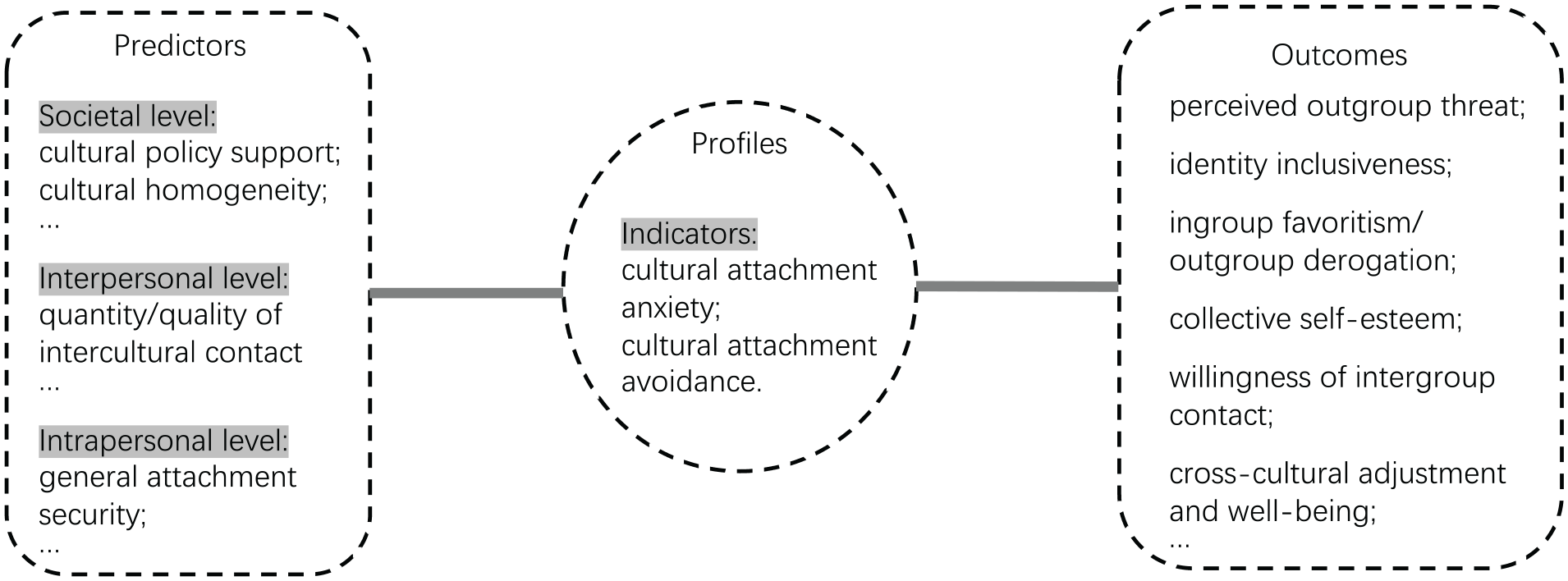
Conceptual Overview of the Theoretical Relationship Between the Cultural Attachment Profiles and Their Predictors and Outcomes.
Study 1
Method
Participants
Given the relative difficulty of recruiting specialist populations, we recruited 431 self-identified Cantonese via the internet to complete the survey at Time 1, and then 353 completed the follow-up at Time 2 two weeks later. After excluding those whose self-reported place of residence before adulthood was not within Cantonese area, and those whose demographic information could not be matched between two timepoints, 328 (211 females, 117 males, Mage = 25.91, SD = 7.81) and 262 (174 females, 88 males, Mage = 25.75, SD = 6.77) participants remained in the analysis of Time 1 and Time 2, respectively (see Online Appendix 3 for other demographic information). Missing value analysis (Little, 1988) considering sex, age, and profile indicators (i.e., cultural anxiety and avoidance) showed that the participant attrition was completely at random, χ2 (4) = 8.49, p = .075.
Materials and Procedure
Participants were surveyed twice, with a time interval of 2 weeks. At Time 1, demographics, predictors of cultural attachment, and indicators of cultural attachment were collected. At Time 2, the intergroup outcomes of cultural attachment were measured. The details of the measurement are listed as follows.
Indicators of Profile Memberships
We adapted the Experiences in Close Relationship (ECR) scale (Brennan et al., 1998) to develop a novel nine-item Cultural Attachment Orientation Scale (CAOS; see Online Appendix 4 for details of the development of the scale). The two factors of CAOS, namely, anxiety and avoidance, comprise three and six items, respectively. Items are like “I feel anxious if I leave [specific community]” (anxiety) and “While in a foreign land, I get uncomfortable when other [members of specific community] wants to be very close” (avoidance). Participants rated on a six-point scale to which extent they felt the items described their own experiences (1 = strongly disagree, 6 = strongly agree). The inner reliabilities were satisfying for both anxiety (α = .88) and avoidance (α = .83) subfactors. The correlation between these two factors was weak, r = −.07, p = .241. An aggregated cultural attachment security index was calculated by averaging the scores of the two factor, cultural attachment anxiety and avoidance, and then reversing it such that the higher the index, the greater attachment security.
Predictors of Cultural Attachment Profile Membership
Policy Support for Local Culture
We included a question in our survey asking participants “What do you think of the status that the national government gives to regional cultures like Cantonese culture and dialects like Cantonese?,” participants were asked to rate on a slider (0 = extremely low and disvalue, 100 = extremely high and value a lot).
Perceived Cultural Homogeneity
We asked participants to assess “How strong is the atmosphere of Cantonese culture in the place you live?” (0 = not strong at all, 100 = very strong).
Quantity of Intergroup Contact
Participants rated their frequency of contact with people other than Cantonese on a slider (0 = very low, 100 = very high; Bruneau et al., 2021).
Quality of Intergroup Contact
Participants rated their quality of contact with people other than Cantonese (0 = very negative, 100 = very positive; Bruneau et al., 2021).
General Attachment Security
We adapted the revised Chinese version of the Experiences in Close Relationship Scale—Short Form (ECR-S; Plusnin et al., 2021) as a measure of general attachment security (α = .79) by replacing intimate “partners” with general “others.” The adapted scale contained six items (e.g., “I am nervous when others get too close to me”) to which participants were asked to rate the correspondence between the descriptions and their experiences (1 = strongly disagree, 6 = strongly agree).
Local Dialect Ability
Participants evaluated their own ability of Cantonese on a zero (cannot speak) to 100 (mastery) point slider.
Demographics
Participants’ age, sex, and subjective socioeconomic status (on a 10-rung ladder, Kraus et al., 2009) were collected.
Outcomes of Profiles of Cultural Attachment
Perceived Outgroup Threat
We adapted four items from the integrated threat theory (Stephan & Stephan, 2000) to assess the perceptions of realistic and symbolic threats from outsiders in Cantonese area (α = .81). Participants evaluated their agreement with statements such as “Outsiders, as a group, pose a threat to the Cantonese” (1 = strongly disagree, 6 = strongly agree).
Identity Inclusiveness
An ad hoc four-item measure of identity inclusiveness was adopted, which tapped participants’ readiness to accept the outsiders inside their identified group (α = .84). Participants responded their agreements with statements like “The identity of Cantonese is something determined by descent, and can never be changed” (reversed) (1 = strongly disagree, 6 = strongly agree).
Dehumanization
We assessed outgroup derogation as dehumanization. As prior literature did, two measures were included to get a more comprehensive measure of dehumanization: The Ascent of (Hu)Man Scale and a multi-item dehumanization rating (Kteily et al., 2016). For the former, participants were guided to evaluate the degree to which extent they felt the outsiders in Cantonese area had been averagely evolved on a zero to one-hundred slider scale. For the latter, participants were asked to evaluate the outsiders in Cantonese area on eight traits (e.g., backward, savage, and lacking morals; 0 = not at all, 6 = extremely so; α = .89). Then, an overall dehumanization score was computed by averaging both standardized dehumanization scores (the correlation between these two measures: r = .46, p < .001).
Superiority
Four items adapted from the superiority subscale of Roccas et al. (2008)’s measure of identification with the group were used (α = .83). Participants responded to what extent they agreed with statements such as “Cantonese people are better than other groups (e.g., outsiders in Cantonese area) in all respects” (1 = strongly disagree, 6 = strongly agree).
Collective Self-Esteem
The 16-item Collective Self-esteem Scale (Luhtanen & Crocker, 1992) was adopted to evaluate participants’ collective self-esteem (α = .86, items are like “The Cantonese group I belong to is an important reflection of who I am”; 1 = strongly disagree, 6 = strongly agree).
Willingness of Contact
Four items were adapted from Yogeeswaran et al. (2021) to tap the willingness of participants to contact outsiders in the Cantonese area (α = .84). Participants rated to what extent they would be willing to “have outsiders as close friends” and so on (1 = strongly not willing to, 6 = strongly willing to).
Cross-Cultural Adjustment
We chose four items from Black and Stephens (1989)’s expatriate adjustment scale to assess participants’ ability to cross-cultural adjustment (α = .90). Participants were asked to recall or imagine a cross-cultural experience, and then rated to which extent they felt they could adjust to the situation in terms of “socializing with people” and so on (1 = extremely unadjusted; 6 = extremely adjusted).
Subjective Well-Being
We assessed the well-being using three items adapted from the Short General Health Questionnaire (GHQ 12; Goldberg & Williams, 1988; α = .84). 1 Participants rated in the recalled or imagined cross-cultural experience, to which extent their feelings were in line with the descriptions such as “Been feeling reasonably happy, all things considered” (1 = strongly disagree, 6 = strongly agree). Reversed scores of the three items were averaged to form the subjective well-being index.
Competing Constructs of Cultural Attachment
Three types of place attachment were considered (Lewicka, 2011). We chose this measure because it is the only scale to our best knowledge that has been adopted in the exploration of intergroup outcomes of place attachment (Wnuk & Oleksy, 2021). Therefore, we can examine the incremental validity of cultural attachment better, as the predictive power of the three types of place attachment has been evidenced. Specifically, three items were adopted to assess an essentialist perspective on people-place nexus, called traditional place attachment (α = .79, e.g., “I cannot imagine leaving the Cantonese area for good”); four items to an exploratory perspective on people-place nexus, called active place attachment (α = .74; e.g., “From time-to-time I discover the Cantonese area anew”); and three items to a relativist perspective on people-place nexus, called place relativity (α = .75; e.g., “It is more important for me how I live than where I live”; 1 = strongly disagree, 6 = strongly agree).
Analytical Plan
To investigate the distinct profiles underlying cultural attachment, we performed LPA using Mplus 8 (Muthén & Muthén, 1998/2017) via the MplusAutomation package (Hallquist & Wiley, 2018) in R 4.0.5 (R Core Team, 2021). According to prior recommendation, a three-step approach was adopted (Asparouhov & Muthén, 2014). First, we estimated the model fitting from one to six profiles with indicators’ means but variances freely estimated. Moreover, 5,000 random sets of start values, 300 iterations, and 200 final stage optimizations were estimated with each model. The optimal solution was selected primarily based on the empirical model fit indices. Specifically, lower values in Akaike information criterion (AIC), Bayesian information criterion (BIC), consistent AIC (CAIC) and sample-size-adjusted BIC (ABIC), higher values in entropy, and significant values for the Lo-Mendell-Rubin likelihood ratio test (LMRT) and the bootstrap likelihood ratio test (BLRT) indicated a better fit (Spurk et al., 2020). Given the relatively small sample size, Monte Carlo simulations were also adopted to verify the power of selected model. Once the optimal LPA solution was determined, various auxiliary variables were added into the model to examine the predictors (using R3STEP command in Mplus) and outcomes (using BCH command in Mplus) of the profile membership. We also conducted a series of regression analyses using stats package in R (R Core Team, 2021) to compare cultural attachment and competing variables.
Results
Latent Profiles of Cultural Attachment
As seen in Table 1 and Figure 2A, ΒIC was the lowest at the four-profile solution, and the curves of AIC, CAIC, and ABIC flattened after the four-profile solution. In addition, the relatively higher entropy and the significance of BLRT also suggested a four-profile solution. Although the LMRT was still significant at the five-profile solution, the adding of a fifth profile only quantitatively divided a small group from an existing profile with no qualitative difference. Taken as a whole, the four-profile solution was retained.
Model-Fit Statistics for Latent Profile Analysis.
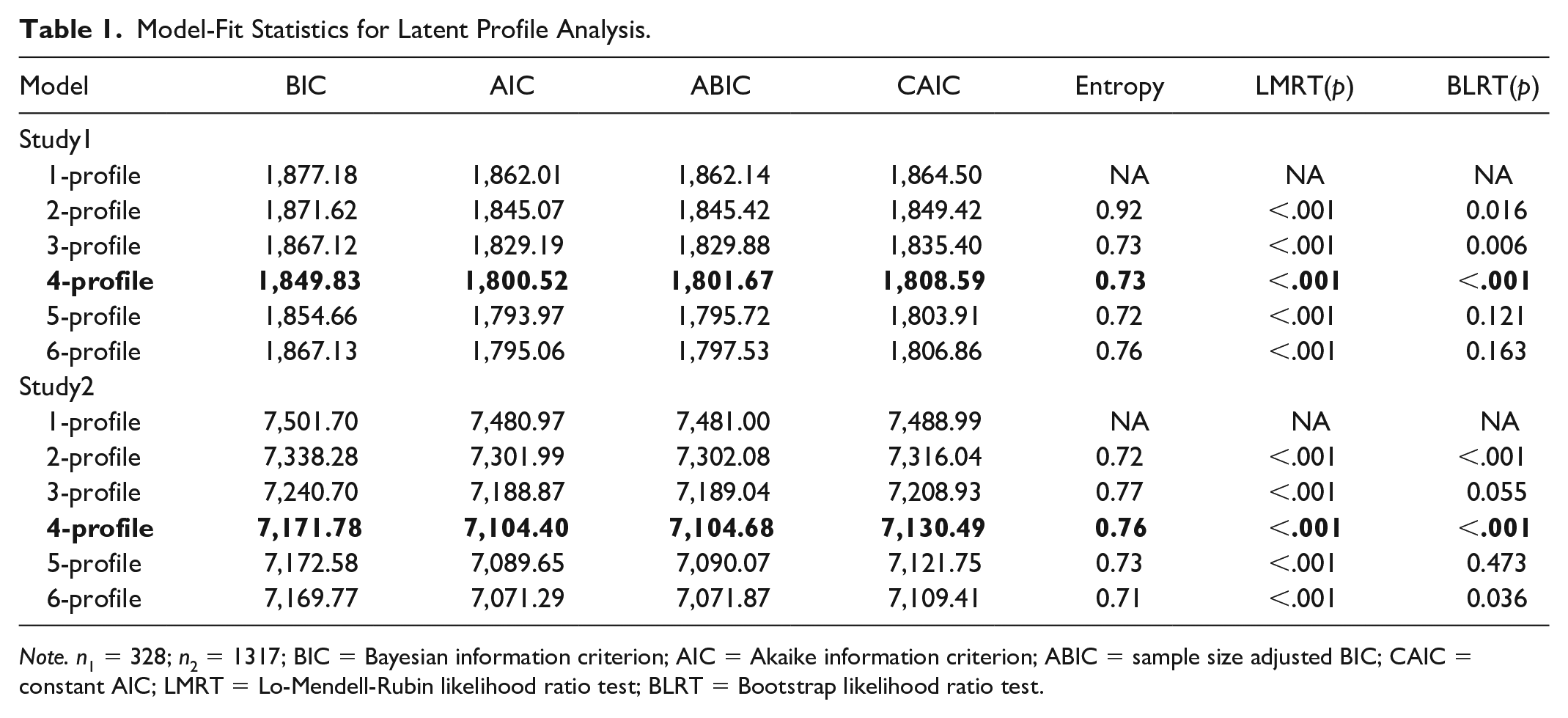
Note. n1 = 328; n2 = 1317; BIC = Bayesian information criterion; AIC = Akaike information criterion; ABIC = sample size adjusted BIC; CAIC = constant AIC; LMRT = Lo-Mendell-Rubin likelihood ratio test; BLRT = Bootstrap likelihood ratio test.
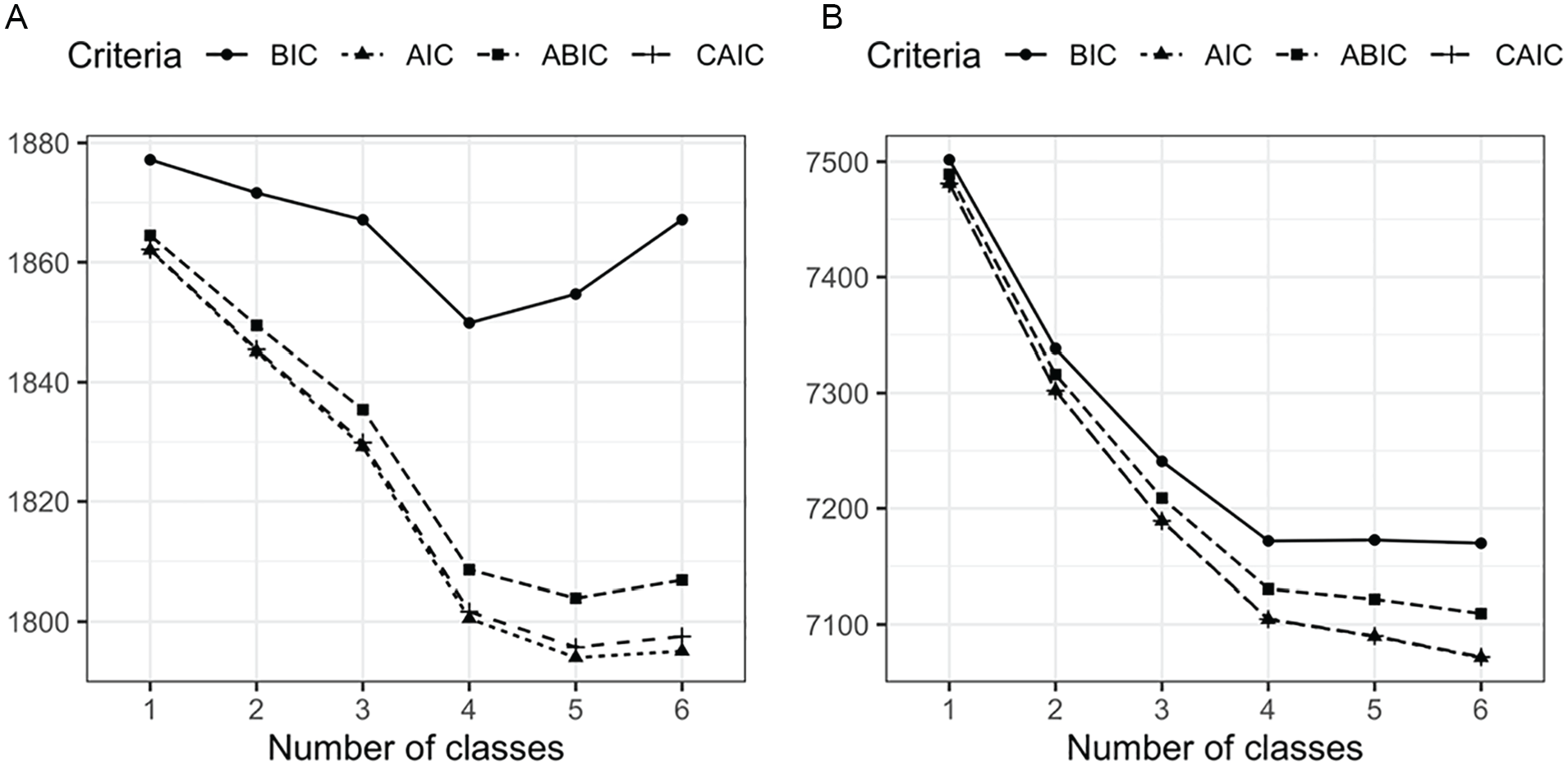
Elbow Plots for the Information Criteria in Studies 1 (A) and 2 (B).
The four profiles of cultural attachment were presented in Figure 3A, in which Profile 1 characterized participants of Secure cultural attachment (46.04% of the sample), who had both lower cultural anxiety and avoidance; Profile 2 characterized participants of Preoccupied cultural attachment (22.56% of the sample), who had higher cultural anxiety and significantly lower avoidance; Profile 3 characterized participants of Fearful cultural attachment (28.05% of the sample), who had both higher cultural anxiety and avoidance; and Profile 4 characterized participants of Dismissing cultural attachment (3.35% of the sample), who had lower cultural anxiety and higher avoidance. Further power analysis using Monte Carlo simulations verified this four-profile solution was adequately powered (see Online Appendix 5 for the details).
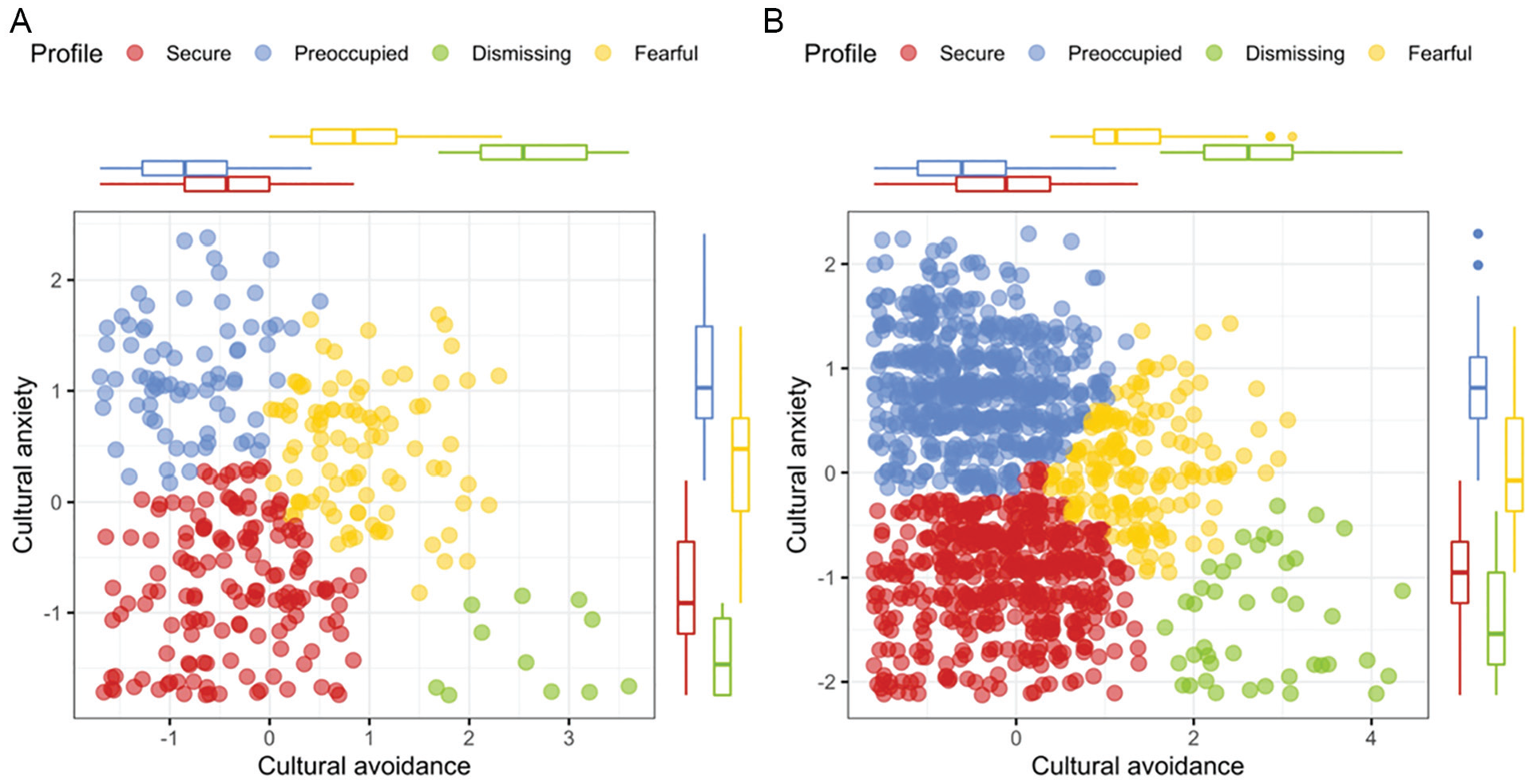
Four-Profile Solution in Studies 1 (A) and 2 (B), With Standardized Scores of Both Cultural Anxiety and Avoidance. Data Points Are Jittered to Alleviate Overlaps. See colored version of the figure online.
Predictors of Cultural Attachment Profile Memberships
We first added the proposed three-level predictors into the regression models separately in Models 1 to 3 (see Online Appendix 6), and only those variables with at least one p-value smaller than .10 were retained in further analysis (sex and socioeconomic were thus excluded). Then all remaining variables were included in Model 4 simultaneously, whose results were shown in Table 2 as follows.
Predicting Cultural Attachment Profile Membership From Three Levels in Study 1.
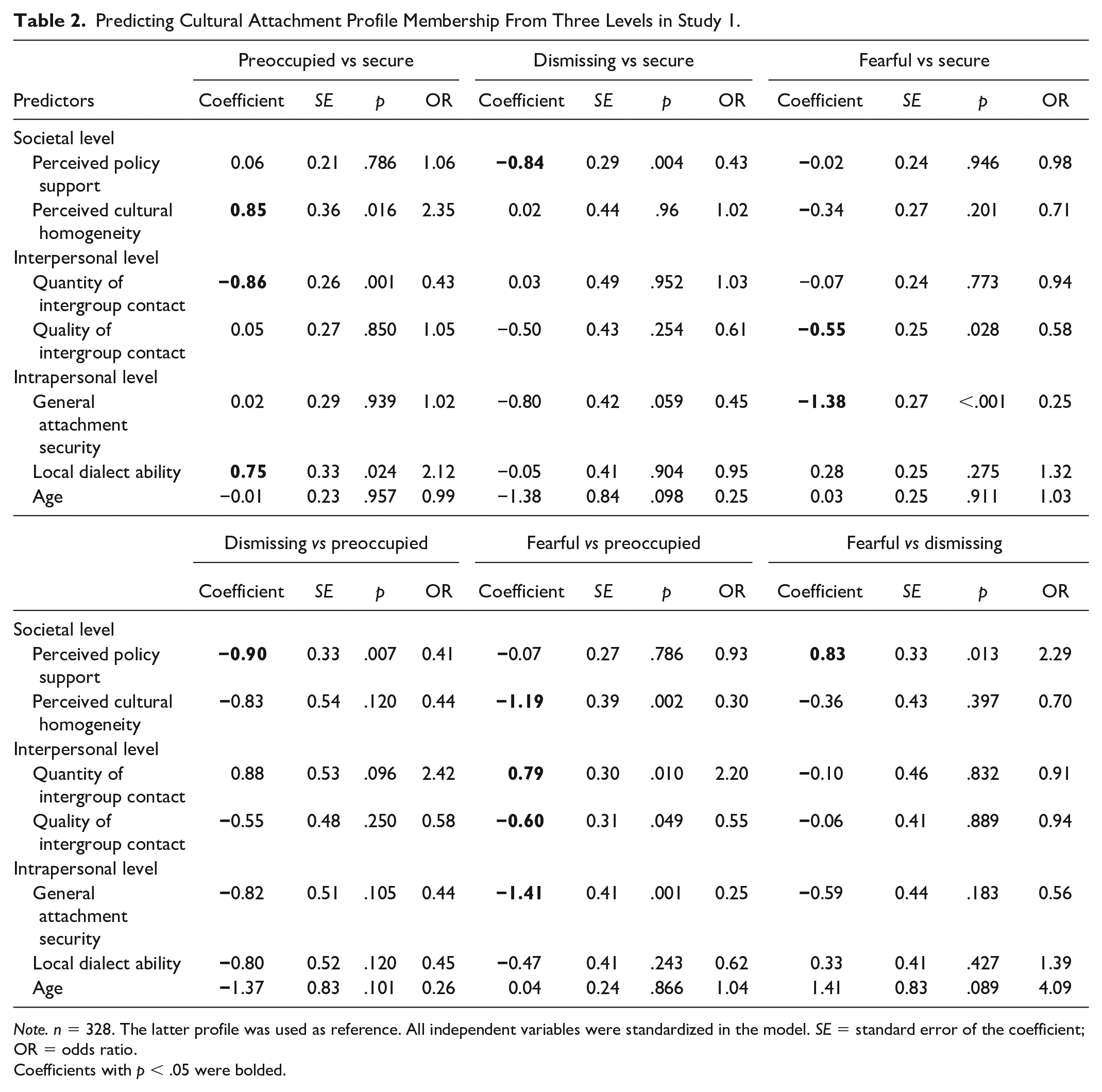
Note. n = 328. The latter profile was used as reference. All independent variables were standardized in the model. SE = standard error of the coefficient; OR = odds ratio.
Coefficients with p < .05 were bolded.
At the societal level, perceived policy support for local culture predicted smaller odds of membership in dismissing cultural attachment profiles, relative to secure (OR = .43, p = .004), preoccupied (OR = .41, p = .007) and fearful profiles (OR = .44, 2 p = .013). Perceived cultural homogeneity predicted higher odds in preoccupied profile relative to secure profile (OR = 2.35, p = .016) and fearful profile (OR = 3.33, p = .002). As for predictors at the interpersonal level, quantity of intergroup contact negatively predicted the membership of preoccupied profile relative to secure (OR = .43, p = .001) and fearful (OR = .45, p = .010) profiles. With regard to quality of intergroup contact, less fearful cultural attachment was predicted than secure (OR = .58, p = .028) and preoccupied (OR = .55, p = .049) cultural attachment. At the intrapersonal level, general attachment security predicted less odds in fearful profile than in secure (OR = .25, p < .001) and preoccupied profiles (OR = .25, p = .001). In addition, local dialect ability predicted more preoccupied cultural attachment relative to secure attachment cultural attachment, (OR = 2.12, p = .024). No other factors showed significant effects.
Outcomes of Cultural Attachment Profiles
As illustrated in Table 3, group differences of all outcomes were significant, χ2(3)s ≥ 9.14, ps < .05 (see Online Appendix 7 for the details of comparisons). Specifically, people of secure attachment perceived less outgroup threat than those of preoccupied and fearful cultural attachment, χ2(1)s ≥ 6.23, ps ≤ .013; people of dismissing profile also perceived less outgroup threat than those of fearful profile, χ2(1) = 4.11, p = .043. In terms of identity inclusiveness, people in secure cultural attachment profile were significantly higher than those in preoccupied profile, χ2(1) = 7.78, p = .005. With regard to intergroup biases, people of fearful cultural attachment exhibited more dehumanization than those of secure and preoccupied cultural attachment, χ2(1)s ≥ 3.87, ps ≤ .049; and people of dismissing profile also showed significant dehumanization than those of secure profile, χ2(1) = 7.62, p = .006. In contrast, people of preoccupied profile showed the highest superiority than all other profiles, χ2(1)s ≥ 11.83, ps ≤ .001, while people of dismissing profile showed lowest level of superiority than all other profiles, χ2(1)s ≥ 7.56, ps ≤ .006. As for collective self-esteem, preoccupiedly attached people had the highest collective self-esteem, χ2(1)s ≥ 22.04, ps < .001, while dismissingly attached people had the lowest group self-esteem, χ2(1)s ≥ 6.60, ps ≤ .010; in addition, people of secure profile showed higher collective self-esteem than those from fearful profile, χ2(1) = 6.99, p = .008. As for willingness of intergroup contact, people of secure profile and preoccupied profile were more willing to contact with outgroups than those in fearful profile, χ2(1)s ≥ 8.76, ps ≤ .003. For outcomes concerning psychological health, people of secure cultural attachment had better cross-cultural adjustment than those in preoccupied and fearful profiles, χ2(1)s ≥ 14.38, ps < .001, while people of dismissing profile also showed better cross-cultural adjustment than those of preoccupied and fearful profiles, χ2(1)s ≥ 15.08, ps < .001; additionally, people of preoccupied profile performed better than those of fearful profile, χ2(1) = 4.36, p = .037. At last, people in secure cultural attachment profile had higher well-being in cross-regional cultural context than those in preoccupied and fearful profiles, χ2(1)s ≥ 14.25, ps ≤ .013; and people of dismissing profile also showed higher well-being than those from preoccupied and fearful profiles, χ2(1)s ≥ 6.32, ps ≤ .012.
Evaluating the Effects of Cultural Attachment Profiles in Study 1.
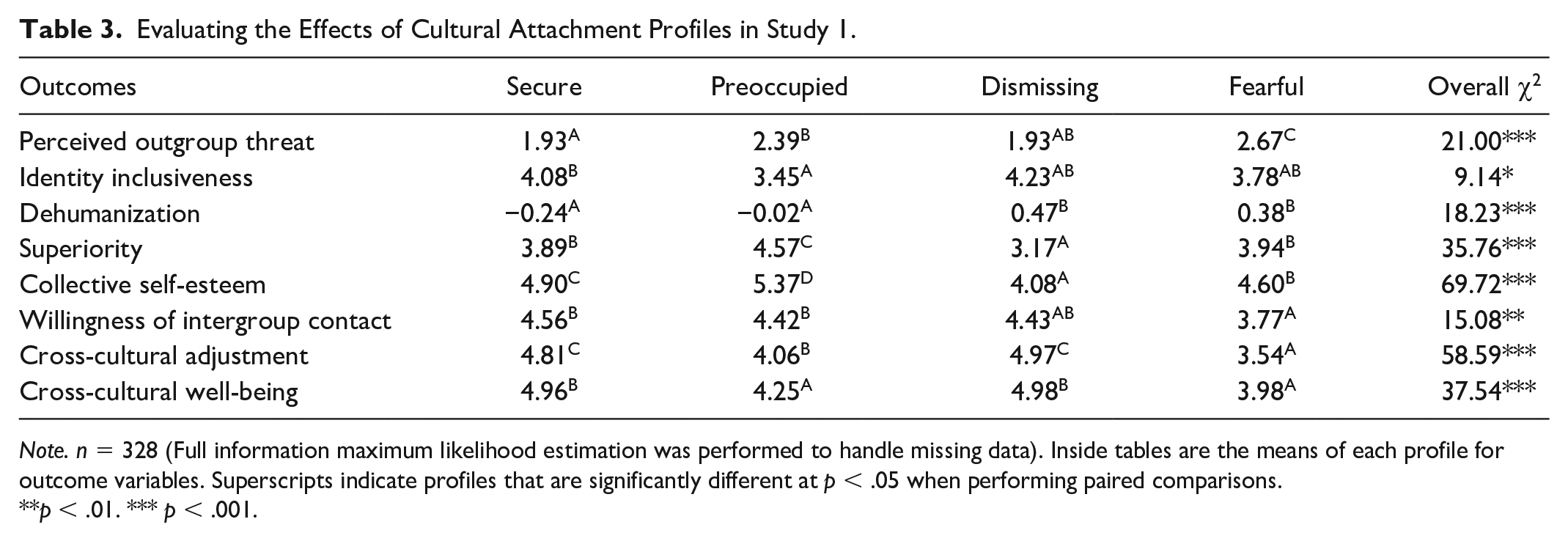
Note. n = 328 (Full information maximum likelihood estimation was performed to handle missing data). Inside tables are the means of each profile for outcome variables. Superscripts indicate profiles that are significantly different at p < .05 when performing paired comparisons.
p < .01. *** p < .001.
Comparisons With Other Attachment Constructs
The results of variable-centered correlations and regression analyses were presented in Tables 4 and 5. As presented, only cultural attachment security negatively predicted superiority, β = −.16, p = .011. Besides, after excluding the effects of general attachment security and place attachment, cultural attachment security still predicted less perceived out-group threat, β = −.24, p < .001; more identity of inclusiveness, β =.14, p = .042; less dehumanization, β = −.19, p = .004; more willingness of intergroup contact, β =.18, p = .003; better cross-cultural adjustment β = .41, p < .001; and better well-being in cross-region cultural context, β = .35, p < .001. All these findings proved the distinctiveness of cultural attachment from general and place attachment. It is also noteworthy that cultural attachment security did not predict group self-esteem, β = −.04, p = .497, suggesting their relative independence from each other.
Means, Standard Deviations, and Correlations Among Main Variables in Study 1.
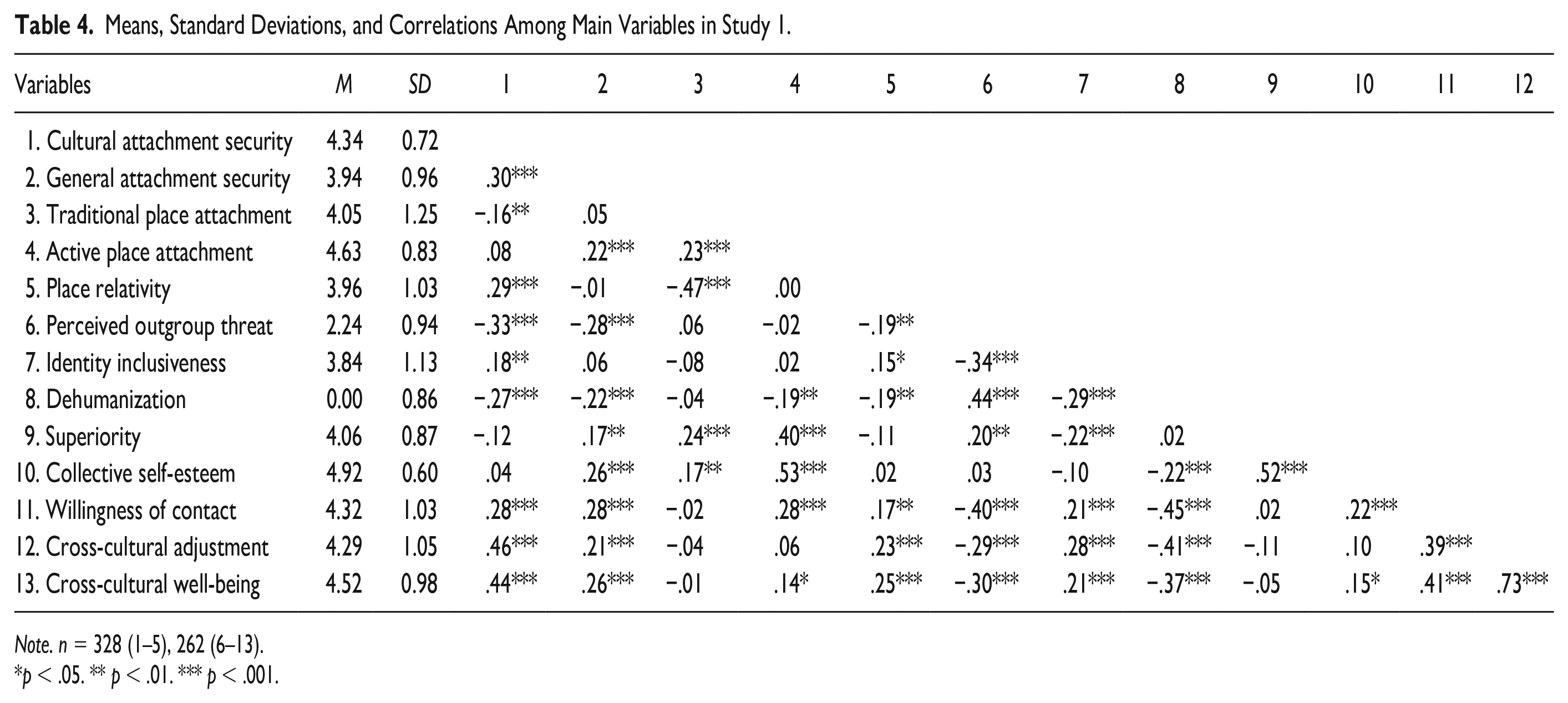
Note. n = 328 (1–5), 262 (6–13).
p < .05. ** p < .01. *** p < .001.
Results of Variable-Centered Regression Analysis in Study 1.
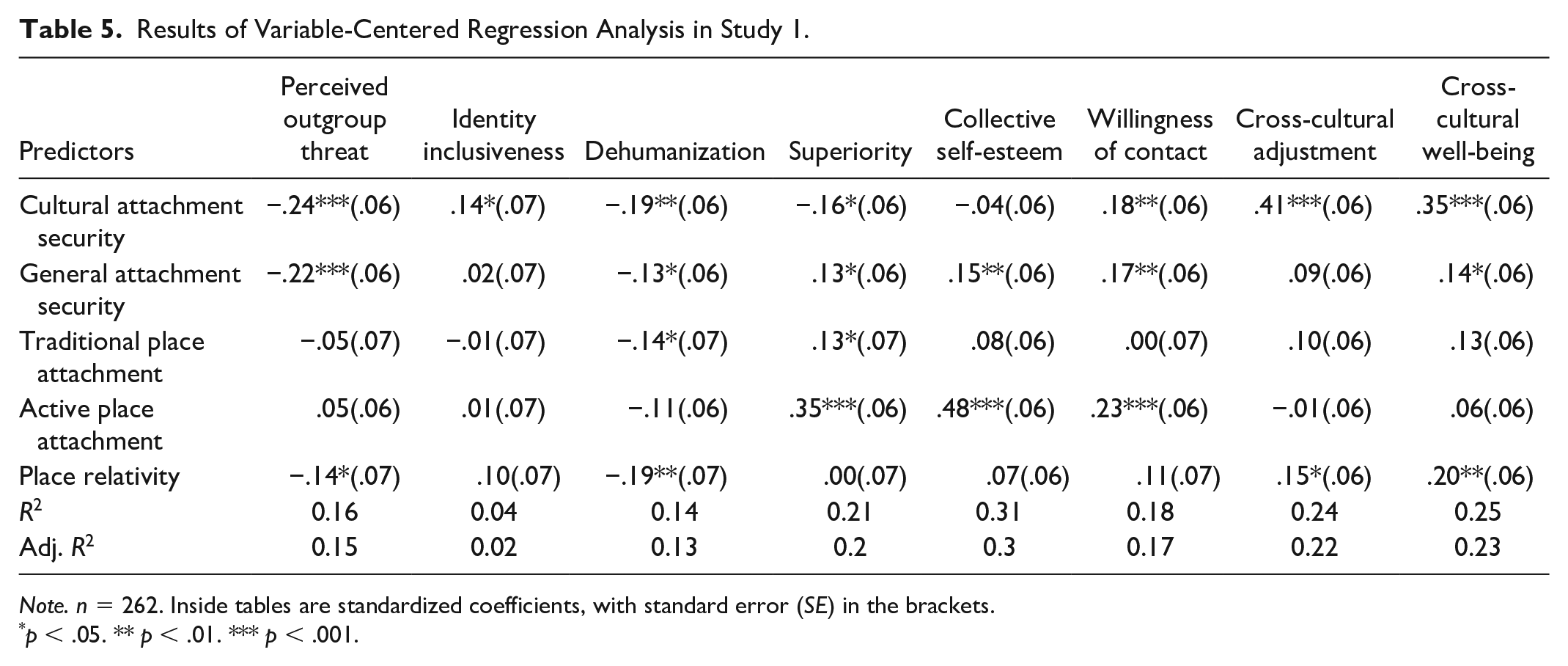
Note. n = 262. Inside tables are standardized coefficients, with standard error (SE) in the brackets.
p < .05. ** p < .01. *** p < .001.
Study 2
We conducted Study 2 with the following purposes: first, to validate the generalizability of the findings in Study 1 to a wider population; second, to provide confidence in the reproducibility of the findings in Study 1 through a preregistered replication; last, to additionally explore the possible influences of some more objective city-level factors on cultural attachment including economic, population, geographical, and cultural factors.
Method
Participants
As preregistered, we recruited 1600 self-identified natives in the cultural sense from the top fifty Chinese cities with the highest population inflow in 2021 (see Online Appendix 8 for the full city list) via the Internet to complete the survey at Time 1, and then 1,241 completed the follow-up at Time 2 two weeks later. After excluding those who provided unmatched demographic information between two waves of surveys, 1,317 (696 females, 621 males, Mage = 30.24, SD = 7.58) and 799 (437 females, 362 males, Mage = 30.04, SD = 7.17) participants were remained in the analysis of Time 1 and Time 2, respectively (see Online Appendix 9 for other demographic information). These participants were from 50 cities, with an average number of 26.34 participants clustered in a city (ranging from 1 to 152). Missing-value analysis (Little, 1988) considering sex, age, and profile indicators (i.e., cultural attachment anxiety and avoidance) showed that the participant attrition was completely random, χ2 (4) = 8.31, p = .081.
Materials and Procedure
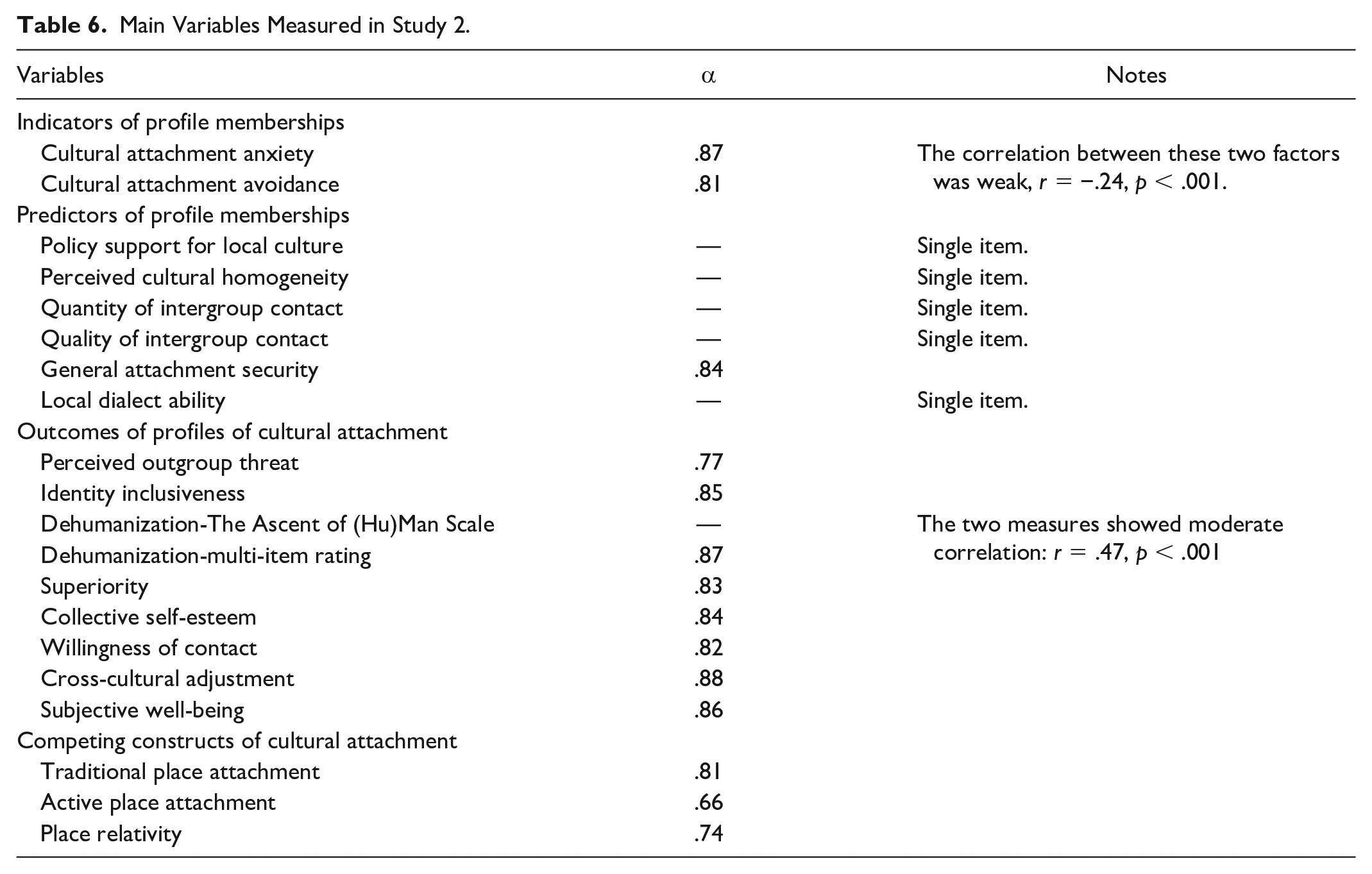
The materials and procedures of Study 2 were identical to that of Study 1 (see Table 6 below for a summary of the variables). In addition, a bunch of city-level variables were included in our data analyses of Study 2, including (a) economic factor: average GDP per capita; (b) population factors: average population density and population mobility; (c) geographical factors: annual average temperature, southern and coastal cities; (d) cultural factors: cultural homogeneity and cultural centrality. For the details of these variables, please see Online Appendix 10.
Main Variables Measured in Study 2.
Analytical Plan
Given the individual level variables were nested in cities in our data, we performed a series of Multilevel LPA (MLPA) following Mäkikangas et al. (2018)’s guideline. First, single-level LPAs similar to Study 1 were conducted to determine the best-fitting solution of profiles of cultural attachment at the individual level. On top of this, we checked whether the relative frequencies of Level-1 profiles were significantly different among different cities. Then, both Level-1 and Level-2 variables were included in multinomial regression models to test the predictors of the profiles. The same mean equality test and regression models were also conducted as those in Study 1 to examine the outcomes and incremental validity of cultural attachment.
Results
Latent Profiles of Cultural Attachment
As seen in Table 1 and Figure 2B, similar as in Study 1, the four-profile solution fitted the data best. The four profiles of cultural attachment were presented in Figure 3B, in which Profile 1 characterized participants of Secure cultural attachment (36.14% of the sample); Profile 2 characterized participants of Preoccupied cultural attachment (47.68% of the sample); Profile 3 characterized participants of Fearful cultural attachment (12.98% of the sample); and Profile 4 characterized participants of Dismissing cultural attachment (3.19% of the sample). We further ran Model 3 in Mäkikangas et al. (2018)’s guideline to detect the possible discrepancies of Level-1 profiles among Level-2 cities. However, as shown in Online Appendix 11, the one class solution at Level 2 fitted the data best, suggesting that the relative frequencies of the profiles were not obviously discrepant among the listed cities.
Predictors of Cultural Attachment Profile Memberships
We first performed level-1 and level-2 multinomial regressions, separately (see Online Appendix 12), and only those variables with at least one p-value smaller than .10 were retained in further analysis (perceived cultural homogeneity, quantity of intergroup contact, sex and population density were thus excluded). Then all remaining variables were included simultaneously to predict the cultural attachment profiles, whose results were shown in Table 7 as follows.
Predicting Cultural Attachment Profile Membership in Study 2.
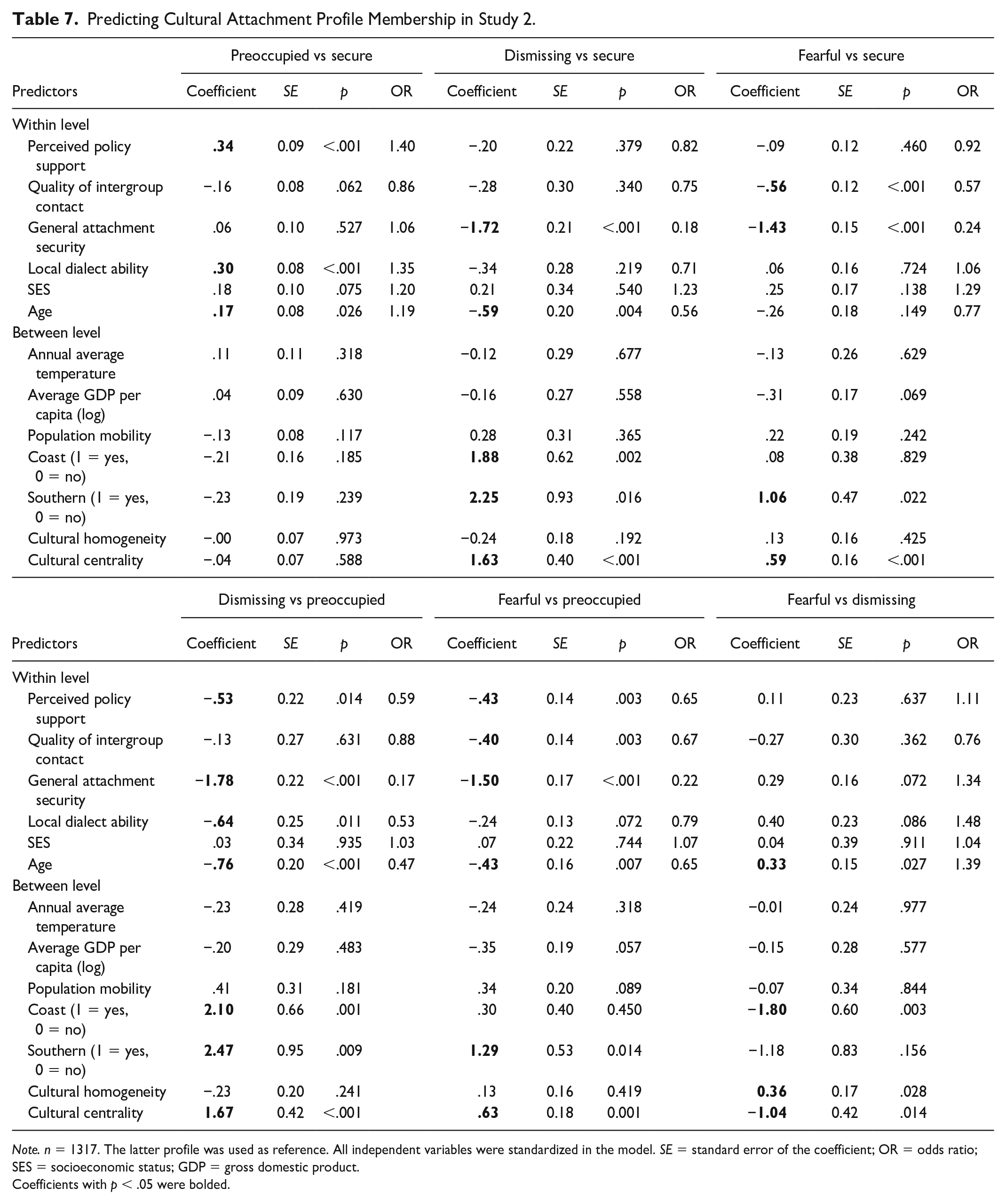
Note. n = 1317. The latter profile was used as reference. All independent variables were standardized in the model. SE = standard error of the coefficient; OR = odds ratio; SES = socioeconomic status; GDP = gross domestic product.
Coefficients with p < .05 were bolded.
At the societal level, perceived policy support for local culture predicted smaller odds of membership in dismissing (OR = .59, p = .014) and fearful profiles (OR = .65, p = .003) than in preoccupied profiles. However, it also predicted more odds of membership in preoccupied profile than in secure profile (OR = 1.40, p < .001). At interpersonal level, the quality of intergroup contact predicted less odds of being fearful profile than secure (OR = .57, p < .001) and preoccupied profile (OR = .67, p = .003). At intrapersonal level, general attachment security remarkably predicted less odds of being dismissing (OR = .18, p < .001) and fearful profile (OR = .24, p < .001) relative to secure profile. It also predicted less odds of being dismissing (OR = .17, p < .001) and fearful profile (OR = .22, p < .001) relative to preoccupied profile. Besides, local dialect ability was found to predict more odds of being preoccupied profile than secure (OR = 1.35, p < .001) and dismissing profile (OR = 1.89, p = .011). Age predicted less odds of being dismissing profile relative to secure (OR = .56, p = .004), preoccupied (OR = 0.47, p < .001), and fearful profile (OR = .72, p = .027) but also predicted more odds of being preoccupied profile than secure (OR = 1.19, p = .026) and fearful profile (OR = 1.54, p = .007).
We also found the influences of city-level factors. Specifically, living in coastal cities significantly predicted more possibility of being dismissing profile than being secure (coefficient = 1.88, p = .002), preoccupied (coefficient = 2.10, p = .001), and fearful profiles (coefficient = 1.80, p = .003). At the same time, living in southern cities significantly predicted more possibility of being dismissing (coefficient = 2.25, p = .016) and fearful profiles (coefficient = 1.06, p = .022) than secure profile; and more possibility of being dismissing (coefficient = 2.47, p = .009) and fearful profiles (coefficient = 1.29, p = .014) than preoccupied profile. As for cultural factors, objective cultural homogeneity predicted more possibility of being fearful relative to dismissing profile (coefficient = 0.36, p = .028). At last, cultural centrality significantly predicted more possibility of being dismissing profile relative to secure (coefficient = 1.63, p < .001), preoccupied (coefficient = 1.67, p < .001), and fearful profiles (coefficient = 1.04, p = .014). It also predicted less possibility of being fearful profile than being secure (coefficient = .59, p < .001) and preoccupied profiles (coefficient = .63, p = .001).
Outcomes of Cultural Attachment Profiles
As illustrated in Table 8, group differences of all outcomes were significant, χ2(3)s ≥ 17.12, ps < .01 (see Online Appendix 13 for the details of comparisons). Specifically, people of secure attachment perceived less outgroup threat than those of preoccupied and fearful attachment, χ2(1)s ≥ 20.86, ps < .001; and people of fearful profile perceived more outgroup threat than those of dismissing profile, χ2(1) = 6.29, p = .012. As for identity inclusiveness, that of securely attached people was significantly higher than people of preoccupied and fearful profiles, χ2(1)s ≥ 10.74, ps = .001. In terms of intergroup biases, people of fearful profile exhibited the highest outgroup dehumanization among all profiles, χ2(1)s ≥ 7.90, ps ≤ .005; and people of preoccupied profile exhibited more outgroup dehumanization than those of secure profile, χ2(1) = 3.86, p = .049. Meanwhile, people of preoccupied profile showed the highest ingroup superiority, χ2(1)s ≥ 22.66, ps < .001; and people of dismissing profile showed lower ingroup superiority than those of secure profile, χ2(1) = 5.72, p = .017. With regard to collective self-esteem, people of preoccupied profile were the highest, χ2(1)s ≥ 45.89, ps < .001; while people of secure profile owned higher collective self-esteem than those of dismissing and fearful profiles, χ2(1)s ≥ 11.04, ps < .008. In addition, people in fearful attachment profile showed the lowest willingness of intergroup contact, χ2(1)s ≥ 10.24, ps ≤ .001. For outcomes concerning psychological health, people of secure cultural attachment had better cross-cultural adjustment than those of preoccupied and fearful profiles, χ2(1) ≥ 31.88, p < .001; and people of dismissing profile also had better adjustment than those of preoccupied and fearful profiles, χ2(1) ≥ 9.31, p ≤ .002. People in secure cultural attachment profile had higher well-being in cross-cultural context than those in preoccupied and fearful profiles, χ2(1) ≥ 30.31, p < .001; and people of dismissing profile also had better adjustment than those of preoccupied and fearful profiles, χ2(1) ≥ 3.94, p ≤ .047.
Evaluating the Effects of Cultural Attachment Profiles in Study 2.
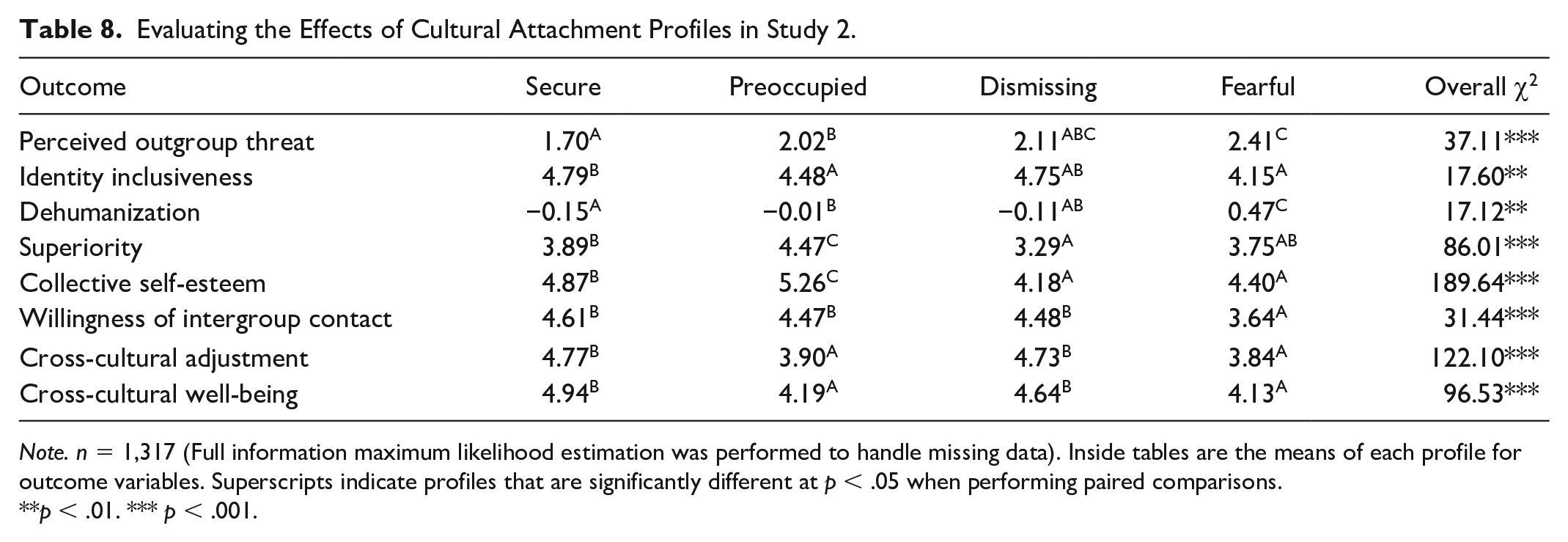
Note. n = 1,317 (Full information maximum likelihood estimation was performed to handle missing data). Inside tables are the means of each profile for outcome variables. Superscripts indicate profiles that are significantly different at p < .05 when performing paired comparisons.
p < .01. *** p < .001.
Comparisons With Other Attachment Constructs
The results of variable-centered correlations and regression analyses were presented in Tables 9 and 10. Identical to Study 1, only cultural attachment security negatively predicted superiority, β = −.13, p < .001. After excluding the effects of general attachment security and different types of place attachment, cultural attachment security still predicted less perceived outgroup threat, β = −.18, p < .001; more identity of inclusiveness, β =.11, p = .008; less dehumanization, β = −.13, p = .001; more willingness of intergroup contact, β =.14, p < .001; better cross-cultural adjustment Β = .32, p < .001; and better well-being in cross-region cultural context, β = .31, p < .001. Again, cultural attachment security did not predict group self-esteem after controlling for relevant competing variables, β = −.06, p = .068.
Means, Standard Deviations, and Correlations Among Main Variables in Study 2.
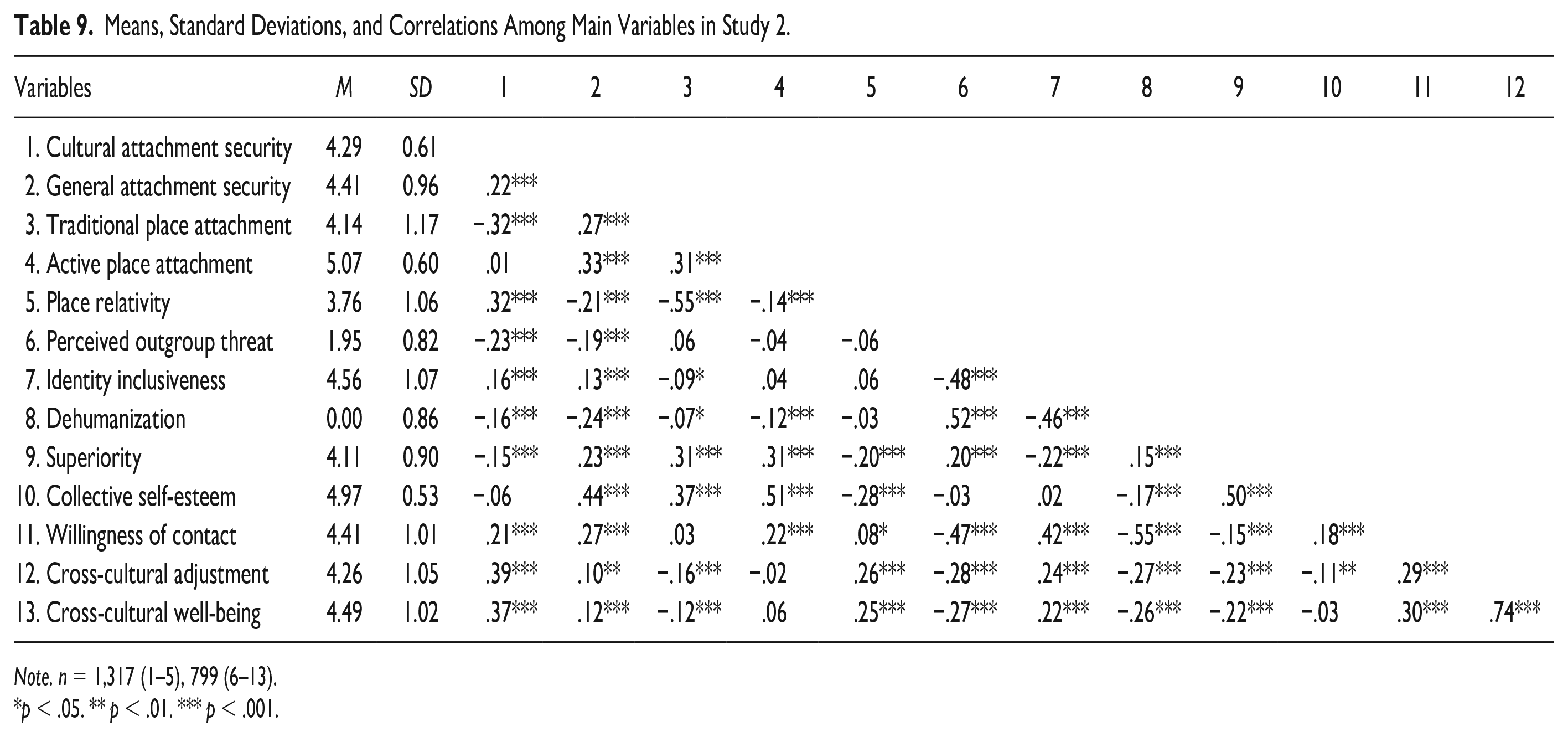
Note. n = 1,317 (1–5), 799 (6–13).
p < .05. ** p < .01. *** p < .001.
Results of Variable-Centered Regression Analysis in Study 2.
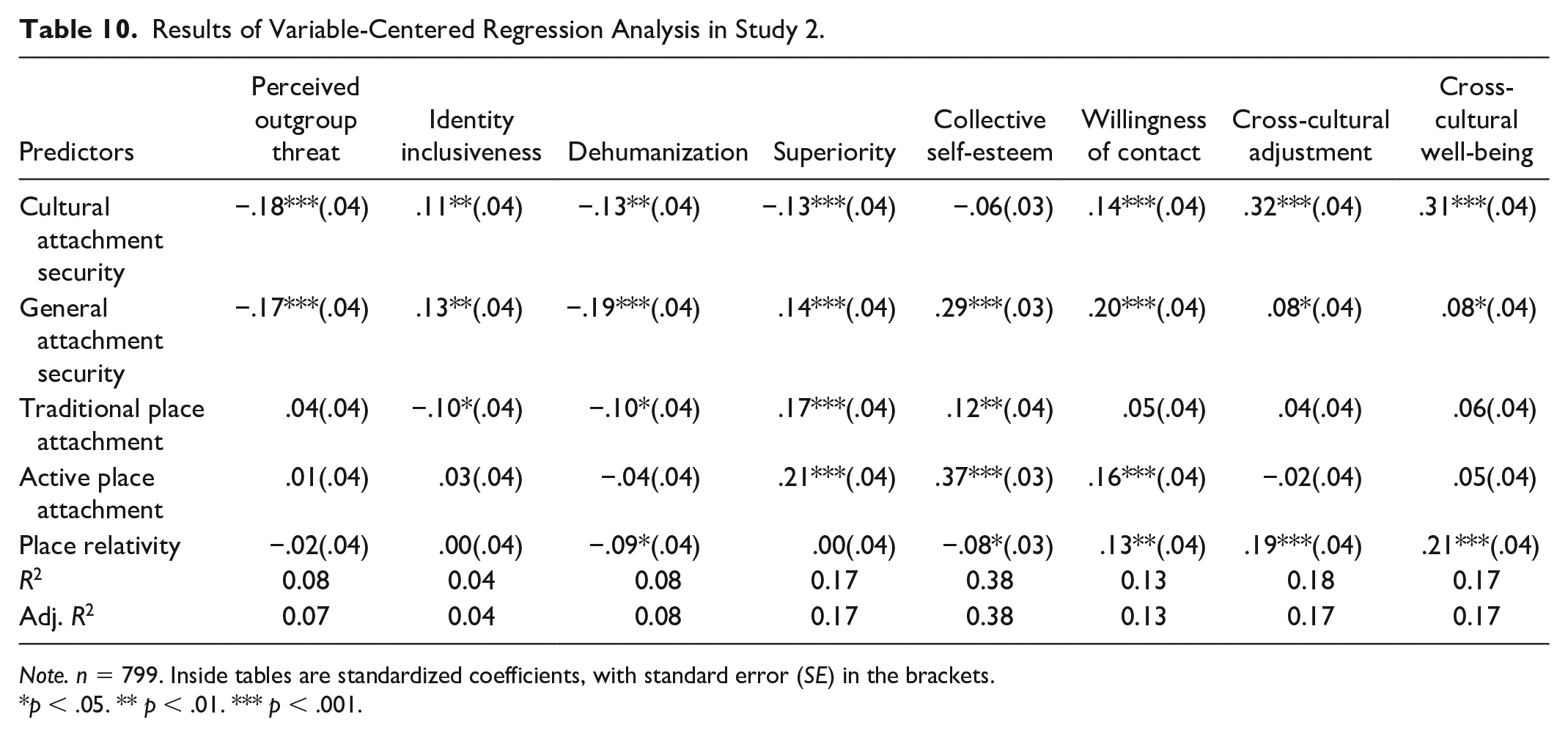
Note. n = 799. Inside tables are standardized coefficients, with standard error (SE) in the brackets.
p < .05. ** p < .01. *** p < .001.
General Discussion
In contrast to the prevailing use of variable-centered approaches in social psychological studies (Osborne & Sibley, 2017), our study capitalizes on person-centered analysis and reveals, for the first time, that attachment to their cultural groups can be classified into different prototypical types based on attachment anxiety and avoidance (Bartholomew & Horowitz, 1991). Moreover, in line with the domain specificity in attachment-related mental representation (Mikulincer & Shaver, 2020), we find that even after controlling for general attachment and place attachment, cultural attachment maintains its independent contributions to intergroup outcomes. These findings imply that cultural attachment represents a distinctive type of attachment that specifically captures the affective bonding between individuals and their cultural groups. By highlighting the value of person-centered analyses and establishing the distinctiveness of cultural attachment, our study expands our understanding of the complex dynamics between individuals and their cultural communities, underscoring the importance of considering cultural attachment as a unique type of attachment in the broader landscape of social psychological research.
Across both studies, we consistently find that the quality of intergroup contact and general attachment security are robust predictors of secure cultural attachment compared with fearful attachment. These findings align well with the contact hypothesis (Allport, 1954) and the broaden-and-build cycle of attachment (Mikulincer & Shaver, 2020), suggesting that positive and meaningful intergroup interactions, along with a sense of overall attachment security, contribute to the development of a secure cultural attachment. In contrast, the effects of other factors on cultural attachment are more complex and contingent on specific contexts. First, perceived policy support for local culture predicts less dismissing cultural attachment in both studies. However, unexpectedly, it predicts more preoccupied attachment in Study 2. This discrepancy may be attributed to the dilemma of multiculturalism (Morris et al., 2015). While the appreciation of cultural diversity protects the function of local cultures as safe havens, it may also pose challenges to the exploration and openness toward other cultures. Furthermore, in Study 2, we also find the effects of certain objective socioecological factors, such as being southern and coastal cities and cultural distance to national culture. Although the mechanism through which these factors influence cultural attachment may be context-dependent (we provide tentative explanations based on the unique cultural context of China in Online Appendix 15), one thing is certain: cultural attachment is not solely the product of some biological bases and personal experiences but also shaped by socioecological factors through a dynamic manner (Oishi & Graham, 2010).
We also investigate the potential implications of cultural attachment in intercultural processes. Overall, our results provide support for the notion that cultural attachment security by providing individuals with the internal working model of attachment as secure-base scripts (Mikulincer et al., 2009), predicts lower levels of perceived outgroup threat and subsequently reduces the use of negative defensive mechanisms including narrowing identity inclusiveness, holding intergroup biases, and exhibiting excessive collective self-esteem. In the long run, individuals who securely attach to their cultural groups are more willing to engage in intergroup contact and demonstrate better cross-cultural functioning. It is noteworthy that our findings elucidate the correspondence between ingroup favoritism and preoccupied cultural attachment as well as between outgroup derogation and fearful attachment. Moreover, when compared with other types of attachment, only cultural attachment security demonstrates the unique ability to predict lower levels of in-group favoritism and outgroup derogation simultaneously, while remaining independent from collective self-esteem. These findings suggest that cultural attachment security can help individuals strike a balance between maintaining a moderate level of collective self-esteem and embracing intercultural interaction unbiasedly.
Several limitations of the present study should be noticed. First, the limited proportion of individuals classified under the dismissing profile in both Studies 1 and 2 makes the inferences involving it need a large sample size to get sufficient statistical power. Therefore, future studies should consider recruiting larger and potentially more representative samples. Another limitation in sampling is solely recruiting Chinese participants. Consequently, it is crucial for future studies to validate the generalizability of the present findings across diverse cultural groups. While it is believed that the two-dimensional structure of cultural attachment is universal, the relative proportions of different attachment profiles may vary across cultures (Mesman et al., 2008). For instance, the members of stigmatized cultural groups may experience higher levels of attachment avoidance, resulting in a greater prevalence of fearful and dismissing cultural attachment.
Moreover, the current work is only a “proof of concept” aiming at validating the proposed framework and providing preliminary evidence of its theoretical value. While the replication of the four profiles of cultural attachment and most outcome-related findings across studies provides support for the framework, it is essential to recognize that some findings, particularly those pertaining to predictors of cultural attachment, remain inconclusive. Further comprehensive investigation is needed in the future to ascertain the generalizability of these findings in different contexts.
One intriguing avenue for future research is to conduct a more in-depth comparison between individuals with secure and dismissing profiles of cultural attachment. In the current studies, no significant differences were found between these two types of cultural attachment in cross-cultural adaptation. It is worth exploring whether dismissing cultural attachment exhibits other potential drawbacks or if it reflects a cosmopolitan orientation (Chen et al., 2016) that may provide adaptive advantages in the globalized world.
Finally, although we have detected some pivotal predictors and outcomes of cultural attachment security, the correlational nature of surveys precludes strong causal inferences. To establish a more robust understanding of the causal relationships between cultural attachment and its predictors or outcomes, future research should consider manipulating certain predictors or even cultural attachment itself (Hong et al., 2013) in laboratory settings or implementing interventions in field studies. We believe these studies will be consequential in guiding the practical cultivation of cultural attachment security at large.
Supplemental Material
sj-docx-1-psp-10.1177_01461672231190753 – Supplemental material for The Profiles, Predictors, and Intergroup Outcomes of Cultural Attachment
Supplemental material, sj-docx-1-psp-10.1177_01461672231190753 for The Profiles, Predictors, and Intergroup Outcomes of Cultural Attachment by Yuanze Liu, Yubo Hou and Ying-yi Hong in Personality and Social Psychology Bulletin
Footnotes
Declaration of Conflicting Interests
The author(s) declared no potential conflicts of interest with respect to the research, authorship, and/or publication of this article.
Funding
The author(s) disclosed receipt of the following financial support for the research, authorship, and/or publication of this article: This work was supported by grants from the Chinese National Natural Science Foundation (grant no. 32271125) to Yubo Hou and the Senior Research Fellow Scheme (grant no. SRFS2122-4H01) of the Hong Kong Research Grants Council to Ying-yi Hong.

Supplemental Material
Supplemental material is available online with this article.
Notes
References
Supplementary Material
Please find the following supplemental material available below.
For Open Access articles published under a Creative Commons License, all supplemental material carries the same license as the article it is associated with.
For non-Open Access articles published, all supplemental material carries a non-exclusive license, and permission requests for re-use of supplemental material or any part of supplemental material shall be sent directly to the copyright owner as specified in the copyright notice associated with the article.
