




Abstract
Integrating insights from interdependence theory with the narcissistic admiration and rivalry concept, we propose that a pivotal obstacle for narcissistic leaders is their inability to sustain benevolent perceptions over time. As people strive to interpret social behavior in terms of self- or other-interest, the narcissistic tendency of prioritizing self-interests over the collective may become apparent and eventually taint their reputation as a leader. We examined how interpersonal motive perceptions—based on attributions of self- and other-interest—would clarify the leadership paradox of narcissism. We tracked 472 participants in 119 teams across four time-points. Narcissistic rivalry (but not admiration) corresponded to increasingly negative leader effectiveness ratings. The extent to which individuals were perceived as self-maximizing and lacking concern for other interests was tightly connected to declines in leader effectiveness across time. Altogether, these results offer insight into how perceived interpersonal motives may explain the downfall of narcissistic leadership.
Why do some individuals, who easily gain leadership, lose it? Given the challenging nature of effectively leading others (e.g., motivating others, making decisions that advance team and organizational objectives, building and maintaining positive relationships; Bennett, 2009; Grijalva, Harms, et al., 2015), it is perhaps not surprising that those who emerge as leaders do not always succeed in such roles. Narcissistic 1 leaders are a particularly intriguing case. Narcissism is a multidimensional construct (i.e., agentic, antagonistic, and neurotic narcissism, Miller et al., 2021) tied together by the cardinal features of self-entitlement (Krizan & Herlache, 2018) and a preoccupation with one’s self-importance (Sedikides & Campbell, 2017). Although individuals higher in narcissism may not deeply care about leading others in ways that optimize benefits for the collective, they desire the status afforded by such positions (Grapsas et al., 2020; Zeigler-Hill et al., 2019), tend to occupy leadership positions, and play a crucial role in organizations (Maccoby, 2000; Rosenthal, 2006). However, findings suggest the appeal of a narcissistic leader tends to wane as their subordinates get to know them better (Nevicka et al., 2018; Ong et al., 2016). Whereas researchers have identified why narcissistic individuals are able to rise and positively differentiate themselves as leaders (i.e., social boldness, dominant-expressive leadership style; e.g., Grosz et al., 2020), a critical next step is understanding the fall of narcissistic leadership.
In this article, we focus on the variables implicated in the fall of narcissistic leadership. Studies have shown positive (Nevicka, Tan Velden, et al., 2011), negative (De Hoogh et al., 2013), and insignificant (Hoffman et al., 2013) links between narcissism and leader effectiveness. Studying narcissism as a multidimensional concept may shed light on why these mixed findings exist. As such, we develop and test a model of how perceived interpersonal motives plays a key role in eventual downfall of narcissistic leaders. More specifically, we draw from the narcissistic admiration (i.e., agentic) and rivalry (i.e., antagonistic) concept (NARC; Back et al., 2013) and interdependence theory to describe how specific behavioral strategies may undermine benevolence perceptions, which we argue is tightly connected to perceptions of leader effectiveness.
Narcissism and Leadership
Before introducing our model of why narcissistic individuals may be perceived as increasingly less effective as leaders over time, it is important to recognize why they are afforded leadership positions in the first place. First, narcissistic individuals often possess characteristics and skills (e.g., high self-confidence, charisma, and being adept at signaling their potential value) that fit with commonly held conceptions of leaders, helping them be perceived as well-suited to such positions (Epitropaki & Marton, 2004). Although entitlement and hubris represent core characteristics of grandiose narcissism, narcissists are also charming, charismatic, enthusiastic, and effective at impression management (Brunell et al., 2008; Kowalski et al., 2018; Sedikides & Campbell, 2017). Second, as leadership tends to be tightly connected to status, another key factor is highlighted in the status pursuit in narcissism model (SPIN). Specifically, narcissism is characterized by a strong desire for status, which is pursued by a specific sequence of regulatory processes of situation selection, vigilance, appraisals, and response execution. These cues allow narcissists to form appraisals about how to increase or protect their status and then engage in either self-promotive or antagonistic behaviors to do so (Grapsas et al., 2020). Overall, narcissists believe they are effective leaders, eagerly pursue opportunities for leadership, and are perceived as leaders by others (Brunell et al., 2008; Nevicka, De Hoogh, et al., 2011). However, the appeal of narcissistic leaders appears to fade with time.
As both getting ahead and getting along are important to leadership (Marinova et al., 2013), narcissists’ intense focus on getting ahead may result in an increasingly negative view of their leadership ability over time (Campbell et al., 2006). Narcissists are socially skilled at hiding their less desirable qualities (e.g., entitlement, hubris, exploitative tendencies) when first meeting others (Campbell, 2005), but this façade does not last forever. Empirical findings support the notion that narcissists are initially seen as effective leaders under conditions of low acquaintanceship, although these positive perceptions fade (Ong et al., 2016, Study 1). However, in well-acquainted groups, positive perceptions of leadership are not present, and perceptions increasingly worsen over time (Ong et al., 2016, Study 2). Similarly, when narcissistic leaders have minimal interactions with their subordinates, they tend to be viewed as effective leaders, but this disappears as the frequency of interactions increases (Nevicka et al., 2018; Ong et al., 2022). Being charismatic and providing a clear vision are only some of the components of effective leadership (Sedikides & Campbell, 2017). Narcissists may be ill-equipped to support, recognize, and empower others (Yukl, 2012), which may threaten their standing in the group. Altogether, the association between narcissism and perceived leader effectiveness tends to deteriorate over time.
A Dual-Pathway Perspective on Narcissism and Leadership
Adopting a multidimensional perspective on narcissism may provide a more nuanced account of the rise and fall of narcissistic leadership. Narcissistic admiration and rivalry are two motivational pathways originating from the desire to maintain a grandiose self-view (Back et al., 2013), which distinguish between the assertive and antagonistic interpersonal processes associated with narcissism (Leckelt et al., 2015). Characterized by assertive self-enhancement, narcissistic admiration includes charmingness, grandiose fantasies, and striving to be unique. These strategies are indicative of the self-promotion pathway. Consequently, narcissistic admiration tends to result in positive social outcomes (e.g., status, success, social interest) and contributes to the attainment of social potency. Narcissistic rivalry is characterized by antagonistic self-protection, which involves aggression, devaluation of others, and supremacy striving (Back et al., 2013). This encompasses the self-defense pathway, which tends to result in negative social outcomes (e.g., rejection, distrust, relationship transgressions) and contributes to social conflict. Narcissistic admiration and rivalry have been found to have distinct relations to leader emergence, supporting the utility of differentiating between the agentic and antagonistic forms of narcissism in relation to leadership processes (Härtel et al., 2021). Building upon this work by tracking teams across several months, this article advances a theoretical model to help explain why the effectiveness of a narcissistic leader may wane over time, which we elaborate upon in the following sections.
Perceived Interpersonal Motives and Leadership
As leadership involves influencing others, the ability to garner and sustain benevolent perceptions are crucial (e.g., Harrell & Simpson, 2016). Fortuitous for aspiring leaders, individuals tend to default to giving others the benefit of the doubt. This is not to say humans are naive, people are highly attuned to others’ motives (Fiske et al., 2007). Interdependence theory (Kelley & Thibaut, 1978) contends people are specifically aware of the social motives of self- and other-interest. That is, people attempt to interpret others’ behavior in terms such motives. This attributional behavior helps predict future behavior (Rusbult & Van Lange, 2008), allowing expectations to develop. Using the interdependence perspective (Balliet et al., 2011; Balliet & Van Lange, 2013; Kelley & Thibaut, 1978), we focus on the extent to which people are expected to conduct themselves in a prosocial (i.e., other-interested) or self-maximizing (i.e., self-interested) manner. We propose that an inability to hold others’ perceptions of benevolence may explain the downfall of narcissistic leaders.
Whereas other-interest refers to the pursuit of socially valued gains for others, self-interest is the pursuit of such gains for oneself (Gerbasi & Prentice, 2013). People who are other-interested tend to be prosocial (Bierhoff, 2002; Coyne et al., 2018), which helps them be seen as effective leaders (Harrell & Simpson, 2016). For example, when prosocial individuals take on a leadership role, they contribute more to the group, followers give more to the group, and sanctions are seen as more valid and acceptable (see Harrell & Simpson, 2016). In contrast, self-maximization represents a concern for oneself (Gerbasi & Prentice, 2013), which involves a self-prioritizing orientation. The selfishness of these individuals signifies untrustworthiness and results in a decrease in trust (Przepiorka & Liebe, 2016). As people heavily value trust in leaders (Nichols & Cottrell, 2014), this selfishness could hinder leader effectiveness.
Interdependence theory emphasizes that it is not always enough that someone is observed behaving in a certain manner, perceived motives are crucial. That is, individuals may behave prosocially, but others may not view them as prosocial. For example, if Carter reliably acts in a way that benefits collective interests, then Andy will likely ascribe other-interested motives to such behavior. In contrast, if Carter only helps others when it benefits himself, Andy may be more inclined to view Carter as truly self-interested and less other-interested. As such, drawing from the perceived interdependent motives of others principle (Balliet et al., 2011), a core component of our theorized model is group members are likely to withdraw their support for a leader if they believe the individual is preferentially oriented toward advancing their own, self-serving interests compared with those of the collective.
Perceived Interpersonal Motives as the Downfall of the Narcissistic Leader
We assert that viewing leadership support through the lens of interdependence theory in combination with the narcissistic admiration and rivalry concept may be particularly helpful in understanding the paradoxical leadership tendencies connected to narcissism. Narcissistic personality’s basic structure outlines these individuals prioritize agency (e.g., power, achievement) over communion (e.g., caring, warmth, intimacy), tend to be self-focused (Emmons, 1987; Jones & Brunell, 2014), and prioritize self-interests (Campbell et al., 2005; Rhodewalt & Morf, 1998). With research hinting at the possibility that the exploitative and self-interested tendencies of narcissism may only reveal themselves over repeated interactions (Nevicka et al., 2018), we developed six unique predictions for the emergent and enduring phases of leadership. Drawing from the contextual reinforcement model’s terminology (Campbell & Campbell, 2009), emergent phases are those involving early stages of relationships, whereas enduring phases involve continuing relationships.
Our predictions specific to narcissistic admiration are depicted in Figure 1. Consistent with others who studied grandiose narcissism through a unidimensional lens (Brunell et al., 2008; Ong et al., 2016, 2022) or admiration specifically (Härtel et al., 2021), we hypothesized:
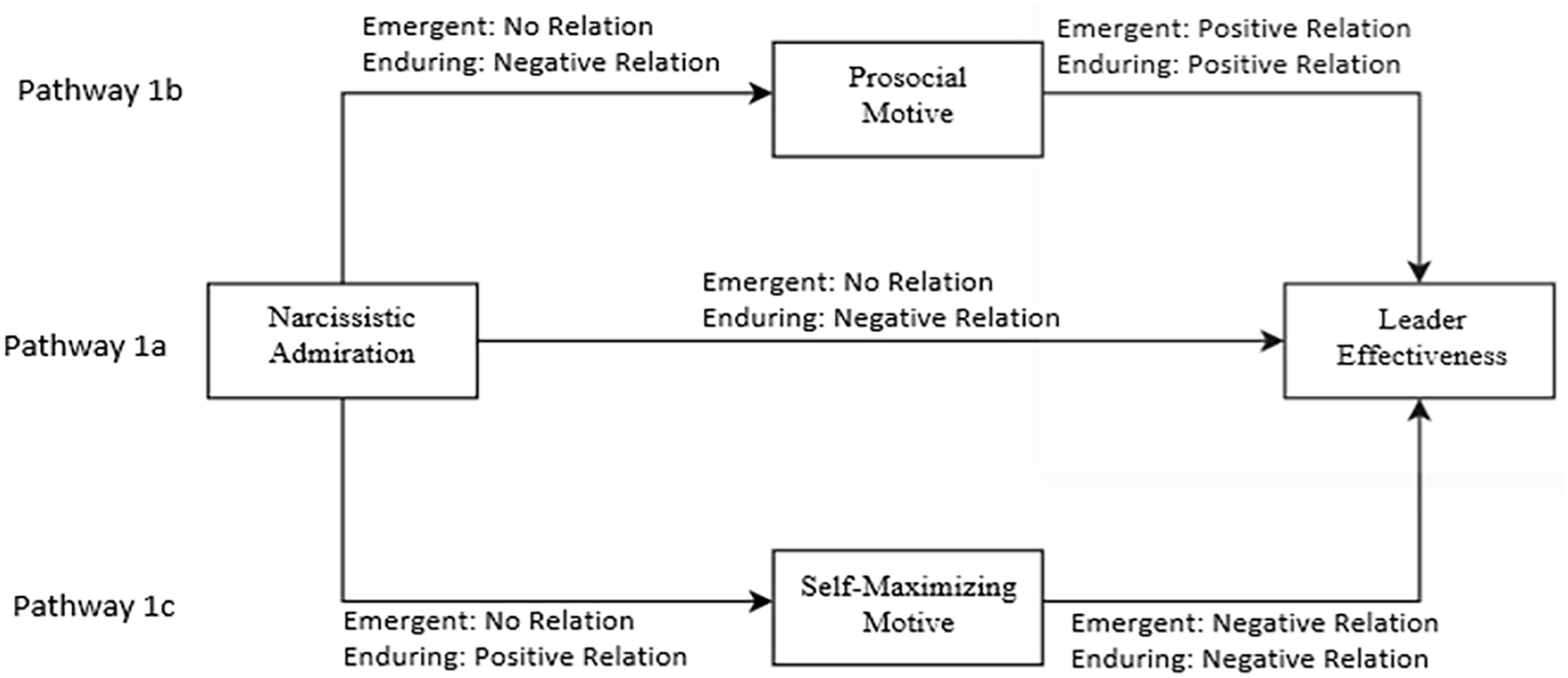
Path Model Which Includes Prosocial and Self-Maximizing Motives as Mediating the Relationship Between an Individual’s Narcissistic Admiration and Perceived Leader Effectiveness by Their Team.
As a departure from prior work that has focused on the qualities that propel narcissistic individuals to positions of leadership (i.e., social boldness; Grosz et al., 2020), the next part of our model focuses on the decline of narcissistic leaders in the eyes of their group.
Despite a strong orientation toward advancing their own interests (Eberly-Lewis & Coetzee, 2015), those higher in narcissistic admiration are socially savvy and thus may strategically help others (e.g., Flynn et al., 2006; Konrath et al., 2016), or at the very least, hide their self-interested tendencies. Thus, at the beginning of relationships, some of these individuals may be able to effectively fit in, and their self-focused qualities may not be readily apparent. Although this may seem to contradict the importance of interpersonal motives to leader effectiveness, narcissistic individuals obtain leadership positions through assertiveness and social boldness (Grijalva, Harms, et al., 2015), which does not hinge on being perceived as prosocial. It was hypothesized that:
We also hypothesized that:
However, narcissistic rivalry tends to be associated with qualities that are not conducive to leadership, such as aggression, devaluation of others, disagreeableness, and poor socialization (Back et al., 2013; Lange et al., 2016; McCrae & Costa, 2003). Drawing from the SPIN model, rivalry’s path to status attainment involves other derogation, which hinders status pursuit (Grapsas et al., 2020). As summarized in Figure 2, we hypothesized that:
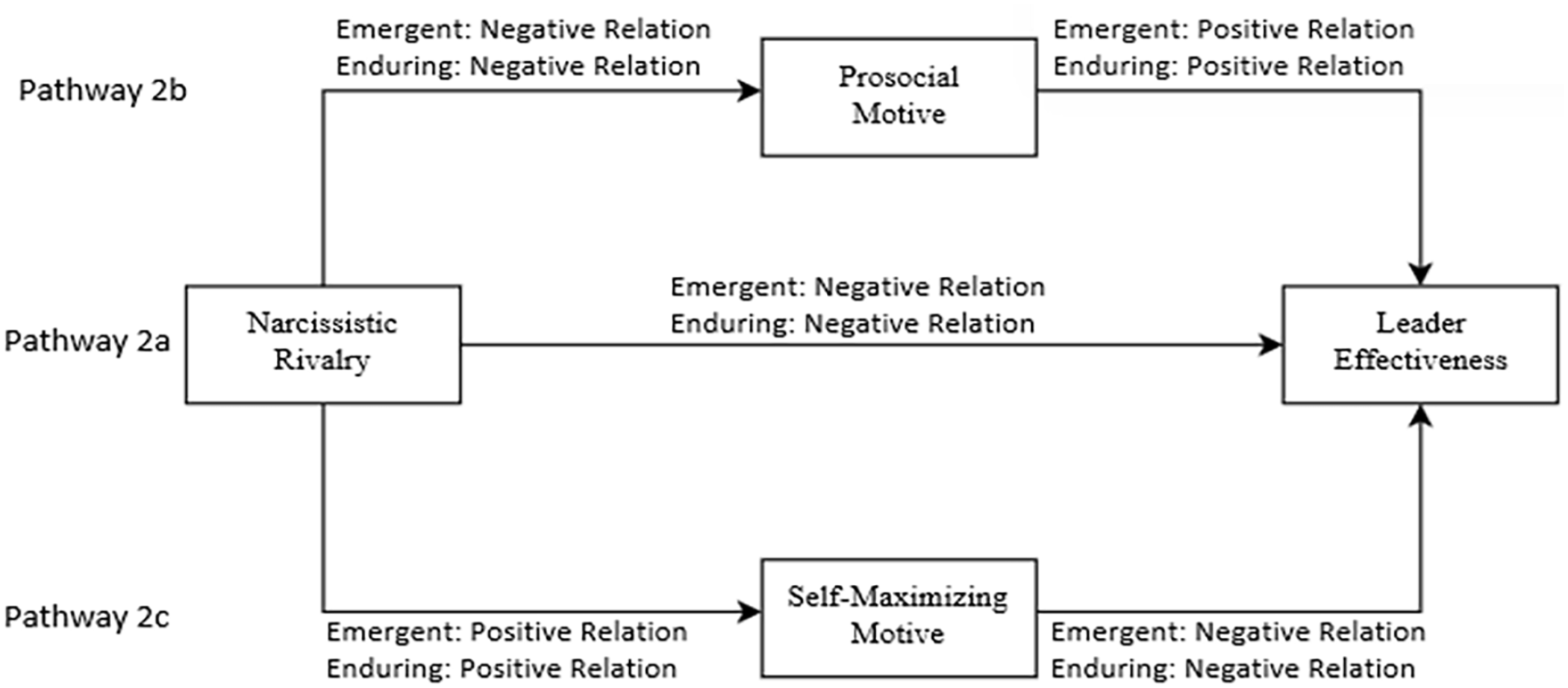
Path Model Which Includes Prosocial and Self-Maximizing Motives as Mediating the Relationship Between an Individual’s Narcissistic Rivalry and Perceived Leader Effectiveness by Their Team.
Considering this form of narcissism involves an other-derogating, combative approach to self-defense, those higher in narcissistic rivalry are unlikely to help others and solely focus on enhancing their own interests. Accordingly, during the initial stages of relationships, these individuals are unlikely to be perceived as prosocially motivated, and these perceptions will worsen over time. As such we hypothesized that:
We also hypothesized that:
Increasing attributions of self-maximizing motives relating to a decline in leader effectiveness will contribute to our understanding of why narcissistic rivalry is associated with increasingly negative perceptions of leader effectiveness over time.
Overview of Research
Despite the evidence of the short-lived success of narcissistic leaders, the reason for the fall has yet to be investigated. Accordingly, this study evaluated whether narcissistic admiration and rivalry had differential relationships to leader effectiveness over time. Moreover, gradual changes in motive perceptions were investigated as a mediator of this relation, as it may explain the downfall of narcissistic leaders. As different forms of narcissism have distinct characteristics and consequences, a multidimensional approach to studying narcissism may help reconcile the mixed findings within the literature (e.g., positive, negative, or no relation between narcissism and leader effectiveness; De Hoogh et al., 2013; Hoffman et al., 2013; Nevicka, Tan Velden, et al., 2011) by distinguishing which narcissistic qualities contribute to the deterioration of others’ perceptions. We studied these questions in the context of project design groups with no formal hierarchy because such a setting allows multiple individuals to have the opportunity to emerge as leaders and display leader behaviors. This study was pre-registered and deposited on the Open Science Framework: https://osf.io/ebwrf/.
Method
Sample
Members of project teams were recruited from an 8-month first-year engineering design course at a large Canadian university. As our sample size was constrained to the number of participants enrolled in the course, we were not able to target a specific sample size based on a power calculation. The following year, we conducted a second round of data collection with a different cohort due to a high attrition rate during the first year. For both years, participants completed measures in September (T1; N = 1,133, before groups were formed), January (T2; approximately two weeks after formation; N = 748), February (T3; N = 730), and March (T4; N = 837). The teams were largely composed of five to six members, had no formal hierarchy or leaders, and were tracked from formation to dissolution. During this time, the teams worked on a major design project with an external organizational partner. As this study involves peer-ratings, participants who provided ratings of others but were not rated by their teammates were not included. Given our interest in modeling change across time, and that we only had three time points of round-robin data, we retained ratings for those who had data for all four time points. Therefore, 472 individuals (Mage = 18.09; SDage = 1.13; 69.3% men; 43.6% White) in 119 teams (2-6 members) had a complete set of scores and were retained. The materials are deposited on the Open Science Framework: https://osf.io/.
Procedure and Measures
At time-point one, participants completed the Narcissistic Admiration and Rivalry Questionnaire (Back et al., 2013). The remaining measures occurred when participants were in newly formed teams. At time points 2, 3, and 4, all approximately 1 month apart, peer-rated variables (i.e., leader effectiveness, leader emergence, prosocial, self-maximizing) were assessed using a round robin design, which requires each group member to evaluate all other group members. This collection interval allows for the exploration of change-sensitive questions. As each time point included multiple surveys and round robin questionnaires, in addition to those mentioned, brief measures were used to avoid participant fatigue.
Narcissism
To assess narcissistic admiration and rivalry, participants completed the Narcissistic Admiration and Rivalry Questionnaire (Back et al., 2013) at time point 1. Both the admiration (α = .79) and rivalry (α = .82) subscales use a 6-point Likert-type scale ranging from 1 (not at all agree) to 6 (agree completely). Sample items from both scales include “I deserve to be seen as a great personality” (admiration) and “I react annoyed if another person steals the show from me” (rivalry).
Target Effect for Leader Effectiveness
To assess leader effectiveness, participants rated each of their teammates using a single-item measure of leadership effectiveness. To ensure uniform understanding of effective leadership, participants were told “effective leaders delegate tasks to others, show initiative, motivate team members, and unite members in accomplishing team goals,” a definition derived from leadership research (Yukl, 2012). Based on the definition, participants were asked to “please rate each team member’s effectiveness as a leader on the following scale relative to all other team members you have ever worked with on a team project” using the slider bar. The 101-point visual analogue scale ranges from 0 to 100 with anchors at 0 (far below average), 50 (average team member) and 100 (far above average). A relative percentile method was used due to the advantages of indicating a reference group and the increased validity over absolute methods (i.e., no reference indicated; Goffin & Olson, 2011).
Social relations modeling (SRM; Kenny, 1994) was used to extract the target effects of leader effectiveness. SRM decomposes the variance of peer ratings into perceiver variance, target variance, and relationship variance and enables users to extract scores that represent each of these variance components. Target effects are the general tendency for how an individual is perceived by other group members. As such, the extracted target effect is the average score a person receives from their group members after partitioning variance attributable to rater-specific effects (i.e., perceiver variance) and relationship-specific effects (i.e., relationship variance). For example, group members might tend to think Taylor is particularly prosocial, but Ralph is particularly self-maximizing. Only target effects were of interest as we wanted to focus on how an individual tends to be viewed by others, irrespective of other biasing factors (e.g., perceiver effects, relationship effects). When extracting target effects, reliability estimates are also calculated (time point 2 = .80; time point 3 = .80; time point 4 = .82). Target reliabilities can be understood as the consistency in the ratings of that person across ratings given by different team members, with higher reliabilities suggesting there is homogeneity in how group member’s rate a given team member in leader effectiveness and leader emergence. However, lower reliabilities, as seen below with interpersonal motive perceptions, suggest there is heterogeneity in how group members rate a given team member’s prosocial and self-maximizing motives (Bonito & Kenny, 2010). Due to the fact that these variables reflect attributions of interpersonal motives rather assessments of highly visible behavior, such as leader behavior, the lower target effect reliabilities are not wholly unexpected. Nevertheless, lower target effect reliabilities have consequences for detecting associations between perceived interpersonal motives and other variables.
Target Effect for Leader Emergence
We also assessed perceptions of leader emergence in the second year of data collection using a single item measure (“I view [teammate] as a leader of our team”) on a scale from 1 (not at all) to 7 (very much). Target effects were extracted using SRM, which were accompanied by reliabilities of .79 (time point 2), .81 (time point 3), and .80 (time point 4). Although this variable was not included in our preregistered analyses, it can help substantiate the claims of loss of leadership. As such, we conducted exploratory analyses to evaluate the degree to which narcissistic admiration and rivalry related to the intercept and slope of leader emergence, and if changes in leader emergence coincided with changes in perceptions of interpersonal motives.
Target Effect for Interpersonal Motives
To assess peer ratings of interpersonal motives (i.e., attributions of prosocial and self-maximizing motives), participants responded to two items from the Theories of Self-Relative-to-Other Behavior questionnaire (Gerbasi & Prentice, 2013) for each teammate. The items were slightly altered from a self-report to peer-report format and included team members’ names. One item was from the prosocial subscale (i.e., other-interest, “[team member name] is concerned with the overall best interest for everyone”) and one item was from the self-maximizing subscale (i.e., self-interest, “[team member name] only cares about their own interests”). 2 These items used a 7-point Likert-type scale ranging from 1 (strongly disagree) to 7 (strongly agree). Target effects were also extracted for prosocial and self-maximizing motives using SRM. As such, the target effect reliabilities were also calculated (prosocial motives: time point 2 = .69, time point 3 = .63, time point 4 = .70; self-maximizing motives: time point 2 = .51, time point 3 = .37, time point 4 = .45).
Analysis
We did not exclude outliers, as they may represent extreme but substantively interesting cases. As it pertains to missing data, although using maximum likelihood estimation would increase the sample size, there are risks associated with generating parameter estimates with fewer than three observations (Curran et al., 2010; Duncan & Duncan, 2009). To obtain accurate estimates, the missing data must be missing at random and the repeated measures must be continuous and have a normal distribution. With this in mind, we analyzed the data by including only those with responses at all three time points and by using maximum likelihood estimation (i.e., all responses retained). The results using maximum likelihood estimation are in the Supplemental File.
The intraclass correlations (ICCs) representing the amount of between-team variance relative to overall variance were investigated for leadership effectiveness, prosocial motives, and self-maximizing motives. The ICC(1)s revealed significant between-team variance in leadership effectiveness (time point 2 = 8.9%; time point 3 = 11.2%; time point 4 = 12.2%), prosocial motives (time point 2 = 44.3; time point 3 = 42.4%; time point 4 = 36.0%), and self-maximizing motives (time point 2 = 69.0%; time point 3 = 72.3%; time point 4 = 63.1%). These ICC(1)s are not unexpected. Prosocial and self-maximizing motives are based on perceptions of behavior, which is likely visible to all members of the group. As such, it is to be expected that team members may receive similar ratings. The non-independence due to team membership was addressed using cluster-robust standard errors in model estimation (described below). Processed data and Mplus code are deposited on the OSF.
Latent Growth Curve Models
Given the nested nature of the data, latent growth curve modeling was used to assess how narcissistic admiration and rivalry relate to leader effectiveness. Specifically, this study has three levels nested within each other: time (Level 1) nested within individuals (Level 2), and individuals nested within teams (Level 3). We assessed how narcissistic admiration and rivalry predict initial levels (i.e., intercept when time is at 0; January) and changes (i.e., slopes) in perceived leader effectiveness over time. The intercept and slope were modeled and denoted using factor loadings. For example, the initial target effect of leadership effectiveness is represented by the intercept and held constant using a fixed factor loading of 1. Subsequent assessments of leadership effectiveness were spaced approximately one month apart and thus we used factor loadings of equal intervals (e.g., 1, 2, 3). This approach to latent growth modeling contributes to addressing the non-independence due to the repeated measures (i.e., time) being nested within individuals. To further account for the non-independence due to the nested nature of individuals within teams, the cluster-robust standard errors option (i.e., TYPE = COMPLEX) was used in Mplus 8.7 (Muthén & Muthén, 2021). The inclusion of the MLR estimator (maximum likelihood estimation with standard errors) addresses non-normality. Self-ratings of narcissism were included as predictor variables and were grand mean centered to assess between-person differences among the entire sample.
Parallel Process Latent Growth Curve Models
Parallel process latent growth curve mediation models evaluated whether the relations of narcissistic admiration and rivalry with leader effectiveness are mediated by changes in prosocial and self-maximizing motives. To show how change in the mediator related to change in the dependent variable, the growth factor of each mediator was specified as a predictor of the growth factor of leader effectiveness (von Soest & Hagtvet, 2011). For the purposes of this research, mediation is inferred when the indirect effect is significant. The variance of the outcome variable (i.e., changes in perceptions of leader effectiveness) was constrained to zero to ease model estimation.
Results
An overview of the descriptive statistics including correlations, means, standard deviations, and ranges is displayed in Table 1. Due to how SRM extracts target effects, the range may extend beyond the full scale.
Descriptives and Zero-Order Correlations.
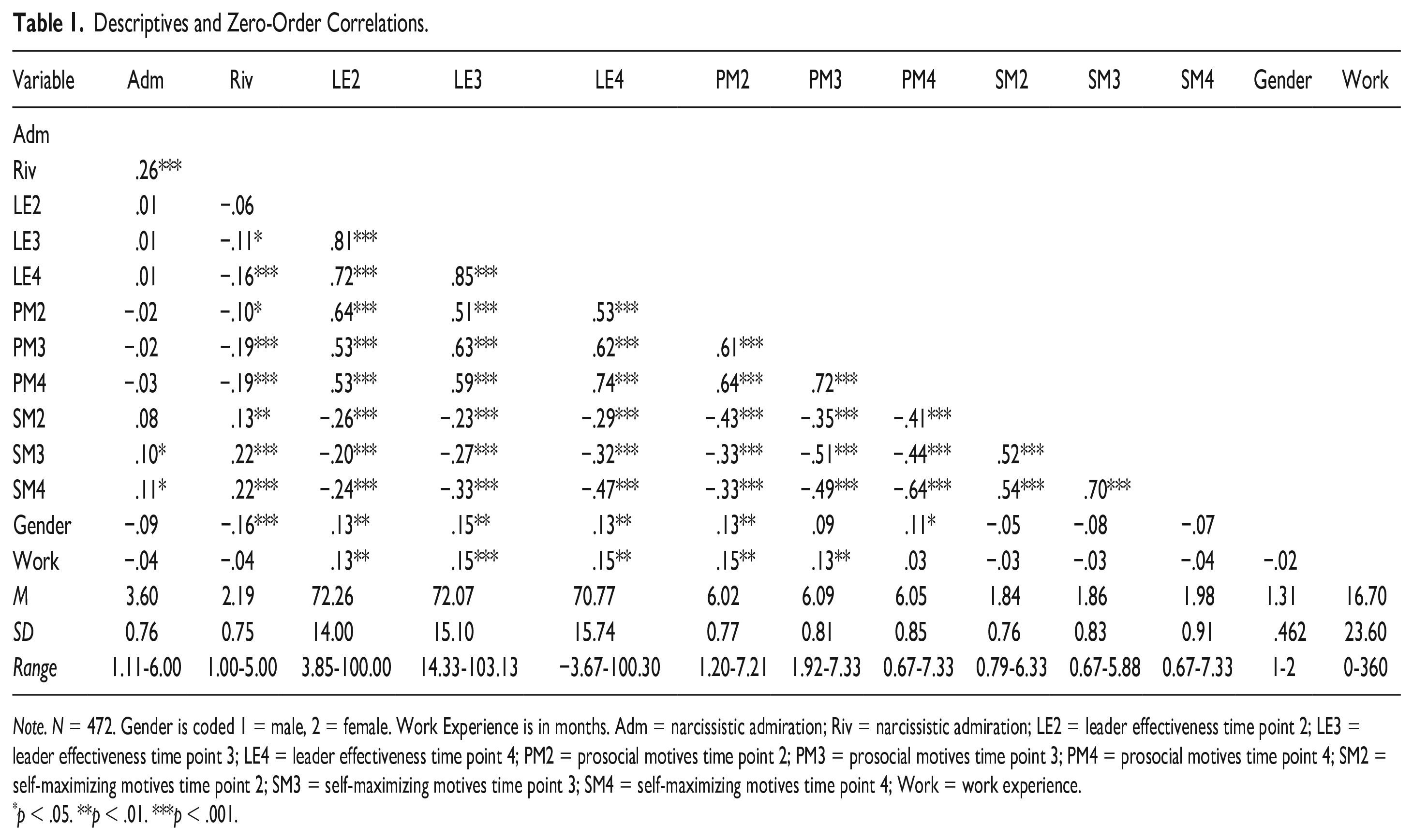
Note. N = 472. Gender is coded 1 = male, 2 = female. Work Experience is in months. Adm = narcissistic admiration; Riv = narcissistic admiration; LE2 = leader effectiveness time point 2; LE3 = leader effectiveness time point 3; LE4 = leader effectiveness time point 4; PM2 = prosocial motives time point 2; PM3 = prosocial motives time point 3; PM4 = prosocial motives time point 4; SM2 = self-maximizing motives time point 2; SM3 = self-maximizing motives time point 3; SM4 = self-maximizing motives time point 4; Work = work experience.
p < .05. **p < .01. ***p < .001.
Latent Growth Curve Models With Narcissism as a Predictor of Leadership Effectiveness
To answer whether narcissistic admiration and rivalry are linked to initial perceptions and changes in perceptions of leader effectiveness, we specified two models where narcissistic admiration (Model 1; Pathway 1a) and rivalry (Model 2; Pathway 2a) scores were used to predict the intercept (positive relation and negative relation, respectively) and slope (no relation and negative relation, respectively) of a latent growth curve of the leader effectiveness scores. As displayed in Table 2, narcissistic admiration was not significantly related to initial perceptions of leader effectiveness or changes in these perceptions over time, which did not support H1a. Narcissistic rivalry scores were not significantly related to initial perceptions of leader effectiveness, but narcissistic rivalry scores predicted a decrease in perceptions of leader effectiveness over time. Thus, H2a was partially supported.
Latent Growth Curve Analyses for Narcissistic Admiration and Rivalry Predicting Initial Perceptions and Changes in Leader Effectiveness.
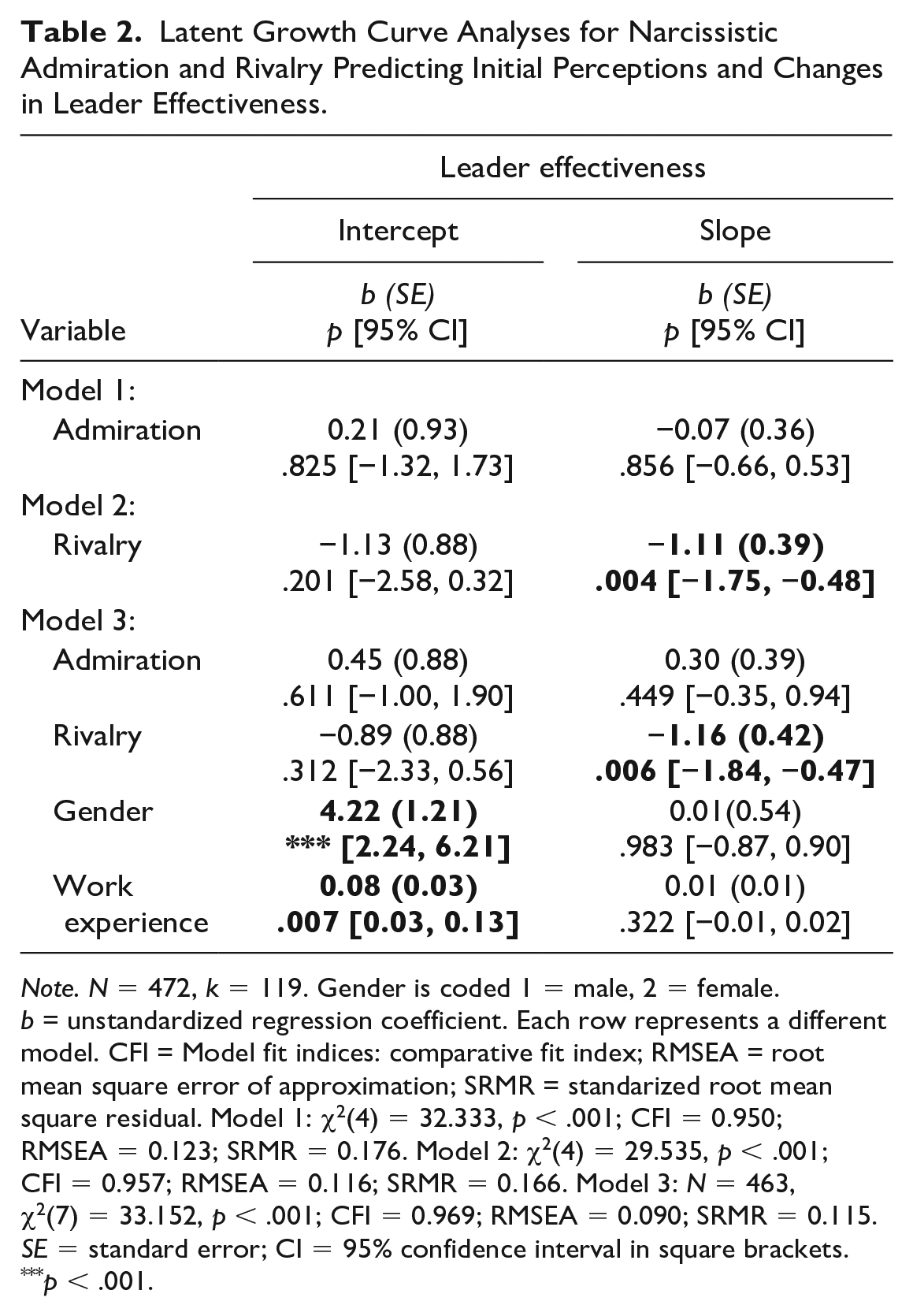
Note. N = 472, k = 119. Gender is coded 1 = male, 2 = female. b = unstandardized regression coefficient. Each row represents a different model. CFI = Model fit indices: comparative fit index; RMSEA = root mean square error of approximation; SRMR = standarized root mean square residual. Model 1: χ2(4) = 32.333, p < .001; CFI = 0.950; RMSEA = 0.123; SRMR = 0.176. Model 2: χ2(4) = 29.535, p < .001; CFI = 0.957; RMSEA = 0.116; SRMR = 0.166. Model 3: N = 463, χ2(7) = 33.152, p < .001; CFI = 0.969; RMSEA = 0.090; SRMR = 0.115. SE = standard error; CI = 95% confidence interval in square brackets.
p < .001.
We then conducted a more complex model controlling for covariates to test whether the results are solely due to narcissistic admiration or rivalry. We specified narcissistic admiration, narcissistic rivalry, gender, and work experience as simultaneous predictors of leader effectiveness, as seen in Model 3. These variables were selected as they may influence ratings of leader effectiveness. For example, those with more work experience may have more practice in leadership positions (e.g., Avery et al., 2003), as well, gender has the ability influence perceptions of leader effectiveness (e.g., Eagly et al., 1995). Men may also score higher in narcissism (Grijalva, Newman, et al., 2015). After the inclusion of the covariates, the results remained consistent. In addition, both gender and work experience positively predicted initial perceptions of leader effectiveness, but not changes in these perceptions over time. When re-analyzing the data using the maximum likelihood method and retaining all potential respondents, the results remained consistent.
Peer-Ratings of Interpersonal Motives as Mediators
In the next sets of models, we evaluated how each dimension of narcissism related to changes in leadership effectiveness over time, and whether changes in perceived prosocial motives or self-maximizing motives mediated these associations. Model 4 evaluated the indirect effect of narcissistic admiration on changes in leader effectiveness via changes in prosocial motives. As shown in Table 3, narcissistic admiration did not predict initial perceptions of leader effectiveness or prosocial motive. As well, narcissistic admiration did not significantly predict changes in attributions of prosocial motive. Consequently, the changes in attributions of prosocial motives did not mediate the relation between narcissistic admiration and changes in perceptions of leader effectiveness (i.e., indirect effect), failing to support H1b. However, changes in prosocial motives positively related to changes in perceptions of leader effectiveness, lending support to the final linkage in the proposed mediation model.
Parallel Process Latent Growth Curve Model Mediation Analyses Involving Perceived Prosocial Motives.
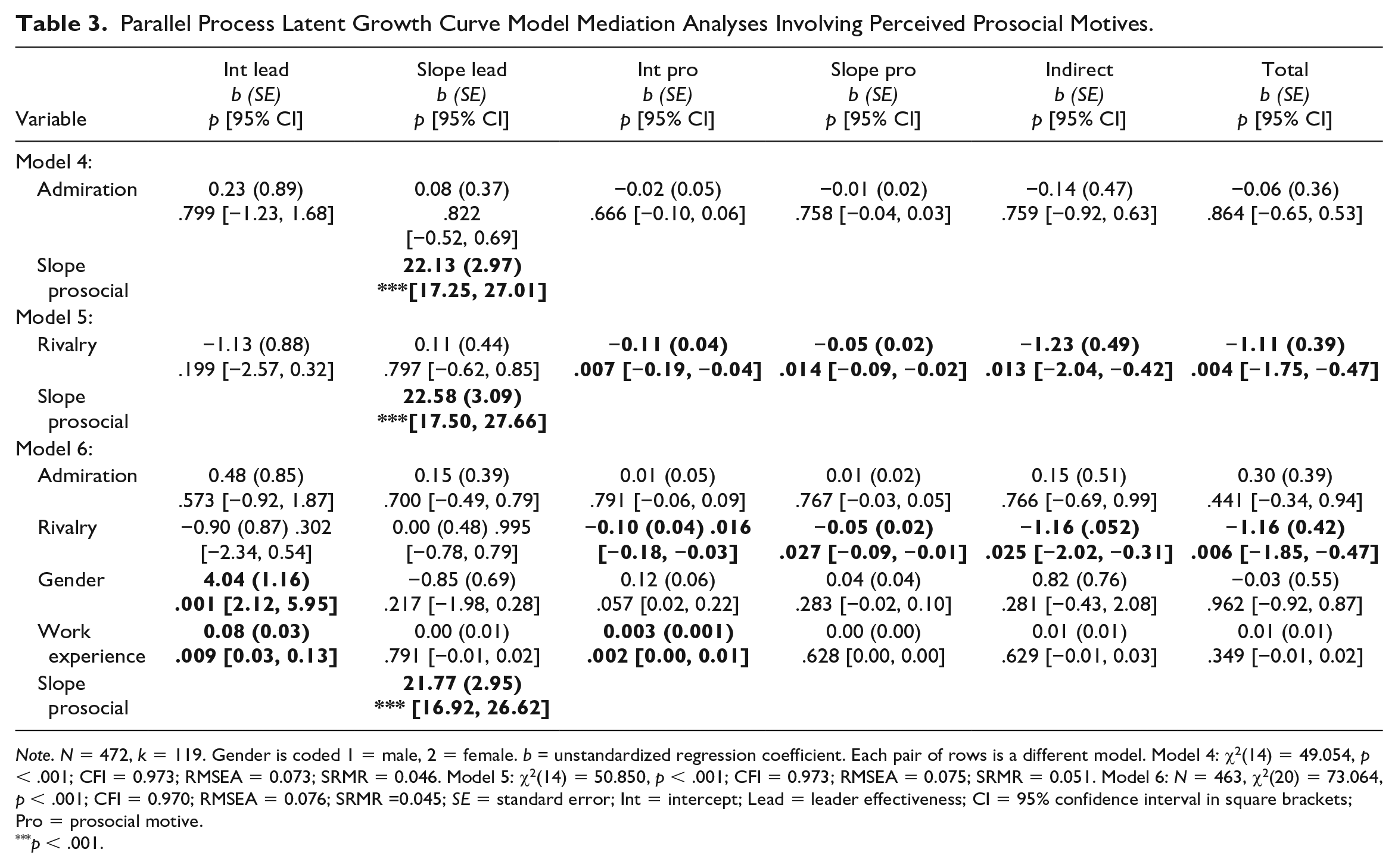
Note. N = 472, k = 119. Gender is coded 1 = male, 2 = female. b = unstandardized regression coefficient. Each pair of rows is a different model. Model 4: χ2(14) = 49.054, p < .001; CFI = 0.973; RMSEA = 0.073; SRMR = 0.046. Model 5: χ2(14) = 50.850, p < .001; CFI = 0.973; RMSEA = 0.075; SRMR = 0.051. Model 6: N = 463, χ2(20) = 73.064, p < .001; CFI = 0.970; RMSEA = 0.076; SRMR =0.045; SE = standard error; Int = intercept; Lead = leader effectiveness; CI = 95% confidence interval in square brackets; Pro = prosocial motive.
p < .001.
Model 5 evaluated the indirect effect of narcissistic rivalry on changes in leader effectiveness via changes in prosocial motives. As displayed in Table 3, narcissistic rivalry significantly predicted initial perceptions of prosocial motive, but not leader effectiveness. Narcissistic rivalry significantly predicted declines in attributions of prosocial motives, which, in turn, related to changes in perceptions of leader effectiveness. Furthermore, the indirect effect (i.e., the indirect path from narcissistic rivalry to leader effectiveness through prosocial motive) was significant, supporting H2b.
We then specified narcissistic admiration, narcissistic rivalry, gender, and work experience as simultaneous predictors, as seen in Model 6. The results remained consistent. In addition, both gender and work experience positively predicted initial perceptions of leader effectiveness, but not changes in these perceptions over time. Work experience also positively predicted initial perceptions of prosocial motive. When re-analyzing the data using the maximum likelihood method and retaining all potential respondents, the results remained consistent. The only notable difference in the more comprehensive model was that gender positively predicted initial levels of prosocial motives.
Model 7 evaluated the indirect effect of narcissistic admiration on changes in leader effectiveness via changes in self-maximizing motives. Table 4 shows that narcissistic admiration did not significantly predict initial perceptions of leader effectiveness or self-maximizing motive. Furthermore, narcissistic admiration did not significantly predict changes in attributions of self-maximizing motives, nor did self-maximizing motives mediate the relation between narcissistic admiration and leader effectiveness (i.e., indirect effect), failing to support H1c. However, changes in self-maximizing motives negatively related to changes in perceptions of leader effectiveness, lending support to the final linkage in the proposed mediation model.
Parallel Process Latent Growth Curve Model Mediation Analyses Involving Perceived Self-Maximizing Motives.
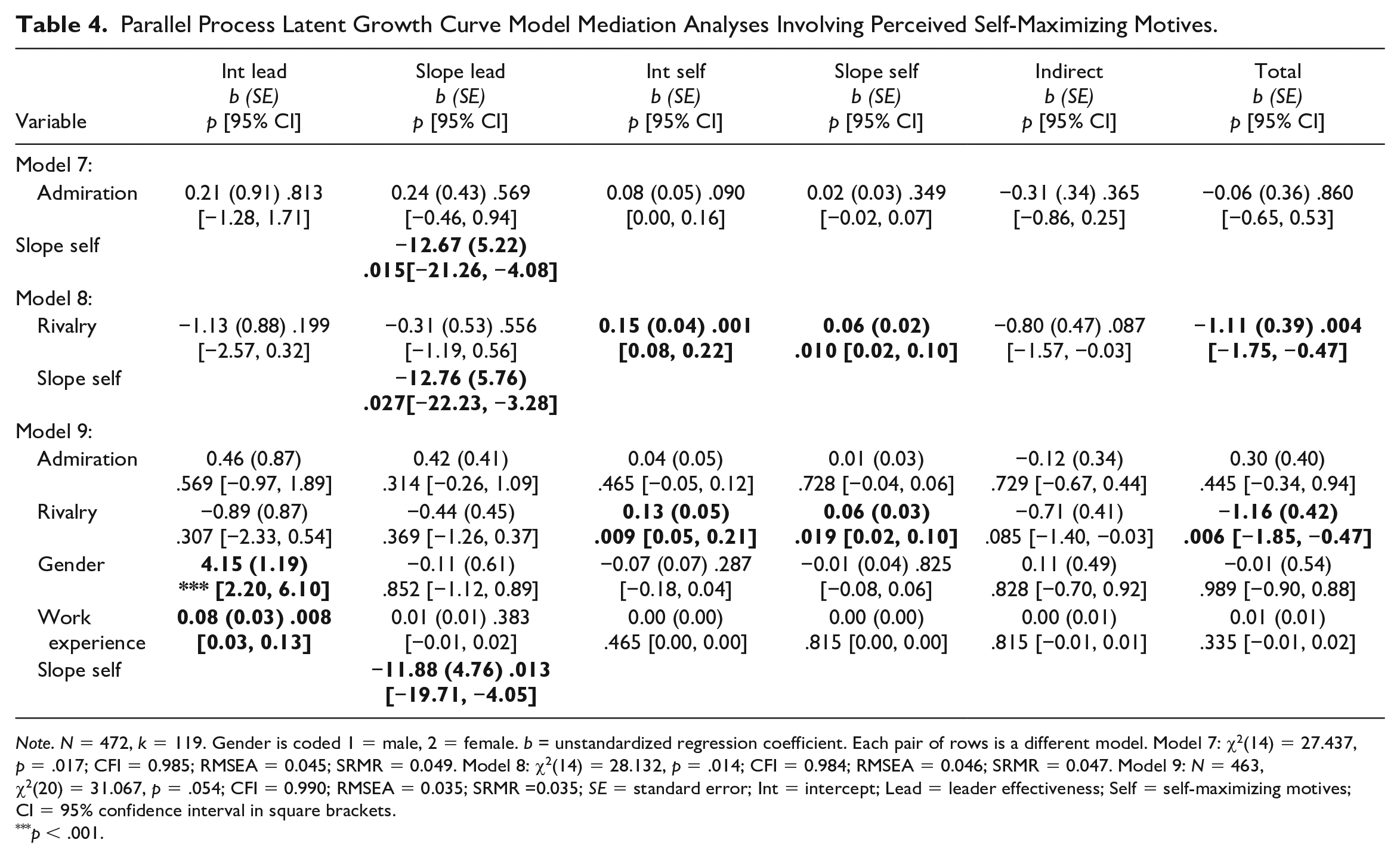
Note. N = 472, k = 119. Gender is coded 1 = male, 2 = female. b = unstandardized regression coefficient. Each pair of rows is a different model. Model 7: χ2(14) = 27.437, p = .017; CFI = 0.985; RMSEA = 0.045; SRMR = 0.049. Model 8: χ2(14) = 28.132, p = .014; CFI = 0.984; RMSEA = 0.046; SRMR = 0.047. Model 9: N = 463, χ2(20) = 31.067, p = .054; CFI = 0.990; RMSEA = 0.035; SRMR =0.035; SE = standard error; Int = intercept; Lead = leader effectiveness; Self = self-maximizing motives; CI = 95% confidence interval in square brackets.
p < .001.
Model 8 evaluated the indirect effect of narcissistic rivalry on changes in leader effectiveness via changes in self-maximizing motives. As reported in Table 4, narcissistic rivalry significantly predicted initial perceptions of self-maximizing motive but not leader effectiveness. As well, narcissistic rivalry positively predicted changes in attributions of self-maximizing motives, in turn, changes in self-maximizing motives negatively related to changes in perceptions of leader effectiveness. However, the indirect effect (i.e., the indirect path from narcissistic rivalry to leader effectiveness through self-maximizing motives) was not significant. Thus, H2c is partially supported.
We then specified narcissistic admiration, narcissistic rivalry, gender, and work experience as simultaneous predictors, as seen in Model 9. The results remained consistent. In addition, both gender and work experience positively predicted initial perceptions of leader effectiveness, but not changes in these perceptions over time. When re-analyzing the data using the maximum likelihood method and retaining all potential respondents, there were some noteworthy changes to the results. For all three models (i.e., Model 7-9), the slope of self-maximization motives no longer significantly related to the slope of leader effectiveness (p = .063, p = .090, p = .051, respectively), but the confidence interval did not include zero ([−23.30, −1.43], [−24.65, −0.37], [−21.88, −1.86], respectively). Furthermore, the same situation arose in the comprehensive model regarding the relationship between narcissistic rivalry and the slope of self-maximizing motives.
Exploratory Analyses: Leader Emergence
We conducted the same analyses but used leader emergence as the outcome measure. As with leader effectiveness, narcissistic admiration did not significantly predict the intercept or slope of leader emergence. In addition, this relationship was not mediated by prosocial or self-maximizing motives. Although narcissistic rivalry did not significantly predict the intercept of leader emergence, it was negatively related to changes leader emergence over time (b = −0.07, SE = 0.03, p = .31). Furthermore, there was a negative indirect effect of narcissistic rivalry on leader emergence via prosocial motives, such that declines in perceptions of prosocial motives coincided with declines in leader emergence (see Table 5). However, there was no significant indirect effect for self-maximizing motives. As with leader effectiveness, in each model, the changes in interpersonal motive perceptions are significantly related to changes in leader emergence perceptions. For all tables corresponding to these analyses, please refer to the Supplemental File.
Parallel Process Latent Growth Curve Model Mediation Analyses Involving Perceived Prosocial Motives.
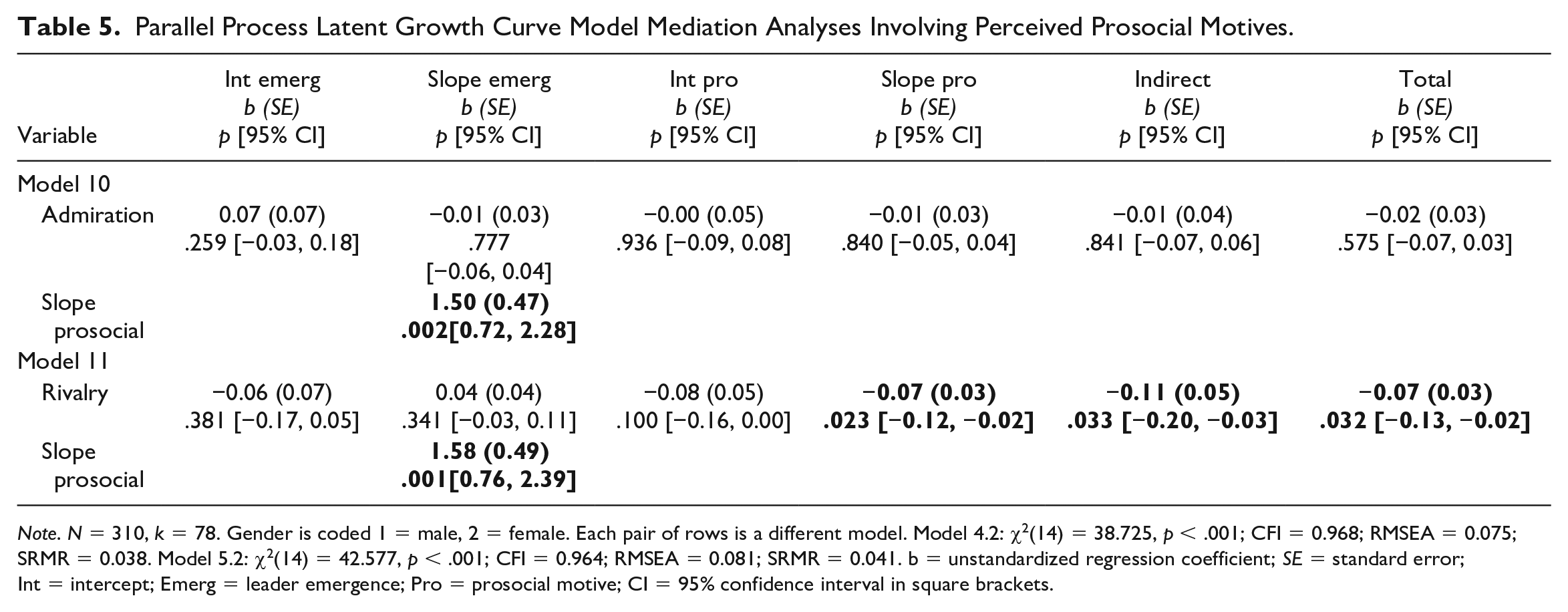
Note. N = 310, k = 78. Gender is coded 1 = male, 2 = female. Each pair of rows is a different model. Model 4.2: χ2(14) = 38.725, p < .001; CFI = 0.968; RMSEA = 0.075; SRMR = 0.038. Model 5.2: χ2(14) = 42.577, p < .001; CFI = 0.964; RMSEA = 0.081; SRMR = 0.041. b = unstandardized regression coefficient; SE = standard error; Int = intercept; Emerg = leader emergence; Pro = prosocial motive; CI = 95% confidence interval in square brackets.
Discussion
Although narcissists obtain leadership positions, research suggests their effectiveness in such positions dissipates over time (Ong et al., 2016; Sedikides & Campbell, 2017). As empirical research examining why this happens has been limited, we built on existing research by testing a model using motive perceptions to examine why narcissistic leaders fall from grace. Drawing from the interdependence perspective (Balliet et al., 2011; Balliet & Van Lange, 2013; Kelley & Thibaut, 1978) and a dual-process model of narcissism (Back et al., 2013), the current study examined how perceived interpersonal motives influence leadership trajectories. Using a longitudinal design that tracked project teams for the duration of their life cycle, our findings suggest that narcissistic rivalry and motive perceptions are key variables for understanding the downfall of leaders.
An important insight is that attribution of self-maximizing and prosocial motives is a vital component to understanding why individuals lose leadership. Using a longitudinal approach, this study documented a close connection between benevolent, prosocial motives and leader effectiveness. This adds to the applicability of an interdependence perspective broadly, and the importance of perceived benevolent motives of others specifically (Balliet et al., 2011; Balliet & Van Lange, 2013). People not only scrutinize the observable behaviors of leaders, but their interpretations of such behavior are shaped by whether they believe such actions are guided by self-interest and other-regarding motives. Using parallel process latent growth curve modeling, we can see that once group members begin to attribute self-serving motives to a leader’s behavior (i.e., increasing attributions of self-maximization motives and decreasing attributions of prosociality), there are concurrent declines in perceived leader effectiveness. As such, interpersonal motive perceptions and perceived leader effectiveness go hand in hand. Connecting this to inherently social situations can shed light on why shifts in leaderships occur. The current research adds clarity to why narcissists, who so easily obtain leadership (e.g., Ong et al., 2016; Sedikides & Campbell, 2017), also lose it. More generally, the results further unpack the relationship between interpersonal motives and leadership, showing the importance of how people evaluate the motives of others.
Narcissistic admiration and rivalry demonstrated differing growth trajectories in others’ perceptions of prosocial motives, self-maximizing motives, and leader effectiveness. As group members became better acquainted, individuals higher in narcissistic rivalry (but not admiration) were seen as increasingly oriented toward advancing their personal interests (i.e., weaker attributions of prosocial motives, stronger attributions of self-maximizing motives) and ineffective as leaders. Although we expected narcissistic rivalry to predict initial perceptions and changes in perceptions of leader effectiveness, we only found support for the association of rivalry predicting a decrease in leader effectiveness over time. As well, we found that changes in perceptions of prosocial motives mediated the relationship between narcissistic rivalry and changes in perceptions of leader effectiveness. Adding to research showing that narcissists lose leadership over time (e.g., Grijalva, Harms, et al., 2015; Nevicka et al., 2018; Ong et al., 2016), these results indicate the downfall is partly due to rivalry and its arrogant-aggressive behaviors resulting in negative interpersonal motives.
We observed minimal support for our predictions specific to narcissistic admiration. Narcissistic admiration did not predict changes in leader effectiveness, which is counter to what would be anticipated based on previous work on the link between grandiose narcissism and leadership (e.g., Nevicka et al., 2018; Ong et al., 2016). Furthermore, narcissistic admiration not predicting leader emergence also is contradictory to existing literature (e.g., Grijalva, Harms, et al., 2015). However, this sample may differ in combinations of respective levels of admiration and rivalry than previous research. For example, those higher in admiration but lower in rivalry may account for the positive impact of grandiose narcissism (e.g., social potency, leadership; Back et al., 2013). In addition, narcissistic admiration was not systematically related to initial attributions of prosocial motive, alluding to the notion that not all narcissists necessarily behave in a non-prosocial manner, given the correct conditions. Narcissistic admiration focusing on self-enhancement is something that can be accomplished without necessarily devaluing others and is not innately prosocial or non-prosocial. This could potentially contribute to the null findings for narcissistic admiration. Overall, this suggests that narcissistic admiration and associated behaviors are less relevant to leader effectiveness and perceived interpersonal motives than narcissistic rivalry.
Although we found mixed support for our predictions using the narcissistic admiration and rivalry concept (Back et al., 2013), parsing these distinct processes adds clarity to the previous mixed findings regarding narcissism and leader effectiveness. The negative social consequences of narcissistic rivalry became increasingly apparent as teammates spend more time together. As narcissistic rivalry is associated with behaving in an increasingly arrogant-aggressive manner (Back et al., 2013) and are rated increasingly more negative by others over time (Leckelt et al., 2015), these behaviors may be contributing to these individuals being perceived as more self-maximizing, less prosocial, and ineffective as leaders. These results indicate that despite previous studies producing conflicting results (e.g., De Hoogh et al., 2013; Hoffman et al., 2013; Nevicka, Tan Velden, et al., 2011), it is possible that the studies were tapping into different types of narcissism. These results also provide support to the NARC by showing that narcissistic admiration and rivalry differentially related to peer-rated leader effectiveness, prosocial motive, and self-maximizing motive. In addition, although the NARC suggests rivalry is likely to result in negative interpersonal perceptions, the current study zeros in on a particular aspect that is concentrating on the confidence in others’ motives. The current study suggests narcissistic rivalry results in decreases in perceived leader effectiveness because they are viewed as having low, if any, concern for others. Treating narcissism as a unidimensional construct combines admiration and rivalry and their distinct intra- and inter-personal processes and may obscure these divergent associations. Separating the agentic (narcissistic admiration) and antagonistic (narcissistic rivalry) aspects of narcissism adds clarity to when narcissism may be negatively or positively related to leader effectiveness, prosocial motives, and self-maximizing motives.
This study also lends support to the SPIN model (Grapsas et al., 2020) through examining narcissistic admiration and rivalry’s relationship to leadership effectiveness. Whereas the SPIN model suggests that narcissistic admiration will facilitate status pursuit and rivalry will hinder it, this study further outlines this relationship. Narcissistic rivalry was linked to declines in leadership effectiveness and emergence across time, which may serve as a proxy for their loss of status in the group. This suggests that, in addition to the incessant pursual of status, individuals higher in rivalry may have issues gaining status as they are also viewed as not being concerned about the group or collectively focused (i.e., not prosocial). Although the absence of significant links between admiration and leader effectiveness may seem to conflict with the SPIN model, there is an important difference between competitive and affiliative settings, which may explain the non-significant effects of admiration. The egalitarian context of the current teams may not have been conducive to the admiration pathway, as there was minimal competition for intra-team resources, and narcissists might be more effective at gaining status when there is the potential for inequity in resource distribution (Ronay et al., 2020).
Strengths, Limitations, and Future Directions
Organizations should be aware of the real possibility of narcissists rising to leadership positions; however, their fall from leadership is equally as important. To investigate the process of the fall from leadership, the current study followed ecologically valid teams (i.e., teams working on an interdependent task over a period of months with tangible outcomes) from formation to dissolution with assessments of both leader effectiveness and emergence. However, the teams were composed of university students. Examining a specific demographic does not allow for smooth or broad generalizations to the rest of the population. Despite this shortcoming, other models draw attention to the fallout that is likely to occur as narcissists’ suitability of leadership begins to be questioned by others. As outlined in the energy clash model (Sedikides & Campbell, 2017), as others become more aware of the narcissistic leaders’ intentions, tensions between subordinates and the leader may exacerbate narcissists’ negative interpersonal behavior. Antipathy toward a narcissistic leader results in conflict, and the leader is likely to blame others for their failure (Sedikides & Campbell, 2017), which may negatively impact leader, employee, and organizational performance. For example, when a narcissistic leader experiences dissent, insubordination, or doubt from their followers, they can be relentless, publicly humiliating those individuals (Maccoby, 2000). Narcissistic leaders may experience more of those threatening behaviors from all of those around them, along with rejection, as they transition out of leadership positions, causing them to lash out in all directions. Future research should examine a variety of teams in differing work sectors and hierarchy types to further understand the role perceptions of interpersonal motives play in the downfall of leaders.
Beyond providing information on why narcissists fall from leadership, this study provides an important contribution to what makes effective leaders. The results of the study indicate that those who are viewed to be prosocially motivated, are seen as effective leaders. Making it clear that one’s actions are guided by the interest of the group (rather than self) is crucial to securing and maintaining support from subordinates. Organizations need to ensure individuals taking on leadership positions are prosocial. As such, organizations can train and encourage their leaders to be more prosocial and, by extension, how effective they are viewed as leaders. To accomplish this, organizations can include prosociality components to their leadership training. It may be beneficial for leaders (and employees in general) to undergo impression management training to better convey these qualities. For example, decision-making training to enhance detection and sensitivity toward the option that best suits the collective. Leaders can also be made aware of the benefits of prosocial behavior and rewarded for such behavior as a method to enhance their prosociality. However, these insights should be qualified by the fact that there was no formal hierarchy in the teams studied. This study evaluated perceived leader effectiveness of each team member rather than the effectiveness of a formally appointed leader.
As the teams in this study were self-managed, these findings may not be seamlessly generalizable to teams with formal leadership structures. On one hand, organizational structures that promote the equality of resource distribution may favor prestige-based leadership (Ronay et al., 2020). When a leader’s outcome is tied to the collective benefits experienced by the group, organizations and subordinates may benefit from the social boldness of a narcissistic leader. However, narcissists may find it difficult to rise to the top in such contexts. On the other hand, organizational structures that engender resource inequity may favor dominant leaders (Ronay et al., 2020). As narcissism is associated with a dominant leadership style (Back et al., 2013; Ong et al., 2021), the self-maximizing nature of narcissistic leadership may be more prevalent under certain organizational conditions (e.g., exogenous leadership selection, high levels of professional mobility, centralized leadership structures, high pay inequity, Ronay et al., 2020). Organizations need to be cognizant of how their structure may determine which behaviors are beneficial to obtaining leadership.
Parallel process latent growth curve modeling provided insight into how changes in perceived interpersonal motives coincided with changes in leader effectiveness and emergence. However, the absence of lagged effects between the mediators (self-maximizing and prosocial motives) and outcomes (leader effectiveness and emergence) hinders the strength of causal inference. According to the perceived interdependent motives of others principle, there is likely a very brief time lag between perceiving a leader as preferentially oriented toward advancing their own interests and leadership perceptions, which we could not model with the current study design. Future research may expand upon and confirm the current findings by collecting data via an intensive longitudinal design that are more amenable to capturing these lagged effects or manipulating perceived interpersonal motives in experimental settings. The nature of the peer-report leader effectiveness measure should also be addressed as a potential limitation of the study design. Leader effectiveness was measured using a single item. Although we used the relative percentile method, extracted target effects from multiple raters, and defined leadership effectiveness for participants in a way that coheres with existing definitions (e.g., Yukl, 2012), future research could benefit from corroborating these findings with alternative assessments of leadership effectiveness. Notably, researchers could address common method variance concerns by relating perceived interpersonal motives to behavioral markers of leadership, such as visual attention (Cheng et al., 2022).
Future research should consider the opportunities surrounding narcissistic admiration and rivalry. This study did not explore the relative levels of narcissistic admiration and rivalry. Research has shown that various combinations of narcissistic admiration and rivalry can occur within individuals (Wetzel et al., 2016). Comparing these profile combinations would show how varying levels of narcissistic admiration and rivalry influence an individual’s behavior and how others view them. Future research can examine how these profiles influence leadership trajectories. Finally, this study used narcissistic admiration and rivalry as time-invariant predictors. It may be worthwhile to evaluate whether changes in narcissistic admiration and rivalry levels across time influences leadership trajectories.
A final avenue for future research is to go beyond solely target effects, which provide insight regarding an individual’s reputation for leadership in a group. Dyadic relations could illuminate how narcissistic individuals view each other. Perhaps evaluating whether narcissists view their teammates as effective leaders, prosocial, or self-maximizing. For example, are narcissistic individuals more accepting of narcissistic leaders and view them as more effective due to perceived similarity? This may be a particularly viable avenue for future research as narcissistic individuals tend to be more tolerant and accepting of other narcissistic individuals (Hart & Adams, 2014).
Conclusion
In the present research, we examined whether perceived prosocial and self-maximizing motives explain the downfall of narcissistic leaders. Narcissistic admiration did not have a significant relation to initial perceptions or changes in perceptions of leader effectiveness, prosocial motives, or self-maximizing motives. However, narcissistic rivalry did relate to changes in perceptions of leader effectiveness and self-maximizing motives. As well, changes in perceptions of prosocial motives mediated the relationship between narcissistic rivalry and changes in perceptions of leader effectiveness. The results of this study highlight the importance of interpersonal motives in the downfall of leaders, and the contribution of rivalrous behaviors to the deterioration of relationships.
Supplemental Material
sj-docx-1-psp-10.1177_01461672231163645 – Supplemental material for Putting Oneself Ahead of the Group: The Liability of Narcissistic Leadership
Supplemental material, sj-docx-1-psp-10.1177_01461672231163645 for Putting Oneself Ahead of the Group: The Liability of Narcissistic Leadership by Jennifer Lynch and Alex J. Benson in Personality and Social Psychology Bulletin
Footnotes
Declaration of Conflicting Interests
The author(s) declared no potential conflicts of interest with respect to the research, authorship, and/or publication of this article.
Funding
The author(s) disclosed receipt of the following financial support for the research, authorship, and/or publication of this article: This paper draws on research supported by the Social Sciences and Humanities Research Council.

Data Availability Statement
Supplemental Material
Supplemental material is available online with this article.
Notes
References
Supplementary Material
Please find the following supplemental material available below.
For Open Access articles published under a Creative Commons License, all supplemental material carries the same license as the article it is associated with.
For non-Open Access articles published, all supplemental material carries a non-exclusive license, and permission requests for re-use of supplemental material or any part of supplemental material shall be sent directly to the copyright owner as specified in the copyright notice associated with the article.
