



Abstract
Level of evidence: 5 – expert opinion
In the pre-antibiotic era, there were few options for the nonoperative treatment of infectious diseases of the paranasal sinuses. The common practice of nasal douche cleared secretions from the nasal cavities, but delivered negligible quantities of irrigants to the sinuses themselves. Skillful rhinologists could successfully cannulate the maxillary and sphenoid ostia, but had no similar method of treatment for the ethmoid or frontal sinuses. Antral puncture was considered excessive invasive and risked serious complications in the office setting.
To address these concerns, a young assistant professor of otolaryngology named Arthur W. Proetz began a series of experiments in laboratories at Washington University in St Louis. His goal was overcome the resistance of narrow sinus openings and to dilute and then aspirate the sinus contents – this he called the principle of displacement. The procedure relied on the “elasticity of the air contained in the sinus cavities, small portions of which can be displaced by suction applied to the nostril and replaced by droplets of any fluid.” 1 First with test tubes and then with human cadaver heads and radio-opaque oils, Proetz showed that fluids could be introduced into the sinuses both to diagnose disease radiographically and to treat the identified infection. Moving to human subjects, he described the method as follows (Figure 1):
The patient is placed in the supine position, with his head projecting beyond the top of the treatment chair or table.
The fluid to be introduced is now allowed to flow into the nostrils from a syringe and comes to rest in this pocket, submerging the ostia of the posterior sinuses.
Gentle suction (not more than 3 pounds) is now applied intermittently to 1 nostril, with the other being closed, the palate, and tongue being held in the “K” position to seal the pharynx. When the suction is first applied, a bubble of air escapes from the sinus through its upturned ostium. On releasing the suction, this air is replaced by a drop of the overlying fluid. 2
At first, Proetz preferred to irrigate with physiologic saline. He then experimented with a variety of antiseptics including Merthiolate, Neosilvol (colloid silver), Dobell’s solution (sodium borate, sodium bicarbonate, phenol, and glycerol) – most caused mucosal reactions and headaches. In the end, saline with 0.25% ephedrine became his diluent of choice.
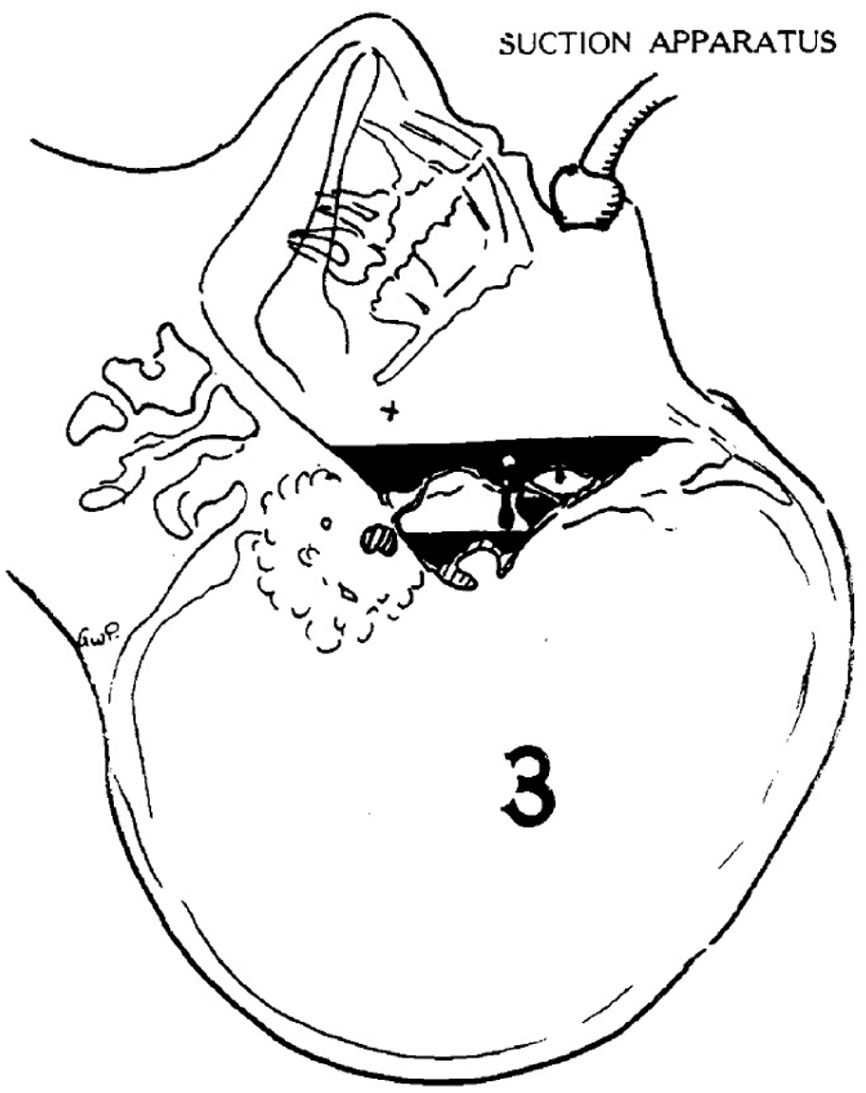
Displacement step 3 – negative pressure is intermittently applied. Note oil penetrating the sphenoid sinus, producing an air-fluid level. 2
Proetz presented his experimental work and a clinical series of 30 patients at the 1926 Triological annual meeting. He proclaimed “the mere dilution of the retained secretions and the clearing of the ostia have resulted in great improvement in many cases. The membrane has been enabled to rid itself of the infection without further treatment.” Radiographs showing the penetration of radio-opaque oils into each of the paranasal sinuses supported the displacement theory. Further, Proetz demonstrated that oil contrast could outline fluid levels within individual cells and enhance the visualization of soft tissue lesions not apparent on plain radiographs 3 (Figures 2 and 3).
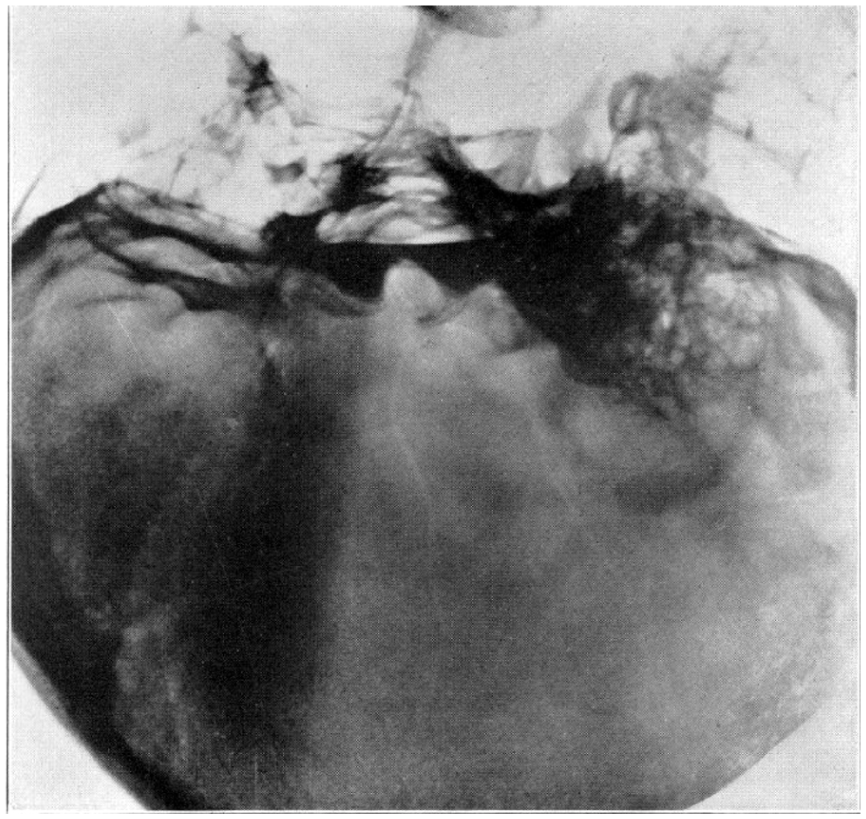
Case 13 – after the application of intermittent suction. Oil is seen in the sphenoid and posterior ethmoid cells (from Proetz 2 ).
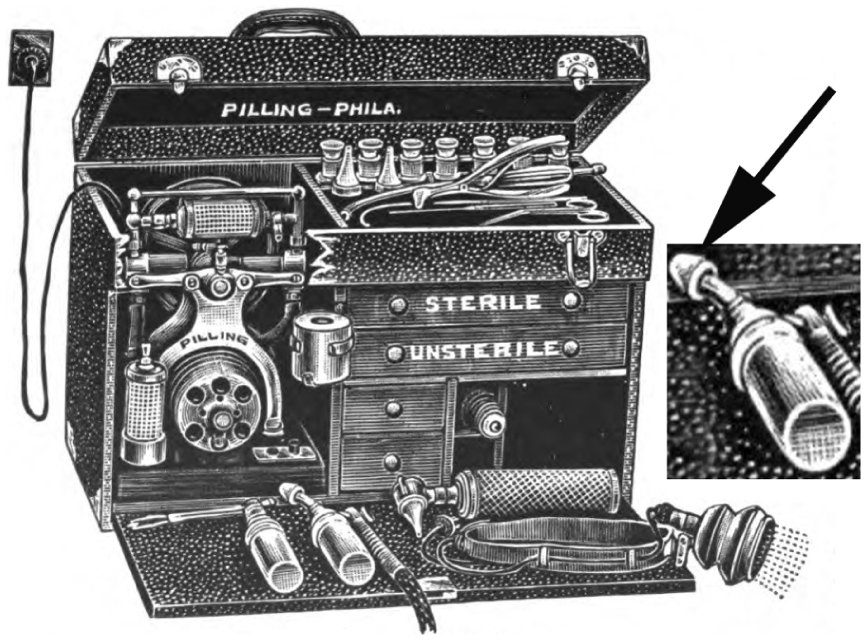
Robert M. Lukens portable nose, throat, and ear treatment case circa 1932. Arrow in inset shows Sorensen nasal suction tip and collection chamber (modified from The George P. Pilling and Son Company 4 ).
Proetz’s thesis on displacement, later published as a textbook, 1 was awarded the Casselberry prize of the American Laryngological Society in 1931. Displacement, popularly called “Proetzing,” became a rhinological rage. Pumps fitted with a Sorensen nasal suction tip and chamber (Figure 3) became standard in otolaryngologists’ offices. 4
Arthur Proetz went on to become a full professor at Washington University and the longtime editor-in-chief of the Annals of Otology, Rhinology, and Laryngology. 5 With the evolution of effective antibiotics and endoscopic sinus surgery, his displacement technique gradually fell from favor in the United States, but retained adherents, especially in Europe.6,7 More recently, an appreciation of the role of bacterial biofilms in rhinosinusitis has led to renewed interest in mechanical cleansing of the sinuses.
Footnotes

Funding
The authors received no financial support for the research, authorship, and/or publication of this article.
Declaration of Conflicting Interests
The authors declared no potential conflicts of interest with respect to the research, authorship, and/or publication of this article.