




Abstract
Objective:
To explore the acceptability and influencing factors of an Internet-based Tinnitus Multivariate Integrated Sound Therapy (iT-MIST). The individually tailored sound therapy used narrowband noise centered on the patient’s tinnitus frequency in combination with natural sounds and relaxing music.
Design:
Patients with tinnitus were given a 1-week trial of iT-MIST. Semistructured interviews were then carried out and a thematic analysis used to analyze, identify, organize, and report factors discovered in the data.
Study Sample:
Semistructured interviews were carried out with 11 participants, 2 women and 9 men, mean age 39.82 years.
Results:
The first theme identified from patient interview analysis was their motivation to undertake and expectations of iT-MIST. Nearly half of the participants indicated that advice from the physician was considered very important and professional. Benefits acknowledged by most participants from their iT-MIST experience were accessibility, convenience, time- and cost-effectiveness, and emotional benefit. However, a few participants with poor understanding of tinnitus and iT-MIST showed a negative acceptability with doubtful thoughts and complaints about technical issues such as being easily interrupted by messages and phone calls.
Conclusion:
Patients with tinnitus in this study were not universally accepting of the iT-MIST therapy. Concerns about their tinnitus and ability to comply with doctor’s recommendations were the main influencing factors. Attitude or willingness to explore new therapies facilitated its use. Emotional benefits, for example, relaxation and comfort, were seen to sustain motivation, while doubtful thoughts and technical problems negatively affected acceptability.
Introduction
Tinnitus is a perception of sound with the absence of external sound stimulation. 1 It is generally suggested to result from peripheral damage leading to altered auditory system input to the cortex.2,3 Epidemiological studies indicate a prevalence of approximately 8% to 30%, 4 probably increasing due to activities such as high headphone usage. 5 Although there has been no large-scale epidemiological study in China, a cross-sectional study conducted in Guangdong Province suggested that around 10.4% of the population have experienced tinnitus. 6
It has been noted that patients with tinnitus often experience a wide range of problems including tinnitus associated with hearing difficulties, adverse effects on lifestyle and general health, together with emotional difficulties. 7 Furthermore, Tyler and Baker 8 indicated that experiences in tinnitus sufferers can be different. Some adapt to it but for some tinnitus can severely affect their daily life such as, for example, insomnia and difficulties in concentration. 9 In addition, according to the psychological model proposed by Tyler et al, 10 problems such as annoyance and anxiety could be experienced by some which is likely to depend on the tinnitus characteristics and the psychological makeup of the individual. This also suggests that experiences in tinnitus sufferers are various and they might benefit from different treatments.
Current evidence suggests that no treatment can directly cure tinnitus, 11 however a number of interventions, such as cognitive behavioral therapy (CBT) and sound therapy, have been developed to manage tinnitus and its symptoms. Sound therapy uses a sound generator or hearing aid to increase the level of external sound in the sufferers’ environment to decrease the tinnitus perception. The mechanisms of action of tinnitus sound therapy are considered different. Some are thought to interfere with tinnitus by informational or central auditory masking, 12 others target the impact of auditory deprivation11,13 or use music or natural sounds to promote relief by engaging the emotional regions in the brain. 14 A recent study by Tyler et al 15 investigated the efficacy of maskers alone on attenuation of tinnitus perception. Their results indicate that sound therapy alone, without any assistive counselling, is still beneficial. Positive outcomes from tinnitus sound therapy have been demonstrated in numerous studies,9,16 however systematic reviews suggest that quality of evidence regarding effectiveness of sound therapy has been relatively poor due to heterogeneity and risk of bias in study design with insufficient evidence overall to support the therapeutic benefit of tinnitus sound therapy. 17
An innovative sound therapy, called Tinnitus Multivariate Integrated Sound Therapy (T-MIST), has been developed in China.18,19 This individually tailored management strategy uses narrowband (NB) noise centered on the patient’s tinnitus frequency in combination with natural sounds and relaxing music chosen by patients according to individual preference. The advantage being that it provides a combination of sounds that match the needs and preferences of the patient which may enhance the therapeutic effectiveness by engaging different levels of the auditory pathway. This sound therapy is typically delivered by a sound generator device through headphones, with sound prescriptions uploaded to the generator through a computer. Its effectiveness has been demonstrated, with significant decreases in Tinnitus Handicap Inventory scores postintervention. 20
In recent years, the Internet has been increasingly used to provide interventions and health care information with positive outcomes because of its accessibility, time, and cost-effectiveness.21-23 In regard to tinnitus management, evidence in the literature indicates that Internet-based CBT (iCBT) is not only able to reduce disparity in gaining access to psychological support but is effective in improving quality of life with reductions in tinnitus distress and psychological comorbidities.24,25 In addition, it is suggested that iCBT is more accessible, more time- and cost-effective, and consequently more easily accepted by patients with tinnitus. 26 Thus, delivering T-MIST via the Internet might provide the same benefits for patients in the management of their tinnitus.
Acceptability refers to the extent to which patients are satisfied with a service and their willingness to use it. 27 It is crucial that innovative interventions are developed that are likely to be implemented. 28 Although Internet-based CBT for tinnitus has been proven to be effective, several studies express concern on the acceptability of Internet-based interventions because of the patient’s preference for face-to-face therapy and the high dropout rates.29-31 Therefore, as an innovative intervention tool, it is crucial that the acceptability of iT-MIST is evaluated and a thorough understanding of the factors that might influence acceptance gained.
The purpose of the present study was to investigate the acceptability of iT-MIST and to explore what factors might influence a patient’s acceptance of this intervention. Furthermore, the present study sought to understanding the tinnitus management experience of the patient. Qualitative methods using a semistructured interview with open-ended questions were used as this form of data collection is likely to provide a unique perspective of the participant experience. 32
Materials and Methods
Participants
Patients with tinnitus were recruited through the ENT Department of Foshan First People Hospital, China. Inclusion criteria for participation were: - tinnitus patients (older than 18 years) who do not benefit from any other medical treatments; participants need to have previous experience of using traditional hospital-based T-MIST to enable a comparison with the Internet delivery method; no significant medical, psychiatric, or mental disorder; and must have regular access to a smartphone or the Internet, and the ability to use it.
To examine sufficient themes in this qualitative study, 22 patients with tinnitus who met the inclusion criteria were initially recruited. Of these, 11 (11/22, 50.0%) withdrew or refused to participate in the interview after the 1-week practical session. Although there was a relatively high dropout rate due to participants not wishing to take part in the interview, no new themes emerged after interviewing the ninth participant, which ensured the quality of the study.
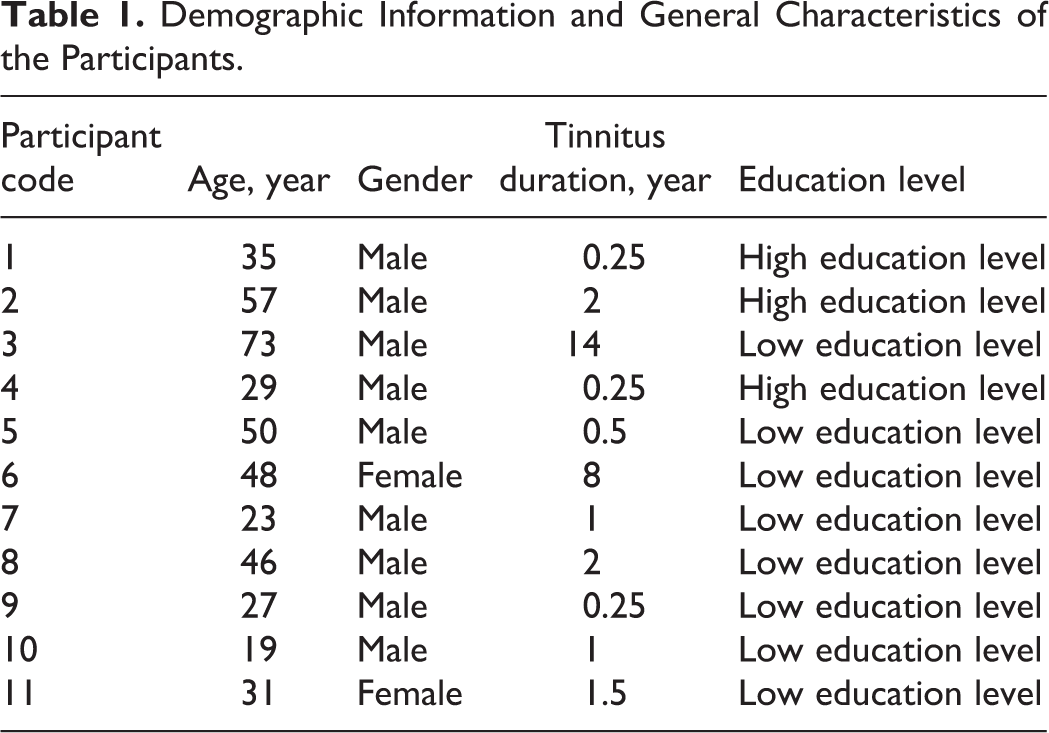
As shown in Table 1, 2 female and 9 male participants completed the interview. The mean age was 39.8 (standard deviation [SD] = 16.4), and the average time they had suffered from tinnitus was 2.7 (SD = 4.0) years.
Demographic Information and General Characteristics of the Participants.
Self-Motivation and Expectation to Undertake iT-MIST.
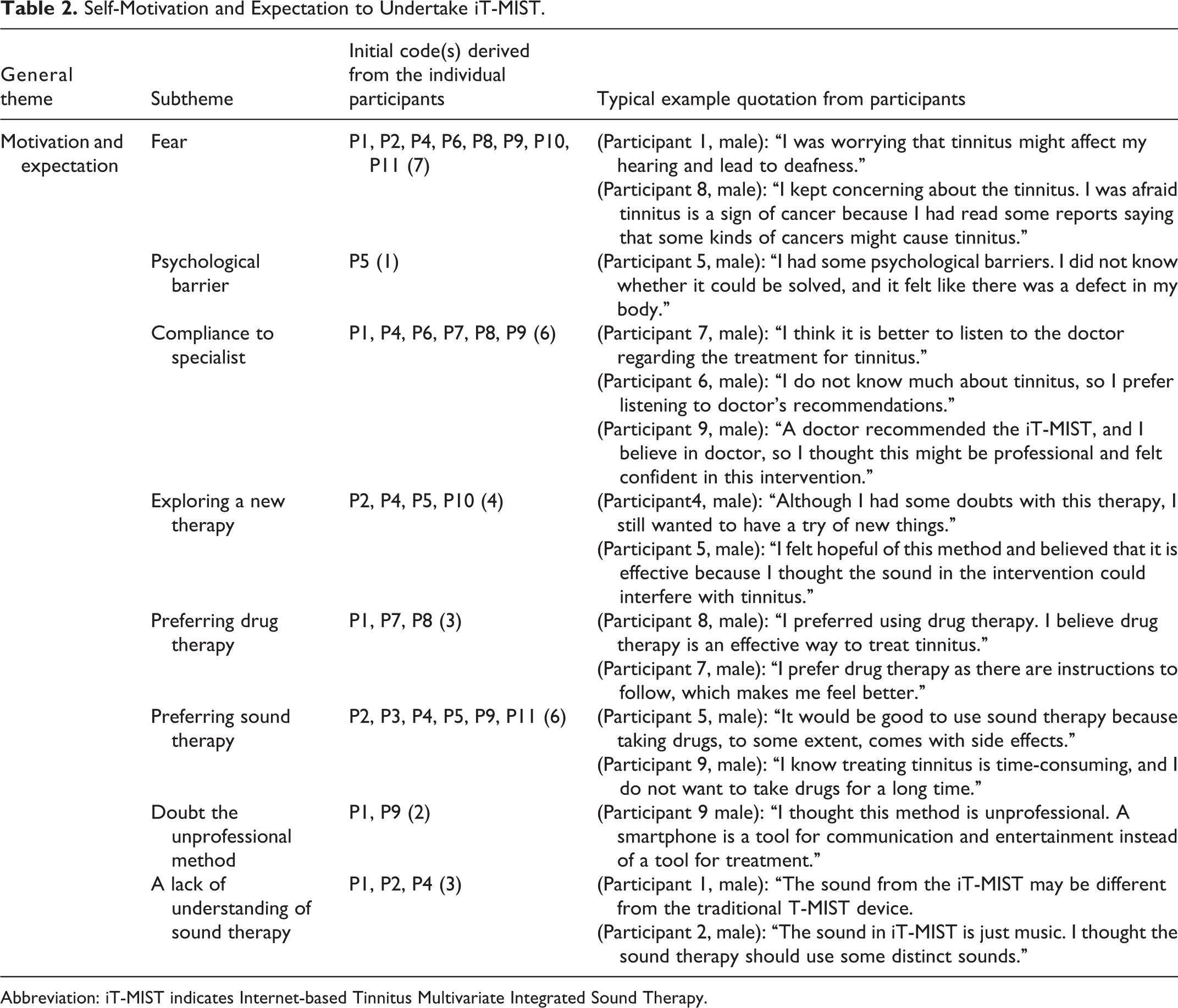
Abbreviation: iT-MIST indicates Internet-based Tinnitus Multivariate Integrated Sound Therapy.
Protocol for Combined Sound Therapy
A detailed protocol is given in Zhao et al.
20
To summarize, 3 types of sound sources were chosen as the fundamental components of T-MIST. These sound sources were: Inhibition-Tone (i-Tone): pure tone or NB noise centered around the tinnitus frequency with a fixed bandwidth of 1/6 of an octave. Nature-Sound (n-Sound): a number of nature sounds (eg, a bird, stream, or wind) chosen on the basis of individual’s tinnitus frequency. Each nature sound has specific frequency characteristics (eg, a low-, medium-, high-frequency band), with a certain level of dynamic sound level range. It is easy to tolerate to facilitate habituation and consequently cover the perception of tinnitus.
33
There were 80 pieces of n-Sound in total to choose from. Trans-focus sound (t-Sound): a preferred relaxing or soothing music from which the patient could choose. This type of music aimed to provide a pleasant, relaxed, and positive psychological responses, with recruitment of the limbic system.34,35 A total of 71 pieces of relaxing music were available for patients to choose from.
In the present study, 3 individual sound therapy programs (A, B, and C) were prescribed according to the patient’s preference and tinnitus frequency characteristics. Each program was created on the basis of different combinations of the fundamental components of the T-MIST, that is: Program A: i-Tone, n-Sound, and t-Sound chosen by the individual; Program B: n-Sound and t-Sound; and Program C: t-Sound.
The prescribed T-MIST programs were then stored on their smartphone. The tinnitus patients could choose one program (A or B or C) or more programs (A-B-C) to play repeatedly.
Procedure
The participant information sheet and consent form were given at the start. Following agreement and signing of the consent form, candidates underwent pure tone audiometry and tinnitus assessment in the ENT Department, Foshan First People Hospital. This was followed by an appropriate session of tinnitus and sound therapy counselling and a practical session of the Internet-based tinnitus therapy (T-MIST). Instruction was given to ensure their understanding of the project and protocol. After a trial of the iT-MIST for approximately 1 week, the participants were invited back to the hospital. Interviews were then conducted to explore the acceptability of the online-based therapy.
Qualitative research methods, using a semistructured interview with open-ended questions, were applied in this study. The interview, which took approximately 20 to 30 minutes, was conducted by the first author in a quiet and private room in the hospital. The interview conversation was recorded with a smartphone. This was transcribed verbatim and read again for accuracy by the first author. Data analysis was also conducted by the first author. Validation of interview transcription and data analysis was carried out by the second author. Any discrepancy between first and second authors on interview analysis was moderated by the third author.
Data Analysis
The verbatim transcriptions obtained from the participants were forward and backward translated into English to ensure responses had the same meaning in both English and Chinese (TXL and FZ). Thematic analysis was applied by the first and third authors to the open-ended question responses to identify, analyze, organize, and report themes in the data. This approach helped to discover the patient perspective on this innovative Internet-based tinnitus sound therapy and the factors that could influence them to accept and keep using it. Transcripts were read several times to become familiar with the data. Initial codes were identified and generated from the words and phrases spoken by participants. To achieve a deeper and clearer understanding of participant responses, follow-up questions were asked. This led to the formation of subthemes. Thematically similar codes were put together to form general themes. Original responses were re-examined to check if any other themes emerged from the data, and whether responses were in line with the assigned themes. This was done to ensure that the answers were coded consistently with their original meaning. Differences and similarities between participant responses were explored by moving back and forth within and across transcripts.
Ethical Considerations
This study was approved by the ethics committee of the Health Care and Food Ethics Panel, Cardiff School of Sport and Health Sciences, Cardiff Metropolitan University. The ethics reference number was PGT-410.
Results
A summary of the identified themes and subthemes on the acceptability of iT-MIST is shown in Figure 1. The Internet-based tinnitus sound therapy was not accepted by all participants. Although the benefit and convenience of iT-MIST was acknowledged by most, several disadvantages were also indicated. In addition, words related to “effectiveness” or “improvement” were frequently used by participants, which indicated that the efficacy of the intervention is vital to acceptance.
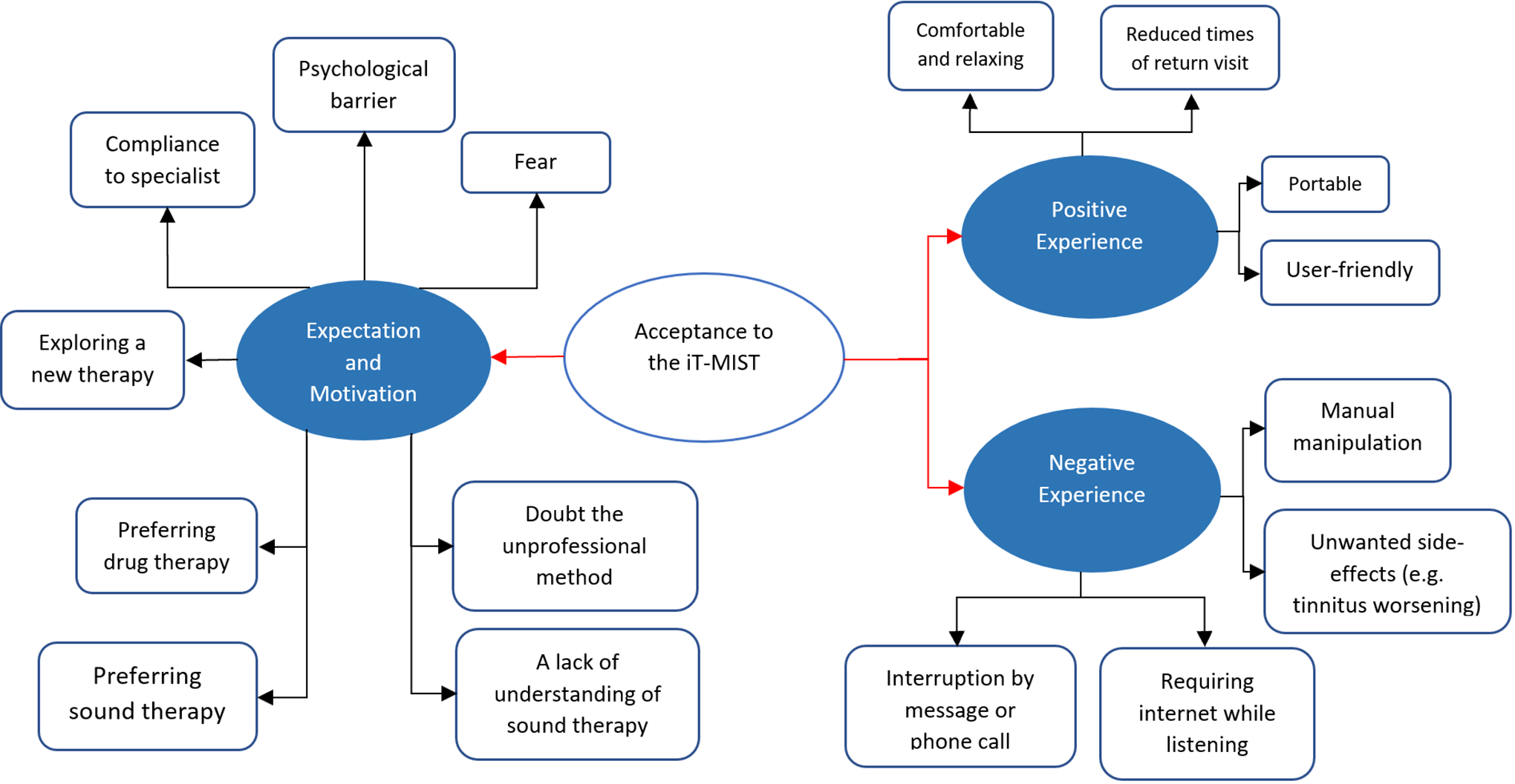
Summary of themes and subthemes regarding the acceptability of iT-MIST. iT-MIST indicates Internet-based Tinnitus Multivariate Integrated Sound Therapy.
Participant internal factors that might have influenced acceptance to iT-MIST were identified. That tinnitus might be a sign of deafness was frequently mentioned by participants during the interview, and most of the participants seemed to lack an understanding of tinnitus and sound therapy. Therefore, according to interview schedules and analysis of participant answers, 2 overarching themes regarding the acceptability of IT-MIST were developed: (1) internal expectation and motivation of the tinnitus sufferer and (2) external use experience of iT-MIST. Themes and subthemes are summarized in Tables 2 and 3 with relevant excerpts from participants’ responses.
Both Positive and Negative Experience of Using iT-MIST.
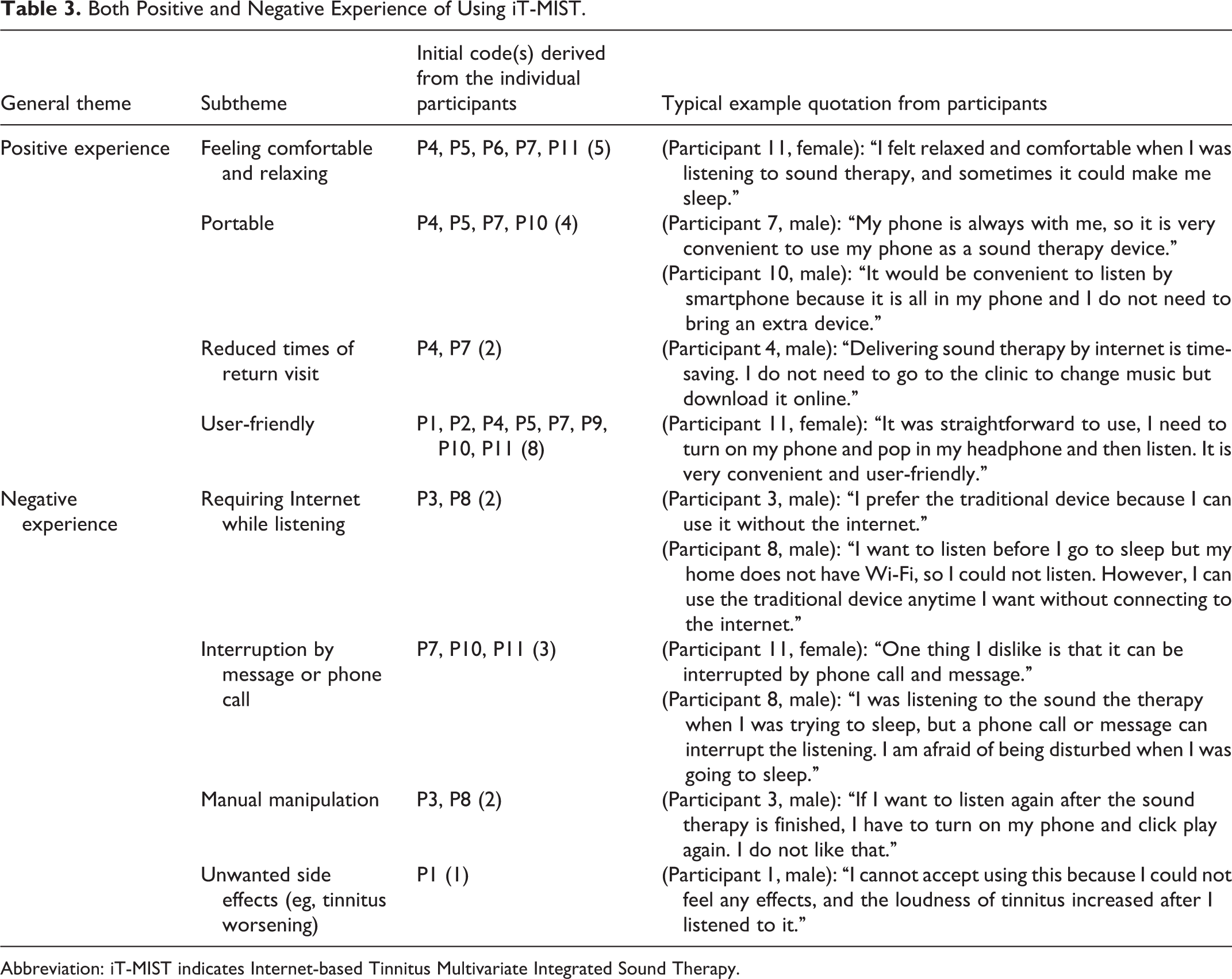
Abbreviation: iT-MIST indicates Internet-based Tinnitus Multivariate Integrated Sound Therapy.
Motivation and Expectations of the Tinnitus Sufferer
Motivation to undertake and expectations from the iT-MIST was the first main theme identified from interview analysis (Table 2). The majority of participants mentioned that tinnitus overall did not have a severe impact on them and that they were capable of adapting to it. However, over half of the participants said that “concern about tinnitus” was their motivation to use the iT-MIST. Some participants, for example P1, P2, P4, said: “I was concerning that tinnitus might cause hearing decline and end up with deafness.”
One participant (P8) said, “I was afraid of cancer because I read some reports saying some cancer can cause tinnitus.” In addition, nearly half of the participants indicated that they considered advice from the doctor very important and professional. For instance, some said (P4, P6) “I do not know much about tinnitus, so it is better to listen to the doctor.” This might have partly influenced the participant’s motivation to use sound therapy and led to the creation of a subtheme—Specialist. A smaller number of participants wanted to explore sound therapy because they felt hopeful that this intervention might be effective in managing tinnitus. However, some sceptical thoughts emerged during the interview. A few participants considered a smartphone as an unprofessional method for tinnitus sound therapy before undertaking the iT-MIST, and some believed that sounds in the iT-MIST were not able to treat tinnitus as they were normal music. Participants P2 and P4 said “The sound in iT-MIST is just music. I thought the sound therapy should use some special sounds”. This, to some extent, indicates the low understanding of tinnitus and sound therapy among participants. In addition, the acceptability of iT-MIST was affected by the preference for different therapies. A small number of participants were more willing to use drugs than sound therapy as they believed tinnitus should be treated with drugs.
Experience of Using iT-MIST
The second overarching theme was the experience of using iT-MIST. As shown in Table 3, participants acknowledged the advantages of this innovative intervention. They indicated that it was easy to operate. In addition, some described that delivering the sound therapy by the Internet could reduce the number of return visit to the clinic, and its portability meant there was no need to bring an extra sound therapy device.
Other participants said the therapy could provide emotional benefit. For example, participant P11 said, “I felt relaxed and comfortable when I listened to the sound therapy.” However, negative experiences related to technical problems were also pointed out by participants. The requirements of the Internet connection and interruption by phone notification were 2 disadvantages indicated by older participants. They stated that sound therapy was not available without the Internet and could be easily interrupted by messages and phone calls. For example, Participant P8 stated that: “I was listening to the therapy when I was trying to sleep, but a phone call or message can interrupt the listening. I do not like that.” This might influence the acceptability of iT-MIST. In addition, no automatic playback was reported as a disadvantage by a few participants.
Discussion
In this study, the advantages of an iT-MIST; accessibility, convenience, time- and cost-effectiveness, were acknowledged by most participants. In addition, the method provided tinnitus sufferers with relaxation and comfort that facilitated acceptance. Motivation and expectations on acceptance of the intervention and user experience related to adherence were the 2 main themes identified from interviews. A study by Tyler et al 36 highlighted the factors that influence their approach to seeking help, coping styles, and interventions. They explicated that people who continued to seek help for tinnitus therapy had experiences characterized by a response of control, defeat, and acceptance to tinnitus. This suggests that the aspects of fearfulness and acceptance associated with tinnitus could be integrated into tinnitus treatment.
In terms of motivation and expectation, a few studies in the area of psychotherapy have explored factors that might influence patients’ acceptance of Internet-based interventions in both quantitative and qualitative ways. These indicate that factors such as motivation and expectations are vital to the process and outcomes of treatment. 37 Several studies of Internet-based CBT for tinnitus reported that the intention to reduce the impact of tinnitus and its associated problems or improve quality of life can be the motivation for starting treatment. 30 Results in those studies, to some extent, support the outcomes of the current study.
In the present study, the threat of impending hearing loss and tinnitus as a sign of severe disease were motivating factors for most participants. Evidence suggests that knowing tinnitus is a sign of serious diseases or deafness is one of the reasons for seeking doctors’ advice. 38 A study by Stouffer and Tyler 39 indicated that many patients with tinnitus still had concerns even after otologic assessments. Additionally, many participants reported their lack of knowledge on tinnitus and expressed dissatisfaction over their communications with the doctors. Therefore, the underlying reason for their concerns was likely to be limited knowledge and poor understanding of tinnitus. This might, to some extent, adversely affect the 4 primary reactions to tinnitus, which are thought and emotions, hearing, sleep, and concentration. 40
Beukes et al 41 showed that a better outcome was achieved when Internet-based CBT was guided by an audiologist. This implies the importance to the patient of knowledge and understanding of tinnitus provided by specialists. The health care system in China and Chinese cultural influence place great respect and trust with doctors or hearing health professionals generally, which facilitates compliance and improves acceptance of any intervention when recommended by them. However, a disadvantage of the traditional biomedical approach is a lack of patient-centered care and shared decision-making. The literature suggests that compliance and adherence can easily be affected by a lack of understanding of diseases and associated treatments. 42 In the present study, a large proportion of participants addressed their doubtful thoughts because they had little knowledge about sound therapy and iT-MIST, particularly when there was a lack of patient-centered care and further rapport from with the service personnel. Meta-analysis studies indicate that health literacy positively correlates with adherence in patients, and the correlation between health literacy and adherence is higher in nonmedication regimens. 42 Therefore, in this context, relevant knowledge or health literacy might be an essential factor to improve acceptability. Although tinnitus was not included in those studies, the results might provide some valuable recommendations on acceptance to iT-MIST. Thus, to improve acceptance, patients need to properly understand health knowledge or information relevant to tinnitus and the intervention. Furthermore, collaboration and overall emotional well-being of the patient should be considered in counselling. 36 This may promote motivation, beliefs, and behaviors that can help to improve adherence.
It is essential to note that of those who reported a lack of understanding on tinnitus and sound therapy, 2 participants were relatively well educated, and yet some participants with lower education level appeared to better understand the theory of sound therapy. Therefore, education level seemed to be an irrelevant factor in the present study. This result is inconsistent with evidence that suggests that higher education is associated with a higher level of health literacy.43,44 A possible explanation could be that the effectiveness of doctor–patient communication was different because some participants expressed their dissatisfaction in their communications with their doctor. In addition, in the present study, patient’s beliefs about the efficacy of the intervention and barriers such as side effects and financial restrictions could also influence adherence. 45 This correlates with some of the statements of participants, indicating that efficacy and cost need to be considered for acceptance as well as doctor’s recommendations.
Exploration was described by some participants as an incentive to use the iT-MIST. They expressed a willingness to try new things and undertake the innovative intervention, which might indicate that a positive attitude is essential to acceptance. In the present study, a belief or an attitude that tinnitus can only be treated by medications was expressed by 2 participants and consequently they rejected the iT-MIST. This implies that the psychological characteristics plays a large part in the help-seeking behavior and decision-making for the treatments, in keeping with previous “Psychological Model” proposed by Tyler et al. 10 Therefore, in addition to relevant health knowledge of the patient and doctor–patient relationship, patient’s attitude or belief would be an influencing factor on the patient’s intention to accept the therapy. Moreover, in a study of Internet-based CBT for tinnitus, participants who accepted and kept using the Internet intervention did reveal positive attitudes.
User experience is a crucial variable associated with treatment acceptability as it provides information about the feasibility and satisfaction of the intervention. 27 Although user experience with Internet-based intervention for other conditions has been explored, 46 little is known about participants’ experience of using Internet-based intervention for tinnitus and iT-MIST in particular. In terms of the experience of using iT-MIST, the advantages of convenience, flexibility, and accessibility using the iT-MIST were considered the factors that maintain the use of iT-MIST. This has also been identified from many other studies of Internet-based intervention. 47 Evidence also indicates that patients who found the technology useful for their problems or illness reported higher usage of the technology. 48
Participants also reported their sound preference as it provided emotional benefits, for example, comfort and relaxation. Evidence suggested that compared with sound therapy that uses noise, pleasant sounds such as music and natural sounds can achieve higher acceptability in patients with tinnitus. 14 In addition, although no significant differences were obtained in tinnitus after the 1-week trial, some participants indicated their intention to keep using the iT-MIST because of the emotional benefits. A possible explanation for this might be that those who reported emotional benefits tended to focus on other aspects related to tinnitus rather than the tinnitus. Results from a study of iCBT for tinnitus also showed that those who focus on tinnitus-related problems tended to have more positive outcomes. 30 Therefore, it might be beneficial for patients to pay attention to problems associated with tinnitus, for example, concerns or emotion, rather than on the tinnitus. Moreover, the willingness to keep using iT-MIST indicates that feelings of obtaining something from the treatment might be a potential reason for participants to maintain their motivation. This is in line with studies suggesting that identifying improvement can facilitate motivation maintenance.30,41
In the present study, several disadvantages were identified. For example, technical problems were reported as barriers and limitations to using the iT-MIST. This factor affects the practicability of the intervention and is also crucial to its acceptability. Studies of Internet-based intervention in other areas suggest that ease of use is one of the most important factors in association with product use.27,49 Moreover, poor listening condition also has a negative impact of the therapy and consequently leads to adverse effect on the acceptance of iT-MIST.
In this study, several participants reported that the acceptance of iT-MIST largely relied on whether this method could provide a cure for tinnitus. This result is consistent with the findings by Tyler. 50 His results revealed that tinnitus patients were willing to accept a wide variety of treatments when they would reduce their tinnitus loudness and annoyance completely, even the invasive procedures if they provided complete relief. Among these treatments, medications were the most acceptable. Internet-based Tinnitus Multivariate Integrated Sound Therapy is a form of sound therapy to alleviate the symptoms related to tinnitus, rather than a treatment to cure the condition. Therefore, unrealistic expectations appear to be an important influencing factor on the acceptance of iT-MIST. Heinrich et al 30 suggest that it would be helpful for patients to develop a realistic expectation on treatment outcomes to avoid disappointment. Furthermore, in order to facilitate a self-help approach to tinnitus, Tyler et al 51 proposed a program that includes several steps from understanding of tinnitus to seeking professional help. It should be noticed that a high dropout rate was found in this study. Reasons underlying this issue may be associated with the factors discussed above, such as a poor understanding of the effectiveness of iT-MIST and unrealistic expectations.
It is noteworthy that the participants in this study were relatively young (mean age: 39.8 years, SD: 16.4 years). This might be due to young people who are more willing to accept the online therapy. A previous study suggested that satisfaction with the Internet-based training decreased with age when they explored acceptance of using iCBT in patients with acute tinnitus. 52 Therefore, future studies on acceptance of iT-MIST in tinnitus patients at a wider range age band will provide a better understanding of the impact of age factor on this Internet intervention approach and thus further facilitate its clinical applications.
Conclusion
Patients with tinnitus in the present study did not reveal an overall acceptance of the iT-MIST. Concerns about tinnitus and compliance to doctor’s recommendation were the motivations described by most participants when they accepted its use. Attitude or willingness to explore new therapeutic methods was also a motivating factor. Emotional benefits such as relaxation and comfort were reported as factors that helped sustain motivation. However, doubtful thoughts and technical problems were an influencing factor on acceptability. To facilitate acceptance of iT-MIST, it might be helpful to increase the patient’s understanding of tinnitus and sound therapy, together with improving the practicability of iT-MIST and minimizing unrealistic expectations.
Footnotes
Acknowledgments
We would like to thank the anonymous reviewers and editor for their helpful suggestions. We would like to acknowledge Dr Christopher Wigham for the proof reading.
Declaration of Conflicting Interests
The author(s) declared no potential conflicts of interest with respect to the research, authorship, and/or publication of this article.
Funding
The author(s) received no financial support for the research, authorship, and/or publication of this article.
