




Abstract
Sound therapy is a treatment modality for tinnitus patients by increasing the background neuronal activity in the auditory system and inducing relative alleviation of the tinnitus. This study was performed to evaluate the efficacy of natural ocean sound exposure and ocean-side relaxation in chronic tinnitus patients. We prospectively enrolled all 18 chronic tinnitus patients (≥6 months) from July to November 2018. All patients completed 90 hours of our programs. The improvement in their subjective tinnitus severity, moods, the quality of life, and sleep was serially assessed using several questionnaires at baseline, immediately, and 1 month after the program. Changes in serum stress hormone levels of the patients were also compared between the baseline and immediately after the program. Average total Tinnitus Handicap Questionnaire score and factor 2 (hearing difficulty related to tinnitus) score significantly improved over time (P = .024 and P = .002). Patient’s serum cortisol and epinephrine level did not show significant decrease, and serum norepinephrine and serotonin level significantly increased immediately after our program (P < .001 and P < .001). Natural ocean sound exposure and ocean-side relaxation for short-term period has a potential efficacy on chronic tinnitus patients.
Introduction
Tinnitus retraining therapy (TRT) was introduced in 1990 and have become a therapeutic model for treating tinnitus and hyperacusis. Tinnitus retraining therapy is based on a neurophysiological hypothesis where abnormal stimulus from the auditory nerve system is conditioned to be perceived by brain, involving the limbic and autonomic nerve systems, and causes emotional distress. 1
Sound therapy, as a primary component of TRT, aims relative alleviation of the tinnitus by increasing the background neuronal activity in the auditory system. This therapeutic approach can be achieved by patients avoiding quiet environment and exposed to background sounds. Use of hearing aids in tinnitus patients with comorbid subjective hearing loss, as well as sound generators or music players, using broadband noise, music or natural environment sound, in tinnitus patients without subjective hearing loss showed improvement in tinnitus. 2 -4
Ocean sound has similar characteristics similar to white noise, which is distributed over a wide frequency band. The frequency of the delta wave is 0 to 4 Hz, and the ocean sound also has a frequency that is close to the delta wave. If human is exposed to the ocean sound, it causes delta wave due to electroencephalogram synchronization and results in stable and comfortable condition. 5
The present study was designed to demonstrate the therapeutic effect of natural ocean sound exposure and ocean-side relaxation on chronic tinnitus patients, prospectively.
Materials and Methods
Patient Recruitment
Participants were recruited from chronic tinnitus patients (≥6 months) who visited our hospital and surrounding community via research flyers posted in public locations, online, and social network service from July to November 2018.
To be included, candidates were required to (1) be more than 19 years old, (2) report the presence of chronic nonpulsatile tinnitus for at least 6 months, and (3) be Korean speaking and willing to complete all aspects of the study. Candidates were excluded if they (1) were exposed to frequent loud noise as employment or recreation and (2) did not agree to participate in this study for any health reasons.
A total of 18 participants were enrolled and they were provided with information regarding consent prior to any procedures being performed. In an independent location, they were given enough explanations about the purpose of the research and the potential benefits to understand the research program. The research consent was obtained in a written format. After the consent, the participants were informed that he or she could withdraw his or her consent at any time and whether the consent or withdrawal of consent had no effect on the patient. Participants spent 90 hours during 5 days in a healing house on the coast of Uljin-gun, Gyeongsangbuk-do, Korea, and they were subjected to ocean sound therapy and additional relaxation exercise. On the morning of the first day, they gathered at the hospital and filled out the questionnaires and had blood sampled for measuring serum stress hormones. Participants traveled by bus together to the healing house on the first day, and they returned to the hospital on the fifth day.
Natural Ocean Sound Exposure
The participants stayed at the healing house, which was located approximately 100 m away from the coast, and were exposed to natural ocean sound during daytime activities including relaxation exercise sessions which were performed at an outdoor floor located between the healing house and the coast for 2 hours. In addition, the participants were instructed to listen to the ocean sound while walking along the seaside more than 1 hour per day. Therefore, all participants lived in a space exposed to the ocean sound all day during our program. The ocean sounds were recorded by a professional sound recording team around the healing house for 30 hours. The relative location of the healing house, coast, and the ocean are shown in Figure 1.
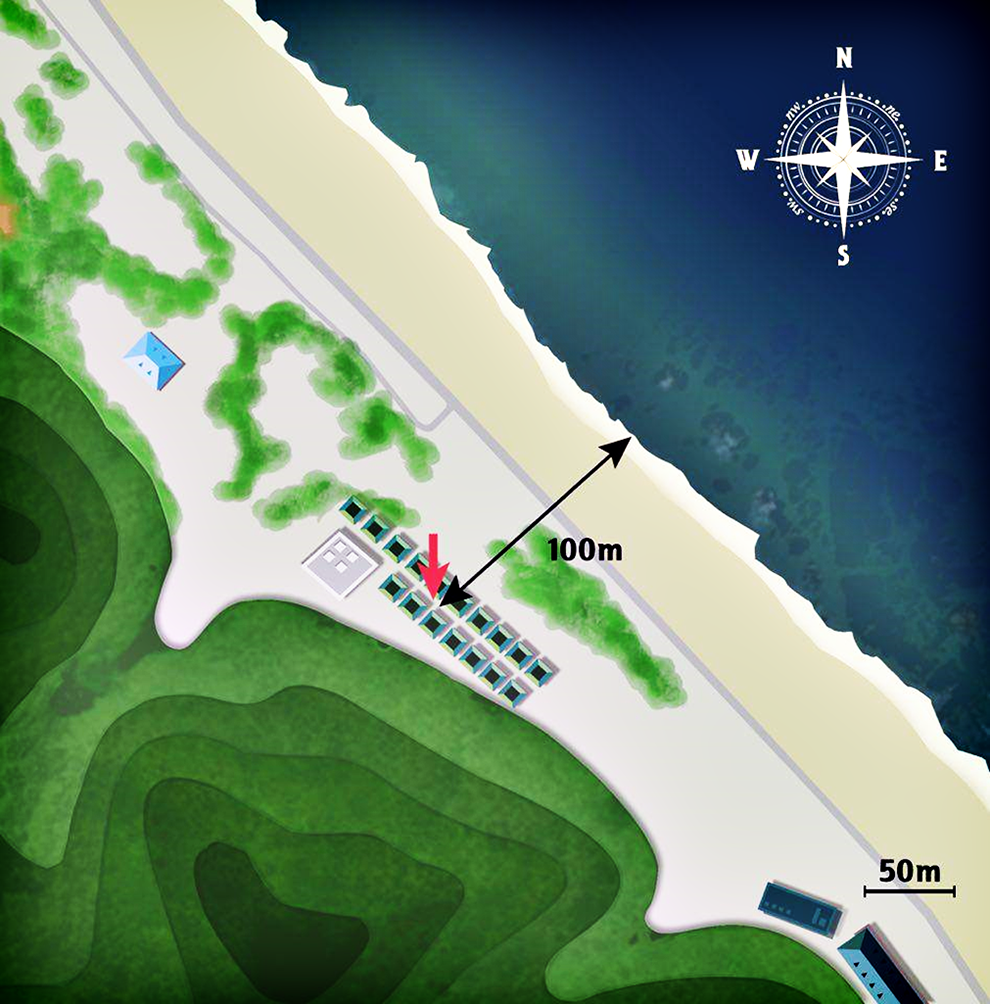
The relative locations of the healing house, the coast, and the ocean are illustrated. The pink arrow (↓) indicates the location of the healing house.
Ocean-Side Relaxation
All participants underwent ocean-side relaxation program, which was composed of 3 sessions, and each session was performed for about 2 hours in the morning from day 2 to day 4 by a single experienced therapist. In session 1, relaxation responses and psychological reactions were explained to participants, and they underwent relaxation. The participants, sitting on yoga mats, were instructed to relax muscle groups, starting at the top of the head and working through right down to the toes (eg, forehead, eyebrows, eyelids, jaws, tongue, lip, neck shoulders, arms, hands, waist, back, thighs, knees, calves, feet, and toes). In session 2 and 3, participants underwent sitting and lying relaxation on yoga mats and taught how to avoid unnecessary anxiety or depression by relaxation. During the last 10 minutes of every session, participants had feedback with the instructor about each session.
Outcome Measures
The effects of ocean therapy program on tinnitus were assessed by conducting several questionnaires and analyzing serum stress hormones. Tinnitus-associated severity and effects on the quality of sleep and life were assessed by self-reporting questionnaires. The pretreatment measures were conducted at the hospital just before moving to the healing house, immediate assessment measures were conducted at the healing house just before coming back to the hospital, and 1-month assessment measures were completed at the outpatient office after 4 weeks, respectively. Tinnitus Handicap Inventory (THI), Tinnitus Handicap Questionnaire (THQ), Visual Analog Scale (VAS), Pittsburg Sleep Quality Index (PSQI), The World Health Organization Quality of Life Instrument, Short Form (WHOQOL-BREF), Hospital Anxiety and Depression Scale (HADS), and Profile of Mood States (POMS) questionnaire were used for the measurement. All questionnaires were translated and adapted to Korean and also validated. Blood sampling for measuring serum stress hormones was conducted just before returning from the healing house to minimize the stress reaction.
Tinnitus Handicap Questionnaire
This 27-item scale assesses how patients perceive their physical and psychological well-being and is structured into 3 factors: factor 1, which reflect the patient’s physical health, emotional status, and social impact of tinnitus; factor 2, which measures the patient’s hearing difficulty related to tinnitus; and factor 3, which focuses on the individual’s aspect on tinnitus. 6 A total score ranges from 0 to 100 points, and 100 points is considered as maximum impairment.
Visual Analog Scale
The VAS score is used to measure the subjective distress from the tinnitus in aspects of awareness (AW), loudness (LD), annoyance (AN), and an effect on life (EOL), where the higher score denotes the more distress.
Tinnitus Handicap Inventory
It assesses how much tinnitus impact on daily life and consists of 25 items classified into 3 domains: (1) a functional (F) domain, measuring limitations as a result of tinnitus, (2) an emotional (E) domain, measuring emotional states toward the tinnitus situations, and (3) a catastrophic (C) domain, focusing on catastrophic thinking about tinnitus. 7,8 A global score, which is a summation of the scores of the 3 domains, ranges from 0 to 100 points, and 100 points is considered as maximum impairment.
Pittsburg Sleep Quality Index
This questionnaire measures quality and disturbances of sleep and include 19 items calculated into 7 “component” scores: subjective sleep quality, sleep latency, sleep duration, habitual sleep efficiency, sleep disturbances, use of sleeping medication, and daytime dysfunction. A global score, which is a summation of the 7 component scores, has range of 0 to 21 points, and 21 points denotes the worst sleep quality.
The World Health Organization Quality of Life Instrument, Short Form
This questionnaire consists of 2 items, measuring general quality of life and health, and 24 items classified as 4 domains: physical health, psychological health, social relationships, and environment. Each calculated “raw” domain score transformed into a “coverts” domain score to range from 0 to 100. The higher scores indicate higher quality of life. 9
Profile of Mood States
This questionnaire assesses affective traits, mood, and emotion and includes 65 items which are structured into 6 factors: factor 1 (Tension-Anxiety: T), factor 2 (Depression-Dejection: D), factor 3 (Anger-Hostility: A), factor 4 (Vigor-Activity: V), factor 5 (Fatigue-Inertia: F), and factor 6 (Confusion-Bewilderment: C). Summary scale called Total Mood Disturbance (TMD) is the summation of all factors, and the higher TMD score denotes the worse mood state. 10
Hospital Anxiety and Depression Scale
This scale assesses individual’s emotional state and consists of 14 items, which divide into 2 subscales for anxiety and depression. The higher subscale scores indicate the more severe state of anxiety and depression. 11
Serum Stress Hormones
Serum epinephrine, norepinephrine, cortisol, and serotonin were measured from the blood drawn intravenously from the patients. The pretreatment level of stress hormones was compared with immediate posttreatment level in each patient.
Statistical Analysis
Linear mixed model with Bonferroni-adjusted Wilcoxon signed rank tests were used for the analyses of the questionnaire scores over time. Wilcoxon signed rank tests were used to compare the serum stress hormone levels at the baseline and after the ocean therapy programs. The Statistical Package for the Social Sciences version 21 (IBM Corporation, New York, New York) was used for statistical analysis, and P values less than .05 were regarded as statistically significant.
Results
All 18 participants completed the natural ocean sound exposure and ocean-side relaxation program and 1-month follow-up assessment. The average age of participants, including 12 (67%) females and 6 (33%) males, was 59.7 years (range: 46-71 years). All participants had chronic tinnitus of more than 6 months and the average duration was 8.5 years (range from 7 months to 4 years). Thirteen (72%) participants complained of unilateral tinnitus and 5 (28%) had bilateral tinnitus. The average pitch and loudness of the tinnitus and the average pure tone audiometry (PTA) threshold of the participants are shown in Table 1.
General Information of Patients.
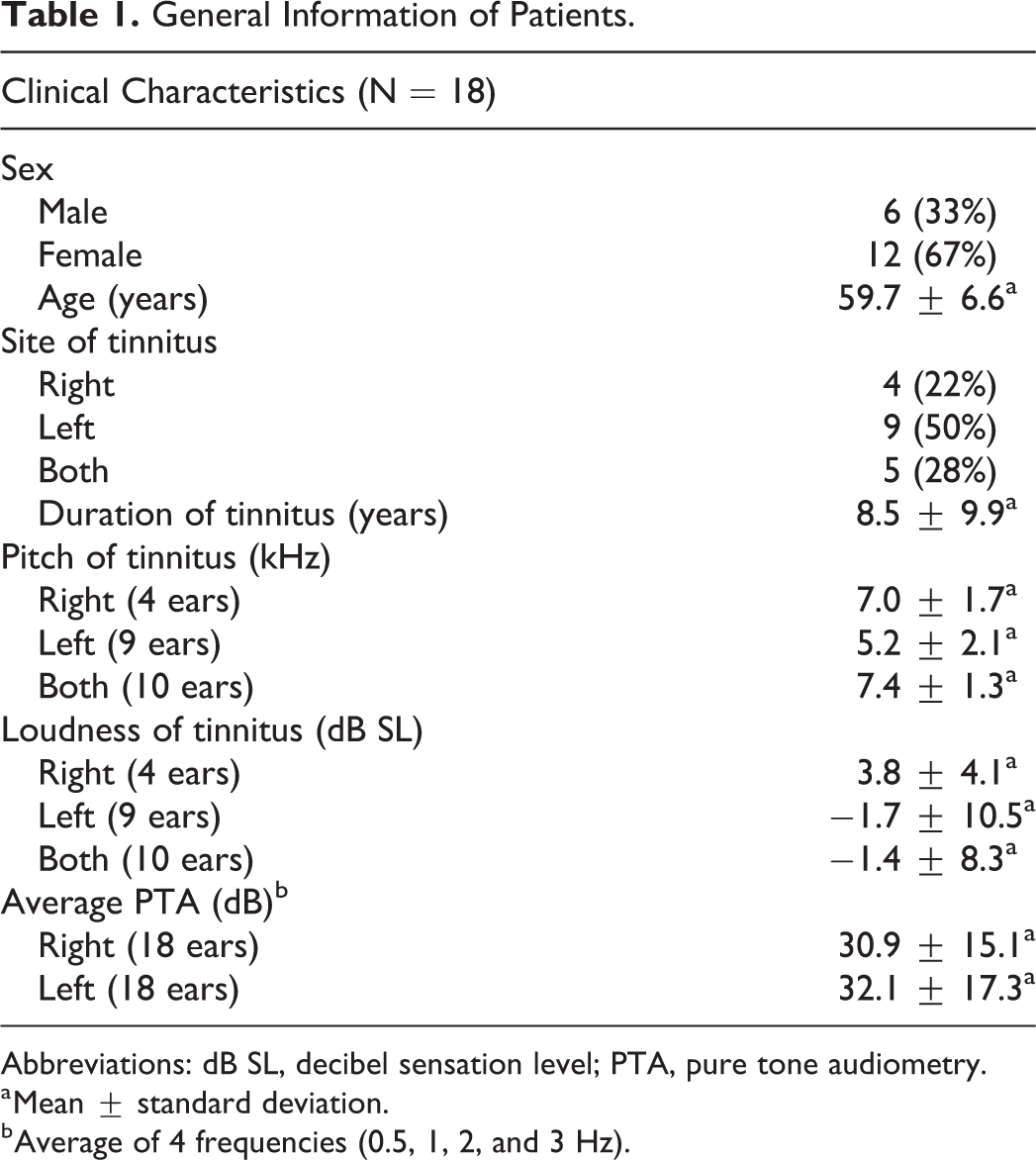
Abbreviations: dB SL, decibel sensation level; PTA, pure tone audiometry.
a Mean ± standard deviation.
b Average of 4 frequencies (0.5, 1, 2, and 3 Hz).
Sound spectrograms and sound pressure level of the ocean sound recorded around the healing house for 30 hours are shown in Figure 2. The sound spectrogram of the ocean showed a broad frequency distribution that was dependent on the time of day. The average was 3.06 kHz, and the maximum and minimum values were 24 and 0 kHz, respectively (Figure 2A). The sound pressure level showed relatively constant strength over time with an average of 51.6, the maximum of 68.4, and the minimum of 37.8 dB re 1 μPa (Figure 2B).
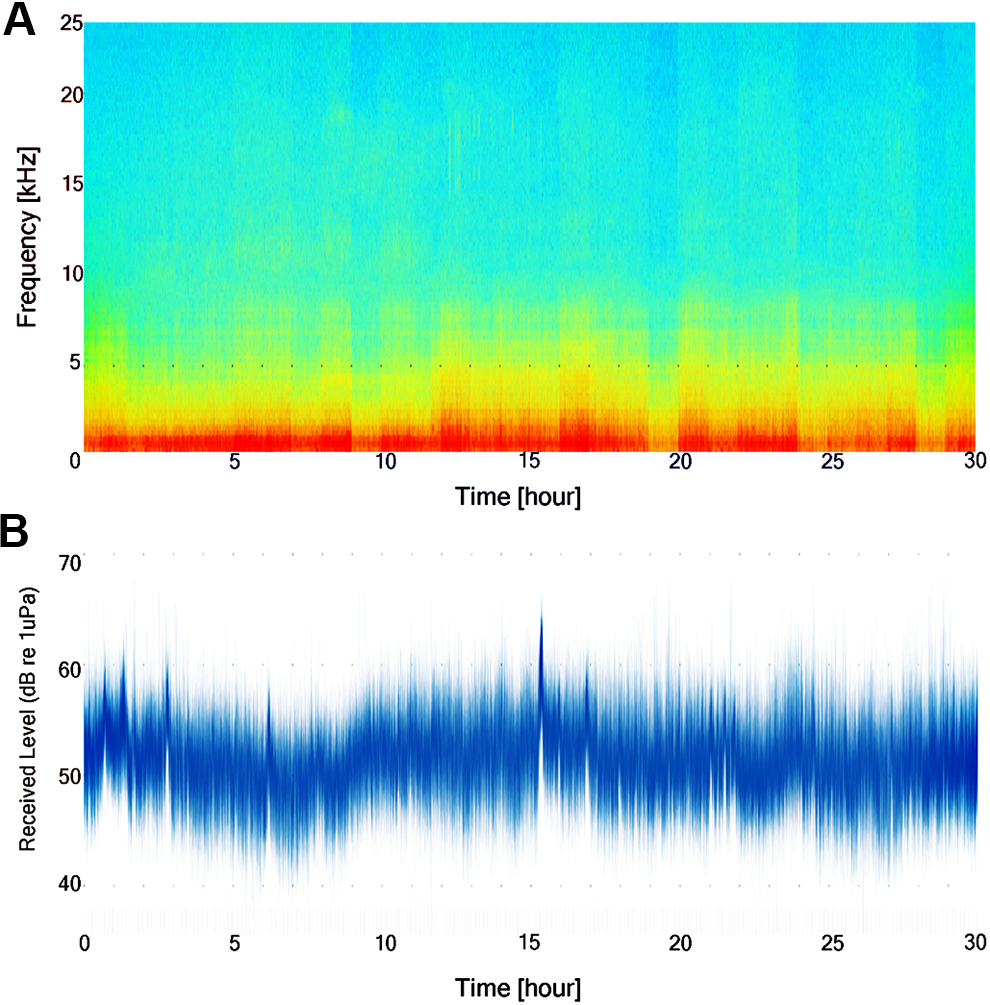
Analysis of ocean sound. A, Sound spectrograms of the ocean showed a broad frequency distribution over the time. The average frequency was 3.06 kHz with the maximum and minimum frequency of 24 and 0 kHz, respectively. B, The sound pressure level showed relatively constant strength over time. The average pressure level was 51.6 dB re 1 μpa with the maximum and minimum pressure level of 68.4 and 37.8 dB re 1 μpa, respectively.
Total THQ score significantly improved over time (P = .024). The average scores of factor 2 (hearing difficulty related to tinnitus) and factor 3 (individual’s aspect on tinnitus) in THQ gradually decreased from baseline to immediate and 1-month follow-up, and factor 2 score showed significant improvement over time (P = .002). After Bonferroni correction, total THQ and factor 2 scores showed significant difference between the baseline and 1-month follow-up assessment (P = .016, P = .006; Figure 3A, H).
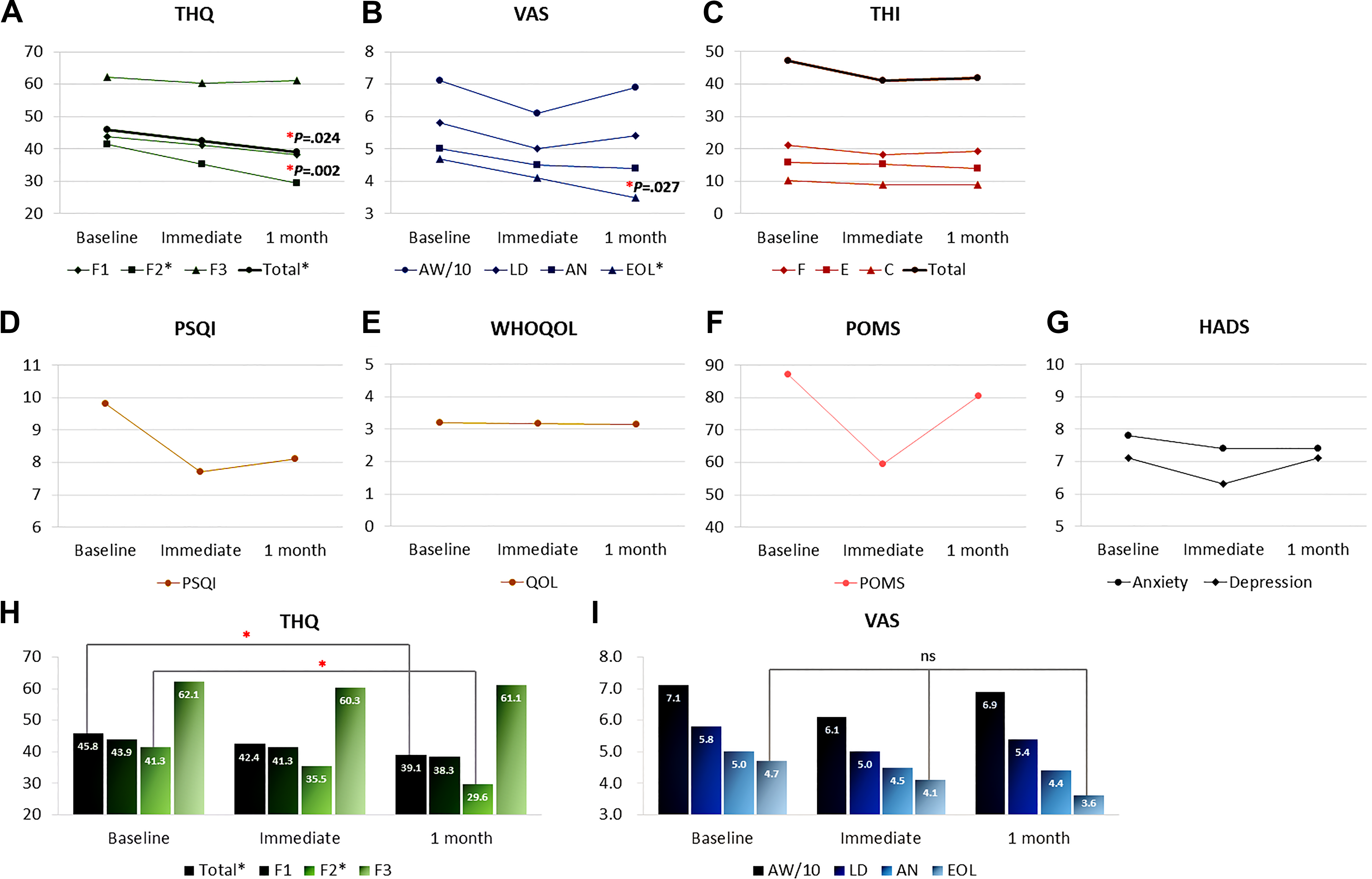
Analysis of questionnaires. A, Total Tinnitus Handicap Questionnaire (THQ) score significantly improved over time (P = .024). The average scores of factor 2 (hearing difficulty related to tinnitus) and factor 3 (individual’s aspect on tinnitus) in THQ gradually decreased from baseline to immediate and 1-month follow-up, and factor 2 score showed significant improvement over time (P = .002). B, Visual Analog Scale (VAS) score in awareness (AW) and loudness (LD) improved immediately after the ocean therapy, but the scores increased after a month. Although subjective distress from the tinnitus in annoyance (AN) and in AN effect on life (EOL) decrease from baseline to immediate and 1-month assessment, only VAS score in EOL significantly improved over time (P = .027). C, Total Tinnitus Handicap Inventory (THI) score and it’s functional (f), emotional (e), and catastrophic (c) domains showed no significant improvement over time (P = .363, P = .486, P = .068, and P = .458). D-G, Pittsburg Sleep Quality Index (PSQI), Quality of Life (QOL), Profile of Mood States, and Hospital Anxiety and Depression Scale (HADS)–Anxiety and Depression showed no significant difference over time (P = .457, P = .669, P = .443, P = .565, and P = .829). H, After Bonferroni correction, total THQ and factor 2 scores showed significant difference between the baseline and 1-month follow-up assessment (P = .016, P = .006). I, There was no significant difference in VAS score on EOL among baseline, immediate, and 1-month EOL after Bonferroni correction. *P < .05.
The VAS score in AW and LD improved immediately after the ocean therapy, but the scores increased after a month. Although subjective distress from the tinnitus in AN and in an EOL decrease from baseline to immediate and after 1-month assessment, only VAS score in EOL significantly improved over time (P = .027). However, there was no significant difference among baseline, immediate, and 1-month EOL after Bonferroni correction (Figure 3B, I).
Total THI score and its functional (F), emotional (E), and catastrophic (C) domains showed no significant improvement over time (P = .363, P = .486, P = .068, and P = .458). The PSQI, Quality of Life, POMS and HADS–Anxiety and Depression showed no significant difference over time (P = .457, P = .669, P = .443, P = .565, and P = .829; Figure 3C-G).
The average serum cortisol and epinephrine levels measured immediately after the ocean therapy decreased compared with those measured on the baseline. However, there was no statistical significance. The average serum norepinephrine and serotonin significantly increased from the baseline to immediate measures (P < .001, P < .001; Figure 4).
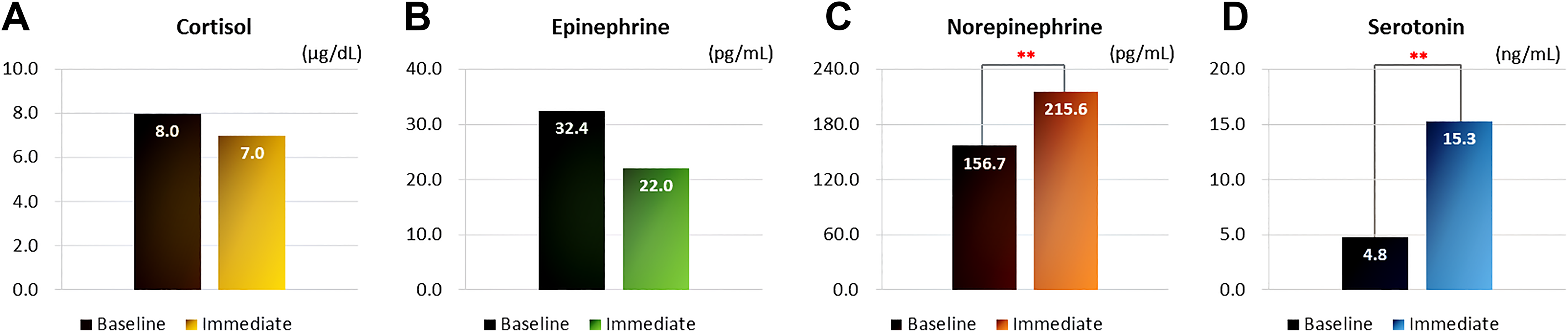
Analysis of serum stress hormones. A and B, The average serum cortisol and epinephrine levels measured immediately after the ocean therapy decreased compared with those measured on the baseline. However, there was no statistical significance. C and D, The average serum norepinephrine and serotonin significantly increased from the baseline to immediate measures. **P < .001.
Discussion
To our knowledge, this study is the first prospective trial to investigate the effectiveness of natural ocean sound exposure and ocean-side relaxation program on chronic tinnitus patients. The results demonstrated significant improvement in THQ score over 1-month period after natural ocean sound exposure and ocean-side relaxation program, where ocean sound exposure and ocean-side relaxation program was conducted to the patients for 5 days. Also, some reduction in VAS scores, on AW, LD, AN and EOL, and THI, PSQI, POMS, and HADS scores were observed immediately after our program. However, these scores did not show statistically significant improvement over 1-month period.
Sound therapy has been validated as an important treatment modality to subjective tinnitus patients by numerous trials, and many methods were developed to deliver the therapeutic sounds. Broadband noise, produced by sound generators, and variable sounds or personalized music, delivered by table-top sound players, tape recorders, CD, and mp3, players can be used to tinnitus patients. 4,12,13 Also, background sound present in the environment can be delivered by hearing aids in patients who complain tinnitus with comorbid subjective hearing loss. 12 However, there is no clinical trial which investigates the effectiveness of directly delivered natural sound in open environment until now.
In recent trials, usage of sound generator for 3 to 6 months was proved being effective in treating the tinnitus in patients with and without hearing loss or hyperacusis. 3,14 Sound therapy using portable music players, producing environmental sounds, showed significantly improvements in tinnitus patients after 3 months of their use but showed no significant improvement after a 1-month period. 13 Although tinnitus patients participated in this present trial were subjected to the sound therapy only for 5 days, their tinnitus showed gradual improved over a month.
The frequency spectrum of sound therapy should include the whole range of the frequencies of patient’s tinnitus. 12 In previous report, it was known that ocean sound has 0 to 4 Hz frequency that is close to the delta wave, which causes delta inducing stable and comfortable condition. 5 Although the analyzed ocean sound showed a broad frequency distribution ranging from 0 to 24 kHz, the average frequency of the ocean sound in this study was 3.06 kHz and frequency distribution was relatively converged on low to middle frequencies. Therefore, the ocean sound can produce chronic tinnitus patient stable and comfortable. In addition, the average frequency of all of the patients’ tinnitus was 4.4 kHz, ranging from 1 to 8 kHz. Therefore, if relatively low- to middle-pitched tinnitus patients had been selectively included in the present trial, the effect of the ocean sound therapy might have been more convincing. As a result, natural ocean sound exposure could be recommended for all chronic tinnitus patients, especially complaining of low- to middle-pitched tinnitus rather than those with high-pitch tinnitus.
In the present study, all of the 18 patients had 3 sessions of ocean-side relaxation program as a daytime activity while hearing the natural ocean sound. This additional relaxation exercise can be considered to variable patients with pain and/or anxiety in addition to tinnitus. 15,16
In an randomized controlled trial (RCT) comparing the efficacy of relaxation and mindfulness meditation on tinnitus patients, both therapy showed significant improvement in the management of tinnitus. 17 The ocean-side relaxation program, performed additionally in this trial, could be regarded to have good effects for chronic tinnitus as well as natural ocean sound exposure.
Tinnitus severity is associated with stress response, which is mediated by hypothalamic–pituitary–adrenal axis and sympathetic–adrenal medullary axis. 18 Also, the secretion of serotonin rises in a variety of brain area in stressful circumstances. 19 Patients’ serum cortisol, epinephrine, norepinephrine, and serotonin levels at the baseline and immediately after natural ocean sound exposure and ocean-side relaxation program were compared to evaluate changes in stress hormones. Serum cortisol and epinephrine decreased after the therapy, but those were not statistically significant, and even norepinephrine and serotonin significantly increased after the treatment.
Although serum norepinephrine and serotonin of tinnitus patients were reported to be higher than those of normal controls, serum cortisol, epinephrine, norepinephrine, and serotonin did not related to the severity of tinnitus in a clinical report. 20 These stress-related hormones do not seem to reflect the tinnitus severity scores as the present study shows.
Despite new attempts to control tinnitus, there are several limitations to this study. First, although this is a prospective pilot study, the sample size is relatively small and a control group is not enrolled. Further large randomized controlled trials will be needed to confirm the efficacy of ocean sound therapy. Second, the results of a questionnaire that is designed to assess pretreatment and posttreatment changes such as the Tinnitus Functional Index are insufficient.
Nevertheless, this type of tinnitus therapy can be modified to a variety of new treatment modalities for tinnitus patients and may be used if the validation of the effect is well-documented.
In conclusion, the present study shows the potential effectiveness of natural ocean sound exposure and ocean-side relaxation in patients suffering from chronic tinnitus, and the ocean sound therapy could be recommended to all chronic tinnitus patients, especially for low- to middle-pitched tinnitus.
Footnotes
Authors’ Note
Institutional review board approval was obtained from Korea University Ansan Hospital (IRB No: 2018AS0131).
Declaration of Conflicting Interests
The author(s) declared no potential conflicts of interest with respect to the research, authorship, and/or publication of this article.
Funding
The author(s) disclosed receipt of the following financial support for the research, authorship, and/or publication of this article: This research was a part of the project titled “The base study to discover and to commercialize for the resources of sea healing to activate marine industry (20 170 242),” funded by the Ministry of Oceans and Fisheries, Korea.
