




Abstract
This study used a multiple baseline, single-subject research design to investigate the efficacy of an iPad®-based speech-generating device (SGD). The iPad was equipped with the SPEAKall!® application to function as a SGD. SGDs are a form of aided augmentative and alternative communication (AAC) allowing a user to communicate using digitized and/or synthesized speech. Instruction followed a modified version of the intervention phases from the Picture Exchange Communication System (PECS). This modified PECS protocol was implemented with two adolescents and one young adult between the ages of 14 and 23. All three participants were diagnosed with severe autism spectrum disorder and little to no functional speech. Dependent measures included the ability to request for edible and tangible items as the primary measure, and the ability to engage in natural speech production as an ancillary measure to determine simultaneous, additive effects on speech acquisition. Results indicated increases in requesting behaviors for all three participants across intervention and maintenance phases. Once participants mastered requesting of edible items, they were able to generalize the skill to tangible items. However, mixed results were found when targeting natural speech production. Based on the current findings, the infusion of an iPad-based SGD into PECS instruction may be effective in increasing initial requesting skills; however, a facilitative effect on increasing speech acquisition cannot necessarily be expected for every participant.
Keywords
According to the Diagnostic and Statistical Manual of Mental Disorders, Fifth Edition (DSM-5), autism spectrum disorder (ASD) is characterized by deficits in social communication, social interaction, and restricted and repetitive patterns of behavior or interests (American Psychiatric Association, 2013). Depending upon the severity level, individuals with ASD may have deficits in verbal and nonverbal communication. The impairment of verbal communication in ASD may range from being capable of using spontaneous speech, but with deficits in social or pragmatic use of language, to failure to develop any functional speech (American Psychiatric Association, 2013; Lord & Paul, 1997). Approximately one-third to one-half of individuals with ASD have little to no functional speech (Lord & Paul, 1997; Rose, Trembath, Keen, & Paynter, 2016; Tager-Flusberg & Kasari, 2013), and are potential candidates to use augmentative and alternative communication (AAC) to meet their daily communication needs (Schlosser & Wendt, 2008).
Picture Exchange Communication System
One of the most common aided AAC interventions to enhance functional communication skills is the Picture Exchange Communication System (PECS) (Bondy & Frost, 1994, 2002). PECS intervention yielded positive outcomes in promoting functional communication for individuals with ASD (Flippin, Reszka, & Watson, 2010; Preston & Carter, 2009). PECS intervention is based on principles of applied behavior analysis and uses distinct teaching, reinforcement, and backward chaining strategies (Bondy & Frost, 1994, 2002). Individuals first learn to communicate with one picture symbol and then learn to select between two or more pictures. In later phases, individuals are taught to combine picture symbols to make requests and comments. Although developers of PECS do not claim it will improve speech, numerous studies have reported an effect in increasing speech production in the later phases of PECS training (phases IV- V) when verbal modeling and time delay strategies were introduced (Charlop-Christy, Carpenter, Le, LeBlanc, & Kellet, 2002; Ganz & Simpson, 2004; Preston & Carter, 2009; Tincani, 2004). Charlop-Christy et al. (2002) indicated that vocalizations and word approximations of the participants decreased during phases I-III but dramatically increased in phase IV. However, when the larger research base is synthesized, the effect size estimates for speech production fall in the range of non-effective to mildly effective (Preston & Carter, 2009; Schlosser & Wendt, 2008).
Speech-Generating Devices
A speech-generating device (SGD) is another frequently used AAC option for individuals with ASD (van der Meer & Rispoli, 2010). A SGD refers to a portable electronic device that displays a variety of graphic symbols or written language and produces either digitized or synthesized speech output (Lloyd, Fuller, & Arvidson, 1997). One of the advantages of a SGD is the production of immediate speech output that makes messages easier to understand—even for an untrained communication partner—and promotes greater participation in natural settings (van der Meer & Rispoli, 2010). Furthermore, the immediate acoustic output provides AAC users with a speech model, which may facilitate pairing of graphic and spoken symbols, supports the development of language, further increases the number of conversational turns, and promotes independence (Blischak, Lombardino, & Dyson, 2003). Tablet devices (such as iPhone®1, iPod®1, and iPad®1) can function as SGDs and have become increasingly popular due to their low price point, portability, social acceptance, and multifunction abilities (Achmadi et al., 2012; Flores et al., 2012; Kagohara et al., 2010; McNaughton & Light, 2013). However, tablet-based SGDs are not a “one size fits all” solution; many of the new mobile devices demand an array of sophisticated motor actions to gain access (e.g., pinching gesture, swiping screens, different levels of touch). Similarly, many AAC applications for these devices may ignore the particular motor, cognitive, and sensory perceptual needs and abilities of AAC users, making these solutions inaccessible for users with the more complex needs (McNaughton & Light, 2013). In these scenarios, a dedicated SGD may still be the preferable option.
SGDs Infused into PECS Instruction
Although research has provided some empirical evidence for SGD interventions on individuals with ASD, there is no standard or single protocol for SGD interventions (Ganz et al., 2012). Boesch, Wendt, Subramanian, and Hsu (2013a) conducted a study infusing a SGD into the PECS protocol and found that the modified PECS protocol can be applied to teaching requesting skills to minimally verbal children with ASD. Even though the SGD used within this study promoted functional communication, its disadvantages were the high cost of the device and the lack of portability. Compared to dedicated SGDs, tablet devices may indeed become a more suitable and cost-efficient AAC option for individuals with ASD. However, the current literature base is often limited to certain dedicated SGDs with specific software installed.
Documenting AAC Outcomes for Post-Secondary Learners with ASD
Previous studies on PECS and SGDs focus mostly on preschool and elementary populations (Ganz et al., 2012; van der Meer & Rispoli, 2010). Little information is available documenting the outcomes of AAC interventions for post-secondary learners with ASD. In general, the field of behavioral interventions for adolescents and adults with ASD lacks empirical evidence. More and more adolescents with ASD are approaching adulthood, yet, research-supported interventions for this population are scarce (Howlin & Moss, 2012). This research gap on evidence-based practices may eventually lead to poorer outcomes for these individuals (Gerhardt & Lainer, 2011). In light of the documented efficacy of PECS and SGDs for younger learners, and the research gap on empirically supported treatments for adolescents and adults with ASD, further AAC efficacy research needs to target this population.
To extend the existing literature, the purpose of the current study was to provide empirical support for the use of tablet devices infused in PECS instruction (i.e., a modified PECS intervention protocol) for adolescents and adults with ASD. In order to provide practitioners with supportive guidance during clinical and educational decision-making processes, this study aimed to (1) evaluate the efficacy of the modified iPad-based PECS intervention in increasing requesting skills; (2) assess the concurrent effects on natural speech production; (3) investigate the generalization of learned skills to request for untrained items from an alternative category, and; (4) evaluate the maintenance of skill acquisition 4 to 6 weeks post-intervention in adolescents and young adults with ASD.
Methods
Participants
Participants were three individuals with ASD from a Midwestern college town of the United States. After approval was obtained from the Institutional Review Board, participants were recruited through a university-based speech-language clinic and a local parent support group. Each of the participants had an ASD diagnosis from outside neurologists or developmental pediatricians, and was qualified for either special education service or extended service in community centers. Participants (a) had ASD at severity level 3 (“requiring very substantial support”) according to the DSM-5 (American Psychiatric Association, 2013), (b) had limited to no verbal communication (defined as fewer than 10 functional words or word approximations), (c) had no visual and auditory impairments, (d) had adequate hand and eye coordination to operate a tablet device, and (e) were not currently using any SGD as their primary communication means. The second author conducted the Childhood Autism Rating Scale-Second Edition (CARS-2); (Schopler, Van Bourgondien, Wellman, & Love, 2010) and Autism Diagnostic Observation Schedule™-Second Edition (ADOS™-2 2 ) (Lord et al., 2012) before the intervention started to verify the ASD diagnosis. A summary of participant characteristics can be found in Table 1.
Participant Characteristics.
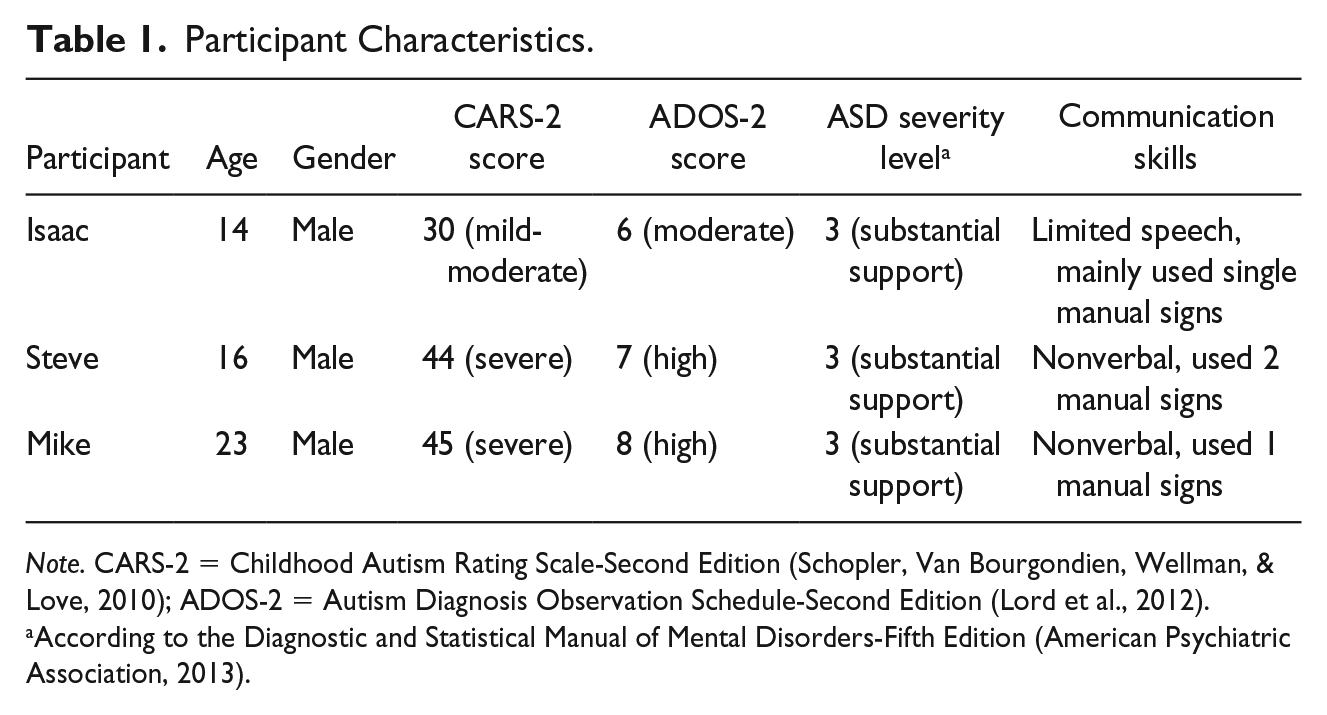
Note. CARS-2 = Childhood Autism Rating Scale-Second Edition (Schopler, Van Bourgondien, Wellman, & Love, 2010); ADOS-2 = Autism Diagnosis Observation Schedule-Second Edition (Lord et al., 2012).
According to the Diagnostic and Statistical Manual of Mental Disorders-Fifth Edition (American Psychiatric Association, 2013).
Isaac
Isaac was diagnosed with ASD and obsessive–compulsive disorder. He exhibited some problem behaviors such as hitting, screaming, and self-injury. Isaac had limited speech and used manual signs to express basic needs. He had received verbal behavior therapy since the age of 3 years. Based on parent report, Isaac was able to use approximately 2000 signs to communicate, but he had not developed the ability to combine signs to build up single phrases or sentences. He had no prior experiences with PECS or SGDs and did not have access to an iPad. At the time of the study, he attended a public high school’s self-contained special education classroom for half of the day and received Applied Behavior Analysis therapy at home.
Steve
Steve was diagnosed with ASD and intellectual disability. He presented a variety of problem behaviors such as hitting, running away, and yelling. According to parent report, he exhibited self-injury behaviors (head-butting, biting, and hair pulling), especially under stress. Steve had no functional speech and consistently used the manual sign for MORE when requesting preferred items. He never received PECS intervention or access to a SGD. Steve had an iPad available at home and at school, but mainly used it as an entertaining tool to watch cartoons. He was able to touch the iPad screen to pause and play videos independently. Steve received music therapy twice a week for about 30 to 45 min and was enrolled in a self-contained special education classroom in a public high school.
Mike
Mike was diagnosed with ASD. He showed no apparent problem behaviors. Mike had no functional speech, and was able to use the manual sign for PLEASE when asking for help or making a request. His parents reported that Mike may have been exposed to PECS materials and training during his high school years, but the training progress was unclear. The parents and current caretakers did not continue using PECS after he graduated from high school. Mike did not have any experience using a tablet device, but based on the report from one of his family members, he was able to play back music on his brother’s smart phone independently. He attended a community center during the day and was not receiving any kind of therapy or intervention during the time of the study.
Setting and Timeline
All sessions were conducted in a university-based speech and hearing clinic. The therapy room was equipped with a 6′×3′ table, several adult-sized chairs, and the materials for intervention (such as a tablet device and reinforcers). A video camera was set in the corner of the room to record the sessions for later data analysis. Participants visited the university-based clinic to receive intervention twice a week for 30 to 40 min. Participants did not receive other speech and language services over the duration of the study. During each visit, participants had one to two sessions of 20 trials each, with a break in between.
Materials
Speech-generating device
An iPad®2 with the SPEAKall!®3 application (Wendt, 2017) was used as a SGD in this study. SPEAKall! provides an intuitive interface suitable for the learning characteristics in ASD (Wendt, Bishop, & Thakar, 2019); several features such as randomization of symbol locations, vocabulary organization, and operating gestures are particularly designed to enhance symbolic comprehension and early communication in pre-linguistic learners. SPEAKall! can be programmed to mimic the traditional PECS book. Picture Communication Symbols™ 4 (PCS™) and colored photographs with the corresponding label on top were used for communication within the SPEAKall! software (see Figure 1). Each graphic symbol was 1.37" × 1.37" in size and the iPad screen displayed up to 10 graphic symbols at the same time. For some of the participants’ favorite items (which did not have a PCS equivalent), color photographs of the real object were used with the corresponding label on the top of the photograph. Subsequently, all three participants used a combination of PCS and color photographs throughout intervention (see Table 2).
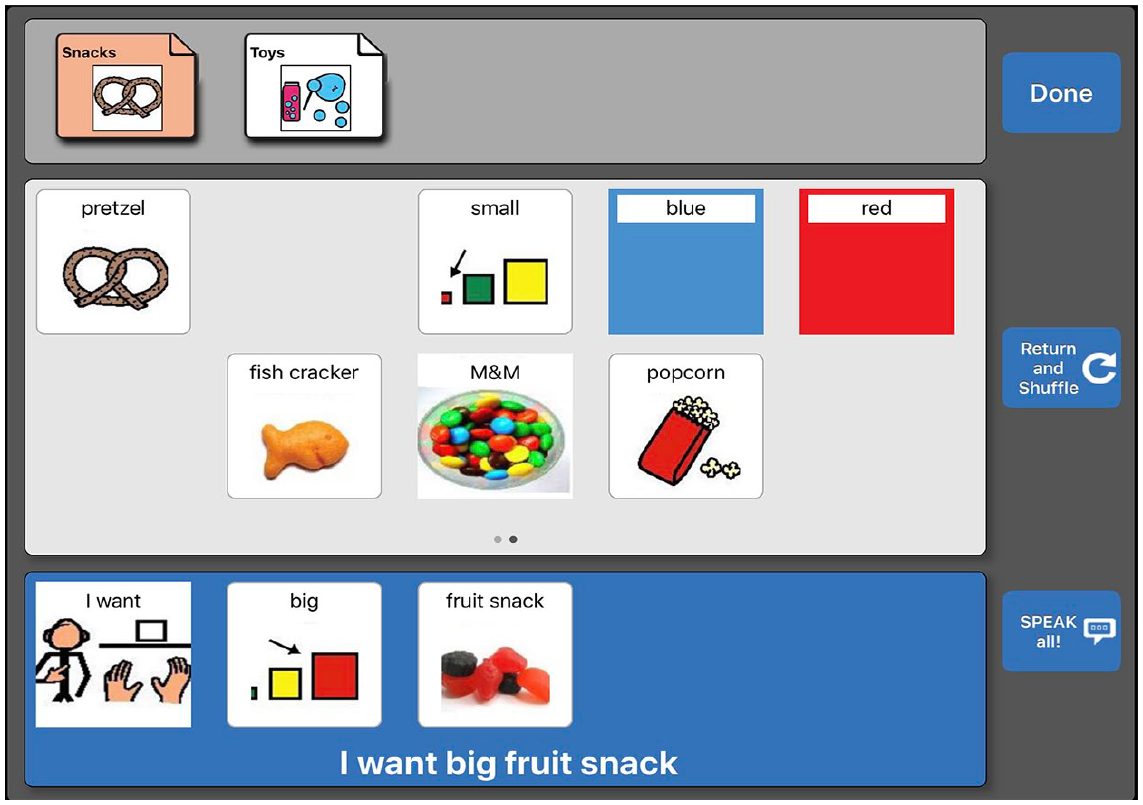
Example of speech-generating device interface.
List of Reinforcers.
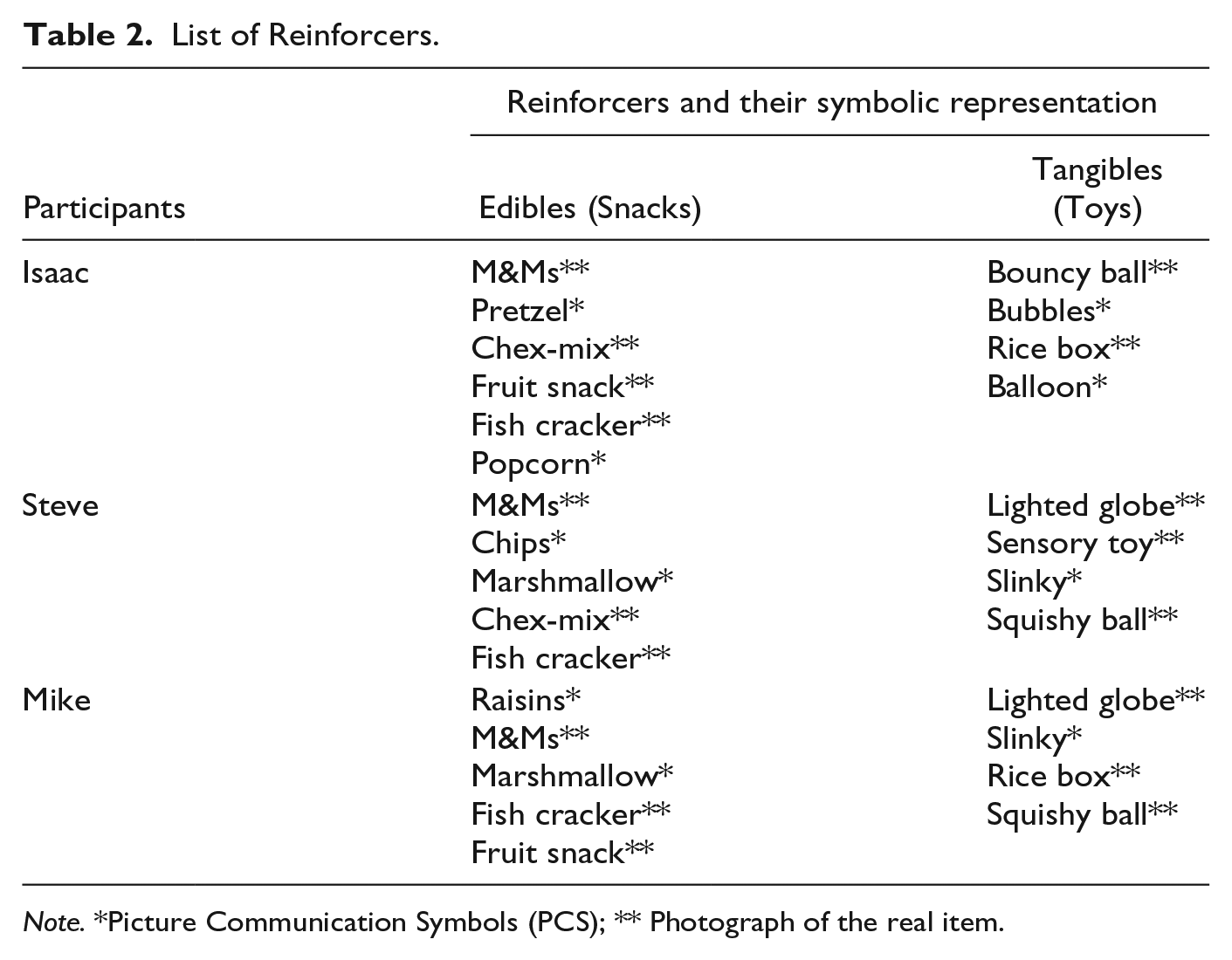
Note. *Picture Communication Symbols (PCS); ** Photograph of the real item.
Reinforcers
During the intervention sessions, edibles in the form of snacks were used as reinforcers to teach requesting. A minimum of four preferred edibles were used during each session. Edibles were displayed in plastic bags. Participants were given a small piece of the preferred edible after successful requesting. During the generalization probes, participants were enticed with tangibles in the form of preferred toys. Tangibles were placed in front of the table, out of reach. Participants were allowed to play with the preferred tangible for 30 s during each trial. A complete list of reinforcer items is shown in Table 2.
Experimental Design
A concurrent multiple baseline design (Baer, Wolf, & Risley, 1968) was implemented in this study; the intervention was introduced across three participants, sequentially. The staggered introduction of intervention allows to replicate the effects so that experimental control can be demonstrated (Byiers, Reichle, & Symons, 2012). Multiple probes were applied at the end of the baseline and after the intervention phase, to assess the generalization of trained requesting skills on untrained items. In addition to examining change in behavior, the evaluation of generalization is highly desirable for establishing the efficacy of AAC interventions. Successful generalization indicates that instructional effects reached beyond the directly targeted skills (Schlosser, 2003).
Dependent Measures
Dependent measures for this study are operationalized as follows:
Requesting
Requesting was set as the primary dependent variable to measure skill acquisition during intervention phases. The iPad intervention followed a modified PECS protocol (Boesch et al., 2013a, 2013b). Instead of physically picking up the symbol and exchanging with the communication partner, participants were taught to activate the iPad to make requests. During phases I to III, successful requesting was defined as activating a corresponding graphic symbol on the iPad by dragging it onto the sentence strip independently within 5 s. During phases IV and V, participants were expected to drag “I WANT” plus “ITEM” onto the sentence strip on the iPad within 5 s.
Speech production
Speech productions were recorded within trials starting from the trainer presenting the reinforcer and ending right after the participant consumed an edible or engaged with a tangible. Only intentional speech productions were measured. Intentional speech production was defined as any vocalization, word approximation, or accurate word utterance intended to transmit a meaningful communicative message. A word vocalization was defined as a sound clearly related to the presented item (e.g., Fi for fish cracker). A word approximation was defined as an utterance that was an intelligible approximation to the correct word, but was not the accurate name of the requested item (e.g., Prego for pretzel). An accurate word utterance was a complete and clearly intelligible production of the item name. Jargon, vocal stereotypy, and other non-intentional, non-meaningful vocalizations were not recorded.
Experimental Procedures
Preference assessment
A single-item preference assessment was implemented prior to the baseline phase to identify preferred edibles and tangibles (see Table 2). The preference assessment included two stages: parent interview and trial-based assessment (Boesch et al., 2013a, 2013b; Pace, Ivancic, Edwards, Iwata, & Page, 1985). During the interview, parents were asked to provide information about participants’ likes and dislikes for edibles (snacks) and tangibles (toys). Parents listed six to eight potential preferred snack and toy items. If the parents were not able to provide more than eight potential reinforcers, the author supplied other items similar to Boesch et al. (2013a, 2013b) to ensure enough options. Participants were given the opportunity to taste or to play with new items before the second stage of the preference assessment. In the trial-based assessment, potential reinforcers were presented in front of the participant. One item was offered at a time. A trained rater scored whether the participant consumed the snack item or interacted with the toy item within 5 s. All items were presented five times in a counterbalanced order. The same procedures were used to verify distractor and non-preferred items. Items chosen 80% of the time or higher were selected as reinforcers; plastic bag and lickorish were selected as distractor and non-preferred item, respectively.
Baseline
During baseline, one preferred edible was presented in front of the participant, but out of reach. Baseline consisted of 20 trials (i.e., response opportunities); every five trials the participant was given the opportunity to select a new edible for the next five trials. Once an edible was used for 10 trials, the edible was removed for the remainder of the session to prevent participants from over-selectivity. The iPad was placed on the table with the corresponding symbol on it. Participants were given 5 to 10 s to initiate requesting. Regardless of whether the participant successfully requested the item via the iPad, the trainer gave the reinforcer to the participant and paired it with a verbal model (e.g., Fish cracker). No physical, verbal prompting, or praise for appropriate requesting behaviors was provided at this stage. Participants remained in baseline for at least five sessions with edibles as reinforcers.
Pre-treatment generalization probes
Toward the end of baseline phase, three generalization probes were applied to assess the requesting behaviors on tangibles (i.e., toys) as reinforcers. The same 20-trial format was followed as during baseline. During the generalization probes, a preferred tangible and the iPad with a corresponding graphic symbol on the display were presented in front of the participant. No matter whether or not the correct response occurred, the preferred tangible was given to the participants, and the trainer provided a verbal model.
Intervention
Intervention followed a modification of the traditional PECS protocol (Bondy & Frost, 1994, 2002). The PECS incorporates principles of applied behavior analysis; strategies such as distinct prompting, reinforcement, and error correction are applied during each training phase to promote spontaneous, functional communication (Bondy & Frost, 2001). Phases I through III of this modified protocol were used previously by Boesch et al. (2013a, 2013b). The second author and three trained undergraduate students majoring in speech, language, and hearing sciences altered roles serving communication partners and prompters throughout the intervention and maintenance phases. The first and second authors completed both basic and advanced PECS training workshops and trained the undergraduate assistants to the level of general proficiency. Similar to baseline, an intervention session included 20 trials; every five trials the participants were able to select another preferred edible. Edibles were removed once they had been used for a total of 10 trials.
The communication partner served as the main trainer (i.e., trainer 1) during all intervention phases and was responsible for presenting and delivering the reinforcers. The prompter (i.e., trainer 2) provided physical prompting during the initial intervention phases and then faded it out gradually. A detailed description of each intervention phase is available upon request.
Mastery criterion
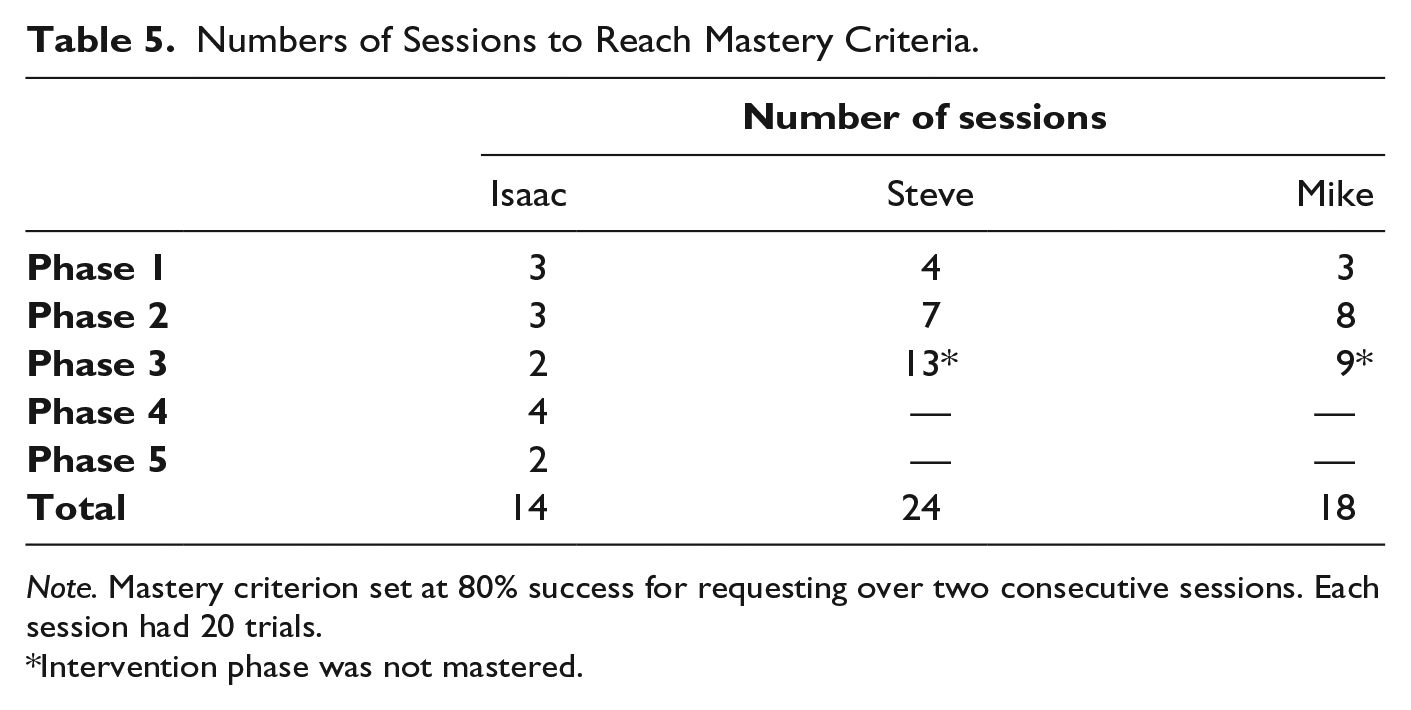
The mastery criterion for each phase was set at 80% of independently requesting through the iPad for two consecutive 20-trial sessions. Modified phase IV criterion was three consecutive sessions of at least 80% of correct response. Intervention was discontinued when participants did not reach the mastery criteria in nine sessions and a positive trend to mastery was no longer observed. For two of the three participants, phase III was discontinued when the following happened: Participants never met criteria for mastering discrimination between three reinforcing items within four sessions.
Phase I
In the original PECS protocol, Phase 1 teaches a physical behavior that pursues a communicative intent (Bondy & Frost, 1994, 2001). In our modified version, participants were taught to request for a preferred item (i.e., reinforcer) through the iPad. In this phase, participants were instructed to use their finger to select the graphic symbol on the upper screen of the iPad and drag and drop it onto the sentence strip within SPEAKall! (see Figure 1). The prompter stood behind participants and provided physical assistance to activate the device. The physical prompting faded out over time.
Phase II
Consistent with the original protocol, this phase aimed to increase the spontaneity of communication and teach persistence in communicative attempts (Bondy & Frost, 1994, 2001). The goal was to have the participants seek out the unreached communication partner and the device before requesting. Participants were taught to obtain the iPad, which was out of reach, walk to the trainer with the iPad, and persist in activating the iPad in front of the trainer. The distance between the participant, iPad, and the communication partner was increased incrementally. Initially, trainer 1 (communication partner) stood half-way across the room from the participant; subsequently, trainer 1 increased the distance all the way across the room. In the beginning, the iPad was placed in immediate vicinity to the participant, then half-way across the room, and finally all the way across the room (see Boesch et al., 2013a). The final objective was for the participant to seek the iPad at one end of the room, carry it over and activate it with trainer 1 at the other end. Trainer 2 (prompter) stood behind the participant to assist with carrying the device and activating the device in front of the communication partner. The physical prompting faded out gradually.
Phase III
In this phase, PECS teaches discrimination between symbols so that participants can compose specific messages (Bondy & Frost, 1994, 2001). In the modified protocol, participants needed to discriminate among multiple graphic symbols on the iPad and select the correct reinforcer item corresponding to the graphic symbol. Participants were taught to request a preferred item when two or more items were presented. For this purpose, a distractor (i.e., a strongly non-preferred item, in this case a plastic bag) and another non-preferred item similar to the edible reinforcers (i.e., a piece of licorice) were identified during the initial preference assessment. Phase III started with presenting the distracter versus a preferred item; the correct response was to request the preferred item by activating the corresponding symbol on the iPad. The trainer used a correspondence check to verify that the participant’s response was aligned with picking the equivalent item (Bondy & Frost, 2001). Within a session, discriminating between distracter versus preferred item was considered as mastered once the participant had produced the correct response accurately for two consecutive trials. Subsequently, the trainer repeated the procedure with a preferred versus a non-preferred edible item, and after mastery moved on to two preferred edible items. From this point on, the trainer added another preferred item each time mastery was reached. The number of graphic symbols on the iPad grew accordingly until the entire repertoire of preferred items was displayed. When participants produced errors during correspondence checks, the trainer followed the 4-step error correction procedure outlined in Frost and Bondy (1994).
Phase IV
In this phase, PECS teaches to request by starting with the phrase “I want __”; the objective is to build sentence structure (Bondy & Frost, 1994, 2001). In our modified protocol, participants learned to move the I WANT symbol onto the sentence strip, followed by a preferred ITEM symbol. The trainer implemented backward chaining to teach the sentence structure. Starting from phase IV, the trainer read back the sentence strip pointing to each symbol. A fixed time delay strategy of about 1 to 2 s was now used between the sentence starter and providing the item, encouraging the participate to complete the sentence using his own speech and/or vocalizations.
Phase V
The goal of this phase is to facilitate answering a direct question; a delayed prompting strategy is implemented to encourage the participant in spontaneously constructing a sentence (Bondy & Frost, 1994, 2001). The modified PECS protocol taught the participant to use the iPad to respond when the trainer started with a question prompt. The trial began by the trainer asking “What do you want?” and the participants were expected to use the iPad within 5 s, combining I WANT and the symbol of the preferred item to answer the question.
Prompting procedures
Verbal and physical prompts were implemented according to the original PECS protocol and specific to each phase (Frost & Bondy, 1994). Physical prompts followed a most-to-least prompting hierarchy, similar to the procedures described by King et al. (2014). A full physical prompt was the most intense prompt, followed by a less intense partial physical prompt, finally leading to the least intense gestural prompt. A fading procedure was applied to transition from the most to the least prompt. A full physical prompt was operationalized as leading a body part of the participant (i.e., steering participant toward iPad, guiding hand or finger for symbol activation). A partial physical prompt was operationalized as any stimulating of a body part of the participant to respond (i.e., tapping arm or elbow to move in desired direction). Finally, a gestural prompt consisted of pointing to relevant items in the immediate environment or symbols on the iPad screen. The fading procedure started as soon as participants showed efforts to respond independently. When participants produced an error, the trainer refocused on the last step completed in the sequence correctly and reverted to using a more intense prompt as needed to correct the error.
Post-treatment generalization probes
Three generalization probes were conducted right after the end of intervention to assess the requesting behaviors on the untrained items (i.e., toys); again following the same 20-trials format as during baseline. The generalization response was tested based on the last intervention phase that the participant mastered. During those probes, the iPad was placed in a location where the participant could access it. The trainer enticed the participant with preferred tangibles, but no prompting or praise was provided. Regardless whether the participant requested via the iPad, the preferred tangible was given. Every occurrence of the participant spontaneously using the iPad to initiate a request with a communication partner was documented.
Maintenance
Approximately 4 to 6 weeks after the intervention phase, participants were asked to visit the clinic again to determine the maintained effectiveness of acquired requesting skills. Again, maintenance followed the 20-trial format from baseline. The maintenance phase was implemented using the tasks from the last phase that the participant mastered. Three sessions were required for each participant.
Interobserver Agreement
All sessions across all phases were video recorded for later analysis, and 70% of all sessions, equally distributed across phases, were randomly selected for analysis by two independent observers (i.e., two undergraduate students majoring in speech, language, and hearing sciences). Interobserver agreement (IOA) was calculated using percentage agreement (Kennedy, 2005). The number of agreements was divided by total number (i.e., the sum of agreements and disagreements) and multiplied by 100. IOA on dependent variables was 100% for requesting and 98.6% for speech production.
Treatment Integrity
The intervention protocol was divided into procedural steps and treatment protocol checklists were created for each phase (for an example see Table 3). The checklists were used to document the occurrence or non-occurrence of intervention procedural steps. Treatment integrity (TI) was evaluated by two speech, language, and hearing sciences undergraduate students who had completed PECS training. Sessions for TI were randomly selected and 35% of the intervention sessions equally distributed across all intervention phases were assessed by two independent raters. The total number of correctly performed steps was divided by the number of total procedural steps and multiplied by 100. The TI average for trainer 1 was 99% (range 86%-100%) and the agreement between raters was 99%. For trainer 2, the averaged TI was 96% (range 90%-100%) with agreement of 100%.
Example of Treatment Integrity Checklist.
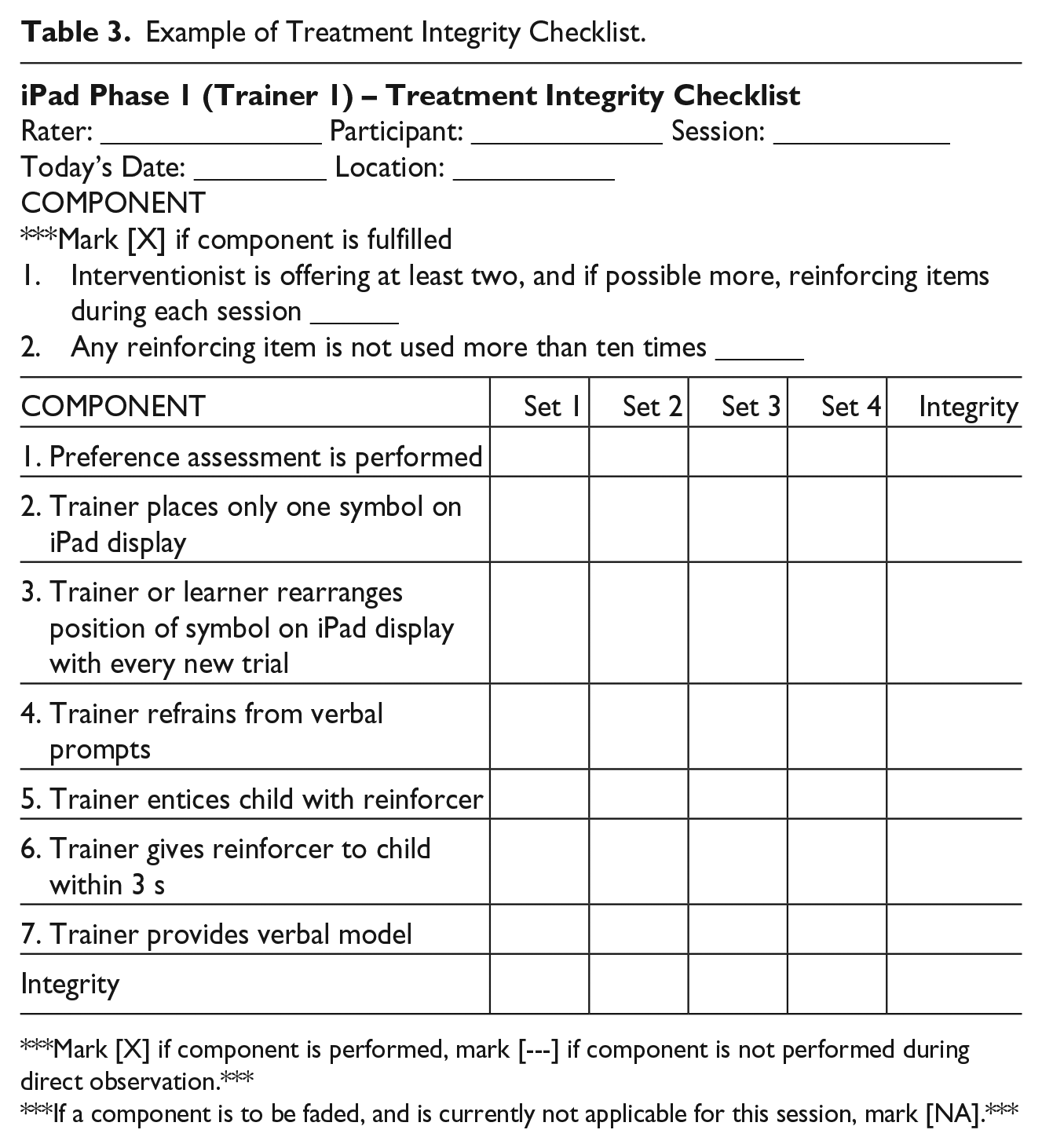
Mark [X] if component is performed, mark [---] if component is not performed during direct observation.***
If a component is to be faded, and is currently not applicable for this session, mark [NA].***
Data Analysis
Collected data were charted in graphic form and visually analyzed to reveal functional relations of the treatment. Visual analysis was conducted using the criteria proposed by Kratochwill et al. (2010). To further support visual analysis, effect size estimates were calculated to evaluate the treatment effects. Non-overlap of all pairs (NAP) is an effect size metric for single-case designs for use in quantitative syntheses of intervention studies (Manolov, Solanas, Sierra, & Evans, 2011; Petersen-Brown, Karich, & Symons, 2012). The metric resolves shortcomings of previous approaches such as Percentage of Non-overlapping Data (PND) and is not as complex and prone to error as Tau-U methods (Brossart, Laird, & Armstrong, 2018). NAP compares each data point in baseline to each data point in intervention. The number of comparison pairs which do not overlap with baseline data points is divided by the total number of comparisons. NAP values are interpreted as follows: A percentage between 0 and 65% indicates weak effects, 66% to 92% indicates medium effects, and 93% to 100% indicates large effects (Parker & Vannest, 2009).
Social Validity
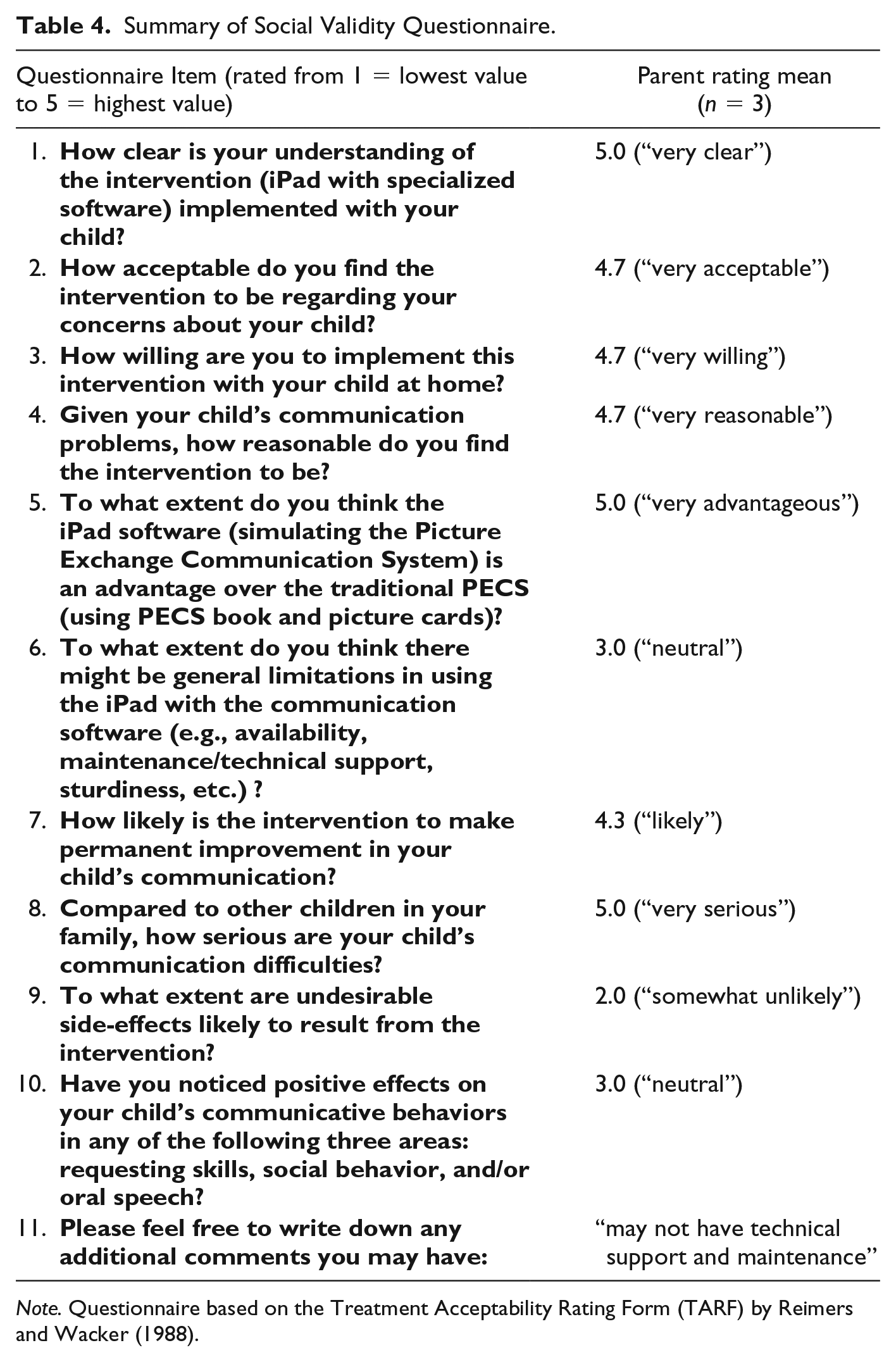
Social validity is the evaluation of the significance, effectiveness, and satisfaction from the perspective of the stakeholder regarding a particular intervention (Kazdin, 1977; Schlosser, 1999). Data were collected using a modified treatment acceptability rating form (Reimers & Wacker, 1988). Parents completed the rating form after the end of the study. The form contained ten Likert-type questions and one open-ended question regarding the respondents’ perceptions of the treatment effectiveness, acceptability, satisfaction, and possible limitations. The questions are listed in Table 4.
Summary of Social Validity Questionnaire.
Note. Questionnaire based on the Treatment Acceptability Rating Form (TARF) by Reimers and Wacker (1988).
Results
All three participants demonstrated significant improvement on requesting during the intervention phase. However, the number of intervention sessions and the mastery phases for each participant varied. Table 5 shows the number of intervention sessions needed to reach mastery criteria. Results are reported independently for each participant.
Numbers of Sessions to Reach Mastery Criteria.
Note. Mastery criterion set at 80% success for requesting over two consecutive sessions. Each session had 20 trials.
Intervention phase was not mastered.
Results for Isaac
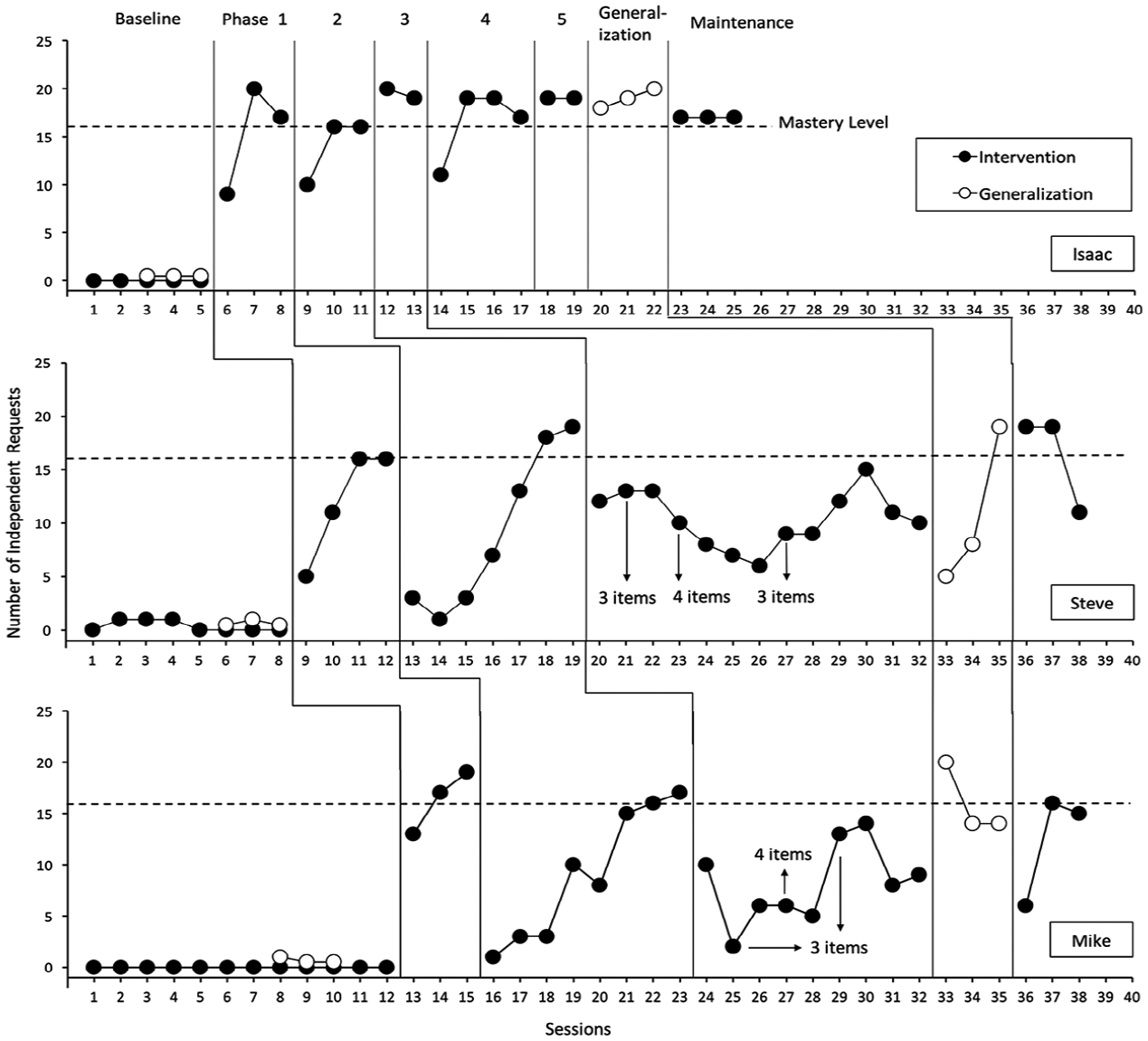
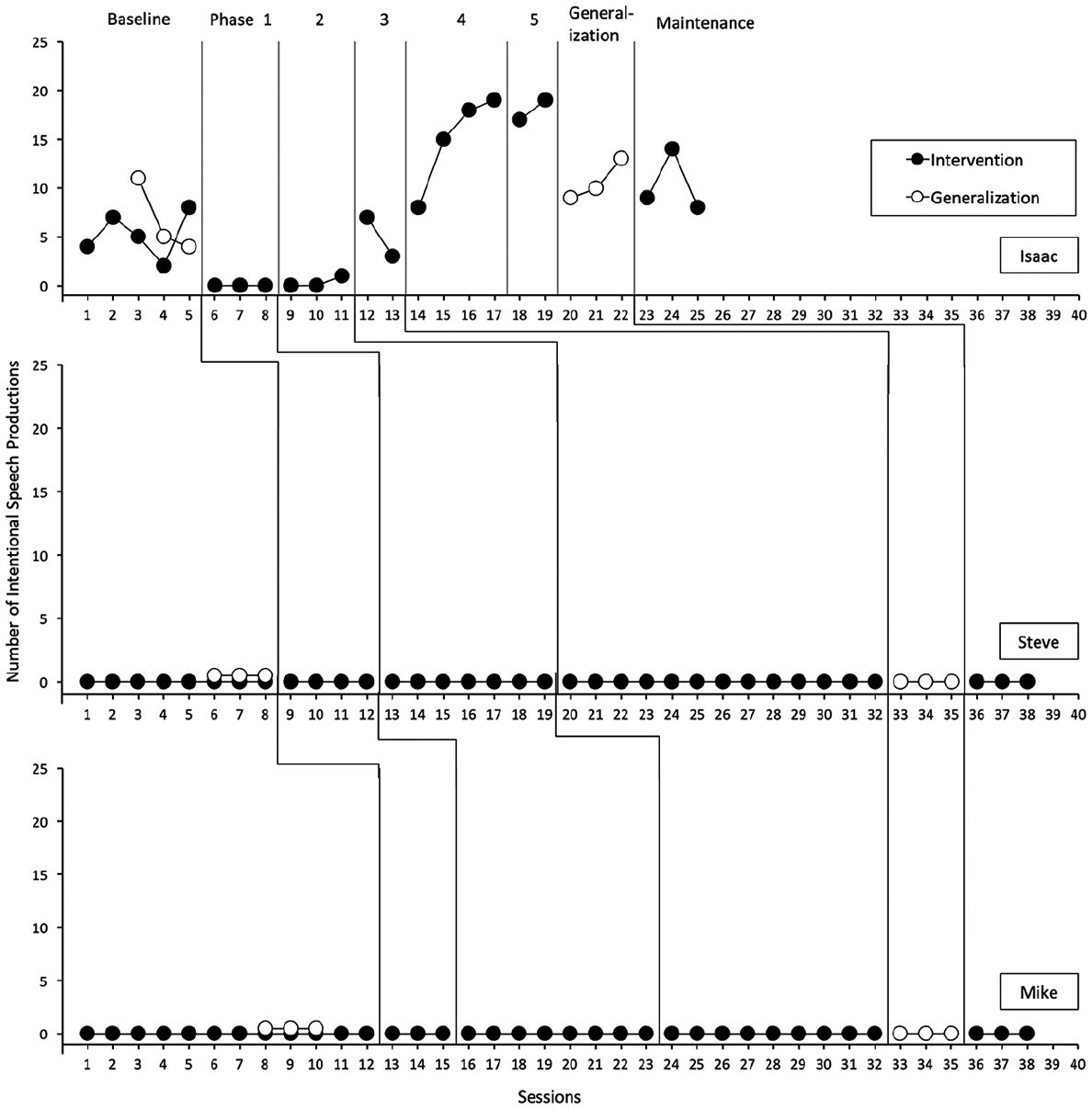
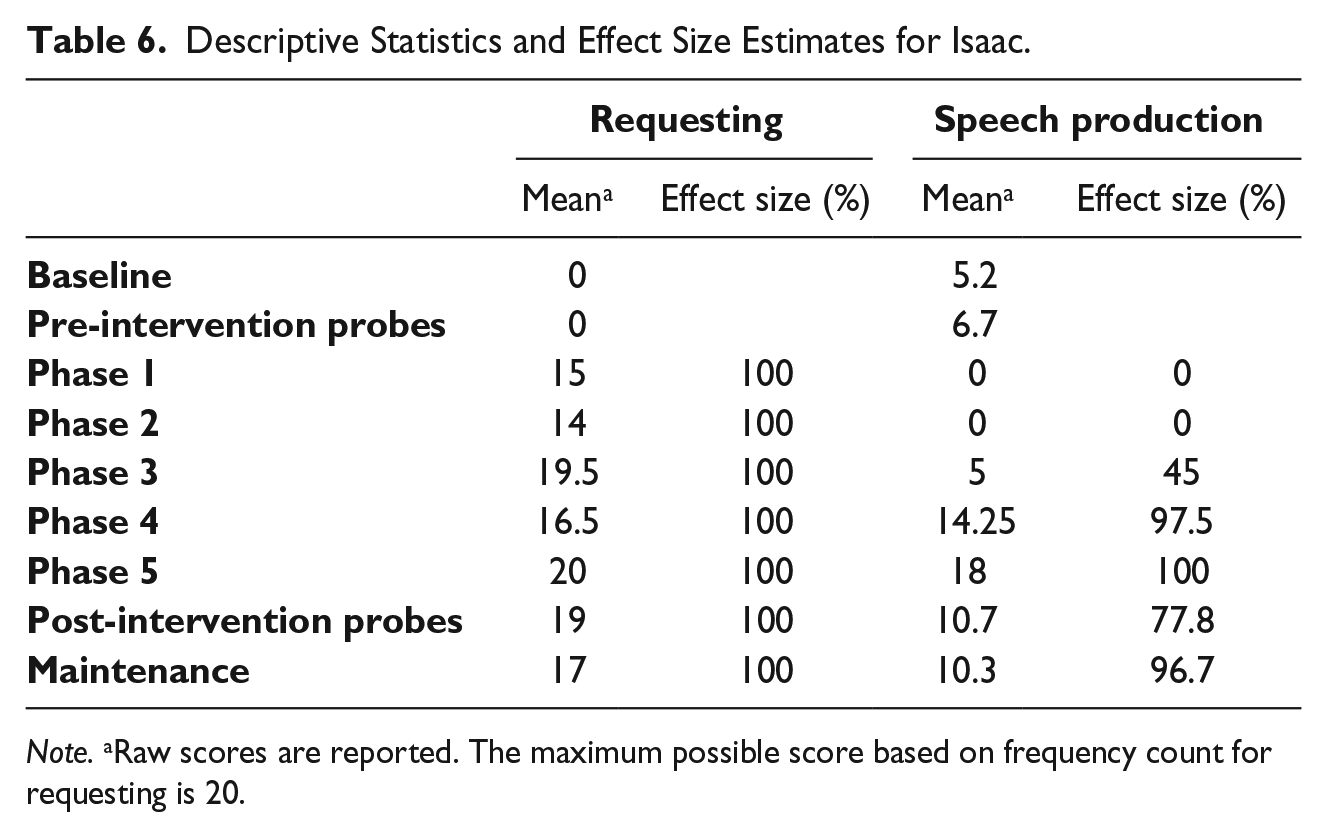
A graphic display of Isaac’s requesting data is shown in Figure 2 and the speech production data are shown in Figure 3. The descriptive statistics and effect size summary for both dependent variables are reported in Table 6.
Results for requesting.
Results for speech production.
Descriptive Statistics and Effect Size Estimates for Isaac.
Note. aRaw scores are reported. The maximum possible score based on frequency count for requesting is 20.
Requesting
Isaac had five baseline sessions and three pre-treatment generalization sessions. His requesting behavior during the baseline phase remained at zero. The baseline data were stable and no variability was observed. Isaac had 14 interventions sessions. The averaged requesting behavior was 16.5 requests per session. He mastered phase I through phase V with a mean of 2.8 sessions to reach mastery criteria. An immediate improvement on requesting was shown after the intervention was introduced. The number of independent requests showed an upward trend during intervention; however, the upward direction of trend was not maintained when initiating a new phase. Data points demonstrated that Isaac was able to produce successful one-symbol (i.e., FOOD symbol) requests in early modified PECS phases, two-symbol (i.e., I WANT plus FOOD symbol) requests in later phases, and finally three-symbol requests (i.e., I WANT plus ATTRIBUTE plus FOOD symbol) in the final phase. The screen shot displayed in Figure 1 provides an example for these three-symbol utterances. The NAP scores across phases were 100%, indicating the modified PECS intervention had strong treatment effects on increasing requesting behavior.
Three post-generalization probes were conducted right after the intervention phase. Compared to pre-treatment generalization probes, data on post-treatment generalization showed an immediate positive change in level with a NAP score of 100% which indicates strong effect. The data suggest that Isaac was able to generalize the taught skill to request for untrained items by using two-symbol combinations (i.e., I WANT plus TOY symbol).
Three sessions of maintenance were conducted 4 weeks after the generalization phase with an average of 17 correct responses. The data points in the maintenance phase were stable and no trend was observed. The NAP score between baseline and maintenance was 100%, which indicated strong effects. Isaac was able to maintain the skill after a period of time without intervention.
Speech production
During baseline, Isaac already had some intentional vocalizations with a mean of 5.2 (range 2-8). The data points in baseline varied, but no trend was observed. Isaac had 14 intervention sessions with a mean of five intentional vocalizations and word approximations each session. The speech production dropped to zero when phase I and phase II intervention started, and then returned to a mean of 5 (range 3-7) in phase III. Furthermore, speech production increased when phase IV was introduced. A positive trend was observed with a mean of 14.25 (range 8-19) and 18 in phase V (range 17-19). The NAP scores in phases I, II, and III were 0; however, the NAP score increased to 97.5% in phase IV and 100% in phase V. Data points demonstrated a decrease in speech production in phases I-III; however, a strong effect was shown in phases IV and V when the delayed prompting strategy was applied.
Three pre-intervention generalization probes were implemented with an averaged speech production of 6.7. After the intervention phase, three post-intervention generalization probes were conducted. The averaged speech production was 10.7 (range 9-13). A positive trend in post-treatment generalization was observed with a NAP score of 77.8%. The results demonstrated medium effects on generalizing the requesting skill via speech to request for an untrained tangible item (i.e., toy).
The mean of speech production in the maintenance phase was reported as 10.3. The NAP score was 96.7%, which shows strong treatment effects. The data points indicated that Isaac maintained the skill of using his speech along with the iPad to request food items.
Results for Steve
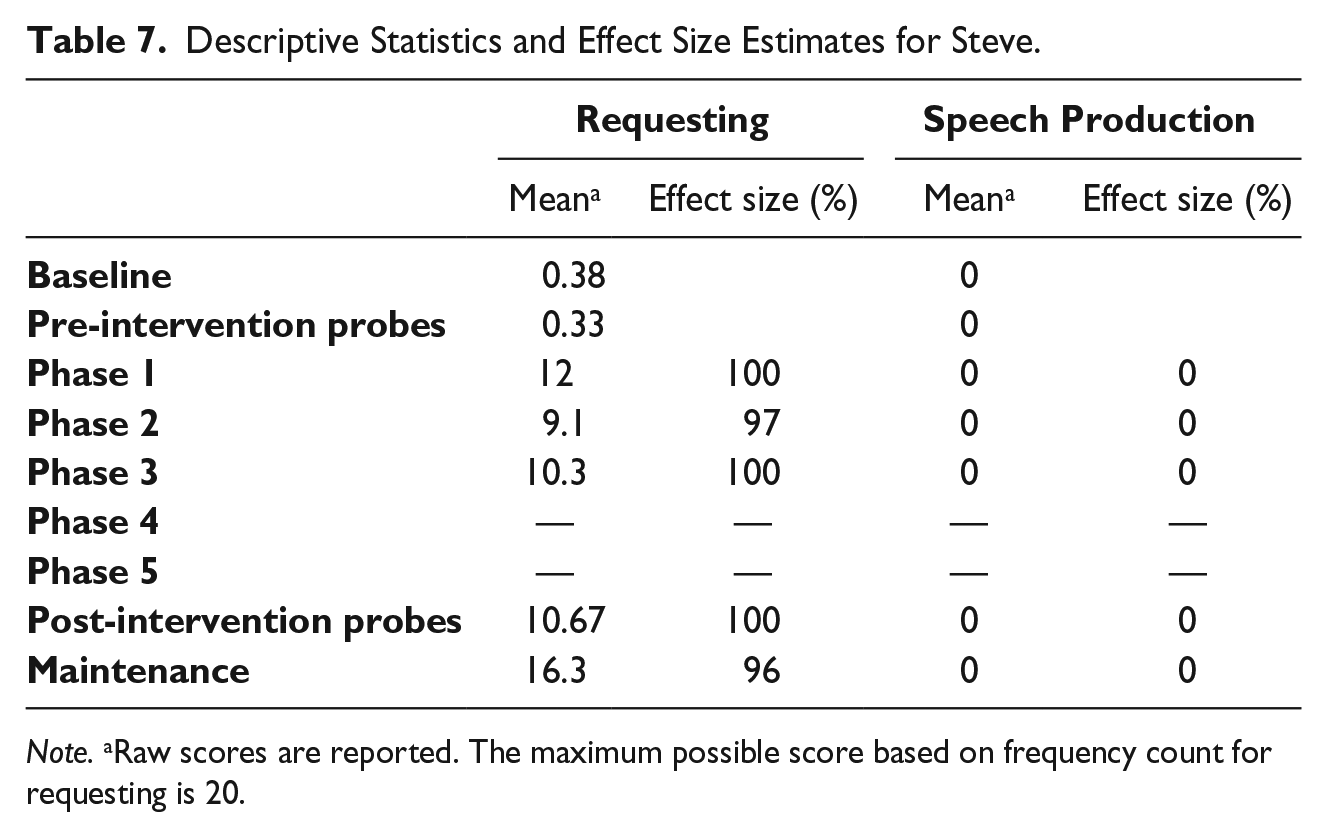
The graphic display of Steve’s data on requesting is shown in Figure 2 and the speech production data is shown in Figure 3. Table 7 shows the descriptive statistics and effect sizes for both dependent variables.
Descriptive Statistics and Effect Size Estimates for Steve.
Note. aRaw scores are reported. The maximum possible score based on frequency count for requesting is 20.
Requesting
Steve had eight baseline sessions with a mean of 0.38 on requesting behavior (range 0-1). The data points in the baseline were stable, with no observable trend. Steve had 24 intervention sessions with a mean of 10.3 on requesting behavior in each session. He mastered phase I and phase II, but had difficulties with phase III (i.e., symbol discrimination). The average number of sessions for Steve to meet mastery criteria was 5.5. The requesting behavior increased immediately when the intervention was introduced to Steve. An increasing trend was observed during the intervention; however, this trend did not continue when Steve entered a new phase. In phase III, Steve showed lower performance with picture/symbol discrimination. Steve had 13 requesting behaviors at the beginning of phase III, but the accuracy of successful requesting decreased when more reinforcers were added to the list. Within 13 sessions of phase III intervention, Steve failed to reach criterion. It was also observed that when Steve started struggling in phase III, his problem behaviors (such as whining and self-hitting) increased when he did not select the symbol corresponding to the item that he chose. Intervention stopped when mastery of three-item discrimination was not met within four sessions. Although Steve was not ready to move forward, he still made improvement on requests. Phase II data points demonstrated that Steve was able to produce accurate one-symbol (i.e., FOOD symbol) requests, while carrying the iPad in front of the trainer. The overall NAP scores between the baseline and intervention was 99% and indicated the modified PECS intervention had strong treatment effects on increasing requesting behavior.
Three pre-generalization and three post-generalization probes were conducted before and after the intervention phase. The mean of independent requesting was near zero during pre-generalization stage (M = 0.33, range 0-1). The number of requesting in post-treatment generalization showed an immediate increase in level and an increasing trend was observed. The NAP score of generalization was 100%. The results suggest the capability of generalization to request for untrained items by using single symbols (i.e., TOY symbol). He was able to carry the iPad to the trainer and activate the iPad to make requests.
Three sessions of maintenance were conducted, 4 weeks after the intervention phase, with a mean of 16.3. The NAP score between baseline and maintenance was 100%, which indicated Steve was able to maintain the skill after a period of time without intervention.
Speech production
Steve had not developed any speech. He screamed or shouted when he felt upset, but he never used vocalization to request items. Steve did not demonstrate any speech production throughout baseline, intervention, generalization, or maintenance phases. Even during intervention sessions, where initially the iPad provided additional speech output and later the trainer encouraged spoken utterances, speech production remained at 0 in the intervention and maintenance phases, with a NAP score of 0 showing no effects on speech production.
Results for Mike
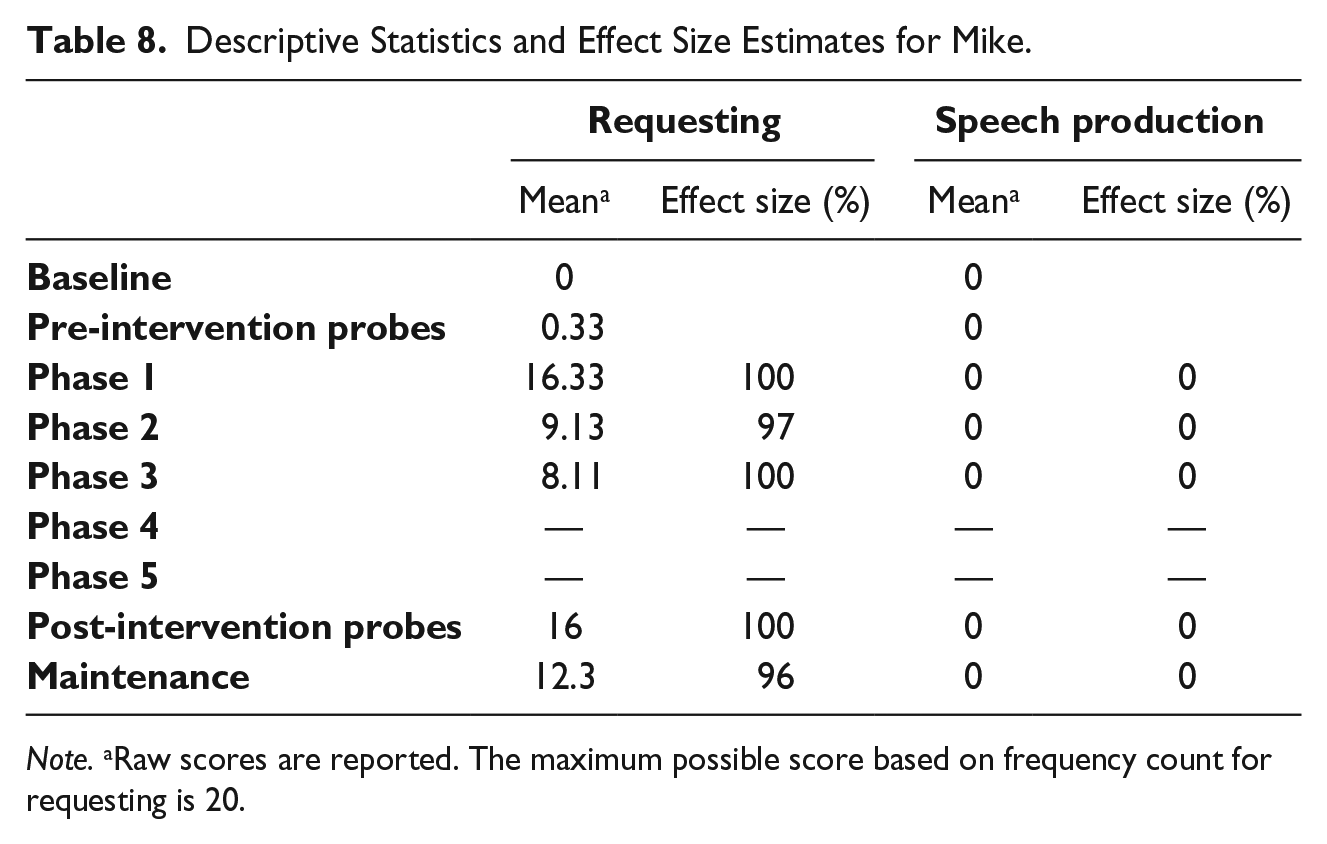
The graphic display of Mike’s requesting and speech production data is presented in Figures 2 and 3. Table 8 shows the summary of descriptive statistics and effect sizes for both dependent variables.
Descriptive Statistics and Effect Size Estimates for Mike.
Note. aRaw scores are reported. The maximum possible score based on frequency count for requesting is 20.
Requesting
Mike had 12 baseline sessions and three pre-treatment generalization sessions before entering intervention. His requesting behavior during the baseline phase remained at zero. Mike had 20 intervention sessions with a mean of 9.75 on requesting behavior. He mastered phases I and II with a mean of 2.8 sessions to reach mastery criteria. The data showed an increasing trend once Mike entered the intervention phase. Similar to Steve, in phase III, the frequency of corresponding symbol-item selection decreased when more than three symbols were presented at a time. In other words, Mike had difficulties in choosing the symbol that matched to the desired item. Intervention stopped when mastery of three-item discrimination was not met within four sessions. Phase II data points demonstrated that Mike was able to move across the space to access the trainer and produce successful one-symbol (i.e., FOOD symbol) requests. The NAP score between the baseline and intervention was 100%, indicating the modified PECS protocol has strong treatment effects on increasing requesting behavior.
His requesting behavior during pre-treatment generalization probes ranged from 0 to 1 (M = 0.33). The number of requesting in post-treatment generalization showed an immediate increase in level but a decreasing trend was observed. The NAP score of generalization was 100%. The results suggest Mike was capable of applying the learned phase II skill to request for untrained tangible items by using a single symbol (i.e., TOY symbol).
Three sessions of maintenance were conducted, 4 weeks after the intervention phase, with a mean of 12.3. The NAP score between baseline and maintenance was 100%, which indicated Mike was able to maintain the skill taught in phase II after a period of time without intervention.
Speech production
Mike was quiet during baseline and intervention phases. He did laugh on occasion, but this behavior did not appear to be in response to activities related to the intervention. Mike never used his voice to show needs or emotion. Mike did not demonstrate any intentional or non-intentional speech production throughout baseline, intervention, generalization, or maintenance phases. The NAP score was 0%, reported as no treatment effect on speech production.
Social Validity
The results from the social validity questionnaire are summarized in Table 4. Parents agreed that their children’s communication difficulties were “very serious” compared to other children in the family. They showed positive responses to the intervention strategies, describing them as “very acceptable” in regards to their concerns about their child. Respondents also believed the interventions were “likely” to make permanent improvement in their children’s communication. Parents agreed that they understood the intervention implemented with their children and they were very willing to implement this intervention at home. When asked to compare the iPad software to the traditional PECS, parents considered the iPad software an advantage over the traditional PECS book and picture cards. However, one respondent believed there might be general limitations, such as lack of technical and maintenance supports in using the iPad with the software.
Discussion
Requesting
The goal of this study was to evaluate the efficacy of the iPad-based intervention for increasing functional communication in adolescents and young adults with ASD. Three participants received a modified PECS protocol that involved a modification of PECS intervention for infusing the iPad-based SGD. The results indicated that the modified PECS protocol had an impact on improving requesting behaviors. Previous literature had indicated both PECS and SGDs intervention have positive influence on teaching requesting behaviors (Angermeier, Schlosser, Luiselli, Harrington, & Carter, 2008; Beck, Stoner, Bock, & Parton, 2008; Flippin et al., 2010; Ganz, Simpson, & Corbin-Newsome, 2008; Preston & Carter, 2009; Schepis, Reid, Behrmann, & Sutton, 1998; Schlosser, Sigafoos, & Koul, 2009; Schlosser & Wendt, 2008). The results of this study extend the current literature and suggest that the modified PECS protocol infusing a SGD is a viable intervention for individuals with ASD who have limited functional communication. This study provides experimental support that a modified PECS protocol can be applied to introduce high-tech AAC. The behavioral principles in PECS intervention work regardless of the modality. This finding is similar to Boesch et al. (2013a, 2013b): the modified PECS protocol is beneficial for individuals with ASD to learn requesting behavior.
Consistent with current literature (Charlop-Christy et al., 2002; Cummings, Carr, & LeBlanc, 2012; Ganz & Simpson, 2004), all three participants reached the mastery criteria for each PECS phase during an average of four intervention sessions (80 trials). However, only one participant mastered modified PECS phase I through phase V.
Generally speaking, compared to phase I, phase II was more challenging for all three participants. Although Isaac required the same number of intervention sessions to pass phase I and phase II, his performance of independent requests in phase I was slightly better than in phase II. Steve and Mike needed more intervention sessions to meet the criteria of phase II. Even though all three participants mastered phase II, it was found that all three participants needed more physical prompts to pick up the device and travel to the trainer. The finding was similar to other PECS-based SGD studies that show the physical act of picking up the device is difficult for some individuals (Beck et al., 2008; Boesch et al., 2013a). Even though the weight of an iPad is relatively light, compared to traditional SGDs, participants still needed more physical prompts to pick up the iPad. These experiences are similar to the observations by King et al. (2014) who described that prompting during PECS phase II required additional effort when an iPad was used instead of the traditional PECS book.
Two of the three participants failed to pass phase III, which involves symbol discrimination. Before the study started, Steve and Mike developed very limited symbolic understanding and were capable of using limited signs (1-2 manual signs). When the participants were asked to select between two symbols at the beginning of phase III, the accuracy of correct response was 60% (N = 12) for Steve and 50% (N = 10) for Mike; however, when the number of items was increased to four items, the accuracy dropped down immediately. In order to avoid frustration, the reinforcers were reduced to three items. When the number of reinforcers decreased, it was observed that Steve and Mike’s performances improved, but still did not reach mastery criteria. Unlike Steve and Mike, Isaac mastered phase III in two sessions. The difficulties Steve and Mike encountered may relate to cognitive levels (Ganz & Simpson, 2004). Although one of the claims is that PECS requires few prerequisite skills (Bondy & Frost, 1994), Cummings et al. (2012) stated that certain discrimination skills are essential to progress through PECS phases. The findings of this study provide evidence that some of the individuals may have difficulties with picture discrimination, which is beyond their current cognitive level.
Isaac, the only participant who mastered phase III, had developed symbolic communication skills before participation in the study. He was able to use single-sign utterances to request and indicate the name of objects. The results showed that Isaac learned combining “I WANT” and the “ITEM” symbols. It was also observed that he began to combine manual signs when requesting the preferred item (i.e., he signed “fish” and “cracker” when asking for a fish cracker). Furthermore, instead of communicating via manual signs solely, Isaac demonstrated “sign + speech + graphic symbol” initiations after intervention. He used sign language, spoken word approximation, and the graphic symbols while requesting items. This corresponded to the statement from Bondy and Frost (1994) that PECS follows the principles of language development and is able to foster language acquisition.
Speech Production
Speech production was another outcome variable monitored in this study. To summarize the data, one participant, who already had some vocalization during baseline, increased his spoken words; and two participants who had not developed spoken words during baseline remained the same during the intervention stage. This shows that the effectiveness of the modified PECS protocol on speech production varies, similar to results on the original PECS (Preston & Carter, 2009; Schlosser & Wendt, 2008), and may be more beneficial for individuals who had already developed verbal imitation ability (Carr & Felce, 2007). Isaac had limited verbal communication ability prior to this study. Even though the iPad provided speech output every time the participant activated it, Isaac’s speech production slightly decreased during phases I through III but increased immediately in phase IV when the trainer aimed to elicit speech. Research has shown that the verbal modeling and time delay strategies introduced in PECS phase IV encourage learners to use speech to request (Charlop-Christy et al., 2002; Ganz & Simpson, 2004; Preston & Carter, 2009; Tincani, 2004). Furthermore, this finding also provides empirical evidence that although not all participants develop speech after receiving AAC intervention, such interventions do not prevent speech acquisition either (Schlosser & Wendt, 2008).
Generalization
Generalization has been an important issue in behavioral interventions. Individuals with ASD frequently cannot apply what they have learned to other settings, with other materials, or with other people. Only a few studies reported on generalization effects of PECS intervention (Flippin et al., 2010). Tincani (2004) and Tincani, Crozier, and Alazetta (2006) have reported findings indicating that participants were able to produce independent requests with new communication partners. Participants in this study were asked to request for items with at least two different trainers during intervention phases, to ensure that participants were capable of generalizing the learned skill across different communication partners. Moreover, generalization probes were conducted to evaluate if participants can use the learned skill to request for untrained items. The results showed that all three participants were able to generalize the skill to different categories of items (i.e., from edibles to tangibles). This valuable finding indicates that participants may be able to learn requesting skills in an instructional setting and to apply the acquired skills in a functional way under more naturalistic circumstances.
Pre-intervention Characteristics
Individual difference variables may be the reason for the differential outcomes observed. It should be noted that pre-intervention communication and language skills varied considerably between Isaac, Steve, and Mike. Isaac, who showed the largest improvements in both requesting and speech acquisition, already had a large sign vocabulary at the start of intervention. His symbolic comprehension and expression skills were likely much more developed than those of Steve and Mike, whose communication repertoires were limited to one or two signs. It is also noteworthy that Isaac scored at a higher level on both ADOS-2 and CARS-2 assessments. These results by themselves would classify his autism severity level as moderate; it was the absence of verbal speech that lead to a label of severe autism with substantial need for support according to the DSM-V criteria (American Psychiatric Association, 2013). Steve and Mike showed higher ADOS-2 and CARS-2 scores that definitely classified them as severely autistic; it is likely that these individual differences contributed to the range of communication and speech outcomes observed across participants.
Potential Advantages of iPads Over PECS
Compared to the traditional PECS (i.e., PECS book and picture cards), the iPad with SPEAKall! may add advantages for teaching nonverbal individuals with ASD. First, the speech output generated by the iPad may provide additional verbal modeling which may further increase users’ speech production. The sound produced by the iPad may have a reinforcing value and the users may be more motivated to use it as a means of communication (Ganz, Hong, & Goodwyn, 2013; Schlosser et al., 2007). In other words, the synthesized speech may function as a conditioned reinforcer which may increase the reinforcing value and have an evocative effect on the iPad as a communication device (Sobsey & Reichle, 1989). Recent research on preferences for AAC modalities points in a similar direction: McLay et al. (2017) found that children with ASD who were being taught to request using a range of AAC modalities had more success using PECS or SGDs than using manual signs. During modality preference assessment probes participants most often selected the SGD indicating a preference for this modality. The authors concluded that the reinforcing effect of speech output generation may have been the critical element.
Furthermore, traditional PECS may limit the communication partner to those who are familiar with an exchange-based communication system. Clinicians and caregivers also need to spend time creating picture cards. Occasionally, picture cards may need to be recreated due to loss or damage (Boesch et al., 2013a). For tablet device users, graphic symbols can be made more easily through software or through the built-in camera and will be stored automatically, reducing the burden associated with creating PECS materials.
Limitations and Future Research
In this study, participants were one young adult and two adolescents with ASD. The findings may limit to certain cohorts and may not able to generalize to different age groups or individuals with different characteristics. Participants in this study were taught to discriminate graphic symbols; however, two participants still had difficulty with discrimination under systematic instruction. Although Angermeier et al. (2008) reported that the iconicity of graphic symbols has no influence on the learnability of the graphic symbols during PECS phases I and II, it is still not clear how much the iconicity of graphic symbols can influence the discrimination of graphic symbols in phase III (Boesch et al., 2013a). The PCS stimuli used in this study were selected based on the assumptions that PCS (a) represent a highly iconic symbol set (Mizuko, 1987), and (b) are commonly used as part of visual supports within the participants’ natural environments. However, there was no symbol assessment process to identify symbol preferences a priori to the investigation. A detailed symbol assessment can help to choose types of symbols that fit with current communication needs and abilities as well as future needs (Beukelman & Mirenda, 2013). According to Mineo-Mollica (2003) the symbol selection process needs to take into account the current skills of the user, how symbols are represented, how many symbol representations occur simultaneously, and how these representations are arranged. Participants may have performed differently if symbols were selected that are a better match with their preferences and current abilities. The fact that iconicity did not seem to matter during PECS phases I and II may be due to symbol discrimination not being taught during those phases.
Furthermore, generalization was tested after the completion of intervention. Generalization of each PECS phase by itself was not evaluated. Although the results indicated the participants were able to apply the taught skill for requesting for different categories of items, more research is needed to evaluate if participants are able to apply the skill and transfer it from a clinical setting to a natural setting.
Future research may also wish to pay attention to assessing and reporting what cognitive, speech, and language skills the participants bring to the task (Schlosser & Wendt, 2008). A precise and systematic assessment and documentation of individual characteristics can enhance the ability to identify potential predictors of communication and speech production outcomes (Yoder & Stone, 2006).
Implications
To summarize, this study investigated the efficacy of a modified PECS protocol of teaching individuals with ASD to make requests via a tablet device. As described, all three participants gained a number of valuable requesting skills; however, the mastery of modified PECS phases varied. Although Bondy and Frost (1994, 2001) claim that the original PECS requires minimal prerequisite skills, the findings show that some discrimination skills may be required to master the later modified PECS phases. The cognitive level of the participants may be a valuable indicator to predict the acquisition of PECS phase III. Second, the results show that the effects on speech production vary. Therefore, practitioners should have a realistic expectation that, although the modified PECS intervention will not prevent speech production, a facilitative effect on speech will be more likely for individuals who had already developed some verbal ability. Furthermore, the results provide evidence on generalization. Once individuals learned how to request, they are likely to generalize the skill to request for untrained items. Practitioners want to maximize intervention benefits to increase class of items and extend the vocabulary of the AAC users.
Footnotes
Authors’ Note
The authors wish to express their gratitude to the parents and caretakers of the participating individuals for their everlasting support of this investigation.
Declaration of Conflicting Interests
The author(s) declared no potential conflicts of interest with respect to the research, authorship, and/or publication of this article.
Funding
The author(s) disclosed receipt of the following financial support for the research, authorship, and/or publication of this article: Development of the SPEAKall!® software used in this investigation was partially supported by Grant 1R43DC015422-01 from the National Institute on Deafness and Other Communication Disorders, National Institutes of Health awarded to the first author. The intellectual property rights to SPEAKall! are owned by Purdue Research Foundation, West Lafayette, IN. The first author is listed as the inventor. None of the authors have any financial relationship in terms of the development of SPEAKall!, which is currently a pre-commercial product.
