




Abstract
This study empirically examines the effect of economic growth, environmental governance (EVG), foreign direct investment (FDI) and green innovation on energy transition in India during 1990 to 2022. Auto Regressive Distributed Lag (ARDL) model is applied to find out the cointegration among the variables. Finding from the bound test confirms the cointegration among our variables and the short run influence of economic growth, EVG, FDI and green innovation on energy transition is observed. Additionally, the long run impact of economic growth and FDI on energy transition is noted. Granger causality result confirms unidirectional causality from EVG to economic growth, FDI and energy transition. Similarly, economic growth causes FDI and energy transition in unidirectional ways. Moreover, unidirectional causality from energy transition to FDI is observed through the causality test. Based on our findings, the study recommends policy towards energy transition having a long-term impact on environmental pollution mitigation and economic growth to support Sustainable Development Goals in the targeted period.
This is a visual representation of the abstract.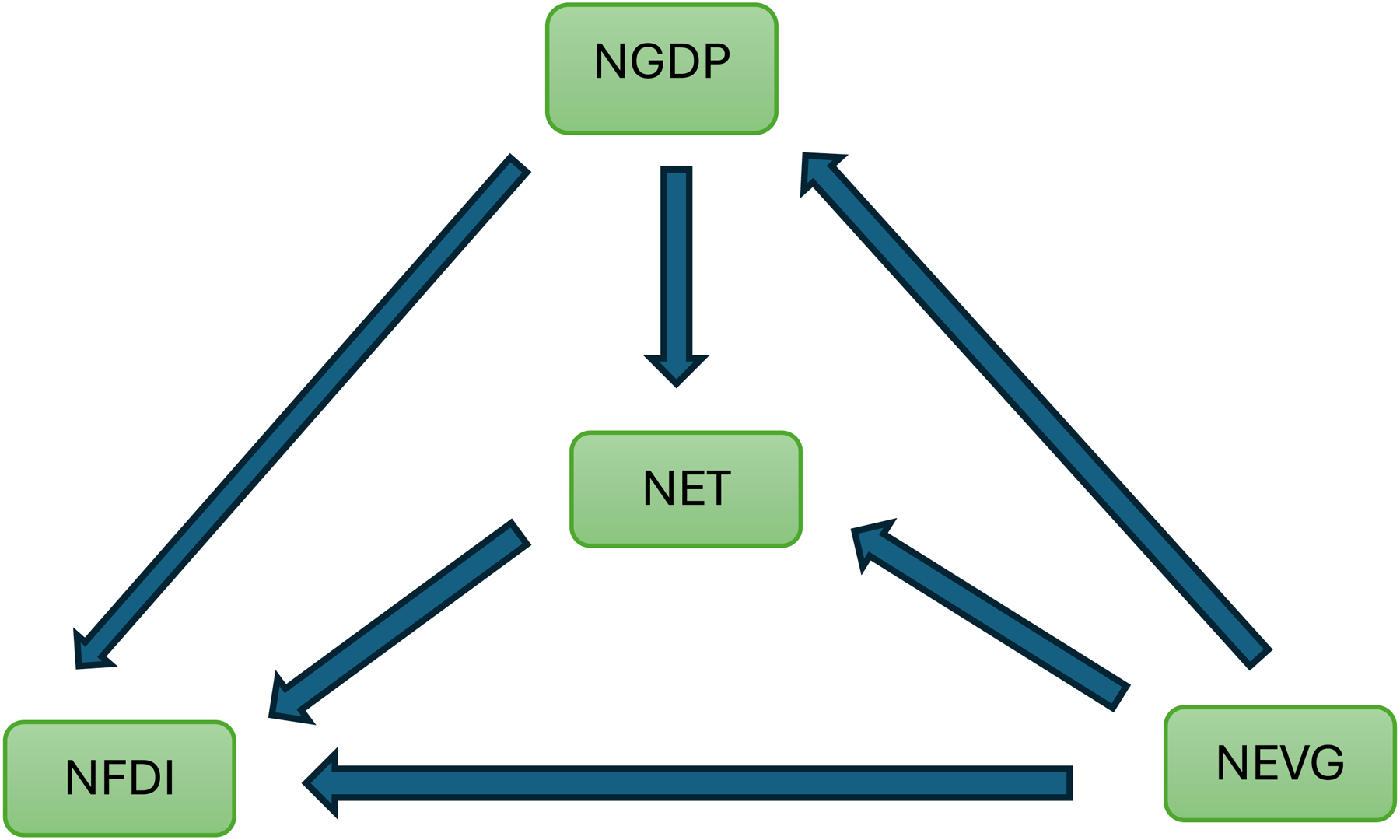
Introduction
The Sustainable Development Goals (SDGs), adopted by the United Nations General Assembly (UNGA) provides a powerful framework for international cooperation to achieve a sustainable future for the planet (Gielen et al., 2019). The agenda 2030 for UNGA dedicated to SDGs 7-safeguard access to affordable, reliable, sustainable and modern energy for all. 1 The first dialogue on energy in 2021 under the General Assembly provides transformational action with respect to SDGs and support for the implementation of the Paris Agreement to promote energy related goals and target till 2030. The objective was to catalyse innovative solutions, investment, voluntary commitments and multi stakeholder partnerships.
Energy is considered a vital input for the economy. Continuous and irresponsible uses of energy have resulted in environmental problems in the form of emission and global warming. Traditional sources of energy are widely responsible for such emission problems. The environmental summit and climate concerns have further intensified the requirement of emission control to prescribed limit. The historic Paris Agreement has set the target to control global temperature to 1.5 °C till 2030. The concentration of greenhouse gases has increased significantly in the environment and has accelerated the challenges of human existence and sustainability of future generations (Ibrahim et al., 2023). Such sustainability even attracted attention with the concept of carbon neutrality in 2002 focusing on fossil fuel production by 2030 with an annually 6% targeted one (Ibrahim et al., 2023; Shen et al., 2021). The combustion of fossil fuels for energy and transportation is a major human activity to emits CO2 (Steg et al., 2015). The achievement of energy transition depends upon the shifting from fossil fuel-based sources to zero carbon-based sources, mitigation of climate change to reduce energy related carbon emission and global temperature to 1.5°C. 2 In recent years, energy sector has dynamically changed with the inclusion of green energy resources. Even with the technological development, the share of green resources is low, but it is considered as an efficient source of energy than traditional one (Graham et al., 2021; Yu and Guo, 2023). Consequently, green energy transition is the priority areas for environmental policy focusing on energy efficiency, energy conservation and carbon neutrality.
Global energy transition is crucial due to equity, security and sustainability concern 3 . The sustainability dimension of energy performance has improved with a shift to renewable energy and incorporation of EVs. In the recent dialogue of Conference of Parties (COP-28) in Dubai 2 years ago, it was advocated that the aim is to double energy efficiency and triple renewable energy capacity by 2030 and transition from fossil fuel in just and equitable manner. The equity focuses on policies, decisions and gaining performance. Countries are accelerating effort in energy transition in economical way with a focus on human capital development, employment opportunity in energy sectors, investment in energy infrastructure and technological aspect exploring innovation especially uses of Artificial Intelligence (AI). The tailored pathway provides new perspective on collaboration and considers specific dimensions such as regions income level and local energy resources and increase the impact and advances in energy transition.
The global investment flow in energy transition accounted for 1.8 trillion in 2023 higher (17%) than last year. 4 Energy transition is a key area which primarily focuses on clean energy technologies, (renewable energy projects, EVs, power grid and hydrogen) along with clean energy supply chain, venture capital, private equity and public markets investment in climate tech companies. Global clean energy supply accounted $ 135 billion and climate tech equity financed raised around $84 billion in 2023. The investment occurred in electrified transport ($634 billion), renewable energy ($623 billion), nuclear ($33 billion), etc. The highest investment measures are in America, Asia Pacific and Europe, Middle East and Africa region respectively. The top investors are Japan, the USA and Germany. In developing countries, Brazil, China and India come under top ten investors in energy transition with an investment amount of $30 billion. The global investment in energy transition technologies surpassed with fossil fuel supply, with an amount of $671 billion in 2023 increased by 32% (from $508 in 2022). During this year, total investment in energy transition had matched fossil fuel supply investment that shows, for the first time, a positive path to energy transition for the coming years. According to Fostering Effective Energy Transition (2024), 5 the framework of energy investment, shows a positive and long-term progress of energy transition influenced by regulatory framework and climate crisis. Sweden, Denmark and Finland account top scorers in index report due to effective energy policy that have stepped up France in top five performer. In the case of developing countries, Brazil, China and India have made a strong progress in indexed score. Report further highlights that the balanced energy transition in the core of policy possibly depends upon investment in clean energy, promoting innovation, encouraging energy efficiency and societal benefits. Around twenty countries have improved their scores in all three dimensions. In 2024, around 28% of nation are actively involved in transition pathway towards balancing energy system that includes Kuwait, Tanzania, Bangladesh, Nigeria and Mozambique.
Energy sector has become a pathway in energy transition that helps to address energy price volatility and energy security worldwide. 6 It became even challenging with the climate crisis which damage ecosystem, settlements and infrastructure. Energy transition is not only about switching energy sources but also considers innovation, recycling and circular economy concept to ensure efficiency in the medium and long term. It further intensifies with the climate crisis released by the Intergovernmental Panel on Climate Change (IPCC) in 2022 that focuses on climate hazard that damages ecosystems, settlements and infrastructures. The sustainable energy is vital for mitigating the impact of climate change and global warming hazards which has pressurised to moving from traditional to renewable energy sources. Renewable energy-based transition helps to attain SDGs-7 (provision of clean and affordable energy) with energy security and mitigate climate crisis. Countries require to set an ambitious targets and implementation measures to increase energy efficiency and renewable energy development. To mitigating the effect of climate change, transition become crucial for the global leaders (Bakhsh et al., 2024). Therefore, shifting from traditional (fossil fuels) to modern (renewable) energy sources has become vital and possess insightful implication on job market, industries and overall economic scenario. The energy transition roadmap highlights renewable energy technologies in heating, cooling and transport. 7 The roadmap uses environmental, economic and technological metrics that offers visions to policy and decision makers to take required action.
The economic characteristic of energy transition works on four principles for policy perspective 8 – The first principle is about decarbonisation which is accelerated by climate change challenges. Second principle addresses the liberalisation of energy market by penetration of clean energy technologies. The market is designing such a way that can cover cost and does not influence price spikes. The third principles talked about the challenges of renewable energy transition with respect to electrification and abatement of sectors. Additionally, it considers the price stability and externality form fossil fuel technologies. The fourth principle emphasises on the business model of energy transition. Dynamic consumer preferences, willingness to pay, externality, etc. determine the demand for clean energy generation for residential consumer. From only energy to energy services differentiate the modern energy models to traditional one.
Electricity is a key aspect for energy transition due to technological, environmental and marketing aspect (Blazquez et al., 2020). Solar, wind and hydropower are successful clean energy technologies developed in the world. From an environmental perspective, electrifying industries, transport and building helps to mitigate carbon emission. To understand this, it is important to focus on interdisciplinary knowledge regarding advanced technology that drives energy transition (Chen et al., 2019; Child et al., 2018) such as, renewable energy, energy efficient technologies, waste to energy generation, electric vehicles (EVs), etc., which is part of our daily life. Thus, the focus is on utilization of energy resource and environment-however not limited to certain technologies and energy system (Chen et al., 2019; Del Granado et al., 2018).
The ongoing effort of energy transition (primarily in clean energy development) is widely influenced by the economic condition of a nation. It is seen that economic growth primarily depends upon the energy which works as a fuel to accelerate growth. The availability of energy resources considers the durability and life span that are further influenced by income and investment. Traditional sources of energy primarily, coal, oil and gas, are widely used for energy requirement and responsible for carbon emission and degradation of environmental quality. The energy sector is a key player which is highly responsible for deteriorating environmental quality. Uses of traditional sources of energy emit green -house gases and primarily large share accounted by carbon emission. Economic growth leads to energy consumption which accelerates carbon emission. A way is to limit such emissions is the development of alternative energy sources. Clean energy comes under the mind to replace fossil energy with renewable based energy. Such a transition depends upon the economic situation along with financial availability, innovation and governance. Financial availability supports smooth technological development, research and development activities, and diffusion of such technology from one place to another. A proper transition could be possible with strong governance and willingness of people to support. Rising emission issues by energy sector has dominated the debate and force to rethink about the role of governance in this sector. Energy governance focuses on the managing energy sector from production to end energy uses with the consideration of economic, political and social authorities 9 . This includes the mechanism through which authoritarian right, interest and obligation come under consideration related to energy gap.
The transition toward clean energy makes it obligatory to think about the governance. It helps to find out the energy related issues, explores sustainable energy related technological options and address energy intensive consumption pattern
Environmental governance (EVG) is a vital element in the SDGs to monitor sustainable development (Roberts, 2020). It provides a set of guidelines, practices and institutions related to environmental management ranges from conservation, protection and exploitation of natural resources (Das, 2020). Additionally, it directs institutional process, standards, values, behaviour and organising mechanism to usher the right and obligations to access and uses natural resources. Environmental Performance Index (EPI) offers countries work toward mitigating climate change, improving environmental health, protect ecosystem and helps to establish environmental policy targets (Block et al., 2024). It provides a powerful policy tool in the direction to set an effort to meet target of SDGs, Paris Agreement, and the Kunming-Montreal Global Biodiversity Framework. In line with, governance comprises the process by which governments are selected, monitored, and replaced; effectively formulate and implement sound policies; and the respect of citizens and institutions that govern economic and social interactions among them (World Governance Indicator, 2024: The World Bank). World Governance Indicator (WGI) works on six principles namely voice and accountability, political stability and absence of violence, government effectiveness, regulatory quality, and rule of law and control of corruption. It plays an important role to facilitate energy transition and reducing carbon emission (Bakhsh et al., 2024). Further, it is supported through incentive policies, to use of clean energy sources and shifting to clean energy.
Global EVG highlights three key characteristics namely (1) the emergence of new types of agencies and of actors in addition to national government; (2) the emergence of new mechanisms and institutions that go beyond state led, treaty-based regimes and (3) increasing segmentation and fragmentation of the overall governance system across levels and functional spheres that differs from the traditional governance (Biermann and Pattberg, 2008). Use of governance as an analytical framework helps to understand rising urgency, complexity and interlinkages of socio environmental process that reinforce sustainability challenges (Agrawal et al., 2022). EVG provides a framework to address environmental challenges occurring from global to local level. Also, its contributions enhance the field of environmental policy. EVG used as a practical framework to evaluate, design, and analyse the governance system with the aim of effective, equitable, responsive, and robust (Bennett and Satterfield, 2018). These aims evolve across institutional, structural, and procedural elements to ensure effective environmental management and conservation actions. It helps to solve new and persistence environmental problems with effectiveness and efficient manner (Janicke and Jorgens, 2020). It involves cooperation, improvements, instrument, and approaches to include environmental policy and solve environmental problems which differs from traditional governance regulations.
Contributions of the study
The novelty of study is to examine the combined influence of economic growth, foreign direct investment, EVG and green innovation on energy transition in India with the use of recent data sets. The chosen variables are important due to the ongoing debates on energy alternative to consider, limit and mitigate energy related emission and support sustainable development in developing countries. Moreover, such variables have significant influence in energy transition and climate related challenges that emerge from the energy sector. Energy transition requires an effective and efficient governance which serves a key role as advocated in the Paris Agreement (Pastukhova and Westphal, 2020). Energy governance is multilevel process ranging from local, national, regional and the global level. Theses multilevel governance structure is necessary to enable, facilitate and accelerate the energy transition. It involves stakeholders from national to provincial level that assists to negotiate energy planning process and outcomes (Tomasi and Gantioler, 2021). The transition includes technological innovation and social dimensions where involvement of civil society, business and local public authorities help to shape the transition. EVG is considered a multilevel levels system that affects the ability to decision making regarding high quality environmental policy output and its implementation (Newig and Fritsch, 2009). Governance and institutions facilitate the implementation process of renewable energy transition by willingness and ability to incorporate levels of governance (Isoaho et al., 2016). India is an emerging economy, where multilevel governance structure followed with the cooperation and coordination that helps to accelerate decision making through developing environmental policies and implementation for facilitating energy transition. As the indices of EPI and WGI provide a good starting point and sufficient understanding to use EVG as a key variable which particularly focuses to address environmental aspect primarily energy transition. Moreover, India follows multilayer governance, the use of EVG as a key variable that help to address and recommend relevant policy support for energy transition in India.
*****Therefore, the study contributes in several ways. First, the inclusion of EVG in this study is an important variable that covers both governance and intuitional aspect especially for energy transition which were not added in earlier study in India. Second, green innovation is another variable that highlights primarily environmentally friendly technology aspect to support energy transition and that differs from earlier study. Third, methodologically, the application of the time series model (Auto Regressive Distributed Lag [ARDL] model) helps to examine the relationship between variable in single country case (India) that differs from most of the earlier studies which mostly focuses on the group of countries and applied panel data modelling techniques. Fourth, as a conclusion of this analysis, our finding indicates that variables are significantly influence energy transition in India. Finally, the suggestion and recommendation provide a new insight in a meaningful way by comparing other research findings to help Indian policymakers for the suitable decision making.
The structure of this study is as follows; section two provides literature review; section three outlines the research methodology, data measurement and model development; section four presents the result and discussion, and section five concludes the study using summarization of the findings, limitation and future study.
Literature review
The literature presented the perspective on environmental issues that witnessed the pressure to search from new sources of energy and transition in energy sector. This is primarily driven by institutions and public orientation to adopt and provide a solution for global warming (Neacsa et al., 2022). The importance of transition is that it provides environmental solution along with economic, social and technical aspect. This is a complex process related to energy consumers and producers and considers energy poverty to support rural communities.
Historical perspective of energy transition shed light on how to address and understand political economy, concentrating energy efficiency, smart grids, and treaty for energy transition (Solomon and Krishna, 2011). An ambitious energy transition requires energy alternatives and its deployment with proper policies, efficiently resource utilisation, fresh energy firms and jobs and relative cost of new energy technologies. A countries progress in energy sector is determined by its transition readiness- “the extent to which a robust enabling environment can be created” 10 . The essential components are characterised by a strong policy and regulatory framework along with the ability to attract and deploy capital on a large scale. This framework also includes skilled workforce, innovation and robust infrastructure as its integral part. Energy transition is a socio-technical process which requires to focus on three main dimension- technology, security and policies (Cantarero, 2020). In case of developing countries technology is not reached at full potential which requires to integrated into all energy sector and synergies with power, transport and heating and cooling sectors.
Sustainable energy transition is central to meet SDGs (Zhang et al., 2022). The positive influence of energy valuing, human capital and technological innovations are key tools to shift from fossil fuel to clean energy consumption. Markard (2018) highlights the key Characteristics of sustainable energy transition which includes the concern the transformation of electricity sector from fossil fuel to renewable energy. It includes to address sustainability challenge in the world. It highlights the socio technological transition. It has an important implication for technological and infrastructure building, understanding complexity and uncertainty for policy makers, socio-economic- environmental concerns, adaptive practices and speed and scope of transition. Such transformation of electricity sector is considered a sustainability transition with the expansion of renewable energy, increase energy efficiency and decarbonisation.
The key drivers of energy transition are climate change, local air pollution and related health effects (Gielen et al., 2019). The enabling factor of such transition is technological innovation primarily in renewable energy sector. This has resulted the development of energy modelling framework to represent the nexus between economy, environment and policy interaction (Del Granado et al., 2018; Hall and Buckley, 2016). This includes Top-down approach, bottom-up approach and hybrid approach. The top- down approach highlights the macroeconomic perspective to energy production technologies in an economic system. The bottom-up approach uses model energy system technologies. The hybrid approaches integrated above two approaches in detailed manner. Wang et al. (2017) develop scenario - based energy system transformation in sustainable way. They highlight two criteria to be set up for decision making and policy formulation. Energy transition is based on subjective and objective values where technological aspects and key actors work together. Primary criteria talk about the associated problems of energy system, whereas secondary criteria are used to evaluate the economic growth models, social effect and the impact on environment and ecosystem services. Environmental impacts, geographical location of primary energy sources, critical mineral resources, social effects and risk factors are some of the important secondary criteria. Fossil fuel dependency helps for the short and medium term to cope with the environment but long- term requirement is to find alternative energy sources.
Recent study by Behera et al. (2025) explores the contribution of AI, green technology innovation and renewable energy generation in India during 1987 to 2020. Their finding shows that renewable energy generation, AI and green technological growth have significant impact of green growth. Similarly, AI enhances the contribution of green technology innovation. It is advised that integrating AI into energy and innovation policies is crucial. Additionally, digital transformation, technology financing, and institutional support is essential for transition toward a low-carbon and innovation-driven economy. In another study, Behera et al. (2024) explored the effect of renewable (hydro and nuclear) and non-renewable (coal and oil) energy consumption by different sources on the economic growth of India, spanning from 1985 to 2021. Result shows that renewable and non-renewable energy has significant impact on economic growth in India either negative or positive ways. Energy is considered a crucial component for Indian economy and a balanced approached to energy source is required for sustainable economic growth. Additionally, Vidyarthi and Tiwari (2024) examined the relationship between energy consumption, growth, trade openness, and financial development using during 1971–2018. The findings confirm long-run relationship among underlying variables. Estimation from income elasticity indicates that 1% rise in energy consumption per capita leads to 2.92% increase in GDP per capita. Moreover, economic growth is significantly impacted by energy access, financial development and trade openness in India for long term. Besides, Nica et al. (2024) evaluates the impact of foreign direct investment (FDI), per capita GDP, renewable energy consumption, and urbanization on India's CO2 emissions over the period from 1990 to 2023 by using the ARDL model. Finding highlights the crucial role of renewable energy consumption in reducing emissions and improving access to electricity in promoting sustainable development. Moreover, Hamid et al. (2023) examines the effects of environmental taxes, corruption, urbanization, economic growth, ecological risks, and renewable energy sources on CO2 emissions in India from 1978 to 2018. The results exhibit that corruption, environmental dangers, GDP, and urbanization positively influence India's carbon emissions. However, the results of short-run elasticities show that carbon emissions reduce ecological sustainability. Besides, environmental hazards and costs impact India's carbon emissions. Therefore, policymakers in India should focus on strict environmental regulations and anti-corruption measures to combat unfair practice that distorts competition laws and policies. In addition, the government have to concentrate more on energy efficiency policies that diminish carbon emissions without hampering economic growth in the country. In a different study, Kaushik and Shastri (2024) examined the nexus among oil price, renewable energy consumption and trade balance during 1985–2019. Finding shows that oil price has a negative impact on trade balance, whereas renewable energy consumption has a favourable impact on the trade balance. The causality results confirm the existence of unidirectional causation from oil price to trade balance, trade balance to renewable energy consumption and renewable energy consumption to trade balance. It is suggested that renewable energy promotion benefits the gain from trade. In a different context, Raghutla and Kolati (2023) examines the role of investments on renewable energy, with the addition of political cooperation, research & development (R&D) expenditures, and technological innovation in China and India from 1990 to 2021. The findings revealed that public-private partnerships, R&D investments, and political cooperation enhance renewable energy whereas, technology impedes renewable energy. The causality result confirms the existence of bidirectional relationship between investments in R&D and renewable energy. Additionally, unidirectional relationship between technology and renewable energy. It is suggested that guiding investments in public-private partnerships within the energy sector to enhance renewable energy generation and maintain environmental integrity is crucial. Dahiya (2022) examined the impact of economic growth, non- renewable energy consumption and financial development on environmental sustainability during 1971 to 2016 in India. Finding reveals that economic growth and non-renewable energy consumption are the main factors to deteriorate environmental quality while the impact of financial development on carbon emissions is negative. Additionally, financial development can be used as a policy variable to decrease the environmental cost without hurting the economic growth in India. Rej et al. (2022) investigated the impact of exports, renewable energy, and industrialization on the ecological footprint (EF) of India during 1970–2017. Results demonstrate that exports and renewable energy consumption reduce the EF, while industrialization intensifies the EF. India's export sector has been traditionally less energy intensive, which shows that export growth reduces environmental footprint. Raghutla and Chittedi (2020) examined the interlinkages between financial development energy consumption and economic growth using data from 1970 to 2018. Finding shows that unidirectional relationship from GDP to financial development whereas, bidirectional causality between energy consumption and economic growth and energy consumption and financial development respectively. Study by Mohapatra and Giri (2020) analysed the association between energy consumption, economic growth, energy prices and technology development in India during 1981 to 2017. Finding confirms long-term association between the variables. It is advised that technological innovation helps to minimise fossil fuel consumption and support green energy to achieve sustained economic growth and environmental quality.
The importance of energy transition identifies with the prominent ideas related to energy and policy includes urgency, trade-offs and innovation (Araújo, 2014). The importance of energy transition in India is motivated by the dominance of fossil fuel in the energy requirements (Indrajayanthan et al., 2022). Energy transition helps to achieve commitment under the Paris Agreement by phasing out of coal and support renewable energy sources to solve socio-economic problems along with to improve the state of environment (Sdasyuk and Alekseeva, 2022). The effect of transition could be visible on employment towards the interlinkages of energy sector with other sectors (Chaudhuri et al., 2025). Such effect is supposed to be higher in the net zero scenario rather than Business as Usual (BAU) scenario. In a study by Huo et al. (2025) examined the impact of green energy adoption in Brazil, Russia, India, China and South Africa (BRICS) countries using a panel data from 2010 to 2022. The finding shows that adoption of green energy is important to mitigate environmental degradation, greenhouse gas reduction and improves public health by reducing air pollution. Additionally, Majid (2020) in a study state that renewable energy deployment assist to economic development, energy efficiency, access to energy and mitigating climate change in India. Sustainable uses of energy ensure affordable, reliable, sustainable and modern energy access for Indian citizen. To promote renewable energy deployment, research and innovation is required through sufficient funding support. Such shift helps to reduce dependency of energy imports and cost and enhances environmental benefits (Mondal et al., 2024). Renewable technologies are beneficial in power generation and provide clean energy alternatives through using of natural resources. Moreover, shifting to EVs and technological advancement in clean energy provides an opportunity to innovation, employment generation and sustainable development in India's energy sector. Energy transition in India could be examined by sector specific study such as electricity sector (Bhatia, 2023; Mathur and Shekhar, 2020), building and transport (Rashmi, 2019), industrial sector (Janardhanan, 2021), etc.
A key challenge in India is to provide sufficient energy for economic growth. Demand side management considered a key aspect to solve the problem of power shortage and energy shortage (Sinha et al., 2011). It focuses on the energy management that helps to regulate the amount of energy consumption to the consumer. In case of Indian industries, energy management is the top priority (Patel et al., 2022). It helps to increased environmental and financial performance of the firm and achieve energy efficiency in the small and medium enterprises. Governance or energy management are widely responsible for the adoption of such practices within the industry. The focus on environmental safety energy conservation, agile and efficient practices motivated to Indian government to focus on the smart manufacturing by using Internet of Thing (IoT), digital network, etc. (Ramakrishnan and Gaur, 2016). Application of mentioned technologies helps to reduce the manufacturing deficiency that occurs in infrastructural issues primarily related to energy, transportation and energy efficiency. Manufacturing sector is the key driver of energy consumption which can be the result of underutilized resources in its operation. Consequently, the concept of green manufacturing or sustainable industrial activity comes in the highlight that serves as a key role to Indian economy (Sen and Sen, 2020). Hence, the role of governance becomes focus point to facilitate eco-friendly practices to the manufacturing sector in India. Besides, governance aims to promote sustainable technological innovation in the transport sector primarily in the field of biofuel and hybrid EVs technologies (Nilsson et al., 2012). Different level of governance such as multi-level, market-based governance, industry- led and cognitive governance support innovation in fuels and EVs and influence the adoption of technologies. As automotive industry is a key manufacturing sector to boost economic activities in Indian economy, government has focuses to reduce carbon emission (Bhowmick et al., 2019). In this regard, Indian government has implemented policies and future action plan to reduce carbon footprints and petroleum consumption. Moreover, an effective governance supports the provision of sustainable and affordable mobility and balance between automotive growth, environmental impacts and employment.
Data and methodology
Data source
The study uses annual time series data for India during 1990 to 2022 taken from World Development Indicator (WDI) World Bank 2023, BP Statistical Review of World Energy (2021) and OECD statistics. The variable of interest is energy transition (renewable power generation terawatt-hours), EVG (Environmental Policy Stringency Index), FDI net inflows (BoP, current US$), GDP per capita, (current US$) shows the proxy for economic growth and green innovation (environment related technological growth to % of all). Missing data to some points is computed with average taken from last three years assuming that no significant changes occurred in those years. All data are transformed into natural logarithmic form to remove the bias resulting from extreme value. The analysis is performed using E-Views 12 data analysis software. Figure 1 depicts the conceptual framework of the model. Table 1 shows the basic statistics of the data and Table 2 depicts correlation analysis respectively.
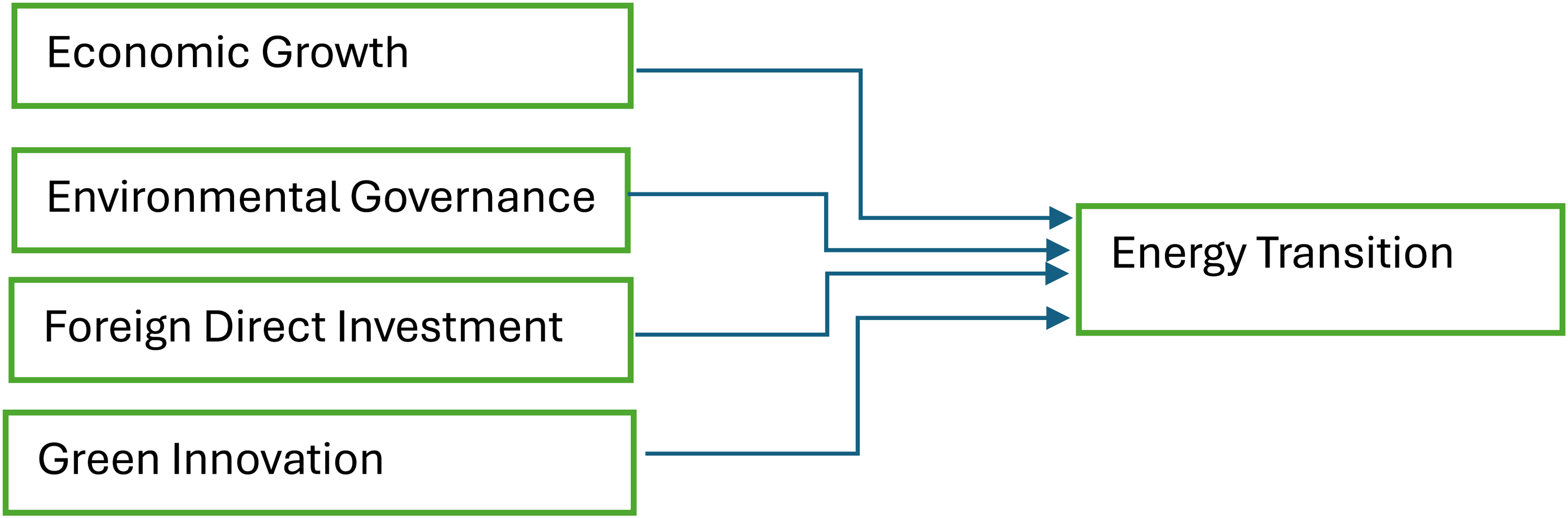
Conceptual framework of the study.
Descriptive statistics.
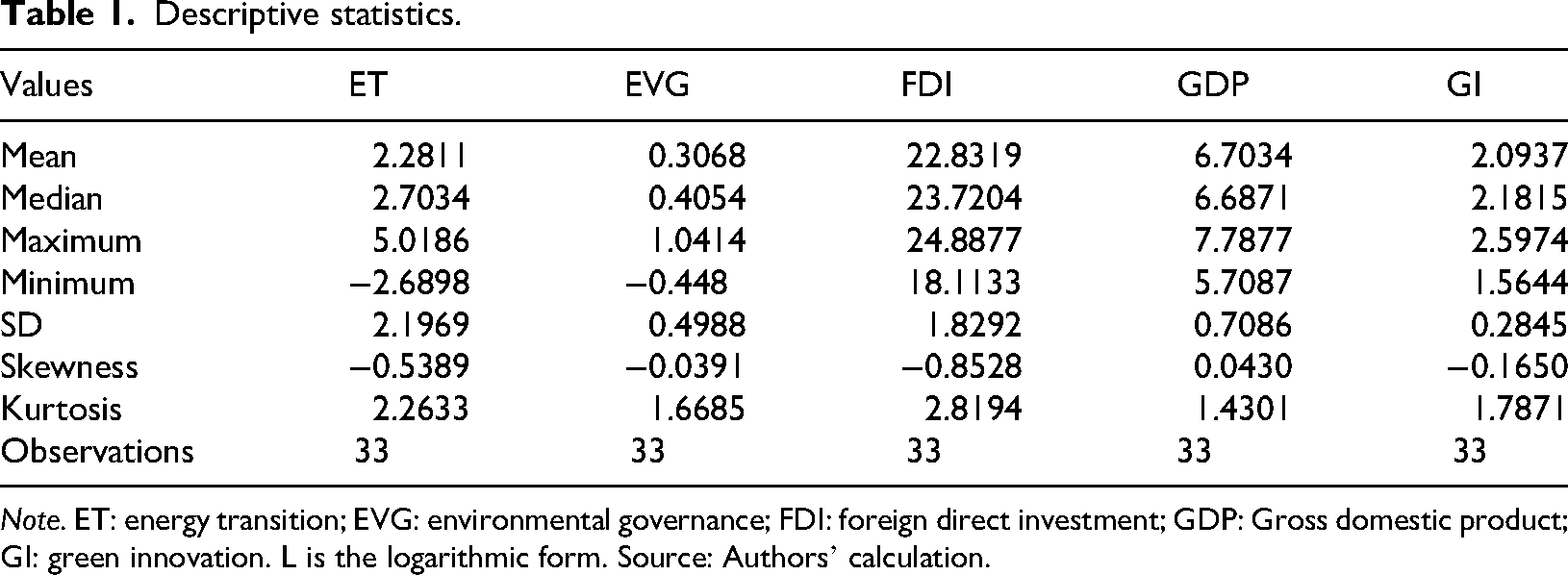
Note. ET: energy transition; EVG: environmental governance; FDI: foreign direct investment; GDP: Gross domestic product; GI: green innovation. L is the logarithmic form. Source: Authors’ calculation.
Correlation analysis.
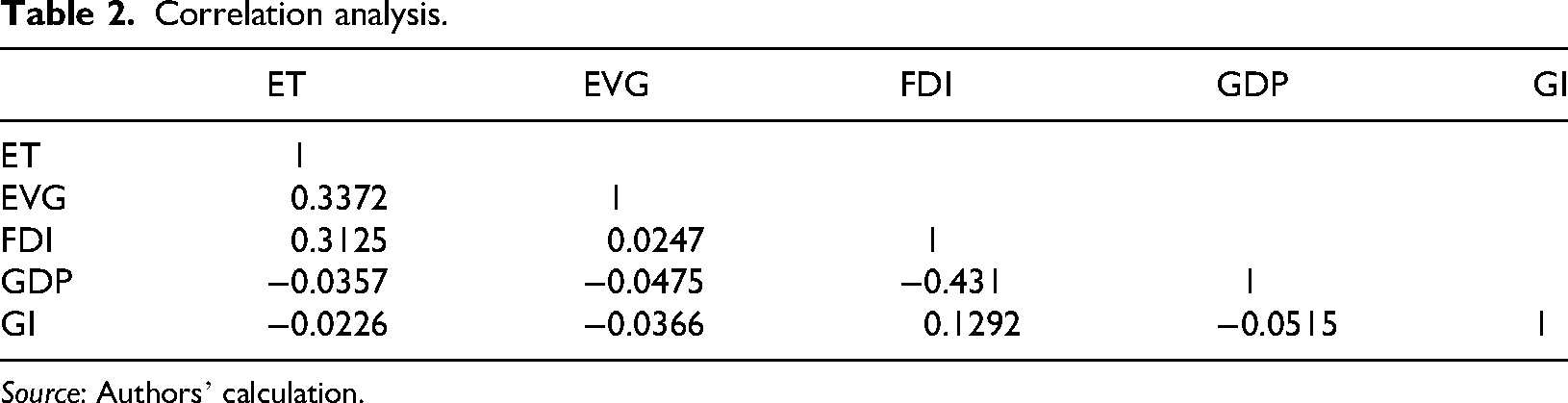
Source: Authors’ calculation.
Econometric model of the study
The Initial equation of the study is,
Where, ET represents energy transition, EVG is environmental governance, FDI is foreign direct investment, GDP is economic growth and GI is green innovation respectively.
The linear econometric equation is specified as,
Where, lnET is the logarithm of ET, LnEVG is the logarithm of EVG, LnGDP is the logarithm of GDP growth and LnGI is the logarithm of green innovation. α0 shows constant term, α1, α2, α3 and α4 is the parameter value and t show the time variant.
We used ARDL model to investigate the influence of economic growth, environmental government, FDI and green innovation on energy transition in India. The following steps are shown in the methodological flow diagram (Figure 2).
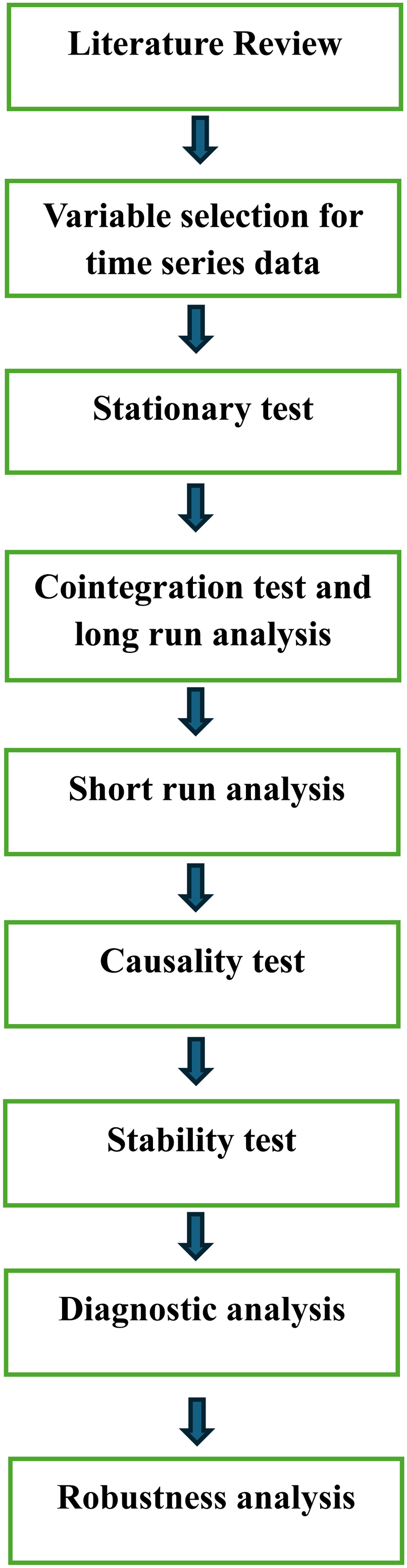
Methodological flow of the study.
ARDL model equation
The ARDL model is expressed as follows: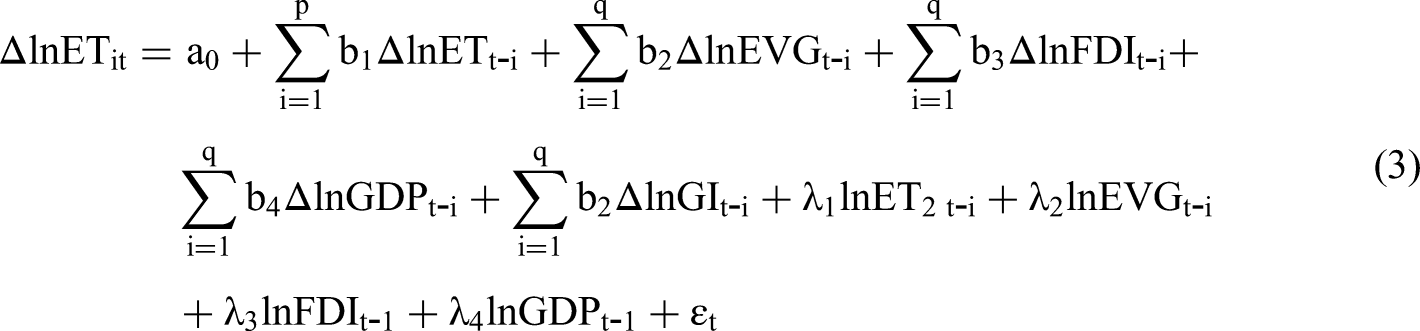
Where, a0 is intercept term. Error correction is represented by the term summation signs whereas, the next half of the equation shows long run relation with the sign of λ1, λ2, λ3 and λ4. The signs b1, b2, b3, b4 are coefficient. i, p, q are the optimal lag order, t is time period and εt is the error term.
ARDL model equation along with error correction term (ECT)
ARDL with the addition of ECT after confirmation of long run equilibrium is shown below.
Where, ECT t−1 term represents the speed of adjustment in the long run after the shock in short-run.
Result and discussion
Unit root test
Unit root test is the first criteria of any time series analysis. This test allows us to check the stationary nature of the data. Unit root test results are presented in Table 3. Augmented Dickey-Fuller (ADF), Phillips‒Perron (PP) and Kwiatkowski-Phillips-Schmidt-Shin (KPSS) test are applied for unit root test. The result shows that variables are at level form I (0) and difference form I (I). Most of the data becomes stationary after using the first difference and ready for further analysis.
Unit root test result.
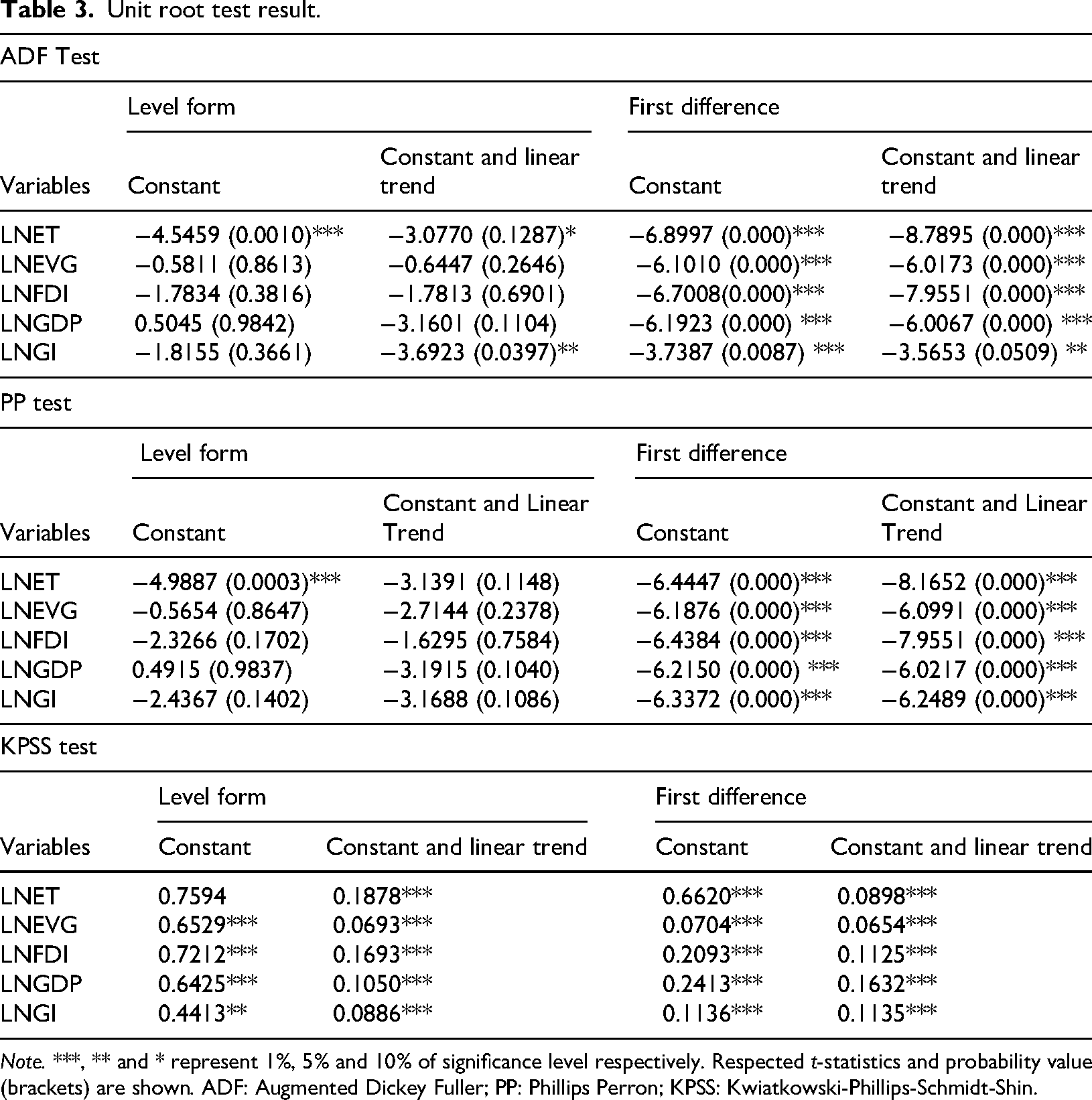
Note. ***, ** and * represent 1%, 5% and 10% of significance level respectively. Respected t-statistics and probability value (brackets) are shown. ADF: Augmented Dickey Fuller; PP: Phillips Perron; KPSS: Kwiatkowski-Phillips-Schmidt-Shin.
The optimal lag length selection is based on the Akaike Information Criterion (AIC) that is shown in Table 4. The use of lag is very essential in the time series analysis because economic variables do not impact one another instantaneously but take some time (lag). Using appropriate lag length is important to deciding the explanatory power of the regressor on the dependent variables. It also helps in correcting for heteroscedasticity, model stability, serial correlation etc. In the time series data, AIC is used to in an ARDL model to select the optimal lag for both short run and long run (cointegration) relationship (Kripfganz and Schneider, 2023). This is an asymptotically unbiased estimator of the Kullback-Leibler discrepancy (KLD) that can be used as an order-selection criterion (De Waele and Broersen, 2003). It removes the problem of overfitting the model and provides better observation and predictability in the time series model (Liao et al., 2018).
Lag length criteria.
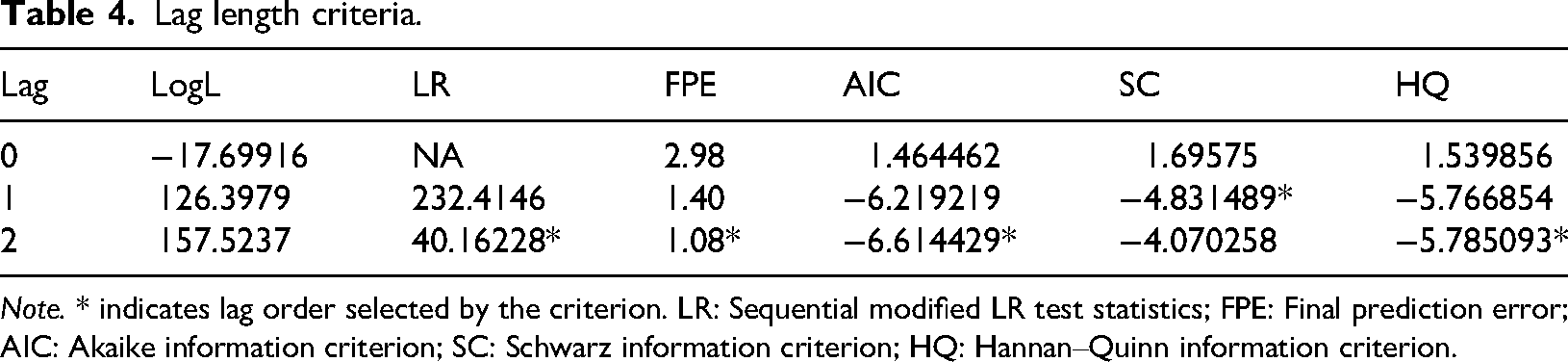
Note. * indicates lag order selected by the criterion. LR: Sequential modified LR test statistics; FPE: Final prediction error; AIC: Akaike information criterion; SC: Schwarz information criterion; HQ: Hannan‒Quinn information criterion.
ARDL long run result and bound test
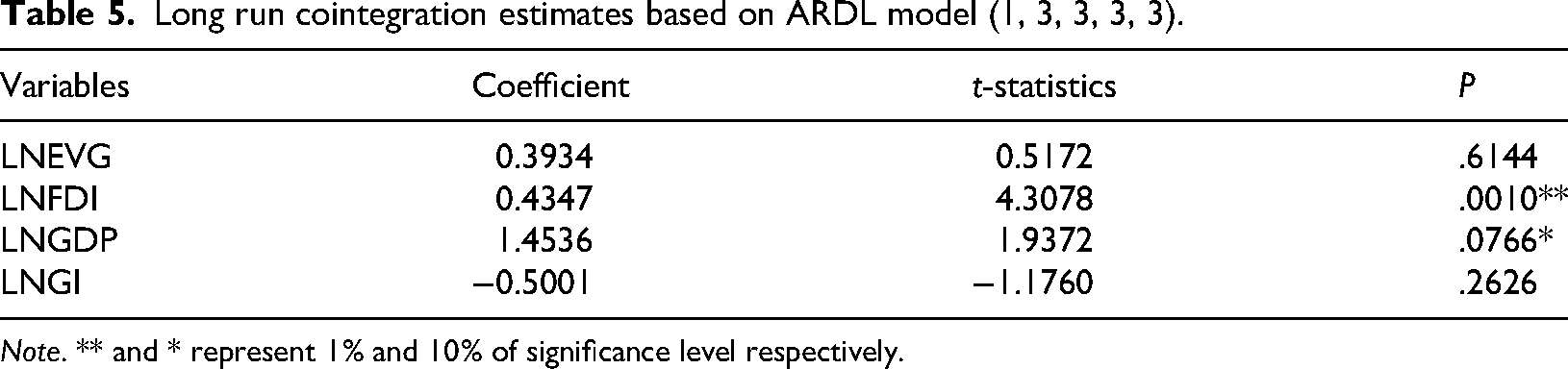
The long run result of the ARDL model based on AIC lag selection criteria presented in Table 5. This shows that FDI has a positive and significant impact on energy transition. It means that 1% increase in FDI increases energy transition by 0.0010% eventually in India. Further, the positive and significant effect of economic growth on energy transition is observed. It implies that a 1% increase in economic growth results in energy transition by 0.0766% eventually. Moreover, the coefficient of GDP is highly elastic towards energy transition.
Long run cointegration estimates based on ARDL model (1, 3, 3, 3, 3).
Note. ** and * represent 1% and 10% of significance level respectively.
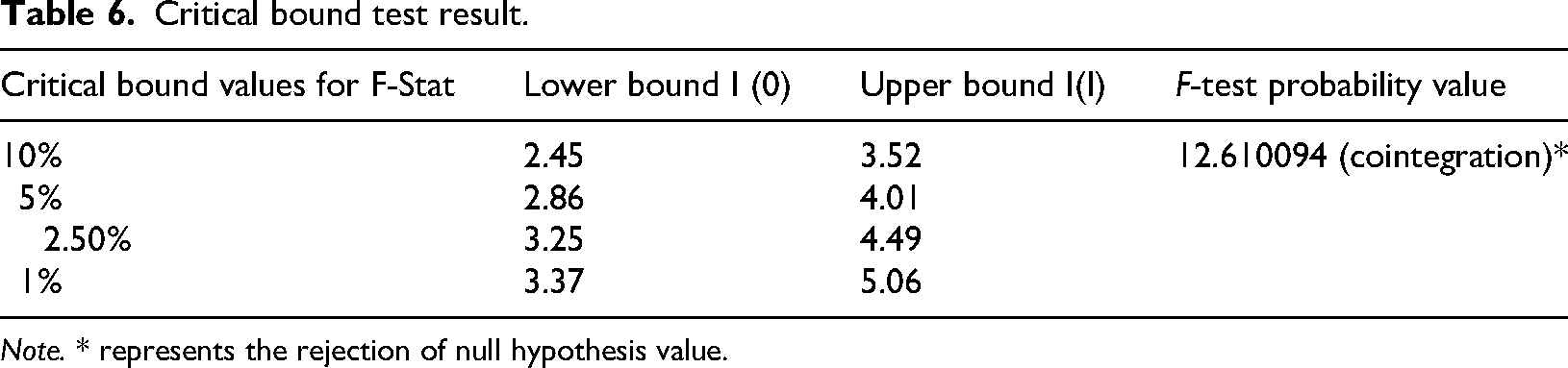
Additionally, in Table 6, bound test result of “F” statistic value is significant and rejects the null hypothesis of no cointegration among the variables. So, we have long run cointegration when taking energy transition as a dependent variable.
Critical bound test result.
Note. * represents the rejection of null hypothesis value.
Short run result
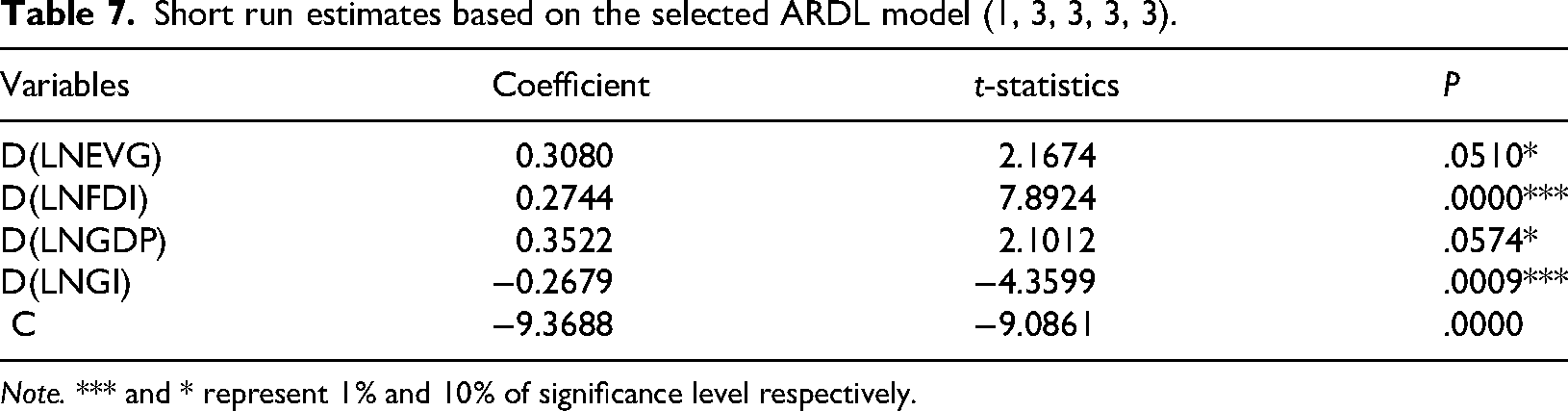
The short run result of ARDL is shown in Table 7 (based on AIC lag selection criteria). The result indicates that all variables have considerable influence on energy transition in the short run. EVG significantly influences energy transition at 0.051% in the short run. Further, a 1% increase in FDI leads to 0.27% changes in energy transition. Besides, the impact of economic growth on energy transition is at 10% significance level. Moreover, the role of green innovation negatively influences energy transition with 1% significance level. This may be possible due to the technological constraint (Chazel et al., 2023; Schulze et al., 2024), financial constraint (Tang et al., 2025), high research and development (R&D) cost (Zhao and Li, 2025), etc., that hinders the green innovation and energy transition. Transition towards low carbon energy system requires the deployment of high renewable energy capacities that demand wide variety of raw materials for diverse energy systems (Schulze et al., 2024). Low-carbon energy production uses green capital, that requires primary minerals as an input (Chazel et al., 2023). Unavailability of sufficient minerals limit the pace of energy transition. Additionally, green innovation requires long term capital investment that facilitates green transformation and high-quality development. Generally, the high dependence on short term debt is another constraint that limits the capacity to enhance green innovation (Tang et al., 2025). Advancement and availability of financial services (digital finance) help to promote R&D in green innovation. But high cost of R&D further limits the green innovation which is a key hurdle for energy intensive enterprises (Zhao and Li, 2025). Additionally, the R-squared and adjusted-R square is 0.94 and 0.90 respectively, that suggests a good model fit.
Short run estimates based on the selected ARDL model (1, 3, 3, 3, 3).
Note. *** and * represent 1% and 10% of significance level respectively.
Speed of adjustment
The presence of long run association is alternatively checked by ECT shown in Table 8. The thumb rule of acceptance of ECT value is that it must be negative and significant which indicates the presence of long run causality. The ECT value shows that speed of adjustment towards equilibrium eventually is 58% in the given model, and it is highly significant too.
ECT term.

Note. ECT (Coint-Eq (−1)) represents an error correction coefficient. *** represent 1% significance level.
Diagnostic analysis
The diagnostic analysis in Table 9 shows that models are free from serial correlation, heteroscedasticity and follow normal distribution. The null hypothesis of no serial correlation, homoscedasticity and normal distribution cannot be rejected as probability (P) values are greater than 0.05 (5%) significance level for all the tests. Additionally, sum square value statistics (0.0406) confirm fitness of the model.
Diagnostic test.

Stability test
The Cumulative Sum (CUSUM) and Cumulative Sum of Squares (CUSUMSQ) test are used to check the stability of the model shown in Figures 3 and 4 respectively. The CUSUM and CUSUMSQ stability tests indicate that the plots are within the range of 5% significance level, which confirms that parameters of the equation are stable to estimate the long run and short run causality in the model.
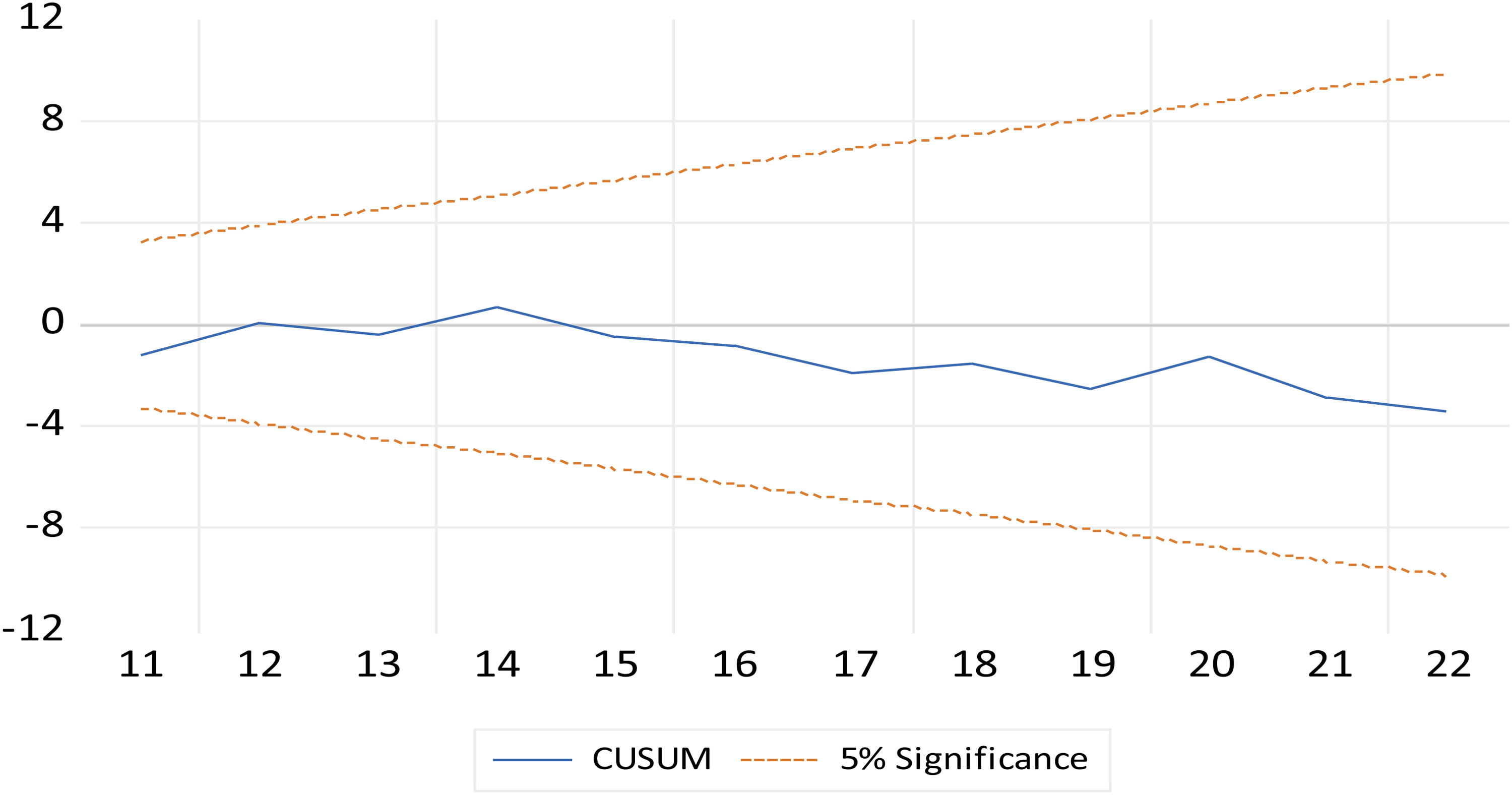
The plot of cumulative sum of recursive residuals.
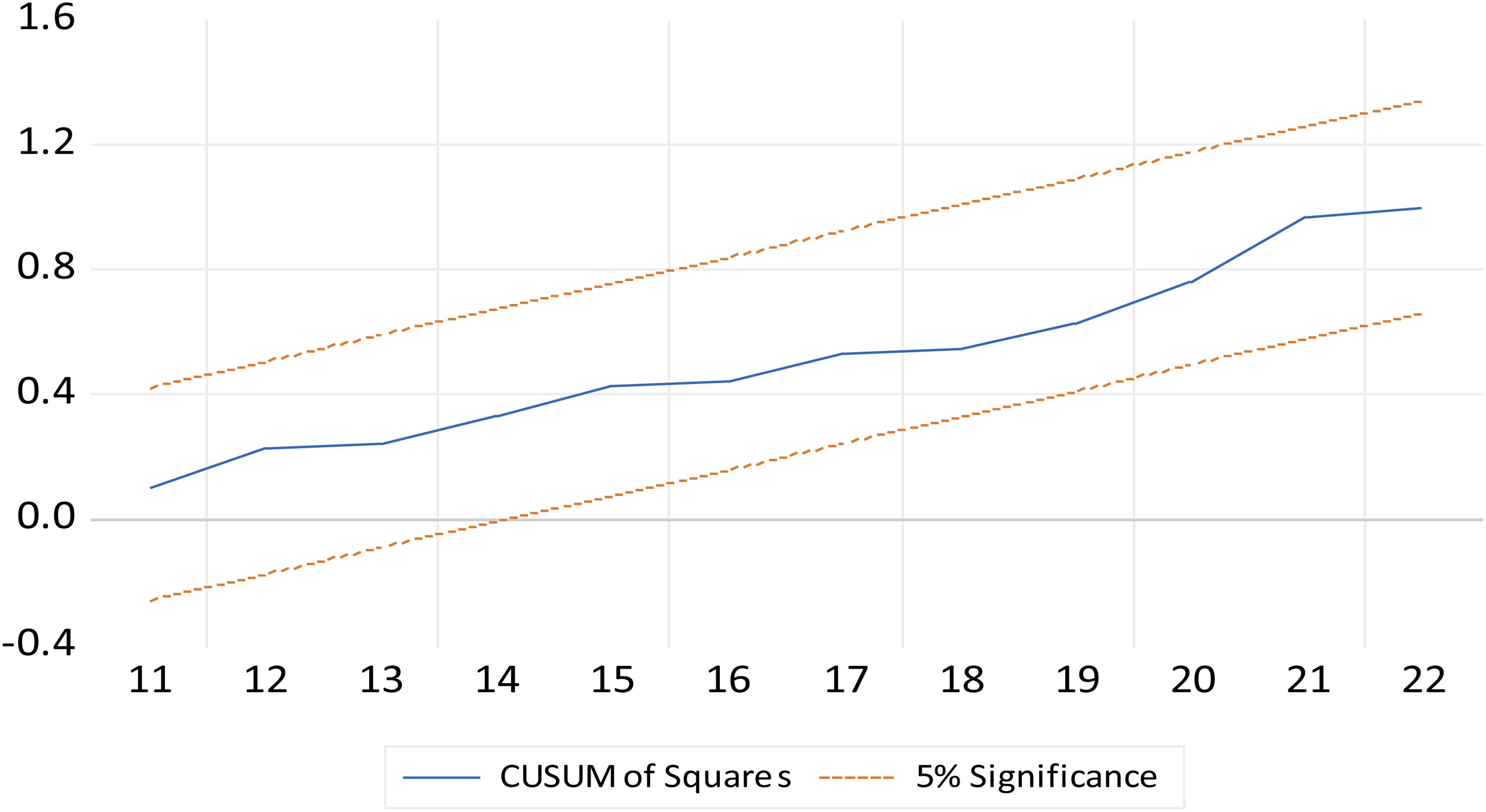
The plot of cumulative sum of squares of the recursive residuals.
Robustness analysis
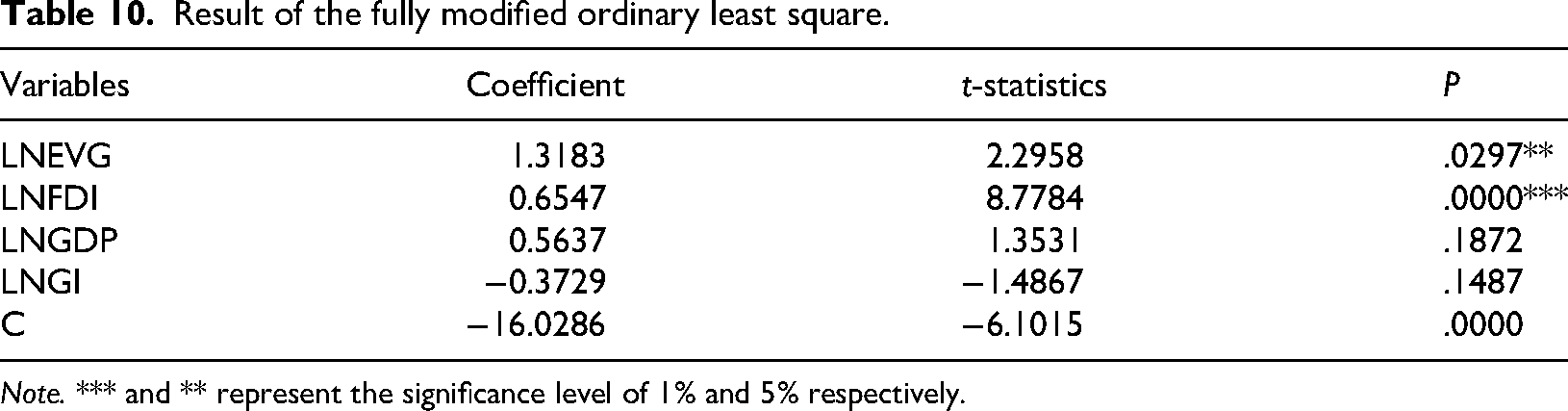
The long run estimates obtained from ARDL estimator are further checked for robustness by applying Fully Modified Ordinary Least Square (FMOLS) estimator techniques shown in Table 10. The result shows that EVG and FDI are positively and significantly influence energy transition.
Result of the fully modified ordinary least square.
Note. *** and ** represent the significance level of 1% and 5% respectively.
Granger causality test
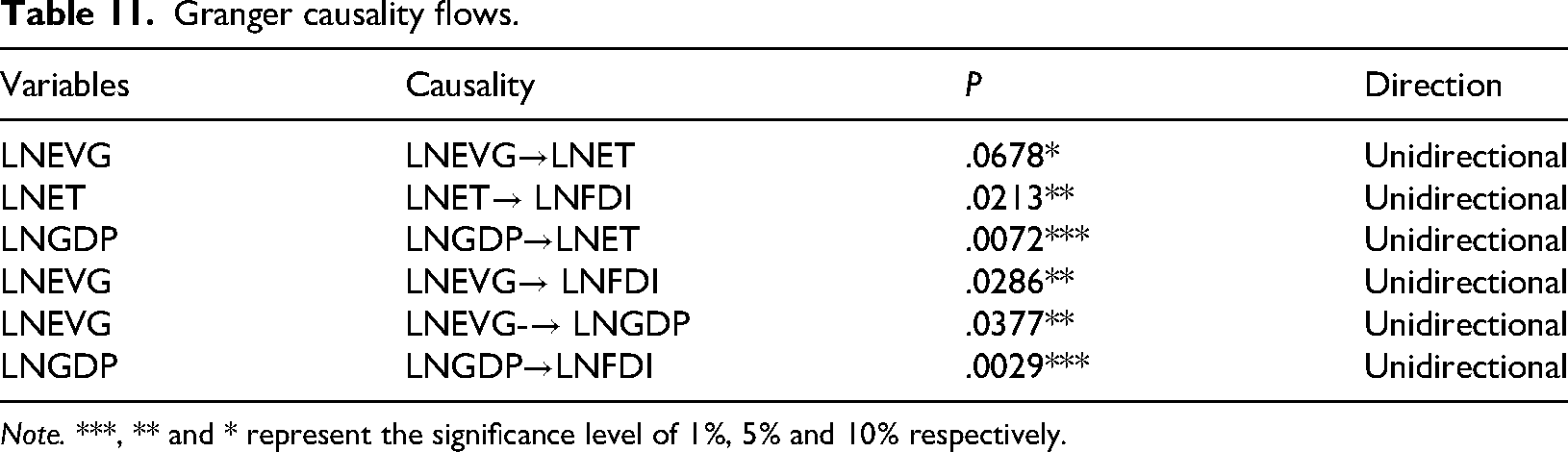
The outcome of granger causality in Table 11 reveals that unidirectional causality from EVG to energy transition, FDI and GDP at 10%, 5% and 5% significance level respectively. Additionally, unidirectional association occurs from energy transition to FDI at 5% significance level. Moreover, a unidirectional causality exists from GDP to energy transition and FDI at 1% significance level.
Granger causality flows.
Note. ***, ** and * represent the significance level of 1%, 5% and 10% respectively.
Discussion
It is seen that unidirectional causality (Table 11) from EVG to energy transition. It implies that EVG determines implementation and success of renewable energy transition in the form of to create possible regulatory and policy environment, and necessary financial technological and market capabilities. A good governance facilitates energy transition by creating efficient energy ecosystem to consider appropriate policy and resource allocation measure (Bakhsh et al., 2024; Zheng et al., 2023). Governance (and institution) plays a key role in promoting sustainable development 11 . For structural transformation of UNDPs strategic plan, it is mentioned that strengthening and integrating governance principles of inclusion, accountability and responsiveness in environmental policy is critical for a success full energy transition. Energy governance includes four priority areas namely inclusive and effective institution, legal and regulatory frameworks, civic engagement and empowerment and appropriate and independent oversight 12 . Such approaches are critical to focus of the inclusivity and people cantered, multi-level governance, digitally enabled and, flexible and adaptive. Governance has positive impact on energy transition. Energy transition is an effective policy to stop ecological footprint to increase the share of renewable energy to meet SDGs 7 & 13 (Hao, 2023). It is become even effective measure when transition goes on smooth manner. It is then supported through the people when they desire for clean energy sources to lower the emission and impact of emission on human health.
Additionally, unidirectional relationship from EVG to FDI is found at 5% significance level. It implies that proper functioning of governance in environmental related regulation for newly industrial set up. Generally, it is seen that developed and industrialised countries set up their business (primarily polluting industries) in developing and least developed countries due to weak environmental governance. Another reason of positive effect on the FDI is that effective governance promotes FDI to provide them tax rebates and subsidies in environmentally friendly projects. It is argued that FDI increases environmental degradation and causes negative impact of environmental sustainability (Bokpin, 2017). To gain positive effect of FDI, strong governance and quality institution is important to monitor business code of conduct to finance their business entities through FDI.
Moreover, unidirectional relationship from environmental governance to GDP at 5% significance level is shown in the result. It implies that economic growth also influenced by environmental governance. Environmental policy look-upon the impact of economic growth on environmental sustainability (Giljum et al., 2005). At this point, implementation strategies such as concreate regulation targets and implementation become crucial to reduce negative environmental impact due to the occurrence of economic activities. Environmental governance is of crucial role at this stage to promote market-based instrument to support technological change concerning sustainable production and consumption patterns.
Besides, unidirectional association occurs from energy transition to FDI at 5% significance level. It implies that energy transition supports FDI in clean energy projects. The SDGs principle and NET Zero target accord adopted by the nation to mitigate energy related emission. Moving from traditional to clean energy generation, renewable energy sources are considered safe and less pollution emitting sectors which required to be developed. FDI in clean energy resource generation and distribution is significantly influenced by energy transition principles. A way to provide electricity in unelectrified areas is to generate clean energy with the twin objective of reducing energy poverty and environmental pollution primarily from electricity generation. It is argued that energy transition increases green growth by reducing environmental depletion in developed countries and reduces in developing countries (Caetano et al., 2022). When green growth is limited in developing countries, and environmental depletion is observed, the chance of sufficient wealth is not enough to invest in the corruption control and poverty reduction measure because investment is going in the renewable energy infrastructure development.
Later, a unidirectional causality exists from GDP to energy transition and FDI at 1% significance level respectively. It implies that economic growth supports energy transition due to following SDGs. Raising economic activities requires continued support of energy supply for production activities. Besides, rising economic prosperity enhances the living standards of the people and supports urbanization. Consequently, this pushes energy demand from the consumer side. In such a situation, energy supply becomes crucial and clean energy investment rises in the urban areas. Rising demand also pushes industrial activities to increase their production capacity to fulfill consumer demand. Thus, new manufacturing units are open- up which is also supported by renewable energy sources to supply clean energy. Further, economic growth attracts investment in the form of foreign flow of money to establish their industries to gain the fruit of rising economic activities. In such a situation, foreign flow of income rises that helps economic growth. When investment in industries is on the rise, the initial requirement is to supply energy for industrial production. Rising energy demand from the new industrial setup further puts pressure on available sources of energy supply. If the demand supply gap is wider, a way is to fulfil it by setting up a renewable energy harnessing system to provide energy to the newly industrial set ups. There are two possibilities of this- either in the form of self -set up stand-alone grid or by the existing transmission line. The newly set up industrial unit adheres to follow environmental norm to emission emitting sector which further attracts investment in the destination country. In another way, the government can support by providing tax rebates and subsidies to invest in the clean energy sector. Another likely reason for energy transition is seen towards FDI that assists technology transfer by developing and promoting cleaner technology. Primarily it is seen that developing and least developed countries face a shortage of efficient state-of-the-art technology due to enough funds. In such a situation FDI could be a way to promote diffusion of advanced technology which is efficient and cost effective in nature. Thus, it can be understood that rising economic activities, energy transition and FDI are interdependence in nature. Economic growth positively affects energy transition to move from fossil fuel energy to renewable based energy sources (Taghizadeh-Hesary and Rasoulinezhad, 2020). Although the effect differs with income level, it requires implementing different policy measures to support electricity access with green energy sources that support SDGs.
Conclusion
The present study contributes to existing literature by investigating technically the influence of economic growth, environmental governance, FDI and green innovation on energy transition in India during the following period, from1990 to 2022. The ARDL model is applied to find out the combination within variables. The findings of the study confirm that energy transition is influenced by FDI and GDP in both the short and long run. Moreover, environmental governance and green innovation influences energy transition eventually. The granger test confirms that variables have a causal relationship in the unidirectional way.
Policy implication
With the consideration in mind to achieve the goals of the COP 28 meeting (i.e., to tripling renewable energy in the targeted years), this study is an attempt to examine few key determinants in India where economic, financial and regulatory factor are used to shows their influence on energy transition. Findings from the study show that the significant influence of these variables on energy transition leads to advocates making practical suggestions for policy recommendation in the area of energy sector.
Initial policy recommendation highlights the emission and environmental perspective of energy transition that leads to lower fossil fuel consumption and increase the share of renewable energy or clean energy in the energy mix of a country. As a developing country, a high share of fossil fuel consumption leads to emission problems and related health issues. The replacement of fossils to clean energy could help to mitigate emissions as well as lower the chances of health hazards that resulted from the emission.
Further, the long run elasticity of economic growth has significant influence on energy transition through energy price elasticity (Li and Li, 2018). It helps to understand economic, distributional and environmental consequences of varying energy prices. Further, it help out to imply energy price policies which show the response of energy consumers to change in energy prices. It has different effects on sectoral level of the economy which help to initiate effective policies to domestic and foreign investment in renewable energy projects (Paramati et al., 2018). Moreover, the transition of energy from fossil fuel to clean energy sources has various economic benefits including job creation, lower energy prices, energy security along with long term sustainability and contributes climate change mitigation (Okunevičiūtė Neverauskienė et al., 2025). The attention of economic growth pattern is significant for a nation to maintain its requirement and living standard of the people for the long term. Economic growth leads to energy demand that is primarily fulfilled by traditional sources of energy that results in larger import bills and price manipulation. A way out is to support investment in clean energy sources by attracting new investors with sufficient support. Such support may be in the form of creating ease of doing business environment and early license provision. Another way is to provide them with enough financial benefit in the form of financial banking support and early loan clearance. In the case of FDI, support is recommendable in clean energy project development. Such support could be in the form of providing space for infrastructure development, solving land disputes and transmission procedures. Another form of recommendation is to support developing stand-alone grids and supply clean energy. In this case, the role of prosumer in renewable energy is appreciable where a person can generate and sell extra electricity to the nearby state government. In such a case, the buying behavior of the state government is supportive in the form of providing them with sufficient tariff rates with a prescribed period. At the same time, easy access to funds for retail investors in the clean energy sector is supported by tax breaks and subsidies that possibly attract young investors in this field.
Moreover, the impact of FDI in the energy sector is further supported by technological diffusion effect in the destination country. The upgradation of energy technology with state-of-the-art facilities further assists with cost minimization and enhances technical know-how of the energy project requirement. At the same time, higher educational curriculum and technical education is supported through addition of required skill sets that help to train technical graduates to meet the rising demand of energy employment. Additionally, the financial requirement in the energy sector support research and development (R&D) that further boost innovation in this area.
Technological advancement in green energy shows how we are proceeding in the energy transition pathways. Such pathways primarily depend upon green growth which focuses on the innovative characteristic of energy transition. Uses of smart meter, energy efficient building and promotion support energy transition. Additionally, the promotion of green innovation accelerates energy production and consumption. Funds allocated to create exclusive sustainability departments can further promote research and development in green energy. One aspect of the adoption of EVs in place of oil and diesel-based engines might be a good governmental decision. To reduce carbon footprints, those EVs can spread across private and public transportation, replacing traditional diesel/petrol based operating engines.
Innovation in engines, motors and tires are another consideration that could reduce carbon footprint and is possible with policy formulation and implementation. The entry of innovative ideas in the transport sector could provide significant improvement in Indian energy transition movement. Additionally, AI inbuilt meter and emission reading devices with real time analysis could provide stimulus to innovation in environmentally friendly technologies.
Another policy implication could be in the form of mitigation and adaptation areas of emission. Transition from fossils to clean energy economy will help to mitigate emissions and support emission reduction goal. Moreover, changing the behavior of using energy efficiency appliances at home further boosts the demand and investment in clean energy generation. The public acceptance of EVs (Agaton et al., 2020; Moeletsi and Tongwane, 2020) is a wise decision that is further extended in adoption in public transport instead of too much self-driven vehicle. This is further supported by the setting up of the required charging station for EVs. Special routes of EVs such as electric highway (Tomar and Holmukhe, 2021) is a promising idea to adoption of clean transportation that further assists to attracts new electric busses, trucks etc. in the developing country like India.
Additionally, from a monetary policy perspective (He et al., 2019), energy transition is further supported through the extension of banking facilities in clean energy projects, by providing them with loan facilities, tax rebates and medium to long term loan provision. The initiation of green monetary policy (Zhang and Guo, 2024), green bonds (Gurunlu, 2023), green certificates (Chrysikopoulos et al., 2024) etc. are a welcome move to support environmentally friendly projects primarily renewable energy projects.
The accomplishment of energy transition is widely reliant on the governance and institutional setting up in the country (Drago and Gatto, 2022; Milchram et al., 2019). The effect of policy formulation and implementation is further enhanced by the monitoring of implemented policies. Governance is on the hierarchical level and proper coordination, and support further enhances the chances of success of policy. The collaboration of international governance and institutions active in energy transition is advisable that open a path to dialogue among the member states to discuss and implement required energy transition policies. Further this is extended to invite industries and academia to collaborate that assists young researchers and engineers to develop ideas about energy transition.
Later policy implication for energy transition is in line with support SDGs- 7 (provide clean and affordable energy) that is likely possible through energy transition. As the cost of clean energy is going down, development of renewable energy will provide access to unelectrified areas. As lower and vulnerable groups of people are in the prime consideration, who can benefit through access of clean energy and fulfill their requirement in lighting and cooking option. This will help to reduce the effect of health hazards that result from the use of unhealthy sources of energy that cause smoke and emissions.
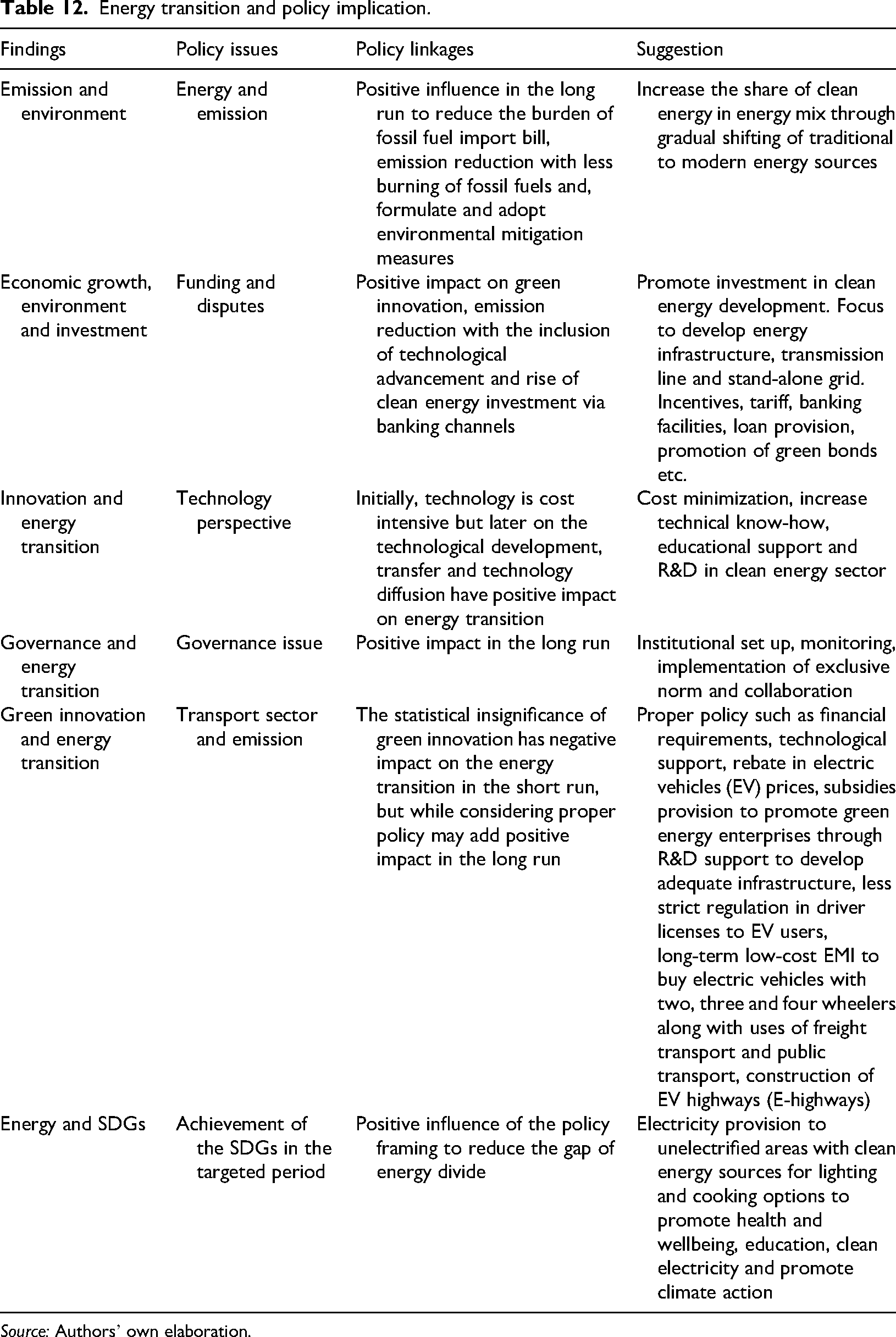
The policy implication could be understood with the mapped in Table 12.
Energy transition and policy implication.
Source: Authors’ own elaboration.
Limitation and future direction
This study poses several limitations. The first limitation is not including the role of the credit market. Credit markets in a developing country have a significant role in initiating any project and in its development. Another limitation is the ignorance of fossil fuel consumption in energy transition. It is seen that developing countries are primarily dependent on fossil fuel for energy requirements, this may lower the speed of energy transition. Later, carbon emission and energy transition are not checked. Energy transition is not free from emission but as a comparison from traditional sources of energy, it emits less pollution. This focuses on development of energy storage capacity which possesses emission threat that is on the research area to find the way to reduce emission and decompose after the life cycle of a used energy storage device. Additionally, the segregation of role of institution along with governance also poses a limitation in this study. Institutions and governance work together to policy formulation and implementation in a country. As a monitoring authority, the institution is in the forefront of the success of energy transition. Institutions coordinate with national and international levels and implement norms, policies and regulations for relevant areas. Besides, technological influence and the role of technology are of foremost consideration in energy transition which is not considered in this paper. Technology widely influences any project with cost benefit, recovery and feasibility. In line with, the role of patent also decides the success of energy transition which is also not included in the interest of this study.
The future direction of this study opens a way to consider highlighted limitations as the world energy market is facing severe turmoil due to ongoing wars and regulation. Additionally, climate change and global warming are further posing a challenge to achieve renewable energy targets and net zero goal. All these are intensifying the need to achieve 2030 targets of SDGs. The connection of energy transition with SDGs varies with the proposed study. Future research should add another goal apart from goal number 7 (clean and affordable energy) and 13 (climate action) to check the influence of energy transition. Deciding and achieving energy transition will shape the future life to live with sustainable energy utilization and contribute to mitigating emissions to protect environmental health.
Footnotes

Author contributions
Hemant Kumar Sah contributed to preparation of first draft; Sunil Kumar contributed to data revision and cleaning; Gyanendra Singh Sisodia contributed to mentoring, revision and editing; Hajer Kratou contributed to mentoring, model revision, review of draft, editing.
Funding
The authors received no financial support for conducting the study. Authors are thankful to Ajman University for contributing to APC.
Declaration of conflicting interests
The author(s) declared no potential conflicts of interest with respect to the research, authorship, and/or publication of this article.
Supplemental material
Supplemental material for this article is available online.