




Abstract
With the twin threats of warming climate and energy shortage, achieving the dual carbon goal has become a global urgent task, and promoting enterprise energy transition, especially for the oil companies. Multi-energy complementary technology facilitates the comprehensive utilization of distributed and renewable energy, acting as a cornerstone for corporate energy transition. This approach is significant for increasing the penetration of renewable energy and improving overall energy efficiency. This paper begins by elucidating the background and significance of multi-energy complementarity. It then provides an overview of multi-energy complementary systems, covering their definition, operational models, and related policies. Subsequently, the paper details the key technologies and evaluation metrics for multi-energy complementary development, with a focus on planning and design, coordinated control, energy management, and energy storage technologies. Finally, the paper identifies current challenges in multi-energy complementary development and discusses future trends.
Keywords
Introduction
With the rapid development of industrial production and social economy, energy consumption has increased year by year. The production equipment in oilfields, which serve as major energy suppliers, is typically highly dependent on traditional fossil energy. Consequently, the oilfields often face challenges such as low utilization rate of renewable energy, high energy consumption and high comprehensive energy cost (Zhang et al., 2023). These challenges have emerged as a key factor that severely affects the efficiency of oilfield enterprises and restricts their development. Under the background of global warming and energy shortage, the energy transition of oilfield enterprises is imminent. The multi-energy complementary technologies can effectively integrate traditional fossil energy, wind energy, solar energy and other energy forms, solve the problem of independent operation of different energy systems, and realize the collaborative optimization of multiple energy sources (Li et al., 2018), which include planning and design, coordination and optimization control, energy management, and energy storage, etc. (Amir et al., 2023; Gulraiz et al., 2025; Zhong et al., 2018). Therefore, the study of multi-energy complementary technology is of great significance, which is not only a key step for oilfield enterprises to move towards energy modernization, but also an important breakthrough in building a clean, low-carbon, safe and efficient energy system.
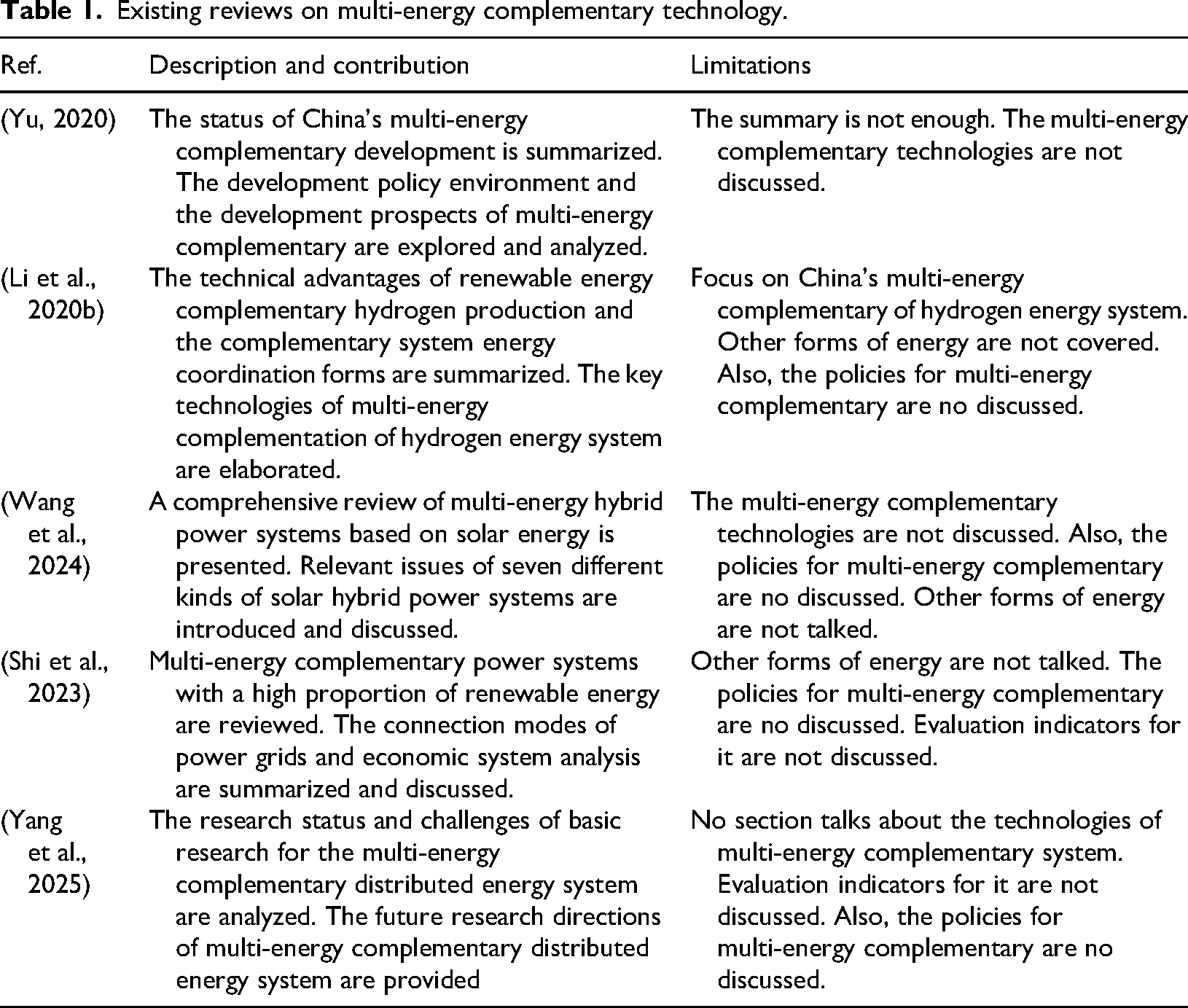
Based on the above background and incentive, it is necessary to summarize relevant researches. In terms of the direction for multi-energy complementary development, different countries have different development priorities and make different plans according to national conditions and resource allocation. The United States has promoted multi-energy complementary technology from the construction of smart grid, and focused on the development of nuclear renewable energy hybrid energy system (Congress of United States, 2007; United States Department of Energy, 2015, 2016). Germany is also actively exploring system solutions for high proportion of renewable energy integration, strengthening the collaborative integration of energy systems and a series of research new works have been carried out (Bartholdsen et al., 2019; Federal Ministry of Education and Research, 2015; Rogge et al., 2020). Canada has issued a series of bills on multi-energy complementary distributed energy technology construction (Bahn and Vaillancourt, 2020). Japan is a country lacking in energy resources and heavily dependent on imports. With the help of artificial intelligence, Internet of Things and other technologies, Japan has built a diversified and flexible energy supply and demand network to achieve more intelligent and flexible energy management (Gao et al., 2020; Hu et al., 2016; Ministry of Economy, Trade and Industry, 2014, 2016, 2018). Since the 1980s, China has begun to formulate new energy development plans. In recent years, China has placed significant emphasis on the development of multi-energy complementary distributed energy supply technology, deploying multi energy complementary integrated optimization demonstration projects, and realizing the optimization, complementarity and stable supply of multiple energy sources (National Development and Reform Commission, National Energy Administration, 2017; National Energy Administration, 2016, 2017; Ting, 2021; Xie et al., 2020). Beyond the above studies, the currently existing reviews are listed in Table 1, and their contributions and limitations are discussed. Compared with the existing reviews, this work presents a comprehensive review for multi-energy complementary from the key technologies, policies, evaluation indicators and the prospects, and provides a useful reference for the future research.
Existing reviews on multi-energy complementary technology.
However, with the continuous development of research, some previous reviews could not provide a complete summary on multi-energy complementary technology. To this end, the focus and the contribution of this work is as follows: (1) this paper provides a comprehensive review of multi-energy complementary, which reflects new research directions and trends. (2) Through investigating and summarizing the points of different literatures, this paper helps readers better understand the current challenges in the development of multi-energy complementarity.
Overview of multi-energy complementary system
Definition of multi-energy complementary
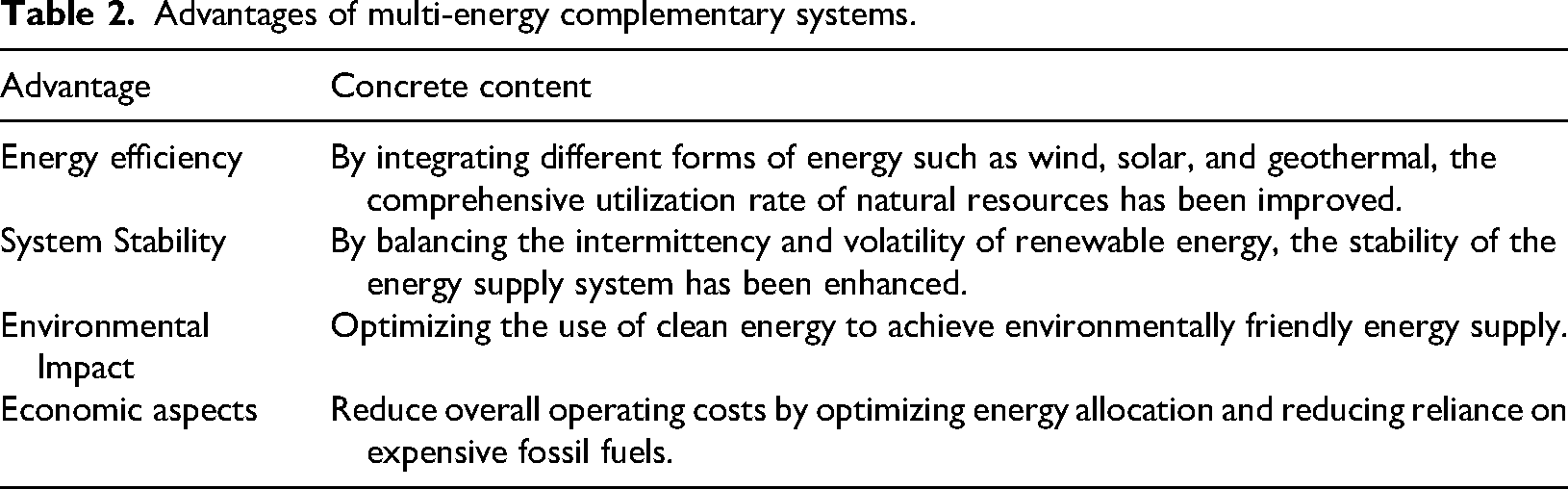
Multi-energy complementarity involves integrating various energy sources based on specific resource availability and user needs, aiming to balance energy supply and demand, utilize natural resources efficiently, and deliver positive environmental outcomes (Zhang and Chen, 2018). Its advantages are specifically reflected in the following aspects, as shown in Table 2.
Advantages of multi-energy complementary systems.
Multi-energy complementary mode
Multi-energy complementary systems are divided into two modes in the implementation opinions on promoting the construction of demonstration projects for multi-energy complementary integration optimization, namely terminal integration and comprehensive energy base (National Development and Reform Commission, National Energy Administration, 2017). The former is achieved by developing integrated and complementary systems of traditional and new energy sources that are suitable for local conditions, to meet the different energy needs of end-users (such as electricity, heating, cooling, and natural gas). The goal is to optimize the layout of energy infrastructure, achieve synergistic multi-energy coordinated supply and energy cascade utilization. The latter is to utilize the combined advantages of wind, solar, hydro, coal, natural gas and other resources in large-scale integrated energy bases to promote the construction and operation of multi-energy complementary systems for wind, solar, water, fire and storage.
(1) Terminal integrated energy supply system
The system focuses on the overall planning and integrated construction of the terminal energy supply system in parks, towns, large-scale public facilities and other areas according to the energy consumption needs of end-users such as cold, heat, electricity and gas. The primary objective under this model is to maximize the overall supply and utilization efficiency of the integrated energy system.
(2) Multi-energy complementary system of integrated energy base
The system integrates traditional primary energy such as coal and natural gas, as well as secondary energy such as wind, light and water energy. By leveraging the synergistic and complementary advantages of these diverse resources, it realizes the integrated operation of multi energy such as wind-solar-hydro-thermal-storage. This approach helps mitigate the intermittency issues associated with wind and photovoltaic power generation, thereby improving the stability of the power output.
Multi-energy complementary policies
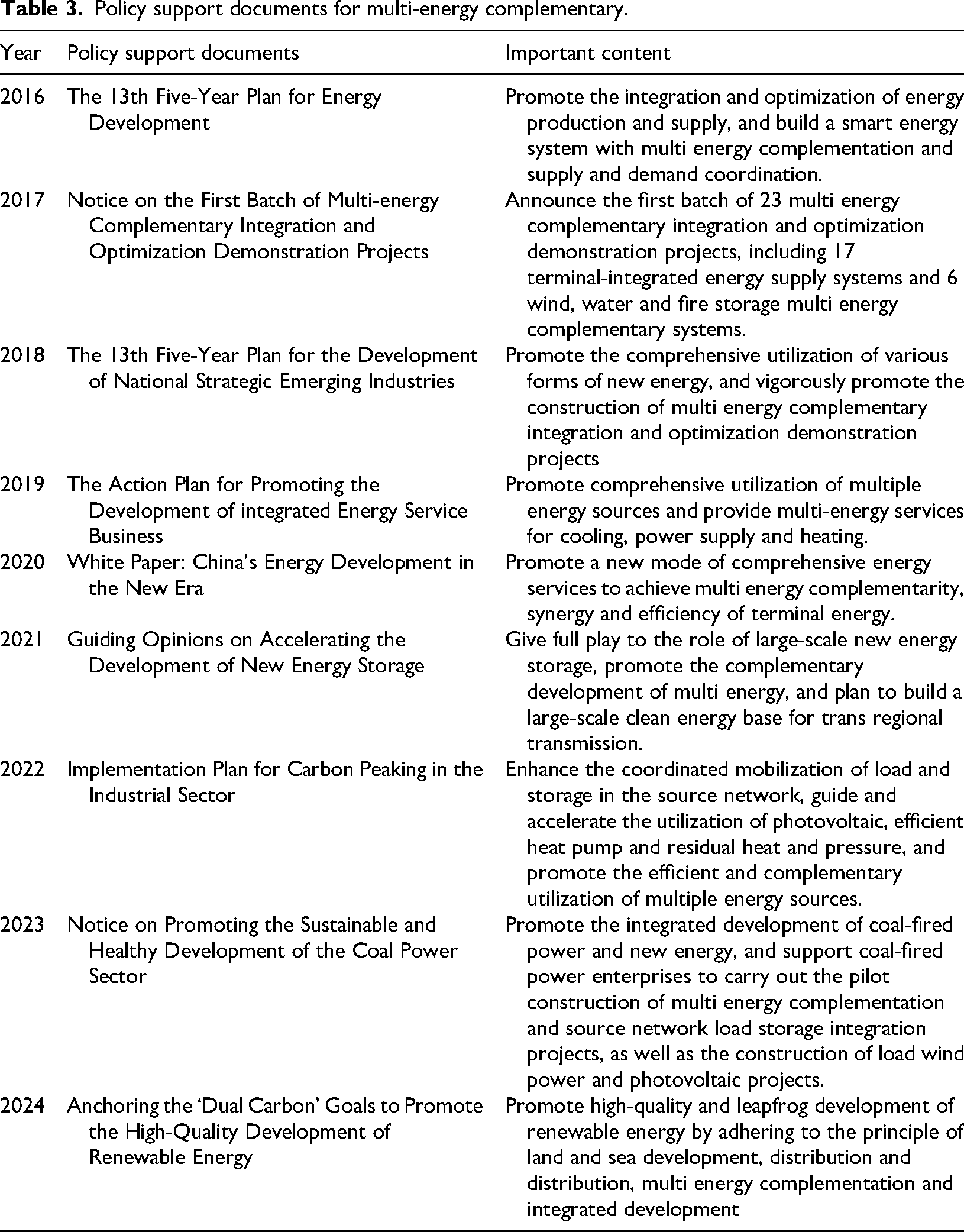
Multi-energy complementary technology plays an important role in promoting the sustainable development of social economy and attracts attention from various countries. Various countries have issued a series of policies and documents for the development of multi - energy complementary technology. The policies for Europe and America can be found in introduction, which will not be repeated here. Here, the relevant important policies of China during the 13th Five-Year Plan and the 14th Five-Year Plan are mainly introduced (Ministry of Industry and Information Technology, National Development and Reform Commission, Ministry of Ecology and Environment, 2022; National Development and Reform Commission, 2023; National Development and Reform Commission, National Energy Administration, 2021, 2024; National Energy Administration, 2016, 2017; The State Council, 2018, 2020; The State Grid Corporation of China, 2019) as shown in Table 3.
Policy support documents for multi-energy complementary.
Multi-energy complementary technologies
The energy forms of multi-energy complementary system include not only renewable energy such as wind energy, solar energy, hydro energy, biomass energy and hydrogen energy, but also traditional energy such as coal, natural gas and so on. Through the efficient integration of different forms of energy on the energy supply side, the phenomena of water, wind, light and power curtailment are reduced, the energy efficiency of the whole system is improved, the reliability of energy supply is improved, and the utilization rate of resources is improved. In the development and application of integrated energy multi energy complementary system, the key technologies to be solved include planning and design technology, coordination and optimization control technology, energy storage technology and energy management technology, and the relationship is shown in Figure 1.
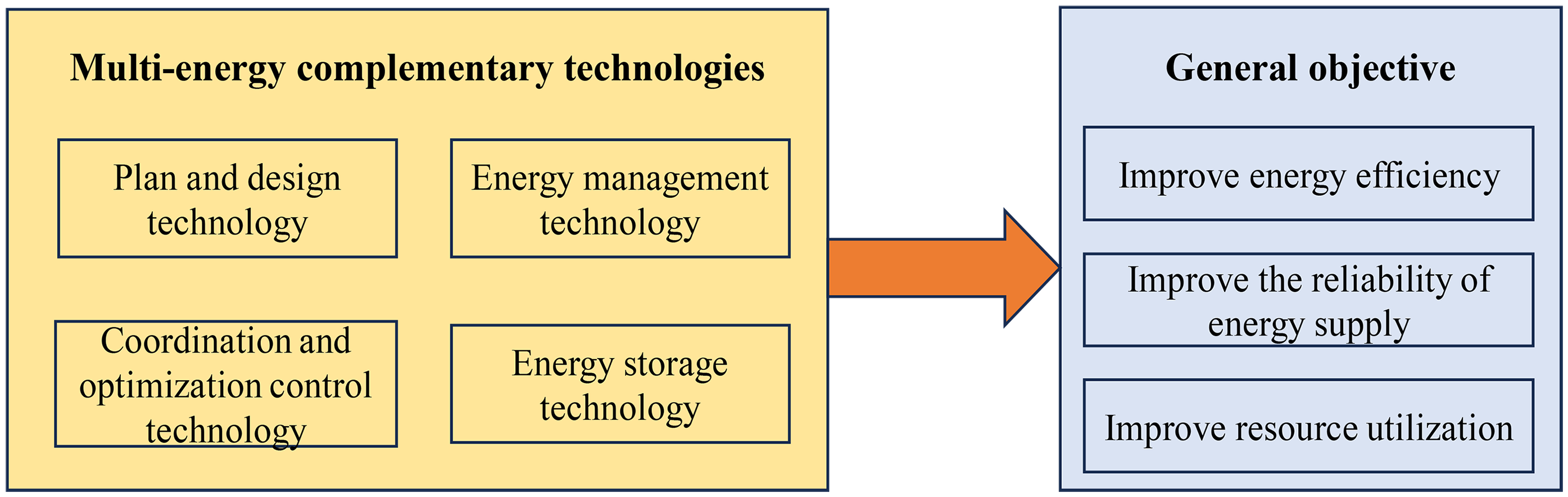
Multi-energy complementary key technologies diagram.
Plan and design technology
The plan and design are the prerequisite procedure of multi-energy complementary energy technology. In the traditional energy utilization mode, when designing and planning, only a single energy form, such as heat, electricity, gas, etc., is considered for independent analysis and planning, or only a single equipment is modeled and simulated to optimize its operation mode, without carrying out comprehensive research on collaborative and complementary optimization among various energy systems. In addition, the traditional modeling method could not meet the modeling requirements of multi energy complementary system due to the large differences in the equipment and equipment characteristics of each system.
To optimize the integration of an energy station's subsystems within a multi-energy complementary system, a detailed and rational analysis of energy and material flows is essential. This ensures the optimal allocation of the energy structure and a stable, reliable energy supply. Concurrently, during the calculation process, the system load is often assumed to be dynamic, supported by inputs for fluctuating resources like wind and solar to effectively design and plan the integrated energy system.
Typically, before modeling, calculating, and analyzing the multi-energy system, researchers must predefine constraints, objective functions, and optimization variables. Subsequently, planning and optimization algorithms are employed to design the system and derive the optimal values for its optimization variables. Broadly, cost and load considerations typically serve as constraints, while economic or environmental optimality is often set as the objective function. The types and capacities of energy supply and storage equipment are designated as optimization variables for refining the system's planning scheme.
Coordination and optimization control technology
In a multi-energy complementary system, internal coordination and optimization are fundamental to achieve high energy efficiency and economic viability, which can be accomplished through control technologies that optimally schedule distributed energy sources based on real-time inputs, including electric loads, thermal demands, and renewable energy availability. By intelligently managing these diverse resources, the system ensures its components work in concert, maximizing performance and minimizing costs. Coordination and optimization control technology can be divided into two categories: cooperative control management and optimization scheduling management.
The core of cooperative control management is the distributed cooperative control of a multi-agent system, facilitated by the energy internet. Its essence is to utilize information and communication technologies to realize the collaborative operation of all node equipment and to perform cooperative scheduling between the supply and demand sides of the system. There are two primary implementation approaches for this type of control. One is to design a multi-agent distributed system according to the topology, power-saving equipment functions and load characteristics of the multi-energy complementary system. This system leverages agent properties such as autonomy, initiative, and sociality to manage the switching states of each node device, thereby maintaining operational stability. The other is to design multi-agent consistency protocols according to the operation status and energy supply, storage and consumption characteristics of each equipment in the multi-energy complementary system. It utilizes behavioral characteristics of the agents, like reactivity and evolution, to adjust key operating parameters, ensuring both energy balance and quality within the system. Hua et al. (2020) studied regional integrated energy system which is centered around the distribution network, and the topology relationship, hardware and software structure of the cooperative control system are proposed.
The optimization scheduling management can be broadly categorized into two approaches. One is steady-state oriented optimal scheduling model, which includes algorithms and benefit analyses, etc. The other is coordinated scheduling model, which considers specific grid constraints and dynamic characteristics. The literatures reflect various efforts in this area. For example, Wang et al. (2015) investigated the optimal scheduling of a combined cooling, heating and power system, aiming to maximize its average effective output while minimizing the total heat transfer area. Liu et al. (2011) studied the coordinated scheduling of security-constrained electricity and natural gas infrastructures, accounting for the transient characteristics of natural gas flow. Aiming at the uncertainties of load demand and renewable energy, Yuan et al. (2019) established an economic optimization model and employed an improved genetic algorithm for its solution, successfully enhancing the system's coordinated power generation capability while reducing operational costs. Liu (2022) constructed collaborative optimization control model of multi-energy complementary system according to the demand for electricity, heat, and gas loads on the demand side during the scheduling period, as well as the output constraints of various equipment. Focusing on regional integrated energy systems, Si et al. (2024) proposed a research framework for aggregating diversified flexible resources based on the balance of local multi-energy supply and demand, which achieves several key objectives, including the verifiable modeling of key indicators, optimized active regulation capabilities, adaptability to uncertain environments, and coordinated energy sharing among multiple stakeholders.
Currently, research on cooperative optimization control for multi-energy complementary systems is predominantly concentrated on electric power systems, and distributed cooperative control strategies for these systems are still in their nascent stages. Although oil and gas production in oilfields similarly involves multi-level and multi-cycle energy allocation, this specific area remains significantly under-researched. Consequently, developing coordinated scheduling strategies for diverse energy forms across multiple temporal and hierarchical levels within oil and gas production represents a critical direction for future research.
Energy management technology
For the multi-energy complementary system, the energy management system mainly utilizes information flow to regulate energy flow, ensuring its safe, stable, economic and efficient operation (Wu et al., 2016). At present, most researches take microgrid as the research object, which have the function of primary energy management and can carry out basic optimal scheduling. However, these systems generally lack the capacity for the advanced analysis and decision-making required by more complex, multi-energy flow coupled systems.
For effective management of complex multi-energy systems, a dedicated system platform for analysis, processing and global optimization management can be established, which organically combines the power grid, renewable energy, non-renewable energy, energy storage system, various energy loads, etc., formulating reasonable conversion plans for different energy output and different forms of energy at the energy supply end, and making multidimensional comprehensive decisions (Wang et al., 2017). The framework for such a system is illustrated in Figure 2.
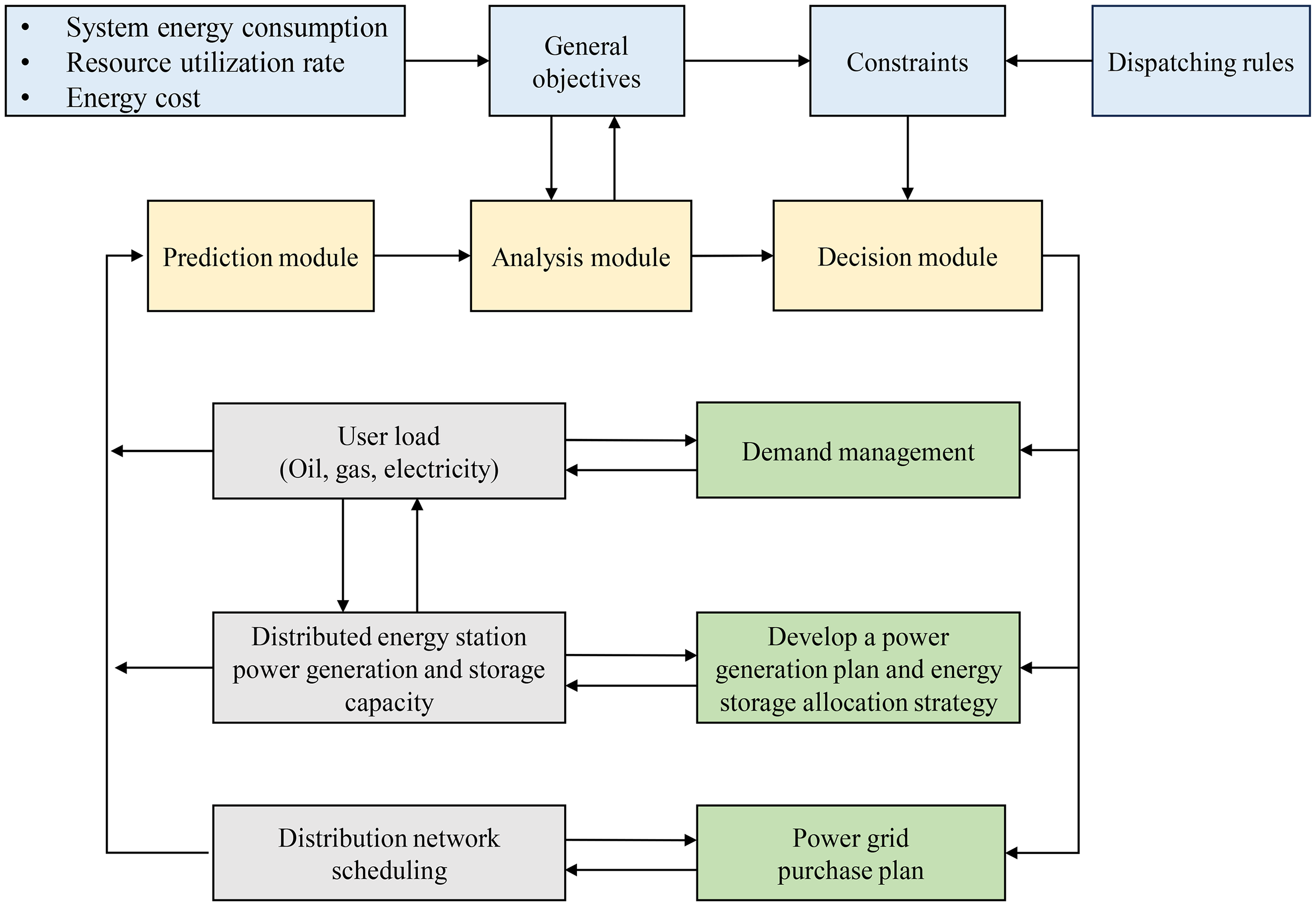
Framework of energy management system.
Currently, global research into integrated energy management is still in a nascent stage, lacking systematic basic theory and mature system application. Through the research on the operation control and energy management technology of the micro grid with multi voltage source micro source network, the results show that different management strategies are adopted to realize the safe and economic operation of the system in the optimal start-up and shutdown stage, the economic optimal dispatch stage and the real-time adjustment stage of the dispatch plan (Bao, 2014). Another concept is the self-regulated cooperative smart grid energy management system, which integrates distributed and centralized subsystems through bidirectional communication to enable the coordinated optimization and control of multiple energy flows (Sun et al., 2016). Future research in this field is expected to concentrate on several key areas: real-time modeling and state estimation of multi-energy flows, multi-timescale security analysis and control, and mixed-timescale optimized scheduling, etc.
Energy storage technology
Energy storage technology plays a pivotal role in multi-energy complementary systems, which is used to addressing the inherent intermittency of renewable energy sources and serves as an important guarantee to realize the stable output of electric energy. For instance, wind turbine power generation fluctuates with wind speed, exhibiting strong randomness and intermittency that render its output non-dispatchable. Similarly, photovoltaic power generation is subject to the variability of solar irradiance and weather changes, resulting in random, intermittent, and volatile output (Mari et al., 2025). However, the production of oil and gas in oil fields needs continuous, reliable and stable power output. Therefore, integrating energy storage devices into the energy supply system is necessary, which can smooth the output fluctuations from renewable power, reduce the difficulty of connecting to the power grid, and greatly promote the large-scale application of new energy.
According to the storage medium, the energy storage technologies can be broadly classified into mechanical energy storage, electrochemical energy storage, electromagnetic energy storage, thermal energy storage, and hydrogen energy storage, as illustrated in Figure 3. Mechanical energy storage mainly includes pumped storage, compressed air energy storage and flywheel energy storage. Electrochemical storage encompasses technologies such as lead-acid batteries, sodium-sulfur batteries, lithium-ion batteries, and flow batteries. Electromagnetic energy storage includes super capacitor energy storage and superconducting magnetic energy storage. Heat storage technology mainly uses heat storage tanks, and the commonly used media are water, solid or phase change materials. Hydrogen storage technology mainly uses high-pressure or low-temperature liquefaction and solid materials to store hydrogen.
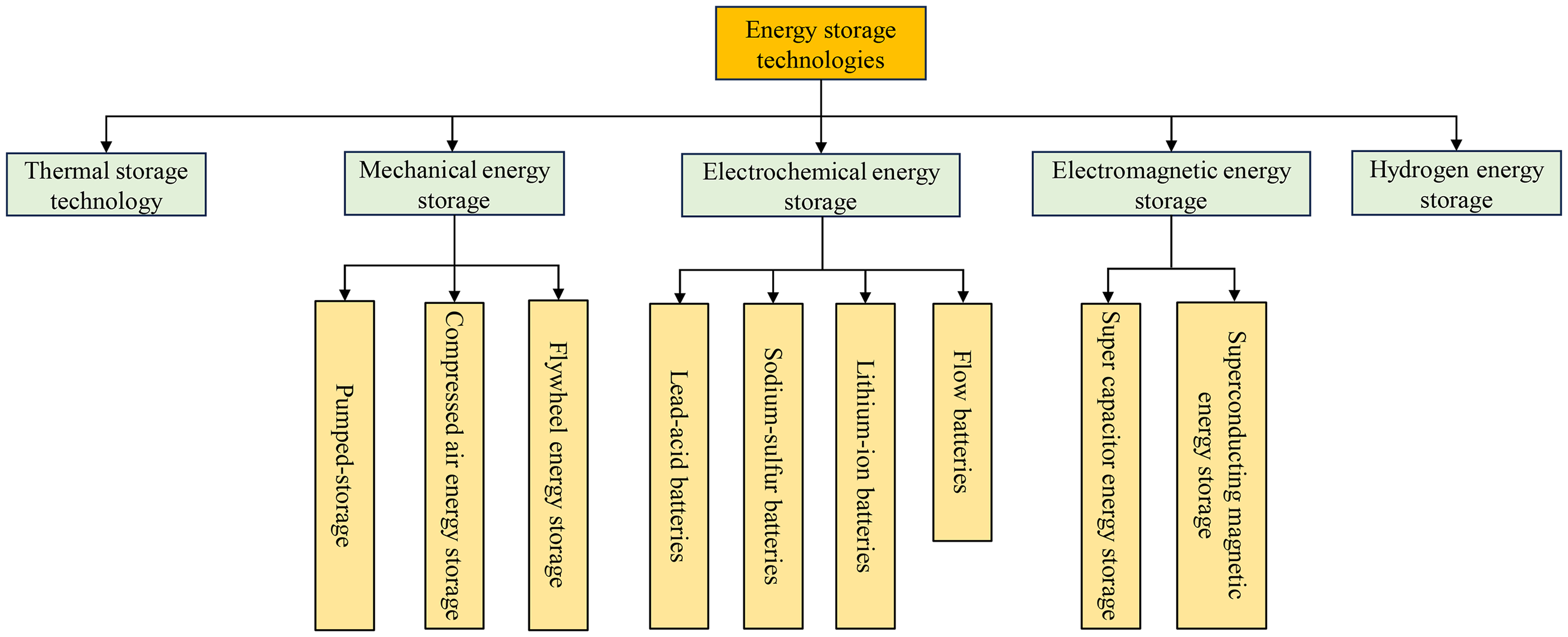
Classification of energy storage technology.
From the perspectives of basic research, key technologies, and integrated demonstration, various storage technologies are further categorized into four echelons in China (Chen et al., 2024), as illustrated in Figure 4. The first echelon comprises pumped hydro storage, which accounts for 59.4% of the national installed energy storage capacity. The second echelon includes lithium-ion batteries, compressed air energy storage, liquid flow batteries, lead-acid batteries and heat and cold storage technologies, of which lithium-ion batteries have the most installed capacity. The third echelon is sodium ion battery, flywheel energy storage and super capacitor, in which sodium ion is widely concerned. The fourth echelon features gravity energy storage, heat pump storage, and liquid metal energy storage.
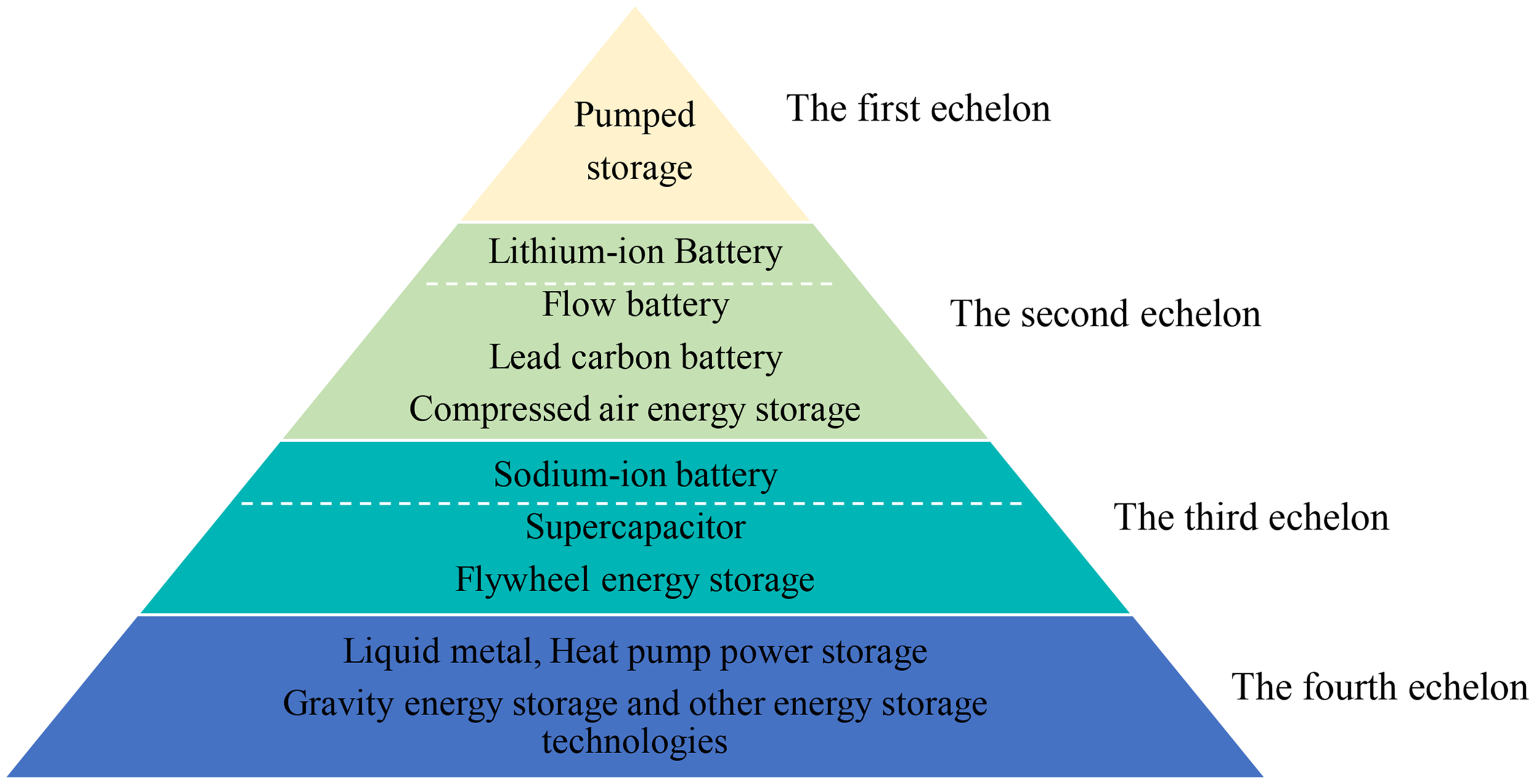
China's energy storage integration demonstration and industrialization echelon in 2024.
In the multi energy complementary system, different energy storage technologies have their own characteristics. For instance, the pumped and compressed air energy storage are noted for their long lifespans and large-scale capacity, whereas lithium batteries and flywheel energy storage have fast response time and high efficiency (Wang, 2019; Zou et al., 2025). Therefore, in practical applications, the selection of an appropriate energy storage method must be based on a careful evaluation of specific economic and capacity requirements.
Evaluation indicators
To assess the performance of multi-energy complementary technologies, a set of evaluation indicators is established, encompassing three primary categories: technical, economic, and social indicators (Huang et al., 2024; Li et al., 2020a).
Technical indicators
Technical indicators are primarily used to evaluate key performance aspects of a multi-energy complementary system, including its energy utilization efficiency, renewable energy penetration rate, and key equipment utilization rate.
(1) Energy utilization
The comprehensive energy utilization indicator represents the utilization efficiency level of multi energy system for multi energy. It is defined as the ratio of total input energy to total output energy:
(2) Penetration rate of renewable energy
The penetration rate of renewable energy is an indicator that measures the degree of use of new energy and the development of renewable energy in the energy structure of a country or region. It is defined as the proportion of new energy input to the total energy consumption: (3) Utilization rate of key equipment
The utilization efficiency of equipment is calculated as the percentage ratio of its actual operating time (
Economic indicator
For multi energy complementary systems, economic indicators are an important component of whether they can be established and how to establish them reasonably. Two commonly used economic indicators are presented below.
(1) Initial investment
The initial investment of a system refers to the total cost of purchasing various equipment, which to some extent determines the difficulty of system construction, applicable regions, and economic benefits. It is calculated as follows: (2) Annual operating costs of complementary systems
The annual operating cost of the system mainly includes the cost of purchasing electricity, natural gas, and fuel, as described in the following equation.

Social indicators
To comprehensively evaluate the social impact of multi-energy complementary technologies, two primary factors are considered.
The first factor is stakeholder satisfaction, which considers government, energy supply units, users, etc. It is quantified by calculating the average social satisfaction:
The second factor is CO2 emission reduction, a key metric for quantifying ecological benefits and environmental progress, which can be calculated as follows:
Current challenges and future research directions
Challenges
Although the research on multi energy complementary technology has made some progress, there are still many challenges to be solved.
Coordination control. Current researches are focused on the specific environment, lacking the research on the randomness and suddenness of the operation. Furthermore, further research is needed to explore the applicability of generalized coordinated control methods and equipment for integrated energy systems. Reliability of energy supply. The intricate control strategies governing the integrated management of storage, transfer, and load regulation present significant challenges to assess the power supply reliability of such systems. Control devices. Different energy control devices typically operate in isolation, and there is no universal control device with uniformity and compatibility.
Future research directions
The multi-energy complementary technologies have broad application prospects, which are of great significance in promoting the development and utilization of renewable energy, achieving maximum utilization of renewable energy, improving energy utilization efficiency, and building a clean, low-carbon, safe and efficient energy system. Future developments in multi-energy complementary technologies are expected to focus on the following aspects.
To move beyond the simple integration of standalone energy systems, it is necessary to develop a comprehensive theory for multi-energy flow coupling, energy potential matching, and cascade utilization, explore the efficient transformation and coupling mechanism of multi energy complementarity, and establish a multi-objective and multi scenario collaborative planning research method. A further priority is to develop comprehensive performance evaluation methods considering the efficiency, safety, stability, economy and flexibility, which will guide the equipment selection and capacity matching of multi energy flow system, and realize the efficient and coordinated operation of each part of the source network load storage. With considering the fluctuation of renewable energy and the uncertainty of user energy consumption, to reveal the full operating characteristics of the multi energy flow system at different time and space scales, and realize the real-time monitoring and optimal regulation of the multi energy flow system, it is necessary to further study real-time modeling and state estimation technology of multi-energy flow, and establish the active regulation mechanism of the multi energy flow system. By applying advanced technologies like digital twins and virtual power plants to multi-energy flow systems, the potential of the energy internet is expected to be fully utilized, driving the evolution of comprehensive energy systems toward greater digitalization and intelligence. At present, the energy storage technology can only ensure a certain capacity and time limit for the storage of electric energy. Furthermore, there are a lot of abandoned wind, water and light due to the imbalance between power generation and power consumption, which result in insufficient power during peak hours. With the development of research, the super storage technology of electric energy will be developed. Which will be used to store a large amount of electric energy during the low power consumption period, and release electric energy during the peak power consumption period to relieve the pressure of power consumption.
Conclusion
To achieve carbon peaking and carbon neutrality goals, the multi-energy complementary technology of integrated energy is the strategic demand for the transformation and upgrading of the energy system. This paper has provided a systematic overview of this critical field. It began with the multi-energy complementary system from the definition, mode and policies of multi-energy complementary. Subsequently, it combs the research status of key technologies of multi-energy complementary, which focuses on the development and application of plan and design technology, coordination and optimization control technology, energy management technology and energy storage technology. Furthermore, the evaluation indicators of multi-energy complementary technology are briefly introduced. Finally, the challenges faced by the development of multi-energy complementary technology and the future development trend are analyzed and discussed. Although the multi-energy complementary technology has made some progress in the field of energy development in various countries, it is still in its infancy and has a long way to go.
Footnotes

Funding
The authors disclosed receipt of the following financial support for the research, authorship, and/or publication of this article: This work was financially supported by the China National Petroleum Corporation scientific research and technological development item “Development of multi-energy collaborative complementary software for oil-gas and new energy based on blockchain + AI” (Grant No. 2023DJ8205).
Declaration of conflicting interests
The authors declared no potential conflicts of interest with respect to the research, authorship, and/or publication of this article.