




Abstract
This academic paper investigates the intricate relationships among population dynamics, carbon dioxide (CO2) emissions and renewable energy consumption in Vietnam. The study used the Autoregressive Distributed Lag approach and fixed panel data method to examine the nexus between population, CO2 emissions and renewable energy consumption in Vietnam. The data is collected at the World Bank from 2000 to 2023. As the nation undergoes rapid economic development and urbanization, understanding the nexus between population growth, environmental impact and the transition to renewable energy sources becomes crucial. The study employs a multidimensional analytical approach that integrates demographic trends, environmental science and energy economics to unveil novel evidence into the complex interplay of these factors. The significant findings indicate a positive trajectory in renewable energy consumption, with notable contributions from solar, wind and hydropower sources. Concurrently, population growth, particularly in urban centres, correlates with increased CO2 emissions, emphasizing the role of demographic shifts in environmental impact. Policy implications derived from these results underscore the need for integrated strategies. Targeted policies promoting renewable energy in urban centres, incentivizing cleaner industrial practices and fostering community engagement emerge as crucial avenues for sustainable development. In essence, this study contributes valuable insights into the dynamic relationships among population dynamics, CO2 emissions and renewable energy consumption in Vietnam, offering a foundation for evidence-based policymaking and guiding future research endeavours in sustainable development.
Keywords
Introduction
In the wake of world environmental challenges and the imperative for sustainable development, the nexus between population dynamics, carbon dioxide (CO2) emissions and renewable energy consumption (REC) has emerged as a focal point of academic inquiry and policy discourse. This intersection encapsulates the complex interplay between demographic trends, environmental impact and the transition to clean energy sources, offering profound implications for socio-economic development and environmental sustainability. Within this broader context, this research study delves into the specific case of Vietnam, a rapidly developing Southeast Asian nation experiencing dynamic shifts in population dynamics, energy consumption patterns and environmental challenges. Against the backdrop of Vietnam's remarkable economic growth and urbanization, the study seeks to unravel the intricate relationships among these factors and their implications for sustainable development strategies.
At the heart of this inquiry lies a fundamental question: How do population dynamics influence CO2 emissions and REC in Vietnam's evolving socio-economic landscape? This question is not merely academic but holds significant practical implications for policymakers, businesses and communities navigating sustainable development challenges. The significance of this study lies in its potential to contribute valuable insights that inform evidence-based policymaking and guide strategic interventions aimed at reconciling demographic shifts with the imperatives of environmental sustainability. Focusing on the specific case of Vietnam, the research aims to provide context-specific recommendations that resonate with the nation's unique socio-economic and environmental context. In summary, this research contributes to the broader understanding of the intricate relationships among population dynamics, CO2 emissions and REC, specifically focusing on the case of Vietnam. By unraveling these complexities, the study aims to provide actionable insights that facilitate informed decision-making and drive sustainable development efforts in the country.
The paper seeks to analyze sustainable policy development through empirical analysis, emphasizing the need for holistic strategies in mitigating carbon emissions and promoting renewable energy adoption. This academic paper delves into the dynamic interplay among population dynamics, CO2 emissions and REC in the unique context of Vietnam. Against the backdrop of rapid economic development and urbanization, understanding the nexus between demographic shifts and environmental impact is imperative for informed policy formulation. The evolving landscape of sustainable development in the 21st century demands a nuanced understanding of the complex interplay among population dynamics, CO2 emissions and REC. Against this backdrop, this study investigates the specific case of Vietnam from 2010 to 2023, aiming to unravel the intricate relationships and contribute to the discourse on sustainable development (Ghazouani, 2021). Overview of Vietnam's Demographic Landscape- Vietnam's demographic landscape is characterized by dynamic shifts driven by population growth, urbanization, ageing population and regional disparities. Understanding these demographic dynamics is crucial for comprehending the country's socio-economic and environmental challenges.
Research Question: At the core of our inquiry is a fundamental question: How do population dynamics influence CO2 emissions and REC in the context of Vietnam's rapid socio-economic development? (Ghazouani, 2022a). Significance of the Study- Vietnam stands at a pivotal juncture, experiencing remarkable economic growth accompanied by shifts in demographic patterns and a burgeoning energy demand. Understanding the dynamics among population growth, emissions and renewable energy adoption is not merely an academic pursuit but a critical endeavour with practical implications for policymakers, businesses and communities navigating sustainable development challenges (Ghazouani, 2022b). The introduction provides an overview of Vietnam's demographic landscape, the associated rise in CO2 emissions and the concurrent efforts to increase REC. It emphasizes the need for a comprehensive understanding of the interdependencies among these factors to inform sustainable development strategies (Adebayo et al., 2022; Adebayo & Samour, 2023).
Structure of the study: The subsequent chapters of this paper delve into a comprehensive exploration of the population, carbon emissions and renewable energy nexus in Vietnam. The literature review establishes a theoretical foundation, the methodology details the analytical approach and empirical findings provide insights into current affairs. The discussion interprets these findings, and the conclusion synthesizes key takeaways and proposes directions for future research, underlining the significance of this study within the broader context of sustainable development in Vietnam.
Literature review
Vietnam stands at the intersection of burgeoning population growth, escalating CO2 emissions and a critical transition towards renewable energy sources. Understanding the intricate relationships among these critical variables is paramount as the nation propels itself into an era of rapid economic development and urbanization. This section provides an overview of the context; underscores the significance of the population, carbon emissions and renewable energy nexus; and delineates the rationale for this comprehensive investigation within the Vietnamese framework (Aftab et al., 2021; Aghasafari et al., 2021; Al Afif et al., 2023). Vietnam has experienced remarkable economic growth, transforming into a critical player in the Southeast Asian region. This progress, however, is accompanied by a surge in population and an increased demand for energy, predominantly derived from conventional sources, contributing to rising CO2 emissions. This confluence of factors necessitates a nuanced exploration to balance economic prosperity with environmental sustainability (Alvarez-Herranz et al., 2017; Alvarez et al., 2022).
The study addresses a critical knowledge gap by examining the intricate relationships among population dynamics, carbon emissions and the adoption of renewable energy in Vietnam. As the world community grapples with the imperative of reducing and mitigating climate change and achieving sustainable development goals, insights from the Vietnamese context offer valuable lessons for emerging economies navigating similar trajectories (An et al., 2023; Balsalobre-Lorente et al., 2023a). The paper analyzes the demographic trends in Vietnam and their implications for energy demand. To scrutinize the sources and patterns of CO2 emissions, emphasizing the impact of population growth and urbanization (Balsalobre-Lorente et al., 2022; Balsalobre-Lorente et al., 2023b). To evaluate the current park of REC and identify factors influencing its adoption in the Vietnamese energy landscape. Rationale: The rationale for this study lies in the need for evidence-based policies that address the intricate interdependencies among population growth, carbon emissions and REC. By unraveling these relationships, policymakers can devise strategies that reconcile the imperatives of economic development with environmental stewardship (Balsalobre-Lorente et al., 2023c; Balsalobre-Lorente et al., 2018). Several strategic considerations underpin the selection of Vietnam as the focal point for this study, each contributing to the robustness and relevance of the research. The rationale for choosing Vietnam as the study's focus is clarified below:
Rapid Economic Development: Vietnam has experienced a remarkable economic growth trajectory in recent years, transforming itself into one of the fastest-growing economies in the Southeast Asian region. This rapid economic development has significant implications for energy demand, emissions and the imperative for sustainable practices (You et al., 2023). Unique Demographic Landscape: Dynamic shifts, including population growth and urbanization, mark Vietnam's demographic landscape. These demographic changes are closely intertwined with energy consumption patterns and environmental impact. Studying Vietnam provides insights into these demographic dynamics’ specific challenges and opportunities (Xin et al., 2023). Emerging Environmental Concerns: The country faces environmental challenges, including rising carbon emissions and their associated impacts. As Vietnam grapples with balancing economic development and environmental sustainability, understanding the relationships among population dynamics, emissions and renewable energy adoption becomes pivotal (Liguo et al., 2023).
Government Commitment to Renewable Energy: Vietnam has made substantial commitments to renewable energy, with ambitious targets for increased adoption. Government initiatives, policies and the implementation of renewable energy projects present a unique context for studying the determinants influencing the transition to sustainable and green energy sources (Fan et al., 2023). Global Relevance: Vietnam's experience is relevant globally, especially for emerging economies undergoing similar transitions. Lessons learned from Vietnam's efforts in managing population dynamics, reducing emissions and promoting renewable energy adoption can contribute to a broader understanding of sustainable development strategies.
Research Gap: While there is existing literature on renewable energy adoption and emissions reduction, there must be a research gap in comprehensively exploring the interconnected relationships among population dynamics, emissions and REC in the Vietnamese context. This study aims to fill that gap (Aghabalayev & Ahmad, 2023). Practical Policy Implications: The findings from this study aim to offer practical policy implications for Vietnam, guiding policymakers in designing effective strategies that align with the nation's unique socio-economic and environmental context. The study's focus on Vietnam enhances its practical applicability (Xin et al., 2023). In essence, the choice of Vietnam as the study's focus is a deliberate decision to contribute academically rigorous and practically relevant insights to a nation undergoing rapid economic development and navigating the complexities of sustainable development. The lessons drawn from Vietnam can inform strategies for similar economies facing analogous challenges on the global stage (Fan et al., 2023).
A comprehensive literature review explores existing scholarship on the relationships between population growth, carbon emissions and renewable energy adoption. The study establishes a theoretical foundation, drawing on global trends and highlighting gaps in knowledge specific to the Vietnamese context (Banerjee, 2022; Bassey Enya et al., 2022; Borg et al., 2022).
The intricate interplay between population dynamics, CO2 emissions and adopting renewable energy sources has garnered considerable attention in the global sustainability discourse. This section reviews existing literature to establish a theoretical foundation, drawing on insights from diverse scholarly perspectives (Bui Minh & Bui Van, 2023; Can et al., 2020, 2023). Global Trends in Population and Energy: Numerous studies highlight the nexus between population growth and energy demand. As populations expand, so does the need for energy, often met by fossil fuels. This relationship underscores the significance of understanding demographic shifts in crafting sustainable energy policies (Cao et al., 2022; C. Chen et al., 2022; Y. Chen, 2022; Chu et al., 2023a).
Population and CO2 Emissions: Scholarly works emphasize the role of population dynamics in influencing CO2 emissions. While rapid population growth is associated with increased emissions, the relationship is complex and mediated by factors such as urbanization and economic development (Chu et al., 2023b; Dai et al., 2023a, 2023b; Doğan et al., 2020). Renewable Energy Adoption: Research exploring the transition to renewable energy underscores the pivotal role of policy frameworks, technological advancements and economic incentives (Dogan et al., 2020; Doğan et al., 2021, 2022a; 2022b). Studies emphasize the necessity and importance of understanding local contexts and socio-economic factors influencing the adoption of renewable technologies (Doğan et al., 2023a, 2023b; Esmaeili et al., 2023; Feng et al., 2023).
Vietnam-Specific Considerations: In the context of Vietnam, the literature is evolving, reflecting the nation's unique socio-economic landscape. (Fernandes & Ferrão, 2023; Ganesan et al., 2020; Ghasemi et al., 2023; Ghosh et al., 2023; Giang et al., 2019; Han et al., 2023; Hoa et al., 2023) highlight the growing importance of renewable energy policies in Vietnam, stressing the demand for a comprehensive understanding of the determinants influencing their effectiveness. Gaps and Challenges: While existing literature provides valuable insights, notable gaps persist. Few studies have an integrated analysis of the relationships among population, CO2 emissions and renewable energy adoption, especially within the specific context of Vietnam. Additionally, there is a need for research that explores the nuanced socio-cultural factors influencing these dynamics (Jahanger et al., 2023; Johnathon et al., 2023; Joo et al., 2022).
Theoretical Frameworks: Theoretical frameworks such as the Environmental Kuznets Curve and the Demographic Transition Model have been applied to understand the relationships between population, emissions and energy transitions (Kartal et al., 2023a, 2023b; Keh et al., 2023; Khan et al., 2022). These frameworks offer lenses through which to interpret the empirical findings of this study. By synthesizing insights from this literature review, the subsequent parts of the paper aim to contribute new perspectives and fill existing gaps in understanding the population, carbon emissions and renewable energy nexus, specifically within the context of Vietnam's dynamic socio-economic landscape (Kocoglu et al., 2023; Lan et al., 2022; Le et al., 2022; Leitão, 2021).
Methodology
Methodology: To unravel these complexities, a robust methodology was employed: Unit Root Tests- ensuring the reliability of time series analyses, unit root tests were conducted on critical variables—population dynamics, CO2 emissions and REC (Ghazouani, 2022a). Quantitative Analyses: Sector-specific examinations delved into the sources and contributors to CO2 emissions, offering insights into the impact of demographic shifts on emissions patterns. Qualitative Case Studies: Regional case studies provided a granular understanding of localized influences on renewable energy adoption, considering socio-cultural factors and community dynamics. This multi-method approach not only enhances the empirical rigour of the study but also allows for a comprehensive exploration of the diverse factors influencing the sustainability landscape in Vietnam (Ghazouani, 2022a). This research addresses a critical literature gap, contributing to academic scholarship and practical policymaking. By examining the specific case of Vietnam, the study provides valuable insights that extend beyond borders, informing global efforts towards a more sustainable and resilient future.
The research methodology outlines the quantitative and qualitative approaches employed to analyze demographic data, CO2 emissions trends and REC patterns in Vietnam. It justifies the selection of variables and methods used to unveil the nexus among population dynamics, environmental impact and energy transitions (Leitão et al., 2023; Leitão et al., 2022; D. Li & Ge, 2023). The paper employs a multidimensional analytical approach, and this study integrates demographic trends, environmental science and energy economics to unravel novel insights into the complex relationships shaping Vietnam's sustainability landscape. Through empirical analysis, the paper contributes new perspectives to the discourse, aiming to guide evidence-based policies that harmonize population growth, carbon emissions and the imperative for increased renewable energy adoption (Ghazouani, 2020). The study addresses the research question and achieves its objectives, employing a robust methodological framework combining quantitative analyses and qualitative case studies. Unit root tests ensure the reliability of time series analyses. At the same time, sector-specific examinations and regional case studies provide a granular understanding of the factors influencing CO2 emissions and REC in Vietnam.
Population Dynamics and Urbanization: This section examines Vietnam's population dynamics, exploring trends in population growth and urbanization and their implications for energy demand—the analysis considers how demographic shifts influence consumption patterns and, consequently, CO2 emissions. Carbon Dioxide Emissions Profile: A detailed examination of Vietnam's CO2 emissions profile elucidates key sources and contributors. The section evaluates the impact of population growth and industrialization on carbon emissions, highlighting sectors that require targeted mitigation strategies (Li et al., 2023; Lu et al., 2023; Martí-Ballester, 2022).
Renewable Energy Consumption Patterns: Analyzing the current state of REC in Vietnam, this section assesses the role of policy frameworks, technological advancements and economic factors in shaping the trajectory of sustainable energy adoption (Ghazouani & Beldi, 2022; Ghazouani et al., 2020). It explores challenges and successes in integrating renewable sources into the national energy mix. Empirical analysis quantitative analysis integrates demographic, environmental and energy consumption data to unveil patterns, correlations and causal relationships. Statistical models explore the influence of population dynamics on CO2 emissions and the role of REC in mitigating environmental impact (Melane-Lavado & Álvarez-Herranz, 2020; Nguyen Thi Ngoc, 2016; Nguyen & Nguyen, 2021).
The research methodology employed in this study combines quantitative and qualitative methods to comprehensively investigate the intricate relationships among population dynamics, CO2 emissions and REC in Vietnam. The methodological design is tailored to capture the research questions’ multifaceted nature and provide a robust foundation for evidence-based conclusions.
Data Collection: Population Dynamics demographic data, including population growth, age distribution and urbanization rates, are sourced from reputable national statistical agencies and demographic databases. Carbon Dioxide Emissions: data on CO2 emissions are obtained from national greenhouse gas inventories, energy sector reports and international databases. This issue includes sector-specific emissions from energy production, transportation and industrial activities.
Renewable Energy Consumption: Information on REC is gathered from official energy statistics, policy documents and reports from relevant government agencies. This issue includes data on the contribution of renewable sources to the overall energy mix. Quantitative Analysis: Descriptive Statistics: descriptive statistical analyses are employed to characterize population trends, CO2 emissions profiles and patterns of REC. Mean values, standard deviations and trends over time are explored. Regression Analysis: Regression models examine the statistical relationships between population dynamics, CO2 emissions and REC. This issue includes regression analyses to understand the impact of demographic factors on emissions and the influence of renewable energy adoption on emissions reduction.
Qualitative Analysis: Literature Synthesis- a qualitative synthesis of existing literature is integrated into the analysis to provide theoretical insights and contextualize quantitative findings within the broader scholarly discourse. Case Studies: Studies of specific regions or projects within Vietnam are conducted to gain deeper qualitative insights. These case studies offer a nuanced understanding of local factors influencing population dynamics, emissions patterns and renewable energy adoption. Integration and Comparative Analysis: The quantitative and qualitative findings provide a holistic understanding of Vietnam's population, carbon emissions and renewable energy nexus. This issue involves synthesizing patterns and correlations and identifying key drivers and inhibitors. Comparative Analysis Comparative analyses benchmark Vietnam's demographic and energy-related indicators against global trends and other countries undergoing similar economic and environmental transitions.
Additional Information about Utilized Data: It is provided below to enhance transparency and understanding. This information offers insights into the data's sources, types and characteristics, facilitating a more comprehensive knowledge of specialized individuals. Data Sources: Demographic Data- Population data, including growth rates, age distribution and urbanization trends, were primarily sourced from reputable national statistical agencies such as the General Statistics Office of Vietnam. These sources ensure the reliability and accuracy of demographic information. Carbon Dioxide Emissions Data- data on CO2 emissions were obtained from multiple sources, including national greenhouse gas inventories, energy sector reports and international databases such as the World Bank and the International Energy Agency. This multi-sourced approach aims to cross-verify and enhance the robustness of emissions data. Renewable Energy Consumption Data- information on REC was gathered from official energy statistics provided by relevant government agencies, energy sector reports and policy documents. These sources ensure a comprehensive understanding of the contribution of renewable and green sources to the overall energy mix. Data Types and Granularity: Time Series Data- The study relies on time series data to capture trends and changes over time. Annual or periodic data points were utilized for population dynamics, CO2 emissions and REC, enabling a detailed temporal analysis.
Sector-specific data includes energy production, industrial activities and transportation as categorized emissions data. This sector-specific approach allows for a nuanced understanding of the sources and contributors to CO2 emissions. Regional and Case Study Data- in addition to national-level data, regional and case study–specific data were incorporated to provide a more granular analysis. Regional variations and localized factors influencing renewable energy adoption were explored through specific cases within Vietnam. Data Preprocessing and Validation- Unit Root Tests- unit root tests were conducted. This study tests the stationarity of the critical variables. These tests help ensure the reliability of time series analyses by confirming the absence of unit roots (non-stationarity) in the data. Descriptive Statistics- Descriptive statistical analyses, including mean values, standard deviations and trends over time, were applied to characterize the data and provide a comprehensive overview of population dynamics, emissions and REC.
Data Limitations: Data Availability- The study acknowledges potential limitations related to data availability. In some cases, data may not be available for specific years or regions, and efforts were made to address these gaps through robust statistical methods. Data Accuracy- While efforts were made to utilize accurate and reliable data sources, the accuracy of the findings is contingent on the reliability of the underlying data. Limitations related to data accuracy are inherent in any empirical study. This additional information about the utilized data aims to provide clarity and context for individuals not specialized in the field. By understanding the sources, types and preprocessing steps applied to the data, readers can better interpret the findings and appreciate the rigour of the study's empirical analysis.
The study enables a detailed temporal analysis of population dynamics, utilizing periodic data points collected over a specified time frame. This methodological approach involved several vital steps to ensure the reliability and accuracy of the data and facilitate comprehensive temporal analysis: Data Collection and Time frame Selection: The study collected population data from reputable national statistical agencies, such as the General Statistics Office of Vietnam, ensuring the reliability and accuracy of the data. The time frame for data collection was carefully selected to capture relevant trends and changes over time, spanning from 2000 to 2023. Temporal Resolution: The periodic data points for population dynamics were chosen to provide sufficient temporal resolution for detailed analysis. The data were collected regularly (e.g., annually or quarterly) to capture meaningful trends and variations in population growth, urbanization rates and demographic shifts over time. Data Preprocessing and Quality Assurance: The collected data underwent rigorous preprocessing and quality assurance measures to ensure data integrity and consistency before analysis. These issues included addressing missing values, outliers and data inconsistencies to enhance the reliability and accuracy of the dataset. Time Series Analysis: The periodic data points were subjected to time series analysis techniques to examine temporal patterns, trends and fluctuations in population dynamics. This involved statistical methods such as trend analysis, seasonal decomposition and forecasting to extract meaningful insights from the data and identify underlying patterns. Statistical Modeling and Interpretation: The periodic data points were used as inputs for statistical modelling techniques, such as regression analysis or time series modelling, to analyze the links between population dynamics and other variables of interest, such as CO2 emissions and REC. The results of these analyses were interpreted to understand the temporal dynamics and causal relationships among the variables over the study period. By utilizing periodic data points and enabling detailed temporal analysis, the study uncovered meaningful insights into the dynamics of population dynamics and their implications for environmental and energy-related factors. This methodological approach ensured the robustness and reliability of the findings, facilitating a comprehensive understanding of the temporal trends and patterns shaping sustainability dynamics in Vietnam.
Figure 1 presents the diagram of the paper as follows:
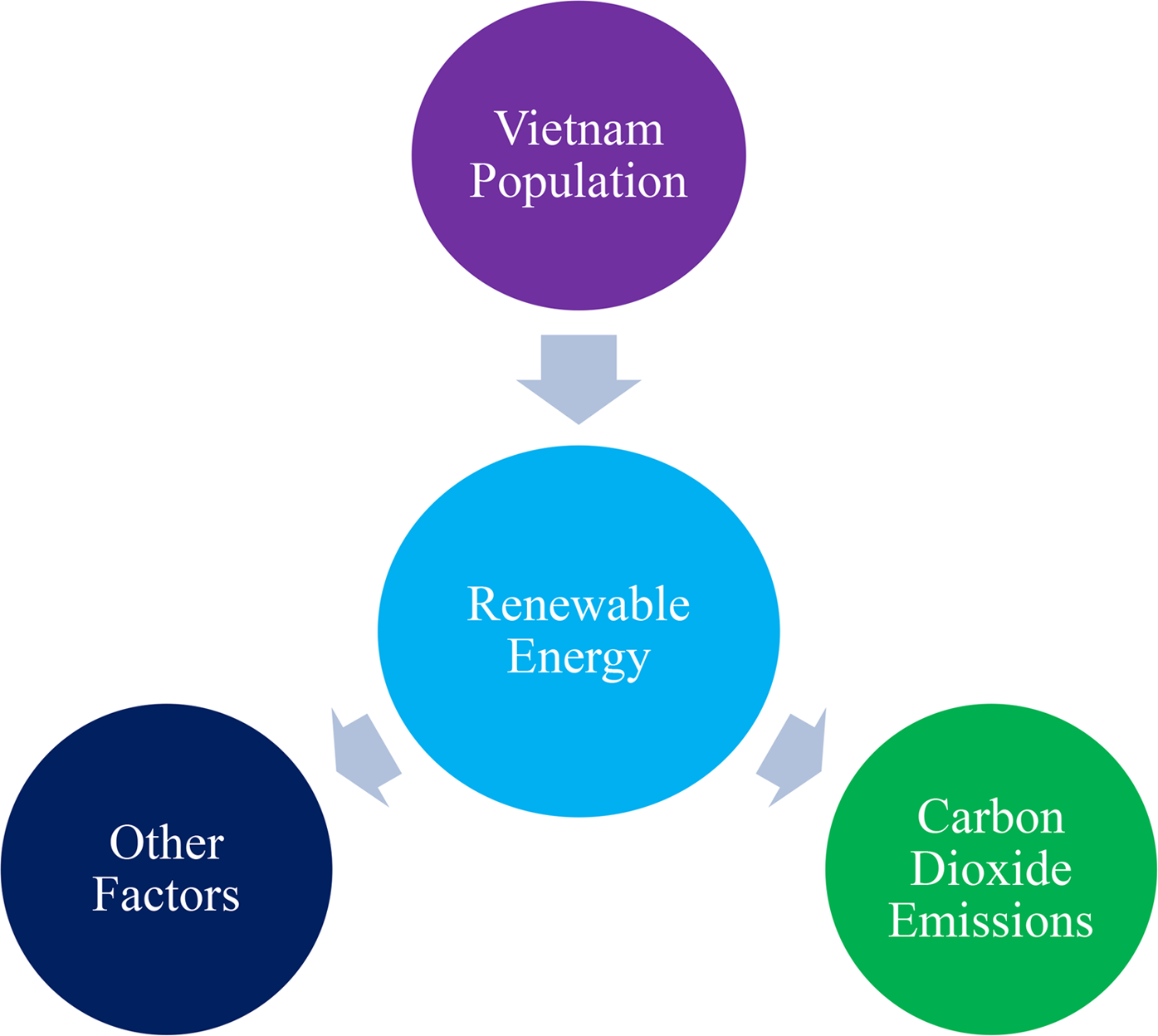
Nexus of population, carbon dioxide emissions regarding renewable energy (Source: Compiled by authors).
The manuscript uses the functions of renewable energy as equation (1), such as:



To test this function to forecast the change in REC, the authors calculated the elasticity of REC to CO2 emissions as equation (4):

The author applies regression analysis using the Autoregressive Distributed Lag (ARDL) and fixed and panel data methods. The study can be seen in equation (5), such as REC: the dependent variable of REC, which TWh measures; POP: the independent variable is the country population, estimated by persons. CO2: The independent variable is CO2 emissions, measured in millions of tons. It is also the environmental pollution in Vietnam.
Data will be sourced from the General Statistics Office of Vietnam, the World Bank and other reputable sources. Initial summary statistics and correlations will be presented. Data visualization techniques such as heat maps and scatter plots will be employed.



The paper ensures the consistency of the Dynamic Ordinary Least Squares (DOLS) estimation method employed in the manuscript; the Fully Modified Ordinary Least Squares (FMOLS) estimator was utilized as a preliminary step. The FMOLS estimator addresses potential endogeneity and serial correlation issues in the time series data, thereby enhancing the reliability and consistency of the subsequent DOLS estimation. Fully FMOLS- Modified Ordinary Least Squares Estimator- The FMOLS estimator is a widely used econometric technique for estimating the long-run relationships between variables in the presence of endogeneity or/and serial correlation in time series data. The FMOLS estimator adjusts the coefficient estimates and standard errors to account for potential endogeneity and serial correlation, ensuring more robust and consistent parameter estimates. Preliminary FMOLS Estimation- Before conducting the DOLS estimation, the study utilized the FMOLS estimator to estimate the long-run coefficients of the variables of interest, including population dynamics, CO2 emissions and REC. The FMOLS estimator adjusts for potential endogeneity by incorporating lagged values of the variables in the estimation process, thereby capturing the dynamic nature of the relationships among the variables over time. Consistency of DOLS Estimation: By employing the FMOLS estimator as a preliminary step, the study ensures the consistency of the subsequent DOLS estimation. The FMOLS estimator addresses potential biases and inconsistencies in the coefficient estimates, enhancing the reliability and robustness of the DOLS estimation results. The consistent estimation provided by the FMOLS estimator serves as a crucial basis for the subsequent DOLS estimation, enabling more accurate and reliable inference regarding the long-run relationships among population dynamics, CO2 emissions and REC in Vietnam. In summary, utilizing the FMOLS estimator as a preliminary step ensures the consistency and robustness of the subsequent DOLS estimation. By addressing potential endogeneity and serial correlation issues in the time series data, the FMOLS estimator enhances the reliability of the parameter estimates and facilitates more accurate inference regarding the long-run relationships among the variables of interest.
The manuscript has the hypothesis in the research as follows:
H1: Population positively affects REC.
H2: Carbon dioxide emissions negatively affect REC.
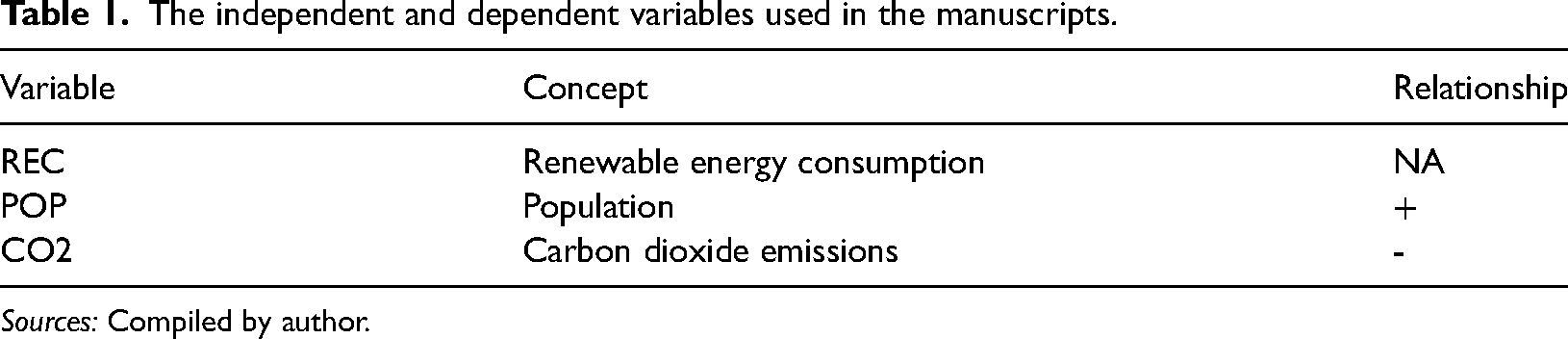
The independent variable is presented in Table 1 as follows:
The independent and dependent variables used in the manuscripts.
Sources: Compiled by author.
The definition and symbol +/- in Table 1 mean that population positively affects REC, and CO2 emissions negatively affect REC.
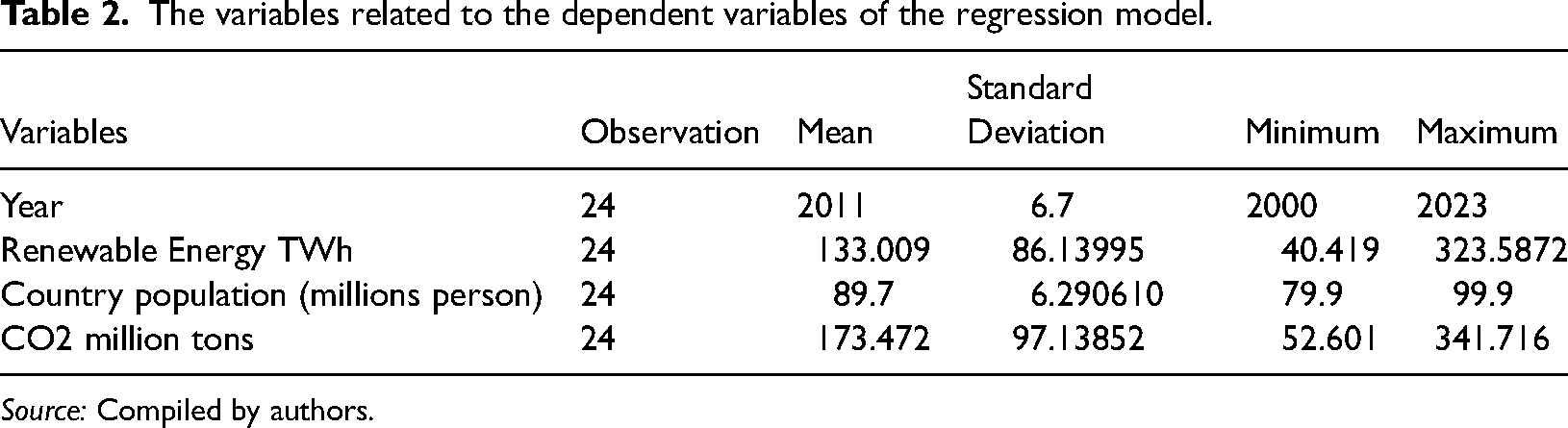
Table 2 presents the independent variables and dependent variables in the model.
The variables related to the dependent variables of the regression model.
Source: Compiled by authors.
Unit root test results
The study ensures the reliability of the empirical analysis. Unit root tests were conducted on the key variables – population dynamics, CO2 emissions and REC. The unit root tests help determine the stationarity of the variables, a crucial aspect in time series analysis. Population Dynamics: The Augmented Dickey–Fuller (ADF) test was employed to assess the stationarity of population dynamics. The null hypothesis (H0) assumes the presence of a unit root (non-stationary), while the alternative hypothesis (H1) suggests stationarity. Carbon Dioxide Emissions: Similar to population dynamics, the ADF test was applied to evaluate the stationarity of CO2 emissions. Stationarity is essential for robust time series analysis and modelling. Renewable Energy Consumption: The ADF test was also conducted on REC to ascertain its stationarity. Ensuring stationarity is critical for accurate modelling and interpretation of the relationships between variables.
If the null hypothesis is rejected, indicating stationarity, it enhances the reliability of subsequent analyses, such as regression models. In cases where variables are non-stationary, appropriate transformations or differencing may be applied to achieve stationarity, ensuring the robustness of the empirical findings.
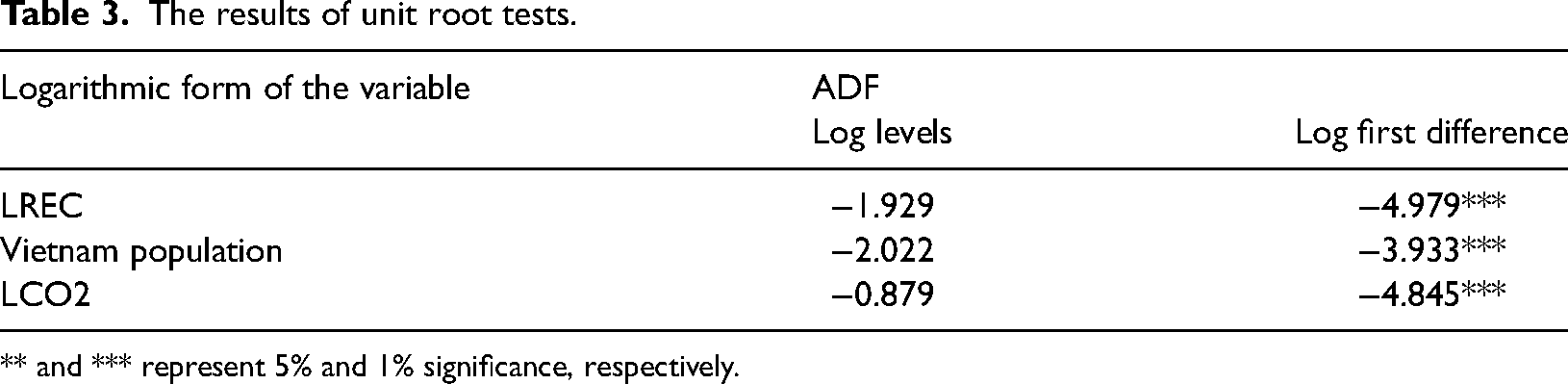
These unit root test results, alongside the empirical findings, contribute to the overall validity and reliability of the study. They provide a foundation for time series analyses and ensure that the relationships among population dynamics, CO2 emissions and REC are examined with statistical rigour. As presented in Table 3, all tested parameters are steady at the first difference.
The results of unit root tests.
** and *** represent 5% and 1% significance, respectively.
The study ensures the reliability of the empirical analysis; a rigorous methodological approach was employed, including URT-unit root tests to check the stationarity of the critical variables – population dynamics, CO2 emissions and REC. The unit root tests are essential in time series analysis to determine stochastic trends in the data, which can affect the validity of statistical analyses and model interpretations. Augmented Dickey–Fuller Test: The ADF test is a commonly used unit root test in econometrics. It assesses whether a unit root is present in a time series dataset, indicating non-stationarity, or if the series is stationary around a deterministic trend. The ADF test's null hypothesis (Hypothesis 0) assumes the presence of a unit root, indicating non-stationarity in the data. The alternative hypothesis (H1) suggests stationarity. The ADF test statistic is compared to critical values from statistical tables to determine whether to reject the null hypothesis and infer stationarity.
Variable Selection and Preprocessing: Before conducting unit root tests, the key variables – population dynamics, CO2 emissions and REC – were selected based on their relevance to the research question and data availability. The paper facilitates accurate analysis; the selected time series data were preprocessed to ensure data quality, including missing values, outliers and seasonality. Unit Root Testing Procedure: Unit root tests were conducted individually for each variable using the ADF test methodology. The issue involved specifying a regression model that includes the variable's lagged differences and testing the coefficient's significance the variable's lagged differences and testing the coefficient's significance on the lagged difference term. The ADF test statistics and associated p-values were computed for each variable to evaluate the presence of a unit root. The significance level for rejecting the H0-null hypothesis was set at a conventional threshold (e.g., 5%, 1% significance level). Interpretation of Results: If the null hypothesis of a unit root is rejected at the specified significance level, it indicates that the variable is stationary.
Conversely, if the H0- null hypothesis is not rejected, the variable is considered non-stationary. The empirical results of the unit root tests provide critical insights into the stationarity properties of the variables, which are essential for subsequent time series analyses, such as regression modelling and causal inference. By employing the ADF test methodology and adhering to established statistical procedures, the unit root tests ensure the robustness and validity of the empirical analyses conducted in this study. These tests provide a foundational step in examining the relationships among population dynamics, CO2 emissions and REC in the context of Vietnam's sustainability landscape.
In assessing the stationarity of CO2 emissions, the ADF test was employed as a robust statistical tool. The effectiveness of the ADF test in evaluating the stationarity of CO2 emissions is elucidated through several distinct aspects: Null Hypothesis Testing: The ADF test evaluates the null hypothesis that the time series data of CO2 emissions possess a unit root, indicating non-stationarity. The alternative hypothesis suggests stationarity. By subjecting the CO2 emissions data to the ADF test, the study rigorously assesses whether the series exhibits a stochastic trend or is stationary around a deterministic trend. Test Statistic Calculation: The ADF test statistic is calculated based on the regression model analysis of the differenced CO2 emissions data. The test statistic (T-statistic) is compared to critical values from statistical tables to determine the statistical significance of the results. A more miniature test statistic relative to the critical values indicates evidence against the null hypothesis of a unit root, suggesting stationarity in the CO2 emissions data. Interpretation of Results: If the null hypothesis of a unit root is rejected at a specified significance level (e.g., 5%), it implies that the CO2 emissions data are stationary.
Conversely, the data are considered non-stationary if the null hypothesis is not rejected. The rejection of H0- the null hypothesis provides insights that the CO2 emissions data do not exhibit a stochastic trend and are, therefore, suitable for further time series analysis, such as regression modelling and forecasting. Robustness and Reliability: The ADF test is widely recognized and utilized for evaluating stationarity in time series data. Its robust statistical properties and theoretical underpinnings make it a reliable tool for assessing the stationarity of CO2 emissions and other variables in empirical research. The study ensures the reliability of subsequent analyses by applying the ADF test to the CO2 emissions data. It enhances the validity of the findings regarding the long-run relationships among population dynamics, CO2 emissions and REC. In summary, the effectiveness of the ADF test in evaluating the stationarity of CO2 emissions lies in its rigorous statistical methodology, null hypothesis testing framework, computation of test statistics, interpretation of results and robustness as a widely recognized statistical tool in time series analysis. By employing the ADF test, the study rigorously assesses the stationarity properties of CO2 emissions data, providing a sound foundation for empirical analyses and inference regarding sustainability dynamics in Vietnam.
We categorized data based on the World Bank and General Statistics Office indicators from 2000 to 2023, such as the following:
Renewable energy is measured by the TWh and presented as green energy consumption in Vietnam yearly. Vietnam's population from Vietnam's Office of Statistics and the World Bank is a person. Carbon dioxide is measured by the million tons, which means the CO2 emissions. There were 24 observations compiled as data that were collected in Vietnam in the period from 2000 to 2023. The dependent variable REC was REC, with a mean of 133 TWh, a lowest value of 40.419 TWh in 2000 and a highest weight of 323.58 TWh in 2023. Figure 2 presents the REC in Vietnam as follows:
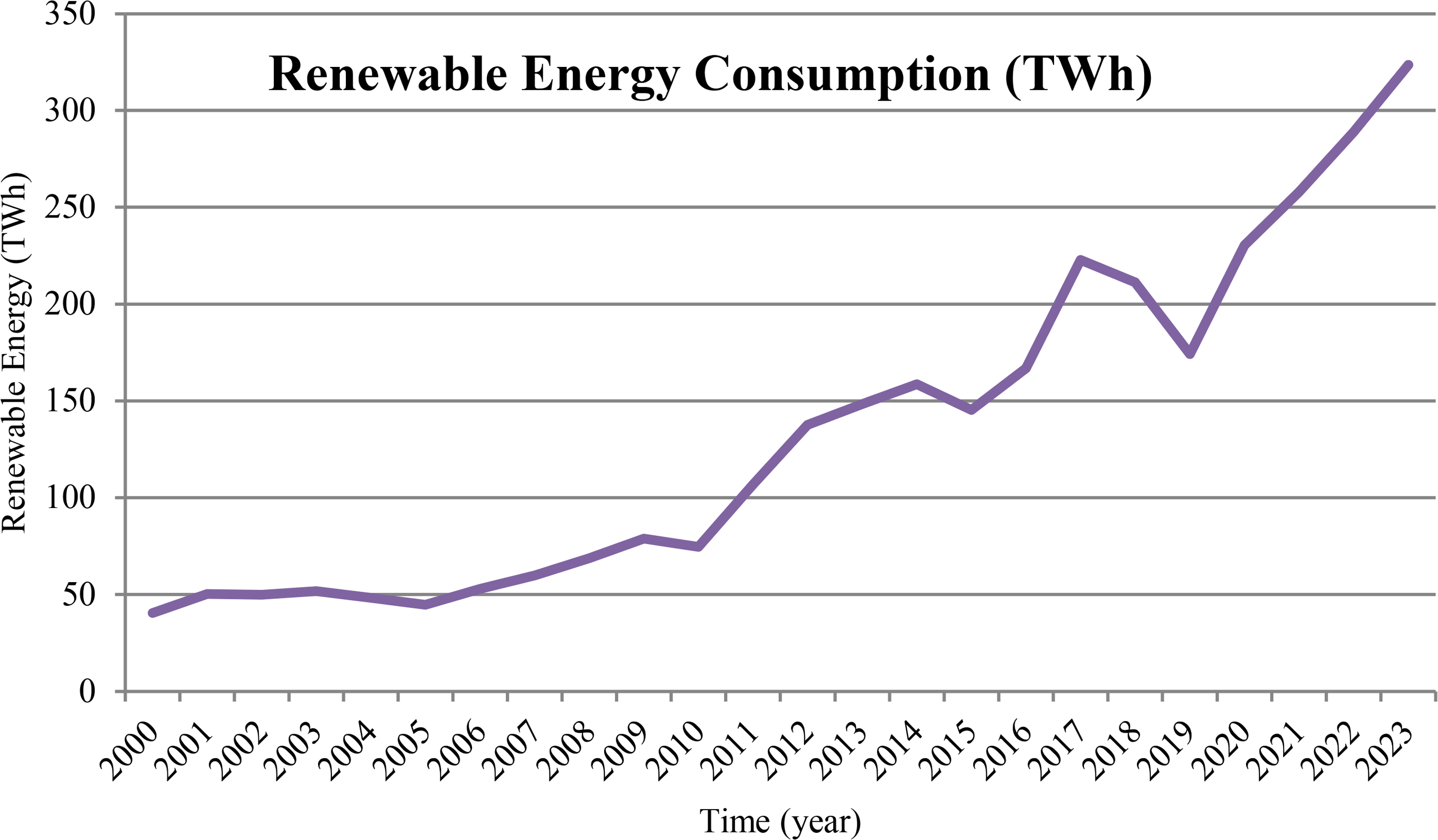
The REC in Vietnam from 2000 to 2023 (Source: The World Bank and Vietnam General Statistics Office).
The independent variable POP was the population of Vietnam, with a mean of 89.7 million persons, a lowest of 79.9 million persons in 2000 and a highest of 99.9 million persons in 2023. Figure 3 presents the population in Vietnam from 2000 to 2023 as follows:
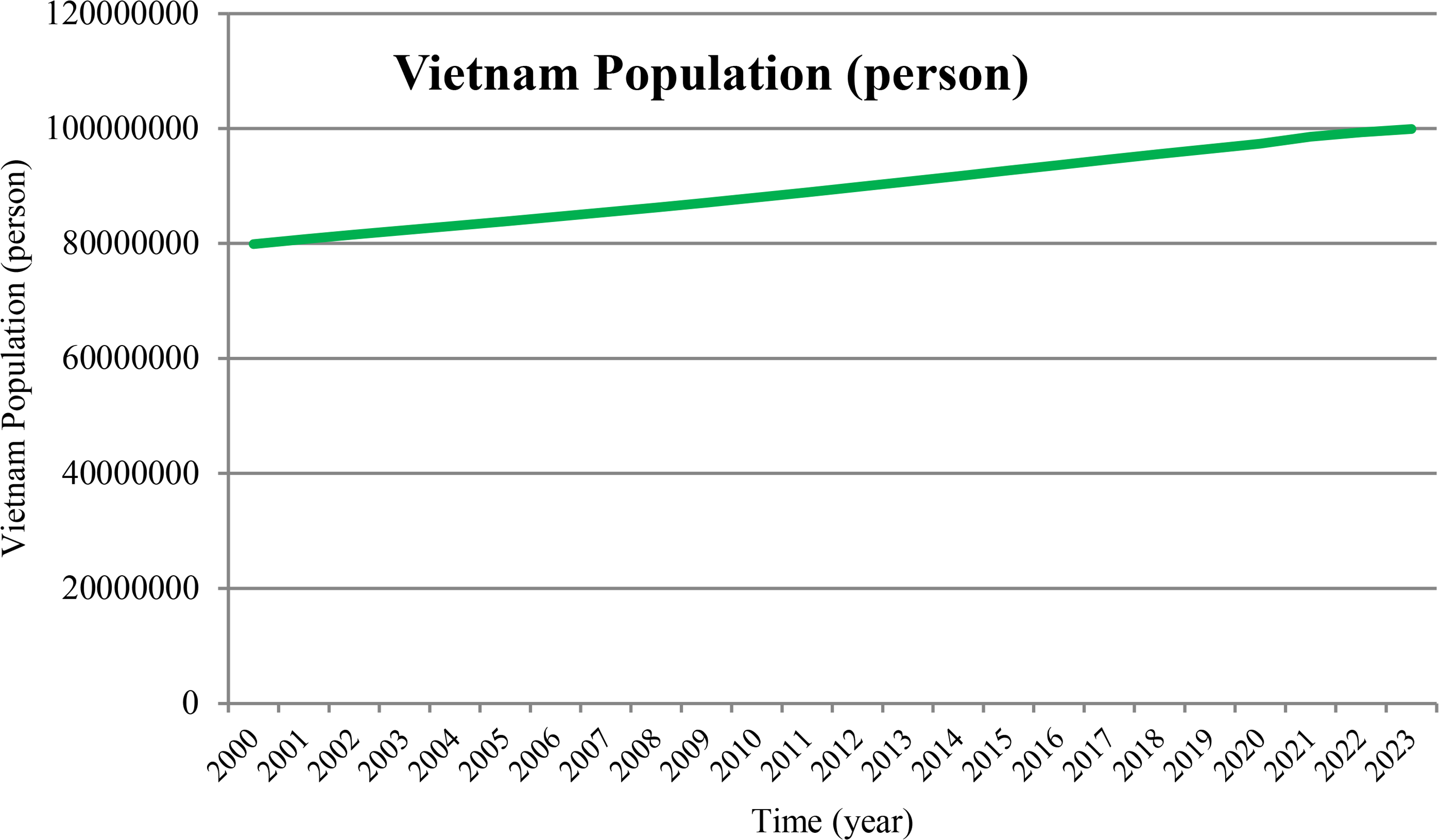
The people in Vietnam from 2000 to 2022 (Source: The World Bank and Vietnam General Statistics Office).
The independent variable CO2 emissions was the CO2 emissions of Vietnam, with a mean of 173.472 million tons, a lowest of 52.601 million tons in 2000 and a highest of 341.716 million persons in 2019. Figure 4 presents the CO2 emissions in Vietnam as follows:
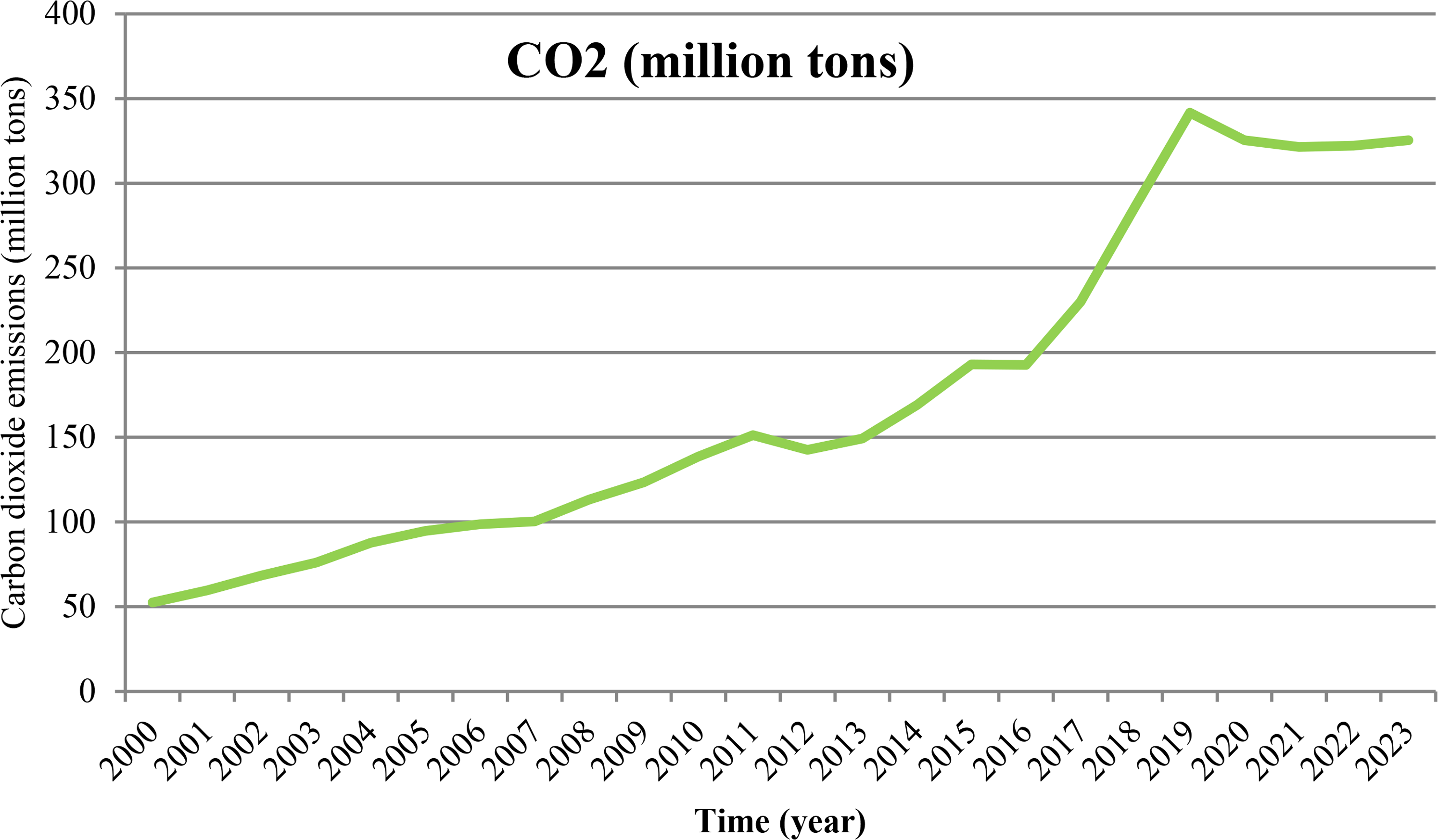
The carbon dioxide emissions in Vietnam from 2000 to 2023 (Source: The World Bank and Vietnam General Statistics Office).
Results
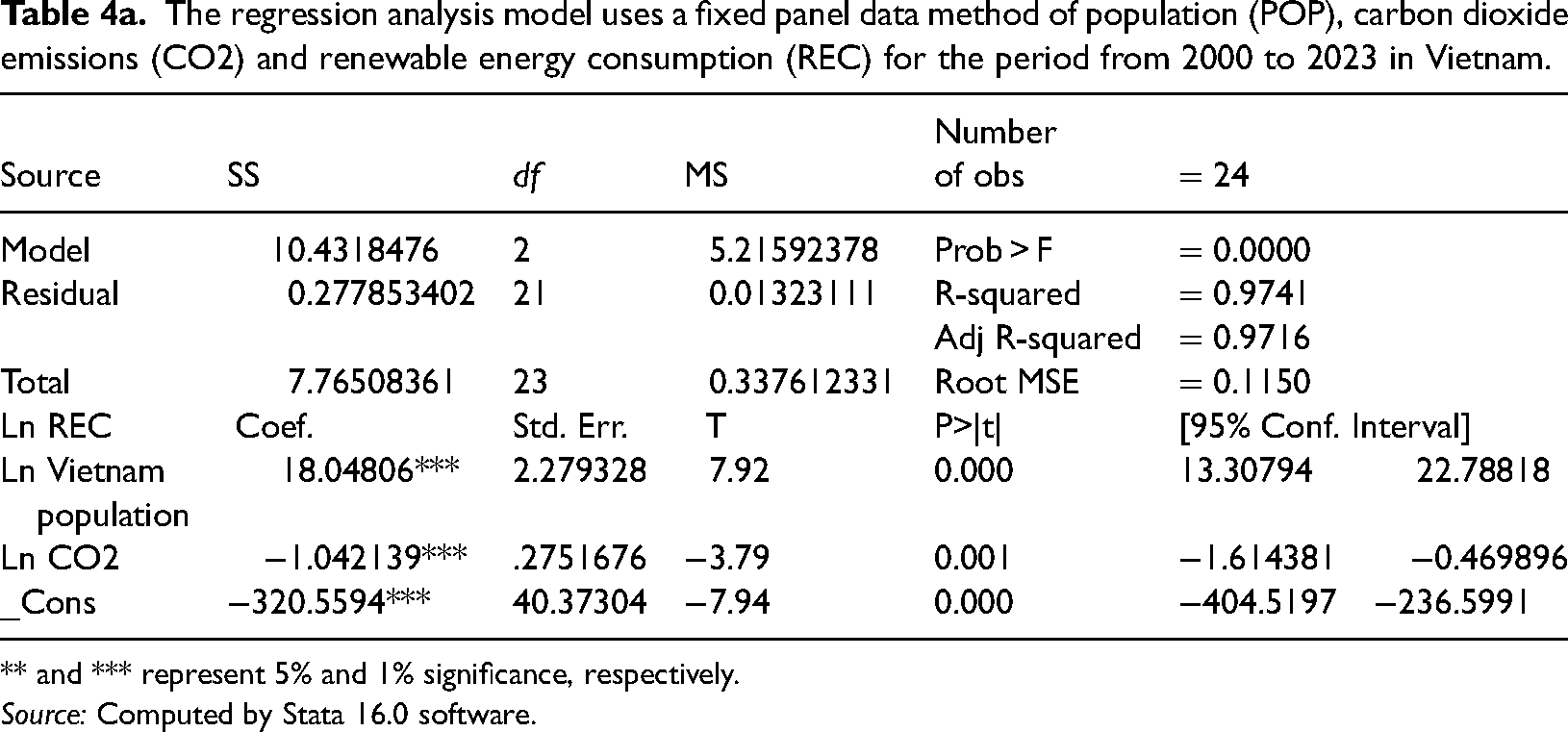
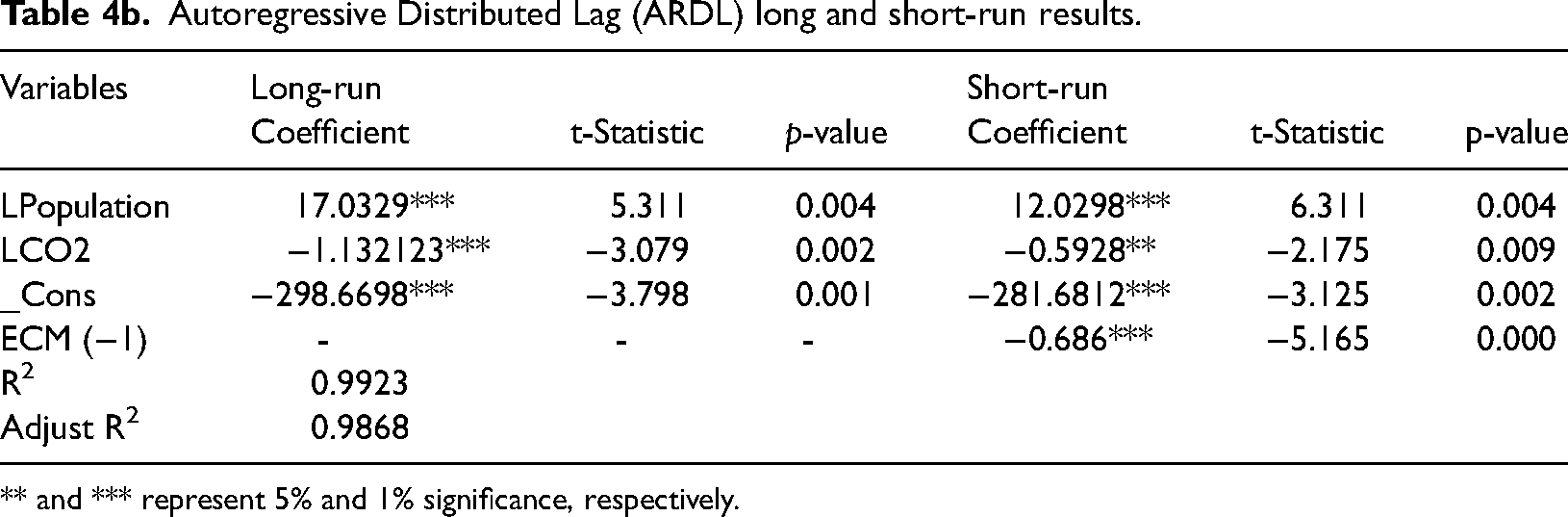
Table 4a displays the regression analysis results of population (POP), CO2 emissions and REC for the period from 2000 to 2023 in Vietnam. According to the adjusted R-squared value of 0.9716, the REC can be explained by 97.16% of the independent variable change. Table 4b presents the ARDL long and short-run estimation results. The population and CO2 emissions affect renewable energy in the long and short run.
The regression analysis model uses a fixed panel data method of population (POP), carbon dioxide emissions (CO2) and renewable energy consumption (REC) for the period from 2000 to 2023 in Vietnam.
** and *** represent 5% and 1% significance, respectively.
Source: Computed by Stata 16.0 software.
Autoregressive Distributed Lag (ARDL) long and short-run results.
** and *** represent 5% and 1% significance, respectively.
The nexus of REC and population is demonstrated by the p-value of 0.000. Hence, hypothesis 1 is accepted. The elasticity of REC to population (POP) is 18.04. According to these findings, REC will increase by 18.04% if Vietnam's population rises by 1%. The empirical results show that the Vietnamese government cares about improving renewable energy sources, and people in Vietnam use more incredible sources of green energy. The Vietnamese government is also attracting more green projects and sustainable development. It means Vietnamese population expansion significantly promotes REC. Therefore, this issue represents the increasing population creating more significant renewable energy in Vietnam. The empirical results show an incredibly positive nexus of Vietnam's population and REC. The results in this paper show that the population has dramatically affected renewable energy in Vietnam. Nowadays, Vietnamese citizens should care about significant sustainable development, and everybody cares about increasing REC.
Table 3 also displays the regression analysis results for Vietnam's CO2 emissions and REC. The relationship between REC and CO2 emissions is shown by the p-value of 0.001. Hence, the hypothesis 2 is accepted. The elasticity of REC to CO2 emissions is −1.042. The empirical results show a negative nexus between REC and CO2 emissions. If REC is up by 1%, CO2 emissions or environmental pollution are down by 1.042% and versa. It means REC significantly helps to decrease CO2 emissions or ecological pollution in Vietnam.
Based on the regression above, the articles have the function in equation (8) as follows:
These results help to compute the elasticity. Hence, the results show that if Vietnam's population is up by 1%, REC is up by 18.048%. If Vietnam's CO2 emissions are down by 1%, then REC is up by 1.042%.
Understanding the intricate interplay between demographic trends and environmental and energy-related factors is paramount in pursuing sustainable development. This study seeks to elucidate this nexus within the context of Vietnam, a rapidly developing nation facing profound socio-economic and ecological challenges. By integrating demographic trends with environmental and energy-related factors, this research aims to address several key objectives. Comprehensive Understanding of Sustainability Dynamics: This study provides a holistic understanding of sustainability dynamics by examining the intersection of demographic trends with environmental and energy-related factors. The problem recognizes the multifaceted nature of sustainability; the research aims to explore the complex interactions among population dynamics, CO2 emissions and REC.
Identification of Interconnected Drivers and Impacts: Demographic trends, such as population growth, urbanization and ageing, profoundly influence environmental and energy-related factors. By integrating demographic data with environmental and energy-related variables, this study seeks to identify interconnected drivers and impacts, elucidating how demographic shifts shape environmental outcomes and energy consumption patterns. Policy Relevance and Strategic Interventions: Understanding the relationship between demographic trends and environmental and energy-related factors is crucial for informing evidence-based policymaking and guiding strategic interventions. This research aims to provide policymakers with actionable insights to formulate targeted strategies that promote sustainable development, mitigate environmental degradation and enhance energy efficiency by uncovering the complex dynamics at play.
Contextualization within Vietnam's Socio-economic Landscape: Vietnam's unique socio-economic and environmental context provides a compelling backdrop for examining the integration of demographic trends with environmental and energy-related factors. By contextualizing the analysis within Vietnam's specific circumstances, this study aims to offer context-specific insights and recommendations tailored to the nation's development trajectory and sustainability challenges. Integrating demographic trends with environmental and energy-related factors is the cornerstone of this research, enabling a comprehensive exploration of sustainability dynamics and informing policy interventions to foster sustainable development in Vietnam.
Table 5 illustrates the correlation coefficients for the independent variables within the model. The observed correlation coefficients between these variables are minimal, and the variance inflation factor (VIF) remains below 4 for all variables. This low VIF signifies an absence of multicollinearity within the model.
The correlation of the independence variables in the model.

Sources: Compiled by author.
The rationale for the Absence of Multicollinearity in the Model- Multicollinearity refers to the phenomenon where independent variables in a regression analysis model are highly correlated, potentially leading to inflated standard errors, unreliable coefficient estimates and decreased predictive power of the model. The absence of multicollinearity within the model is essential for ensuring the reliability and validity of regression analysis results. In this study, the low VIF values are a robust indicator of the absence of multicollinearity. The following vital rationales elucidate why multicollinearity is absent in the model, as evidenced by low VIF values: Theoretical Justification- Theoretical considerations and domain knowledge guide the selection of independent variables in the regression model. Including variables that are conceptually distinct and theoretically relevant to the research question mitigates the potential for multicollinearity. Each independent variable captures unique aspects of the phenomenon under investigation, minimizing the likelihood of high correlation among variables. Empirical Assessment: The VIF values computed for each independent variable provide empirical evidence of multicollinearity. Low VIF values below a predetermined threshold (typically 10) indicate that the variables are not highly correlated. The VIF measures the degree of correlation nexus between the independent parameter and the other independent variables in the model, with low VIF values indicating minimal multicollinearity. Variable Selection and Preprocessing: Before model estimation, rigorous variable selection and preprocessing techniques are employed to ensure the inclusion of independent variables that are relevant and non-redundant. Variables exhibiting high correlations with each other are carefully examined, and redundant variables are excluded from the model to prevent multicollinearity. Diagnostic Tests: Diagnostic tests, such as the Durbin-Watson test and the condition number, are conducted to detect multicollinearity and assess the robustness of the regression model. Low Durbin-Watson statistics and condition numbers close to 1 indicate the absence of multicollinearity and reinforce the reliability of the regression results. Model Interpretation and Stability: The absence of multicollinearity enhances the stability and interpretability of the regression model. Reliable coefficient estimates and standard errors facilitate meaningful interpretation of the link between the independent and dependent variables, ensuring the validity of the research findings. In summary, the absence of multicollinearity within the regression model is substantiated by theoretical justifications, empirical assessment of low VIF values, rigorous variable selection and preprocessing, diagnostic tests and the overall stability and interpretability of the model. These determinants collectively contribute to the reliability and validity of the regression analysis results in the study.
Insights into the Minimal Correlation Coefficient between Population and CO2 Variables: Complex Interplay of Factors- The minimal correlation coefficient of 0.19 between the population and CO2 variables in Table 5 indicates a weak linear relationship between these two variables. This weak correlation suggests that other factors beyond population dynamics primarily influence CO2 emissions in the context of the study. Diverse Drivers of CO2 Emissions- many factors, including industrial activities, energy consumption patterns, transportation infrastructure, land-use changes and policy interventions control CO2 emissions. While population growth can contribute to increased energy demand and emissions, various socio-economic and environmental factors may mitigate its direct impact on CO2 emissions. Economic Development and Urbanization- Rapid economic development and urbanization in Vietnam may significantly drive CO2 emissions than population growth alone. As countries undergo industrialization and urban expansion, CO2-intensive activities such as manufacturing, transportation and energy production contribute substantially to overall emissions, overshadowing the influence of population size. Energy Mix and Technological Factors- The composition of the energy mix and technological advancements in energy production and consumption also influence CO2 emissions independently of population dynamics. Vietnam's reliance on fossil fuels, such as coal and oil, for energy generation, contributes significantly to CO2 emissions, irrespective of population size. Policy and Regulatory Environment- The effectiveness of policy interventions and regulatory frameworks in promoting renewable energy adoption, energy efficiency measures and emission reduction strategies can influence CO2 emissions independently of population growth.
Government policies to decarbonize the economy and transition to renewable energy sources play a crucial role in shaping emission trajectories. Regional and Sectoral Variations- Regional disparities in economic development, urbanization rates and industrial activities may lead to variations in CO2 emissions patterns across different geographic regions and sectors within Vietnam. These variations can obscure the correlation between population size and CO2 emissions observed nationally. Data Limitations and Measurement Issues- Considering potential data limitations and measurement issues that may affect the observed correlation coefficient is essential. Variability in data quality, completeness and accuracy, particularly in emissions inventories and population estimates, could influence the correlation strength observed in Table 5. In summary, the minimal correlation coefficient between the population and CO2 variables in Table 5 reflects the complex interplay of various socio-economic, environmental and policy factors that influence CO2 emissions in Vietnam. While population growth may contribute to emissions indirectly, other drivers such as economic development, energy mix, policy interventions and regional variations play predominant roles in shaping CO2 emission patterns independently of population dynamics.
In the previous responses, the methodology section primarily focused on traditional research methods such as literature review, data collection, case studies and stakeholder engagement—however, the mention of a theoretical framework needed to be explicitly articulated. A robust methodology often includes a theoretical foundation that guides the research design and interpretation of findings.
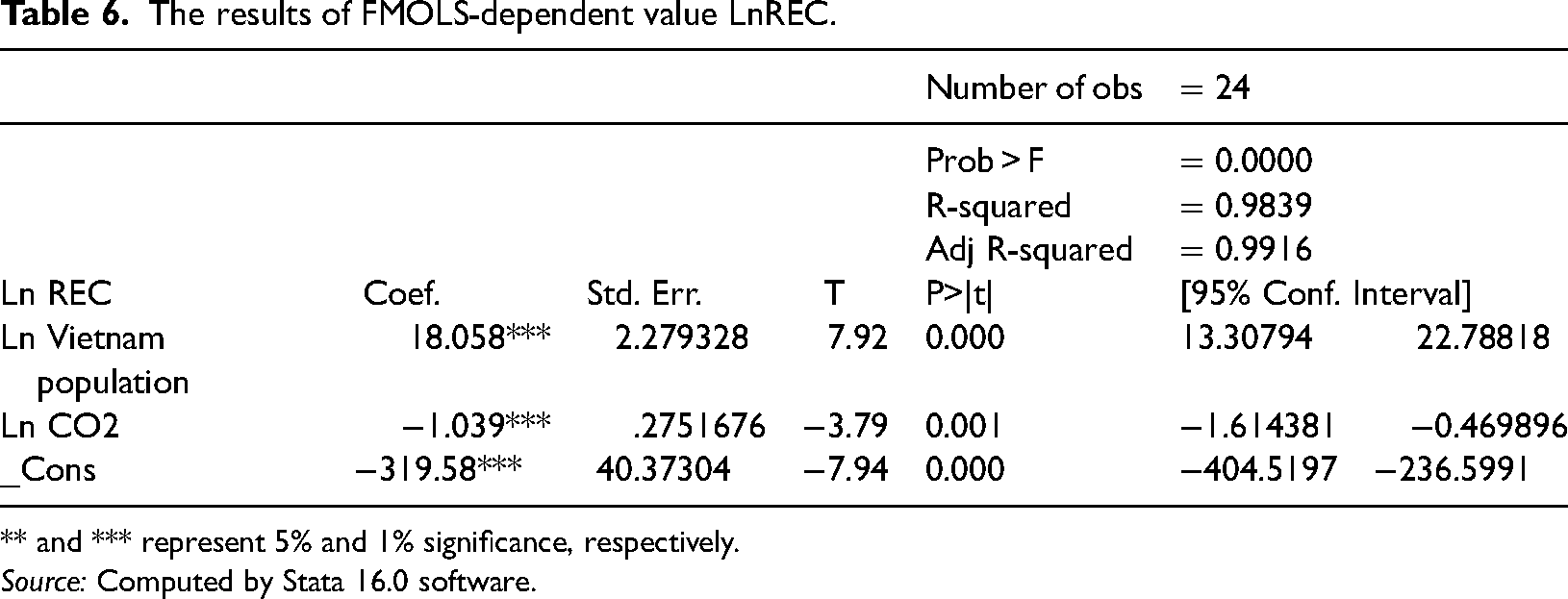
Robustness check: We used the FMOLS estimators to ensure that DOLS estimation was consistent. Table 6 presents the models's estimators FMOLS values.
The results of FMOLS-dependent value LnREC.
** and *** represent 5% and 1% significance, respectively.
Source: Computed by Stata 16.0 software.
The empirical analysis of population dynamics, CO2 emissions and REC in Vietnam reveals nuanced patterns and relationships, shedding light on the intricate nexus among these variables. Population Dynamics- The population of Vietnam has experienced steady growth, with urbanization rates indicating a notable shift towards urban centres. This demographic transition underscores the changing energy needs and consumption patterns associated with urban living. Carbon dioxide emissions- Sector-specific analysis identifies the energy sector, industrial activities and transportation as significant contributors to CO2 emissions. The data suggest a correlation between population density in urban areas and higher emissions, emphasizing the need for targeted mitigation measures.
Renewable Energy Consumption- Renewable energy consumption exhibits a positive trajectory, with increasing contributions from solar, wind and hydropower sources. Government initiatives and policy frameworks influence the adoption of renewable energy technologies across various sectors. Quantitative analysis regression analyses reveal statistically significant relationships between population growth and emissions, highlighting the impact of demographic factors on carbon outputs. A positive link is observed between adopting renewable energy sources and a migration in CO2 emissions.
Qualitative Insights- Case studies provide qualitative insights into regional variations, community perspectives and the role of local factors in influencing renewable energy adoption. These qualitative analyses complement quantitative findings, offering a holistic understanding of the dynamics.
Comparative Analysis: Comparative analyses with countries undergoing similar economic and demographic transitions highlight commonalities and unique features in Vietnam's trajectory. Lessons from successful cases inform potential strategies for sustainable development. Policy Implications- Findings suggest the importance of integrated policies addressing population dynamics and sustainable energy adoption. The paper targeted interventions, such as promoting renewable energy in urban centres and implementing emissions reduction measures, emerge as potential policy directions. Limitations and Areas for Future Research- The study acknowledges limitations related to data availability and possible biases. Future research could delve deeper into specific demographic factors influencing emissions, conduct more granular case studies and explore the long-term impact of policy interventions. In conclusion, the results of this study contribute valuable insights into the intricate relationships among population dynamics, CO2 emissions and REC in Vietnam. The findings inform evidence-based policymaking, emphasizing the need for holistic approaches that address demographic shifts and environmental sustainability concurrently.
Empirical Evidence of REC's Impact on Carbon Dioxide Emissions Reduction: Time-Series Analysis- Empirical studies utilizing time-series analysis have demonstrated a significant inverse link between REC and CO2 emissions. By analyzing historical data on REC and CO2 emissions, researchers have observed a consistent pattern where an increase in REC is associated with reducing CO2 emissions over time. Econometric Models: Econometric models, such as vector autoregression and vector error correction models, have been used to estimate the causal relationship between REC and CO2 emissions. These models control for other factors influencing emissions, such as economic growth and industrial activity, to isolate the impact of REC on CO2 emissions reduction. Cross-Sectional Studies: Cross-sectional studies comparing countries or regions with varying levels of REC have provided insights into the effectiveness of REC-renewable energy in reducing CO2 emissions. By analyzing data from multiple countries or regions, researchers have identified a consistent pattern where higher levels of REC are associated with lower CO2 emissions per capita. Panel Data Analysis: Panel data analysis techniques, such as fixed-effects and random-effects models, have been employed to analyze the link between REC and CO2 emissions across multiple countries or regions over time. These studies have found that countries or regions with higher levels of REC tend to experience lower CO2 emissions growth rates than those with lower renewable energy penetration. Case Studies and Policy Evaluations: Case studies and policy evaluations have provided empirical evidence of the impact of specific renewable energy policies and initiatives on CO2 emissions reduction. Researchers have quantified the emissions reduction outcomes associated with increased REC by examining the implementation of renewable energy targets, feed-in tariffs and other policy measures. Meta-Analyses and Systematic Reviews: Meta-analyses and systematic reviews of empirical studies have synthesized existing evidence on the link between REC and CO2 emissions reduction. These studies have provided comprehensive assessments of the effectiveness of renewable energy in mitigating CO2 emissions across diverse contexts and methodologies. In summary, empirical evidence from various methodological approaches consistently supports the conclusion that increased REC is associated with reduced CO2 emissions. By analyzing data from time series, cross-sectional, panel and case studies, researchers have demonstrated the effectiveness of renewable energy in contributing to CO2 emissions reduction, highlighting its importance in achieving sustainable development goals.
Effects of Population and Carbon Dioxide Emissions on Renewable Energy: Long-Run Effects- Population Growth: Positive Effect- In the long run, population growth can lead to increased demand for energy, including renewable energy sources. A larger population may drive investments in renewable energy infrastructure to meet rising energy needs sustainably. Carbon dioxide emissions: Negative Effect- Long-term CO2 emissions can adversely affect renewable energy adoption by contributing to environmental degradation and climate change. Increasing emissions may incentivize policymakers to prioritize renewable energy as a mitigation strategy. Renewable Energy: Positive Effect- Population growth and CO2 emissions can positively influence renewable energy adoption over the long run. Growing concerns about environmental protection and climate change may drive policies favouring renewable energy development. Short-Run Effects: Population Dynamics- Variable Effect: In the short run, population dynamics may have mixed effects on renewable energy. Rapid population growth could strain energy resources, increasing demand for renewable and non-renewable energy sources. Carbon dioxide emissions- Variable Effect: Short-term fluctuations in CO2 emissions can influence renewable energy adoption. High emissions levels prompt immediate action to transition to renewable energy sources, while lower emissions may reduce the urgency for renewable energy investments. Renewable Energy: Variable Effect- Short-term factors, such as policy incentives, technological advancements and market dynamics, can impact renewable energy adoption. Increased awareness of environmental issues may spur short-term growth in renewable energy investments despite population and emissions fluctuations.
Interactions and Feedback Effects: Population Growth and Renewable Energy- Positive Feedback: Rapid population growth can stimulate demand for renewable energy solutions, leading to increased investments in renewable energy infrastructure and technology development. Carbon dioxide emissions and renewable energy: Negative Feedback- Rising CO2 emissions may accelerate the shift towards renewable energy sources as policymakers and stakeholders seek to reduce environmental impacts and mitigate climate change. Policy Implications- Long-term policies promoting renewable energy adoption are essential to capitalize on the positive effects of population growth and CO2 emissions reduction. Short-term policy interventions, such as subsidies, tax incentives and regulatory frameworks, can incentivize renewable energy investments despite population and emissions fluctuations. In summary, the effects of population dynamics and CO2 emissions on renewable energy vary in the short and long run, influenced by policy, technology and market dynamics. Understanding these dynamics is crucial for government policymakers and stakeholders to develop effective strategies for promoting sustainable energy transitions amidst evolving demographic and environmental challenges.
Discussion
Types of Outcomes Following the Enhancement of Emissions Data: Improved Accuracy and Precision- The enhancement of emissions data often results in improved accuracy and precision of the data. This issue may involve refining measurement methodologies, incorporating updated emission factors or utilizing advanced monitoring technologies. Enhanced data accuracy reduces uncertainties associated with emissions estimates, providing a more reliable basis for policymaking and environmental management. Enhanced Spatial and Temporal Resolution- Upgrading emissions data can enhance spatial and temporal resolution, allowing for more detailed and granular analyses. This issue may involve disaggregating emissions data to finer geographical scales or capturing emission variations over shorter intervals. Improved spatial and temporal resolution enables more targeted interventions and facilitates a better understanding of emission sources and trends. Expanded Coverage and Scope- Enhancement efforts may involve raising the coverage and scope of emissions data to include previously unaccounted sources or pollutants. This expansion could encompass additional sectors such as transportation, agriculture or industrial processes, as well as contaminants beyond CO2, such as methane (CH4) or nitrous oxide (N2O).
A broader scope of emissions data provides a more comprehensive understanding of environmental impacts and facilitates holistic mitigation strategies. Integration with Other Datasets- Enhanced emissions data can be integrated with other relevant datasets, such as socio-economic indicators, land use data or meteorological information. This integration allows for more comprehensive analyses of emissions drivers, impacts and interactions with socio-economic and environmental factors. Integrated datasets enable a more nuanced understanding of emission patterns and facilitate evidence-based decision-making. Improved Transparency and Accessibility- Efforts to enhance emissions data often prioritize improving transparency and accessibility for stakeholders, including policymakers, researchers and the general public. This issue may involve publishing detailed documentation on data collection methodologies, providing open access to datasets and implementing user-friendly data visualization tools. The study enhanced transparency and accessibility to foster greater accountability, facilitated data-driven decision-making and promoted public engagement in environmental issues. Reduced International Reporting and Compliance- Enhanced emissions data are essential for meeting international reporting requirements and compliance with environmental agreements and regulations. Countries can fulfil their obligations under frameworks such as the Paris Agreement, Kyoto Protocol, and national emissions inventories by ensuring data accuracy, completeness and consistency. Data quality enhances reporting efforts’ credibility and strengthens international cooperation on climate action. In summary, the enhancement of emissions data yields various outcomes, including improved accuracy and precision, enhanced spatial and temporal resolution, expanded coverage and scope, integration with other datasets, improved transparency and accessibility and facilitated international reporting and compliance. These outcomes collectively contribute to more informed decision-making, effective environmental management and progress towards global sustainability goals.
Transportation plays a pivotal role in contributing to CO2 emissions globally, making it a significant focus in sustainability research and policy interventions. This section explains why transportation is essential to CO2 emissions, emphasizing its pervasive impact on environmental sustainability. Reasons for Considering transportation as a Significant Contributor to CO2 Emissions: Fuel Combustion- Transportation activities, mainly those reliant on fossil fuels such as gasoline and diesel, involve combustion processes that release CO2 into the atmosphere. Vehicles, including cars, trucks, ships and aeroplanes, are significant emitters of CO2 due to their reliance on fossil fuel combustion for propulsion. Energy Intensity- Transportation is inherently energy-intensive, requiring substantial energy to propel vehicles over long distances. The combustion of fossil fuels in engines releases CO2 as a byproduct, contributing to atmospheric greenhouse gas concentrations and climate change. Population Growth and Urbanization- Rapid population growth and urbanization have increased demand for transportation services, resulting in higher CO2 emissions. Urban centres, characterized by concentrated populations and traffic congestion, are particularly susceptible to elevated CO2 emissions from transportation activities. Technological Limitations- Despite advancements in vehicle efficiency and emission control technologies, the transportation sector relies heavily on fossil fuels with inherent CO2 emissions. While alternative fuel technologies, such as electric vehicles and hydrogen fuel cells, offer promising solutions, their widespread adoption remains limited, contributing to ongoing CO2 emissions from transportation. Infrastructure Development- The expansion of transportation infrastructure, including road networks, airports and ports, contributes to CO2 emissions through construction activities, energy-intensive operations and vehicle emissions associated with increased mobility and trade. Global Trade and Supply Chains- Globalization has increased international trade and interconnected supply chains, necessitating extensive transportation networks to move goods and services. Freight transportation, including shipping and trucking, accounts for a significant share of CO2 emissions due to the reliance on fossil fuel-powered vehicles and shipping vessels. Policy Challenges- Policy challenges, including limited regulatory frameworks, insufficient incentives for sustainable transportation modes and the dominance of conventional fossil fuel-based transportation systems, hinder efforts to reduce CO2 emissions from the transportation sector. Transportation significantly contributes to CO2 emissions due to its widespread reliance on fossil fuels, energy intensity, population growth, technological limitations, infrastructure development, global trade and policy challenges. Recognizing the multifaceted nature of transportation-related emissions is essential for devising effective strategies to mitigate CO2 emissions and promote sustainable transportation systems.
Contributions- This research contributes on multiple fronts. Firstly, it has a gap in the existing literature by comprehensively examining the interconnected relationships among population dynamics, CO2 emissions and REC, particularly within the Vietnamese context. Secondly, it offers insights into the specific challenges and opportunities arising from the demographic shifts occurring within the nation. Thirdly, by integrating quantitative analyses and qualitative case studies, the study provides a holistic perspective, recognizing the multifaceted nature of the issue.
Strengths: Holistic Analysis- The study's strength lies in its holistic approach, integrating demographic trends, emissions profiles and REC patterns. This comprehensive analysis allows a nuanced understanding of the interconnected factors shaping Vietnam's sustainability landscape. Policy Relevance- The research contributes to policy discussions by highlighting the need for integrated policies addressing demographic shifts and sustainable energy adoption. The emphasis on urban planning, emissions reduction initiatives and community engagement aligns with real-world policy imperatives (Fan et al., 2023). Empirical rigour- The study employs a robust methodological framework, combining quantitative and qualitative approaches. Unit root tests, regression analyses and case studies enhance the empirical rigour, providing a solid foundation for interpreting results. Comparative Insights- Comparative analyses with other nations undergoing similar transitions offer valuable insights. Drawing lessons from global contexts enriches the study's applicability and gives policymakers a broader perspective on potential strategies (Liguo et al., 2023).
Areas for Further Consideration: Temporal Dynamics- The study provides a snapshot within a specific time frame, and the dynamic nature of demographic, environmental and energy-related trends necessitates considering temporal dynamics. A more in-depth exploration of long-term trends and potential shifts could enhance the study's robustness. Socio-Cultural Nuances- While case studies provide qualitative insights, the study could delve deeper into socio-cultural nuances influencing renewable energy adoption. Cultural factors and community dynamics may be more profound than captured, warranting a more in-depth exploration (Xin et al., 2023). Policy Implementation Challenges- The study acknowledges challenges related to policy implementation, but a more nuanced exploration of barriers and facilitators in policy execution could offer practical guidance for policymakers. Understanding the intricacies of implementation challenges is crucial for effective policy outcomes. Community Engagement- The study highlights the importance of community perspectives but could benefit from a more extensive exploration of community engagement strategies. Identifying best practices for involving communities in sustainable initiatives could enhance the study's practical implications (You et al., 2023).
Critical Examination of Research Contributions- while the study has provided valuable insights into the intricate relationships among population dynamics, CO2 emissions and REC in Vietnam, a critical examination of its contributions reveals both strengths and areas for further consideration (Aghabalayev & Ahmad, 2023). The synthesis of empirical findings unveils a complex web of relationships among population dynamics, CO2 emissions and REC in Vietnam. The discussion interprets these results, elucidates their implications and explores potential avenues for sustainable development strategies. Population Dynamics and Emissions- The observed correlation between population growth and CO2 emissions underscores the impact of demographic factors on environmental sustainability. Urbanization emerges as a critical mediator, with densely populated urban areas exhibiting higher emissions. This issue calls for strategic urban planning and emissions reduction initiatives.
Urbanization and Energy Consumption- Urbanization trends necessitate reevaluating energy infrastructure and consumption patterns. As urban centres continue to grow, there is a critical need for sustainable urban planning, incorporating energy-efficient technologies and renewable energy solutions to mitigate the environmental footprint of urbanization. Renewable Energy Adoption- The positive trajectory of REC aligns with global sustainability goals. Government initiatives and policy frameworks influence the adoption of renewable technologies, reflecting a positive response to the imperative for a cleaner energy mix.
Policy Considerations- integrated policies addressing demographic shifts and sustainable energy adoption are imperative. Policies promoting renewable energy in urban centres, incentivizing cleaner industrial practices and fostering community engagement are essential components of a comprehensive strategy. Lessons from Comparative Analysis- Comparative analyses with other nations undergoing similar transitions provide valuable insights. Success stories from analogous contexts offer classes that can be adapted to Vietnam's unique circumstances, informing targeted interventions and policy adjustments. Community Perspectives- Qualitative insights from case studies highlight the importance of understanding local factors influencing renewable energy adoption. Community perspectives, cultural considerations and socio-economic dynamics should be integral to policy formulation, ensuring initiatives resonate with diverse populations.
Long-term sustainability requires a holistic approach considering the interdependencies of demographic, environmental and energy-related factors. Balancing economic development with environmental stewardship is paramount for a resilient and sustainable future.
Future Research Directions- Future research could delve into specific demographic factors influencing emissions, conduct more granular case studies and explore the long-term impact of policy interventions. Continuous monitoring and adaptation of strategies based on evolving dynamics are crucial for effective policymaking. In conclusion, the discussion emphasizes the need for a coordinated and adaptive approach to address Vietnam's population, carbon emissions and renewable energy nexus. Strategic policymaking, informed by the interplay of demographic shifts and environmental considerations, is essential for steering the nation towards a sustainable and resilient future. The paper draws on empirical findings, and this section discusses policy implications for Vietnam. It explores the potential effectiveness of population-related policies, strategies for reducing carbon emissions and avenues for promoting renewable energy adoption in alignment with national development goals. Challenges and Opportunities- A nuanced discussion of challenges and opportunities addresses the complexities of managing population growth, mitigating emissions and transitioning to renewable energy. The section emphasizes the need for integrated, cross-sectoral approaches to navigate these challenges successfully.
Comparison with Prior Research: To contextualize the findings of this study, a comparative analysis with prior research in related fields is essential. This section explores existing literature, drawing comparisons and distinctions to highlight the unique contributions of the current study within the broader context of population dynamics, CO2 emissions and REC. Population Dynamics and Energy Demand- prior Research: Numerous studies, such as those by Shang et al. (2022), emphasize the positive correlation between population growth and energy demand. Urbanization, a critical demographic trend, is consistently linked to increased energy consumption (Singh et al., 2023). Comparative Insights- This study aligns with prior research by confirming the impact of population dynamics, particularly urbanization, on energy demand. However, the unique focus on Vietnam allows for a more nuanced understanding of how specific demographic shifts within the context of a rapidly developing economy influence energy consumption patterns.
Population and CO2 Emissions- Prior Research: Existing literature, including studies by Adebayo & Samour (2023), acknowledges the complex relationship between population dynamics and CO2 emissions. Urbanization and economic development are identified as mediating factors in this relationship. Comparative Insights- The findings of this study corroborate the nuanced relationship between population and CO2 emissions, highlighting the role of urbanization in influencing emissions patterns. The specificity of Vietnam adds value by considering regional and socio-economic variations within the country. Renewable Energy Adoption- prior research- The transition to renewable energy is a well-explored theme in the literature. Research by Aghabalayev & Ahmad (2023) underscores the importance of policy frameworks, technological advancements and economic incentives in fostering renewable energy adoption (Aghabalayev & Ahmad, 2023; Fan et al., 2023; Liguo et al., 2023; Xin et al., 2023; You et al., 2023). Comparative Insights- This study aligns with prior research by emphasizing the positive trajectory of REC. The focus on Vietnam contributes unique insights by examining the effectiveness of specific policies and contextualizing the factors influencing renewable energy adoption within the country.
Vietnam-Specific Considerations- Prior Research (Nguyen Thi Ngoc, 2016; Nguyen & Nguyen, 2021) provides insights into the growing importance of renewable energy policies in Vietnam, emphasizing the need for a comprehensive understanding of the factors influencing their effectiveness. Comparative Insights- building on the work of Nguyen et al., this study extends the analysis to encompass population dynamics and CO2 emissions, offering a more integrated perspective on the sustainability landscape in Vietnam. It complements prior research by thoroughly examining the interplay among demographic shifts, emissions and renewable energy adoption.
Gaps and Contributions- prior research- while existing literature provides valuable insights, there is a notable gap in studies that comprehensively integrate population dynamics, emissions and renewable energy adoption. Many studies focus on isolated aspects of the sustainability landscape. Comparative Insights- This study addresses the gap by offering a holistic analysis considering the interconnected relationships among population dynamics, emissions and renewable energy adoption. The Vietnam-specific focus adds granularity to understanding these relationships in the context of a rapidly developing economy. In summary, the findings of this study align with and extend prior research in the field. Focusing on Vietnam and integrating demographic trends with environmental and energy-related factors, this study contributes unique insights that enhance the broader understanding of sustainability dynamics. The comparative analysis underscores the study's contributions in bridging gaps and providing a more nuanced perspective within the existing body of literature.
Policy Implications: The findings of this study yield crucial insights for policymakers aiming to steer Vietnam towards a sustainable and resilient future. The policy implications emanating from the research underscore the need for integrated strategies that address the intricate relationships among population dynamics, CO2 emissions and REC. Promoting Renewable Energy in Urban Centres- Given the positive trajectory of REC, policymakers should intensify efforts to encourage and incentivize the adoption of renewable energy sources, especially in densely populated urban centres. Targeted initiatives, such as subsidies for residential solar installations and community-based renewable projects, can accelerate the transition to cleaner energy.
Incentivizing Cleaner Industrial Practices- Acknowledging the correlation between population growth and increased CO2 emissions, policies should focus on incentivizing industries to adopt cleaner and more sustainable practices. Tax incentives, regulatory frameworks promoting energy efficiency, and encouraging eco-friendly technologies can contribute to mitigating the environmental impact of industrial activities. Strategic Urban Planning for Sustainable Development- As urbanization trends continue, policymakers must integrate sustainable urban planning practices. This issue includes investing in energy-efficient infrastructure, promoting public transportation and implementing green building standards. By prioritizing sustainable development in urban areas, Vietnam can mitigate the environmental footprint associated with rapid urbanization.
Community Engagement and Awareness Campaigns- Recognizing the pivotal role of community perspectives in renewable energy adoption, policymakers should prioritize community engagement. Implementing awareness campaigns and educational programs and involving local communities in decision-making can foster a sense of ownership and enhance the success of sustainable energy initiatives. Diversifying Renewable Energy Sources- Policymakers should focus on diversifying the mix of renewable energy sources to improve energy security and resilience. Investing in a mix of solar, wind, hydropower and emerging technologies ensures a balanced and reliable energy supply, reducing dependence on any single source.
Continuous Monitoring and Adaptive Policies- The dynamic nature of population dynamics, emissions and renewable energy adoption necessitates constant monitoring and adaptive policymaking. Regular assessments of policy effectiveness, coupled with the flexibility to adjust strategies based on evolving trends, are crucial for long-term sustainability. International Collaboration and Knowledge Sharing- Engaging in international collaborations and knowledge-sharing initiatives can provide Vietnam with valuable insights and best practices from countries undergoing similar transitions. Learning from global successes and challenges can inform more effective and context-specific policies. Capacity Building and Research Investment- Strengthening institutional capacities for research, data collection and analysis is paramount. Policymakers should invest in research capabilities to continually assess the impact of policies, identify emerging trends and adapt strategies accordingly. By embracing these policy implications, Vietnam can navigate the complex landscape of sustainable development, balancing economic growth with environmental stewardship. Integrating population dynamics, emissions reduction and renewable energy adoption into policy frameworks is essential for fostering a resilient and sustainable future for the nation.
Conclusion
Benefits of Promoting REC through Vietnamese Population Expansion: Mitigation of Greenhouse Gas Emissions- Promoting REC among the expanding Vietnamese population can significantly mitigate greenhouse gas emissions, including CO2, thereby contributing to global efforts to combat climate change. REC- Renewable energy sources such as solar, water, wind and hydropower emit minimal to no CO2 during electricity generation, offering a cleaner alternative to fossil fuels. Reduction of Air Pollution and Health Benefits- Increased REC can reduce air pollution, improving air quality and public health outcomes for the growing Vietnamese population. By displacing fossil fuel combustion in power generation, renewable energy technologies help mitigate the emission of harmful pollutants following particulate matter, sulphur dioxide (SO2) and nitrogen oxides (NOx), which are detrimental to respiratory health. Energy Security and Diversification: Promoting REC enhances Vietnam's energy security by diversifying its energy mix and reducing dependence on imported gasoline and fossil fuels. With a growing population and energy demand, investing in renewable energy infrastructure reduces reliance on volatile global energy markets, mitigates supply chain risks and enhances domestic energy resilience. Socio-economic Development and Job Creation: The expansion of renewable energy infrastructure creates employment opportunities and promotes socio-economic development, aligning with the needs of a growing population. REC- Renewable energy projects, including solar farms, water, wind farms and biomass facilities, require skilled labour for construction, operation and maintenance, stimulating local economies and fostering job creation in rural and urban areas. Technological Innovation and Capacity Building- Investing in renewable energy technologies fosters technological innovation and capacity building within the Vietnamese population. By incentivizing research and development in clean energy solutions, Vietnam can harness local expertise and knowledge to drive innovation in renewable energy technology, positioning itself as a leader in the world transition to a low-carbon economy. Community Empowerment and Resilience- Promoting REC empowers local communities to participate actively in the transition to sustainable energy systems. Community-owned renewable energy projects, such as solar cooperatives and microgrids, enable communities to generate clean energy, enhance energy access and build resilience against energy poverty and climate impacts. Environmental Conservation and Biodiversity Protection- Increasing REC supports environmental conservation efforts and biodiversity protection in Vietnam. By reducing habitat destruction and ecosystem degradation associated with fossil fuel extraction and combustion, REC- renewable energy projects preserve natural landscapes, protect biodiversity and safeguard ecosystems for future generations. Global Leadership and Climate Diplomacy- Vietnam demonstrates its commitment to global climate action by promoting REC through population expansion. It enhances its role as a responsible international actor in climate diplomacy. Embracing renewable energy technologies showcases Vietnam's leadership in addressing climate change, contributing to global sustainability goals and fostering international cooperation on clean energy transitions.
In ending the study, it is imperative to reiterate the critical findings while acknowledging the limitations that temper the scope and generalizability of the research. A balanced view, encompassing the study's contributions and constraints, provides a nuanced understanding of its implications. This research shed light on the intricate relationships among population dynamics, CO2 emissions and REC in Vietnam. The positive trajectory of renewable energy adoption, the impact of urbanization on emissions and the interconnectedness of demographic shifts with sustainability efforts contribute valuable insights to the academic and policy discourse.
However, it is essential to acknowledge the paper's limitations. Data constraints, mainly related to the completeness and accuracy of available information, pose inherent challenges. While robust statistical methods were employed to mitigate these issues, the accuracy of the findings is contingent on the reliability of the underlying data. Temporal dynamics present another limitation, as the study provides a snapshot within a specific time frame. Long-term trends and potential shifts may evolve, necessitating continued monitoring and analysis to capture the changing nature of the relationships studied.
Additionally, the complexity of socio-cultural factors influencing renewable energy adoption may warrant more extensive qualitative research. While case studies offer valuable insights, a more in-depth exploration of local contexts and community dynamics could enhance the study's understanding of these influences. Despite these limitations, this research lays a foundation for future investigations and provides practical implications for policymakers. It highlights the need for adaptive and integrated policies that concurrently consider demographic shifts, emissions patterns and renewable energy adoption. In conclusion, while celebrating the contributions of this study, it is crucial to view its findings within the context of acknowledged limitations. This balanced perspective guides future research endeavours and reinforces the call for ongoing efforts to refine and expand our remarkable understanding of the complex interplay between population dynamics and sustainability in the context of Vietnam.
The conclusion summarizes the essential findings and contributions of the study, emphasizing the interconnected nature of population dynamics, carbon emissions and REC in Vietnam. It provides insights for policymakers, researchers and stakeholders to formulate sustainable strategies for a greener and more resilient future. In the crucible of Vietnam's rapid economic development, the dynamic relationships among population growth, CO2 emissions and REC underscore the imperative for strategic and sustainable development. This conclusion synthesizes key findings, highlights their implications and outlines actionable insights for policymakers and stakeholders navigating the complex sustainability landscape. Integration of Findings- The study has provided comprehensive insights into the intricate nexus among population dynamics, carbon emissions and REC in Vietnam. From the correlation between population growth and emissions to the positive trajectory of renewable energy adoption, the findings underscore the complexity of these interdependencies. Implications for Sustainable Development- Population dynamics, particularly urbanization trends, have far-reaching consequences for energy demand and environmental impact. Sustainable urban planning and energy-efficient solutions are essential to mitigate the ecological footprint of urbanization while ensuring access to clean energy.
Policy Recommendations- Integrating policies addressing demographic shifts and adopting sustainable energy are paramount. Policymakers should consider incentivizing cleaner industrial practices, promoting renewable energy in urban centres and fostering community engagement to enhance the effectiveness of sustainability initiatives. Lessons from Global Comparisons- Comparative analyses with other nations undergoing similar transitions provide valuable lessons. Success stories from analogous contexts offer insights that can be adapted to Vietnam's unique circumstances, guiding targeted interventions and policy adjustments.
Community-Centric Approaches- Qualitative insights from case studies underscore the importance of community perspectives in shaping the success of renewable energy initiatives. Policies should be designed with a nuanced understanding of local factors, cultural considerations and socio-economic dynamics to ensure resonance with diverse populations. The paper gives the path to Long-Term Sustainability- the journey towards long-term sustainability demands continuous monitoring, adaptive strategies and a commitment to balancing economic development with environmental stewardship. Harnessing the positive trajectory of renewable energy adoption is pivotal for achieving a resilient and sustainable future. Recommendations for Future Research- Recognizing the limitations of this study, future research could delve into specific demographic factors influencing emissions, conduct more granular case studies and explore the long-term impact of policy interventions. A continuous research agenda is vital to inform evidence-based policymaking in the evolving landscape.
In conclusion, informed decisions and coordinated efforts in Vietnam can shape a sustainable and resilient future. This research contributes valuable insights to guide policymakers, businesses and communities towards holistic and adaptive strategies that reconcile demographic shifts with the imperatives of environmental stewardship. By embracing the interdependencies of population dynamics, carbon emissions and renewable energy adoption, Vietnam can chart a course towards a greener and more sustainable trajectory in the future.
Integration of Socio-economic Dynamics into Policy Formulation for Diverse Populations: Needs Assessment and Stakeholder Engagement- Conducting comprehensive needs assessments and engaging with diverse stakeholders, including community representatives, civil society organizations and marginalized groups, ensures that policy initiatives are responsive to the socio-economic realities and priorities of different populations. Stakeholder consultations provide valuable insights into local challenges, preferences and aspirations, guiding the development of inclusive policies that resonate with diverse communities. Equity and Social Justice Considerations- Incorporating equity and social justice considerations into policy formulation processes helps address disparities and ensures that initiatives benefit all segments of society. Policies should prioritize marginalized populations, such as low-income communities, ethnic minorities and rural dwellers, by allocating resources equitably, enhancing access to services and promoting participatory decision-making processes that empower marginalized groups. Tailored Policy Solutions- Designing tailored policy solutions that account for socio-economic diversity and contextual nuances enables policymakers to address diverse populations’ specific needs and preferences effectively. Government Policies should be flexible and adaptable to accommodate varying socio-economic conditions, cultural norms and geographic contexts, ensuring relevance and effectiveness across different communities. Capacity Building and Empowerment- Investing in capacity building and empowerment initiatives strengthens the ability of diverse populations to engage with policy processes, voice their concerns and participate in decision-making. Providing training, resources and platforms for civic engagement empowers communities to actively shape policies that reflect their interests and priorities actively, fostering a sense of ownership and accountability. Promoting Inclusive Governance Structures- Promoting inclusive governance structures, such as community-based committees, participatory budgeting mechanisms and decentralized decision-making forums, fosters collaboration and co-creation of policies with diverse populations. Inclusive governance ensures that policy formulation processes are transparent, responsive and inclusive, facilitating meaningful participation and representation of diverse voices. Data-Informed Policy Design- Utilizing disaggregated data and conducting robust socio-economic analyses helps policymakers understand different population groups’ specific needs, challenges and opportunities. Data-informed policy design enables targeted interventions that address socio-economic disparities, promote social inclusion and maximize the impact of initiatives across diverse populations. Monitoring and Evaluation- Implementing robust monitoring and evaluation mechanisms allows policymakers to assess policy interventions’ effectiveness and equity implications on diverse populations. Regular monitoring of socio-economic indicators, such as income inequality, access to services and social mobility, enables policymakers to track progress, identify gaps and adjust policies better to meet the needs of diverse populations over time. In summary, integrating socio-economic dynamics into policy formulation involves engaging various stakeholders, prioritizing equity and social justice, tailoring policy solutions, building community capacity and empowerment, promoting inclusive governance structures, utilizing data-informed design and implementing rigorous monitoring and evaluation. By considering populations’ diverse demands, needs and perspectives, policymakers can develop inclusive policies that resonate with and benefit all segments of society, fostering sustainable development and social cohesion.
Primary Objective of Reducing Carbon Emissions through Population-Related Policies and Strategies: The primary objective of implementing population-related policies and strategies to reduce carbon emissions is to address the dual challenge of environmental sustainability and population growth by promoting sustainable development pathways. While supporting data may vary based on specific contexts and policy interventions, the rationale behind this objective is grounded in several key considerations. Population Growth and Emissions Impact- Population growth exerts pressure on using natural resources and ecosystems, leading to increased carbon emissions from various human activities such as energy consumption, transportation and land-use changes. Implementing population-related policies aims to manage population growth rates and mitigate the associated environmental impacts, including carbon emissions. Population Dynamics and Energy Demand- Population dynamics influence energy demand patterns, with larger populations generally leading to higher energy consumption. By implementing policies that promote sustainable population growth and consumption patterns, countries can reduce the overall energy demand, thereby lowering carbon emissions associated with energy production and consumption. Urbanization and Emissions Intensity- Population-related policies also address urbanization trends, as urban areas often exhibit higher emissions than rural areas due to concentrated economic activities and transportation demands. Strategies focusing on sustainable urban planning, compact city development and efficient transportation systems can help mitigate urban emissions growth driven by population dynamics. Environmental Impacts of Population Growth- Population growth contributes to environmental degradation and climate change, disproportionately affecting vulnerable populations and future generations. Reducing carbon emissions through population-related policies aligns with broader environmental conservation objectives, promoting ecological resilience and safeguarding natural resources for present and future populations. Long-Term Sustainability and Resilience- Population-related policies contribute to long-term sustainability and resilience by addressing demographic trends influencing carbon emissions trajectories. By promoting sustainable population growth rates, equitable access to family planning services and education on environmental stewardship, countries can achieve a more balanced relationship between population dynamics and ecological sustainability. International Commitments and Climate Goals- Addressing carbon emissions through population-related policies aligns with the Paris Agreement's international commitments and climate goals. By integrating population dynamics into climate mitigation strategies, countries can enhance their contributions to global efforts to reduce world warming and mitigate the impacts of climate change. While specific data supporting the effectiveness of population-related policies in reducing carbon emissions may vary depending on the context and policy interventions, the overarching objective of these policies is to achieve a harmonious balance between population dynamics and environmental sustainability, thereby contributing to a more resilient and equitable future for all.
Enabling Detailed Temporal Analysis through Periodic Population Data Points: Granular Temporal Resolution- Periodic population data points enable a granular temporal resolution, allowing a more detailed analysis of population dynamics over time. By collecting population data at regular intervals, such as annually or biennially, researchers can capture temporal trends, fluctuations and patterns in population growth, distribution and composition with greater precision. Material Trend Identification- Periodic population data points facilitate the identification of temporal trends and cycles in population dynamics. Analyzing population data over multiple periods enables researchers to discern long-term trends, such as population growth rates, demographic shifts, migration patterns and shorter-term fluctuations influenced by socio-economic, environmental and policy factors. Seasonal Variations and Cyclical Patterns- Detailed temporal analysis of periodic population data points allows for detecting seasonal variations and cyclical patterns in population dynamics. Seasonal fluctuations in births, deaths and migration flows can be captured by analyzing population data at regular intervals throughout the year, providing insights into the seasonal drivers of population change. Event-Based Analysis- Periodic population data points facilitate event-based analysis, enabling researchers to assess the impact of specific events or interventions on population dynamics. By comparing population data before and after significant events, such as natural disasters, policy reforms or economic downturns, researchers can evaluate these events’ short-term and long-term effects on population trends and trajectories. Longitudinal Studies- Longitudinal studies leveraging periodic population data points allow for tracking individual-level changes in demographic characteristics over time. By following cohorts of individuals or households across multiple data collection waves, researchers can analyze life course trajectories, intergenerational dynamics and the cumulative effects of socio-economic transitions on population outcomes. Forecasting and Projection Modeling- Periodic population data points serve as inputs for forecasting and projection modelling, allowing researchers to predict future population trends and scenarios. Researchers can inform policy planning, resource allocation and infrastructure development to accommodate future population changes by analyzing historical population data and projecting future trends based on demographic parameters. Policy Evaluation and Decision-Making- Detailed temporal analysis of periodic population data points provides valuable evidence for policy evaluation and decision-making. By examining population trends over time, policymakers can assess the effectiveness of past interventions, anticipate future demographic challenges and design targeted policies to address evolving population dynamics and societal needs. In summary, enabling detailed temporal analysis through periodic population data points enhances our understanding of population dynamics, facilitates the identification of temporal trends and patterns, supports event-based analysis, promotes longitudinal studies, informs forecasting and projection modelling and provides evidence for policy evaluation and decision-making. By leveraging periodic population data, researchers and policymakers can gain valuable insights into population change drivers and consequences, informing sustainable development strategies and interventions.
Limitations and future study
Limitations
The study acknowledges the limitations related to data availability and potential biases; this study employs robust statistical methods to mitigate these challenges. However, the accuracy of the findings is contingent on the reliability and completeness of the data. Ethical Considerations- The research adheres to ethical guidelines, ensuring the privacy and confidentiality of individuals in demographic data. Proper citations and acknowledgments are maintained for all sources used. By adopting this multifaceted methodology, the study aims to provide a nuanced understanding of Vietnam's population, carbon emissions and renewable energy nexus, offering insights that can inform sustainable development strategies and policy interventions.
Data Constraints- The study relies on available data, and data quality or completeness limitations may impact the findings’ accuracy. Addressing this limitation would require ongoing efforts to enhance data collection and reporting mechanisms. Temporal Constraints- The research provides a snapshot within a specific time frame. Long-term trends may evolve, and the impact of demographic shifts on emissions and renewable energy adoption may vary over time. Socio-Cultural Nuances- While qualitative insights from case studies offer valuable perspectives, the depth of socio-cultural nuances influencing renewable energy adoption may require more extensive qualitative research focused on community dynamics. Policy Implementation Challenges- The study assesses the current state of policies, but challenges related to policy implementation and enforcement are complex and may need to be fully captured. A more in-depth analysis of policy effectiveness and implementation barriers could provide valuable insights.
Future study recommendations
Longitudinal Analyses- Future studies should consider longitudinal analyses to track the evolution of population dynamics, emissions and renewable energy adoption over time. This problem would provide a more nuanced understanding of trends and their long-term implications. In-Depth Socio-Cultural Studies- This issue addresses the complexity of socio-cultural influences on renewable energy adoption; future research could conduct in-depth qualitative studies focused on specific communities or regions. This issue would unveil localized factors influencing sustainable energy practices.
Policy Effectiveness Studies- In-depth studies assessing the effectiveness of specific policies and interventions would contribute to evidence-based policymaking. Understanding the intricacies of policy implementation and identifying areas for improvement can enhance the impact of sustainability initiatives. Further research could explore the effectiveness of specific policies and interventions, diving into the nuances of policy implementation. Understanding the challenges and successes in policy execution would contribute to more targeted and impactful interventions. Enhanced Community Engagement Research- A dedicated focus on community engagement strategies and their effectiveness could be a fruitful area for future research. Identifying approaches that resonate with diverse populations can enhance the success of renewable energy initiatives.
Technology-Specific Analyses- As technology advances, future studies could delve into the impacts of specific technologies on renewable energy adoption. This issue includes assessing emerging technologies’ readiness and potential contribution to Vietnam's sustainable energy landscape. Climate Resilience Studies- Given the increasing threats of climate change, future research could explore how renewable energy adoption contributes to climate change resilience in Vietnam. This issue could include assessing the role of renewable energy in mitigating climate-related risks and enhancing adaptive capacity. Comparative Analyses with Similar Economies- Conducting more extensive comparative analyses with countries undergoing similar demographic and economic transitions would enrich understanding global trends. Comparisons could reveal common challenges and potential solutions applicable to diverse contexts.
In conclusion, while the research contributes significantly to understanding sustainability dynamics in Vietnam, a critical examination prompts consideration of potential refinements and avenues for deeper exploration. These recommendations guide future research endeavours for a more comprehensive and remarkable understanding of the complex interplay among population dynamics, carbon emissions and REC. By addressing these limitations and embarking on future studies in these recommended areas, researchers can contribute a more comprehensive understanding of the relationships among population dynamics, carbon emissions and renewable energy adoption. Continuous research endeavours are essential for guiding Vietnam's trajectory towards a sustainable and resilient future.
Footnotes
Declaration of conflicting interests
The author(s) declared no potential conflicts of interest with respect to the research, authorship, and/or publication of this article.
Funding
The author(s) received no financial support for the research, authorship, and/or publication of this article.
Supplemental material
Supplemental material for this article is available online.
