




Abstract
This study assesses the feasibility of generating energy from cow dung in Maddu-Gomba, a rural Ugandan community characterised by intensive cattle farming. Utilising a locally constructed 45 m³ fixed-dome anaerobic digester, the study evaluates daily gas yields and corresponding electrical and thermal energy outputs over three months (June–August). Chemical analysis of the cow dung revealed favourable characteristics for anaerobic digestion, including high moisture content (75%), an optimal carbon-to-nitrogen ratio (20:1), neutral pH (6.54), and low sulfur and ash content. Results showed consistent gas production, with daily yields ranging from 248 to 327 m³, generating an average of 600–700 kWh of electricity and over 900 kWh of heat energy. These outputs significantly exceeded the estimated local electricity (33.78 kWh/day) and heat (17.49 kWh/day) demands, confirming the viability of biogas systems in meeting rural energy needs. The study highlights cow dung as a sustainable biomass resource that can address energy access challenges, improve waste management, and promote environmental sustainability. Its findings contribute valuable data for informing renewable energy policy and biogas adoption in cattle-farming communities across Uganda and similar regions.
Keywords
Introduction
Access to reliable and affordable energy remains a persistent challenge in rural Uganda. The majority of households in off-grid communities continue to rely heavily on traditional biomass sources such as firewood and charcoal for cooking and heating, leading to widespread deforestation, land degradation, and adverse health outcomes from indoor air pollution (Adolf & Uzorka, 2025; Namugenyi & Scholderer, 2024; Uzorka et al., 2025). At the same time, electrification rates in rural areas remain low, and modern energy services are largely inaccessible due to the high cost of grid extension and limited investment in decentralised alternatives. This persistent energy gap not only affects household well-being but also constrains agricultural productivity, education, and economic development.
The motivation for this study arises from the energy and resource dynamics of Maddu-Gomba, a rural Ugandan community known for its intensive cattle farming. Livestock farming in the region produces large volumes of cow dung daily (David et al., 2022), which is typically underutilised or poorly managed, leading to sanitation and environmental concerns. Yet, this waste represents a valuable and renewable energy resource when processed through anaerobic digestion to produce biogas. Leveraging the organic waste generated by cattle farming could offer a clean and locally available energy solution to meet the community's thermal and electrical needs.
Globally, renewable energy continues to expand as nations pursue cleaner and more sustainable power sources. In 2024, approximately 685 TWh of electricity was generated from biomass, with 69% derived from solid biomass, followed by 17% from municipal and industrial waste. Asia led biopower production with around 276 TWh (40% of global output), while Europe contributed about 35%, reflecting steady investment in bioenergy infrastructure (Nassar et al., 2025a). This rapid growth highlights biomass as a crucial component of the renewable energy transition, offering both energy security and reduced greenhouse gas emissions.
Anaerobic digestion of livestock waste, particularly cow dung, provides a dual benefit of energy generation and improved sanitation. In this process, organic matter is decomposed by microorganisms in the absence of oxygen, producing biogas, a mixture rich in methane (CH4) and carbon dioxide (CO2) and a nutrient-rich digestate usable as fertiliser (Mensah et al., 2023; Noorain et al., 2025; Uzorka & Wonyanya, 2025). Cow dung is one of the most reliable substrates for anaerobic digestion due to its consistent availability, favourable C/N ratio, and high biodegradability (Abbas et al., 2025; Li et al., 2025; Makumbi et al., 2025). Fetta et al. (2025) highlight that optimal methane yields are achieved when the C/N ratio is maintained between 20:1 and 30:1 with a neutral to slightly alkaline pH, conditions that favour methanogenic microbial activity and suppress ammonia inhibition. Similarly, Kaur et al. (2024) and Zayen et al. (2025) report that high moisture content, low lignin levels, and moderate volatile solids further enhance biogas yields, with mesophilic temperatures (30–40 °C) facilitating efficient digestion (Bhnar & Bao, 2025; Erraji et al., 2025; López-Balladares et al., 2025).
The type of anaerobic digester significantly influences the efficiency and durability of biogas systems. Fixed-dome digesters are widely adopted in developing countries for their low cost, simple operation, and long service life, though their performance is highly sensitive to construction quality and maintenance (Abdunnabi et al., 2023; Meegoda et al., 2025; Pal et al., 2025). Stable temperature conditions are critical, with mesophilic digesters operating optimally at 35–40 °C (Awad et al., 2023; Humphrey et al., 2025; Srivastava et al., 2025). In tropical climates, natural insulation often suffices, though straw, mud, or fibre composites have been explored for additional insulation (Farid et al., 2025; Husein et al., 2025; Lohani et al., 2024). Proximate analysis of cow dung (Lachman et al., 2021) shows low ash content, moderate fixed carbon, and high volatile matter, characteristics making it suitable both as a biogas feedstock and, when dried, as a direct combustion fuel. Ngetuny et al. (2025) and Robin & Ehimen (2024) further demonstrate that small-scale digesters, when managed effectively, can provide sufficient gas for cooking, lighting, and heating in rural households, displacing firewood and charcoal while reducing deforestation and indoor air pollution.
The benefits of biogas systems extend beyond energy provision. Gbadeyan et al. (2024) and Rasimphi et al. (2024) identify cost savings, improved waste sanitation, reduced greenhouse gas emissions, and agricultural gains from nutrient-rich digestate. Community-level projects generate local employment and enhance technical capacity while alleviating the burden of fuel collection, particularly for women. Nonetheless, challenges such as clogging, scum formation, inconsistent feeding, inadequate training, and lack of spare parts remain persistent (Issahaku et al., 2025; Miskeen et al., 2023; Nyasapoh et al., 2025). Addressing these barriers requires tailored programmes that integrate technical support and community engagement.
Global research on renewable energy highlights technological innovations that complement biogas applications. For example, hybrid renewable systems have been investigated for optimising energy supply and environmental performance. Nassar et al. (2022, 2023, 2025b) have demonstrated the viability of integrating bioenergy with solar systems and other renewable sources through economic, environmental, and technical analyses in Libya, Palestine, and Ghana. These studies show that renewable hybrid systems can reliably meet household and industrial energy demands while reducing greenhouse gas emissions and enhancing energy security.
Similarly, the development of energy efficiency strategies in power systems has become increasingly important. Alayed et al. (2025) formulated an optimisation framework for energy efficiency maximisation in heterogeneous networks (HetNets), demonstrating how concave optimisation methods such as the Charnes–Cooper Transformation and MADS algorithms can increase performance in modern energy and data systems. Advanced control methods also play a crucial role in improving renewable energy technologies. Zaki et al. (2025) proposed a Lyapunov-based fractional-order PID controller with enhanced disturbance observers to ensure stability and robustness of coupled nonlinear systems. These developments are relevant to biogas systems, where dynamic control of temperature, gas pressure, and feedstock loading could improve efficiency and reliability.
Improving renewable energy systems also depends on advanced materials and sensing technologies. Shahzad et al. (2022) demonstrated that silicon particle coatings on solar absorbers significantly improve thermal efficiency, a concept transferable to digester heating solutions in cold environments. Similarly, research by Han et al. (2021) and Masud (2014) and Masud et al. (2024) on optical sensors, fibre Bragg gratings, and high signal-to-noise ratio spectroscopic systems underscores how precision diagnostics can be applied to monitor digester parameters such as gas composition and temperature. These advances in biomedical and environmental sensing provide robust, low-noise solutions that could enhance real-time monitoring of anaerobic digesters.
Despite the global progress in biogas research and renewable energy integration, there is limited empirical data on the energy generation potential of cow dung in rural Uganda. Cattle-intensive areas like Maddu-Gomba remain underexplored, even though local conditions such as abundant feedstock, warm climate, and rural energy deficits, make them ideal for biogas deployment. This study seeks to address this gap by assessing the energy generation potential of cow dung from Maddu-Gomba using a locally constructed 45 m³ fixed-dome anaerobic digester. Specifically, it examines the chemical composition of the cow dung, measures daily gas yields, and analyses the corresponding electrical and thermal energy outputs over three months (June–August). The study also compares energy production with the estimated household electricity and heat demand in the community to evaluate the feasibility and sustainability of cow dung-based biogas systems for rural electrification and heating.
Methodology
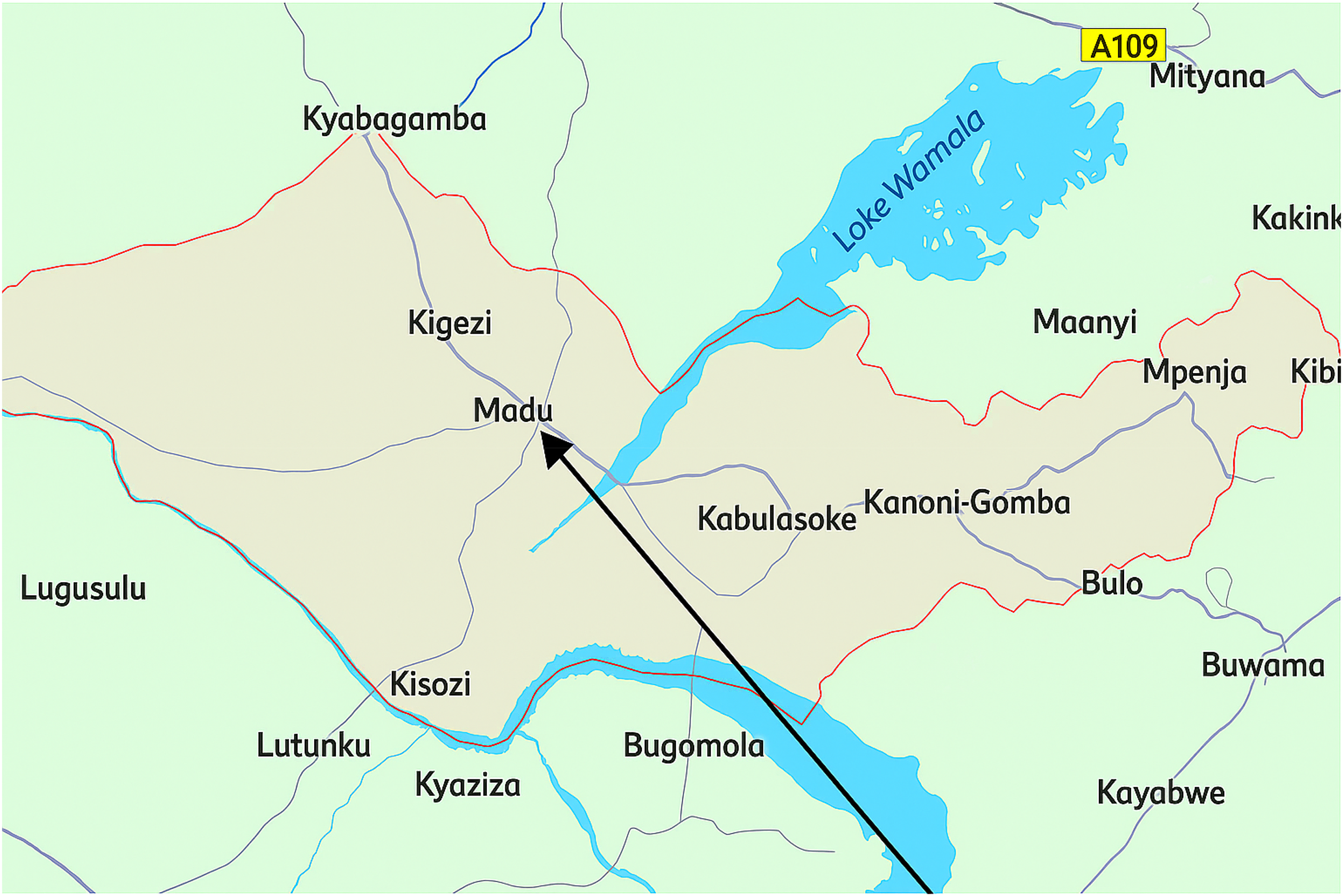
Maddu is a town in Gomba District, located in the Central Region of Uganda. It lies about 30 km northwest of Kanoni (the district headquarters) and around 128 km west of Kampala, Uganda's capital (David et al., 2022). Maddu is a mainly agricultural community, with livestock farming playing a key role. Local farmers produce milk and meat, which are sold at nearby markets, especially the Friday cattle market, and also transported to Kampala. Notable farms in the area include Katende Farm in Kilasi, the Bitali Family Ranch, and YK Museveni's farm in Kisozi. The town sits at an elevation of 0 meters above sea level and has a tropical rainforest climate (Af). It receives an average of 181 mm of rain per year, with rainfall on about 240 days annually (Google, 2022). The average temperature is around 22.6°C, with February being the warmest month (27.8°C) and June the coolest (16.6°C) (David et al., 2022). Humidity averages 72% (David et al., 2022).
Figure 1 is a map that illustrates the geographical location of Maddu within the Gomba District in central Uganda, highlighting the surrounding settlements, water bodies, and road networks relevant to the study area. The town of Maddu is marked prominently at the centre of the map, with a black arrow pointing towards it, emphasising it as the primary location of interest for the study. The administrative boundaries are outlined in red, clearly demarcating the Maddu-Gomba area from neighbouring administrative units. The map labels key towns and villages surrounding Maddu, including Kyabagamba to the northwest, Kigezi to the north, Kabulasoke and Kanoni-Gomba to the east, Kisozi to the southwest, and Bugomola to the south. Other nearby areas include Mpenja, Bulo, Kayabwe, Buwama, and Lutunku. The map prominently shows Lake Wamala in bright blue to the northeast of Maddu, indicating a significant hydrological feature in the region. Several smaller rivers or streams (also in blue) are visible, some running through or near Maddu and the surrounding towns. Grey lines represent roads linking Maddu to other towns, including the A109 highway (marked in yellow), which lies northeast near Mityana, providing a major transport route for the region. The map is oriented with north at the top, following conventional mapping standards. This map situates the cow dung resource assessment within a specific socio-geographical context, showing the rural settlement patterns, proximity to water resources (important for livestock and biogas processes), and transport routes (relevant for biomass collection and energy distribution).
Map of the study area.
Description of the biomass waste-to-energy conversion system
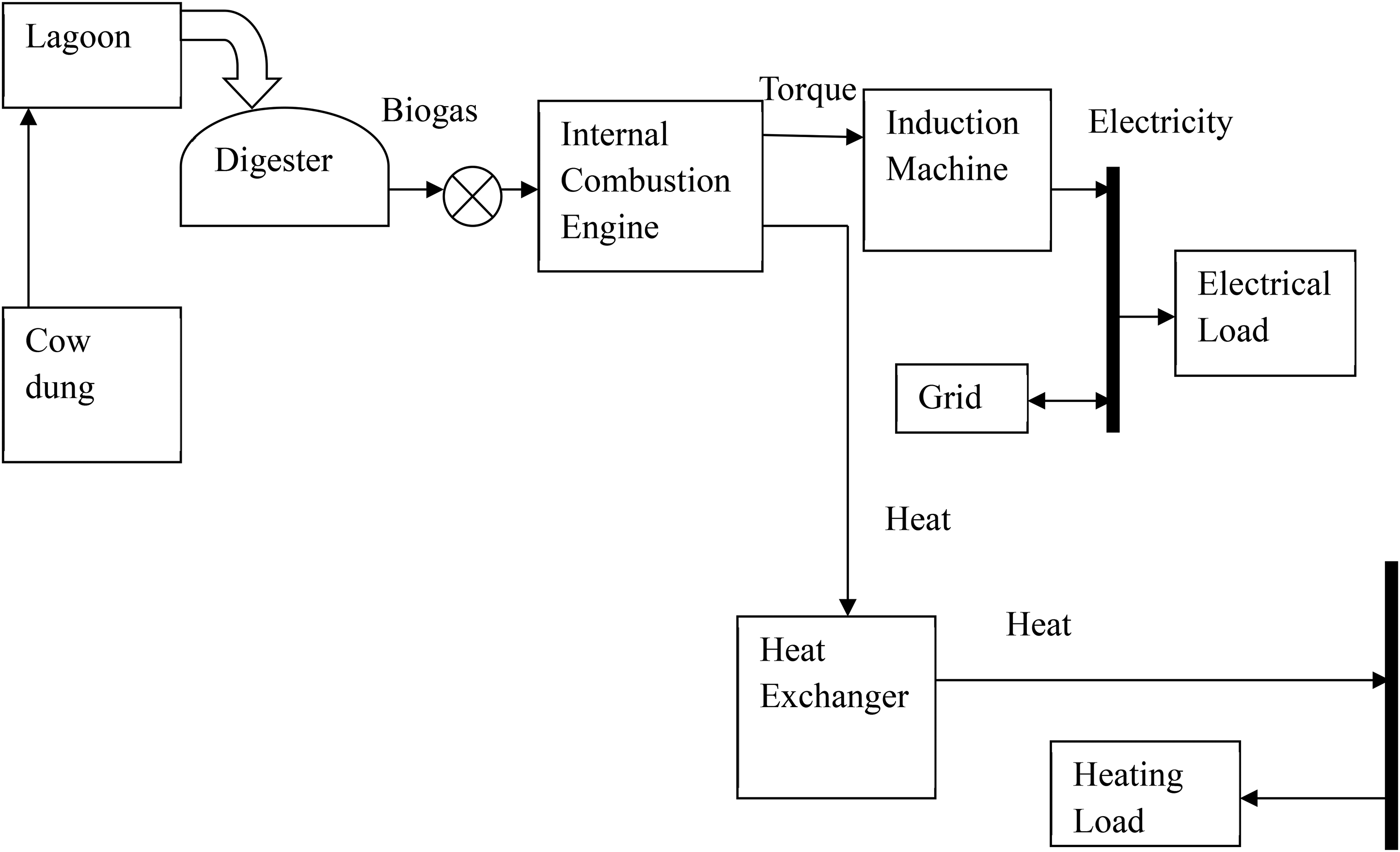
A diagram of the biomass waste-to-energy conversion system is shown in Figure 2. The system includes a lagoon, digester, internal combustion engine, induction generator, heat exchanger, and a connection to the electricity grid. Cow dung is first collected and stored in the lagoon, which helps control the flow of manure into the digester. Inside the digester, the cow dung breaks down without oxygen (anaerobic digestion), producing biogas. This biogas is then burned in an internal combustion engine, which generates torque (rotational force). The torque drives an induction generator, which produces electricity. The heat from the engine's exhaust is captured using a heat exchanger and can be reused for other purposes. The system is also connected to the electricity grid so that extra electricity can be sold, or electricity can be drawn when needed.
Biomass waste-to-energy conversion system.
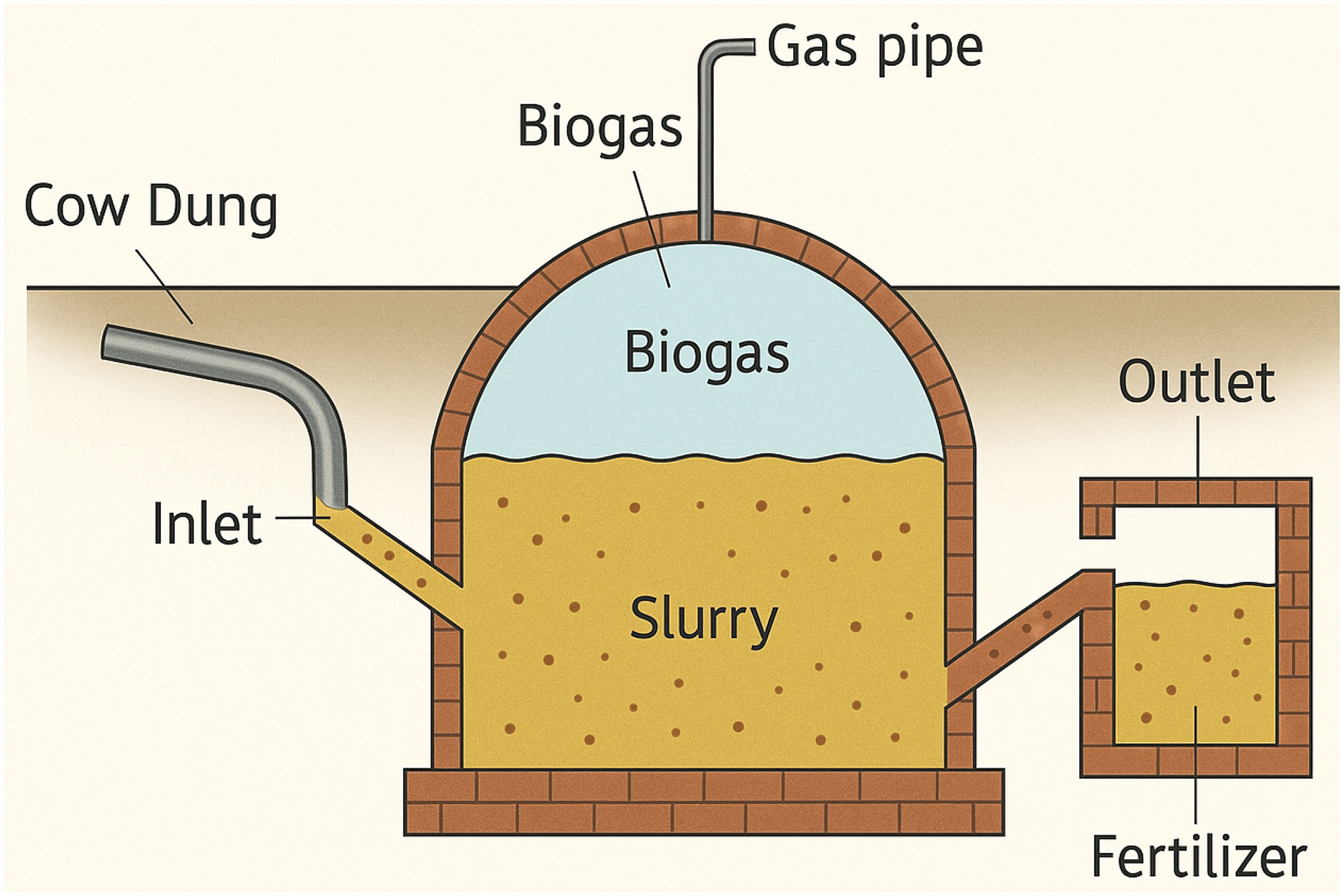
The digester is installed on Makumbi farm in Maddu-Gomba, Uganda, and is designed specifically to digest cow dung to produce biogas, which is then used for combined heat and power (CHP) generation. The digester is a Fixed-dome anaerobic digester of 45 m3 volume. Constructed from bricks, lined with a gas-tight cement mortar finish. The foundation is made of compacted hardcore and a waterproof concrete base. The digester is insulated with a local fibre-based insulation to maintain temperature. As shown in Figure 3, the digester consists of an Inlet Chamber for feeding cow dung mixed with water in a 1:1 ratio, an Outlet Chamber for digestate/slurry to flow out, and a Manhole, sealed, for maintenance and removal of sludge.
Fixed-dome digester.
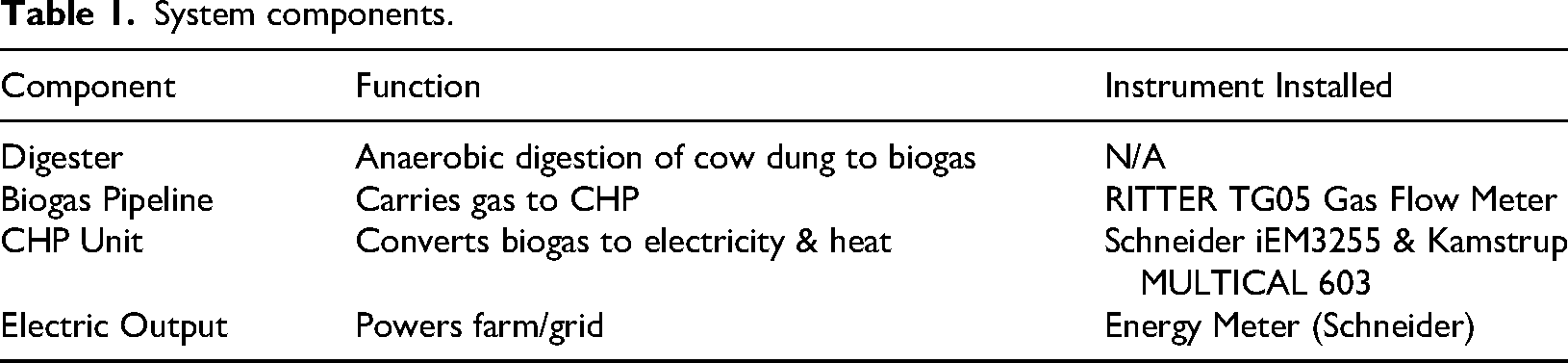
High-density PVC, 1-inch diameter, pressure-rated pipe was used for the biogas piping. Slurry pipe is a gravity-fed, large-diameter PVC 6-inch pipe. Insulated copper was connected to the heat exchanger for digester heating (when required). 30 kW biogas-compatible, four-stroke engine. Internal Combustion Engine
System components.
A sealed anaerobic digester was set up. Cow dung was mixed with inoculum (digested sludge). Anaerobic condition (oxygen-free) was maintained, and it was incubated for 30 days. Continuous feeding and discharge were maintained, which helps maintain microbial stability and ensures consistent gas production across days. Cow dung was added daily.
Before use in a CHP unit, biogas is cleaned to remove Hydrogen sulfide (H2S) and Moisture to avoid corrosion and prevent condensation and damage to engines. This is done using filters, scrubbers, and condensate traps. The cleaned biogas is piped to a biogas generator set consisting of an internal combustion engine modified to run on methane. The volume of the gas yield (m3), the electrical and heat energy generated (kWh), was read daily from the meters in the months of June, July, and August 2024 (3 months) and data was recorded in Tables.
Chemical analysis of cow dung for biomass energy
Fresh cow dung was collected from cattle sheds in Maddu-Gomba, Uganda, in April 2024. The collected dung was air-dried for 72 h, ground into a uniform powder, and sieved through a 2 mm mesh to ensure consistency (Uzorka & Wonyanya, 2025). Proximate analysis was carried out using a Laboratory Oven to determine the moisture, volatile matter, ash content, and fixed carbon content of the cow dung. The procedure of the proximity analysis is outlined below:
Moisture Content:
Weigh 2 g of the prepared sample in a crucible.
Dry the sample in a hot air oven at 105°C for 24 h.
Calculate moisture content using the formula:
Volatile Matter:
Take the dried sample and place it in a muffle furnace at 550°C for 10 min.
Record the weight loss to estimate volatile matter.
Ash Content:
Place the sample in the muffle furnace at 600°C for 3 h.
Cool the crucible in a desiccator and weigh to determine the ash content.
Fixed Carbon:
Calculate fixed carbon indirectly as:
Ultimate analysis measures elemental composition: carbon (C), hydrogen (H), oxygen (O), nitrogen (N), and sulfur (S). Ultimate analysis was carried out using CHNS/O Analyser. The procedure for ultimate analysis is outlined below:
Use a CHNS analyser to combust 1 mg of the sample in a controlled environment.
The analyser measures the gases released to calculate percentages of C, H, N, and S.
Determine oxygen content by difference:
Biochemical analysis focuses on parameters critical to biogas production, including pH, C/N ratio, and lignocellulosic content.
To make a pH measurement, the electrode was immersed in the sample solution until a steady reading was achieved using a calibrated pH meter.
Carbon content was calculated from the CHNS analyser and nitrogen content using the Kjeldahl method.
The C/N ratio was computed.
Fiber analyser was used to measure the lignocellulosic content.
Biogas production potential modelling
To evaluate the theoretical methane production from cow dung at Makumbi Farm, the livestock waste model was applied using Equation (4) (Abuhelwa et al., 2025; Salah et al., 2025; Nassar et al., 2024):
Determining the volume of the biogas digester
Digester volume Vd is computed according to equation (5) (Uzorka & Wonyanya, 2025):
Where HRT is Hydraulic Retention Time, Vs is daily slurry volume (m³/day) computed according to equation (6):
Qf = total fresh manure + water (kg/day). Dung and water are mixed in about a 1:1 ratio by weight
ρ = slurry density (∼1000 kg/m³ for diluted dung)
10% additional volume is added (Gas storage + safety margin) (Uzorka & Wonyanya, 2025)
Comparative analysis with related studies
The present study, focusing on the assessment and utilisation of cow dung from Maddu-Gomba, Uganda for combined heat and power generation, shares thematic parallels with other recent works in renewable energy systems, sensor testing, and energy efficiency optimisation, albeit applied to different domains.
Shahzad et al. (2022) investigated the enhancement of solar absorber surfaces through silicon particle/black paint coatings to increase distillate yield in solar stills. While their work targeted thermal energy capture for water desalination, both studies share a physical implementation emphasis: the design, fabrication, and testing of a functional prototype under both controlled and real-world conditions. In Shahzad's system, surface thermal enhancement directly improved performance; similarly, in the present biogas system, digester insulation and feedstock preparation enhance microbial efficiency, translating into higher methane yields. In both cases, material selection, thermal management, and environmental factors critically influence output.
Han et al. (2021) developed and validated a dual-mode spectroscopic system with careful calibration and noise analysis. Although their field is optical sensing, the methodological rigor in characterizing physical components before integration mirrors our approach: our biogas cleaning, flow measurement, and generator coupling were each tested under operational conditions to ensure minimal system losses and consistent output. In both cases, component-level analysis before system integration was key to reliable long-term operation.
Alayed et al. (2025) proposed optimisation strategies for user association and energy efficiency in heterogeneous networks (HetNets). While their study is computational and network-based, the core theme of maximizing energy efficiency aligns with the current work. In our case, physical system efficiency is maximised through continuous feeding, gas purification, and matched CHP loading, analogous to Alayed's optimisation of network resources. Both approaches seek to balance resource utilisation and performance under operational constraints.
Overall, this study complements the above works by providing a bioenergy-specific, field-deployed demonstration. Like Shahzad et al., it engages in practical system design with environmental energy sources; like Han et al., it emphasizes precise component characterisation; and like Alayed et al., it adopts efficiency-driven operational strategies. The integration of physical, chemical, and operational optimisation in this work positions it as a practical analog to these studies, each addressing sustainability from different technical fronts.
Assumptions, limitations, and uncertainties
Assumptions
The biochemical composition of cow dung from Maddu-Gomba remains relatively constant throughout the study period (June–August 2024), despite potential variations in cattle diet and seasonal factors.
The biogas yield per unit mass of cow dung is primarily influenced by the measured proximate and ultimate analysis parameters, with negligible effects from minor trace elements not analysed.
The anaerobic digestion process operates under quasi-steady-state conditions, with microbial communities adapting consistently to feedstock quality due to daily feeding.
The removal of H2S and moisture from biogas is assumed to be near-complete after passing through the installed cleaning system, ensuring engine safety without measurable losses in methane content.
The calorific value of the produced biogas is assumed to be similar to literature values for cattle dung-derived methane (approximately 20–23 MJ/m³).
Limitations
Seasonal changes in ambient temperature may have influenced digester performance despite insulation, as no active temperature control was continuously applied.
Only cow dung from a single location (Makumbi farm, Maddu-Gomba) was used, which may limit the generalisability of results to other regions or farming systems.
Biogas production was monitored for three consecutive months; longer-term trends and year-round performance were not assessed.
Laboratory-based proximate and ultimate analyses were performed on air-dried samples, which may differ slightly from in-situ feedstock entering the digester.
Possible biogas leakages or measurement inaccuracies in gas flow meters and energy meters could lead to slight under- or over-estimation of production values.
Uncertainties
Measurement errors may arise from weighing samples, temperature fluctuations in ovens and furnaces, and calibration drift in analytical instruments.
Inherent variability in cow dung moisture content and composition due to differences in animal age, health, and feed introduces uncertainty in replicability of the results.
The C/N ratio calculated from CHNS and Kjeldahl analysis is subject to analytical uncertainty, which could affect interpretation of microbial performance.
Fluctuations in engine efficiency and generator load during operation may have caused variations in measured electrical and thermal outputs.
Unquantified losses of methane during gas cleaning and piping could slightly reduce the actual usable biogas compared to the total generated.
Result
Chemical analysis of cow dung
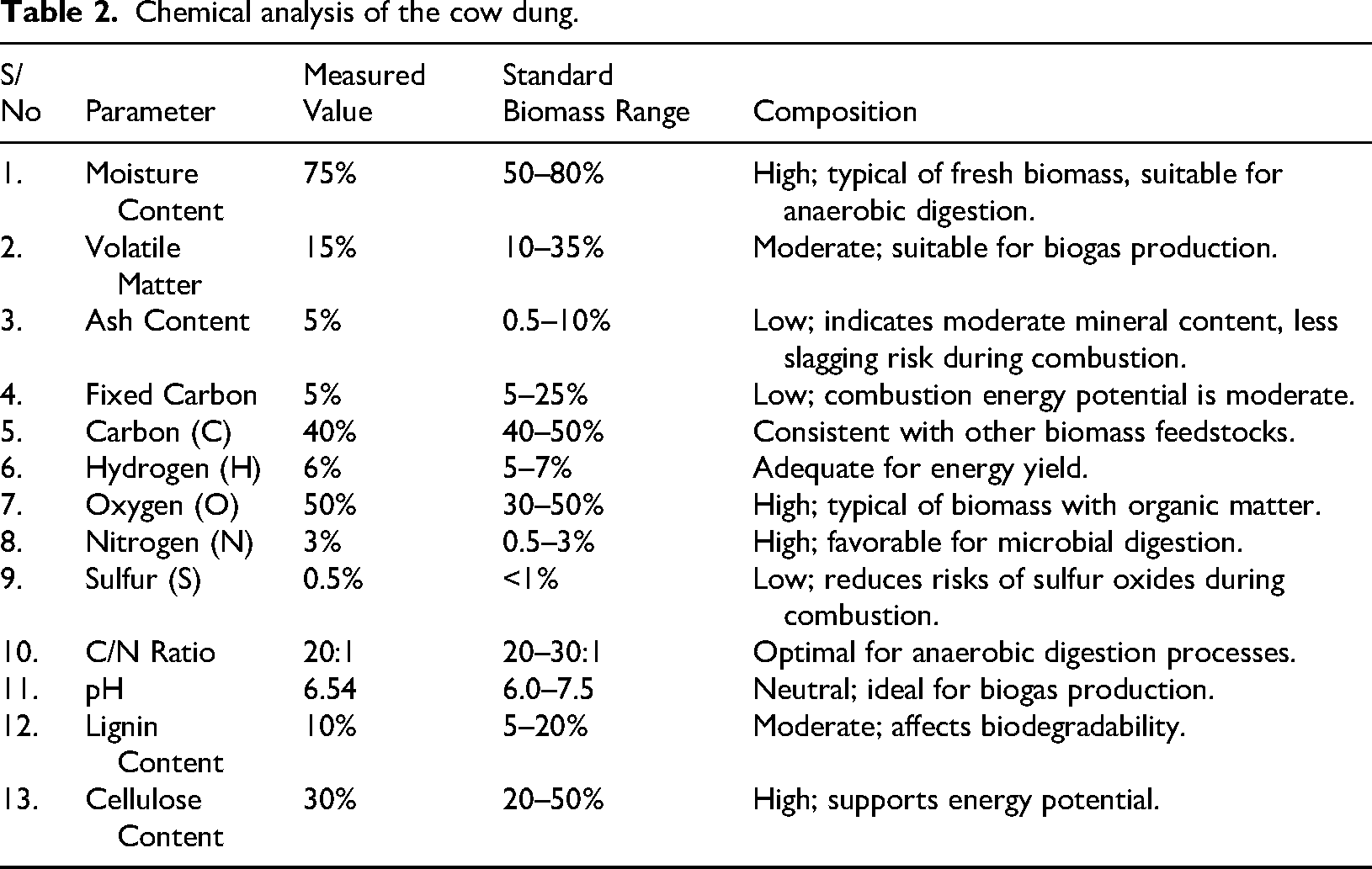
The chemical analysis of the cow dung is shown in Table 2. The high moisture content (75%), optimal C/N ratio (20:1), and neutral pH (6.54) indicate that cow dung is highly suitable for anaerobic digestion and biogas production. The volatile matter (15%) further supports this. The low ash content (5%) and moderate fixed carbon (5%) suggest that dried cow dung can serve as a reasonable feedstock for combustion. Low sulfur and nitrogen levels mitigate pollution risks during combustion or digestion. Overall, cow dung from Maddu-Gomba, Uganda, is an excellent biomass feedstock for anaerobic digestion and biogas production, given its chemical composition. Its feasibility as a biomass energy source is high when compared to other biomass feedstocks, particularly for rural energy solutions like electrification through biogas.
Chemical analysis of the cow dung.
Electricity and heat energy demand
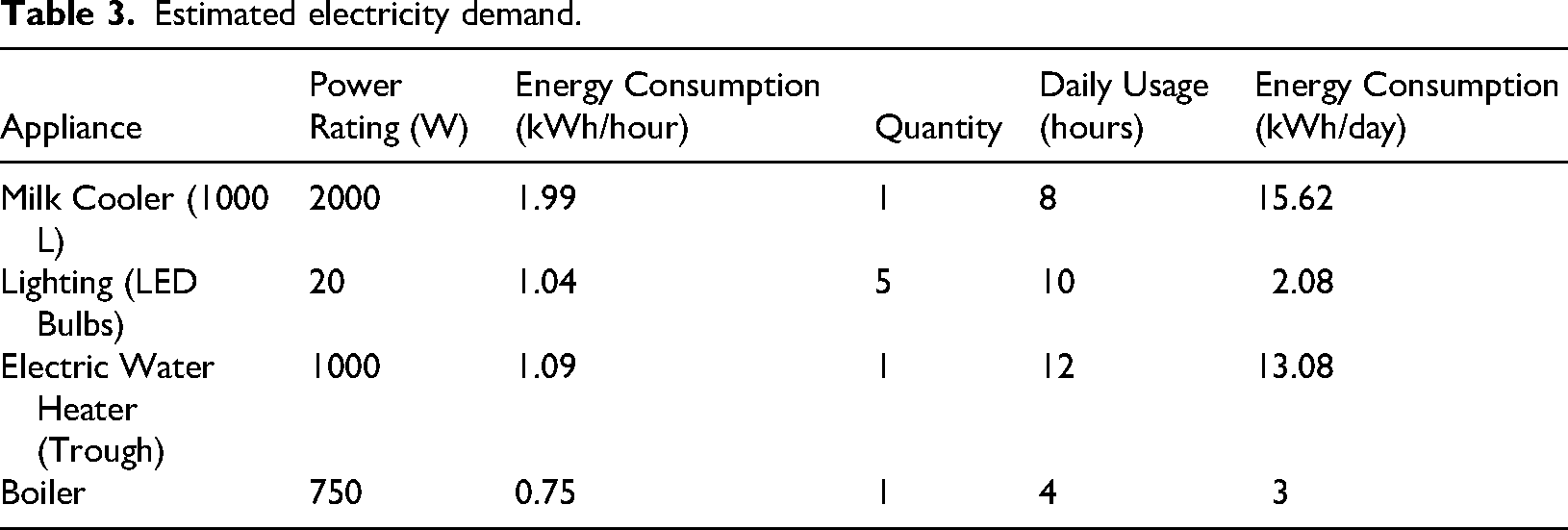
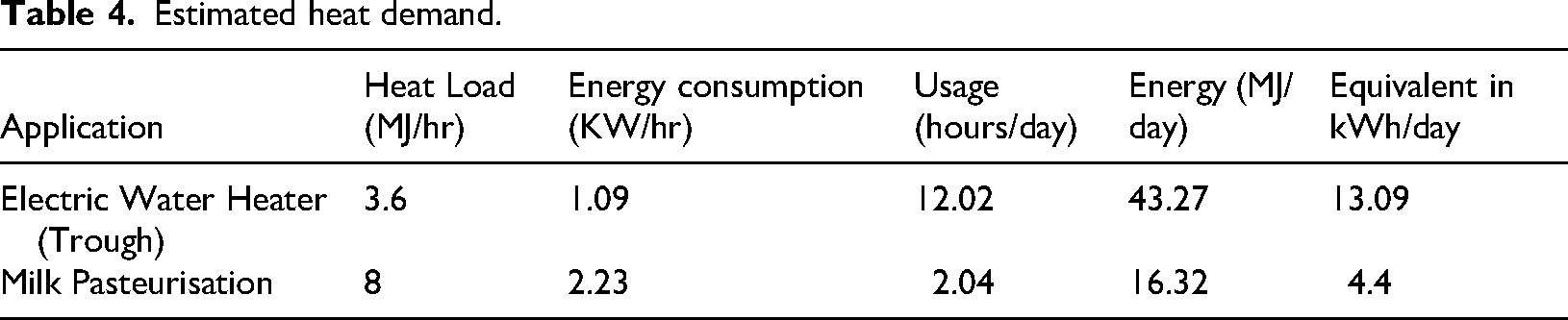
Tables 3 and 4 show the estimated electricity and heat demand in a typical cattle farm in Maddu-Gomba. Total daily electricity demand is 33.78 kWh/day and total heat demand is 59.59 MJ/day (∼17.49 kWh/day).
Estimated electricity demand.
Estimated heat demand.
Total energy demand and biogas required are shown in Table 5.
Total energy demand and biogas required.

Gas production
Figure 4 illustrates the daily gas yield variations over three months, derived from cow dung digestion data. Month August shows the highest gas production, ranging from 248 m³ to 327 m³, followed by Month June (256 m³ to 325 m³) and Month July (248 m³ to 300 m³). Fluctuations occur due to factors such as microbial activity, feedstock quality, loading rates, and environmental temperature. The line on the graph for July drops significantly during the last week of the month. This drop could be caused by temporary inefficiencies for example, reduced digester temperature, poor stirring, or reduced microbial activity or lower input quality for instance, cow dung during those days may have had lower organic content, higher water content, or contamination that reduced gas yield. On Day 13 of August, the graph shows the highest gas yield of the entire three months (327 m³). This high value suggests the digester was operating at optimal conditions, which could be due to proper feedstock loading and composition, stable temperature inside the digester. And well-balanced microbial activity breaking down the organic matter efficiently. Such rises and falls in production show that gas yield is sensitive to how the digester is managed and to environmental factors like temperature and feedstock quality. If these factors are kept stable and optimal, gas yield can be maximised over time.
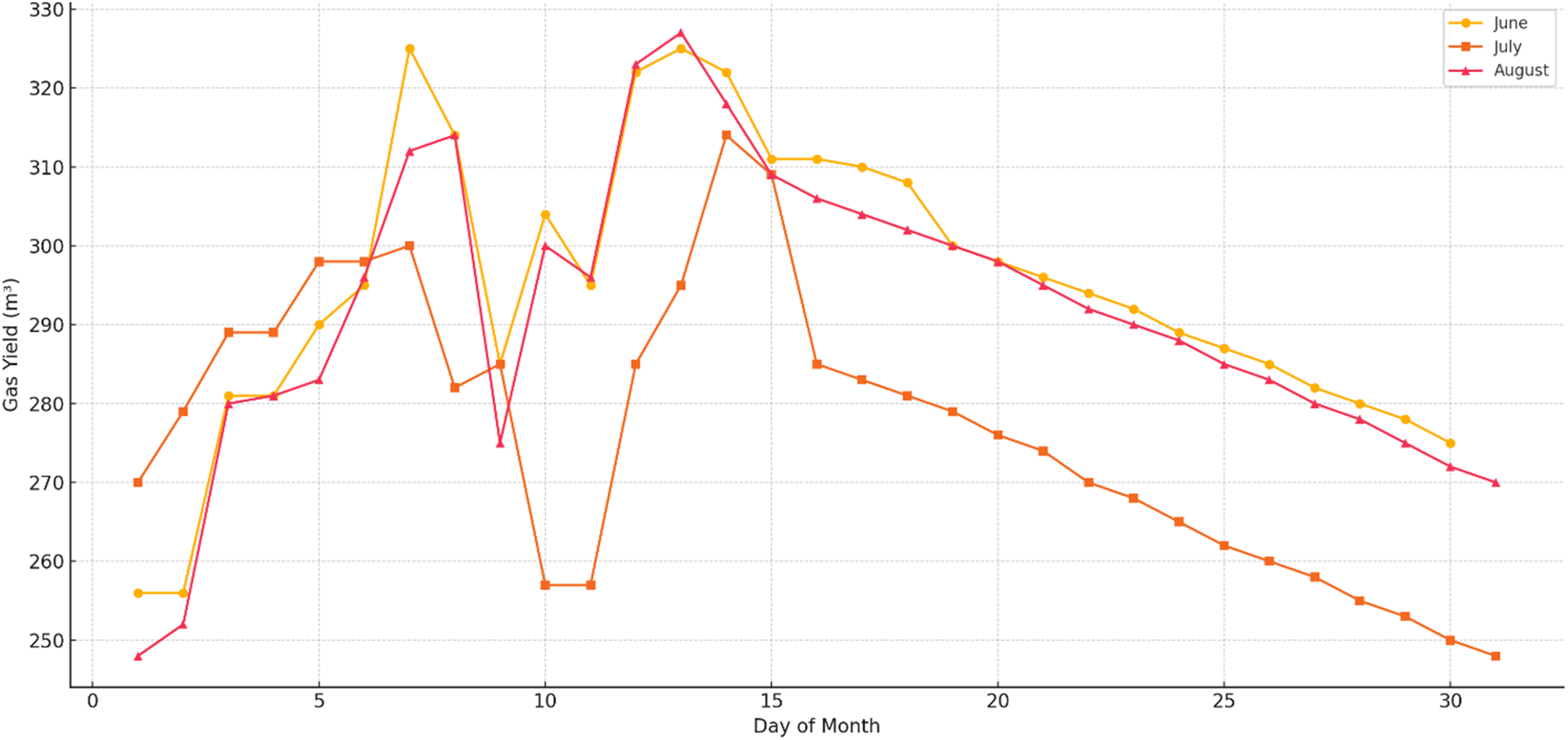
Daily gas yield variations over three months.
Electricity and heat generation
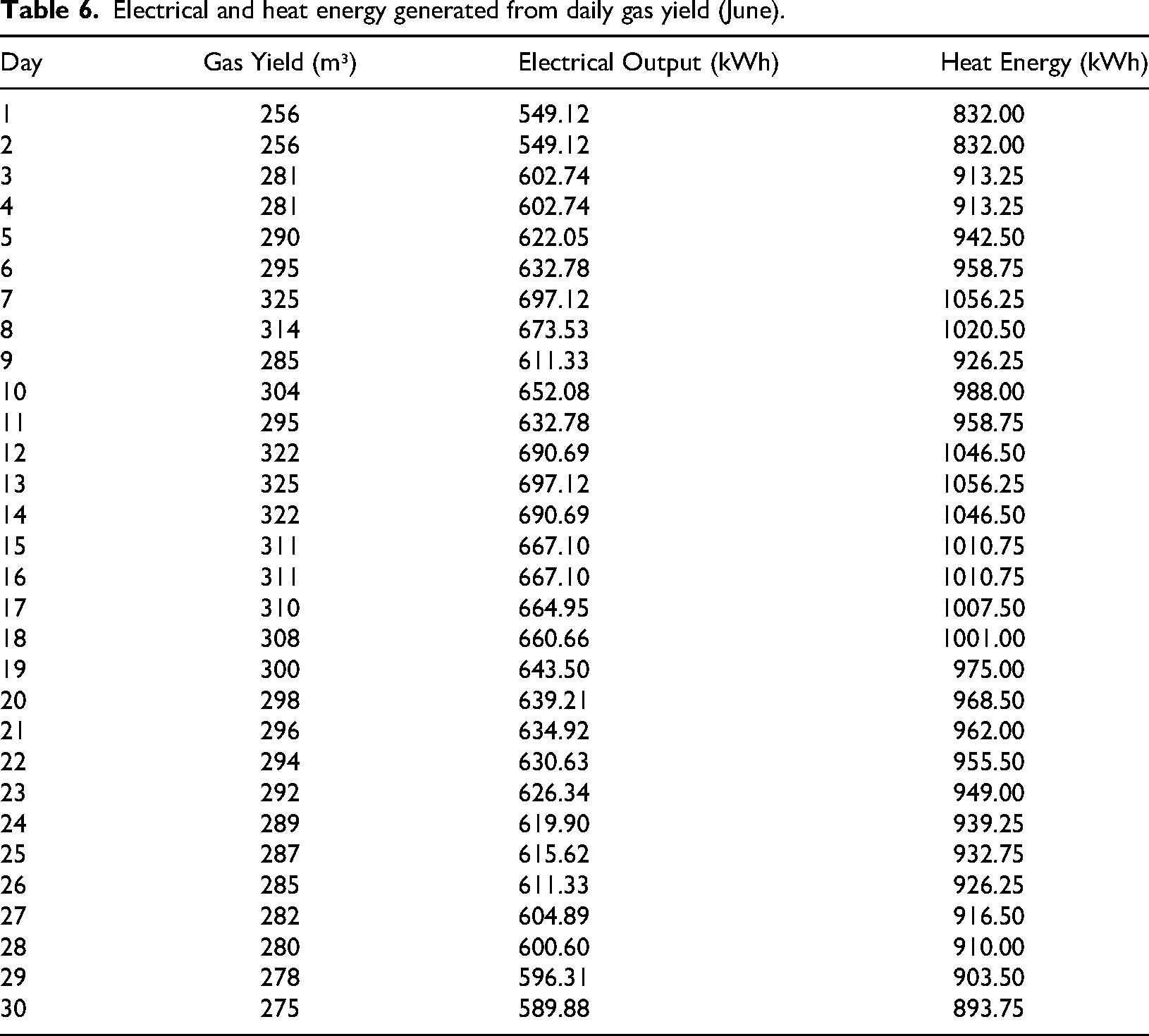
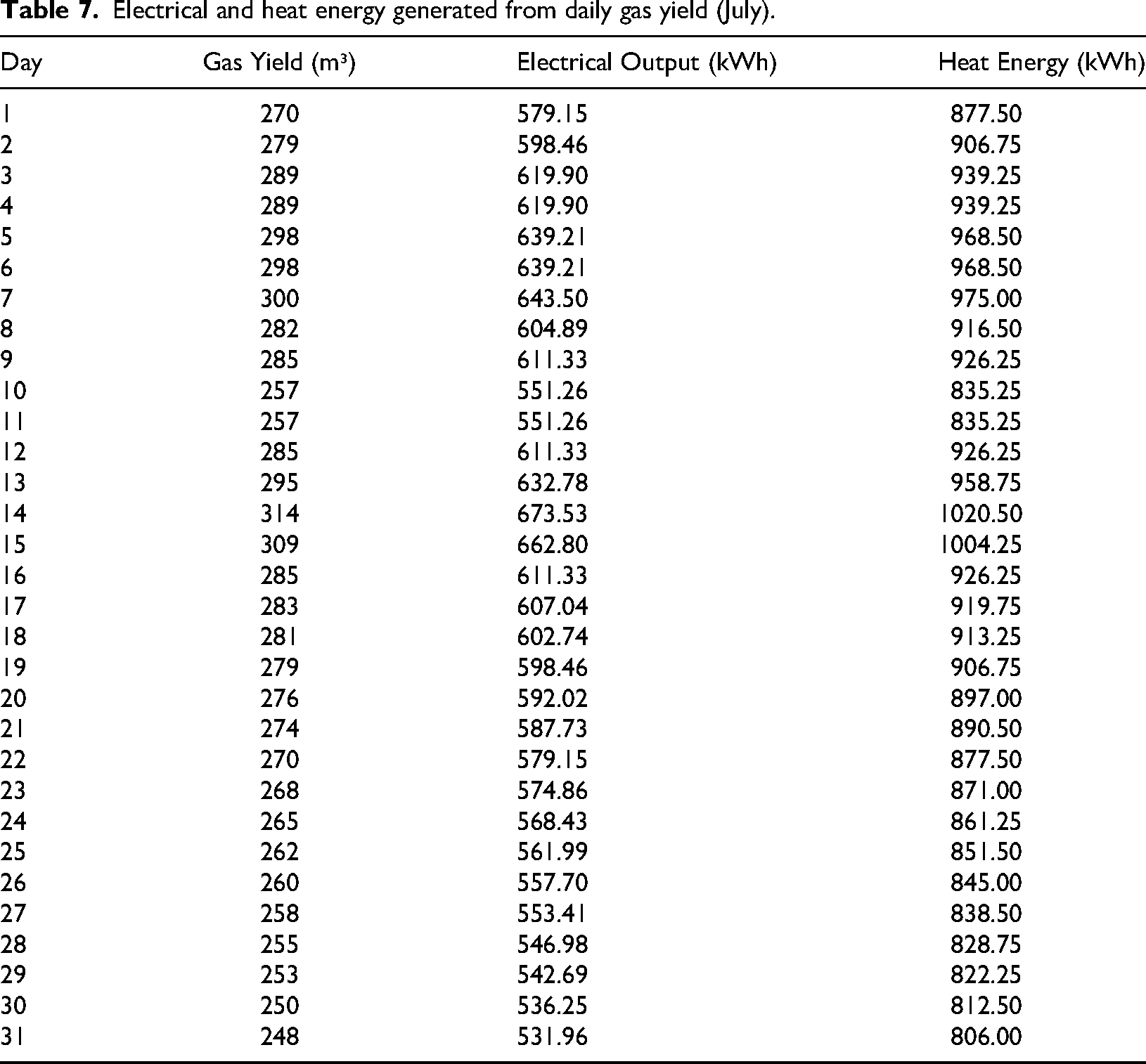
Tables 6 to 8 show electrical and heat energy generated from the daily gas yield by the bio digester.
Electrical and heat energy generated from daily gas yield (June).
Electrical and heat energy generated from daily gas yield (July).
Electrical and heat energy generated from daily gas yield (August).
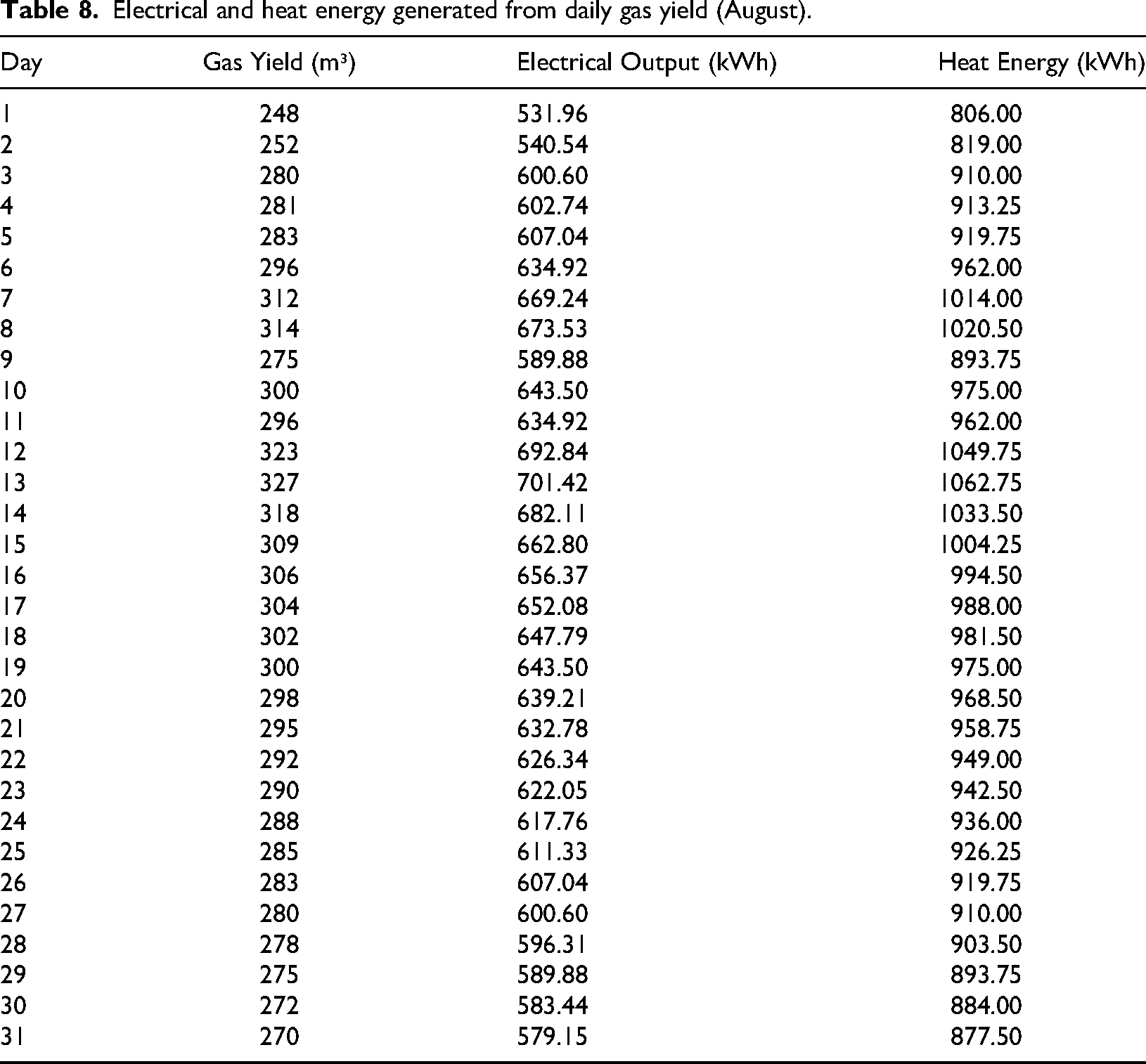
Figure 5 illustrates daily electrical energy production variations over three months, derived from gas yield data. Month August shows the highest electrical production, ranging from 531.96 kWh to 701.42 kWh, followed by Month June (549.12 kWh to 697.12 kWh) and Month July (531.96 kWh to 673.53 kWh). Fluctuations occur due to factors such as microbial adaptation, feedstock composition, and environmental conditions. A noticeable dip around Days 24–31 in July suggests temporary inefficiencies, while peaks around Day 13 in August indicate optimal digestion. These variations highlight the impact of process optimisation on maximising biogas energy recovery.
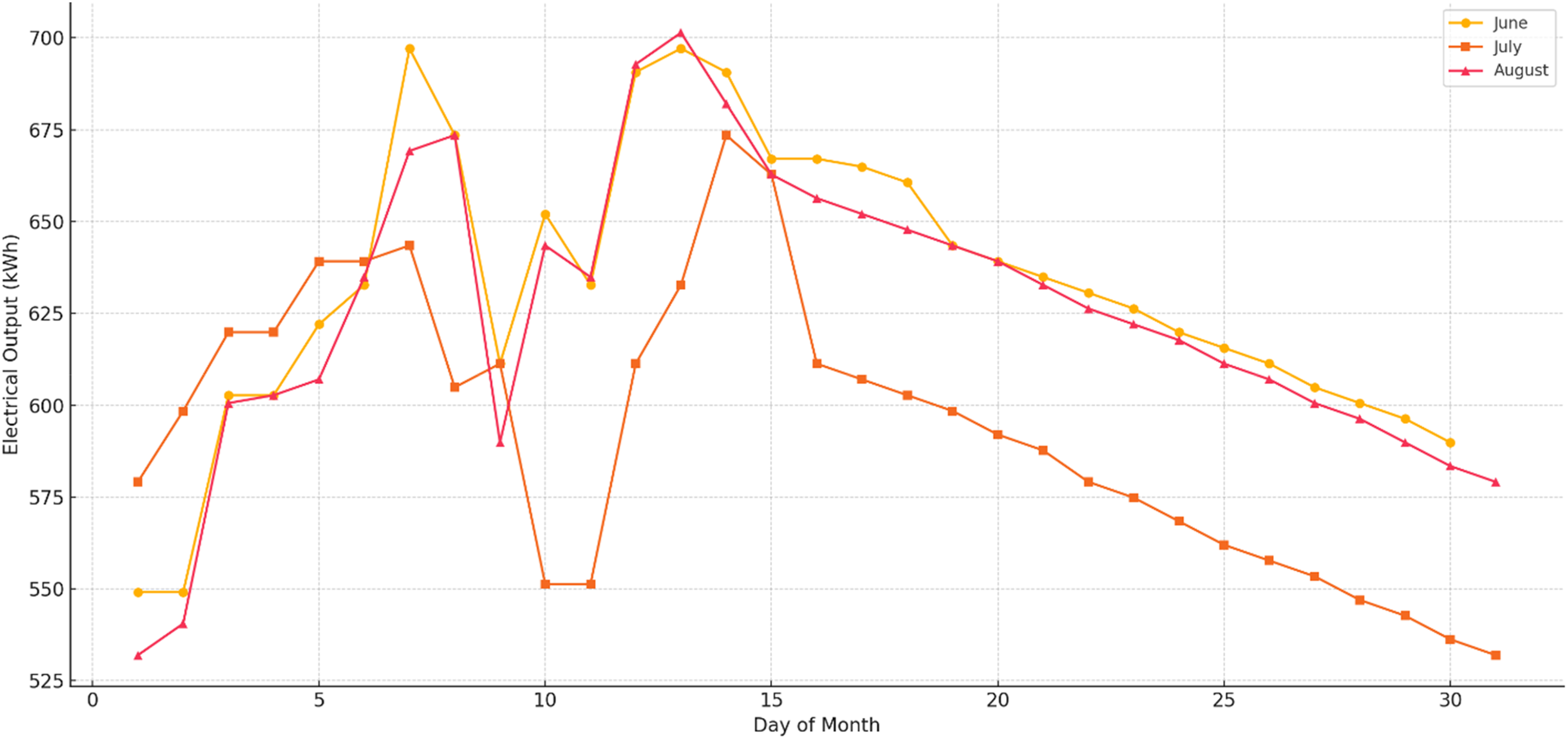
Daily electrical energy production variations over three months.
Figure 6 illustrates daily heat energy production variations over three months, derived from gas yield data. Month August shows the highest heat production, ranging from 806.00 kWh to 1062.75 kWh, followed by Month June (832.00 kWh to 1056.25 kWh) and Month July (806.00 kWh to 1020.50 kWh). Fluctuations occur due to factors such as microbial adaptation, feedstock composition, and environmental conditions. A noticeable dip around Days 24–31 in July suggests temporary inefficiencies, while peaks around Day 13 in August indicate optimal digestion. These variations highlight the impact of process optimisation on maximising biogas energy recovery.
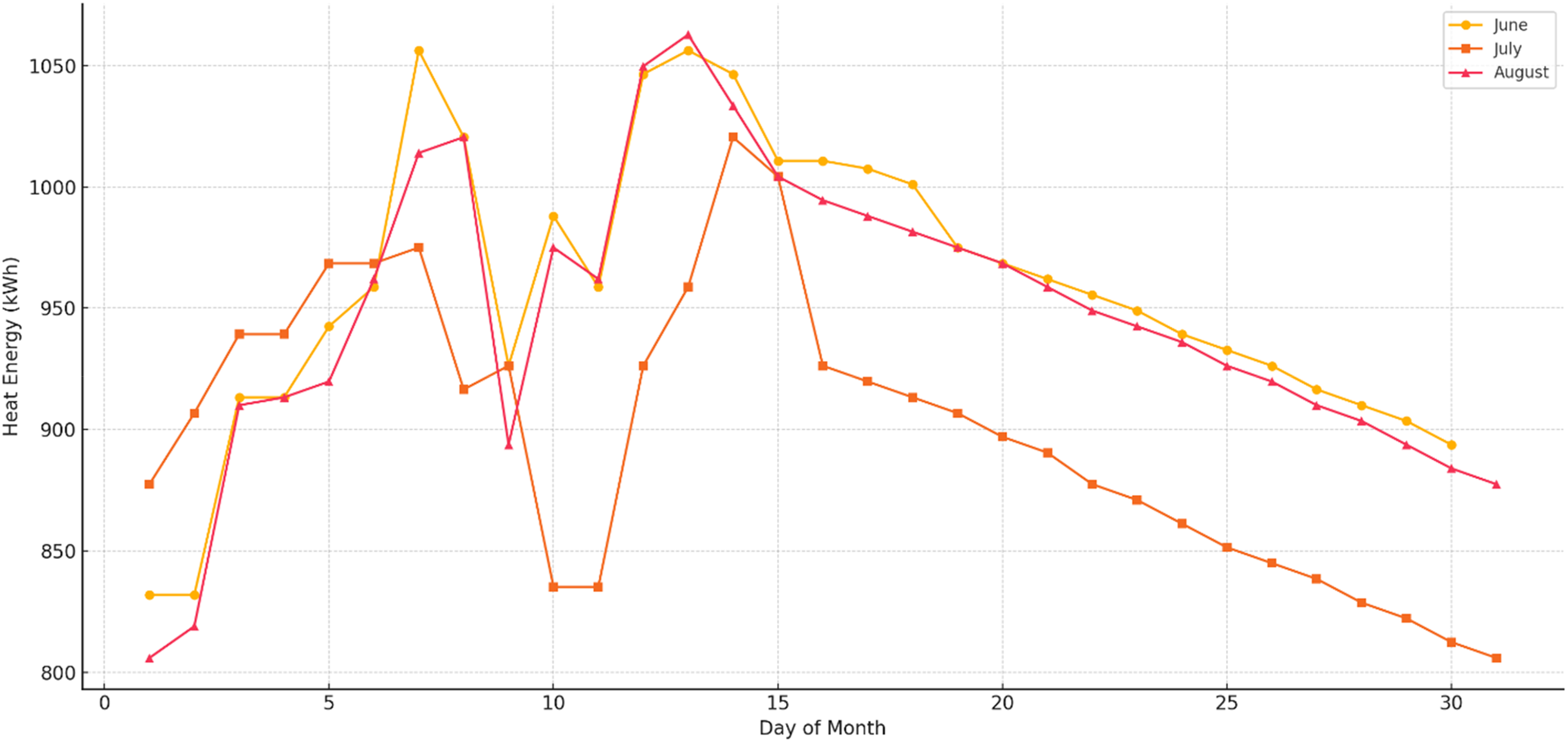
Daily heat energy production variations over three months.
Discussion
The present work, while focused on renewable energy generation from cow dung using anaerobic digestion and CHP integration, shares conceptual and methodological parallels with recent advances in optical sensing, nonlinear control, and high-sensitivity environmental monitoring systems. Masud et al. (2024) investigated nonlinear optical effects in fibre Bragg gratings (FBGs) to enhance the signal-to-noise ratio (SNR) in a dual-wavelength biomedical sensing system. While operating in a different technical domain, their emphasis on system component characterisation under varying operating conditions mirrors our approach to digester and biogas system optimisation. In both cases, fine-tuning component properties (FBG wavelength stability in Masud et al., and microbial stability in our work) directly impacts the reliability and efficiency of the overall system. The rigorous SNR enhancement strategy in their optical system parallels our efforts in gas purification and measurement precision, both aimed at improving final output quality.
Zaki et al. (2025) presented a Lyapunov-based fractional-order PID controller for coupled nonlinear systems to improve robustness against uncertainties and sensor noise. Though their study is in control systems engineering, the conceptual overlap lies in managing system uncertainties and dynamic variability. In our biogas plant, feedstock variability, ambient temperature fluctuations, and digester microbial dynamics present analogous challenges to those faced by coupled nonlinear systems. Just as Zaki et al. employed advanced control to maintain stable operation under disturbance, our process relies on steady feeding regimes, insulation, and process monitoring to maintain stable gas production and energy output under changing external conditions.
Masud (2014) developed a highly sensitive optical semiconductor laser–based sensor (“The Nanonose”) for medical and environmental applications, capable of detecting trace compounds with precision. This aligns with our work in the sense of addressing environmental and resource challenges through practical, field-deployable systems. While Masud's work operates in a micro-scale, high-sensitivity domain, and ours at a macro-scale energy production domain, both highlight the role of targeted engineering solutions in sustainable development, whether through detecting air quality changes or converting waste to energy.
One of the study's most significant contributions this study lies in the empirical verification that cow dung from this specific region, with its unique climatic, agricultural, and socio-economic context, can effectively power decentralised energy systems. Using a fixed-dome anaerobic digester of 45 m³ capacity, we observed sustained and stable gas yields across three months, with August achieving the highest yield (248–327 m³/day), translating to electrical outputs up to 701.42 kWh/day and heat energy as high as 1062.75 kWh/day. These figures far surpass the estimated electricity (33.78 kWh/day) and heat (17.49 kWh/day) demands, indicating the potential for both energy self-sufficiency and surplus generation that could be fed into mini-grids or used for productive activities such as agro-processing.
The chemical composition of the cow dung used in the study strongly supports its high biogas potential. A C/N ratio of 20:1, neutral pH of 6.54, and high moisture content (75%) are all optimal for anaerobic digestion. These findings are consistent with previous research by Fetta et al. (2025) and Kaur et al. (2024), who also report that cow dung with similar chemical properties results in efficient methane production. However, our study adds a layer of specificity by validating these findings in a rural Ugandan context with limited prior empirical data. Unlike studies in more temperate regions, our fixed-dome digester used local materials, such as brick masonry and natural fibre insulation, which proved adequate in maintaining necessary digestion temperatures. This demonstrates a valuable adaptation for low-income, off-grid communities that cannot afford imported or technologically complex systems.
The variation in gas yield and corresponding energy output across the months, highest in August and lowest in July, aligns with seasonal changes in ambient temperature and possible feedstock variation. The increased yields in August may be attributed to slightly higher temperatures and better microbial activity, a trend observed in similar studies such as those by Humphrey et al. (2025) and Srivastava et al. (2025), who noted that tropical regions can enhance anaerobic digestion efficiency without additional heating. Unlike many studies that require thermal regulation through fossil fuel heating or solar augmentation (Husein et al., 2025), our results show that with proper insulation and stable organic loading, high yields can be maintained in rural Uganda using simple, cost-effective methods.
Another major contribution of this study is the comparative analysis of actual energy output versus estimated local energy demand. The consistent daily electrical output (531.96–701.42 kWh) and heat energy output (806–1062.75 kWh) far exceed the combined daily energy demand (51.27 kWh/day), suggesting that even a single digester of 45 m³ is more than adequate for household electrification and thermal needs. This surpasses the performance benchmarks reported in several studies from other Sub-Saharan African countries, where energy outputs from similar systems often only marginally meet energy demands (Ngetuny et al., 2025). This finding has significant implications for energy planning, particularly in off-grid areas of Uganda, where over 70% of households lack access to electricity (Uzorka et al., 2025). It confirms that biogas systems, when properly designed and managed, can serve as stand-alone energy solutions.
Furthermore, the study demonstrates that the combustion potential of cow dung is also viable due to its low ash (5%) and moderate fixed carbon content (5%). These values compare favorably with results reported by Lachman et al. (2021), who found that biomass with low ash content minimises slagging and fouling during combustion. While this study focused primarily on anaerobic digestion, the implication is that cow dung could also serve as a solid biofuel for backup systems or in hybrid energy setups, increasing overall energy reliability.
Importantly, the choice of a fixed-dome digester, a low-cost, maintenance-light technology, demonstrates its suitability for replication in other parts of rural Uganda and Sub-Saharan Africa. Unlike more complex plug-flow or UASB digesters, the fixed-dome model used here is constructed with locally available materials such as bricks, hardcore, and waterproof concrete, supported by local fibre-based insulation. This localisation of technology reduces the barrier to adoption and enables community ownership. In line with the findings of Uzorka & Wonyanya (2025), the use of local labour and materials contributes to capacity-building and economic stimulation in rural communities.
In terms of implications, the results highlight the untapped potential of livestock waste in rural energy planning. Biogas projects in Uganda have often been limited by poor maintenance, insufficient feedstock, or underestimation of energy potential (Mensah et al., 2023; Namugenyi & Scholderer, 2024). Our results counter these narratives, showing that with proper chemical screening and sizing, cow dung alone can satisfy and even exceed rural household energy needs. This is a call for policymakers and development agencies to prioritise localised biogas solutions as part of Uganda's broader renewable energy strategy. Programs like Uganda's Renewable Energy Feed-in Tariff (REFiT) could benefit from incorporating decentralised biogas models into their framework.
Additionally, the temporal analysis of electrical and heat energy output reveals critical operational insights. The dips in output observed in late July correlate with possible reductions in feedstock availability or microbial activity, pointing to the need for continuous monitoring and feedstock management. Meanwhile, the high outputs around mid-August suggest that process parameters such as retention time, feeding frequency, and temperature were optimised. These observations reinforce the importance of training and technical support for digester operators to sustain high performance throughout the year.
Conclusion
This study evaluated the potential of cow dung from Maddu-Gomba, Uganda, as a sustainable feedstock for biogas-based energy production using a fixed-dome anaerobic digester. The findings confirm that cow dung possesses the ideal chemical properties, optimal C/N ratio, high moisture content, and neutral pH, for efficient anaerobic digestion. The consistent gas yields across June, July, and August, along with the corresponding high levels of electrical and thermal energy output, demonstrate that biogas production from cow dung is not only feasible but also highly effective in meeting and exceeding local energy demands.
Electrical energy outputs ranged from 531.96 to 701.42 kWh/day, while heat energy ranged from 806.00 to 1062.75 kWh/day. These values far surpass the combined daily farm energy demand of approximately 51.27 kWh, indicating a significant energy surplus. This surplus creates opportunities not only for household electrification but also for broader applications such as agricultural processing, cooking, and even integration into local mini-grids.
By using locally available construction materials and simple insulation techniques, the study demonstrates that effective biogas systems can be built and maintained at the community level, making this approach highly replicable and scalable in other rural regions. The ability to generate clean, reliable, and renewable energy from livestock waste also positions biogas as a powerful tool for improving rural livelihoods, reducing deforestation, and mitigating greenhouse gas emissions. The implications are far-reaching: rural electrification, climate mitigation, improved sanitation, and strengthened community resilience—all achievable through a resource often overlooked as waste.
In conclusion, cow dung from Maddu-Gomba is a viable and sustainable energy source with strong potential to support rural electrification and thermal energy needs. The success of this project underscores the importance of integrating locally adapted biogas technologies into national energy strategies and rural development programs. Future efforts should focus on expanding awareness, building technical capacity, and creating supportive policy frameworks to scale up biogas adoption across Uganda and beyond.
Footnotes
List of Acronyms

Funding
The authors received no financial support for the research, authorship, and/or publication of this article.
Declaration of conflicting interests
The authors declared no potential conflicts of interest with respect to the research, authorship, and/or publication of this article.