




Abstract
Greenhouse gas emissions from fossil fuels have necessitated finding renewable energy alternatives for sustainability. Bioethanol from biomass is thus gaining prominence. Bangladesh remains reliant on ethanol imports but has substantial sugarcane resources for domestic bioethanol production, potentially reducing import and opening economic opportunities. This study was thus conducted to evaluate the potential of Bangladeshi sugarcane varieties for bioethanol production over the existing utility of crystalline sugar production. Findings reveal that eight Bangladeshi sugarcane varieties are highly potential for bioethanol and laboratory experimentation yielded about 41.5 L 1st generation and 20.9 L 2nd generation bioethanol per ton cane. Contrastingly, sugar production showed about 86.8kg crystalline sugar per ton cane. Economically, sugar production from sugarcane had a benefit cost ratio of 2.24 whereas 1st or 2nd generation bioethanol production had a benefit cost ratio of 32.87 and 9.39 respectively. Combined 1st and 2nd generation bioethanol production had a benefit cost ratio of 29.04. In all cases bioethanol was profitable and indicated better pathways for energy diversification and economic resilience. Nevertheless, local sugar industry holds significant cultural and traditional importance. Thus balanced approach via strategic planning and investments in dual-purpose industry development program for the country's self-sufficiency and better economy should be implemented.
Introduction
Energy in its various forms acts as the core driving force for any country's prosperity. Chemical energy sources like batteries and fossil fuels are one of the prime contenders. Following the industrial revolution at 1760s, the demand of chemical energy has begun to grow and recently the growth rate is about 1.3% per year (Mahbubul and Himan, 2023). Most of the chemical substances utilized for energy purpose is either synthetically synthesized or collected from earth's reserve. Our heavy dependency not only exploits the natural resources but also has given rise to pollution and global warming, specially since the last of eighteenth century. Raud et al. (2019) have meticulously highlighted about 47.5% increase in atmospheric CO2 at 2019 compared to that of preindustrial period which corresponds well with recently reported 0.19°C rise in mean global temperature per decade (Samset et al., 2023). The globe is already 0.85°C warmer due to increased pollution and emission of GHGs (Mahmud et al., 2022). Needless to say, global population keeps growing to date which exerts increasing demand on the energy requirements. However, dependency on non-renewable energy sources has zero chance to make the situation any better, rather a renewable energy source with lowest possible emission of GHGs could possibly be the silver bullet. In face of such adversaries, ethanol produced from biomass (bioethanol) showed immense potential as an ideal alternative as it is technically carbon-neutral and can be obtained from cheap substrates (living plants and plant residues) (Zabed et al., 2016). Bioethanol produced from biomass has multiple utilities such as, blending with transportation fuels, producing electricity, raw material of pharmaceutical, cosmetics, and paint industries, as well as analytical reagent in laboratories (Hernandez and Kafarov, 2009; Mahmud et al., 2022; Malik, 2023; Onuki et al., 2016; Petersen et al., 2018; Ramchuran et al., 2023). United States of America (USA) and Brazil are the largest producers of bioethanol covering about two third of the global markets share (Jonker et al., 2016). Many other countries have realized the eco-friendliness of bioethanol and have begun transitioning towards it. In Asia, China took the lead and was successful in securing the title of 4th largest global bioethanol producer (Huang et al., 2020). Many other Asian countries namely Thailand, Pakistan, and India have also begun producing good amount of bioethanol at industrial level (Arshad et al., 2019; Onuki et al., 2016; Singh et al., 2016).
Production of bioethanol from biomass involves a biological process called anaerobic fermentation via microorganismal enzymatic hydrolysis (Bernier-Oviedo et al., 2018; Zabed et al., 2016). Sugar based materials are ideal raw material and sugarcane (Saccharum officinarum L.) is an ideal crop for bioethanol production. Approximately 100 countries grow sugarcane for bioethanol among which Brazil alone produces 40% of the total (Arshad et al., 2019). Despite being one of the small countries of the globe, Bangladesh is blessed with a good amount of biomass, natural gas, coal, crude oil, oil products, and hydropower providing considerable support to the country (Roy and Abedin, 2022). However, the dense population and its growth rate forces Bangladesh to import. Recent reports from Bangladesh Bureau of Statistics (BBS) showcased that, every year Bangladesh is importing a huge amount of ethanol to support the country's demand (BBS, 2019–2024). However, if Bangladesh is to produce bioethanol, then the import could be reduced. Sugarcane is one of the most dominant industrial crops of Bangladesh, cultivated in every district (BBS, 2024a, 2024b). The yield and sugar content of Bangladeshi sugarcane genotypes are impressive, largely due to the dedicated research and development efforts of the Bangladesh Sugarcrop Research Institute (BSRI). Bangladesh produces sugarcane for white sugar purpose; however, rising public awareness about health risks associated with sugar consumption like diabetes, non-alcoholic fatty liver disease (NAFLD), obesity, and cardiovascular complications; consumers interest on white sugar is declining (Al Hasan et al., 2019; Sonestedt et al., 2012; Vancells Lujan et al., 2021; Waid et al., 2018). In contrast, natural sweeteners (honey, stevia extract etc.) as healthier alternatives are receiving the limelight (Arshad et al., 2022). Such a shift in consumers preference is bound to impact the sugar industry, and as a matter of fact, 6 out of 15 sugar mills of Bangladesh have recently discontinued sugar production due to consecutive financial losses (Sultana, 2024). This also indicates that sugarcane farmers would be looking for alternative crops to replace sugarcane. However, utilizing sugarcane, there is an immense potential for Bangladesh in producing 1st generation (from food products: cane juice) and 2nd generation (from non-food products: sugarcane bagasse) bioethanol that might not only fill the country's demand but also could attract foreign revenues. Considering recent challenges and future prospects in mind, the current study was conducted to evaluate the standings of Bangladesh for green energy transition via sugarcane-based bioethanol production. Additionally, the study aims to assess the potential of Bangladeshi sugarcane genotypes for its suitability, technical feasibility, and economic profitability for marketable grade bioethanol production.
Materials and methods
Experimental materials and conditions
In total 36 sugarcane varieties (34 Bangladeshi and 2 Brazilian varieties) were evaluated in the current study (Table S1). The Brazilian genotypes (CTC9001 and CTC9002) are current modern cultivars for bioethanol production; hence, they were used in this study as check varieties. The study had been conducted in four following stages: (Stage−1) analysis of the historical ethanol import of Bangladesh (Stage−2) performance evaluation of Bangladeshi sugarcane genotypes in comparison with Brazilian sugarcane genotypes; (Stage−3) bioethanol extraction and varietal potentiality assessment; (Stage−4) verdict on possible cost, return, and benefit cost ratio (BCR) in different industrial use case scenarios.
Procurement of necessary secondary information
Historical data of ethanol [HS code 22071000 (Undenatured ethanol of 80% alcoholic strength or higher) and HS code 22072000 (Denatured ethanol of any alcoholic strength)] trade by Bangladesh from 2017 to 2023 was procured from the published annual reports of Foreign Trade Statistics by Statistics and Informatics Division (SID) of Bangladesh Bureau of Statistics (BBS) as well as from the World Integrated Trade Solution (WITS) of The World Bank. Annual sugarcane cultivation data (district wise cultivation area and yield) of fiscal year 2022–2023 were also collected from SID, BBS. Information related to the sugarcane genotypes (potential yield, actual yield, and polarization percentage) was procured from the published books, and booklets/leaflets by Bangladesh Sugarcrop Research Institute (BSRI), Ishurdi 6620, Pabna, Bangladesh and Centro de Tecnologia Canavieira (CTC), Santo Antonio, Brazil.
Secondary data visualization and interpretation
The collected secondary data were subjected to multidirectional interpretations. Historical data of ethanol import by Bangladesh from 2017 to 2023 from BBS was utilized to calculate the yearly import cost in terms of United States Dollar (USD) equivalent. The average USD rates of the respective years (Table S2) were used for the conversion. The quantity and cost [both in USD and Bangladeshi Taka (BDT)] had been tabulated and presented. From the historical data of WITS, country-based ethanol imports of Bangladesh over 2017–2023 were separated (Table S3) and presented via a modified donut-chart to highlight the major ethanol exporters of Bangladesh along with their contributions (in percentage of the total). From the procured national sugarcane cultivation data of fiscal year 2022–2023, Bangladesh, color coded maps were constructed for visualizing the current status of sugarcane cultivation (area and yield). Vector file of the map was downloaded from online open-source platform. Color shades were extracted using Microsoft Excel's conditional formatting function as per the obtained data. Finally the maps were visualized in graphical software program “Inkscape” for Windows (version 0.92.4) (https://inkscape.org/release/0.92.4/windows/64-bit/).
Crop performance data of individual sugarcane genotypes were tabulated and managed with Microsoft excel and fed to software program “R” (version 4.4.1) (https://cran.r-project.org/) in “RStudio” (https://posit.co/download/rstudio-desktop/) for further analysis. All the tested traits of the procured data were normalized following Ahmed et al. (2023). Utilizing the Euclidean dissimilarity matrix the genotypes were then classified into different groups. Heretical cluster dendrogram was extracted using the “hclust” function (method = ward.d2) and the package “factoextra”. The magnitude of performance of the sugarcane genotypes for the tested traits was visualized through a bi-color heatmap and presented along with the cluster dendrogram.
Genotype selection for laboratory trial on bioethanol production
The extracted heretical cluster dendrogram was utilized to detect similarity, where genotypes belonging to the same cluster were close to each other and genotypes belonging to different clusters were comparatively distant. From the extracted clusters, genotypes sharing close similarity with Brazilian genotypes (CTC9001 and CTC9002) were selected for actual experimentation. Additionally, we had included BSRI Akh 42 and BSRI Akh 47 because of their exceptionally high potential and actual yield (Table S1).
Bioethanol extraction from sugarcane
Bioethanol was separately extracted from sugarcane juice and bagasse. Flow diagram of the extraction procedures has been presented in Figure 1. Briefly, mature canes were collected following standard random sampling directly from sugarcane fields; cultivated following standard procedures as recommended by BSRI. Juice was extracted from the canes mechanically and bagasse was separated. Cane juice was clarified via liming method as outlined by Eggleston et al. (2014). Instead of applying hydrated lime which might react with the sucrose in juice we have adapted applying saturated milk of lime (SMOL). To obtain SMOL, 100g of quicklime (CaO) was mixed with 1 L distilled water and the white milky precipitate was filtered and stored. Cane juice was supplemented with SMOL at 7:1 ratio (v/v) under heating (80°C) and stirring. Later on, phosphoric acid was added to the solution to adjust the pH of juice at 6.5 which is ideal for microbial fermentation at later stages. The mixture was settled down at room temperature for 24 h and the clarified juice was separated by decantation and sterilized via autoclaving (Khalil et al., 2015). Afterwards 500mL of the sterilized syrup was set for fermentation with 5g of active dry yeast (Saccharomyces cerevisiae) [BV818] at 28°C for 72 h following Melle-Boinot process (Gupta et al., 2024). Prior to application, the dry yeast powder (5g) was hydrated separately with 50mL sterilized warm (35°C) distilled water for 5 min and then added to the fermentation flask. The fermentation flask was closed airtight using a cork equipped with an air lock. Upon fermentation the liquid was centrifuged and the supernatant was transferred to a distillation unit for fractional distillation. The distillation temperature was initially kept 65°C to get rid of any methanol that might be produced during fermentation and later on the temperature was adjusted to 80°C (boiling point of ethanol 78°C). Distillation process was repeated thrice in total to obtain bioethanol (>95%) which was then completely dehydrated using 3A (0.3nm) molecular sieve followed by one more round of distillation to obtain anhydrous bioethanol (>99.5%). The purity of the produced bioethanol was checked using an alcohol hydrometer. Sugarcane bagasse was dried and mechanically grinded to fine powder. The powder was then hydrolyzed following dilute acid hydrolysis as explained by Cardona et al. (2010). Briefly, bagasse powder was suspended into 2% sulfuric acid in 1:9 (w/v) ratio for two hours at 121°C. Afterwards, the mixture was cooled down to room temperature and filtered through Whatman no. 42 filter paper to separate the liquid portion. The pH of the filtrate was adjusted to 6.5 and autoclaved for sterilization. Bioethanol from the obtained sterilized syrup was then extracted following the same procedures as described for sugarcane juice.
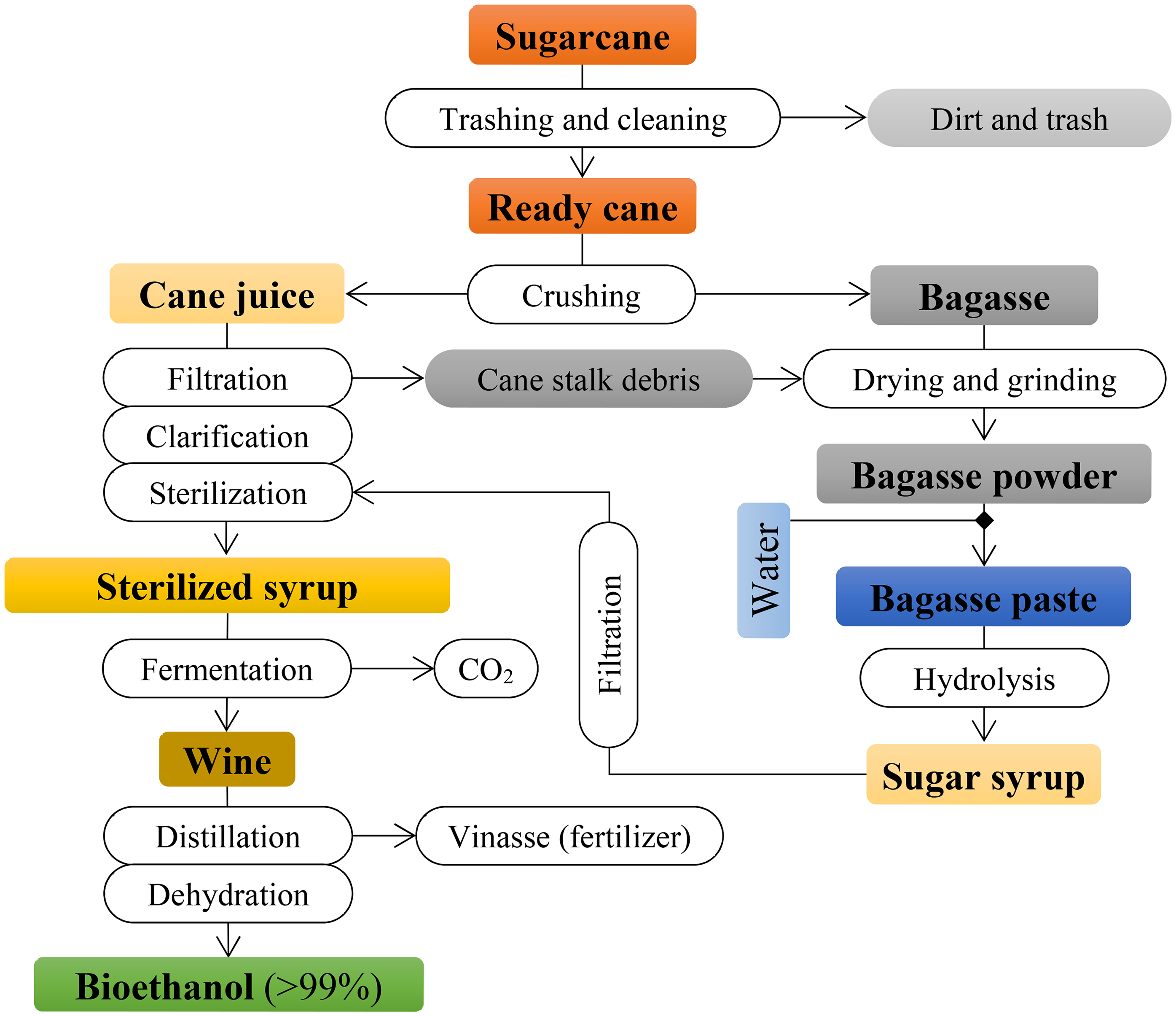
Flow diagram of bioethanol production from sugarcane juice (1st generation) and bagasse (2nd generation).
Data collection on bioethanol production
Data on anhydrous bioethanol (>99.5%) produced from sugarcane juice and bagasse was measured separately using a measuring cylinder. Juice yield and bagasse yield of every sugarcane variety was estimated as outlined in Table S4 which were then utilized to calculate the net anhydrous bioethanol yield in L ton−1 cane. Bioethanol yield (L ha−1) for every variety from both juice and bagasse was then calculated separately by adjusting with their respective cane yields.
Data collection and calculation for tentative sugar and molasses yield
Crystalline sugar and molasses production from every variety was extracted using the formula [i] and [ii] respectively. While calculating; the crystalline sugar recovery, molasses sugar recovery, and sugar content in molasses were considered 80%, 20%, and 35% respectively. Crystalline sugar and molasses yield (ton ha−1) for every variety was then calculated by adjusting with their respective cane yields.


Calculations for tentative cost benefit analysis
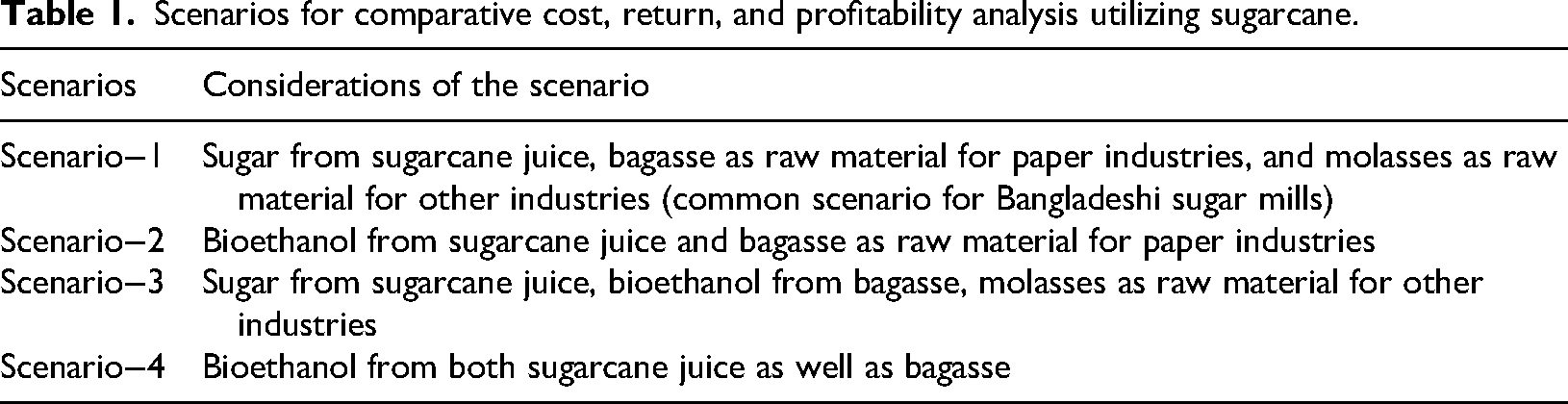
The sugar mills existing in Bangladesh were established quite a long-time ago and thus the fixed cost seemed less relatable to the present. Bangladesh also lacks sugarcane-based bioethanol producing plant; hence no national cost data were available. To overcome the constrains, industry level costs (fixed cost, operational cost, and cost per unit output) incurred for crystalline sugar production and bioethanol production from sugarcane juice and bagasse was procured from recent literatures (Table S5) to provide a tentative comparative economic overview. Four scenarios as outlined in Table 1 were considered for the cost, return, and BCR analysis using the average varietal performance data. Scenario−1 remained the most common scenario for Bangladeshi sugar mills; whereas, scenario−2, 3, and 4 were hypothesized for possible alternative utilities. Market price at the producer level was considered for calculating the return (Table S6). Under different scenarios, associated costs and returns from the outputs were calculated as mentioned in Table S7 and presented as “USD ton−1 cane”. Profit and BCR were calculated using the formula [iii] and [iv] respectively. All prices mentioned have been converted and presented as United States Dollar (USD) equivalent using the average USD rate of the year 2023 [1 Bangladeshi Taka (BDT) = 0.009396 USD].


Scenarios for comparative cost, return, and profitability analysis utilizing sugarcane.
Statistical analysis of the experimental data
The obtained data were subjected to analysis of variance (ANOVA) using Statistix10 software program. Post-hoc analysis for mean differentiation was conducted via Tukey's honest significant difference test. In all analyses, differences were considered significant at P < 0.05.
Results
Ethanol import status of Bangladesh from foreign traders
Ethanol holds an immense importance for Bangladesh as well as the world due to its multipurpose utilities (i.e., chemical solvent, raw material for pharmaceuticals, irreplaceable chemical for analytical laboratories, energy source as fuel etc.). Bangladesh lacks adequate ethanol production and purification plant within the country; hence, she relies on import to meet up her ethanol demand. According to BBS, on an average Bangladesh had been importing about 0.5 million L of ethanol [HS code 22071000 (ethanol of ≥80% alcoholic strength)] as well as more than 5000 L of ethanol [HS code 22072000 (ethanol of <80% alcoholic strength)] per year between the fiscal year 2017–2023 (Table 2). The substantial ethanol import of Bangladesh is the analytical grade ethanol of HS code 22071000 which costed her about 1.3 million USD per year (Table 2). In total 15 countries were the source of ethanol supply to Bangladesh during this period (2017–2023) among which Vietnam, China, European Union, Pakistan, Germany, South Africa, and United Kingdom were the major traders (Table S3). Vietnam, China, and European Union were chronologically the topmost exporters accounted for 72% of the total ethanol imports of Bangladesh. Pakistan, Germany, South Africa, and United Kingdom altogether accounted for 26% and rest other countries accounted for only 2% of the total ethanol imports of Bangladesh (Figure 2).
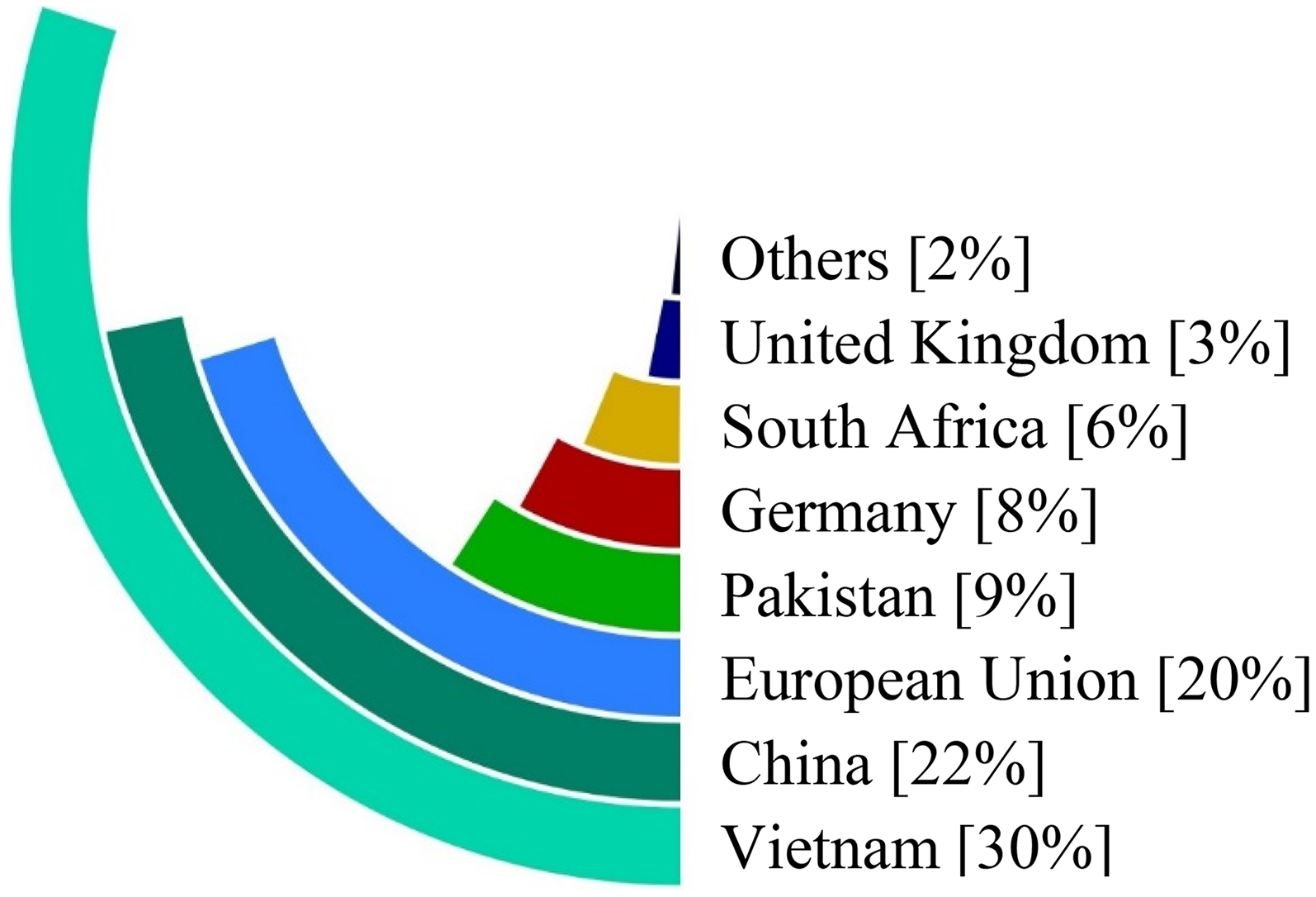
Countries supplying ethanol to Bangladesh. Presented data covers ethanol [HS code 22071000 (Undenatured ethanol of 80% alcoholic strength or higher)] import between 2017–2023. [Data source: Bangladesh Trade Statistics of Alcohol Solution Exports to Bangladesh (2017–2023). World Integrated Trade Solution (WITS), The World Bank. (Table S1)].
Annual ethanol imports by Bangladesh within the timeframe of 2017–2023.
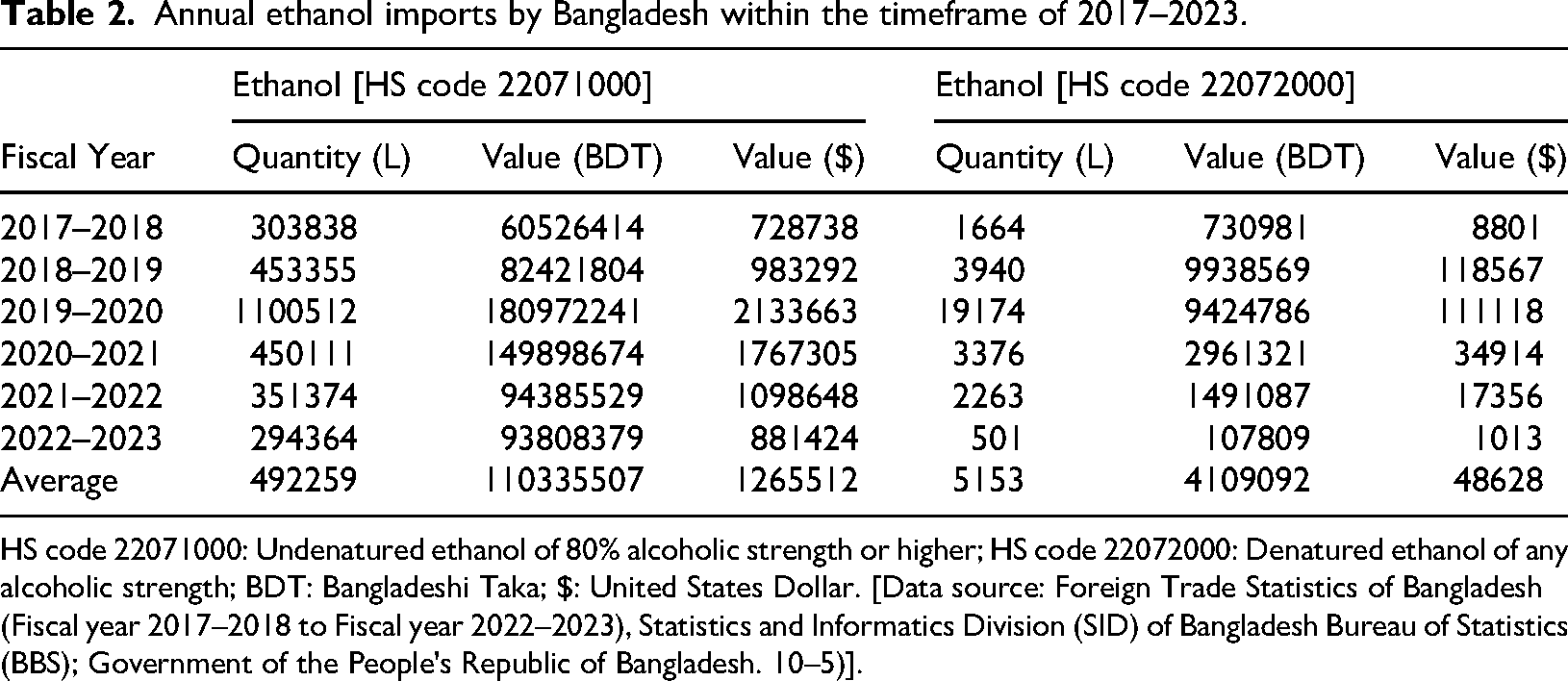
HS code 22071000: Undenatured ethanol of 80% alcoholic strength or higher; HS code 22072000: Denatured ethanol of any alcoholic strength; BDT: Bangladeshi Taka; $: United States Dollar. [Data source: Foreign Trade Statistics of Bangladesh (Fiscal year 2017–2018 to Fiscal year 2022–2023), Statistics and Informatics Division (SID) of Bangladesh Bureau of Statistics (BBS); Government of the People's Republic of Bangladesh. 10–5)].
Current status of sugarcane cropping in Bangladesh
Sugarcane is cultivated throughout the country mostly for crystalline sugar and jaggary production purpose. Several sugarcane varieties are also grown for raw consumption purpose known as chewing cane. According to the current statistics of BBS, sugarcane cultivation is spread-out thorough the whole Bangladesh. As per 2023, about 0.18 million acres of land were under sugarcane cultivation producing about 3 million metric tons of sugarcane (Figure 3). Rajshahi division exceled in sugarcane both in terms of area of cultivation as well as production compared to other division. On the contrary sugarcane cultivation area was the lowest in Sylhet division but lowest production of sugarcane was observed in Barishal division (Figure 3). Due to the widespread cultivation area and existing popularity of sugarcane it shows good potential as a raw material for bioethanol production.
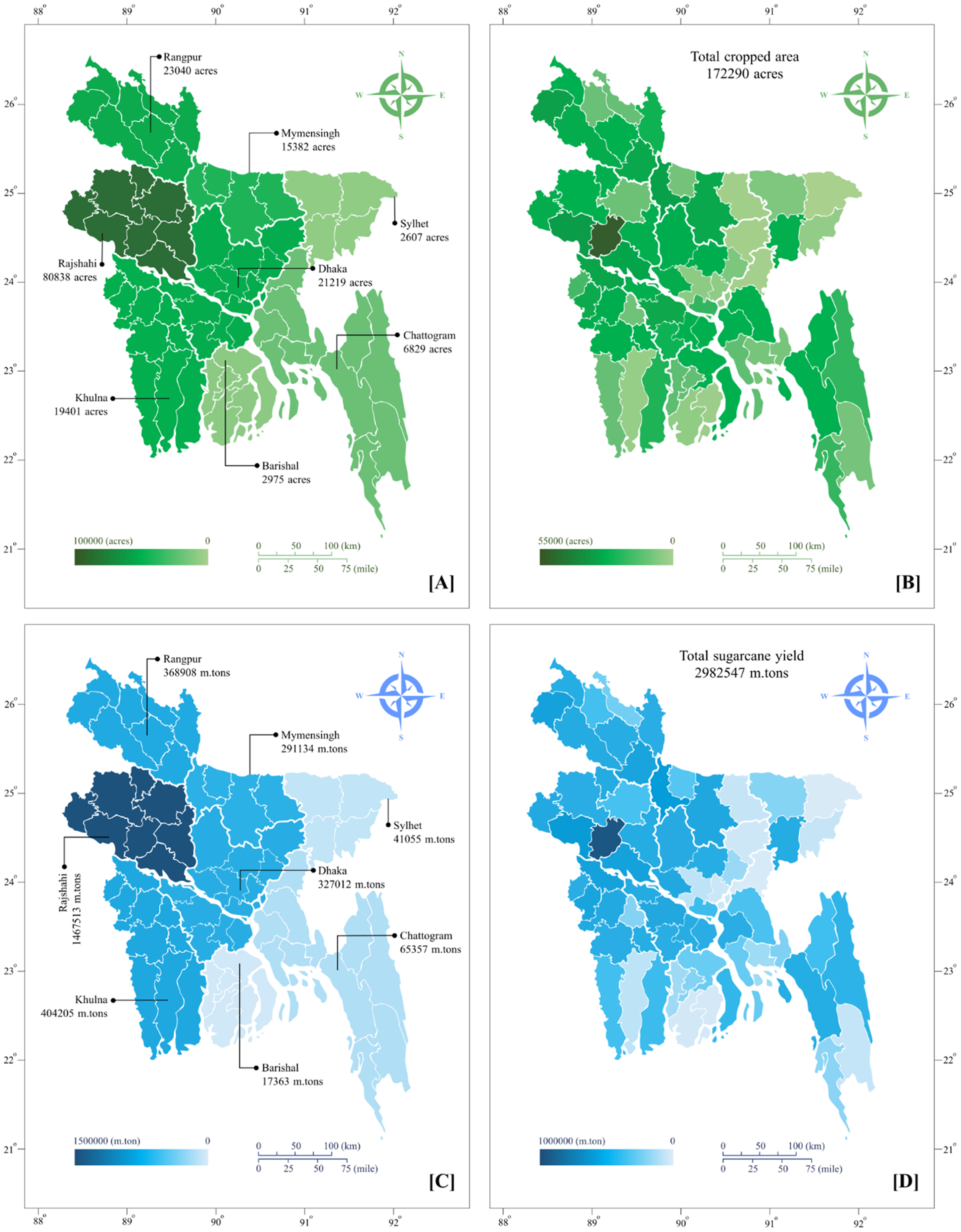
Total cropping area and annual production of sugarcane in Bangladesh during fiscal year 2022 − 2023. [A] Area under sugarcane cultivation at division level. [B] Area under sugarcane cultivation at district level. [C] Sugarcane yield at division level. [D] Sugarcane yield at district level. Inside the maps, thick white lines indicate divisional boundaries and thin white lines indicate district boundaries. m.tons: metric tons. [Data source: Yearbook of Agricultural Statistics-2023 (35th Series), Statistics and Informatics Division (SID) of Bangladesh Bureau of Statistics (BBS); Government of the People's Republic of Bangladesh. BBS (2024b)].
Bioethanol production potentiality of Bangladeshi sugarcane varieties
Efforts of BSRI and widespread adaptibility of sugarcane in different agro-ecological zones indicated considerable diversity in Bangladeshi sugarcane genotypes. In our current study we have evaluated 34 Bangladeshi sugarcane varieties and compared them with two Brazilian sugarcane variety (CTC9001 and CTC9002) currently utilized for bioethanol production. The comparative traits of the varieties have been outlined in Table S1. Based on the tested traits the verities were classified into cluster groups via hierarchical clustering where varieties belonging to same cluster were close to each other and varieties belonging to different cluster were distinct to each other. Four major clusters were obtained among which eight genotypes of cluster I (Isd 16, Isd 35, Isd 36, Isd 37, BSRI akh 45, and BSRI Akh 48) showed similarity with both of the Brazilian variety CTC9001 and CTC9002 (Figure 4). From the bi-color heatmap it was also evident that the performance of the above-mentioned Bangladeshi sugarcane varieties on the tested traits were also quite similar to that of CTC9001 and CTC9002 (Figure 4). Hence these varieties were selected for laboratory evaluation of their potential for bioethanol production. The genotypes BSRI Akh 42 and BSRI Akh 47 were the most distant to the genotypes CTC9001 and CTC9002; however, their potential and actual yield performance was the highest among all tested genotypes (Figure 4) because of which they were also included for laboratory experimentation.
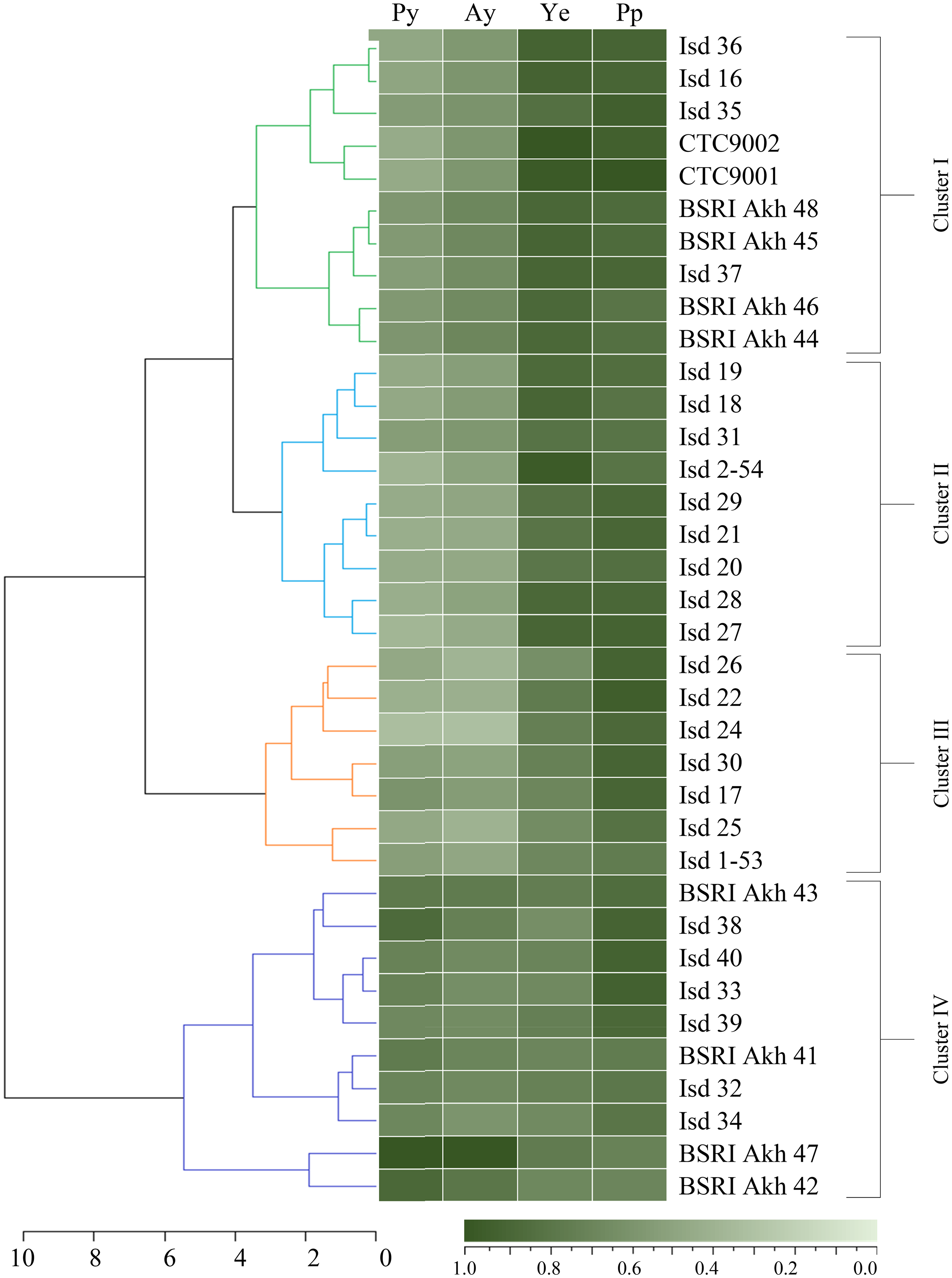
Hierarchical clustering of sugarcane genotypes based on their yield attributes and sugar content. Genotypes belonging to the same cluster shares closeness to each other and genotypes belonging to different clusters are distant to each other. Bi-colored heatmap indicates relative performance of the genotypes for the tested traits. Py-potential yield; Ay-actual yield; Ye-yield efficiency; Pp-polarization percentage.
Potential of Bangladeshi sugarcane varieties in sugar industry
Crystalline sugar production is the main industrial utility of sugarcane in Bangladesh. As sugar mills use multiple sugarcane varieties in a composite manner to produce sugar; production from individual genotype were not available. Thus, we had to rely on manual calculation of the sugar and molasses yield of individual genotypes. Among the ten selected varieties Isd 35 had the highest crystalline sugar (97.8 kg) and molasses (69.8 kg) production potential per ton cane and BSRI Akh 44 had the lowest crystalline sugar (82.5 kg) and molasses (58.9 kg) production potential per ton cane. Bagasse yield per ton cane was quite similar for all the varieties although BSRI Akh 47 and Isd 36 showed the highest (169.2 kg) and lowest (139.2 kg) bagasse yield respectively, per ton cane (Table 3). On the other hand, due to the variability in cane yield per unit area, total crystalline sugar and molasses production potential of the varieties significantly varied. The variety BSRI Akh 47 showed the highest potential for crystalline sugar (11.44 ton), molasses (8.17 ton), and bagasse (26.2 ton) production per ha land area and the variety Isd 36 showed the lowest potential for crystalline sugar (8.33 ton), molasses (5.95 ton), and bagasse (12.4 ton) production per ha land area (Table 3). On average Bangladeshi sugarcane varieties could yield 86.79 kg crystalline sugar, 61.99 kg molasses, and 153.4 kg bagasse production per ton cane which corresponded to 9.18 ton crystalline sugar, 6.56 ton molasses, and 16.55 ton bagasse per ha land area (Table 3).
Crystaline sugar, molasses, and bagasse yield of Bangladeshi sugarcane genotypes.
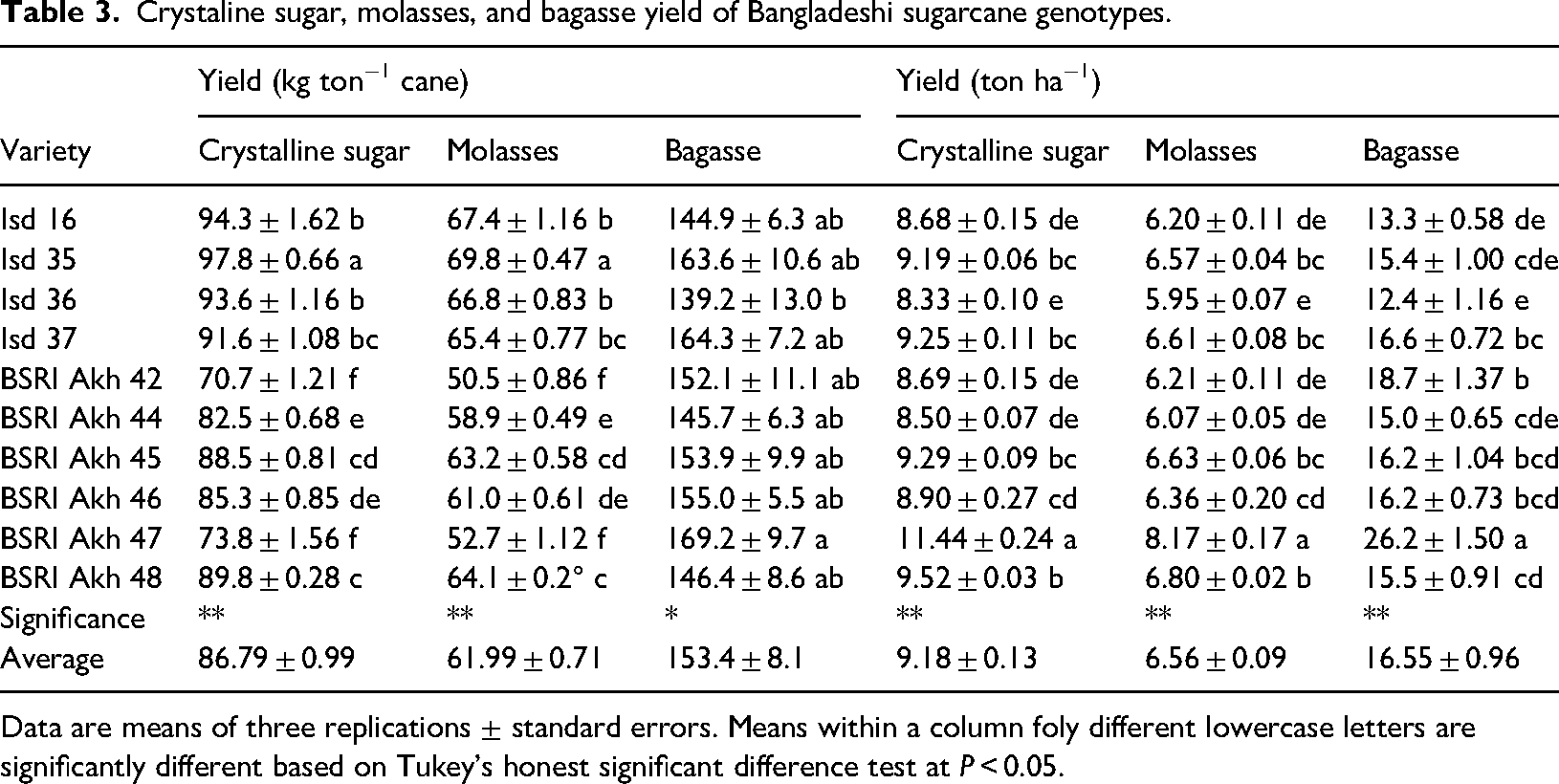
Data are means of three replications ± standard errors. Means within a column foly different lowercase letters are significantly different based on Tukey’s honest significant difference test at P < 0.05.
Potential of Bangladeshi sugarcane varieties for bioethanol production
In our study we separately explored the extent of bioethanol (>99.5%) production from both juice and bagasse of Bangladeshi sugarcane varieties. Individually the varieties showed significant variations in bioethanol production especially from juice. The variety Isd 35 had the highest juice bioethanol yield (49.14 L) and the variety BSRI Akh 47 had the lowest juice bioethanol yield (33.39 L) per ton cane. On the other hand, the variety Isd 37 had the highest bagasse bioethanol yield (23.81 L) and the variety Isd 36 had the lowest bagasse bioethanol yield (17.87 L) per ton cane. Total bioethanol yield per ton cane was highest for the variety Isd 35 (69.87) and lowest for the variety BSRI Akh 47 (54.99 L) (Table 4). We have also noticed that the bagasse bioethanol yield per ton cane was fairly similar for most of the sugarcane varieties (Table 4). Significant variations in bioethanol production per unit land area were also observed for the sugarcane varieties due to their differential yield capacity. BSRI Akh 47 was the highest performer of juice bioethanol yield (5.18 thousand L), bagasse bioethanol yield (3.35 thousand L) as well as total bioethanol yield (8.25 thousand L) per ha land area; whereas, Isd 36 was the lowest performer of juice bioethanol yield (3.92 thousand L), bagasse bioethanol yield (1.59 thousand L) as well as total bioethanol yield (5.52 thousand L) per ha land area (Table 5). On average the varieties could produce 41.50 L and 20.85 L bioethanol per ton cane which corresponded to 4.38 thousand L and 2.24 thousand L bioethanol per ha land area (Tables 4 and 5).
Bioethanol yields of Bangladeshi sugarcane varieties per ton cane.
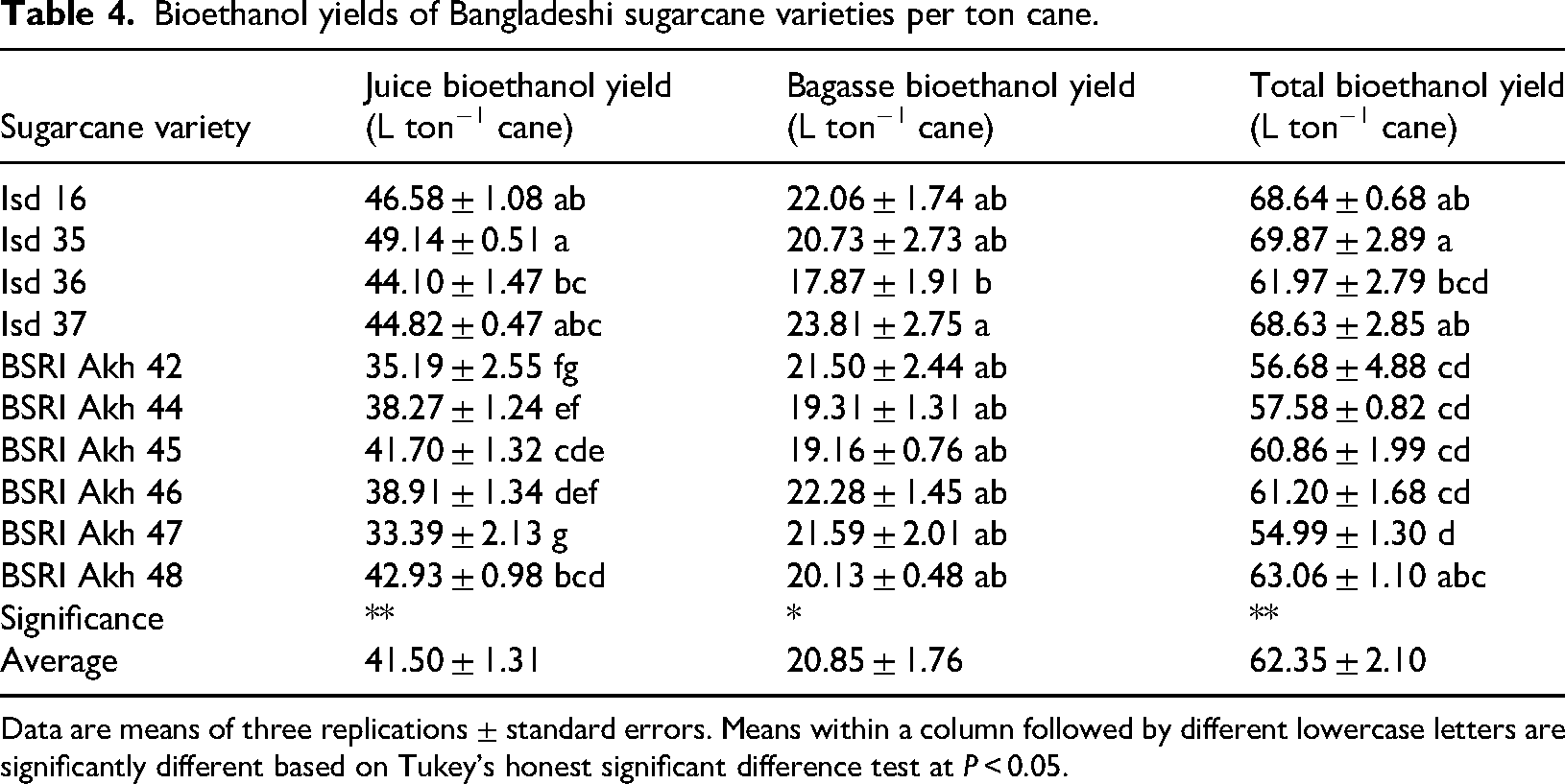
Data are means of three replications ± standard errors. Means within a column followed by different lowercase letters are significantly different based on Tukey’s honest significant difference test at P < 0.05.
Bioethanol yields of Bangladeshi sugarcane varieties per hectare land area.
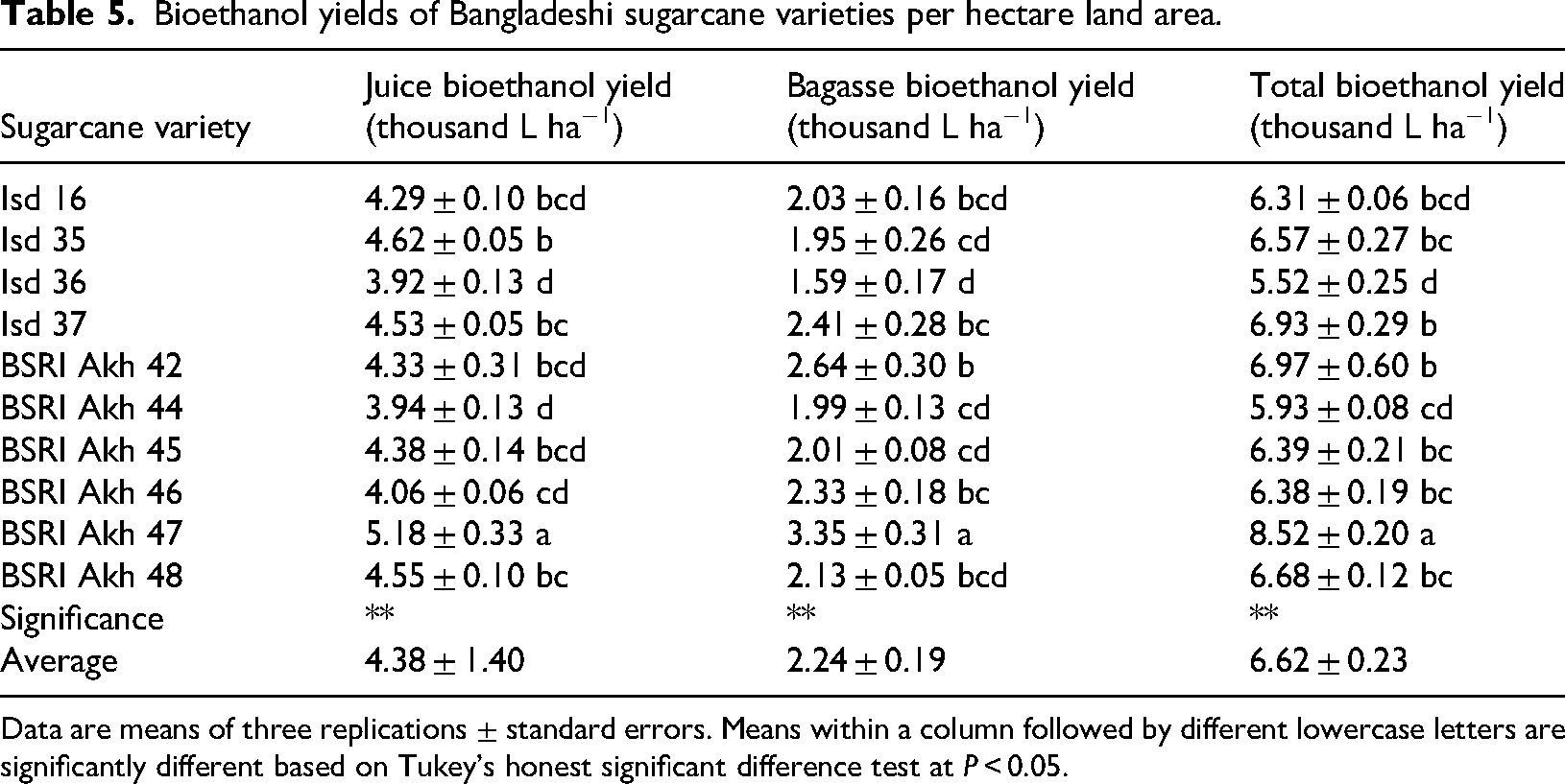
Data are means of three replications ± standard errors. Means within a column followed by different lowercase letters are significantly different based on Tukey’s honest significant difference test at P < 0.05.
Comparative profitability from differential utility of sugarcane
Sugarcane is a crop of differential industrial utility. The juice can be utilized for crystalline sugar production (byproduct is molasses) as well as 1st generation bioethanol production. The resultant bagasse can be used as raw material for paper industries, 2nd generation bioethanol production, organic fertilizer, or as burning fossil. Considering the common utilities the cost, return, and profitability from sugarcane were assessed in four scenarios as mentioned in Table 1. Among all scenarios, scenario−2 was the least costly and scenario−3 was the costliest. Highest return and profit were observed for scenario−4 whereas least return and profit were observed for scenario−1. In terms of BCR, scenario−2 and scenario−4 were chronologically the highest and the second highest; whereas, scenario−1 had the lowest BCR (Table 6). We also noticed that scenario−3 was significantly more profit generating than scenario−1 even though its associated cost were relatively higher than scenario−1 (Table 6).
Tentative cost, return, profit, and benefit cost ratio (BCR) of sugarcane in different utilization purpose scenarios.
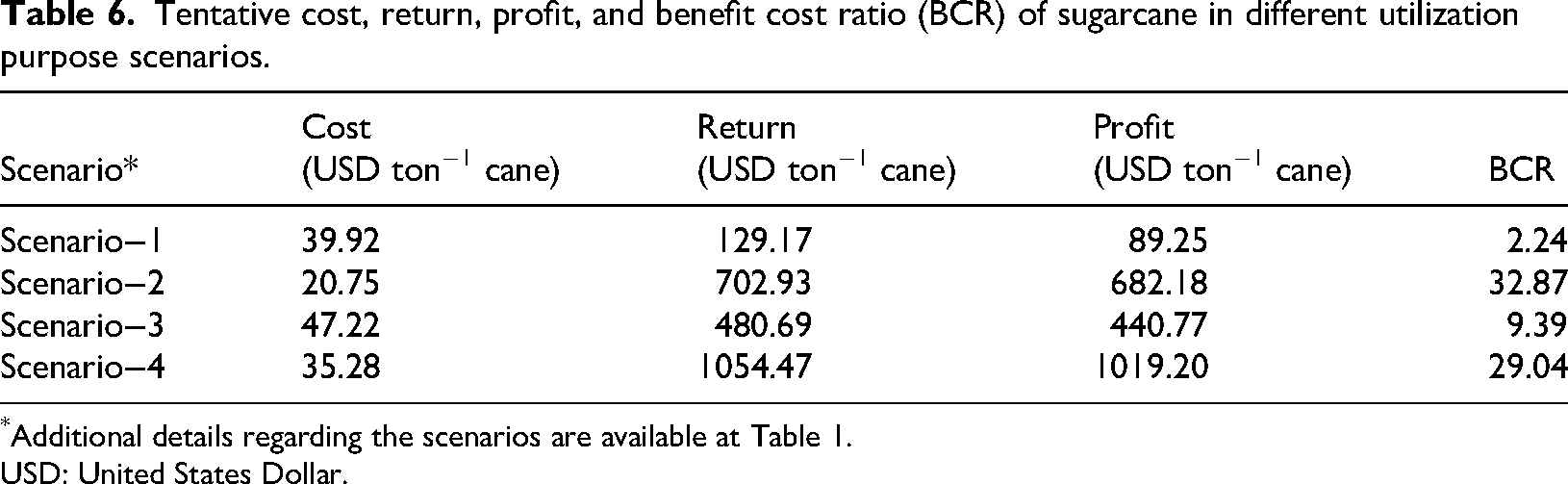
Additional details regarding the scenarios are available at Table 1. USD: United States Dollar.
Discussion
Productivity in different fields as well as progression of human civilization is dependent on the accessibility of energy. Since 1760s, fossil fuel's demand as the prime energy source is not only on the rise but also being proven environmentally hazardous due to massive rate of GHG emission (Mahbubul and Himan, 2023; Raud et al., 2019) resulting in global warming and climate change (Mahmud et al., 2022; Samset et al., 2023). Needless to say, transitioning towards an environment friendly alternative sustainable energy source produced via recycling of available natural resources is one of the global priorities. Bioethanol from fermentable biomass hits the sweet spot due to its multipurpose utility and eco-friendly nature of production (Mahmud et al., 2022; Malik, 2023; Petersen et al., 2018; Ramchuran et al., 2023; Zabed et al., 2016). Bangladesh annually utilizes about 0.5 million L of ethanol (>80% alcoholic strength) within the country (Table 2) in many sectors including research laboratories, pharmaceutical, chemical, and cosmetics industries. Till recently Bangladesh relies on import to meet up with the demand (BBS, 2024a) but there is potential of Bangladesh for internal production of ethanol from biomass.
Sugarcane is cultivated in Bangladesh for crystalline sugar and jaggary production which is one of the largest agricultural processing industries of the country (Rahman et al., 2016). However, owing to the habitual changes in modern population against white crystalline sugar, industry is facing quite a challenge. Increasing cardiovascular as well as general health risks associated with sugar like diabetes and obesity concerns are widespread nowadays (Al Hasan et al., 2019; Sonestedt et al., 2012; Vancells Lujan et al., 2021; Waid et al., 2018). Moreover, expansion of rice cropping area and increasing cropping intensity via integrated, mixed, or four season cropping exerts a big pressure on sugarcane (Gupta et al., 2023; Hossain et al., 2014; Saif et al., 2024) as sugarcane is a yearlong crop and does not fit well with differential cropping patterns that could offer competitive flexibility and economic benefits (Hasan et al., 2018). Due to such complication's sugarcane cultivation is being pushed to those lands where other crops are seldom grown as evident by gradually decreasing cropping area of sugarcane over the past several years (BBS, 2024b). Furthermore, sugarcane is a high input and care requiring crop which is not being given proper emphasis and thus the national average sugarcane yield has fallen as low as 47 tons ha−1 (BBS, 2024b) even though the average actual yield of Bangladeshi sugarcane varieties was reported no less than 90 tons ha−1 (Table S1). Beyond these adversaries, Bangladesh still secures about 70 thousand hectares of sugarcane cultivation lands producing about 3 million metric tons of sugarcane (Figure 3). In our current study, we have observed about 41 to 62 L of average bioethanol production potential of Bangladeshi sugarcane genotypes from a single ton of cane (Table 4). Just multiplying our obtained value with national average annual sugarcane yield indicated that, if only a portion of the produced sugarcane should be industrialized for bioethanol, it could check the current ethanol import rather open doors for export trade. Existing instances of success in the bioethanol industry are already within Asia. China has recently become the 4th largest global bioethanol producer (Huang et al., 2020); Thailand, Pakistan, and India have also begun to race in the same track and successfully producing good amount of bioethanol every year so much so that they have begun exporting to nearby countries like Bangladesh (Table S2).
In our current study, we used available secondary experimental data to compare Bangladeshi sugarcane varieties with modern Brazilian sugarcane varieties widely used for bioethanol production. Our results were exciting as we have identified eight varieties similarly potent as the Brazilian variety CTC9001 and CTC9002 both in terms of yield and sugar content (Figure 4). Moreover, the potential and actual yielding capacity of our varieties seemed far superior to those of Brazilian varieties although the polarization percentage was slightly lower (Table S1). Then, we have conducted a laboratory trial to examine the actual amount of bioethanol production potential of ten Bangladeshi sugarcane varieties and found that on average 41.50 L of 1st generation bioethanol and 20.85 L of 2nd generation bioethanol can be produced from a single ton cane (Table 4). Brazilian sugarcane varieties could generally produce between 60–70 L 1st generation and 25–30 L 2nd generation bioethanol per ton cane (De Oliveira Gonçalves et al., 2023; Karp et al., 2021). This margin is quite high to achieve for Bangladeshi varieties because of the comparatively lower sugar content (% polarization) of compared to the Brazilian ones (Table S1). The gap in bioethanol per ton cane between Bangladeshi and Brazilian sugarcane varieties can easily be minimized as the potential yield per unit area is much higher for Bangladeshi sugarcane varieties (Table S1). However, it should also be noted that, obtaining high yield of sugarcane would demand intensive care and management (Bokhtiar and Sakurai, 2007; Rahman et al., 2016). During our study, sugarcane variety Isd 35 yielded about 49 L and variety BSRI Akh 47 yielded about 33 L bioethanol per ton cane due to their big difference in cane juice % polarization. However, in total 4620 L bioethanol can be obtained from Isd 35, whereas 5180 L of bioethanol can be obtained from BSRI Akh 47 if cultivated in 1 hectare land (Table 5). The reason behind this is the extensively superior yield of BSRI Akh 47 over Isd 35 (Table S1). Bioethanol production of the sugarcane bagasse also had the similar phenomena (Tables 4 and 5) although it remained highly dependent on the varietal variability of lignocellulosic material contents in the bagasse (Dibazar et al., 2024; Nogueira et al., 2023; Santoyo-Castelazo et al., 2023). High cane yield of Bangladeshi sugarcane varieties might reduce the existing gap of low cane sugar content; however, it should also be kept in mind that, higher amount of cane handling would demand more time and operational cost. Breeding sugarcane for higher sugar content could be a feasible future research avenue to compete with global standards.
Bioethanol production from sugarcane is eco-friendly in nature (Niphadkar et al., 2018; Dibazar et al., 2024; Merritt and Barragán-Ocaña, 2023) and in terms of economic returns, bioethanol is beneficial compared to sugar from sugarcane which has been highlighted in many studies (Joseph et al., 2023; Tulashie et al., 2023). Our indications were also in parallel. Production of bioethanol from only cane juice, only bagasse, as well as both juice and bagasse showed a tentative BCR of 32.87, 9.39, and 29.04 respectively; whereas crystalline sugar production showed a BCR of only 2.24 (Table 6). However, this should also be noted that sugar industry is also a valuable and necessary industry intertwined with the people, tradition, and history of Bangladesh (Rahman et al., 2016). Bioethanol production within the country would be a necessary and time demanding step to achieve higher economic heights in the global economy but it should not come at the cost of existing sugar industry.
Conclusion
Transitioning towards bioethanol production from sugarcane in Bangladesh offers a promising option as sugarcane is facing a good competition from other major crops as well as the sugar industries are facing challenge due to less acceptance of crystaline sugar in public diet. Bangladesh currently imports ethanol to meet national demand, but there is significant potential for self-sufficiency and even export, considering the country's substantial sugarcane cultivation areas and promising varieties. Bangladeshi sugarcane has shown good potential for bioethanol production even comparable to modern Brazilian cultivars. However, challenges persist, primarily due to lower sugar content in Bangladeshi varieties. From economic perspective, bioethanol production has more appealing benefit cost ratio than crystalline sugar offering a great choice to the sugar industries for shifting. Nevertheless, the sugar industry is a necessary one harboring both economical, cultural as well as historical significance for the country. Therefore, an integrated and balanced approach is required for fostering bioethanol production. Boethanol industry should not undermine the sugar industry rather complement it via diversification of the economic utility of sugarcane and increasing the country's resilience in the competitive global economy.
Supplemental Material
sj-docx-1-eea-10.1177_01445987251372966 - Supplemental material for Prospects of green energy transition in Bangladesh via sugarcane-based bioethanol: A comprehensive study of genotypic potential and tentative profitability
Supplemental material, sj-docx-1-eea-10.1177_01445987251372966 for Prospects of green energy transition in Bangladesh via sugarcane-based bioethanol: A comprehensive study of genotypic potential and tentative profitability by Sheikh Faruk Ahmed, Yumna Javaid Khan, Foyshal Mehmood, Tasfiqure Amin Apon, Md. Ashfikar Rahman Doel, Himadri Prosad Roy and Mohammed Mohi-Ud-Din in Energy Exploration & Exploitation
Footnotes
Acknowledgment
The authors would like to acknowledge the gracious help and hospitality of Md. Obydullah Sheikh, Scientific Officer, Chuadanga Sub-station, Bangladesh Sugarcrop Research Institute (BSRI) during on-site cane collection trips for the current study.
ORCID iDs

Credit author statement
Funding
The authors received no financial support for the research, authorship, and/or publication of this article.
Declaration of conflicting interests
The authors declared no potential conflicts of interest with respect to the research, authorship, and/or publication of this article.
Data availability
The datasets used and/or analyzed during the current study have been made available in and with the manuscript as supplementary file.
Supplemental material
Supplemental material for this article is available online.
References
Supplementary Material
Please find the following supplemental material available below.
For Open Access articles published under a Creative Commons License, all supplemental material carries the same license as the article it is associated with.
For non-Open Access articles published, all supplemental material carries a non-exclusive license, and permission requests for re-use of supplemental material or any part of supplemental material shall be sent directly to the copyright owner as specified in the copyright notice associated with the article.
