




Abstract
At the worldwide level, the hydroelectricity corresponds to 54% of all renewable electricity, 15% of total electricity generated and only 3% of all total primary energy. In Brazil, hydropower produces 74% of all renewable electricity, 57% of electrical energy and 11% of all total primary energy (EPE, 2023). As all over the world, the construction and operation of large artificial reservoirs until the mid-twentieth century was seen in Brazil by government and by the general public as important infrastructure investment for economic development and improvement of well-being. Nowdays, investments in hydropower plants are re-gaining importance given not only its ability in supporting the transition of the electricity grid to get rid of dependence on fossil fuels but also in the provision of numerous other services. In particular, Brazilian hydropower plants contribute to multiple water resources management services such as flood and drought control, groundwater stabilization, water quality management, river navigation, irrigation, leisure and tourism and aquaculture around the country. The article discusses the multiple services provided to society by hydroelectric power plants within the context of sustainability in Brazil.
Introduction
The world is undergoing an energy transition driven by environmental changes in which non-renewable and polluting energy sources are being replaced by renewable and low-carbon sources. In this context, hydropower participation in national electric matrixes in countries with highest hydropower potential has re-gained importance. While in the global electricity matrix, hydropower has a share of 16.6%, hydroelectricity in Brazil corresponded to 56.8% in 2021. In Latin America, the share of the hydroelectric plant is 45% in electricity generation (EPE, 2023).
The construction and operation of large artificial reservoirs, a classic instrument for managing water resources, until most of twentieth century was seen by governments, international organizations and the general public as important infrastructure investments for economic development and improve of general well-being of populations.
During the twentieth century, hydropower plants has been developed in many regions of the world as by-product or else joint-venture with large artificial reservoirs developments aiming water resources services. Otherwise, in other world regions, the opposite situation occurred, with water resources services being added to large hydropower developments (IEA, 2012).
However, with the increasing pressure from society for environmental issues in the early 1970s, a movement began to question the environmental viability of large dam projects in various parts of the world, included in Brazil. This movement was not restricted to large artificial reservoirs, otherwise the general adverse socio-environmental impacts of development led to the emergence of government regulations to control human activities. In parallel, multilateral banks, private financial institutions and the industrial sectors themselves began to adopt socio-environmental criteria in their decision-making processes.
In Brazil, social movements have positioned themselves very critically against hydroelectric expansion resulting in significant reduction of hydropower role in the Brazilian energy matrix from 97% of participation during the 1970s to the actual 60%.
In recent years, investments in large dams, in particular those aimed at the multiple use of water, positioning themselves as alternatives for both mitigation and adaptation to climate change, have provoked a renewal of interest in these projects, which are once again recognized as sustainable investments and linked to the green and low-carbon economy. Market institutions are once again intensifying financing for hydroelectric projects, now in a new context of standards and safeguards. The need for prevention, mitigation and compensation measures for associated socio-environmental impacts discussed at the end of the last century was not forgotten; however, a new concept, the adaptation and resilience of dams to climate change, was added to the discussion.
This article presents a discussion of the multiple services provided to society by hydroelectric plants within the new context of sustainability of electric sector in Brazil taking into account the climate change and the ancillary services provided by hydropower.
The multiple services of hydropower plants in Brazil
In general, the implementation of dams involves conflicts and negative social and environmental impacts. For example in São Francisco River Basin at northwest region of the country a study (Mendes et all, 2015) shown that consumptive uses of water granted by basin water committee imposes a mean loss in hydropower generation during the critical period of hydrology may reach 1,201 MW. In terms of energy is equal a loosing of 10,520 GWh/year. However, hydroelectricity has several advantages when compared to other sources of electricity generation. These advantages include a high level of reliability, proven technology, high efficiency, low operating and maintenance costs and the flexibility to easily adjust to changes in load.
Additionally, electricity generation in hydroelectric plants produces low amounts of waste and does not contribute to the worsening of local air quality or acid rain. As several hydropower plants incorporate a reservoir, they can provide other services to the community in the sectors of sanitation, flood control, river transport and recreation.
Next, discussions within the context of climate change on the main services provided by hydropower plants in Brazil besides electric energy generation are deepened.
Low-cost energy supply
The costs associated with the installation of hydroelectric projects include those associated with civil engineering works (dam, tunnels, powerhouse, etc.), electromechanical equipment, access roads, construction support facilities, transmission lines and work management. Also included are costs of planning and designing, assessment of technical and environmental feasibility, licenses, environmental impact analysis, impact mitigation, resettlements and maintenance of water quality.
The relationship between the costs of electromechanical equipment and civil works is strongly influenced by the project, for example, this relationship is high for small projects, low head and run-of-river. For projects with large reservoirs, this ratio is low (IEA, 2012).
Site location also influencing the cost of the project due to the difficulty of accessing the site, the cost of labor and the price of materials (cement, steel, etc.) (Bogaart, 2023).
According to IEA publication, the cost associated with the installation of hydroelectric plants varies between 1,050 to 7,650 US$/kW for large projects and 1,300 to 8,000 US$/kW for small projects. In the case of reversible pumping plants, these costs range from 500 to 2,000 US$/kW (IEA, 2012).
According to planning studies by the Brazilian government (EPE, 2022) of the eight hydroelectric plants planned to be built between 2028 and 2031, installation costs vary between 1,608 to 2,887 US$/kW. Other instalation costs of other electricity generation technologies in Brazil Nuclear 5,000 US$/kW, Small Hydropwer 700 to 2,300 US$/kW, 720 to 1,060 US$/kW, Wind offshore 1,960 to 3,720 US$/kW, Wind onshore 640 to 1,100 US$/kW, Coal 1,600 to 2,700 US$/kW, Natural Gas 720 to 1,060 US$/kW, Photovoltaics 500 to 1,000 US$/kW (EPE, 2022).
On the other hand, the operation and maintenance costs of hydroelectric power plants, without considering major renovations or upgrades, are in the range of 2 US$/MWh to 5 US$/MWh (IEA, 2012).
The breakdown of the cost of electricity produced by hydropower plants also depends on the plant's capacity factor (ratio between electricity production and installed capacity), the cost of capital financing, the construction period and the useful life of the plant (IEA, 2012).
The capacity factor of a hydropower plant depends on its design and the role for which it has been optimized. In the case of run-of-river plants, their capacity factor is influenced by water availability, whereas in plants with a regularization reservoir, this dependence is minimized. The average global value for the capacity factor of hydropower plants is around 0.36 (IEA, 2012).
In 2022, the total world hydropower installed capacity 1397 GW produced 4408 TWh, and very few hydropower systems are able to obtain capacity factors greater than 50%. In this aspect, the Brazilian large-scale hydropower system excels with yearly capacity factors fluctuating around 0.54.
Large hydroelectric plants have an electricity cost of 20 US$/MWh, in the most efficient cases and their average value is around 67 US$/MWh, whereas smaller plants, despite having approximately the same average electricity cost, individual electricity costs can reach 227 US$/MWh (IEA, 2012).
Table 1 taken from (IEA, 2012) presents a comparison of the costs of electricity produced by different sources, where one can observe the high competitiveness of hydroelectric plants in relation to other sources.
Maximum and minimum values of the cost of electricity produced by different sources.

Source: IEA, 2012.
It is important to note that in these estimates, the entire costs of implementation and operation/maintenance are associated with energy production, despite the many other users of this infrastructure (reservoir) and benefits arising from its operation.
If these costs were shared by the other ‘users’, the competitiveness of hydroelectricity in relation to other technologies would be even greater.
Ancillary services
The operation of power systems requires that electricity generation and consumption are balanced in the electrical grid, in order to satisfy all the loads fed by the system. In general, the load of a real system presents a temporal evolution with random components superimposed on daily, weekly and annual cycles (IEA, 2012).
Electricity generation necessarily has to accompany the load in the right measure and at the exact moments in which it is requested by the load. In order to guarantee good service quality, it is also necessary that the frequency transmitted to the consumption units remains constant at its nominal value (usually at 60 Hz) and the voltage remains within tolerable limits.
The control of frequency and voltage in the electrical network leads to greater efficiency of electric motors and lighting systems, which, in turn, has a positive impact on the productivity and competitiveness of the economy and on social comfort. The services provided by these investments are generically referred to as ancillary services or network services.
More recently, given the growing share of intermittent renewable sources, greater use has been made of hydropower plants in balancing the grid, as discussed in the previous item. International Energy Agency (IEA, 2012) presents the following list of network services that hydroelectric power plants can provide:
Backup and Reserve with Quick Start and Stop Capability – Hydroelectric plants can start production (or stop) within a few minutes at any time (secondary control), meeting emergency demands, while the most efficient combustion turbines require half an hour and steam turbines several hours. Spinning Reserve – Hydroelectric plants can provide a circulating reserve or additional energy supply that can be made available in seconds, in case of unexpected load changes in the network (primary control), when operating below maximum power. Backup Start Capacity – Autonomous start-up is the process of putting the powerhouse back into operation without depending on the external power transmission network. Hydroelectric power plants are generally designated as the self-starting source to restore an entire electricity grid in case there is a complete outage. This avoids the need for extra investment in conventional backup plants, as is the case with large fossil fuel plants that require a set of smaller capacity plants as a backup start. Regulation and Frequency of Response – Hydroelectric plants help to maintain power frequency through continuous modulation of active power, and to meet power fluctuations required by the electrical grid. They are also capable of meeting fast slew rates, as well as a large ‘ramp’ amplitude, making it very efficient to keep up with extreme load variations. Reactive Power Compensation and Voltage Support – Hydroelectric power plants can control reactive power, and thus ensure that the power flow circulates from generation to load. It also helps maintain voltage by injecting or absorbing reactive power through synchronous or static compensation. The possibility of energy storage and the operational flexibility of hydropower plants allow them to act in providing services to the electrical grid and historically, in Brazil where there are plenty, they have played main role in providing most of these services (Melo and Zani, 2020). Brazilian hydropower plants provide automatic reactive power support as synchronous compensators, participate in special protection systems, primary and secondary frequency control, and in black-start capability. As a matter of fact, Brazilian hydropower plants ancillary services are remunerated for the costs incurred instead of the opportunity costs.
Environemntal Benefits of Hydropower Compared with Other Technolgies
Although the operation of hydropower plants is not directly associated with air pollutant emissions, the pollution issue must be addressed in the context of hydroelectricity. Hydropower plants do not emit the waste heat and gases-common with fossil-fuel driven facilities-which are major contributors to air pollution, global warming and acid rain.
Hydropower is renewable and use water to generate electricity. This way, it does not consume fossil natural resources such as natural gas, oil or coal thermoelectric plants. Furthermore, it presents a low risk of accidents and produces a minimum amount of waste when compared to conventional or nuclear thermoelectric plants. Manufacturing the concrete and steel in hydropower dams requires equipment that may produce emissions.
However, important impact of dam construction: the greenhouse gases generated by flooding organic matter by reservoir flooding. There are thre main pathways of gas fluxes from the hydropower reservoirs to the athmosphere: the diffusive flux from air-water interface, gas bubbling from bottom sediments from the reservoirs and degassing at water passes trhu turbines at the power house. The diffusive gas flux is associated with difference between gas partial pressure of each chemical substance considering the aquatic system and the atmosphere. Ebullition is a process where some chemical substances are not soluble in water and bubbles are formed in the sediment at the bottom of reservoir.
Ebullition is often the dominant pathway of CH4 release from aquatic ecosystems. Ebullition is episodic and irregular and depends mainly on hydrostatic pressure and other physical influences as currents, temperature gradients and the bathymetry of the water body.
At hydropower reservoirs, other pathways for gas emanation to the atmosphere are the degassing by water passing thru turbines of the powerhouse and the gas diffusion across river downstream dam.
On the negative side, hydroelectric plants can be barriers to the migration of fish species in the rivers in which they are built, promote forced resettlement of people due to flooding of the reservoir, promote vegetation suppression in the reservoir's accumulation basin, as well as promote migration of people to to areas where they are installed. For this, however, there are effective measures to mitigate these impacts.
Shifting the matrix of primary sources of electricity from fossil sources to substituting renewable sources, including hydroelectricity, is a guideline pursued by all countries seeking to reduce greenhouse gas (GHG) emissions from their energy systems.
The intensity of GHG emissions from hydroelectric power plants (gCO2eq/kWh) varies greatly depending on the region where the use is located and the layout of the plant's structures (Rosa et al., 1996) and (Santos, 2000).
The main factor determining the intensity of GHG emissions in hydroelectric plants is the (flooded area)/(energy output) ratio (Figure 1).
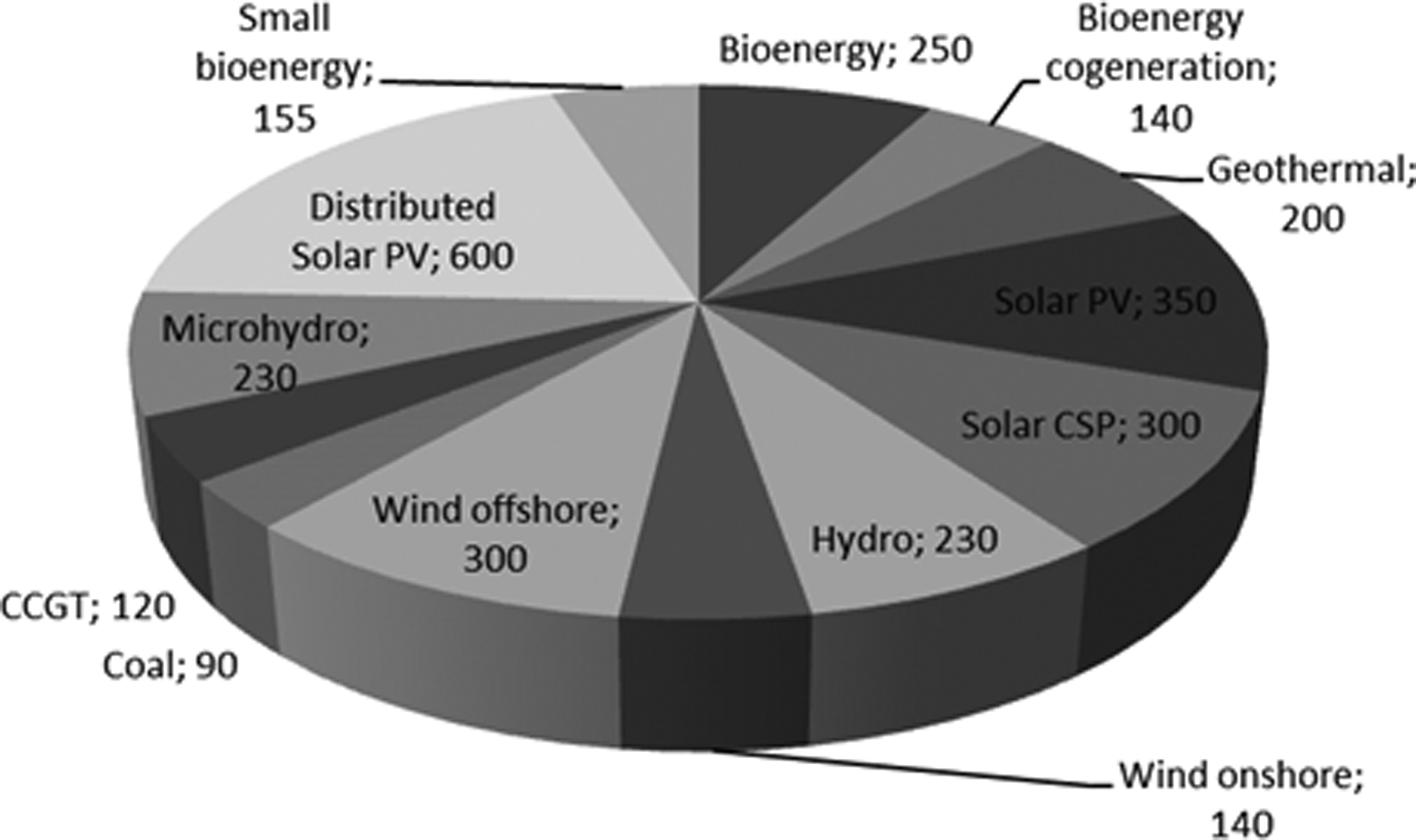
Maximum and Minimum Values of the cost of electricity produced by different sources (USD/MWh). Source: (IEA, 2012)
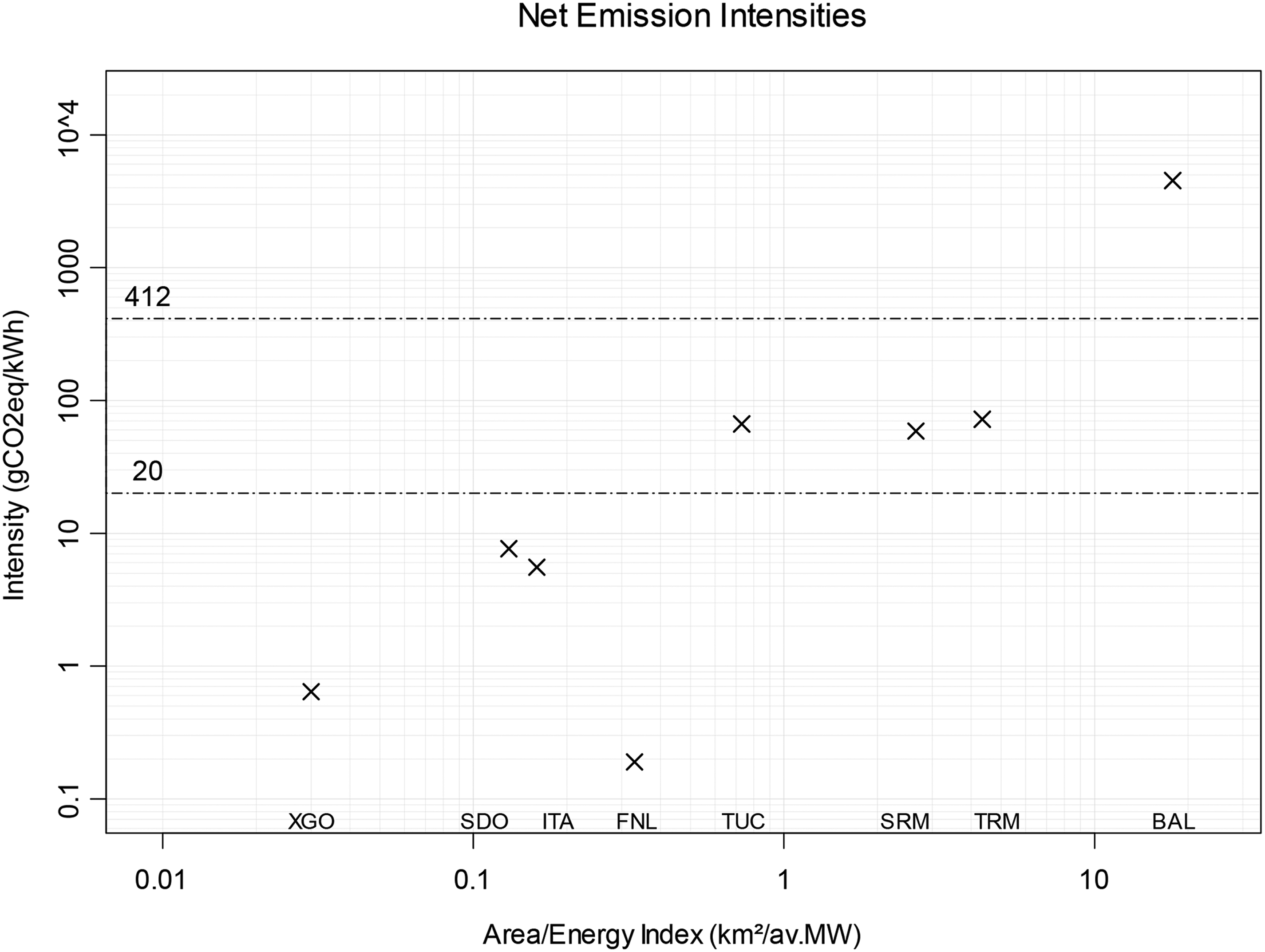
Intensity of net emissions of greenhouse gases estimated from measurements in hydropower plants (HPP) in Brazil.
In general, the GHG emission intensities from hydroelectric power plants are far below the GHG emission intensities from fossil sources and compete with the wind source intensities (Figure 1) and, therefore, their inclusion in electricity production systems reduces the intensity of GHG emissions from the electrical system as a whole.
Figure 1 shows the example of the results obtained in a systematic research project on gas emissions from hydroelectric reservoirs carried out in Brazil.
Hydroelectricity, in addition to reducing the system's GHG emissions by making fossil source generation unnecessary, due to its operational flexibility and energy storage capacity, provides the electrical system in which it operates greater capacity to incorporate non-controllable renewable generation (wind and solar), as discussed below.
This characteristic is an indirect contribution of hydroelectricity to the reduction of the system's GHG emissions.
Despite a renewable energy source, there is great concern about potential emissions of GHGs produced by the hydropower reservoirs. Pre-existing reservoirs creation, the GHG measurements should considered to calculating the net contribution of each project. Net GHG emissions from hydropower reservoirs have been defined as the differences between balances of GHG emissions and removals during post and pre-impoundment.
According Climate Bond Initiative (CBI, 2021), hydropower is recognized as having a prominent role in meeting a significant proportion of future electricity needs.
In this new context, access to financing funds aimed at the development of a low-carbon economy now requires demonstration that the project meets specific criteria of resilience and adaptability to current and future scenarios of climate change, as is the case eligibility criteria under the ‘Climate Bonds Initiative’ CBI (2018) and CBI (2019).
Since 2016 the scheme and criteria for investors of hydropower project in low GHGs compatible and climate-resilient. According to the CBI criteria (CBI, 2021), an hydropower site in operation before 2020 is eligible if it has either:
A power density > 5 W/m2; or GHG emissions intensity < 100 g CO2e/kWh. A hydropower facility commencing operation in 2020 or after is eligible if it has either: • A power density > 10 W/m2 or GHG emissions intensity < 50 g CO2e/kWh.
Social Impacts of Hydropower
The introduction of a hydroelectric reservoir creates attractive conditions for a series of activities such as lakeside tourism, including contemplation and sport fishing. The formation of the lake allows a series of tourism facilities to be implemented, such as fishing clubs, inns, hotels and weekend laser sites.
In Brazil, these activities had been developed intensively in the regions where hydropower reservoirs were created, becoming without a shadow of a doubt a positive aspect for regional development. Variations in the operating level of reservoirs can, however, create conflicts with these activities if there is a very strong depletion of the water level.
In Brazil, associations of municipalities on the lakefront of the Furnas hydropower reservoir, in the southeast region of the country, with the aim of working with the concessionaire in order to negotiate a minimum quota that allows the development of activities linked to the lake (Godoy and Sobrinho, 2017).
According to (Siqueira, 2021), the legal determination of multipurpose water reservoirs in Brazil began with the Water Code in 1937, when it established that in all uses of hydraulic energy, requirements to protect general interests will be met: a) meeting the needs of populations riverside; b) public health; c) navigation; d) irrigation; e) flood protection; f) conservation and free movement of fish; g) water runoff and rejection. In order to mitigate this problem, considerations of the multiple uses of a hydroelectric reservoir need to be carried out from the hydroelectric inventory study, they must be contained in the basin plans and taken into consideration in other existing and planned projects (Siqueira 2021). The Brazilian Water Law, enacted in 1997, reinforces the multi—user nature of water in the country.
Brazil uses very little fish protein as we are one of the countries in the world that consumes the least amount of this type of protein. If we deal with aquaculture more specifically, the situation gets even worse. Considering the existence of hydroelectric lakes and the potential for fish farming in these sites, there is little practical experience as well as a lack of government incentives to study best practices in this matter.
A recent research conducted in some Brazilian reservoirs (Zaniboni—Filho et all, 2018) suggest some important potential solutions as:
the use of native fish species or sterile species, implementation of monitoring systems of the surrounding area, adoption of measures to reduce the accidental escape of fish, use of multitrophic culture systems, use of highly digestible diets with appropriate food management, and use of computer programs that incorporate current and historical environmental data to calculate carrying capacity and choose the most appropriate location for production.
The complementarity of intermittent generation in the electrical system
Complementary energy is a term used to characterize an energy source capable of replacing another, when it is in its intermittency period.
There is a growing participation in the generation of electricity from the so-called new renewable energies (wind and solar photovoltaics) in view of the interest in reducing GHG emissions from electricity generation systems.
It should be noted that the current situation of insertion of variable and intermittent energy sources increases the importance of hydroelectric plants with reservoir, for the operation and system security.
The most important challenge for these new energy sources is their characteristic of intermittent generation, which increases the need for investments in sources that give the operating system flexibility to adequately deal with intermittency, avoiding the imbalance between supply and instantaneous demand in the electrical grid (Gianeloni and Camara, 2016).
Vieira (2016) describes examples of rapid and unpredictable changes in production in wind clusters in Brazil. In the event that took place in May 2015 at the 1600 MW wind complex in the Northeast of the country, the electricity generation power generation more than doubled in the morning and dropped dramatically afternoon.
In your paper, Vieira (2016) comments on the necessary control actions to mitigate the impacts of the variability of wind production on the electricity grid and suggests a focus on contracting power reserve in view of generation deviations in relation to forecasts.
In this context, the hydroelectric plants are an attractive alternative to balance the intermittency of renewable sources in view of their operational flexibility and storage capacity. The operating flexibility of hydroelectric plants makes them capable of quickly changing their generation level, which can be used to quickly balance the grid.
The storage capacity in the case of plants with reservoirs allows for the conservation of energy available at one time for use at another, which is also advantageous to allow the balance of the network.
Environmental and water management services
A large part of the hydroelectric plants currently in operation, in view of their ability to respond quickly to operational changes and to regulate the amount of water in a hydrographic basin, provide society, in addition to electricity, a series of other water management services and environmental services.
The IEA report (IEA, 2012) lists the water management services provided by hydroelectric plants classified as:
i) water quantity management (flood and drought control, groundwater stabilization and raw water management), ii) water quality management (oxygenation, water temperature management, solid waste removal, management of sediments and barriers to saline intrusion) and iii) services linked to regional development (navigation, irrigation, leisure and tourism, aquaculture, management of residential and industrial water supply systems).
Also IEA (IEA, 2012) lists the environmental services provided by hydroelectric plants classified as: i) reduction of GHG emissions, ii) reduction of atmospheric pollutant emissions, iii) creation of wetlands, iv) microclimate management around the reservoir and v) carbon storage.
For several countries around the world, the environmental and water management services provided by hydroelectricity have significant social and economic impacts at local, regional, and even national levels.
For example, in the United States, the study in IEA (2017) quantified economically from a federal point of view the benefits of different water management services provided by hydroelectric plants in a set of 157 hydroelectric plants operated by three federal agencies (Tennessee Valley Authority, U.S. Army Corps of Engineers, and U.S. Bureau of Reclamation). The group of hydroelectric plants studied covers 42% of the installed hydroelectric capacity in the USA and annually supply 276,000 GWh.
The services offered by the plants were classified into six ‘uses’ according to: i) hydroelectricity, ii) flood control, iii) navigation, iv) recreation, v) water supply and vi) irrigation.
For each use, a specific economic valuation methodology was used. The results showed that the magnitude of the benefits of each ‘use’ depended on the size of the plant's reservoir, the region where the plant is located, the rule for allocating the stored volume among the different uses and the installed capacity of the plant.
In most cases, hydroelectricity was not the most important valued use, with the greatest total benefits coming from recreation and irrigation.
In China, the Three Gorges dam, which houses the world largest hydroelectric plant, with an installed capacity of 22.5 GW, has as its main purpose the control of floods in the Yangtze River valley, which is subject to floods annually. In 1998, a catastrophic flood caused economic losses to the region estimated at US$ 26 billion, equivalent to the plant total investment cost. A similar event occurred in 2010, with the project already installed, and its reservoir was able to substantially dampen the peak of the flood, avoiding economic and life losses.
In Brazil, most of the existing hydropower plants were designed with the sole purpose of generating electricity. On the other hand, over time, their operation began to consider other uses of water. In particular, since 1979 the planning of the operation of the hydroelectric reservoir system of the Brazilian electricity sector incorporates as one of its objectives the dampening of large floods in the busiest areas of valleys in the basins of the important hydrographic basins (Paraná, Iguaçu, Paraíba do Sul and São Francisco rivers).
Other example is the Paraná-Tietê waterway, designed in the 1940s, nowadays it has a length of 2400 km, of which 1600 km on the Rio Paraná and 800 km on the Rio Tiete. The waterway extends between the Itaipu hydropower plant, in Foz do Iguaçu (PR), and two dams: the one at the São Simão hydropwer plant, in the Goiás state on the Parnaíba river; and the other at the Água Vermelha hydropower plant on the Grande river, in Minas Gerais state.
The system formed by the two waterways has 8 sluices in operation, 6 on Tietê River: Barra Bonita, Bariri, Ibitinga, Promissão, Nova Avanhadava and Três Irmãos. The other sluices are located on the Paraná river: Jupiá and Porto Primavera. This structure allows for the navigability of the cargo transport system implemented to make it more efficient to bring grain, ethanol from the inland of the country to consumption centers. In 2021, the system transported 4603 mil tons of products.
In the coming decades of this century, public opinion and public agents should be aware that hydroelectric projects with the capacity to store fresh water, when properly designed and managed, are important instruments for guaranteeing sustainable development through the provision of environmental and water resources services of great social and economic impact, in addition to a basic infrastructure for adapting and strengthening the resilience needed to face the climate changes expected in the coming decades.
Potential Impacts on Indigenous People
The explotation of the Brazilian hydropower potential interacts with numerous indigenous communities committed to conserving, developing and transmitting to future generations their ancestral territories and ethnic identity. In general, HPP projects with significant negative impacts on indigenous communities have their environmental license denied, as is the case of the HPP São Luiz do Tapajós.
Invariably, for projects located close to indigenous communities, besides modifications of the project in order to mitigate negative impacts, a substantial indigenous program aimed at increasing the community's wealth and promoting their traditional cultures is required in order to obtain an environmental license (see programs for the HPP Belo Monte). Not rarely, the HPP implementation is used as an opportunity for conflict solving. The most emblematic case, the Balbina HPP Waimiri Atroari Program found in 1986, before the HPP implementation, (FUNAI, 1987) an threatened indigenous population of 374 individuals. Their homeland at that time was not legally protected and there was a land conflict over its ownership with other claimants. After the implementation of the HPP, the indigenous land was demarcated and approved by the Brazilian government. The population reached 1,584 individuals in 2012, corresponding to a growth of 4.84% p.a.
Technological Advances and Policy Recommendations for Sustainable Hydropower
An economic valuation of services provided by hydroelectricity will be necessary for sharing the costs associated with future multipurpose reservoirs.
Currently, competition is expected to intensify between hydroelectricity and wind, solar and biomass thermal plants, for the supply of electricity from a renewable source. The cost of generation of these competing renewable has been decreasing, which makes more important the economic valuation of the various services provided by hydroelectricity in addition to electricity generation, particularly in countries where the liberalization and privatization of the electricity sector took place.
Methods for planning, designing, building and operating hydropower plants have been improved in recent years with a view to incorporating sustainability aspects, which has led to improved public acceptance in several regions.
It has currently been noticed a concentration of evolution efforts aimed at environmental preservation, mitigation of impacts on ecosystems, mitigation of greenhouse gas emissions, actions to adapt to climate change, incorporation of resilience metrics, mechanisms for sharing project benefits with local communities, participatory planning and operation with other water users with a focus on the watershed, local communities and other stakeholders, and instruments for monitoring and evaluating the effectiveness of mitigation and compensation measures.
Although hydroelectricity is a mature technology, we highlight the following efforts and technological developments currently underway: turbines with optimized geometries for the passage of fish, low head turbines, turbines that use kinetic flow, design of efficient turbine rotors using CFD (“computational fluid dynamics”), materials for turbines resistant to corrosion, cavitation and erosion, technologies for management and control of erosion in turbines, methods of construction of dams (e.g. concrete-rolled), technologies for monitoring and maintenance of dams, technologies for tunnels, modernization and repowering of old plants. Last estimate for modernizing old plants in Brazil have costs between 230 to 450 US$/kW (EPE, 2022).
Final considerations
The low emissions status and generation flexibility of hydropower in Brazil are essential to support the global transition of electricity grids to get rid of dependence on fossil fuels and can provide societies, in particular riverside communities or near watercourses, multiple water resources management services (flood and drought control, groundwater stabilization, water quality management, river navigation, irrigation, leisure and tourism, aquaculture, etc.) of great socio-economic value that will help bring millions of people out of poverty around the world.
Climate change is expected to exacerbate water stresses and freshwater storage reservoirs form a crucial component in mitigation and adaptation actions.
In general, a hydroelectric plant with a regularization reservoir offers protection against the effects of climate change, increasing the climate resilience not only of the associated power system but also of other systems in its area of influence, including the surrounding ecosystems and communities.
Considering the goal of limiting the increase in the temperature of the Earth's surface at the end of the twenty-first century to below +2°C, studies by the IEA and the International Renewable Energy Agency (IRENA) recommend as a cost-effective alternative the expansion of global installed hydropower capacity by 2050 to at least 850 GW or at least 2500 GW for the more ambitious Net Zero target corresponding to limiting the temperature increase to +1.5°C (IEA, 2021).
Recent international estimates of global hydroelectric potential (IHA, 2021) indicate the possibility of installing 3800 GW, therefore, more than enough to meet Net Zero targets.
This paper considers it important to reposition the discussions around the role of hydroelectric projects in issues related to climate change, given their important role in contributing viable solutions for its reduction.
Brazil cannot give up this potential still to be used, which is close to 50% of the total. Good projects should be encouraged to come out of the drawer, as the role of hydroelectric generation in the viability of new renewable sources in the country's electricity grid is unequivocal.
Considering the low cost of energy, the synergistic effects with wind and solar energy in the country, it is necessary to rethink the role of non-intermittent sources in the electricity grid in the country.
The so-called non-dispatchable plants may represent a problem in the future for the operation of interconnected electrical systems such as the Brazilian one. Worldwide today this type of source represents 10% of the generation. Projection data for 2050 scenarios of drastic reduction of GHG emissions show us that these sources could easily reach 90% of total production, which will require huge efforts in planning the operation of electrical systems (IEA, 2021). We recommend greater coordination between energy and environmental policies, especially with regard to long-term planning. Strategic Environmental Assessment could be one of the options for evaluating potential areas suitable in environmental terms.
Studies related to the potential of combining environmental preservation and electrical energy generation can be encouraged, as the idea of using hydroelectric projects as a vector of environmental preservation in areas considered sensitive was pioneered in Brazil.
Footnotes
Declaration of conflicting interests
The author(s) declared no potential conflicts of interest with respect to the research, authorship, and/or publication of this article.
Funding
The author(s) received no financial support for the research, authorship, and/or publication of this article.
