




Abstract
Asphaltenes, which can be considered as fragments of kerogen, can occlude, and protect hydrocarbon compounds from secondary alterations that occurs in petroleum reservoirs. The objective of this study was to apply the analysis of occluded biomarkers to address the question of how to understand the mixture of oils in the Potiguar Basin, since the oils produced therein inherited compositional differences from two petroleum systems. Asphaltenes from seven Brazilian crude oils of Potiguar Basin were obtained and submitted to mild oxidative treatment to disrupt their structure, releasing occluded hydrocarbons. The study of the geochemical composition of the occluded hydrocarbons showed that the oils from Areia Branca Trend registered a signature lacustrine, saline lacustrine and marine-evaporitic oils. On the other hand, occluded oils from Carnaubais Trend, suggest contributions from marine-evaporitic and lacustrine oils. As for the maturity parameters, it was observed that the saturated biomarkers occluded from the studied oils are less thermally evolved, the same was observed in the analysis of aromatic compounds. The results of occluded hydrocarbons showed great similarity with free hydrocarbon oils, which confirms the postulated hypotheses of initial filling of lacustrine oil reservoirs generated by the Upanema Member followed by a mixture with marine-evaporitic oil generated by the Galinhos Member and Ponta do Tubarão (PT) Layer. In this case study, it was evident that a geochemical understanding of occluded hydrocarbons can provide a better knowledge of petroleum systems. Mainly, when there is a secondary alteration due to biodegradation, as in the Carnaubais Trend, the biomarkers occluded in the asphaltenes register well the more marine-evaporitic oil. The study of biomarkers occluded in asphaltene structures proved to be a valuable tool in the interpretation of geochemical parameters of origin, maturation, and mixture of different sources, as they are the closest to the original conditions.
Introduction
Basins with multiple source rocks and episodic charging histories, oil–oil and oil–source correlations can be complicated due complex mixing and secondary alteration in the reservoir. Some studies dedicated to estimating the relative contributions of oils from different source rocks have used methods of biomarkers sensitive to age, source, and biodegradation (Arouri and Mckirdy, 2005). In basins with multiple source rocks this assessment becomes more difficult, especially when the resulting oils were mixed in the same reservoir. Peters et al. (1989) estimated the proportions of Jurassic and Devonian hydrocarbons in the Beatrice oil accumulation using biomarker composition and carbon isotopic compositions of oils and source rock extracts.
Age- and source-specific biomarkers, including those sensitive to biodegradation, were employed by Dzou et al. (1999) and Peters et al. (1999) to recognize oil mixing in some Colombian and Scottish oil fields. Chen et al. (2003), by artificial mixing, estimated the relative contributions of three major source rocks (Permian, Triassic, and Jurassic) to the Jurassic reservoirs of the Cainan oil field in the Jungar Basin of NW China. However, basins studies around the world have shown that, after their formation, reservoir phases can be changed by secondary alteration processes, including biodegradation, gas wash fractionation, or thermal craking (Mackenzie, 1984; Moldowan et al., 1985; Tissot and Welte, 1984). Biodegradation, for example, can alter the chemical composition of crude oil by the selective removal and preservation of various compound classes (Aitken et al., 2004, Larter et al., 2003). This kind of alteration causes decrease of saturates, and a relative enrichment of heavy fractions (resins and asphaltenes), which modify the SARA (i.e. saturates, aromatics, resins and asphaltenes) contents of crude oil (Aitken et al., 2004, Wentzel et al., 2007). Gas-washing fractionations can lead to the formation of condensates, and their differences in chemical composition from crude oils are a direct reflection of evaporating fractionation (Su et al., 2001). Thermal alteration of crude oil involves various chemical resulting an increase in the proportion of low molecular weight components (Peters and Moldowan, 2005). Therefore, all these secondary processes may alter many, or all the biomarkers, or geochemical fingerprints of the oil–source (Peters and Moldowan, 2005), which difficult the oil–source rock correlations. In such cases, biomarkers trapped in asphaltene structures (occluded biomarkers) can provide valuable information about source rocks (Azevedo et al., 2009; Behar et al., 1984; Ekweozor, 1984; Ekweozor, 1986; Liao and Geng, 2002; Peng et al., 1997; Peng et al., 1999).
Asphaltenes are formed at an early stage of oil generation and are largely preserved with little change from this stage onward and, consequently, the biomarker signature embedded within asphaltenes represents an early and lower thermal maturity signature of the oil trapped in the reservoir (Cassani and Eglinton, 1986; Silva et al., 2008; Snowdon et al., 2016). In the case of biodegraded oils, the asphaltenes remain largely unchanged providing a means of obtaining the original biomarker signatures (e.g. Behar et al., 1984; Spigolon et al., 2016).
In this point of view, the present study tried to evaluate the variation in the occluded biomarker composition of oils from the Potiguar Basin, since the oils produced therein inherited compositional differences from two distinct petroleum systems, which petroleum source rocks are located in an offshore structural low and were classified into two families: lacustrine freshwater shales and marine-evaporitic shales and marls (Cerqueira, 1985; Mello et al., 1988a; Trindade et al., 1992). However, the oils derived from these two sources have migrated up dip and mixed in different proportions.
Therefore, the origin, maturity, and oil mixing were discussed by comparing the molecular signature of asphaltene occluded biomarkers and actual reservoir oils (free hydrocarbons) in oilfields in the Areia Branca Trend, and four oilfields in the Carnaubais Trend, situated in the onshore portion of the Potiguar Basin, Brazil.
Geological settings
The Potiguar Basin is located in the northeastern portion of the South American continent, in the Brazilian states of Rio Grande do Norte and Ceará (Figure 1). The evolution began with the establishment of an asymmetric rift system upon the igneous and metamorphic basement rocks of the Precambrian Borborema Province (Almeida et al., 1981). The Potiguar Basin covers an area of approximately 70,000 km2, with around 30% of this surface located onshore and the remaining basin extending northwards to water depths greater than 2000 m (Bertani et al., 1990). The Geological boundary is limited to the NW with the Fortaleza high (offshore) and Aracati Platform (onshore), and to the SE with the Touros High (offshore) and East Platform (onshore), and to the south with Proterozoic crystalline basement rocks of the Borborema Province.
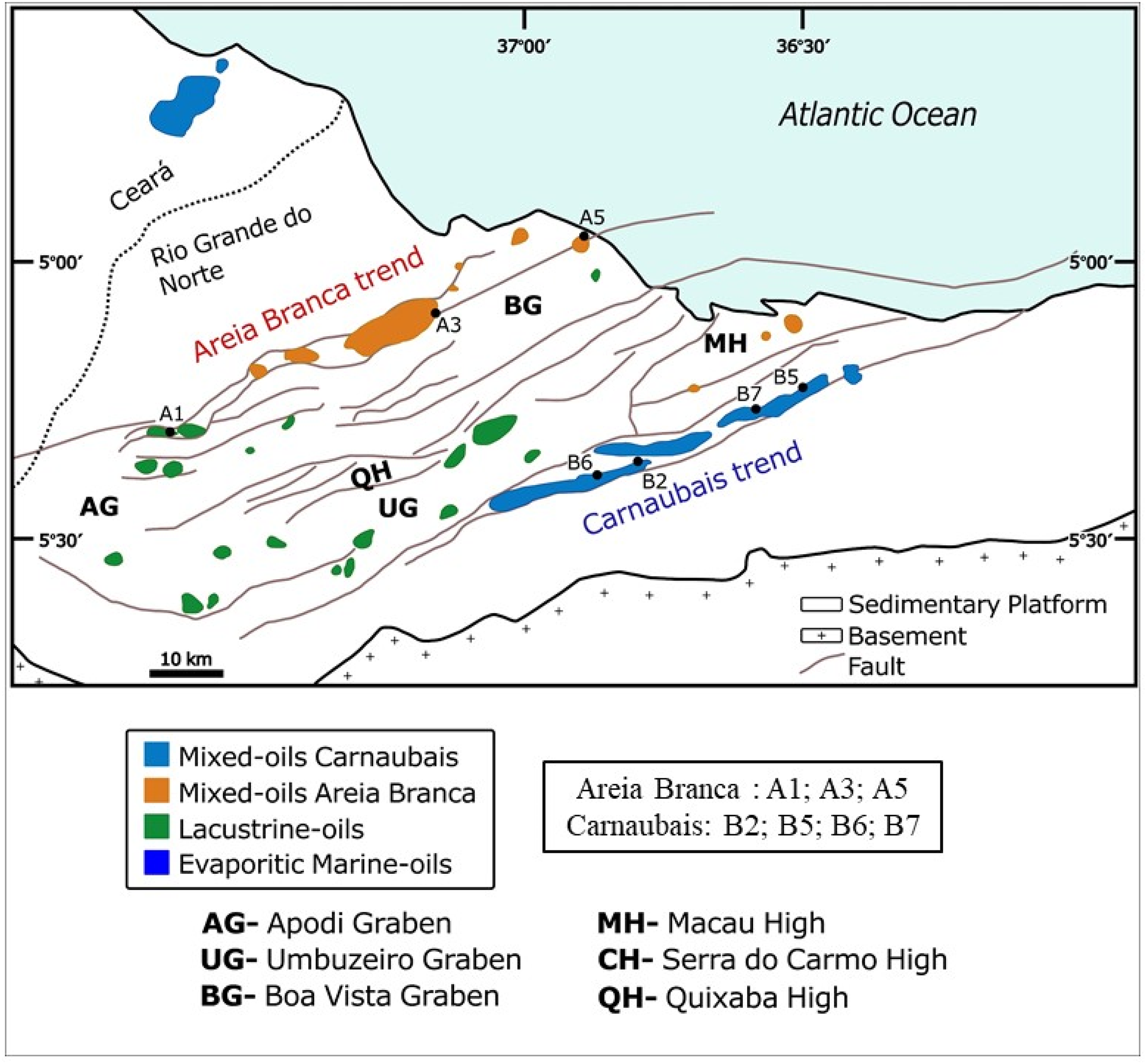
Simplified geological map with main rift structures of the Potiguar Basin (modified from Santos Neto et al., 1990). And well location of the reservoirs oil samples of the Areia Branca Trend (A1, A3, and A5), and of the Carnaubais Trend (B2, B5, B6, and B7).
The Potiguar Basin is part of the Cretaceous Rift System of Northeast Brazil (Bertani et al., 1990). Its formation is related to the process of crustal stretching that resulted in the rupture of the Gondwana Supercontinent, from the Mesozoic, culminating in the separation between the South American and African plates and formation of the Atlantic Ocean (Bertani et al., 1990; Soares et al., 2003). The emerged portion of the Potiguar Basin is composed of a main structure NE-SW oriented and comprises three basic unit: grabens, internal high and bounded by two important hinge lines (Carnaubais and Areia Branca trends, Figure 1). The platform presents a gradual dip, reaching about 1500 m of depth with asymmetrical grabens in the offshore area that evolved as a typical passive marginal basin (Bertani et al., 1990).
The geological evolution of the basin can be divided in three main tectonic stages: rift, transitional, and drift (Pessoa Neto et al., 2007), as illustrated in the stratigraphic diagram in Figure 2. According to Araripe and Feijó (1994) the sedimentary rocks of the Potiguar Basin are organized in three main groups: Areia Branca, Apodi, and Agulha.
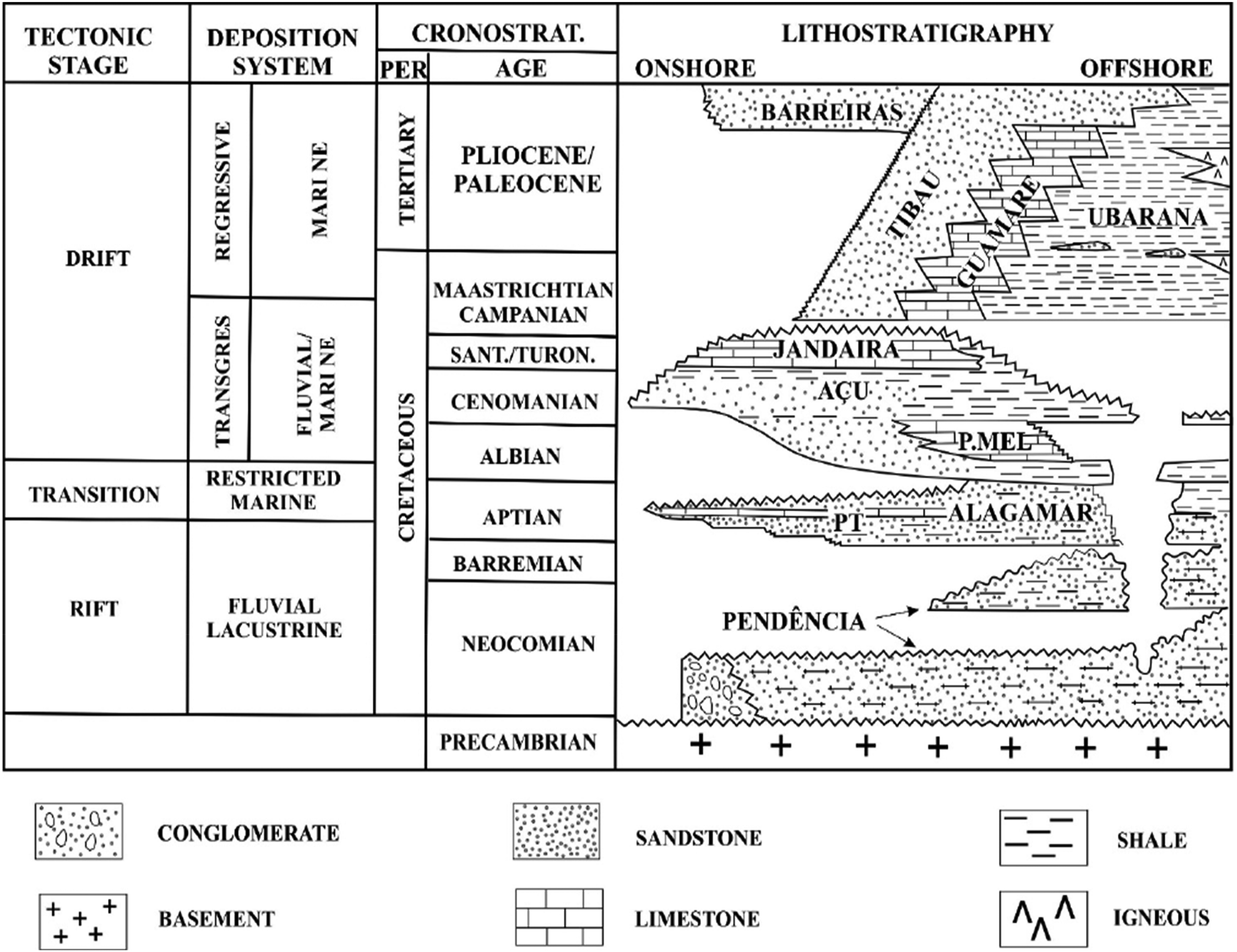
Stratigraphic chart for the Potiguar Basin (modified from Araripe and Feijó,1994).
The rift extends from Neocomian to Early Aptian, and is characterized by a tectonic regime of crustal stretch, with the development of normal and transfer faulting. The Grabens were filled by a succession of continental sedimentation of lacustrine freshwater shales and turbidite deposits surrounded by fluvial deltaic system of the Pendência and Pescada formations (Souza, 1982). In this stage organic-rich rocks were deposited in a series of deep, anoxic, freshwater lakes (Mello et al., 1988a). These freshwater shales became important source rocks within the Pendência Formation, with total organic carbon (TOC) values up to 4% and the potential for hydrocarbon generation (S2) is up to 35 mg HC/g of rock. The values for the hydrogen index (IH) range from 100 to 700 mg HC/g of TOC together with an oxygen index (IO) less than 100 mg CO2/g indicating the predominance of type I and type II kerogens (Trindade et al., 1992). Tectonic uplift of this sequence, principally in the onshore area, created a regional unconformity at the end of rift stage (Bertani et al., 1990).
The transitional stage is characterized by a tectonic regime of relative quiescence, and the dominant tectonic activity was subsidence due to crustal cooling and localized reactivation of faults. In this stage, continental deposits grading to marine are represented by Alagamar Formation (Aptian-Eoalbian) (Figure 2; Araripe and Feijó, 1994; Pessoa Neto et al., 2007). This sequence begins with fluvio-deltaic-lacustrine deposits represented by the Upanema Member that succeed each other to marine influenced lagoon environments represented by the Ponta do Tubarão (PT) layer and Galinhos Member (Bertani et al., 1990; Spigolon, 2003; Spigolon et al., 2002, 2005). The PT layer and Galinhos units consist of black shales and marls with TOC contents around 6%, S2 with 40 mg HC/g of rock and IH values greater than 500 mg HC/g TOC (Trindade et al., 1992).
The Drifte stage, deposited between Albian and Recent, during the thermal subsidence phase, consists in general by a fluvial-marine sequence transgressive layer covered by a regressive clastic and carbonate sequence (Bertani et al., 1990). The transgressive phase is represented by the siliciclastic sediments of the Açu (proximal) and Quebradas (distal) formations, and the development of a carbonate platform called Ponta do Mel Formation (Figure 2).
The regressive systems correspond to mixed systems composed of coastal fans, shallow platform with carbonates, and shallow to deep marine pelitic and turbiditic deposited (Campanian to the Halocene), represented by sediments of the Barreiras, Tibau, Guamaré and Ubarana formations (Figure 2; Souza et al., 2004).
Petroleum systems
The source rocks in the Potiguar Basin are represented by Neocomian Pendência (onshore) and the Aptian Alagamar (offshore) formations (Rodrigues, 1983; Santos Neto et al., 1990). The petroleum generated by Pendência Formation migrated short distance and was accumulated in the lacustrine sandstones of the same geological formation (Bertani et al., 1990). On the other hand, the petroleum generated by Alagamar Formation migrated long distances and were trapped in the reservoir rocks of the Açu formation (Bertani et al., 1990; Souto Filho et al., 2000; Trindade et al., 1992). Therefore, petroleum systems of the Potiguar Basin keep a record of the complex evolution with long-distance lateral petroleum migration, heterogeneous source rocks, oil mixing, and biodegradation (Rodrigues, 1983; Santos Neto et al., 1990; Trindade et al., 1992). These accumulations display a range of petroleum compositions (Figure 1): lacustrine oils, marine-evaporitic oils, and mixed oils (Rodrigues, 1983; Santos Neto et al., 1990). The geochemical characteristics of these three types of oils are well interpreted by the authors (Cerqueira, 1985; Mello et al., 1988b; Morais, 2007; Rodrigues, 1983; Santos Neto, 1996; Santos Neto and Hayes, 1999; Santos Neto et al.; 1998; Trindade, 1993; Trindade and Brassel, 1992; Trindade et al., 1992).
Material and methods
Samples
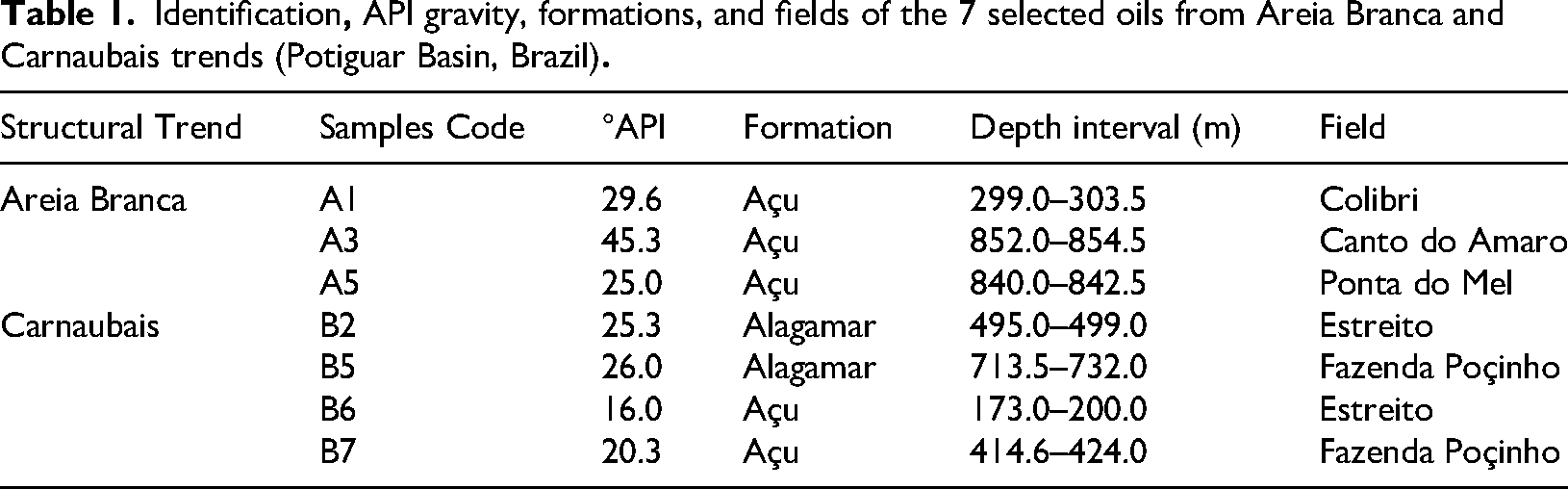
In this study were used seven oil samples collected from different reservoirs displayed on Areia Branca and Carnaubais trends (Figure 1), with API gravity from 16° to 45.3° (Table 1). The number of samples was chosen for the purpose of studying the specific petroleum system, and according to the availability of samples.
Identification
Experimental
Asphaltene precipitation was performed according to the method described by Silva et al. (2008), and the reaction for releasing occluded hydrocarbons followed the procedure according to Liao et al. (2006). Asphaltenes were removed by n-heptane precipitation as follows: around 2 g oil sample was transferred to a 500-mL flask, 100 μL of dichloromethane (DCM) was added to keep the asphaltenes dispersed. Then 300 mL of n-heptane (n-C7) was added to the flask. This mixture was magnetically stirred for 10 h, followed by standing for approximately 12 h. Filtration was performed to separate asphaltenes from the maltene of the oil.
The asphaltene retained on the paper filters in the previous step was submitted to extraction with n-hexane (three times with a volume of 200 mL by 24 h each) in Soxhlet apparatus to remove the adsorbed hydrocarbons. To check if all adsorbed compounds were removed, the hexane extract was analyzed by gas chromatography with ionization flame detection (GC-FID). When any compound was detected by GC-FID, the extraction with hexane was finished, and the hexane-extracted asphaltene were then subjected to the oxidation process.
To remove the occluded hydrocarbons, the asphaltene structures were degraded by mild oxidation reactions. The asphaltene fractions were dissolved with 20 mL of toluene. Then 4 mL of hydrogen peroxide (H2O2), and 15 mL of acetic acid were added. This mixture was magnetic stirred for 10 h. The toluene phase was separated from the aqueous phase and concentrated. This phase underwent re-precipitation and the extraction of hydrocarbons occluded in the asphaltene structure was performed after further filtration.
The fractions of maltenes (HC-F) and occluded hydrocarbons (HC-OC) were fractionated to separate saturated hydrocarbons, aromatics and polar compounds using an open column liquid chromatography with preactivated silica as stationary phase. The fractions were collected by successive elution of solvents with increasing polarity, such as 20 mL of n-hexane for saturated hydrocarbons (SAT), 20 ml of n-hexane/toluene (8:2, v/v) for aromatic hydrocarbons (ARO), and 20 mL of a toluene/methanol solution (1:1) for polar compounds (POL).
The saturated and aromatic hydrocarbon fractions were analyzed using an Agilent 7890A gas chromatograph equipped with an autosampler and coupled to an Agilent 5975 MDS mass spectrometer. The carrier gas used was helium (He) at 1.2 mL/min, in constant flow mode. DB-5 capillary column (5% phenyl, 95% methyl silicone, 30 m × 0.25 mm ID and 0.25 µm film thickness) was used for compound separation. The injector temperature was 290 °C. Analyses were performed in full scanning mode (SCAN), and ion selective monitoring (SIM) with an acquisition time of 50 ms for the analytes. In full scan mode, the GC temperature programming was initially held at 40 °C for 1 min, and then ramped to 300 °C at 6 °C/min with a final holding for 25 min. In SIM mode the GC temperature programming was initially hold at 80 °C for 3 min, and then ramped to 150 °C at 35 °C/min, and to 310 °C at 3 °C/min (15 min hold). The ion source temperature was held at 280 °C; the interface temperature was 300 °C and the quadrupole temperature was 150 °C, the ionization energy was 70 eV.
Results
Bulk composition
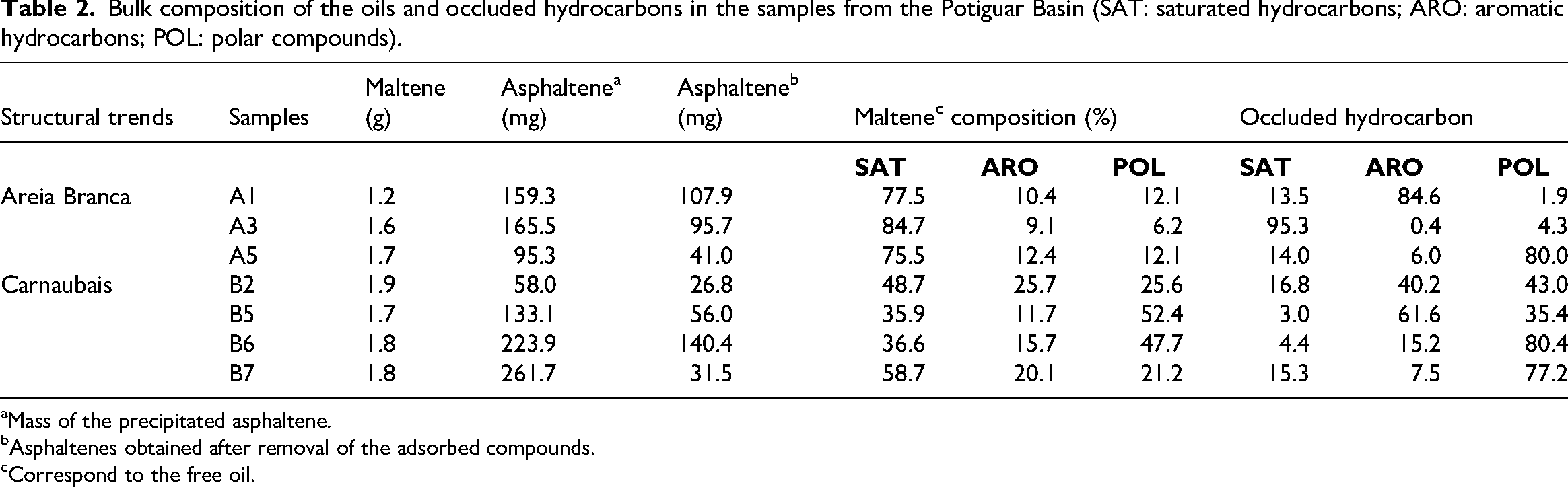
The mass of asphaltene obtained from the samples varied from 58.0 to 261.7 mg (Table 2), which the higher mass (mg) was obtained to samples with lower API° (samples B6 and B7). After removal of the adsorbed compounds from the asphaltene structures, the mass obtained were in the range of 26.8 to 140.0 mg. However, all the samples showed similarity in the mass of maltenes (Table 2).
Bulk composition of the oils and occluded hydrocarbons in the samples from the Potiguar Basin (SAT: saturated hydrocarbons; ARO: aromatic hydrocarbons; POL: polar compounds).
Mass of the precipitated asphaltene.
Asphaltenes obtained after removal of the adsorbed compounds.
Correspond to the free oil.
The soluble fractions in n-heptane (maltenes) of the original oil (HC-F) and the hydrocarbons released by mild oxidation reaction of the asphaltenes (HC-OC) were fractionated into saturated, aromatic, and polar compounds and the percentage of each fraction was subsequently determined and showed in Table 2.
It was observed that the fractions of occluded hydrocarbons have a lower content of saturated hydrocarbons when compared to free oil, except the sample A3. Aromatic and polar compounds showed similar proportions in the maltene composition, except to B5 and B6 samples (Table 2). On the other hand, the occluded hydrocarbons showed high variability to both fractions. For instance, the sample A1 showed 84.6% of aromatic hydrocarbon, and 1.9% of polar compounds, while the sample B7 showed 7.5% and 77.2% to aromatic and polar compounds, respectively.
It was also possible to observe the differences in the hydrocarbon composition between the two groups of samples (Areia Branca and Carnaubais), not only in the maltene fraction but also in the occluded hydrocarbons, which naturally reflect the difference in the source rocks signature, and in the asphaltene molecular structures.
n-Alkanes and isoprenoids
The biomarker ratios are commonly used to describe source input and conditions of depositional environment of the analyzed samples (Peters et al., 2005; Peters and Moldowan, 1993). The mass chromatograms of m/z 85 for n-alkanes presented in the free oil are showed in Figure 3. The samples from Areia Branca Trend, showed a distribution of n-alkanes from n-C11 to n-C35 with predominance of compounds between n-C19 to n-C27 in the A1 and A5 samples, and from n-C15 to n-C19 in A3 sample. Samples from Carnaubais Trend, showed n-alkanes distribution in the range from n-C11 to n-C31 with predominance of the low molecular weight compounds in samples B5 and B6, while n-alkanes between n-C19 and n-C23 are predominant in sample B2 (Figure 3). On the other hand, for sample B7 the n-alkanes are depleted.
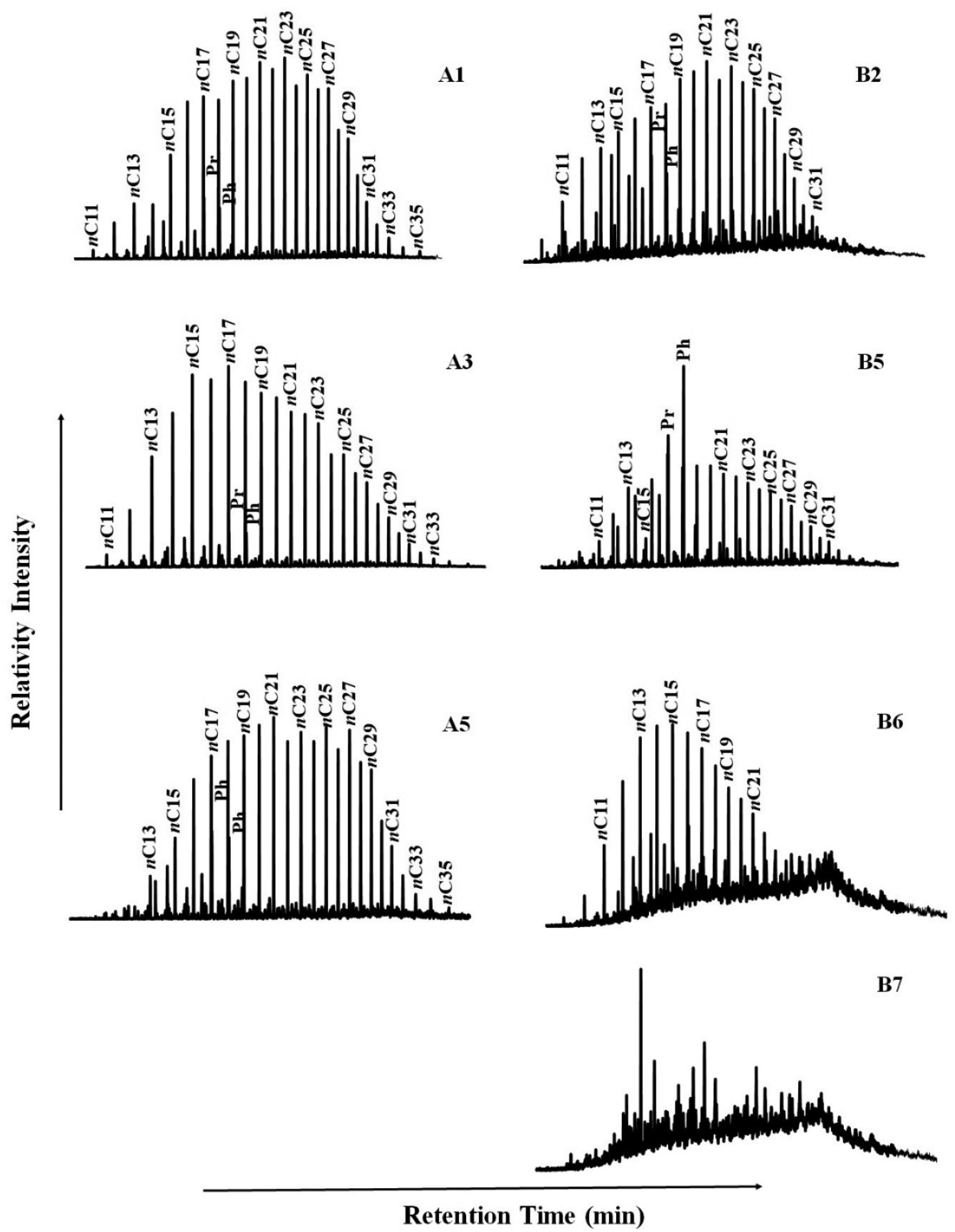
Mass chromatograms m/z 85 showing the n-alkane distribution in the free hydrocarbon fractions to samples from Areia Branca (group A) and Carnaubais (group B) trends. The peak numbers correspond to the number of carbons in the compound.
The relatively shallow accumulations (between 173 and 424 m), which occurs in sandstones of the Açu and Alagamar formations (Figure 2, Table 1) in structural traps contains oils biodegraded to different extents, oil samples B2 and B6. Moreover, an unresolved complex mixture (UCM) is evident from mass chromatograms m/z 85 of oil samples B6 and B7, being more accentuated in the latter (Figure 3) which suggest secondary processes such as biodegradation or water washing (Tissot and Welte, 1984) in which all n-alkanes have been depleted, but the acyclic isoprenoids remain.
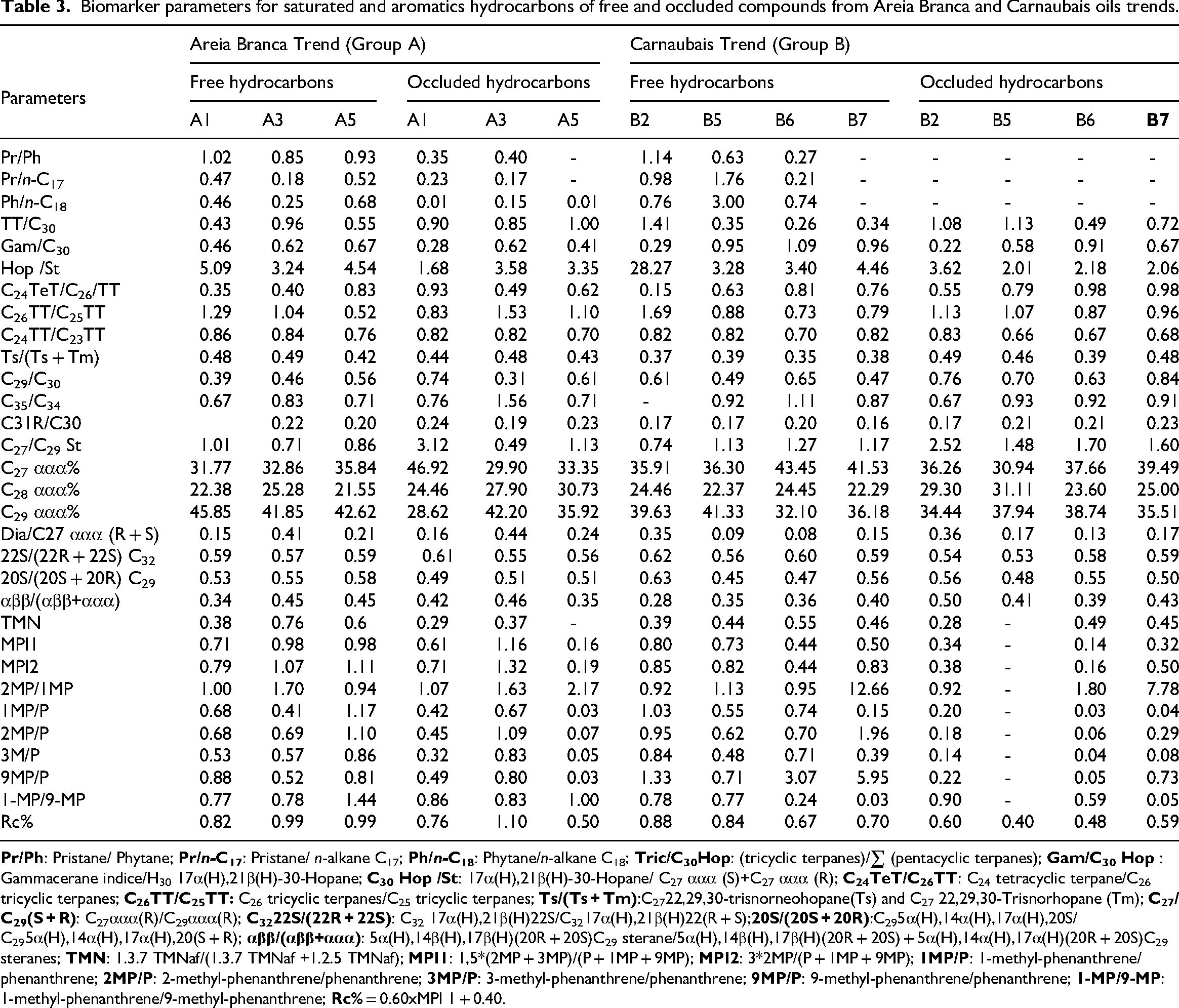
In the analyzed fractions of free hydrocarbons, the pristane/phytane (Pr/Ph) ratio is in the range of 0.85–1.02 (Areia Branca Trend), and 0.27–1.14 (Carnaubais Trend) (Table 3), suggesting that the samples oils were deposited under disoxic to relatively anoxic marine conditions (Hakimi et al., 2011; Peters and Moldowan, 1993). It is reported that Pr/n-C17 and Ph/n-C18 > 1 indicate an oil generated under low thermal condition or affected by biodegradation, while ratios < 1 indicate an oil generated during the oil window (Peters and Moldowan, 1993). Observing these relations in the studied samples, it is noted that sample B5 presents a ratio of Pr/n-C17 and Ph/n-C18 > 1 (Figure 4), with values of 1.76 and 3.00, respectively, in this case interpreted as biodegradation, while the other samples indicate values lower than 1, mainly the A3 sample which presents a ratio of Pr/n-C17 and Ph/n-C18 < 1 (Figure 4), with values of 0.18 and 0.25, respectively, indicating generation under thermal condition compatible with oil window (Table 3 and Figure 4).
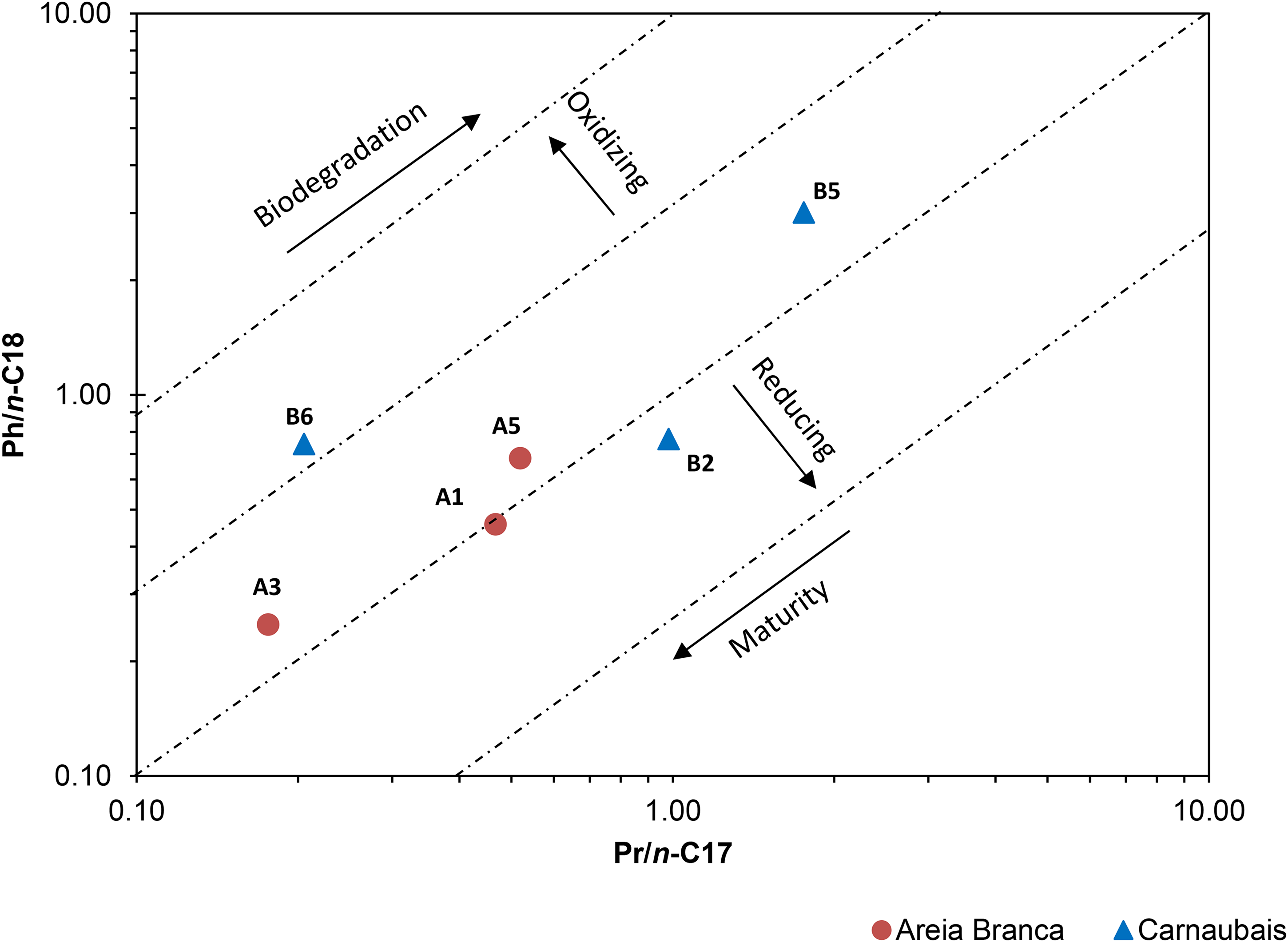
Cross plot between Pr/n-C17 vs. Ph/n-C18 for the free hydrocarbon samples from Areia Branca (group A) and Carnaubais (group B).
Biomarker parameters for saturated and aromatics hydrocarbons of free and occluded compounds from Areia Branca and Carnaubais oils trends.
Terpanes and steranes
The terpanes and sterane distributions, in the free (HC-F) and occluded hydrocarbons (HC-OC), are showed in Figures 5 and 6, respectively, for the Areia Branca, and Carnaubais trends. The biomarker parameters are present in Table 3 and peak identification is indicated in Appendix S1.
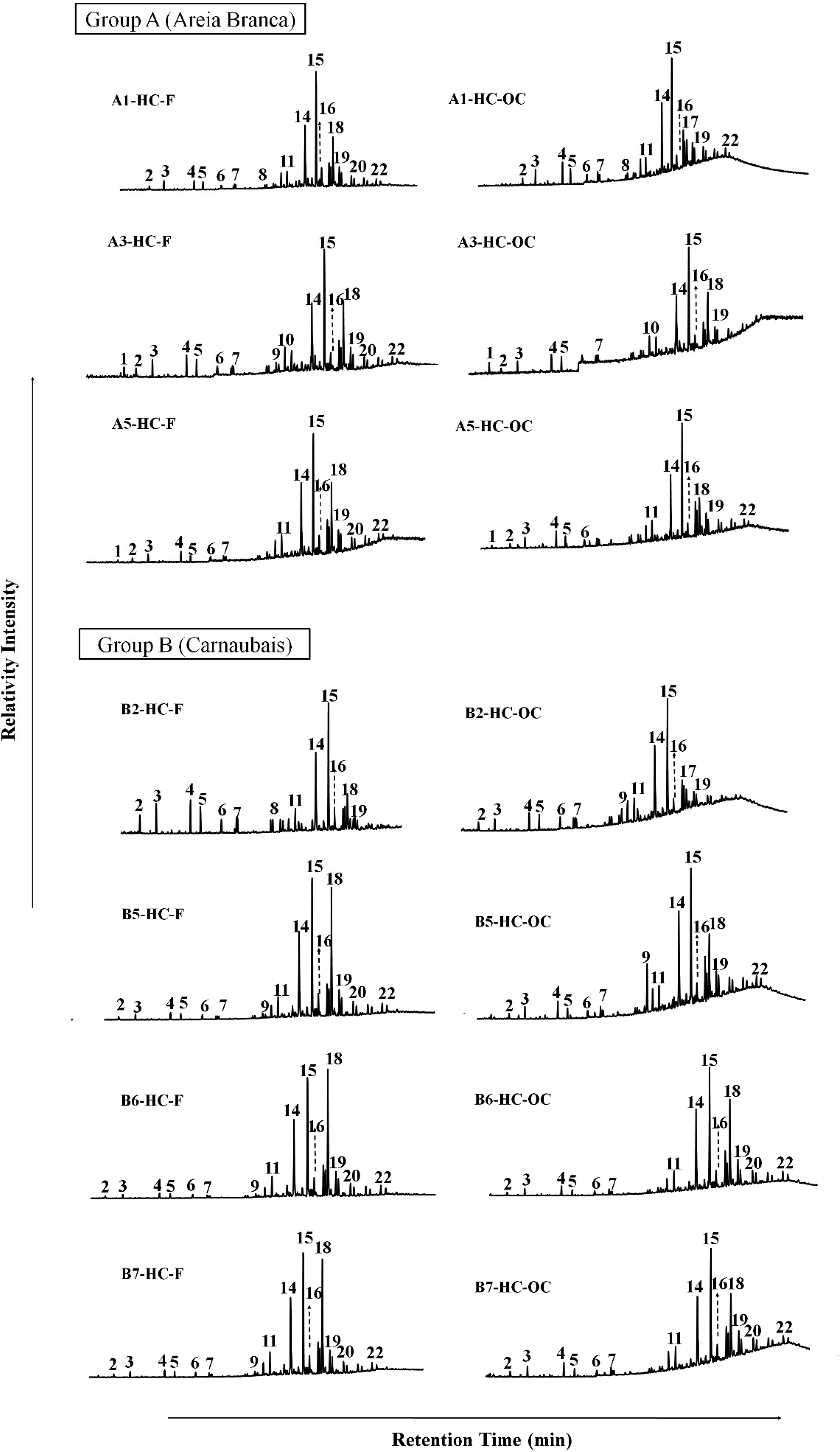
The m/z 191 mass chromatogram of saturated hydrocarbons showing the distribution of terpanes in the free (HC-F) and occluded (HC-OC) fractions from samples of the Areia Branca (Group A), and Carnaubais (Group B). The peak identification is indicated in the Apendix 1.
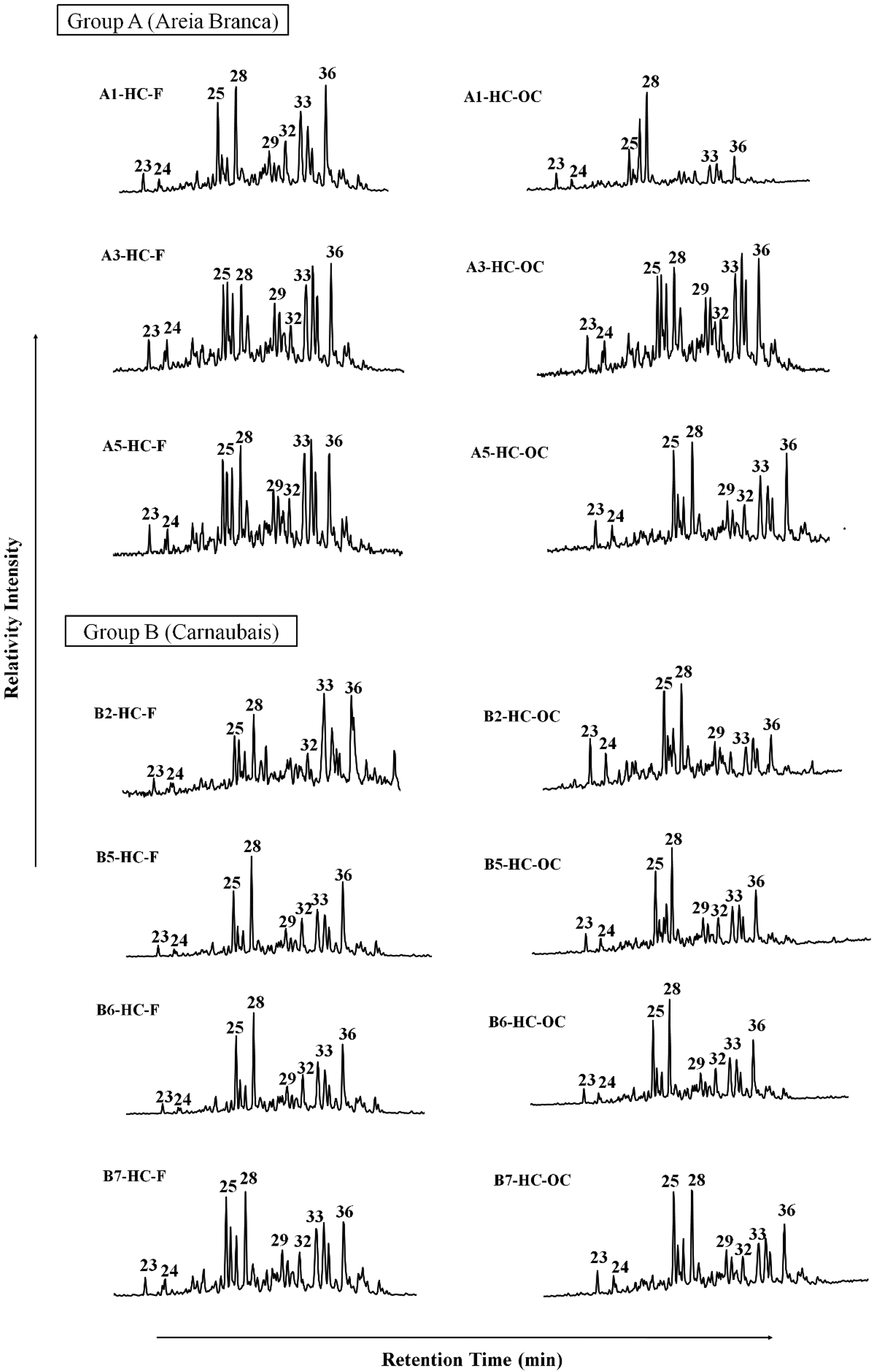
The m/z 217 mass chromatograms of saturated compounds showing the distribution of steranes in the free (HC-F) and occluded (HC-OC) hydrocarbons from samples of the Areia Branca (Group A), and Carnaubais (Group B).
In the terpanes distributions (Figure 5), was identified in both group A (Areia Branca Trend) and B (Carnaubais Trend), tricyclic (C20TT-C29TT), tetracyclic (C24TeT), and pentacyclic (H29-H35) terpanes, with 17α(H), 21β(H)-hopane (C30) (peak 15, Figure 5), and 17α(H),21β(H)-30-norhopane (C29) (peak 14, Figure 5) predominating.
C24 tetracyclic terpane was identified in all samples, with the ratio of C24 tetracyclic terpane/C26 tricyclic terpane (C24TeT/C26TT; Table 3) ranging from 0.15 to 0.98 for the free and occluded hydrocarbons, with high values in the occluded hydrocarbons, except in the sample A5.
The tricyclic terpanes (TT) and C30 hopane (C30) ratio in the occluded hydrocarbons from both Areia Branca and Carnaubais samples, showed relative high values than free hydrocarbons, with TT/H30 ratios from 0.85 to 1.0 for Areia Branca trend, and from 0.49 to 1.13 for Carnaubais trend. In the free hydrocarbon fractions, this ratio showed ranges from 0.43 to 0.96 for Areia Branca, and from 0.26 to 0.35 for Carnaubais trend, except B2 sample which showed high value 1.41 (Table 3).
Peters et al. (2005) proposed that C26TT/C25TT, and C24TT/C23TT ratios can be used to differentiate rock extracts and oils derived from different depositional environments; for example marine, lacustrine, transitional. In this study, the ratio C24TT/C23TT in the samples from Areia Branca showed very similar results between free and occluded hydrocarbons with values from 0.70 to 0.86; while in the samples from Carnaubais trend, this ratio showed low values to occluded hydrocarbons in the samples B5, B6 and B7. The values observed to C26TT/C25TT ratio in all samples range from 0.52 to 1.69, and 0.83 to 1.53 for the free and occluded hydrocarbons, respectively (Table 3).
High content of gammacerane (peak 18 in the Figure 5) were detect in most of the samples, the ratio of Gammacerane/C30 hopane (Gam/C30) ranging from 0.29 to 1.09 for the free hydrocarbons and 0.22–0.91 in the occluded hydrocarbons (Table 3), remarkably higher values were detected in B5, B6 and B7 (free HCs) and B6 (occluded HCs) samples with ranging of 0.91 to 1.09. The ratio is generally considered to be high in organic matter originating in a restricted hypersaline environment, with tetrahymanol being considered the precursor of gammacerane. This also suggests that redox conditions during deposition of the sediments were moderately reducing (dysoxic), supporting the interpretation based on Pr/Ph values (Table 3).
Another ratio that is commonly used to evaluate the redox condition is C35/C34 ratio. In our results were observed that the homohopane distributions are dominated by the C31 homohopane (peak 17 in Figure 5), and generally decreasing toward to C35 homohopane. The free and occluded hydrocarbons showed C35/C34 ratio in the range of 0.67 to 1.11 and 0.67 to 1.56, respectively, and these compounds were not detected in the free hydrocarbons to the sample B2. The ratio of C31R/C30 hopane can also be used to distinguish between marine and lacustrine sediments, as rock extracts and oils from marine shales, marls, and carbonates usually having a relatively high ratio > 0.25 (Peters et al., 2005). All samples in this study showed values < 0.25 to the C31R/C30 ratio, but with a little difference between them.
The relation between C27 18α-Trisnorhopane (Ts) (peak 10) and 17α(H)-Trisnorhopane (Tm) (peak 11) showed similar values to Ts/(Ts + Tm) ratio (around 0.49) in both free and occluded hydrocarbons to samples from the Areia Branca trend (Table 3). But in the samples from Carnaubais show low values to this ratio in the free hydrocarbons, compared to the occluded ones.
The occluded and free hydrocarbons also can be differentiated by the hopanes/steranes ratio (Hop/St). It was observed that hopanes are predominating by steranes in all samples, but the occluded hydrocarbons showed low values when compared to the free hydrocarbons, except to the sample A3 which showed similar values (Table 3).
The distribution of sterane is displayed in Figure 6, and the identified sterane compounds are listed in Table S1 (Appendix S1). Some differences, based on the relative abundance of the C27, C28, and C29 steranes (peak 25–36, Figure 6), between free and occluded HCs could be noticed in the samples, mainly in the samples A1, A5, and B2. In the sample A1, the free hydrocarbons showed predominance of C27 and C29 steranes (with C27/C29St ratio with value of 1.01, Table 3), while the occluded hydrocarbons showed predominance of C27 sterane (C27/C29St ratio with value of 3.12). In the sample A5, both C27 and C29 sterane are predominant in the free and occluded fractions, but in the last there are low abundance of steranes with ββ-configuration, and also the C27/C29St ratio showed values of 0.86 and 1.13 to free and occluded hydrocarbons, respectively. And, in the sample B2, the change in the distribution is remarkable with C27/C29St ratio with values of 0.34 and 2.52 to free and occluded hydrocarbons, respectively.
Ratios of 20S/(20 S + 20 R) and αββ/(ααα + αββ) C29 steranes are among the most frequently used biomarker thermal maturity parameters (Mackenzie, 1984; Peters et al., 2005). The C29 sterane 20S/(20S + 20R) range for the free and occluded hydrocarbons from Areia Branca trend ranges from 0.53 to 0.58, and from 0.55 to 0.61, respectively. While to free and occluded hydrocarbons from Carnaubais trend ranges from 0.56 to 0.62, and 0.53 to 0.59, respectively.
Diasteranes are present in all samples (peaks 23 and 24, Figure 6), and the Dia/C27 ααα (R + S) ratios showed similar results between free and occluded hydrocarbons with exception to B5 and B6 samples that show values more elevated in the occluded hydrocarbons (Table 3).
Aromatic compounds
The compounds phenanthrene and methyl phenanthrenes (P, MPs; peaks 46–50 in Figure 7) were observed in all samples in the free and occluded hydrocarbons, except to sample B5 where these compounds were not detected in the occluded compounds. It is possible to notice that there is no standard of distribution when compared the free and occluded hydrocarbons, but the phenanthrene predominated in all occluded fractions.
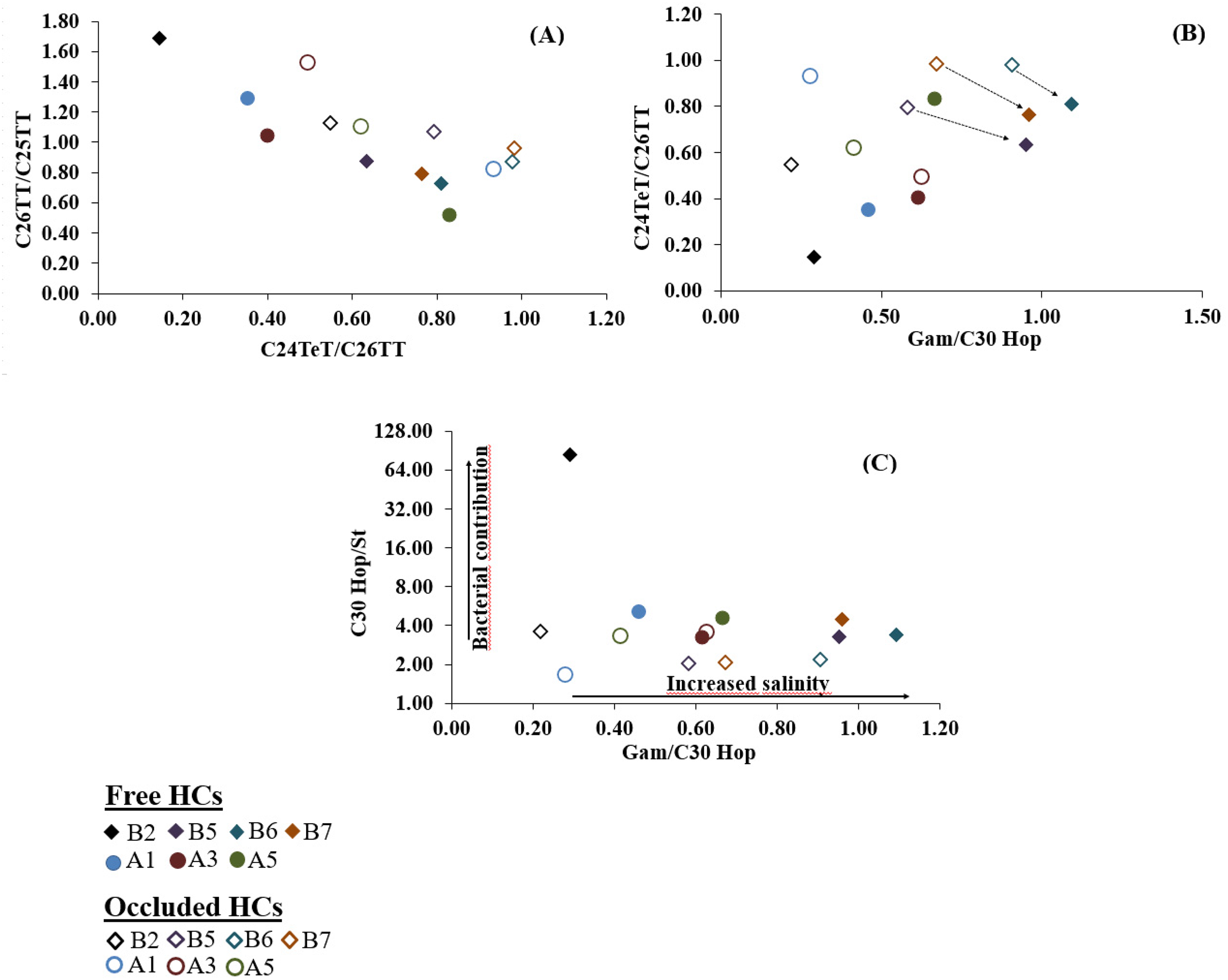
Correlation of the geochemical parameters from free (HC-F) and occluded hydrocarbons (HC-OC) of Areia Branca Trend) and Carnaubais Trend. Cross plots: (A
Discussion
Distribution of tricyclic and tetracyclic terpanes
Peters et al. (2005) proposed that the C22/C21 TT, C24/C23 TT, and C26/C25 TT ratios in tricyclic terpanes can be used to differentiate rock extracts and oils derived from different depositional environments; for example marine, lacustrine, transitional. In this study, the C22/C21TT, C24/C23TT, and C26/C25TT ratios range from 0.14 to 0.33, 0.67 to 0.92, and 0.52 to 1.69, respectively. There is little difference between the free and occluded HCs, implying differenced depositional environments for samples. In cross plots of the C22/C21TT ratio vs. the C24/C23TT ratio in tricyclic terpanes (Figure 7A), and the C26/C25TT ratio in tricyclic terpanes vs the C31R/C30 hopane ratio in hopanes (Figure 7B), the samples from Potiguar section plot in the field representing lacustrine to marine depositional environments. Samples of occlude HCs A1, A3, A5, B6 and B7 showed more carbonate influenced (Figure 7D).
The relative abundance of C26TT tricyclic terpane to C25 tricyclic terpane can be used to distinguish between lacustrine and marine source rock (Peters et al., 2005). According to literature, high amounts of C24 tetracyclic terpane have been found in carbonate and terrestrial samples (Clark and Philp, 1989; Connan et al., 1986; Hanson et al., 2000; Peters et al., 2008; Philp and Gilbert, 1986). Therefore, the difference in the distributions of these tricyclic and tretacyclic terpanes also can be used for distinguished oil from different origins. In general, it was observed that the abundance of tricyclic terpane is much higher than that of tetracyclic terpane (represented by C24TeT/C26TT; Table 3). Figure 7(A) shows the correlation between the ratios C26TT/C25TT and C24TeT/C26TT. For the samples studied, the free hydrocarbon oils A5, B5, B6, B7 and the occluded hydrocarbons A1, B6, B7 have a less abundant C26 tricyclic terpane ratio than the C25 tricyclic terpane (Table 3), similar values was observed by Pestilho et al. (2018) with samples from the same basin, and which was related with deltaic lacustrine oils. This characteristic is consistent with a mixed source of terrigenous and marine organic materials (Adegoke et al., 2014; Adekola et al., 2012). However, in the free hydrocarbon samples A1, A3, B2 and occluded hydrocarbons A3, B2 (Figure 7A, Table 3) the ratio between C26 tricyclic terpane and C25 tricyclic terpane, correspond to a more characteristic for origin of a lacustrine facies (Schiefelbein et al., 1999; Spigolon et al., 2005; Zumberge, 1987). These samples also showed lacustrine characteristics in the plots of C24TT/C23TT vs C22/C21, C24TeT/C26TT vs Gam/C30 Hop; C26TT/C25TT vs C24 TeT/C26TT (Figure 7A–C).
The C31R/C30 Hopane ratio in hopane (Table 3), all samples, except samples B2 and A1 from de occluded hydrocarbons showed a relatively high C24 tetracyclic terpane content that the free hydrocarbons in this study, indicate deposition in a more lacustrine environment (Peters et al., 2005). Gammacerane usually occurs in saline environment and is typically more abundant that C30 hopane in environment with high salinity and typically interpreted as a sign of water column stratification. The values of the Gam/C30 hopane occluded hhydrocarbons are generally lower than free hydrocarbons (Figure 7B), except to sample A3. The highest values were found to samples from Carnaubais trend (group B).
Figure 7C shows the correlation between Gam/C30hopane vs. C30Hop/St ratios. Samples B5, B6 and B7 for free and occluded hydrocarbon fractions show an increase in column stratification, in which B6 represents a higher salinity condition for occluded and free hydrocarbons, suggesting that these samples are of marine-evaporitic origin. On the other hand, the sample B2 (HC-F) presents the highest value to C30 Hop/St ratio, however the occluded hydrocarbon (HC-OC) presents a lower value (3.62; Table 3). Santos Neto and Takaki (2000) reported in their study high proportions of lacustrine oils in the Potiguar Basin, generated from in the Pendência Formation, in which they observed values greater than 20 for the ratio C30 Hop/St Morais (2007) observed variations from 1.4 to 3.2 for the C30 Hop/St ratio in the Carnaubais Trend oils and this is observed in occluded hydrocarbon for the studied samples in which the variation was from 2.01 to 3.62 (Table 2). Areia Branca Trend presented a variation between 3.24 and 5.09 (HC-F) and 1.98 and 3.58 (HC-OC). These results suggest a low bacterial contribution to free hydrocarbon (Areia Branca), associated with deltaic lacustrine oil contribution in the mixed oil of the Areia Branca Trend.
Figure 6 shows m/z 217 mass chromatograms patterns representative of steranes and diasteranes distribution in Areia Branca and Carnaubais trends. The identified sterane compounds are listed in Table S1 (Appendix S1).
The application of steranes relationship in the trends of Areia Branca and Carnaubais were analyzed for free and occluded hydrocarbons. To the free hydrocarbons in the Areia Branca samples the C29 abundance (peaks 33 and 36) are equivalent to the C27 sterane (peaks 25 and 28) with lower contribution of C28 steranes (peaks 29 and 32). The same is observed in the occluded fractions to the A3 and A5 sample. Different profile was observed to the sample A1 (HC-OC), where predominance of C27 sterane was observed suggesting the contribution of marine organisms in this sample.
These results are correlated with Santos Neto and Hayes (1999), who observed a relatively high abundance of C29 sterane in lacustrine oils from the Potiguar Basin. For samples from Carnaubais trend (Figure 6), a greater abundance of C29 ααα20R sterane was observed in sample B2 (HC-F) suggesting a terrestrial contribution (Huang and Meischein, 1979). In samples B5, B6 and B7, the free and occluded fractions showed a predominance of C27 sterane, which is characteristic of marine-evaporitic oils (Santos Neto et al., 1990; Trindade et al., 1992).
Effects of thermal maturation
To estimate the thermal maturity degrees of free and occluded hydrocarbons, diagnostic ratios of saturated biomarkers were used such as pentacyclic terpanes (Ts/Ts + Tm), C32 22S/(22S + 22R), and steranes C29 (S/(S + R), C29 (αββ/αββ+ααα), and also specific correlations between aromatic compounds as trimethyl-naphthalenes (TMN), phenanthrene, and methyl-phenanthrene.
The C32 hopane 22S/(22S + 22R) ratio showed that the oils from the free and occluded hydrocarbon fractions are in the equilibrium range, except for sample B2 (HC-F) which exceeded the equilibrium range, presenting a value of 1.0 (Table 3). For the sterane ββ/(αα + ββ) ratio, the results showed that all samples are below the equilibrium range ranging from 0.3 to 0.5 (Table 3). According to the parameters indicated in Figure 8 (A) the oils are considered mature because they have already reached the equilibrium range or exceeded the 20S/(20S + 20R) ratio but did not reach the equilibrium range for the ββ/(ββ + αα) ratio. This may be the result of greater energy occurred during the regular sterane isomerization process, forming the αββR and αββS isomers (Peters and Moldowan, 1993).
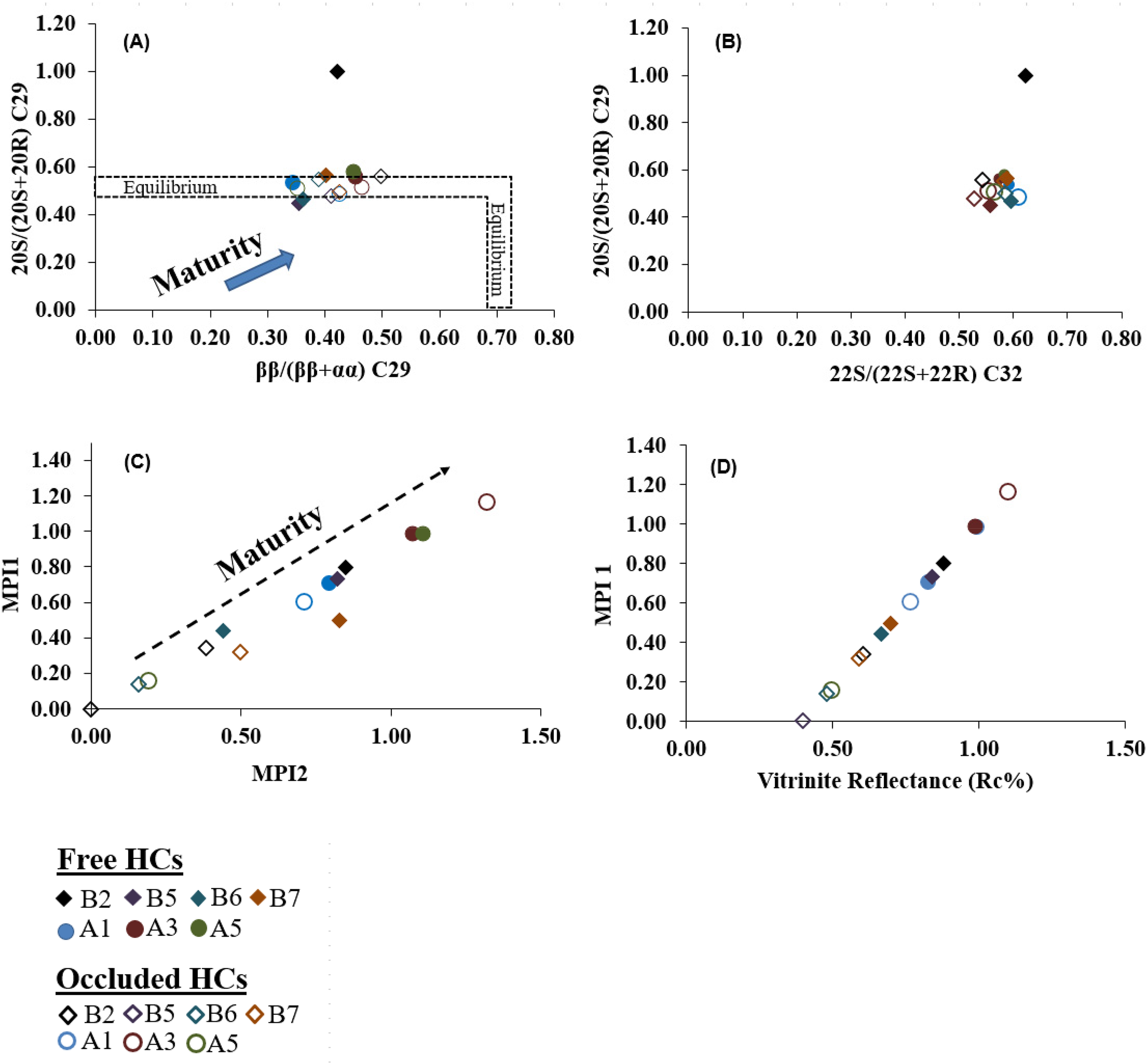
Correlation of the geochemical parameters of free (HC-F) and occluded hydrocarbons (HC-OC) for the sample from Areia Branca Trend and Carnaubais Trend. Cross plots: (A) 20S/(20S + 20R) (ααα C29 St) vs. ββ/(ββ+αα) (C29 St); (B) 22S/(22S + 22R) C32 vs. 20S/(20S + 20R) (ααα C29 St); (C) MPI 1 vs. MPI2. MPI 1 = 1,5*(2MP + 3MP)/(P + 1MP + 9MP) and MPI2 3*2MP/(P + 1MP + 9MP); (D) Rc%= 0.60xMPI 1 + 0.40 vs. 1,5*(2MP + 3MP)/(P + 1MP + 9MP).
The (Ts/Ts + Tm) ratio is a parameter generally used to assess the degree of thermal maturity of the oil. Nevertheless, this proportion is also influenced by variation with organic matter inputs (source facies dependence; Seifert and Moldowan 1978). In this study it was observed that samples of the Areia Branca trend shown values to the (Ts/Ts + Tm) ratio from 0.42 to 0.49 (HC-F) and 0.43 to 0.48 (HC-OC), while in the Carnaubais trend the samples shown values from 0.35 to 0.39 (HC-F) and 0.39 to 0.49 (HC-OC) (Table 3). In Areia Branca oils there is no significant difference between free and occluded hydrocarbons, suggesting that the occluded hydrocarbon it has the same maturity level as the free hydrocarbon. However, for Carnaubais samples, it is possible to observe that the occluded biomarkers from samples B2, B5 and B7 show more abundance of Ts than Tm, which could be related to moderately more thermally evolved or differences in organic facies than the fractions of free biomarkers. But is also important to mention that, however, both Ts and Tm are progressively generated as maturation proceeds, Tm has earlier and more rapid thermal degradation than Ts (Farrimond et al., 1998). Therefore, the results observed in the samples B2, B5 and B7, that demonstrated a reduction in the abundance of Tm in relation to Ts in the fractions of occluded biomarkers, could be due to low concentration of Tm relative to Ts at the moment of occlusion.
The 22S/(22S + 22R) C32 ratio is appropriate to distinguish early stages of maturation. The values of this ratio for the samples analyzed for both free and occluded hydrocarbons are similar and lie in the same range of thermal evolution (Figure 8B, Table 3).
From the TMN values (Table 3, Figure 9), of the free hydrocarbons, samples A1, B2, B5 and B7 presented low thermal evolution and samples A3, A5 and B6 presented characteristics of high thermal evolution. For the occluded hydrocarbon fractions, the samples showed low thermal evolution.
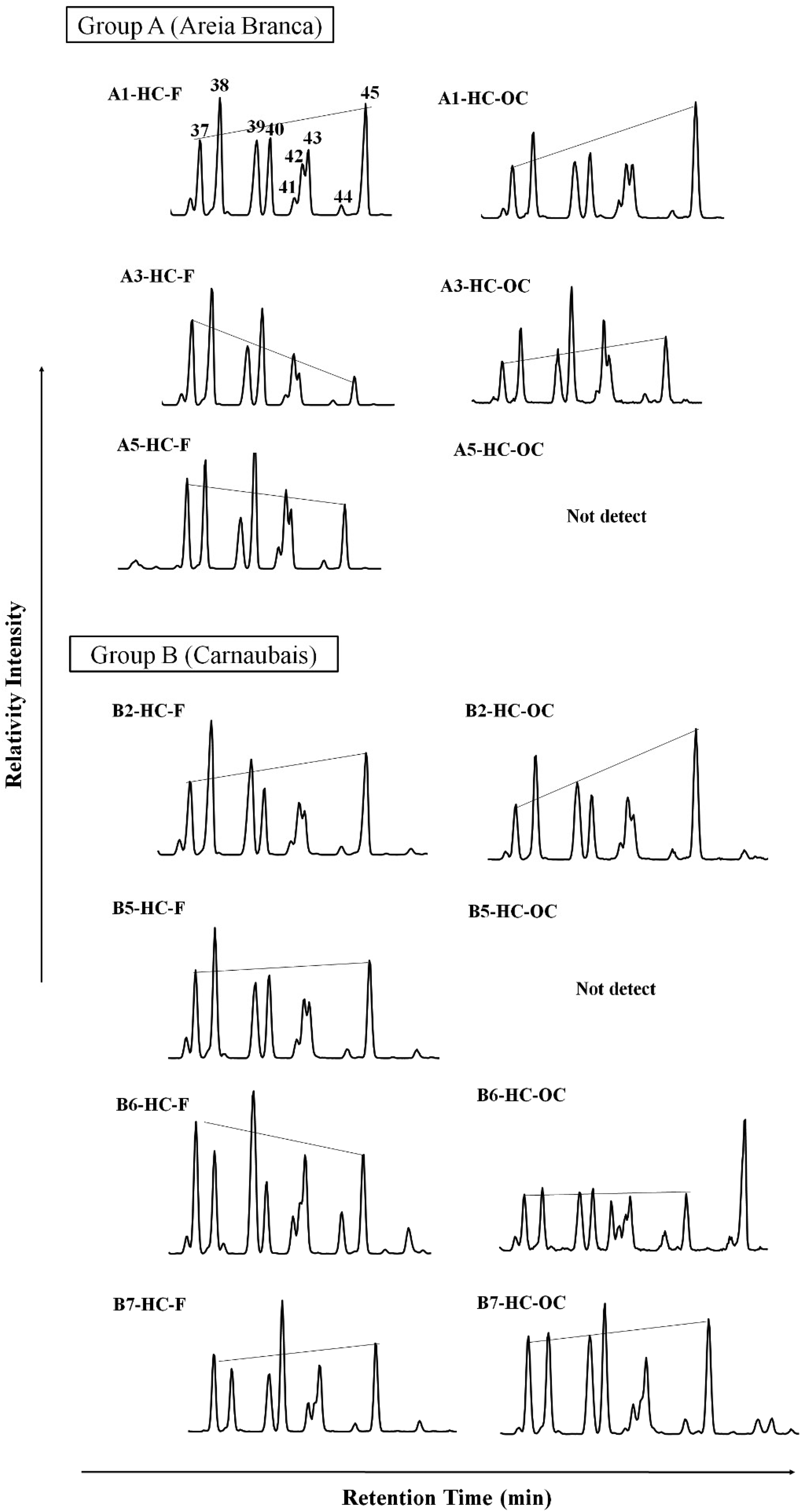
Distribution of trimethyl-naphthalenes in the free (HC F) and occluded (HC OC) hydrocarbons of samples of the Areia Branca (Group A) and Carnaubais trends (Group B). (m/z 170 ion mass chromatograms).
According to the literature, the distribution of alkylated phenanthrene derivatives can be used as a thermal evolution parameter, the most used being 3-, 2-, 9, and 1-methyl-phenanthrene (MP) (peaks 47–50, respectively) (Armstroff et al., 2007). In the mass chromatogram corresponding to methyl-phenanthrenes (Figure 10) it was possible to identify the presence of the 4 isomers of methyl-phenanthrene. The corresponding distribution of the occluded and free hydrocarbon fraction for samples of both trends presents low maturation, since the more stable isomer is at lower concentration and the 9-MP isomer (peak 49) is predominant. Except for sample A3 for occluded and free fractions and sample A5 (HC-F) are mature, especially sample A3 (HC-OC), as the more stable 2-MP isomer (peak 48) is in greater concentration.
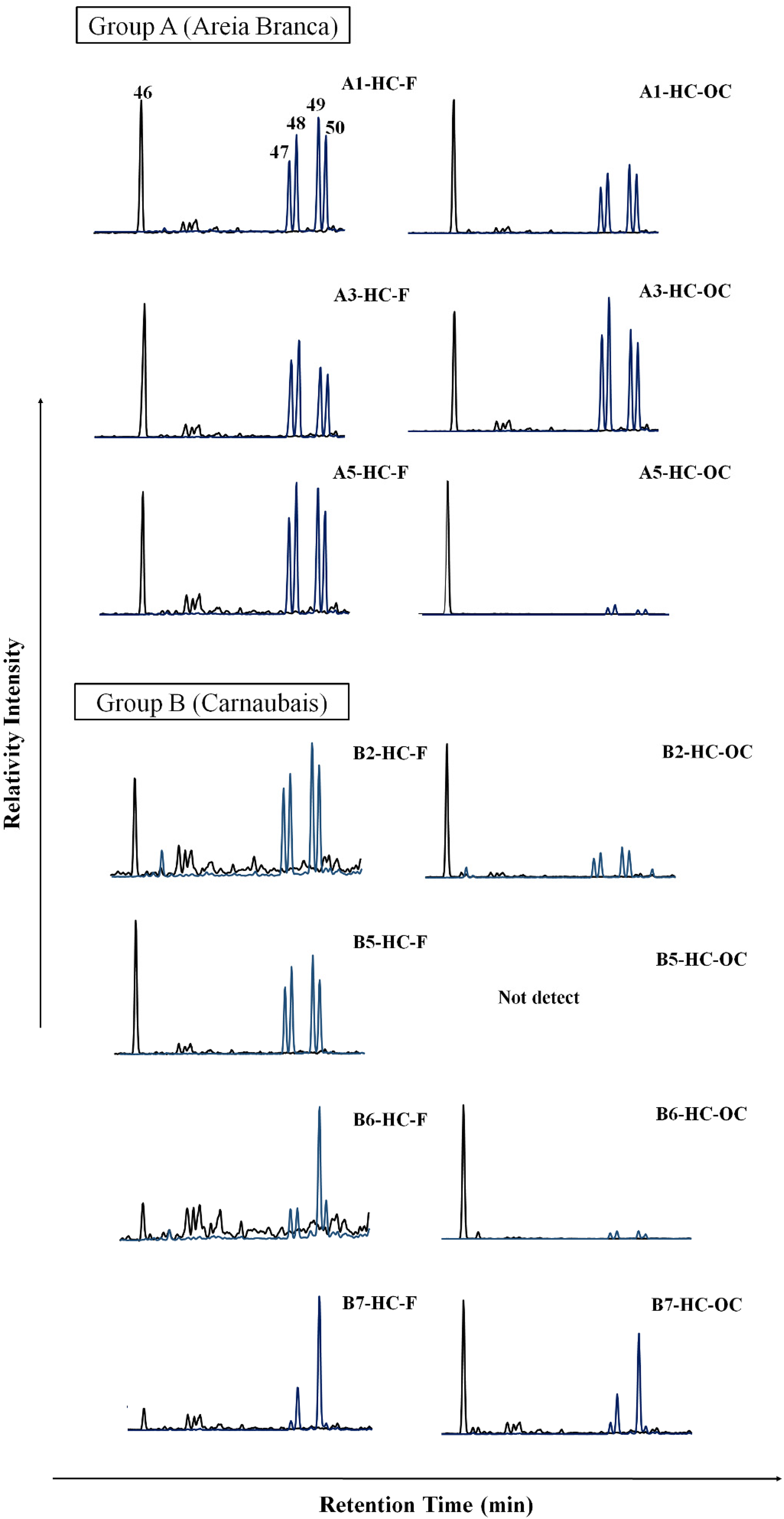
Distribution of phenanthrene and methyl-phenanthrene in the free (HC F) and occluded (HC OC) hydrocarbons of samples of the Areia Branca (Group A) and Carnaubais trends (Group B). (m/z 178 and 192 ions mass chromatograms).
According to literature, the methyl-phenanthrene index (MPI-1) can be correlated with the show case reflectance (Rc%). The MPI-1 ratio can be used within the oil window as an internal maturation parameter and is little influenced by easy changes (Radke et al., 1982). Radke and Welte, 1983, show a positive linear correlation of MPI-1 and Rc% in the oil window (0.65–1.35 Rc%) and a negative correlation with higher maturity (1.35–2.00 Rc%). Among the samples analyzed, occluded hydrocarbons B5, B6, A5, B7 and B2 presented Rc% values of 0.40%, 0.48%, 0.50%, 0.59% and 0.60%, respectively, corresponding to an immature stage (Figure 8D). Samples A1 and A3 resulted in values of 0.76% and 1.10% suggesting their formation at the peak of the oil generation phase (Peters et al., 2005). For free hydrocarbons the samples are in a range of 0.82% to 0.99% for Areia Branca and 0.67 to 0.88% for Carnaubais trend (Table 3), indicating their formation at the peak of the oil generation phase. However, Szczerba and Rospondek (2010) demonstrated that maturity index MPI-1 does not entirely reflect thermal maturity but is instead a molecular expression of complex processes and is dependent partly on catalytic effects of the mineral matrix. Thinking that occluded hydrocarbons should be less influenced by mineral matrix, they could represent the real composition of the oil during occlusion. However, the preference of occlusion between the isomers could not be excluded. Therefore, a more complex study with a greater number of samples must be made to understand how these ratios change with maturation in the occluded hydrocarbons.
Oil mixtures
In the studied basin, the oil mixtures result from the combination of freshwater lacustrine oils from the Upanema Member or from the Pendência Formation with marine-evaporitic oils (Figure 1). The location of mixed oils occurs on the continental shelf and in the emerging part of the Potiguar Basin, such as the fields located along the Areia Branca hinge line (Santos Neto et al., 1990). The marine-evaporitic oils are in the fields located along the Carnaubais and Alto de Macau fault system.
The study of the geochemical composition of the occluded hydrocarbons showed that the filling of the Areia Branca Trend oils was initially made from more lacustrine facies, as both data indicate (HC-OC and HC-F). Sample A1 had lacustrine oil signature and samples A3 and A5 showed saline lacustrine and marine-evaporitic characteristics, respectively. On the other hand, occluded hydrocarbons from samples B5, B6, and B7 of the Carnaubais Trend showed a more marine-evaporitic facies signature, as well as free hydrocarbons. Upanema Mb. contains lacustrine source rocks, which are covered by shales and carbonates rich in organics from the PT beds deposited in a hypersaline lagoon environment with marine influence. In the upper stretch of Alagamar Fm. a regressive cycle culminated with the deposition of shallow deltaic marine source rocks from Mb. Galinhos, as suggested by authors such as Trindade (1992) and Trindade et al. (1992). Sample B2 has lacustrine oil characteristics for free and occluded hydrocarbon data.
It is worth mentioning that through the analysis of occluded hydrocarbons, the mixed oils from the Carnaubais Trend have a greater component of biomarkers from marine-evaporitic facies than the oils from the Areia Branca Trend, which would have a relatively higher proportion of lacustrine component among the biomarkers.
Mixed and marine-evaporitic oils present varying degrees of thermal evolution since they originated from source rocks with different degrees of maturity. Those with the greatest thermal evolution occur along a strip marked by the Areia Branca hinge line, extending to the continental shelf (Santos Neto et al., 1990). The samples from Areia Branca, composed of mixed oils, showed greater thermal evolution when compared to marine-evaporitic oils from Carnaubais Trend. According to the literature, the oils mixture can present the characteristics of high and low maturity (Sonibare et al., 2008).
In the fraction of free hydrocarbons from samples of the Carnaubais Trend, sample B5 appears as the most mature and B6 as the least mature, following in this order B5 > B7 > B6, which may be related to secondary migration, in which as the accumulations are located further away from the “generation kitchen,” located in the offshore portion, the oils present less thermal evolution (Trindade, 1992; Trindade et al., 1992). However, when observing the occluded hydrocarbons sample B5 appears with a lower degree of thermal evolution, following a sequence of B7 > B6 > B5. Though, what was observed in general for all samples is that the fraction of occluded hydrocarbons has a lower thermal evolution compared to free hydrocarbons, except for sample A3.
The analysis of occluded biomarkers was used to understand the mixture of oils in the Potiguar Basin. However, the presence of mixture of oils in the hydrocarbons occluded in the asphaltene structures was observed. Although these structures are protected from degradation, this does not mean that within the asphaltene structure there is mixture, but there are molecules of different oils and if there is the presence of these different oils, these molecules will probably also be released when performing the oxidative degradation, that is, the oils mixed will be present in the occluded hydrocarbons.
Conclusion
The origin parameters of occluded hydrocarbons samples Areia Branca present characteristics of lacustrine, saline lacustrine and marine-evaporitic oils. For the four samples of occluded hydrocarbon Carnaubais, sample B2 presented characteristics of lacustrine environment and samples B5, B6, and B7 of marine-evaporitic oils.
The difficulty in interpreting the source and thermal maturation in free and occluded hydrocarbons may occur since oil mixtures act in the reservoirs, mainly in Areia Branca Trend. On the other hand, those occluded from Carnaubais Trend show similar characteristics to free hydrocarbon samples, being well grouped in several graphs. However, their results vary between lacustrine and marine-evarporitic sources based on geochemical parameters applied to crude oils. This variation can also be linked to certain structural “preferences” in the occlusion process. As for the maturation parameters for the Areia Branca and Carnaubais Trends, the free hydrocarbons presented a higher degree of thermal evolution in relation to the occluded hydrocarbons, a result achieved mainly through the analysis of aromatic compounds. However, the A3 sample of the occluded fraction is characterized as the most mature among all samples.
The results of occluded hydrocarbons showed great similarities with free hydrocarbon oils, which confirm the postulated hypotheses of initial filling of lacustrine oil generated by the Upanema Member followed by a mixture with marine-evaporitic oil generated by the Galinhos Member plus PT layer. In this case study, the understanding that the geochemistry of occluded hydrocarbons can provide for the understanding of petroleum systems was evident. Especially when there is a secondary alteration due to biodegradation, this information can be used to understand how the reservoir was filled. As in the Carnaubais Trend, the biomarkers occluded in the asphaltenes register well the most marine-evaporitic oil.
Supplemental Material
sj-docx-1-eea-10.1177_01445987251369266 - Supplemental material for Applying geochemical parameters to verify oil mixtures in the occluded biomarkers from asphaltene structures
Supplemental material, sj-docx-1-eea-10.1177_01445987251369266 for Applying geochemical parameters to verify oil mixtures in the occluded biomarkers from asphaltene structures by Tais Freitas da Silva, Patrícia Alves Jural, Maria do Carmo Ruaro Peralba, Marleny Blanco Gonzales, André Lucas Batista de Lima, Wolfgang Kalkreuth, Daniel Silva Dubois and André Luiz Durante Spigolon in Energy Exploration & Exploitation
Footnotes
Acknowledgments
This work was part of a cooperation agreement supported by Petrobras Research and Development Center (CENPES) in association to the Laboratório de Análises de Carvão e Rochas Geradoras de Petróleo from the Universidade Federal do Rio Grande do Sul (UFRGS).

Funding
The authors received no financial support for the research, authorship, and/or publication of this article.
Declaration of conflicting interests
The authors declared no potential conflicts of interest with respect to the research, authorship, and/or publication of this article.
Supplemental material
Supplemental material for this article is available online.
References
Supplementary Material
Please find the following supplemental material available below.
For Open Access articles published under a Creative Commons License, all supplemental material carries the same license as the article it is associated with.
For non-Open Access articles published, all supplemental material carries a non-exclusive license, and permission requests for re-use of supplemental material or any part of supplemental material shall be sent directly to the copyright owner as specified in the copyright notice associated with the article.
