




Abstract
Cleat systems are widely distributed within deep coalbed methane (CBM) reservoirs. The significant uncertainty regarding the distribution and density of these cleat systems complicates accounting for their impact on hydraulic fracture propagation. To accurately invert the hydraulic fracture network in deep CBM reservoirs that incorporate cleat systems, this study introduces a new inversion approach based on an equivalent parameter method. Using this model, the effects of key parameters—such as cleat spacing, fracturing fluid volume, number of fracturing clusters, and stress differential—on fracture propagation behavior are systematically investigated. The results reveal that increasing cleat spacing and fracturing fluid volume enhances fracture length and branch fracture density. Conversely, increasing the number of fracturing clusters reduces fracture length but promotes the formation of additional branch fractures. Furthermore, under high stress differential conditions, fractures tend to propagate unidirectionally, whereas low stress differentials favor the development of complex branch fractures. The proposed method is applied to the X1 well and X2 well, and its predictions are compared with wide-area electromagnetic and microseismic monitoring data. The inverted hydraulic fracture length ranges from 85% to 108% of the electromagnetic monitoring fracture length and from 68% to 80% of the microseismic monitoring fracture length. These comparative results further validate the model's accuracy in predicting fracture geometry and half-length. The incorporation of equivalent rock mechanical parameters significantly simplifies and enhances the feasibility of simulating deep coal rock fracture networks.
Keywords
Introduction
After nearly three decades of development, the exploration and development of coalbed methane (CBM) have achieved significant initial breakthroughs, evolving from shallow to deep CBM resources. Deep CBM deposits are abundant and represent a crucial alternative for boosting natural gas reserves and production in the future (Moore, 2012; Zhao et al., 2025). Characterized by low permeability and porosity, deep CBM reservoirs restrict the free flow of gas. Hydraulic fracturing can create complex fracture networks, thereby enhancing the reservoir's permeability, increasing pathways for gas migration, and ultimately improving CBM production capacity. Deep CBM reservoirs extensively feature cleat systems, including more continuous face cleats and less continuous butt cleats. The presence of numerous micro-fractures and cleats inevitably alters the rock's mechanical properties, such as Poisson's ratio and Young's modulus (Ma et al., 2017; Rodrigues et al., 2014; Wang et al., 2014). These unique characteristics pose significant challenges in accurately simulating the fracture morphology within deep CBM reservoirs.
Compared to conventional oil and gas reservoirs, the fracture morphology resulting from CBM hydraulic fracturing is notably more complex (Huang et al., 2025; Wang et al., 2024). In terms of the formation mechanism, CBM strata are characterized by a high density of natural fractures, cleats, and other weak structural surfaces. The presence of numerous micro-fractures and cleats inevitably alters the rock's mechanical properties, significantly influencing the path and morphology of fracture propagation during the hydraulic fracturing process (Cai, 2015; Huang et al., 2022; Wang et al., 2024). After the intersection of hydraulic and natural fractures, three primary scenarios may occur: (1) Hydraulic fractures continue to propagate in their original direction through the natural fractures; (2) hydraulic fractures cause the natural fractures to open and then extend along the orientation of these natural fractures; (3) hydraulic fractures propagate along the natural fractures for a certain distance before deviating and continuing in a new direction (Fan et al., 2014; Warpinski, 1991). The deviation of hydraulic fractures from natural fracture directions can significantly impact the cleat system by creating new fracture branches that connect previously isolated cleats, thereby enhancing overall permeability. However, excessive deviation may also lead to inefficient fracture networks that fail to optimally drain the reservoir (Liu et al., 2024; Solano-Acosta et al., 2007). Currently, the discrete fracture propagation inversion method and equivalent mechanical parameter inversion techniques are primarily used to better understand how the cleat system affects fracture propagation patterns. Discrete fracture models can provide detailed descriptions of fracture locations and distributions, and they are well-suited for simulating the complex fracture morphologies within the formation. However, due to the intricate nature of the fracture network, the construction and computation of such models can become extremely complex. By simplifying the complex mechanical behavior of rocks using equivalent parameters, especially in the context of natural fracture development in CBM strata, computational efficiency can be significantly enhanced while maintaining the physical basis of rock mechanics. This approach better reflects real-world conditions and provides a theoretical foundation for optimizing the fracture network.
In practical applications, scholars have employed a variety of methods for the characterization and inversion of fractures. Common approaches to simulating fracture propagation include laboratory experiments and numerical inversions (Wang et al., 2023). In terms of laboratory experiments, Fan et al. (2014) and Chen et al. (2008) analyzed the morphology and propagation mode of hydraulic fractures under the influence of natural fractures using a true triaxial hydraulic fracturing experimental system. Chi et al. (2018) conducted experiments at various angles between face cleats and the maximum horizontal principal stress. Their research indicates that the interaction between hydraulic fractures and cleat systems significantly influences the fracture network. While indoor experimental conditions are controllable and allow for precise regulation of temperature, pressure, and other variables, the small size of the experimental samples may not be fully representative, thus limiting their ability to accurately reflect fracture behavior under real geological conditions. Regarding numerical inversions, scholars have developed fracture propagation inversion methods based on mechanical mechanisms and fracture morphology inversion techniques using microseismic monitoring data. Traditional fracture propagation models based on mechanical mechanisms include the KGD (Yousefzadeh et al., 2017), PKN (Gale et al., 2007), and plane three-dimensional models (Hamidi and Mortazavi, 2014; Nagel et al., 2011). However, when natural fractures in the reservoir are highly developed, the propagation trajectory of hydraulic fractures becomes very complex, rendering conventional analytical models inadequate. In recent years, to simulate the hydraulic fracture propagation behavior in complex unconventional oil and gas reservoirs, scholars have proposed various numerical inversion methods, including the finite element method (FEM), discrete element method (DEM), and extended finite element method (XFEM). While FEM offers computational efficiency but struggles with complex fracture propagation, DEM models discontinuities at high computational cost, and XFEM avoids remeshing but requires predefined fracture criteria. Additionally, the discrete fracture network (DFN) model, proposed by Meyer and Bazan. (2011) and based on the self-similarity principle, along with Warren and Root's dual medium model (Warren and Root, 1963), provides a foundation for predicting the propagation behavior of DFNs in unconventional formations. According to the distribution characteristics of cleats in CBM seams, Lu et al. (2019) posited that the rock is composed of discrete rock blocks and cleats, and they used the DEM to study the expansion of hydraulic fractures. Weng et al. (2011) employed a cross-analysis model to consider the interaction between hydraulic fractures and pre-existing natural fractures, thereby predicting whether the tip of a hydraulic fracture will pass through or be blocked by the natural fracture it encounters. Based on the development characteristics of natural fractures and cleats in CBM reservoirs, Tian et al. (2023) established a cohesive zone model (CZM) to simulate the influence of cleat angle and cleat density on the propagation behavior of hydraulic fractures. Cai (2015) established a simplified mechanical model of coalbed and rock, incorporating face cleats and end cleats, to calculate the equivalent rock mechanical parameters of the coalbed and rock strata. This approach also analyzed the influence of cleat materials and geometric properties on the equivalent mechanical parameters. The fracture propagation inversion method based on mechanical mechanisms primarily describes the fracture propagation mechanism through a physical model, enabling accurate prediction of fracture behavior. However, this method requires the establishment of a precise mechanical model, and the parameter calibration can be very complex. The inversion technology for fracture morphology, based on microseismic monitoring data, analyzes the fracture activity data from microseismic monitoring. It then compares the monitoring data with inversion results using an inversion algorithm to deduce the fracture morphology. By analyzing the inversion method of lightning breakdown paths, Sheng et al. (2024) proposed a new calculation method for fracturing fracture network expansion. They also simulated the fracture network morphology of actual production wells using microseismic monitoring data, and the inverted fracture morphology was consistent with the distribution range of the microseismic data. The lightning inversion-based reservoir fracturing fracture network propagation model offers a probabilistic approach to account for directional uncertainty in fracture growth, particularly advantageous in reservoirs with poorly constrained geological characteristics. This method uniquely incorporates stochastic fracture branching mechanisms, enhancing its adaptability in formations with uncertain natural fracture distributions. In contrast to conventional numerical approaches (e.g., FEM, DEM, XFEM) that require exact mechanical property inputs, our methodology utilizes microseismic-derived constraints to optimize fracture geometry characterization, significantly reducing calibration complexity while maintaining robust predictive capability. However, this method does not consider the influence of natural fractures on fracture morphology.
Given the dense distribution of cleat systems in deep CBM reservoirs, conventional discrete modeling methods face significant challenges in accurately predicting fracture networks at the field scale. To address this, the present study adopts an equivalent parameter approach to invert the fracture network in deep CBM reservoirs. Equivalent rock mechanical parameters, such as in situ stress and fracture toughness, are derived from the properties of the coalbed matrix, cleat spacing, orientation, and stiffness. These parameters are then used to compute the equivalent stress intensity factor at the tips of fractures. Building on the rapid fracture network inversion method proposed by Sheng et al. (2024), this approach further incorporates the influence of natural fractures and cleat systems on fracture morphology. The result is a more refined rapid inversion method for predicting fracture networks in deep CBM reservoirs, providing theoretical guidance for hydraulic fracturing development in these challenging environments.
Inversion of hydraulic fracture network of deep CBM reservoirs
Model assumption
In this paper, we consider the impact of cleats in coalbed and rock strata on rock mechanical parameters. To simulate the cleat systems within these strata, we establish a simplified physical model with uniformly distributed face and end cleats. The schematic of this simplified model is illustrated in Figure 1(a) (Cai, 2015). In this model, the end cleats are discontinuous, with each cleat having a length of b, a spacing of c between the ends of two cleats along the same line, and a distance of S1 between two adjacent parallel end cleats. The face cleats, in contrast, exhibit good continuity, with each cleat having a length of a and spacing of S2 between two parallel face cleats. The angle between the face cleats and the minimum horizontal principal stress is denoted as
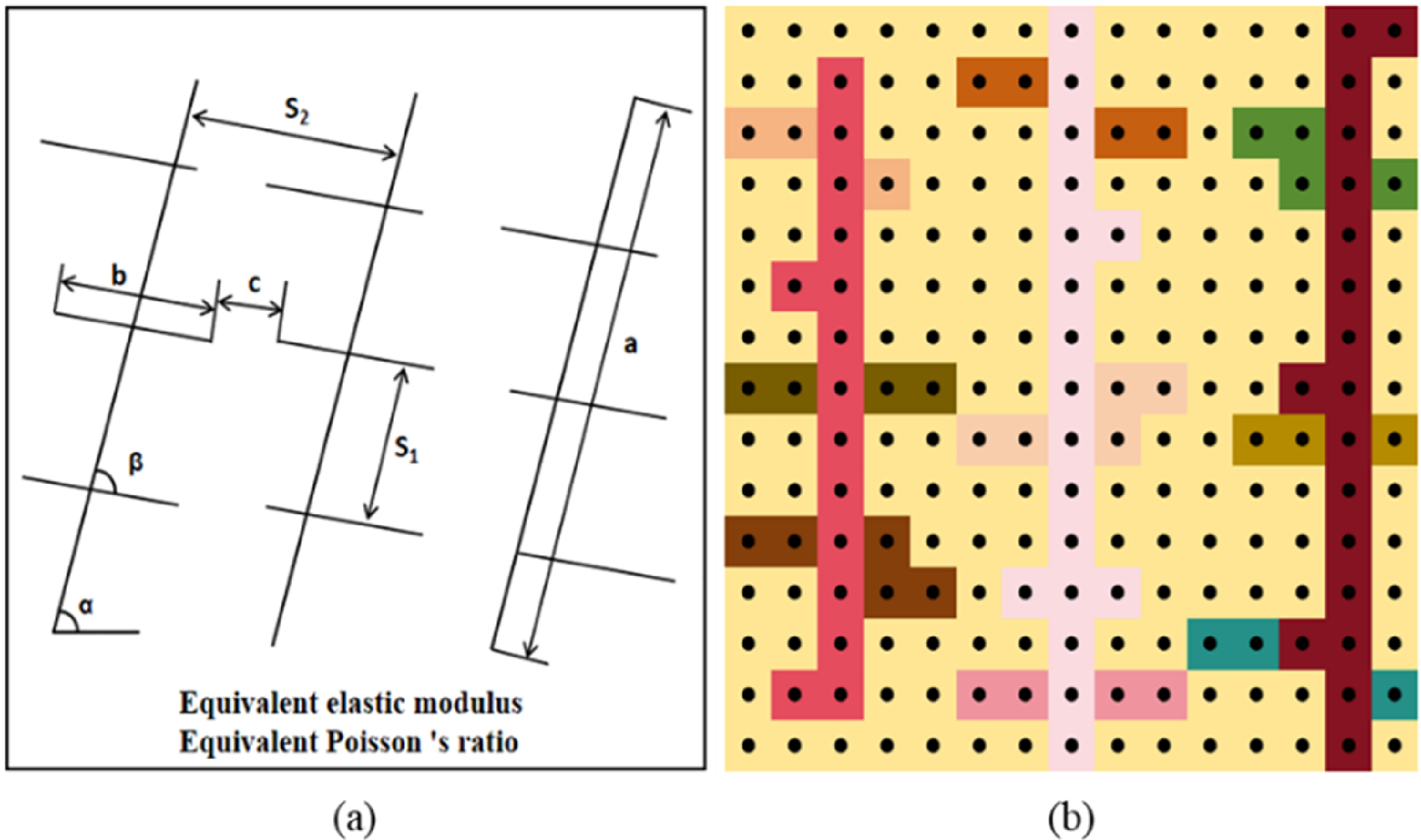
Schematic diagram of the continuous medium model and schematic diagram of the node system for deep coalbed methane (CBM) reservoirs.
Building on a detailed geological model of traditional grids, we use nodes to equivalently represent the CBM reservoir. The CBM reservoir is discretized into nodes, with specialized nodes added to capture heterogeneous media, such as cleat systems. These nodes are independent of the grid structure, allowing for a more flexible representation of fracture propagation by connecting nodes to describe fracture growth (Sun and Lu, 2006). Each node is assigned specific physical parameters, including pressure, stress, and permeability. The schematic diagram of the node system for deep CBM reservoirs is shown in Figure 1(b), where different background colors represent variations in Young's modulus or Poisson's ratio.
Reservoir stress based on equivalent mechanic parameters
In this paper, we conduct a comprehensive mechanical analysis of the coalbed matrix and cleat system, utilizing logging interpretation data such as longitudinal wave time difference, shear wave time difference, and volume density (Zhao et al., 2020). This analysis allows us to calculate the rock mechanical parameters, including the Young's modulus and Poisson's ratio, of the deep coalbed rock matrix, thereby determining the original mechanical properties of the coalbed rock. We then establish a simplified mechanical model of the coalbed rock that includes both face cleats and end cleats. Based on this mechanical analysis, we develop a model that characterizes the axial strain of the coalbed rock mass. Using this model, we calculate the equivalent rock mechanical parameters of the coalbed rock strata (Cai, 2015).


The complex rock structure is simplified into a homogeneous material with equivalent Young's parameters to facilitate stress analysis. Using the equivalent rock mechanical parameters that account for both face and end cleats, we calculate the equivalent in-situ stress parameters, such as equivalent formation pressure, equivalent maximum and minimum principal stresses, and equivalent pore pressure in the rock.
According to linear Young's fracture mechanics, and considering that the fractures exhibit a mixed open-shear mode, the far-field stress state of the fracture is obtained through coordinate transformation (Feng and Kang, 2013) . Based on the analysis of the stress field in CBM reservoirs with multiple cleats, we assume that there are n cleats in the CBM reservoirs. It is considered that the pore pressure of the reservoir near the borehole can be approximately equal to the drilling fluid pressure, and then the effective stress of the formation near the borehole can be obtained (Zhao et al., 2020). Simultaneous can be obtained

Applying the superposition principle, the equivalent stress intensity factor at the fracture tip can be obtained (Feng and Kang, 2013). The equivalent stress intensity factor of type I (open type) fracture tip is

The equivalent stress intensity factor of type II (sliding type) fracture tip is

The equivalent stress intensity factor of the I-II composite fracture tip is

It is generally believed that type I open fractures are formed by hydraulic fracturing, and fracture propagation is a process of brittle fracture of the rock mass at the tip of the fracture. The critical stress at the initiation of fracture is (Zhao et al., 2022)

Fracture network inversion approach
By analyzing the inversion method of lightning breakdown paths, Sheng et al. (2021) applied the similarity principle to comprehensively account for reservoir geological parameters, in-situ stress distribution, and fracturing construction parameters. They used circumferential stress and critical fracture stress to determine the range of secondary fracture propagation. To capture the randomness in fracture propagation, a random function and a fractal probability index were introduced, leading to the development of a novel inversion method for fracture network propagation. This method also incorporates a probability distribution function to characterize the direction of fracture propagation.

Based on the continuous medium model, equivalent rock mechanical parameters such as in situ stress and fracture toughness are calculated using the properties of the coalbed matrix, including face-end cleat spacing, angle, and stiffness. From these parameters, the equivalent stress intensity factor at the fracture tip is determined. Finally, the fracture shape, length, and width are obtained through inversion.
Model verification
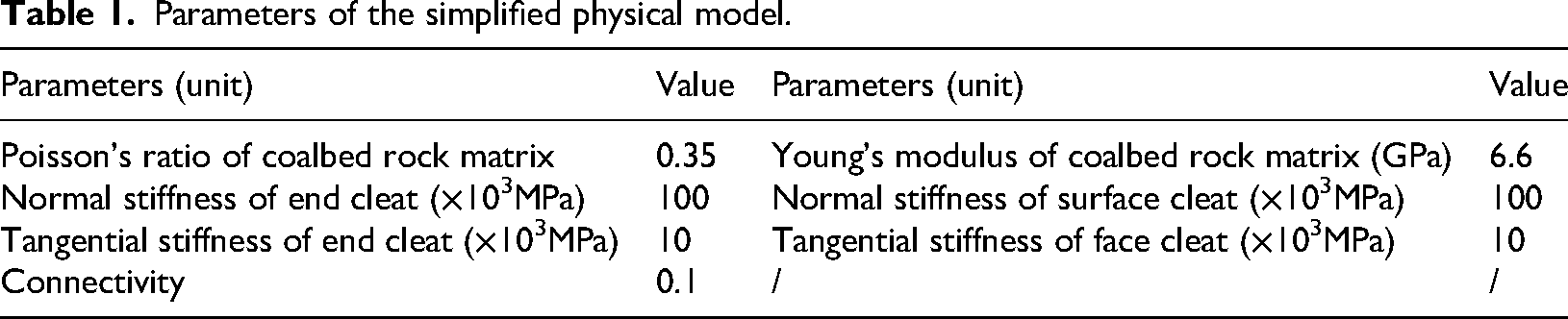
In this study, the equivalent Young's modulus and Poisson's ratio were determined to be 8.5 GPa and 0.32, respectively, based on the simplified physical model parameters for deep coal rock provided in Table 1. Furthermore, the maximum and minimum horizontal principal stresses were configured at 67 and 58.6 MPa, respectively, alongside an overburden pressure of 60.4 MPa, a rock breakdown pressure of 43.2 MPa, an injection rate of 14 m³/min, a fracturing duration of 120 min, a maximum pump pressure of 70.1 MPa, a permeability of 0.2 mD, a porosity of 3%, a rock density of 1.35 g/cm³, and a coal seam thickness of 6.21 m. Employing identical parameter configurations, numerical inversions were executed for both the DFN model and the equivalent continuum fracture network model to ascertain the precision of the formulated models. The morphology inversion of the DFN is depicted in Figure 2(a), wherein the black short lines symbolize the cleat system within the coal rock. The interaction of hydraulic fractures with natural fractures induces the latter to open and propagate along their inherent orientation. The morphology inversion of the equivalent continuum fracture network is illustrated in Figure 2(b). A comparative analysis of the fracture inversion outcomes from both models, under equivalent parameter conditions, revealed a commendable concordance within the permissible error threshold (less than 10%).
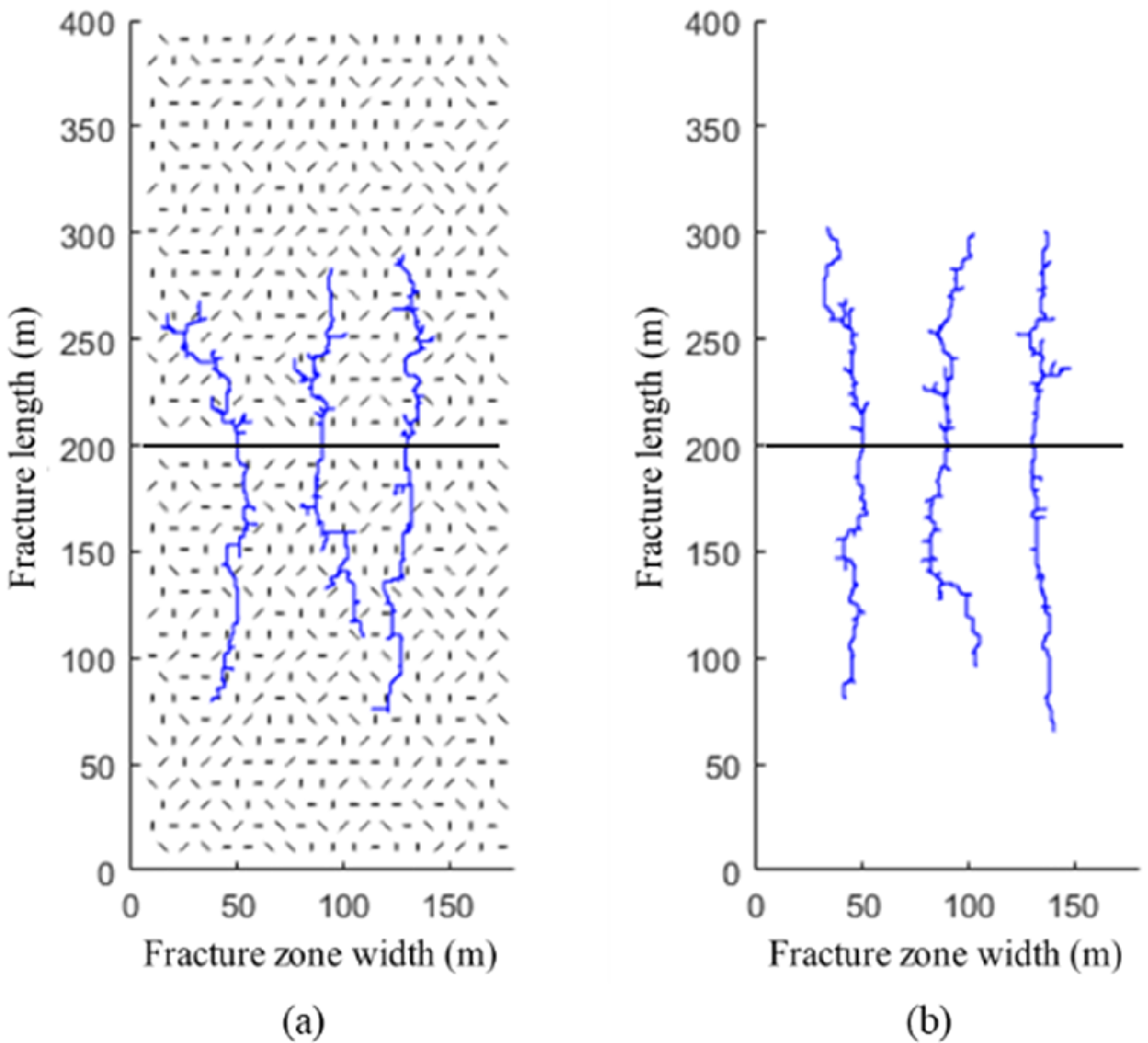
Discrete and equivalent fracture network of deep coalbed methane (CBM) reservoirs.
Parameters of the simplified physical model.
Specifically, the DFN inversion resulted in a fracture half-length of 108 m, whereas the equivalent continuum model (ECM) produced a half-length of 118 m, representing a difference of 9.3%. This discrepancy primarily stems from the ECM's tendency to allow fractures to propagate through natural fractures along their original trajectory, rather than aligning with the natural fracture orientation. Nevertheless, this deviation remains within acceptable engineering tolerances, demonstrating that the ECM effectively captures the macroscopic characteristics of the fracture system. The total length of branch fractures in the DFN inversion was 1167 m, compared to 1192 m in the ECM inversion, with a negligible difference of only 2.1%. This outcome highlights the ECM's high accuracy in characterizing the total length of the fracture system and its ability to reliably represent the overall developmental features of the fracture network. Additionally, the branch fracture density in the DFN inversion was 0.1385, while the ECM yielded a density of 0.1290, differing by 6.9%. This variation remains within an acceptable range, further validating the ECM's capability to reflect the overall developmental intensity of the fracture system.
Based on the inversion results, the ECM demonstrates strong agreement with the DFN model in terms of fracture half-length, total branch fracture length, and branch fracture density. This indicates that, in reservoirs with relatively uniform fracture development, the ECM can effectively serve as a substitute for the DFN model, significantly reducing computational complexity and enhancing inversion efficiency. However, in reservoirs exhibiting strong heterogeneity in fracture development, the ECM may underestimate localized fracture characteristics. In such scenarios, the DFN model remains the preferred approach for accurate representation.
Fracture network analysis
During the extraction of deep coal reservoirs, the propagation of fracture networks represents a highly intricate and dynamic geological process. Consequently, conducting a sensitivity analysis on hydraulic fracture propagation in deep coal formations is critically important for optimizing production efficiency, minimizing operational costs, and ensuring operational safety. Utilizing the foundational reservoir parameters detailed in the “Model verification” section, this study systematically examines the impact of key variables—including cleat spacing, fracturing fluid volume, number of fracturing clusters, and stress differential—on the morphology of fracture propagation.
Cleat spacing
In the hydraulic fracturing of deep coal reservoirs, the existence of natural fractures and cleats, acting as weak planes, plays a critical role in determining the propagation pathways and morphological characteristics of hydraulic fractures. Consequently, this study examines the effect of face cleat spacing—ranging from 0.1 to 0.6 m in increments of 0.1 m—on hydraulic fracture propagation behavior, with particular emphasis on evaluating changes in fracture morphology, half-length, total branch fracture length, and branch fracture density. The inversion results of fracture morphology, as depicted in Figure 3(a) to (f), provide a clear visual representation of how face cleat spacing influences fracture patterns.
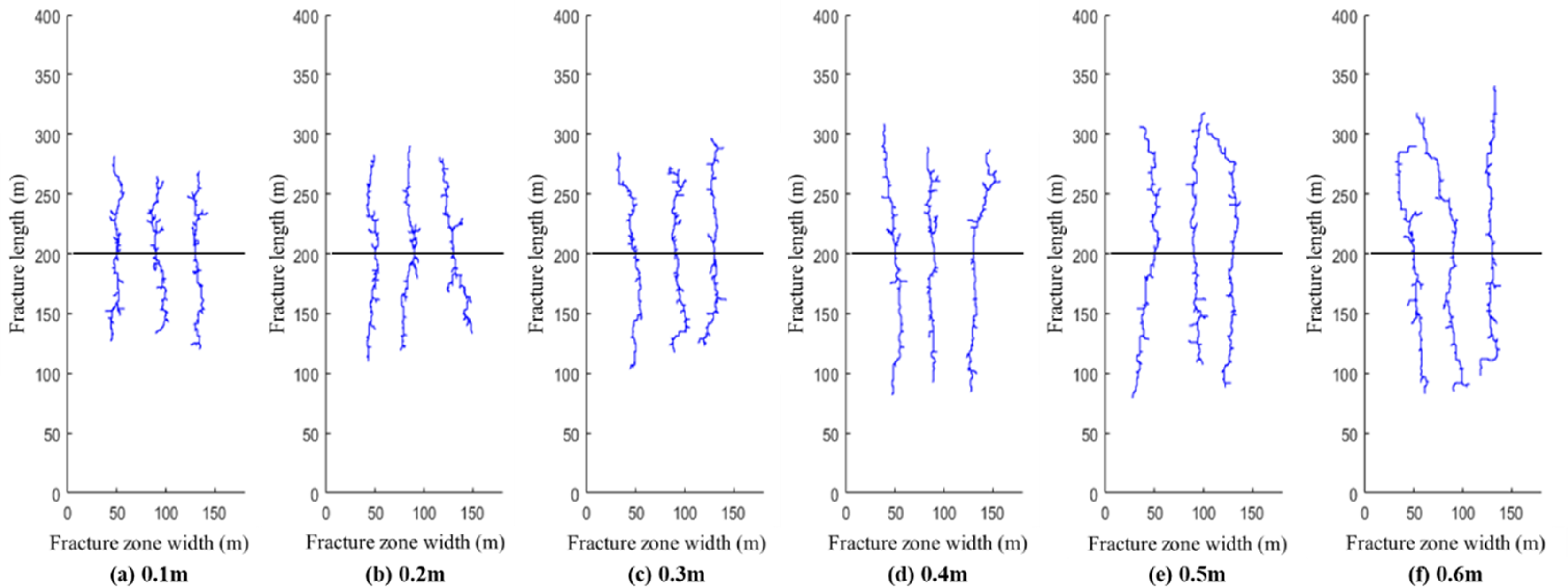
Fracture network morphology with different cleat spacing.
As derived from Equations (1) and (2), an increase in face cleat spacing leads to a corresponding rise in Young's modulus and Poisson's ratio of the coal rock, thereby influencing fracture propagation dynamics. Figure 4(a) to (c) illustrate the trends in fracture half-length, total branch fracture length, and branch fracture density as functions of face cleat spacing. From Figure 4, it is apparent that both fracture half-length and total branch fracture length exhibit an increasing trend with larger face cleat spacing. This suggests that greater spacing enhances the continuity of the coal rock, facilitating more extensive fracture propagation. In contrast, branch fracture density initially decreases and then stabilizes as face cleat spacing increases. This behavior is attributed to the tendency of fractures to form a single dominant fracture in coal rock with larger face cleat spacing. While the total branch fracture length increases, these branches are distributed across a broader area, reducing the number of branch fractures per unit area and thus lowering the branch fracture density. The reduction in branch fractures diminishes the complexity of the fracture network. Beyond a certain threshold of face cleat spacing (0.4 m), its impact on fracture propagation weakens, and the variation in branch fracture density levels off. A comprehensive analysis of these trends provides valuable insights into the propagation mechanisms of deep coal rock under hydraulic fracturing conditions.
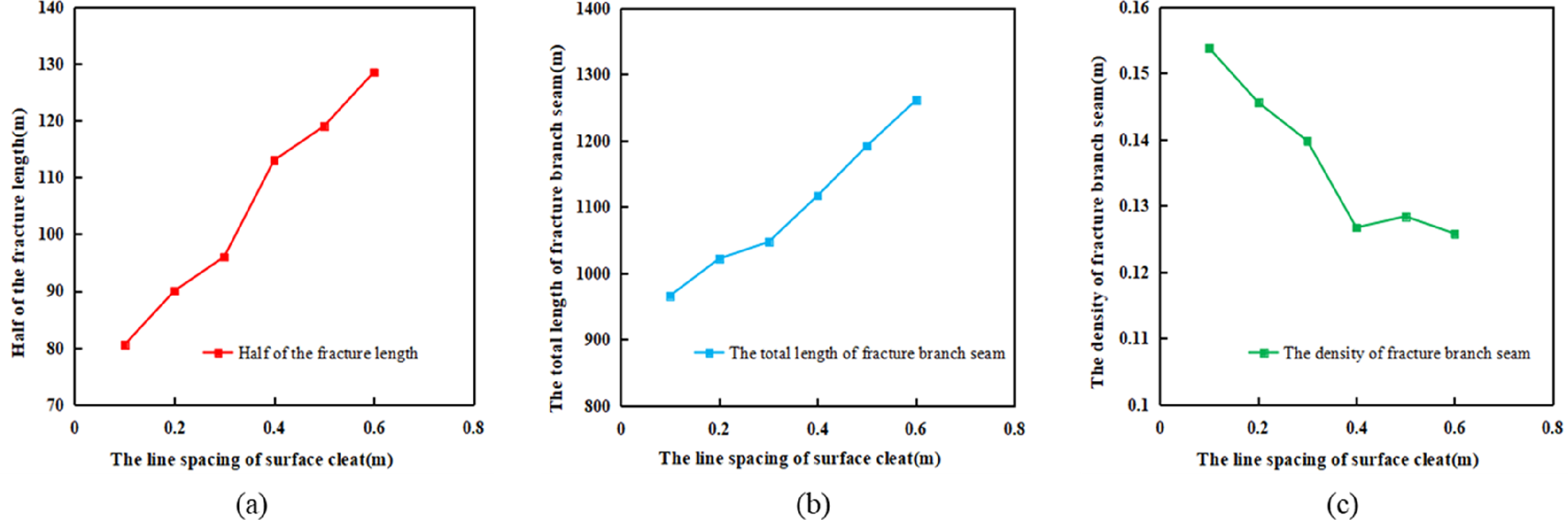
Curve of key parameters of fracture network changing with face cleat spacing.
Fracturing fluid volume
Fracturing fluid volume is a pivotal parameter that governs fracture propagation and directly influences the complexity of the resulting fracture network. This study examines the effects of varying fracturing fluid volumes (700, 1120, 1540, 1960, 2380, and 2800 m³) on hydraulic fracture propagation behavior, with a particular emphasis on analyzing changes in fracture morphology, half-length, total branch fracture length, and branch fracture density. The inversion results of fracture morphology, as depicted in Figure 5(a) to (f), provide a clear visual representation of these variations.
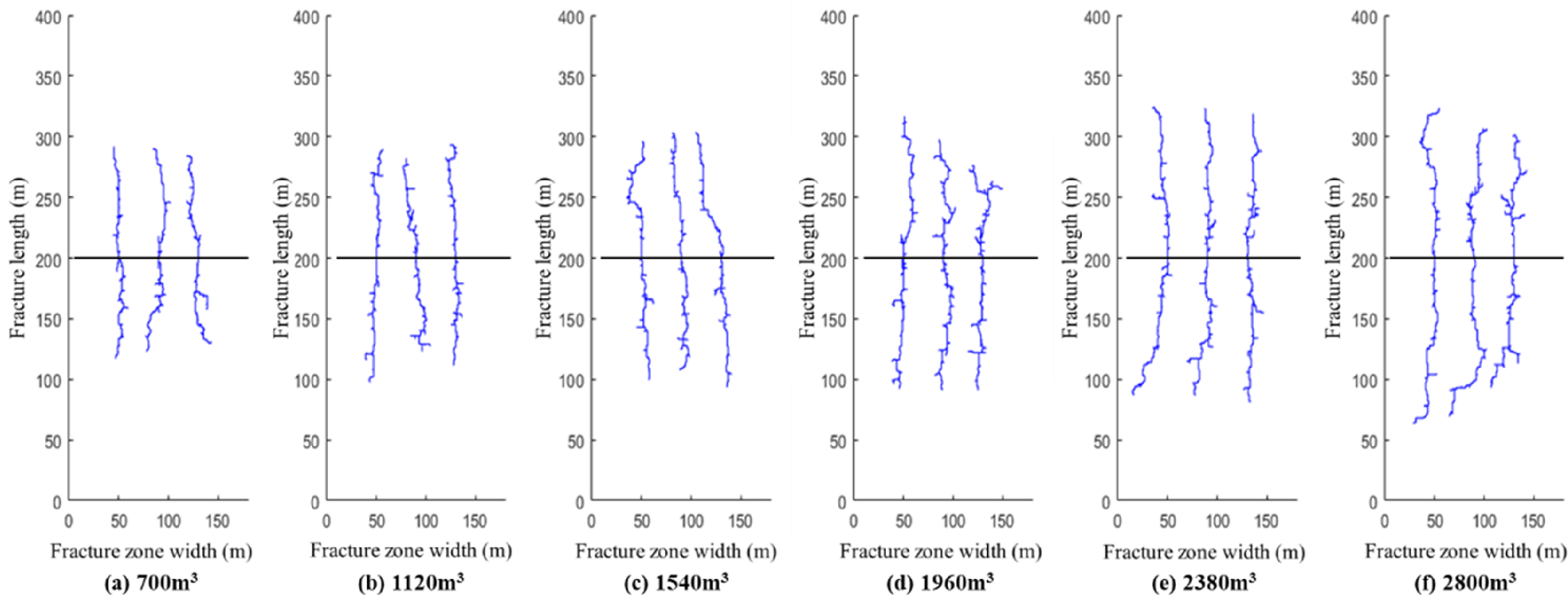
Fracture network morphology with different fracturing fluid volume.
Figure 6(a) to (c) illustrate the trends in fracture half-length, total branch fracture length, and branch fracture density as functions of fracturing fluid volume. As shown in Figure 6, all three metrics—fracture half-length, total branch fracture length, and branch fracture density—increase with higher fracturing fluid volumes. This demonstrates that a greater volume of fracturing fluid facilitates the extension of fractures over longer distances, enhancing fracture propagation and resulting in increased fracture length. Moreover, elevated fracturing fluid volumes generate higher internal fracture pressures, which more effectively activate natural cleats and weak planes within the coal rock. This process promotes the development of a more intricate fracture network. In practical CBM development, optimizing the fracturing fluid volume can significantly improve fracture length and branch fracture density, thereby enhancing the complexity and connectivity of the fracture network. This, in turn, leads to improved reservoir stimulation and increased production capacity.
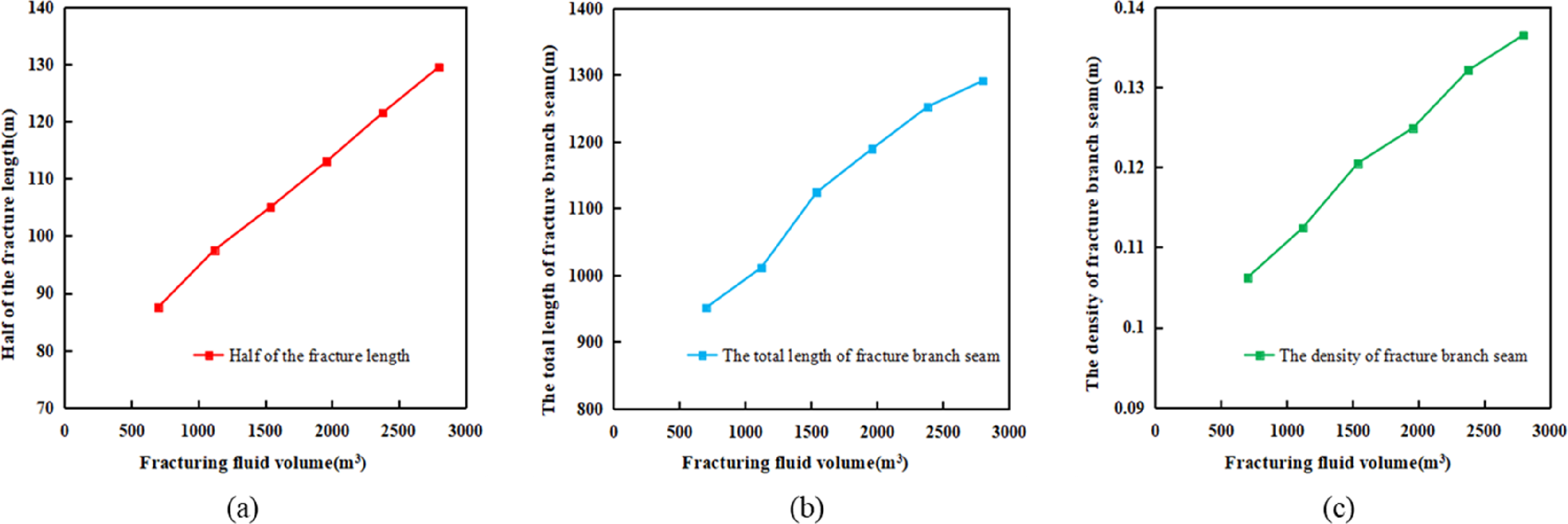
Curve of key parameters of fracture network with fracturing fluid volume.
Fracturing clusters numbers
Increasing the number of fracturing clusters may induce interference among fractures. When multiple clusters are activated simultaneously within the rock, their interactions can lead to irregular fracture geometries or deviations from the intended fracture propagation paths. To address this, the present study examines the influence of varying numbers of fracturing clusters (2, 3, 4, 5, 6, and 7 clusters) on hydraulic fracture propagation behavior, with a particular focus on analyzing changes in fracture morphology, half-length, total branch fracture length, and branch fracture density. The inversion results of fracture morphology, as depicted in Figure 7(a) to (f), provide a clear visual representation of these variations.
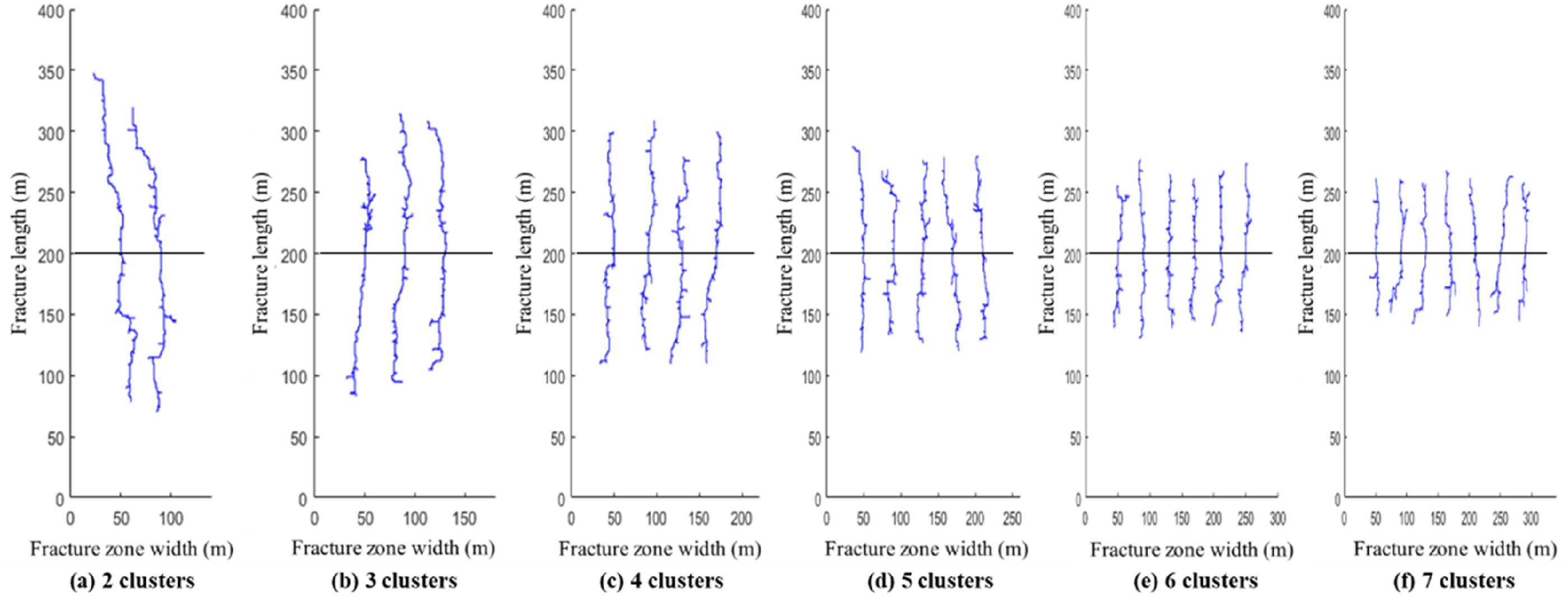
Fracture network morphology with different fracturing cluster numbers.
Figure 8(a) to (c) illustrates the trends in fracture half-length, total branch fracture length, and branch fracture density as functions of the number of fracturing clusters. As shown in Figure 8, the fracture half-length decreases with an increasing number of clusters, while the total branch fracture length and branch fracture density demonstrate an upward trend. This behavior arises because a higher number of clusters distributes the fracturing fluid and proppant across multiple initiation points, reducing the energy available per cluster and thereby limiting the fracture propagation capacity. Conversely, increasing the number of clusters activates a greater number of natural cleats and weak planes, promoting the formation of additional branch fractures and enhancing the complexity of the fracture network. Consequently, in practical applications, optimizing the number of clusters requires a careful balance, taking into account coal rock properties, in situ stress conditions, and target production rates to achieve an optimal trade-off between fracture length and branch fracture density.
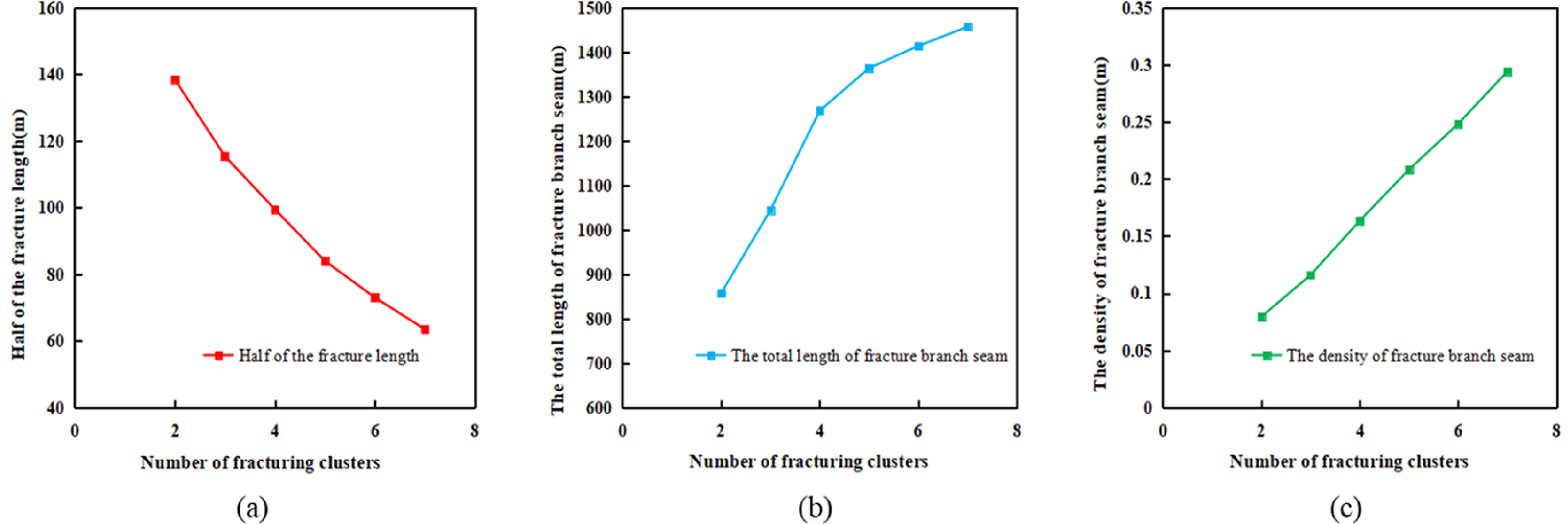
Curve of key parameters of fracture network with fracturing cluster numbers.
Stress difference
Fractures typically propagate along the orientation of the maximum horizontal principal stress, with a higher stress differential promoting the development of a single dominant fracture aligned in that direction. However, stress regimes vary significantly across different geological environments, resulting in diverse effects on fracture morphology. While the influence of varying stress differences on the overall fracture length appears to be minimal (Xu et al., 2023), they may significantly affect fracture complexity, including parameters such as total branch fracture length and fracture branching density. To address this, the present study examines the impact of stress differentials (0, 3, 6, 9, 12, and 15 MPa) on hydraulic fracture propagation behavior, with a particular focus on analyzing changes in fracture morphology, half-length, total branch fracture length, and branch fracture density. The inversion results of fracture morphology, as depicted in Figure 9(a) to (f), provides a clear visual representation of these variations.
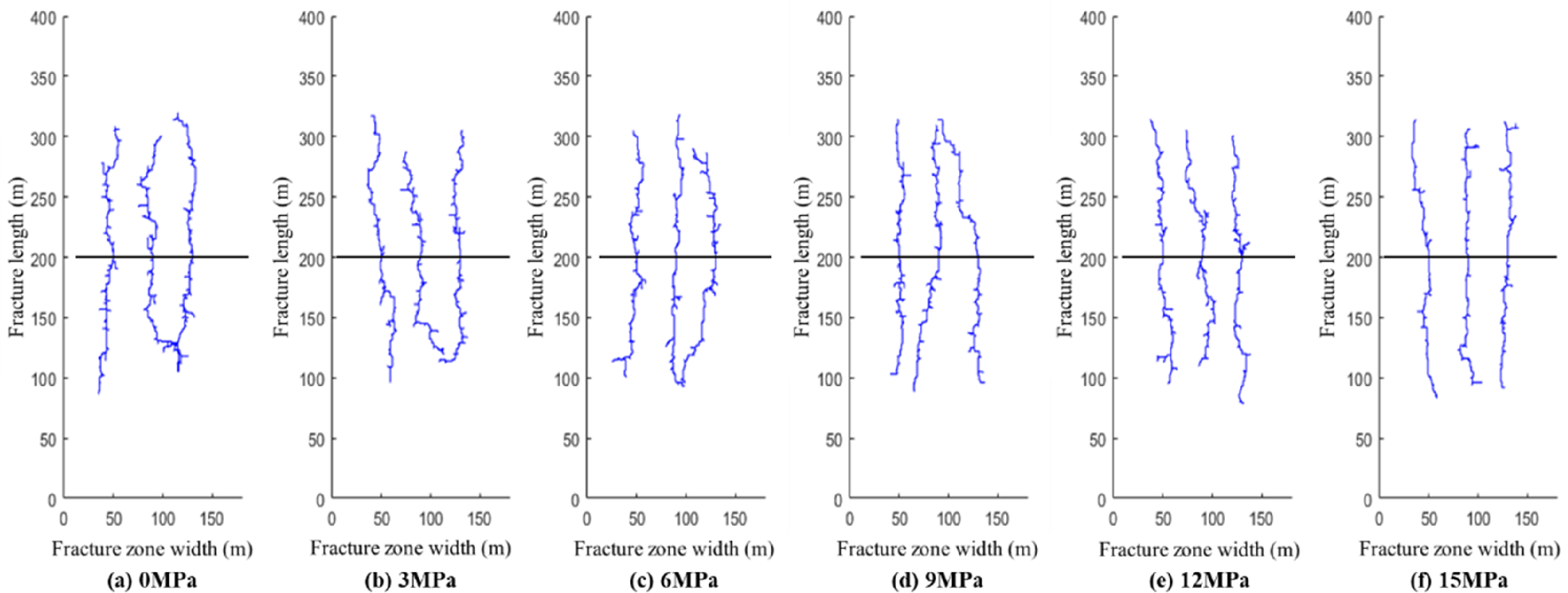
Fracture network morphology with different stress difference.
Figure 10(a) to (c) illustrates the trends in fracture half-length, total branch fracture length, and branch fracture density as functions of stress differential. As shown in Figure 10, both the total branch fracture length and branch fracture density demonstrate a declining trend with increasing stress differential. This occurs because, under high-stress differential conditions, the energy driving fracture propagation is predominantly concentrated along the maximum principal stress direction, causing fractures to extend preferentially in this orientation. Consequently, the resulting fracture morphology tends to be more linear and less complex, with fewer branch fractures. Conversely, under low-stress differential conditions, fractures are more likely to propagate in multiple directions, forming intricate branch fractures or network-like structures, which increases both the total branch fracture length and density. Notably, the fracture half-length remains relatively stable, ranging between 110 and 120 m, as the stress differential increases. This suggests that the stress differential primarily governs the direction of fracture propagation rather than the overall fracture length. By analyzing the influence of stress differentials, it becomes possible to predict fracture geometry and complexity, enabling the optimization of fracturing design and operational parameters.
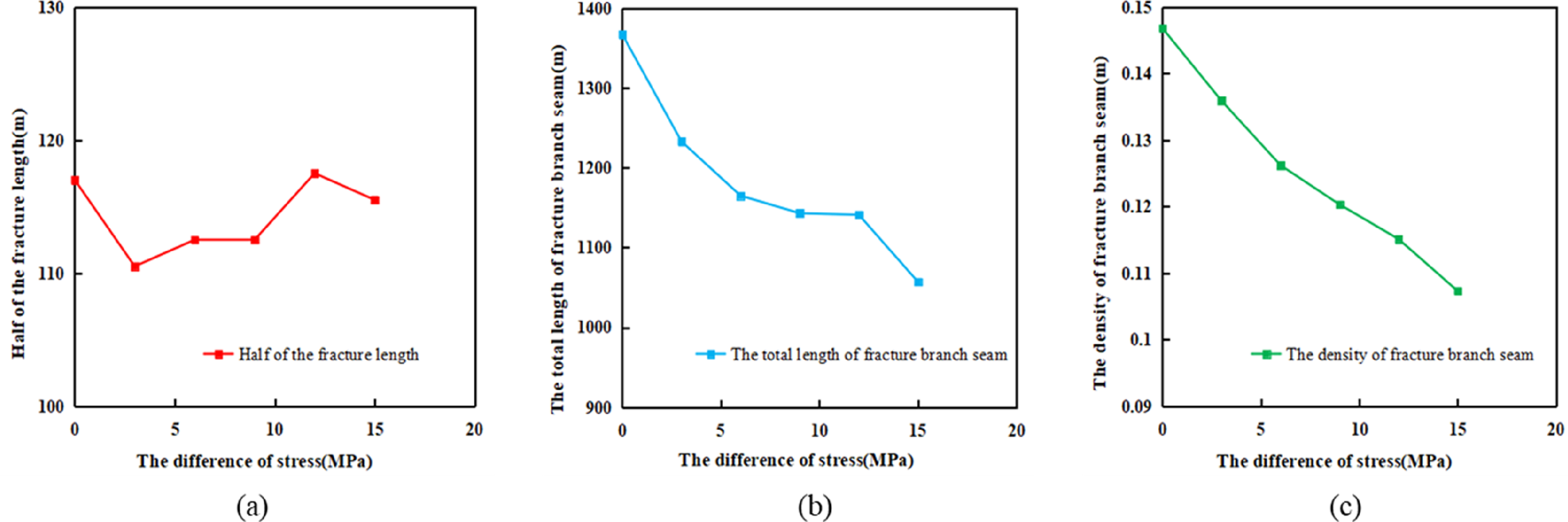
Curve of key parameters of fracture network with stress difference.
Application in actual deep CBM reservoirs
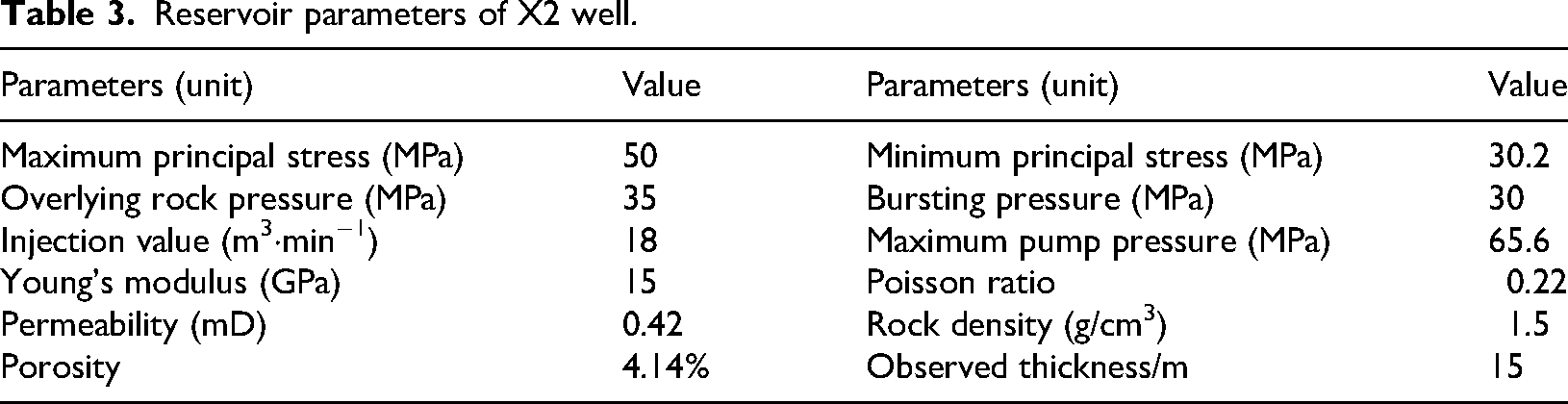
In this study, the proposed methodology was applied to the X1 well in the Ordos Basin and the X2 well in the Daji Block to evaluate the accuracy and reliability of the model by establishing a hydraulic fracture propagation model for deep coal rock and comparing it with wide-area electromagnetic monitoring data from the well. The Well X1 located in the southeastern Ordos Basin, penetrates coal seams at depths of 2500–3000 m, with individual layers reaching a maximum thickness of 6.5 m. The coal-bearing strata were primarily deposited during the Late Paleozoic (Carboniferous–Permian) and Early Mesozoic (Jurassic) periods. The X1 well comprises 15 perforation stages, predominantly utilizing 3 clusters per stage, with a limited number of stages employing 4 clusters. In the Daji Block, coal seams exhibit a wide burial depth range, with deep CBM reservoirs generally exceeding 1500 m. The coal-bearing formations in this area were mainly developed during the Carboniferous–Permian (Late Paleozoic) and belong to the Taiyuan–Shanxi coal measures along the eastern margin of the Ordos Basin. The X2 well comprises 10 perforation stages, predominantly utilizing 5–7 clusters per stage, with a limited number of stages employing 3 clusters. A hydraulic fracture propagation model for the X1 well was developed based on actual geological data, well logging data, and fracturing operation parameters, with detailed parameters provided in Tables 2 and 3.
Reservoir parameters of X well.
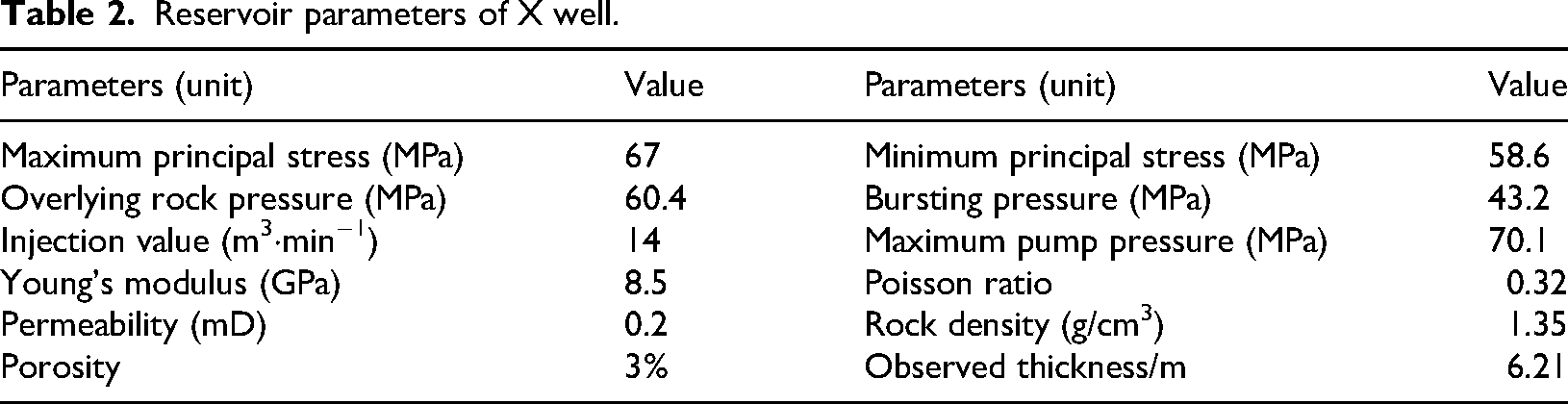
Reservoir parameters of X2 well.
The model comprehensively incorporates the geological characteristics of deep coal rock, including critical parameters such as in situ stress field distribution, mechanical properties of the coal rock, and natural fracture development. Numerical inversions were conducted to analyze the fracture propagation morphology and spatial distribution characteristics during the fracturing process.
Figure 11(a) presents the simulated fracture morphology of the X1 well, demonstrating that the fractures predominantly propagate along the direction of the maximum principal stress and display notable asymmetry, consistent with the geological context and stress regime of the region. To further validate the model's accuracy, the fracture inversion results were compared with wide-area electromagnetic monitoring data from the X1 well. Figure 11(b) illustrates the coverage range of the wide-area electromagnetic waves, showing a strong spatial correlation between the simulated fracture morphology and the electromagnetic wave coverage. This confirms the method's capability to accurately characterize fracture development features. Specifically, using fracture half-length as an evaluation metric, Table 4 compares the fracture inversion results of the X1 well with the wide-area electromagnetic monitoring data. The results indicate that the simulated average hydraulic fracture length for the X1 well is 241.7 meters, while the average electromagnetic wave coverage length is 258.8 m. The simulated hydraulic fracture lengths range between 85% and 108% of the electromagnetic wave coverage lengths, highlighting a high degree of agreement between the inversion results and the electromagnetic monitoring data.
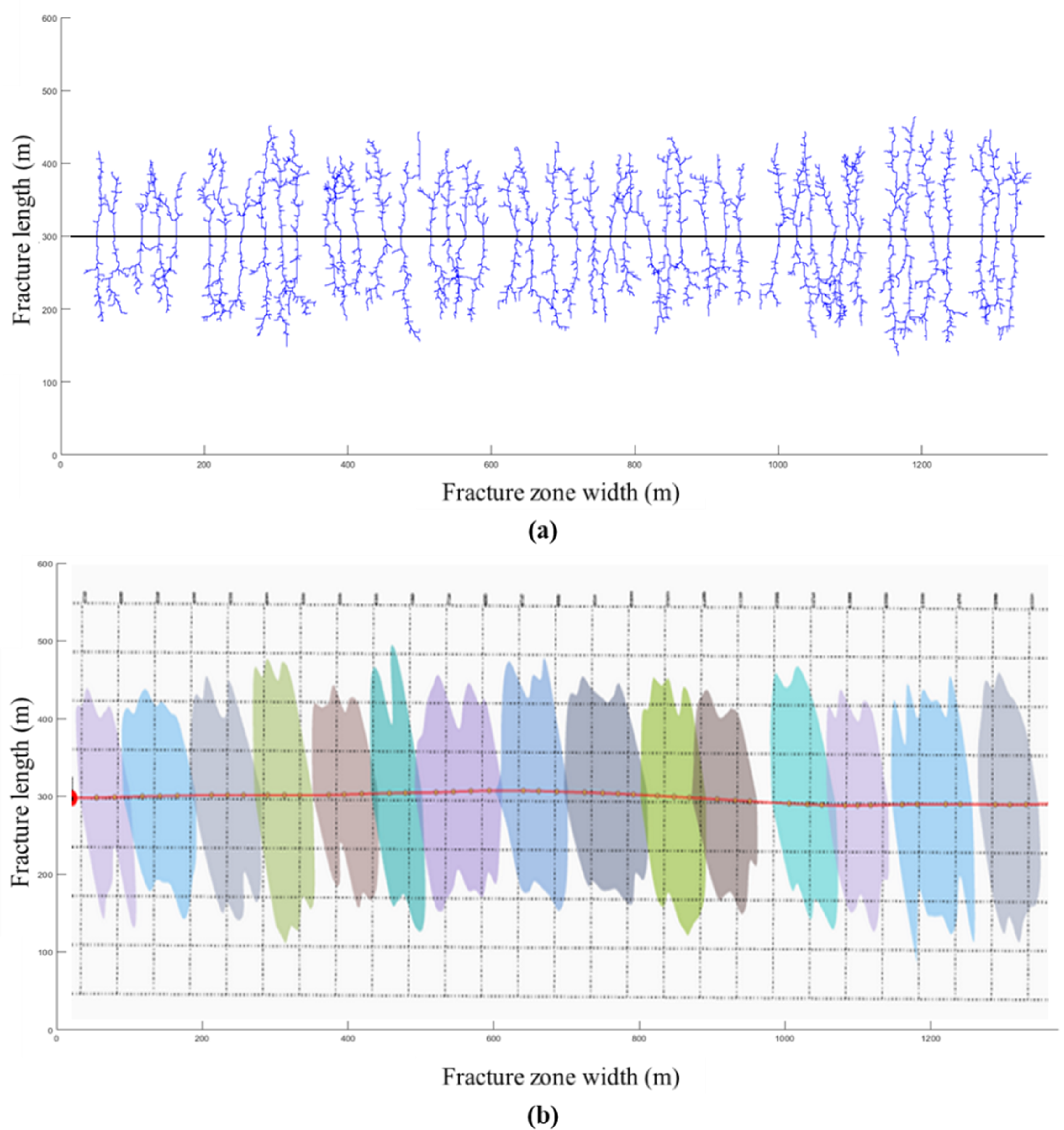
The fracture network morphology and electromagnetic monitoring length of well X1.
Fracture network inversion of X1 well.
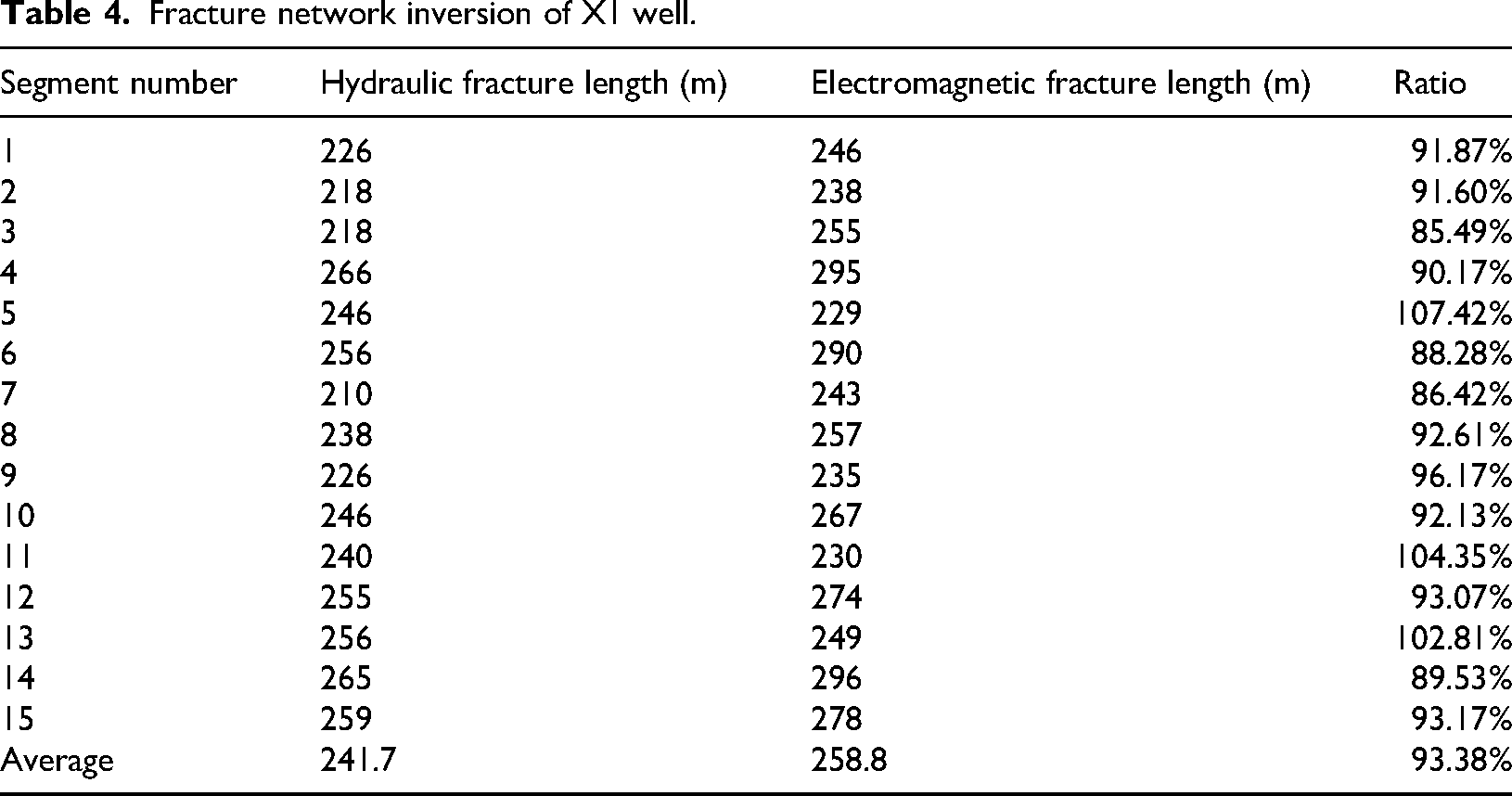
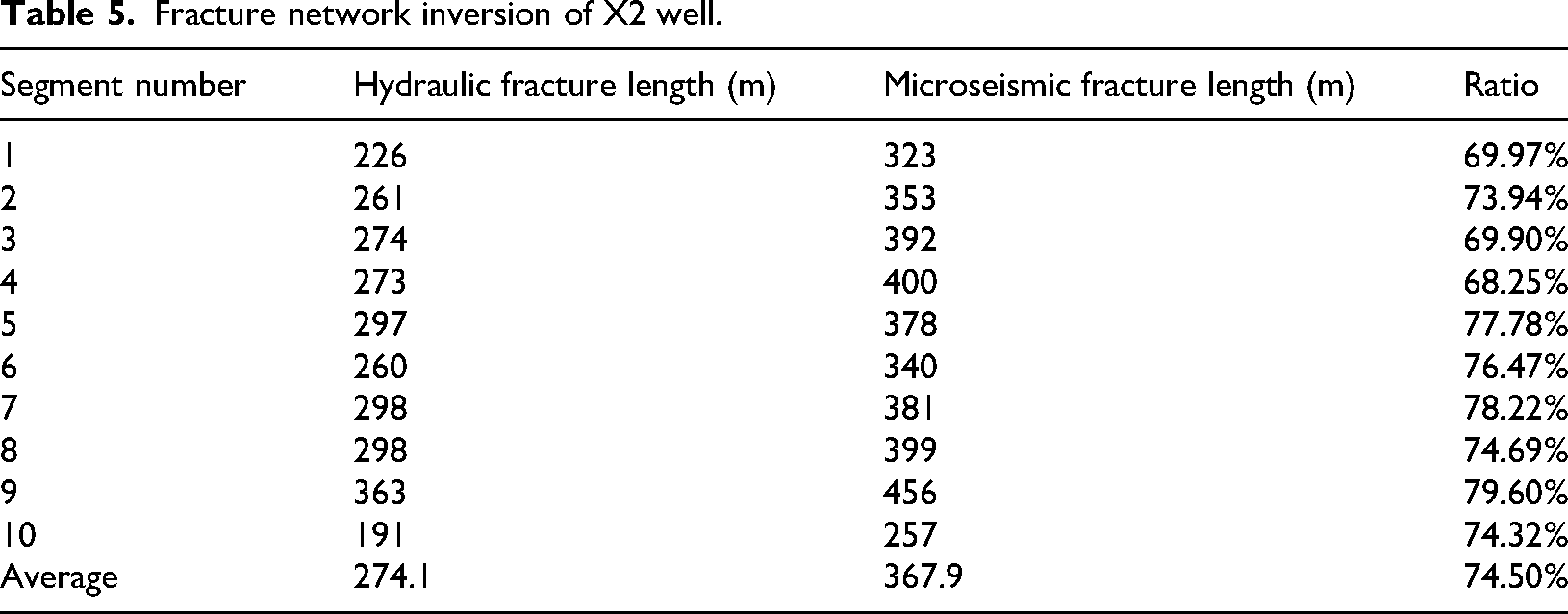
Figure 12(a) presents the fracture inversion morphology for Well X2, indicating a fracture length range of 190–370 m, with an average of 274.1 m. To validate the accuracy of the inversion results, a comparative analysis was performed using microseismic monitoring data from the same well. Taking Stage 1 as an example, Figure 12(b) shows the inverted fracture morphology with a length of 226 m, whereas Figure 12(c) displays the corresponding microseismic monitoring results, revealing a fracture length of 323 m. The inverted fracture length thus accounts for approximately 69.97% of the microseismic-derived estimate. Summary results for Stages 2–10, presented in Table 5, indicate that inverted fracture lengths range between 68% and 80% of the respective microseismic estimates. Considering that microseismic monitoring often overestimates actual fracture dimensions, these inversion results fall within a reasonable and acceptable range. This level of consistency further supports the reliability and predictive accuracy of the proposed fracture modeling approach.
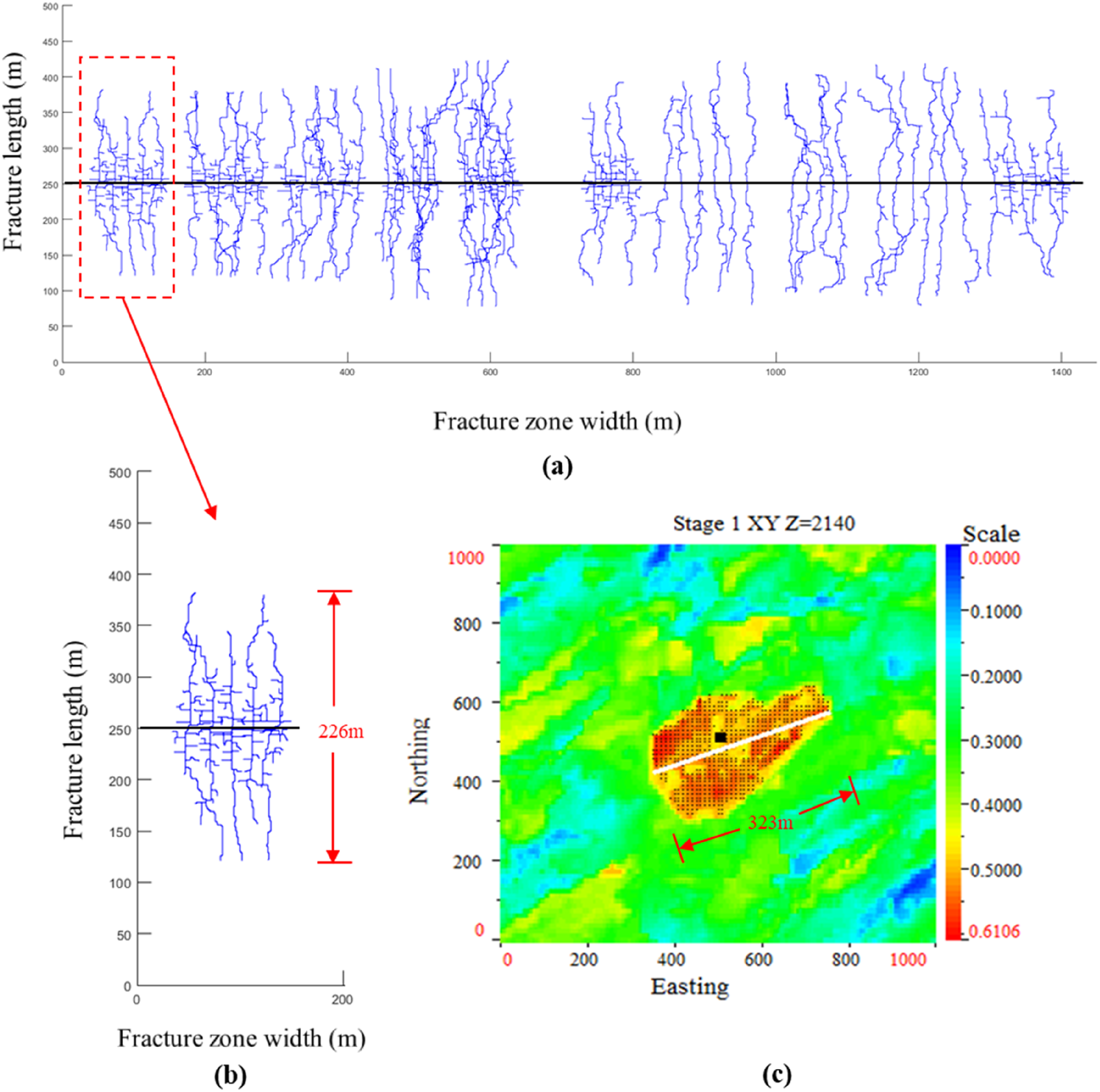
The fracture network morphology and microseismic monitoring length of well X2.
Fracture network inversion of X2 well.
Conclusions
This study presents an inversion methodology for fracture networks in deep coal rock cleat systems, leveraging equivalent rock mechanical parameters. The integration of these parameters streamlines and improves the practicality of simulating fracture networks in deep coal formations. The accuracy of the proposed model was rigorously validated through comparative analyses with DFN models.
Utilizing the proposed inversion approach, the influence of critical parameters—such as cleat spacing, fracturing fluid volume, number of fracturing clusters, and stress differential—on fracture morphology was systematically investigated. The findings reveal that increasing cleat spacing and fracturing fluid volume leads to greater fracture length and higher branch fracture density. Conversely, increasing the number of clusters reduces fracture length but enhances the formation of additional branch fractures. Under conditions of high-stress differential, fractures exhibit a tendency to propagate unidirectionally, while low-stress differentials promote the development of complex branch fractures.
Application to the X1 and X2 wells demonstrated strong agreement between model predictions and monitoring data. For X1, simulated fracture lengths (241.7 m average) matched 85–108% of electromagnetic monitoring results (258.8 m average). For X2, inverted fracture lengths (274.1 m average) aligned with 68–80% of microseismic-derived estimates, validating the method's practicality for real-world CBM reservoir development.
Highlights
This paper focuses on solving the influence of the deep coalbed cleat system on fracture morphology. The cleat system has a significant influence on the hydraulic fracture, and the influence of the surface and end cleats on the fracture morphology is difficult to consider. In this paper, a simplified continuous medium model is established by introducing the equivalent rock mechanical parameters, which can be used in deep coalbed rock. Simplifying the complex mechanical behavior of rock by equivalent parameters, especially in the development of natural fractures in coal strata, can significantly improve the computational efficiency, and maintain the physical basis of rock mechanics, which can better reflect the actual situation, to provide a theoretical basis for optimizing the fracture network. Based on model comparison verification and sensitivity analysis, the model is analyzed in combination with the actual block. The results show that the inversion fracture morphology has a high degree of matching with the fracturing electromagnetic monitoring wave range map.
Footnotes
Acknowledgments
This study was supported by the National Natural Science Foundation of China (No. 52474029), the “Tianshan Talents” Training Program - Science and Technology Innovation Team Project of Xinjiang Uygur Autonomous Region (No. 2024TSYCTD0018).
Author contributions

|
Term |
Definition |
|
Conceptualization |
Ideas; formulation or evolution of overarching research goals and aims |
|
Data curation |
Management activities to annotate (produce metadata), scrub data and maintain research data (including software code, where it is necessary for interpreting the data itself) for initial use and later reuse |
|
Formal analysis |
Application of statistical, mathematical, computational, or other formal techniques to analyze or synthesize study data |
|
Investigation |
Conducting a research and investigation process, specifically performing the experiments, or data/evidence collection |
|
Methodology |
Development or design of methodology; creation of models |
|
Writing-original draft |
Preparation, creation and/or presentation of the published work, specifically writing the initial draft (including substantive translation) |
|
Writing-review and editing |
Preparation, creation and/or presentation of the published work by those from the original research group, specifically critical review, commentary or revision |
|
Validation |
Verification, whether as a part of the activity or separate, of the overall replication/ reproducibility of results/experiments and other research outputs |
|
Supervision |
Oversight and leadership responsibility for the research activity planning and execution, including mentorship external to the core team |
The authors hereby declare that this manuscript is entirely original, has not been previously published, and is not under consideration for publication elsewhere.
We confirm that all named authors have read and approved the final version of the manuscript, and that no individuals who meet the criteria for authorship have been omitted. Furthermore, the order of authors listed in the manuscript has been unanimously agreed upon by all contributors.
We acknowledge that the Corresponding Author serves as the primary point of contact throughout the editorial process. She is responsible for liaising with the other authors regarding the progress of the manuscript, submission of revisions, and final approval of proofs.
Data availability
The data involved in this paper can be obtained in the manuscript.
Declaration of conflicting interests
The authors declared no potential conflicts of interest with respect to the research, authorship, and/or publication of this article.
Funding
The authors disclosed receipt of the following financial support for the research, authorship, and/or publication of this article: This work was supported by the National Natural Science Foundation of China (grant number 52474029), the “Tianshan Talents” Training Program - Science and Technology Innovation Team Project of Xinjiang Uygur Autonomous Region (grant number 2024TSYCTD0018).
