




Abstract
With rising concerns over environmental pollution and energy scarcity, electric vehicles (EVs) have attracted increasing attention as an eco-friendly alternative. Yet, despite societal and governmental support, EVs still face lower market acceptance compared to traditional fuel vehicles. This research examines the primary determinants influencing consumers’ propensity to switch to electric vehicles, drawing on the Theory of Planned Behavior (TPB) and customer experience concepts. Based on a survey of 425 participants, we explore how factors such as perceived behavioral control, attitude, and driving experience shape consumers’ intention to switch to EVs. Findings indicate that policy support indirectly shapes consumer attitudes, while EV-related services and product innovations influence the switching decision through enhanced driving experiences. Notably, subjective norms show no significant effect on consumer willingness to switch. These results offer essential direction for policymakers and marketers to foster electric vehicle uptake and contribute to sustainable transportation research.
Keywords
Introduction
In 2023, the Chinese government ended its 13-year subsidy initiative for electric vehicles (EVs). From 2010 to 2020, China's subsidies for EVs exceeded 152.1 billion Chinese yuan, aiding at least 3.17 million automobiles (Zhou, 2023). The cessation of these subsidies marks a transition in the EV industry, moving from a policy-driven model to one driven by market forces. This change challenges automakers to secure sustainable profitability without relying on subsidies. It also raises significant questions about the potential challenges the industry will face as it seeks to adapt to this new environment.
The discontinuation of subsidies introduces substantial uncertainties regarding the ability of EV manufacturers to succeed autonomously. This is especially true for those automakers and peripheral industry players that have depended heavily on financial support. Companies experiencing consecutive years of declining sales and financial losses, as well as numerous start-ups in the EV sector that are reliant on funding, are expected to face increased financial strain without these subsidies (Zhou, 2023). Consequently, the landscape of competition within the EV sector is expected to become more challenging, leading to increased pressure on manufacturers to differentiate themselves through innovation and cost management.
Apart from the cessation of subsidies, the industry faces more complex cost-related issues that need attention. The persistent high prices of raw materials and consumer expectations for price reductions create additional challenges in the EV sector. With competitive pressures in mind, price dynamics have become a major concern. In response to price reductions by international automakers, local EV manufacturers have announced similar measures to remain competitive following the withdrawal of subsidies. Analysts in the industry predict that such price cuts may become more frequent, further contributing to uncertainties in the market.
Emerging economies, including China, India, and Brazil, are increasingly prioritizing EV adoption in response to environmental degradation (Wu and Zhang, 2017). Notably, China has shown a strong commitment to this cause by significantly increasing the number of electric-powered vehicles in its transportation sector, reflecting the government's policy shift toward sustainable development (Jaiswal et al., 2021). However, the challenges arising from subsidy removal and potential price wars underscore the necessity for a more thorough investigation into the determinants influencing EV purchase intentions.
Prior studies have provided insights into the determinants of EV adoption from various perspectives. For instance, Bobeth and Kastner (2020) enhanced our understanding of consumer motivations for purchasing electric cars by synthesizing the Technology Acceptance Model with the Norm Activation Theory. They identified perceived usefulness, personal norms, and social norms as key predictors of purchase intentions in Germany. Similarly, Okada et al. (2019) found a favorable association between environmental awareness and purchasing intentions within the Japanese market. These studies suggest that motivations for EV adoption are multifaceted, with environmental awareness and perceived usefulness playing crucial roles.
However, despite the substantial literature on the factors influencing EV adoption, there are still significant gaps that need to be addressed. Most existing research primarily focuses on vehicle performance, government policies, and charging infrastructure (Zhao et al., 2022). Policy factors, in particular, are often highlighted as significant determinants of electric vehicle uptake (Huang and Ge, 2019). For example, Sheldon and Dua (2019) and Dong et al. (2020) conducted analyses of subsidy policies for plug-in hybrid electric vehicles (PEVs), but their findings varied across different population and company groups, leaving the impact of policy factors on EV adoption intentions unclear. Additionally, Moons and De Pelsmacker (2012) explored the psychological aspects of electric vehicle usage, emphasizing that emotions and attitudes often influence more significantly than cognitive factors. This psychological perspective highlights a potential route for comprehending policies’ influence on electric vehicle uptake.
Further, Chen et al. (2016) highlighted the importance of renewable energy knowledge in shaping beliefs about the environmental benefits of new energy products, suggesting that increased consumer knowledge could positively influence EV adoption. However, how such knowledge and innovation can be effectively leveraged to boost EV purchases remains an open question. The emotional and experiential aspects associated with driving EVs, as discussed by Rezvani et al. (2015), are another understudied area, particularly regarding their precursors and consequences in EV adoption. Specifically, the significance of driving experience as an external stimulus has been largely neglected in previous studies.
This research seeks to elucidate the elements affecting customer intentions to transition to EVs in light of such gaps. Specifically, the present study explicitly investigates the impacts of subjective norms, attitudes, perceived behavioral control, EV services, product innovativeness, driving experience, and supportive policy on consumers’ intention to transition to EVs. This approach aims to expand the scope of consumer behavior literature by closely aligning with the current trends and emerging technologies in the EV industry. Drawing on the Theory of Planned Behavior (TPB) and the concept of Customer Experience (Bolton et al., 2018; Paul et al., 2016), this paper constructs a research model to analyze the mechanisms that stimulate consumer switching behavior toward EVs. Within the TPB framework, this study explores the influence of subjective norms, perceived behavioral control, and attitudes on the intention to transition to EVs. Additionally, the study incorporates the role of Customer Experience (Bolton et al., 2018; Xu et al., 2021), specifically examining how the driving experience affects the transition to EVs.
Moreover, this study also considers the effects of EV services (Pradeep et al., 2021; Wang et al., 2021), product innovativeness (Ali et al., 1995; Shanmugavel and Micheal, 2022), and supportive policy (Chen et al., 2019; He et al., 2018; Jaiswal et al., 2021) on consumer intentions. By integrating these elements, the study aims to provide a more nuanced understanding of the factors influencing consumer switching behavior toward EVs, which has implications for both theory and practice.
The key contributions of this paper are threefold. First, it addresses the current research gap regarding the factors influencing consumers’ intentions to transition to EVs by empirically verifying these determinants. This contribution helps to tackle the challenges facing the EV sector, ultimately refining management recommendations. Second, based on the existing literature and the current state of the EV market, the study constructs a research model for EV switching behavior by integrating the TPB framework with the Customer Experience concept. Third, the study identifies the indirect effects of supportive policy and EV services on switching behavior, confirming the intermediary roles of attitude and driving experience in EV adoption. Given the contextual relevance of these issues, the paper offers timely insights that are critical for both academic research and industry practice.
This paper comprises the following sections: the second section presents the theoretical foundation and literature review, introducing the basis for the study and conducting a comprehensive review of variable relationships. The third section focuses on model construction and research hypotheses, delineating variable relationships based on theory and presenting clear, illustrated models. The fourth section covers research design and analysis methods, including data collection and empirical analysis approaches. The fifth section involves data analysis and hypothesis testing, including descriptive statistics, reliability and validity tests, and analysis of the test results. The sixth section offers research conclusions, summarizing and interpreting empirical results, assessing their relevance to the research question, and providing recommendations. Lastly, the study discusses its limitations and prospects for future research.
Literature review
Theory of planned behavior
In 1985, Ajzen's research revealed that accurate predictions of behavior could only be made from intentions when individuals have substantial control over their actions. This insight led to the incorporation of perceived behavioral control as a novel predictive variable, thereby enhancing the predictive and explanatory efficacy for specific behaviors. This laid the foundation for the Theory of Planned Behavior (TPB) (Ajzen, 1991). The TPB is a socio-psychological theory used to elucidate human behavioral decisions and intentions. According to this theory, behavioral intentions are collectively influenced by three main factors: attitude, subjective norms, and perceived behavioral control (Ajzen, 1991).
Attitude pertains to the positive or negative assessments individuals make about a specific behavior. Subjective norms involve the social pressures individuals perceive when determining whether to participate in a specific behavior. Perceived behavioral control relates to the expected ease or difficulty associated with adopting a particular behavior (Ajzen, 1991). This theory underscores attitude, subjective norms, and perceived behavioral control as the key determinants of behavioral intentions, which ultimately lead to the actual behavior (Ajzen, 1991).
The Theory of Planned Behavior has been widely applied in consumer behavior research, particularly concerning environmental behaviors. Building upon this foundation, several scholars have focused on the intention to purchase electric vehicles (EVs). For example, Wang et al. (2016) conducted a study involving 433 Chinese consumers to examine the factors influencing intentions to purchase hybrid electric vehicles (HEVs). The study found that attitudes and subjective norms had a significant positive impact on consumer intentions. Similarly, Afroz et al. (2015) investigated consumer behavior toward environmentally friendly vehicles in Malaysia, including pure electric vehicles, hybrid electric vehicles, and plug-in hybrid electric vehicles. They reported that attitudes and subjective norms significantly influenced purchase intentions. Shalender and Sharma (2021) also emphasized the importance of attitudes, subjective norms, and environmental concerns, noting that subjective norms play a particularly crucial role in shaping EV purchase intentions.
This study extends prior research by focusing specifically on switching behavior rather than purchase intentions, addressing a gap in the current literature regarding the determinants of consumer intentions to transition to electric vehicles. Given the significance of subjective norms in influencing behavioral decisions, the following hypothesis is proposed:
The role of perceived behavioral control has also been shown to be critical in influencing consumer behavior. Liang et al. (2017) found that perceived behavioral control positively affects consumer intentions to adopt new energy vehicles. The present study builds on this finding by examining how perceived behavioral control affects switching behavior specifically, leading to the hypothesis:
Lin and Wu (2018) categorized the factors affecting consumer intentions into demographic and attitudinal factors. Their study, conducted in major Chinese cities, revealed that both demographic factors and attitudes significantly influenced the willingness to adopt electric vehicles. Considering the variations in demographics and cultural habits, these factors contribute to differences in consumer attitudes. Barbarossa et al. (2015) also validated the positive effect of consumers’ attitudes on their behavioral intentions. Paul et al. (2016) similarly confirmed the significant impact of attitude on consumers’ intentions to adopt green products. Drawing on prior research, the current study proposes the following hypothesis:
Influence of supportive policy and attitude
While green products are known for their environmental friendliness during manufacturing or usage phases, they often incur higher costs and reduced efficiency compared to conventional products, particularly in terms of usage and recycling. Recognizing these challenges, various supportive governmental policies have been shown to play a pivotal role in enhancing consumer willingness to purchase green products (Kai and Liang, 2016). For instance, Sheldon and Dua (2019) examined subsidy policies for hybrid electric vehicles (HEVs) in the U.S. market and proposed specific subsidy designs, such as allocating higher subsidies for new EVs with larger battery capacities and providing uniform subsidies for low-income groups. This targeted approach not only improved cost-effectiveness but also positively influenced purchase intentions among low-income consumers, thereby enhancing EV sales. In a parallel analysis of the Chinese market, they found that subsidies had a substantial impact on low-income groups but a minimal effect on high-income consumers, suggesting that discontinuing subsidies for high-income groups could further optimize market share.
Furthermore, in the context of the Chinese market, numerous studies highlight the positive effects of fiscal subsidies, tax exemptions, and related policies on new energy vehicle (NEV) adoption. Nie et al. (2016) argued that favorable policies for NEVs can significantly boost sales volumes and positively influence consumer purchase intentions, while license plate priority policies effectively limit the registration of conventional fuel vehicles. According to Huang and Ge (2019), financial subsidy policies have a notable impact on consumers’ intention to purchase NEVs, as purchase restrictions influence acquisition costs, and tax exemptions or reductions serve as strong incentives. However, these policies must be carefully balanced to prevent potential market distortions, as their withdrawal could have a significant impact on NEV sales (Dong et al., 2020).
In addition to direct financial incentives, other forms of support, such as charging infrastructure development, license plate quotas, and government procurement policies, can stimulate NEV sales. Lin and Wu (2018) found that a substantial proportion of consumers considered existing subsidies adequate, while Dong et al. (2020) reported that urban residents were generally unaffected by the cost implications of subsidies. Moreover, research and development (R&D) subsidies encourage innovation within the NEV sector, with R&D incentives exerting a more pronounced influence on companies than production subsidies. Hence, the following hypothesis is formulated:
Ajzen's (1991) Theory of Planned Behavior (TPB) posits that consumer attitudes significantly shape behavioral intentions. Although attitudes may not directly determine behavior, a positive attitude generally fosters favorable purchase intentions, whereas a negative attitude can lead to reluctance or rejection. Huang and Ge (2019) utilized the TPB to explore factors influencing EV purchase intentions among prospective consumers in Beijing, highlighting that attitudes, subjective norms, perceived behavioral control, cognitive states, product perceptions, and monetary incentives all significantly shape EV purchase intentions, with attitudes exerting the most substantial influence.
In this study, product attitude is conceptualized as the psychological cognition, experience, and change derived from factors surrounding NEV selection. Supportive policies play a crucial role in fostering a green consumption mindset, thus shaping consumer cognition and attitudes. When consumers have positive attitudes toward a product, they are more likely to conduct an in-depth evaluation of its features and benefits, thus strengthening their purchase intentions. Zarei et al. (2019) confirmed that favorable consumer attitudes positively influence purchase intentions, which aligns with the conceptual framework of this study.
Additionally, recent studies, such as those by Sharma et al. (2020) and Jiao et al. (2021), emphasize the need for government interventions tailored to address both economic and environmental impacts of EV adoption. For instance, Sharma et al. (2020) demonstrated that diverse government interventions in South Asia helped to mitigate carbon emissions, despite economic growth pressures, which supports the case for targeted subsidies and fiscal policies in the context of NEVs. Similarly, Jiao et al. (2021) argued that the integration of technological innovations and income considerations in policy frameworks can enhance the effectiveness of environmental regulations in reducing emissions and fostering sustainable behavior. These findings underscore the significance of implementing comprehensive, supportive policies in driving sustainable consumption behaviors in the NEV market. Building upon this, the present study proposes the following hypothesis:
Customer experience
Concept of customer experience. With the development of the experience economy, the concept of customer experience has been widely applied across various marketing and consumer contexts (Bolton et al., 2018). Customers generate experiences not only during the search for products but also throughout shopping, consumption, or brand interaction processes. Customer experience thus encompasses several dimensions, including service experience, online customer experience, and brand experience, which scholars have extensively researched from various perspectives (Xu et al., 2021). Given its significance in shaping consumer perceptions and behaviors, understanding customer experience is essential for firms seeking to foster long-term customer loyalty and maintain market competitiveness.
Some scholars, such as Pine and Joseph (1998), approach customer experience from a consumer-centric perspective, defining it as an individual's psychological and emotional responses to marketing stimuli. From this standpoint, customer experience is largely shaped by pre- and post-purchase factors that influence the consumer's psychological reactions to a product. Other scholars, like Schmitt (1999), focus on the business perspective, viewing customer experience as something that companies create through staged services and products, effectively using them as “props” to fulfill consumer needs for memorable experiences. Still, others, such as Gentile et al. (2007), adopt an integrated view, seeing customer experience as a series of interactions between customers and a company or its products, shaped by both consumer psychology and enterprise efforts. This multidimensional construct of customer experience is generally agreed upon as being holistic, involving sensory, affective, and cognitive dimensions (Jain et al., 2017).
According to Jain et al. (2017), customer experience is a complex blend of sensations, perceptions, and attitudes that arise throughout the consumer's decision-making and consumption journey. It encompasses a range of interactions with people, objects, processes, and environments that stimulate emotions, cognition, and behaviors, thereby creating a unique and memorable experience. This aligns with findings from Sharma et al. (2020), who demonstrated that effective customer experience management could enhance consumer willingness to adopt sustainable products by influencing their perceptions and attitudes.
Customer experience dimensions. Consumers encounter various touchpoints at each stage of the buying process, including pre-purchase, purchase, and post-purchase stages (De Keyser et al., 2020; Jain et al., 2017). For this study, the focus is primarily on the pre-purchase stage in which consumers consider purchasing an electric vehicle (EV). During this phase, consumers’ basic knowledge of EVs, including mechanical principles and operation methods, forms the foundation for their driving experience. These functional requirements are typically met through interactions with sales personnel or firsthand experiences like test drives, which serve as a means to satisfy lower-dimensional needs for basic product understanding. In contrast, features such as intelligent connectivity and advanced technologies in EVs address consumers’ higher cognitive demands, requiring deeper immersion to be fully appreciated (Jiao et al., 2021).
Driving experience. The concept of customer experience plays a crucial role in helping companies understand and meet customer needs, thereby enhancing satisfaction and fostering long-term relationships. Companies that effectively leverage customer feedback and refine customer experiences are better positioned to build competitive advantages and enhance brand value. For low-carbon innovative products like EVs, enabling consumers to experience the vehicles firsthand is vital to market acceptance. Test drives, therefore, are an effective promotional tool, providing potential buyers with a tangible feel of the vehicle's features and performance.
Leading EV manufacturers, as noted by Liu and Meng (2017), have successfully employed experiential marketing strategies, using immersive test drive events to allow customers to perceive the benefits of EVs. This approach aligns with findings from Sharma et al. (2020) and Jiao et al. (2021), which suggest that immersive customer experiences significantly impact consumer perceptions and adoption behaviors for sustainable products. Thus, driving experiences serve not only as promotional tools but also as pivotal factors influencing consumers’ adoption intentions by increasing familiarity and reducing uncertainty about EV technology. Based on this, the following hypothesis is proposed:
Product innovativeness. Product innovativeness, defined as a product's novelty to the market, is integral to consumer perceptions and adoption intentions (Booz-Allen and Hamilton Inc., 1982). While increased product innovativeness is generally thought to enhance competitive advantage, research indicates a non-linear relationship between innovativeness and market success (Kleinschmidt and Cooper, 1991). Products with either very high or very low innovativeness tend to succeed more than those with moderate innovativeness, a trend that can be observed in the EV market (Calantone et al., 2006). High innovativeness may enhance product appeal but could also hinder consumer familiarity, potentially leading to market resistance.
Previous studies, such as those by Wang et al. (2018) and Chen et al. (2019), highlight that consumer unfamiliarity with EV technology and concerns about functionality can reduce adoption intentions. Initiatives like EV sharing, rentals, and test drives help mitigate these barriers by providing consumers with direct exposure to EV technology. Jiao et al. (2021) further support the notion that direct experiences can reshape consumer perceptions of innovative products, fostering a positive attitude and higher adoption likelihood. Thus, understanding consumer perceptions of EV innovativeness, particularly through experiences like test drives, is crucial for adoption. Hence, we propose:
EVs services. In contrast to conventional fuel vehicles, modern EVs face challenges such as limited range, insufficient charging infrastructure, and long charging times (Wang et al., 2018). Addressing these issues is critical to alleviating range anxiety, a significant barrier to EV adoption. As Sharma et al. (2020) and Jiao et al. (2021) observed, overcoming infrastructural challenges and providing enhanced service experiences can improve public acceptance and support market growth. Additionally, driving experiences that showcase EV services can increase consumer understanding, further strengthening purchase intentions. Based on this analysis, the following hypotheses are proposed:
Model construction
Regardless of developments in the new energy vehicle market and external factors, such as supportive policies, consumers remain the driving force behind automotive sales. This study thus adopts a consumer-centered approach, exploring key determinants influencing consumer willingness to switch to new energy vehicles. Core factors identified include subjective norms, perceived behavioral control, attitude, driving experience, EVs services, product innovativeness, and government support. These variables constitute the primary components of this study's research model, as depicted in Figure 1.
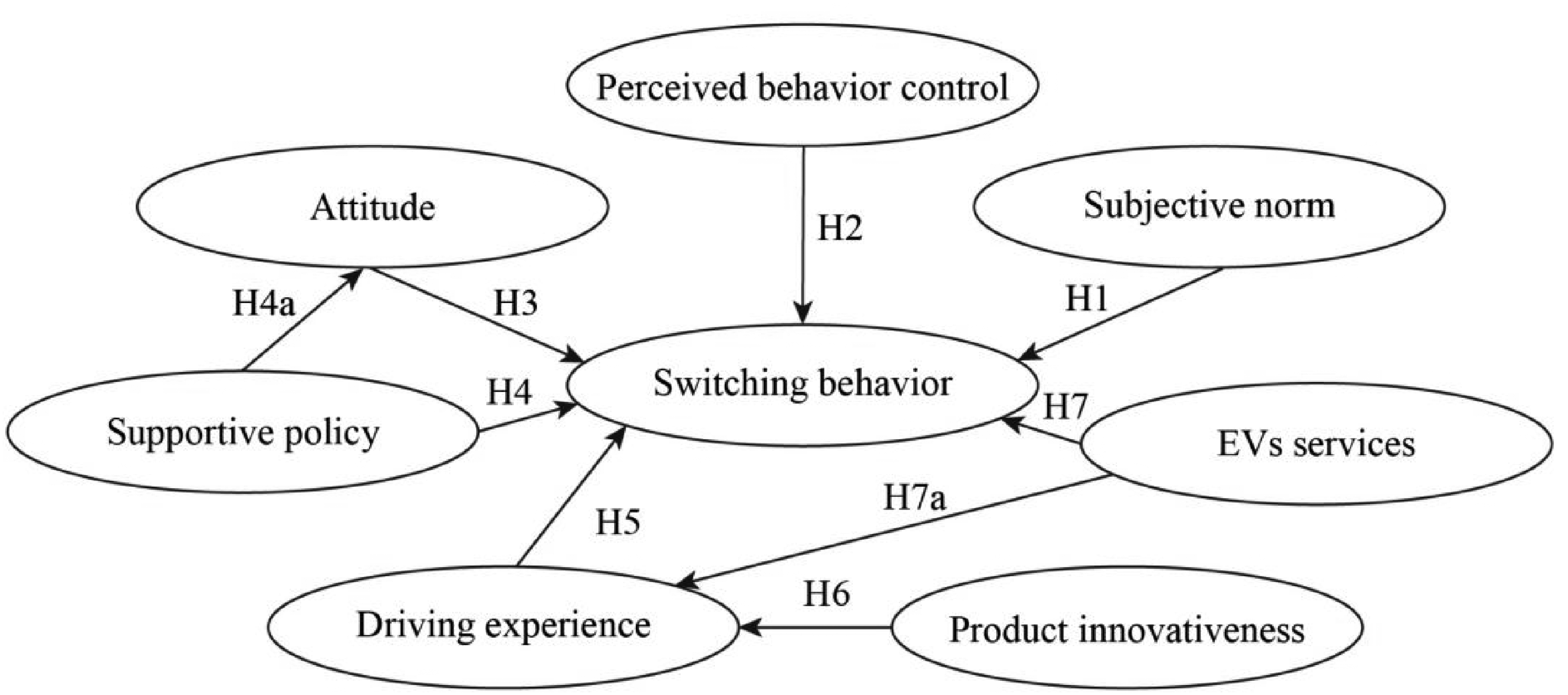
The research model.
Research design and methods
Data collection
This study collected data through a questionnaire survey targeting Chinese consumers. The survey was conducted anonymously from October to November 2022. A total of 571 questionnaires were distributed, with 525 responses collected. After data screening, 425 valid responses were retained, achieving a response rate of 91.9% and a validity rate of 74.4%. Among these respondents, 220 owned an electric vehicle (EV), while 205 did not. Including both EV owners and non-owners enables us to assess differences in adoption intentions and examine the influence of supportive policies on these two groups, offering valuable insights into policy effectiveness.
The study employed the Partial Least Squares Structural Equation Modeling (PLS-SEM) method for quantitative analysis using SmartPLS 4.0. This approach is advantageous for handling smaller sample sizes and accommodating non-normally distributed data, as it does not require normality assumptions (Chin, 1998). The research model was evaluated using a two-stage approach recommended by Anderson and Gerbing (1988), allowing for a rigorous analysis of the relationships between variables and testing of mediating effects.
Measurement
A Likert seven-point scale was utilized in the questionnaire, with options ranging from Strongly Disagree (1) to Strongly Agree (7). Eight variables were selected based on previous literature (see Appendix 1): supportive policy (Chen et al., 2019; He et al., 2018; Jaiswal et al., 2021), subjective norm (Pradeep et al., 2021; Wang et al., 2021), product innovativeness (Ali et al., 1995; Shanmugavel and Micheal, 2022), EVs services (Pradeep et al., 2021; Wang et al., 2021), attitude (Hamzah and Tanwir, 2021), perceived behavioral control (Han et al., 2010), driving experience (Xu et al., 2021), and switching behavior (Peng et al., 2016). This framework facilitates a comprehensive analysis of the factors influencing switching behaviors.
Research results
Descriptive statistical analysis
This study conducted a questionnaire survey targeting prospective consumers and users of electric vehicles (EVs) in China. A total of 425 valid responses were collected, forming the basis for the descriptive statistical analysis. The demographic characteristics of the participants, including gender, age, education level, and monthly income, are presented in Table 1.
Demographic characteristics of the research sample.
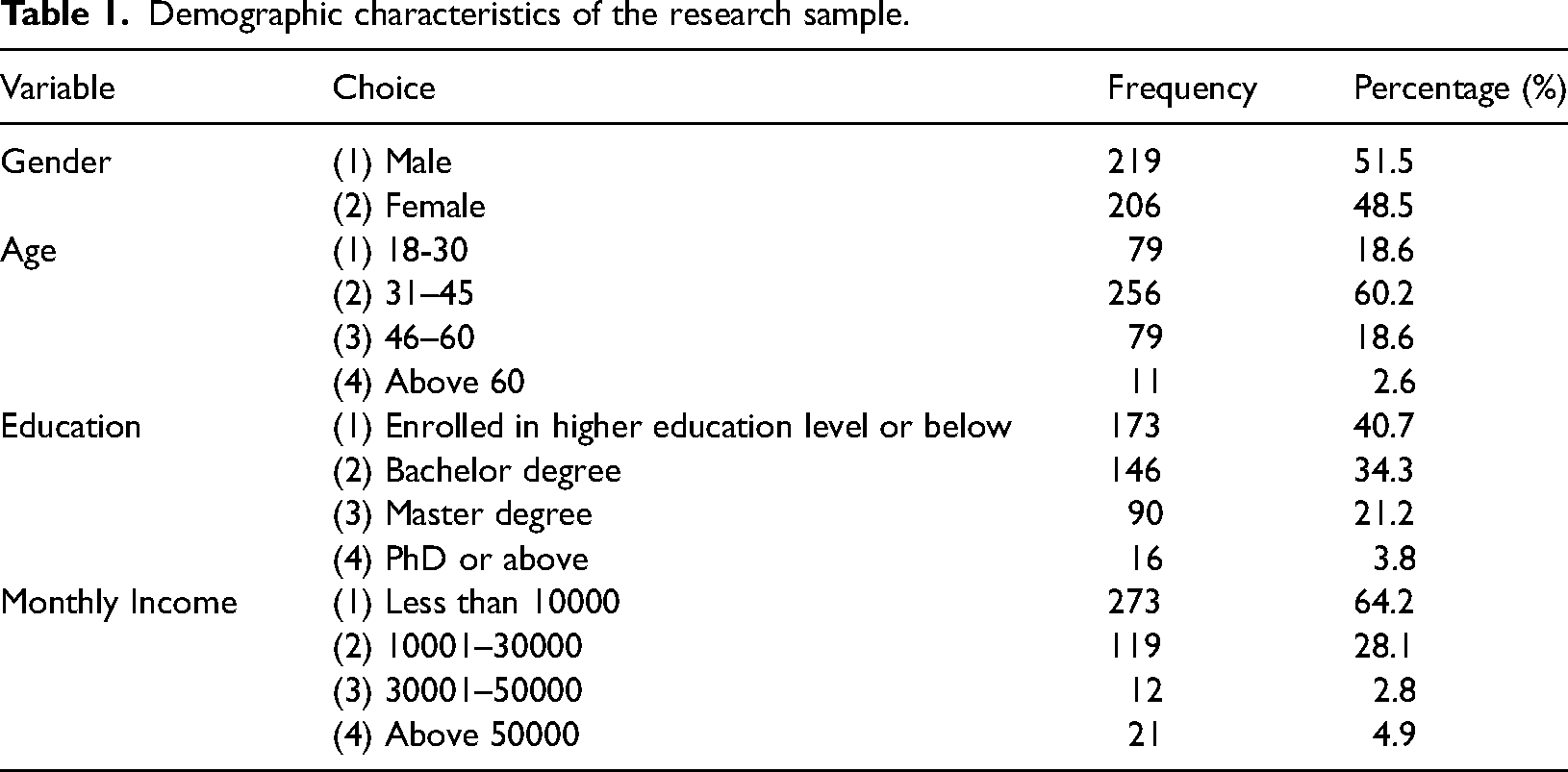
In the sample surveyed for this study, in terms of gender, there were 219 male respondents, constituting 51.5% of the overall sample, the female participants numbered 206, making up 48.5% of the total sample. The percentage between the two genders is relatively close.
The largest proportion of participants (60.2%) fell within the 31–45 age group, totaling 256 individuals. Respondents aged 18–30 and 46–60 were equal in number, with 79 participants each, representing 18.6% of the sample for each group. Meanwhile, only 11 respondents (2.6%) were over 60 years old. These results suggest that middle-aged individuals constitute the majority of the sample, aligning with prior studies highlighting this demographic as a key segment in EV adoption due to their purchasing power and environmental awareness.
In terms of education, respondents with a college degree or below formed the largest group (173, 40.7%), followed by those with a bachelor's degree (146, 34.3%), a master's degree (90, 21.2%), and a doctoral degree or above (16, 3.8%). The data indicates that the sample includes a wide range of educational backgrounds, with the majority having moderate educational qualifications. This distribution aligns with the demographic structure of EV consumers, who often exhibit varying levels of familiarity with new technologies.
Regarding monthly income, 273 participants (64.2%) earned less than 10,000 yuan, while 119 participants (28.1%) reported incomes between 10,001 and 30,000 yuan. Respondents earning between 30,001 and 50,000 yuan accounted for 12 individuals (2.8%), and those earning above 50,000 yuan represented 21 individuals (4.9%). The concentration of participants in the lower income brackets reflects the growing interest in EVs among cost-sensitive consumers, despite challenges such as initial costs.
Measurement model analysis
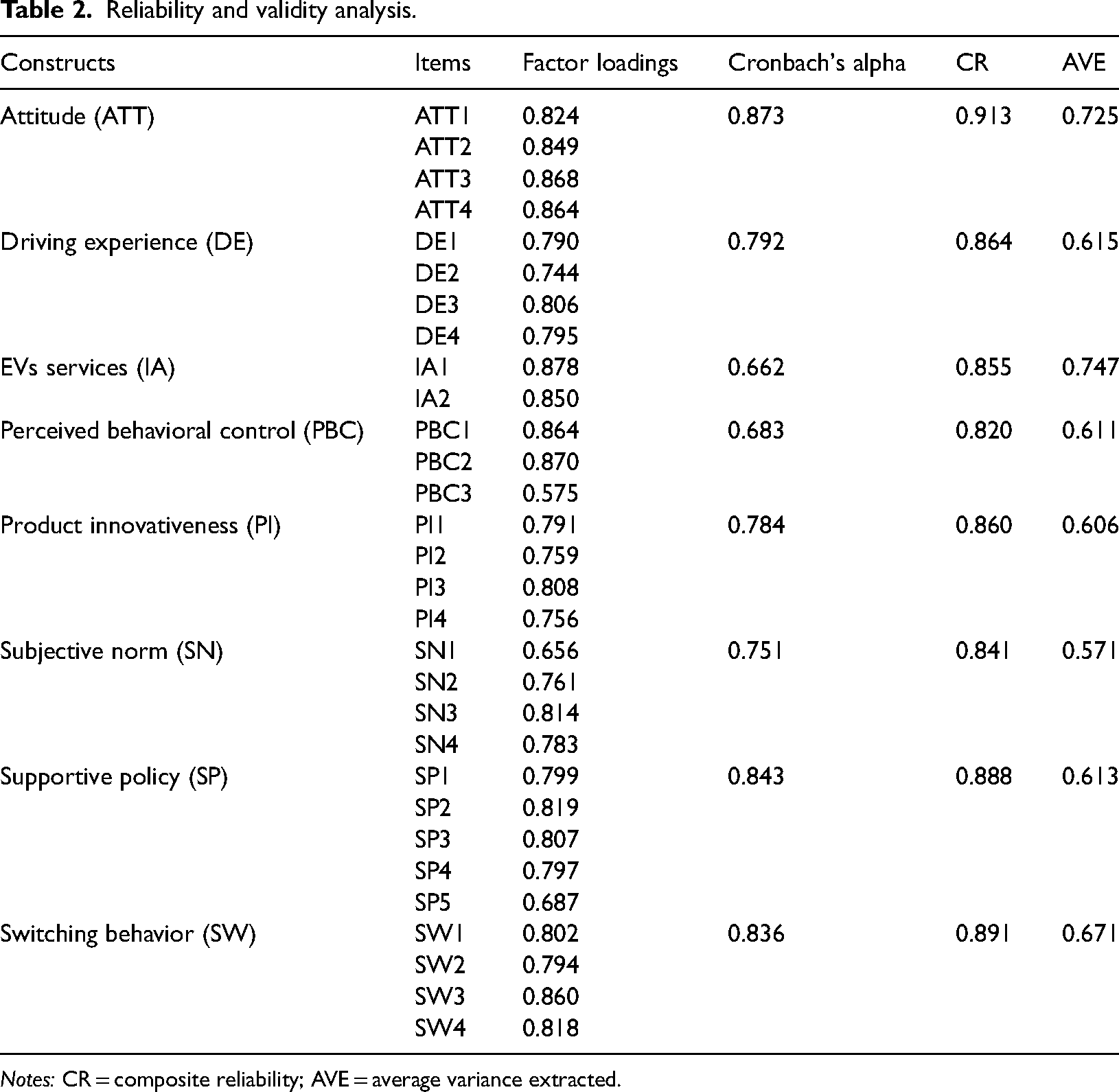
To ensure the validity and reliability of the proposed model, a thorough evaluation of the measurement model was conducted. The assessment of reflective measurement models involved examining indicator reliability and internal consistency reliability. Following the recommendations of Fornell and Larcker (1981), factor loadings for all items were required to exceed 0.7. Additionally, both Cronbach's Alpha (CA) and Composite Reliability (CR) for all constructs needed to surpass 0.7, as suggested by Bagozzi and Yi (1988).
As shown in Table 2, the factor loadings for most items exceeded 0.7, meeting the initial criterion. However, three items—PBC3 (0.575), SN1 (0.656), and SP5 (0.687)—had factor loadings below 0.7. According to Hulland (1999), factor loadings above 0.5 are still acceptable, which ensures that all items meet the minimum threshold for reliability.
Reliability and validity analysis.
Notes: CR = composite reliability; AVE = average variance extracted.
Similarly, the CA and CR values for most constructs exceeded the 0.7 threshold, confirming their internal consistency. Exceptions were observed for IA (CA = 0.662) and PBC (CA = 0.683), which fell slightly below 0.7. Nonetheless, these values still surpass the 0.6 minimum criterion recommended by Fornell and Larcker (1981), ensuring the reliability of the model. Overall, the results demonstrate satisfactory indicator reliability and internal consistency reliability for the proposed model.
The model's convergent validity was evaluated using the Average Variance Extracted (AVE). As recommended by Bagozzi and Yi (1988) and Fornell and Larcker (1981), an AVE value of at least 0.50 is required to establish convergent validity. Table 2 indicates that all constructs achieved AVE values exceeding this threshold, thereby confirming convergent validity.
Discriminant validity was assessed using two criteria: the Fornell-Larcker criterion and cross-loadings. According to Fornell and Larcker (1981), the square root of a construct's AVE should exceed its correlation with other constructs. Additionally, as per Chin (1998), an indicator's loading on its associated construct should be higher than its cross-loadings on other constructs. As shown in Table 3, the square root of each construct's AVE exceeds its inter-construct correlations, and Table 4 confirms that all indicators’ loadings are higher than their cross-loadings. These results establish the discriminant validity of the measurement model.
Discriminant validity by Fornell–Larcker criterion.
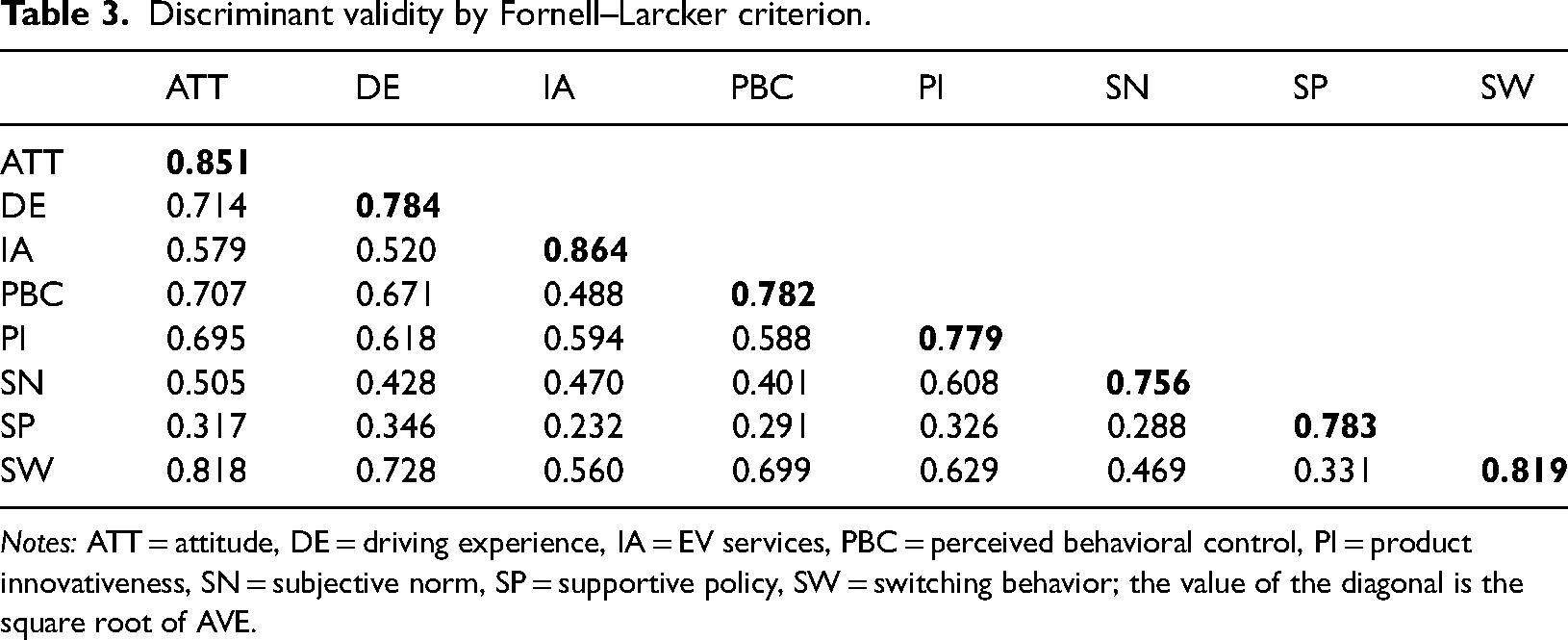
Notes: ATT = attitude, DE = driving experience, IA = EV services, PBC = perceived behavioral control, PI = product innovativeness, SN = subjective norm, SP = supportive policy, SW = switching behavior; the value of the diagonal is the square root of AVE.
Standardized factor loadings and cross loadings of the outer model.
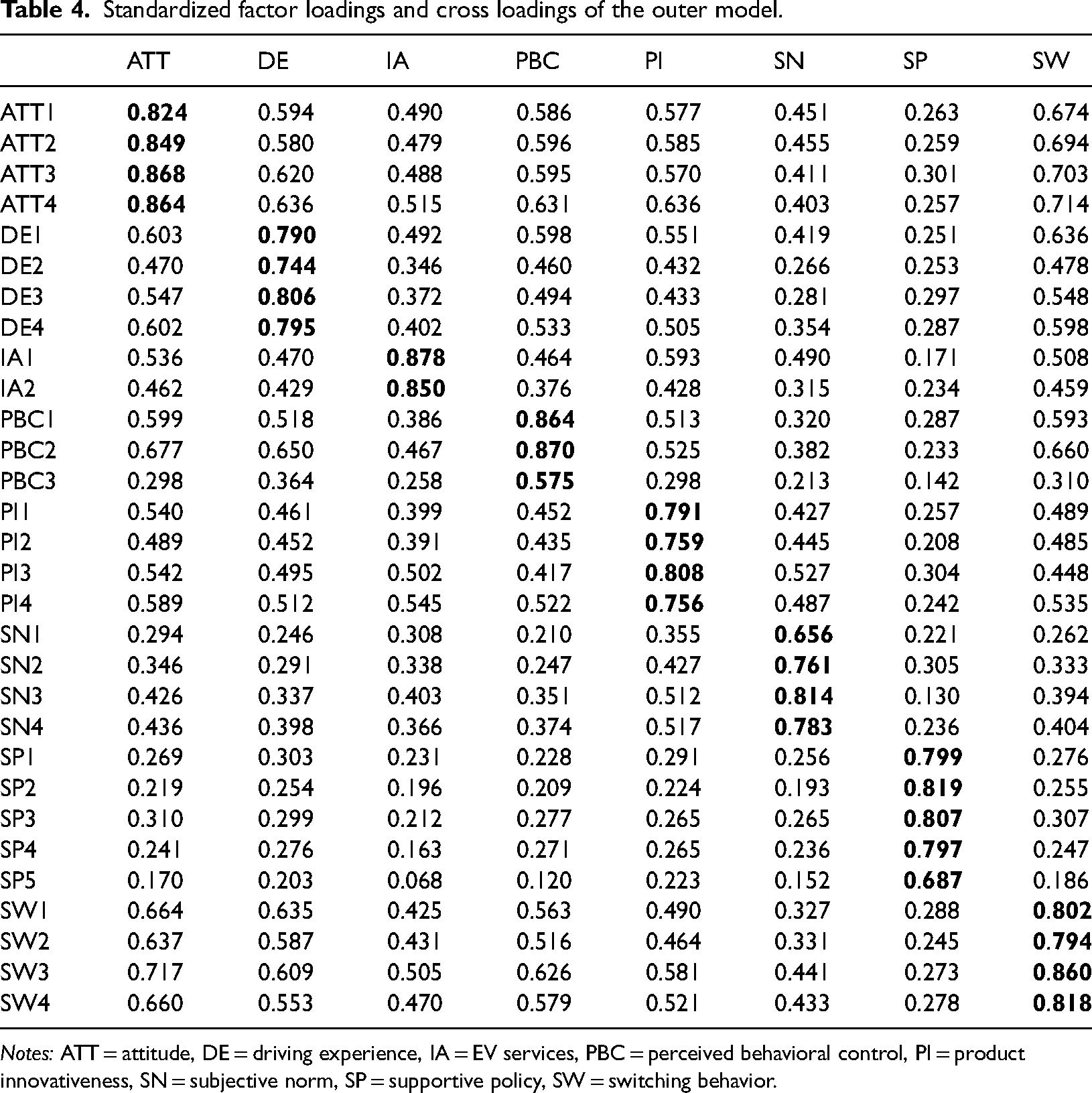
Notes: ATT = attitude, DE = driving experience, IA = EV services, PBC = perceived behavioral control, PI = product innovativeness, SN = subjective norm, SP = supportive policy, SW = switching behavior.
Structural model analysis
The significance levels of the structural model paths were estimated using bootstrapping with 5000 resamples. The coefficient of determination, R², measures the proportion of variance in the endogenous variables explained by the exogenous variables (Chin, 1998). R² values range from 0 to 1, with higher values indicating stronger predictive power of the model. The findings (Figure 2) reveal R² values of 0.101 for attitude, 0.418 for driving experience, and 0.728 for switching behavior. These results indicate that 72.8% of the variance in switching behavior toward electric vehicles (EVs) is explained by perceived behavioral control (PBC), attitude (ATT), and driving experience (DE), demonstrating the research model's substantial explanatory capability.
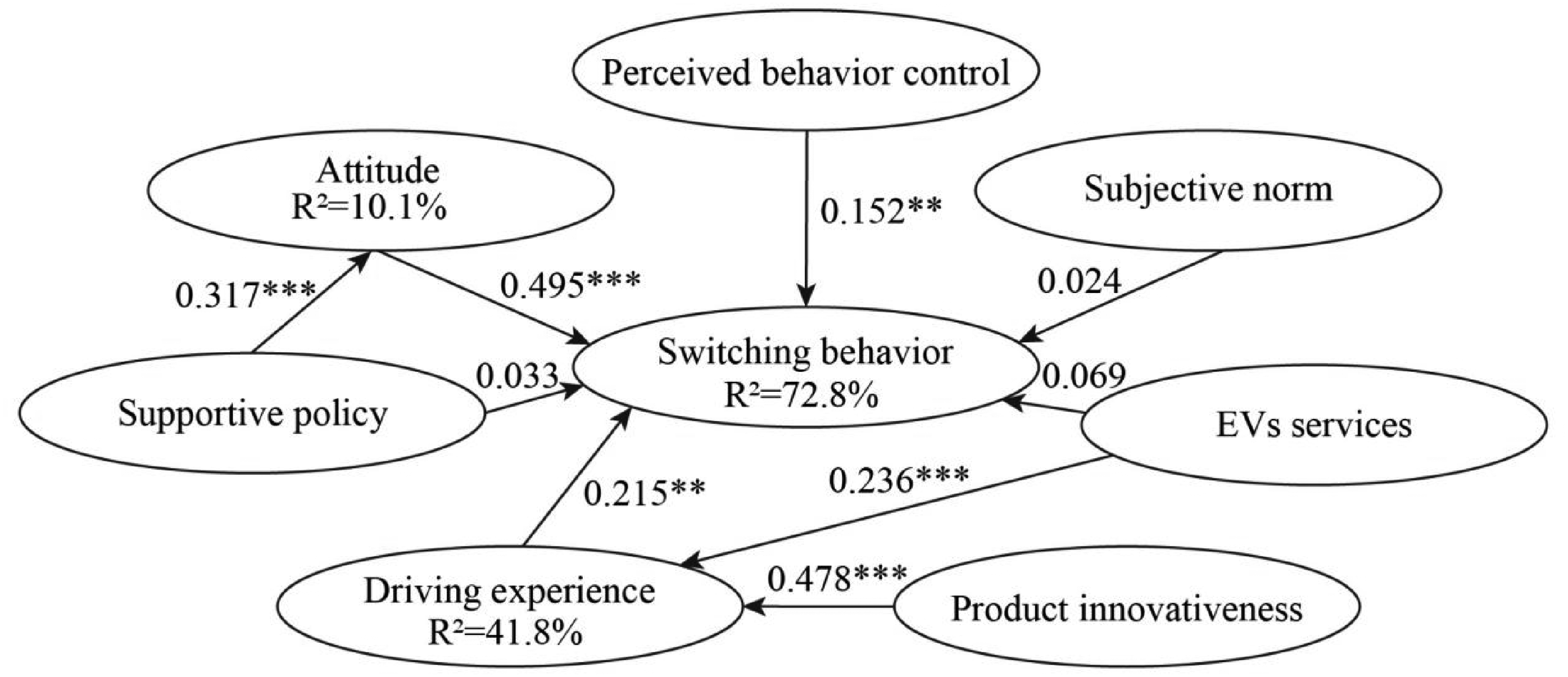
The results of structural model. Notes: *P-value < .05; **P-value < .01 and ***P-value < .001.
The overall model fit was evaluated using the goodness-of-fit (GoF) index, calculated as the square root of the product of the mean of average variance extracted (AVE) and the mean of R² values (
The results of hypothesis testing are summarized in Table 5. Perceived behavioral control significantly impacts switching behavior (β = 0.152, P < .01), supporting H2. Similarly, attitude has a strong positive effect on switching behavior (β = 0.495, P < .001), supporting H3. Driving experience also exerts a significant positive influence on switching behavior (β = 0.215, P < .01), confirming H5.
Hypotheses testing results.
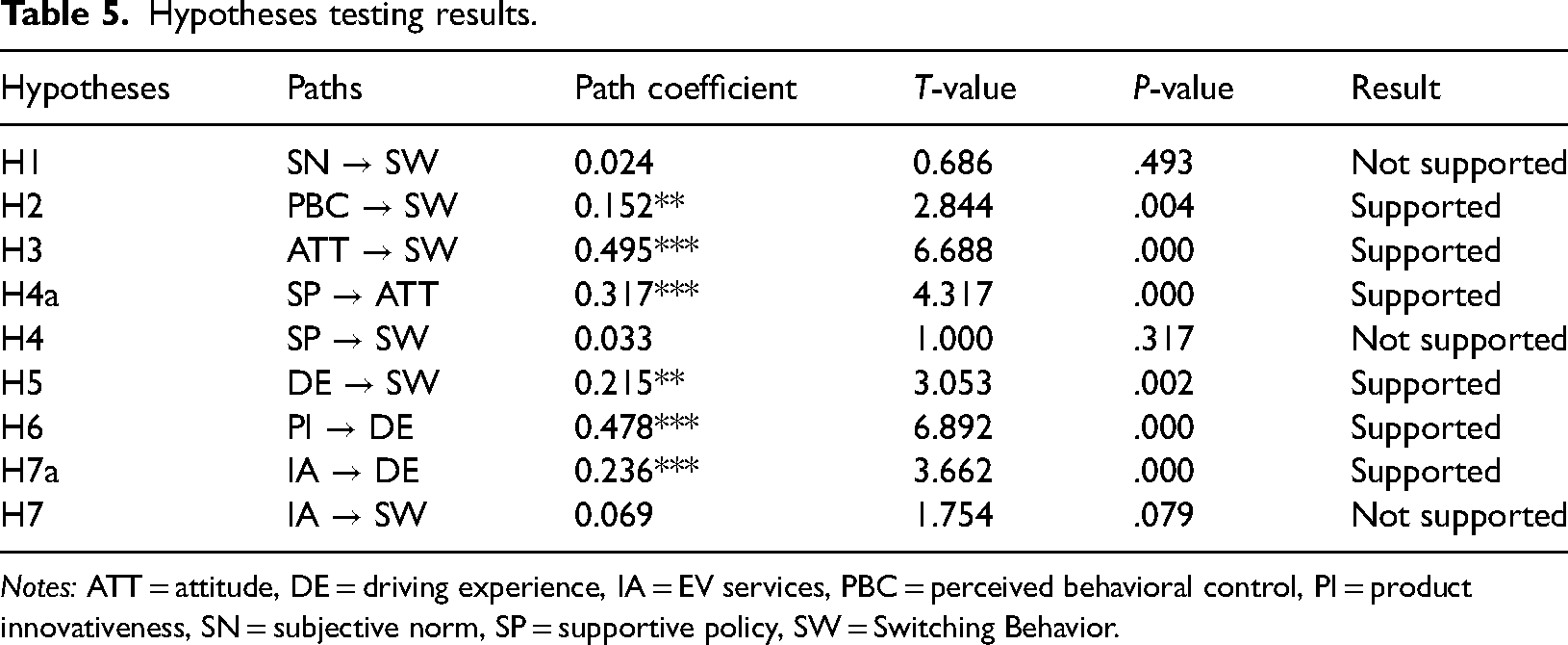
Notes: ATT = attitude, DE = driving experience, IA = EV services, PBC = perceived behavioral control, PI = product innovativeness, SN = subjective norm, SP = supportive policy, SW = Switching Behavior.
Mediating effect results.
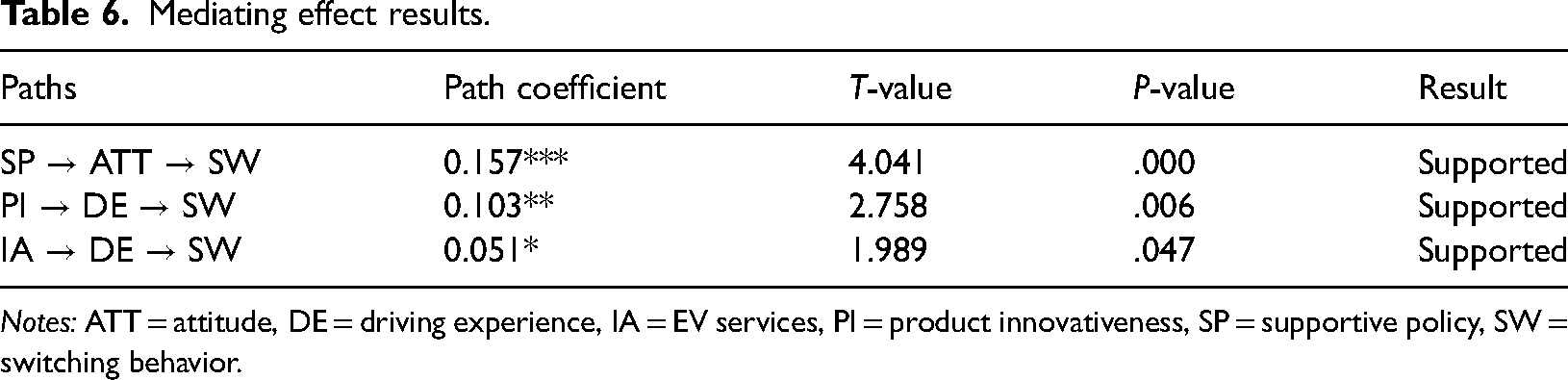
Notes: ATT = attitude, DE = driving experience, IA = EV services, PI = product innovativeness, SP = supportive policy, SW = switching behavior.
Conversely, subjective norm does not significantly affect switching behavior (β = 0.024, P > .05), leading to the non-support of H1. Supportive policy and EVs Services similarly fail to show significant effects on switching behavior (β = 0.033, P > .05 and β = 0.069, P > .05, respectively), resulting in the non-support of H4 and H7.
Other significant findings include a positive relationship between supportive policy and attitude (β = 0.317, P < .001), supporting H4a. Product innovativeness significantly impacts driving experience (β = 0.478, P < .001), confirming H6. Additionally, EV services positively influence driving experience (β = 0.236, P < 0.001), supporting H7a.
In summary, hypotheses H2, H3, H4a, H5, H6, and H7a are supported and align with the proposed model, whereas H1, H4, and H7 are not supported, reflecting non-significant outcomes.
Mediating effect analysis
The model reveals that supportive policy indirectly impacts switching behavior via attitude (β = 0.157, P < .001). Similarly, product innovativeness influences switching behavior through driving experience (β = 0.103, P < .01), while EV services also exert an indirect effect via driving experience (β = 0.051, P < .05). As shown in Table 6, these findings confirm significant mediation effects, highlighting the roles of attitude and driving experience in the proposed model.
Discussion
Perceived behavioral control demonstrates a significantly positive impact on switching behavior to use electric vehicles (EVs), corroborating the findings of Liang et al. (2018) on consumer purchasing of new energy vehicles. This result underscores that an increase in perceived behavioral control enhances individuals’ willingness to transition to EVs. Perceived behavioral control refers to an individual's subjective evaluation of their ability to perform a behavior. When individuals have confidence in their ability and the necessary resources to use EVs, they are more likely to exhibit willingness to switch. For instance, the convenience of charging facilities and the acceptability of charging costs directly influence individuals’ perceived behavioral control and, consequently, their switching behavior. Moreover, perceived behavioral control encompasses evaluations of favorable conditions and resources needed for EV adoption. Ensuring the availability of charging infrastructure and addressing concerns about range and charging costs can substantially elevate consumers’ perceived behavioral control, promoting their intent to switch to EVs.
However, the relatively nascent development of EV technology, particularly regarding power batteries, raises consumer concerns about range, safety, and reliability. Market incidents related to battery safety significantly impact potential users’ willingness to adopt EVs. Moreover, advancements in intelligent connected technologies, such as advanced driver assistance systems and autonomous driving features, present both opportunities and challenges for automakers. Ensuring the safety and reliability of these technologies is critical to preventing them from being perceived as risks by consumers. Addressing these concerns is essential to maintaining and enhancing consumers’ perceived behavioral control.
Attitude exhibits a significantly positive effect on switching behavior to use EVs, consistent with studies by Barbarossa et al. (2015) and Paul et al. (2016). As environmental consciousness strengthens, more individuals recognize the adverse effects of conventional fuel-powered vehicles on the environment. A favorable attitude toward EVs reflects an endorsement of their environmental benefits and economic advantages, including lower fuel and maintenance costs. These positive perceptions, coupled with advancements in EV technology and reliability, contribute to increased willingness to adopt EVs. Efficient and dependable EV products foster confidence among consumers, further reinforcing positive attitudes and driving adoption.
From a marketing perspective, consumers’ purchasing intentions are often driven by the unique advantages EVs offer over traditional vehicles. These include their environmental benefits, economic savings, and innovative features. Companies should focus on highlighting these advantages in advertising campaigns, emphasizing EVs’ environmental attributes to attract environmentally conscious consumers. Additionally, fostering environmental awareness among broader audiences can amplify the appeal of EVs, ultimately enhancing purchase intentions.
Empirical analysis reveals that supportive policy does not directly influence switching behavior to use EVs, aligning with findings by Nie et al. (2016) and Sheldon and Dua (2019). However, supportive policies indirectly impact switching behavior by influencing consumer attitudes. Government measures such as tax deductions, subsidies, and preferential purchase policies create economic incentives that foster positive attitudes toward EVs. These policies reduce acquisition costs, enhance economic appeal, and encourage consumers to transition to EVs. For instance, subsidies for vehicle purchases, tax exemptions, and reduced parking fees can enhance the accessibility of EVs, particularly for low-income groups, thereby shaping their attitudes and willingness to purchase.
Governmental support extends beyond financial incentives to include investments in research and technological innovation. By improving the quality and performance of EVs, such support can bolster consumer confidence and willingness to switch. Furthermore, awareness and educational campaigns play a crucial role in shaping public perceptions of EVs. Promotional activities can increase understanding of EVs’ benefits, encouraging broader adoption. Governments can enhance switching behavior by providing policy support that aligns with environmental and sustainable development objectives, emphasizing the role of EVs in environmental protection and sustainability.
Driving experience holds a significantly positive influence on switching behavior, consistent with Liu and Meng's (2017) findings on the importance of innovative and experiential marketing strategies for EVs. A positive driving experience, characterized by smooth acceleration, low noise, and comfort, enhances consumers’ perceptions of EVs and increase their willingness to purchase. Compared to conventional fuel-powered vehicles, EVs often provide a quieter and more comfortable driving experience, which appeals to consumers and strengthens their intent to switch. Additionally, the convenience of charging facilities and satisfaction with driving range are critical components of the driving experience. When consumers perceive charging infrastructure as convenient and driving range as sufficient for daily needs, their confidence and satisfaction in using EVs increase.
The driving experience is also intertwined with perceptions of environmental sustainability. Consumers who associate driving EVs with reduced environmental impact and sustainable energy adoption are more likely to hold favorable attitudes toward EVs. This alignment with environmental values reinforces their intention to switch to EVs. However, the lag in infrastructure development—including charging stations, battery swapping facilities, and hydrogen refueling—compared to the growing demand for EVs presents a significant challenge. Addressing these infrastructure gaps is crucial to alleviating consumer concerns and enhancing the overall driving experience.
Product innovativeness further enhances driving experience and switching behavior, supporting the hypothesis that innovative features in EVs positively influence consumer perceptions. As noted by Wang et al. (2018), the unfamiliarity with EVs and concerns about their functionality can deter adoption. However, initiatives such as test drives, EV rentals, and sharing programs provide valuable exposure to EVs, helping consumers understand their features and performance. These experiences foster a positive impression, motivating consumers to adopt EVs. Innovative features such as advanced connectivity, autonomous driving capabilities, and enhanced battery technology can significantly improve the driving experience, aligning with consumers’ expectations for modern and sustainable transportation solutions.
The findings also highlight the necessity of establishing specialized recycling mechanisms for EV batteries. As battery capacity diminishes after repeated charge and discharge cycles, timely recycling becomes essential to prevent environmental pollution. Governments and manufacturers should collaborate to implement efficient battery recycling systems, ensuring that old batteries are collected and processed responsibly. Such measures not only address environmental concerns but also enhance consumers’ perceptions of EVs as sustainable products, further promoting adoption.
In conclusion, this study provides valuable insights into the factors influencing switching behavior to use EVs. The significant roles of perceived behavioral control, attitude, supportive policy, driving experience, and product innovativeness underscore the multifaceted nature of consumer decision-making in the EV market. By addressing technological challenges, enhancing infrastructure, and leveraging supportive policies, stakeholders can create a conducive environment for EV adoption, ultimately contributing to sustainable development and environmental protection.
Conclusions
This study utilizes the Theory of Planned Behavior (TPB) and customer experience hypothesis to explore determinants of EV switching behavior. These determinants include subjective norms, perceived behavioral control, attitude, EV services, product innovativeness, driving experience and supportive policies. Based on a survey of 425 respondents, the findings reveal that perceived behavioral control, attitude, and driving experience significantly influence consumers’ decisions to transition to electric vehicles (EVs). Policy support indirectly shapes consumer attitudes, while EVs services and product innovativeness influence decisions through their impact on driving experience. Notably, subjective norms do not significantly affect the shift toward EVs. These insights offer valuable guidance for policymakers and marketers aiming to encourage EV adoption and provide a foundation for further research on sustainable transportation.
While the cessation of subsidy programs in China marks a significant policy shift, it may not fully deter potential EV buyers. Price differences, however, influence their attitudes toward choosing EVs over fuel-powered vehicles. Advances in product innovation and technology have enabled EVs to offer lower operating costs and smarter driving experiences, enhancing convenience and safety. These factors are likely to drive broader EV adoption in the future, even in the absence of direct subsidies.
To sustain the growth of the EV market post-subsidies, governments have introduced alternative measures. For instance, in 2024, the Chinese government extended purchase and vehicle usage tax exemptions for EVs and launched a scrappage subsidy program targeting individual car owners. This program ensures transparency by linking the scrapped vehicle and newly purchased EV to the same individual and offers varied subsidy amounts based on vehicle type and price, incentivizing EV purchases over fuel-powered vehicles. Such measures are expected to maintain EV market momentum and encourage adoption on a larger scale.
The nuanced relationship between policy support and consumer attitudes warrants further discussion. Policies may not directly alter purchasing intentions but influence the type and timing of decisions. For example, subsidies can prompt consumers considering small fuel-powered cars to choose larger EVs or encourage those with a wait-and-see attitude to expedite purchases during the policy period. Additionally, provincial-level subsidies, tailored to regional economic conditions and industrial priorities, provide further support, playing a critical role in shaping consumer behavior and fostering EV adoption.
For automotive enterprises, the diminishing reliance on subsidies requires a swift transition toward market-driven growth. This involves shifting focus from production and supply to consumption, identifying new growth opportunities, and exploring profitable business models. By understanding consumer preferences, enterprises can design and produce EVs that precisely meet market demands, increasing their market share and competitiveness. This strategic alignment propels the sustainable development of the Chinese EV industry, contributing to environmental improvements such as enhanced air quality and better living conditions.
From a theoretical perspective, this study draws on the Theory of Planned Behavior (TPB) and customer experience frameworks to investigate the factors influencing intentions to switch to EVs. It systematically analyzes the effects of subjective norms, perceived behavioral control, attitudes, EVs services, product innovativeness, driving experience, and supportive policy, constructing a comprehensive research model that advances consumer behavior studies. By integrating emerging industry trends and technologies, this research extends the scope of consumer behavior analysis in the EV sector.
Practically, this study adopts a customer-centric approach to analyze the factors shaping EV adoption. The findings offer actionable insights for enterprises to address consumer needs in product development and marketing strategies. By aligning with market dynamics, these strategies can alleviate consumer concerns, enhance motivation, and improve overall user experience, ensuring that the growth of EVs directly benefits consumers.
Feasible recommendations are proposed for both EV enterprises and policymakers. Enterprises should focus on understanding consumer needs to design EVs that cater to market demand, thereby increasing market share and enhancing competitiveness. Governments, on the other hand, should optimize public policies to encourage EV adoption, promote traditional automobile manufacturers’ participation in EV production, and foster public acceptance. Together, these efforts contribute to better air quality, improved living environments, and the sustainable growth of the EV industry.
Limitations and future research
While this study provides valuable theoretical and practical insights, it has several limitations. Firstly, although various factors influencing the willingness to transition to EVs were analyzed, regional variations may exist. Future studies should account for local economic conditions, infrastructure, and policy differences when analyzing EV adoption in different regions. Secondly, additional variables such as perceived risk or environmental awareness might further influence consumer behavior. Future research should explore these factors to provide a more holistic understanding of the determinants of EV adoption. Lastly, this study employs a cross-sectional design due to time constraints, which limits the ability to observe evolving trends over time. Future research should adopt longitudinal designs to track changes in consumer attitudes and behaviors, particularly as the market adapts to the removal of subsidies and the introduction of alternative policy measures. Long-term studies could also explore how technological advancements and infrastructure development influence EV adoption over time, offering a more dynamic perspective on market growth.
Footnotes
Declaration of conflicting interests
The authors declared no potential conflicts of interest with respect to the research, authorship, and/or publication of this article.
Funding
The authors received no financial support for the research, authorship, and/or publication of this article.

Appendix 1. Construct items and sources.
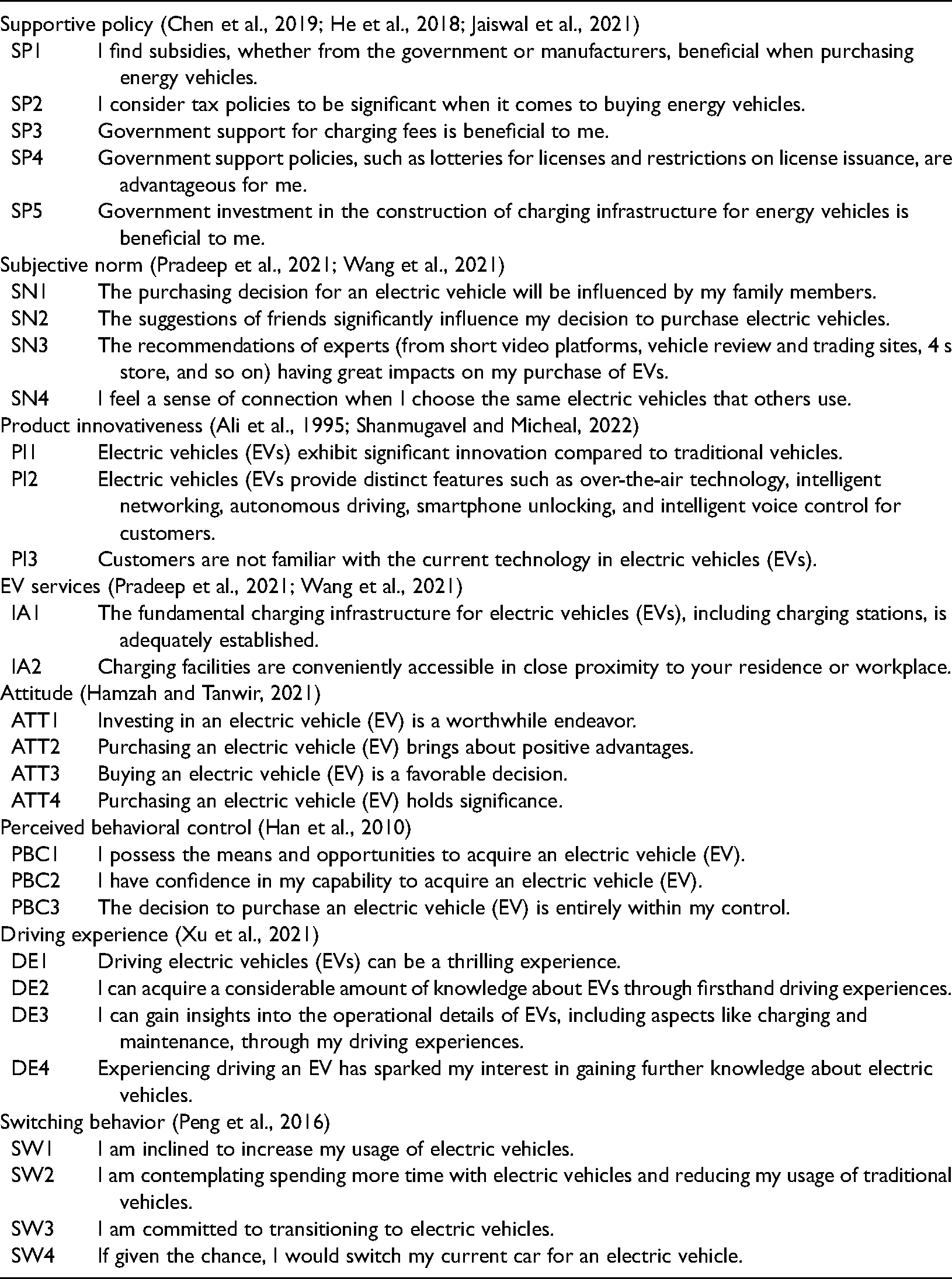
| Supportive policy (Chen et al., 2019; He et al., 2018; Jaiswal et al., 2021) | |
| SP1 | I find subsidies, whether from the government or manufacturers, beneficial when purchasing energy vehicles. |
| SP2 | I consider tax policies to be significant when it comes to buying energy vehicles. |
| SP3 | Government support for charging fees is beneficial to me. |
| SP4 | Government support policies, such as lotteries for licenses and restrictions on license issuance, are advantageous for me. |
| SP5 | Government investment in the construction of charging infrastructure for energy vehicles is beneficial to me. |
| Subjective norm (Pradeep et al., 2021; Wang et al., 2021) | |
| SN1 | The purchasing decision for an electric vehicle will be influenced by my family members. |
| SN2 | The suggestions of friends significantly influence my decision to purchase electric vehicles. |
| SN3 | The recommendations of experts (from short video platforms, vehicle review and trading sites, 4 s store, and so on) having great impacts on my purchase of EVs. |
| SN4 | I feel a sense of connection when I choose the same electric vehicles that others use. |
| Product innovativeness (Ali et al., 1995; Shanmugavel and Micheal, 2022) | |
| PI1 | Electric vehicles (EVs) exhibit significant innovation compared to traditional vehicles. |
| PI2 | Electric vehicles (EVs provide distinct features such as over-the-air technology, intelligent networking, autonomous driving, smartphone unlocking, and intelligent voice control for customers. |
| PI3 | Customers are not familiar with the current technology in electric vehicles (EVs). |
| EV services (Pradeep et al., 2021; Wang et al., 2021) | |
| IA1 | The fundamental charging infrastructure for electric vehicles (EVs), including charging stations, is adequately established. |
| IA2 | Charging facilities are conveniently accessible in close proximity to your residence or workplace. |
| Attitude (Hamzah and Tanwir, 2021) | |
| ATT1 | Investing in an electric vehicle (EV) is a worthwhile endeavor. |
| ATT2 | Purchasing an electric vehicle (EV) brings about positive advantages. |
| ATT3 | Buying an electric vehicle (EV) is a favorable decision. |
| ATT4 | Purchasing an electric vehicle (EV) holds significance. |
| Perceived behavioral control (Han et al., 2010) | |
| PBC1 | I possess the means and opportunities to acquire an electric vehicle (EV). |
| PBC2 | I have confidence in my capability to acquire an electric vehicle (EV). |
| PBC3 | The decision to purchase an electric vehicle (EV) is entirely within my control. |
| Driving experience (Xu et al., 2021) | |
| DE1 | Driving electric vehicles (EVs) can be a thrilling experience. |
| DE2 | I can acquire a considerable amount of knowledge about EVs through firsthand driving experiences. |
| DE3 | I can gain insights into the operational details of EVs, including aspects like charging and maintenance, through my driving experiences. |
| DE4 | Experiencing driving an EV has sparked my interest in gaining further knowledge about electric vehicles. |
| Switching behavior (Peng et al., 2016) | |
| SW1 | I am inclined to increase my usage of electric vehicles. |
| SW2 | I am contemplating spending more time with electric vehicles and reducing my usage of traditional vehicles. |
| SW3 | I am committed to transitioning to electric vehicles. |
| SW4 | If given the chance, I would switch my current car for an electric vehicle. |