




Abstract
During the last decades, the apprehension about environmental pollution and consuming of the global fossil resource reserves has raised the requisition to improve an environmental friendly and renewable fuel. Bio-based diesel fuel, which primarily occurs of methyl-esters in fatty acid is one of the finest replaces for fossil-based diesel fuel. Nowadays, plant oils are the primary source of bio-sourced diesel fuel. The fatty acid formation of manufactured bio-based diesel fuel from different plant-based sources and their features are disparate. The aim of the existent research is to choose the optimal plant oil as bio-based diesel through utilizing mathematical modeling technique. Amon plant-based oil kinds, the question of choosing the optimal plant oil is assessed, utilizing many criteria concerned with their features. This study spotlights a new perception into evaluating the optimal plant oil-derived bio-based diesels for the decision-makers like engine manufacturers and development and research engineers to strengthen the green reformation to provide the fuel economy and emission standards.
Introduction
Since the technological reformation, worldwide energy usage has risen significantly because of fast population growth, financial improvement, and technological/industrial improvement. The consumption of waste disposal, natural energy sources, ozone layer consuming, global warming, deforestation, climate change, and environmental pollution (soil, air, and water) are several instances of reduced environmental attributes because of technological outgrowth (Go et al., 2016). In truth, these problems are connected to wide-ranging unpredictable and predictable disasters such as human health, economic crisis topics, and so on. This has done to research for green industries to produce safe, clean, renewable, and sustainable energy sources for the next generation over eradicating the present damages created through environmental reduction (Datta and Mandal, 2016). In addition, at the usage ratio of 11 billion tons, annual, fossil-based energy sources will soon be consumed. Improving an option energy is a due selection for compatible coexistence of humans and the environment in addition to maintainable financial outgrowth in the community. According to this, sustainable energy resources, for example, bio-based fuels, have attracted much caution. Biofuel is liquid or gaseous fuels like biodiesel, ethanol, bioethanol, and methanol manufactured from bio-based products (Ashraful et al., 2014).
Renewability, nontoxicity, inherent lubricity, biodegradability, no or low sulfur content, domestic origin, high flash point, and also the support for the degradation of most arranged fuel emissions are biodiesel's primary benefits. Nevertheless, there exists some challenges related to its procedures which are comparable with those of fossil-sources diesel such as viscosity, cold-flow features, and oxidative stability. (Sajjadi et al., 2014a). In order to provide the satisfying use of bio-based diesel, it should be ensured with the most feasible procedure in relation to worldwide norms accepted. Bio-based diesel fuel features depend greatly on the triglyceride specification and types. Generally, any plant oil or animal fat, which includes triglycerides of unsaturated and saturated fatty acid with long chain of carbon, can be utilized in engines with diesel fuel. Nevertheless, the plant oil's practical testing in engines with diesel fuel has revealed diverse challenges in carbon deposits, injectors fouling, pumping, gumming, atomization on extreme engine wear, lubricating oil contamination, and head of piston and engine (Go et al., 2016). These problems are most probably caused by iodine value, high viscosity, high density, and poor volatility of plant oils. To surpass such restriction, the raw material is transesterified by short-chain alcohols to decrease the oil's viscosity. Transesterification is a term used in organic chemistry to define the organic chemical reactions in which an ester is converted into another through alkoxy moiety's interchange. Alcoholysis occurs when the RCOOR initial ester reacts with an R “OH alcohol, resulting in another RCOOR” ester formation (Schuchardt et al., 1998). Alcoholysis (transesterification) is the primary operation to transform triacylglycerol with the inclusion of raw materials into bio-based diesel fuel. Thus, bio-based diesel can be described as mono-alkyl esters of plant oils, nonedible/edible, animal fats, or other raw materials with the inclusion of triacyglycerol. Briefly, the transesterification term for biodiesel generation is displayed in Figure 1.
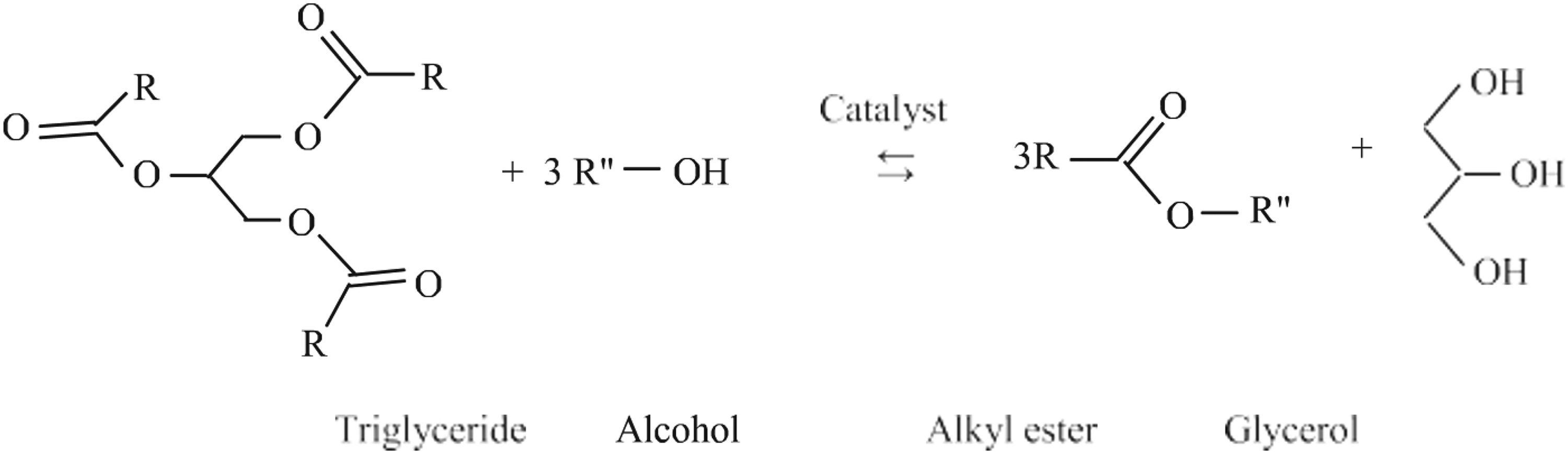
The transesterification term for biodiesel production (Sajjadi et al., 2016).
As displayed in Figure 1, one glycerol and three fatty acid groups make up a triglyceride. The fatty acids are long HC chains with a [C(=O)OH] group at the end. In general, there are about 350 oil-bearing harvests considered as potency resources for bio-based diesel fuel fabrication from around the world. Since the raw material accounts for 75% of the all biodiesel fabrication expense, choosing a suitable raw material that meets both specification and price requirements is critical to ensuring biodiesel's widespread use. Bio-based diesel fuel raw material can be separated into four primary groups containing (a) nonedible plant oil, (b) edible plant oil, (c) recycled or waste oil, and (d) animal fats. For biodiesel fabrication, the edible plant oil is thought as the main and first resources. Nowadays, about 95% of the world biodiesel is fabricated from plant oils. The rapeseed (about 84%) is the primary resource of plant oil, subsequently sunflower oil (about 13%), palm oil (about 1%), soybean oil, and the others (about 2%). Nevertheless, the utilization of plant oils is linked to major environmental issues like soil degradation, deforestation, and the utilization of most of the world's arable field. Furthermore, the cost of plant oil has risen dramatically, which impacts financial viability of plant oil-based fuels.
Through fabricating bio-based diesel fuel from plant oils, the food sources are essentially transformed into internal-combustion engine fuel, which creates food against energy source conjuncture. Thus, choosing plant oils as a bio-based diesel fuel potency raw material cannot be regarded as a long-term investment. Fabricating bio-based diesel fuel from plant oils is one potential resolution for overcoming such restrictions. To decrease food competition and deforestation rate, it is possible to plant nonedible harvests in many parts of the earth, wastelands in particular. Furthermore, they are both environmentally friendly and efficient. Karanja seed-kernel, jatropha seed-kernel, silk-cotton tree, mahua seed, rubber seed, tobacco seed-kernel, Chinese tallow, rice bran, Euphorbia tirucalli, jojoba seed, and babassu tree are the most widespread oils used to produce biodiesel. This category of bio-based diesel fuel sources can be regarded as the future selection of biodiesel raw materials. Animal fats and recycled or waste oils are also stated as the future raw materials. Bharadwaj et al. discussed the recovery of heavy metals from the waste effluents and their applications as catalysts in the synthesis of biodiesel from nonedible oils (Sai Bharadwaj et al., 2024). Nonetheless, the event of logistics, collection infrastructure, and waste plant oil could be the obstacles as the resources are dispersed in general. The animal-based fats are the other potency raw materials for bio-based diesel fuel fabrication because their price is largely lesser than the plant oil cost. Nonetheless, the animal-based fats’ numerous kinds include the saturated fatty acids’ high percentage, making transesterification operation challenges. The fatty acid structure of plant oils analyzed in this study is given in Figure 2 (Chuah et al., 2006; Formo et al., 1979; Lide, 2009; Linstrom and Mallard, 1998; Lutton, 1967; Mezaki et al., 2000; Noureddini et al., 1992; Sai Bharadwaj et al., 2024; Sajjadi et al., 2016; Valeri and Meirelles, 1997).
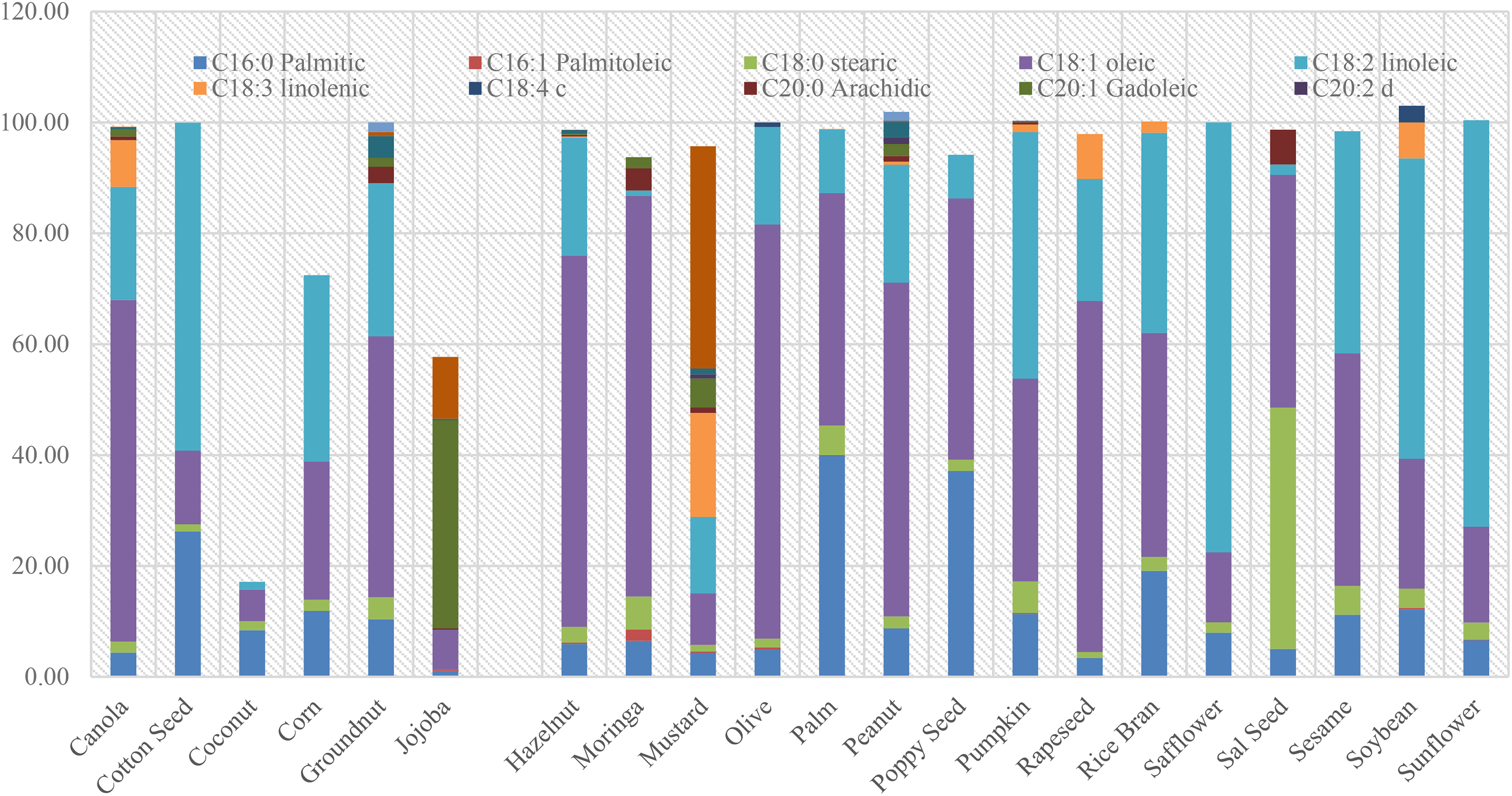
The fatty acid structure of plant oils analyzed in this study.
As seen in Figure 2, the dominant compounds’ compositional profiles display the tendency of C 18:2 (4 linoleic acid), C 18:1 (oleic acid), C 16:0 (4 palmitic acid), and C 18:0 (4 stearic acid). The caprylic acid, which is the least combination, is solely existing in coconut oil (8.45%). Other saturated lightweight combinations for coconut oil are also scrutinized (C 10:0, C 12:0, and C 14:0 with 18.5%, 47.9%, and 6.1%), which convincingly influence its procedures. Other important exceptions are mustard and jojoba oils, both of them are predominated through dense unsaturated combinations. C 20:1 (37.6%), C20H40O (19.3%), and C22H44O (19.0%) are the most predominant dense unsaturated and dense combination in jojoba oil, while C 22:1 (40.1%) is the most predominant dense unsaturated and dense combination in mustard oil. The mustard has the highest concentration of linoleic acid (C 18:3), at 13.8%. This compound (C 18:3) also existed in rapeseed and canola oils but with a less ratio (7.5%). While certain oils can be harvested from a single root, the composition of the oil is heavily influenced by the primary portions from which it is harvested. The oils harvested from olive leaves, for example, vary greatly from those harvested from olive fruit. The primary oil resources are sunflower, rapeseed, soybean, and palm, as previously mentioned. Sun flower includes commonly C 18:2 (73.3%); rapeseed includes commonly C 18:1 (63.3%); soybean includes commonly C 18:2 (54.2%) and C 18:1 (23.4%); and palm oil is usually predominated by similar amounts of C 16:0 and C 18:1 (about 41.5%).
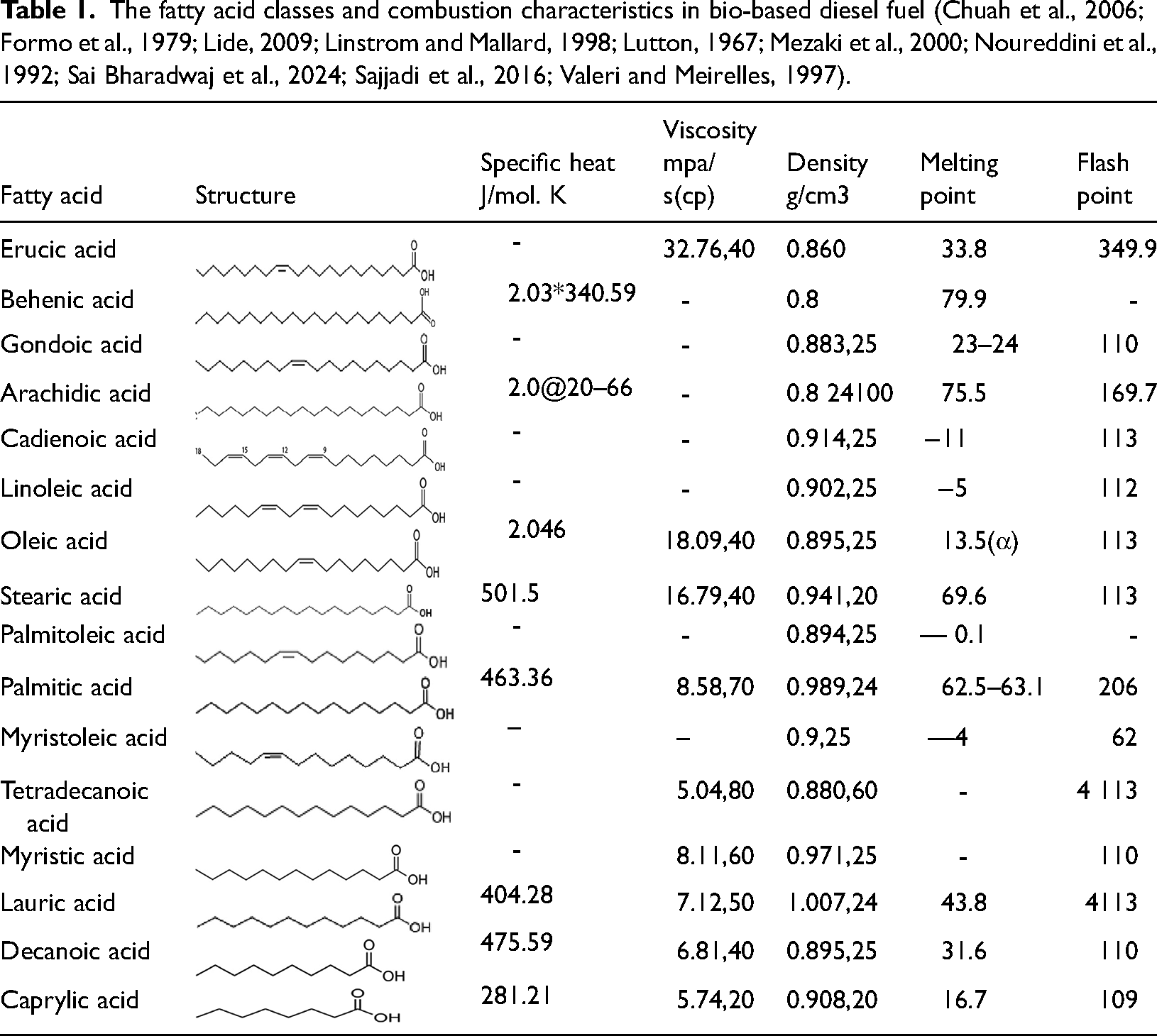
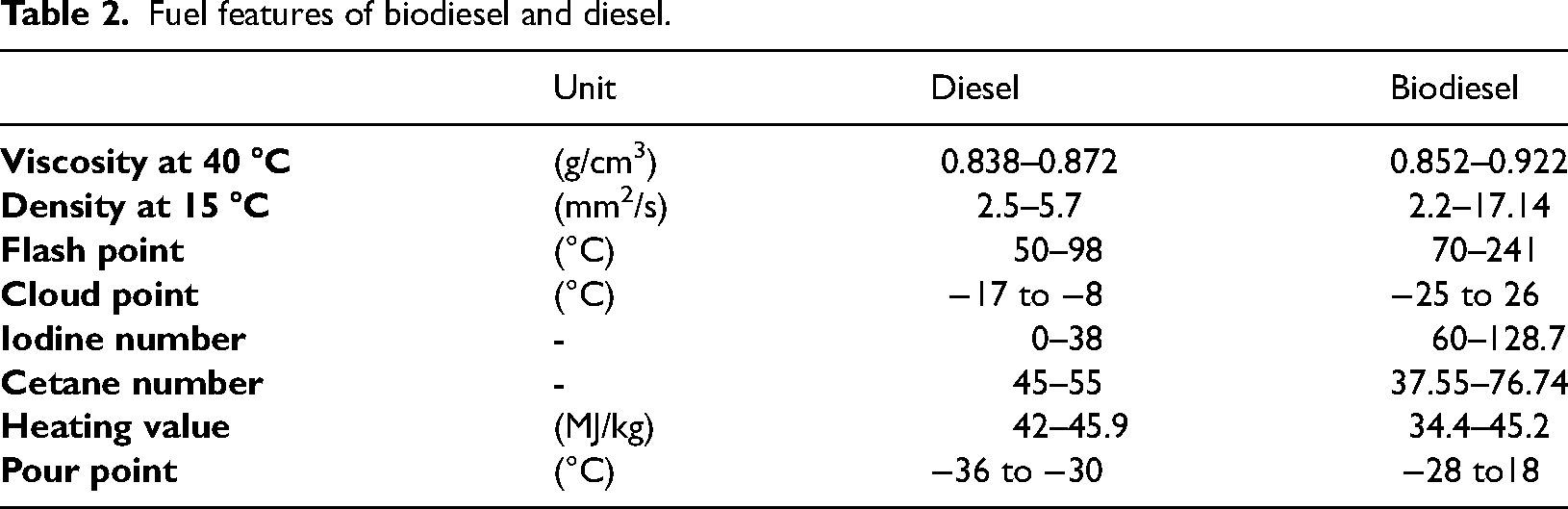
Nowadays, biochemical or thermochemical conversion of plant oils into diesel fuel mix with the inclusion of relevance with a good qualification diesel or fossil-based diesel fuel is very preferred. The fatty acid classes and combustion characteristics in bio-based diesel fuel are given in Table 1. Any bio-source fuel engine's combustion, emission, and performance features are depending on the bio-source fuel's thermal–physical qualifications. The cloud-pour points, viscosity, calorific value, flash-fire points, cetane number, and density are the bio-source fuel's main qualifications which are to be thought (Sajjadi et al., 2014b). In general, the fuel features of diesel and biodiesel are displayed in Table 2 (Chhetri and Watts, 2012; Dzida and Prusakiewicz, 2008; Hoekman et al., 2012; Sajjadi et al., 2014c; Sajjadi et al., 2016; Tat et al., 2000; Tat and Van Gerpen, 2003).
The fatty acid classes and combustion characteristics in bio-based diesel fuel (Chuah et al., 2006; Formo et al., 1979; Lide, 2009; Linstrom and Mallard, 1998; Lutton, 1967; Mezaki et al., 2000; Noureddini et al., 1992; Sai Bharadwaj et al., 2024; Sajjadi et al., 2016; Valeri and Meirelles, 1997).
Fuel features of biodiesel and diesel.
There are many literature reviews and investigation studies in this field. In the latest studies, emissions, performance, and production from a CI engine utilizing biodiesel was criticized through Datta and his coworkers (Datta and Mandal, 2016). Some criticize studies have also orientated on bio-based diesel synthesis operation (Baskar and Aiswarya, 2016; Go et al., 2016). Nevertheless, there are numerous researches scattered on biodiesel features. Most of them have concentrated on several features or several plant oils’ numbers (Anwar and Garforth, 2016; Ashraful et al., 2014; Verma et al., 2016). During the past several decades, bio-based diesel fuels fabricated from the maintainable resources, particularly from plant oils, have created significant interest research due to the societal, financial, and environmental benefits. The scientific researches display that there is a big concentration of researches made on the operation of fabricating and planning of biofuel from various plant oils through using diverse methodologies. Olivera and coworkers thought nine plant oils and researched fuel properties of these oils and biofuel fabricating methodologies (Banković -Ilić et al., 2012). Silitonga and coworkers researched the overall properties of bio-sourced diesel fuel mix from raw materials, like palm oil, Aleurites mollucanus, Cerbera manghas, Sterculia foetida, Calophyllum inophyllum, Pangium edule, Hevea brasiliensis, Jatropha curcas, and Ceiba pentandra, as options to diesel fuel (Silitonga et al., 2013). Balat and coworkers researched that 350 plant oil seed products have been defined. They defined that plant oils like rapeseed, peanut, safflower, soybean, and sunflower are prospective bio-derived sources of diesel fuel for diesel engines (Balat and Balat, 2008). From an environmental perspective, Stanojevic and coworkers researched the bio-based diesel fuel generation's ecological impacts. They used 44 various criteria to found the minimum ecological expense (Stanojevic et al., 2010). Cobuloglu and Buyuktahtakin suggested a new stochastic analytic hierarchy process that found the most renewable plant with respect to the financial, environmental, and social influences of biomass and biofuel fabrication (Cobuloglu and Buyuktahtakin, 2015). Gassner and Marechal existed a methodology to optimize the biofuel production (Marechal and Gassner, 2008). In a caldron, Gan investigated the palm oil-based biofuel's combustion. To found minimum greenhouse gas emissions, researchers researched the tendencies of NOx and CO with diverse equivalence ratios and fuel pressures (Ng and Gan, 2010). In engine with diesel fuel, Ashraful et al. crosschecked emission features, physicochemical characteristics, and engine performances of different plant oils in bio-based fuel generation by a review and discussion (2014). For house heating devices, Vanlaningham et al. searched the combustibility parameters of soybean-sourced bio–sourced fuel. They are shown that SO2 and NOx gas emission was lower for soybean oil-sourced biofuel (2004). Hosseini and coworkers led his scrutiny on the gas emissions of biodiesel and diesel fuel mixtures. In proportion to bio-based diesel fuel, they recorded that diesel fuel can have much more grades of polluters like particle substance emissions, CO, and CO2, while NOx gas emissions would also rise (Hosseini, 2013). Lee and coworkers recorded that diesel engine fuel has much more gas emissions of NOx and CO as per bio-based diesel fuel (Win Lee, 2004). With various mixes of biodiesel, Bazooyar (2011), Ghorbani and Bazooyar (2012), and Ghorbani and coworkers (2011) led searches in a boiler. With diverse fuel–air rates and fuel pressures, they recorded that NOx gas emission diminishes for a few fuel pressures. Nonetheless, overall gas emissions decrease excluding NOx for overall fuel pressures. Giekoumis evaluated the mean valuations of the bio-sourced fuels’ physical and chemical parameters that are researched the most (Giakoumis, 2013). Saxena et al. concentrated on the characteristics’ predict of bio-based fuel mixes and bio-based fuel (2013). For evaluating finest bio-based fuel production methodology, Kumar et al. utilized a fuzzy-AHP strategy (2017). Cundiff et al. modeled and optimized biofuel generation, transportation strategies, harvesting, and storage (1997). Maréchal and Gassner implemented polyobjective optimization approaches to synthesize convenient operation flow layers for a gasification-sourced biorefinery (Gassner and Marechal, 2009). Turcksin and coworkers assessed different several bio-based diesel fuel options with a multicriteria multiactor modeling (2011). Wit and coworkers analyzed the anticipated usage of several bio-based diesel fuels relying on economical opinions (De Wit et al., 2010). For compression ignition engine, Mandal and Datta compared bio-based diesel fuels as an option fuel (Datta and Mandal, 2016). Sakthivel and coworkers evaluated the most convenient bio-based fuel mix choice depending on a ANP-TOPSIS analysis (Sakthive et al., 2015). For the implementation of bio-based diesel fuel, Joshi and coworkers assessed the challenges, opportunities, and next appearances (Joshi et al., 2017). Azadi and coworkers evaluated the nations’ effect in progressive bio-based diesel fuel science comparatively (Azadi et al., 2017).
Early endeavors have utilized optimization and modeling to discuss a few ways of bio-based diesel fuel generation. Cundiff et al. modeled and optimized transportation strategies, harvesting, storage, and bio-feedstock production (1997). Marechal and Gassner implemented polyobjective optimization approaches to synthetize convenient operation flow layers for a gasification-sourced biorefinery (2008). Their method was expanded to contain ecological effective and implemented to lingocellulosic raw material integrated power and fuel plant by Gerber et al. (2011). While these studies have frequently on optimizing a particular kind of bio-based fuel fabrication industry, a few studies has been done to methodically compare industries in a wider framework. De Wit et al. modeled the predicted usage of several bio-based fuels in European markets depending on financial importance containing technic learning (2010). Aguilar-Santibaneez and coworkers suggested a superstructure for the biorefinery design given the available and economy products in fundamental Mexico and optimized this superstructure to minimize ecological effect and maximize profit (Santibaneez-Aguilar et al., 2011). Nevertheless, works thinking wide-ranging industries in most cases, nonspecific location framework, are lacking in the scientific scrutinizes. Bharadwaj et al. utilized artificial neural networks and response surface methodology to illustrate optimization of biodiesel production from rubber seed oil as feedstock (Sai Bharadwaj et al., 2020), used uncertainly error analysis to study the reliability of biodiesel production using fluorite and calcined limestone as catalysts, and tested the performance of biodiesel synthesized from rubber seed oil in diesel engine to show that it is a feasible substitute to conventional diesel (Sai Bharadwaj et al., 2021b). Plant oils are produced from bio-sources, which can be obtained in abundance in the whole world. The determination of the most convenient sustainable oil as bio-based diesel fuel through utilizing biofuels’ thermal features and other important features are obtaining importance with the ever-growing fossil resource need. The triglyceride molecules’ chemical formula of plant oils ranges to a large degree concerned with the types. As such, the various physical, energy, and chemical features of plant oils are important for proper utilization in bio-based fuel sector. In this study, the comparative evaluation of 21 diverse sustainable plant oils is provided. The aim of this research is to select the most convenient sustainable plant oil for bio-sourced diesel producing by the utilization of integer programming (IP). Among sustainable vegetable oil types, the question of choosing the most appropriate plant oil is assessed.
Mathematical modeling method
This study involves fuel properties of the selected plant oils when determining the most appropriate plant oil in diesel production given a set of fuel properties. The fuel features of biodiesel are density, sulfur content, viscosity, pour point, heating number, cloud point, iodine number, cetane number, flash point, and acid value. The 21 option plant-based oils are compared utilizing IP which is a mathematical modeling method involving only integer decision variables. IPs are often used because many decisions about alternatives in a finite set of options are discrete, such as yes/no, 0/1, etc. A programming problem in which all variables are integers is called a purely IP problem.
The formularization for the optimization problem is formulated as follows. The cetane number for each plant oil is represented by
Mathematical model.
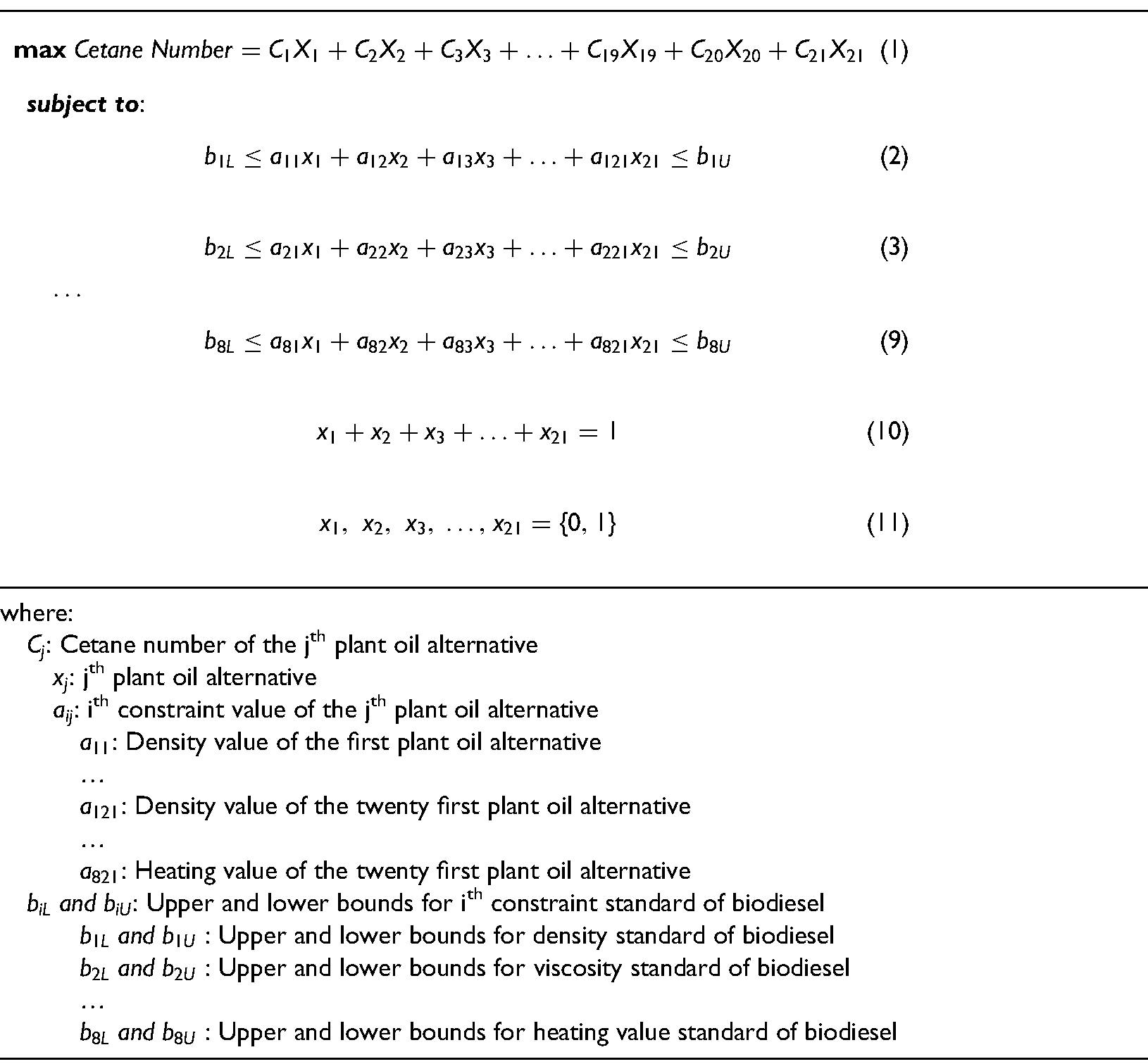
The first function of the formulation designates the objective function maximizing the cetane number. The function computes the whole cetane number of overall plant oils as identified through the cetane parameter
Solving the Optimization Formula
IP strategy was utilized for the optimization problem's solution. When a modeling contains integer, pairwise or all different restrictions, it is named an IP question. Integer restrictions do a modeling nonconvex, and indicating the optimum resolution to an IP question is identical with resolving a global optimization problem. Such questions may need further calculating time than the identical question without the integer restrictions. Since nonlinear solution methodology is utilized, a bound-and-branch methodology is applied for the integer restrictions.
Branch-and-bound algorithm
The methodology utilizes a tree diagram of branches and nodes to coordinate the resolution partitioning. This is a smart research specification for either an optimum or a good-enough approximation to the optimum resolution to all-integer of mixed-integer problems. In this model for biodiesel production, all decision variables are integer, thus resulting in an all-integer problem. The algorithm's stages can be briefly explained below:
The linear programming relaxation which means treating the problem as a linear problem.
If the optimum linear programming resolution is a number without fractions, it is optimum for the integer problem. Split the main question into two or more branching (subproblems) that splits the feasible field into zones that subtracts the available linear programming optimum resolution from the novel convenient zone. A lower bound and an upper bound on the objective function's value are adjusted. Initial subproblem from the variant by the fractional element that is the highest. The variant is branched out to contain solely values less than the integer value below and greater than the integer above the optimum linear programming solution. The extra constraints to the main problem are expressed by the branches. The optimum resolution for each of the branches is identified.
Subproblems whose objective function is worse than the set up convenient bounds are eradicated from more opinion. The remaining subproblems are utilized to change the bounds and then subdivided and investigated. This operation is repeated till no more subdivision is plausible, at which matter the optimum resolution has been accessed.
Figure 3 presents the tree representation of the algorithm.
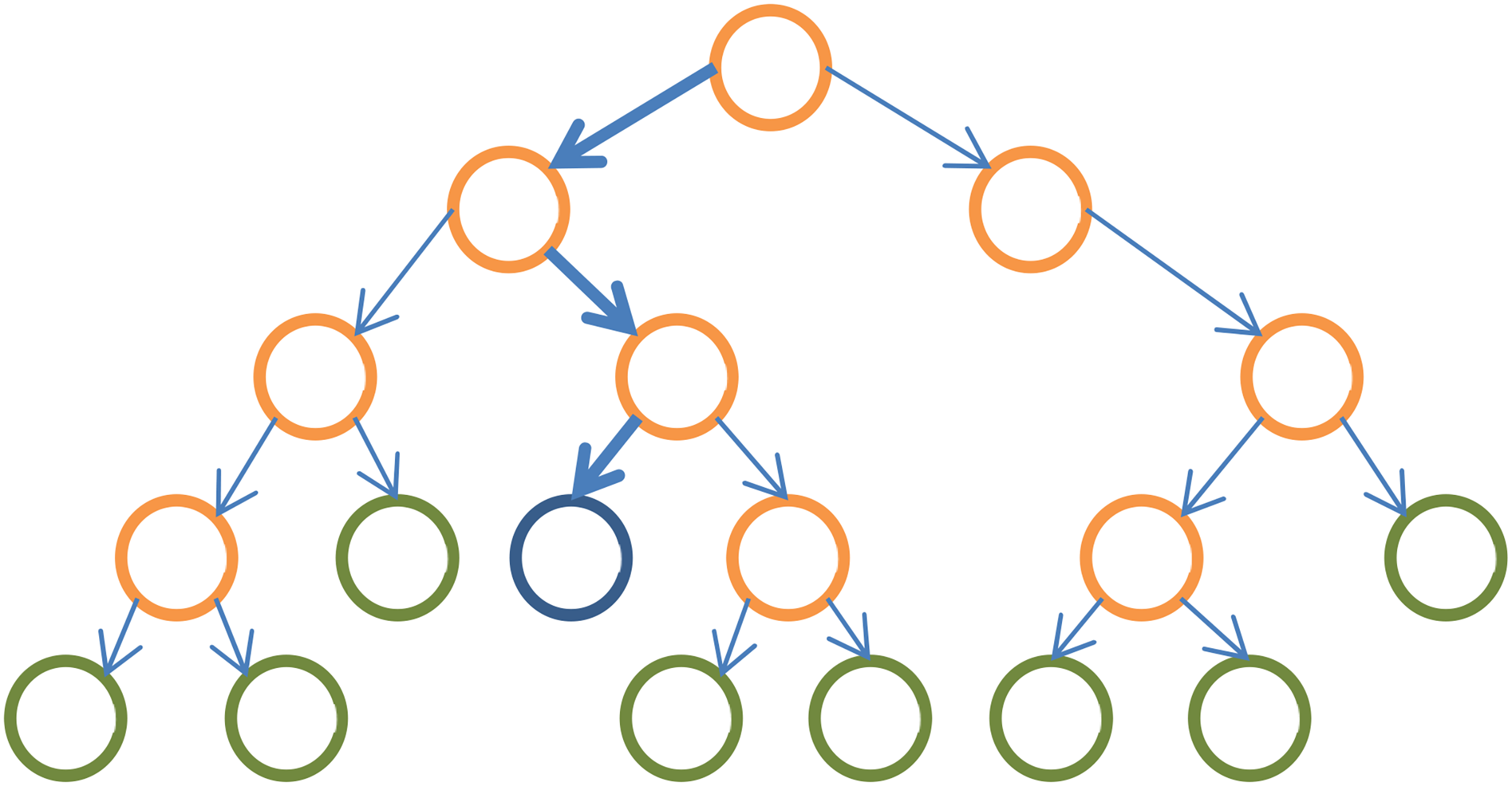
Branch-and-bound algorithm.
The 21 various options are identified for this investigation's purpose. The fuel properties for chosen alternatives are given in Table 4.
The fuel features for chosen alternatives (Chuah et al., 2006; Formo et al., 1979; Lide, 2009; Linstrom and Mallard, 1998; Lutton, 1967; Mezaki et al., 2000; Noureddini et al., 1992; Sai Bharadwaj et al., 2024; Sajjadi et al., 2016; Valeri and Meirelles, 1997).
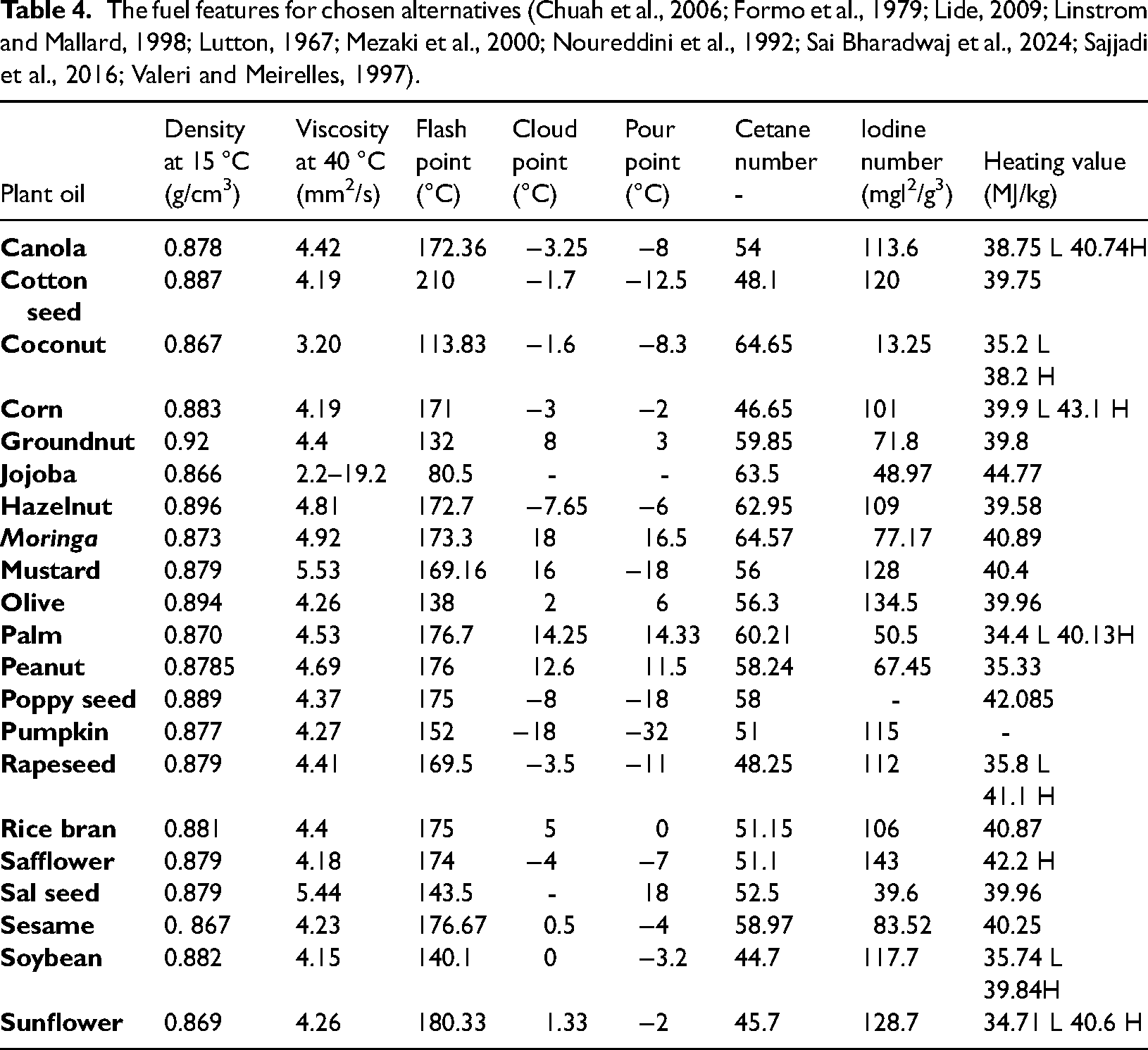
The values shown in the body of Table 4 are the
The acquired results as displayed in Table 5 indicate that Moringa is the option that aids the most to the objective of choosing the most efficient renewable oil for biodiesel production that accomplishes overall criteria that are selected.
Mathematical model solution.
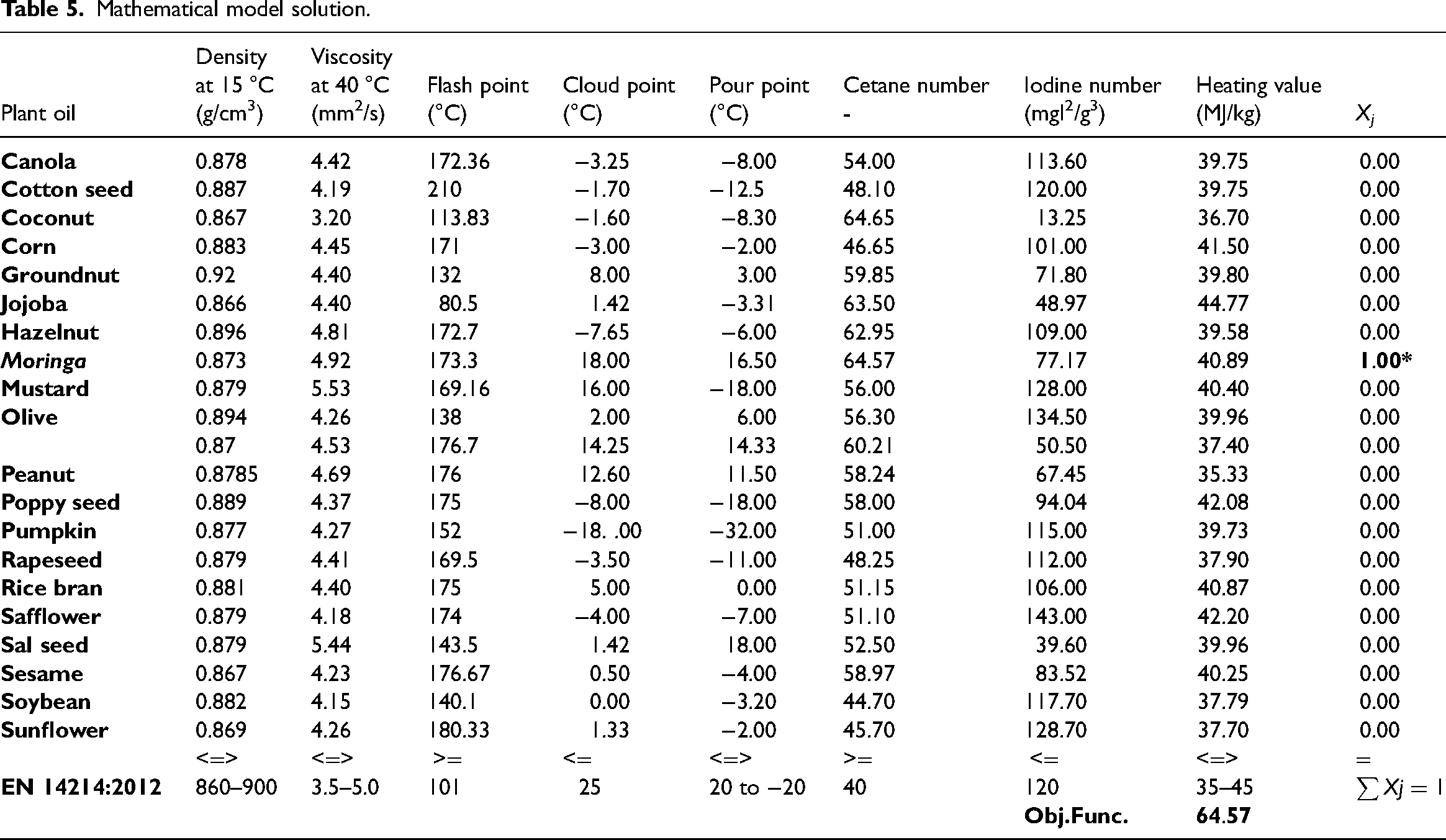
Columns 2–9 in Table 5 represent Equations 2–9 in Table 3, each satisfying the related constraint. Meanwhile, the last column ensures that Equation 10 in Table 3 is satisfied and that only one selection is made. Objective function value in the last row shows the resulting cetane number using Equation 1.
Conclusions
The perpetually decreasing fossil resources and the increasing requisition for energy have driven to the search for alternative fuel species which are renewable and sustainable. The bio-based fuel is thought as an attractive alternative to replace traditional diesel fuel. Through transesterification reactions, the bio-based diesel fuel is produced by the alkyl esters in fatty acid that can be extracted from primarily plant-based oils. The advantages of the bio-based diesel over petroleum-based diesel fuel are higher biodegradability, lower carbon monoxide emissions, more combustion performance, and bigger cetane number. Together with the structural advantages of the biofuel, the drawbacks of utilizing biofuel are also worth monitoring. The overall drawbacks of biofuel include cold start troubles, less energy content, more subtly NOx gas emissions, more strip corrosion, and fuel pumping problem occurring due to higher viscosity. In the nature, there are numerous diverse plant oil alternatives. The plant oil features are diverse from others. Thus, the parameters of each of produced diesels from plant oils are diverse.
This paper aims to obtain the most proper vegetable-based oil based on different attributes present in the scientific scrutiny. Eventually, IP is implemented to the emerging framework. The implementation of the IP and the outputs from this research provide an alternative of how IP can be applied in plant oil-based biodiesel selection. The founded results signify that Moringa is the option that aids the most to the objective of choosing the most effective plant oil that achieves all the attributes selected.
This evaluation presented here could be helpful for both investigators and policy-makers. The outputs of this research have the potential of helping investigators working on a wide sequence of areas regarding bio-based diesel fuels. The results of this analysis can also be used globally by playmakers to assess the polydirectional efficiency of their research and development investments in bio-based diesel fuel.
Footnotes
Declaration of conflicting interests
The authors declared no potential conflicts of interest with respect to the research, authorship, and/or publication of this article.
Funding
The authors received no financial support for the research, authorship, and/or publication of this article.
