




Abstract
Deep-burial sandstone reservoirs host significant hydrocarbon reserves and are the potential area for petroleum exploration. The deeply buried (>4000–4500 m) Paleozoic reservoirs in Western Desert, Egypt are recently characterized by giant oil and gas discoveries. However, the debates about their sediment sources and formation mechanisms hamper further hydrocarbon exploration and development. Detailed core observations, geochemical and porosity-permeability analyses are performed to fill above gaps. The Paleozoic sandstone reservoirs are well-developed, including the Cambrian–Ordovician Shiffah Formation (av. porosity of 6.6% and permeability of 6.01 mD), Silurian Basur Formation (7.4% and 44.64 mD), and Carboniferous Desouqy Formation (8.7% and 76.44 mD). Their sedimentary facies is predominantly composed of fluvial and coastal facies. The predominant sediment sources for the Paleozoic clastic rocks are the Precambrian medium-acidic felsic basement, while the Precambrian sedimentary rocks provide certain sediment sources based on geochemical data. The development of Paleozoic reservoirs in the Western Desert is the integrated result of a “tri-element control” involving sedimentary facies, diageneses, and tectonic activity. Parallel bedding, cross-bedding and slump structures, and many different types of fossils are well-developed here. These indicate fluvial–coastal facies, which is favorable for the formation of thick sandstone reservoirs. During post-depositional regimes, the Paleozoic is characterized by long-term shallow burial and subsequently rapid deep burial. This contributes to the preservation of pores and the development of fractures. Cementation and compaction reduce the porosity and permeability during burial, while multi-phase dissolution activities (e.g. meteoric diagenesis and organic acid dissolution) increase the reservoir performance. Oil charge is favorable for the preservation of porosity. This leads to better performance of the oil-bearing intervals than reservoir intervals. Moreover, multi-stage tectonic activities are favorable for the development of faults and fractures, thereby increasing reservoir performance. The Paleozoic sandstones show high potential for hydrocarbon exploration and are significant for those concerned with Western Desert.
Introduction
The deeply buried (>4000–4500 m) Paleozoic to Precambrian sandstone and carbonate reservoirs have been discovered in the past years, such as in the Sichuan Basin, Tarim Basin and Junggar Basin in China (Chen et al., 2024; Hu et al., 2020a, 2022, 2023a; Liu et al., 2020; Lai et al., 2023), the Western Interior Basin in the United States (Feng et al., 2016), and the Kaskida oil and gas field in the Gulf of Mexico (Zhang et al., 2014a). Recently, multiple oil and gas reservoirs are reported in the Paleozoic of the Middle East (Zhou et al., 2023) and Africa (Zhang et al., 2020). These deep to ultra-deep high-quality reservoirs host significant potential for future oil and gas exploration.
Due to the prolonged burial process, deep to ultra-deep clastic rocks undergo multiple diagenetic events and tectonic activities, which increase the difficulty of reservoir prediction. Similar to carbonate (Hu et al., 2021; Ma et al., 2007), the “three-element control reservoir” of sedimentation–diagenesis–tectonics also applies to clastic reservoirs based on below work. In detail, high-energy sedimentary environments are the foundation for high-quality clastic reservoirs, while diagenetic processes are crucial for their development (Lai et al., 2017). Compaction and cementation processes could decrease reservoir properties, while grain coating, early oil charging, abnormally high pressure, and dissolution generally improve the reservoir performance (Bloch et al., 2002; Lai et al., 2017; Worden et al., 2018). Tectonic activities/faults play an adjusting role in reservoir evolution (Zhang et al., 2011).
The Western Desert in Egypt is currently the largest oil-producing basin in Egypt, with a production rate of 1.9 million barrels of oil per day (BOPD, Hassan et al., 2023). In the past 10 years, the primary producing layers in the Western Desert have transitioned from the Cretaceous to the Cretaceous–Jurassic–Paleozoic. The Triassic is eroded due to tectonic uplift. Although the Paleozoic in the Western Desert shows deep burial depths of over 4000 m, multiple giant oil and gas fields have been discovered in the past decade, such as the Ptah oil field. The average pay thickness of the Cambrian Shiffah Formation in this field exceeds 40 m, with high production rates. For example, wells Ptah-1 and Ptah-3 yielded production rates of 2350 and 2000 BOPD, respectively (Energy Report, 2015). In 2023, well I in the Shushan Depression showed a pay thickness of over 40 m (av. porosity of 10.7%) for the Shiffah Formation reservoir, with a tested production rate of 1500 BOPD. These findings indicate significant exploration potential in the Paleozoic reservoirs. Previous studies on the Paleozoic of the Western Desert have mainly focused on source rocks (El Matboly et al., 2022) and hydrocarbon migration (Mahmoud et al., 2023). However, the sediment source and formation mechanisms of the Paleozoic reservoirs are limitedly reported. Previous research about the reservoir evolution and distribution in the Western Desert focused on the Mesozoic and Cenozoic (Abdelaziz et al., 2016; Elmahdy et al., 2020; Hakimi et al., 2023; Rifai et al., 2006).
To solve the above questions, a comprehensive study of the Paleozoic reservoirs in the Western Desert of Egypt is shown here. Detailed petrographic observations, elemental analysis, and petrophysical analysis are performed to generate clear understanding of the sedimentary environment and reservoir evolution. This study aims to (i) elucidate the sediment source of the Paleozoic in the Western Desert; (ii) discuss the effects of sedimentary facies, diagenetic events, and tectonic activity on reservoir evolution; and (iii) indicate the implications for global deep-burial sandstone reservoirs.
Geological settings
The Western Desert is located in the northeastern part of the African Plate, covering an area of ca. 132,000 km2 (Figure 1). This basin consists of eight depressions, three uplifts, and two domes. The Western Desert underwent complex tectonic activities. In the Paleozoic, this basin is characterized by stable craton. Correspondingly, sandstone and shale layers were widely deposited. This basin subsequently underwent two phases of rifting and compression–inversion in the Mesozoic. In the Early Jurassic, coinciding with the breakup of the Gondwana supercontinent, the Western Desert is characterized by a rifting phase. Local structural compression–inversion occurred in the basin during the Late Jurassic. In the Early Cretaceous, this basin continued to subside, experiencing rift sedimentation, and the Neo-Tethys Ocean started to retreat in the Late Cretaceous. In the Cenozoic, the Western Desert continued to be a relatively stable carbonate platform.
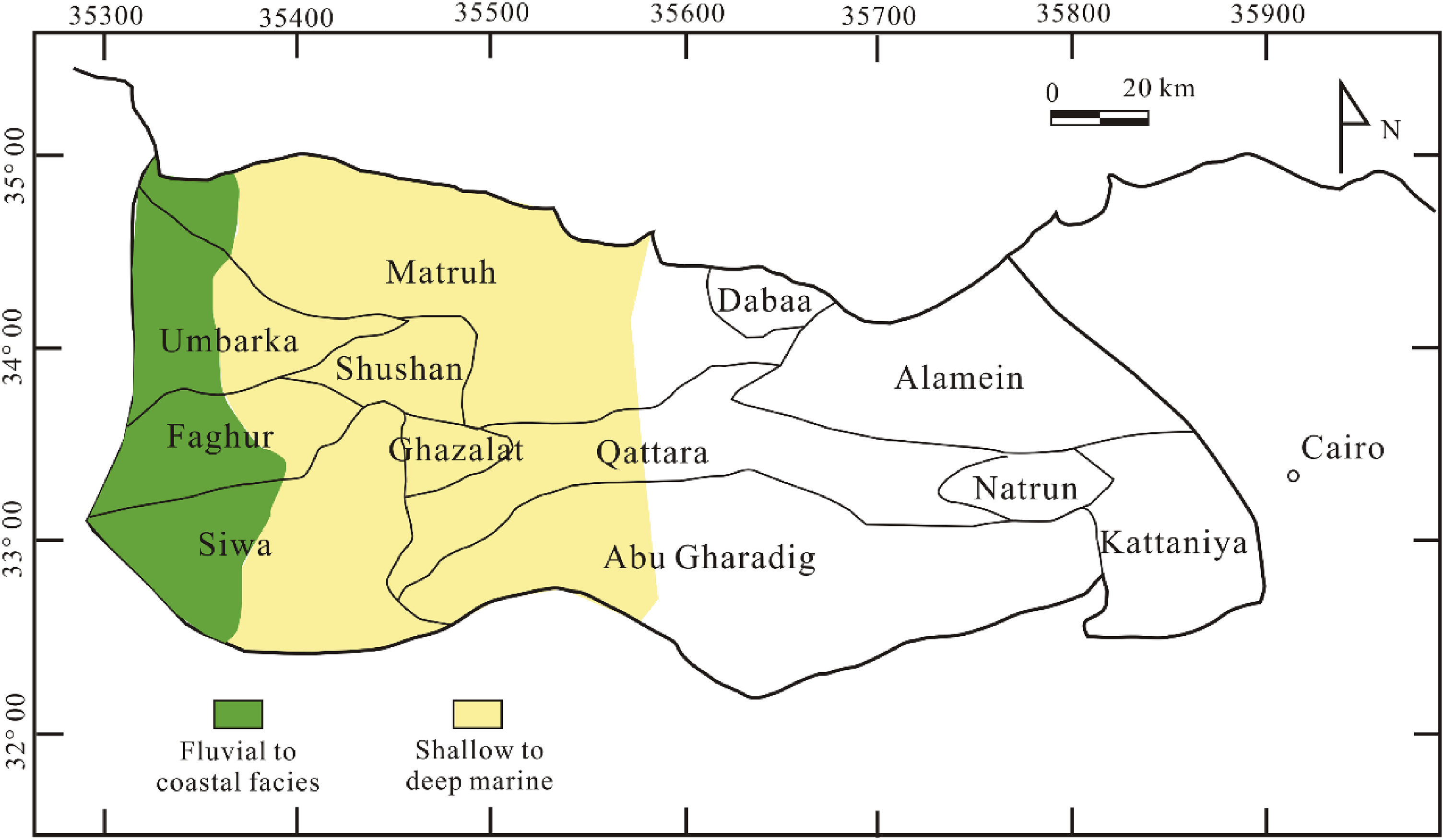
Distribution map of early Paleozoic depositional facies in the Western Desert, Egypt (modified from Wanas, 2011).
The sedimentary facies of the Paleozoic in the Western Desert are predominantly composed of fluvial and coastal facies (e.g. Keeley, 1989). Marine platform facies is presented in the Jurassic and Cretaceous. The Paleozoic consists of the Cambrian–Ordovician Shiffah Formation, Silurian Kohal and Basur formations, Devonian Zeitum Formation, Carboniferous Desouqy and Dhiffah formations, and Permian Safi Formation. The lithology of these formations is dominated by sandstone, siltstone and mudstone (Figure 2). In the Jurassic and Cretaceous, the base of the Western Desert is composed of clastic rocks, while carbonate is shown at the top.
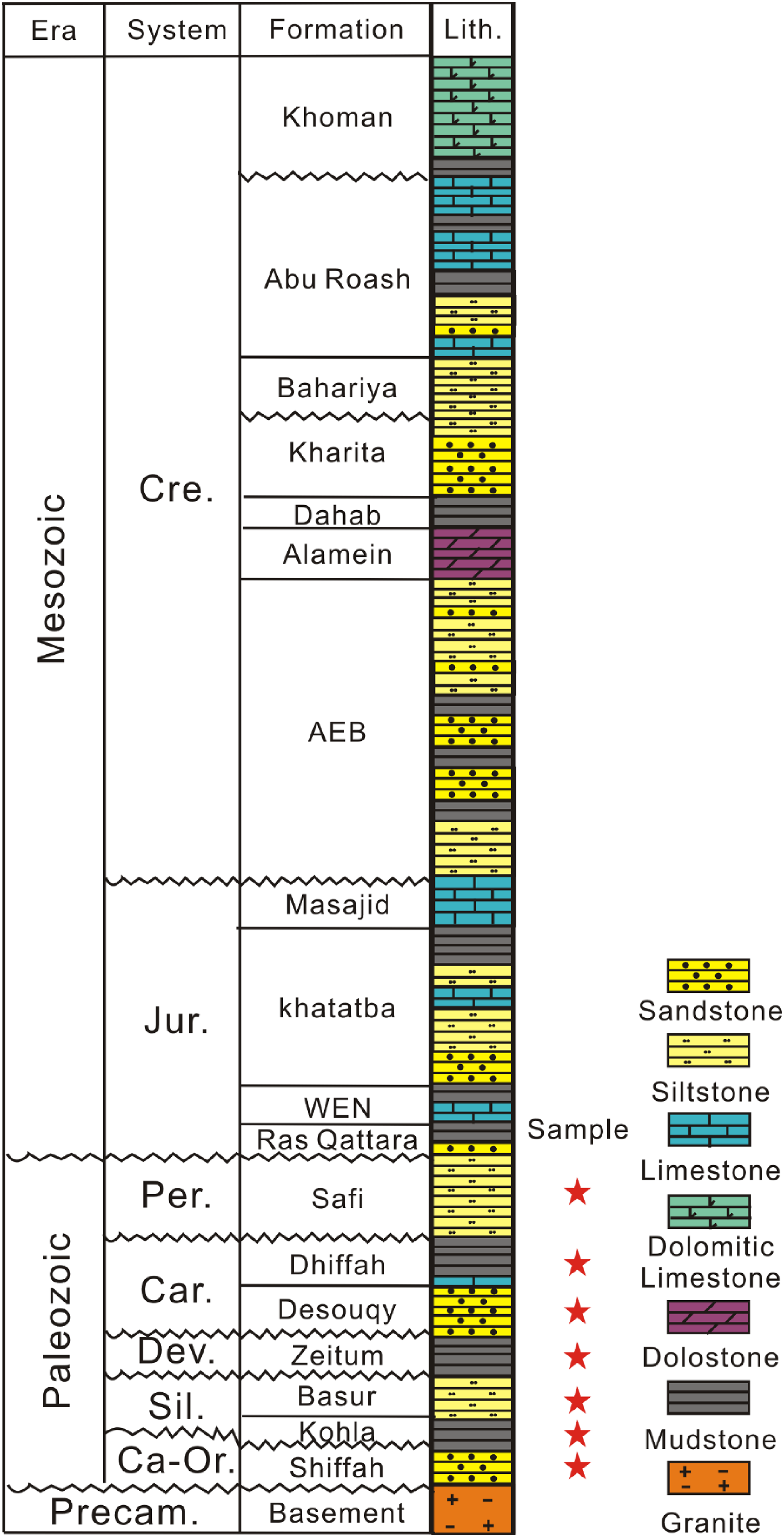
Lithostratigraphic column of the Western Desert, Egypt. The collected samples are shown in the column.
From the perspective of the petroleum system, multiple sets of reservoirs are developed in the Paleozoic, including the Cambrian–Ordovician Shiffah Formation, the Silurian Basur Formation, the Carboniferous Desouqy Formation, and the Permian Safi Formation. The Carboniferous Dhiffah Formation represents a potentially prolific source rock. The Jurassic and Cretaceous also have well-developed source rock–reservoir–seal combinations. Furthermore, high-quality source rocks include the Jurassic Khatatba Formation and the Upper Cretaceous Abu Roash Formation. High-quality reservoirs comprise the Jurassic Khatatba Formation sandstone and Masajid Formation limestone; Lower Cretaceous AEB Formation sandstone and Alamein Formation dolostone, as well as Upper Cretaceous Abu Roash Formation sandstone and limestone, and Khoman Formation limestone.
After the stable deposition from the Cambrian to the Permian, the strata remained continuously buried (Figure 3). Following the Triassic sedimentation, tectonic movements uplifted the strata to the surface, and then the Triassic was eroded. Subsequently, the strata experienced rapid burial during the Jurassic and Cretaceous. Towards the end of the Cretaceous, the strata were slightly uplifted due to tectonic activity. Following the Cenozoic deposition, the strata finally remained continuously buried to the present burial depth.
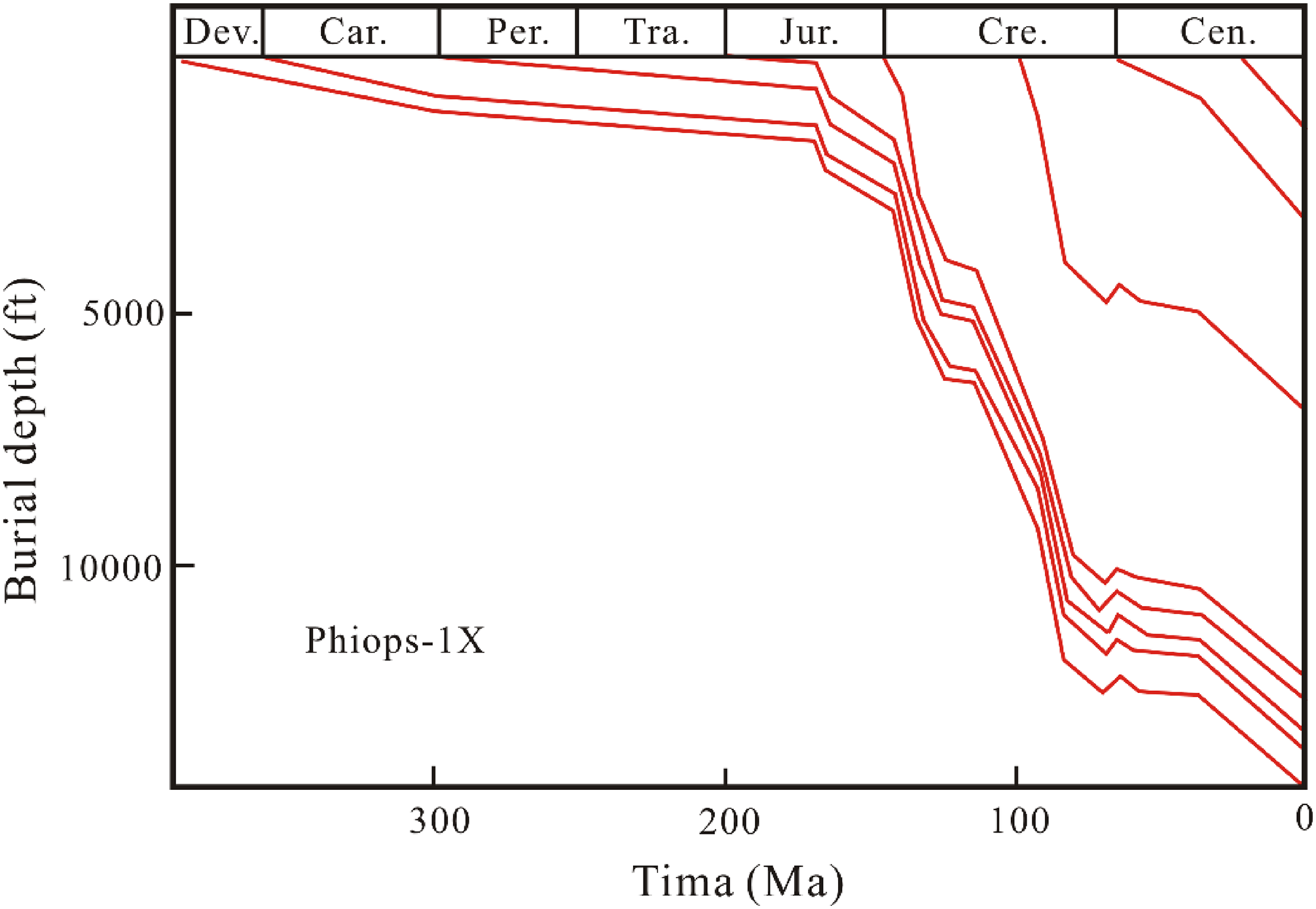
Burial history of the Faghur Sub-basin in the Western Desert, Egypt (modified from Abd El Gawad et al., 2019).
Methods
Over 150 core samples with dimensions ranging from 5 to 10 cm collected from over 10 exploration wells were selected for petrological (optical microscopy and cathodoluminescence), geochemical, and porosity–permeability analyses. Logging and seismic data were also incorporated in this study.
Petrographic observations
Petrographic observations were performed on the examination of drilled core samples and thin sections. Thin sections were polished to 30 µm in thickness and then were prepared from dyed, resin-impregnated samples. A limited number of these were stained with Alizarin Red S and potassium ferricyanide to distinguish dolomite from calcite (Dickson, 1966). Quantitative measurements of mineral composition are also conducted under the microscope. A cold cathode Relion III cathodoluminescence microscope was used for cathodoluminescent observations with a current of 325 μA, a beam voltage of 16.3 kV, and a beam diameter of 4 mm.
Elemental contents
For trace elements and rare earth element analysis, ca. 50 mg of clastic powder was leached in 2 ml HF and 0.5 ml HNO3 at 150°C for 24 h. These were subsequently leached by 0.25 ml HClO4 and samples were then dried at 150°C. Then 1 ml HNO3 and 1 ml H2O were added at 120°C for 12 h. The aqueous phases were finally diluted with H2O and analyzed by Inductively Coupled Plasma Mass Spectrometer (ICP-MS) (e.g. Alsalem et al., 2021; Murray et al., 1992). During the testing process, international reference standards, including BCR-2 and BGM-2, are used. Rare earth element (REE) data were normalized to ‘chondrite’ (Taylor and McLennan, 1985), with normalized values expressed as (REE)SN. The REEs were subdivided by atomic number into two fractions: (i) light REE (LREE), consisting of La, Ce, Pr, Nd, Sm, and Eu; and (ii) heavy REE (HREE), containing Gd, Tb, Dy, Ho, Er, Tm, Yb, and Lu. Eu anomalies were quantified as (Eu/Eu*)SN = (Eu/(Sm2 × Tb)1/3)SN (Lawrence et al., 2006).
Porosity–permeability
Point counting of porosity was performed by the Adobe Photoshop quantification method. Detailed methods could be observed in Zhang et al. (2014b). For porosity and permeability analyses, cylindrical rock samples with a drilling diameter of 2.5 cm are subjected to an oil-washing process followed by drying. Dry core plugs were then analyzed by a high-pressure gas permeameter/porosimeter for porosity and permeability. Quantitative statistics on the numbers, inclination angle, and properties of fractures were also performed based on the Formation Micro-Imaging (FMI) logging system (e.g. Liu, 2001).
Results
Petrography
In the Cambrian–Ordovician Shiffah Formation, the lithology is predominantly composed of sandstone (Figure 4(A)), with minor siltstone and shale, locally interbedded with limestone and dolomite. In sandstone, quartz content generally reaches up to 97%, with small amounts of lithic fragments. The sandstone shows moderate to well sorting, moderate cementation, and grain-to-grain contact. Diagenetic minerals consist of pyrite, chlorite, and kaolinite clay minerals. Fossils such as Saharidia fragile and Celtiberium geminum are shown here. The studied formation is characterized by slump structures and wave ripple cross-bedding. The Shiffah Formation has a thickness ranging from 24 to 1655 m, with a thick–thin–thick trend from west to east in the Western Desert (Figure 1). This formation shows an unconformable contact with the underlying Precambrian basement (Figure 2).
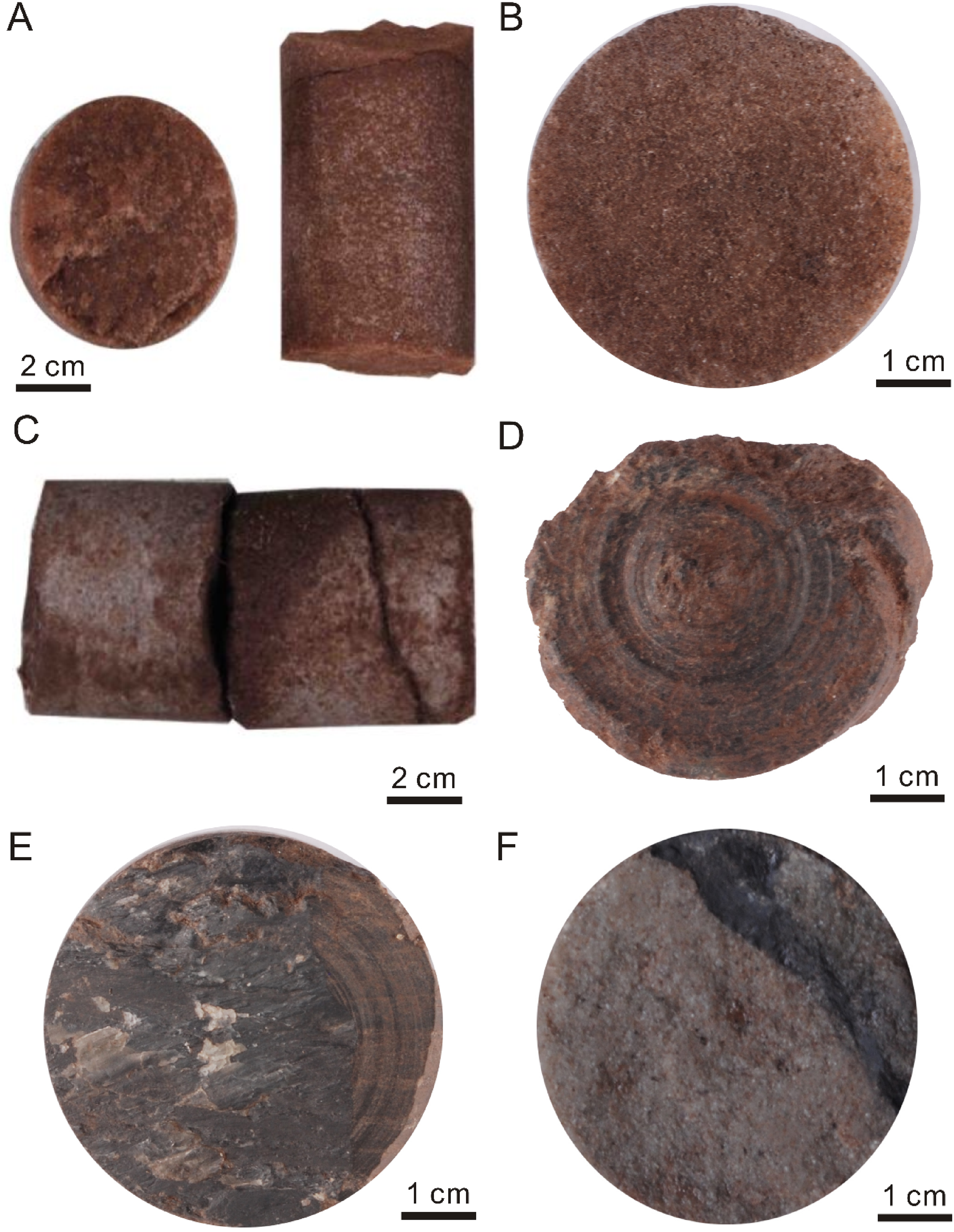
Petrographic photographs of Paleozoic in the Western Desert, Egypt. (A) Fine-grained sandstone of the Shiffah Formation, depth 4207 m, Well S. (B) Brown fine-grained sandstone of the Basur Formation, depth 5158 m, Well F. (C) Oil-impregnated fine-grained sandstone of the Basur Formation, depth 2868 m, Well S. (D) Brown siltstone of the Desouqy Formation, depth 4796 m, Well F. (E) Deep gray siltstone with fine sand content of the Desouqy Formation, depth 4819 m, Well F. (F) Quartz sandstone of the Dhiffah Formation, depth 4541 m, Well W.
The Ordovician Kohla Formation shows limited distribution, mainly occurring in the western part of the Western Desert. It is composed of shale with interbedded thin layers of sandstone. The thickness of this formation ranges from 158 to 311 m, with an unconformable contact with the underlying Shiffah Formation.
The lithology of the Ordovician Basur Formation is dominated by sandstone (Figure 4(B) and (C)), with minor amounts of siltstone, shale, and limestone, containing kaolinite. The sandstone shows moderate sorting, moderate to high cementation, and grain-to-grain contact. Fossils are well-developed, including trilobites, brachiopods, ostracods, and Cymbosphaeridium pilaris. The Basur Formation mainly occurs in the western part of the basin, with a broader distribution than that of the underlying Kohla Formation. The thickness of the formation shows a wide range from 12 to 437 m, with an overall trend of thickening from west to east. This formation is conformable to the underlying Kohla Formation.
The Devonian Zeitun Formation is primarily composed of shale with interbedded thin layers of siltstone and sandstone. Pyrite and chlorite, and sparse occurrences of Grandispora libyensis spores are observed here. The Zeitun Formation is mainly distributed in the western part of the basin, with a distribution range slightly smaller than that of the Basur Formation. Overall, it shows a trend of thickening from west to east, with thickness ranging from 60 to 805 m.
The Carboniferous Desouqy Formation is dominated by sandstone with interbedded thin layers of siltstone and shale (Figures 4(D) and (E)). In these sandstone samples, quartz content reaches up to 99%, with minor occurrences of feldspar and lithic fragments. The sandstone phase exhibits well sorting, with limited cementation. Fossils primarily consist of Aratrisporites saharaensis spores. The studied formation shows well-developed bedding planes. The thickness of the Desouqy Formation ranges from 25 to 631 m, and this formation predominantly occurs in the western part of the basin.
The Carboniferous Dhiffah Formation is predominantly composed of shale with interbedded sandstone (Figure 4(F)) and limestone. Spelaeotriletes owensi spores and horizontal bedding planes are shown here. The thickness of the Dhiffah Formation ranges from 3 to 599 m and is mainly distributed in the western part. Its distribution range is slightly smaller than that of the Desouqy Formation, with an overall trend of thickening from west to east.
The Permian Safi Formation is dominated by sandstone and siltstone, with minor occurrences of shale and limestone. Lycospora pusilla spores are presented here. The Safi Formation shows a distribution range significantly smaller than that of the Desouqy Formation. The thickness of the formation ranges between 40 and 253 m.
Pore types and porosity
Overall, the reservoir spaces in the Paleozoic reservoirs include primary intergranular pores, secondary intergranular pores, secondary intragranular pores, and fractures (Figure 5). Primary intergranular pores are often triangular or polygonal in shape, with straight edges, and occasionally contain kaolinite aggregates in the pore spaces. Secondary intergranular pores are irregular or polygonal in shape, resembling bays, and show remnants of dissolution from carbonate cementation. Secondary intragranular dissolution pores are commonly observed in feldspar and lithic fragments.
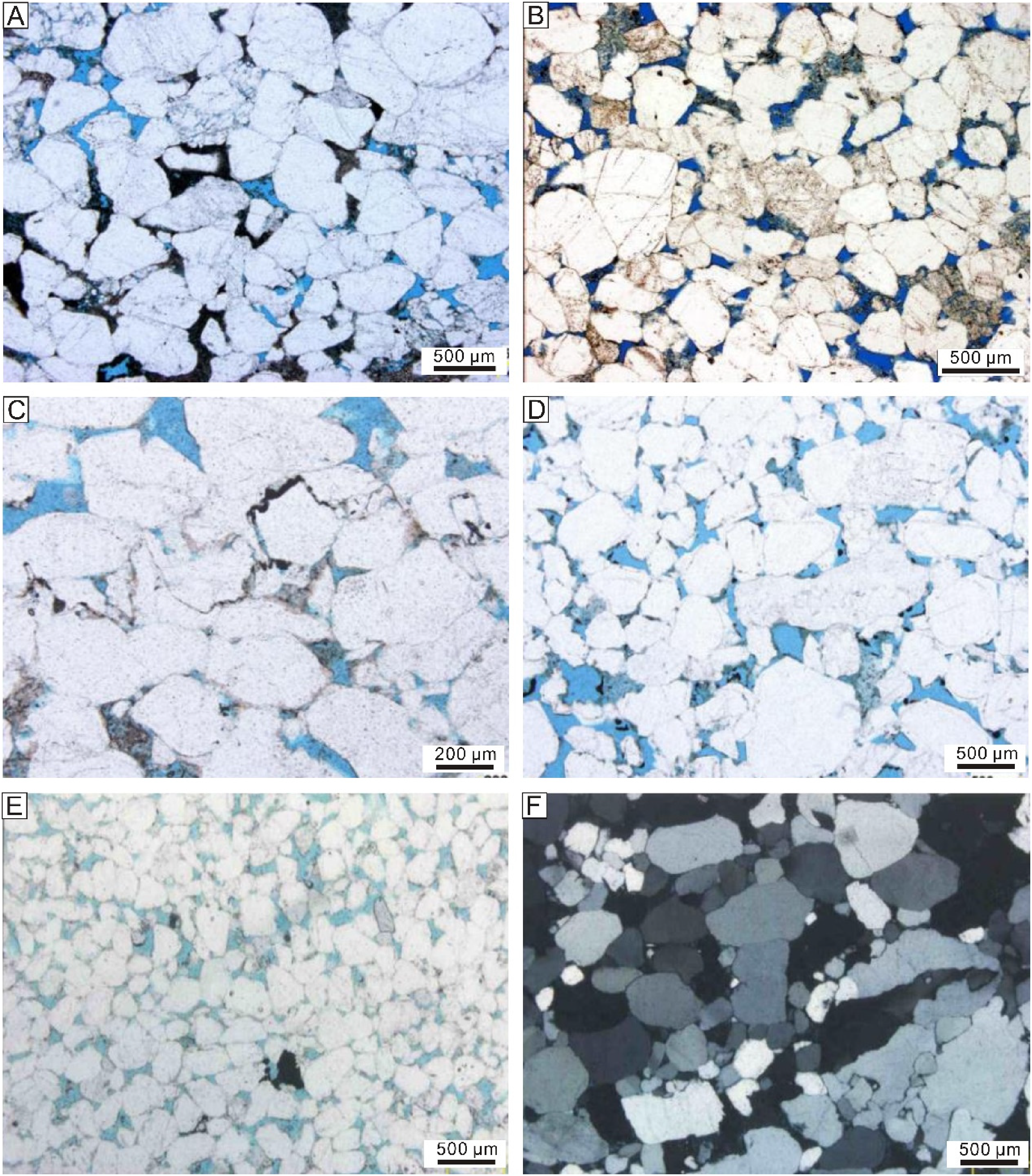
Thin-section photographs of Paleozoic reservoir spaces in the Western Desert, Egypt. (A) Gray fine-grained sandstone of the Shiffah Formation with asphaltene; plane-polarized light, depth 3184 m, Well S. (B) Brown fine-grained sandstone of the Basur Formation with visible green clay minerals; plane-polarized light, depth 5176 m, Well F. (C) Oil-impregnated fine-grained sandstone of the Basur Formation with black lines representing stylolites; plane-polarized light, depth 2867 m, Well S. (D) Brown fine-grained sandstone of the Desouqy Formation with visible secondary enlargement of quartz; plane-polarized light, depth 4217 m, Well F. (E) Deep gray siltstone with asphaltene; plane-polarized light, depth 4818 m, Well F. (F) Quartz sandstone of the Dhiffah Formation; cross-polarized light, depth 4541 m, Well W.
In detail, the Shiffah Formation consists of secondary intergranular pores, secondary intragranular pores, and fractures (Figure 5(A) and (B)). The core porosity ranges from 1% to 18%, with an average of 6.6% (n = 103, Figure 6(A)), and permeability ranges from 0.01 to 303.00 mD, with an average of 6.01 mD (n = 91, Figure 6(B)), respectively. The pore types in the Basur Formation are predominantly composed of secondary intergranular pores and minor fractures with intergranular fissures (Figure 5(C) and (D)). These samples show porosity ranging from 8.0% to 15.5%, with an average of 7.4% (n = 19, Figure 6(C)), and permeability ranging from 0.01 to 212.10 mD, with an average of 44.64 mD (n = 10, Figure 6(D). In the Desouqy Formation, the reservoir pores mainly consist of primary intergranular pores and secondary intergranular pores (Figure 5(E) and (F)). The porosity of the Desouqy Formation ranges from 0.4% to 21.0%, with an average of 8.7% (n = 60, Figure 6(E)), and the permeability ranges from 0.02 to 429.00 mD, with an average of 76.44 mD (n = 43, Figure 6(F)).
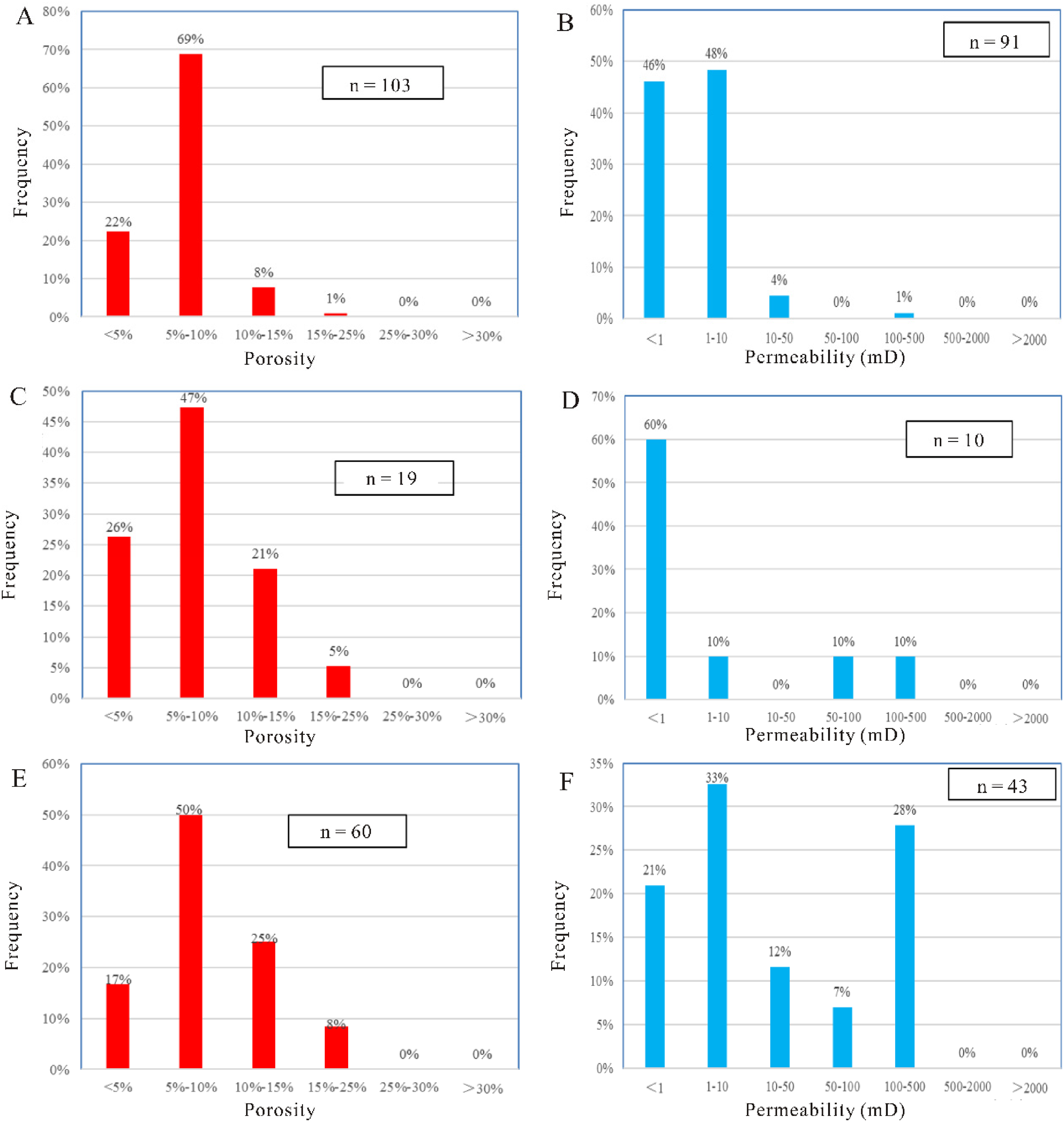
Histograms of porosity and permeability distribution in Paleozoic reservoirs in the Western Desert, Egypt. (A) and (B) Histograms of porosity (A) and permeability (B) in the Shiffah Formation reservoir. (C) and (D) Histograms of porosity (C) and permeability (D) in the Basur Formation reservoir. (E) and (F) Histograms of porosity (E) and permeability (F) in the Desouqy Formation reservoir.
The formation imaging (FMI) logging data from 31 wells in the studied area show that fractures in the Paleozoic are well-developed, and high-angle fractures are the predominant types (Figure 7). Furthermore, 23 wells exhibit well-developed or moderately developed fractures, accounting for 74% of the total, while the rest 26% show less-developed fractures. For example, three wells from the W oilfield in the Faghur Depression show different fracture systems in the Desouqy Formation. Well W-1 X displays 36 natural fractures, with open ratios of 19%; Well W-2 X has 52 natural fractures, with open ratios of 56%; and Well W-3 X shows 190 natural fractures, with open ratios of 38% (Table 1).
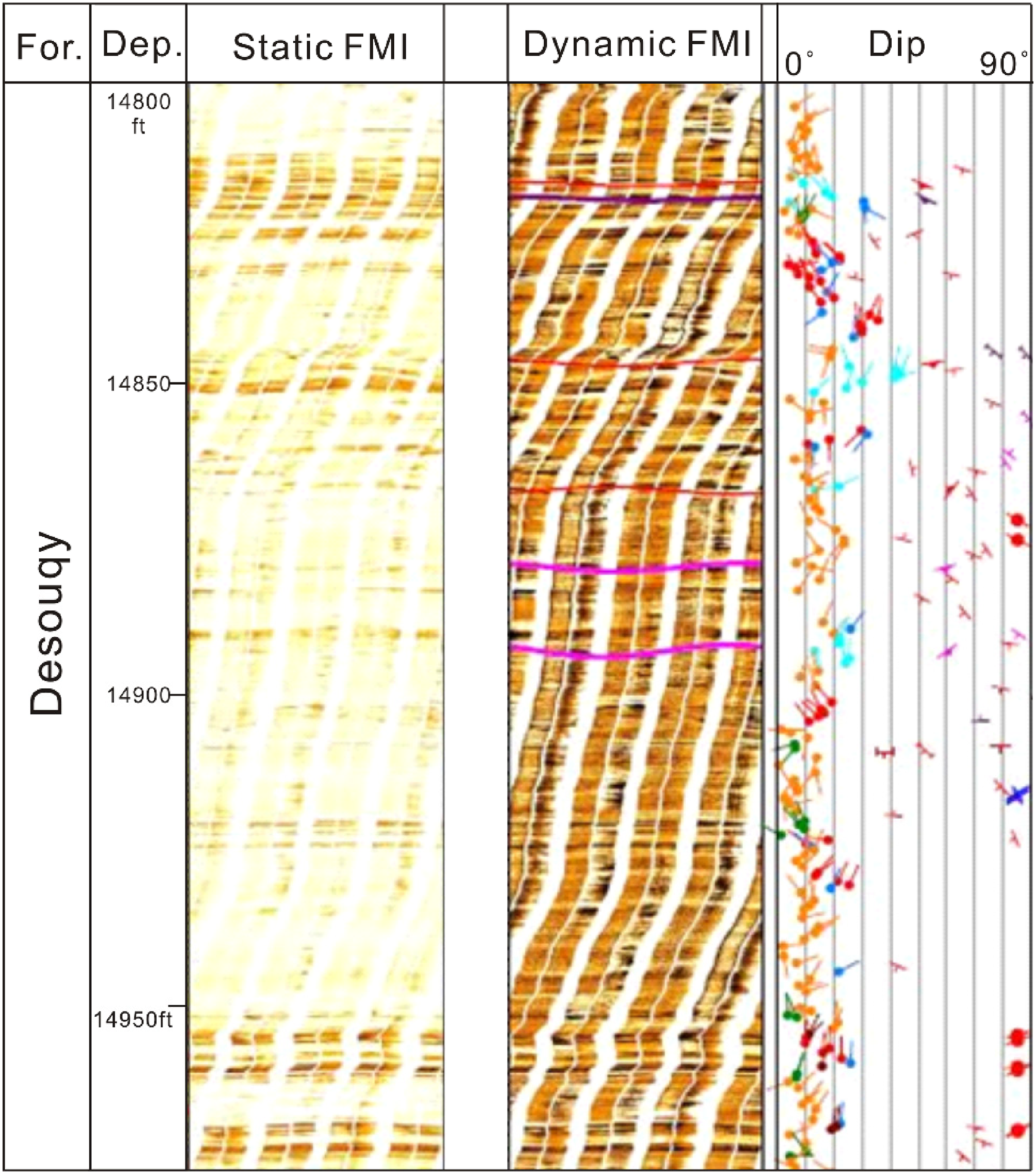
Formation image logging and tadpole plot of the Permian Desouqy formation in Well W-1, Western Desert, Egypt.
Fracture statistics from formation micro-imager (FMI) data in the Desouqy Formation of the W field reservoir, Western Desert Basin.

Geochemistry
The Paleozoic samples from the Western Desert have the total rare earth element (ΣREE) concentration of 192.0 ppm (average, Table S1), with an average ratio of light rare earth elements to heavy rare earth elements (ΣLREE/ΣHREE) of 5.85. Eu anomaly values yield an average of 0.7. After normalization to chondrite standards, samples from different formations show similar REE patterns, characterized by right-skewed patterns (Figure 8(A)). Significant enrichment in LREE and relative depletion in HREE are shown here.
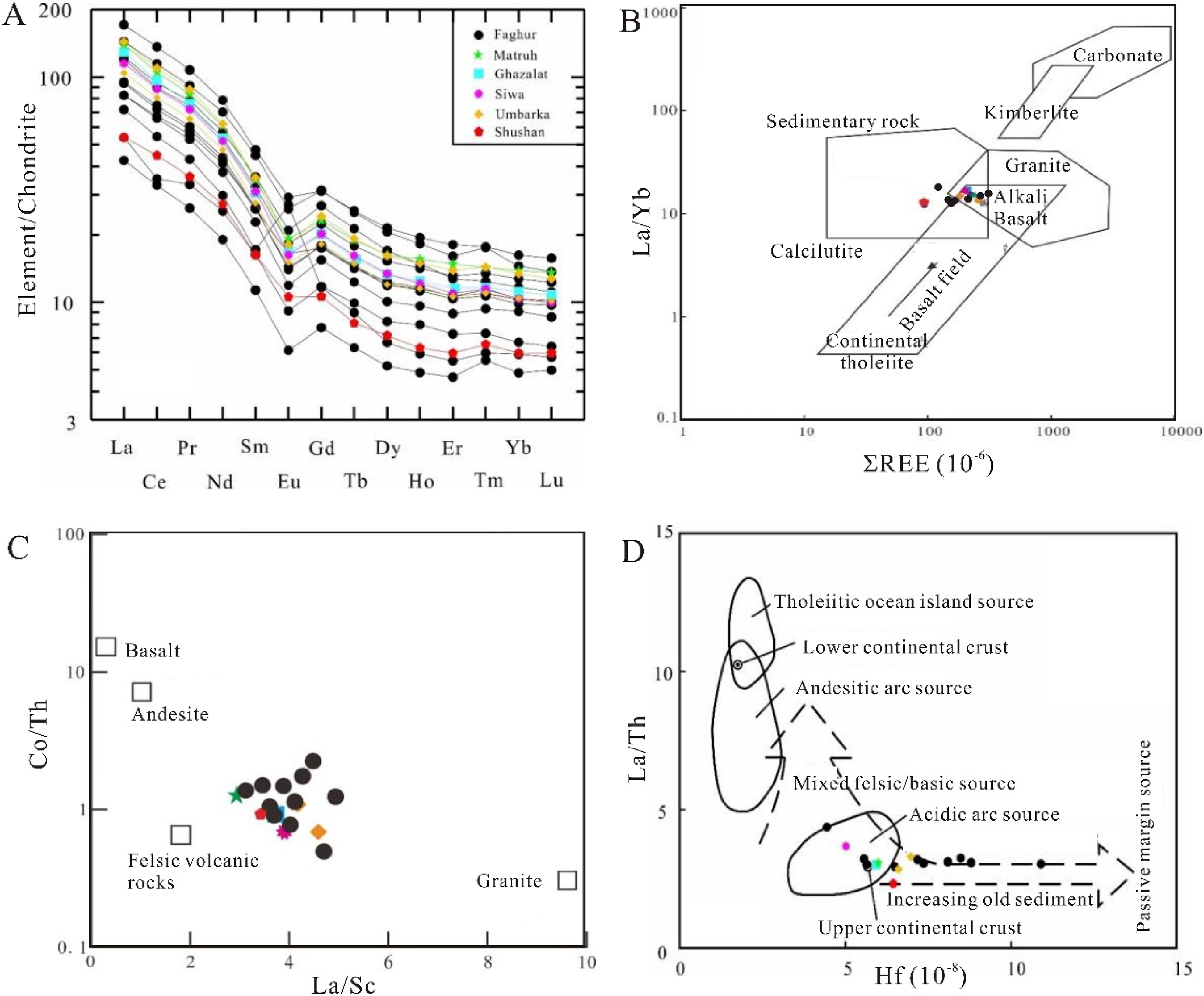
Rare earth element diagrams of Paleozoic clastic rocks in the Western Desert, Egypt. (A) Rare earth element distribution curve of Paleozoic clastic rocks in the Western Desert normalized to chondrite (Chondrite normalization modified from Taylor and McLennan, 1985). (B) La/Yb-ΣREE source rock discrimination diagram for Paleozoic clastic rocks in the Western Desert (Base diagram modified from Allegre and Minster, 1978). (C) Co/Th-La/Sc sediment source rock discrimination diagram for Paleozoic clastic rocks in the Western Desert (base diagram modified from Gu et al., 2002). (D) La/Th-Hf sediment source rock discrimination diagram for Paleozoic clastic rocks in the Western Desert (base diagram modified from Floyd and Leveridge, 1987).
Based on the La/Yb-ΣREE sediment source discrimination diagram (Allegre and Minster, 1978; Figure 8(B)), the majority of Paleozoic samples from the studied area fall into the intersection area of ancient sedimentary rocks and granites/alkaline basalts. Specifically, samples from the Umbarka Ridge and Faghur Depression show typical characteristics of ancient sedimentary rocks. In the Co/Th-La/Sc sediment source discrimination diagram (Gu et al., 2002; Figure 8(C)), the La/Sc ratios and Co/Th ratios of Paleozoic samples are close to those of andesite. In the La/Th-Hf diagram (Floyd and Leveridge, 1987; Figure 8(D)), the majority of Paleozoic samples are shown in the region of andesitic sediment sources, while some mudstone samples are located to the right of the andesitic sediment source area, indicative of an increasing content of ancient sediments.
Discussion
High-quality deep sandstone and carbonate reservoirs are the foundation for the development of giant oil and gas fields. These result from the integrated effects of sedimentary environments, a series of diagenetic processes, and tectonic activities (Hu et al., 2022, 2023a; Xiao et al., 2023). Sandstone is influenced by the types of sediment sources, while carbonate is more susceptible to biogenic activity (Hu et al., 2023b). Therefore, this study first analyzes the sediment sources of the Paleozoic clastic rocks. Subsequently, focusing on the main reservoirs, this work emphasizes the characterization of the sedimentary environments and diagenetic processes to constrain their effects on reservoir evolution. Compared with globally deep-buried reservoirs, favorable factors for the development of deep-buried oil and gas reservoirs are finally proposed.
Sediment sources
The sediment source analysis of clastic rocks is crucial for the spatial distribution of clastic reservoirs. Previous studies (Allegre and Minster, 1978; Cheng et al., 2010; Floyd and Leveridge, 1987; Gu et al., 2002) have shown that the sediment source of clastic rocks could be determined by integrating trace and rare earth elemental contents with related diagrams. The normalized REE patterns of the Paleozoic samples from the Western Desert show a “right-skewed” feature, enrichment in LREE, relative depletion in HREE, and negative Eu anomaly (Figure 8(A)). These characteristics are similar to the REE patterns of acidic felsic rocks in the upper crust (Cheng et al., 2010), and thus felsic rocks, such as granite and rhyolite, could be considered as the sediment sources. In contrast, basic mafic rocks have REE patterns characterized by enrichment in HREE, low LREE/HREE ratio, and no Eu anomaly (Cai et al., 2008). Moreover, the REE characteristics of basaltic rocks exhibit slight enrichment in LREE and positive Eu anomaly, while island arc basalts are enriched in LREE without Eu anomaly (Cai et al., 2008). These are not consistent with the REE patterns shown here. Therefore, intermediate–acidic felsic rocks are suggested to be the predominant sediment source for the Paleozoic clastic rocks in the Western Desert.
This is further supported by the following lines: (i) In the Co/Th-La/Sc discrimination diagram, the La/Sc ratio and Co/Th ratio of Paleozoic samples are close to the values of intermediate–acidic volcanic rocks (Figure 8(C)). This diagram indicates that acidic felsic volcanic rocks are the predominant sediment sources (e.g. Gu et al., 2002). (ii) In the La/Yb-∑REE discrimination diagram, most of the Paleozoic samples fall into the range of granite and ancient sedimentary rocks with alkaline basalts, with minor samples from the Umbarka uplift and Faghur depression falling into the ancient sedimentary rock area (Figure 8(B)). Based on previous work (Allegre and Minster, 1978), acidic felsic rocks and minor ancient sedimentary source areas are proposed to provide sediment sources for the Paleozoic clastic rocks in the Western Desert. (iii) In the La/Th-Hf discrimination diagram (Floyd and Leveridge, 1987), most of the Paleozoic samples are shown in felsic sediment source areas, with some samples falling to the right of the felsic sediment source area. This also suggests the presence of a small amount of ancient sedimentary material for the sediment source of the Paleozoic (Figure 8(D)). Thus, it could be concluded that the intermediate–acidic felsic rocks area is the predominant sediment source for the Paleozoic in the Western Desert, while ancient sedimentary rocks also contribute to the sediment source for the Paleozoic.
The Precambrian basement of the Western Desert in Egypt is predominantly composed of intermediate to acidic granodiorites and granites (Stern et al., 1984). This is consistent with the above conclusion that intermediate–acidic felsic sediment source areas are the dominant sediment source for the Paleozoic in the Western Desert. Therefore, weathering and erosion of the intermediate–acidic basement in the Western Desert provide the material for the formation of Paleozoic clastic rocks.
Reservoir evolution and performance
Sedimentary facies
The sedimentary facies of the Paleozoic in the Western Desert is predominantly composed of fluvial and coastal facies. During the deposition of the Cambrian–Ordovician Shiffah Formation, coastal facies was widespread and exhibited sheet-like distribution in the cratonic basin (Wanas, 2011). Well Q, for example, in the Shushan depression, has the Shiffah Formation mainly composed of sandstone and siltstone. Sedimentary structures include parallel bedding, scouring cross-bedding, and bioturbation, typical characteristics of shoreface. Sea levels subsequently fall, and thus only localized areas in the Western Desert show fluvial–coastal facies during the Silurian Basur Formation. Likewise, fluvial–shorefaces were localized and developed in the western part of the basin during the deposition of the Carboniferous Desouqy Formation due to sea-level regression. Well F in the western part of the studied basin, for example, is mainly composed of brown fine sandstone and dark gray siltstone in the Desouqy Formation. Sedimentary structures are characterized by horizontal bedding, parallel bedding, ripple cross-bedding, and bioturbation.
Fluvial and coastal facies are favorable for the presence of thick sandstone reservoirs, significant for the development of hydrocarbon reservoirs. Taking the example of the Q Gas Field in the Shushan depression, several wells show thick productive reservoirs and high production rates. In detail, the thickness of fluvial–shoreface facies reservoirs of these wells exceeds 100 m in the Shiffah Formation, with gas production ranging from 70 to 200 million standard cubic feet. In 2023, Well I in the Shushan depression shows a pay thickness of over 40 m, with a tested production rate of 1500 BOPD. These examples highlight that thick and massive sandstone reservoirs are essential for the development of highly productive oil and gas fields.
Diageneses
Based on the burial history (Figure 3), the Paleozoic in the Western Desert underwent initial slow burial followed by rapid burial after deposition. This burial process is favorable for the preservation of primary porosity. Meanwhile, (micro-) fractures are generally developed during such kind of burial history based on case studies (Gao et al., 2010; Jin et al., 2023; Zhang et al., 2014a). This improves reservoir permeability and promotes the development of dissolution pores. In contrast, compaction and pressure dissolution reduce primary porosity and decrease reservoir performance during continuous burial processes. This is characterized by the occurrence of grain-to-grain contact, line-to-point or interlocking contact, grain deformation, fracturing, and stylolites (Figure 5(A) and (C)). Consequently, the average porosity of Paleozoic reservoirs in the Western Desert shows a decreasing trend along the burial depth. In details, the shallowest Carboniferous Desouqy Formation yields the highest porosity of 8.65% and then decreases to 7.40% in the Devonian Basur Formation and 6.62% in the Ordovician–Cambrian Shiffah Formation (Figure 6). Likewise, the average permeability of Paleozoic reservoirs decreases from 76.44 to 44.64 and 6.01 mD, respectively (Figure 6(B)).
Cementation is also crucial for reservoir performance. In the studied formations, cementation is well-developed and is dominated by silica, followed by clay minerals, carbonate cements, and minor pyrite. Take the Desouqy Formation as an example, Well W from the Faghur sub-basin, has silica cement of ca. 7% in the total compositions, with kaolinite and pyrite of ca. 1.5% and 1%, respectively. Silica cement is characterized by secondary enlargement of quartz, growing within the pores, thereby reducing reservoir space and decreasing reservoir properties (Figure 5(D)). Previous study (Nabawy et al., 2020) has suggested that silica cement significantly decreases the Paleozoic reservoir properties in the Western Desert. Moreover, clay minerals such as kaolinite occur in intergranular pores and pore throats, reducing the reservoir storage capacity.
In the Paleozoic reservoirs of the Western Desert, secondary dissolution pores are well-developed, including those formed within feldspar and rock fragments, as well as secondary intracrystalline pores within carbonate crystals. Secondary intergranular dissolution pores are also common in Paleozoic sandstone. In the Shiffah Formation, dissolution pores comprise intergranular, intragranular, and moldic pores. In the Basur Formation, secondary intragranular and intergranular pores occur, with moderate to good pore connectivity. The Desouqy Formation also shows well-developed secondary intergranular pores. The development of these secondary dissolution pores might be related to meteoric water and organic acids. The Paleozoic in the Western Desert has been influenced by tectonic uplift and erosion, with unconformable contacts being predominant between stratigraphic units (Figure 2). During syn-sedimentary or post-sedimentary regimes, atmospheric water percolates through the reservoirs, inducing the development of secondary dissolution pores. The Carboniferous Dhiffah Formation is suggested to be the potential hydrocarbon source rocks based on the relatively high organic matter contents (Abdel-Fattah et al., 2024). During burial, the organic matter in the Dhiffah Formation underwent thermal maturation and released organic acids. These organic acids migrated to adjacent reservoirs, thereby generating secondary dissolution pores. McBride et al. (1996) indicated that the dissolution of minerals such as feldspar and calcite contributed approximately 5.8% and 5.1%, respectively, to the porosity in the Cambrian and Carboniferous formations in the Western Desert.
The early charge of oil and gas plays a positive role in preserving dissolution pores. Taking four wells of the H oilfield in the Shushan sub-basin as an example, the porosity and permeability of the oil-bearing intervals are significantly better than those of the reservoir intervals. Based on their similar gamma ray (GR) values and lithology and the closed spatial relationship to faults, the influence of sedimentary facies and tectonic activity on reservoir/pay heterogeneity could be excluded. Furthermore, the physical properties of the oil-bearing intervals are significantly better than those of the reservoir intervals, indicating that this heterogeneity might be caused by the charging of oil and gas. In the Western Desert, the migration of oil and gas from the Jurassic source rocks mainly occurred during the Cretaceous. Meanwhile, the Paleozoic reservoirs were buried at shallow to moderate burial depths, with relatively high porosity. Mineral dissolution–precipitation processes are favorable in aqueous media. However, the occurrence of oil film on the surfaces of oil-wet minerals could delay dissolution–precipitation processes and the compaction process of the reservoirs (Sholle and Ulmer-Scholle, 2003). The grain components of sandstone reservoirs are subsequently enveloped by oil (Barclay and Worden, 2000), thereby inhibiting cementation processes and favoring the preservation of porosity.
Tectonic activity
Due to tectonic activity, the reservoirs in the Western Desert are characterized by the development of faults and fractures, with high-angle fractures being predominant. In the Faghur Depression, well W-1X in the Desouqy formation exhibits 36 natural fractures, with open fractures accounting for 19% (Figure 7); well W-2X has 52 natural fractures, with open fractures accounting for 56%; and well W-3X yields 190 natural fractures, with open fractures accounting for 38% (Table 1). These show that well W-2X has the highest number of naturally open fractures, the largest porosity, and the highest production. Thus, fractures significantly improve the reservoir performance.
The Paleozoic sandstone reservoirs in the Western Desert are predominantly composed of quartz sandstone, with high contents of brittle minerals, favorable for the occurrence of natural fractures in the context of tectonic stress. Formation Micro-Imager (FMI) logs indicate that the wells with concentrated fracture development are spatially closed to faults or structural boundaries. During the post-depositional regimes, the studied formations experienced two phases of rift activities during the Mesozoic, resulting in the development of numerous faults and fractures (Moustafa, 2010). A previous study (Rotevatn and Bastesen, 2014) shows that fault activities and fracture development significantly enhance the permeability of Neogene reservoirs in the Western Desert. Therefore, the widespread occurrence of fractures in Paleozoic reservoirs might be caused by the long-term activity of faults and the high content of brittle minerals in the sandstone reservoir intervals is favorable for reservoir evolution.
Overall, the development of Paleozoic reservoirs in the Western Desert is the integrated result of a “tri-element control” involving sedimentary facies, diageneses, and tectonics. The presence of medium–acidic granitic and granodioritic basement rocks serves as an important sediment source for the Paleozoic in the Western Desert. Under high-energy fluvial and coastal depositional environments, multiple sets of thick sandstone beds in the Paleozoic form the basis for the development of high-quality reservoirs. During burial, although cementation and compaction processes reduce reservoir properties, rapid burial and multiple episodes of dissolution activities significantly enhance reservoir properties. Prolonged tectonic activity, moreover, induces the development of faults and fractures, improving the properties of the sandstone reservoirs.
Implications for global deep-burial sandstone reservoirs
High-quality deep-buried reservoirs represent crucial areas of exploration in the oil and gas industry and serve as significant avenues for increasing hydrocarbon reserves in many countries. Typical deep-buried clastic reservoirs (>4000–4500 m) include the Kaskida oil and gas field in the Gulf of Mexico (Zhang et al., 2014a) and the Cretaceous formations in the Kuqa Depression of the Tarim Basin, China (Lai et al., 2023). Typical deep-buried carbonate reservoirs include the Ediacaran Dengying Formation in the Sichuan Basin (Hu et al., 2020b, 2023a) and the Cambrian Longwangmiao Formation (Liu et al., 2020), as well as the Mils Ranch gas field in the Western Interior Basin of the United States (Feng et al., 2016). In Egypt, oil and gas exploration has expanded from the Cretaceous to the Jurassic and Paleozoic in the Western Desert in the past 10 years. Giant oil and gas discoveries in the Paleozoic reservoirs (e.g. Shiffah, Basur and Desouqy formations) are recently indicated by exploration activities in Western Desert.
From the global scale, the development of high-quality deeply buried reservoirs is the result of the integrated effects of sedimentary facies, diagenesis, and tectonic activities. In detail, dissolution, burial processes, and abnormally high pressure are favorable factors for the development of deep sandstone reservoirs (Feng et al., 2016; Shou et al., 2006). Additionally, early hydrocarbon charging contributes to the preservation of sandstone porosity (Zhu et al., 2011). These constructive processes are also shown in the studied formations and lead to the high-quality deep-burial clastic reservoirs, Western Desert. Moreover, it is noteworthy that the Paleozoic reservoirs underwent initially prolonged shallow burial followed by rapid deep burial (Figure 3). This aspect is similar to deep sandstone reservoirs in the Tarim Basin (Zhang et al., 2014a) and Junggar Basin (Chen et al., 2024; Gao et al., 2010) in China. This is favorable for the preservation of primary reservoir pores and the development of fractures. The deep clastic reservoirs subjected to prolonged shallow burial followed by rapid deep burial show high potential for future oil and gas exploration.
This study shows the general evolution of the Paleozoic reservoir in the Western Desert. However, more detailed and high-resolution analyses of the reservoir could be performed to lead to better understanding of reservoir distribution (e.g. Hu et al., 2023c; Li et al., 2024). Therefore, the sedimentary facies, diagenetic evolution and tectonic activity of the deeply buried Paleozoic sandstone reservoirs shown here may serve, within the limitations of geological comparisons, as a template for other deep-burial reservoirs worldwide.
Conclusion
The Paleozoic in the Western Desert predominantly comprises three sandstone reservoirs, including the Cambrian Shiffah Formation, the Silurian Basur Formation, and the Carboniferous Desouqy Formation. These sandstones have a high content of quartz and minor lithic fragments and feldspar, exhibiting moderate to well sorting and linear–concave–convex contacts. Sedimentary structures such as parallel bedding and cross-bedding are well-developed, and different types of fossils are preserved here. The Precambrian acidic granitic basement in the Western Desert serves as the predominant sediment source for the Paleozoic clastic rocks, while ancient sedimentary deposits are another source.
The sedimentary facies in the Paleozoic are predominantly fluvial and coastal facies, with thick sandstone being essential for giant reservoirs. During burial, although cementation and compaction reduce reservoir properties, multiple episodes of diagenetic events significantly enhance reservoir properties. Prolonged shallow burial followed by rapid deep burial also contributes to the preservation of reservoir porosity and the development of fractures. Tectonic activities, moreover, induce the development of faults and fractures, improving reservoir properties. These are significant for those concerned with deep-burial sandstone reservoirs.
Supplemental Material
sj-docx-1-eea-10.1177_01445987241281944 - Supplemental material for The sediment source and formation mechanism of the Paleozoic reservoirs in Western Desert, Egypt
Supplemental material, sj-docx-1-eea-10.1177_01445987241281944 for The sediment source and formation mechanism of the Paleozoic reservoirs in Western Desert, Egypt by Hong Zhang, Yongjie Hu, Zixuan Liu, Hongxia Liu and Chunfang Cai in Energy Exploration & Exploitation
Footnotes
Acknowledgements
This work is financially supported by Sinopec Group (Grant No. P21043-1). Special thanks go to Editor Prof. Sun and Associate Editor Prof. Prakash for handling this manuscript and valuable comments. Two anonymous reviewers are likewise thanked for constructive improvements of the manuscript.
Declaration of conflicting interests
The authors declared no potential conflicts of interest with respect to the research, authorship, and/or publication of this article.
Funding
The authors received no financial support for the research, authorship, and/or publication of this article.

Supplemental material
Supplemental material for this article is available online.
References
Supplementary Material
Please find the following supplemental material available below.
For Open Access articles published under a Creative Commons License, all supplemental material carries the same license as the article it is associated with.
For non-Open Access articles published, all supplemental material carries a non-exclusive license, and permission requests for re-use of supplemental material or any part of supplemental material shall be sent directly to the copyright owner as specified in the copyright notice associated with the article.
