




Abstract
Tight sandstone gas in coal-bearing strata has become an important unconventional gas worldwide. This research aims at understanding the impacts of coal evolution on diagenesis and reservoir quality of sandstones by means of thin section, cathode luminescence (CL), scanning electron microscope (SEM), stable isotope analysis, and fluid inclusions. The results show that carbonate cement was the main type of cement developed in tight sandstone reservoirs, of which the carbonate ions were jointly provided by coal layers and reaction in adjacent mudstones. For sandstones close to coal layers, their carbonate ions were mainly controlled by coal evolution and there was various carbonate cement developed due to cations supplied by seawater and the intense dissolution of volcanic fragments and feldspars. Combined with coal thermal simulation and burial history, it implies that at different maturity stages of coal evolution, its impact on sandstone diagenesis was different. In the early stage, the main product was CO2, which caused the dissolution of early calcite and promoted intense compaction. In the mature stage, CO2 and other hydrocarbon gases were released, resulting in more dissolution and silica cementation. In the over-mature stage, the main product was methane, and CO2 that did not spill out preserved by forming carbonate cement. The coal evolution had a strong impact on the reservoir quality of sandstone with large grain sizes, but little effect on medium- and fine-grained sandstones. High porosity and low permeability reservoirs were usually formed in small conglomerates and coarse-grained sandstones away from coal layers. While low porosity and high permeability reservoirs were distributed close to coal layers. This study aids in understanding the formation mechanism of tight sandstone reservoirs in coal measures and provides theoretic support for further exploration.
Introduction
As an important unconventional resource, tight sandstone gas has attracted more and more attention (Cao et al., 2014; Lai et al., 2022a; Zou et al., 2012, 2019). Generally, many tight sandstones gas reservoirs in the world are often associated with coal-bearing strata, such as the Xiashihezi and Shanxi Formation of Upper Permian in Ordos Basin, China (Li et al., 2019), the Xujiahe Formation of Upper Triassic in Sichuan Basin, China, and the Mesaverde in San Juan Basin in America (Dai et al., 2012; Lai et al., 2018, 2021; Liu et al., 2021). Therefore, it is of great significance to clarify the formation mechanism and high-quality reservoir distribution of tight sandstone reservoirs in coal measures, which is conducive to further production and development.
In previous studies, the formation of tight sandstone reservoirs in coal measures has been generally studied (Bjørlykke, 2014; Hou et al., 2020; Lai et al., 2022a; Li et al., 2020; Shuai et al., 2013; Yu et al., 2019a, 2019b). It is believed that the products like CO2 and organic acid released during the thermal evolution process of coals impelled the formation of tight sandstone reservoirs (Li et al., 2018; Liu et al., 2018; Qin, 2018; Xu et al., 2017; Zhang et al., 2022). Numerous studies have documented that CO2 released by the desulfurization of coals in the early diagenetic stage dissolved early carbonate cement, promoting intense compaction (Jiu et al., 2018; Yu et al., 2022) and the organic acid generated in the later stage promoted quartz cementation and inhibited carbonate cementation (Cheng et al., 2013; Yang and Gu, 2007; Zhao, 2010). However, few studies notice that carbonate cementation is also related to coal evolution (Shuai et al., 2013; Wang et al., 2014; Yu et al., 2022). They developed in dissolution pores and have a great impact on reservoir quality. Therefore, the source of carbonate cement of tight sandstones in coal measures and the coupling relationship between coal evolution and the timing of various diagenetic minerals required in-depth research. More importantly, the impact of the coal evolution on the reservoir quality of different kinds of sandstones, and the distribution of high-quality sandstone reservoirs in coal measures remain to be clarified.
The Daniudi gas field is a typical tight sandstone gas field in coal measures, which began to produce in 2001(Liu et al., 2015; Xu et al., 2016; Yang et al., 2016). The Permian tight sandstones were the main gas-producing strata, with a total of 454.6 billion cubic meters produced until 2018. Previous studies have documented a lot on the sedimentary environment, diagenetic histories, and factors that control reservoir quality (Chen et al., 2016; Du et al., 2016; Qiu et al., 2015; Zhang et al., 2017a, 2017b). Taking the tight sandstone reservoir in the Shanxi and Xiashihezi formation in researching area as a case example, this study aims to (1) investigate the origin and formation timing of carbonate cement, (2) ascertain the impact of coal evolution on diagenesis of sandstones, (3) document the relationship between sandstones diagenetic process and coal evolution, and (4) better understand the impacts on reservoir quality of different types of sandstones. The results can provide insight into the formation mechanism of tight sandstones in coal measures and shed light on high-quality reservoir prediction in similar basins.
Geological settings
Ordos Basin is a multicycle craton located in western China, which can be divided into six tectonic units (Liu et al., 2021), including Tianhuan depression, Weibei Uplift, Western thrust belt, Jinxi Fault-fold Belt, Yishan slope and Yimeng Uplift (Figure 1). The Daniudi gas field is situated in the northeast of Yishan Slope, which is characterized as a westward dipping monocline with few structures and faults developed (Xu, 2017).
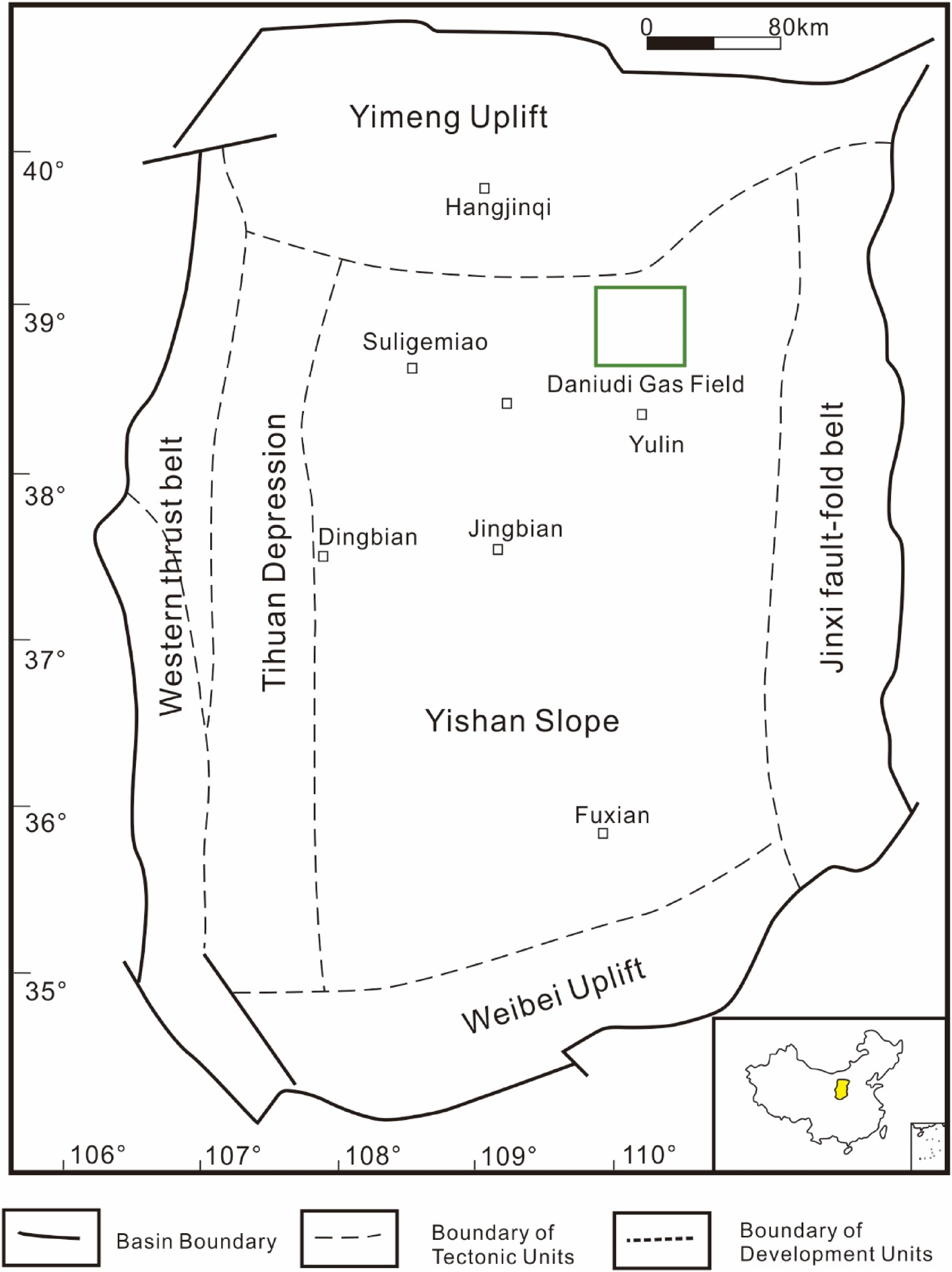
The structural divisions of the Ordos Basin and location of the study area.
In the northeast Ordos Basin, the Upper Paleozoic deposited continuously under a gentle paleo-topographic setting (Du et al., 2016). The Taiyuan Formation is an important sandstone reservoir in the Daniudi gas field, which can be divided into two members (C2t1, C2t2) with a thickness of 20–118 m. There were a thick coal layer developed on the top of C2t1 with a thickness of 8–25 m, which is also the boundary of the two members (Zhang, 2013). The coal layer is widely distributed throughout the study area, which is the main source rock of the Daniudi gas field together with coals and mudstones in the Shanxi Formation (Liu et al., 2015).
The Shanxi Formation and Xiashihezi Formation are the target strata of this research (Li et al., 2020) (Figure 2), and 4 sedimentary cycles could be distinguished (Zhang et al., 2017a, 2017b). The Shanxi Formation (P1s) consists of two members (P1s1, P1s2) and the thickness varies from 90 to 120 m. During the Early Permian, the northeast Ordos Basin was in a barrier coastal environment and deposited medium to coarse-grained sandstones as well as limestone, coal beds, and dark mudstones. The depositional environment in P1s was deltaic-fluvial and facies like braided channels, bars, and flood plain can be distinguished. Deposits in P1s were influenced much by sea water as indicated by the marine fossils (Zhang et al., 2017a, 2017b). Sandstones with smaller grain sizes and few coal layers developed in P1s2 member as it is shown in Figure 2, indicating lower water energy.
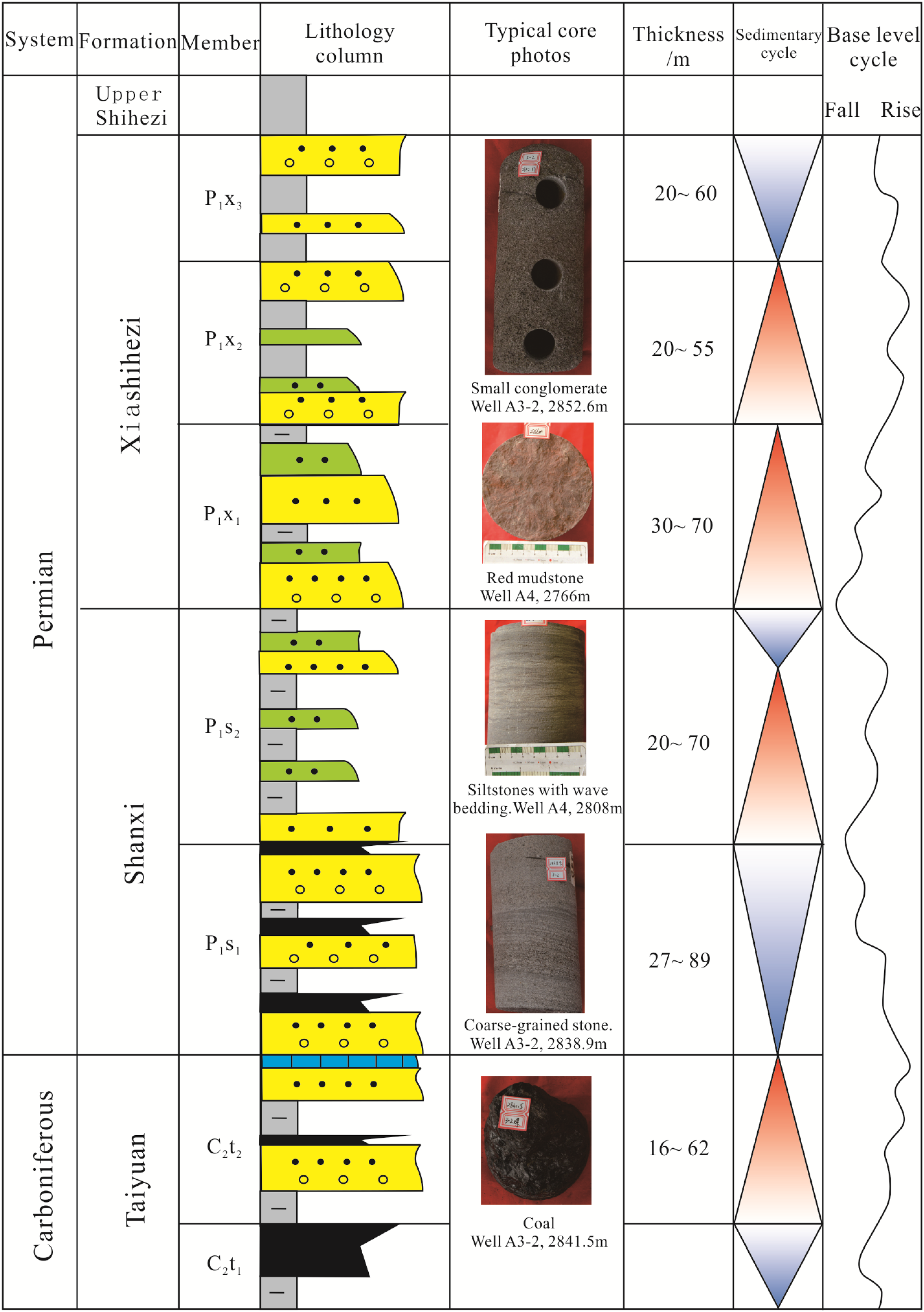
Lithological comprehensive column in the Daniudi gas field.
The Xiashihezi Formation (P1x) can be divided into three members (P1x1, P1x2, P1x3) and the thickness ranges from 110 to 140 m. The depositional environment evolved into a delta plain and the climate changed from humid to dry, where the existence of red mudstones was clear proof (Zhang et al., 2017a, 2017b). The main sedimentary facies in this layer were braided river channels, overbank, and flood plain. Seawater had little effect on sediments in this formation, where conglomerates, fine to coarse-grained sandstones, and mudstones were frequently found. The P1x2 and P1x3 members are the best reservoirs in Daniudi gas field with an average porosity of 7.6% and permeability of 0.5 mD.
Data and methods
The database of this research mainly contains cores and logging data from 13 coring well, including over 200 pairs of core plug porosity and permeability, 120 thin section points, and 197 samples with grain size analysis.
Porosity and permeability were measured using YRD-FKS-2 instrument by core columnar of 25 × 50 mm. The results were supplied by Sinopec North China Oilfield Research Institute. Point counting was performed on 65 samples with 500 points at China University of Petroleum in Beijing to calculate the rock composition and contents of cement. All sections were blue stained and impregnated with a solution of Alizarin Red S to highlight pores and identify calcite and dolomite.
There were 78 samples used for SEM observation and 65 samples for cathode luminescence (CL) analysis. Samples prepared for scanning electron microscope (SEM) observation were covered by thin golden layers and performed and photographed by JEOL JSM-T330 SEM. CL analysis was performed by a CL8200-MKS instrument with 0–20 kV and 200–400 mA. Both experiments were conducted at China University of Petroleum in Beijing.
Seventy-three samples were prepared for measurement of fluid inclusions, including 37 samples from Shanxi Formation and 36 samples from Xiashihezi Formation. The experiments were conducted by the THMS-G600 heating–freezing stage with a heating rate of 5°C/min. The bubbles were photographed and when they disappeared, the temperatures were recorded.
A total of 37 samples were measured in Carbon and oxygen isotopes experiments, including 13 samples from Shanxi Formation and 18 samples from Xiashihezi Formation. Carbon and oxygen isotopes were measured in situ by MAT252 Gas Isotope Ratio Mass Spectrometer at China University of Petroleum in Beijing. The selected carbonate cement were heated, then produced CO2 that was captured and purified by vacuum. Finally, they were sent into the spectrometer for the measurements.
Results
Petrophysical property
The sandstone types and characteristics of reservoirs developed in Shanxi Formation and Xiashihezi Formation are similar, including sandstones ranging from siltstones to small conglomerates. The sorting is mainly moderately to well-sorted sandstones and the main grain shape is subangular to subrounded.
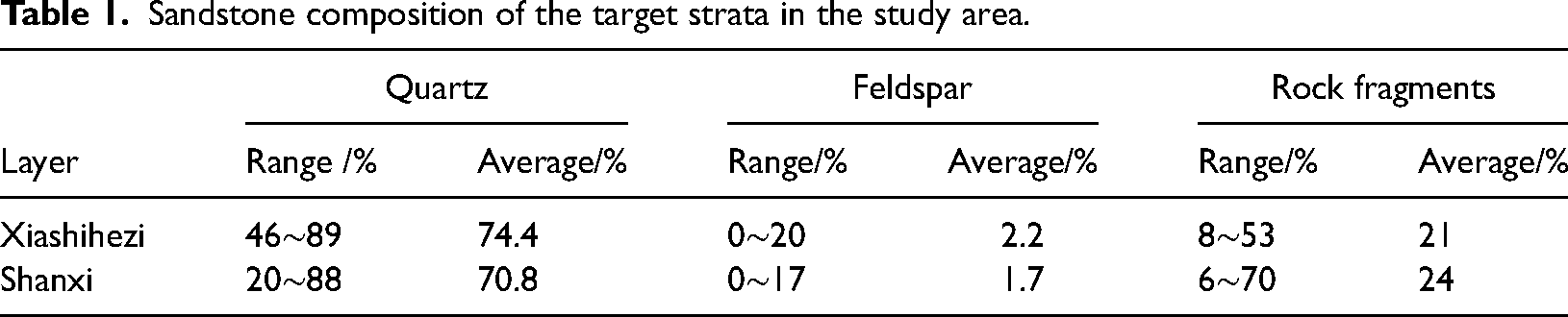
The results of the analysis of the component show that quartz sandstones, lithic quartz sandstones, and lithic sandstones are the main reservoir types in the research area according to Folk (1980) (Figure 3). Sandstones in Shanxi Formation contain more detrital quartz than those in the Xiashihezi Formation with an average of 74.4% and 70.8%. The contents of feldspar are very low in both layers, while that in the Xiashihezi Formation is a little higher with an average of 2.2% and 1.7% (Table 1). The rock fragments can be identified as sedimentary fragments (including mud clasts and siltstone clasts), volcanic fragments (mainly igneous), and metamorphic fragments (including chert, quartzite, and slate lithic fragments). The content of rock fragments in Shanxi Formation is about 6% to 70% with an average of 24%, while that in tFormation is approximately 8% to 53%, with an average of 21%.
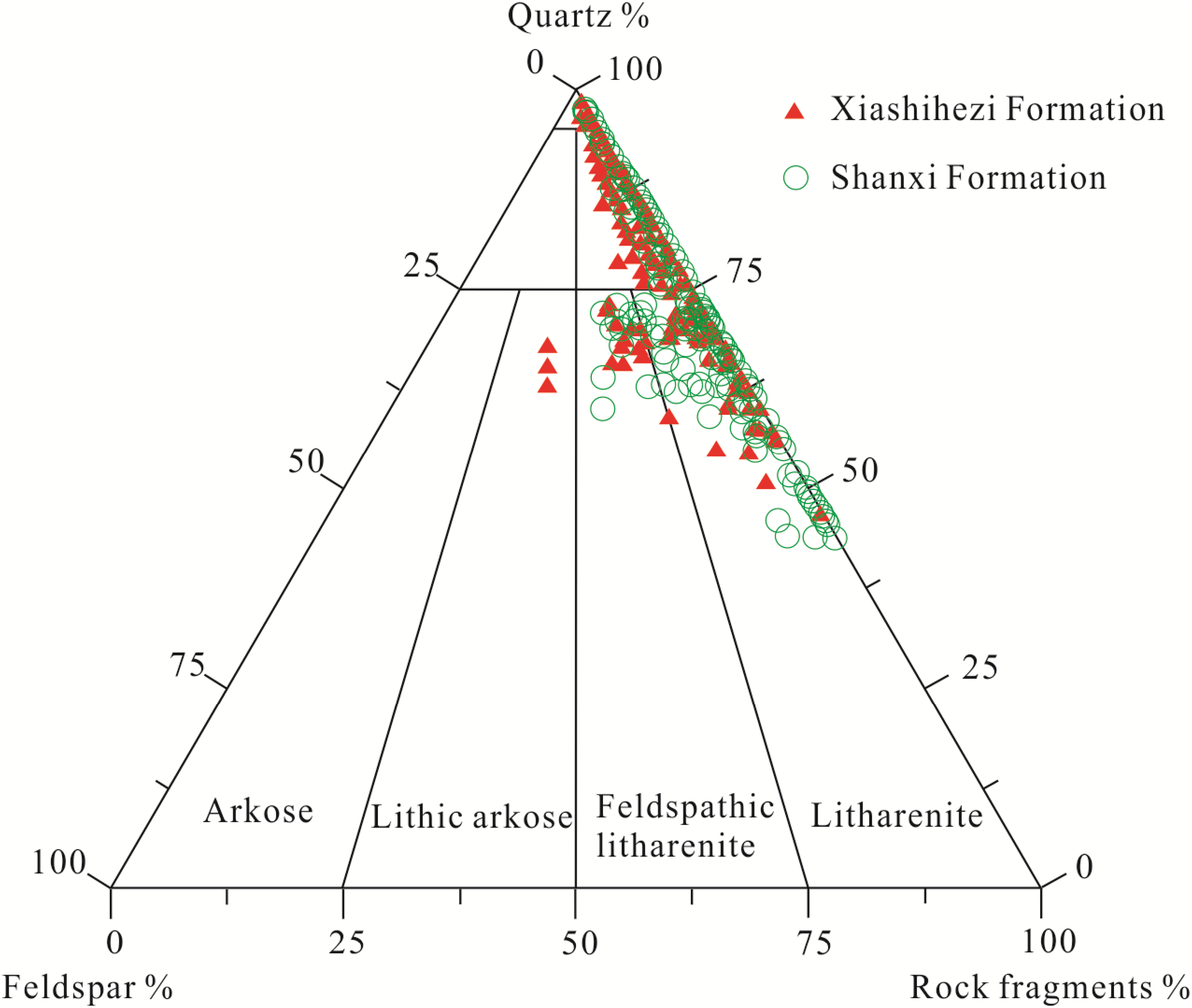
Triangular diagram of rock composition in sandstone reservoirs.
Sandstone composition of the target strata in the study area.
Diagenetic mineralogy
Carbonate cement
Carbonate cement is the most developed cement in the Daniudi gas field with a range from 0% to 34%. The main types of carbonate cement include calcite, ferrocalcite, dolomite, and siderite, of which calcite is the most observed cement varying from trace amounts to 30%. The content of calcite cement in Xiashihezi Formation is a little higher than that in Shanxi Formation with an average of 3.2% and 2.5% (Figure 4). Three forms of calcite cement could be found with the help of the microscope: (1) early-stage calcite occupied the whole intergranular pore while the detrital grains usually display point contact or non-contact (Figure 5(a)); (2) late-stage calcite filled primary intergranular pores and secondary pores between particles (Figure 5(b)), which is the most cement observed in the research area; (3) calcite replaced frame grains such as feldspar and rock fragments (Figure 5(c)). By the means of cathodoluminescence (CL), pore-filling calcite shows light yellow (Figure 5(d) while ferrocalcite shows orange-yellow (Figure 5(e)) due to the varied amount of Fe3+.
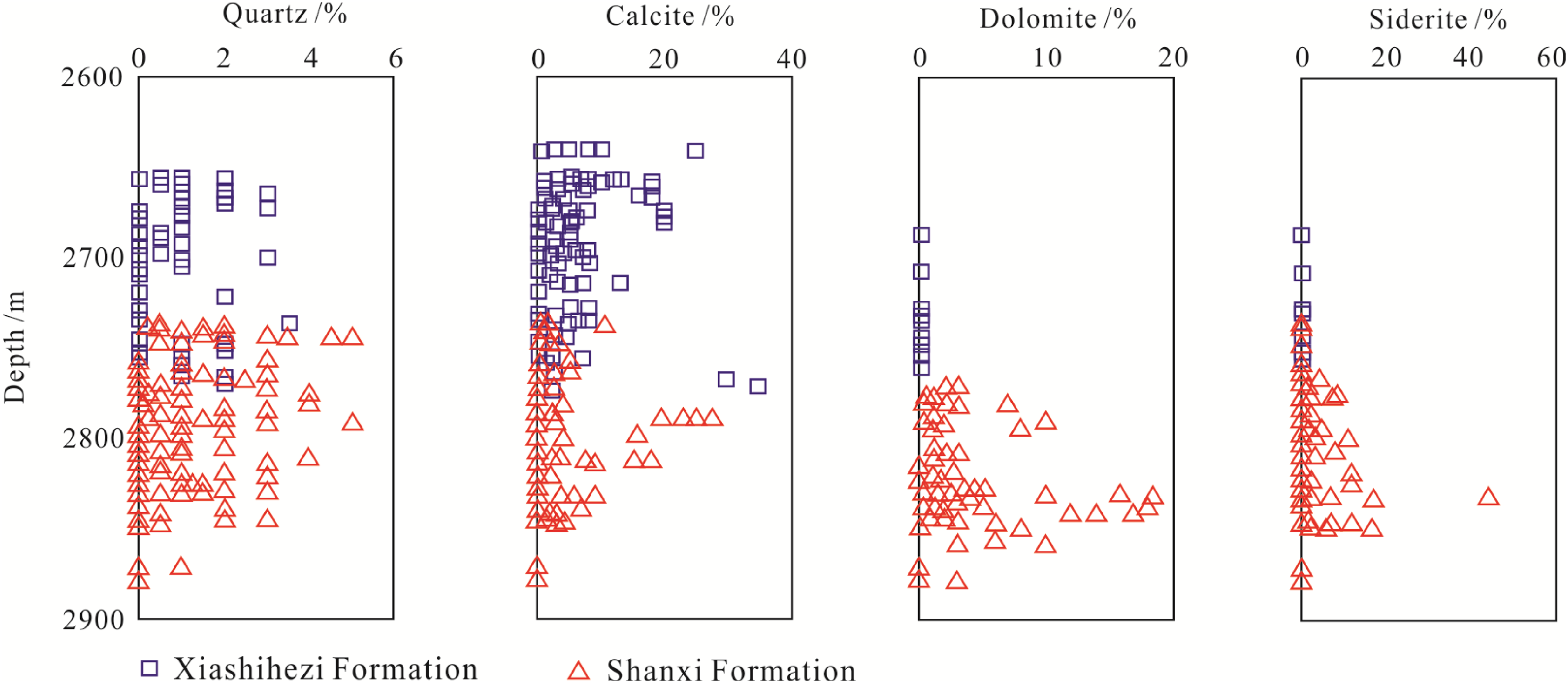
The content of different types of cement in the Shanxi Formation and Xiashihezi Formation.
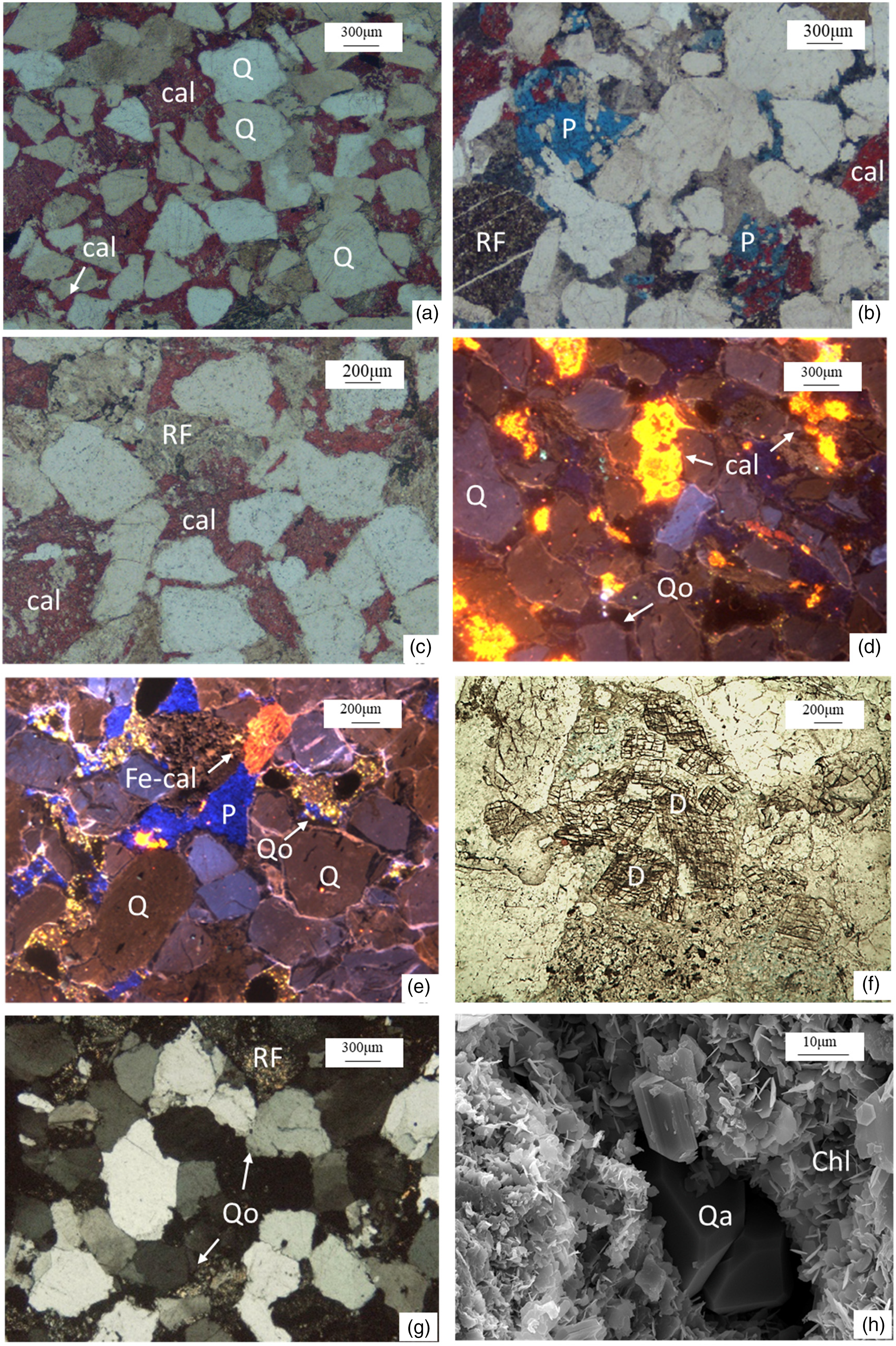
Calcite and quartz cement characteristics in Shanxi and Xiashihezi Formations. (a) Early calcite in coarse-grained sandstones, well A19, 2756.4 m. (b) Calcite filling secondary pores, well A22, 2647.7 m. (c) Rock fragments replaced by calcite, well A19, 2756.04 m. (d) CL micrograph image show calcite and quartz overgrowth, well A13, 2660.98 m. (e) CL micrograph image show pores and ferro-calcite cements, well A13, 2657.88 m. (f) Dolomite cements in secondary pores, well A15, 2848.18 m. (g) Quartz overgrowth in quartz sandstones, well A22, 2645.81 m. (h) SEM image show quartz authigene with illite and cholite in secondary pores, well A31, 2712.66 m. Q: detrital quartz grains; Qo: quartz overgrowth; Qa: authigenic quartz; P: pores; cal: calcite; Fe-cal: ferro-calcite cements; RF: rock fragments; Chl: cholite.
Dolomite and siderite cement didn’t develop in Xiashihezi Formation but was frequently found in Shanxi Formation, of which the content varies in 0.5% to 10% (average 1.3%) and 0% to 45% (average 1.85%) (Figure 4). Late-stage dolomite showed a rhombic shape in intergranular pores and second pores (Figure 5(f)) while siderite usually replaced detrital grains and filled in primary poses as early-stage cement.
Quartz cement
Quartz cement is another important cement in Daniudi gas field with a range from 0% to 5%, and the average value is 2.4% and 1.9% in Shanxi Formation and Xiashihezi Formation (Figure 4). Two types of quartz cement can be observed under the microscope including quartz overgrowth and authigenic microcrystalline quartz. Quartz overgrowths are easy to identify by the existence of dust rims and the thickness range from 5 to 60 μm (Figure 5(g)). Two stages of overgrowths can be distinguished in CL images, with the first stage overgrowth in darkly non-luminescent and the second stage overgrowth in brown luminescent (Figure 5(d) and (e)). Authigenic microcrystalline quartz occurs as separated crystals and filled in the pores, always accompanied by illite and chlorite (Figure 5(h)).
Clay minerals
According to XRD and SEM analysis, four types of clay minerals developed in the study area with an average amount of 23.4% and 23.9% in Shanxi and Xiashihezi Formation, including kaolinite, mixed-layer illite/smectite, illite, and chlorite.
Kaolinite usually shows disordered booklets or vermicular aggregates filling in intergranular pores and secondary pores of fragments or feldspars (Figure 6(a)). By the means of cathodoluminescence (CL), kaolinite always shows blue. Fibrous illite and chlorite can also be observed with kaolinite, indicating the transformation between them (Figure 6(b)). There are three types of illite distinguished with the microscope: (1) the authigenic illite mainly shows fibrous or flaky crystal in intergranular pores and secondary pores (Figure 6(c) and (d)); (2) the illite from the transformation of smectite in mixed layer illite/smectite occurs as honeycomb and flaky (Figure 6(e)); (3) illite replaced detrital grains or kaolinite shows as flak or honeycombed morphology (Figure 6(f)). Grain-coating chlorite is not widely developed in the Daniudi gas field, and chlorite often shapes as dispersed flakes and rosette-filling pores.
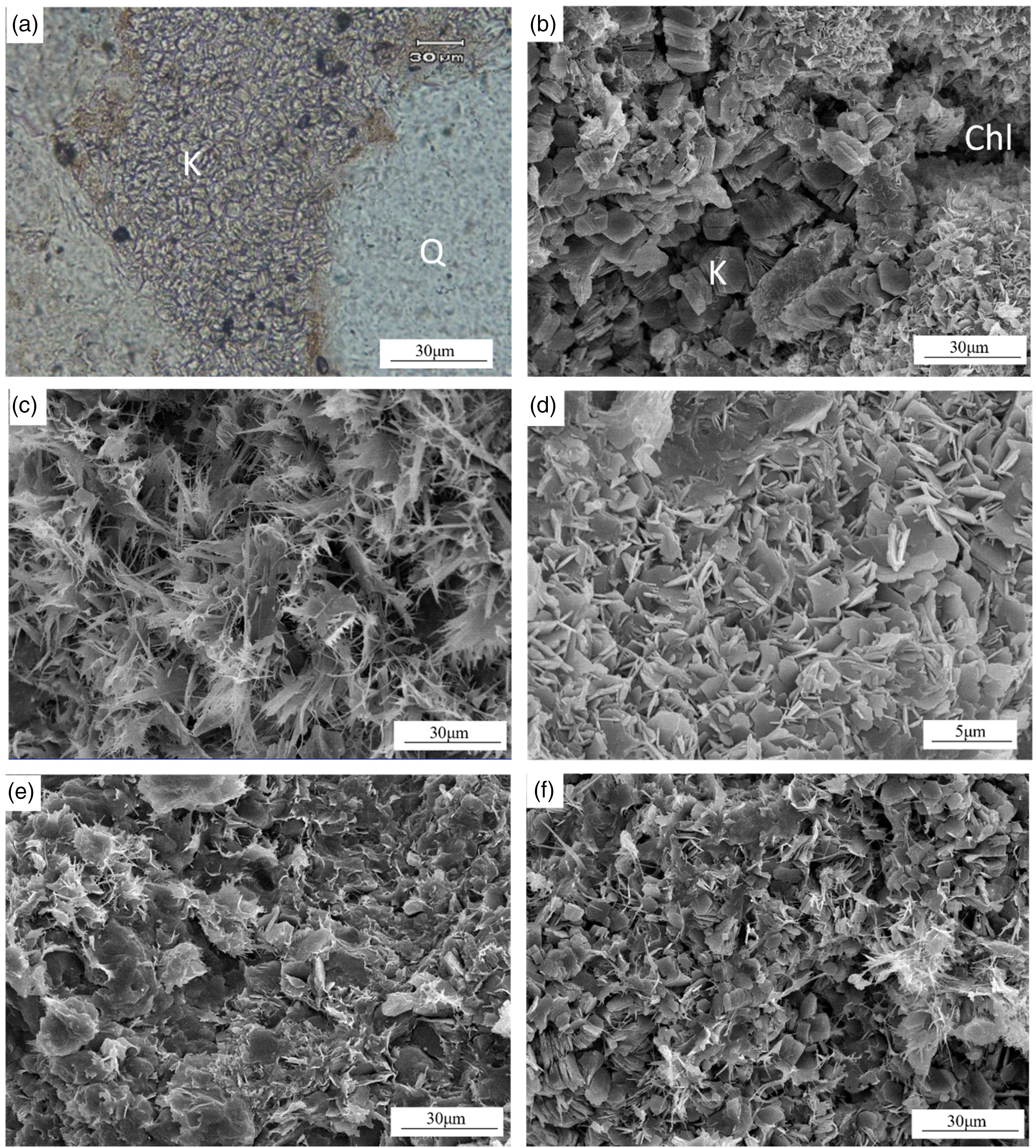
The characteristics of clay minerals in Shanxi and Xiashihezi Formations. (a) Thin section image shows kaolinite filling in intergranular pore, well A22, 2645.81 m. (b) SEM photo shows kaolinite together with cholite, well A18, 2689.21 m. (c) SEM photo shows fibrous illite, well A13, 2699.93 m. (d) SEM image shows illite displayed as dispersed flakes, well A18, 2692.56 m. (e) SEM image shows mixed-layer of illite/ smectite, well A13, 2699.57 m. (f) SEM image shows illitization of kaolinite, well A13, 2677.83 m.
The content of clay minerals varies in different layers. There are less kaolinite and chlorite in P1s with an average of 0.86% and 0.61%, while in P1x the amounts are 3.2% and 2.6% in average. However, sandstones in P1s contain more illite than that in P1x with an average of 3.67% and 2.2% (Figure 7).
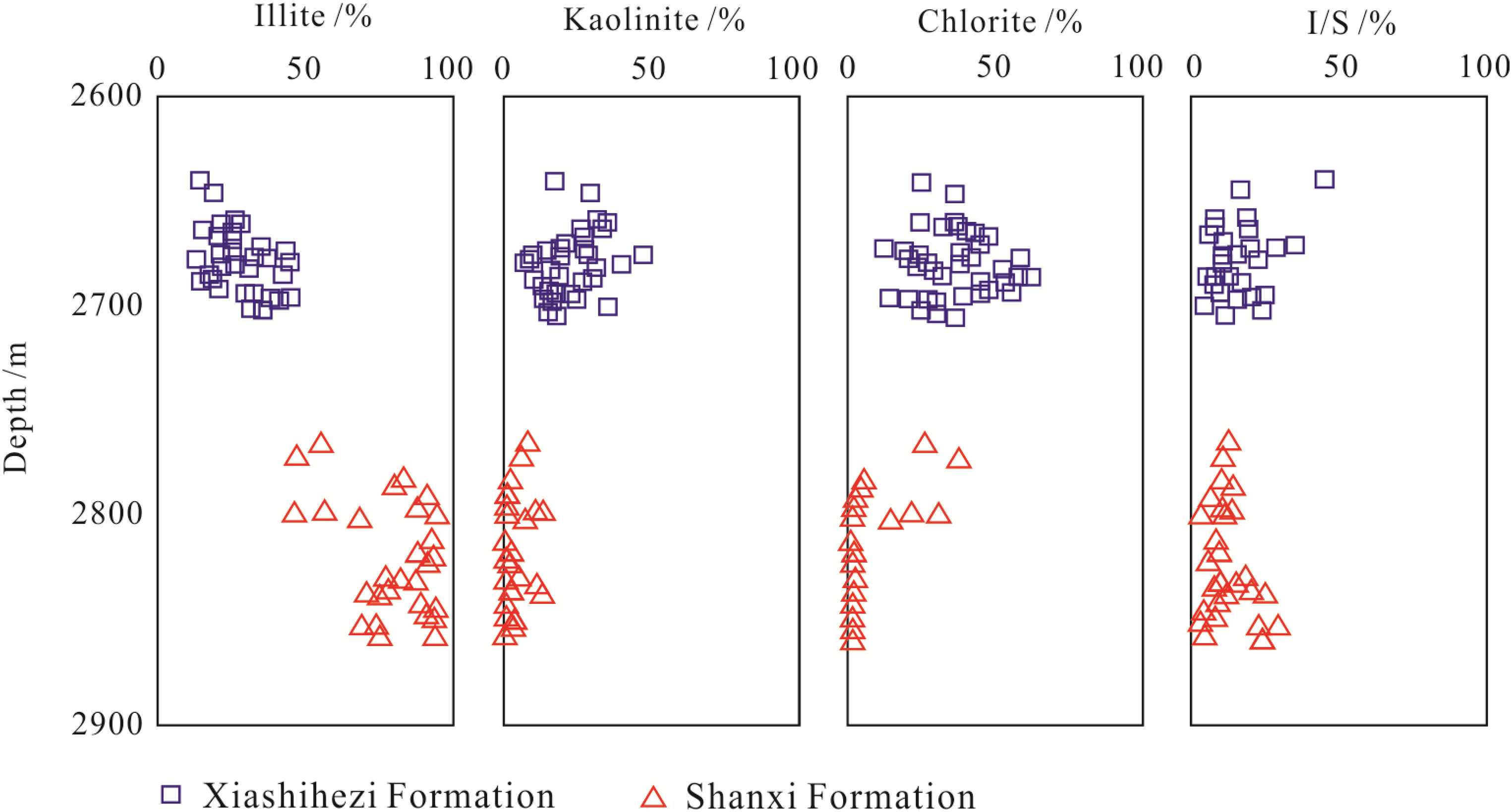
Distribution characteristics of clay mineral content in different layers.
Carbon and oxygen isotope composition of carbonate cement
It shows the results of carbon and oxygen isotope composition in carbonate cement in Figure 8. The δ13C value (V-PDB) ranges from −15.6‰ to −5.4‰, and the δ18O value (V-PDB) ranges from −18.5‰ to −11.2‰ in Shanxi Formation. Meanwhile, the δ13C value (V-PDB) ranges from −14.5‰ to −2.8‰, and the δ18O value (V-PDB) ranges from −20.6‰ to −12.8‰ in Xiashihezi Formation. Some of the data is referred from previous studies that have been marked with * (Table 2).
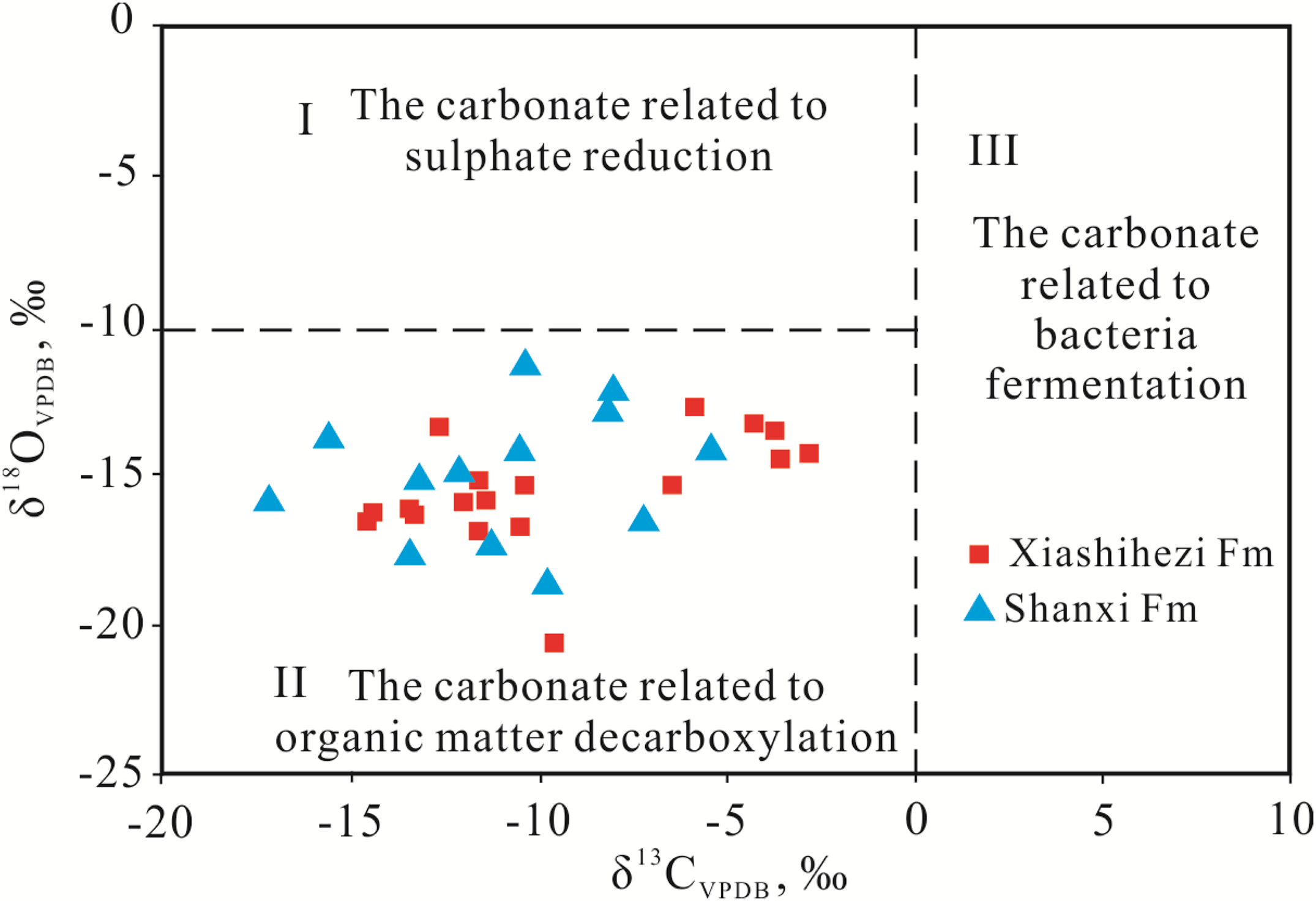
Scatter plot of carbon and oxygen isotope distribution of carbonate cements.
Carbon and oxygen isotopic compositions of carbonate cements and calculation of precipitation temperature (part of data).
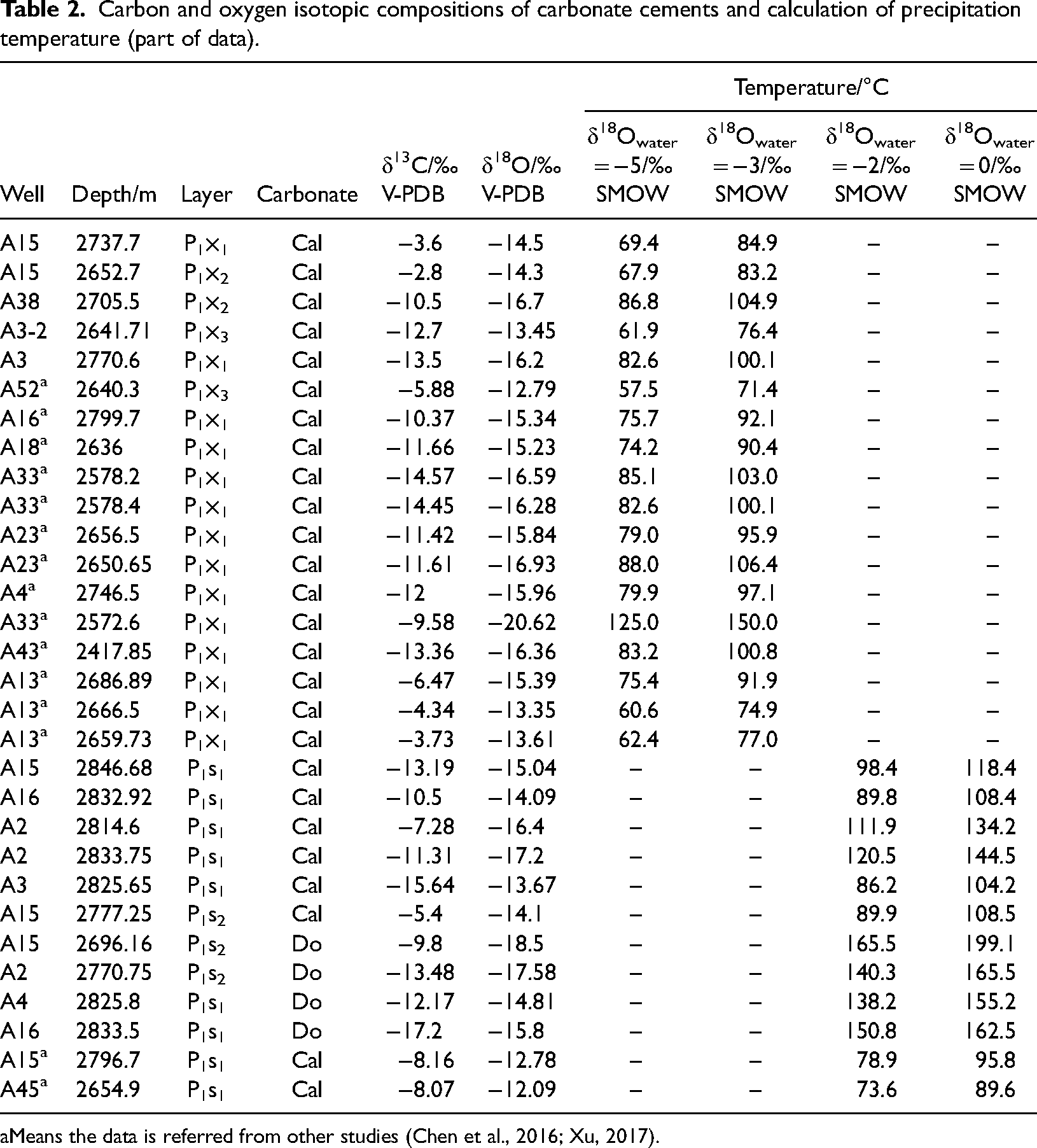
Means the data is referred from other studies (Chen et al., 2016; Xu, 2017).
Fluid inclusions
Aqueous inclusions in quartz overgrowths have been observed in a total of 73 samples and the temperature has been measured (Figure 9). The overall data show that the inclusion temperature has three main ranges: 85°C to 95°C, 115°C to 125°C and over 130°C. The data of each layer are different. The homogenization temperature of sandstones in Xiashihezi Formation is mainly concentrated in the range of 85°C to 95°C and 115°C to 125°C. However, the homogenization temperature of Shanxi Formation is mainly distributed in the range of 85°C to 95°C and over 130 °C.
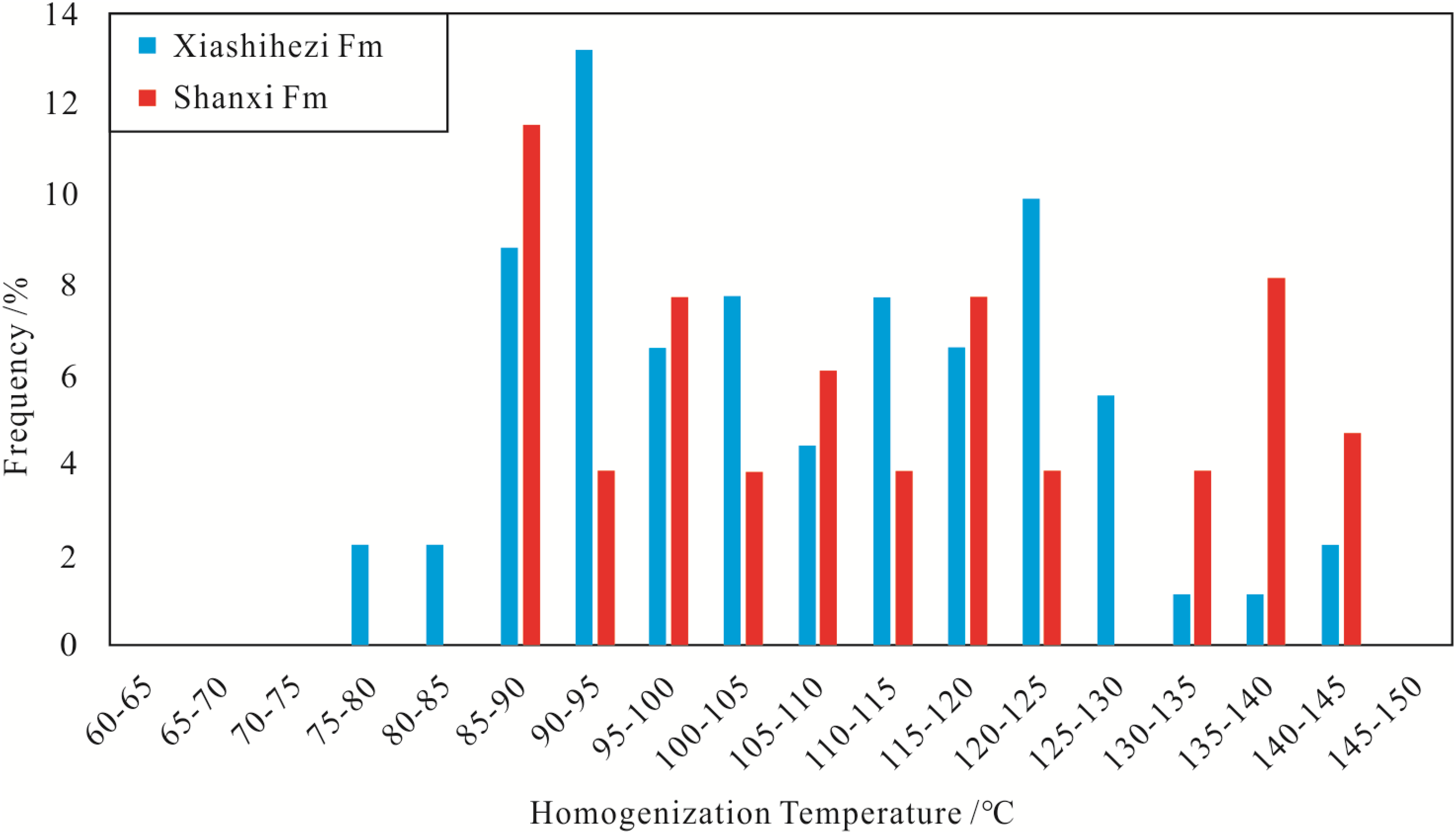
Homogenization temperature distribution histogram of fluid inclusions in the study area.
Porosity and permeability
Based on core plug analysis, the porosity and permeability of sandstones in the Daniudi gas field are 1% to 18% (average 7.38%) and 0.01 to 3.34 mD (average 0.39 mD), which indicates a typically tight sandstone reservoir. What's more, the reservoir quality of different sandstone types is quite different. Figure 10 illustrates that small conglomerates have the best porosity and permeability (average 10.36% and 1.21 mD), while the siltstone has the worst reservoir quality (average 1.7% and 0.01 mD). Meanwhile, sandstones with coarser grain sizes tend to have better reservoir quality.
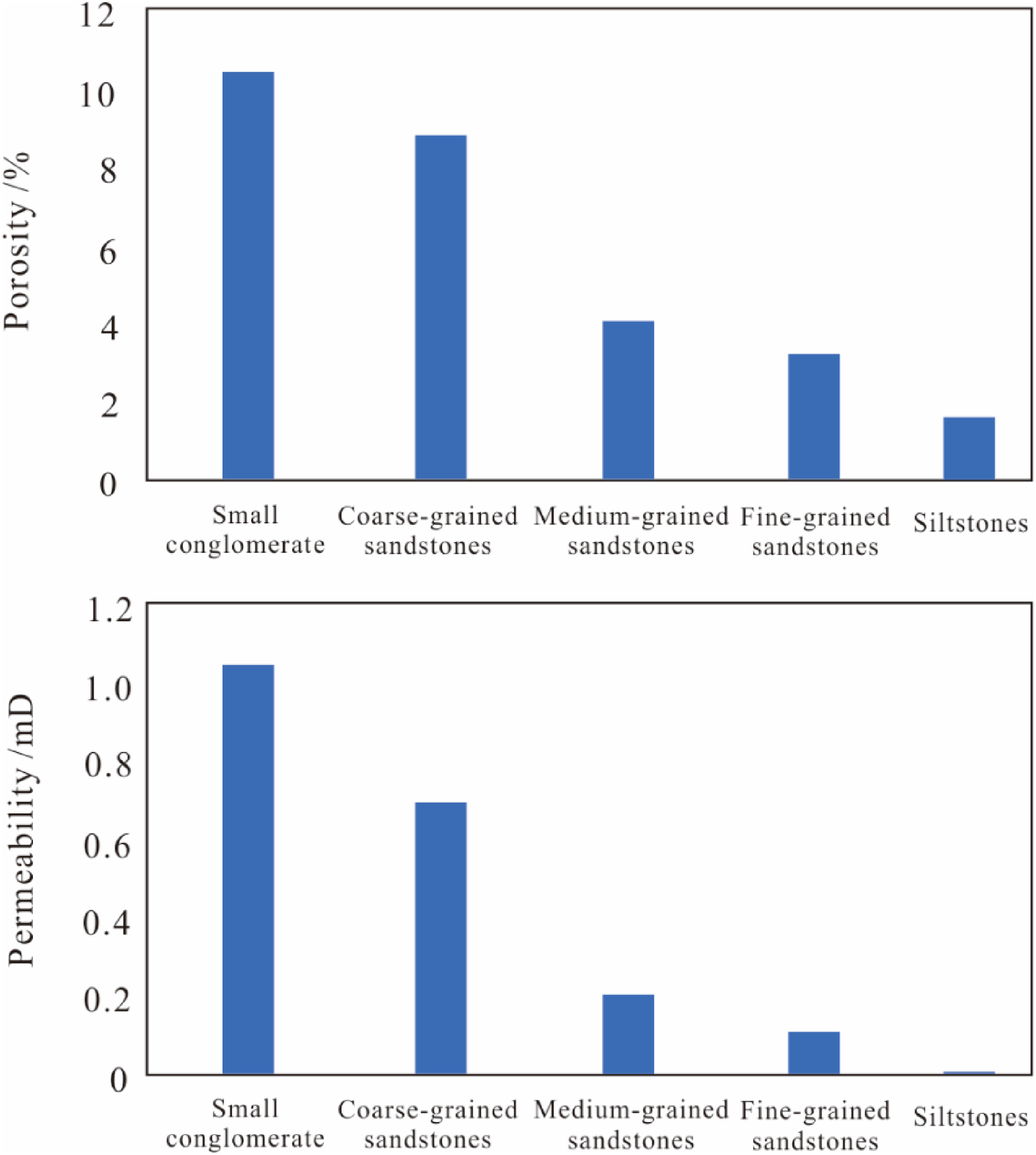
Columnar distribution of reservoir quality of sandstones with different grain sizes.
Three types of pores can be recognized by thin sections and SEM images: primary intergranular pores, dissolution pores, and micro pores (Figure 5(b) and (e)). The dissolution pores are usually formed where there are unstable components like K-feldspars or lithic fragments. Generally, the boundaries of dissolution pores and primary intergranular pores are always hard to identify.
Discussion
Sources and timing of carbonate cement
There are many potential sources for carbonate cement, including internal, external, and mixed sources (Li et al., 2019; Luo et al., 2019; Xi et al., 2015). Internal carbonate sources contain detrital carbonate grains and bioclasts (Dutton and Loucks, 2010), none of which were found in the Daniudi gas field (Xu et al., 2017a). Therefore, the main source of carbonate cement was external.
According to the distribution characteristics of isotopes (Figure 8), nearly all the samples lie in zone III, indicating that decarboxylation of organic matter in source rock (mainly coal and other dark mudstones) was the main source of carbonate cement in the study area (Irwin et al., 1977; Xi et al., 2015). In Shanxi Formation, the calcite and dolomite show light low negative δ13C values ranging from −17.2‰ to −5.4‰, with an average of −11.5 The positive relationship between the distance from samples to the nearest coal layers and total carbon cement is also evidence that the carbon dioxide was derived from coal layers (Figure 11(a)). However, in Xiashihezi Formation, the calcite cement have a little heavier value of δ13C ranging from −14.6‰ to −2.8‰, with an average of −9.5‰. Meanwhile, the distance between samples and the coal layers and the amounts of carbonate cement are not well correlated, indicating that coal layers were not the only source of carbon dioxide (Figure 11(b)). Previous studies have shown that carbon derived from inorganics may show heavier carbon isotope ratios around −4% to 4% (Jiang et al., 2021; Li et al., 2017). Also, the similar δ13CVPDB values of calcite in adjacent mudstones in Xiashihezi Formation range between −1.1‰ and −3.7‰, suggesting that the interbedded mudstones were also possible sources.
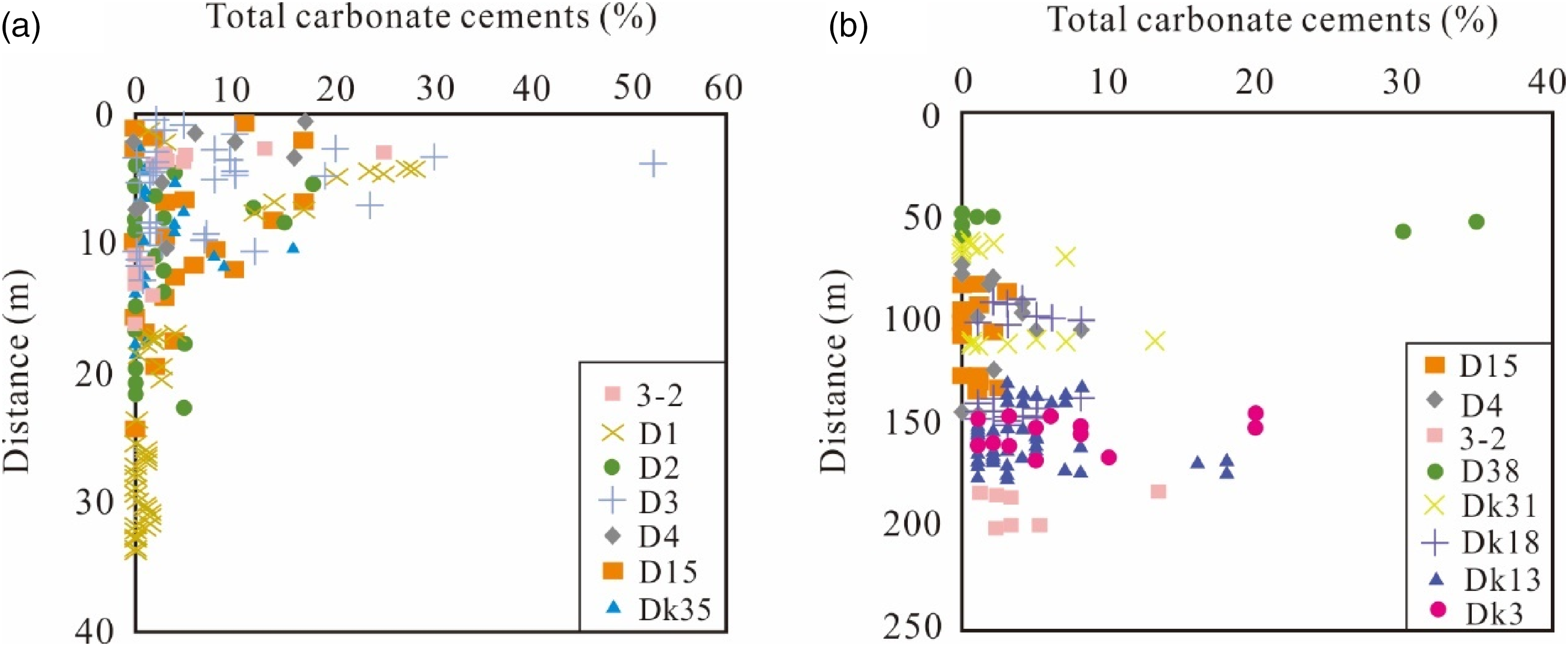
Plot of total amount of carbonate cement and distance between samples and coal layers: (a) Shanxi Formation and (b) Xiashihezi Formation.
To precipitate carbon cement, Ca2+, Mg2+, and Fe2+ are necessary to be ready in formation water. Previous studies have shown that the dissolution of volcanic rock fragments and the smectite to illite reaction can provide enough Ca2+, Mg2+, and Fe2+ (Fan et al., 2019; Lai et al., 2022b; Wei et al., 2015). In Xiashihezi Formation, the smectite to illite reaction occurred in the interbedded mudstones, and the Ca2+ could be expelled to adjacent sandstones (Xi et al., 2015). Consequently, the content of calcite cement along the contact surface between mudstones and sandstones was always higher than that in the center of the same sand body (Figure 12). As a contrast, the sediments of Shanxi Formation were affected more by seawater, which was another source of Ca2+ and Mg2+ (Jiang et al., 2021; Lai et al., 2016). Due to the shorter distance from coal layers, the dissolution of volcanic fragments was stronger, which provided a large amount of Fe2+. As a result, sufficient Mg2+ and Fe2+ promoted the formation of dolomite, siderite, and ferrocalcite in Shanxi Formation, which was why the types of carbonate cement in Shanxi and Xiashihezi Formation were quite different.
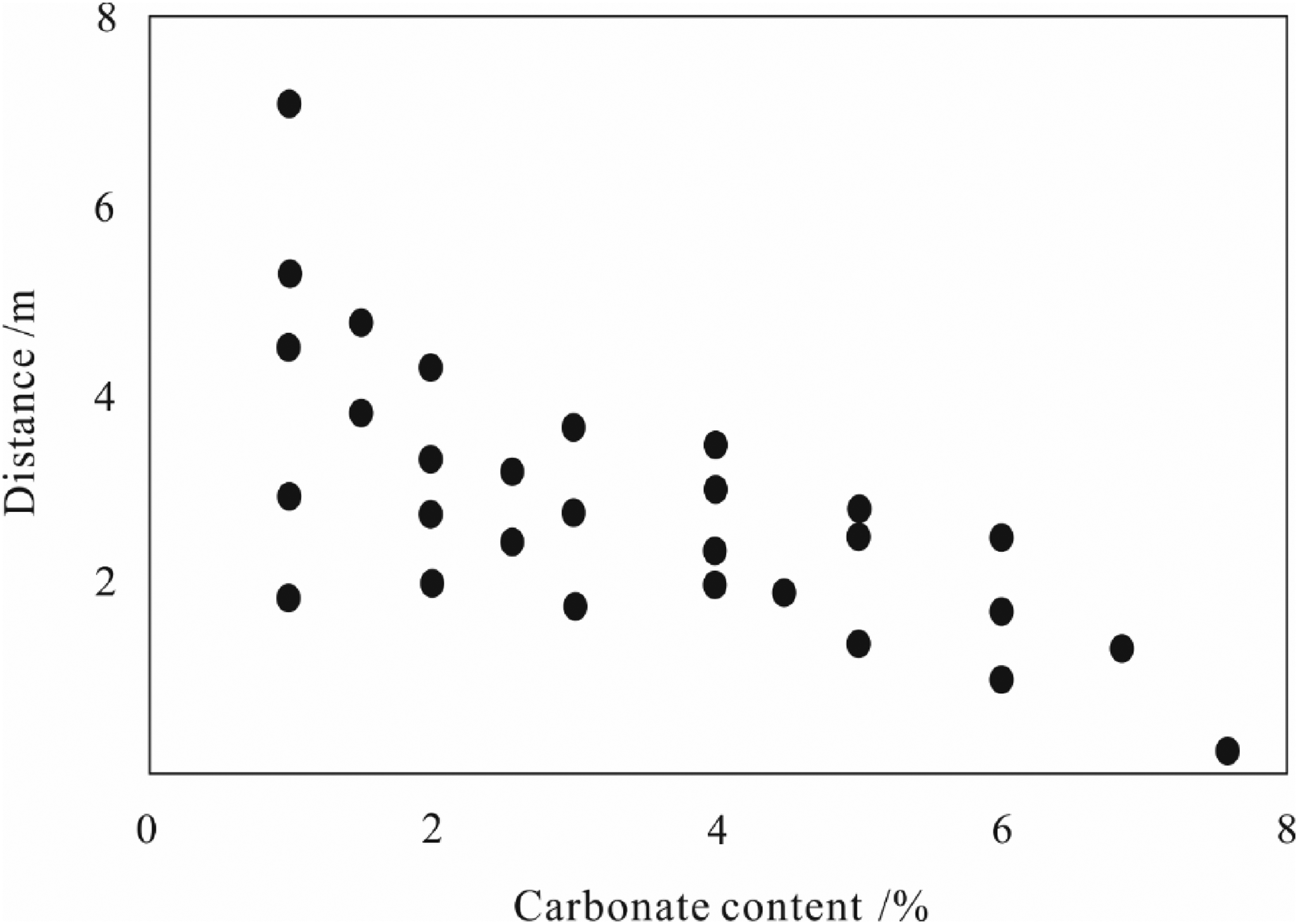
Plot of carbonate cement and distance between samples and the nearest mudstones in the Xiashihezi Formation.
To identify the timing of carbonate cement, the δ18Owater values of parent diagenetic is necessary. Previous studies show that the δ18Owater value of present-day formation water in Shanxi Formation was a mixture of seawater and meteoric water that was approximately −2‰ to 0 ‰ (SMOW), and that of diagenetic pore water in Xiashihezi Formation was approximate −5‰ to −3‰ (SMOW) (Xu et al., 2017a). With the data of oxygen isotope, the precipitation temperatures for carbon cement in different layers could be calculated according to Friedman and O’Neil (1977) (Table 2, Figure 13). The results showed that the precipitation temperatures of all samples were approximately 57.5°C to 199.1°C, which is a coincidence to the homogenization temperature measured in previous studies (Chen, 2016; Xu, 2017). Within the calculated results, the precipitation temperatures of calcite and dolomite in sandstones of Shanxi Formation ranged from 67°C to 199.1°C, with an average of 122.2°C (Figure 13(a) and (b)). While the calcite cement in Xiashihezi Formation is calculated to form at 57.5°C to 150°C with an average of 86°C (Figure 13(a)), indicating that much of the calcite might precipitate in the early diagenetic stage.
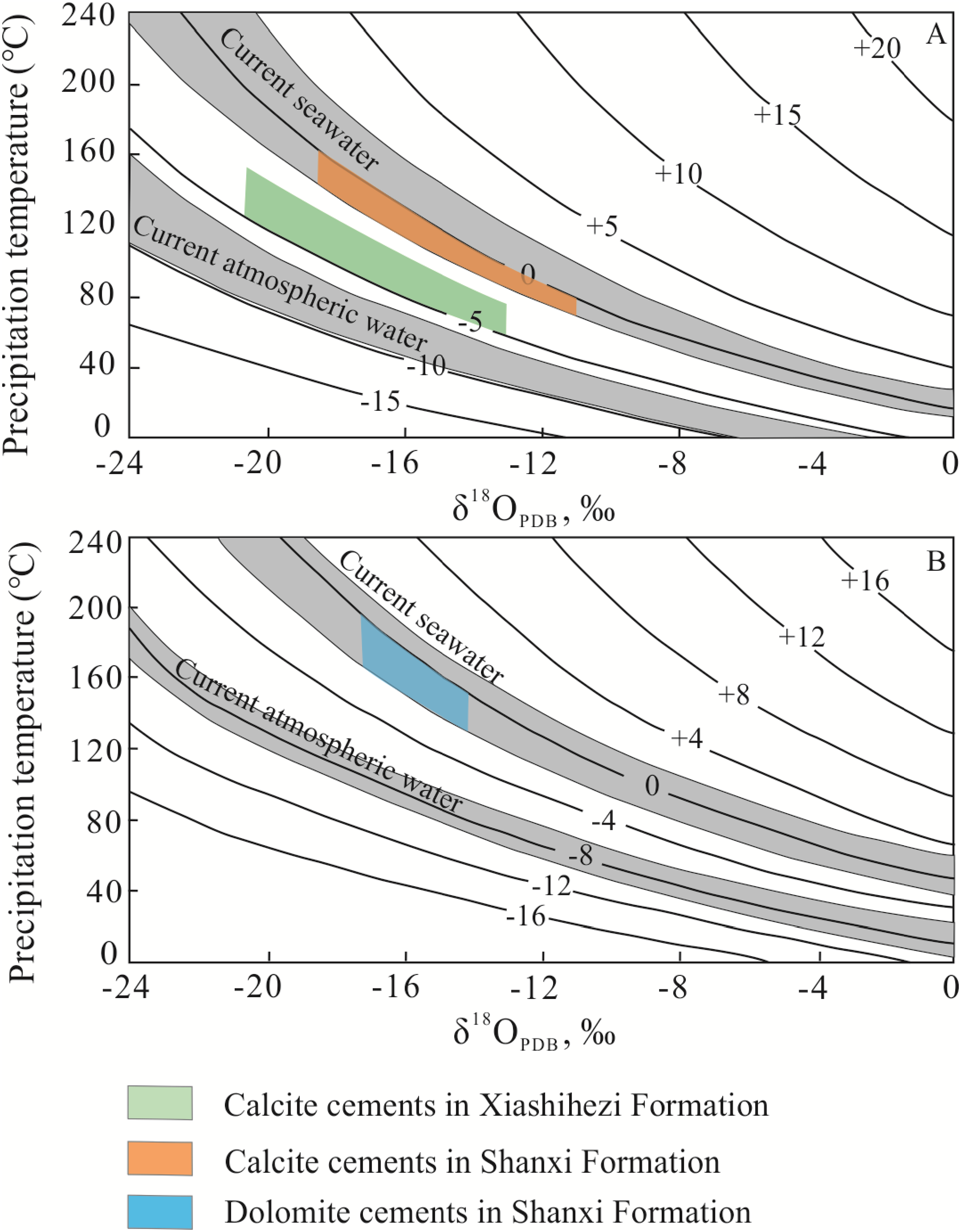
The chart of forming temperature of carbonate cementation.
Impact of coal evolution on diagenesis of sandstones
The influence of coals on sandstone diagenesis is mainly because of its earlier and long-lasting thermal evolution (Shuai et al., 2013). Therefore, it is very important to identify the products released during coal evolution. In this study, we mainly refer to previous experimental studies on coal thermal simulation in the adjacent area (Liu et al., 2017; Yu et al., 2019a, 2019b). The samples belong to the same layers as the coals in the study area, both of which were formed in a consistent sedimentary environment. So, the experimental results have a high reference value for this study (Liu et al., 2017). According to the experimental results, the main products of coal thermal included CO2, CO, N2, and other hydrocarbon gases. When the test temperature was below 300°C and the RO was less than 0.7%, CO2 dominated the gas products with a proportion of 91% (Figure 14). When the test temperature was between 300°C and 425°C, and Ro was between 0.8% and 1.3%, the proportion of CO2 gradually decreased, but it still accounted for more than 50% of the whole gas products, while other hydrocarbon gases gradually increased. When the test temperature was higher than 425°C, methane was the main product with a proportion of more than 50% (Figure 14).
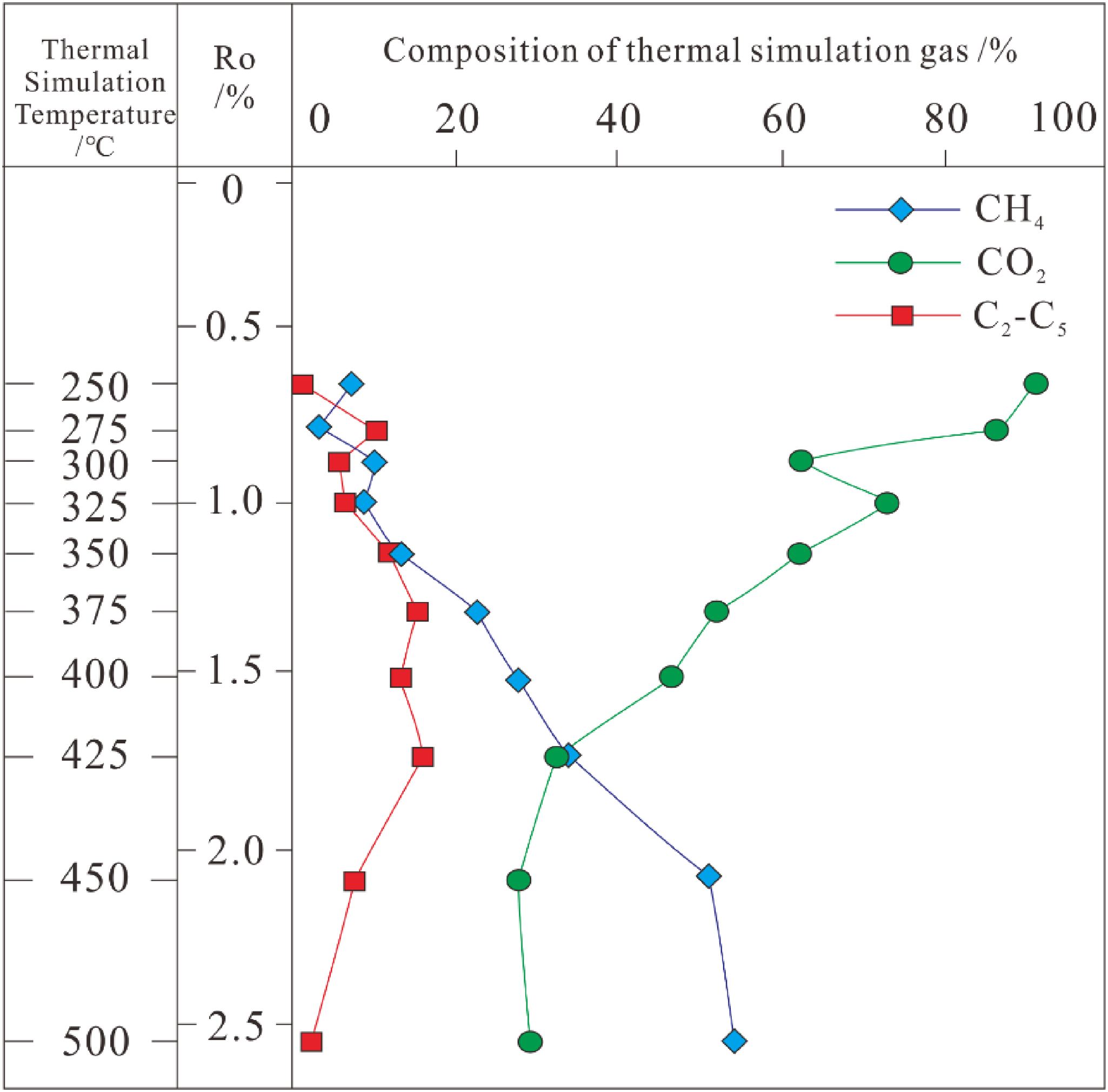
Gaseous product of thermal simulation in coal samples (modified from Liu et al., 2017).
Combined with the thermal and burial history in the study area (Li et al., 2011), the influence of coal evolution on the diagenesis of sandstone reservoirs can be determined (Figure 15). During the shallow burial stage (burial depth less than 2.5 km, temperature under 100°C, Ro < 0.7%), the main product of coal evolution was CO2 due to desulfurization. As a result, the diagenetic fluid became acidic, leading to the dissolution of early cement (mainly early calcite), which made the compaction of sandstone more intense. This was the main reason for the formation of tight sandstone reservoirs in the study area. Also, due to the long distance from the coal layers, there was still a small amount of early calcite remaining in the sandstones of Xiashihezi Formation, which can hardly be observed in Shanxi Formation.
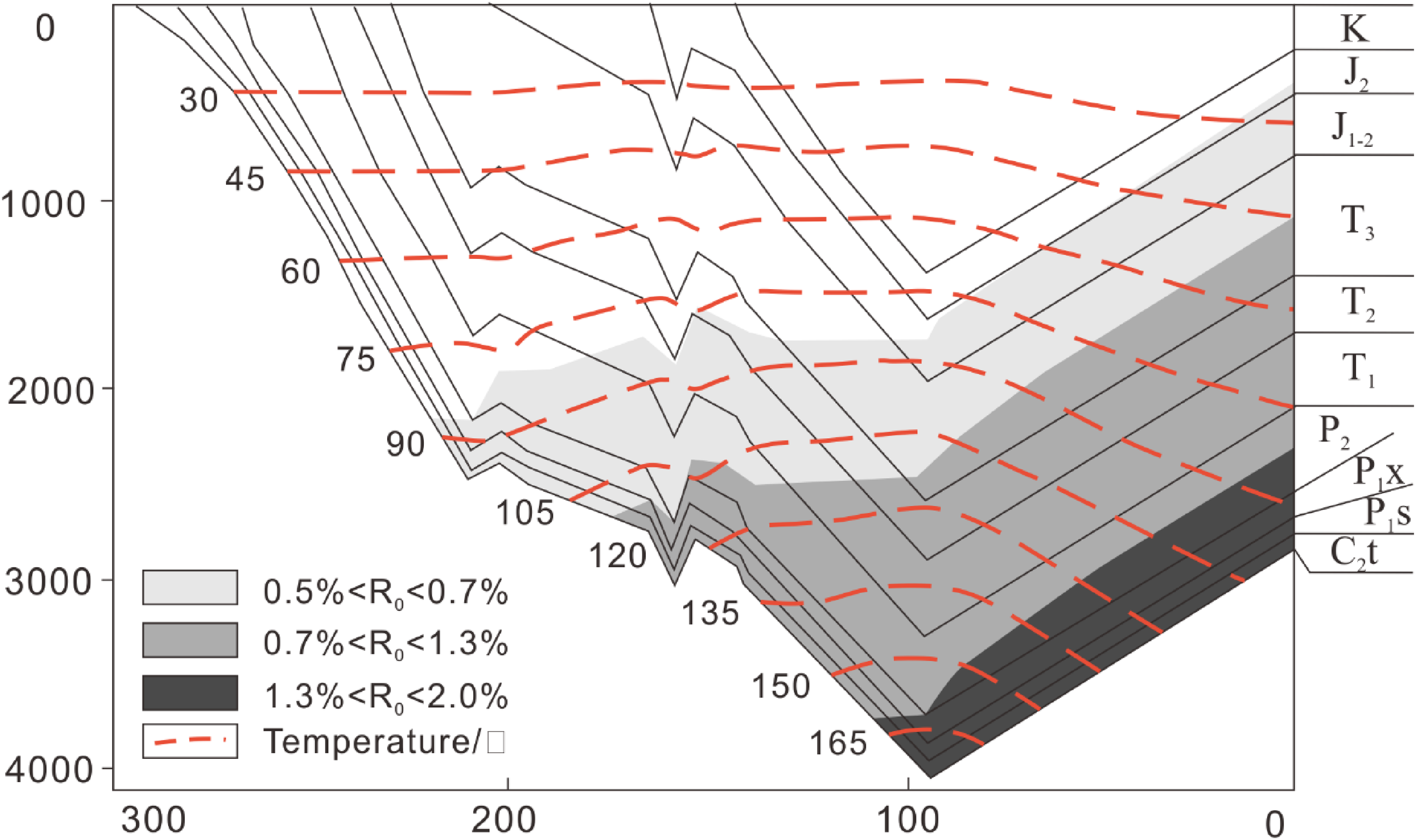
Thermal and burial history in the study area (modified from Li et al., 2011).
When the Ro was over 1%, methane and other hydrocarbon gases were released by coals, which made the diagenetic fluid more acidic. This promoted the dissolution of feldspar and lithic fragments as well as the dissolvable matrix, providing an adequate source of silica, which impelled the formation of quartz cementation (Bjørlykke and Egeberg, 1993). Figure 16 is good evidence which shows that the closer to the coal layers, the lower the feldspar contented and the higher the quartz cement contented. Meanwhile, there was a peak of quartz cementation around 120°C according to Figure 9, which coincided with the period when organic acids were generated in large quantities in coals.
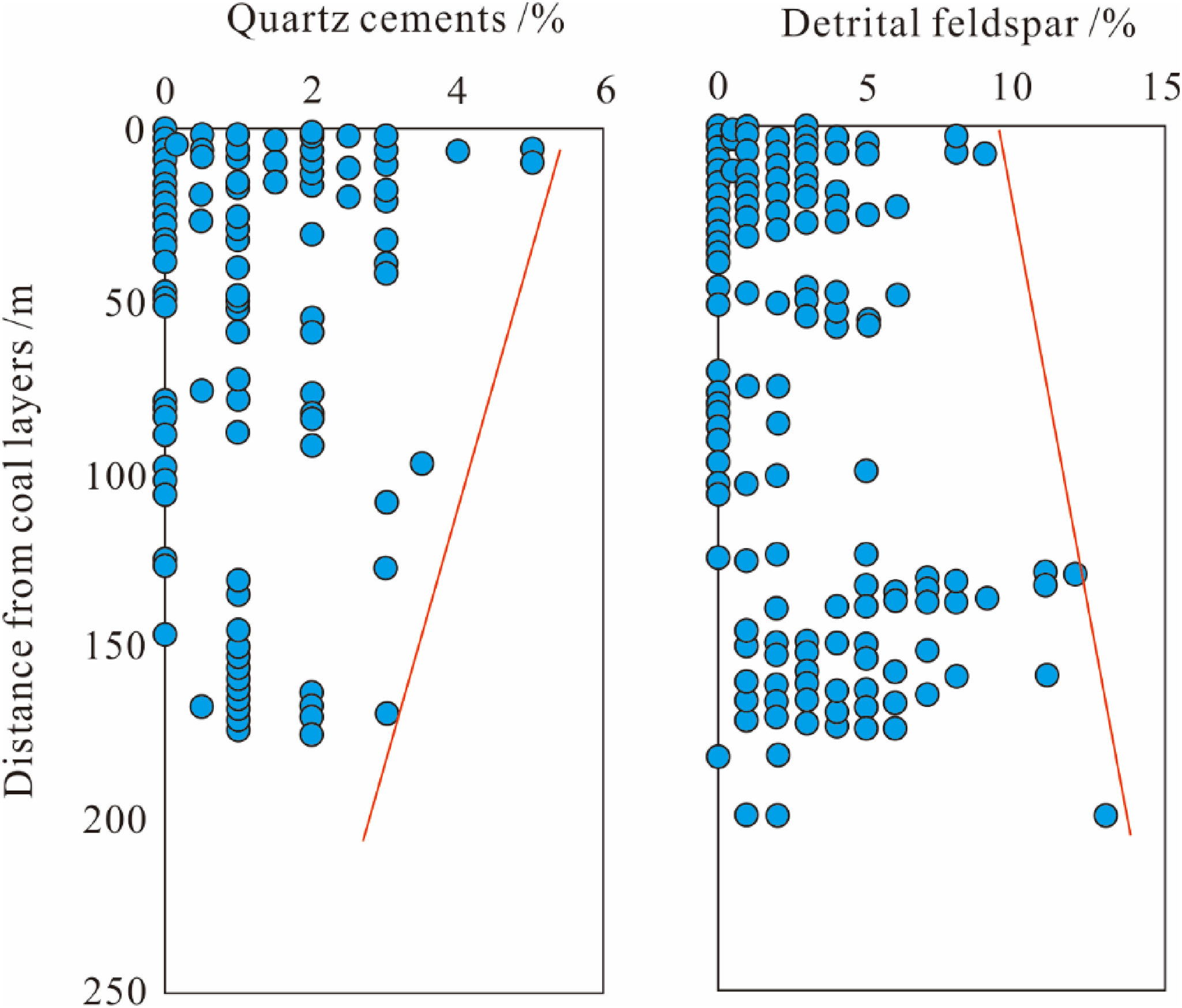
Plot shows content of quartz cement and detrital feldspar and their distance to coal layers.
The existence of coal layers also promoted the formation of carbonate cement in sandstones. In previous studies, it was generally believed that the acidic diagenetic fluid of coal layers would inhibit the formation of carbonate cement (Zhang et al., 2022). However, the main period of organic acid released during coal evolution was in the mature stage (middle diagenetic stage A), while carbonate cement could develop in over-mature stage according to the calculated temperatures (Table 2). When the Ro was close to 2%, CO2 and other hydrocarbon gases decreased rapidly, and the main product was methane which was insoluble in water. At this time, the formation fluid environment had gradually changed from an acidic environment to a weak alkaline environment due to the continuous consumption of acid during the water-rock reaction. The diagenetic system also changed from open to semi-open or closed due to continuous compaction (Bjørlykke and Jahren, 2012; Yuan et al., 2015). Meanwhile, the large amount of CO2 that remained was not completely spilled out, a large part of which dissolved in the formation fluid and finally formed carbonate cement with Ca2+, Mg2+, and Fe3+. The source of carbonate ions in carbonate cement has been discussed in section “Sources and timing of carbonate cement” of this paper. The coal evolution promoted the development of carbonate cement by supplying sufficient carbonate ions.
Previous studies also believed that the acidic environment formed by coals can promote the development of secondary pores, thus improving the reservoir quality (Hou et al., 2020; Jiu et al., 2018). The dissolution of detrital feldspar and matrix can be frequently observed in the study area (Figure 5(b) and (e)). However, the effect of dissolution on different types of sandstones is very complex according to the quantitative study on dissolution and cementation (Table 3). Taking sandstones in Shanxi Formation as an example, the dissolution pores increased in small conglomerate and coarse-grained sandstones could up to 20.6% with an average of 13.5%, while that in sandstones with smaller grain size was only 5.8% on average (Table 3). There was more late-stage cement including quartz, kaolinite, and carbonate filled in dissolution pores in small conglomerate and coarse-grained sandstones than those in sandstones with smaller grain sizes with an average of 8.3% and 4.4%. The content of cement developed in these dissolution holes accounted for about 57% to 100% of the dissolution holes. As a result, the actually increased plane porosity in sandstones with larger grain sizes was 3.1% on average, indicating that there was some improvement in porosity due to coal evolution. While, there was only a 1.5% average plane porosity increase in sandstones with smaller grain size, indicating that the improvement of reservoir quality by dissolution was little. By comparing sandstones in different layers, it can be seen that the closer to the coal layers, the more porosity the reservoir increased.
Quantitative calculation of dissolution and cement content.
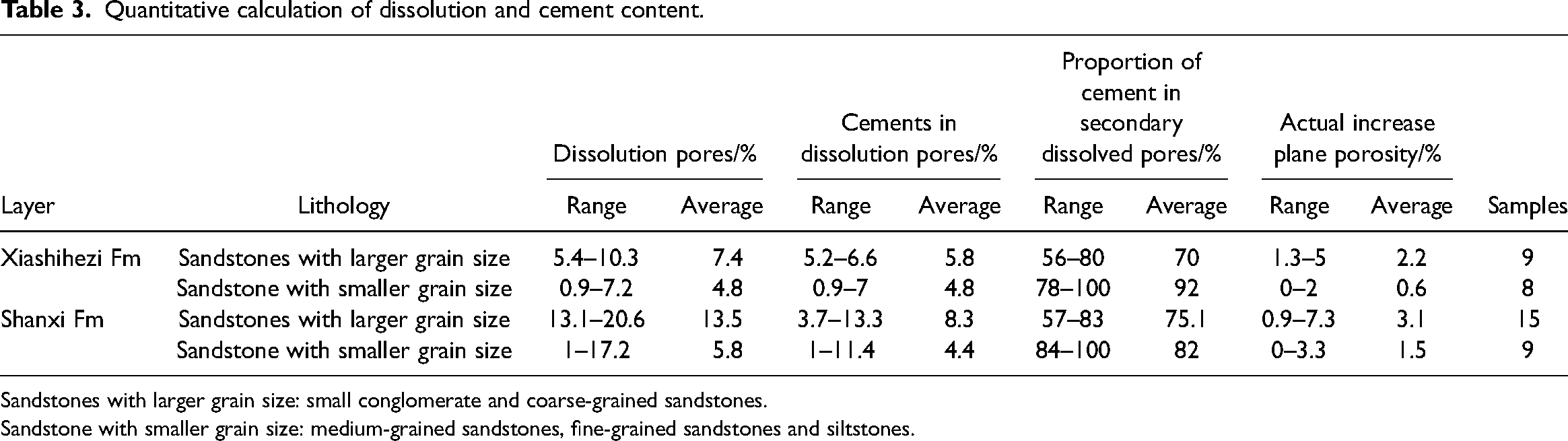
Sandstones with larger grain size: small conglomerate and coarse-grained sandstones.
Sandstone with smaller grain size: medium-grained sandstones, fine-grained sandstones and siltstones.
Diagenetic phases and its evolution sequence
In general, the diagenetic process can be divided into three stages: Eodiagenesis (burial depth between 0 and 2.5 km, temperature under 100°C), Mesodiagenesis A stage (burial depth between 2.5 and 3.5 km, temperature between 100 and 150°C) and Mesodiagenesis B stage (burial depth over 3.5 km, temperature over 150°C). According to diagenetic alterations, sedimentary facies, and burial history, three patterns of sandstones and their distribution have been established (Figure 17). Pattern I represents small conglomerate and coarse-grained sandstones in P1x that far away from coal layers. Pattern II occurs in small conglomerate and coarse-grained sandstones in P1s that close to coal layers. Both pattern I and Pattern II mostly distributed in bars (Li et al., 2021; Wu et al., 2019) and the middle part of a single sand body due to the carbonate cement along the sandstone-mud surface (Figure 17(a)). Pattern III is developed in levee and edges of channels (Li et al., 2021), representing medium-grained sandstones, fine-grained sandstones and siltstones.
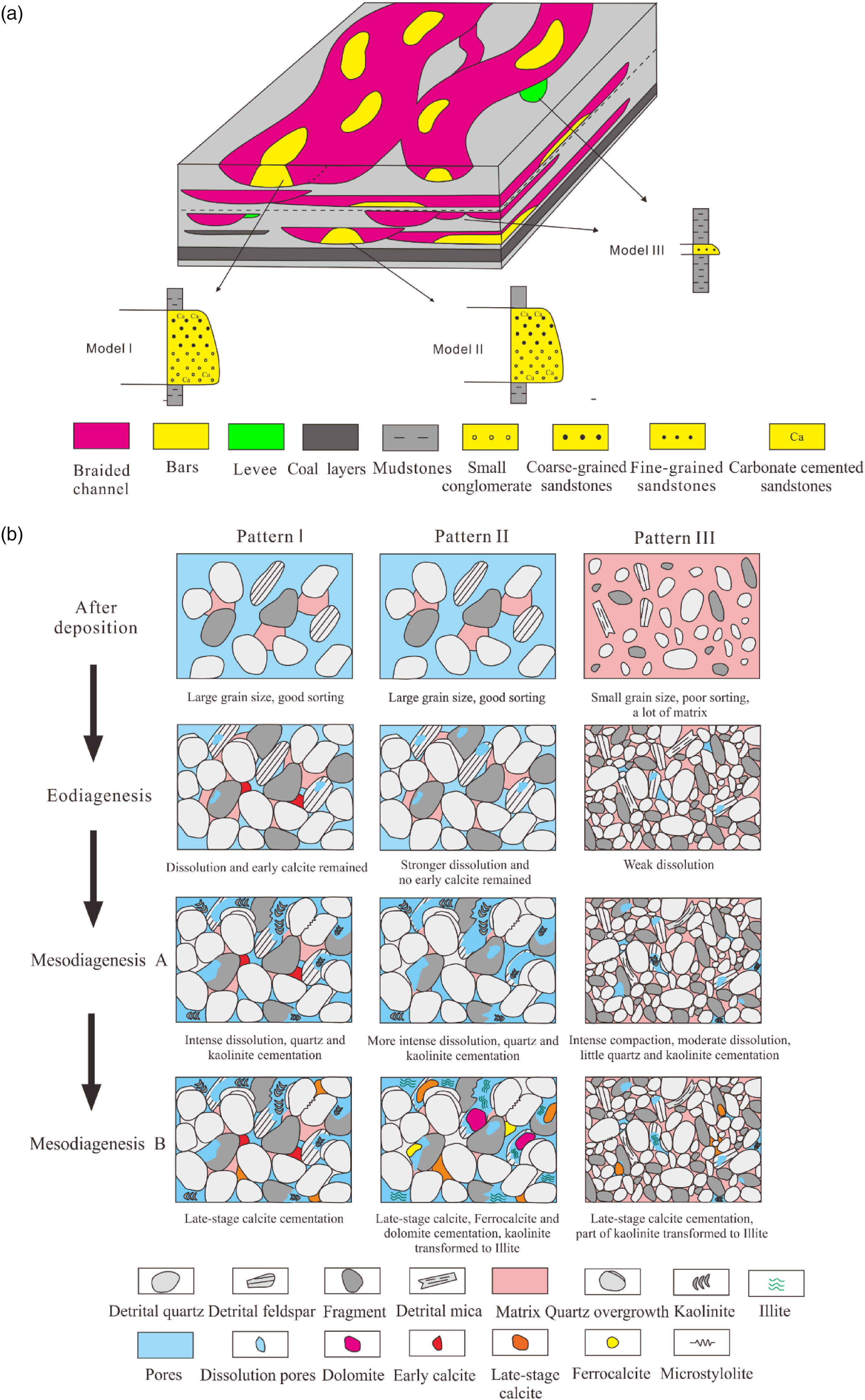
(a) Distribution and (b) diagenetic alteration patterns in the study area.
Eodiagenesis
During the Eodiagenesis stage, the sandstones were buried less than 2.5 km, and the Ro of coals was less than 0.7% (Shuai et al., 2013). Main diagenetic events concluded rapid compaction, early cements (including calcite, pyrite, siderite, and chlorite) and limited dissolution of unstable grains. One of the typical characteristics of diagenetic processes of sandstones in coal-bearing strata was the early acidic fluids, which was from decay of plants and sulfate reduction of coal layers (Irwin et al., 1977, Xu et al., 2017). Due to their proximity to the coal layers, nearly no early calcite cements could be observed in sandstones of pattern II. As a contrast, sandstones in pattern I were far away from the coal layers, and the diagenetic fluid was weakly acidic to weakly alkaline, leading to more early calcite cements remained. This was also conducive to the formation of early chlorite (Liu et al., 2021), of which Fe2+ and Mg2+ was provided by the dissolution of volcanic fragment. This is why there were more chlorites in the Xiashihezi Formation. Sandstones in pattern III were formed in the environment of low water energy with more matrix and ductile fragments (Liu et al., 2021). Dissolution in model III was also weak because of large amounts of matrix that blocked intergranular pores inhibiting the entry of diagenetic fluid.
The acidic fluids also resulted in the dissolution of feldspars and unstable fragments, although the dissolution was limited due to the low temperature and weak acidity (Shuai et al., 2013). Kaolinite and silica were the main products of feldspar dissolution, and K+ could also promote the translation from semtic to illite.
Mesodiagenesis A stage
When sandstone reservoirs were buried to 2.5 to 3.5 km, the temperature rose to 80 to 120°C and the Ro was between 0.8% and 1.2%. Large amounts of CO2 and organic acid were released by the thermal evolution of coals and the main diagenetic events during the stage concluded compaction, dissolution of feldspars and fragments, quartz cements and transformation of clay minerals.
Quartz cements were the dominate cements in both patterns I and II during this period. As described above, sandstones in pattern II had more quartz and less feldspars due to the closer proximity to coal layers. Most of unstable grains were dissolved, which provided space and silica sources for quartz cementation. However, sandstones in pattern III did not develop much quartz cements. It suffered a tense compaction due to more matrix and ductile fragments. As a result, the pores were blocked and there was little space for quartz cementation.
Mesodiagenesis B stage
When the buried depth was over 3.5 km, the temperature was over 150°C, and the Ro of the coal was about 1.3% to 2%. During this period, the major diagenetic events were compaction, carbonate cements and transformation of clay minerals.
As the coal evolution became over mature, the produce of organic acid slowed down, and pore water turned from acidic to weak alkaline (Xu, 2017). Most of carbonate cement like calcite and dolomite in sandstones of pattern II were formed during this period, occupying the dissolution pores and remaining primary pores. As contrast, there only developed calcite cements in pattern I due to the lack of the lack of Mg2+ and Fe2+. What's more, with enough K+ from seawater, kaolinite transformed to illite when the temperature was over 130°C (Bjørlykke, 2014). In sandstones of pattern II, nearly all kaolinites were exhausted, leading to the high content of illite. While sandstones in model I had more kaolinite due to the lack of K+. Sandstones in model III also had some carbonate cements. Due to the lack of space, carbonate cements always replaced feldspars or lithic fragments.
The impact of coal evolution on reservoir quality of sandstones
The influence of coal evolution on reservoir quality was mainly realized by controlling the diagenetic process (Zhang et al., 2015). Due to the different impacts of coals on various sandstone reservoirs discussed in section “Impact of coal evolution on diagenesis of sandstones,” its impact on reservoir quality also has significant differences. According to Figure 18, it shows different relationships between porosity and permeability in P1x and P1s sandstones. In general, sandstones in P1x had high porosities, and the range of porosity variation was also large. High porosity and low permeability reservoirs were usually formed in the P1x sandstones mainly because of the high content of kaolinite and matrix, in which the micropores contributed a lot to porosity. Though there were many dissolution pores generated in P1s sandstones, most of which were filled by cement, the improvement of porosity was not high. Meanwhile, due to the dissolution of the matrix, P1s sandstones usually exhibited high permeability.
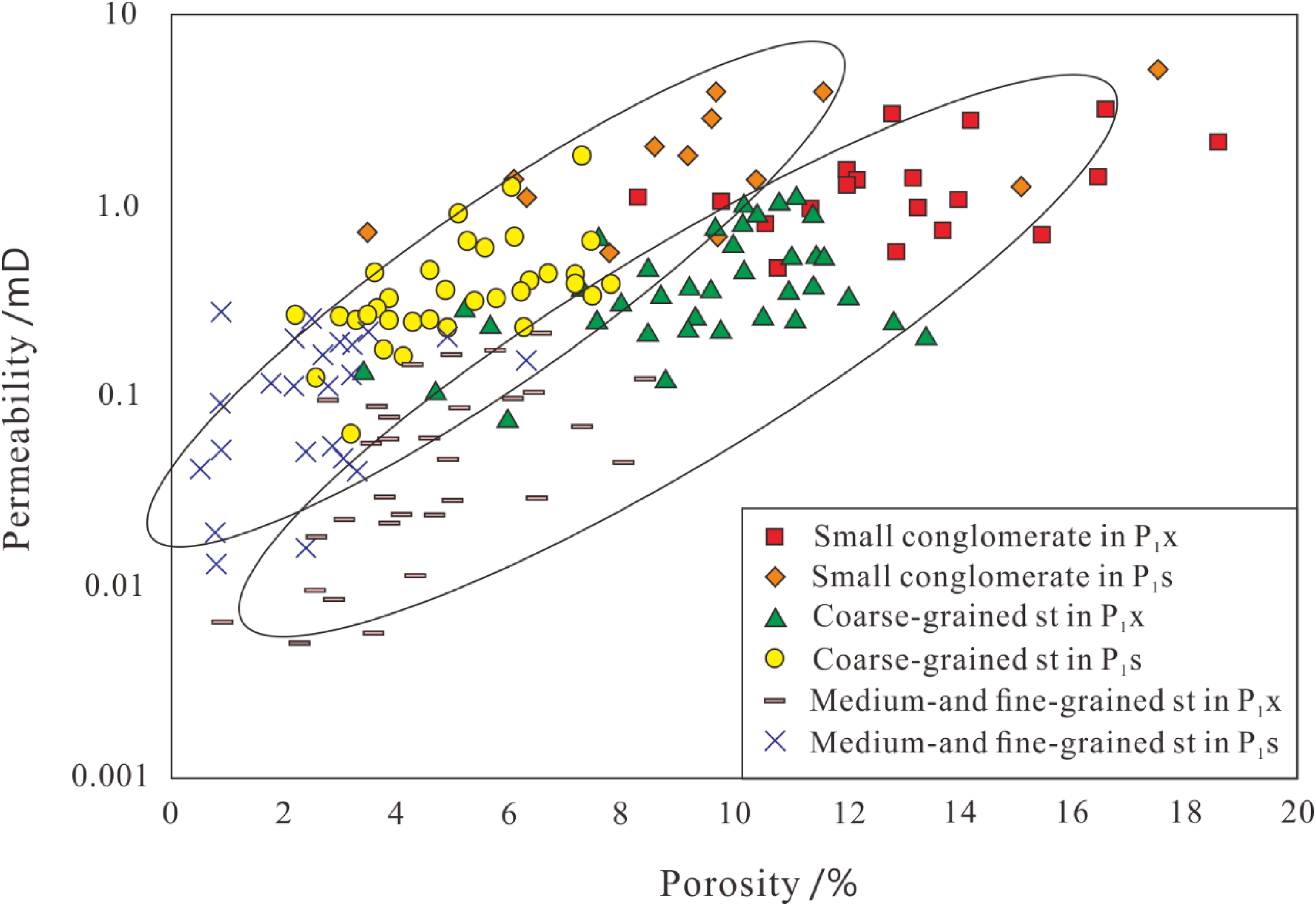
Plot shows porosity and permeability of sandstones in different layers in the study area.
Based on reservoir qualities of sandstones in different layers (Figure 19), it is found that the reservoir quality of small conglomerate reservoirs in P1x is the best (average 13.9%, 2.0 mD), followed by that in P1s (average 10.9%, 1.8 mD). Coarse-grained sandstones can also form good reservoirs, and the reservoir quality in P1x (average 9.4%, 0.56 mD) is slightly better than that in P1s (average 8.5%, 0.6 mD). In contrast, the reservoir qualities of medium- and fine-grained sandstones in P1x (average 4.1%, 0.23mD) and P1s (3.8%, 0.25 mD) are very close, indicating that the coal evolution has little effect on them.
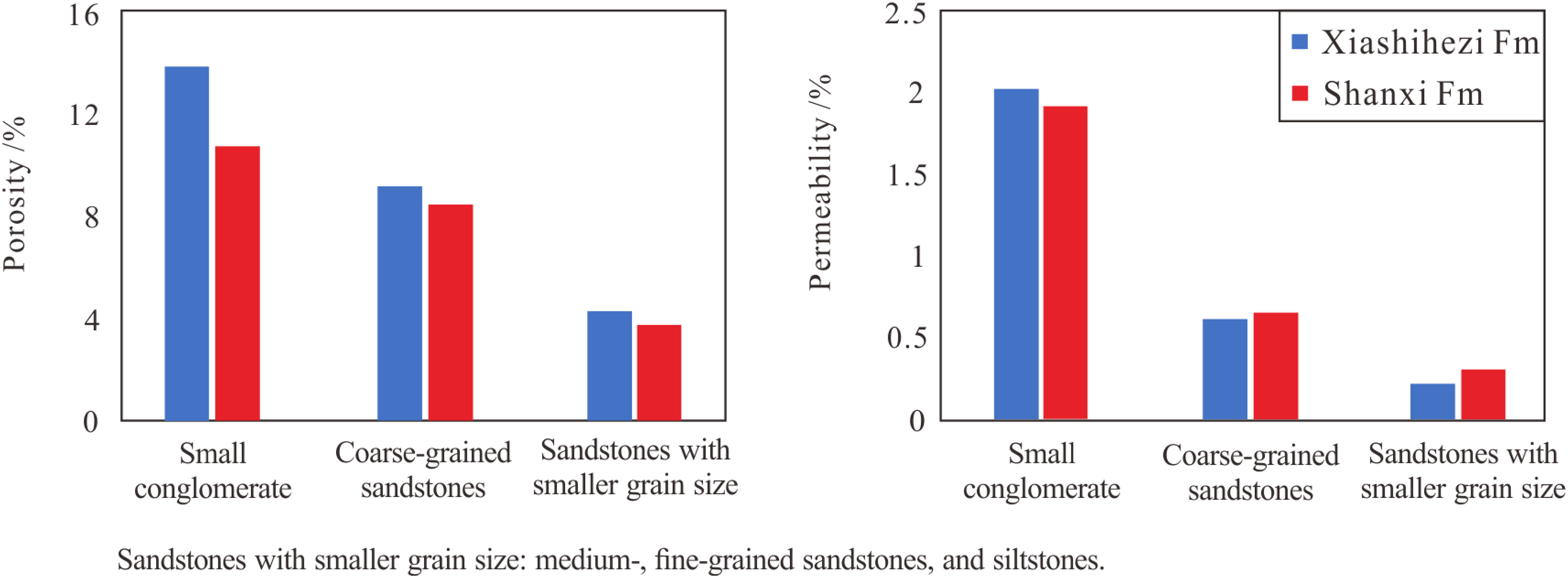
Columnar distribution of reservoir quality of different types of sandstones in the study area.
Conclusions
Sandstones in Daniudi gas field are typical tight reservoirs in coal measure strata. The coal evolution is the main reason for the tight sandstone reservoirs and has an obvious influence on diagenesis and reservoir quality. Some main points are as follows.
Carbonate cement was the main type of cement generated in tight sandstone reservoirs. Their carbonate ions were jointly provided by coal layers and reaction in adjacent mudstones, of which sandstones in Xiashihezi Formation were more affected by adjacent mudstones, while that in the Shanxi Formation was more controlled by coal layers. Due to the lack of Ca2+, Mg2+, and Fe2+ ions, the main type of carbonate cement was calcite cement in Xiashihezi Formation. As a contrast, various carbonate cement including calcite, dolomite, and siderite cement developed in Shanxi Formation, of which seawater and the intense dissolution of volcanic fragments and feldspars were the main sources of cations. The coal evolution has different effects on the diagenesis of sandstone reservoirs at different maturity stages. In the early stage, the main product of coal evolution was CO2, which caused the dissolution of early calcite and promoted intense compaction. In the mature stage, CO2 and other hydrocarbon gases were released, resulting in more dissolution and silica cement. In the over-mature stage, CO2 and other hydrocarbon gases decreased rapidly, and the main product was methane. As diagenetic fluids turned to weak alkaline, CO2 that did not spill out dissolved in the formation water and was preserved by forming carbonate cement with Ca2+, Mg2+, and Fe3+ ions. The impact of coal layers on reservoir quality of sandstones with different grain sizes is quite different. Rather than sandstones with smaller grain sizes, sandstones with larger grain sizes were affected more by coal evolution and had a greater increase in porosity. High porosity and low permeability reservoirs were usually formed in small conglomerate and coarse-grained sandstone away from coal layers due to the presence of kaolinite. Meanwhile, there was a significant increase in permeability, but little in porosity in small conglomerate and coarse-grained sandstone reservoirs that were close to coal layers. The reservoir qualities of medium- and fine-grained sandstones in different layers were very close, indicating the small impact of coal evolution on them. Three patterns of diagenetic alteration and their distribution have been established. Pattern I and II represents small conglomerate and coarse-grained sandstones that developed in bars, while pattern III represents medium-grained sandstones, fine-grained sandstones and siltstones that developed in levee and edges of channels. Compared to pattern I, sandstones in pattern II suffered a stronger dissolution and cementation due to their proximity to coal layers, resulting in illite and various carbonate cement. Meanwhile, sandstones in pattern III suffered a stronger compaction but weaker dissolution due to the high amount of matrix.
Footnotes
Acknowledgements
This study was supported by the Prospective& Fundamental Major Science and Technology Projects of PetroChina (Grant No. 2021DJ3202). The database was based on the project that collaborated with Sinopec Exploration and Development Research Institute. Great appreciation is for engineer Jiandang Liu, Chao Jia, and others for their help during the project.
Declaration of conflicting interests
The author(s) declared no potential conflicts of interest with respect to the research, authorship, and/or publication of this article.
Funding
The author(s) disclosed receipt of the following financial support for the research, authorship, and/or publication of this article: This work was supported by the Prospective and Fundamental Major Science and Technology Projects of PetroChina (grant number 2021DJ3202).
