




Abstract
The Ordovician carbonate reservoirs in the Tarim Basin are hotspots for oil and gas exploration in recent years. However, due to the lack of effective paleo-geothermometers in carbonate formations, thermal history studies have been greatly restricted. In this study, we reconstructed thermal history of Ordovician carbonate intervals in Tarim Basin by applying clumped isotopes, equivalent vitrinite reflectance (Requ) and zircon (U–Th)/He ages as thermal indicators. The modeled results indicated that there are three phases of heat flow evolution in the Shuntuoguole low-uplift. (a) The gradual cooling stage during Ordovician-carboniferous. The heat flow is gradually decreasing during this period. (b) Rapidly raised stage in the early Permian period. The heat flow in Shunbei and Shuntuo area are raised rapidly during this period and the maximum is 51–65 mW/m2, but the SN3 well in Shunnan area increased slightly and the heat flow values of other single wells were still relatively stable. (c) The decline stage since Middle Permian. The tectonic activity is relatively stable and the geothermal heat flow is gradually reduced during this period, but the heat flow in Shunnan area is higher than the Shunbei and Shuntuo areas. Due to the control of thermal evolution, the dissolution of the Ordovician carbonate reservoir in Shuntuoguole area occurred earlier than the formation of large quantities of hydrocarbon materials, and the improvement of reservoir physical properties provided sufficient conditions for the late oil and gas filling, which was conducive to the preservation of large oil and gas reservoirs.
Keywords
Introduction
Recently, significant exploration discoveries of the Ordovician formations in Tarim Basin have attracted the attention of the global oil and gas exploration community and academia (Liu et al., 2020a; Zhou et al., 2019; Zhu et al., 2018), the carbonate interval characterized by a burial depth of more than 6300 m, providing a new resource target for deep and ultra-deep oil and gas exploration in China (Wang et al., 2014). Thermal history is of great significance for studying the evolution of formation temperature, hydrocarbon generation, and primary migration histories. The thermal history of Tarim Basin has been the focus of scholars, multiple thermal indicators have been used in the Tarim Basin for geothermal history reconstruction, but the consistency of thermal history research has been difficult to reach. Some scholars believed the Tarim Basin has gradually cooled since the Paleozoic, and the heat flow has decreased from 60 to 68 mW/m2 at the end of the Sinian to 40 to 60 mW/m2 at present, and the geothermal gradient has decreased from 30 to 40 °C/km in the Cambian-Ordovician to 21 °C/km at present (Chang et al., 2014; Liu et al., 2019; Qiu et al., 2011, 2012); while others argued that the heat flow of Tarim Basin has gradually decreased since the Ordovician, but there is a short peak heat flow in the early Permian due to the influence of large igneous provinces (Li et al., 2010, 2016; Liu et al., 2020b; Yu et al., 2010). The main reason for the dispute is due to there is no effective paleo-temperature indicators in the lower Paleozoic carbonate strata, which seriously restricts the future direction of oil and gas exploration.
Carbonate clumped isotope thermometry is a new effective temperature measurement method for determining the burial and exhumation history of sedimentary basins (Gallagher et al., 2017; Mangenot et al., 2018; Shenton et al., 2015). The carbonate clumped isotope Δ47 thermometry is used to describe the deviation of mass 47CO2 isotopologues in carbonate samples (R47) relative to the same bulk isotopic composition except that it has been stochastically redistributed (R*47), which is directly related to temperature, with decreasing Δ47 values associated with increasing formation temperatures (Eiler, 2007, 2011). Then the clumped isotope temperature (TΔ47) can be obtained using the composite Δ47-T calibration determined for all carbonate minerals for the 0–300 °C temperature range (Bonifacie et al., 2017). This temperature records the temperature information experienced by the mineral and without independent knowledge of the oxygen isotopic composition of formation water. As the temperature of carbonate minerals changes (e.g. calcite temperature is higher than 75–100 °C, dolomite temperature is higher than 120–150 °C), clumped isotopes will be driven to equilibrate with ambient temperature through closed system solid-state reordering of 13C–18O bonds, justifying that carbonates clumped isotope could serve as a thermometric proxy to record thermal evolution history (Henkes et al., 2014; Passey and Henkes, 2012; Stolper and Eiler, 2015).
In this study, we reconstructed thermal history of Ordovician carbonate formation of Shuntuoguole area in Tarim Basin by applying equivalent vitrinite reflectance (Requ), zircon (U–Th)/He ages and clumped isotopes as thermal indicators. Based on the reconstructed thermal history, we discussed the influence of the thermal history on the hydrocarbon generation of source rocks, and we summarized two different evolution models of source rocks in Tarim Basin. Finally, the influence of formation temperature on reservoir physical properties was discussed.
Geological setting
The Tarim Basin, located in the southern part of Xinjiang Uygur Autonomous Region in Northwest China, is sandwiched between the Tianshan Mountains, Kunlun Mountains and Altun Mountains. It is the largest oil-bearing basin in China, formed by the superimposed Paleozoic craton basin and Meso-Cenozoic foreland basin. According to basement properties and tectonic deformation patterns, the Tarim Basin can be divided into seven first-order tectonic units, which are successively Kuqa Depression, Tabei Uplift, Northern Depression, Central Uplift, Southwest Depression, Southeast Uplift and Southeast Depression from north to south (Jia and Wei, 2002; Li et al., 1996) (Figure 1(b)). The study area of this paper is the Shuntuoguole low uplift located in the north part of the Central uplift belt, which mainly includes four secondary structural units such as Shunbei, Shuntuo, Shundong and Shunnan (Huang, 2014; Jiao, 2017; Ma et al., 2012) (Figure 1(c)).
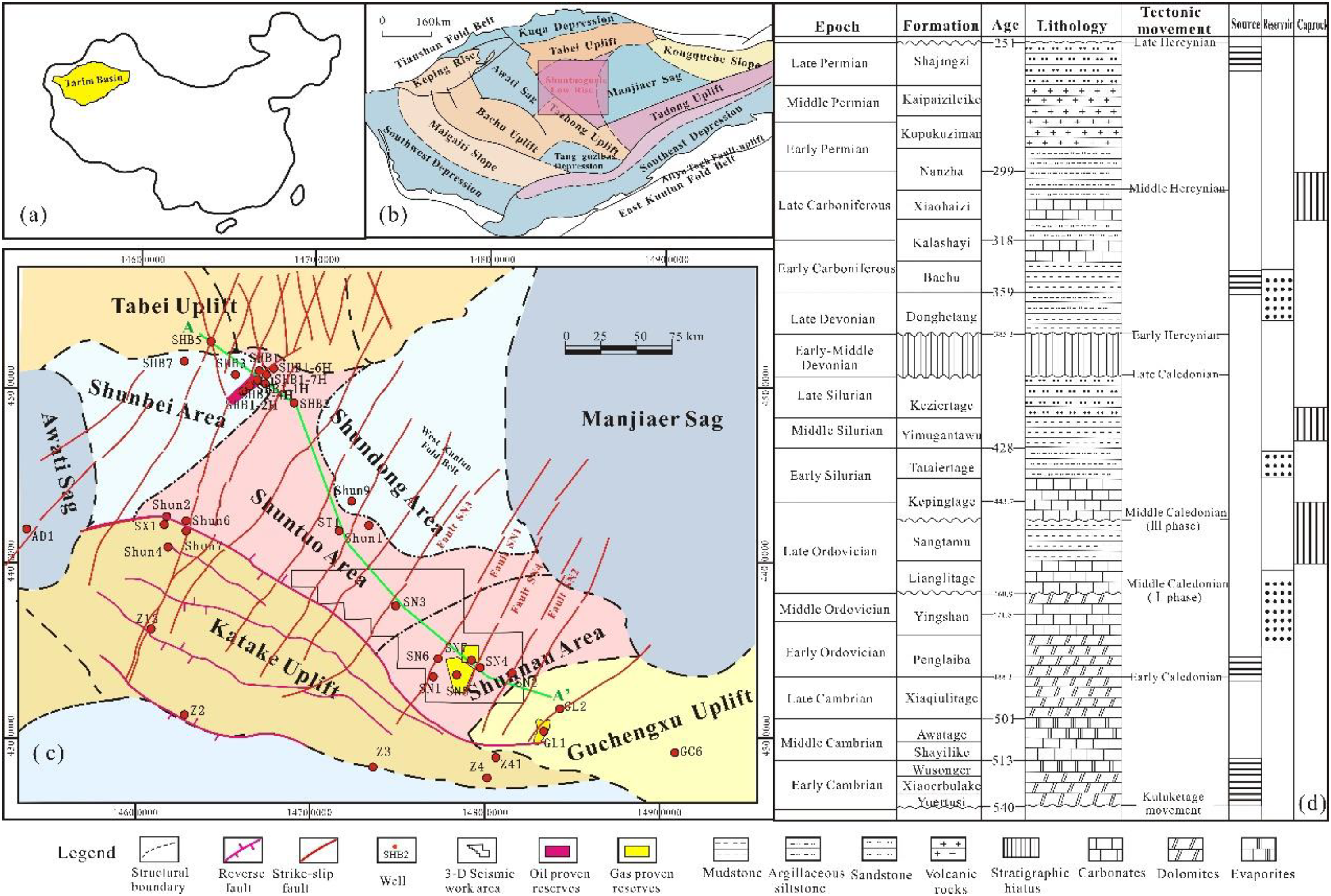
(a) A simplified view of the outline of China, (b) simplified distribution map of the tectonic units in Tarim Basin, (c) enlarged view of the central part of (a) showing the distribution of wells and strike-slip faults at the top of Middle-Upper Ordovician top (interface T74) in the northern slope of Tazhong uplift and (d) Paleozoic stratigraphy of the Tazhong area (derived from exploration and production research institute of Northwest Oilfield Branch Company, SINOPEC).
The tectonic evolution of the Shuntuoguole low uplift has been divided into four stages: (1) The Low uplift formation stage (∈-O1), the Shuntuoguole low uplift inherited the early tectonic setting, with unified south-dipping uplift developed in the northern Tarim region, large normal faults developed in the eastern Tarim Basin, and stable cratonic carbonate platform developed from the central to the northern of Tarim Basin, with high quality conditions for the formation of paleokarst (Li et al., 2009, 2013; Ren et al., 2011, 2012; Zhang et al., 2002); (2) Tectonic transition stage (S-D), influenced by the closure of the North Kunlun Ocean and the North Altun Ocean, the large-scale tectonic movement caused uplift and denudation in the Tarim Basin, and the Siluran-Devonian Formation was missing to varying degrees in the Tabai-Tazhong area; (Ding et al., 2009; Liu et al., 2007; Yang et al., 2005); (3) Volcanic rock development stage (C-P), thrust structure ceases in Middle Carboniferous-Early Permian and formed a lot of volcanic rocks after the Late Devonian (Deng et al., 2018; Han et al., 2017; Jiao, 2017); (4) Tectonic subsidence stage(T-Q), the tectonic movement in the Tarim Basin is relatively stable. Since Cenozoic, due to the remote effect of the collision between the Indian plate and the Eurasian plate, the orogenic belt around the basin has been greatly uplifted, and the Tabei-Tazhong area has experienced deep burial and formed the present north-dipping tectonic pattern.
The Tarim Basin has experienced multi-stage composite structural cycles, which has created a high-quality foundation for oil and gas accumulation (Figure 1(d)). Yuertusi Formation of the Lower Cambrian is widely developed in Tabei and Tazhong uplift, which is mainly deposited within black mudrock. The organic matter type of source rocks is mainly Type II, with total organic carbon (TOC) content of more than 1%, and the maturity (Ro) is between 1.4% and 1.7%, which has the advantages of good organic matter type, high abundance and high maturity (Bao et al., 2018; Chen et al., 2018; Wu et al., 2016; Yu and Zhou, 2005). The limestone developed in Yijianfang and Yingshan Formation are the good reservoirs, controlled by strike-slip fault zone, with secondary caverns, structural fractures and dissolution pores along fractures as reservoir spaces. The thick mudstone layers of the Upper Ordovician Sangtamu Formation are stably distributed in the Tabei and Tazhong area and they are good area caps.
Methods and samples
Methods
In this study, to enhance the constraint accuracy, the thermal history of the Shuntuoguole low uplift was reconstructed by integrating interpretations of multiple paleo-thermal indicators, including ZHe ages, clumped isotope and equivalent vitrinite reflectance (Requ). Different models were selected for each indicator, specifically, the Reiners model for ZHe (Reiners et al., 2004) the exchange/diffusion model for clumped isotope (Stolper and Eiler, 2015), and the Easy %Ro model for equivalent vitrinite reflectance (Requ) (Sweeney and Burnham, 1990).
Due to the development of carbonate rocks in the Lower Paleozoic strata in Shuntuoguole low uplift, there is a lack of apatite or zircon minerals for the study of the paleo-temperature using the low-temperature thermochronology. However, there are some marine clastic deposits in the Upper Ordovician Sangtamu Formation and the Kepingtage Formation. In this paper, we collected a series of carbonate, sandstone and mudstone samples from drill-cores of several different wells, these wells are distributed in Shunbei area (i.e. SHB2 and SHB5well), Shuntuo area (i.e. ST1 well) and Shunnan area (i.e. SN3 and SN5-2 wells), which have well representative and relatively scattered locations covering most area of Shuntuoguole low uplift. For the analysis of zircon (U–Th)/He ages, zircon was sorted from sandstone samples of the Sangtamu Formation and the Kepingtage Formation. For the analysis of clumped isotope, three different carbonate fabric types (i.e. micrites, void-filling cements, and veins) were collected from the same rock to ensure that all components experienced identical burial and thermal histories. Prior to clumped isotope measurements, the carbonate samples were pre-selected to avoid recrystallization alteration based on the petrographic observations, cathodoluminescence microscopy and XRD analysis. Besides, a series of dark-color mudstone samples were taken from Jurassic to Ordovician for vitrinite reflectance (Ro) and bitumen reflectance (Rb).
Zircon (U–Th)/He
A total of nine zircon samples were measured to obtain (U–Th)/He ages. Three replicate analyses per sample were tested for most samples, but several samples had only two replicate analyses because of poor grain storage. The zircon (U–Th)/He analyses were conducted at the School of Earth Science in University of Melbourne. First, 5∼8 idiomorphic zircon particles with a width of more than 60 μm and no inclusions or cracks were selected from each sample and were wrapped in metal niobium capsules. Then, the metal niobium capsule coated with zircon particles were placed on the target successively, using the Alphachron MK II helium extraction measuring instrument to extract 4He, and the 4He contents were measured by the quadpole mass spectrometer. After the gas was fully released, the metal niobium capsule was placed in a Telfon bottle and acid-lyzed with diluent using known 235U and 230Th concentrations and concentrated HF solution. Finally, the U and Th contents were measured by Thermo Fisher X-Series II inductively coupled plasma mass spectrometer (Gleadow et al., 2015). The IsoplotR software was used to calculate the age of ZHe based on the tested 4He, 238U and 232Th contents, and the α injection correction factor (FT) was used to correct the Zircon He age results (Farley et al., 1996).
Clumped isotope measurements
Twenty-two samples were analyzed for the stable isotope (δ13C, δ18O, Δ47) using a Thermo 253 IRMS at California Institute of Technology following the procedures outlined in Ghosh et al. (2006), Passey et al. (2010), and Ryb and Eiler (2018). We weighted 8–10 mg of carbonate powder into silver capsules. Most samples were replicated three times on the same carbonate powder, however, as this was not always possible (e.g. for certain small cements and veins) amounting to a total of 41 measurements, some samples were analyzed only once or twice. The powders dissolved in 103% phosphoric acid bath for 20 minutes at 90 °C. Evolved CO2 was collected and purified using automated dry ice/ethanol and LN2 baths, and a Porapak-Q 180/20 chromatograph held at −20 °C with a helium carrier gas. The purified CO2 gas was measured at masses 44–49 on Thermo MAT 253 IRMS. Each measurement consisted of eight acquisitions of seven cycles of sample CO2 gas versus Oztech working gas. 1000 °C heated gases and 25 °C equilibrium gases were measured routinely to observe instrument linearity and to generate an empirical transfer function, which allows for presenting data in an absolute reference frame (Dennis et al., 2011). Besides, we daily measured in-house carbonate standards of CIT Carrara and TV04 with average Δ47 values and SDs of 0.408 ± 0.02 and 0.655 ± 0.02‰, respectively. Finally, the corrected Δ47 value is converted to the clumped isotope temperature refer to the Bonifacie et al. (2017).
Vitrinite reflectance
Vitrinite reflectance analysis was performed on a Leica DM4500P polarizing microscope and CRAIC microphotometer according to the American Society for Testing and Materials. When determining the reflectance of vitrinite, continue the procedure at least 20 measurements. For small sample sizes (n < 20), if the standard deviation values <0.1, the data of vitrinite reflectance is considered as reliable. Due to the lack of vitrinite originating from higher plants in the Lower Paleozoic, equivalent Ro (Requ) data, which are converted from Rb, have been used to study the maturity of lower Paleozoic. The formulae for converting Requ from bitumen reflectance and vitrinite-like maceral reflectance in this study are used by Xiao et al. (2000).
Thermal history reconstruction
Analytical results of paleo-thermal indicators
Zircon (U–Th)/He ages
Zircon (U–Th)/He results are shown in Table 1. Nine zircon grains from sandstone of the Shuntuoguole area range from 71.1 ± 4.4 Ma to 717.4 ± 44.5 Ma, some samples had a large variation among the single-grain ZHe ages. Under ideal circumstances, all He in mineral crystals comes from the decay of U and Th radioisotopes, and any factor that destroys the closed system of (U–Th)/He thermal dating will affect the accuracy of He age value. Therefore, we need to remove sample points that affect He age, and then select samples that can truly reflect the thermal history information. The particle size directly affects the diffusion loss of 4He. The larger the particle size of the zircon, the more 4He concentration will be preserved in the geological history (Flowers et al., 2007; Reiners and Farley, 2001; Shuster et al., 2006). Particles with the higher He age have a smaller radius (such as AD1-4-3 and SHB5-4-3), and these abnormal particles should be excluded during thermal history recovery. In addition, the effective uranium concentration (eU) reflects the degree of radiation damage, and there is a nonlinear positive and negative correlation between eU and He age. When zircon particles have a younger He age (10–100 Ma), there is a nonlinear positive correlation between He age and eU. When zircon grains have older He ages (100–1000 Ma), He ages are negatively correlated with eU (Farley et al., 1996). The He age of the zircon particles in this study is relatively large, and the He age is approximately nonlinear and negatively correlated with eU. There is a good nonlinear positive correlation between the concentration of radioactive 4He and the age of zircon He. For particles ST1-6-1, the 4He value is abnormally high, which may indicate that the particle has “non-parent” 4He, which does not come from the decay of radioisotopes U and Th. Therefore, the particle should also be excluded during thermal history recovery. After the abnormal particles were excluded, suitable zircon samples were selected for analysis. The He age of zircon gradually decreases with the increase of stratigraphic age. Except for SHB5-2-1, the He age of the other zircons in the sample is slightly lower than the stratigraphic age (Figure 2), indicating that the zircon particles in the sample are partially reset, and the highest temperature experienced enters the partial retention zone of zircon He age. Therefore, the He ages can effectively constrain the highest temperature that the sample has ever experienced.
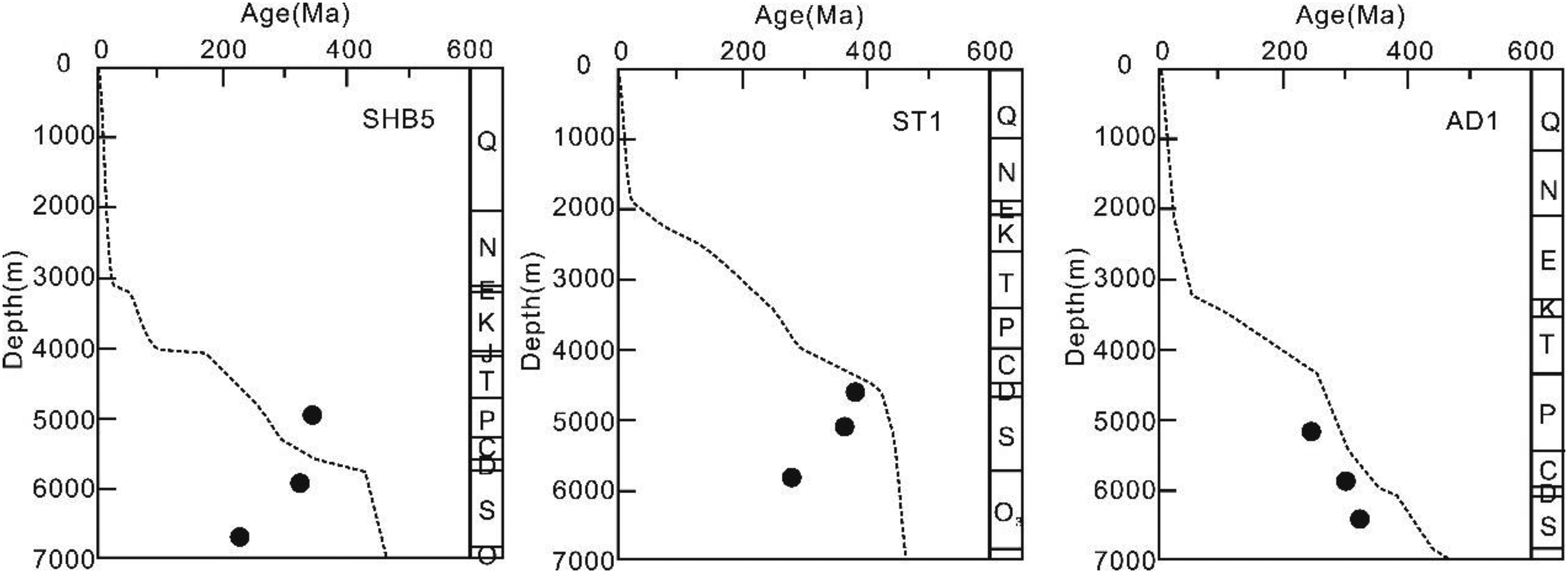
Relationship between zircon (U–Th)/He age and burial depth of typical wells in Shuntuoguole area (dashed line indicates the stratigraphic age).
The tested (U–Th)/He ages of zircon samples in Shuntuoguole low uplift of Tarim Basin.
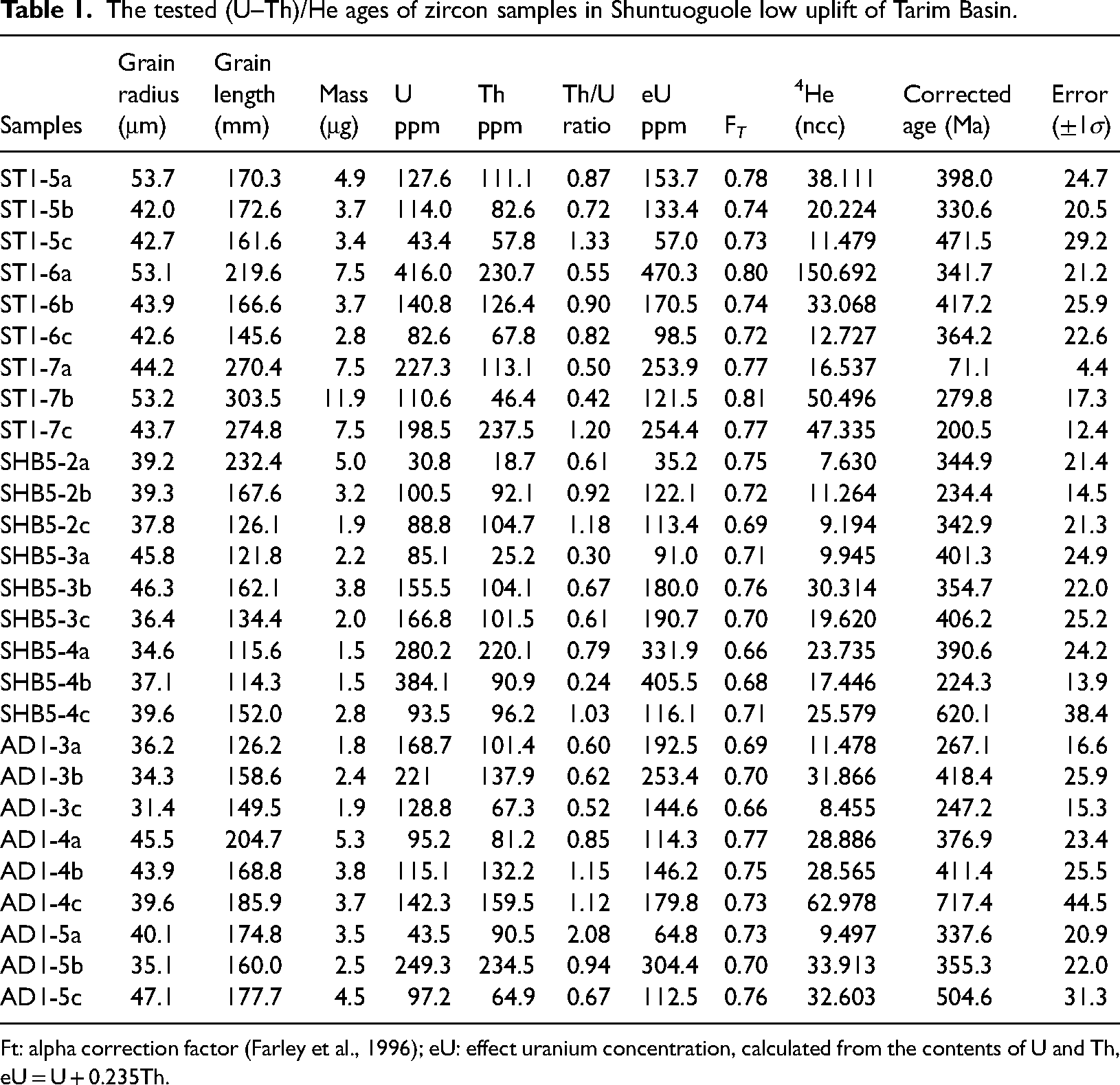
Ft: alpha correction factor (Farley et al., 1996); eU: effect uranium concentration, calculated from the contents of U and Th, eU = U + 0.235Th.
Clumped isotope geochemistry
Stable isotopes and clumped isotopes of 23 samples from the Ordovician in Shuntuoguole area were measured in my previous study (Table 2) (Liu et al., 2020b). The total range of the stable isotope compositions (i.e. δ13C and δ18O) of all measured samples are in the range of −3‰ to 1.51‰ for δ13C and −13.47‰ to −3.46‰ for δ18O, showing great variability among different diagenetic phases and little covariant trend. For micrite matrix, the range of δ13C and δ18O are −3‰ to 0.7‰ and −7.84‰ to −5.38‰, respectively. For void-filling cements, the range of δ13C and δ18O are −1.21‰ to −1.51‰ (average = −0.05‰) and −11.48‰ to −3.45‰ (average = −7.91‰), respectively. For veins, the range of δ13C and δ18O are −2.41‰ to −2.36‰ (average = −2.38‰) and −13.47‰ to −7.65‰ (average = −10.56‰), respectively. The isotope ranges of each of the three different diagenetic phases show only limited variations and depart from each other with distinct combinations of δ13C and δ18O values. The ranges of stable isotope values for global Paleozoic brachiopod shells are −2.53‰ to 1.82‰ for δ13C with an average of −0.99‰, and −8.95‰ to −4.90‰ for δ18O with an average of −7.01‰. And the ranges of stable isotope values for unaltered Middle-Lower Ordovician fossils and micrites in Tarim Basin are −1.876‰ to −1.494‰ for δ13C, and −8.802‰ to −4.421‰ for δ18O. In general, the stable isotope values of global and regional well-preserved carbonate fossils and micrites are pretty consistent in very similar ranges, and are regarded as ambient values recording the primary signals of parental Paleozoic ocean conditions.
Stable and clumped isotope data of each carbonate fabrics in Tarim Basin.
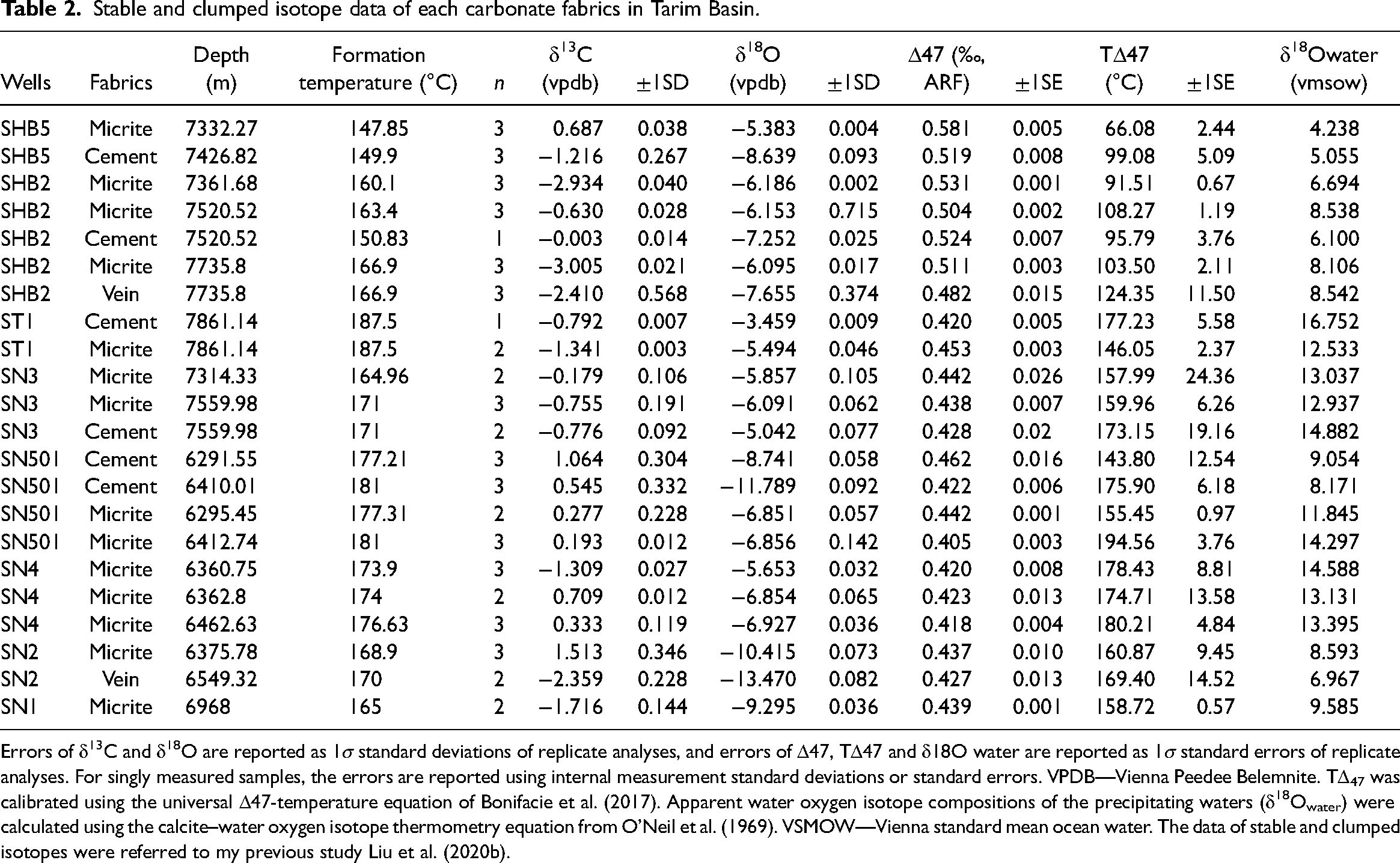
Errors of δ13C and δ18O are reported as 1σ standard deviations of replicate analyses, and errors of Δ47, TΔ47 and δ18O water are reported as 1σ standard errors of replicate analyses. For singly measured samples, the errors are reported using internal measurement standard deviations or standard errors. VPDB—Vienna Peedee Belemnite. TΔ47 was calibrated using the universal Δ47-temperature equation of Bonifacie et al. (2017). Apparent water oxygen isotope compositions of the precipitating waters (δ18Owater) were calculated using the calcite–water oxygen isotope thermometry equation from O’Neil et al. (1969). VSMOW—Vienna standard mean ocean water. The data of stable and clumped isotopes were referred to my previous study Liu et al. (2020b).
Δ47 values of all measured samples range from 0.405‰ to 0.581‰, corresponding to apparent temperature estimates of 66.08 to 194.56 °C. The Δ47 apparent temperatures for micrites in Shunbei (i.e. 66.08–108.27 °C) are significantly cooler than that in Shuntuo (i.e. 146.05 °C) and Shunnan areas (i.e. 150.13–179.78 °C). Most of the Δ47 apparent temperatures are lower than the present-day burial temperature (Figure 3), except for samples from SN4 and SN501 well, suggesting full equilibration with present-day burial temperature have not been reached.
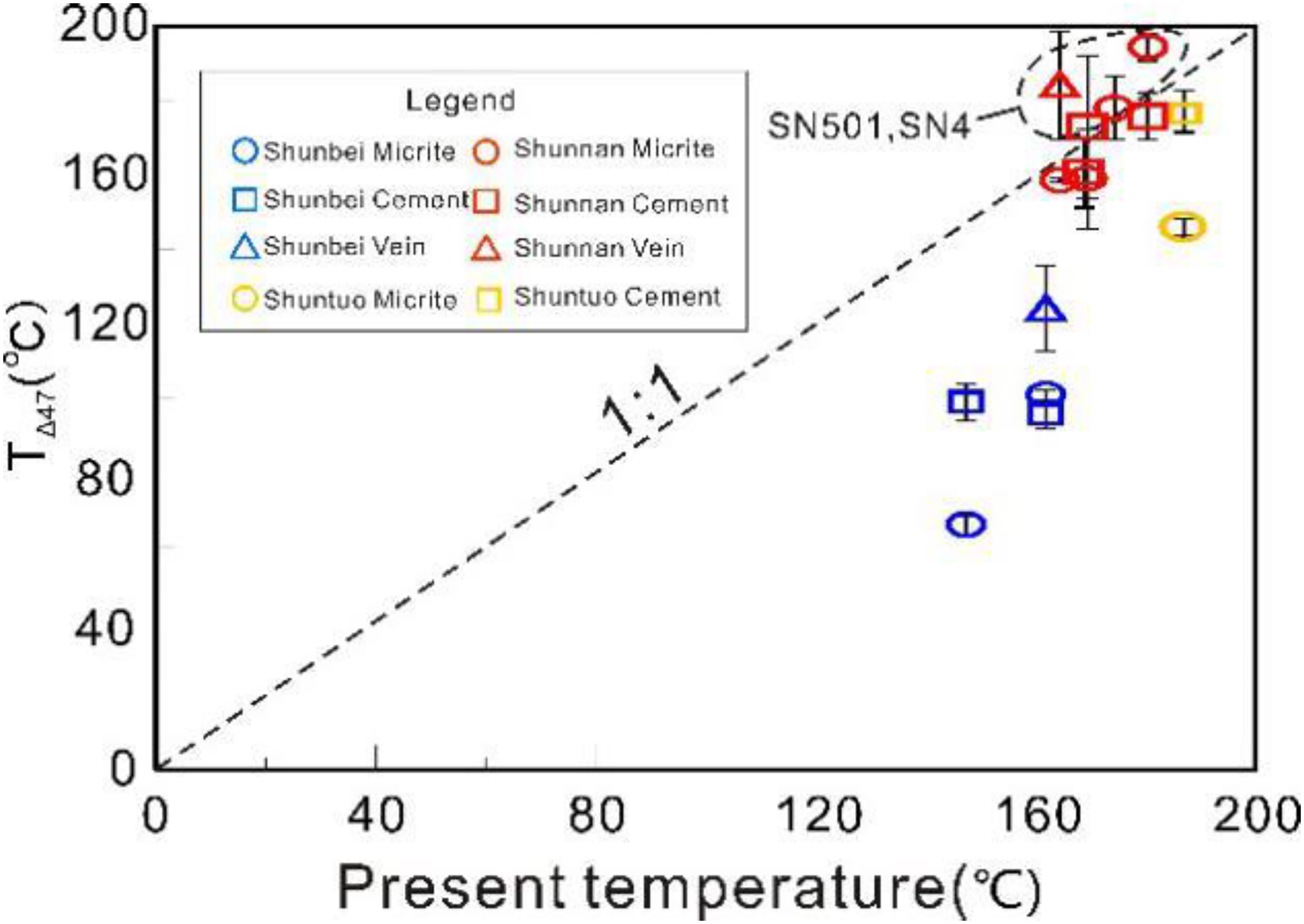
Present-day burial temperatures versus carbonate clumped isotope temperatures.
Equivalent vitrinite reflectance (Requ) data
The equivalent vitrinite reflectance profiles (%Requ) from the nine wells all show increasing trends with depth (Figure 4). Remarkably, the Ro values of Shunbei (SHB5, SHB2, SHB1), Shunto (ST1, SX1) and SN3 well are discontinuous in the Permian and Pre-Permian, and there are many sporadic Ro abnormal values near the unconformity. The abnormal values in Requ imply that the late Carboniferous strata have experienced higher paleo-temperature than other stratum (Li et al., 2010; Zhu et al., 2016a, 2016b).
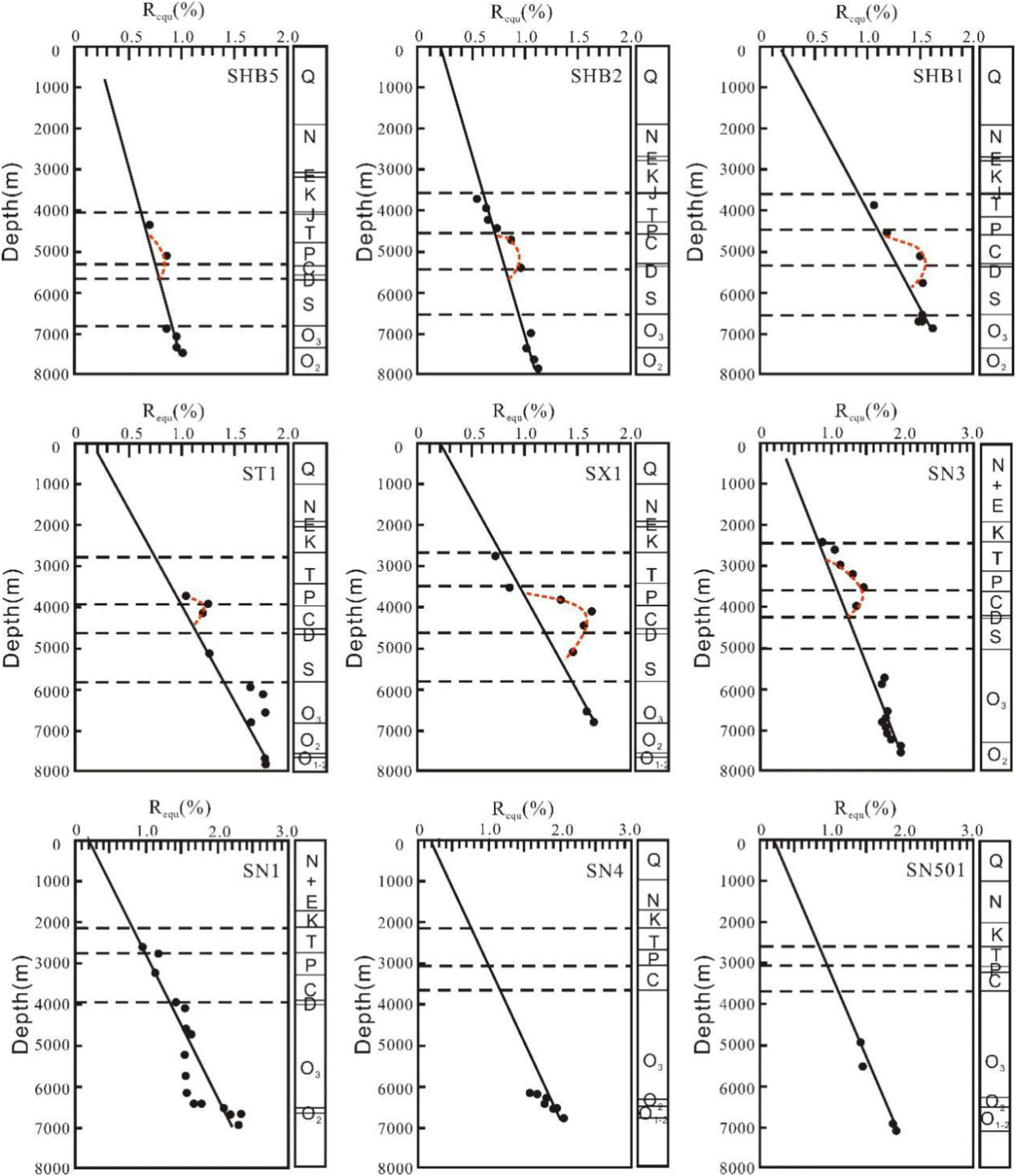
Borehole Ro-depth profiles in Shuntuoguole area of Tarim Basin.
Thermal history modeling
Thermal history of typical samples
In our study, to enhance the constraint accuracy, the thermal history of the Shuntuoguole area was reconstructed by integrating interpretations of multiple paleo-thermal indicators, including ZHe ages, clumped isotope and equivalent vitrinite reflectance (Requ). The software HeFTy (version 1.9.1) were applied to model the thermal histories. In our modeling, 5000–10,000 thermal paths were developed using the Monte Carlo inverse-modeling method, the best-fit time–Temperature (t–T) path model indicated the thermal history of the sample.
Because the Ordovician developed carbonate and the carbonate successions do not contain heavy minerals to allow for the usage of low-temperature thermochonometric proxies, although Requ profiles and ZHe have indicated that the peak paleo-temperature is appeared in the Early Permian in the previous discussion, the maximum temperature of the Ordovician strata could not be determined. So we have adopted the clumped isotope method for the Ordovician carbonate rocks to determine the maximum paleo-temperature in the thermal history. Before the thermal history modeling, we first need to determine the initial diagenetic temperature of the sample in order to provide the initial temperature conditions for the simulation of the thermal history. An average 25 °C marine precipitation temperature was assumed for micrites, consistent with the modern tropical ocean temperature range and the commonly accepted hypothesis that the world ocean temperatures were buffered within approximately 0 to 30–32 °C throughout (Bergmann et al., 2018; Jaffrés et al., 2007; Veizer and Prokoph, 2015). Referring to the paradiagenetic history of Shunbei area, Shuntuo area and Shunnan area, the cements were precipitated during early diagenesis in depths less than 300 m to 1000 m, and the vein in Shunbei area during mid-late diagenesis in a depth of 2000 m to 3000 m. Therefore, the precipitation temperature of cements and veins were given as 40 °C and 80 °C, respectively, according to burial histories.
The paired exchange/diffusion model of Stolper and Eiler (2015) was applied to proceed with thermal history modeling because their model could best explain our measured dataset. To explore the possible ranges of the maximum estimate of peak burial temperature of Ordovician strata, we incorporated additional three thermal scenarios for each studied well, termed as low T (170 °C), intermediate T (180 °C) and high T scenarios (190 °C) (Figure 5(a)). The modeling results of the three different calcite fabrics (i.e. micrites, cements) were considered for purpose of inter-calibration, to give best constraints on peak burial temperature (Figure 5(b) and (c)). As modeling results illustrate in Figure 5(b) and (c), the apparent TΔ47 of micrites in SHB5 well is 66 °C, corresponding to the range between low T and intermediate T modeling results (i.e. a peak temperature range of 170–180 °C), which is consistent with the results revealed by cements. In order to determine the accuracy of the thermal history using clumped isotope results, we used the ZHe ages (Figure 5(d) and (e)) and vitrinite reflectance (Figure 5(f)) to model the thermal history of SHB5 well. The modeling results showed that the temperature of SHB5well gradually warmed up during the Late Sinian to Devonian phase reaching approximately 80–90 °C, then the temperature began to rise rapidly and the peak paleo-temperature appeared in the Early Permian, reaching 170 °C. Therefore, we obtained similar thermal history simulation results under the constraint of three different and independent paleo-thermal indicators. Using the thermal conductivity (K) (Liu et al., 2020a), the general paleo-heat flow (q) history of the deep boreholes in SHB5 well was showed in Figure 5(g). The heat flow was gradually decreasing during Ordovician-carboniferous, then the heat flow was raised rapidly during early Permian, finally the heat flow was gradually reduced since Middle Permian.
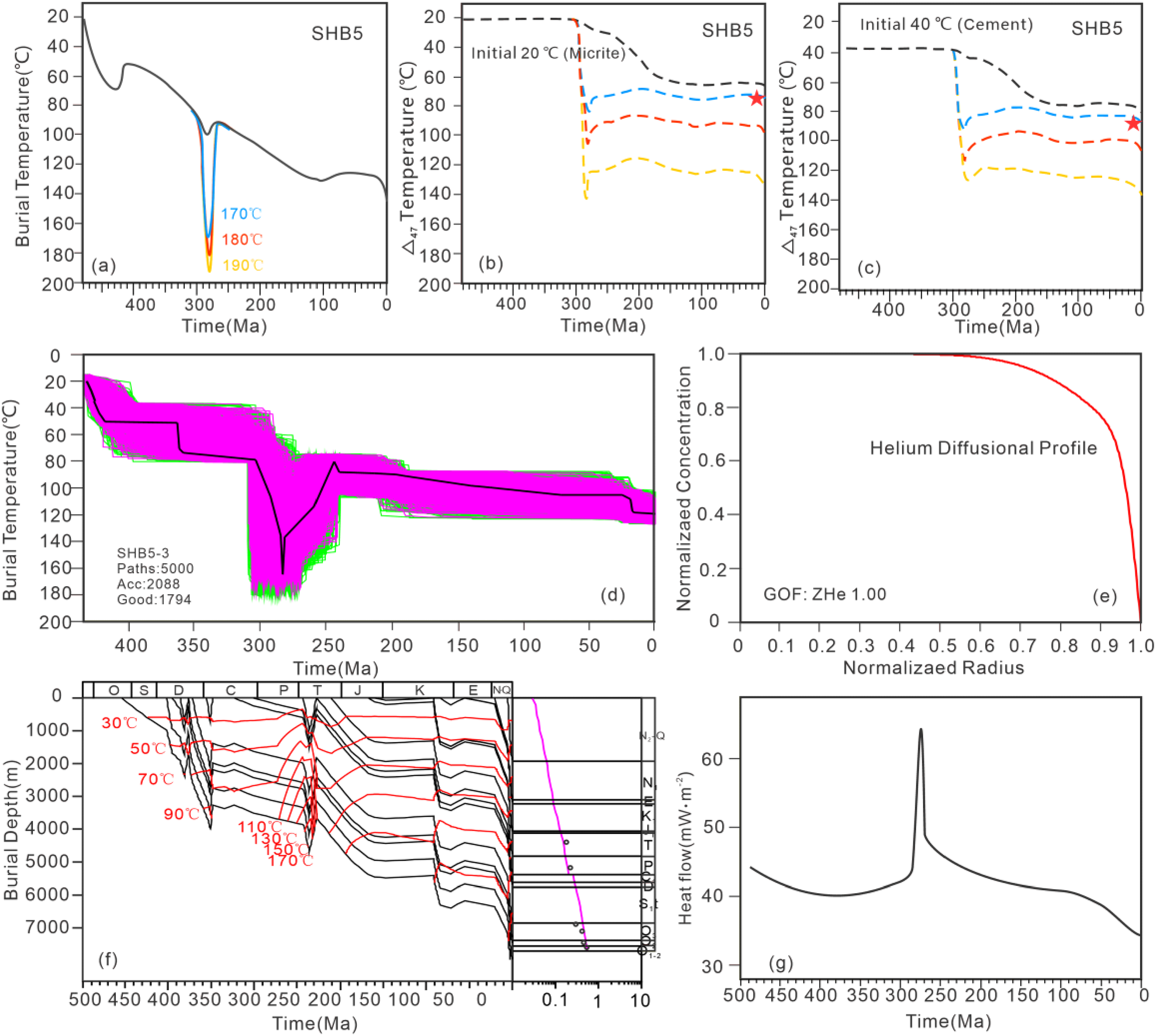
(a) Three hypothesized thermal scenarios of burial temperature and time. (b) Thermal modeling results using clumped isotope paleo-thermal indicator of the micrite sample in SHB5 well. (c) Thermal modeling results using clumped isotope paleo-thermal indicator of the cement sample in SHB5 well. (d) Thermal modeling results using ZHe paleo-thermal indicator. Green lines = acceptable fit (GOF > 0.05); magenta lines = good fit (GOF > 0.5). GOF = goodness of fit; ACC = acceptable. (For interpretation of the references to color in this figure legend, the reader is referred to the web version of this article.) Green lines: acceptable paths; magenta lines: good paths; black line: best path. (e)Helium diffusional profile of the SHB5-3 sample in SHB5 well. (f) Thermal modeling results using vitrinite reflectance paleo-thermal indicator. (g) Thermal modeling results of SHB5 well using multiple paleo-thermal indicator.
Thermal history of typical wells
Using the same method, we reconstructed the thermal history of other single wells in Shuntuoguole area of Tarim Basin. Generally speaking, the thermal history could be divided into three stages (Figure 6 and Table 3). From the Ordovician to carboniferous, the heat flow was gradually decreasing from 48–61 mW/m2 to 40–55 mW/m2. During the early Permian period, the heat flow in Shunbei and Shuntuo area were raised rapidly and the maximum was 51 to 65 mW/m2, but the SN3 well in Shunnan area increased slightly and the heat flow values of other single wells were still relatively stable. This pattern of thermal history was closely related to the tectonic evolution. Tarim Basin has developed a thermal event of the crust thinning and basaltic baking during the early Permian period (Li et al., 2010, 2014, 2016; Xu et al., 2014), and the degree of magma baking tended to gradually decrease from north to south. Subsequently, the magmatic activity is relatively stable and the geothermal heat flow is gradually reduced since Middle Permian, but the heat flow in Shunnan area is higher than the Shunbei and Shuntuo areas.
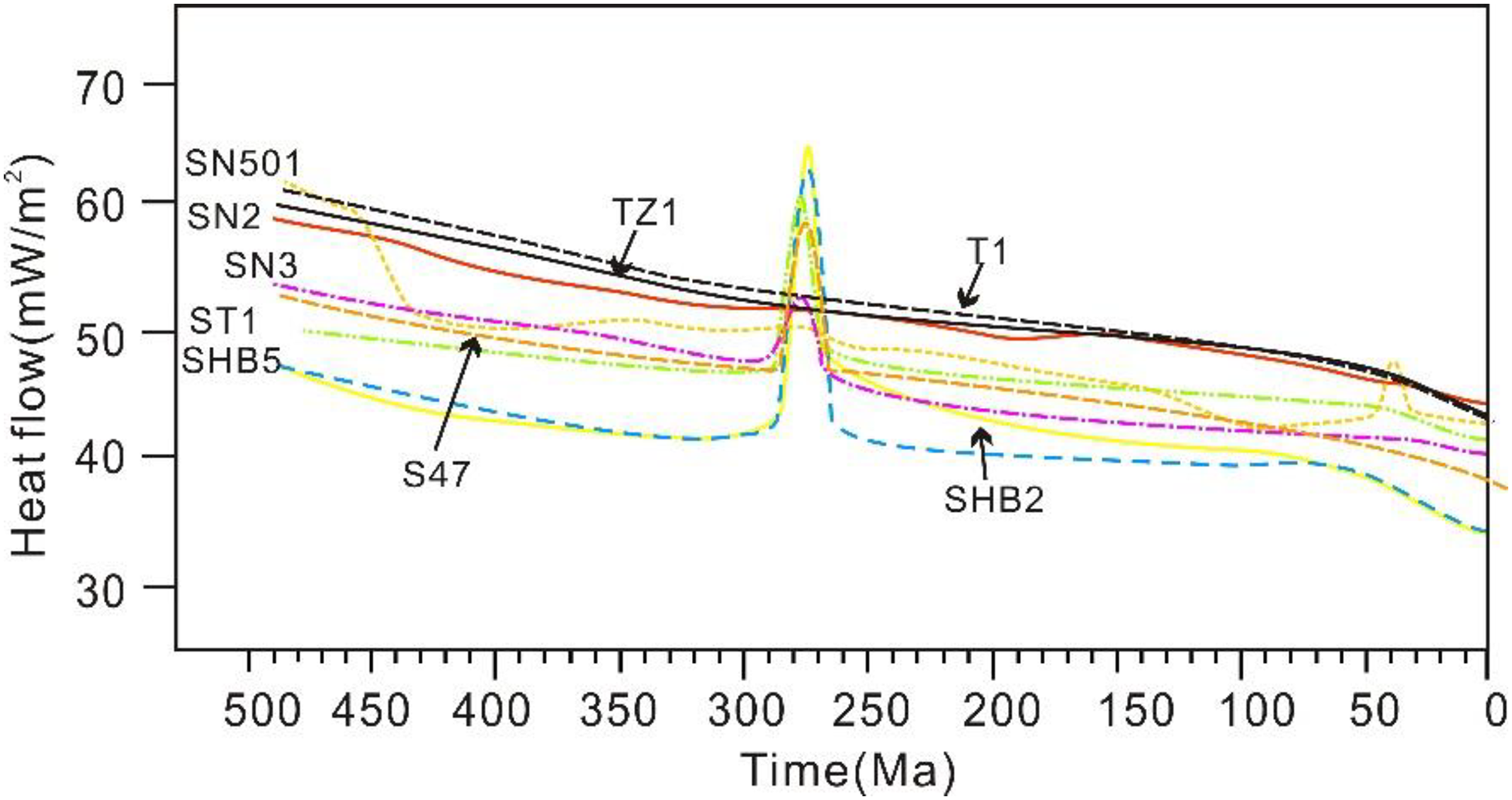
Heat flow history of the typical wells in the Shuntuoguole area, heat flow history of T1 and TZ1 refers to Qiu et al. (2012); heat flow history of S47 refers to Li et al. (2010).
A summary of the heat flow history results in Tarim Basin (mW/m2).
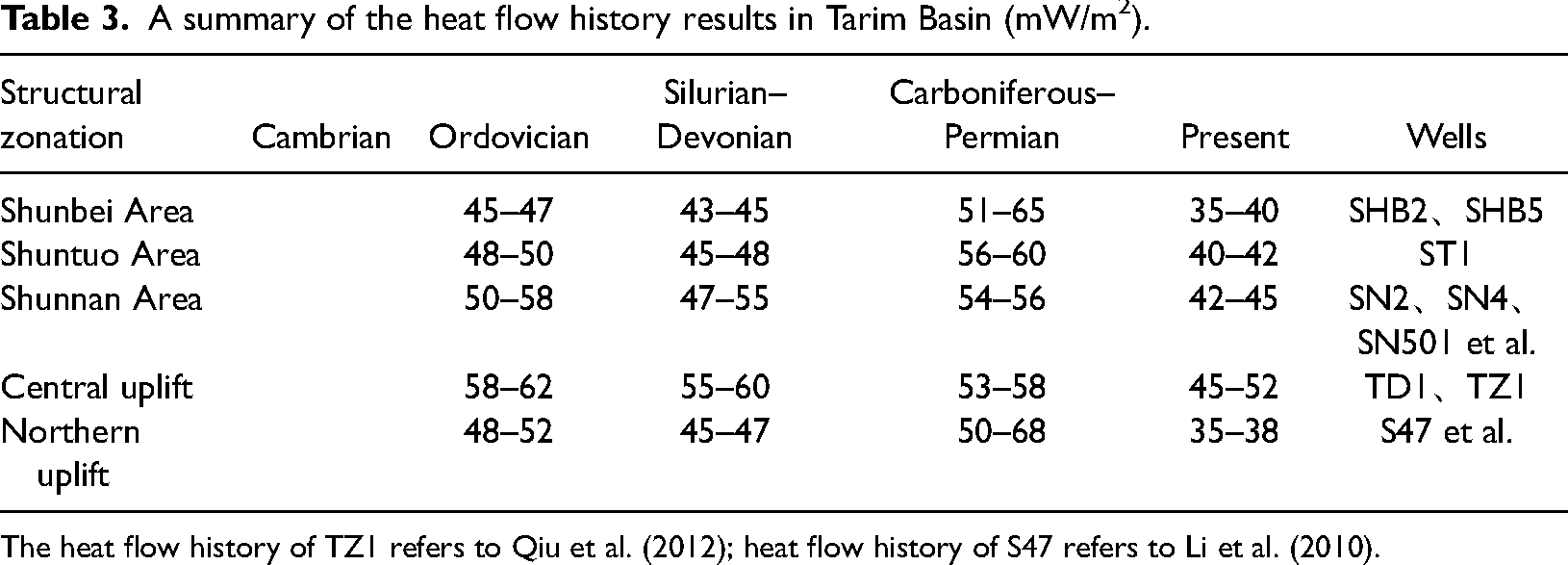
The heat flow history of TZ1 refers to Qiu et al. (2012); heat flow history of S47 refers to Li et al. (2010).
Temperature history of Yijianfang Formation
The Ordovician Yijianfang Formation in Shuntoguole area of Tarim Basin is a good ultra-deep carbonate reservoir, clarifying its temperature evolution history is helpful to reconstruct the crude oil cracking process and accumulation period, which is of great significance to oil and gas exploration. Based on the thermal history of wells reconstructed above, the temperature evolution of Yijianfang Formation was simulated by the software BasinMod 1D. The evolution of formation temperature is mainly controlled by sedimentary burial and terrestrial heat flow, and the evolution of formation temperature can be divided into the following stages (Figure 7).
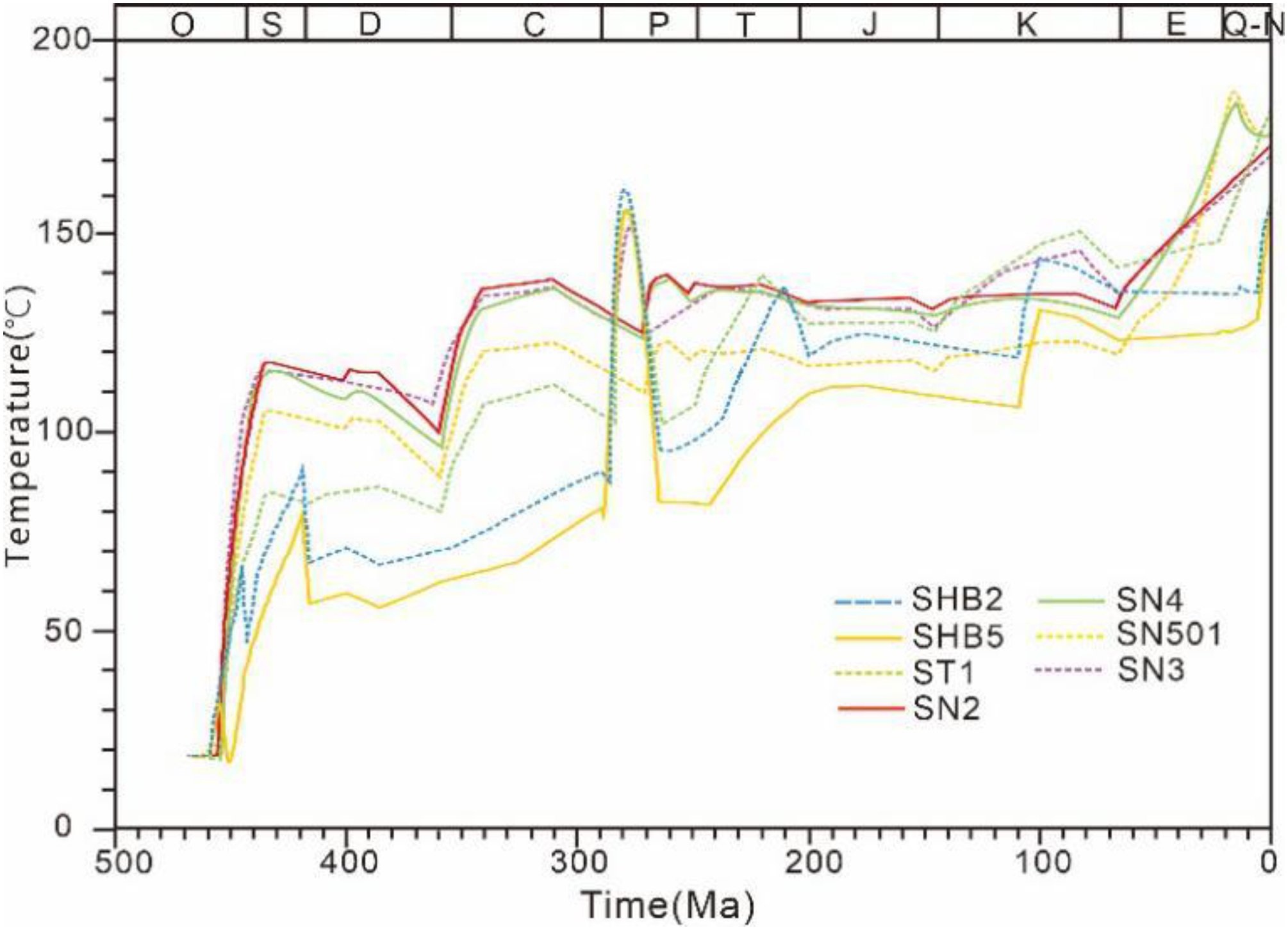
The temperature history of Yijianfang Formation in the Shuntuoguole area of Tarim Basin.
Early Ordovician–Late Carboniferous continuous warming stage
During this period, the heat flow value of sedimentary basin was relatively stable, and the formation temperature was mainly controlled by sedimentary burial. For Shunbei and Shuntuo areas (SHB2, SHB5, ST1), the stratum temperature increases gradually due to the gradual increase of stratum burial depth. In the Late Carboniferous, the formation temperature reached the highest, and the formation temperature of Yijianfang formation was 75–100 °C. For the Shunnan area (SN2, SN4, SN501, SN3), the formation temperature increased rapidly due to the rapid subsidence of the Late Ordovician, and then the formation temperature increased slowly. In the Late Carboniferous period, the formation temperature of Yijianfang Formation was 115–135 °C.
Late Carboniferous–Late Permian abnormal high temperature stage
The formation temperature in this stage was different in different structural regions. An obvious thermal anomaly occurred in Shunbei and Shuntuo areas in the Early Permian. Affected by the peak of earth heat flow at around 290 Ma, the formation temperature of the Yijianfang Formation suddenly increased and reached the highest value in geological history, among which the highest temperature of the Yijianfang Formation in Shunbei area exceeded 160 °C. The maximum temperature of Yijianfang Formation in Shuntuo area exceeded 170 °C. In Shunnan area, the ground heat flow is relatively stable, and the formation temperature has no significant change.
Late Permian–Late Cretaceous slow warming stage
In this period, the heat flow values of different tectonic units were stable, and no obvious tectonic uplifting activity occurred, and the subsidence was relatively slow, so the formation temperature had a slow increase trend, but the overall formation temperature in Shunnan area was higher than that in Shunbei area and Shuntuo area.
Late Cretaceous-present rapid warming stage
At this stage, the formation temperature was mainly controlled by sedimentary burial, but the time of sedimentary burial was different in different regions. The Shunbei area began to settle rapidly in the Neogene, so the strata warmed rapidly after 20 Ma, while the Shuntuo and Shunnan areas settled at a uniform rate since the Late Cretaceous, resulting in a gradual increase in formation temperature.
Discussion
The influence of thermal history on hydrocarbon generation of source rocks
The maturity evolution of source rock is one of the important contents of source rock evaluation, and is also the basis of dynamic study of hydrocarbon accumulation process. The source rocks of the Lower Cambrian Yurtusi Formation in the Tarim Basin were widely distributed in the north of Tazhong Area, and have the characteristics of high abundance of organic matter. Based on the results of thermal history reconstructed above, this study used Sweeney and Burnham source rock maturity dynamics models (Sweeney and Burnham, 1990) and time-depth conversion formula to calculate the burial depth of Lower Cambrian strata, and applied Basinmod basin simulation software to simulate the thermal evolution history of Lower Cambrian source rocks in Shuntuoguole area. The simulation results showed that there were two main evolution models of source rock maturity in Shuntuoguole area (Figure 8).
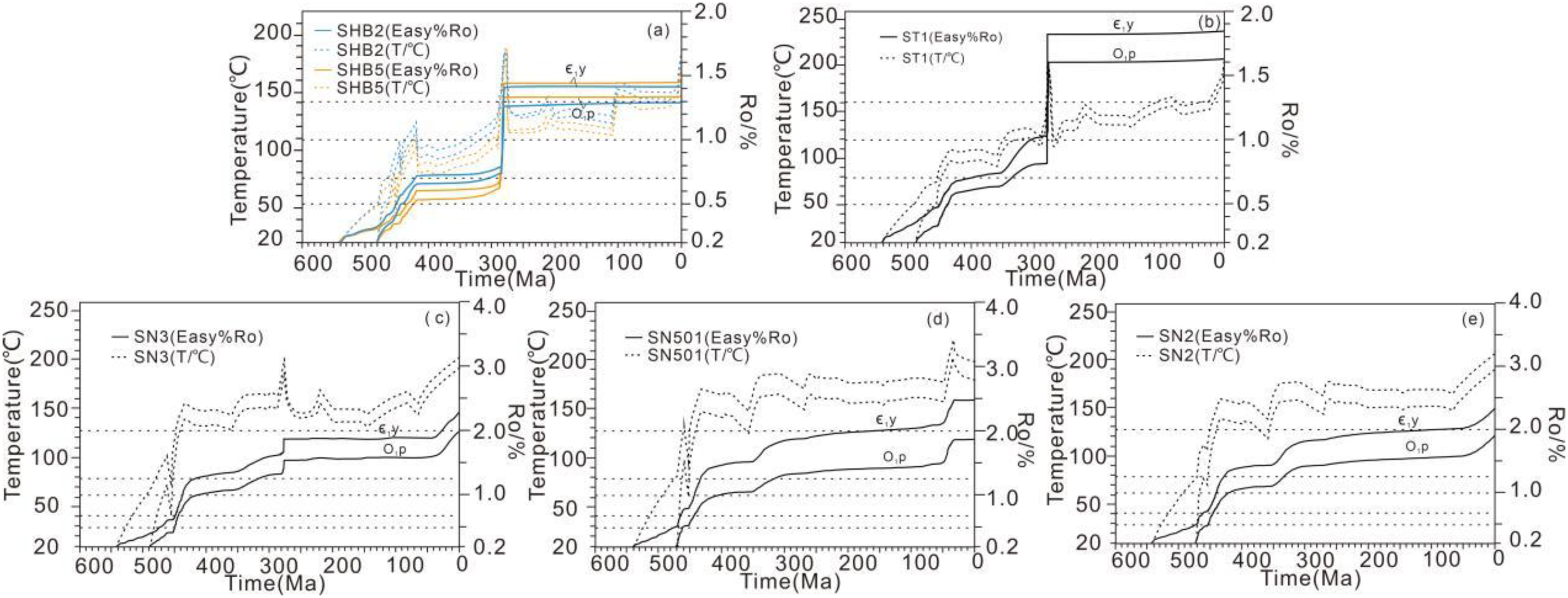
Thermal evolution of lower Cambrian Yuertusi Formation source rock for the typical drilling source rocks in the Shuntuoguole area of Tarim Basin.
The Caledonian matured and the Early Permian evolved rapidly model
This model mainly exists in Shunbei and Shuntuo areas. The Lower Cambrian source rocks entered the low maturity stage (0.5% < Ro < 0.7%) in the Caledonian period and began to generate hydrocarbon, and the formation temperature was about 80–100 °C. However, due to the influence of formation burial depth, the thermal evolution degree of source rocks in SHB5 is lower than that in SHB2 and ST1. The source rocks of SHB 5 well entered the low maturity stage (0.5% < Ro < 0.7%) in the Silurian period, while the Cambrian source rocks of SHB 2 well and ST 1 well all entered the low maturity stage in the late Ordovician period, and began to produce low mature oil. At the end of Early Permian, under the action of abnormal heat flow of magmatic activity, the maturity of source rocks evolved rapidly and entered a high maturity stage. As well SHB5 is closer to the center of mantle plume, the evolution degree of source rocks in well SHB5 is slightly higher than that in well SHB2. With the decrease of temperature in the later period, maturity evolution is at a stagnant stage. Although well ST1 is far from the center of mantle plume and is less affected by the thermal effect of magmatic activity, the buried depth of well ST1 at the same strata is about 2000 m higher than that of Shunbei area. Under the combined action of sedimentary burial and magmatic activity, the maturity of source rocks in the Permian period increased sharply and entered the late stage of high maturity (1.5% < Ro < 2%).
The Middle Caledonian matured and the Hercynian–Yanshan–Alpine period continued to increase ripening
This model mainly exists in Shunnan area. In the middle Caledonian period, the maturity of Lower Cambrian source rocks reached the threshold of hydrocarbon generation with the increase of burial depth, and hydrocarbon generation began. In the Hercynian–Yanshan–Alpine stage, the maturity of the Lower Cambrian source rocks gradually increased and reached the stage of dry gas generation (>2%). However, the reasons for the increasing maturity of source rocks are different. In the case of SN3 well, the formation temperature rose suddenly in the early Permian due to the thermal effect of magmatic activity, and the maturity of source rock increased rapidly. With the decrease of temperature in the later period, the maturity evolution of source rock paused. In the Cenozoic period, with the rapid subsidence of strata, the maturity of source rocks continued to increase. However, for SN2 well, the source rock maturity increased continuously in Hercynian–Yanshan–Alpine stage because the burial depth gradually increased and was not affected by other unsteady thermal effects. Therefore, for SN3 well, the source rock maturity evolution is the result of unsteady thermal effect and burial warming, while for SN2 well, the source rock maturity evolution is only the result of burial warming.
In addition, according to the thermal evolution results of source rocks recovered from typical wells, this study used Kriging interpolation method to simulate the maturity evolution plane distribution of the bottom interface of the Lower Cambrian Yuertusi Formation in Shuntuoguole area during the main accumulation period (Figure 9). The simulation results showed that at the end of Silurian period, the Lower Cambrian source rocks in Shuntuoguole area entered the threshold of hydrocarbon generation (0.5%Ro), and a large amount of oil and gas were generated. Shunnan and Guchengxu areas reached the middle maturity stage (Figure 9(a)), and the maturity gradually increased from northwest to southeast. At the end of Permian period, due to the thermal effect of Permian magmatic activity, the maturity of source rocks in Shunbei and Shuntuo areas increased rapidly, and the maturity of source rocks was roughly the same in plane distribution (Figure 9(b)). With the end of magmatic activity, the temperature decreased rapidly, and the maturity evolution of source rocks in Shunbei and Shuntuo areas stagnated. In the Cenozoic period, with the deepening of the burial of the source rock strata, the maturity of the source rock in the south gentle slope area increased and entered the stage of dry gas generation. While the Shunbei and Shuntuo areas experienced higher paleogeothermal temperature during the magmatic activity period, and the temperature in the later period was lower than that in the magmatic baking period, the evolution degree of organic matter did not change greatly, that is, the hydrocarbon generation process did not occur again. Therefore, the maturity of source rocks showed a gradually increasing trend from northwest to southeast (Figure 9(c)). At present, the plane distribution of source rock maturity in Shuntuoguole area is slightly higher than that in the late Cenozoic, but the overall distribution pattern is similar (Figure 9(d)).
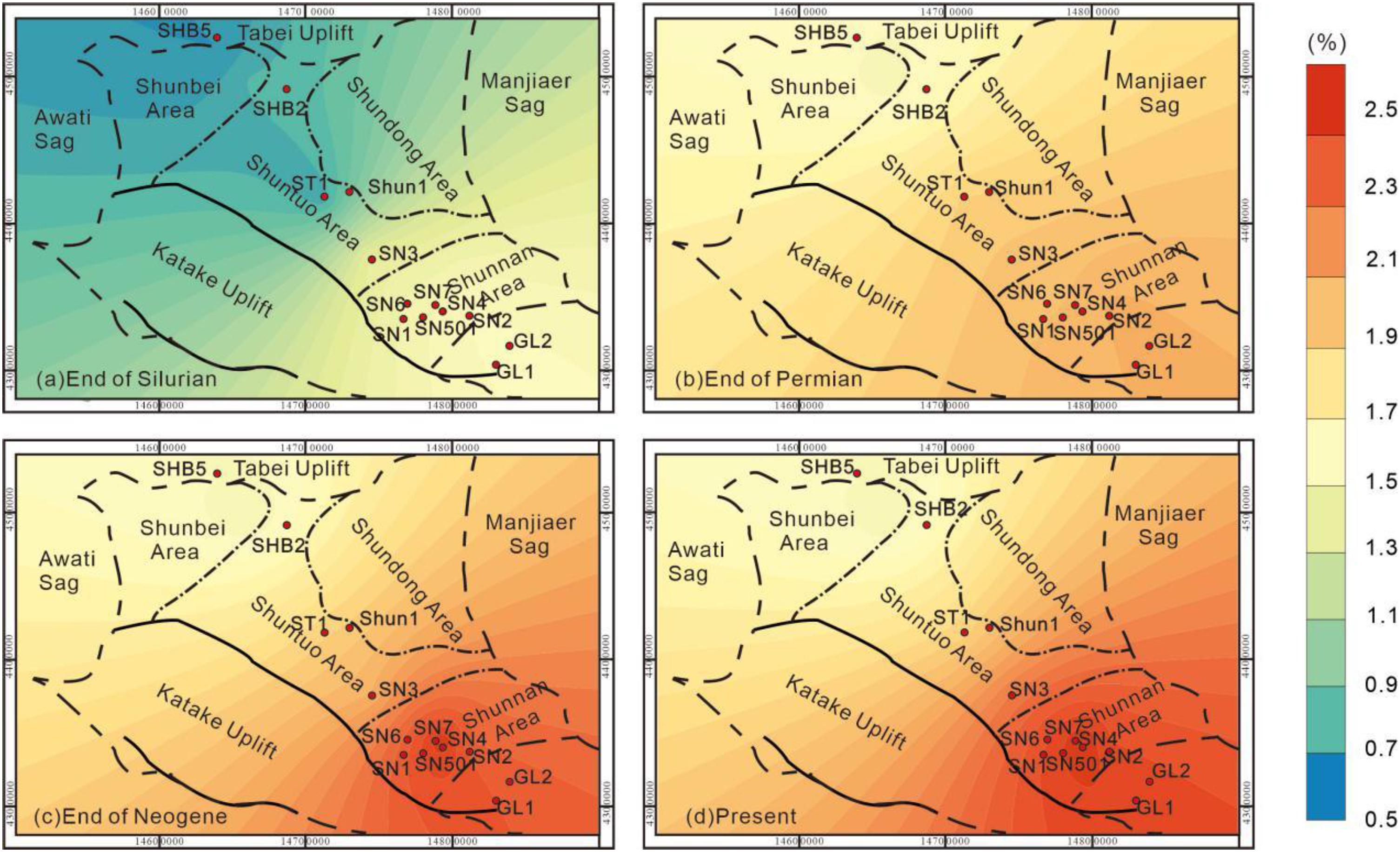
Maturation level of the base of lower Cambrian Yuertusi Formation source rock in the Shuntuoguole area of Tarim Basin.
The influence of formation temperature on reservoir physical properties
For carbonate reservoirs that have experienced deep burial, the control effect of sediments on oil and gas is weakened, and the control effect of secondary pores is strengthened. In buried diagenetic environments, high temperatures may lead to the formation of aggressive fluids. Formation temperature has an important effect on reservoir fluid evolution, and fluid properties control reservoir diagenetic evolution. Previous studies believed that organic acids began to form before the oil generation peak, when Ro = 0.35%, organic matter began to decarboxylate, forming organic acids. With the increase of burial depth and ground temperature, organic acid generation gradually increased. However, when the maturity of organic matter was too high, organic matter decarboxylated in mudstone ended, and organic acid generation stopped (Xie et al., 2009). When the temperature is higher than 120 °C, the thermal degradation of hydrocarbons will produce a large amount of CO2, which increases the partial pressure of CO2 and interacts with pore fluids to form carbonic acid, thus causing the dissolution of carbonate rocks. In addition, the thermochemical sulfate reduction of hydrocarbons can also produce acidic fluids to form carbonic acid and sulfuric acid, resulting in the dissolution of carbonate minerals (Ding et al., 2017; Fan et al., 2007; Jiang et al., 2008).
In this study, we discuss the influence of temperature on reservoir physical properties during carbonate diagenesis (Figure 10). The source rocks of the Lower Cambrian Yuertusi Formation began to decarboxylate in the Early Ordovician, and the fluid in the carbonate reservoir dissolved organic acids and combined with atmospheric fresh water leaching to form the first phase of dissolution. During the Silurian and Devonian periods, severe tectonic movements caused the carbonate rocks to rise to the surface, and thus experienced atmospheric leaching and transformation, which further intensified the dissolution of carbonate reservoirs. Under the influence of Permian-Triassic sedimentary burial, organic matter evolved rapidly to generate hydrocarbon, formation fluids dissolved a large amount of organic acids, and oil and gas carried organic acids to carbonate reservoirs along the fault and unconformity, forming the second phase of dissolution. In addition, under the influence of Permian igneous province, large-scale hydrothermal solution dissolved local strata along faults and unconformities, and reformed the physical properties of carbonate reservoirs. At the end of Permian, the reservoir temperature decreased rapidly with the end of magmatic activity, and then slowly increased under the influence of burial, which further intensified the dissolution. When the local layer temperature exceeds 120 °C, CO2 was produced by thermal degradation of hydrocarbon materials, and the interaction of superimposed acidic fluid leaded to dissolution, but the intensity was weaker than that in the early stage, and the influence on porosity was little. The late rapid deep burial process reduced the degree of deep diagenetic transformation of the reservoir, and the pores, holes and fractures formed in the early stage were preserved until now, forming the abundant reservoir space (Ni et al., 2010; Zheng et al., 2009).
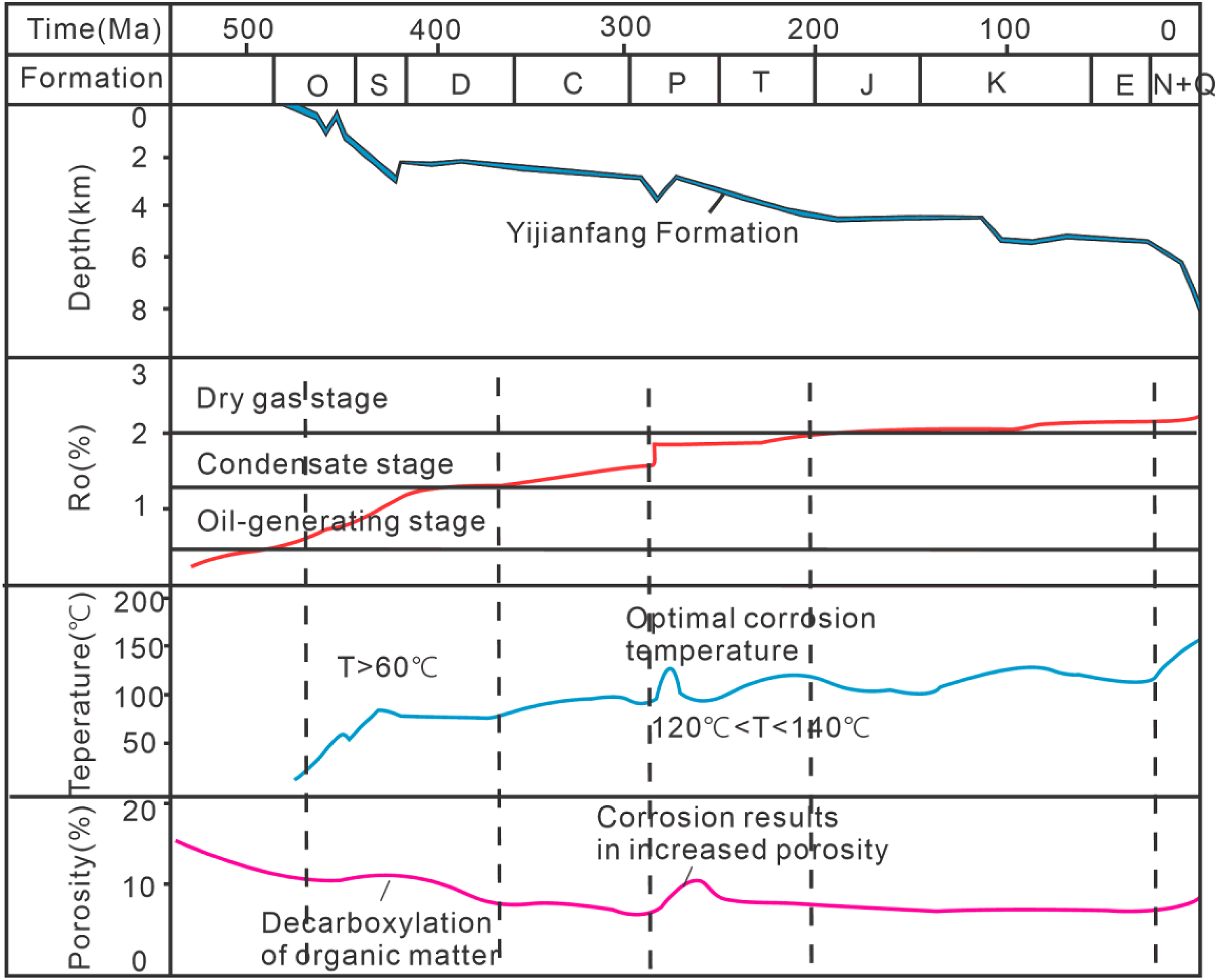
Relationship between physical properties and temperature of carbonate reservoirs in the Shuntuoguole area of Tarim Basin.
Conclusions
The thermal history of the Tarim Basin in Shuntuoguole area was reconstructed integrating multiple thermal indicators as follows: He ages, clumped isotope, and Requ data. The modeled results showed that this area underwent a gradual cooling stage during Ordovician-carboniferous. During the early Permian period, the heat flow rapidly increased and reached a peak value (51–65 mW/m2) in Shunbei and Shuntuo area, and then decreased since Middle Permian. After the Middle Permian, the tectonic activity is relatively stable and the geothermal heat flow is gradually reduced during this period, but the heat flow in Shunnan area is higher than the Shunbei and Shuntuo areas.
The thermal evolution of source rocks in different tectonic units of Shuntuoguole low uplift is obviously different under the joint control of sedimentary heat increase and basin heat flow evolution, which can be summarized into two different evolution models: The Caledonian matured and the Early Permian evolved rapidly model, which mainly exists in Shunbei and Shuntuo areas; The Middle Caledonian matured and the Hercynian–Yanshan–Alpine period continued to increase ripening, which mainly existed in Shunnan region. According to the occurrence state of oil and gas and the maturity evolution of the Lower Cambrian source rocks, it is determined that the evolution degree of the Lower Cambrian Yuertusi Formation source rocks has a good matching relationship with the distribution of hydrocarbon reservoir types in Shuntuoguole area.
Due to the control of thermal evolution, the dissolution of the Ordovician carbonate reservoir in Shuntuoguole area occurred earlier than the formation of large quantities of hydrocarbon materials, and the improvement of reservoir physical properties provided sufficient conditions for the late oil and gas filling, which was conducive to the preservation of large oil and gas reservoirs.
Footnotes
Data availability
The data used in this study all can be seen in this paper.
Declaration of conflicting interests
The authors declared no potential conflicts of interest with respect to the research, authorship, and/or publication of this article.
Funding
The authors disclosed receipt of the following financial support for the research, authorship, and/or publication of this article: This work was supported by the National Natural Science Foundation Enterprise Innovation and development Joint, China Postdoctoral Science Foundation Project, State Key Laboratory of Petroleum Resources and Prospecting, China University of Petroleum, Sinopec Science and Technology Research Project, SINOPEC Key Laboratory of Geology and Resources in Deep Stratum Open fund Project, Heilongjiang Province postdoctoral young talents program project (grant numbers U20B6001, 2022T150110, PRP/open-2204, P21007, 3355000-22-zc0613-0248, LBH-TZ2205).
