




Abstract
Geothermal research advances earth-to-air heat exchanger (EAHE) technology, offering promising air conditioning solutions for all buildings. Our study targets improved energy efficiency for the EAHE system, focusing on cost-effective approaches to enhance its technical, economic, and environmental performance. The thermal performance and economic viability of the EAHE system hinge on the thermal characteristics of the surrounding soil. The EAHE model features a single pipe with dimensions of 0.5 meters in diameter, 1 centimeter in thickness, and 10 meters in length. These pipes are strategically placed at depths of 1 meter, 2 meters, 3 meters, and 4 meters below the ground's surface. To optimize heat exchange efficiency while minimizing pipe length, we propose using a secondary soil material with high thermal conductivity as a lining for the EAHE pipes. Our innovative approach carefully considers the economic and environmental aspects of various lining materials, resulting in optimal performance at a minimal cost. Extensive simulations and data analysis lead us to identify an ideal lining material, naturally available, environmentally friendly, and cost-effective, ensuring peak efficiency. Our investigation assesses the EAHE system's thermal performance for both summer cooling and winter heating, demonstrating its effectiveness across seasons. This research underscores the case for utilizing EAHE systems during winter and autumn for heating and during spring and summer for cooling. Our findings are supported by robust performance indicators, confirming the effectiveness of our approach.
Keywords
Introduction
Energy plays a pivotal role in a nation's economic growth, yet energy conservation presents one of today's most pressing global challenges (Agrawal et al., 2020a, 2020b). Recent developments have underscored the importance of energy efficiency in the design of energy conversion devices (Congedo et al., 2019; Zajch et al., 2020). The earth-to-air heat exchanger (EAHE) stands out as an unconventional technology that harnesses Earth's subsurface heat for both cooling and heating applications, contributing significantly to energy savings (Qi et al.; D’Agostino et al.). The Earth's surface continuously absorbs energy from solar radiation and atmospheric phenomena, impacting subsurface temperatures (Agrawala et al., 2019b; Kaushal, 2017; Márquez et al., 2016). Existing literature has explored various aspects of EAHE optimization, including air duct materials, soil properties, EAHE type (tube or plate), system layout, and installation costs, particularly piping and excavation expenses. For example, Agrawal et al. (2021) examined the economic feasibility of backfilling materials near EAHE pipes, revealing cost reductions of up to 38% with certain materials. Zajch and Gough (2021) investigated the seasonal sensitivity of open EAHEs, emphasizing the need to consider subsurface temperature variations for effective system design in Canadian climates. Pakari and Ghani (2019) conducted experimental research on near-surface EAHEs, demonstrating their environmental and energy-saving benefits. K. Agrawal (Agrawal et al., 2019a) studied the thermal performance of slinky-coil ground-air heat exchanger systems, proposing sand-bentonite backfilling materials to reduce installation costs. Additionally, Zukowski and Topolanska compared the thermal performance of tube and plate ground-air heat exchangers in different weather conditions.
In this context, our study focuses on improving EAHE performance by selecting an efficient soil material to enhance heat transfer. We explore an alternative clean energy technique to optimize EAHE use and assess the economic feasibility of the chosen soil material. Our investigation encompasses both cooling in summer and heating in winter, utilizing a cost-effective soil material found in nature. By setting the ambient air temperature (Ta) at a constant 20°C, our findings reveal the potential for using EAHE for heating during the colder months and cooling during the warmer seasons. The study employs performance indicators, including the coefficient of performance (COP) for heating, energy efficiency ratio (EER) for cooling, and EAHE effectiveness, to validate the results.
This paper is structured as follows: Material and methods outlines the theoretical foundation and methodology used in analyzing and improving the EAHE system. In Results and discussion, we establish criteria for selecting the optimal EAHE solution, considering both energy and economic aspects. Finally, Conclusion and recommendations presents our conclusions based on the study's findings.
Material and methods
Detail of EAHE model
The EAHE is an energy-efficient system used for building cooling and heating, relying on the local ambient temperature (Rosti et al., 2019; Sakhria et al., 2020). It can be employed for cooling during the summer and heating in the winter. During the winter months, the ground temperature tends to be higher than the ambient air temperature, while in the summer, it is typically lower (Kumar et al., 2015).
In our study, the EAHE model comprises a single pipe with a diameter of 0.5 meters, a thickness of 1 centimeter, and a length of 10 meters. This pipe is installed at various depths, specifically at 1 meter, 2 meters, 3 meters, and 4 meters below the ground's surface. The purpose of this EAHE system is to facilitate both cooling and heating for a residential habitat located in the city of Tangier.
Properties of soil materials used
Enhancing the thermal performance of an EAHE system can be achieved by employing soil with high thermal conductivity in close proximity to the EAHE pipe up to a specific thickness. In pursuit of this objective, we have utilized two distinct types of soil materials, namely silt soil and quartzite soil, to line the length of the EAHE pipe. This approach aims to facilitate efficient heat exchange between the surrounding soil and the air passing through the pipe. Our goal is to thoroughly analyze the thermal performance of the EAHE system and select the most suitable option, both from an energy and economic perspective.
For this study, both soil materials were applied to encase the EAHE pipe with a thickness of 0.1 meters in different sections along its length. The remaining volume of the trench was filled with the native soil. In this research, we opted for the use of silt soil, a naturally occurring and readily available material, to minimize the energy cost associated with the system. Conversely, we also employed quartzite soil, known for its higher thermal conductivity, to assess its potential benefits.
The algorithm based in this study
In this study, we implement the Elmer Schiller algorithm (Elmer and Schiller, 1981). This algorithm delineates the heat transfer process within an EAHE as consisting of two interconnected thermal processes. The first process concerns the heat transfer through cylindrical segments, while the second process addresses heat transfer through the pipe. Furthermore, researchers have observed that the temperature of the subsurface soil, often referred to as undisturbed earth temperature, remains relatively constant at depths ranging from 2.5 to 3 meters (Ozgener, 2011). The temperature at the soil surface can be expressed using the following equation (Hamdane et al.; Rosti et al., 2019):


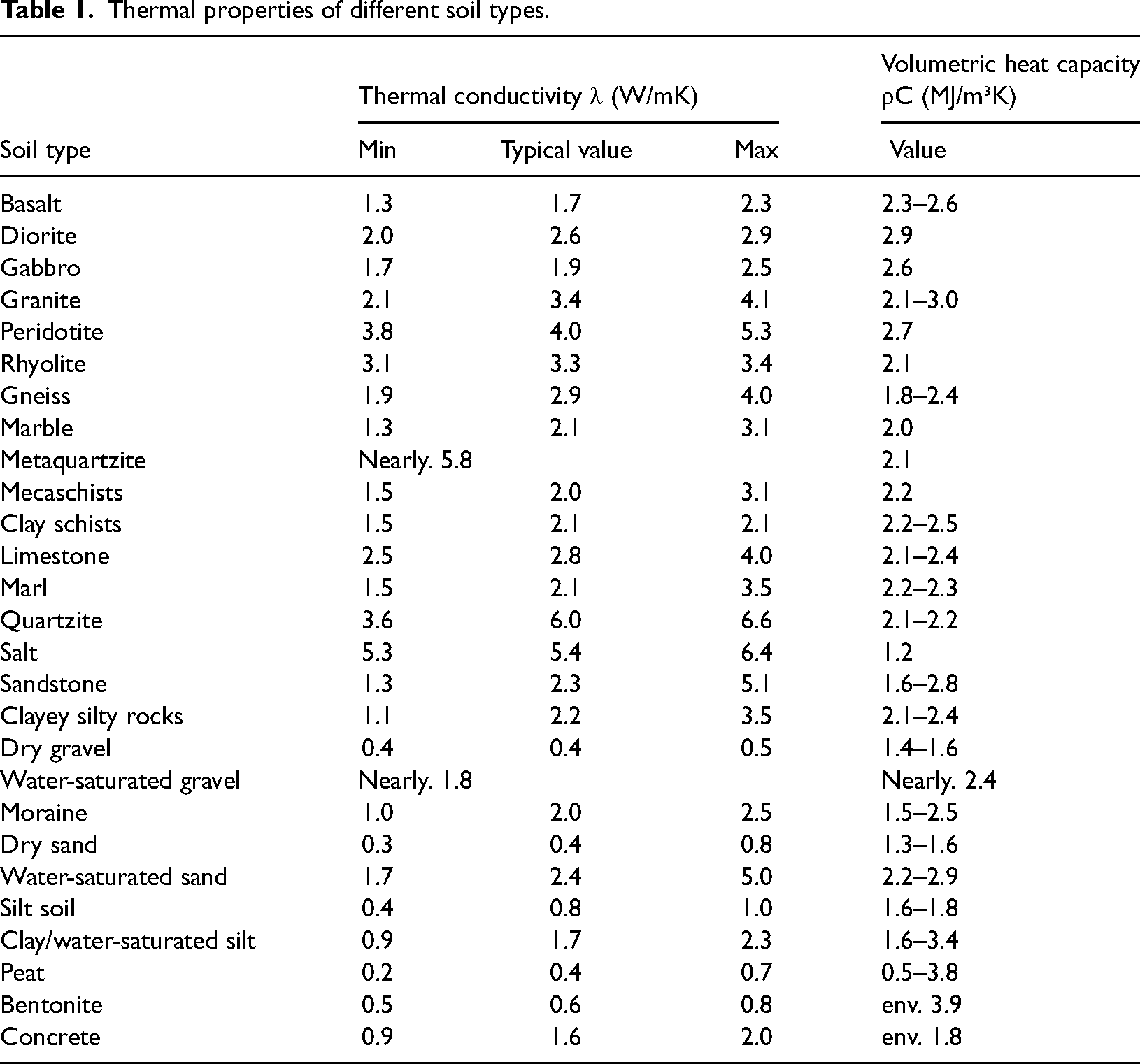
The conductivity and the thermal diffusivity of various type of soil are assumed in Tables 1–3 below.
Thermal properties of different soil types.
Parameters used in the EAHE design.

The comparison of the soil temperature in (°C) between the two used soil materials (Silt & quartzite).

While the soil temperature versus depth only can be obtained as follows:
where z is the depth (m) and ɑ is the ground thermal diffusivity (m2/s) given by:
The energy flow of air transferred:
The outlet temperature can be calculated as follow:
where qm,a = 0.32 kg/s is the mass flow air and Cp,a = 1005 J/kg.K is the specific heat of air (Figures 1–3).
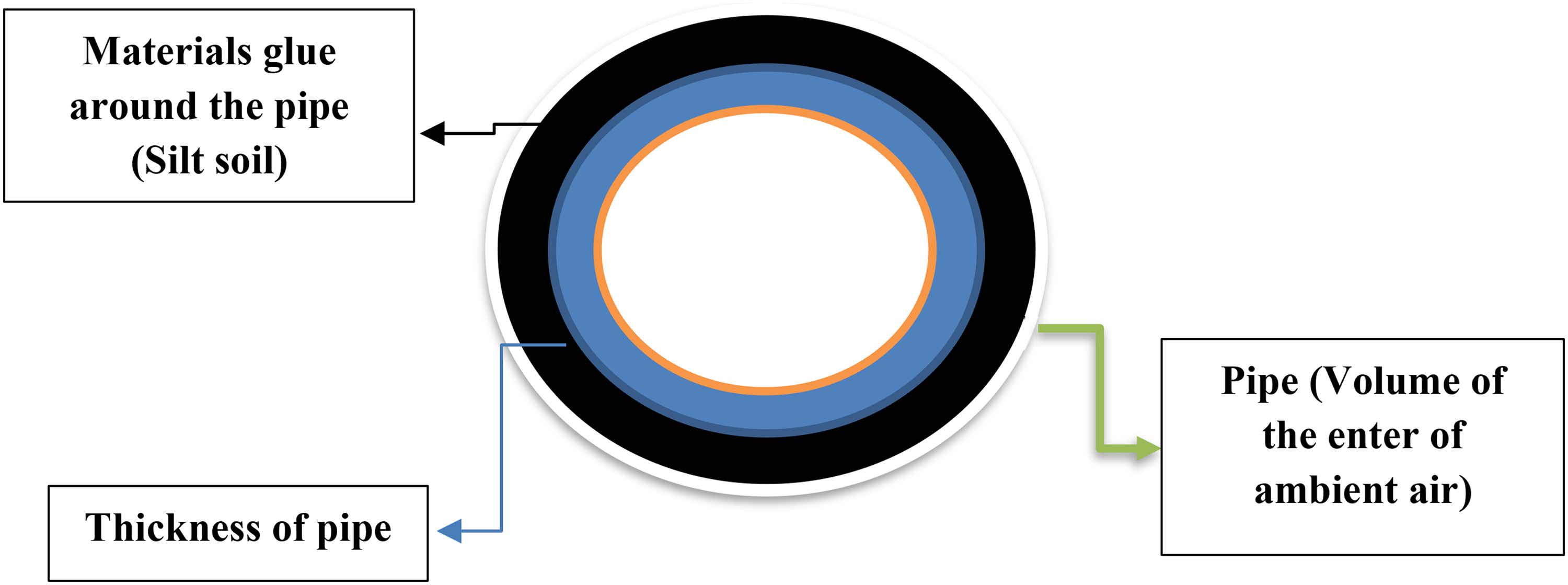
Cross-section of the EAHE pipe.
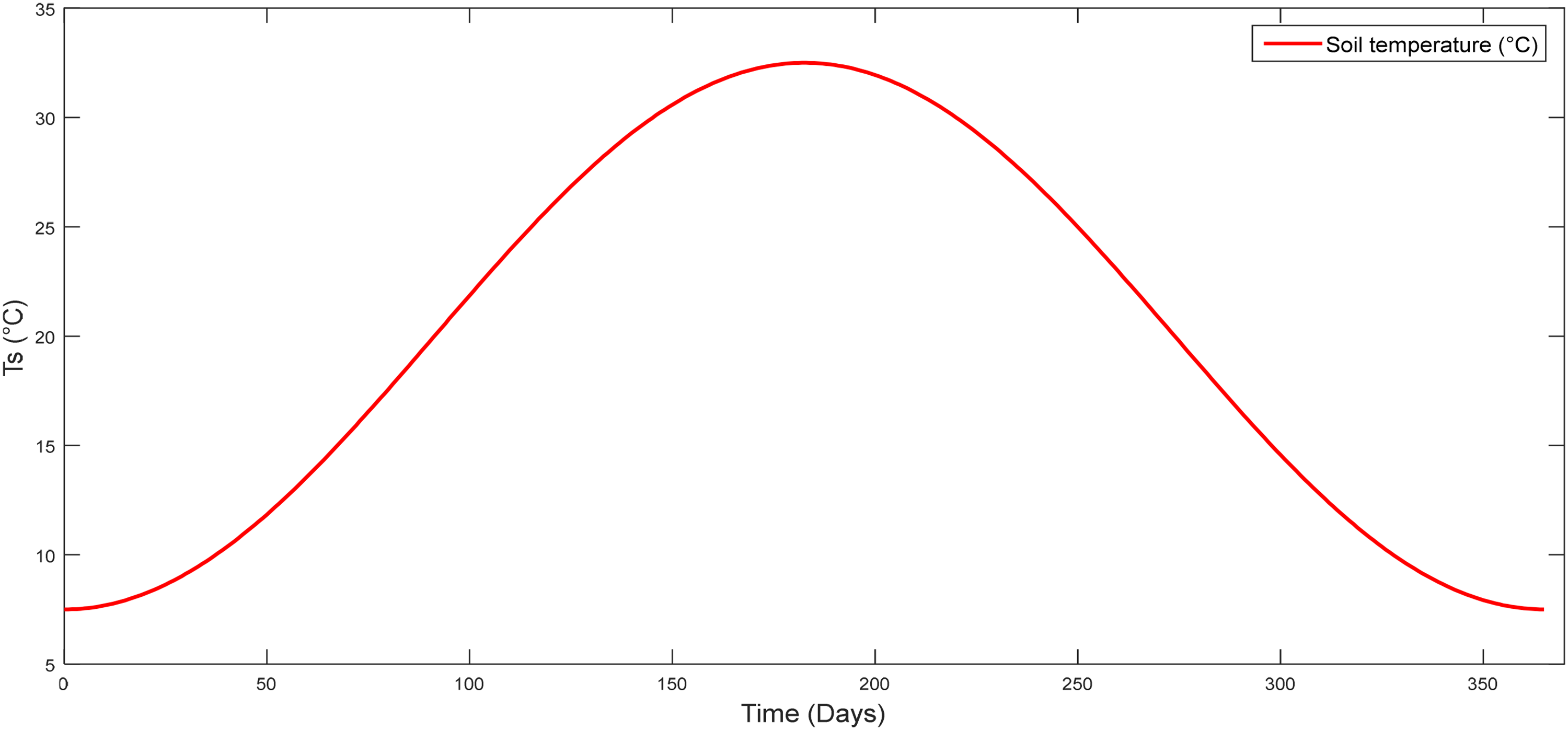
Typical temperature behavior of the soil surface TS during 1 year (From January to December).
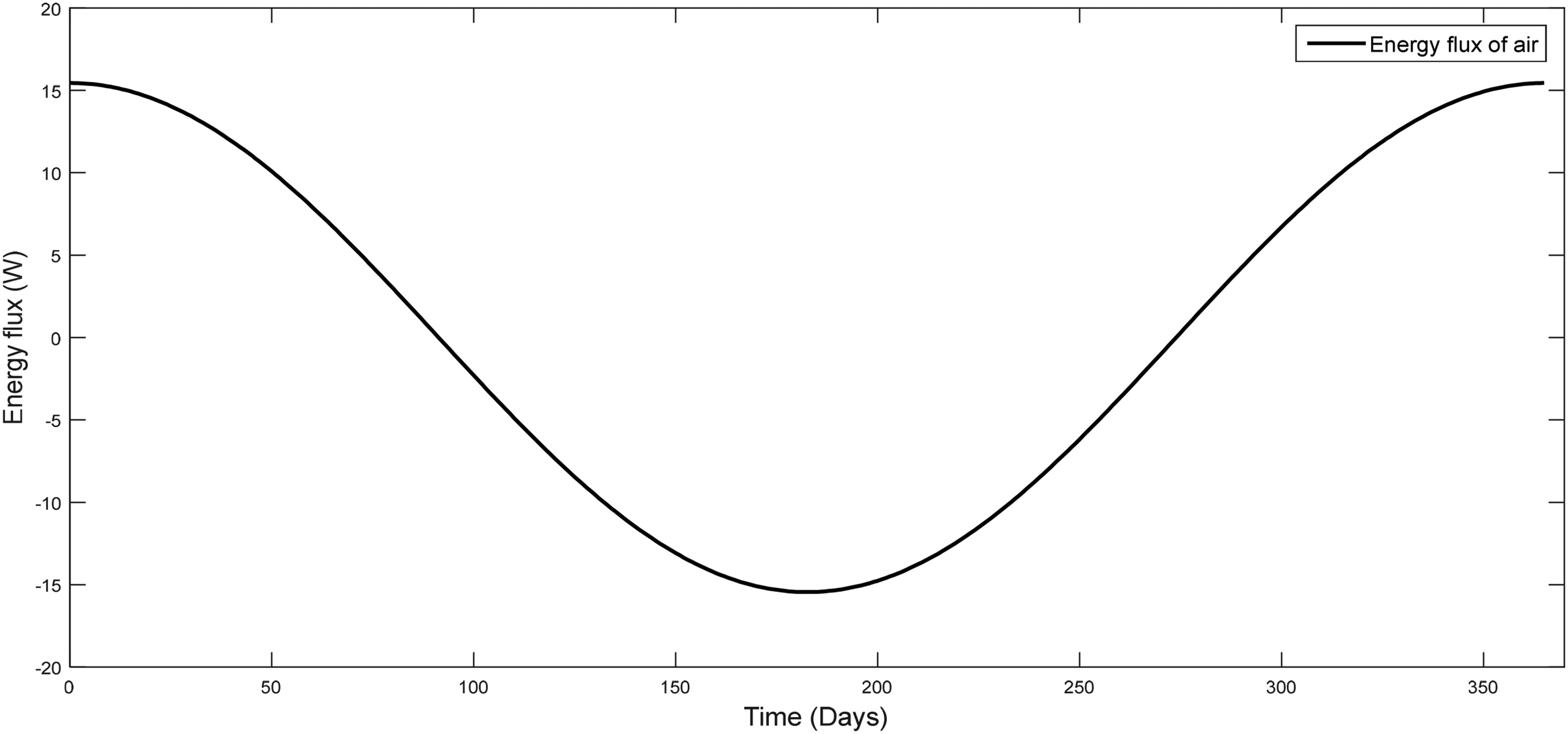
Evolution of energy flux of selected EAHE during whole days of year.
Indicators of thermal performance for EAHE
Coefficient of performance
The COP serves as a metric for evaluating the efficiency and effectiveness of an EAHE when it operates in heating mode. This parameter quantifies the relationship between the energy generated, measured in kilowatt-hours (kWh), and the energy consumed.
Energy efficiency ratio
Air conditioner capacities are typically expressed in “tons” of cooling, with 1 ton of cooling equivalent to 12,000 British Thermal Units per hour (Btu/h), which is approximately 3.5 kilowatts. To put this into perspective, this is roughly the amount of power needed to melt one ton of ice over a 24-h period. The COP for an air conditioner operating on the Carnot cycle is as follows:

Effectiveness of EAHE system
The effectiveness of the EAHE was defined to evaluate how close the outlet temperature of the system can get to the soil temperature. It can be ranges between 0% and 100%. The effectiveness expression is writing as following equation:
Volume calculation and cost of soil utilized
To determine the volume and cost of the soil required for the installation of the EAHE system, and subsequently calculate the initial energy cost, the following equations have been employed:


Economic and environmental assessment of EAHE
In recent years, EAHEs have witnessed significant advancements in passive house construction. This paragraph presents an economic and environmental analysis of an EAHE system implemented in Tangier, Morocco.
On one hand, the study aims to assess the economic viability of this energy conversion device through the evaluation of the levelized cost of energy (LCOE) and the determination of the payback period (PP). Furthermore, it seeks to investigate the environmental impact by utilizing the global warming potential (GWP) equation. This analysis aims to quantify the system's potential contribution to environmental preservation, primarily in terms of reducing greenhouse gas emissions and minimizing the release of carbon dioxide (CO2) into the atmosphere.
Economic study
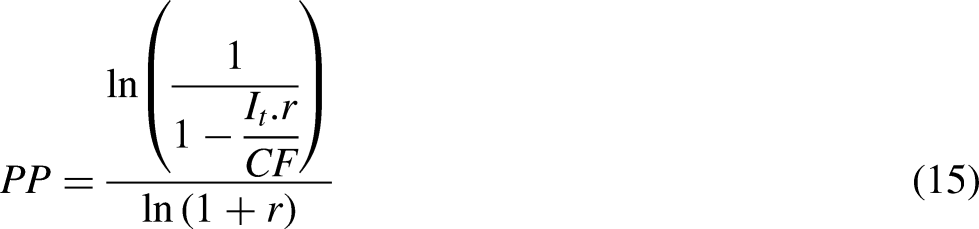
The LCOE for a specific energy production facility is the total discounted cost of energy production divided by the discounted quantity of energy generated. This metric is typically expressed in c€/kWh.
Environmental study
GWP quantifies how much heat a greenhouse gas in the atmosphere traps compared to the heat trapped by an equal mass of CO2. CO2 is given a GWP value of 1. For other gases, the GWP varies depending on the specific gas and the chosen time frame. GWP is a term used to gauge the relative impact of a greenhouse gas, considering how long it remains active in the atmosphere. The commonly used GWP values are calculated over a 100-year period, with CO2 serving as the reference gas, assigned a GWP of 1 over 100 years.
Results and discussion
Based on the results, we have observed nearly identical behavior in terms of soil temperature and outdoor temperature for both soil materials used (silt and quartzite). Therefore, we can conclude that the type of soil does not significantly impact the thermal performance of the EAHE system.
Figures 2 and 4 depict the inlet temperature (representing soil temperature) and outdoor temperature, respectively, observed throughout the entire year. These figures clearly demonstrate the effectiveness of the selected EAHE design, as it enables both cooling during the summer season and heating during the winter season. Additionally, Figure 3 illustrates the monthly variation in the energy flux of the EAHE.
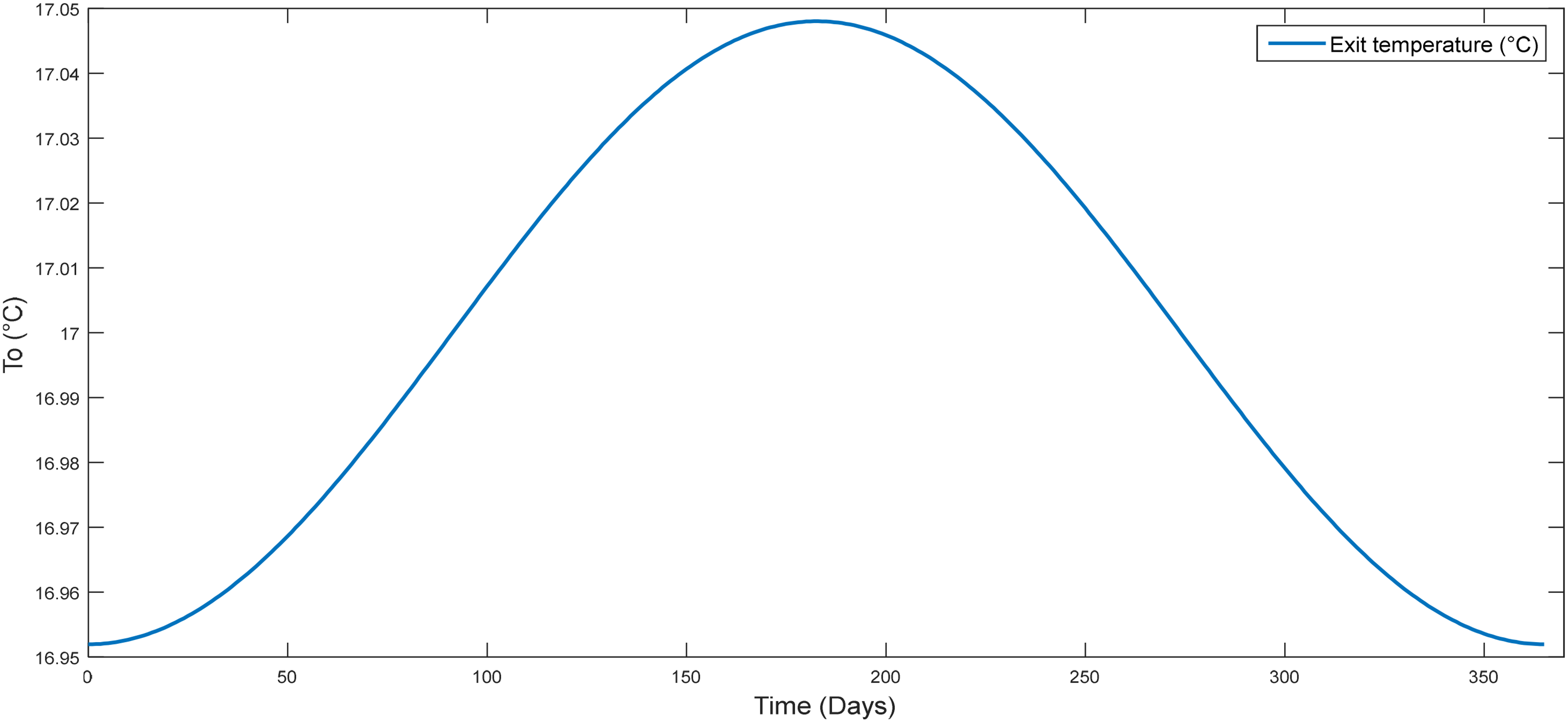
The temperature outlet to of the chosen EAHE.
The real ground thermal diffusivity can be calculated for each chosen depth as follow: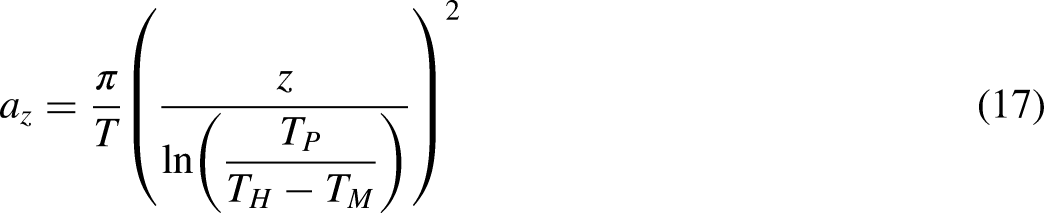
According to the Figure 5, it shows an increase in ground thermal diffusivity values with increasing depth. Conversely, Figure 6 illustrates that soil temperature remains relatively stable despite variations in depth, ranging from z = 1 to z = 4. Consequently, we have chosen a burial depth of 1 meter for our work to minimize excavation and maintenance costs associated with the EAHE installation. Importantly, the type of soil appears to have a limited impact on the outlet temperature, particularly in the case of a single-tube air-to-soil exchanger, such as our setup, as long as the flow rate remains within reasonable limits.
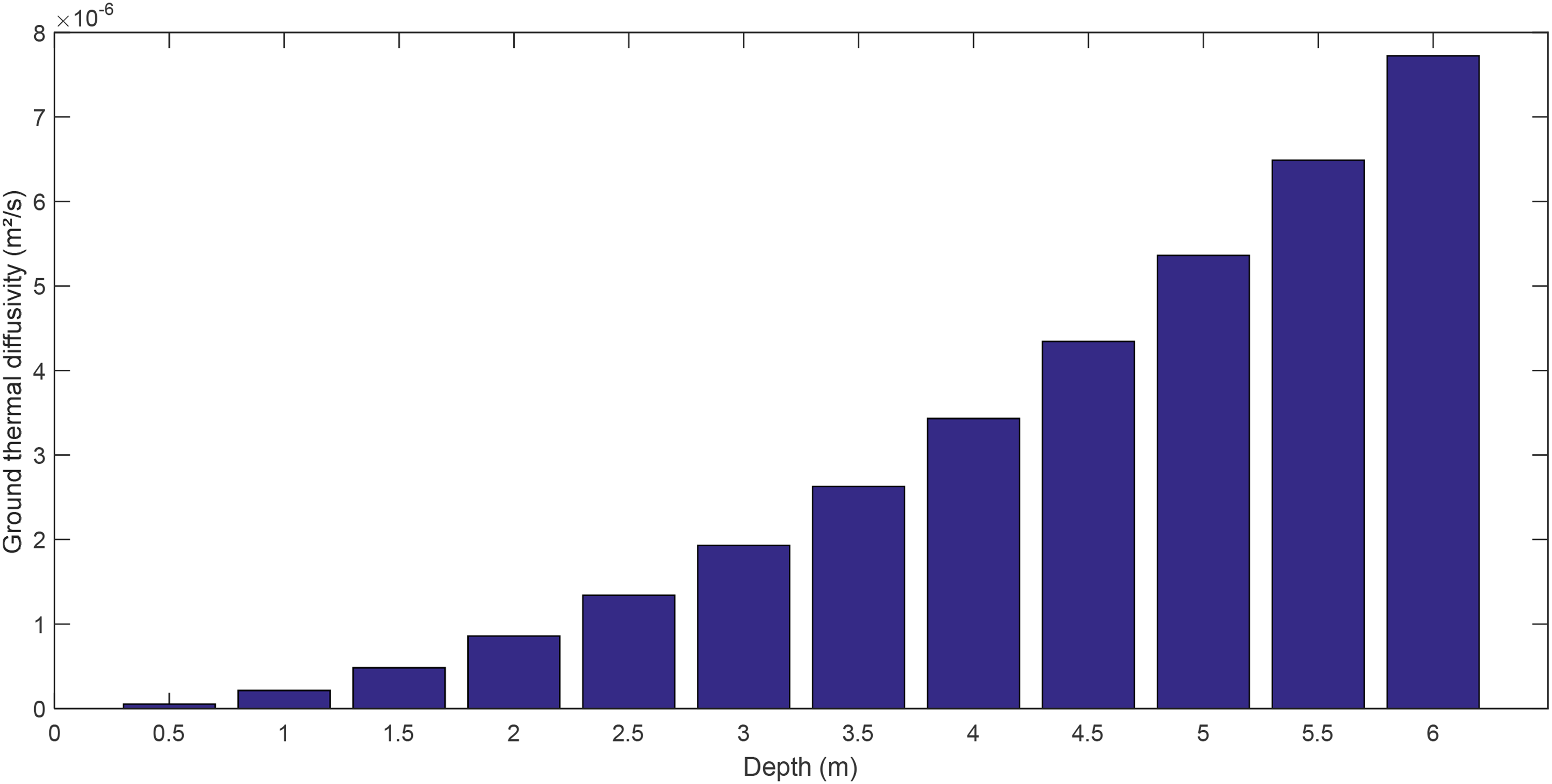
Ground thermal diffusivity values according different depths.
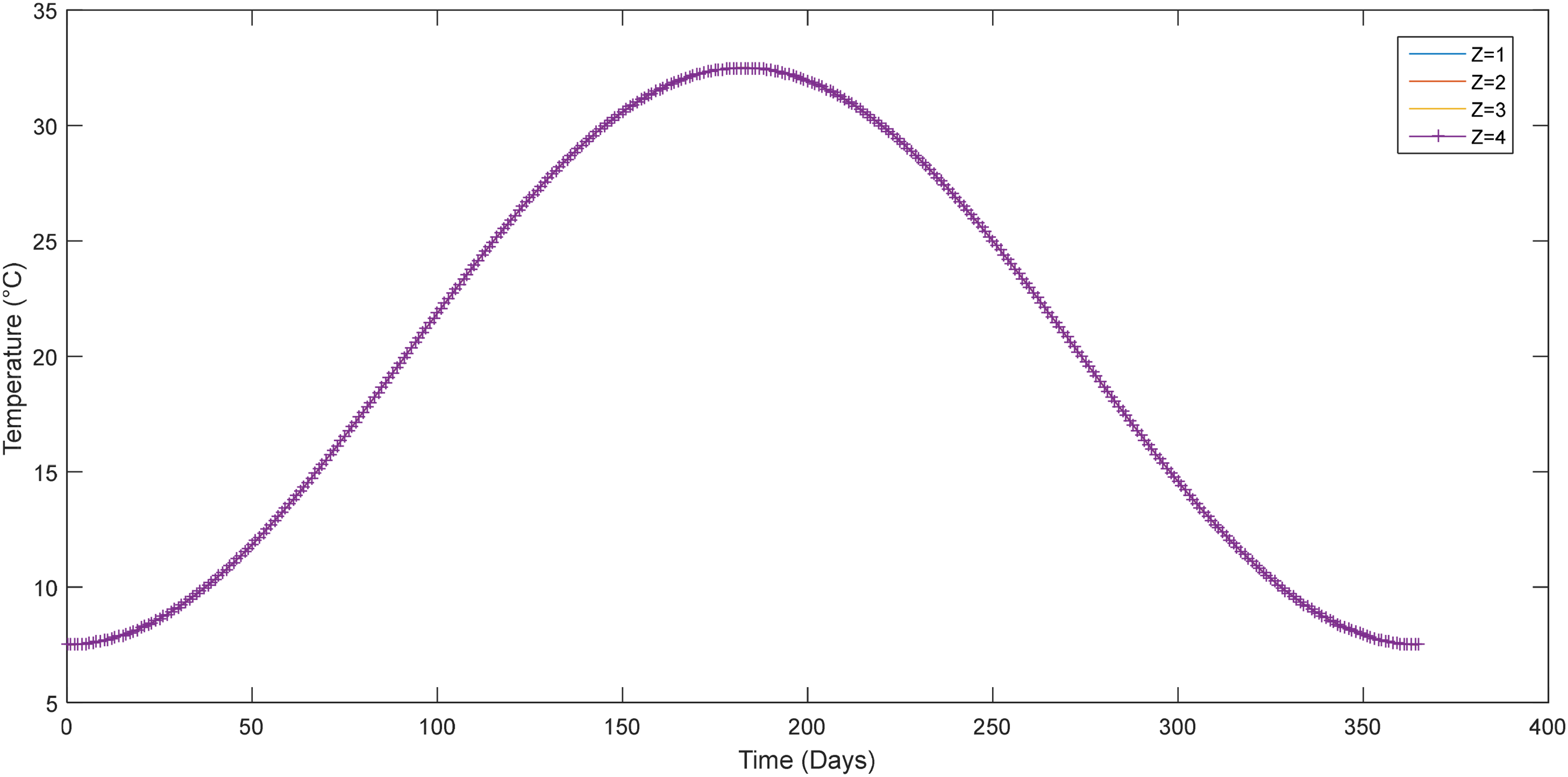
Behavior of the average monthly temperature regarding soil depth.
The objective of this study is to describe the performance characteristics of the EAHE system. The feasibility and effectiveness of EAHE usage hinge on various factors, including the thermal conductivity of the soil, the diameter of the pipe employed, and the airflow velocity. To streamline and enhance our analysis, the results have been segmented into the summer and winter seasons and are elucidated using performance metrics. These metrics include the COP in heating mode (refer to Table 4) and the EER in cooling mode (refer to Table 5).
The coefficient of performance for the heating mode using the selected earth-air heat exchanger.

The energy efficiency ratio (EER) for cooling mode using the selected earth-air heat exchanger.

Figure 7 illustrates the energy efficiency rates in both heating and cooling modes, categorized into specific intervals known as unit energy efficiency classes for the EAHE in use. The findings can be summarized as follows:
May, June, July, and August fall within class A. January and December belong to class B. September, November, and February are categorized as class C. April is placed in class D. October and March are designated as class E.
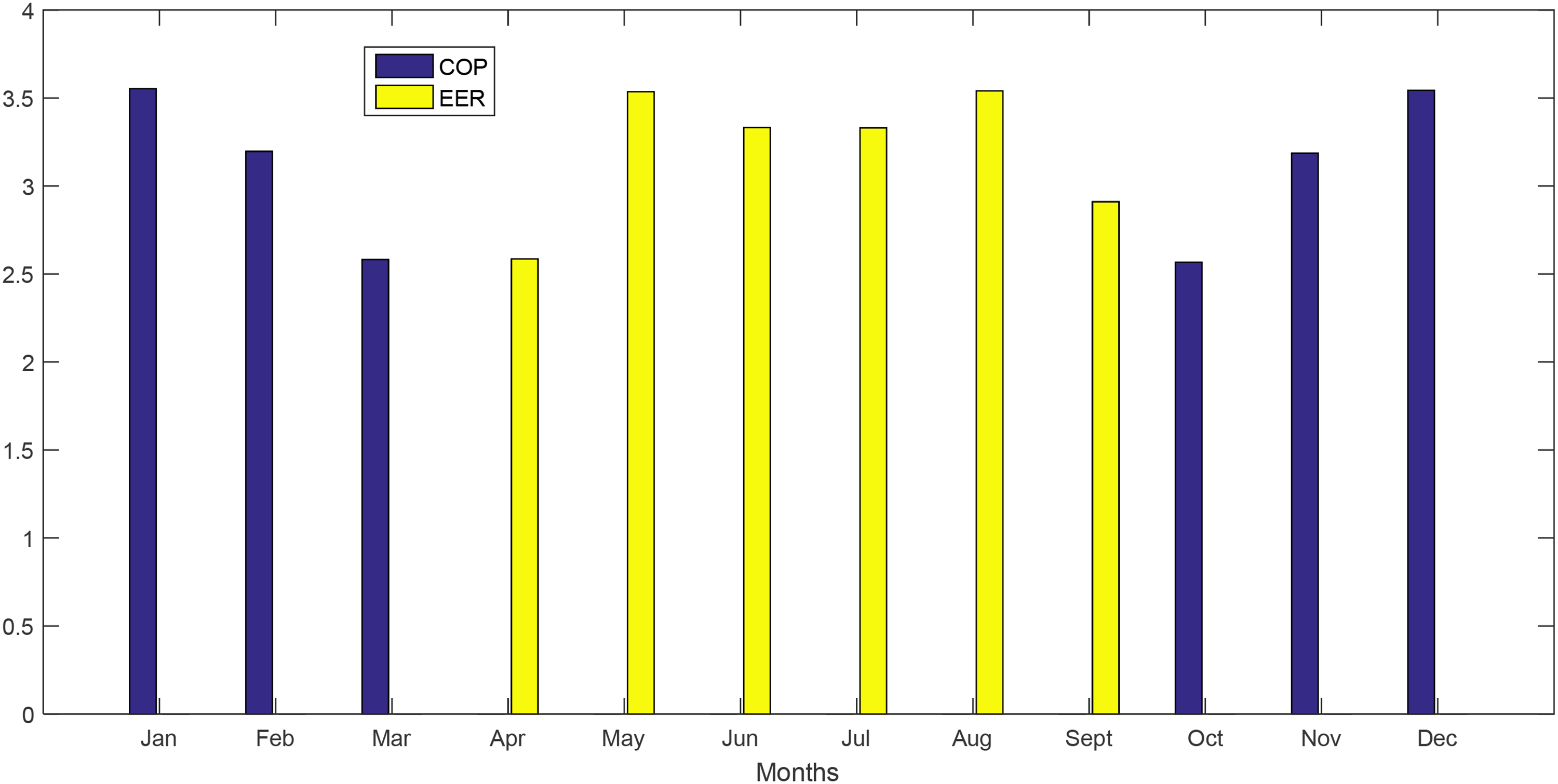
Rate of energy efficiency in heating and cooling mode.
On the other hand, Table 6 presents the effectiveness of the EAHE for each month, with results ranging between 50.41% and 53.07%, averaging at 51.26%
The monthly average effectiveness of the chosen earth-to-air heat exchanger.

From an economic perspective, after applying Equations (11), (12), and (13), we have determined that the cost of the volume of quartzite soil surrounding the EAHE pipe amounts to 70.40 €. In contrast, there is no cost associated with silt soil as it is readily available at no expense. Consequently, we have established an efficient EAHE system that utilizes cost-effective and readily available silt soil, making it an economically viable, straightforward, and universally applicable solution for buildings in the Tangier area
Conclusion and recommendations
The study introduced a cost-effective approach by utilizing readily available and economically viable soil materials, such as silt soil, as the primary component for the EAHE system. This reduces the initial installation cost. The study also assessed the effectiveness of the EAHE for each month, with results ranging between 50.41% and 53.07%, averaging at 51.26%. Furthermore, the research highlighted the effectiveness of burying the EAHE system at a shallow depth of just 1 meter, which helps mitigate common installation and maintenance challenges. The primary objective of this study was to conduct a comprehensive analysis and economic evaluation of an EAHE system employing cost-effective soil materials surrounding its pipes within the Tangier climate. This research has focused on the design of an EAHE to ascertain its technical feasibility and economic viability. Our study commenced by seeking a cost-effective initial installation, with a particular emphasis on soil cost. We opted for a naturally occurring, freely available soil material that demonstrated efficient energy conduction and overall economic feasibility. The model utilized in this paper consisted of a single pipe with a diameter of 0.5 meters and a thickness of 1 centimeter, placed at four different depths (1 meter, 2 meters, 3 meters, and 4 meters). The results obtained have been highly promising. We have determined that the EAHE system can be effectively employed for heating during the winter and autumn months (October, November, December, January, February, and March) and for cooling during the warm spring and summer months (April, May, June, July, August, and September). From an economic standpoint, this study underscores that the initial installation cost of an EAHE system can be significantly reduced by utilizing cost-efficient soil materials, such as silt soil, and burying the EAHE at a shallow depth (1 meter). This approach helps mitigate common installation and maintenance challenges. Additionally, our energetic and economic comparison between the two selected soils (silt and quartzite) reveals that silt soil generally offers superior efficiency, as evidenced by the results. We have further supported our study with statistical performance indicators, namely the COP and EER, enabling a thorough analysis of the EAHE's efficiency and performance in heating and cooling modes. Furthermore, we calculated the EAHE's effectiveness to assess its accuracy and energy efficiency, with the results proving highly acceptable. In conclusion, this study has demonstrated the potential for an efficient and cost-effective EAHE system, underpinned by the use of readily available soil materials. We have also explored the utilization of alternative renewable energy sources to reduce CO2 emissions and enhance energy savings. As a recommendation, the implementation of such EAHE systems, especially employing silt soil, can be considered a viable and sustainable solution for climate control in the Tangier region. Future studies may further refine and optimize the system for broader applications.
Footnotes
Declaration of conflicting interests
The author(s) declared no potential conflicts of interest with respect to the research, authorship, and/or publication of this article.
Funding
The author(s) received no financial support for the research, authorship, and/or publication of this article.
