




Abstract
The remote location and many islands in Africa are experiencing a big power shortage and blackouts and they greatly necessitate electric power from standalone photovoltaic microgrid. In Rwanda, off-grid solar systems are at their infancy level and their affordability for the rural population requires thorough support and incentives. In this process, the Government of Rwanda (GoR) has set a program to subsidize the cost of the system in a rural household power access projects suit to their socio-economic metric known as ‘Ubudehe’ which would determine the required financial support from other poverty reduction programs in a country. The design of a standalone photovoltaic microgrid is aimed to find the cheapest way to go for either a single rural house or a group of 200 rural houses with similar load demand as a long-term solution to their local energy challenges. The models resulted in a Levelized cost of energy, least cost of energy (LCOE) of 1.51US$/kWh for a single home while the LCOE for the group of houses load equals 1.45US$/kWh. The net present cost (NPC) for a single home and multi-user load are respectively equal to 5,625US$ and 1,079,210US$. These results conclude the efficacy of the group sharing load demand model design to provide green energy solutions to the mid-and low-income rural population in Rwanda.
Introduction
The global energy demand is rising due to an increase in the world population (Asif and Muneer, 2007). To meet such huge demand in Africa requires a tremendous research effort to find green and affordable energy solutions. In Rwanda, the most affected population without power lines belongs to rural villages where only 12% are accessing grid connections (PowerAfrica, 2018). Therefore, an off-grid PV microgrid was proposed to meet the basic energy demand in rural areas. Energy can be produced from direct sunlight either by using the photovoltaic effect or by using energy from the sun to heat a working fluid to get steam energy that can be used to power up generators. Rwanda has made substantial progress and targets the goal of energy access, moving from 30 percent on-grid access in 2021 to 52 percent on-grid and 48 percent off-grid access in 2024 (PowerAfrica, 2018). Despite this impressive progress and good plans, there are still big challenges to the misalignment of power supply and demand in addition to the limited financing for off-grid companies. Due to the limited affordability of electricity solutions for rural households and local businesses, The Government of Rwanda (GoR) has raised its awareness of the off-grid sector by increasing the energy production from mini and microgrid PV energy solutions (Koo et al., 2018). To date (2022), small solar home systems (SHSs) with less than 50Wp are abundantly sold through a pay-as-you-go (PAYG) model and they have dominated the off-grid sector (Rolffs et al., 2015). However, designing a higher wattage capacity of PV microgrid for low- and the mid-income population that may reach 790 W with 150 Wp is highly needed to explore the available potential solar irradiations in many locations across the countryside. In this paper, renewable energy resources that were found important for the design were only solar photovoltaics, and the wind was accessed impractically. Therefore, it was not used in the energy solution for the case study. A hybrid solar plus battery energy storage system was proposed to provide steady power output for local rural in the Rubengera sector, Karongi district in the Western Province of Rwanda with particular solar irradiation of 5.4 kWh/m2 (ESMAP, 2020). The resultant hybrid PV with battery model used for a group of 200 homes generates energy solutions for rural areas with the lowest Least cost of energy (LCOE) of 1.45US$/1kWh. The value obtained so far is a little bit higher than the hydroelectricity feed-in Tariff in Rwanda which is 0.22–0.25US$/kWh (Rura, 2020). However, by taking advantage of African energy support programs (IRENA, 2015) and policies designed to provide incentives for each successful renewable project, as a result of decreasing the electricity shortage in rural areas and also by considering the long-term investment for a payable 25years without monthly payment of power invoice, the obtained cost is reasonably an energy solution for rural development. The second section details the literature review on off-grid photovoltaics and batteries across the selected continents with and without wind energy. The third section discusses the material and details the methodology used with the equations involved. The fourth section discusses the results while the fifth section talks about the conclusion.
Review of literature
Over the last decade, many authors have developed different models for off-grid solar energy solutions. The general structure of those models is focused on finding energy solutions for rural areas where the majority of people, especially in sub-Saharan Africa and many other developing counties face the black-out and power-cut problems (ESMAP, 2020; Rura, 2020). Recently, technological advances in off-grid solutions to strategically promote the most blackout countries are set as the priority by researchers and scientists to fight against poverty and other related unhealthy problems while taking advantage of available renewables power resources. Renewable energy is energy from sources that are naturally renewing with a timely random variation; renewable resources are inestimable in duration but with a limited amount of daily energy. They include wood and wood waste, solid waste, landfill gas and biogas, ethanol, biodiesel, hydropower, geothermal, wind, tidal, thermal solar, and solar photovoltaics (Demirbaş, 2006; Meles, 2020; Raya-Armenta et al., 2021). Al-Addous et al. (2017) developed off-grid PV systems in Jordan Valley. The location has a warm climate which is a favorite of the negative impact of temperature rises on the solar PV system. Authors noted that temperature control with PV system cooling can relatively result in better efficiency. Ghafoor and Munir determine the proper design, feasibility, viability, financing indicators, and risk factors involved in the implementation of the off-grid PV electrification system in tropical regions like Faisalabad in Pakistan. The recent development of PV systems is in pair with PV decreasing prices. This makes production PV technology more cost competitive in comparison to conventional energy resources for residential home energy solutions (Ghafoor and Munir, 2015). El-Bidairi et al. (2018) worked on a hybrid system with PV, Wind, Tidal current, and diesel generator for remote areas and islands in Australia and find the importance of the optimal size of energy storage systems (ESS) for off-grid microgrid systems. Their paper goes beyond the state-of-the-art optimization approach in microgrid studies by presenting a novel cooperative multi-objective method to minimize the dependency on the fossil fuel, minimize the fuel consumption, minimize the greenhouse gas emission levels and finally maximize the utilization of renewable energy sources in standalone microgrids. The authors used the fuzzy logic-grey wolf optimization model (FL-GWO) for the battery energy management system which is important to deal with renewables intermittency. Güney (2019) states the importance of renewable over non-renewable energy resources on the economic sustainability of both developed and developing countries. United Nations (UN) also set a target of reaching seventeen Sustainable Development Goals (SDGs), where the UN emphasized the actions many countries should take by 2030 for sustainable development. The 7th Goal concerns access to affordable, reliable, modern, and sustainable energy by everyone. Studies show that rural areas are the most vulnerable part of the globe where maximum effort should be emphasized for electrification. Veldhuis and Reinders (2015) worked on off-grid hybrid PV solutions that provided better results than electricity generated with diesel gensets in most rural parts of Indonesia. Cho and Valenzuela (2020) developed an optimization method for designing a residential off-grid PV system. Their method uses a mixed-integer programming model to pre-schedule the daily usage of appliances according to a forecasted solar irradiance to determine the number of PV panels and battery modules for the cost-effective operating of the system. The schedule ran on a Monte Carlo simulation that considers the uncertainty of the solar irradiation where an integer Nelder-Mead (N-M) algorithm proves the size of the required PV/Battery system. The performance simulation was measured using the plane of irradiance data at two locations in the USA. They also did the sensitivity analysis by varying the battery and the penalty costs of non-served energy. They later investigated the scheduling effects, forecast solar insolation variability, and battery degradation (Cho and Valenzuela, 2020)–.The recent studies from Nepal elaborated on the off-grid solutions for rural communities where much emphasis was put on the end-user load preference. Their paper contribution uses micro and mini-hydro and solar resources microgrids to feed the load based on the order of preference whereby Energy services are categorized along with two ‘characteristics’ axes such as storage ability and user prioritizations (Shakya et al., 2019). Soudan and Darya (Soudan and Darya, 2020) contributed to a smart off-grid hybrid PV/battery/ diesel power system whereby an algorithm with smart switching control can sustain power during the nighttime with help of a well-controlled battery and minimal use of diesel Genset. Liu et al. (2020) proposed fault-tolerant control to achieve stable power generation from an off-grid PV- by regulating different kinds of converter cells. Further, Campana et al. (2019) focused on the cooling effects of floating PV systems in off-grid mode and the influence of the system optimization achieved with batteries energy systems. Furthermore, an international company known as Mesh power limited, Rwanda branch, has its headquarters in the United Kingdom and introduced a storage system for nano-grid solar power system projects in Eastern Africa where it meets a high demand for entry-level services, such as powering homes and small businesses and phone charging. For energy optimization of their system, each base station is the core of the nanogrid system that provides electricity to over 50homes from a single source. The highly efficient power electronics provide a smart load management system that controls the production and distribution of energy to ensure continuous and reliable service, even during rainy seasons. Therefore, the company gained a mature experience in the deep need for a standalone market in a rural area in Rwanda where 75% of households live without a grid connection. Recently, the company has served 17% of the rural population in the Eastern District of Rwanda and the government's grid extension plans will still leave 1.2 million households without electricity. In his remark, an in-country Meshpower project manager (Meshpower ltd, 2021) reinforces the available opportunities in the off-grid systems to support the government initiatives for its plan to offer green, reliable, and affordable energy access for all Rwandans in 2024 (Nsengimana et al., 2020). The government of Rwanda provides its contribution support to the service company through its national environment and climate change fund called FONERWA. However, many other provinces need highly reliable, green energy, and affordable solar power, especially in rural areas. This paper worked on a case study for generating an off-grid solution for a rural residential home in comparison with off-grid solar solutions for 200 homes of the same location site. Two major economic parameters such as LCOEs and NPCs were taken into consideration to assess the feasibility study while assuming the same consumption load materials for each 200 rural residential home.
Materials and methods
The general structure of an off-grid PV/Battery system model is not new for this decade (Cho and Valenzuela, 2020; Khalilpour and Vassallo, 2016). This paper elaborates on an interesting application system based on sustainable and low-cost energy solutions for rural populations. Figure 1 illustrates the block diagram of a typical off-grid PV/Battery system model selected for rural energy solutions for Rwandan rural villagers.
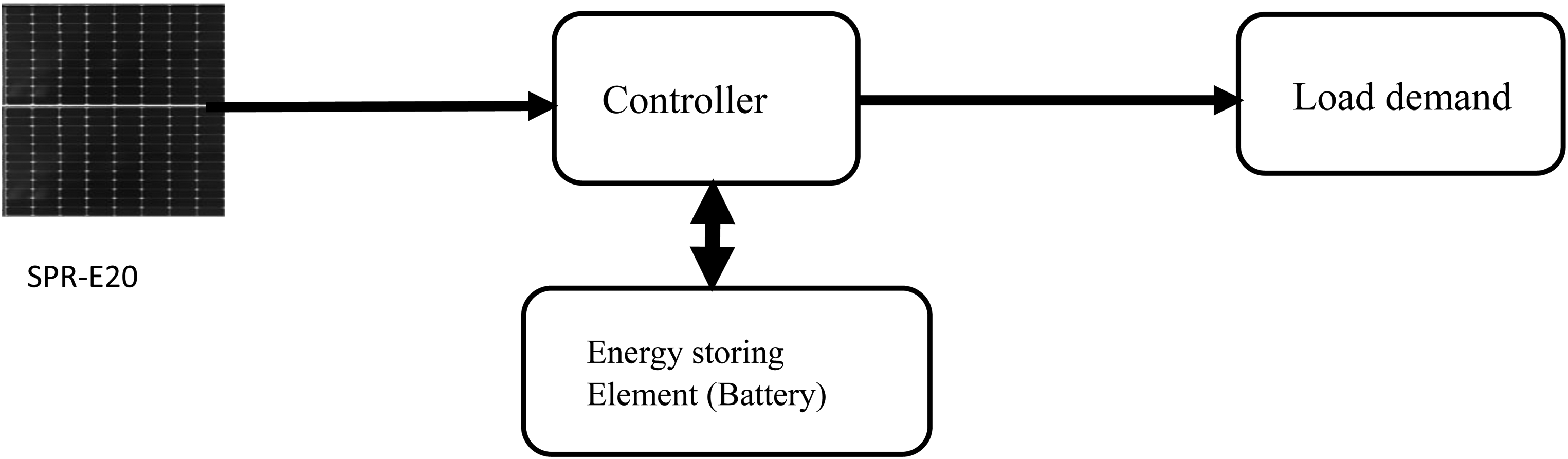
Block diagram of a typical off-grid PV/battery system model.
Figure 1 can easily be implemented but the only challenge is due to the high initial capital cost that needs an optimization procedure with the possibility to associate it with other renewable energy sources to offset the starting investment (Hoseinzadeh et al., 2020). The following blocks in Figure 2 list the methodology procedures that summarize the simple approach to integrating the PV/Battery to solve rural power issues in the studied location.
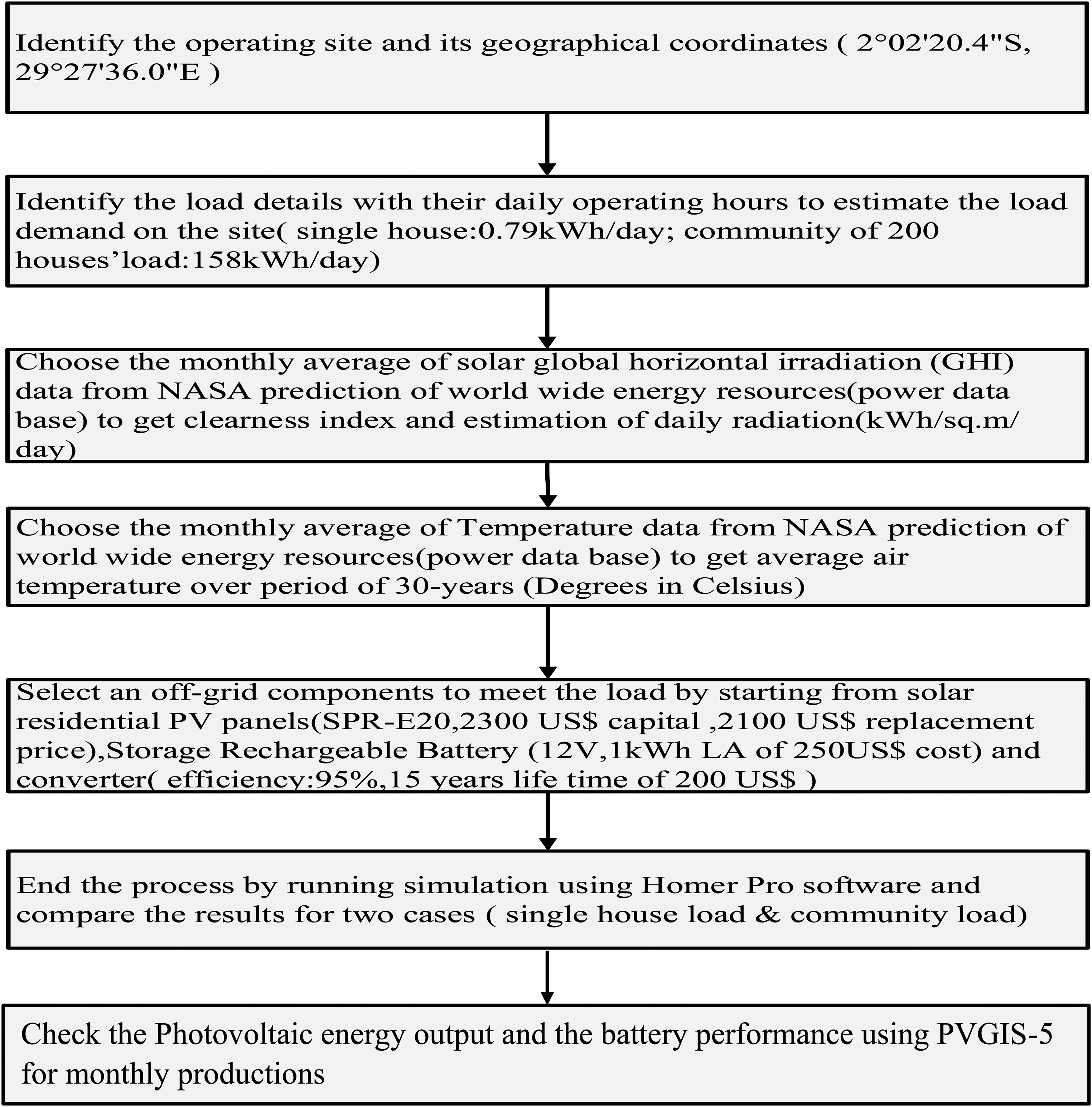
Design methodology for an off-grid PV-battery model.
System design components
The daily energy consumption from rural residents was found through a site visit and the minimum load assessment of home appliances required per day was identified. The product of power consumed by the duration of use per day was evaluated to 790 Wh for every 200 rural residential. Referring to the number of rural households obtained, the following design components were used for the model layout structure. These include for the single home user, The SunPower E20-327 PV module rated at 0.277 kW to harvest the desired solar irradiations, a Generic Lead-acid battery rated to 4 strings to store power during the sunset period, and a system converter rated to 0.156 kW to change the DC solar PV input power into AC output power to meet the load demand. For 200 rural community homes, where multiple users share the common interests from the nearby off-grid rural production plant, each assumed to have a similar consumption load requirement are given by the SunPower E20-327 PV module rated at 68.9 kW.
On-site data collection
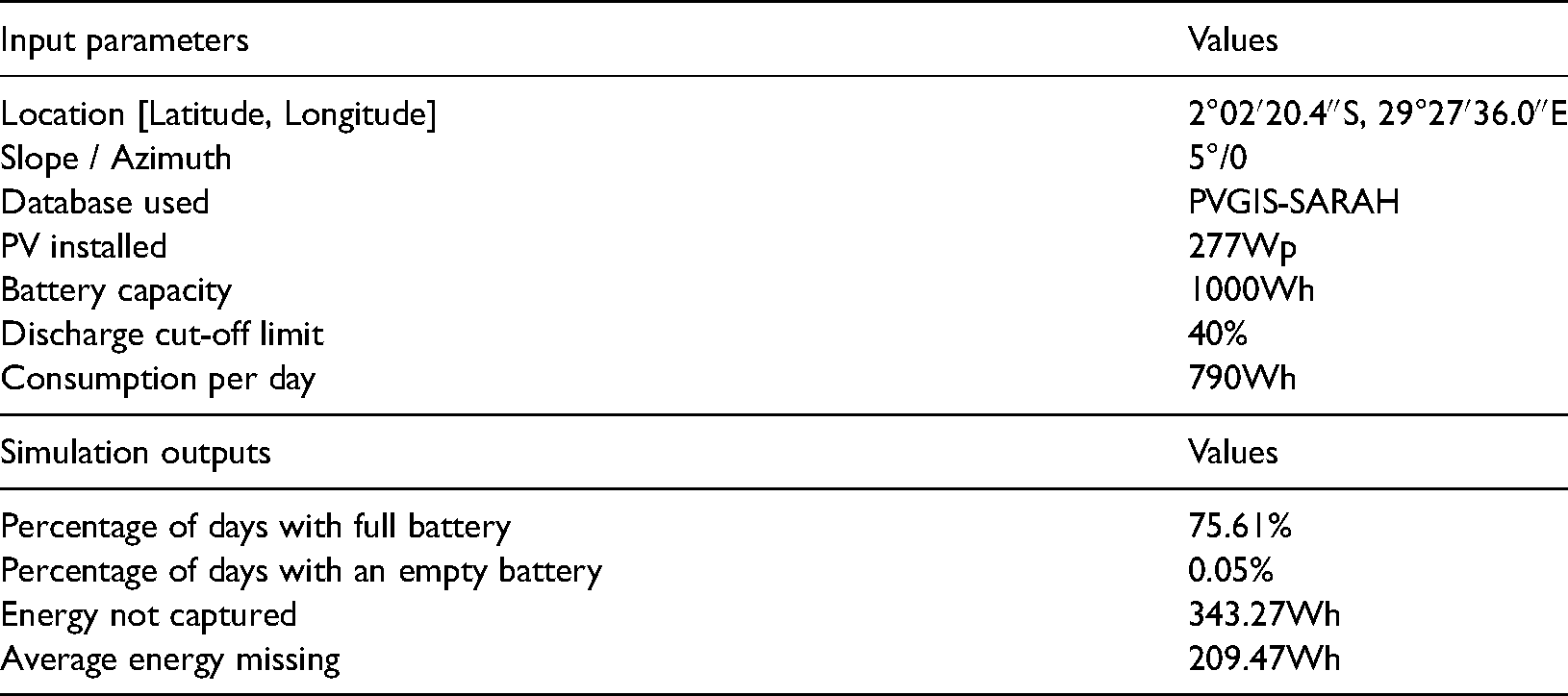
The visited site for a feasibility study of an off-grid PV microgrid has been located at Kambogo village, Rubengera sector, Karongi district in Western Province of Rwanda. The latitude and longitude of the site are 2°02′20.4″S and 29°27′36.0″E respectively. The PV power potentials are characterized by its abundant solar irradiations that are evaluated to 5.4 kWh/m2 as seen in Figure 3 (ESMAP, 2020). The Photovoltaic Geographical Information System (PVGIS) was developed from solar radiation data which are estimated using the Satellite Applications like the surface solar radiation data set-heliosat (SARAH)/climate monitoring (CM)-satellite application facility (SAF) models herewith shown in Table 1. It gives the details of module specifications to harvest the PV potentials on the site. In addition, Lead acid batteries batteries are used as an energy storage system to make the overall system more productive during the sunset.
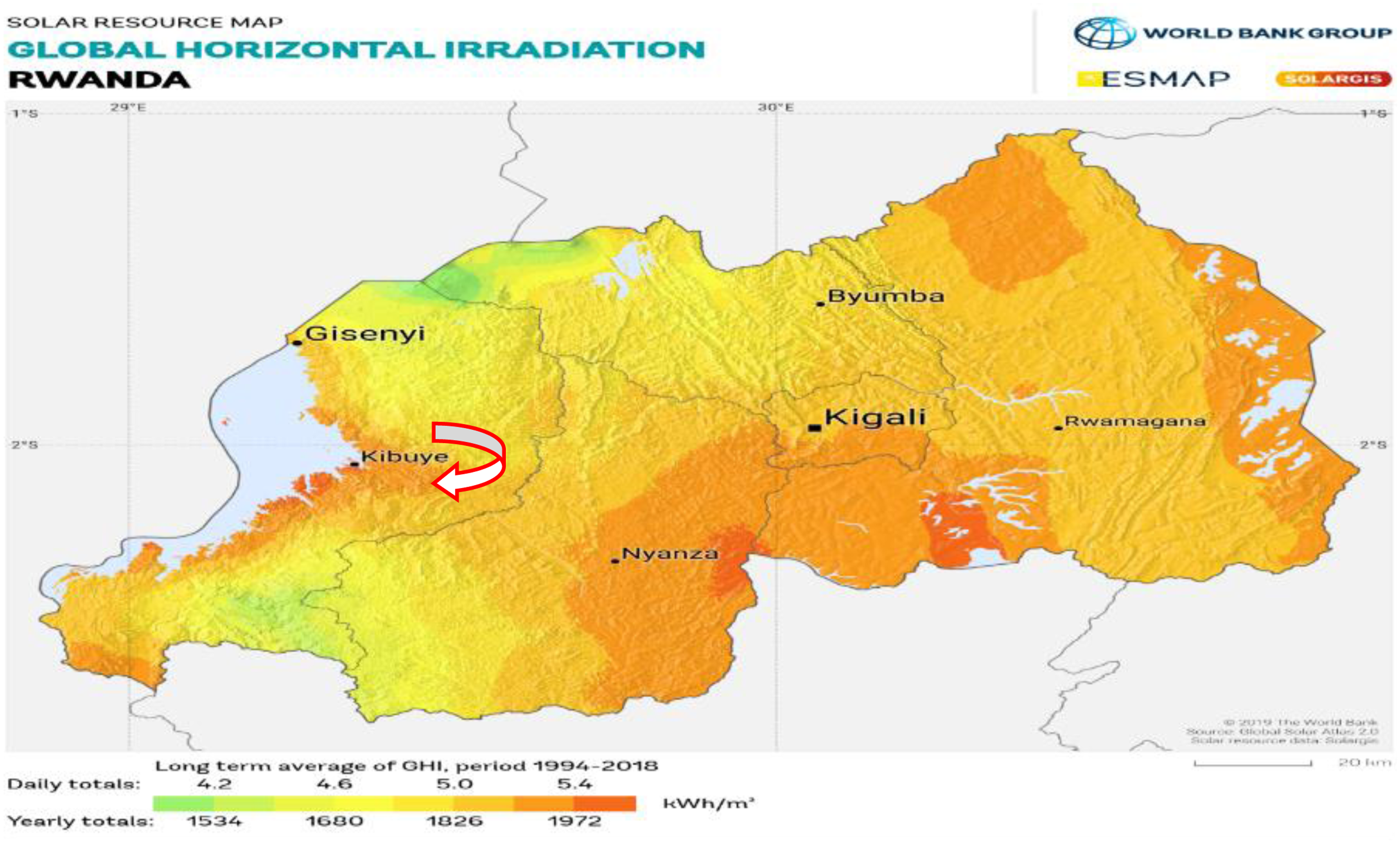
PV power potential on the site.
Off-grid performance for a single home user.
Load profile analysis of the visited rural sites
The load requirement was distributed as follows: 4 home lights with 15 W each with 12 h of daily use, a 10 W radio with 5 h of use, a 2.5 W mobile phone for 4 h of daily charge, and 2 free socket-outlets for 5 W each, used for one hour per day, all resulted in the total of 790 Wh per day. Figure 4 illustrates the daily load profile in winter (January) and Figure 5 shows the daily load profile in the summer period (July) of the site.
The daily residential load indicates the power schedule per day and how much electricity is consumed whether in the winter period (Figure 4) or the summer period (Figure 5). The majority of people get up from 5 h00 to 6 h00 and they relatively need small power to use in the early morning and thus creating lower peak power at 7 h00. At 13 h00, it is the break time when some residents would get together while listening to the radio, and charging their mobile phones. From 19 h00 another high peak power is observed due to the maximum use of power in home lighting, listening to radios, and charging mobile phones. From 21 h00 to 24 h00, the power is gradually reduced due to most people switching off the lights while getting to bed until they get up in the early morning at 5 h00.
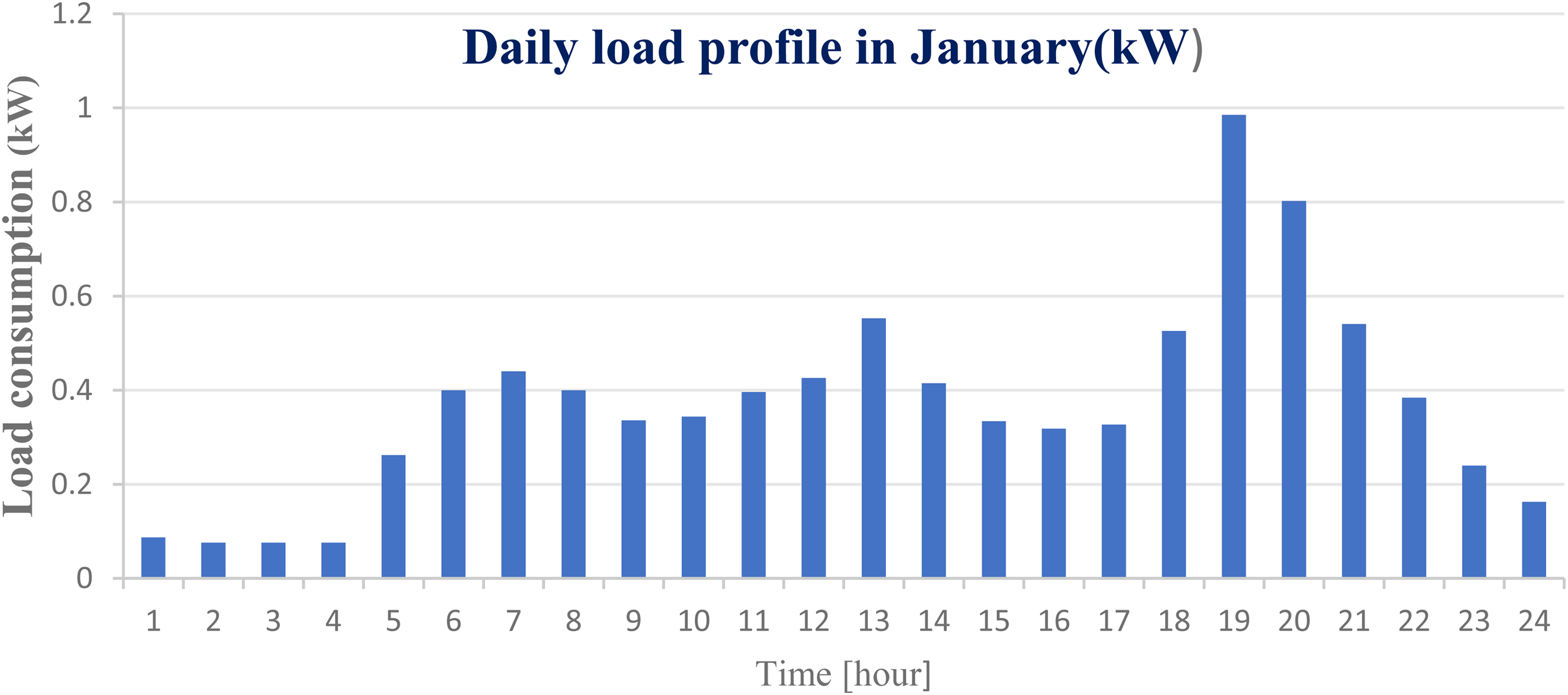
Daily residential load for January profile (Winter period).
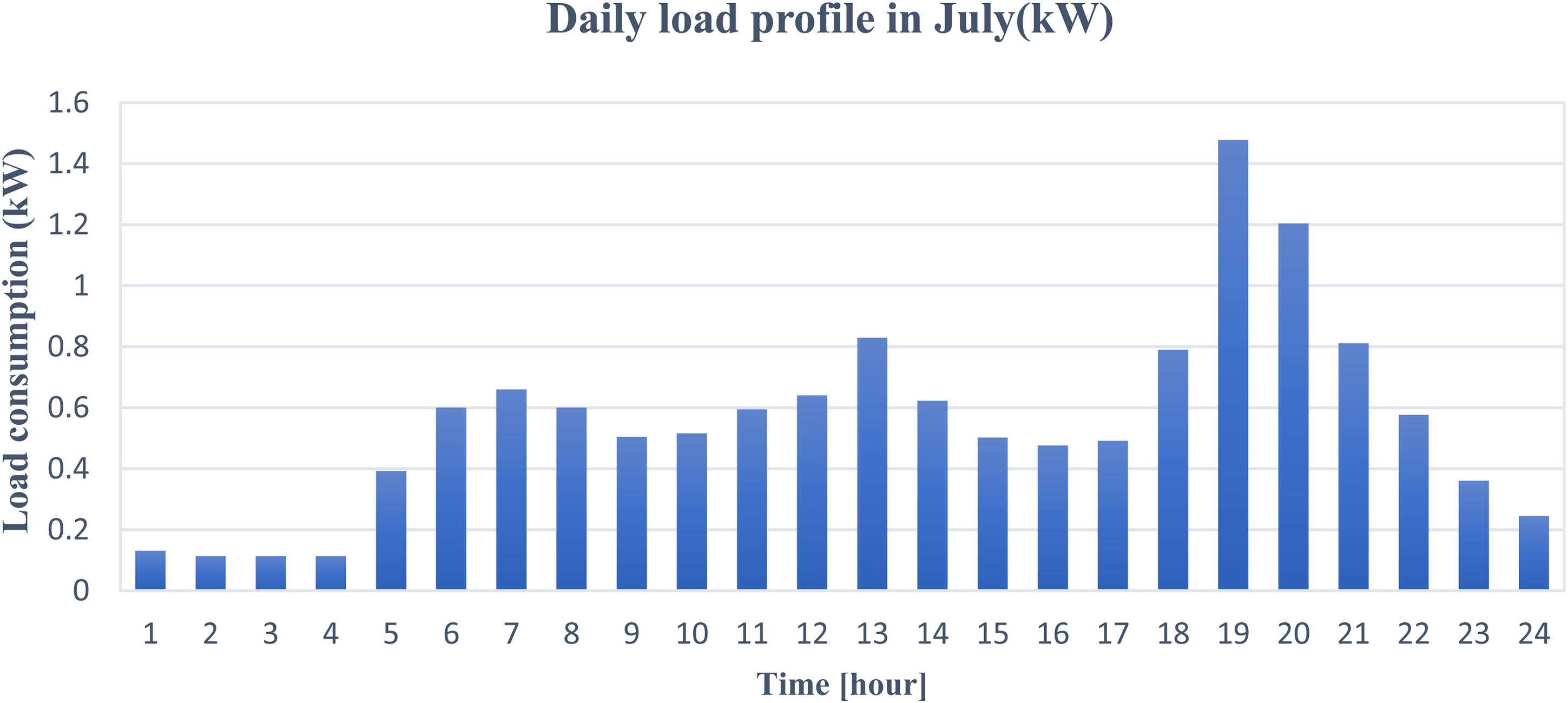
Daily residential load for July profile (Summer period).
PV energy resources
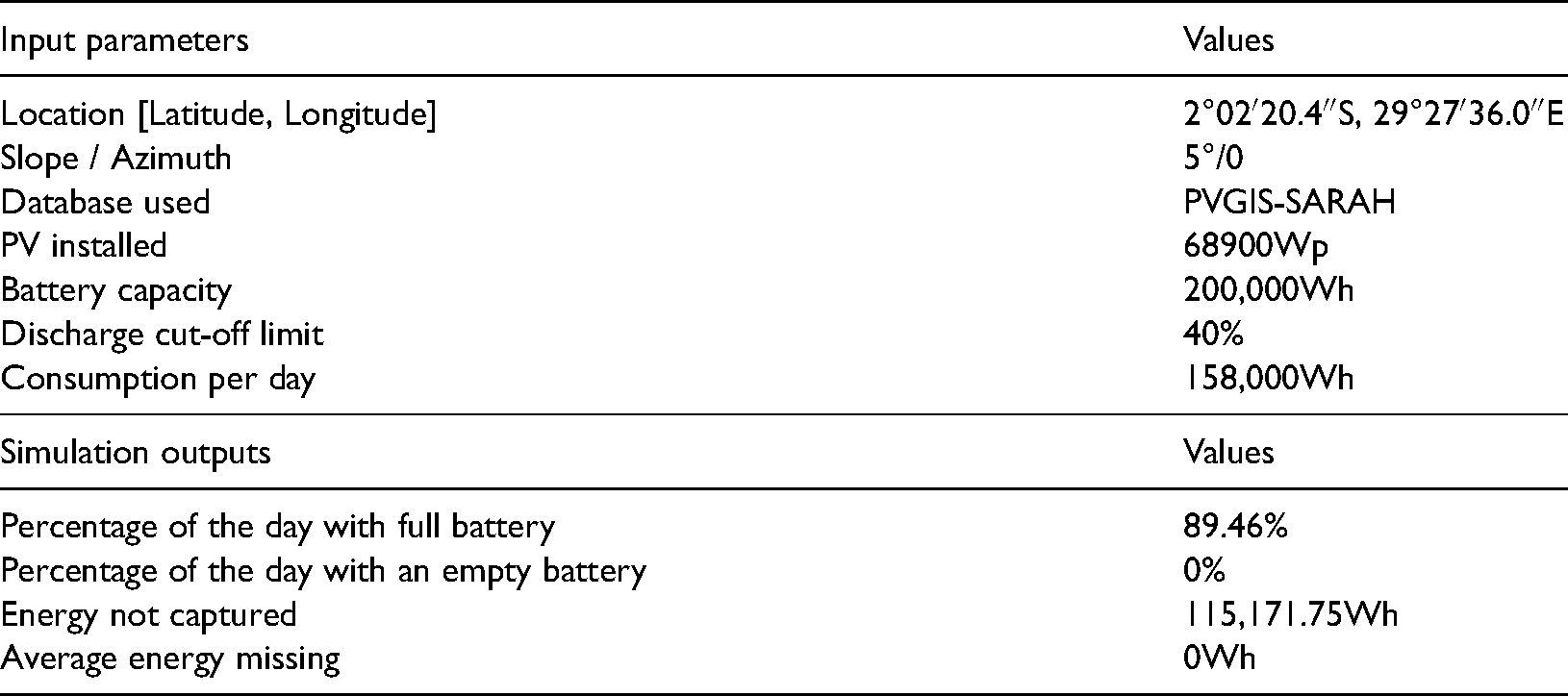
The visualization of data from the solar resource map was shown in Figure 3, which shows the daily total PV power potential is greater than 4.4 kWh/kWp and its daily global horizontal irradiation is greater than 5.4 kWh/m2 (ESMAP, 2020). The PV energy resources were first done with Homer pro and the output has been optimized concerning the load requirement above. The selected site has solar photovoltaic energy potentials as was seen from SOLARGIS and PVGIS simulation software. PVGIS was used to provide free and open access to PV potential for different technologies and configurations for off-grid systems. Tables 1 and 2 below indicate the performance of a single rural home and 200 rural homes, respectively. The system was first simulated in Homer Pro and the obtained simulated parameters from Homer sensitivity analysis were later considered as inputs for the PVGIS-5 database to visualize the performance of the PV energy output and battery working capacity as summarized in Tables 1 and 2 and plotted in Figures 6 and 7.
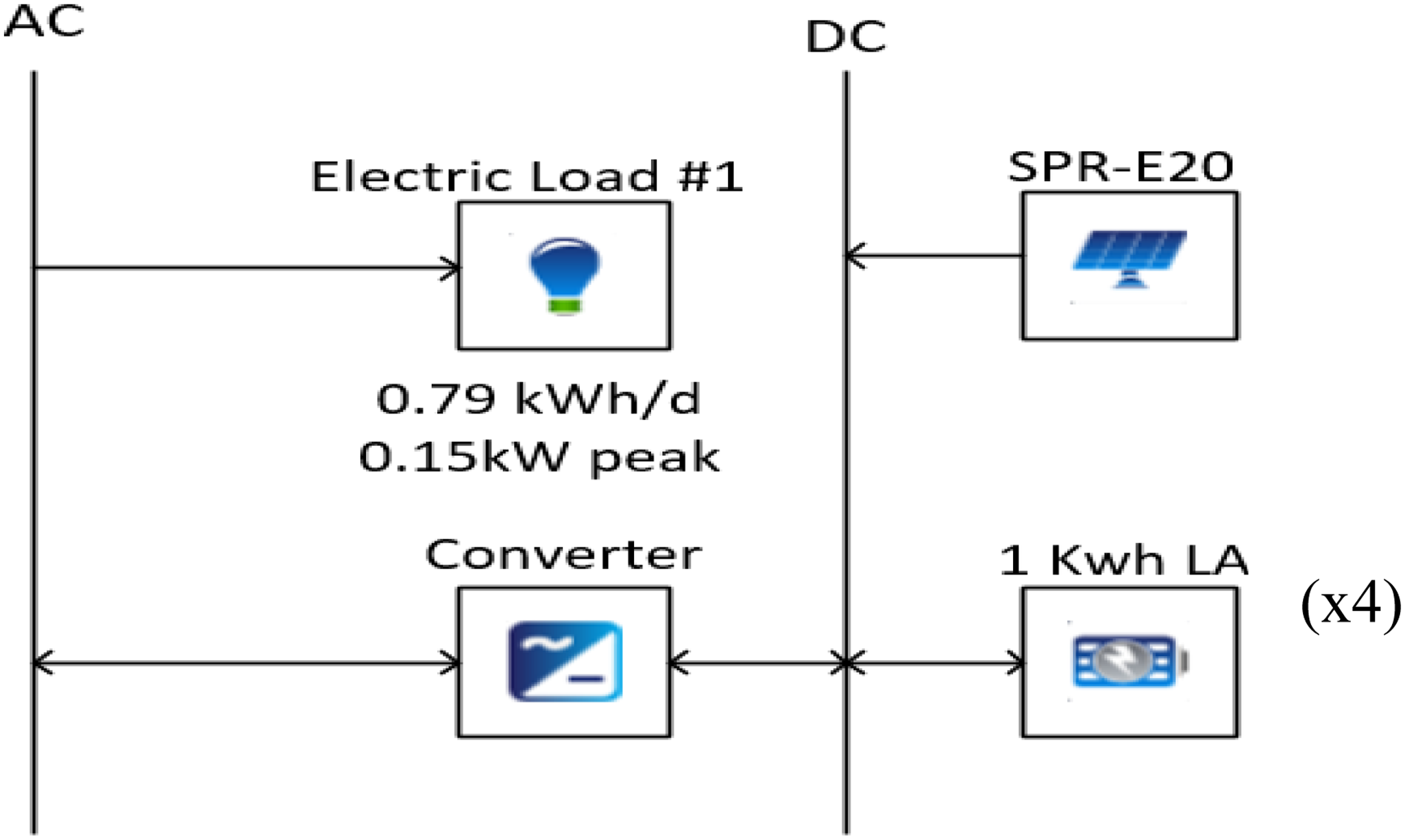
Layout diagram for a rural home.
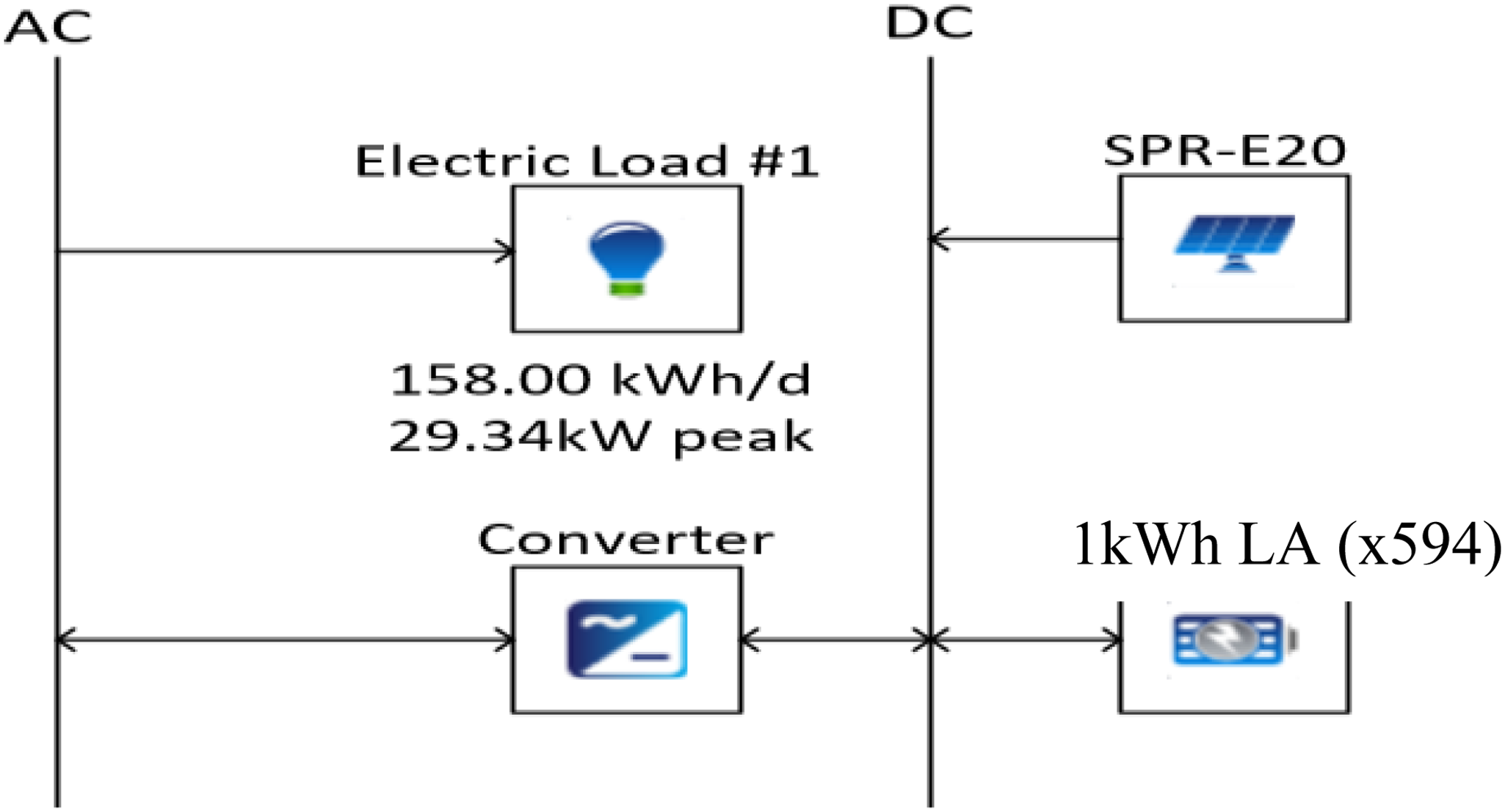
Layout diagram for 200 rural homes.
Off-grid performance for 200 rural homes.
Off-grid PV models design
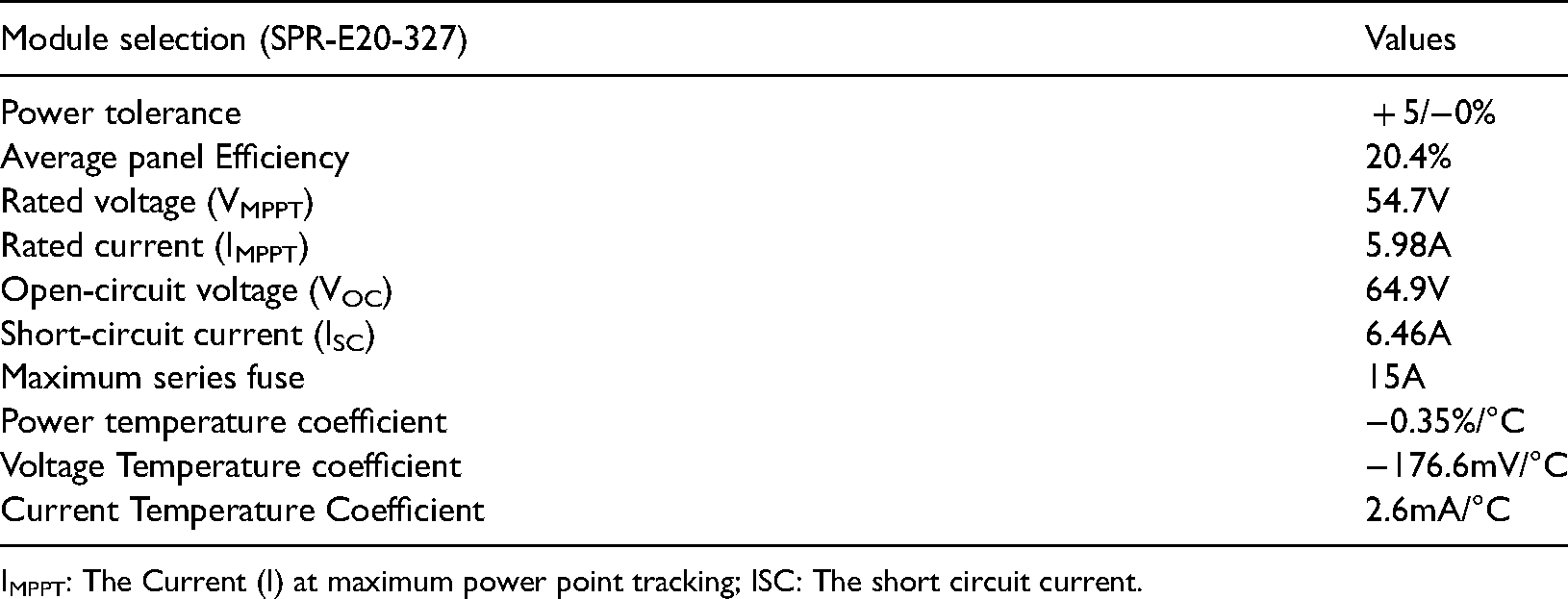
The off-grid PV/Battery microgrid model was simulated with Hybrid Optimization of Multiple Electric Renewables (Homer Pro) professional software. HOMER's optimization and its sensitivity analysis algorithms make it easier to evaluate the different system configurations. Figures 6 and 7 are layout circuits designed in Homer Pro for solving rural energy problems for two different scenarios. The proposed standalone system herewith described in Figure 6 shows the PV module with the SPR-E20-327 model,4 strings of lead-acid batteries, and the DC to AC converter. All solar PV power goes through the batteries bank before supplying the load and there must be a controller to coordinate the energy from both the array and the batteries bank. The excess energy produced must be stored in the battery's energy storage system for its usage during the sunset. The load demand was evaluated to 0.79 kWh/day for a single house with a maximum of 0.15 kW peak power as shown in Figure 8 which classifies it in the category of very few standalone systems known as nanogrid solar home systems(nano-SHS). That system usually has load demand ranging from little systems like 50 Wpeak to 200 Wpeak with very limited power consumption like light emitting diode (LED) lights, radio, and small power for mobile phone charging (Holtorf et al., 2015). The PV array for nano-SHS may be directly coupled to the battery and loaded with an optional simple controller that is designed to either disconnect the discharged battery or shorten the PV module when the battery is fully charged. The PV module may range from 12 V to 24 V with 36 cells or 72 cells. However, for a community of 200 households, the load requirement increases up to 158 kWh with a maximum power peak of 29.34 kW. The PV array system is now large which adds more opportunities for rural households. For this system, the charging control is ensured by the solar charger and the discharge control by the inverter. In this case, a high power system is reached with more households linked to power and thus necessitates the communication relays and solar charger known as a standalone controller which may be equipped with a maximum power point tracking converter, and direct current (DC) to alternating current (AC) battery inverters. The energy produced is either DC or AC supplied through a battery inverter. Table 3 describes the details of the selected PV module as it was read from the manufacturer's datasheet of solar panel E20-327 (SunPower Corporation, 2017). The choice of PV module is based on its high efficiency of up to 20% with reliable power suitable for residential home applications.

Photovoltaic performance measurement using PVGIS-5.
The electrical characteristic of the selected PV module SPR-E20-327.
IMPPT: The Current (I) at maximum power point tracking; ISC: The short circuit current.
The energy produced by the PV module (
Homer also gives the economic feedback from the PV array module by calculating the LCOE as follows:
In Homer Pro, the Total annualized capital cost is obtained from the total initial capital cost multiplied by the capital recovery factor.

Photovoltaic geographical information system (PVGIS)
PVGIS is free and provides you information about the amount of sunlight hitting a horizontal surface of the earth, measured in [W/m2] and it uses satellite tools to measure the Photovoltaic (PV) system performance in a selected location. The website is developed and maintained by the Joint Research Center (JRC) of the European Commission (P. © E. C, 2001–2022).
PVGIS relies on four meteorological databases that get data through satellites measurement tools such as PVGIS-climate monitoring satellite application facility (CMSAF), PVGIS-SARAH, PVGIS-ERA5, and PVGIS-consortium for small scale modelling (COSMO) (Cieslak and Dragan, 2018). In this paper, PVGIS-SARAH was chosen based on its possibility of all African continental area coverage for data visualization and analysis.
PVGIS tools and services
PVGIS provides free and open access to each of the following services:
Photovoltaic potential for different technologies and configurations of either grid-connected or standalone systems. Solar radiation and temperature, as monthly averages or daily profiles, can also be determined and analyzed using PVGIS. Full-time series of hourly values of both solar radiation and PV performance. Typical Meteorological Year data for nine climatic variables and maps, by country or region, of solar resources and PV potential can be easily printed through web access facilities. PVMAPS software includes all the estimation models used in PVGIS.
PVGIS version 5 with its two main databases, PVGIS-SARAH and PVGIS-CMSAF is known to give accurate information based on African countries. Due to that capability, they are mostly used as measuring tools for either grid-connected, PV tracking, or standalone (off-grid) photovoltaic performance measurement. Figure 8 shows the application procedure of PVGIS using either CMSAF or SARAH database to measure the PV performance. The system requires the knowledge of all inputs as stipulated in Tables 1 and 2. Although PVGIS provides better PV energy predictions it does not indicate any financial projections of the energy produced (Psomopoulos et al., 2015). Other software can be used for financial data analysis as was the case herewith in this paper.
Results
In this paper, an off-grid PV/Battery system was designed to solve rural area energy shortages including power blackout problems. The off-grid PV/Battery model was simulated using Homer Pro software, a multi-inputs and multi-outputs software (MIMO) and the optimized results from Homer were checked by PVGIS software based on the two output behaviors such as PV energy output and battery performances to get more detailed system performance with good visualization. The input data were obtained from the National Aeronautics and Space Administration (NASA) for solar data of the selected study site. The objective of the design circuit was to get an affordable, reliable, and sustainable power circuit model based on available local and free renewables energy resources. The study has selected solar among other renewable energy sources including hydro, wind and solar, Geothermal, Tidal, and biomass. Due to the geographical situation of the visited site and from the question-answers about the energy problems which many rural populations are facing nowadays, we worked on the solar – battery model as the answer to energy crisis solution but further studies should also be investigated for other types of renewable energy. From the simulation results, Electrical power produced is always abundantly available in July, August and October. The same results but with a different scale were obtained by using PVGIS5. This is due to the summer period in July and August at Kambogo village, Nyarugenge cell, Rubengera sector, Karongi district in Western Province of Rwanda. The best method is the one that uses a group of 200 rural homes and generates the load requirement for NPC equal to 1,079,210US$ at an LCOE of 1.45$US/kWh. The additional PVGIS-5 software helped in the identification of monthly PV energy produced as shown in Figure 9 for load per single resident and in Figure 10 for load per 200 residents. It also stimulates the monthly battery performance of lead-acid (LA) batteries in percentage as described in Figure 11 for a single resident and in Figure 12 for 200 residents. Furthermore, with Homer Pro software, the state of charge of the battery for the whole day is given in Figure 12 and Figure 13 with the minimum battery discharge of 40% which would result in the battery's long life. Due to the variant Gross Domestic Product (GDP) per capita income of many rural populations who mostly live with agricultural subsistence, government support in terms of incentives may highly contribute to sustainable energy development for each successful solar PV project implemented in rural areas. Finally, to alleviate the power shortage and blackout problems in most parts of the country, the introduction of private sector investments in off-grid PV/Battery microgrids in rural areas is highly appreciated for energy shortage alleviation. Regarding the limitation of the increased initial cost of PV/Battery, the longevity of its operating service during the estimated period of 25 years together with attraction funds for successful renewable energy production would all offset the cost and becomes the source of environmental protection against greenhouse gases emissions from the recent fossil fuels usages.
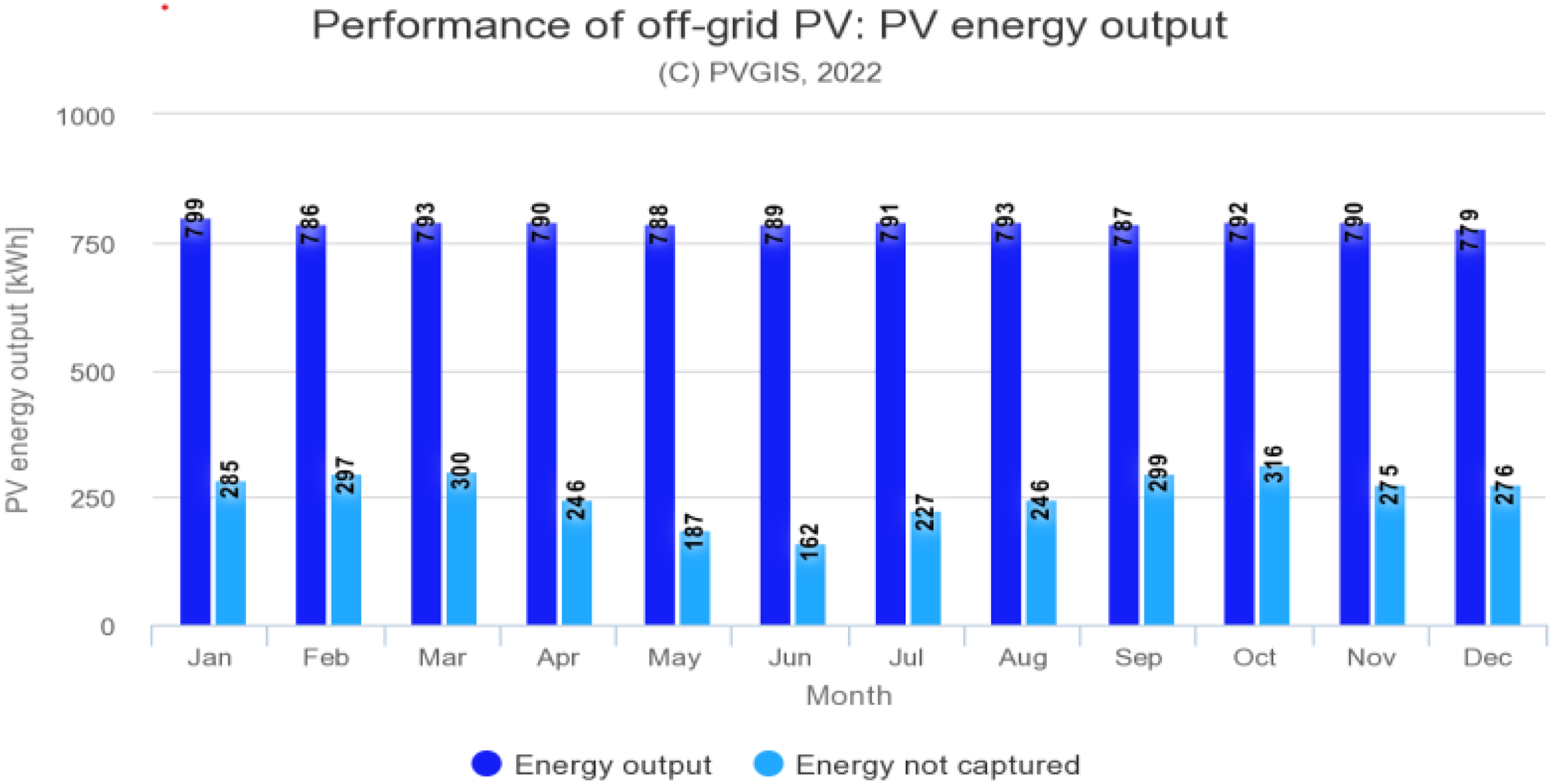
PV energy output for a residential home.
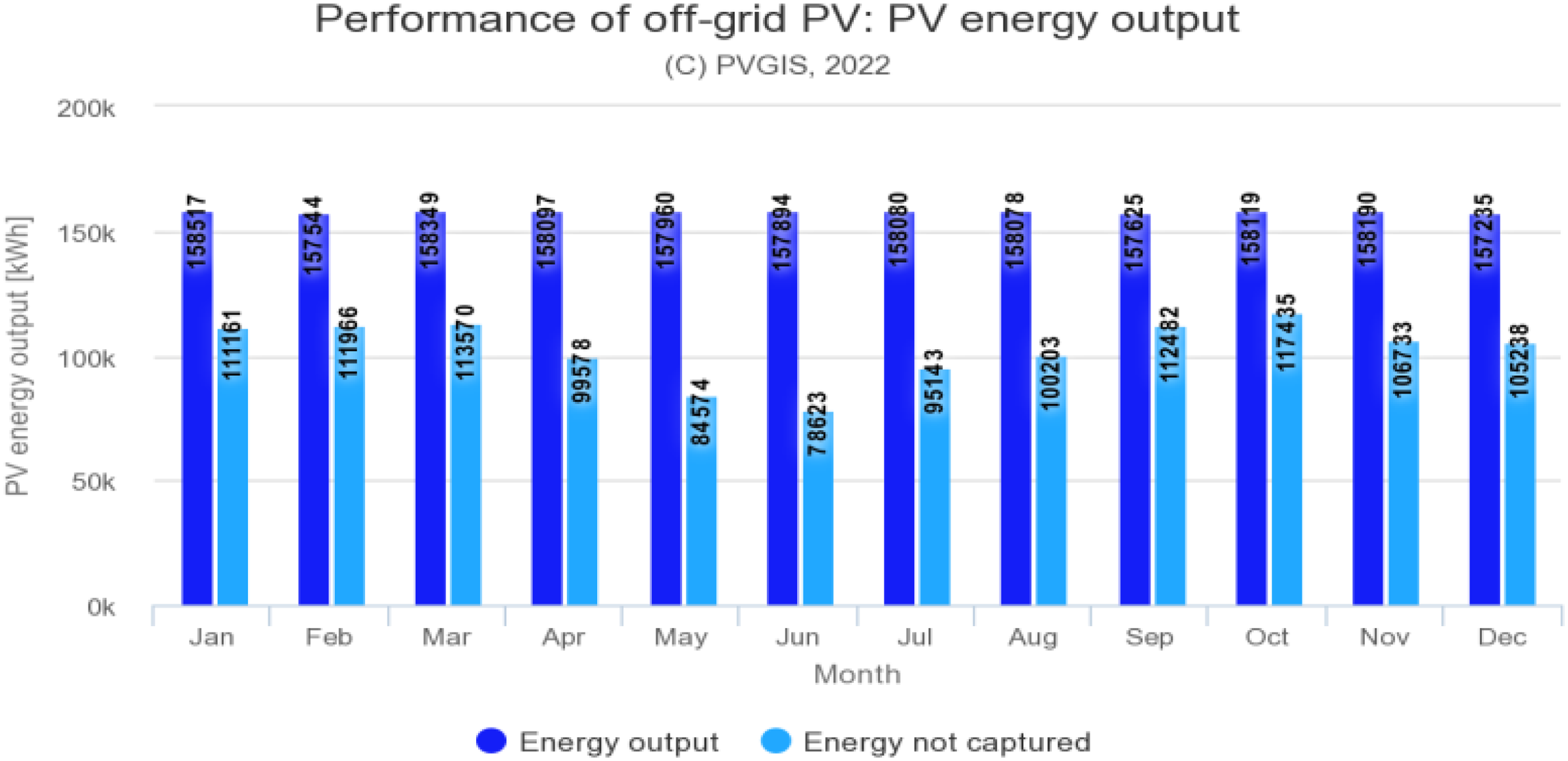
PV energy output for 200 rural residential homes.
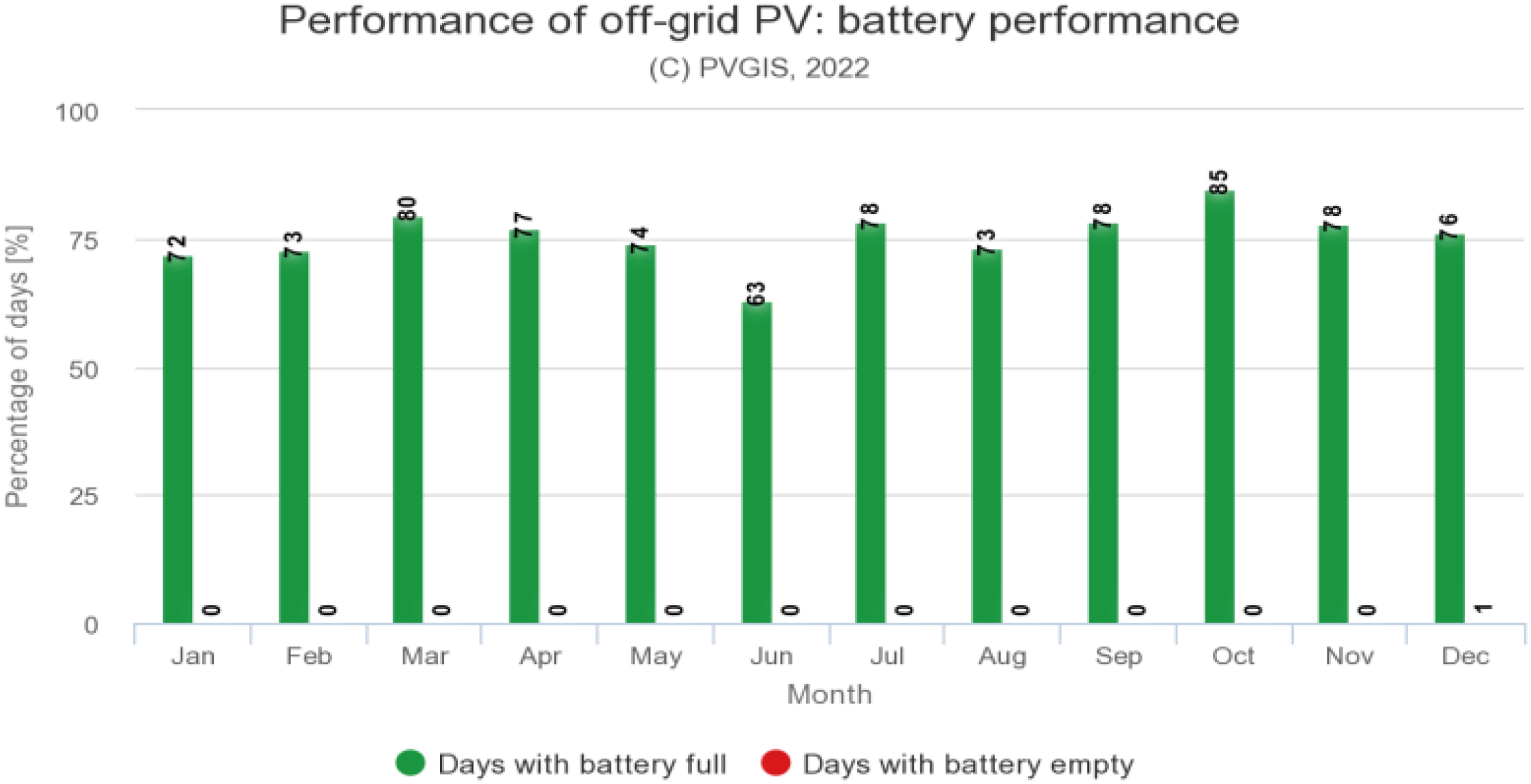
Battery performance for a residential home load.
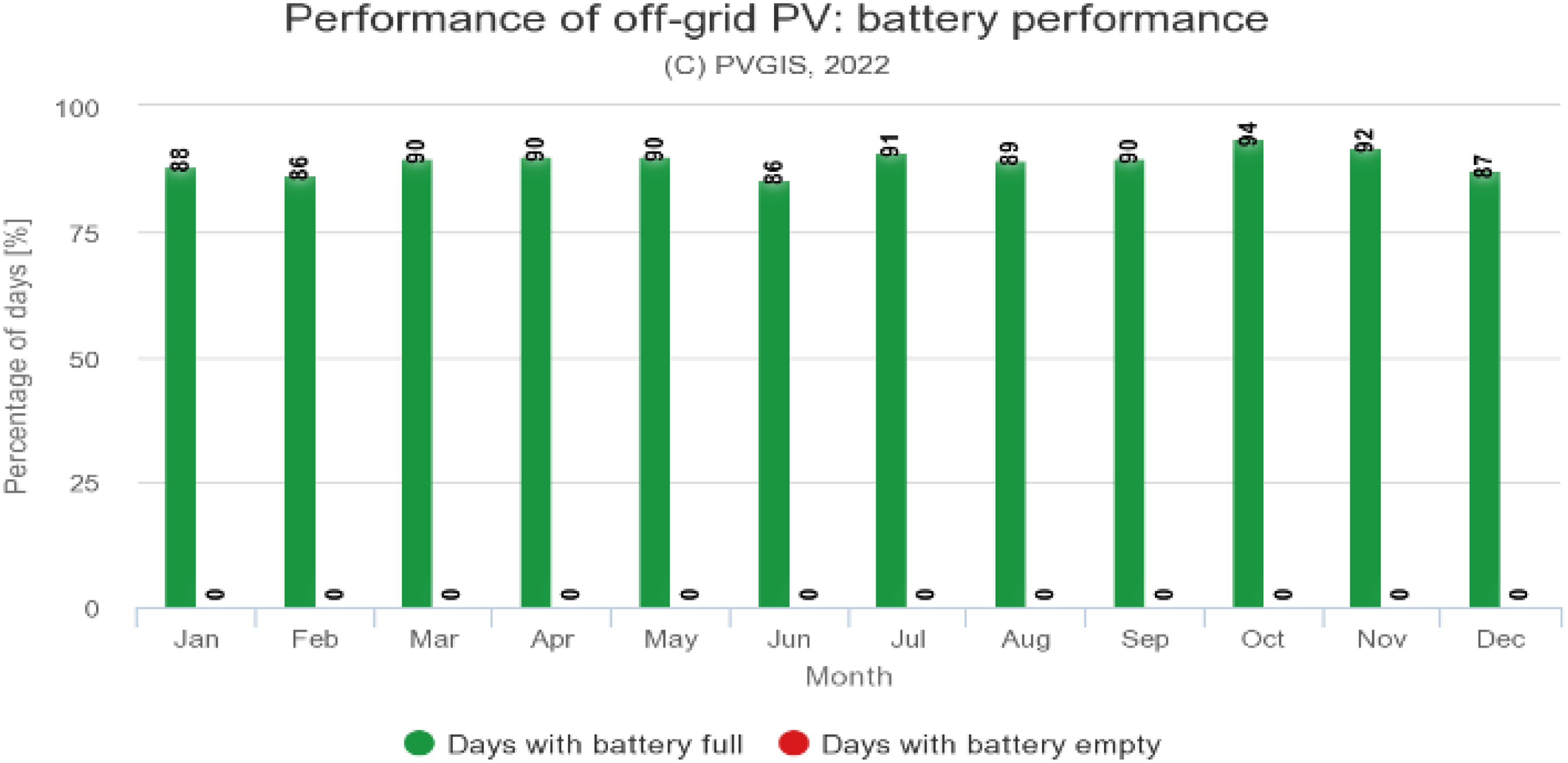
Battery performance for 200 residential homes load.
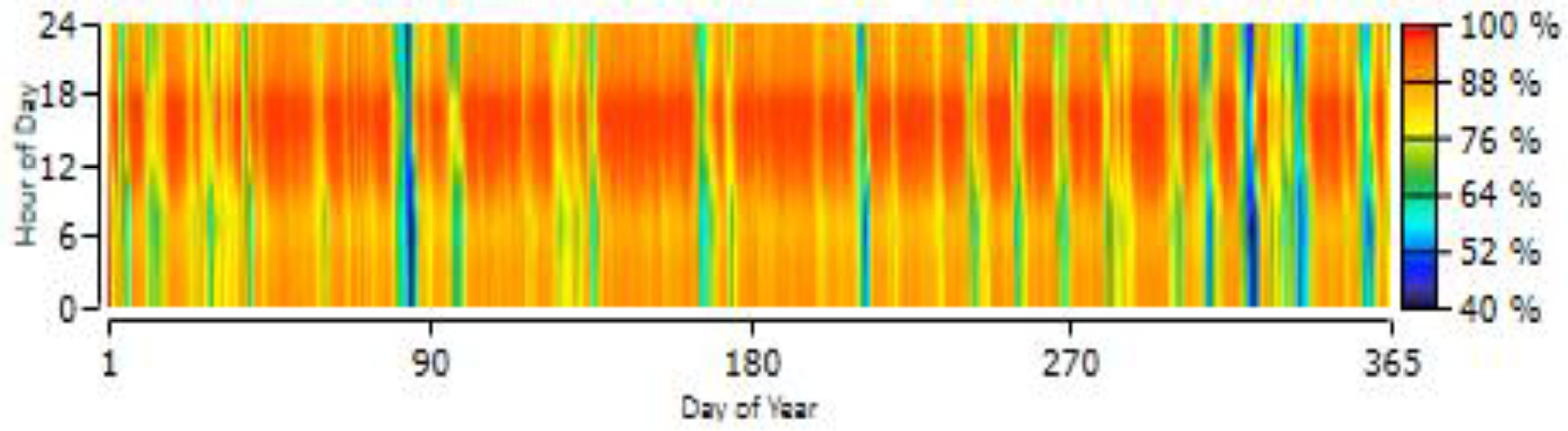
State of charge of battery for a household load.
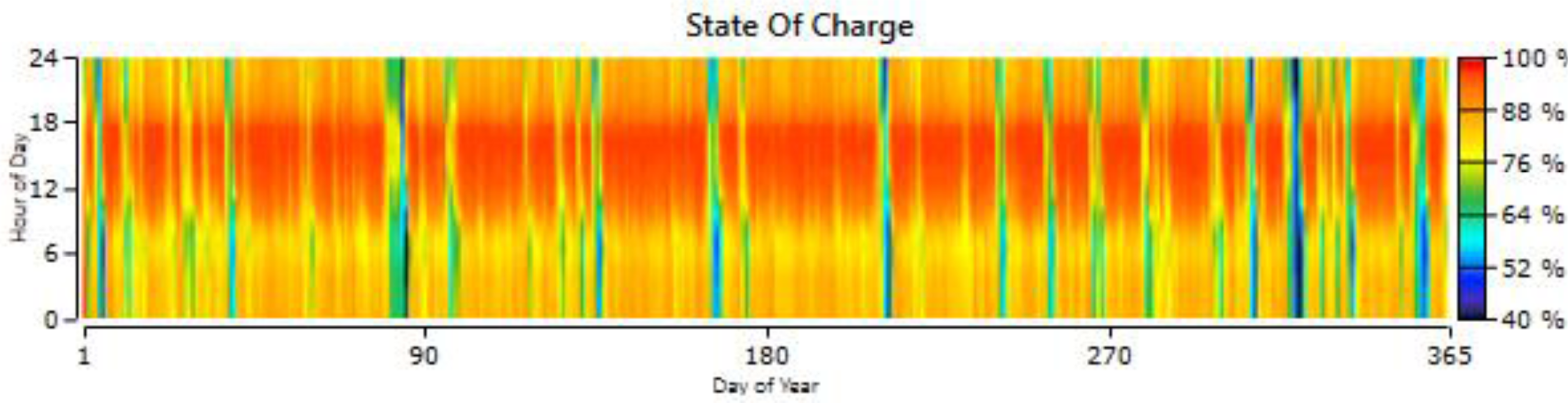
State of charge of battery for 200 load users.
Conclusion
This paper presents the study about the application of a standalone PV/Battery microgrid model used for rural domestic purposes. The observation of the most effective system concludes the efficacy of renewable exploitation based on free solar resources. The LCOE of 1.45US$/kWh is a reasonable price that falls in the range of the current power purchase in Rwanda. Due to irregular income from rural populations that usually depend on the agricultural crop, government support in terms of incentives may be provided to reduce the high initial capital investment. The successful implementation of the project may need the beneficiaries to be distributed in cooperatives for each group of 200 residential homes to share the benefits from the resulting power production plant. This will facilitate the management of each PV/Battery microgrid plant. Since the solar irradiations are only available during half of the day with a maximum of 5.4 kWh/m2, the use of a batteries bank for the energy storage system has been incorporated to allow the full usage of power produced along with the sunrise. However, the battery bank introduces the high cost of the PV system and its instant replacement need before the lifetime of the PV system, which is estimated to be 25 years minimum. This paper brings a more positive impact on rural citizens beyond the limitation of domestic applications. Further studies should look at how to expand the application based on the available rural activities associated with their social-economic advantages. They may look at how the successful power production would be applied to the agri-business, solar irrigation, crop drying, cold storage for some vegetables, and application in food processing.
Footnotes
Acknowledgements
This work was supported by the key project of Tianjin Natural Science Foundation (Project No. 19JCZDJC32100) and the Natural Science Foundation of Hebei Province of China (Project No. E2018202282).
Declaration of conflicting interests
The author(s) declared no potential conflicts of interest with respect to the research, authorship, and/or publication of this article.
Funding
The author(s) disclosed receipt of the following financial support for the research, authorship, and/or publication of this article: This work was supported by the Tianjin Natural Science Foundation and Natural Science Foundation of Hebei Province of China, (grant number Project No. 19JCZDJC32100 and Project No. E2018202282).
