




Abstract
In this research, hybrid method is proposed to model the I–V characteristic curve of a photovoltaic (PV) module. The method is represented by a multi-objective arithmetic optimization and cuckoo search with multi-criteria decision-making approach. The proposed model generates first a number of I–V curves as candidates. This phase is conducted through multi-objective optimization algorithm. The optimization algorithm is assessed by a non-dominated ranking scheme and crowding distance framework. After that, the best I–V curve candidate is chosen from the result of Pareto front by using the VIKOR multi-criteria decision-making method. Moreover, the analytic hierarchy approach is employed to select the appropriate weight for each criterion. The proposed method is validated by using an experimental data under various operational conditions. This validation is done by extracting different I–V characteristic for PV modules. The proposed method is compared to a number of methods in the literature. Results show that the proposed method exceeds other methods in the literature considering the accuracy of generating the I–V curves. In addition, results show that the proposed method requires less computational power as compared to other hybridized methods.
Introduction
In general, to model a photovoltaic (PV) module, the single-diode model (SDM) is utilized for identifying PV module I–V characteristics due to its relative easiness and straightforwardness of computations. To extract I–V characteristics within various climatic conditions, SDM requires calculation of five parameters. Thus, PV module parameter extraction is the process of estimating parameters of these aggregated equivalent circuits from datasheet or measured I–V data (Gude et al., 2022).
PV module parameter extraction approaches can be classified into three categories, which are numerical, analytical, and artificial intelligence-based methods. In the analytical method, each parameter of the five parameters is modeled as a function of various conditions of operation such as short circuit, open circuit, and maximum power point (MPP). Simplified solutions are being used to solve these functions by estimating the constants of the formulated regression equations. However, the accuracy of such a method is not that high as compared to numerical method. Second, numerical (iterative) techniques which are based on numerical approaches are used for the purpose of minimizing an error criteria function in order to solve the equations. Here, the accuracy of the numerical approaches is affected by a number of variables, such as algorithm's starting solution guess and error criterion function. Moreover, convergence problems as well as the gradient operation requirement are also considered drawbacks of numerical method (Gude et al., 2022; Laudani et al., 2014). Third, meta-heuristic optimization algorithms can be also utilized for resolving such a problem. Such approaches do not need a guess of the initial solution and calculation of the gradient. Therefore, they can be considered as efficient solution for PV module parameter extraction problem (Jordehi, 2016).
There are many examples on the use meta-heuristic optimization algorithms for PV modules I–V characteristic curve in the literature. In (Kharchouf et al., 2022), the authors have used an improved differential evolution (IDE) algorithm for extracting the parameters of a PV module. The objective function in (Kharchouf et al., 2022) aimed at minimizing the difference between algorithm's output and referenced parameters. In (Fan et al., 2022), random reselection particle swarm optimization (PSOCS) approach was also used to solve the same objective function which is described in (Kharchouf et al., 2022). Similarly, different artificial intelligence-based methods (AI) are used to minimize the difference between a referenced PV module parameters and model's output. In (Siddiqui and Abido, 2013; Zagrouba et al., 2010; Ismail et al., 2013; Harrag and Messalti, 2017; Fathy et al., 2019; Qais et al., 2020; Chenouard and El-Sehiemy, 2020; Oulcaid et al., 2020; Premkumar et al., 2020; Ridha et al., 2022a; Ridha et al., 2022b; Pan et al., 2022; Farah et al., 2022; Sharma et al., 2022; Wang et al., 2022), many AI-based algorithms were used as well to solve the same objective function including differential evolution (DE), genetic algorithm (GA), particle swarm optimization (PSO), DE-assisted tabu search (TS), (TSDE), PSO assisted DE, enhanced moth search algorithm (EMSA), the interval branch and bound (IBEXOPT) algorithm, Grey wolf Optimizer (GWO), Symbiosis organisms search (SOS), and dynamic opposite learning strategy (DOL).
Finally, the main contribution of this paper is the proposal of hybrid algorithm that generates PV module I–V curves with high accuracy and minimal computational power. This makes the proposal more realistic and easier to embed as compared to other AI-based methods which require either extensive training or high computational power for processing.
PV models and problem formulation
Single-diode PV solar cell model
Solar cell properties are commonly simulated by utilizing the SDM. SDM equivalent circuit is demonstrated in Figure 1 (Long et al., 2020; Gong and Cai, 2013). In SDM, resultant current is computed as below:
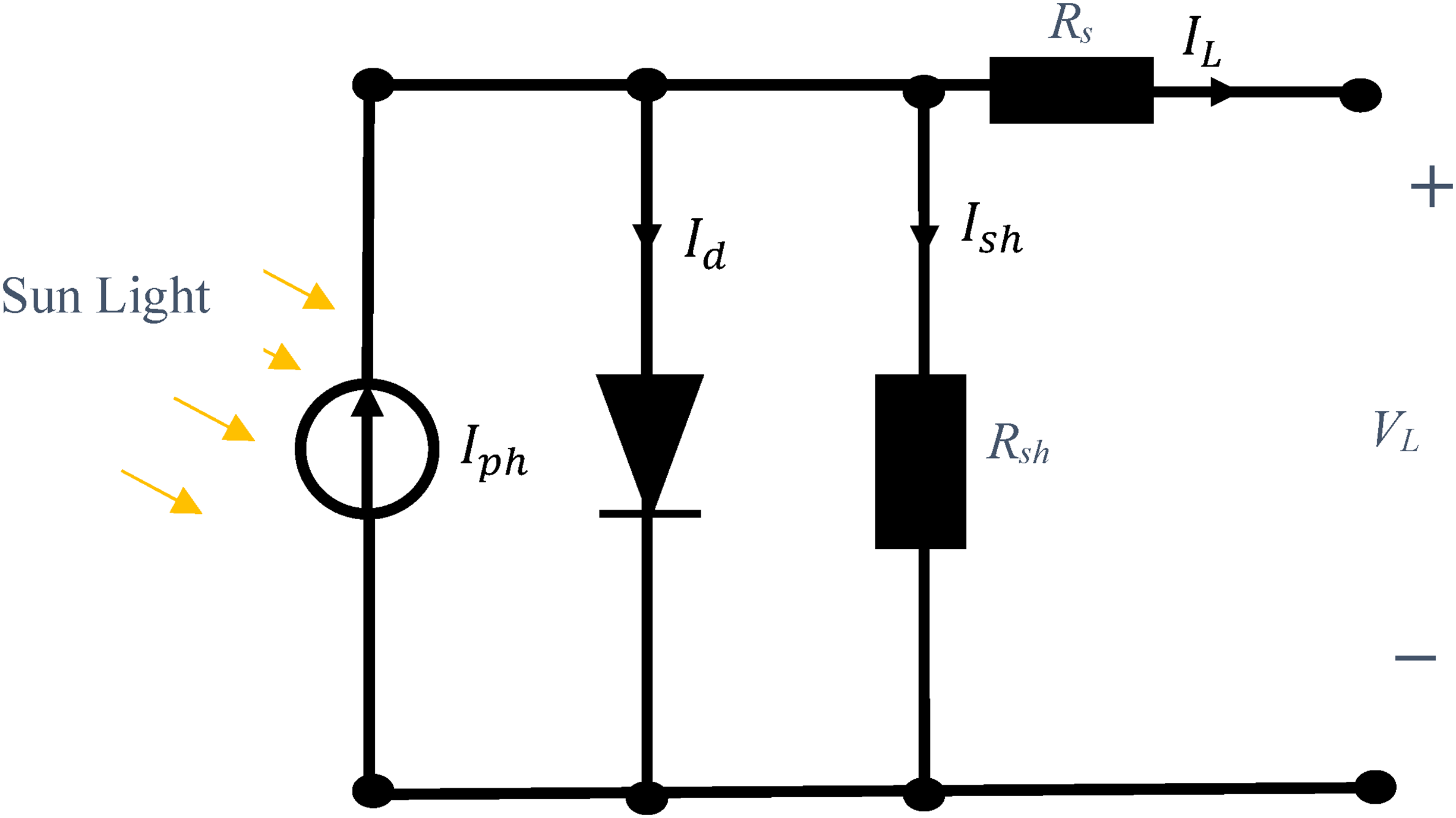
PV model equivalent circuit with single diode. PV, photovoltaic.

Where

Definitions of investigated problem and objective functions
The process of the SDM PV module parameters identification is counted as a multivariable, nonlinear problem. Thus, it is necessary to identify some unknowns before solving this problem. Variables’ value correctness is adjusted by utilizing various evaluating merit by using estimated and measured variables (Yousri et al., 2020). The first evaluating merit function in this work is the




The proposed method
In this research, the proposed methodology is divided into two main stages. The first stage is the proposed multi-objective hybrid arithmetic optimization algorithm and cuckoo search (MOAOACS) algorithm for calculating PV module's parameters. Meanwhile, in the second stage, candidates for the best solutions are chosen based on the weights assigned to various factors that have been determined as the most influential on problem's performance. This stage consists of hybrid MCDM methods, namely VIKOR and analytical hierarchy process (AHP) methods. The VIKOR method is used to rank the solutions produced by the MOAOACS algorithm, while the AHP approach is used to provide the proper weight for every criterion based on value related to that criterion.
The hybrid AOACS algorithm
This section briefly illustrates the hybrid cuckoo search algorithm and the arithmetic optimization (AOA) method. The AOA algorithm that is suggested in (Abualigah et al., 2021) is inspired by solving mathematical problems via utilizing the arithmetic operators. On the other hand, Cuckoo searching algorithm which is first presented in (Yang and Deb, 2009) is based cuckoo species obligate brood parasitism. Cuckoos brood parasitism involves putting their eggs in other species nests of host birds and served as its model. Direct combat between some host birds and the trespassing cuckoos is possible. AOACS pseudo-code (Algorithm 1) is described in Appendix A below.
The AOACS flow chart is depicted in Figure 2. As shown in Figure 2, the suggested hybrid algorithm starts by randomly initializing a population within the boundaries of the interesting problem. Then, the AOA and CS algorithm parameters are initialized by suitable values. The algorithm begins the iterative search process to find the optimum alternative once the initialization phase is finished. Through comparing a random value with the value of 0.5, that is the appropriate value depending on a large number of studies, the algorithm determines whether to employ the AOA searching approach or the CS (Yang and Deb, 2009).
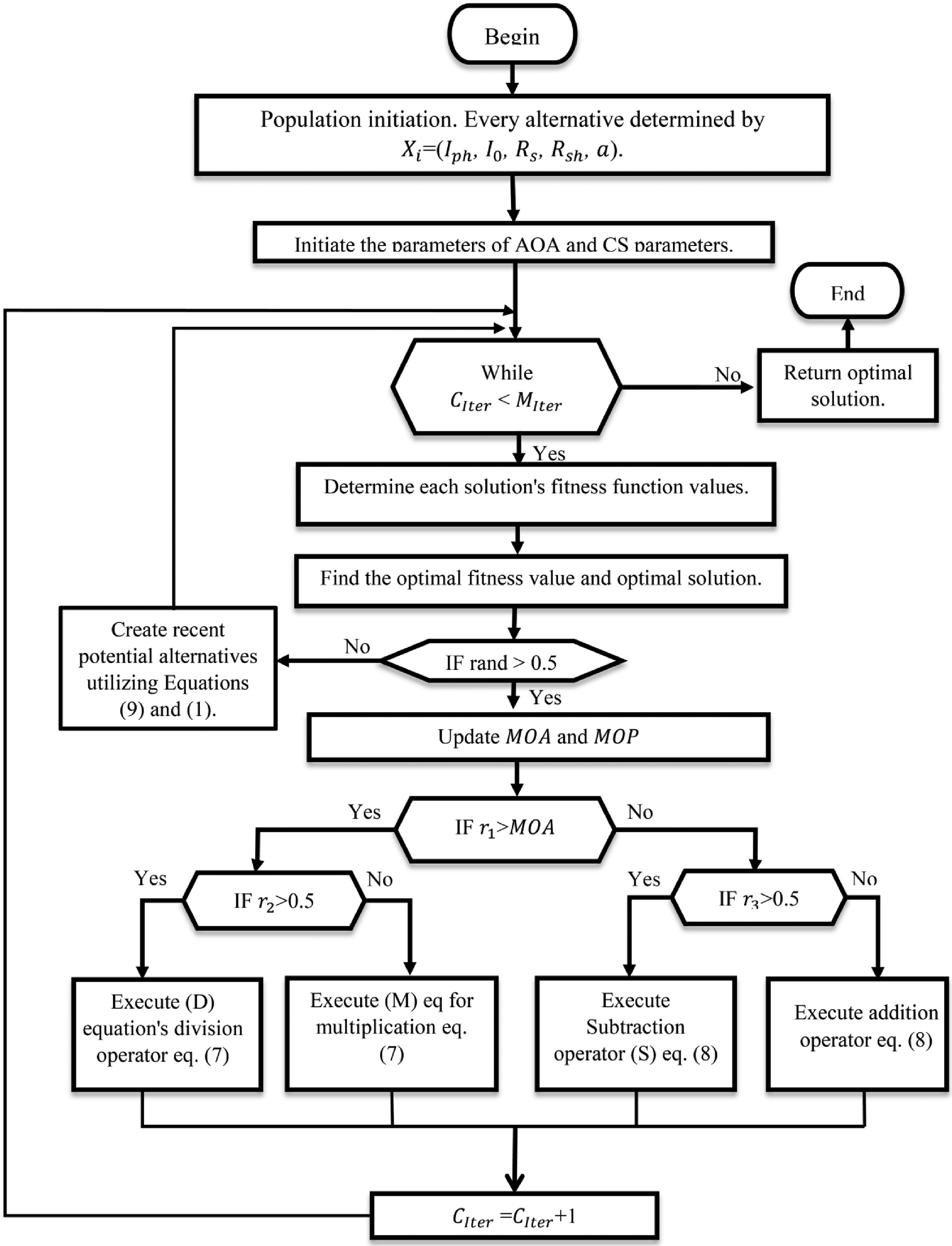
AOACS approach flow chart.
AOA approach depends on random value for purpose of deciding between two possible stages, which are globally exploration and local exploitation, which will be used by the algorithm when the original random number is bigger than 0.5. The exploration phase which uses either Division (D) operator or Multiplication (M) operator (Equation (7)) obtains scattered values or alternatives and prevents the CS from focusing the search on a single local optimum as below:

In order to obtain highly dense results, the exploitation phase utilizes either addition (A) operator or subtraction (S) operator (Equation (8)). Due to their reduced dispersion compared to other operators, the intended operators (S and A) may more smoothly find the target, enhancing the CS technique's local search.



Multi-objective hybrid arithmetic optimization algorithm and cuckoo search
The proposed MOAOACS uses the non-dominated sorting (NDS) method, as well as crowding distance (CD) framework which is utilized for purpose of maintaining variety. After executing AOACS hybrid algorithm that is explained in the previous section, a new population will be generated according to the fitness function of the new (child) solutions compared to the old (parent) solutions. This child population will be combined with the parent population to generate a doubled size (2NP) population. Then, the NDS approach will apply on this doubled size population to rank the solution based on two objective function values simultaneously, namely

Not all alternatives are presented in the NP slots of recently generated population, despite fact that empirical search space is 2NP in size. Alternatives that are not chosen by recently created population are eliminated. The alternatives from final permitted rank (final front) can exceed the free slots in the new population. Instead of arbitrary dismissing some alternatives and expand the variety of alternatives, a CD ranking idea is applied in this situation to choose alternatives in lower crowded zone.
The initialization of the necessary control parameters, including highest number of iterations (
The best answer or collection of solutions to PV parameters extraction problem are nominated in current study work by using a compromise ranking mechanism, the VIKOR method. The suggested MOAOACS provides a group of solutions that make up the ideal Pareto front. These optimal solutions are set then and will be the input to the MCDM VIKOR method. The VIKOR method is assigning the weights (preferences) of related significance of attributes to each evaluation criterion by employing the AHP for this purpose. Based on their preferences, the criteria are systematically assigned related significance (weight) values via the integration of the VIKOR and the AHP weighting methods.
A sample decision matrix is shown in Equation 12, the decision matrix denoted by DM that is created by evaluating the


Analytical hierarchy process weighting method
The AHP is a nonlinear general theory of assessment framework for implementing both inductive and deductive imagination with no use of logical measurement (Saaty, 1987). The AHP is used to generate ratio scales from continuous and discrete comparison pairs deriving from an essential scale or a practical computation that depicts the relationship between the sensation and the preferences (Saaty, 1987).
Three evaluators’ paired comparisons by using Saaty's scales are shown in Table 1 (Saaty, 1987). Saaty's AHP method is creating the preferences (weights) depending on opinions of some of the evaluators. These evaluators determine from their point of view the relationship between the involved criteria. They assess the relative significance of each attribute in relation to the others. Then based on these opinions, the AHP calculations are made and the above set of weights is obtained as illustrated in Table 2. These indicators show the most important error factor that should be used in order to evaluate the generated models. From the table, it can be seen that
Using Saaty's AHP scale, pairwise comparisons of three evaluators.
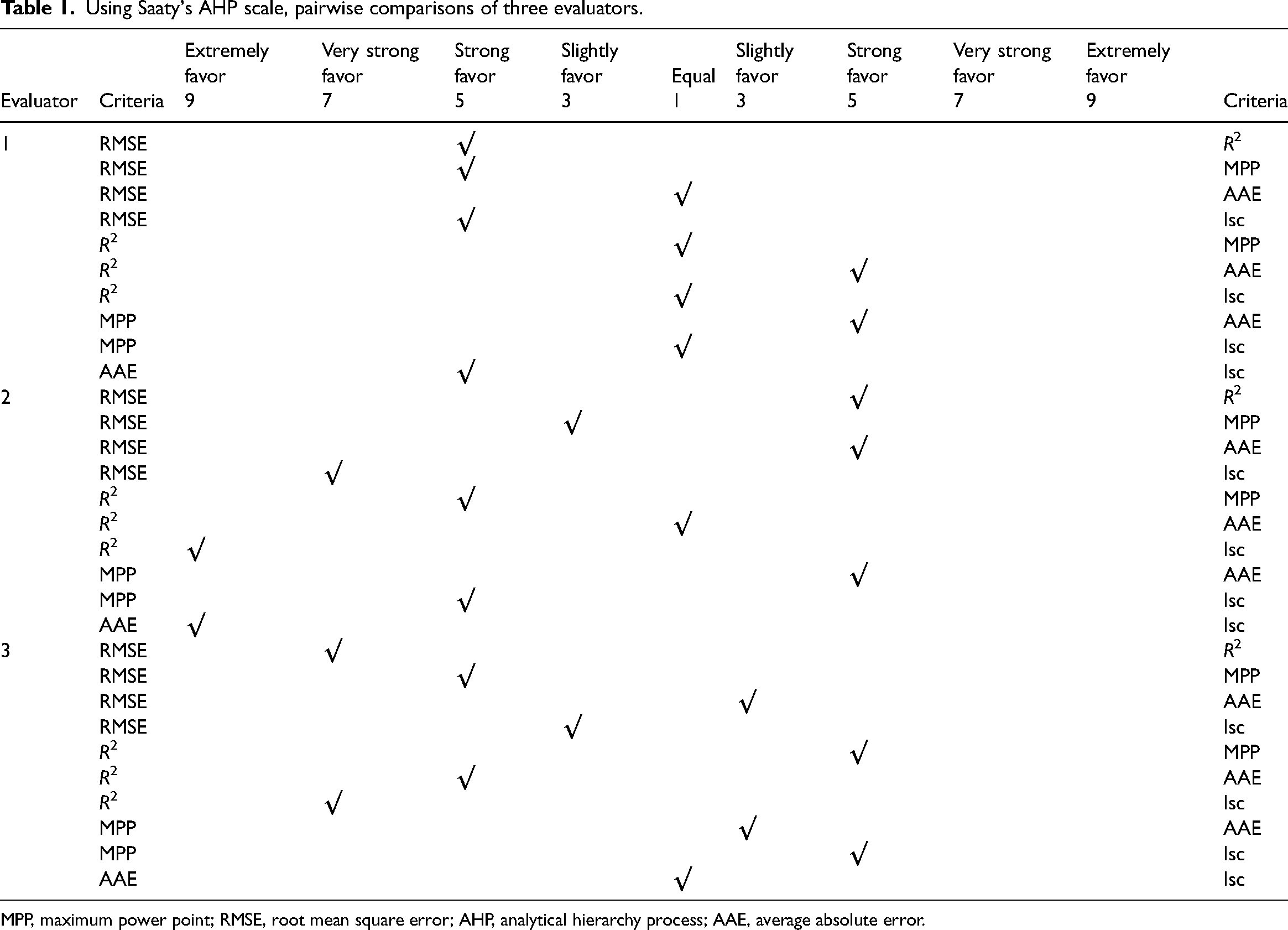
MPP, maximum power point; RMSE, root mean square error; AHP, analytical hierarchy process; AAE, average absolute error.
AHP matrix to determine the weight of each criterion.
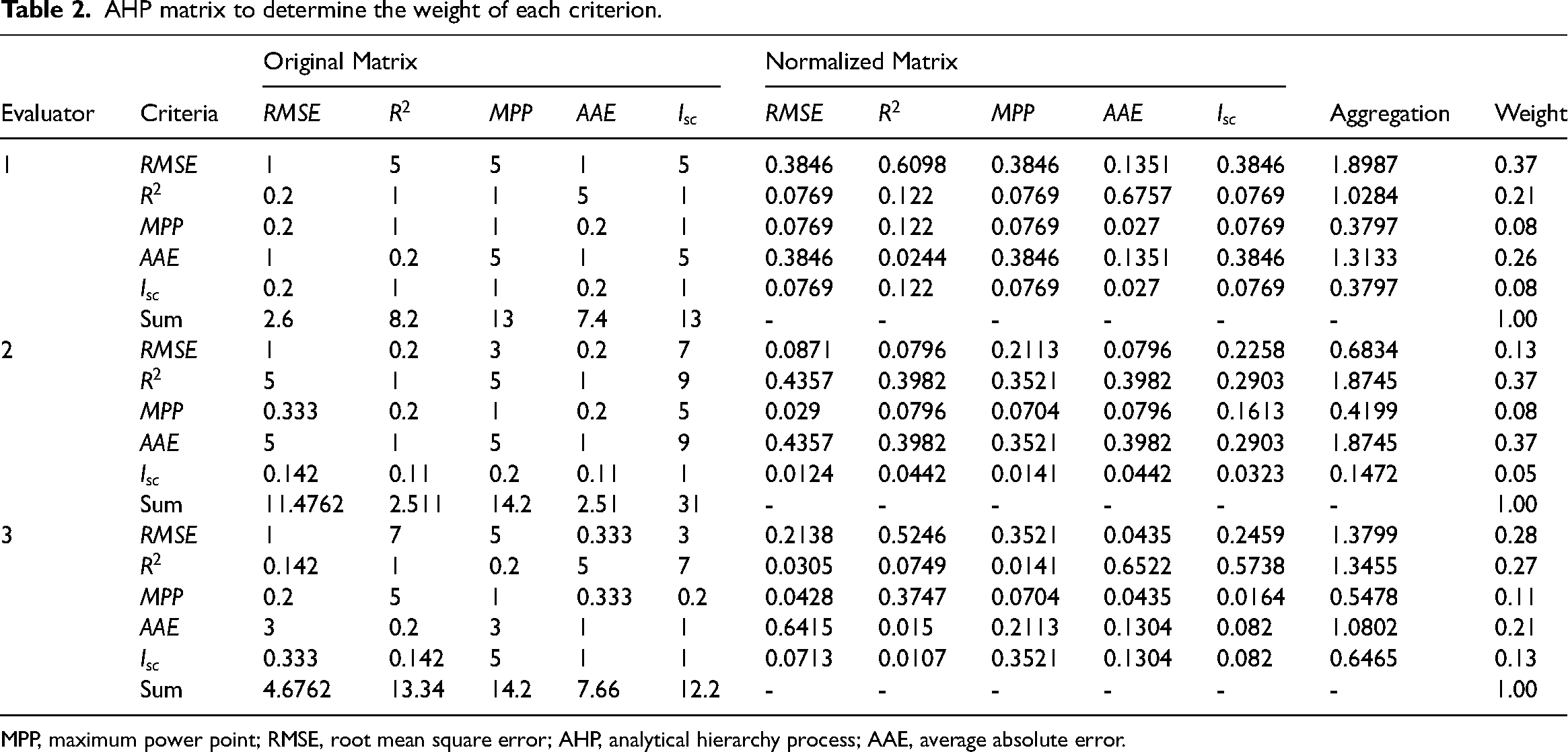
MPP, maximum power point; RMSE, root mean square error; AHP, analytical hierarchy process; AAE, average absolute error.
VIKOR method
The VIKOR approach is dependent on a collection function that stems from the compromise programming method and represents “closeness to the ideal.” This method uses linear normalization. VIKOR technique incorporates a collecting function as the deviation from the ideal solution, taking into account the significance of each criterion with respect to others and striking an equilibrium between overall as well individual objectives (San Cristóbal, 2011).
Results and discussion
For purpose of assessment of effectiveness related to the suggested MOAOACS for parameter estimation, a number of experiments are carried out on SDM PV module within this part. The experimental I–V dataset is utilized to extract SDM PV parameters. PV module that was used to collect the experimental data was mounted on a solar structure, and the data were collected by utilizing a DC–DC converter-based I–V characteristic generator; this generator preciseness is about 95%–99%. Data was measured under seven climate conditions (
Actual experimental data points gathered under different operational circumstances.

SDM PV parameters lower and upperbounds.
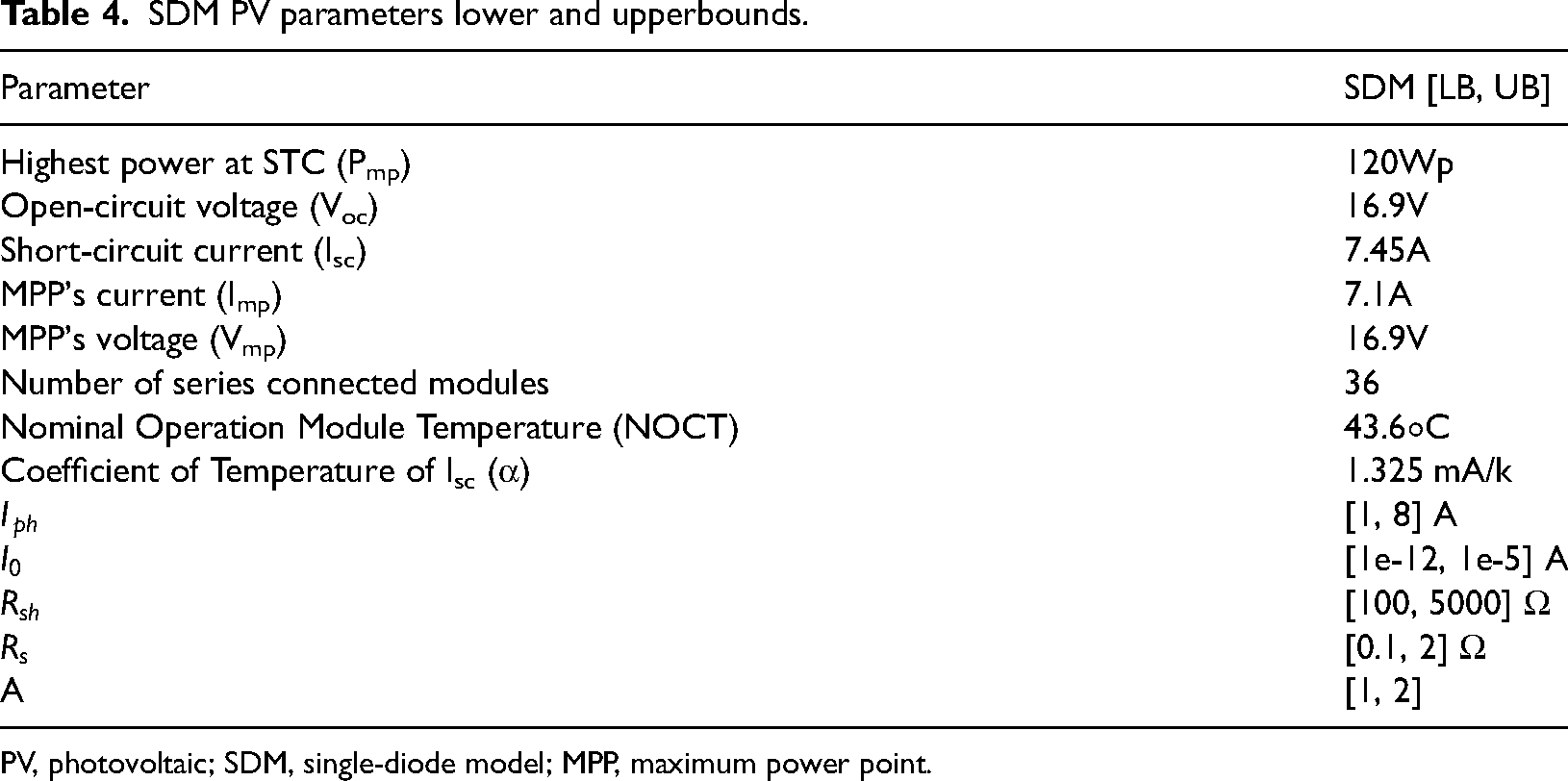
PV, photovoltaic; SDM, single-diode model; MPP, maximum power point.
In order to model the PV module I–V curves, the Pareto front obtained for PV module, from the MOAOACS method for all the utilized experimental data sets (G1-G7) are established as illustrated in Figure 3 which shows an example of Pareto front obtained for PV module for G1. According to Figure 3, Pareto front produced by MOAOACS approach had alternatives that could produce the optimal value of every
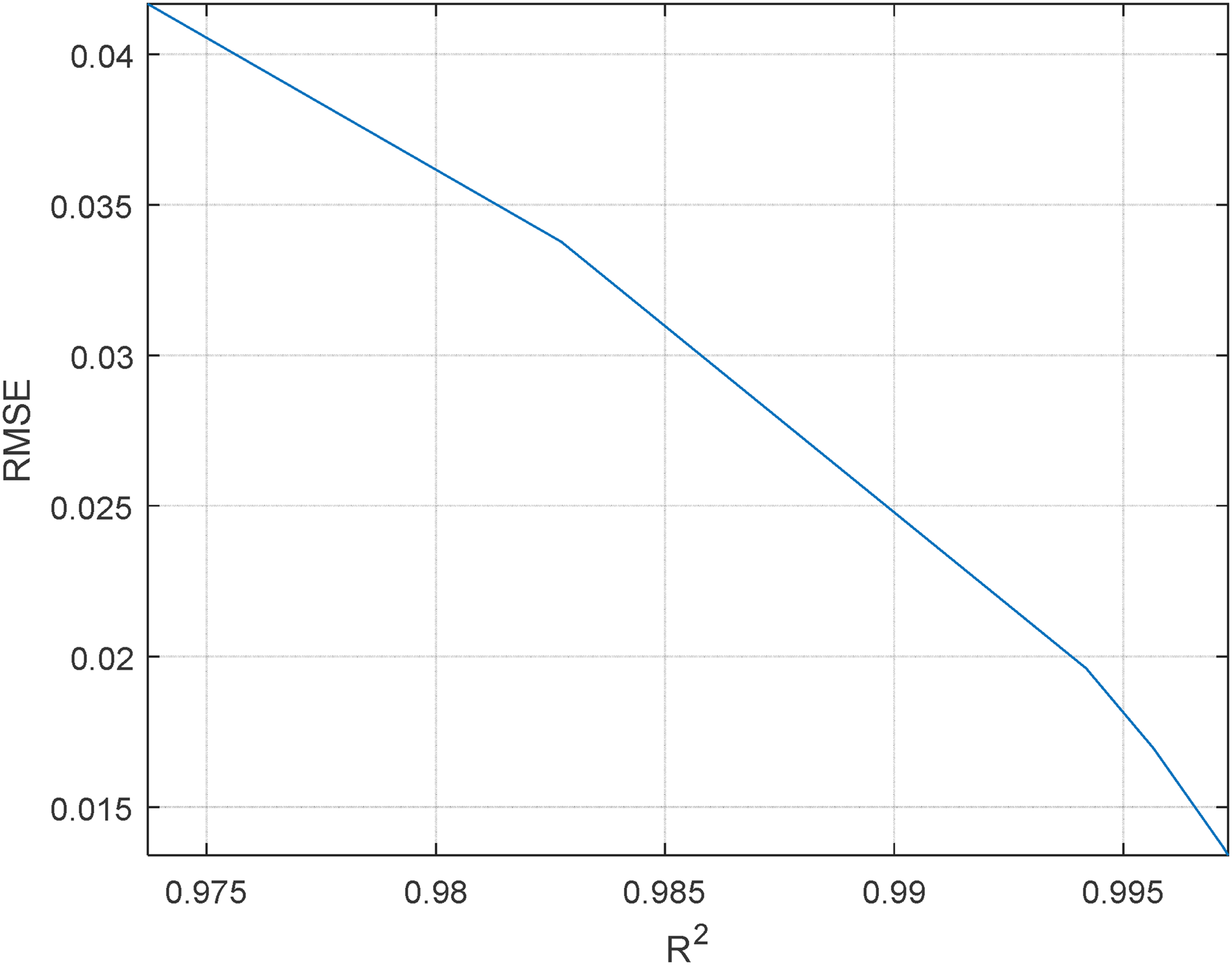
Pareto front obtained by the MOAOACS approach for the compromise solution (example for G1). MOAOACS, multi-objective hybrid arithmetic optimization algorithm and cuckoo search.
After obtaining these Pareto fronts, VIKOR approach is implemented to obtain the best solution depending on AHP calculated weights. In the present work, the best-obtained solution is the solution that is firstly ranked for all of the operational conditions. A decision matrix shown in Table 5 is a sample for Pareto front that produced by MOAOACS, it utilized by the VIKOR MCDM method to select the best solution(s) based on three different weight arrays ([w1, w2, w3]) considered. Table 5 demonstrates the decision matrix for the first operational conditions. The three arrays of weight are referred to as case: A, B, and C, respectively regarding the evaluation of three experts. For these three cases, weight arrays are assigned as follows: A → [0.37, 0.21, 0.08, 0.26, 0.08], B → [0.13, 0.37, 0.08, 0.37, 0.05], C → [0.28, 0.27, 0.11, 0.21, 0.13], in addition the criteria that are used to construct the decision matrix are
Decision Matrix for the first operational condition (G1).
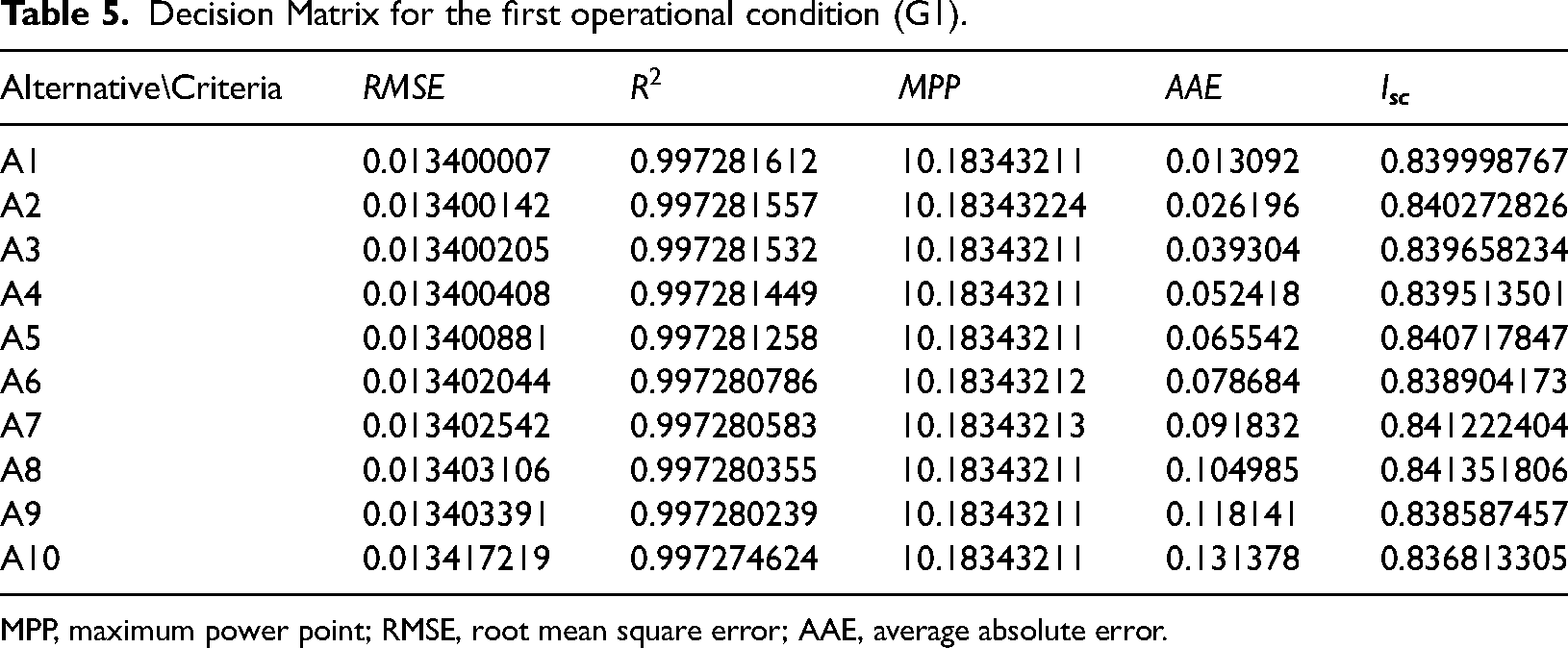
MPP, maximum power point; RMSE, root mean square error; AAE, average absolute error.
On the other hand, the parameters obtained for the suggested MOAOACS approach are described in Table 6. In this table, SDM PV module parameters that differ from their individual
MOAOACS SDM PV model's extracted parameters.
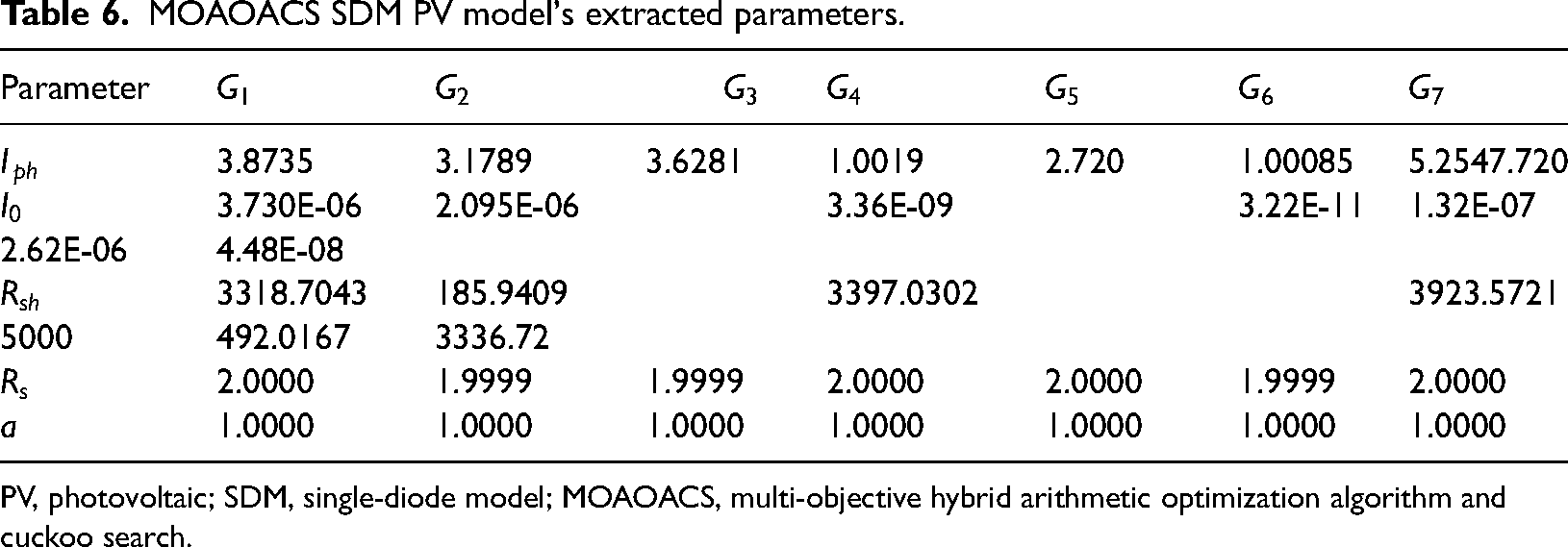
PV, photovoltaic; SDM, single-diode model; MOAOACS, multi-objective hybrid arithmetic optimization algorithm and cuckoo search.
Figure 4 shows characteristics curves (I–V and P–V) related to computed and experimental points of data related to SDM. Based on Figure 5, it is obvious that the curves show suggested MOAOACS approach are very close to all data points obtained experimentally for different operational circumstances, including MPPs’ data points.
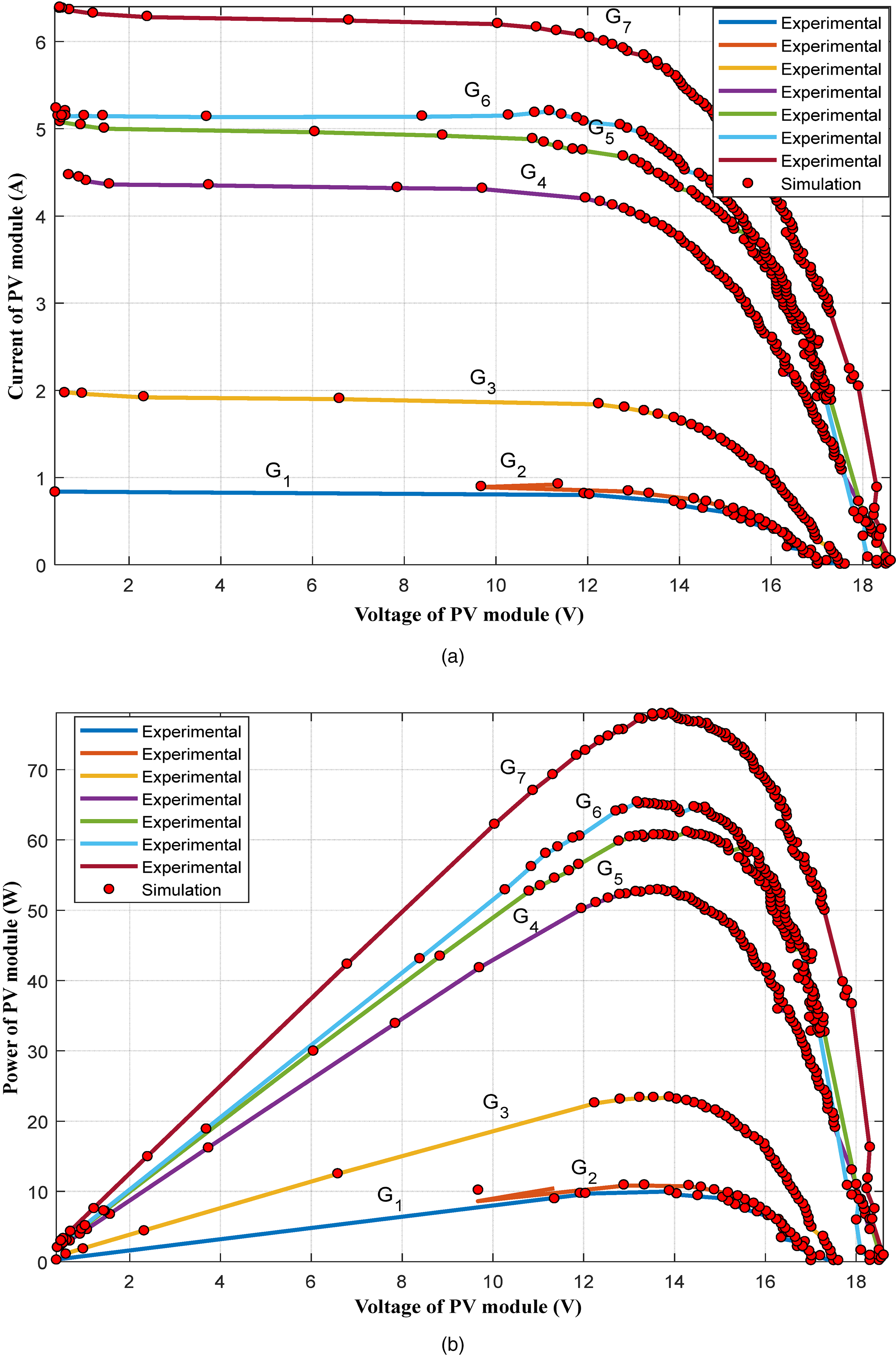
SDM I–V and P–V curves of seven utilized experimental data sets using proposed MOAOACS as well as competitive approaches. (A) I–V curves (B) P–V curves. SDM, single-diode model; MOAOACS, multi-objective hybrid arithmetic optimization algorithm and cuckoo search.
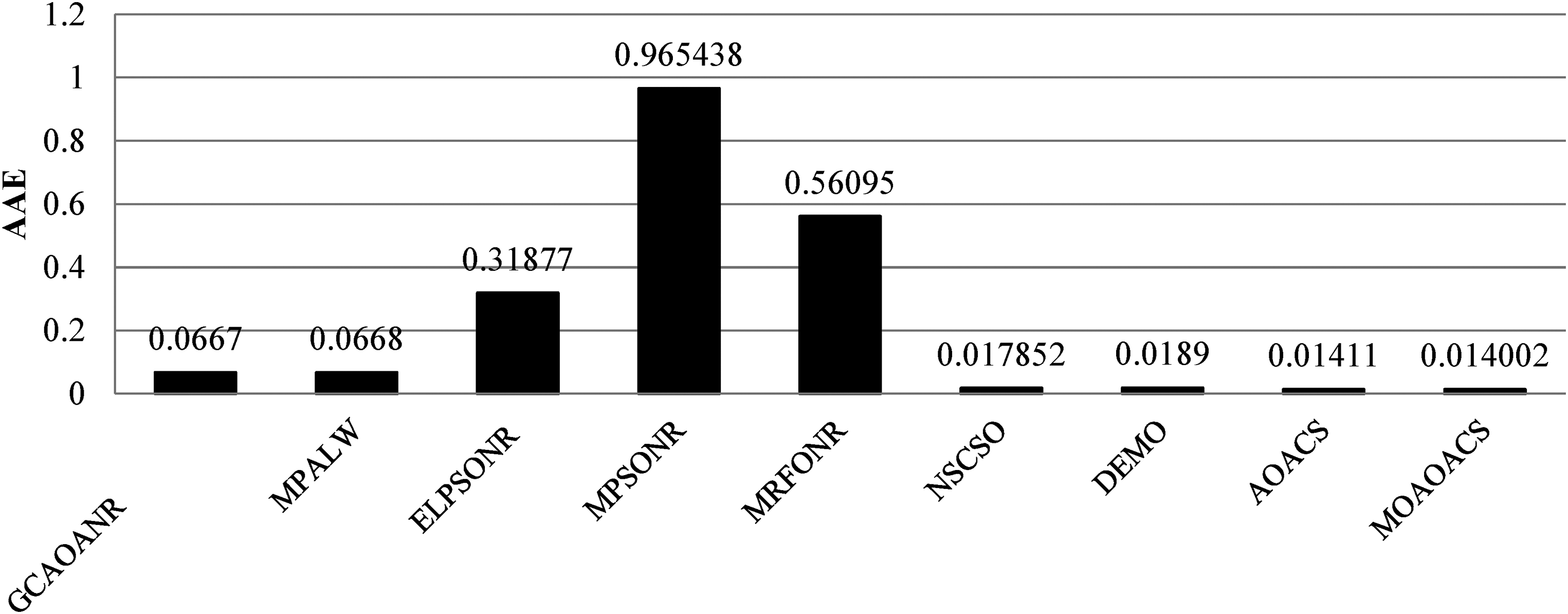
Example of the AAE of proposed MOAOACS approaches as well as its competitors within a specific climate condition (G5). AAE, average absolute error. MOAOACS, multi-objective hybrid arithmetic optimization algorithm and cuckoo search.
For the purpose of verifying the effectiveness of the suggested MOAOACS approach, a comparative analysis with competitive algorithms including AOACS, GCAOANR (Ridha et al., 2022a), GCAOALW (Ridha et al., 2022a), MPALW (Ridha, 2020), ELPSONR (Ridha et al., 2022a), MPSONR (Merchaoui et al. 2018), MRFONR (Houssein et al. 2021), NSCSO (Gude et al., 2022), and DEMO (Muhsen et al., 2016) methods is also conducted to assess single-diode PV module parameters. Suggested approach and all competitive methods are utilized to obtain SDM PV module parameters via optimizing RMSE subjected to experimental I–V data set. Moreover, both proposed method and DEMO algorithm are used as multi-objective by optimizing a second objective which is the
Table 7 demonstrates optimum values of
Statistical criteria of various approaches, such as the MOAOACS, AOACS and other approaches, for the SDM PV model.
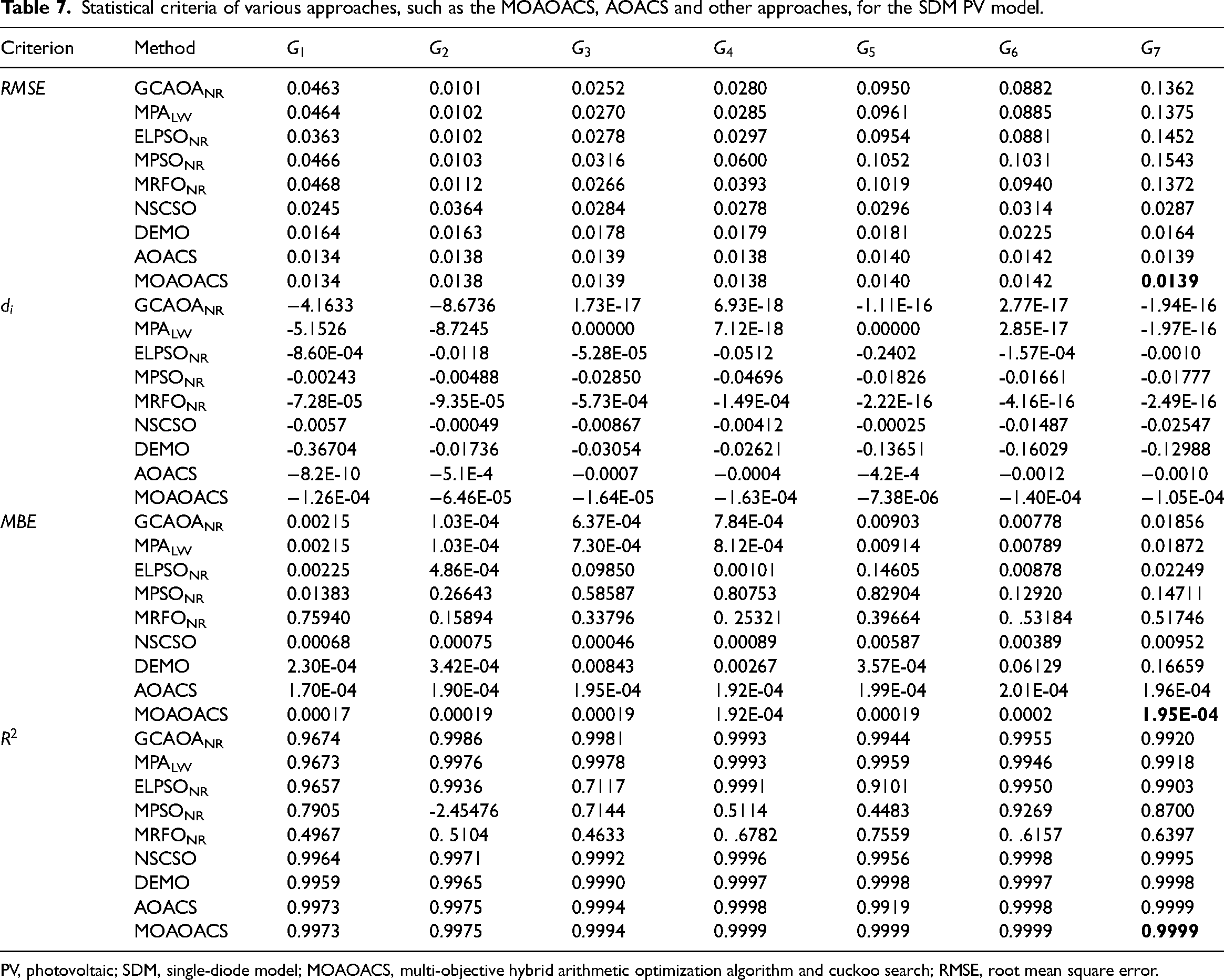
PV, photovoltaic; SDM, single-diode model; MOAOACS, multi-objective hybrid arithmetic optimization algorithm and cuckoo search; RMSE, root mean square error.
Moreover, the AAE, which represents error of every data point of computed current and experimental current is shown in Figure 6. From the figure, MOAOACS outperforms other approaches. Moreover, Figure 6 illustrates that the AAE of suggested MOAOACS approach is slightly superior to the AOACS hybrid algorithm for most of the operation conditions, and it is nearly 62% less than the
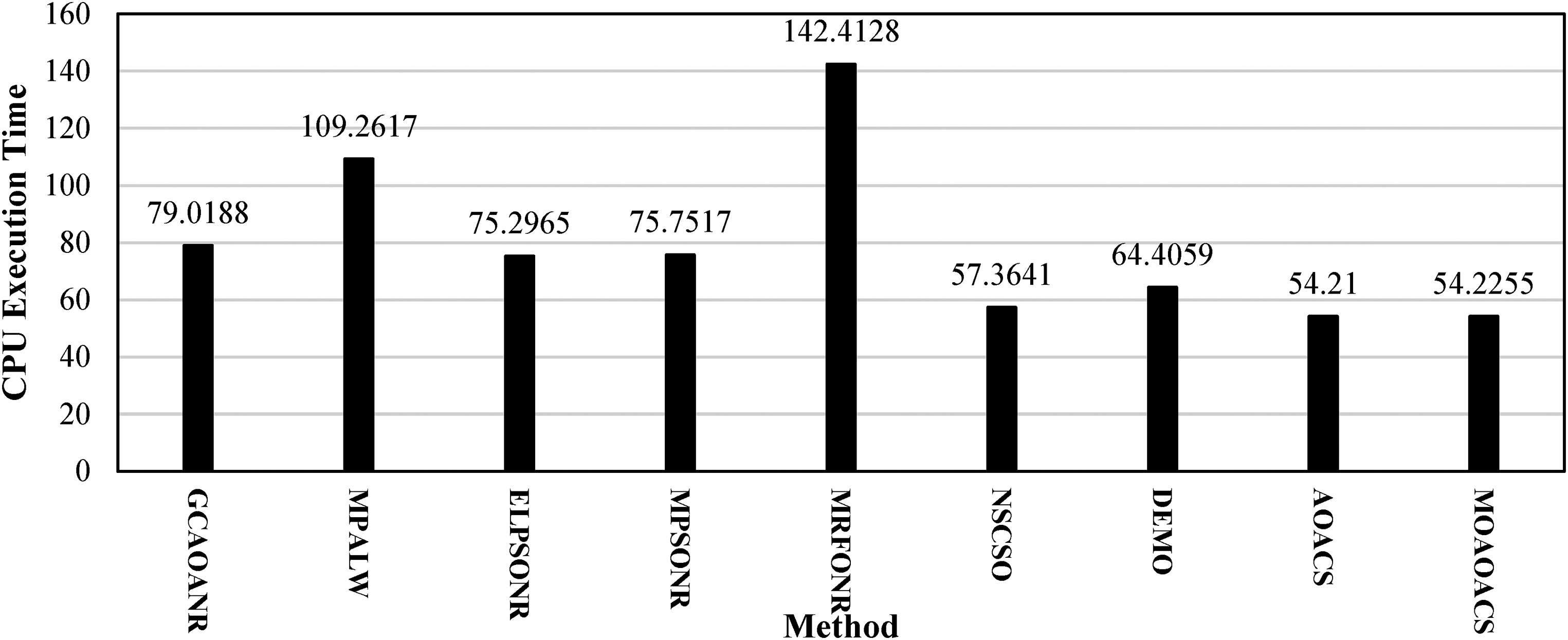
Bar chart of average CPU execution time of various approaches for SDM PV module. PV, photovoltaic; SDM, single-diode model.
Another important evaluation criterion is the average CPU execution time, The CPU average execution time acquired by MOAOACS as well as other competing approaches within different operational conditions is shown in Figure 6. This graph makes it clear that, with respect to average CPU execution time, the proposed solution competitive to the other methods. Most of the competing approaches take more time to compute than the suggested MOAOACS.
Finally, Figure 7 shows a sample of the evolution of the fitness function values across generations for competitive methods and suggested MOAOACS method for seven climate circumstances that were used. As observed, the MOAOACS outperformed the other approaches in terms of fast convergence and high accuracy.
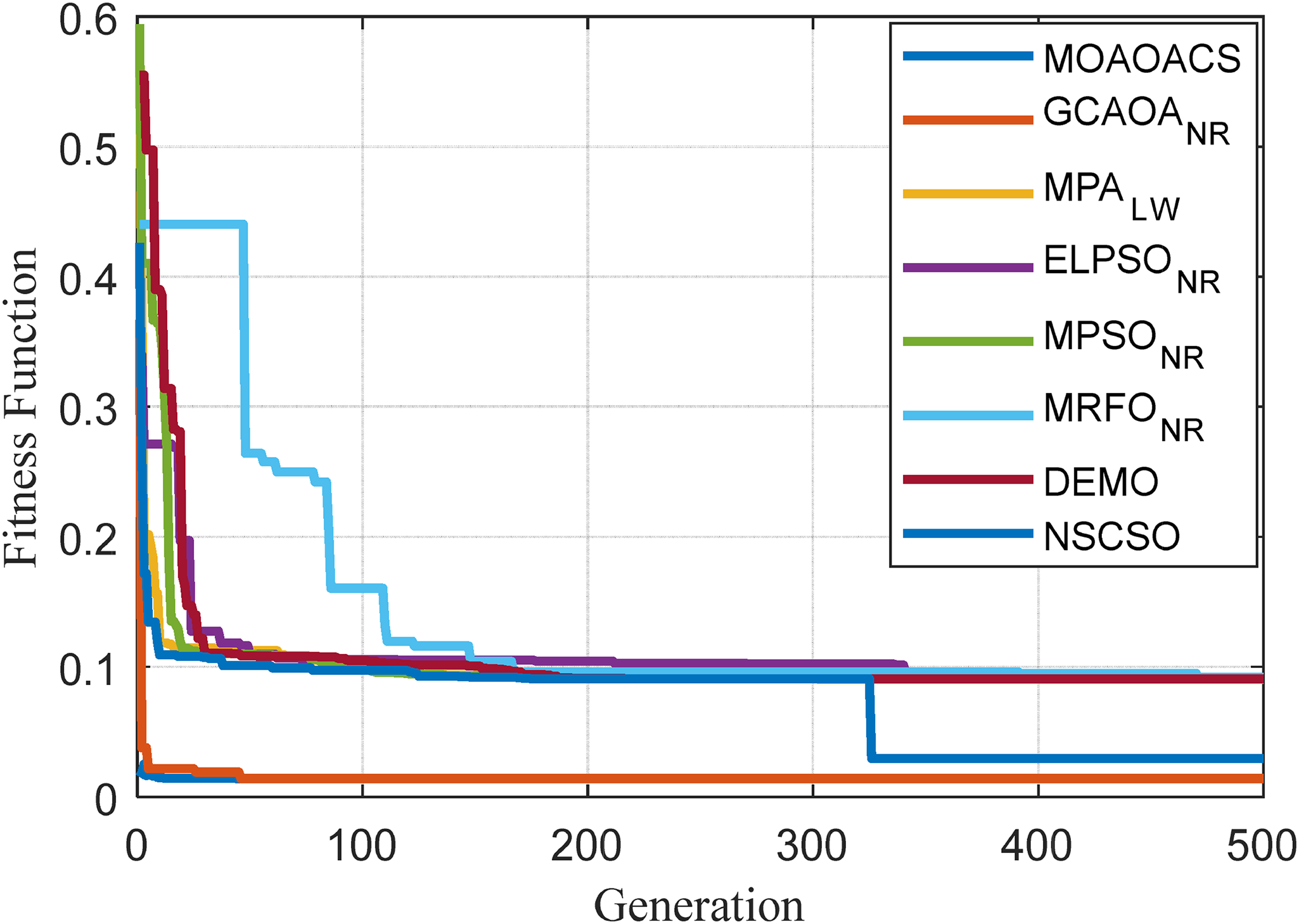
Example for generational evolution of MOAOACS and competitive approaches fitness functions for specific climate condition G5. MOAOACS, multi-objective hybrid arithmetic optimization algorithm and cuckoo search.
Overall, proposed parameters estimation method has reduced
Conclusion
In this research, a hybrid MOAOACS algorithm that combines arithmetic optimization, cuckoo search, and multi-objective/multi-criteria decision-making are suggested for modeling the I–V characteristic curve of a PV module. The two meta-heuristic algorithms could work together efficiently and achieve equilibrium between global exploration and local exploitation. The accurate outcomes of using MOAOACS for modeling PV I–V characteristic curve showed effectiveness of the proposed method. Moreover, results showed that MOAOACS approach also demonstrates great stability under a range of climatic and irradiance conditions. Finally, although the temporal complexity of the AOACS method was found higher than that of the basic algorithms, the whole approach converged quite quickly as compared to other hybridized methods and required less computational power. As a future work, it is important to discuss the embedding process of such an application considering all embedded systems design constrain and characteristics
Footnotes
Declaration of conflicting interests
The author(s) declared no potential conflicts of interest with respect to the research, authorship, and/or publication of this article.
Funding
The author(s) received no financial support for the research, authorship, and/or publication of this article.
