




Abstract
There are many advantages of geothermal energy, as an environmentally friendly resource; however, for these benefits of geothermal power to be fully maximized, there are some problems that need to be addressed. The primary objective of this research was to examine the influence of intellectual property (IP) rights and economic growth on the geothermal energy output among the 27 European countries within the time frame 1990 to 2021. This study adopts auto-regressive distributed lag (ARDL). The findings show that a significant increase in the geothermal energy industry sustainability can occur in EU14 emerged economies using IP rights than in EU13 emerging economies. The major contributions of the research are that among additional factors, intellectual capital, market size, intuitional quality, and economic growth contribute more positively to geothermal energy sustainability in EU14 emerged economies than in EU13 emerging economies. Results from the analysis show geothermal power sustainability among the 27 European countries could be boosted significantly by adequately putting in place the determining factors of IP as this will foster the attainment of aims behind the energy union by the year 2030. This will no doubt be of help in curbing climate change and environmental pollution in society. The projected calculations were validated through the three estimators adopted for this study, that is, the pooled mean group, mean group, and dynamic fixed effect. The policy implication pointed out by this study the European nations in this study need to make IP indicators to be more effective as this helps in achieving societal and environmental goals. Moreover, the authorities in charge of lawmaking in European countries should focus more on IP areas to ensure the sustainability of geothermal energy generation. Also, authorities in charge of policymaking in the European nations should foster commixture strategies that are sustainable in enhancing IP breakdown as this will assist in fostering geothermal power exploration, thereby reducing the need for fossil fuels which will also carbon dioxide emission in the years to come.
Introduction
The use of geothermal energy in Europe is expected to grow rapidly over the next decades since this energy resource is generally abundant, ubiquitous, versatile, low-carbon, and non-intermittent (Assareh et al., 2021). More than 130 geothermal electricity plants were operating in Europe at the end of 2020 and more than 36 projects were under development another 124 were in the planning phase according to a report by the European Geothermal Energy Council (EGEC) (Kurnia et al., 2021). In total, all the projects have a combined capacity of 3.3 GW. Europe is a leading market for geothermal district heating and cooling systems with 5.5 GWth of installed capacity in EU countries in 2020 (Musharavati et al., 2021). The European geothermal heat pump market reached the milestone of 2 million heat pumps installed (Li et al., 2021a). There was a set of policy initiatives introduced by the European Commission in December 2019, called the European Green Deal. The deal is to make Europe's climate free of pollution, that is, reducing greenhouse gas emissions to zero come the year 2050 (Olabi et al., 2020). The deal aims to achieve sustainability in Europe's economy, in the sense that, climatic and environmental problems will be channeled to becoming opportunities that will promote an energy transition that is impartial and across the board (Zwaan et al., 2019). To further curb challenges facing green energy, the commission came up with the European Union industrial strategy in March 2020, and the essence is to address the problem of green energy and digital transformation, by designing an Intellectual Property Action Plan (IP) to appraise why it matters to boost the legal framework and facilitate a professional use of IP and, efficient approaches to preventing IP theft (Tee et al., 2021). This is playing out against a broader backdrop of rapid green energy technological change, as the EU region embraces digitalization in all areas of EU citizens’ lives, presenting various opportunities and intellectual property (IP) challenges (Kulkarni and Wang, 2021). On the one hand, those in favor of IP rights point out that research and development of new geothermal power technology are difficult to initiate and complete without financial incentives. IP rights offer a guarantee to inventors that their investments will lead to their right to exclusively exploit and prevent unauthorized use of their geothermal power technology (Kulkarni and Wang, 2021). On the other hand, those opposed to IP argue that although IP rights can provide valuable information about the geothermal power exploration, this information is not necessarily easy to access (Kulkarni and Wang, 2021). Some believe that patent information could be made more accessible and easier to understand through user-friendly platforms or translations. Another complaint is that IP rights create restrictions and barriers, especially when it comes to geothermal power exploration collaboration (Kulkarni and Wang, 2021). For example, collaboration for oil and gas technologies in the geothermal power exploration can decrease risk and costs but the ability to collaborate is limited by legal constraints, such as IP rights (Musharavati et al., 2021). Moreover, companies dealing in geothermal energy may not be current regarding updates about legal matters that have to do with the technology they use in operation and so they may be ignorantly getting entangled in infringement about the patentee (Zhou, 2019). For instance, it is observed that companies in the geothermal energy sector do not have experience in the area of digital technology and they often find it difficult to explain why these intercessions should be suitable to shield the patent office and to safeguard data emanating from their creativity and excellence. These problems are forcing counseling of in-house to rely on practitioners coming from outside, accumulate expertise in digital matters, and improve on achieving technological breakthroughs from engineers (Zhou, 2019). Another challenge is that companies dealing with geothermal energy might be lagging on legal issues relating to the environment. They might not be updated on legal procedures involving in extraction and production of geothermal power thereby ignorantly getting themselves into legal tussles about violation of environmental laws and regulations (Grace et al., 2020). Unfortunately, no matter its reputation as being an environmentally friendly alternative energy source, geothermal energy also causes some concerns regarding the environment. Another key challenge of geothermal power is that it cannot just be situated arbitrarily, it must be suitable in a place where there is good energy accessibility. Some areas are not ideal for harnessing geothermal power (Grace et al., 2020). Additionally, even though geothermal power doesn't emit greenhouse gases, some gases get emitted beneath the earth's surface when digging the earth for geothermal power (Khasani and Ryuichi, 2021). Earthquakes could also be induced in the course of the digging process (Pasimeni et al., 2019). Furthermore, geothermal power involves a huge capital outlay; it is a capital-intensive project which makes it uncompetitive. It could cost around $2–$7 million to install a 1-megawatt capacity geothermal power plant (Sigurjonsson et al., 2021). Additionally, for the sustainability of the geothermal power to be sustained, depleted energy fluids must be pumped back to the underground reservoirs at a quicker rate, this could affect the quality of water and land typography quality. Nevertheless, geothermal power plants can have an impact on both water quality and consumption (Tomaszewska et al., 2020). Hot water pumped from underground reservoirs often contains high levels of sulfur, salt, and other minerals (Tomaszewska et al., 2020). From a different perspective, notable is also the social problems involved in the course of earth digging for geothermal power sustainable development, people could easily get displaced, they could lose their source of livelihood and this will create land legal rights issues with the indigenous people. Other social problems include noise and odor pollution, disruption of the free flow of traffic, poor dialogue at the stakeholders’ level, and disagreement over employment opportunities and economic returns. (Im et al., 2021 and Greiner et al., 2021).
The main research questions were (a) How do IP rights improve the sustainability of the geothermal power exploration among the considered European countries within the time frame 1990 to 2021? (b) In which EU members are more vulnerable to the effects of geothermal energy industry sustainability caused by IP rights? (c) In what ways could IP promote the sustainability and efficiency of geothermal power among the considered 28 European countries? As a result of the need to promote renewable energy in the European region, it becomes pertinent to understand the nexus between geothermal production and IP measures among European countries. The primary objectives of the study are (a) to enunciate the influence of IP on geothermal power sustainable development within the European Union in the time frame 1990 to 2021; (b) to provide a comprehensive review of geothermal energy industry impacts of IP determinants between emerging countries and emerged nations within the European Union in the time frame 1990 to 2021.
It is interesting to note that this study will be a great addition to the existing body of literature. It develops common IP measures to ensure sustainable development among the European Union to have a clear knowledge of the relationship among the research-determining variables. This will assist European countries in curbing environmental pollution and climate depletion since these studies will establish a relationship between IP and geothermal energy sustainability. The methodology adopted to explain the key research-determining variables is typical of the European Union region. Furthermore, additionally, the geothermal power sector is a source of green energy, and this research puts into consideration the geothermal power exploration and IP measures which include copyrights, patents, trade secrets, and trademarks. This is to ascertain if pre-design guidelines to promote standard sustainability are met which will ensure more engagement of geothermal power in the energy blend. This research puts into consideration the IP measures in the European Union adopting more controller measures that are clustered into categories: institutional quality, intellectual capital, economic growth, and market size. If the identified many socio-environmental and economic problems are addressed, IP will have a positive significant influence on geothermal power sustainable development among the 14 and the 13 considered European nations. In the limit of this scope, this study will investigate the relationship between IP and geothermal power. Furthermore, analyzing the measures of IP in this study could identify the effects that IP safeguard new forms will have on sustainable development this will help foster sustainable development and minimize policy costs in the geothermal power exploration of the 27 European countries. Several studies have attempted to study the relationship between renewable energy and IP. These studies were conducted in different countries adopting different models, findings, and approaches. Nonetheless, not many studies have been able to establish a relationship between geothermal energy and IP. In all these studies, there was no agreement. In light of this gap, this current research will add to the existing literature by examining the role of IP on the sustainability of geothermal power among the EU-emerged and emerging countries within the time frame 1990 to 2021. Based on all the literature reviewed, this will be among the first studies to concurrently examine the influence of IP on the sustainability of geothermal energy by adopting the auto-regressive distributive lag regression (ARDL) regression. Furthermore, this research examines the connection between social-economic determinants and environmental factors by emphasizing the growth hypothesis. In the present study, we have implemented several adjustments to our model, to ensure adequate coverage of geothermal energy at both the European regional and sub-regional levels. The scope is on the EU and so all estimates about application-specific economic returns of geothermal power, in the long run, have been kept to date. This is in line with temperature data which is subsurface adapted from the model authored by Naqvi and Rehm (2014) and Alsaleh et al. (2021b). This is one of the vital upgrades that we have done to the model used in this study since the previous form of the model presented these potentials in a very elementary manner. This research is making a significant contribution to the existing literature in three vital ways which will be novel to literature: the various ways of geothermal energy potentials, their environmental applications, and their geographical focus. This research is structured as follows: a detailed review of existing literature was captured in Section “Literature review.” The methodology to carry out this study was detailed in Section “Methodology and data,” and this section also the specification of models and estimations about strategy. Evidence-based findings and discussions are detailed in Section “Results and discussion” of the study. Lastly, the research is concluded in Section “Conclusion and policy implications” of the study implications of the study were also elaborated.
Literature review
Among the key issues that have received public attention in recent times is the change in climatic conditions and limited energy supply. There is a submission that renewable and sustainable energy and a clean source of energy is a vital tool for promoting economic growth and this calls for prioritizing investments in the renewable energy market. For instance, Goli et al. (2023a, 2023b) and Tee et al. (2021) investigated the influence of IP rights on renewable energy supply. The study used sample data from 59 countries and IP was said to boost renewable energy sustainability. Similarly, Orstavik (2021) and Goli et al. (2022), Goli and Keshavarz (2022) and Goli and Mohammadi (2022) explored the linkage between IP rights, technology development, and market dynamics in the renewable energy sector, pointing out that patent law inadequately incentivizes and fails to prioritize innovation in renewable energy technologies over fossil technologies. Furthermore, patent law does not stimulate sustainability in the renewable energy industry (Orstavik, 2021). Similarly, Kulkarni and Wang (2021) searched the IP and technology transfer challenges in the renewable energy sector within the European Union, indicating that the major issue that affects the transfer of renewable sources is finding who should be responsible for funding IP rights. These findings are in line with many previous kinds of research for example: Li et al. (2020); Khurshid et al. (2021); Goli et al. (2021, 2019); Xu et al. (2019); Zhou (2019); Gao and Zhai (2018). Trained human factors and knowledge can play an important role in conceptual models of intellectual capital in the field of the sustainable development of the geothermal energy industry (Cook et al., 2020; Mahbaz et al., 2020; Neves et al., 2020). In this sense, Mahbaz et al. (2021); Alinaghian and Goli (2017) investigated the impact of human performance on the sustainable development of geothermal energy systems, claiming that the performance of a geothermal power system is related to both the natural physical parameters and human-controlled factors. In the same way, Aviles et al. (2021) searched the potential of hybrid geothermal power integration with a desalination system, suggesting that low human capital costs can reduce the cost of electricity production and produce a significant increase in this value. Similarly, Tingting et al. (2021) explored the geothermal power performance of a multiple-doublet system in Hot Sedimentary Aquifers, indicating that human input parameters in a multiple-doublet system significantly influence the fluid flow and heat transfer processes to achieve efficient geothermal power exploration. Under the governance regulation, many studies such as Britta et al. (2020); Garcia-Gil et al. (2020a); Garcia-Gil et al. (2020b) developed integrated national energy and climate plans to cover the dimensions of the Energy Union related to decarburization, energy security, energy efficiency, internal energy market, research, innovation, and competitiveness. For example, Im et al. (2021) investigated how the residents of Korea perceived geothermal power plants after the 2017 Pohang earthquake by applying the social representation theory, suggesting that Pohang residents had a significantly negative opinion of geothermal power plants regardless of safety, climate change mitigation, and economic factors. Likewise, Koon et al. (2021) searched the resource and policy-driven assessment of the geothermal energy potential across the islands of St Vincent and the Grenadines, indicating that several policy approaches which include encouraging private and public sectors collaborations, level of certainty in the information provided, processing that involves regulations, and the institutions should become strengthened, these are some of the means of enhancing geothermal power sustainability and using the available resources on the island to promote sustainable development. In the same manner, Carla (2021) examined configurations at the institutional levels, perceptible by studying the impact of energy that is socio-material, on governance and energy infrastructural state, referring to the existing norms and cultural background of the regions under consideration, this has impacted and regulated the influence of regulatory designs at the national level on geothermal energy supply in Italy. On the other hand, previous research by Li et al. (2021) investigated the relationship between renewable energy sources and the economic growth of South Asian countries, suggesting that geothermal power has more effects and influences on economic growth as compared to other individual sources of renewable energy. In the same manner, Piłatowska and Geise (2021) explored the impact of clean energy on CO2 emissions and economic growth within the phases of renewables diffusion in Selected European Countries, claiming that the level of emission will be reduced when there is clean energy usage and will also trigger economic expansion very clearly in France and Spain expansion phases. Likely, Soltani et al. (2021) searched the linkage between the environmental, economic, and social impacts of geothermal energy systems, suggesting that the geothermal energy system has a positive and significant impact on economic growth and sustainable development. These findings are in line with previous research such as Yikun et al. (2021) and Anser et al. (2021). The EU geothermal power market growth is driven by the implementation of stringent government regulations related to climate change in developing and developed economies (Dalla Longa et al., 2020; Gong et al., 2021; Parisi et al. 2020). The global geothermal power market was valued at USD 4.6 billion in 2018 and is projected to reach USD 6.8 billion by 2026, growing at 5.0% from 2019 to 2026. In this sense, Tosti et al. (2021) investigated the geothermal power market for energy security in Europe, suggesting that the geothermal power supply is connected with the recognition of the crucial role that geothermal energy could play in the European market as well as the future energy scenarios based on the replacement of fossil fuels with renewable sources. Likely, Santamarta et al. (2021) searched renewable energy market development in the Islands, referring to that although geothermal power use is still in a juvenile market stage compared to other renewable energy it has a significant role in developing the renewable energy market rapidly. It was generally observed that despite the discussion in literature over the relationships between geothermal energy generations, IP, and economic growth is briefly explained, their conclusions are still not complete. Many of these studies did not use the right tests suitable for quantitative work and the validity of their estimated coefficients and elasticity are in doubt. Many of the studies didn't also consider diagnostic and specification tests which are needed to obtain regression results that are not false or biased. The gap between this study and many other studies in many ways, first among them is that it shows estimates of the impacts of IP on geothermal power in the long run among the EU emerged and emerging within the time frame 1990 and 2021 concurrently. Furthermore, by applying the growth hypothesis, this research examines the correlation between socioeconomic factors and geothermal energy production. There is no record that this analysis has been performed before in the European Union zones between the time frame 1990 and 2021. Finally, specification and diagnostic test results were used in this study, which was rarely found to be used in previous works. Also, current panel data techniques were deployed to foster analysis of unobserved parameters that are heterogeneous and cross-sectional in terms of dependence
Methodology and data
Theoretical framework
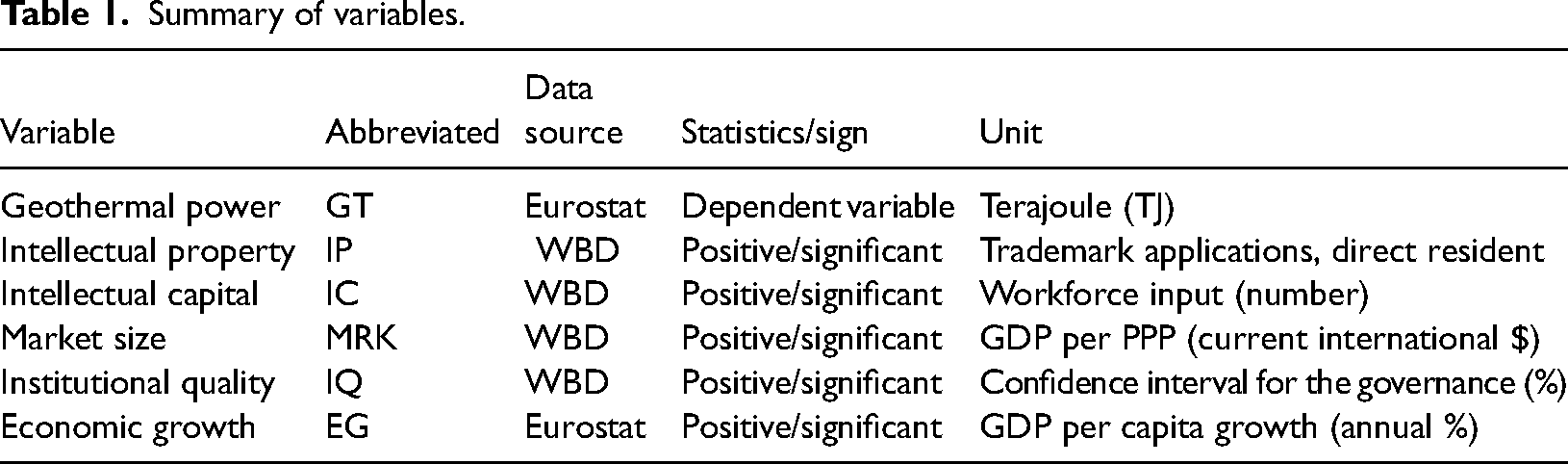
The Cobb-Douglas production function is based on the empirical study of the American manufacturing industry made by Paul H. Douglas and C.W. Cobb. It is a linear homogeneous production function of degree one which takes into account two inputs, labor, and capital, for the entire output of the manufacturing industry (Alsaleh et al. 2017). A Cobb-Douglas production function models the relationship between production output and production inputs (factors). It is used to calculate ratios of inputs to one another for efficient production and to estimate the technological change in production methods. The Cobb-Douglas functional form is not only used in the theory of production but it has also become standard in microeconomic consumer theory where it is applied as a utility function, where Y becomes U for utility (Alsaleh et al. 2018). The xi then represents items of consumption and, when the utility function is maximized subject to a budget constraint, the values for αi indicate how the individual will optimally distribute the budget among items. This research examines the nexus among geothermal power sustainable development; IP rights measures towards sustainability in EU economic growth, institutional quality, intellectual capital, and market size. A considered external factor to geothermal power is economic growth. A review of extant literature includes: Alsaleh et al. (2021a); Alsaleh et al. (2020); Koçak & Şarkgüneşi, (2016); Bhattacharya et al. (2015); Shahbaz et al. (2011), used to come up with this empirical model in line with Cobb-Douglas function of production:


Summary of variables.
Unit root testing of panel type
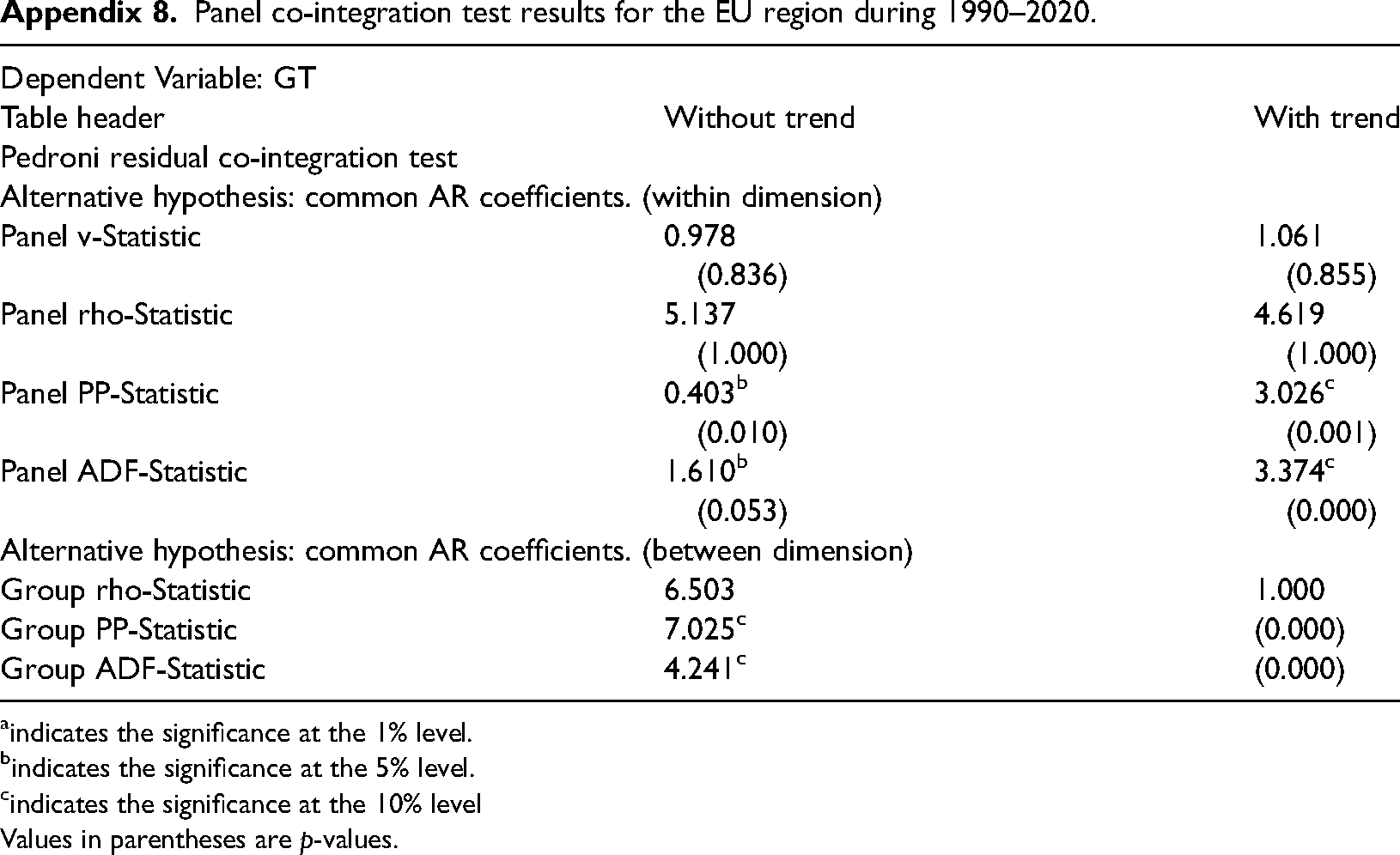
The panel cointegration test in Appendix 8 presents the results of Levin, Lin, and Chu (Levin et al., 2002) and Im, Pesaran, and Shin (Im et al., 1997) unit root and the outcomes show that all variables are stationary at the first difference, i.e. integration of order one, I(1). The dynamic panel system, such as the PMG model, is appropriate after defining the order integration for the variables. The analysis then investigated the presence of long-run relationships among variables, as suggested by Pedroni (1999). The author proposes two forms of residual tests: within and between measurements. The Within dimension contains four sub-tests, panel-v, panel-rho, panel PP, and panel Augmented Dickey-Fuller (ADF) statistics, while Between sizes are three sub-tests: group rho, group PP, and group ADF statistics. The null hypothesis in all seven t-tests usually indicates no cointegration. From (Table 5), four out of seven test statistics are statistically significant, so the null hypothesis is rejected, suggesting the presence of co-movement among the variables, consistent with Pedroni (1999). This testing method was done for all the considered variables in this study. This is to shun the tendency of false regression when adopting panel data. Panel unit root testing helps in solving the problem of low power when using ADF. Campbell and Perron (1991) and Ramirez (2006) asserted that the level of reliability in an estimation could be investigated especially when there is a low power in the unit root test and observation numbered in the time series study is below 50 in the view of Campbell and Perron (1991) and Ramirez (2006). Panel unit root test could overcome this problem since it has more power and the asymptotic distribution is standard. The test will therefore give reliable evidence. Additionally, there is a higher level of efficiency in the unit root test than in the time series unit root test (Levin et al., 2002; Im et al., 1997). These approaches are very common in extant studies on energy consumption (Chen and Huang, 2013).
Estimation on panel
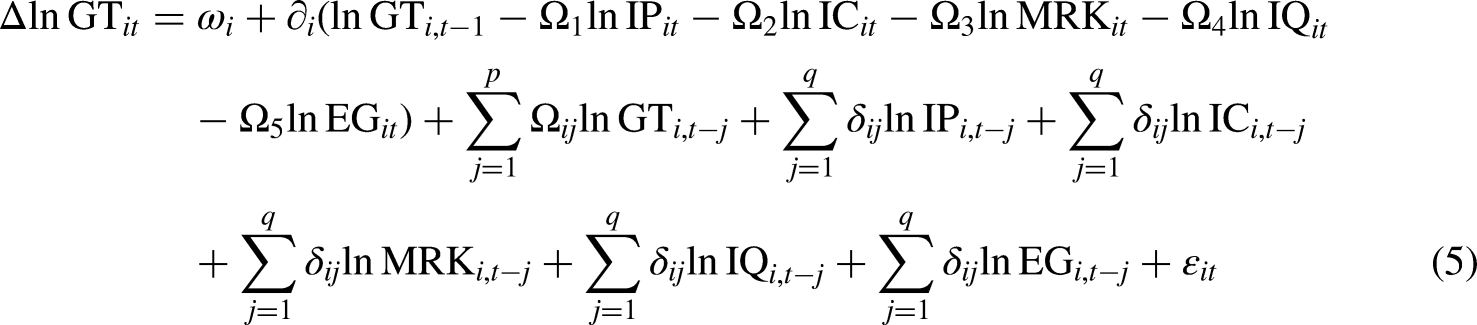
The pooled mean group is an estimator that provides estimation in the short run, intercept, and adjustment speed and error variance is made to be heterogeneous but the coefficients of the slope, in the long run, are made to be homogenous. There is efficiency in adopting this method and consistency; it has a good capture of relationships in the long run. Despite these, the co-efficiency of the error correction term still needs to be negative and lesser than 2. Aside from the important condition that estimations need to be consistent, a model in residual error correction, cannot have serial correlation, this will lead to inhomogeneity in the explanatory variable. So far the lags (p,q) are considered for the duo of dependent (p) and independent (q) variables, and the conditions will be met. Adopting this method requires big sizes of T and N, and T must be bigger than N. In the study of Pesaran et al. (1999), N is estimated to be around 20 to 30 countries. The mean group is the second estimator considered for this study, and this was proposed by Pesaran and Smith (1995). The benefit of using this estimator is that it allows for separate regression for each of the countries considered and their coefficients. The estimator has a minor difference from the pooled mean group and is not restricted to the procedures of the estimator (James et al., 2017). In both the long and the short run, the estimator can yield a coefficient that is heterogeneous and different for each of the countries considered. The dynamic fixed effect (DFE) is the third estimator considered in this study, which has similar features to the pooled mean group. Also, vector co-integration is restricted to being the same across all panels in the long run. Adjustment speed is also limited making the coefficient the same in the long run; it also allows specific panel coefficients. Models for the mean group estimator in the long-run relationship are expressed in Equation 3 below:

Durbin–Wu–Hausman test
Durbin–Wu–Hausman Testing is vital in making a selection among the three estimators (pooled mean group or mean group and pooled mean group or DFE) considered in this study (Hausman, 1978). In deciding between the pooled mean group and the mean group, the pooled mean group is considered to be more efficient when the null hypothesis formulated is accepted, but if the null hypothesis is rejected, the mean group is chosen over the pooled mean group. In selecting between the pooled mean group and the DFE, the pooled mean group takes precedence when the null hypothesis is accepted and if it is rejected, then the dynamic fixed estimator is selected over the pooled mean group (Shaari et al., 2020).
Results and discussion
Results
The research adopted three estimators (PMG, MG, and DFE) to examine the influence of IP rights on geothermal energy sustainability in EU region nations on the yardstick of economic development level, the EU nations were classified into 2; EU14 emerged economies (Austria, Belgium, Denmark, Finland, France, Germany, Greece, Ireland, Italy, Luxemburg, Netherland, Portugal, Spain, and Sweden) and EU13 emerging economies (Croatia, Bulgaria, Cyprus, Czech, Hungry, Estonia, Lithuania, Latvia, Poland, Malta, Slovakia, Romania, and Slovenia). About Levin, Lin, and Chu (LLC), and I'm, Pesaran, and Shin (IPS), unit root tests are carried out to examine the presence of stationarity of data in all the variables captured (lnGT, lnIP, lnIC, lnMRK, lnEG, and lnIQ). So, it is paramount to examine the integration order of variables in this research. With the statistics in Table 2, revealing the results of the two tests, it can be deduced that the variables are stationary at the level and for LLC and IPS, it is the first difference. This shows that the variables are in a mixed order of integration (I (I) and I (0)). Based on these findings, the panel ARDL can be applied.
Panel unit root test results for the EU region in 1990–2021.
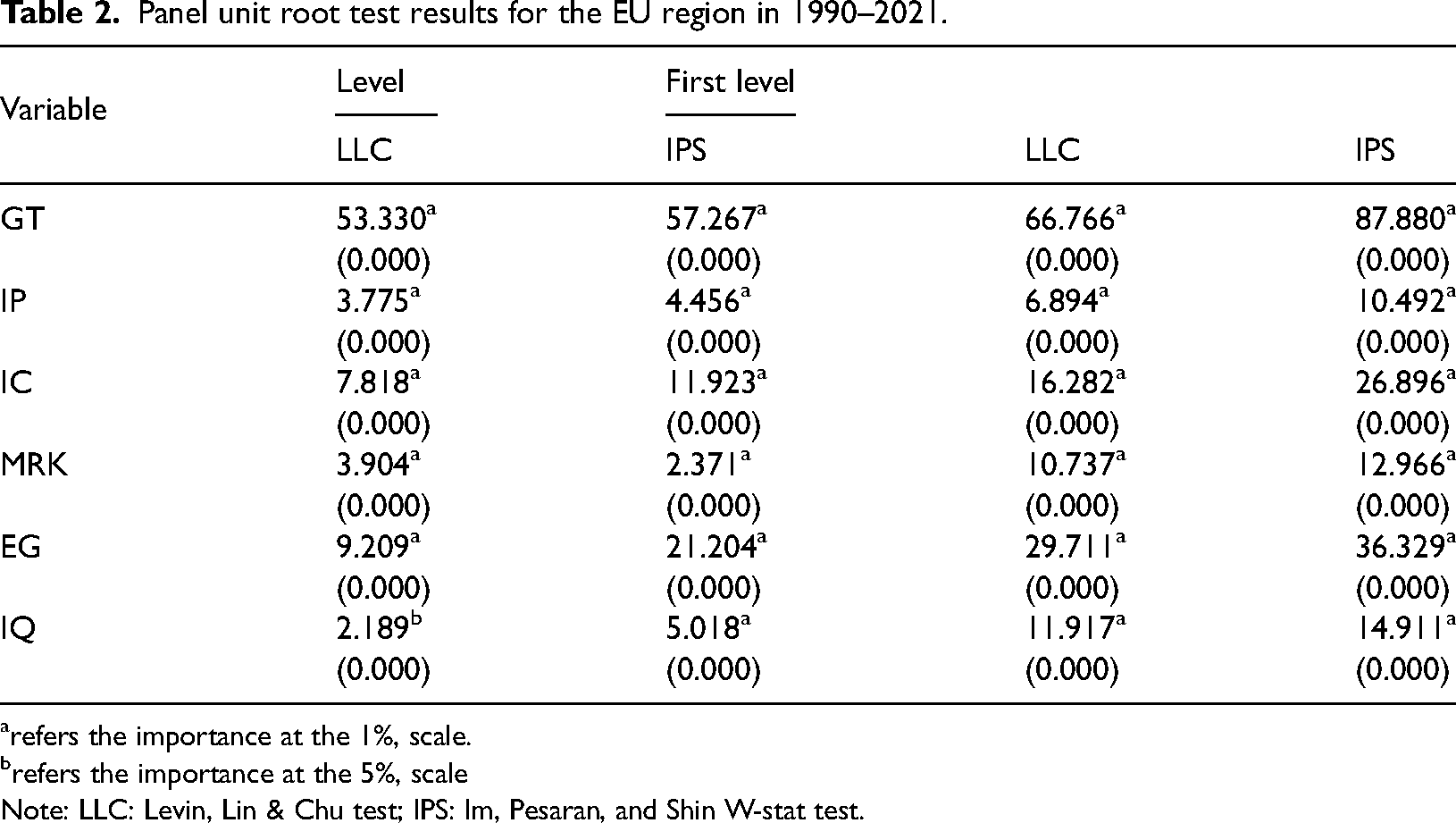
arefers the importance at the 1%, scale.
brefers the importance at the 5%, scale
Note: LLC: Levin, Lin & Chu test; IPS: Im, Pesaran, and Shin W-stat test.
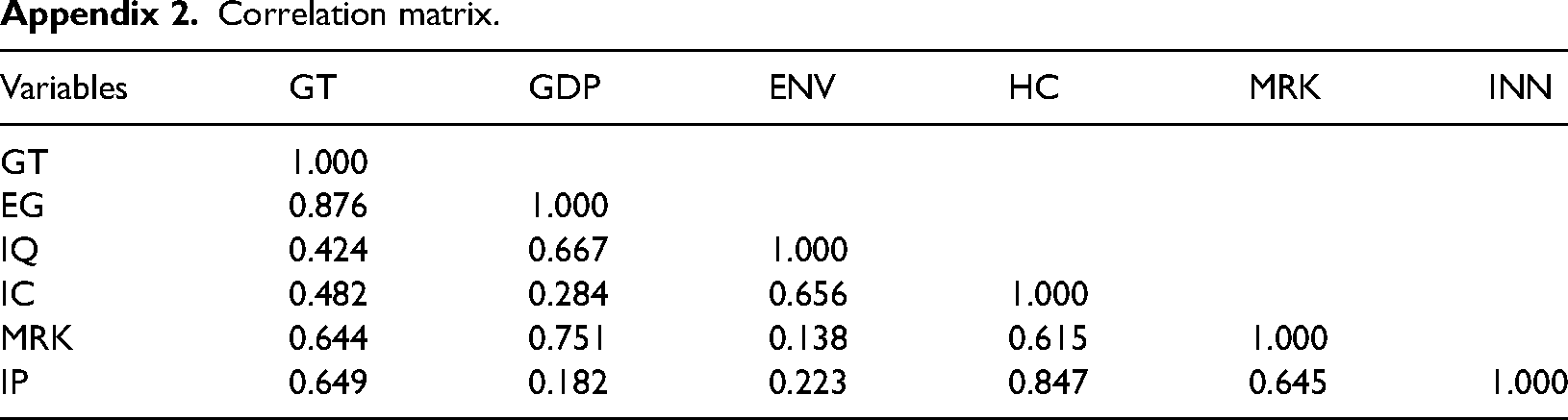
Preliminary testing was used to start the estimation process. Summary statistics are found in Appendix 1, and normal distribution is seen in all variables. Tests showing relationships are seen in Appendix 2. Variance inflation factor (VIF) is fundamental to test the existence of relationships among variables or multicollinearity (Snee, 1981; Rawlings et al., 1998). It is to avoid the situation of false regression. Before the VIF test was carried out, linear regression was done as shown in Table 3. As seen in the table, there is no relationship and according to the general guide, when the VIF is below 5 (James et al., 2017), it means there is no relationship, that is all variables are not correlated.
Regression analysis.
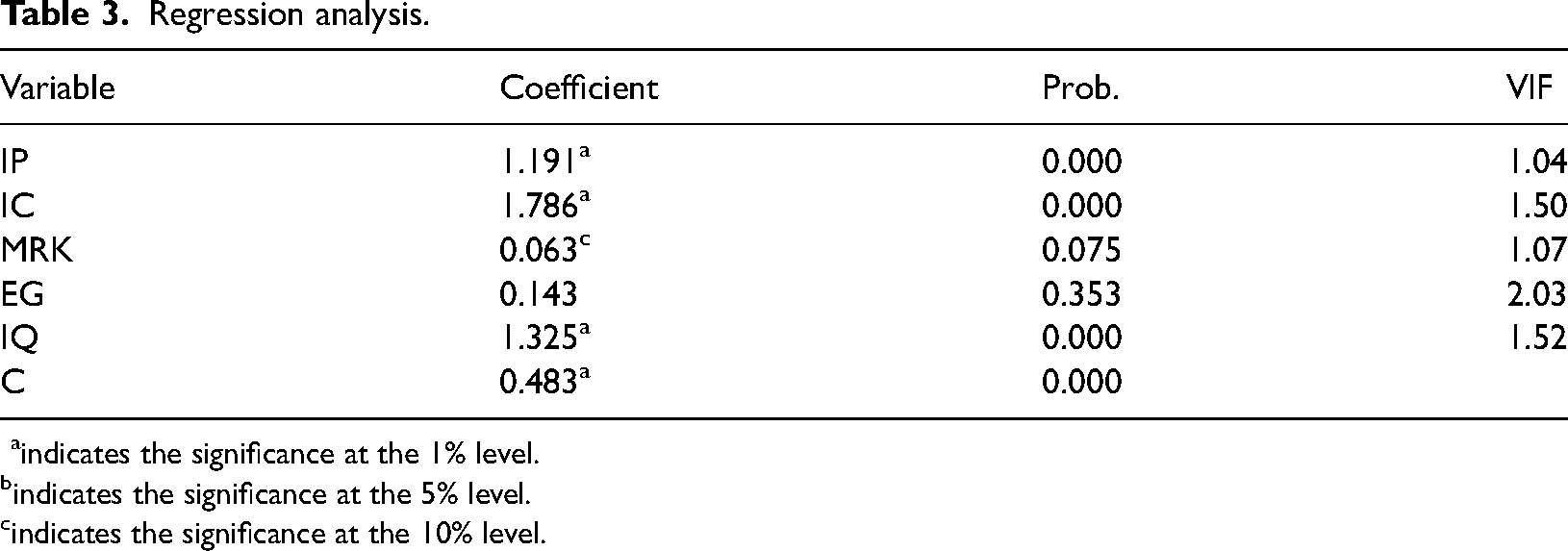
aindicates the significance at the 1% level.
bindicates the significance at the 5% level.
cindicates the significance at the 10% level.
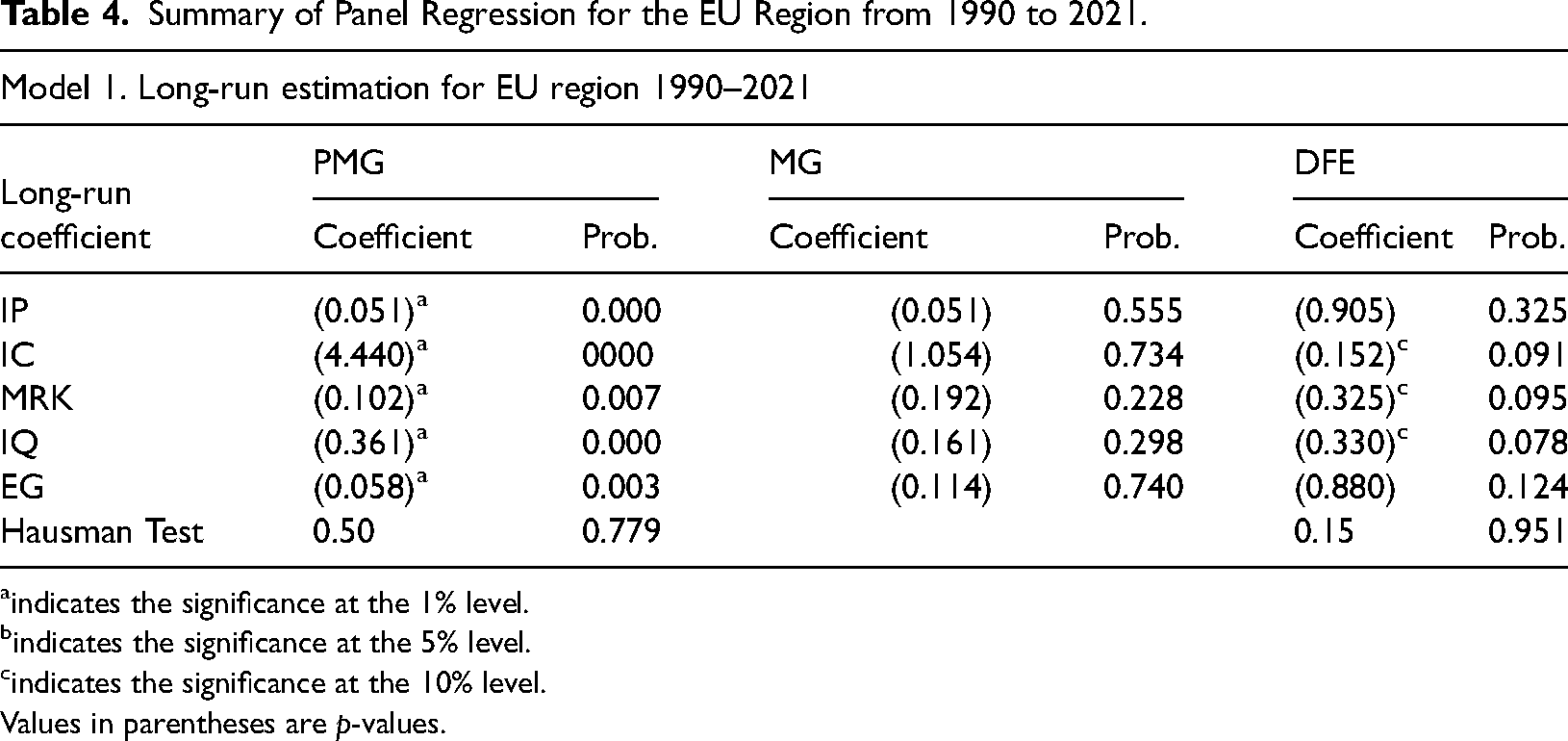
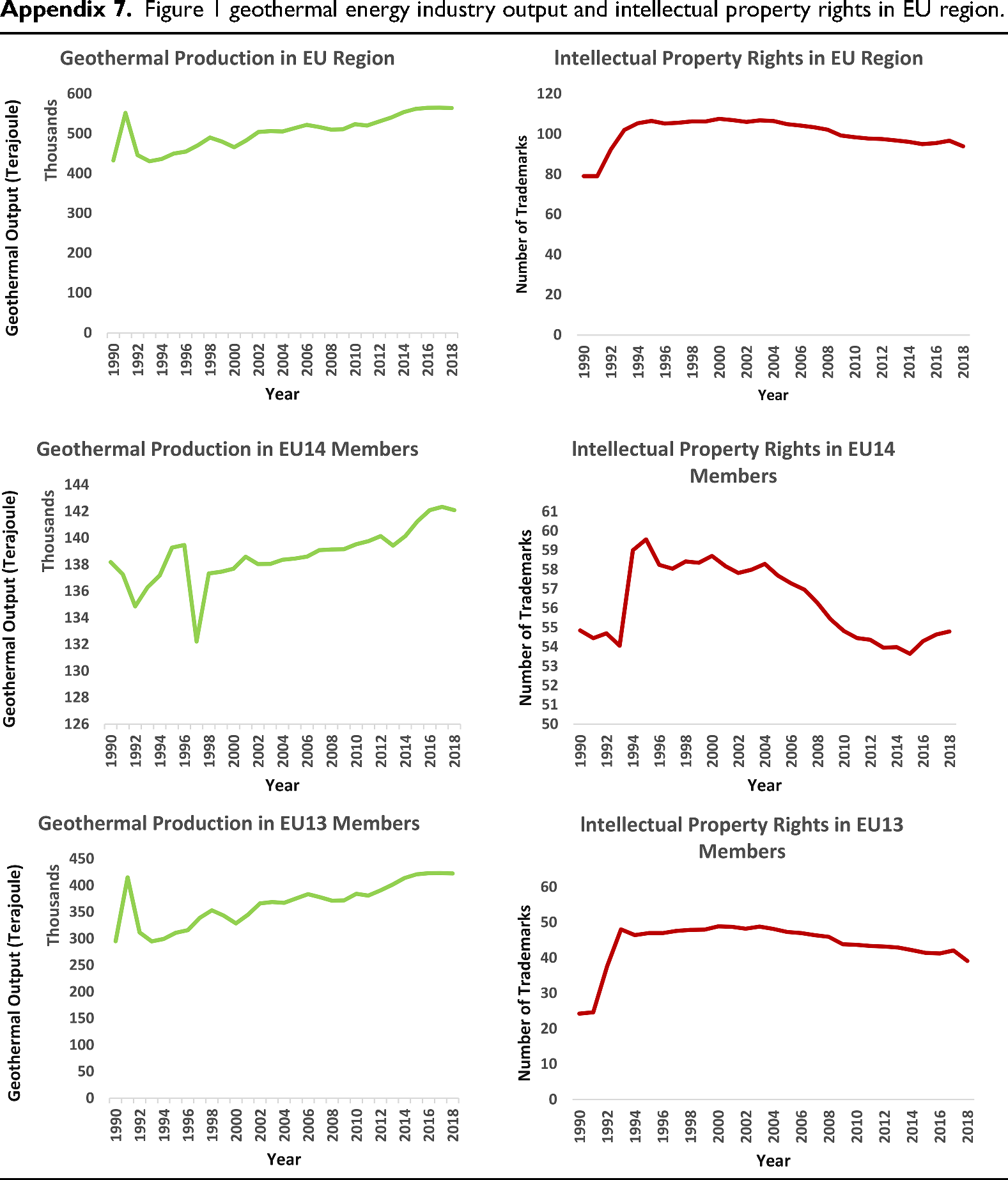
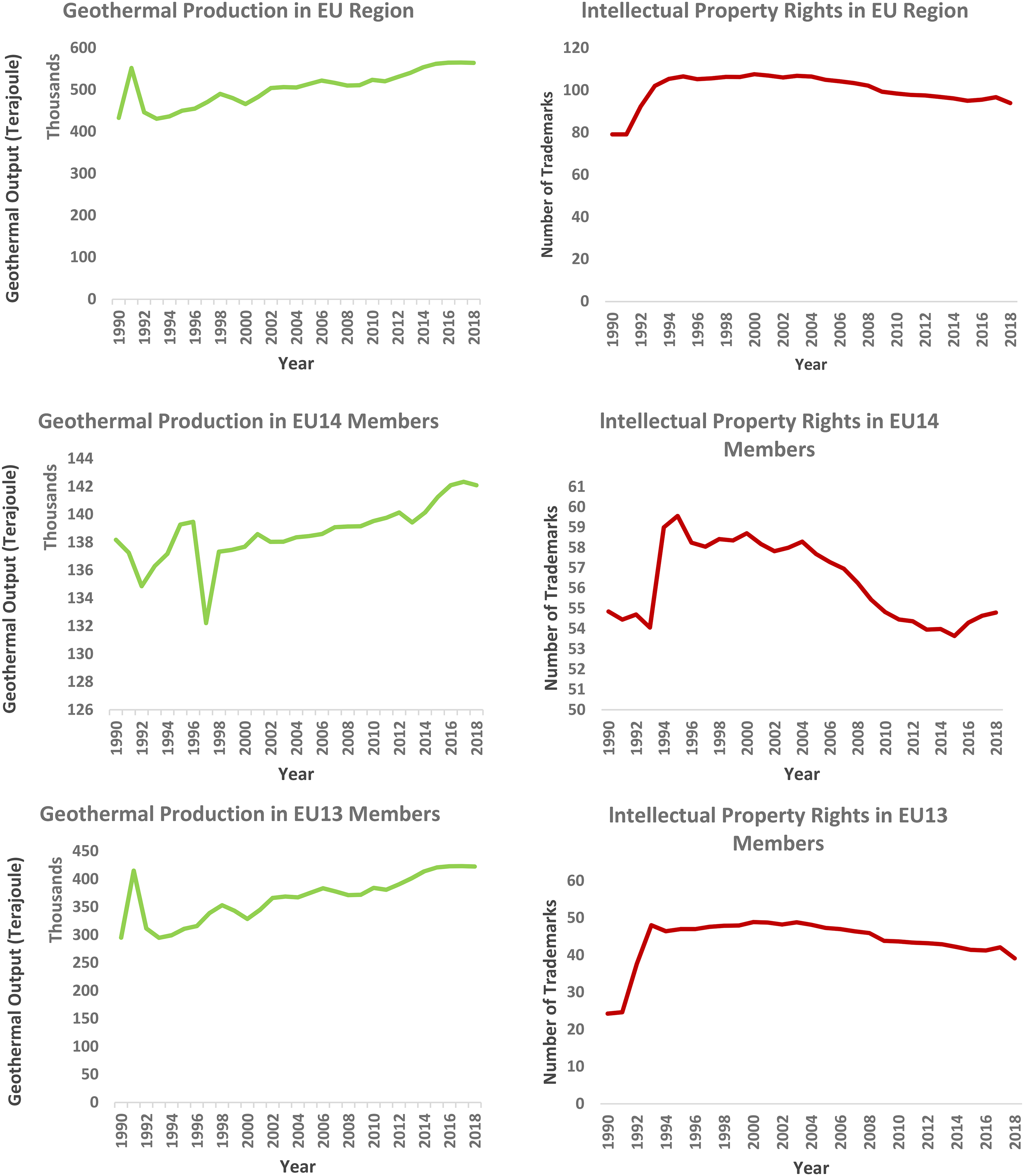
To estimate the effects of IP rights on geothermal energy sustainable growth, the pooled mean group, mean group, and DFE estimators were adopted. In Table 4, the Hausman test is vital to choosing between the pooled mean group and the mean group, or the pooled mean group/mean group or DFE. Analysis results between the pooled mean group and the mean group reveal that the null hypothesis is accepted and so the pooled mean group is chosen over the mean group. In that of the pooled mean group and DFE, the null hypothesis is also accepted and the pooled mean group is chosen over the DFE. Results of the estimators (PMG, MG, and DFE) are seen in Table 4, using Hausman tests. The model estimations of the three estimators are also seen in this table and this gives a comprehensive check. In Model 1 (see Table 4), IP rights produce a 1% significant and optimistic influence on the geothermal power exploration. This means that a 1% growth in IP rights will have 0.051% on geothermal power exploration. This supports the earlier findings of Tee et al. (2021); Orstavik (2021); Kulkarni and Wang (2021); Li et al. (2020); Khurshid et al. (2021); Xu et al. (2019); Zhou (2019); Gao and Zhai (2018) which means that IP is potent to boosting geothermal power. This enunciates that an increased level of growth in IP will boost geothermal energy in the European Union. The desired geothermal energy production level could be attained by boosting IP that promotes talent and creativity, financial resources, and breakthroughs that promote the content and services of local entrepreneurs. Furthermore, there is a 1% significant and positive coefficient of intellectual capital in the long run. When intellectual capital has a 1% boost, it will have a 4.440% increase in geothermal energy sustainability. The desired level of geothermal power sustainability required in the European Union region could be achieved by increasing investment in human capital resources in the area of knowledge and skill in the geothermal energy sector. This supports the views of Mahbaz et al. (2020); Cook et al. (2020); Neves et al. (2020); Mahbaz et al. (2021); Aviles et al. (2021); Tingting et al. (2021). The implication of this is that geothermal power sustainable development at the micro-level can be assessed as being sustainable qualitatively from the view of improving community well-being. It has been shown by this study that an increased level of IP will boost geothermal power exploration. Also, Market size is positive with a 1% significant coefficient. When market size increases by 1%, there will be a 0.102% boost in geothermal power exploration. It, therefore, suggests that market expansion will boost geothermal power exploration in the EU. This supports the views of Dalla Longa et al. (2020); Gong et al. (2021); Parisi et al. (2020); Tosti et al. (2021); Santamarta et al. (2021) asserted that geothermal power has a prospect in the unveiling energy market which will be sustainable. The implication is that the geothermal energy market will incline when its market size expands. It is requested by the members of the European Union that objectives behind sustainability in geothermal power could be attained by developing the key factors of the competitive market like expansion in the size of the market, that of labor, and the financial market. In Model 1 (see Table 4), the coefficient on economic growth output is found positive but statistically significant at a 1% statistical level, in the long run, suggesting a positive relationship between economic growth output and geothermal energy industry sustainability in the EU region. This implies that an increase in economic growth output increases geothermal energy sustainability in the EU region. Precisely, a 1% increase in economic growth will lead to a 0.058% incline in geothermal energy sustainability. This finding is consistent with Li et al. (2021); Yikun et al. (2021); Anser et al. (2021); Soltani et al., (2021); Piłatowska and Geise, (2021). It, therefore, means that by increasing the level of economic production, countries in the European Union could attain their renewable geothermal power objectives (see Figure 1 in Appendix 7).
Summary of Panel Regression for the EU Region from 1990 to 2021.
aindicates the significance at the 1% level.
bindicates the significance at the 5% level.
cindicates the significance at the 10% level.
Values in parentheses are p-values.
Furthermore, institutional quality shows a significant and positive coefficient of 1% influence in the long run, this means that a 1% boost in institutional quality will increase the geothermal energy supply by 0.361%. These results corroborate the views of Britta et al. (2020); Garcia-Gil et al. (2020a); Garcia-Gil et al. (2020b); Im et al. (2021); Koon et al. (2021); Carla (2021). This means that enabling environment and quality in institutions will boost geothermal power supply inline in the EU countries, that is by increasing the scope on three factors of environment which are enabling which include emotional, outdoor, and indoor environment, the level of sustainability needed in geothermal energy supply in EU countries could be reached.
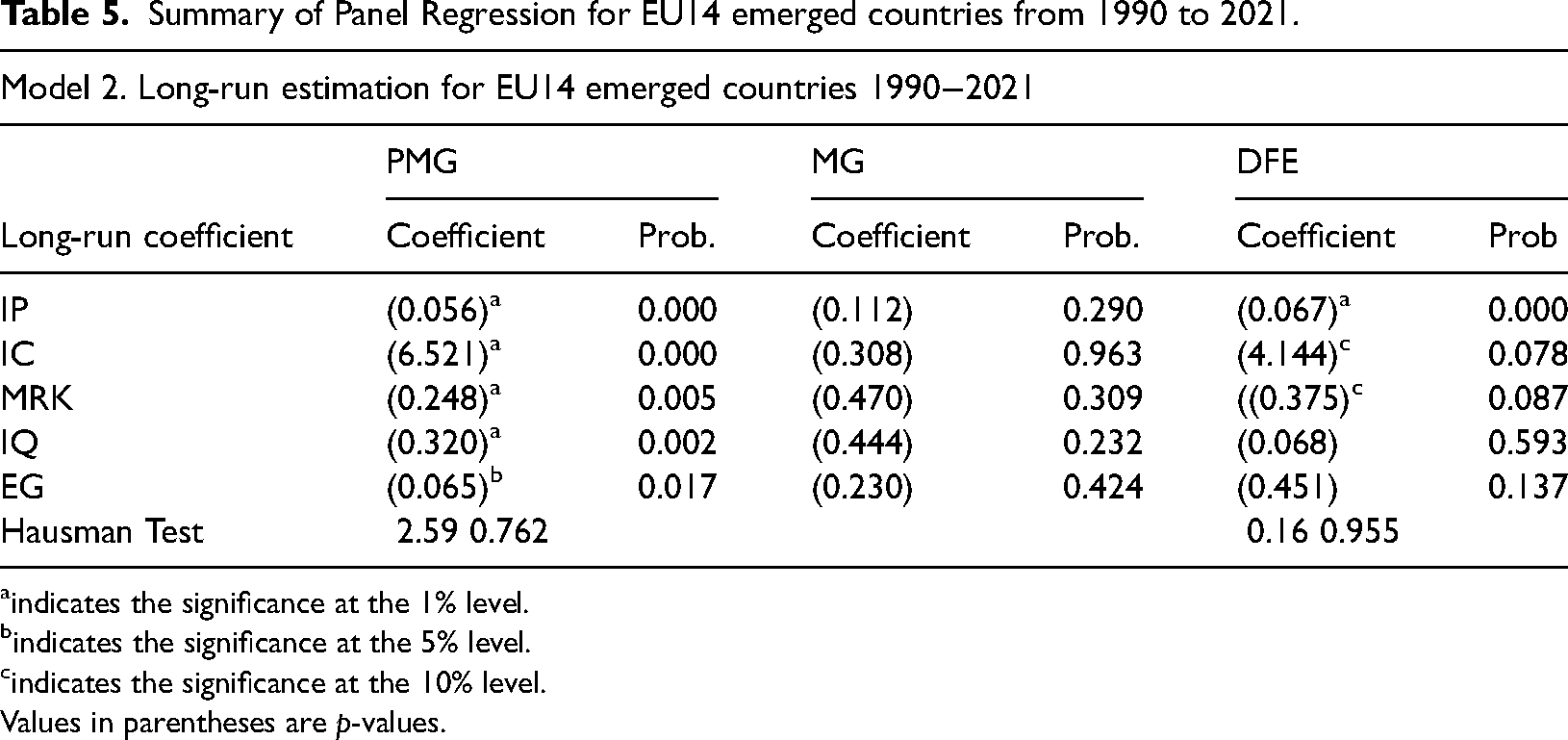
In finding the influence of IP rights on geothermal energy sustainable growth, three estimators of the pooled mean group, mean group, and DFE were adopted in this research. It is seen in Table 5 that the Hausman test was used to select among the estimators (PMG or MG, PMG/MG, or DFE). In the first analysis with Hausman between the pooled mean group and mean group, the null hypothesis is accepted and so the pooled mean group is chosen over the mean group. The null hypothesis is also accepted between the pooled mean group and DFE, and so the pooled mean group is also selected. In Table 5, statistics on the three estimators were revealed. The table also makes a comprehensive check by showing the model estimation of the three estimators. In the Model (see Table 5), IP rights show optimism and a remarkable 1% on geothermal power. It means at a 1% level, IP rights will boost geothermal power at 0.156%. This supports the views of Tee et al. (2021); Orstavik (2021); Kulkarni and Wang (2021); Li et al. (2020); Khurshid et al. (2021); Xu et al. (2019); Zhou (2019); Gao and Zhai (2018) asserted that the increased level of protection rights boost firms in geothermal power supply to boost production from renewable sources. This research has shown that a boost in IP rights aids geothermal power sustainability in the 14 EU-emerged nations. The EU14 could attain the level of geothermal power supply desired by boosting IP rights in talent creativity, financial resources, and cutting across breakthroughs that motivate indigenous content and services from a local entrepreneur. Additionally, there is a 1% significant and positive coefficient on IP in the long run. Precisely, the 1% influence of intellectual capital will yield a 6.521% boost in geothermal energy supply in 14 EU economies. The desired level of geothermal energy production of the EU14 nations could be attained by investing more in human capital resources in areas of skills and knowledge of those in the geothermal energy industry. This is in line with Mahbaz et al. (2020); Cook et al. (2020); Neves et al. (2020); Mahbaz et al. (2021); Aviles et al. (2021); Tingting et al. (2021). It means that a further boost in intellectual capital will aid the growth of geothermal power in the EU 14 countries. The EU14 countries can achieve desired sustainability in the geothermal power exploration by investing more in intellectual capital in areas of education and training. There is also a 1% optimism and significant co-efficient of market size. Specifically, when the market grows by 1%, it will lead to a 0.248% boost in the geothermal energy supply. It means that expansion in market sizes will create a further boost in the geothermal energy sector. This supports the findings of Dalla Longa et al. (2020); Gong et al. (2021); Parisi et al. (2020); Tosti et al. (2021); Santamarta et al. (2021) the asserted that liberalism in government boosts financial market growth around electricity sales at the international level, which is primarily from the geothermal power source in Norway. It, therefore, means that boosting global market strategies in the EU14 will develop the geothermal energy sector. The developing key indicators of global markets like influences in cultural and social perspectives, issues relating to legal, demography, political conditions politically, and natural environment, and technological changes, will be effective in achieving sustainable geothermal energy sustainability in the EU14 countries. In Model 2 (see Table 5), the coefficient on economic growth output is found positive but statistically significant at a 5% statistical level, in the long run, suggesting a positive relationship between economic growth output and geothermal energy industry sustainability in the EU14 economies. This implies that an increase in economic growth output increases geothermal energy sustainability in the EU14 members. Precisely, a 1% increase in economic growth will lead to a 0.065% incline in geothermal energy sustainability. This finding is consistent with Li et al. (2021); Yikun et al. (2021); Anser et al. (2021); Soltani et al., (2021); Piłatowska and Geise, (2021). The finding suggests that EU14 members have the prospect of achieving their renewable and geothermal energy target by facilitating market values collectively over goods and services produced via GDP estimations. Furthermore, at a 1% level, in the long run, institutional quality produces a positive and significant coefficient. This means that a 1% increase in institutional quality will boost the geothermal energy supply by 0.320% in the 14EU economies. these results corroborate Britta et al. (2020); Garcia-Gil et al. (2020a); Garcia-Gil et al. (2020b); Im et al. (2021); Koon et al. (2021); Carla (2021). It means an increase in institutional quality will boost the geothermal energy supply in the 14EU countries. But, if institutional capacity is the inadequate geothermal power sector, to accommodate shifts in physical and institutional structures, there is bound to be chaos which will jeopardize capital intellectual security. This study suggests that the 14 EU members have the foresight of implementing a quota on energy security by improving on geothermal power quantity supply. The desired sustainability in the geothermal power sector aspired by the EU14 members will be attained by facilitating the effectiveness and stability of institutions at macro levels.
Summary of Panel Regression for EU14 emerged countries from 1990 to 2021.
aindicates the significance at the 1% level.
bindicates the significance at the 5% level.
cindicates the significance at the 10% level.
Values in parentheses are p-values.
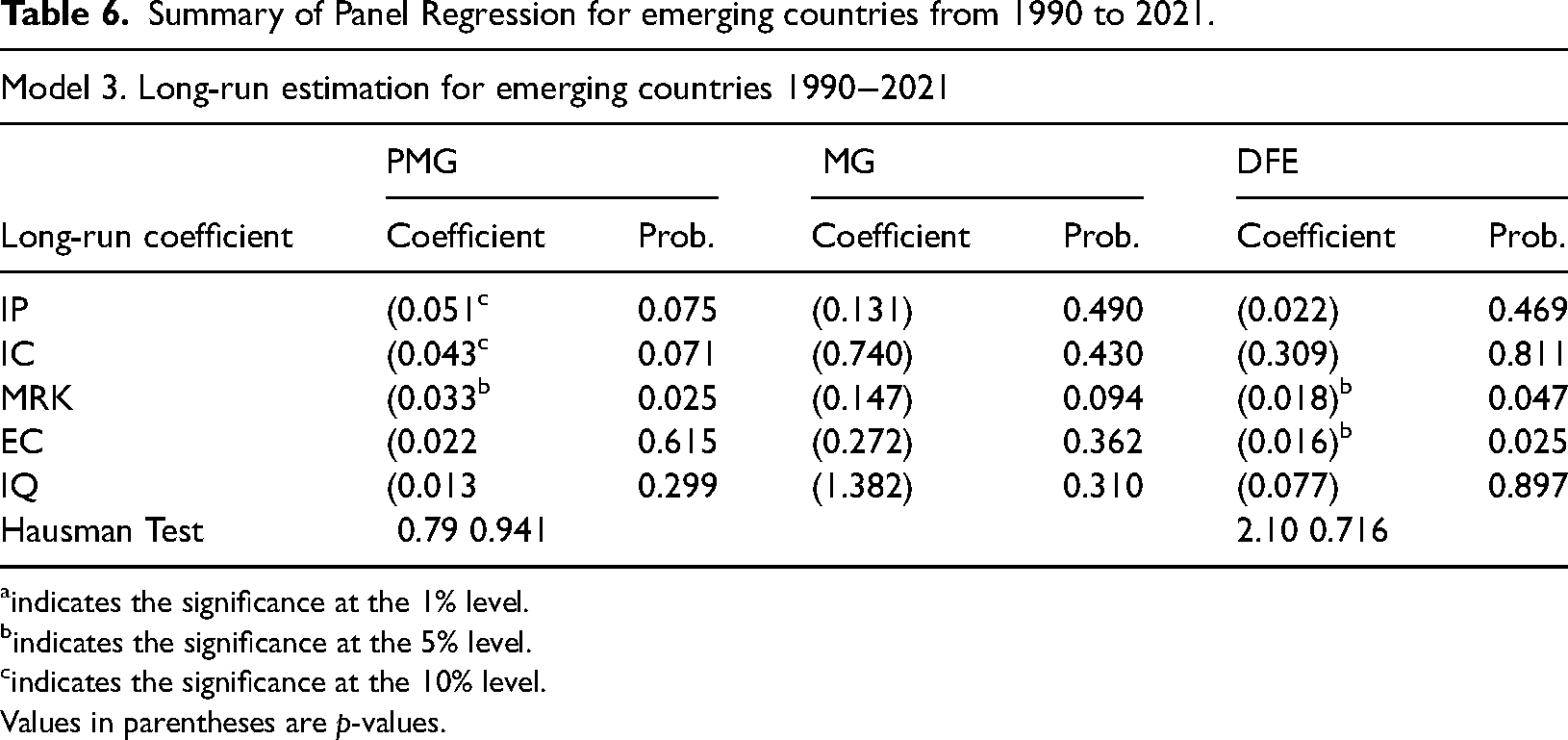
In examining the influence of IP measures, as they affect the sustainability of geothermal energy sustainability, this research adopted three estimators (PMG, MG, and DFE). As shown in Table 6, the Houseman test is vital to choosing between the pooled mean group and mean group or pooled mean group/mean group or DFE. Hausman test results showed that the pooled mean group is favored over the mean group because the null hypothesis is accepted. Hausman test results further showed that pooled mean group is also preferred over the DFE because the null hypothesis is also accepted. These three estimators (PMG, MG, and DFE) results are shown in Table 6 using Hausman tests. Table 6 further showed panel model estimation results of the pooled mean group with those of the mean group and DFE, and this gives comprehensive checks. On Model 3 as shown in Table 6, at a 10% level, IP rights produce a significant and optimistic influence on the geothermal power exploration. It means that a 1% incline in IP rights will aid geothermal power exploration by 0.051%. These findings support extant studies such as Tee et al. (2021); Orstavik (2021); Kulkarni and Wang (2021); Li et al. (2020); Khurshid et al. (2021); Xu et al. (2019); Zhou (2019); Gao and Zhai (2018); it means an increased level of protection rights boost geothermal energy firms to do more of energy production through renewable resources. The findings of this study revealed that an increased level of IP rights growth fastens the EU13 emerging economies’ geothermal energy supply. By leveraging on improved IP rights, sustainability in the geothermal power sector aspired by the 13 EU countries can be attained comparatively by boosting IP rights which support talent creativity, financial resources, and innovations that motivate local entrepreneurs to produce more local content. Furthermore, at a 10% significant coefficient, intellectual capital is also positive in the long run. Precisely, when intellectual capital increases by 1%, there will be a 0.043% boost in geothermal energy sector growth among the 13 European countries. That is, the aspired sustainability in geothermal power desired by the 13 EU nations could be achieved by boosting human capital resources knowledge and skills in the geothermal energy sector. This is in line with Mahbaz et al. (2020); Cook et al. (2020); Neves et al. (2020); Mahbaz et al. (2021); Aviles et al. (2021); Tingting et al. (2021). The implication is that an increased level of investment in human capital will boost EU 13 developing nations’ geothermal energy supply. The aspiration of the 13 EU countries on geothermal power sustainability could be attained by boosting intellectual capital in the area of education and training. At level 5%, the market also produces optimism and a remarkable coefficient. Specifically, 1% growth will lead to a 0.033% boost in the geothermal energy supply. It, therefore, means that further market expansion will boost the geothermal energy sector demand. This finding supports the views of Parisi et al. (2020); Tosti et al. (2021); Santamarta et al. (2021), and this points out that when the market conditions are balanced, it is a revenue booster for geothermal power plants to harness full market potentials. The implication is that market expansions will boost the geothermal energy supply in the 13 EU countries. By boosting the green energy markets, the EU 13 countries could attain the sustainability desired in the geothermal power sector. This includes laws to protect the environment, natural resource inadequacy, consumer behavior, and behavioral expressions of management at the senior level over green marketing.
Summary of Panel Regression for emerging countries from 1990 to 2021.
aindicates the significance at the 1% level.
bindicates the significance at the 5% level.
cindicates the significance at the 10% level.
Values in parentheses are p-values.
Discussion
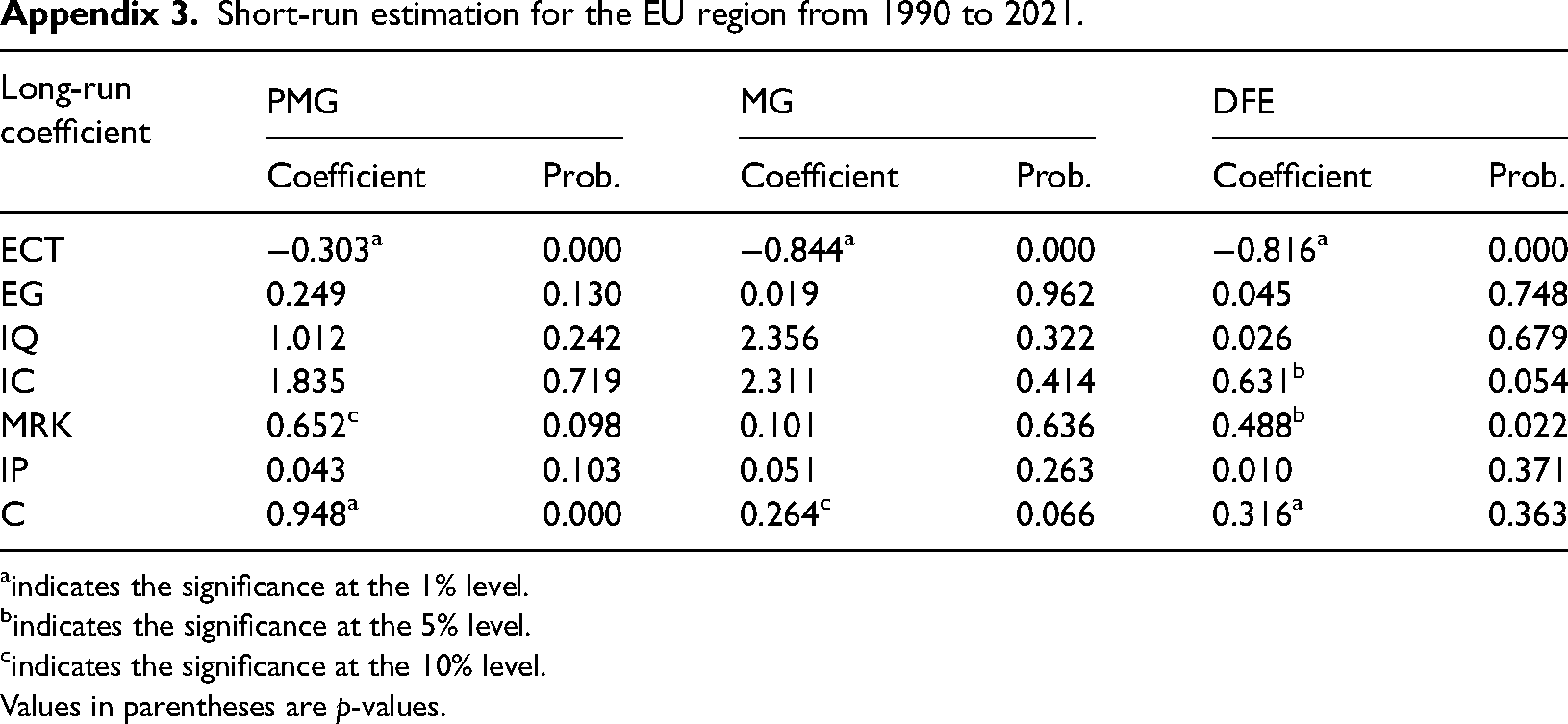
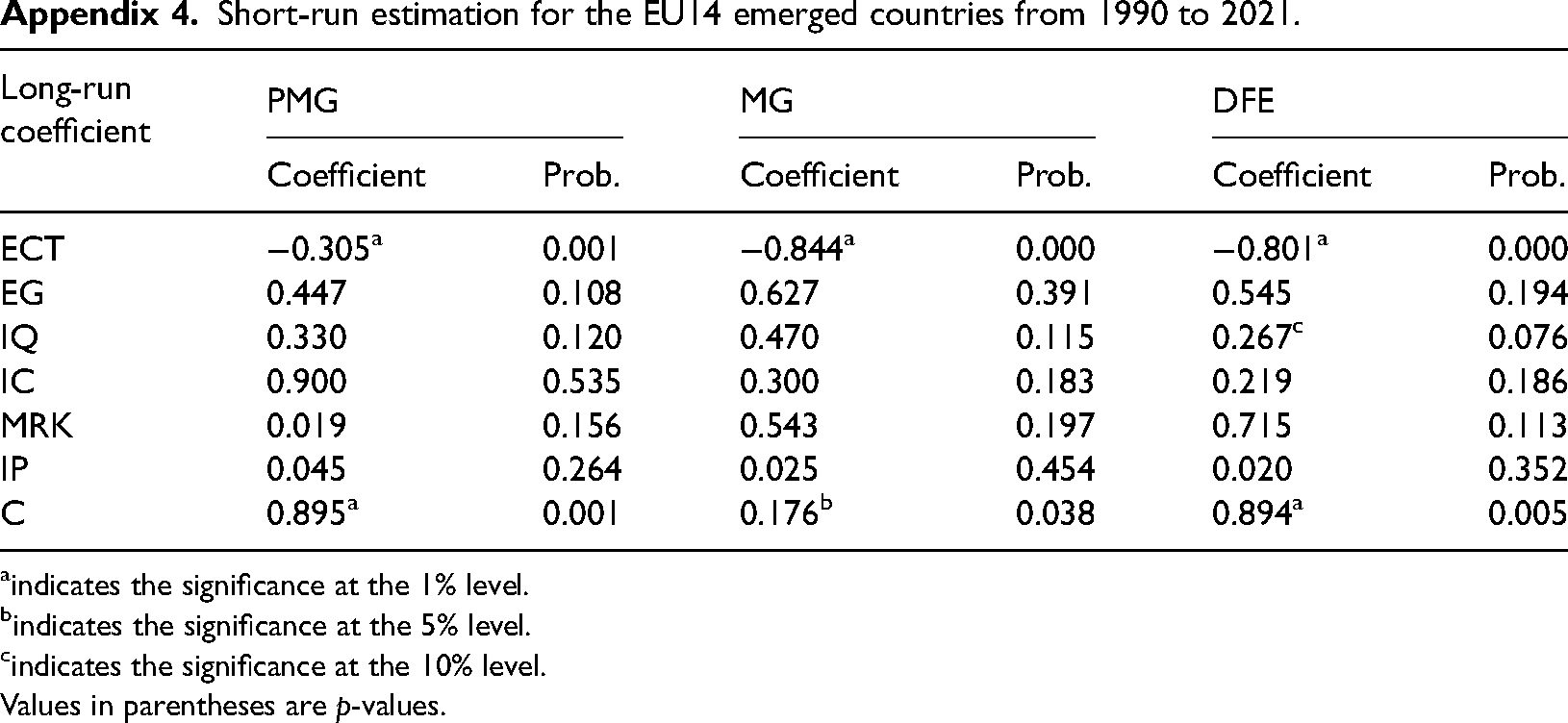
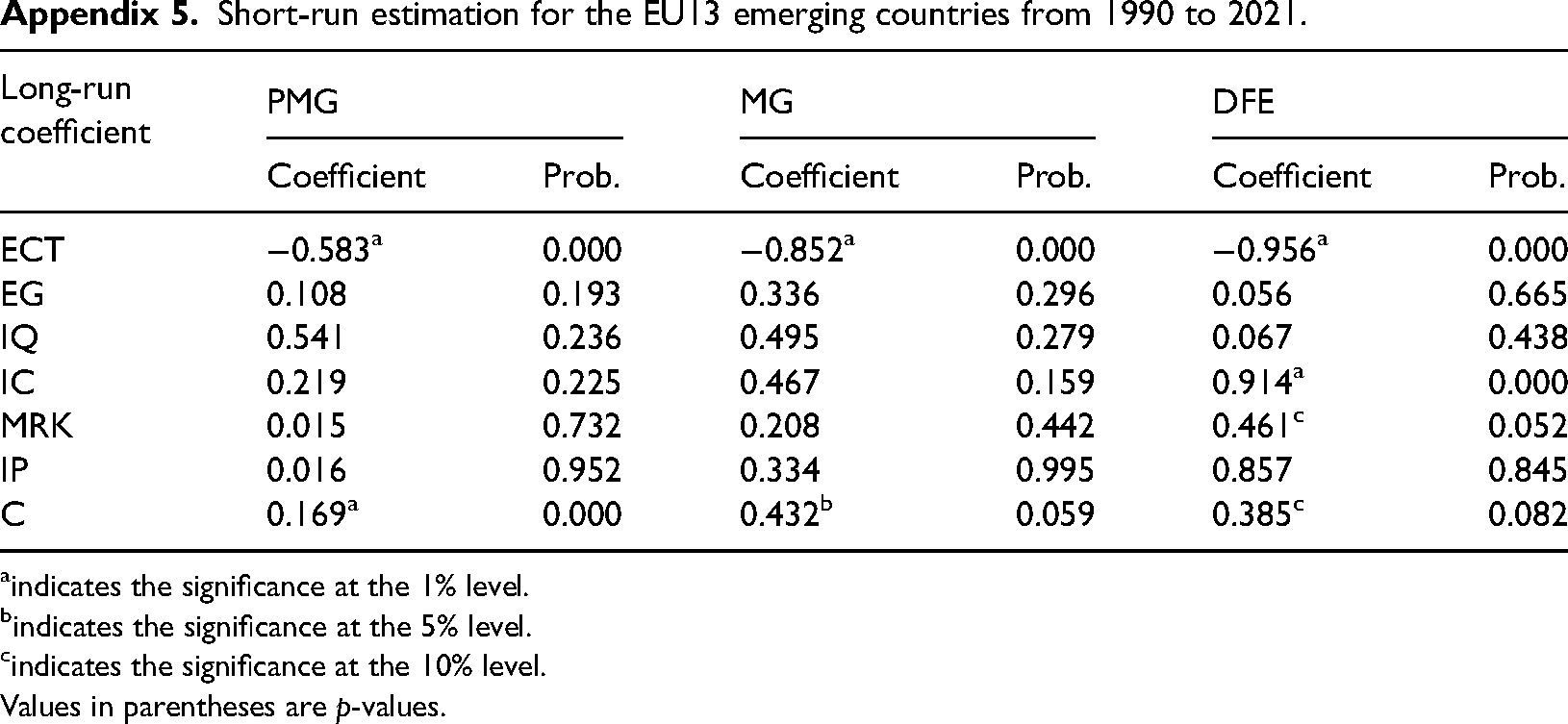
This submits a framework that is theoretical to make groupings at the regional level among EU nations based on their economic and developmental level as well as the level of economic activities and sustainability in development (Aslaleh and Abdul-Rahim, 2021). The framework can be adapted to group European Union countries in line with the level at which they are conditioned by the reactions of producers on the supply side and consumers on the demand side subject to their attributes on economic and environmental bases (Alsaleh et al., 2021b). This grouping is vital since it provides background on interactions of producers and consumers over combined economic and environmental attributes peculiar to each of the groupings. This therefore will have an impact on the structural outlook of policies relating to regions and the environment in the EU zones (Aslaleh and Abdul-Rahim, 2021). The breakdown involves grouping countries that share common characteristics into two groups. The groupings are into developed countries and developing countries with an adequate blend of policies at environmental and regional levels for them individually (Aslaleh and Abdul-Rahim, 2021). In ascertaining the influence of IP measures on geothermal energy supply in EU nations, a yardstick was taken from their current economic size, and a binary categorization was made in dividing the countries into—14 developed nations and 13 developing nations. The considered 14 developed countries in the EU states are Germany, France, Poland, Italy, United Kingdom, Spain, Austria, Denmark, Belgium, Finland, Ireland, Greece, Luxemburg, Portugal, Netherlands, and Sweden, and the 13 EU developing nations among the EU states are Croatia, Bulgaria, Czech, Cyprus, Hungry, Estonia, Lithuania, Malta, Latvia, Poland, Slovakia, Romania, and Slovenia as shown in Appendix 6. The pooled mean group, mean group, and DFE estimators were adopted to evaluate effects in the short run. Analysis of the three estimators is revealed in Appendices 3, 4, and 5. Results from error correct term (ECT) were significant at 1% and negative for the three estimators, which shows the presence of long-term relationships. Results on the estimation of the influence of IP measures on the geothermal energy sector among EU members in EU regions from the time 1990 to 2021 were reported by model 1 as shown in Table 4. Similarly, Model 2 (see Table 5) presented results on the estimated influence of IP measures on geothermal energy industry sustainability in the EU14 emerged economies for the period 1990 to 2021. Likewise, Model 3 (see Table 6) shows the result of the estimated impact of IP rights on geothermal energy industry sustainability in the EU13 emerging economies for the period 1990 to 2021. The results from Tables 5 and 6 both reveal that IP rights have a significant positive effect on geothermal energy sustainability. Going by the results outcomes, there is more optimism over the influence of IP rights on the geothermal energy sector boost among the 14 EU nations than among the 13 EU countries, notably. The magnitude of the influence is 0.056 and 0.051 for EU14 and EU13 countries, respectively. This suggests significant development in the geothermal energy sector can be attained better among the 14 EU countries than among the 13 EU nations, adopting the IP rights measures. The results outcomes further showed that there is a better significant optimism level of the influence of intellectual capital on geothermal energy supply boost among the 14 EU countries than among the 13 EU nations. Notably, the magnitudes of the influence are 6.521 and 0.043 for the 14 EU countries and the 13 EU developing nations, individually. This study submits that significant growth could be attained in the geothermal energy sector better in the 14 EU countries than in the 13 EU nations leveraging on intellectual capital measures (Ahmed et al., 2022 Manigandan et al., 2022). Likewise, results outcomes emphasize a higher level of optimism on the influence of market size over geothermal energy boost among the 14 EU countries than in the 13 EU countries. Notably, the level of the magnitudes is 0.248 and 0.033 for EU14 and EU13 countries, respectively. This suggests that a significant boost in the growth of the geothermal energy sector could be better facilitated among the 14 EU countries than in the 13 EU countries leveraging on market size. Additionally, results outcomes further show a better level of optimism on the influence of economic growth on geothermal power sector growth among the 14 EU countries. Notably, the magnitude of the influence is 0.320 for EU14 members. It, therefore, suggests that the geothermal power sector's landmark growth could be attained by leveraging economic growth factors. Notwithstanding results outcomes further show that the level of optimism over institutional quality as it influences geothermal power sector development is higher among the 14 EU countries. Notably, the extent of the magnitude is 0.065 for the 14 EU countries. It, therefore, means that remarkable growth could be achieved in the development of the geothermal energy supply among the 14 EU countries, leveraging institutional quality measures (Mahmood, 2022).
Conclusion and policy implications
This study examines the relationships between IP rights, intellectual capital, market size, economic growth, and institutional quality with geothermal energy sustainability in the context of the EU region. The study employs the ARDL model for data spanning from 1990 to 2021 for the EU region. Geothermal energy is found to be a clean energy source that might help decarbonize the EU's economy. The study reveals a stronger positive effect of IP rights, intellectual capital, and market size on geothermal energy sustainability in EU14 emerged economies than in EU13 emerging economies. In the same manner, the study shows a stronger positive effect of economic growth and institutional quality on the geothermal energy industry in EU14 emerged economies than in EU13 emerging economies. It will be beneficial for the government in the 13 EU emerging countries to prioritize widening market sizes measures such as finished market goods and services, human capital market, financial system, and volume of market transactions. This will help to boost the growth of the geothermal energy sector in the 13 EU economies. Furthermore, the EU13 emerging economies government should prioritize boosting economic outgrowth indicators germane to renewable physical resources, sustainability in the manufacturing and industry sector, and tertiary services relating to an environmental and intellectual exercise, which will facilitate the development of the geothermal power sector among the 13 EU countries. Also, governments in the 13 EU emerging economies should prioritize enhancing intuitional quality measures like the institutions, structural facilities that are physical, maintaining equilibrium exchange rates, wealth creation, and ICT Remolding which will boost geothermal power sustainability in the 13 EU countries. This study recommends extra financial support on intellectual capital pointers like level of expertise and general well-being to boost the geothermal power sector in the EU. Further knowledge and training exposure will aid clean energy necessity and minimize the need for contaminated energy sources. Meantime, a level of expertise is identified as one of the key factors to the growth of the geothermal power sector. Increased geothermal electricity production to produce goods and services in large quantities will minimize the need for fossil fuel and also boost efforts towards attaining the 2030 Energy Union goals. The growth of IP rights could be merely given attention by the authorities in the 13 EU countries, as it influences trademarks of industries and patents capacity. It will aid in remolding green energy in the 13 EU nations and likewise approaches being used in the geothermal power sector. An increased level of standard of level will allow all EU members to benefit from this prospect. Additionally, geothermal power sector IP rights will foster sustainable development and sustainability in the environmental strategies among the 14 and 13 EU nations. Conversely, qualitatively and adequately administered IP rights are germane to the growth and sustainable geothermal energy supply via different mediums. When the IP rights are efficiently used, it brings down the cost, and geothermal power productivity is boosted as other renewable energy sources once there is efficient usage of inputs. Also, qualitative IP rights will support the natural conservation of the environment, protection of the environment, a workforce with sound health, and avoidance of sickness that could be a result of improper use of renewable energy resources. Lastly, relating to the last stated point, the productivity of renewable energy sectors could be hampered by environmental degradation this could affect the geothermal power exploration thereby reducing outputs capacity and the ability of a country to meet the energy need of its populace will be disrupted and such nation will be insecure energy-wise. It is paramount to state that in an effort towards the development of geothermal power, leveraging on IP rights, conservation of the ecosystem and the natural state of the environment should not be taken with levity. That is, geothermal power is derived from underground water and if the process of it is not well managed, it will create deterioration of earth life diversities, Land topography could change the quality of water in the underground and may turn poor thereby creating insecurity. This study's implications enunciate the immeasurable value of the green energy market in the European Union, as an area of free flow of goods and services, and capital move without restrictions. One of the EU's greatest achievements in the geothermal energy industry is the IP rights among the 27 EU countries. In the present moment of this economic and social turmoil, the EU needs to revive IP rights and make necessary adjustments toward adapting IP strategies to the dynamism of the EU environment. European countries must strive to foster intellectual properties to cut across products and services and insignificant aspects like geothermal energy and uniformity in the digital market. Just like all other evidence-based studies, this study comes with limitations. No doubt, how far this work could be generalized is limited. A small data sample as a result of missing data is another limitation that warrants deploying some econometric approaches to test the hypothesis. This work forms a good background for future studies on open platforms about the IP of smart grids and how they could be managed to control geothermal power new findings occurrence in the economy. Paramount, the financial side of it should be researched as to who is responsible for funding the platform and what will be returned on investment. Aside from this, requirements for implementing the platform enunciated in this research could also be looked into, to ascertain if the conditions are sufficient or if more requirements need to be met for the successful execution of the platform. This study operationalizes businesses as the end-users of this platform. Future research can operationalize it from the angle of regulators and common households, to widen the usage and usefulness of the platform in the sustainability of geothermal energy supply. Future studies could leverage the background of this study to design similar mechanisms, for monitoring sustainability in high-ranking sectors apart from geothermal power.
Footnotes
Authors’ contributions
The author contributed to writing, estimation, analysis, and revision of the paper. MA gathered the data and estimated the panel cointegration model and the competitive advantage of the external factors on the geothermal power and IP rights in the EU28 region; MA presented the EU27's geothermal power and IP rights and put together all the numerical results; MA contributed with conclusions and recommendations as well as with the limitations of the study and further research; MA conducted the literature review; and MA was responsible for the overall writing process.
Consent to participate
The authors declare that the manuscript does not report studies involving human participants, human data, or human tissue.
Consent to publish
The authors declare that the manuscript does not contain any individual person's data in any form (including any individual details, images, or videos).
Data availability
Data is available upon reasonable request.
Declaration of conflicting interests
The authors declared no potential conflicts of interest with respect to the research, authorship, and/or publication of this article.
Ethical approval
The authors declare the provided manuscript with the title “Does Intellectual Property Rights Affects Geothermal Energy Production Growth? An Empirical Evidence form EU Economies” has not been published before nor submitted to another journal or preprint server for the consideration of publication.
Funding
The authors received no financial support for the research, authorship, and/or publication of this article.

Descriptive statistics. Correlation matrix. Short-run estimation for the EU region from 1990 to 2021. aindicates the significance at the 1% level. bindicates the significance at the 5% level. cindicates the significance at the 10% level. Values in parentheses are p-values. Short-run estimation for the EU14 emerged countries from 1990 to 2021. aindicates the significance at the 1% level. bindicates the significance at the 5% level. cindicates the significance at the 10% level. Values in parentheses are p-values. Short-run estimation for the EU13 emerging countries from 1990 to 2021. aindicates the significance at the 1% level. bindicates the significance at the 5% level. cindicates the significance at the 10% level. Values in parentheses are p-values. List of the EU region member countries. Source: European Union Official Website (www.Europa.eu) Figure 1 geothermal energy industry output and intellectual property rights in EU region. Panel co-integration test results for the EU region during 1990–2020. aindicates the significance at the 1% level. bindicates the significance at the 5% level. cindicates the significance at the 10% level Values in parentheses are p-values.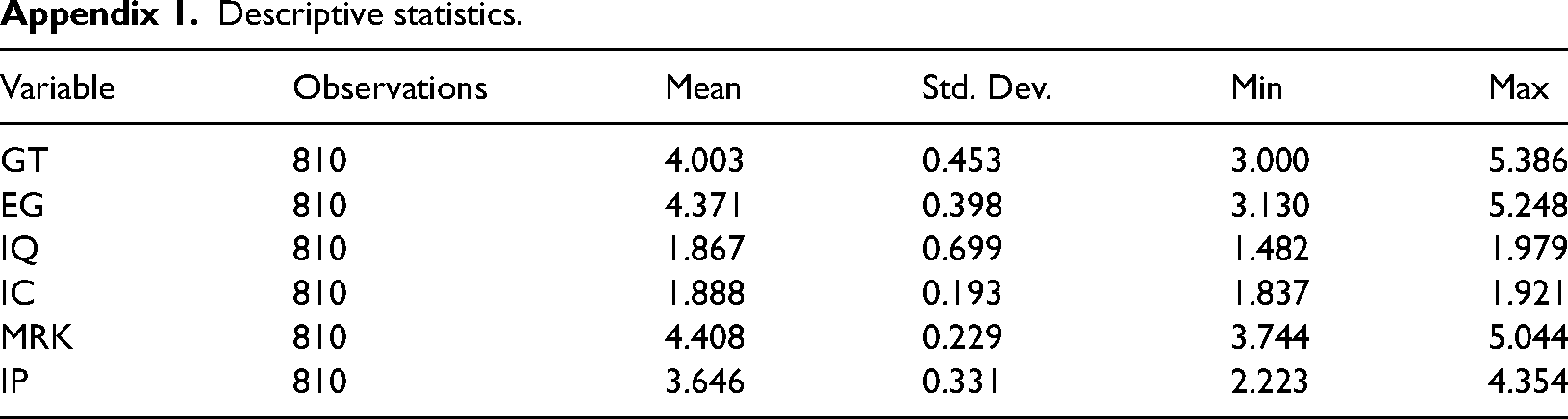
Variable
Observations
Mean
Std. Dev.
Min
Max
GT
810
4.003
0.453
3.000
5.386
EG
810
4.371
0.398
3.130
5.248
IQ
810
1.867
0.699
1.482
1.979
IC
810
1.888
0.193
1.837
1.921
MRK
810
4.408
0.229
3.744
5.044
IP
810
3.646
0.331
2.223
4.354
Variables
GT
GDP
ENV
HC
MRK
INN
GT
1.000
EG
0.876
1.000
IQ
0.424
0.667
1.000
IC
0.482
0.284
0.656
1.000
MRK
0.644
0.751
0.138
0.615
1.000
IP
0.649
0.182
0.223
0.847
0.645
1.000
Long-run
PMG
MG
DFE
Coefficient
Prob.
Coefficient
Prob.
Coefficient
Prob.
ECT
−0.303a
0.000
−0.844a
0.000
−0.816a
0.000
EG
0.249
0.130
0.019
0.962
0.045
0.748
IQ
1.012
0.242
2.356
0.322
0.026
0.679
IC
1.835
0.719
2.311
0.414
0.631b
0.054
MRK
0.652c
0.098
0.101
0.636
0.488b
0.022
IP
0.043
0.103
0.051
0.263
0.010
0.371
C
0.948a
0.000
0.264c
0.066
0.316a
0.363
Long-run
PMG
MG
DFE
Coefficient
Prob.
Coefficient
Prob.
Coefficient
Prob.
ECT
−0.305a
0.001
−0.844a
0.000
−0.801a
0.000
EG
0.447
0.108
0.627
0.391
0.545
0.194
IQ
0.330
0.120
0.470
0.115
0.267c
0.076
IC
0.900
0.535
0.300
0.183
0.219
0.186
MRK
0.019
0.156
0.543
0.197
0.715
0.113
IP
0.045
0.264
0.025
0.454
0.020
0.352
C
0.895a
0.001
0.176b
0.038
0.894a
0.005
Long-run
PMG
MG
DFE
Coefficient
Prob.
Coefficient
Prob.
Coefficient
Prob.
ECT
−0.583a
0.000
−0.852a
0.000
−0.956a
0.000
EG
0.108
0.193
0.336
0.296
0.056
0.665
IQ
0.541
0.236
0.495
0.279
0.067
0.438
IC
0.219
0.225
0.467
0.159
0.914a
0.000
MRK
0.015
0.732
0.208
0.442
0.461c
0.052
IP
0.016
0.952
0.334
0.995
0.857
0.845
C
0.169a
0.000
0.432b
0.059
0.385c
0.082
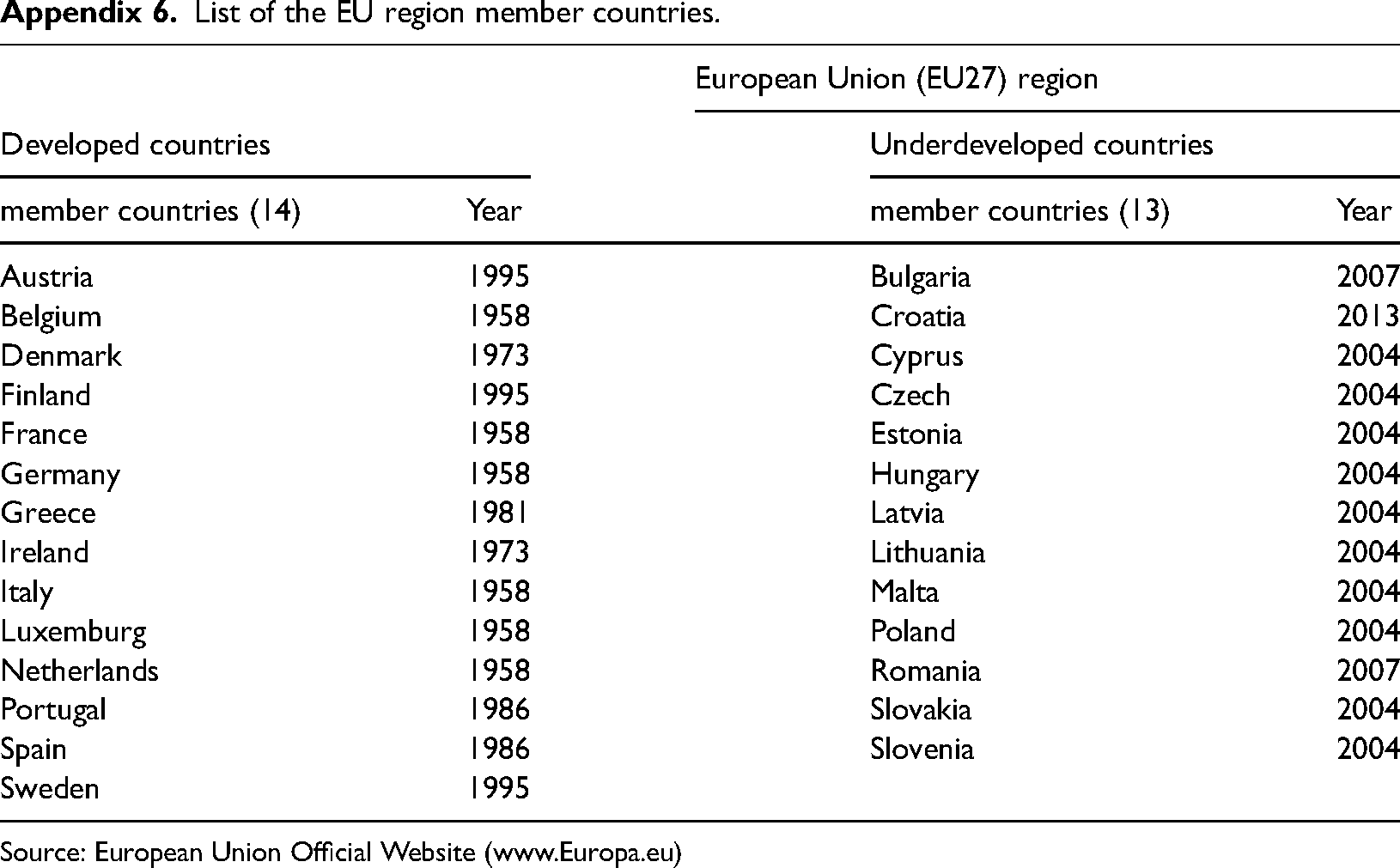
European Union (EU27) region
Developed countries
Underdeveloped countries
member countries (14)
Year
member countries (13)
Year
Austria
1995
Bulgaria
2007
Belgium
1958
Croatia
2013
Denmark
1973
Cyprus
2004
Finland
1995
Czech
2004
France
1958
Estonia
2004
Germany
1958
Hungary
2004
Greece
1981
Latvia
2004
Ireland
1973
Lithuania
2004
Italy
1958
Malta
2004
Luxemburg
1958
Poland
2004
Netherlands
1958
Romania
2007
Portugal
1986
Slovakia
2004
Spain
1986
Slovenia
2004
Sweden
1995
Dependent Variable: GT
Table header
Without trend
With trend
Pedroni residual co-integration test
Alternative hypothesis: common AR coefficients. (within dimension)
Panel v-Statistic
0.978
(0.836)1.061
(0.855)
Panel rho-Statistic
5.137
(1.000)4.619
(1.000)
Panel PP-Statistic
0.403b
(0.010)3.026c
(0.001)
Panel ADF-Statistic
1.610b
(0.053)3.374c
(0.000)
Alternative hypothesis: common AR coefficients. (between dimension)
Group rho-Statistic
6.503
1.000
Group PP-Statistic
7.025c
(0.000)
Group ADF-Statistic
4.241c
(0.000)