




Abstract
The genetic types and source of the Lower Paleozoic natural gas in the Ordos Basin in China are controversial, and the geochemical characteristics of light hydrocarbons of natural gas in the fifth member of the Ordovician Majiagou Formation (O1m5) are studied by taking the Daniudi gas field as an example, in order to reveal the gas origin and source. The C5−7 light hydrocarbons are dominated by iso-alkanes rather than the n-alkanes, and the methyl cyclohexane (MCH) content is mostly higher than the nC7 content in C7 light hydrocarbons. The K1 and K2 values range from 1.06 to 1.16 and from 0.33 to 0.81, respectively. The geochemical characteristics of light hydrocarbons indicate that the Lower Paleozoic natural gas in the Daniudi gas field is mainly coal-derived gas which has been generated by the humic source rocks in the Upper Carboniferous Taiyuan Formation (C3t), with insignificant contribution by the O1m sapropelic source rocks. The O1m5 gas pools were accumulated through downward and lateral migration in the free phase. The aromatic contents in C6-7 and nC7/MCH ratios are easily affected by the factors such as water solubilization, adsorption in migration, evaporation, and migration fractionation, therefore, secondary alteration needs to be considered when using these parameters to identify the gas origin.
Introduction
The Ordos Basin, one of the important petroliferous basins onshore in China, is the basin with the highest annual gas yield in China. The main exploration target in the Ordos Basin is the Upper Paleozoic Carboniferous to Permian tight sandstone reservoirs, and several large gas fields with proven gas reserves exceeding 100 × 109 m3 have been discovered, for example, Sulige, Yulin, Daniudi, and Dongsheng (Dai et al., 2005; Hu et al., 2010a, 2010b; Huang et al., 2015; Liu et al., 2015; Peng et al., 2022; Wu et al., 2017a). The Lower Paleozoic strata are also one of the important gas-bearing strata, and natural gas exploration is mainly concentrated on the carbonate reservoir in the Lower Ordovician Majiagou Formation. Only one large gas field (i.e. Jingbian) has been discovered in the Lower Paleozoic strata (Hu and Zhang, 2011; Liu et al., 2009, 2012), with proven gas reserves of 655.2 × 10⁹ m3 (Yang and Liu, 2014). In recent years, several gas pools have been revealed in the carbonate reservoirs of the Ordovician weathering crust and pre-salt layers in the Daniudi, Jingdong, and Jingxi areas (Liu et al., 2016, 2023; Sun et al., 2021; Wei et al., 2018; Wu et al., 2017b), suggesting the favorable exploration prospect of the Lower Paleozoic strata.
Many studies have been conducted on the origin and source of natural gas in the Ordos Basin, and the Upper Paleozoic gas is commonly believed as coal-derived gas from the coal-measure source rocks in the Upper Carboniferous and Lower Permian strata (Dai et al., 2005; Hu et al., 2010a, 2010b; Huang et al., 2015; Liu et al., 2015; Peng et al., 2022; Wu et al., 2017a). However, there is no consensus on the origin and source of the Lower Paleozoic gas, although it is generally considered as mixing gas (Cai et al., 2005; Dai et al., 2005; Li et al., 2003; Xia et al., 1999a; Zou et al., 2007). It is controversial on whether the gas is dominated by coal-derived gas from the Upper Paleozoic coal-measure source rocks (Hu and Zhang, 2011; Liu et al., 2016; Mi et al., 2012) or oil-associated gas from carbonate source rocks in the Ordovician Majiagou Formation (Cai et al., 2005; Chen, 2002; Liu et al., 2016) or Carboniferous Taiyuan Formation (Dai et al., 2005; Xia et al., 1999b). The disagreement mainly resulted from different understandings of the geochemical characteristics of the Lower Paleozoic gas and the effectiveness of Lower Paleozoic source rocks (Liu et al., 2016).
The Daniudi gas field is located in the northern Ordos Basin, and the submitted proven gas reserves in the Upper Paleozoic strata till July 2019 were 454.563 × 10⁹ m3, whereas the submitted controlled gas reserves in the Lower Paleozoic weathering crust of the Majiagou Formation were 22.129 × 10⁹ m3 (Sun et al., 2021). The genetic identification and gas-source correlation of the Upper Paleozoic natural gas have been studied extensively, and the gas is commonly considered as typical coal-derived gas which was derived from the Carboniferous to Permian coal-measure source rocks (Liu et al., 2015; Wu et al., 2017a). The geochemical analysis of the Lower Paleozoic natural gas in the Daniudi gas field has been conducted in recent years, and the gas was considered to include both coal-derived and oil-associated gases (Sun et al., 2021; Wu et al., 2017b). However, the relevant studies mainly concentrate on the chemical components and stable carbon and hydrogen isotopes, with few proofs of light hydrocarbons.
Natural gas geochemistry is an important content in petroleum geology and geochemistry (Dai et al., 1992, 2017; Dai, 2016; Liu et al., 2013, 2014a, 2019, 2018). Light hydrocarbons are trace components in natural gas containing rich geochemical information, and light hydrocarbon geochemistry has played a crucial role in identifying the origin and maturity of natural gas, gas-source correlation, and migration characteristics (Mango, 1997; Thompson, 1983; Duan et al., 2014; Yu et al., 2014; Hu et al., 2008, 2010a, 2010c; Hu and Zhang, 2011; Hu et al., 2022, 2018, 2012; Huang et al., 2022). The authors intend to analyze the light hydrocarbon compositions of natural gas from the Lower Paleozoic carbonate reservoirs in the Daniudi gas field, aiming to reveal the implication of light hydrocarbon geochemical characteristics on the source and migration phase of the gas and discuss the contributing factors of specific light hydrocarbon parameters and their applicability. This work will not only be favorable to uncover the accumulation process and enrichment mechanisms of the Lower Paleozoic gas in the Ordos Basin, but also have positive implications for the extension of natural gas exploration in the basin.
Geological setting
The Ordos Basin is located at the western margin of the North China Block in central China (Figure 1(a)), covering an area of 370 × 103 km2. It is the second-largest onshore sedimentary basin in China with polycyclic tectonic evolution (Yang and Pei, 1996). The Ordos Basin is commonly divided into six secondary tectonic units, that is, Weibei Uplift, Yishan Slope, Yimeng Uplift, Tianhuan Depression, West Margin Thrust Belt, and Jinxi Fault-fold Belt (Figure 1(a)) (Yang et al., 2008, 2005). The Daniudi gas field is situated at the junction between the Yishan Slope and Yimeng Uplift covering an area of 2003.71 km2 (Figure 1(a)), and the overall structural configuration is a gentle monocline high in the northeast and low in the southwest (Sun et al., 2021).
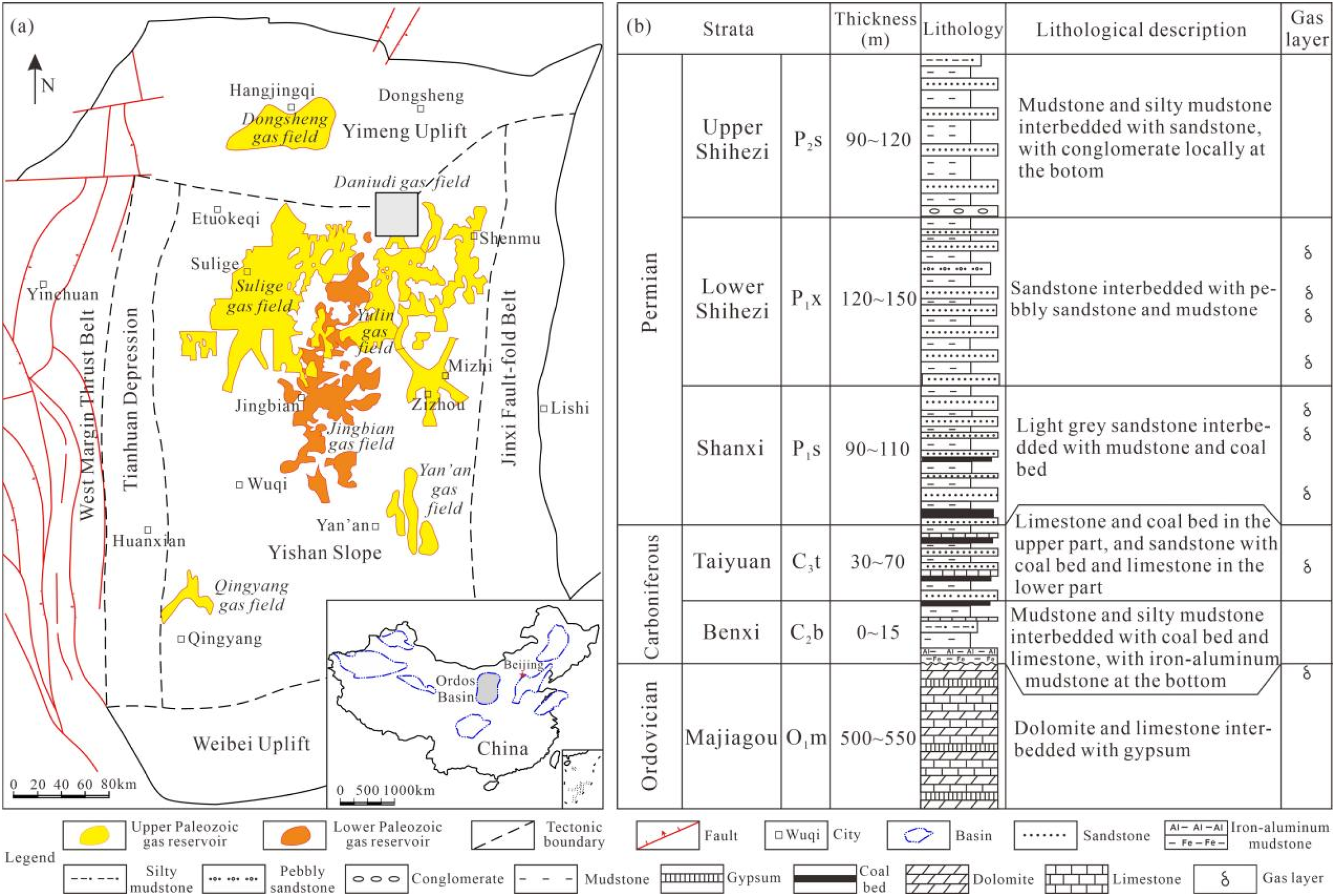
Location of the Daniudi gas field in the Ordos Basin in central China (a) and stratigraphic column of the Paleozoic strata (b) (modified after Liu et al., 2022).
The main source rocks in the Daniudi gas field are coal measures in the Upper Carboniferous Taiyuan Formation (C3t) and Lower Permian Shanxi Formation (P1s). The coal seams and dark mudstone display the thickness ranging from 1 to 10 m and from 2 to 24 m, respectively (Liu et al., 2015), with the total organic carbon (TOC) contents ranging from 71.52% to 85.50% and from 4.63% to 28.17%, respectively (Yang et al., 2010). The δ13C values of kerogen in the coal seams and dark mudstone range from −26.0‰ to −23.0‰ and from −26.4‰ to −22.4‰, respectively (Hao et al., 2011), suggesting humic organic matter. The C3t-P1s source rocks are in the mature to high-mature stage with the vitrinite reflectance (RO) mainly from 1.0% to 1.4% (Dai, 2016).
The secondary source rocks in the Daniudi gas field are the carbonate rocks in the Lower Ordovician Majiagou Formation (O1m), and the δ13C values of kerogen range from −33.4‰ to −26.2‰ (Sun et al., 2021), suggesting mainly sapropelic organic matter. The O1m carbonate source rocks display an average TOC content of 0.35%, and the effective source rocks with TOC ≥ 0.4% only account for 19.37%, therefore, they are supposed to generate oil-associated gas with a limited amount (Liu et al., 2016).
The Upper Paleozoic natural gas in the Daniudi gas field is accumulated in the tight sandstone reservoirs in the C3t, P1s, and Lower Shihezi Formation (P1x). The gas is derived from the C3t and P1s coal-measure source rocks, and the regional caprocks of the gas pools are the mudstone and silty mudstone in the Upper Shihezi Formation (P2s) (Figure 1(b)) with stable distribution (Liu et al., 2015; Wu et al., 2017a). The Lower Paleozoic natural gas is accumulated in the O1m carbonate reservoirs, with the mudstone and iron-aluminum mudstone in the Benxi Formation (C2b) as the caprocks (Figure 1(b)). The O1m in the Daniudi gas field is generally divided into five members upwards (O1m1–O1m5), and the main pay bed is the O1m5 weathering crust reservoir assisted by the O1m4 presalt reservoir in a few wells (Sun et al., 2021).
Samples and methods
Thirty-eight gas samples from the O1m5 carbonate reservoirs in the weathering crust in the Daniudi gas field were collected at the wellheads using stainless steel cylinders with double valves after first flushing the lines and cylinders for 10–15 min to remove air contamination. The light hydrocarbon analysis was conducted at the Key Laboratory of Hydrocarbon Accumulation, SINOPEC. The data from the Upper Paleozoic natural gas from the Daniudi gas field (Wu et al., 2017a) and the Lower Paleozoic natural gas from the Jingbian gas field (Hu and Zhang, 2011; Hu et al., 2018) were collected for comparative study.
The chemical composition of gas samples was determined using an Agilent 7890A gas chromatograph (GC) equipped with a flame ionization detector and a thermal conductivity detector. Individual alkane gas components were separated using a capillary column (PLOT Al2O3 50 m × 0.53 mm × 25 μm). The GC oven temperature was initially set at 40 °C for 5 min, heating at a rate of 10 °C/min to a final temperature of 180 °C, which was held for 20 min.
The stable carbon isotopic composition of the natural gas was measured on a Finnigan MAT-253 mass spectrometer. The alkane gas components were initially separated using a fused silica capillary column (PLOT Q 30 m × 0.32 mm × 20 μm) with helium carrier gas. The oven temperature was ramped from 40 °C to 180 °C at a heating rate of 10 °C/min, and the final temperature was held for 10 min. Each gas sample was measured in triplicate. Stable carbon isotopic values are reported in the δ notation in permil (‰) relative to VPDB, and the measurement precision is estimated to be ±0.5‰ for δ13C.
The wet gas with a dryness coefficient (C1/C1−5) lower than 0.95 was directly used for light hydrocarbon analysis, whereas the dry gas (C1/C1−5 ≥ 0.95) needs concentration. The six-way valve and frozen enrichment tube were equipped before the chromatograph, and the dry gas was concentrated for light hydrocarbons under −30 °C for 3 h with a gas rate < 5 mL/min (Liu et al., 2003). The cylinder was turned off after concentration, and the enrichment tube was heated rapidly for chromatographic analysis. The light hydrocarbons in the gas samples were analyzed on an HP6890N gas chromatograph with an HP PONA capillary column (50 m × 0.25 mm × 25 μm). The carrier gas was helium with an inlet temperature of 120 °C. The components were collected with a cold trap for 20 min, and the eluting hydrocarbons were detected using a flame ionization detector (FID) at a temperature of 320 °C. The initial oven temperature was held at 30 °C for 15 min and then programmed to 70 °C at 1.5 °C/min, then rose from 70 °C to 160 °C at 3 °C/min, and finally, from 160 °C to 280 °C at 5 °C/min. The final temperature was held for 20 min. The detailed analytical procedure can be seen by Hu et al. (2018).
Results
C5−7 light hydrocarbon compositions
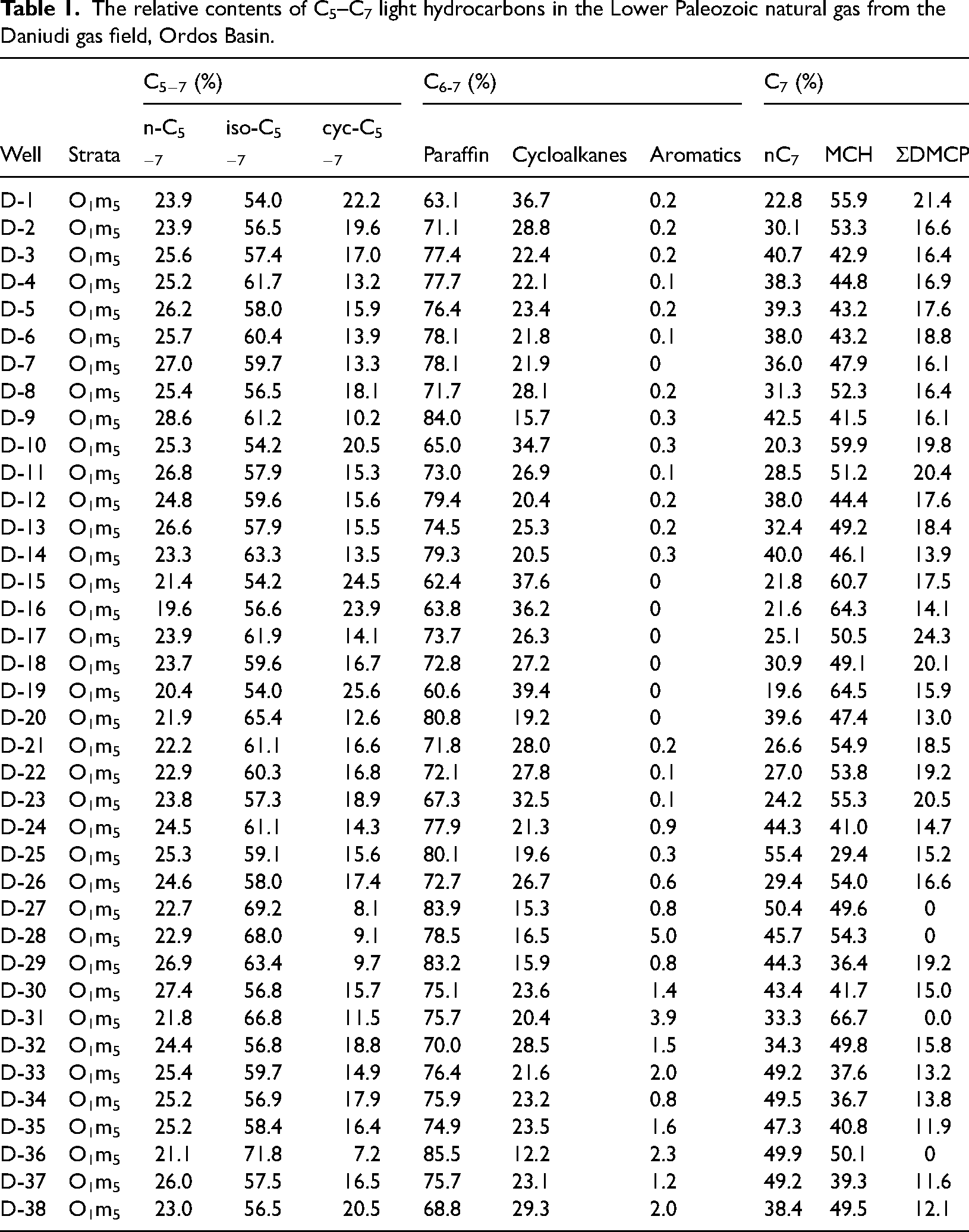
The n-C5−7, iso-C5−7, and cyc-C5−7 relative contents in the C5−7 light hydrocarbons in the O1m5 gas from the Daniudi gas field range from 19.6% to 28.6%, from 54.0% to 71.8%, and from 7.2% to 25.6%, respectively (Table 1), with the average of 24.3%, 59.7%, and 16.0%, respectively. The C5−7 light hydrocarbon compositions of the O1m5 gas from different wells are similar with higher iso-C5−7 contents than n-C5−7 contents (Figure 2). The Upper Paleozoic gas from the Daniudi gas field (Wu et al., 2017a) and the Lower Paleozoic gas from the Jingbian gas field (Hu and Zhang, 2011; Hu et al., 2018) also display higher iso-C5−7 contents than n-C5−7 contents (Figure 2).
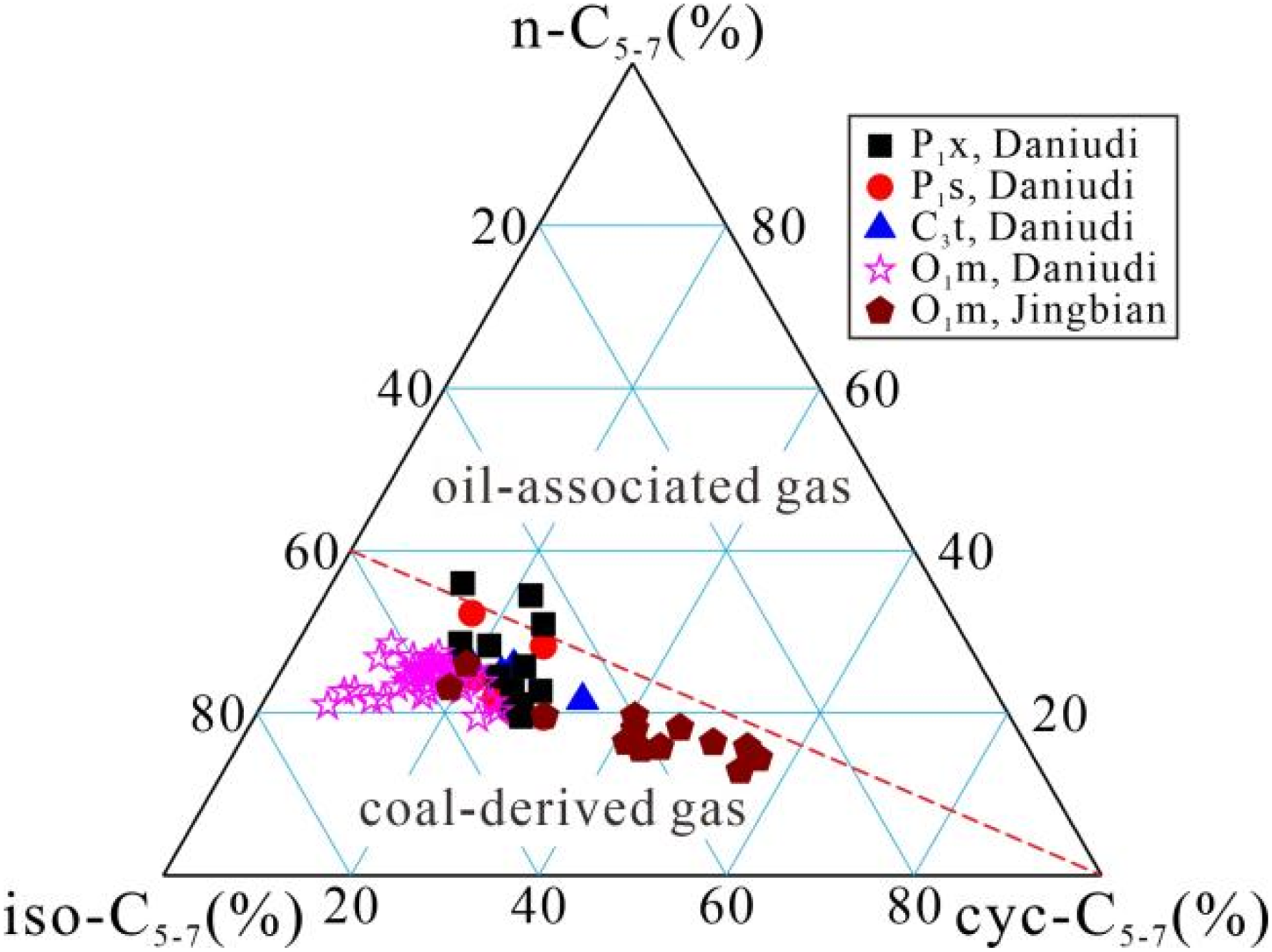
Ternary diagram of n-C5−7, iso-C5−7, and cyc-C5−7 in the Lower Paleozoic natural gas from the Daniudi gas field (modified after Dai et al., 1992). The data of the C3t, P1s, and P1x gases of the Daniudi gas field are from Wu et al. (2017a), whereas the data of the O1m gases of the Jingbian gas field are from Hu et al. (2018).
The relative contents of C5–C7 light hydrocarbons in the Lower Paleozoic natural gas from the Daniudi gas field, Ordos Basin.
C6−7 light hydrocarbon compositions
The relative contents of paraffin, cycloalkanes, and aromatics in C6-7 light hydrocarbons in the O1m5 gas from the Daniudi gas field range from 60.6% to 85.5%, from 12.2% to 39.4%, and from 0% to 5.0%, respectively (Table 1), with the average of 74.5%, 24.8%, and 0.7%, respectively. The C6-7 light hydrocarbon compositions of the O1m5 gas from different wells are similar with higher paraffin contents than cycloalkane contents (Figure 3). The Upper Paleozoic gas from the Daniudi gas field (Wu et al., 2017a) and the Lower Paleozoic gas from the Jingbian gas field (Hu and Zhang, 2011; Hu et al., 2018) display aromatic contents lower than 20%, whereas the P1x gas from the Yulin gas field (Hu et al., 2018, 2010b) has the aromatic contents higher than 30% (Figure 3).
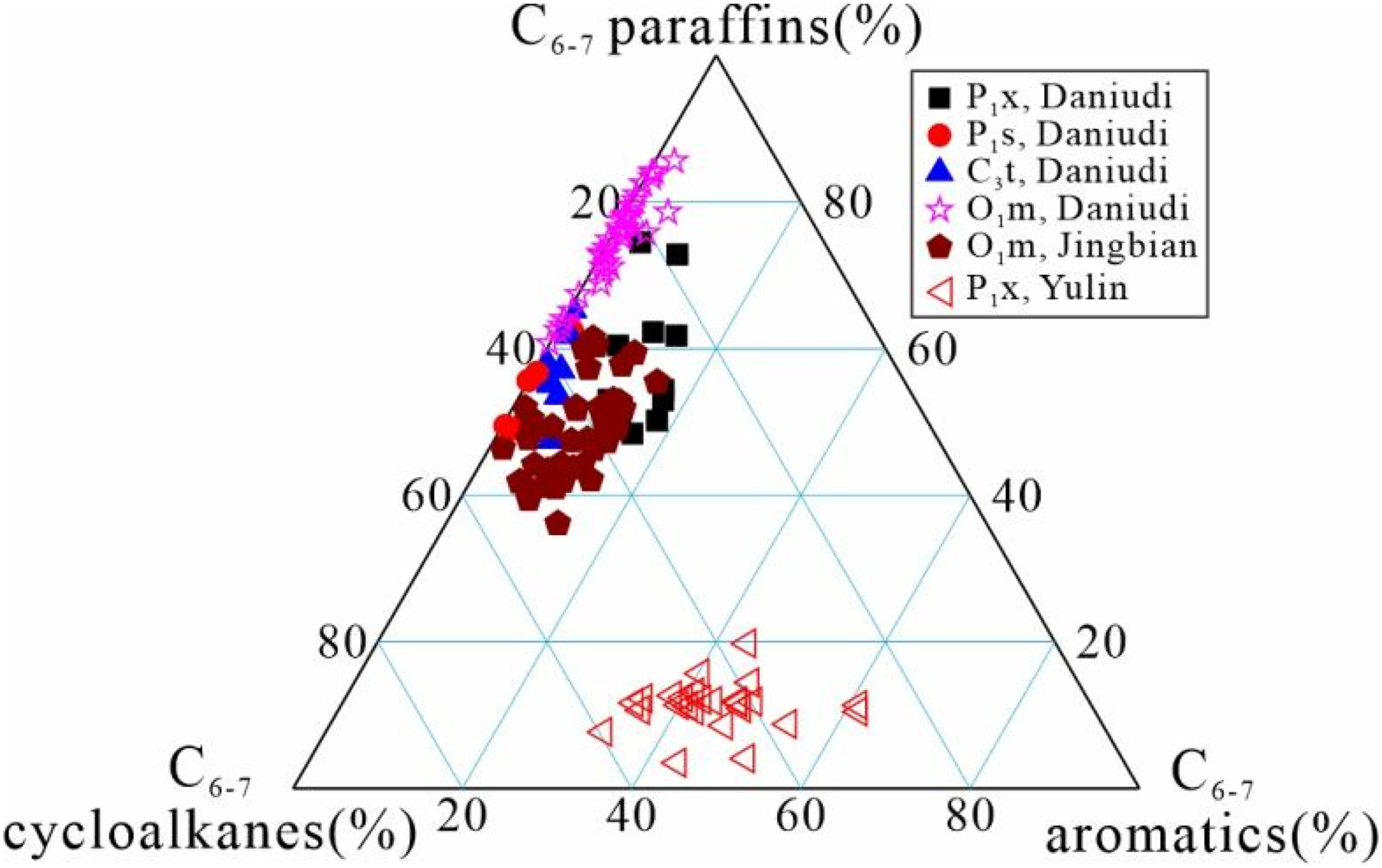
Ternary diagram of C6-7 paraffins, cycloalkanes, and aromatics in the Lower Paleozoic natural gas from the Daniudi gas field. The data of the C3t, P1s, and P1x gases of the Daniudi gas field are from Wu et al. (2017a), whereas the data of the O1m gases of the Jingbian gas field and the P1x gases of the Yulin gas field are from Hu et al. (2018).
C7 light hydrocarbon compositions
The typical C7 light hydrocarbons include nC7, methyl cyclohexane (MCH), and various dimethyl cyclopentane (ΣDMCP). The relative contents of nC7, MCH, and ΣDMCP in C7 light hydrocarbons in the O1m5 gas from the Daniudi gas field range from 19.6% to 55.4%, from 29.4% to 66.7%, and from 0% to 24.3%, respectively (Table 1), with the average of 36.2%, 48.8%, and 15.0%, respectively. The O1m5 gas samples from different wells mostly display higher MCH contents than nC7 contents, with only a few samples displaying higher nC7 contents than MCH contents (Figure 4). The C7 light hydrocarbons in the Upper Paleozoic gas from the Daniudi gas field (Wu et al., 2017a) and the Lower Paleozoic gas from the Jingbian gas field (Hu and Zhang, 2011; Hu et al., 2018) are apparently dominated by MCH, whereas the P1x gas from the Yulin gas field (Hu et al., 2018; Hu et al., 2010b) has the aromatic contents higher than 30%.
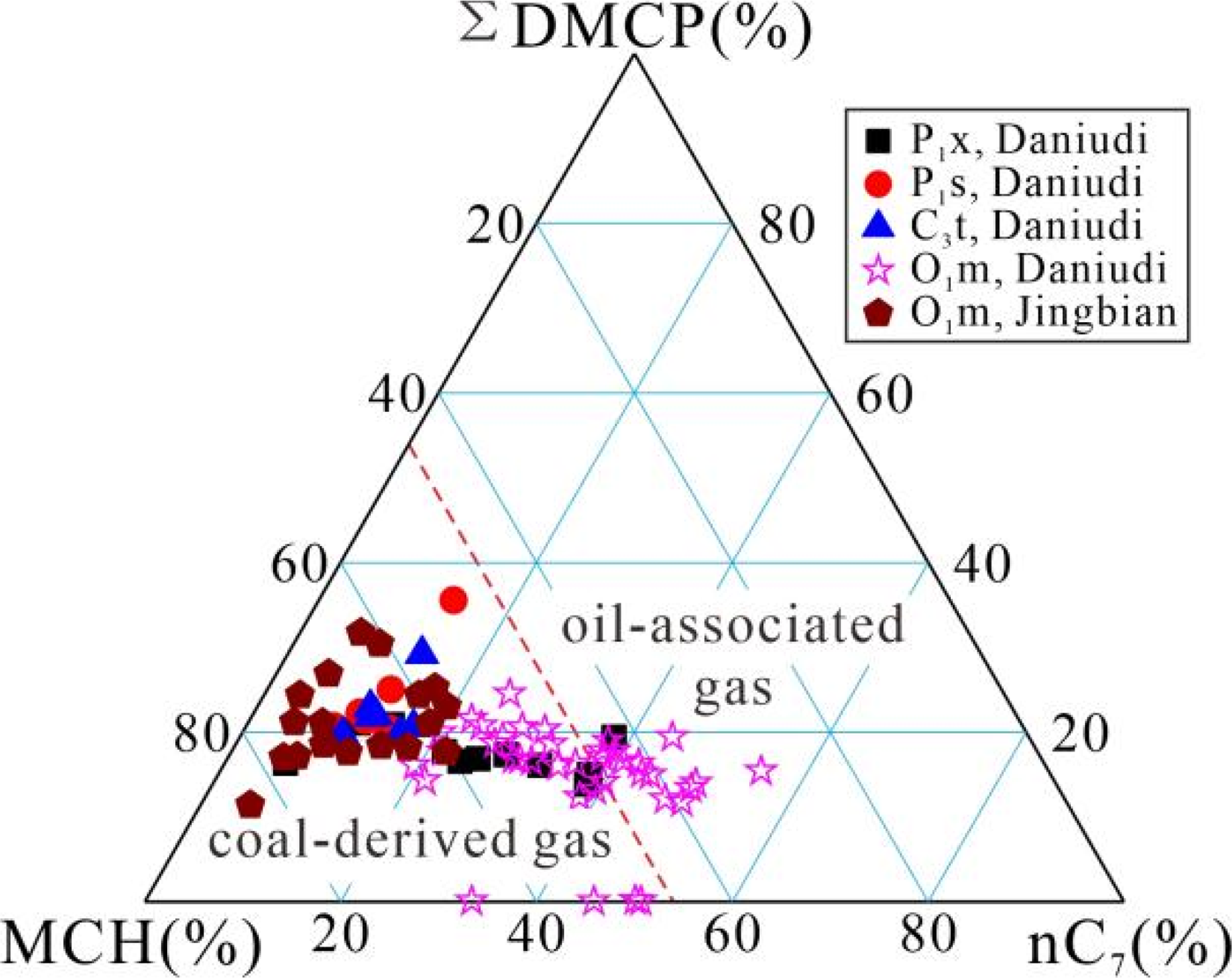
Ternary diagram of nC7, MCH, and ΣDMCP in the Lower Paleozoic natural gas from the Daniudi gas field. The data of the C3t, P1s, and P1x gases of the Daniudi gas field are from Wu et al. (2017a), whereas the data of the O1m gases of the Jingbian gas field are from Hu et al. (2018).
Discussion
The applicability of light hydrocarbon parameters in identifying maturity
Thompson (1979, 1983) proposed the heptane and iso-heptane values to indicate thermal maturity based on the phenomenon that the alkylation degree of crude oil increased with maturity. The heptane values of the O1m5 gas from the Daniudi gas field range from 10.75% to 24.36% with an average of 16.38%, whereas the iso-heptane values range from 2.26 to 8.80 with an average of 5.42 (Figure 5 and Table 2). The iso-heptane values are overall higher than those of the Upper Paleozoic gas from the Daniudi gas field and the O1m5 gas from the Jingbian gas field (Figure 5), which seem to indicate higher thermal maturity than the latter two gases.
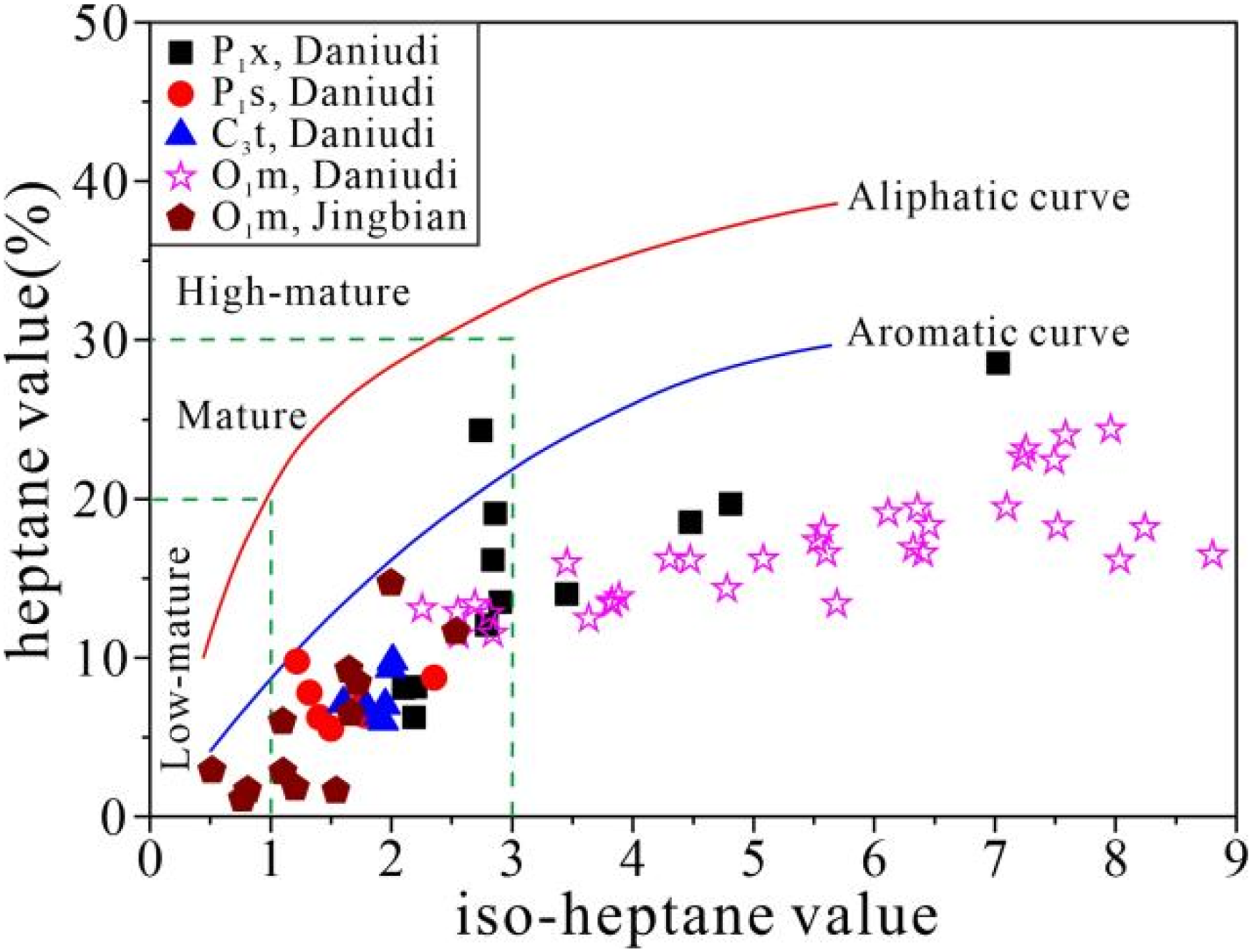
Correlation diagram between heptane and iso-heptane values of the Lower Paleozoic natural gas from the Daniudi gas field. The curves and maturity ranges are after Thompson (1983) and Cheng et al. (1987), respectively. The data of the C3t, P1s, and P1x gases of the Daniudi gas field are from Wu et al. (2017a), whereas the data of the O1m gases of the Jingbian gas field are from Hu et al. (2018).
Geochemical parameters of light hydrocarbons in the Lower Paleozoic natural gas from the Daniudi gas field, Ordos Basin.
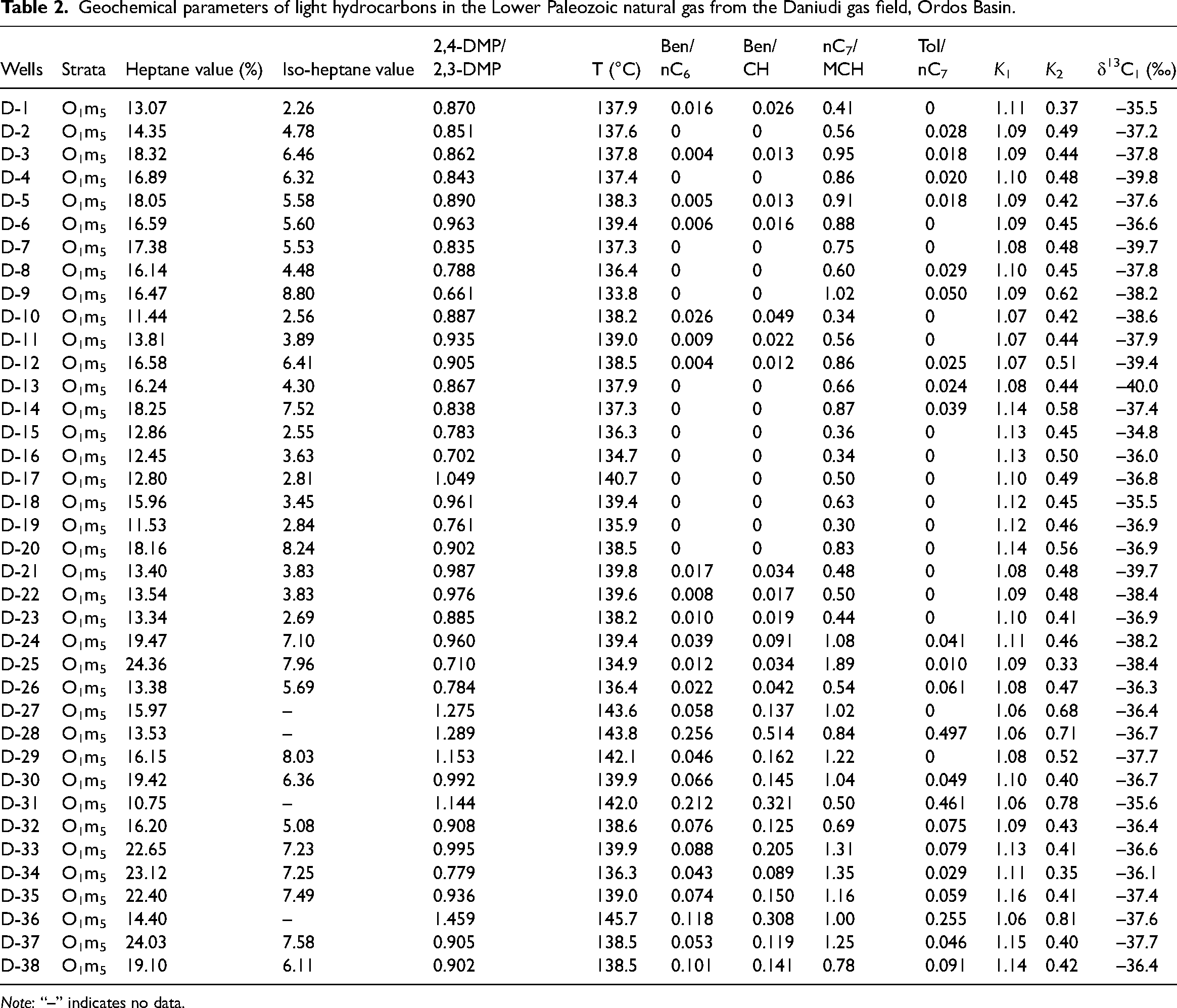
Note: “–” indicates no data.
The thermal evolution degrees (RO) of the source rocks at the bottom of the Carboniferous strata (the top of the Ordovician strata) vary in different areas in the Ordos Basin, for example, the RO values in the Jingbian gas field range from 1.8% to 2.4%, whereas those in the Daniudi gas field range from 1.2% to 1.6% (Dai, 2016). Both the dryness coefficients and δ13C1 values of the O1m5 gas from the Daniudi gas field are consistent with those of the C3t gas (Wu et al., 2017b), which suggest that the O1m5 gas is probably derived from the C3t source rocks. However, the O1m5 gas has higher iso-heptane values than the C3t gas (Figure 5). The iso-heptane values of the O1m5 gas from the Daniudi gas field are also higher than those from the Jingbian gas field (Figure 5), and the indicated maturity difference is inconsistent with the maturity distribution trend of the bottom of the Carboniferous strata (Dai, 2016). Therefore, the iso-heptane values of the O1m5 gas from the Daniudi gas field have been affected by other factors than maturity, and thus are unsuitable to identify thermal maturity. Moreover, evaporation fractionation could also alter the heptane values of the light hydrocarbons (Hu et al., 2012), and thus affect the identification of maturity.
The 2,4-DMP/2,3-DMP (2,4-dimethyl pentane/2,3-dimethyl pentane) ratio was considered as a good temperature parameter, and it was unaltered by the basin type, source rock age, or kerogen type (BeMent et al., 1995). Mango (1997) further derived a formula between the ratio and the largest burial temperature (T) of the source bed, that was, T (°C) = 140 + 15ln(2,4-DMP/2,3-DMP). The 2,4-DMP/2,3-DMP ratio of the O1m5 gas from the Daniudi gas field ranges from 0.66 to 1.46 (Table 2) with an average of 0.93. According to the formula proposed by Mango (1997), the largest burial temperature (T) ranges from 133.8 °C to 145.7 °C (Table 2) with an average of 138.6 °C. The consistent T values seem to reflect the narrow range of thermal maturity of source rocks, however, the δ13C1 values range from −40.0‰ to −34.8‰ (Table 2), suggesting a wide range of maturity. Therefore, the 2,4-DMP/2,3-DMP ratios do not well reflect the generation temperature of the Lower Paleozoic gas from the Daniudi gas field. Mango (1997) considered that it was difficult to evaluate 2,4-DMP/2,3-DMP as a temperature index since comparative data for other indices were not yet published. Moreover, since the 2,4-DMP is easier to evaporate than 2,3-DMP due to the lower boiling point, the evaporation fractionation will decrease the 2,4-DMP/2,3-DMP ratios of crude oil, and the calculated T values will also decrease (Hu et al., 2012).
Thermal simulation experiments indicated that the Ben/nC6 and Tol/nC7 (Toluene/nC7) ratios increased with the pyrolysis temperature (Chen et al., 2009), which suggested a positive correlation between the ratios and thermal maturity. The statistical result by Huang et al. (2022) indicated that, both the Ben/nC6 and Tol/nC7 ratios were positively correlated with the δ13C2 values of the limited oil-associated gas samples, however, the insignificant correlation was observed between the ratios and the δ13C2 values of a large number of coal-derived gas samples. The δ13C2 values were commonly affected by the organic types of source rocks, whereas the δ13C1 values were more sensitive to thermal maturity than the δ13C2 values (Dai et al., 1992). The Ben/nC6 ratios of the O1m5 gas from the Daniudi gas field were not positively correlated with the δ13C1 values (Figure 6(a)), which indicated the possible effect of secondary alteration such as migration. The toluene could not be detected in many O1m5 gas samples, and thus the Tol/nC7 ratios could not reflect the effect of thermal maturity.
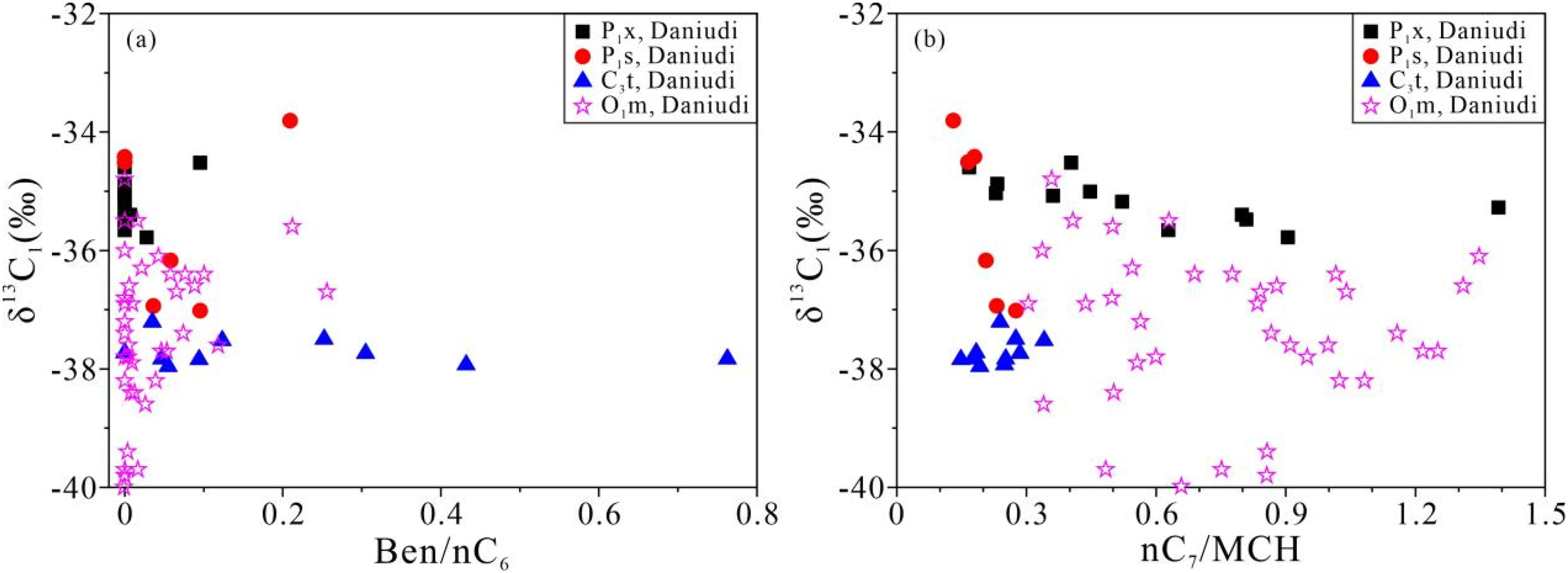
Correlation diagram of δ13C1 versus Ben/nC6 (a) and nC7/MCH (b) of the Lower Paleozoic natural gas from the Daniudi gas field. The data of the C3t, P1s, and P1x gases of the Daniudi gas field are from Wu et al. (2017a).
Moreover, although the nC7/MCH ratios could increase with thermal maturity, they were also affected by evaporation (Talukdar and Dow, 1990). The nC7/MCH ratios and the δ13C1 values of the O1m5 gas from the Daniudi gas field were not positively correlated (Figure 6(b)), which suggested that the nC7/MCH ratios were not mainly affected by thermal maturity. Therefore, the nC7/MCH ratios could not directly reflect the maturity of the Lower Paleozoic gas from the Daniudi gas field.
Genetic types of the Lower Paleozoic natural gas
Previous studies on the origin and source of the Lower Paleozoic natural gas in the Ordos Basin mainly focused on the chemical composition and stable carbon isotopic compositions, for example, Xia et al. (1999a), Liu et al. (2009), and Wu et al. (2017b). However, the controversy still exists, which can be attributed to different understandings of the geochemical characteristics of the Lower Paleozoic gas and the effectiveness of Lower Paleozoic source rocks (Liu et al., 2016). The ethane carbon isotope values (δ13C2) have been widely used to identify the gas origin, and the gases with δ13C2 values higher and lower than −29‰ were generally considered as coal-derived and oil-associated gases, respectively (e.g. Dai et al., 1992; Liu et al., 2009). However, the Lower Paleozoic gas mainly displays a wide range of δ13C2 values, which are from −37.5‰ to −22.2‰ and from −33.6‰ to −24.2‰ for the gas in the Jingbian (Liu et al., 2009) and Daniudi (Wu et al., 2017b) gas fields in the Ordos Basin, respectively. There is no consensus on whether the δ13C2 values lower than −29‰ represent the characteristics of oil-associated gas or migration fractionation of coal-derived gas (Xia et al., 1999a). Moreover, the Lower Paleozoic gas in the Jingbian and Daniudi gas fields displays a dryness coefficient (C1/C1−5) of 0.981–0.999 (Liu et al., 2009) and 0.886–0.978 (Wu et al., 2017b), respectively, which indicate that the gas is dominated by CH4 rather than C2H6. Therefore, whether the δ13C2 values can suggest the origin of the gas is still controversial, especially for dry gas. This study intends to reveal the gas origin and source from the aspect of light hydrocarbon characteristics.
The light hydrocarbon components generated by sapropelic organic matters were enriched in n-alkanes, whereas those generated by humic organic matters were enriched in iso-alkanes and cycloalkanes (Leythaeuser et al., 1979), therefore, the relative compositions of n-C5−7, iso-C5−7, and cyc-C5−7 can be used to identify the origin of natural gas (Dai et al., 1992; Hu et al., 2008). The C5−7 light hydrocarbons in the O1m5 gas from the Daniudi gas field are dominated by iso-C5−7 rather than n-C5−7, which are consistent with the Upper Paleozoic gas and suggest the characteristics of coal-derived gas generated by typical humic organic matters. The n-C5−7 contents in the O1m5 gas are significantly lower than 30%, which are distinctly different from typical oil-associated gas (Figure 2). The C5−7 light hydrocarbons in the O1m gas from the Jingbian gas field were dominated by iso-C5−7 and cyc-C5−7, suggesting typical characteristics of coal-derived gas (Figure 2).
Among the C7 light hydrocarbons, MCH was mainly derived from lignin and cellulose in terrigenous higher plants and relatively rich in coal-derived gas, and various DMCP mainly originated from lipid compounds in aquatic organisms, whereas nC7 was mainly derived from algae and bacteria, with the latter two rich in oil-associated gas (Dai et al., 1992). Therefore, the relative composition of C7 light hydrocarbons was commonly applied to differentiate the coal-derived gas from oil-associated gas (Dai et al., 1992; Hu et al., 2008). The Upper Paleozoic gas from the Daniudi gas field (Wu et al., 2017a) and the Lower Paleozoic gas from the Jingbian gas field (Hu and Zhang, 2011; Hu et al., 2018) display dominant distribution of MCH in the C7 series, suggesting the origin of coal-derived gas (Figure 4). The O1m5 gas samples from the Daniudi gas field mainly display the characteristics of dominant MCH in the C7 series, suggesting the typical characteristics of coal-derived gas, whereas a small amount of the gas samples display higher nC7 contents than MCH contents, which are consistent with typical oil-associated gas (Figure 4).
The heptane and iso-heptane values of oil and gas samples are affected by both thermal maturity and kerogen types of source rocks, and the aliphatic and aromatic curves in the correlation diagram between heptane and iso-heptane values represent sapropelic and humic organic matters, respectively (Thompson, 1983; Wang et al., 2010). The O1m5 gas from the Daniudi gas field follows the aromatic curve in the correlation diagram (Figure 5), and it is consistent with the Upper Paleozoic coal-derived gas, suggesting the origin of coal-derived gas generated by humic organic matter. The O1m gas from the Jingbian gas field also follows the aromatic curve (Figure 5), suggesting the characteristics of coal-derived gas (Hu et al., 2018).
Additionally, the aromatic contents in light hydrocarbons in oil and gas are affected by both organic types and thermal maturity (Hu et al., 2012). The coal pyrolysis gases from different evolution stages (especially the high-mature stage) all display high aromatic contents, in which the peak generation stage corresponds to the RO values from 1.10% to 2.70% (Hu et al., 2010a). The statistical result indicates that the light aromatics (benzene and toluene) in C6-7 hydrocarbons in coal-derived and oil-associated gases generally display contents higher and lower than 20%, respectively (Huang et al., 2022). However, the light aromatics were easily soluble in water and easily adsorbed, and thus the C6-7 aromatic contents in coal-derived gas have a wide range of variation and are not necessarily high (Hu et al., 2010a). The C6-7 aromatic contents in coal-derived gas in the Upper Triassic Xujiahe Formation in the Sichuan Basin varied in a wide range and were usually not high, and they were even lower than those in oil-associated gas from the Zhongba gas field in the basin, therefore, identification of gas origin only on the basis of C6-7 aromatic contents in light hydrocarbons might achieve wrong understandings (Hu et al., 2012).
The P1x gas from the Yulin gas field in the Ordos Basin (Hu et al., 2018, 2010b) displays the relative aromatic contents in C6-7 light hydrocarbons higher than 30% (Figure 3), suggesting the characteristics of typical coal-derived gas. However, both the Upper Paleozoic gas from the Daniudi gas field (Wu et al., 2017a) and the Lower Paleozoic gas from the Jingbian gas field (Hu and Zhang, 2011; Hu et al., 2018) have relative aromatic contents in C6-7 light hydrocarbons lower than 20%, which are different with typical coal-derived gas (Figure 3). The relative aromatic contents in C6-7 light hydrocarbons in the O1m5 gas from the Daniudi gas field are all lower than 5.0% (Table 1), with the aromatics even undetectable in several samples, and the average content is only 0.7% (Figure 3). This is probably associated with water solubilization and adsorption in migration. Therefore, secondary alterations need to be considered when using the relative aromatic contents in C6-7 light hydrocarbons to identify the gas origin.
Gas source of the Lower Paleozoic carbonate reservoirs
The K1 [=(2-MH + 2,3-DMP)/(3-MH + 2,4-DMP)] values of crude oil were around 1, and different types of oil and gas samples display different K1 values, whereas the oil and gas samples from the same source have consistent K1 values (Mango, 1987). The K1 values of natural gas are only associated with organic matter types rather than thermal maturity, for example, humic and sapropelic gases from the Sichuan Basin display different K1 values (Wang et al., 2006). The Upper Paleozoic gas from the Daniudi gas field has the K1 values in the range from 1.02 to 1.14 with an average of 1.08 (Wu et al., 2017a). The Lower Paleozoic gas in the field has similar K1 values, which range from 1.06 to 1.16 with an average of 1.10 (Table 2). These two types of natural gases display a positive linear correlation between (2-MH + 2,3-DMP)/C7 and (3-MH + 2,4-DMP)/C7, and the fitting formula is y = 0.916x with R2 of 0.988 (Figure 7), suggesting the same gas source. The Upper Paleozoic gas in the Daniudi gas field was mainly derived from the Carboniferous-Permian coal-measure source rocks (Wu et al., 2017a; Liu et al., 2015), and thus the Lower Paleozoic gas seems mainly to be derived from the same source rocks. The Lower Paleozoic gas from the Jingbian gas field displays the characteristics of coal-derived gas, and it follows the trend of the fitting line for the Paleozoic gas in the Daniudi gas field in the correlation diagram between (2-MH + 2,3-DMP)/C7 and (3-MH + 2,4-DMP)/C7 (Figure 7), suggesting the same source.
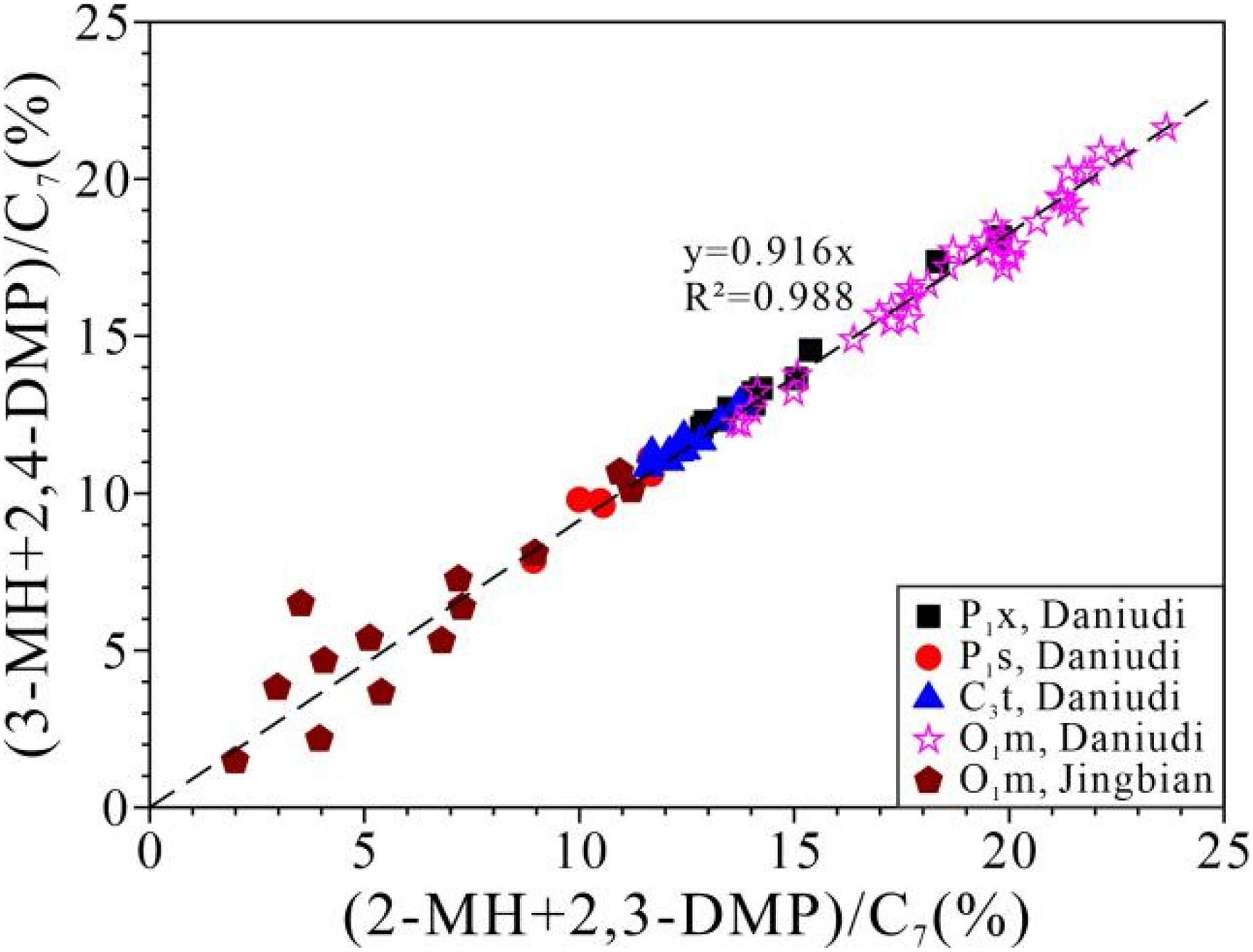
Correlation diagram between (2-MH + 2, 3-DMP)/C7 and (3-MH + 2, 4-DMP)/C7 of the Lower Paleozoic natural gas from the Daniudi gas field. The data of the C3t, P1s, and P1x gases of the Daniudi gas field are from Wu et al. (2017a), whereas the data of the O1m gases of the Jingbian gas field are from Hu et al. (2018).
Different types of hydrocarbon samples follow different trends in the correlation diagram between P3 (=ΣDMP + 3-EP) and P2 (=2-MH + 3-MH) + N2 (=1,1-DMCP +1,c3-DMCP + 1,t3-DMCP), that is, different K2 [ = P3/(P2 + N2)] values (Mango, 1990). The marine crude oil in the Tarim Basin has low K2 values (<0.30), whereas the terrigenous oil has high K2 values (> 0.30) (Zhang et al., 2005). The K2 values for the Upper Paleozoic gas from the Daniudi gas field range from 0.25 to 0.52 with an average of 0.41 (Wu et al., 2017a), whereas those for the Lower Paleozoic gas range from 0.33 to 0.81 with an average of 0.48 (Table 2). The Upper and Lower Paleozoic gases have a consistent distribution trend in the correlation diagram between (P2 + N2)/C7 and P3/C7, suggesting the same source (Figure 8).
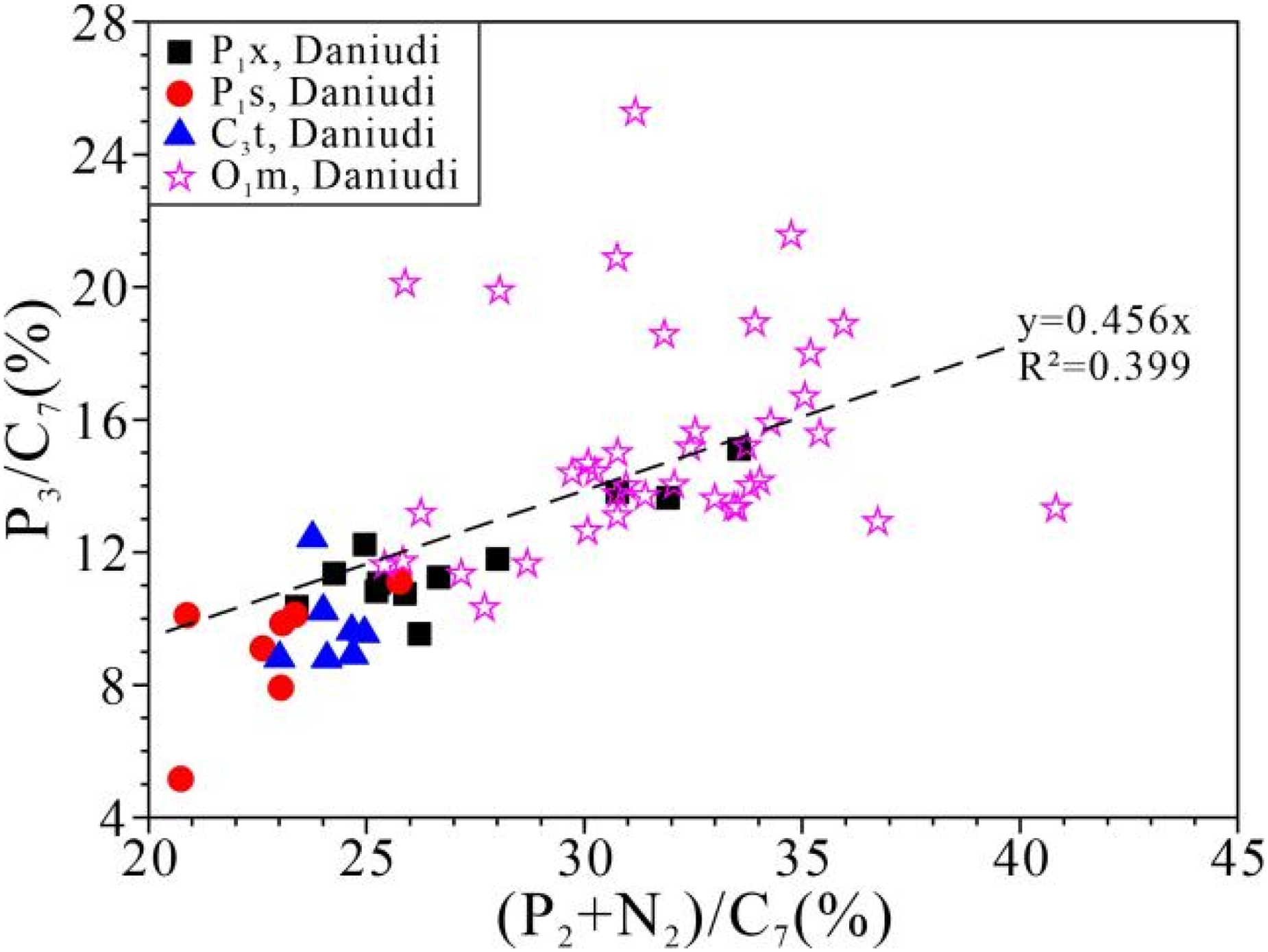
Correlation diagram between (P2 + N2)/C7 and P3/C7 of the Lower Paleozoic natural gas from the Daniudi gas field. The data of the C3t, P1s, and P1x gases of the Daniudi gas field are from Wu et al. (2017a).
The δ13C1 values of the Lower Paleozoic gas from the Daniudi gas field mainly range from −39.0‰ to −36.0‰, which are consistent with those of the C3t gas and generally lower than those of the P1x gas (Figure 6). The P1x gas is mainly derived from the underlying P1s source rocks, and the C3t gas pools have different accumulation assemblage from the P1s-P1x gas pools (Wu et al., 2017a). Therefore, the δ13C1 values of the O1m5 gas mainly have an affinity with the C3t gas, which suggest that the O1m5 gas is derived from the C3t source rocks in the majority. Although several O1m5 gas samples have lower δ13C1 values ranging from −40.0‰ to −39.0‰, they display the nC7/MCH ratios lower than 1 (Figure 6(b)). The MCH contents are apparently higher than the nC7 contents, which are in accordance with typical coal-derived gas (Figure 4), and thus these O1m5 gas samples are probably derived from the C3t source rocks in the low-mature stage. Therefore, the lower Paleozoic gas pools were mainly accumulated via downward or lateral migration of natural gas generated by the C3t source rocks.
The organic matters in the Lower Paleozoic O1m source rocks in the Ordos Basin are sapropelic, and the pre-salt effective source rocks with the TOC (total organic carbon) contents ≥ 0.4% account for 28.2% (Liu et al., 2016). However, the post-salt and inter-salt samples have an average TOC content of 0.27%, and the effective source rocks (TOC ≥ 0.4%) only account for 9.8%, indicating lower development of effective source rocks than pre-salt layers (Liu et al., 2016). The O1m5 gas samples in this study were collected from post-salt layers, and the above-mentioned geochemical characteristics of light hydrocarbons suggest an inconspicuous contribution by sapropelic organic matter. The quality and hydrocarbon potential of the O1m source rocks in the Daniudi gas field need more investigation in the future.
Moreover, in the Fifth Natural Gas Geoscience Forum held in Quanzhou, China, Cai (2023) has made an oral presentation about the origin of the Ordovician gas from the Daniudi gas field, and he proposed that the carbon isotope values of ethane (δ13C2) might be positively shifted under the TSR (thermochemical sulfate reduction) alteration. He further considered that the O1m gas might be derived from the Ordovician source rocks as indicated by both the Δ199Hg and δ13C2 values. Furthermore, the C7 light hydrocarbon compositions may be altered by TSR, since different C7 compounds display different variation trends during TSR alteration (Cai et al., 2019). Therefore, the TSR alteration may cause the apparent characteristics of coal-derived gas.
H2S and CO2 were commonly generated during TSR alteration, and the geochemical characteristics of natural gas may be altered, for example, the TSR alteration on natural gas in the Permian-Trassic marine strata of the Sichuan Basin in China has been widely studied (Cai et al., 2003, 2004; Liu et al., 2014b, 2020; Worden et al., 1995; Wu et al., 2019, 2020). Cai (2023) proposed that the (H2S + CO2)/(H2S + CO2 + C1−6) ratios of the O1m gas from the Daniudi gas field mainly ranged from 0.02 to 0.06, suggesting the existence of TSR alteration. Hu et al. (2022) revealed that the TSR alteration exhibited a complex effect on the carbon isotope values of light hydrocarbons. However, the H2S contents in the Lower Paleozoic gas from the Daniudi gas field have not been measured in this study, and the TSR alteration and the possible effect on the geochemical characteristics of light hydrocarbons have not been discussed. It must be admitted that the TSR alteration may affect the identification of natural gas since the geochemical parameters may be altered by the TSR alteration. The understandings of the origin and source of the O1m gas from the Daniudi gas field are possible to change in the future based on further investigation.
Migration phase of the Lower Paleozoic natural gas
The direct caprocks of the Lower Paleozoic gas pools in the Ordos Basin are the C2b mudstone and iron-aluminum mudstone, and they are heterogeneously distributed with some “window” areas where they are missing (Figure 9). Natural gas generated by the C3t source rocks migrated downwards under the effect of hydrocarbon generation pressurization and migrated laterally into the areas with developed caprocks to accumulate and form gas pools (Wu et al., 2017b). The migration of natural gas generally includes the free phase and water-soluble phase.
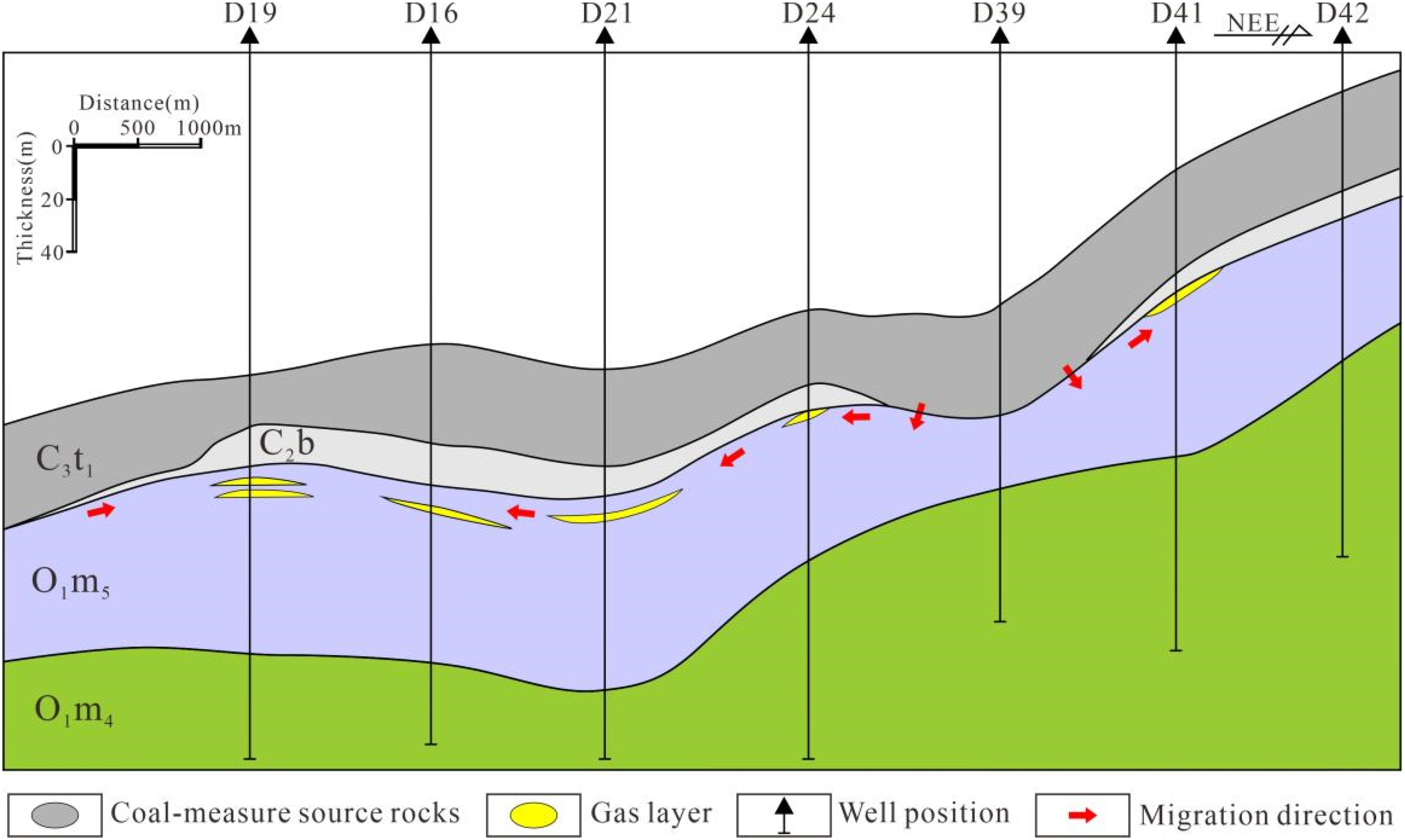
The schematic diagram of migration and filling model for the Lower Paleozoic (O1m5) natural gas in the Daniudi gas field.
Different types of light hydrocarbon compounds display different response characteristics for gas migration due to the effect of differences in solubility and molecular polarity. If natural gas migrates in a water-soluble phase, its light hydrocarbon composition will be affected by different solubility. Since the solubility for light hydrocarbon compounds with the same carbon number displays the characteristics of aromatics > cycloalkanes > paraffin, the insoluble component tends to exsolve before the soluble component along the migration direction, therefore, the exsolved gas generally displays increasing aromatics/cycloalkanes (e.g. Ben/CH) and aromatics/paraffin (e.g. Ben/nC6) ratios along migration direction (Hu et al., 2018; Tang et al., 2013; Ye et al., 2017). If natural gas migrates in the free phase, its light hydrocarbon composition will be affected by the geochromatography. The compounds with strong polarity such as aromatics are easily adsorbed by rocks, whereas those with weak polarities such as n-alkanes and cycloalkanes tend to migrate more easily, therefore, the content of compounds with relatively strong polarity increase along migration direction, and the aromatics/n-alkanes and aromatics/cycloalkanes decrease gradually (Hu et al., 2018; Tang et al., 2013; Wang et al., 2006; Ye et al., 2017). Furthermore, since the light aromatics are easily dissolved in water, their contents in natural gas tend to decrease if water solubilization occurs after the gas migrating into the reservoirs in the free phase (Hu et al., 2010a).
The toluene contents in the Upper Paleozoic gas in the Daniudi gas field are extremely low, and toluene is undetectable in most gas samples, which may be associated with the development of formation water in the Upper Paleozoic reservoirs. Therefore, the Tol/nC7 ratios have little comparative meaning. Benzene is undetectable in most P1x gas samples in the Daniudi gas field, and thus their Ben/nC6 (Figure 6(a)) and Ben/CH ratios are 0. Gas samples with detectable benzene display low Ben/nC6 and Ben/CH ratios, which are commonly lower than those of the P1s gas (Figures 6(a) and 10). This indicates that the P1x gas has experienced free-phase migration from the P1s, and the water solubilization of light aromatics causes overall low contents of light aromatics since the formation water is commonly developed in the P1x reservoirs (Qin et al., 2011).
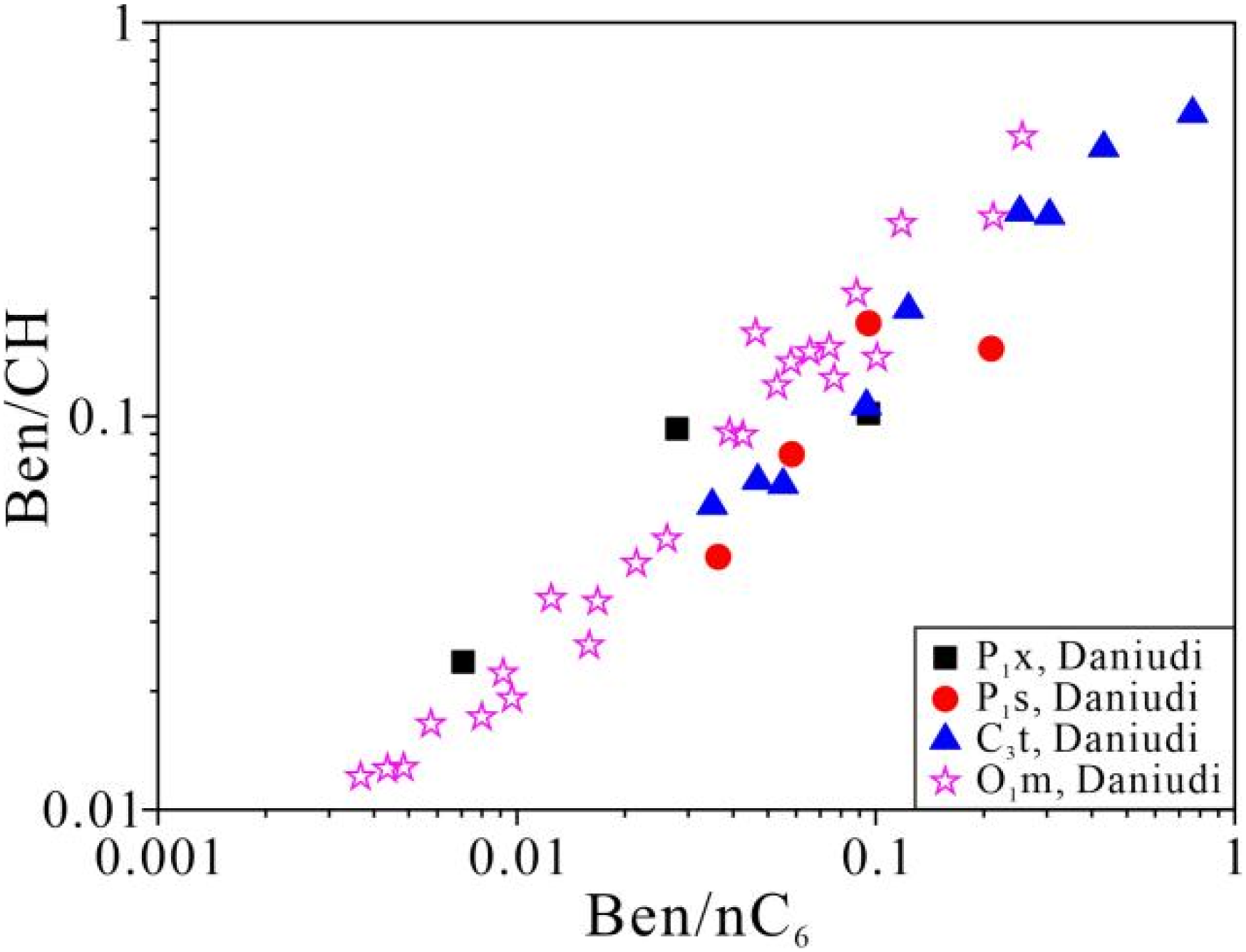
Correlation diagram between Ben/nC6 and Ben/CH of the Lower Paleozoic natural gas from the Daniudi gas field. The data of the C3t, P1s, and P1x gases of the Daniudi gas field are from Wu et al. (2017a).
The Ben/nC6 and Ben/CH ratios of the C3t gas samples from the Daniudi gas field range from 0.035 to 0.762 and from 0.059 to 0.587, respectively, with average values of 0.234 and 0.245, respectively. Benzene was undetectable in 13 out of 38 O1m5 gas samples in the field (Figure 6(a)), and the other samples display the Ben/nC6 and Ben/CH ratios ranging from 0.004 to 0.256 and from 0.012 to 0.514, respectively (Table 2), with the average values of 0.055 and 0.112, respectively. This suggests that the O1m5 gas pools were accumulated by natural gas derived from the C3t source rocks via free-phase migration.
The cycloalkanes display higher molecular polarity than the paraffin with the same carbon number, and thus the cycloalkanes are more likely to be adsorbed in free-phase migration, which results in higher paraffin/cycloalkanes ratios (e.g. nC7/MCH). Although the nC7/MCH ratios increase with thermal maturity (Talukdar and Dow, 1990), the nC7/MCH ratios and the δ13C1 values display little positive correlation (Figure 6(b)), which indicates that the nC7/MCH ratios are mainly affected by the factors such as migration rather than thermal maturity.
The P1x gas from the Daniudi gas field has higher nC7/MCH ratios than the P1s gas under similar δ13C1 values (Figure 6(b)), which is associated with the upward migration of natural gas from the P1s source rocks. Similarly, the O1m5 gas has apparently higher nC7/MCH ratios than the C3t gas, which may be caused by the downward and lateral migration of natural gas from the C3t source rocks. Therefore, some O1m5 and P1x gas samples display high nC7/MCH ratios (Figure 6(b)) and even higher nC7 contents than MCH contents (nC7/MCH > 1) which are similar to oil-associated gas (Figure 4). It is likely caused by the differentiation of natural gas in the migration process and does not suggest that the gas is oil-associated. Therefore, although the statistical result indicates that typical coal-derived gas and oil-associated gas display the nC7/MCH ratios higher and lower than 0.67, respectively (Huang et al., 2022), the effect of evaporation and migration fractionation needs to be considered if the nC7/MCH ratios are directly used to identify the gas origin.
Implications for natural gas exploration and production in the Lower Paleozoic strata
Effective source rocks have been demonstrated to be developed in the Lower Paleozoic O1m strata in the Ordos Basin, however, the degree of development is low with effective source rocks (TOC ≥ 0.4%) only accounting for 19.37% of the total samples (Liu et al., 2016). The O1m source rocks display an average TOC content of 0.35%, suggesting an overall low hydrocarbon potential (Liu et al., 2016). This indicates that it is difficult to generate large-scale gas accumulations only depending on the O1m carbonate source rocks. Geochemical characteristics of light hydrocarbons in the Lower Paleozoic gas from the Daniudi gas field indicate that the gas is mainly coal-derived gas, and it has experienced downward and lateral migration from the C3t source rocks as mentioned above. The C2b mudstone and iron-aluminum mudstone are the direct caprocks of the O1m gas pools in the Ordos Basin beside the Daniudi gas field, and they also prevent the downward migration of the Upper Paleozoic gas. Consequently, the “window” areas where they are missing constitute the downward and lateral migration pathways of natural gas generated by the C3t source rocks (Figure 9). Moreover, the Carboniferous strata (C2b, C3t) unconformably covered the O1m5 carbonate rocks (Figure 9), which had experienced long-time weathering, and effective carbonate reservoirs were developed in the O1m weathering crust since the reservoir quality was improved by the weathering. Therefore, the O1m structural and lithological traps under the C2b caprocks are favorable exploration targets and potential production layers for the Lower Paleozoic natural gas in the Ordos Basin, especially those adjacent to the “window” area with missing C2b caprocks.
Conclusions
The Lower Paleozoic natural gas from the Daniudi gas field in the Ordos Basin mainly accumulates in the carbonate reservoirs in the weathering crust in the Ordovician Majiagou Formation. The relative compositions of C5−7 light hydrocarbons display higher contents of iso-alkanes than n-alkanes, whereas those of C6-7 light hydrocarbons display higher contents of paraffins than cycloalkanes, with low aromatic contents lower than 5.0%. The contents of methyl cyclohexane are commonly higher than those of nC7 in C7 light hydrocarbons.
The relative compositions of C5−7 and C7 light hydrocarbons combined with the heptane and iso-heptane values indicated that the Lower Paleozoic gas from the Daniudi gas field is mainly coal-derived gas. The K1 value of the gas ranges from 1.06 to 1.16 with an average of 1.10, whereas the K2 value ranges from 0.33 to 0.81 with an average of 0.48, both consistent with those of the Upper Paleozoic gas, respectively. The Lower Paleozoic gas in the Daniudi gas field is mainly derived from the humic source rocks in the Upper Carboniferous Taiyuan Formation (C3t), with insignificant contribution by the sapropelic source rocks in the Ordovician Majiagou Formation (O1m). The H2S content and the TSR alteration on the light hydrocarbons have not been studied in this work, therefore, the understandings of the origin and source of the O1m gas from the Daniudi gas field are possible to change in the future when more data from H2S contents and TSR alteration are available.
The comparative study on the benzene/nC6 and benzene/cyclohexane ratios suggests that the Lower Paleozoic gas pools were accumulated by natural gas generated by the C3t source rocks through downward and lateral migration in the free phase. The nC7/MCH ratios of the Lower Paleozoic gas are higher than those of the C3t gas due to the migration process and different molecular polarity of cyclo-alkanes and paraffins, and some gas samples even display higher nC7 content than MCH content with nC7/MCH > 1. The aromatic contents in C6-7 and nC7/MCH ratios are easily affected by the factors such as water solubilization, adsorption in migration, and evaporation and migration fractionation, therefore, it is necessary to consider the secondary alteration effect when using these parameters to identify the gas origin.
Footnotes
Acknowledgements
Sample and data collection has been strongly supported by the SINOPEC North China Branch. Geochemical analysis of the light hydrocarbons has been assisted by SINOPEC Key Laboratory of Hydrocarbon Accumulation. Profs. Jinxing Dai, Yongge Sun, and Guoyi Hu are appreciated for their careful guidance and helpful inspiration. The Associate Editor Chunfang Cai and two anonymous reviewers have proposed constructive and beneficial comments on the earlier version which greatly improved the quality of the manuscript.
Declaration of conflicting interests
The author(s) declared no potential conflicts of interest with respect to the research, authorship, and/or publication of this article.
Funding
The author(s) disclosed receipt of the following financial support for the research, authorship, and/or publication of this article: This work was supported by the National Natural Science Foundation of China (grant number 42172149 and U2244209) and the Project of Science and Technology Department of SINOPEC (grant number P21077-1 and P22132).
