




Abstract
The gas-source correlation of highly mature natural gas in marine strata has always been a contentious issue due to the complexities of the petroleum systems, which involve multiple source-reservoir-cap assemblages. To shed light on this matter, a study was conducted using data from five typical gas fields and two hot exploration blocks in the northwestern Sichuan Basin. Thirty-seven samples from marine strata were collected, and their natural gas molecular compositions and stable carbon isotopes were examined to investigate the gas genetic types and origins. Based on detailed gas geochemistry information, combined with source rocks and reservoir characteristics, hydrocarbon accumulation history, and tectonic evolution, the formation of natural gas was studied. The results suggest that the natural gases in the area are dominated by hydrocarbon gases with extremely high dryness coefficients and a trace of CO2 and N2. These natural gases can be separated into three groups based on the development of structures and different source rocks, according to the identification of the gas-source correlation. The presence of oil cracking gas in natural gas increases with the amount of fracture development in the gas-bearing area and the amount of input from sapropelic organic matter in the Qiongzhusi Formation (Fm). Conversely, the contribution from mixing sapropelic-humic organic matter in the Middle-Upper Permian increases noticeably. The different geochemical characteristics of natural gas in the northwestern Sichuan Basin are the result of three-factor coupling, involving different source rocks, diversified fracture evolution, and various secondary alterations (thermochemical sulfate reduction alteration, thermal maturity effect, and mixing of gas). The development of fracture determines the contribution proportion of different source rocks, while secondary alteration further transforms the geochemical characteristics of natural gas.
Keywords
Introduction
Marine carbonate rocks have always been a crucial area of exploration for oil and gas due to their wide distribution and significant thickness, which allows for the dominant generation of gas in marine strata. These rocks play a vital role in global oil and gas development, therefore, marine carbonate rocks are essential in the search for new sources of hydrocarbons (Dravis and Muir, 1993; Montgomery, 1997; Peters et al., 1997; Schwangler et al., 2020). Exploration and exploitation activities in marine carbonate reservoirs in the Sichuan Basin, Tarim Basin, and Ordos Basin have spanned several years, leading to the discovery of a large number of significant oil and gas pools of various sizes. However, with the increasing difficulty of continuous conventional oil and gas discovery, attention is now shifting toward deep and ultra-deep strata (>6000 m) as a potential target formation (Dai et al., 2018; Zhao et al., 2012). Currently, the complex tectonic settings and disputed origin of natural gas are the barrier of planning follow-up process (Maravelis et al., 2015; Picha, 2011). The development of multiple marine source-reservoir-cap rock assemblages in the petroleum systems of the northwestern Sichuan Basin (NW Sichuan Basin), making seven typical large-medium sized gas pools an ideal area for researching geochemical properties in a highly risk-prone environment (Ma et al., 2019). Conducting research on the origin, distribution characteristics, and differences of natural gases in the NW Sichuan Basin can significantly enhance the theoretical foundation of hydrocarbon exploration and production in the area.
The NW Sichuan Basin, one of the hotspots deep–ultra-deep natural gas producing areas in China, is characterized by numerous gases producing layers (>20), thick (2∼5km), and broad marine deposits generated from Sinian to middle Triassic (Hu et al., 2020; Wei et al., 2020). Industrial oil and gas flow found in the Zhongba (ZB) gas structure have firstly sparked the opportunity of exploration in 1971. Until late 1984, 3 gas fields and 5 gas structures had been found, 56 wells obtained natural gas. In recent years, L16 well (141.148 × 10⁴m3/d), ST-1 well (87.6 × 10⁴m3/d), ST-3 well (41.886 × 10⁴m3/d) drilled in the Middle Permain Maokou/Qixia Fm have obtained high gas production, indicating that the NW Sichuan Basin has decent exploration prospects (Gao et al., 2020). Numerous potential carbonate reservoirs mainly distributed in ZB, Hewanchang (HWC), Wujiaba (WJB), Kuangshanliang (KSL), Jian’ge (JG), and Jiulongshan (JLS) gas fields, have been continuously uncovered in this area, including Guanwushan (D2g) Fm of Middle Devonian, Qixia (P2q) and Maokou (P2m) Fms of Middle Permian, Feixianguan (T1f2) Fm and the 3rd member of Leikoupo (T2l3) Fm of Triassic. The ultra-deep integrated giant gas field has been discovered in the Qixia Fm of Shuangyushi (SYS) structure in recent years, further revealing a new exploration area of large-scale hydrocarbon accumulation.
These findings have significant implications for the exploration of marine natural gas in the NW Sichuan Basin, although the genesis and source of deep natural gas in the area are still the subject of debate. Due to complex tectonic fracture system, multiple phase uplift (cooling) and subsidence (heating) activities (Li et al., 2022a), insufficient exploration data, the contribution of several sets of potential source rocks was difficult to determine. Geologists hold varying opinions as to origin of these gas, for example, sourced from the Cambrian Qiongzhusi Fm, Sinian Doushantuo Fm or Silurian Longmaxi Fm (Dong et al., 2017; Li et al., 2022b; Xie et al., 2020), derived from Periman Longtan Fm or Periman Maokou Fm (Cai et al., 2017a, 2017b; Zhu et al., 2022), mixed gas sourced from Cambrian Qiongzhusi Fm and Periman Maokou Fm (Li et al., 2022c; Lu et al., 2017; Xiao et al., 2020), mixed gas sourced from Periman Maokou/Qixia Fm and Periman Longtan Fm (mixed oil-associated and coal-derived gas) (Huang et al., 1997; Wang et al., 1997). The ambiguity of natural gas sources limits the exploration development in NW Sichuan Basin. The comprehensive understanding still needs to be further discussed, which is a key guide for the next exploration.
In this study, 37 gas samples were collected from 5 formations (D2g, P2q, P2m, T1f, and T2l3 Fms) in 7 gas fields (ZB, HWC, WJB, KSL, JG, JLS, and SYS gas fields). Afterward, experiments were conducted to determine the gas components, as well as carbon and hydrogen isotopes, followed by an analysis of the genetic types and classification of natural gas. Based on the preceding work, we employ source rocks and reservoirs characteristics, hydrocarbon accumulation history and tectonic evolution and other geological contexts to expose the origin and differences of natural gases. These findings will shed new light on the study of multilayered source rocks in marine strata and deepen the theoretical foundation for natural gas exploitation in NW Sichuan Basin.
Geological setting
General situation
Sichuan Basin is situated in the southwest of China, near the northwest margin of the basin, covering an area about 3.8 × 10⁴ km2 (Figure 1A and B). Bound by the Longmenshan nappe fold and thrust belt to the west, the Micangshan platform edge uplift belt to the north, the Central Sichuan gently pleated belt to the east, and Jiangyou to the south (Lin et al., 2022). The Sichuan Basin is further divided into five oil and gas accumulation units, namely, the eastern, western, southern, northern, and central blocks (Liu et al., 2018; Figure 1B). The NW Sichuan Basin mainly falls under the western block adjacent to hydrocarbon generating depocenter of the Guangwang Trough and Mianyang-changning Trough. During the Cambrian period, the oceanic sag received substantial deposits, resulting in the thickness of Lower Cambrian source rock reaching over 400 m (Yang et al., 2016).
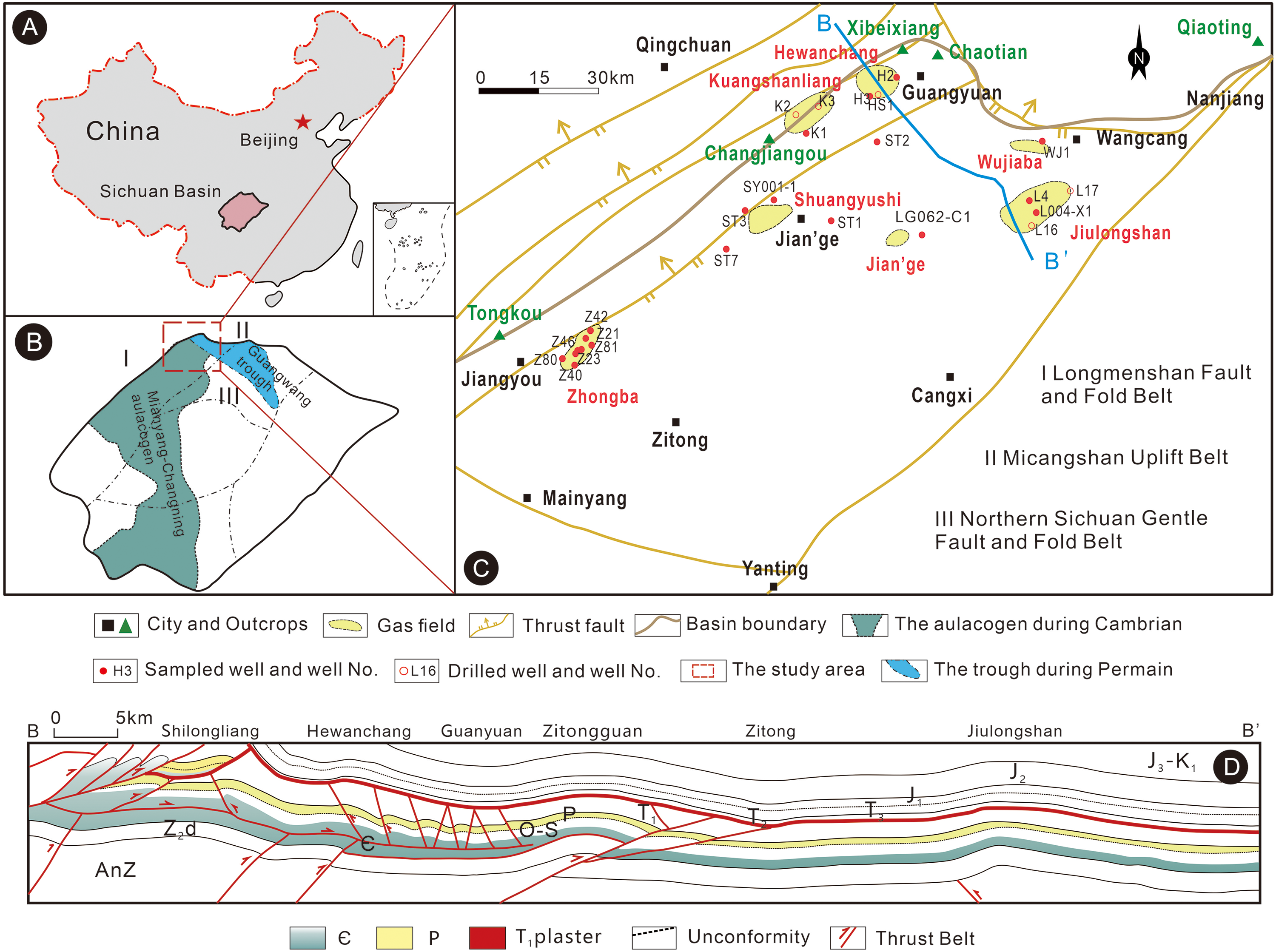
(A) Location of the Sichuan Basin in China. (B) Location of the study area in Sichuan Basin. (C) Map of gas fields distribution in the NW Sichuan Basin (modified from Chen et al. (2019)). (D) Section of Tianjingshan-Jiulongshan in Northern Longmenshan (modified from Chen et al. (2019)).
Source rocks
Multiset potential source rocks developed in the Paleozoic of the NW Sichuan Basin, including the marine shale in Sinian Doushantuo Fm (Z1ds), Silurian Longmaxi Fm (S1l), Lower Cambrian Qiongzhusi Fm (Є1q), the marine muddy carbonate rock from Middle Permian Maokou-Qixia Fm (P2m-P2q), and the marlstone from Upper Permian Dalong Fm (P3d), as well as the marine continental transitional shale in Upper Permian Longtan Fm (P3l) (Cai et al., 2003, 2010; Hu et al., 2021; Figure 2).
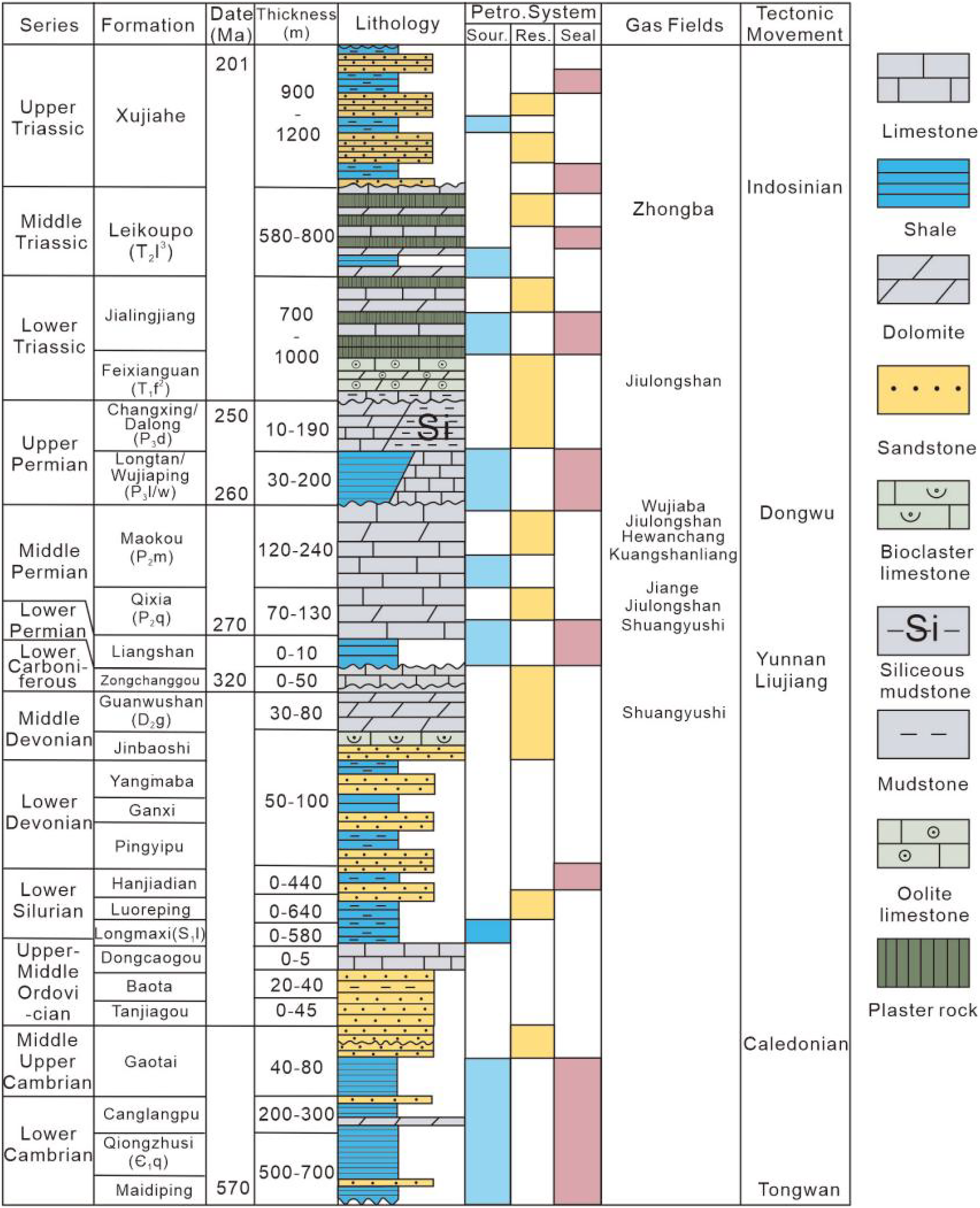
Strata column graph in NW Sichuan Basin (modified from Xiao et al. (2020) and Xie et al. (2020)).
However, Z1ds and S1l are relatively thin, leading to their limited contribution to NW Sichuan Basin. P3d is contemporaneous heteropic facies of Upper Permian Changxing Fm (P3ch) at NW Sichuan Basin. Similarly, the same reason applies to Upper Permian Wujiaping Fm (P3w) and P3l (Cai et al., 2017a; Chen et al., 2018). It is imperative to give importance to P3d-P3w/l along with Є1q black shale, which are the high-quality muddy hydrocarbon source rock in marine strata (Figure 3A, D and F). Besides, Dalong Fm is a scarce type II2 kerogen developed in Kaijiang-Liangping Trough, with an almost the heaviest δ13Ckerogen range from −28.4‰∼−25.2‰ (average = −26.9‰) in the marine strata of Sichuan Basin (Cai et al., 2017b; Zhang et al., 2019). On the other hand, the source rocks of the P2m-P2q have a low concentration of organic matter, total organic carbon ranging from 0.20 to 1.26 wt.% (average = 0.65%) for P2m source rock and 0.46%∼1.04 wt.% (average= 0.78%) for the P2q, making them subordinate source rocks in NW Sichuan Basin (Table 1; Figure 3B and C).
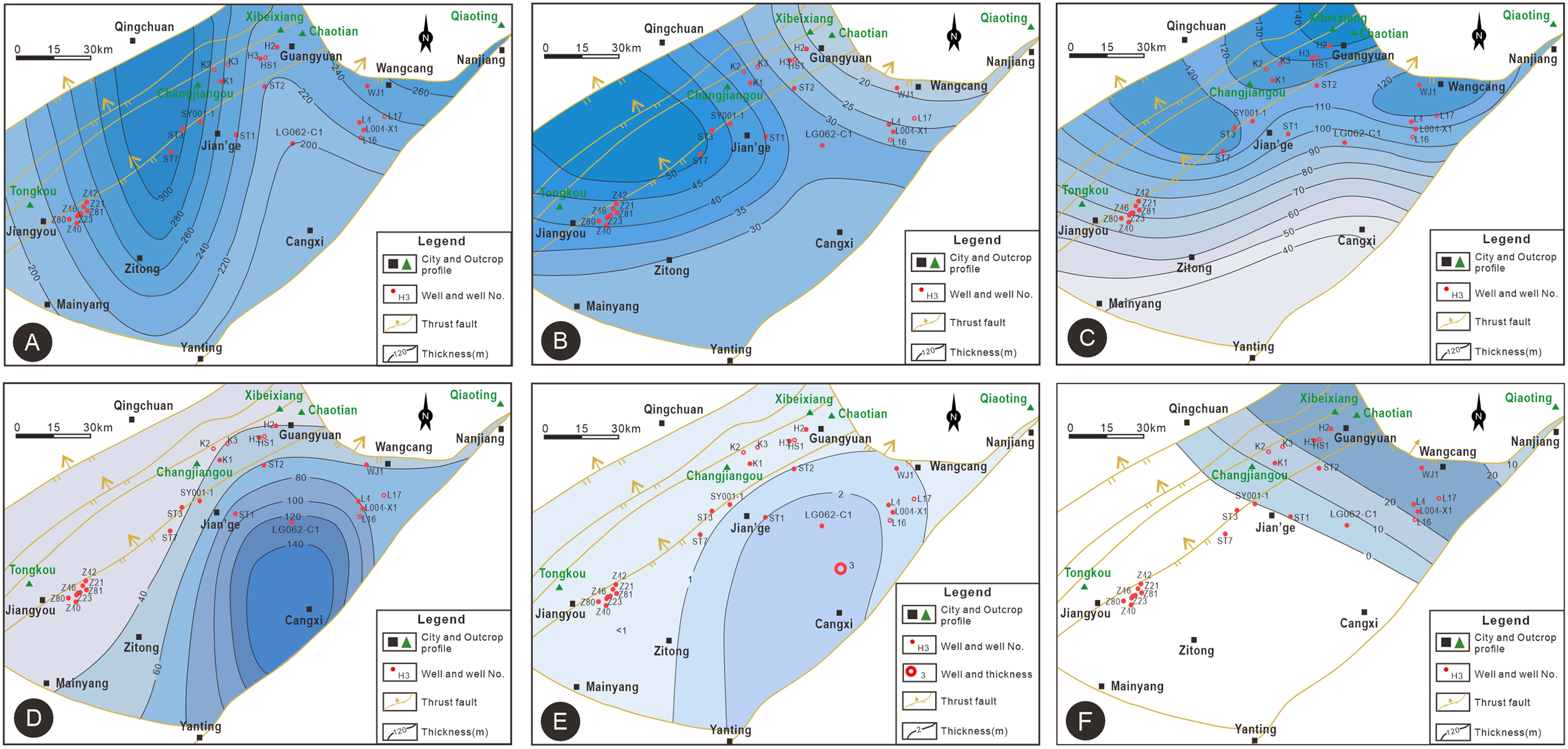
The four probable source rocks’thickness distribution in the NW Sichuan Basin. (A) The Qiongzhusi Fm; (B) the Qixia Fm; (C) the Maokou Fm; (D) the Longtan Fm; (E) the coal-bearing shale from Longtan Fm; and (F) the Dalong Fm. (A), (B), and (C) were modified from Li et al. (2022c); (D), (E) and (F) were modified from Chen et al., (2018).
Geochemical characteristics of source rocks in the NW Sichuan Basin.
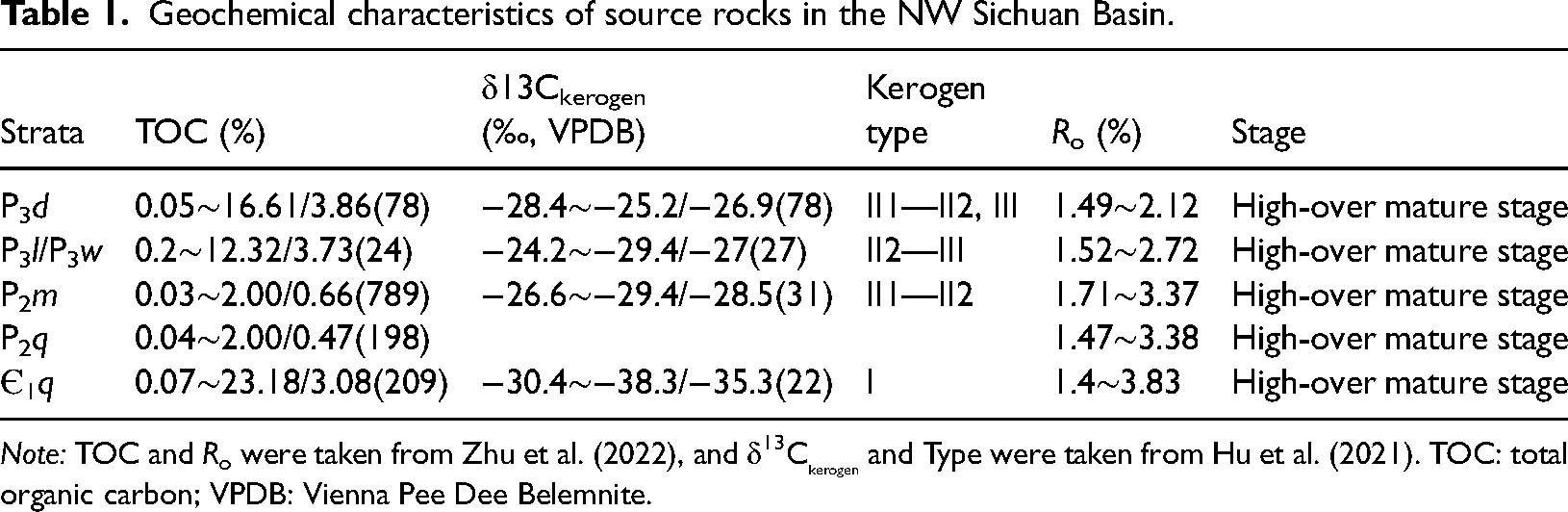
Note: TOC and Ro were taken from Zhu et al. (2022), and δ13C kerogen and Type were taken from Hu et al. (2021). TOC: total organic carbon; VPDB: Vienna Pee Dee Belemnite.
Reservoirs and caprocks
Various gas reservoirs situated in NW Sichuan Basin, including the Guanwushan (D2g) Fm of Middle Devonian, Qixia (P2q) and Maokou (P2m) Fms of middle Permian, Feixianguan (T1f) and Leikoupo (T2l3) Fms of Triassic (Figure 2). Middle Permian Qixia/Maokou Fm are the most important reservoirs, comprising grain dolomite and dolarenite/calcarenite with well-developed holes and carves (Yang et al., 2021a). The Devonian Guanwushan Fm mainly consists of light-gray medium-thick layered, fine crystal dolomite, reef dolomite, and residual sand dolomite (Shen et al., 2016). Feixianguan Fm member 2 is the best-developed reservoirs in JLS, and is mainly composed of oolitic limestone (Zhu et al., 2022). The Middle Triassic Leikoupo Fm is primarily made up of a set of dolomites, with a large thickness of 580∼800 m, the gypsum rocks in the lower part of the formation act as an effective regional caprock. On the top of the Leikoupo Fm member 3, which is the main production layer of the ZB gas field, there is a small amount of limestone (Wu et al., 2017).
Hydrocarbon accumulation history
The study area has undergone multiple tectonic movements, including Tongwan, Caledonian, Liujiang, Yunnan, Dongwu, Indosinian, Yanshan, and Himalayan orogenies, generating large faults that extend to Cambrian hydrocarbon source rocks (Shen et al., 2016; Xu et al., 2021; Yang et al., 2017). These faults further controlled the migration of oil and gas. Currently, the significant source rocks (Lower Cambrian and Upper Permian) are in the high-over mature stages, the Lower Cambrian source rock reached its peak of liquid hydrocarbon generation during the Indosinian period (220–170 Ma), and its peak of gaseous hydrocarbon generation during the Yanshanian period (160 Ma). By contrast, the Upper Permian source rock was in the Yanshanian period (200–170 Ma) and the Himalayan period (160 Ma), respectively (Li et al., 2022a).
Samples and analytical methods
Samples
To collect gas samples for analysis, 1L stainless steel containers with dual valves were used at the wellheads of gas production wells. A total of 37 gas samples were obtained from different fields, including 3 from HWC, 1 from WJB, 2 from KSL, 9 from JLS, 13 from SYS, 1 from JG, and 8 from ZB gas fields. Prior to sampling, the cylinder washed by N2 for 15 to 20 min to remove any air contamination. The pressure inside the cylinder was kept at 1 and 5 MPa, then the cylinder was sealed after loading samples. The chemical molecular composition and carbon isotopes of C1–C3 were investigated in the extracted gas samples.
Analytic methods
Molecular composition of natural gas
The gas samples were analyzed using an Agilent 7890B gas chromatograph (GC) equipped with a flame ionization detector (FID) and a thermal conductivity detector (TCD). The first TCD was used to detect the proportions of N2, CO2, and H2S, the second TCD measured the proportion of He. High-purity helium (99.9995%) was used as the carrier gas for the FID and the first TCD, and the second TCD was carried by N2 (99.9999%) as the carrier gas. The temperature inlet was set to150°C, and the GC oven temperature was initially set at 35°C for 5 min before ramping up to 100°Cat 10°C/min, then to 200°C at 20°C/min. External standard gases were used to verify that the GC had a precision of better than ±0.03 mol% for each component.
Stable isotope ratios of natural gas
The stable carbon isotopic ratios were measured using Thermo Delta V mass spectrometry (MS) and expressed in the δ-notation relative to the VPDB (Vienna Pee Dee Belemnite) standards per mil (‰). Gas components were separated using a GC with MS, and the combustion interface of the GC (980°C) was used to convert gas components into CO2. The inlet temperature was set at 150°C, and the GC oven temperature was ramped from 33°C to 80°C at 8°C/min, then from 80°C to 170°C at 5°C/min, and finally to 250°C at 6°C/min with He as the carrier gas. The carbon isotope value was compared to the GBW04405 reference, and this comparison resulted in a relative VPDB value with a standard deviation of ± 0.5‰.
The hydrogen isotope analysis standard developed by the PetroChina Exploration and Development Research Institute provides a relative value for VSMOW (Vienna Standard Mean Ocean Water) with a standard deviation is ± 3‰.
Results
Molecular composition of natural gas
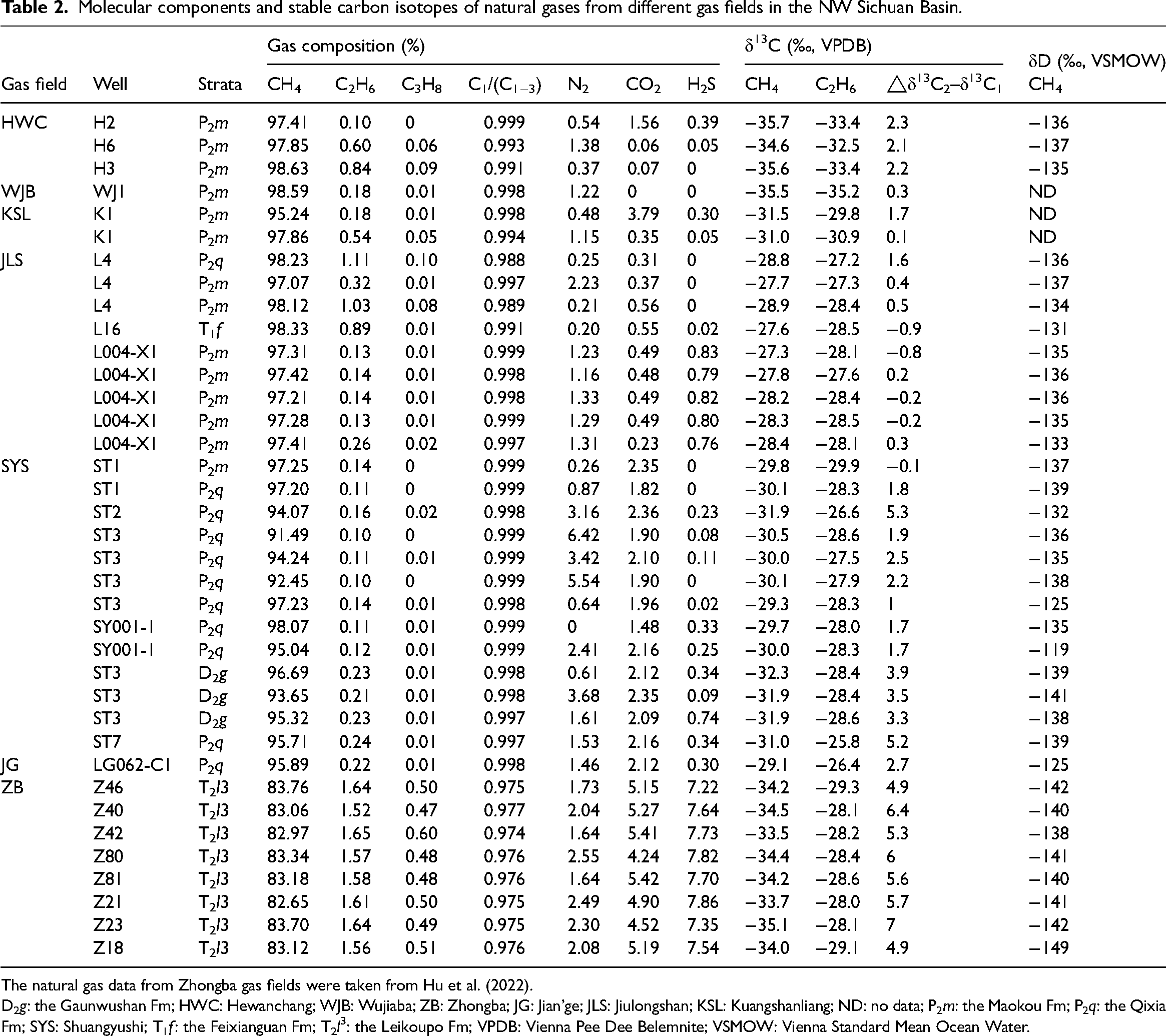
The marine natural gases found in the NW Sichuan Basin are primarily composed of alkyl compound (methane, ethane, and propane), which make up between 84.76% and 99.56% of the gas composition. Methane dominates hydrocarbon gases, with an average content ranging from 82.65% to 98.63%, and a mean value of 93.62% (> 90% in most case) (Table 2). Ethane and propane account for a minimal proportion of the gas, with heavy hydrocarbon accounting for only 0.72% on average. The dryness coefficients (C1/C1–3) of gases, varies from 0.974 to 0.999, indicating that they are typically dry gas.
Molecular components and stable carbon isotopes of natural gases from different gas fields in the NW Sichuan Basin.
The natural gas data from Zhongba gas fields were taken from Hu et al. (2022).
D2g: the Gaunwushan Fm; HWC: Hewanchang; WJB: Wujiaba; ZB: Zhongba; JG: Jian’ge; JLS: Jiulongshan; KSL: Kuangshanliang; ND: no data; P2m: the Maokou Fm; P2q: the Qixia Fm; SYS: Shuangyushi; T1f: the Feixianguan Fm; T2l3: the Leikoupo Fm; VPDB: Vienna Pee Dee Belemnite; VSMOW: Vienna Standard Mean Ocean Water.
Gas from ZB displays significant differences in molecular composition compared to other gas fields (Figure 4A). The molecular compositions of HWC, WJB, KSL, JLS, SYS, and JG gas fields are similar, with methane content >90% and ethane <1.0%. However, the natural gas from ZB is characterized by lower methane content (ranging from 81.72% to 82.94%) and higher ethane content (ranging from 1.52% to 1.64%).
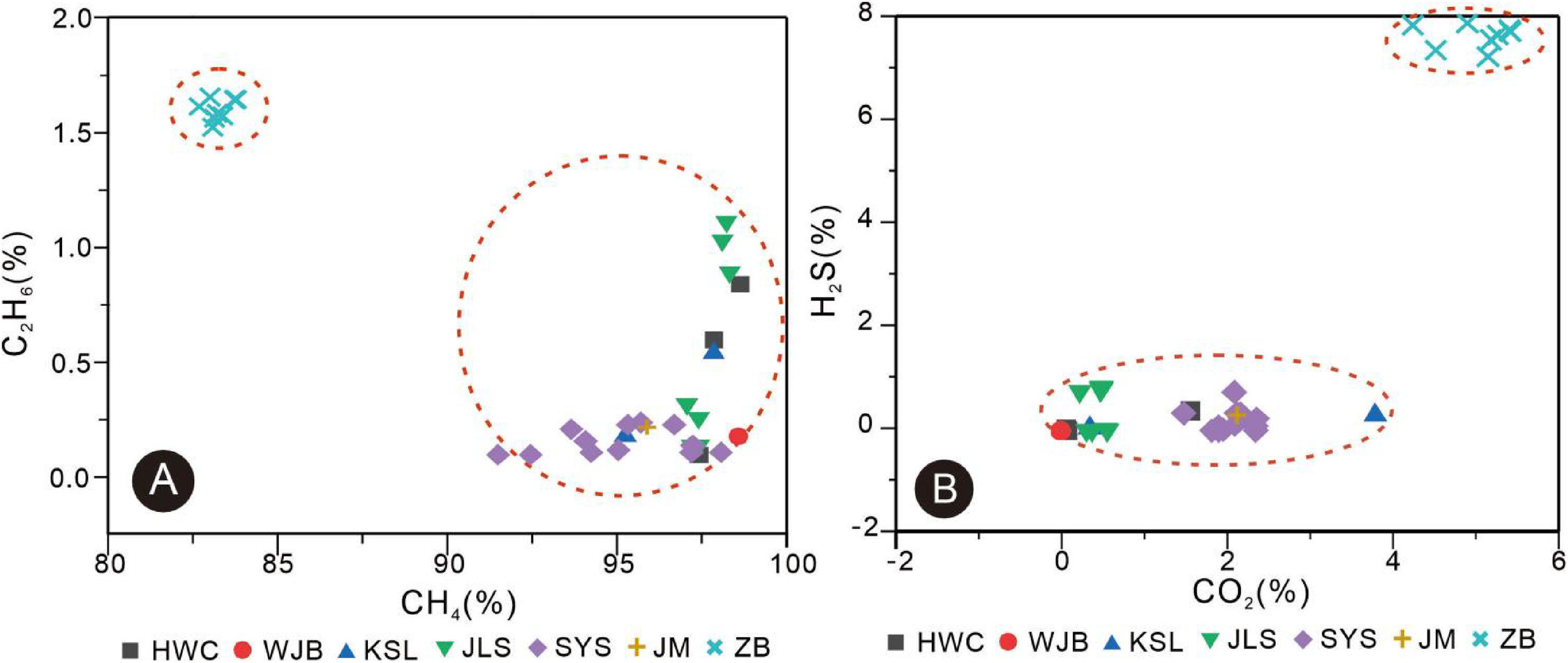
(A) Cross plot of CH4 versus C2H6 and (B) cross plot of CO2 versus H2S.
The nonhydrocarbon gases such as carbon dioxide, nitrogen, and hydrogen sulfide present in the gas samples range from 0.44% to 15.25% (average = 5.67%). Nitrogen (N2) contains varies between 0% and 6.42% (average= 1.69%), carbon dioxide (CO2) content contains between 0% and 5.42% (average = 2.13%) and hydrogen sulfide (H2S) ranges between 0% and 7.86% (average= 1.83%) (Figure 9). The relative proportions of H2S and CO2 in ZB gas field are higher compared to other gas fields (Figure 4B; Table 2).
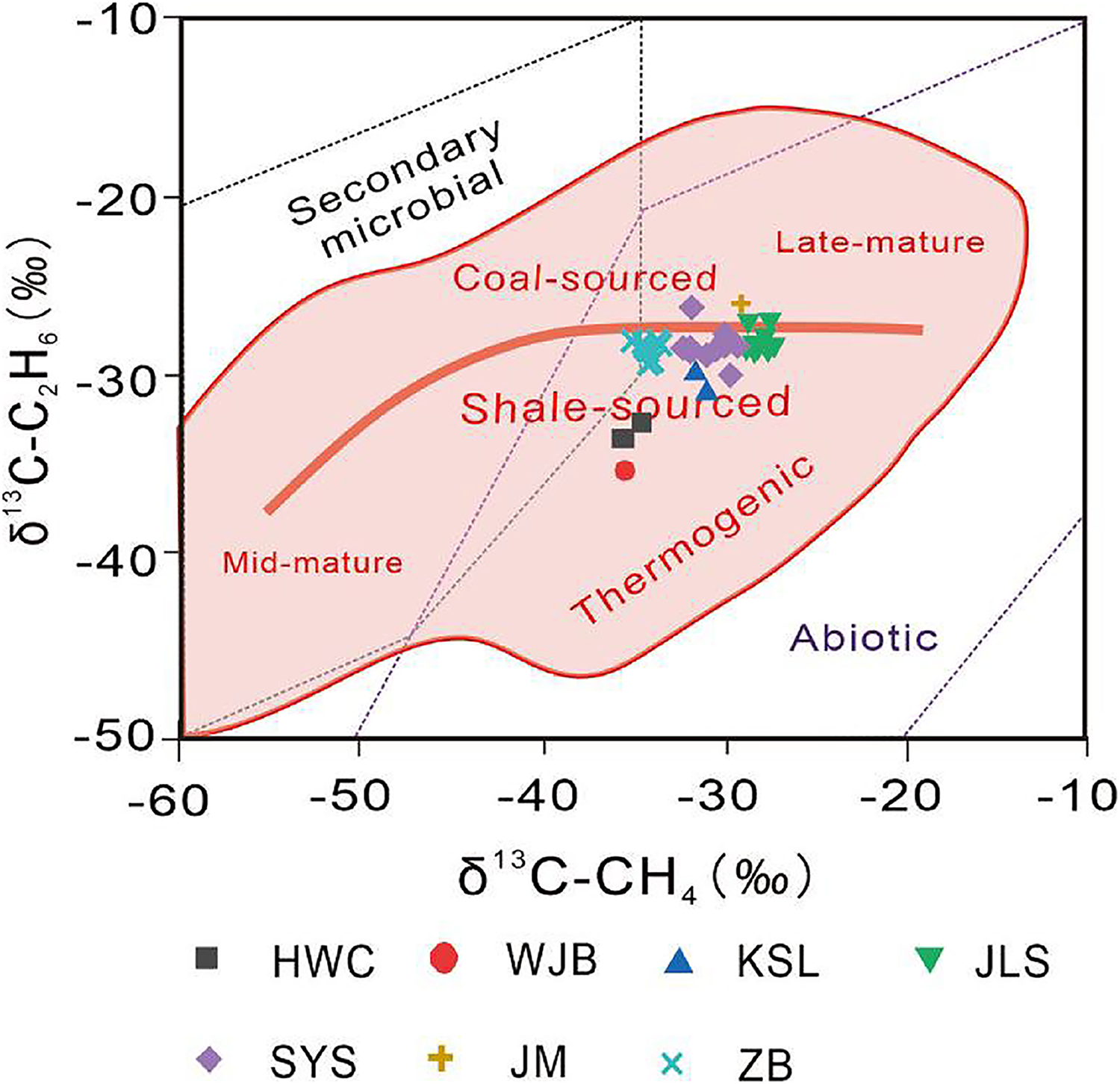
Distribution of δ13C1 versus δ13C2 of natural gases from northwestern Sichuan Basin (Adapted from Milkov, (2021)).
Carbon and hydrogen isotope composition of natural gas
The results for stable carbon and hydrogen isotopic composition of gaseous alkanes from the marine strata are presented in Table 2. The methane carbon isotopic ratios (δ13C1) vary greatly from −35.7‰ to −27.3‰ (average. = −31.3‰), the ethane carbon isotopic ratios (δ13C2) vary from −35.2‰ to −26.4‰ (average = −28.9‰). Most of the gas samples show normal stable carbon isotope trends for C1–C2 alkanes (i.e. δ13C1<δ13C2), while in some samples, the δ13C1 values are heavier than that of δ13C2 (Figure 12). The hydrogen isotope compositions of methane are quite heavy, with δD1 values ranging from −149‰ to −119‰ (average = −136‰), (Figure 7). However, some samples do not have D2 values due to their extremely low ethane content.
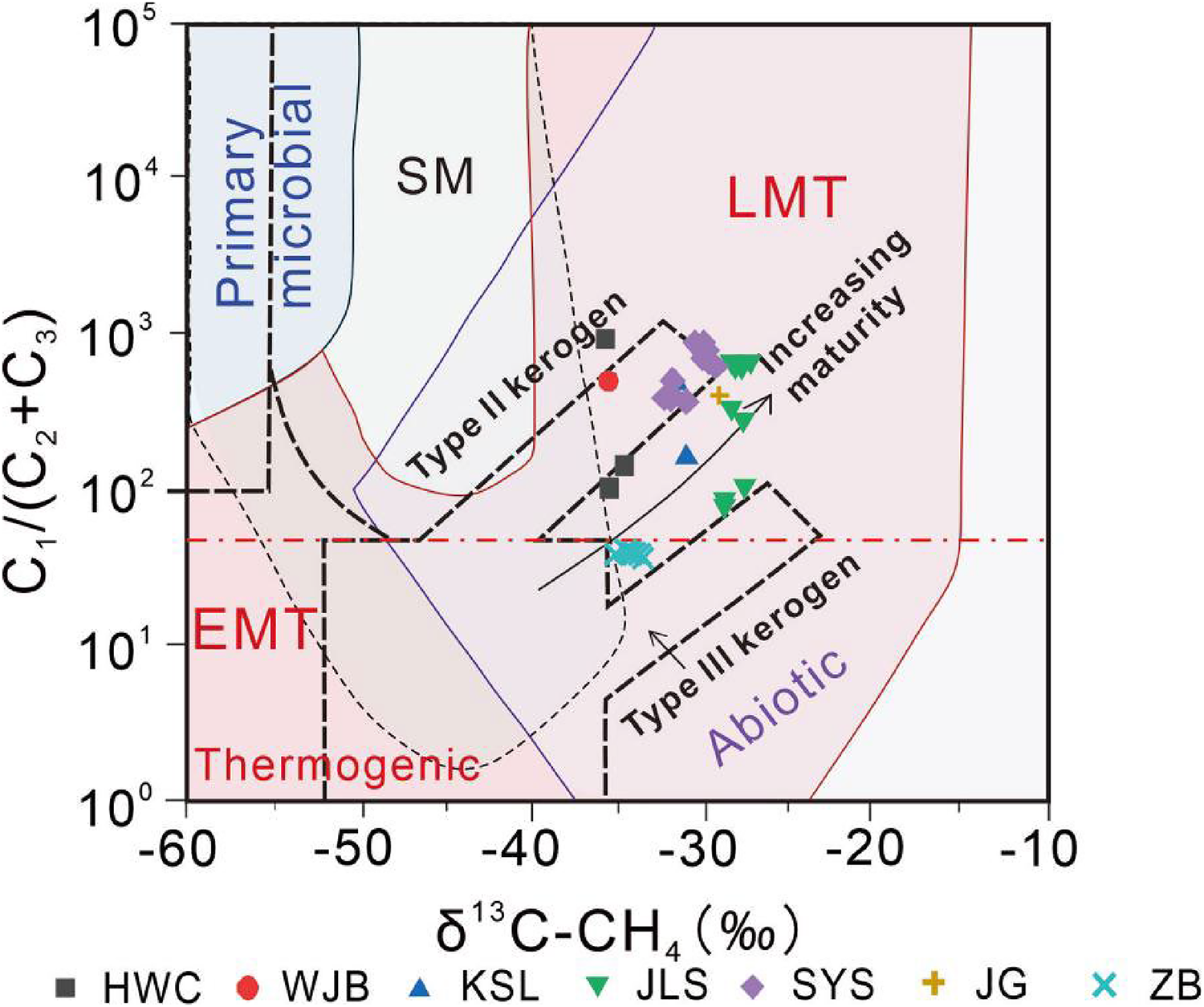
Distribution characteristics of C1 vs.C1/(C2+C3) of natural gases in NW Sichuan Basin (Adapted from Bernard et al., (1978) and Milkov et al. (2020)).
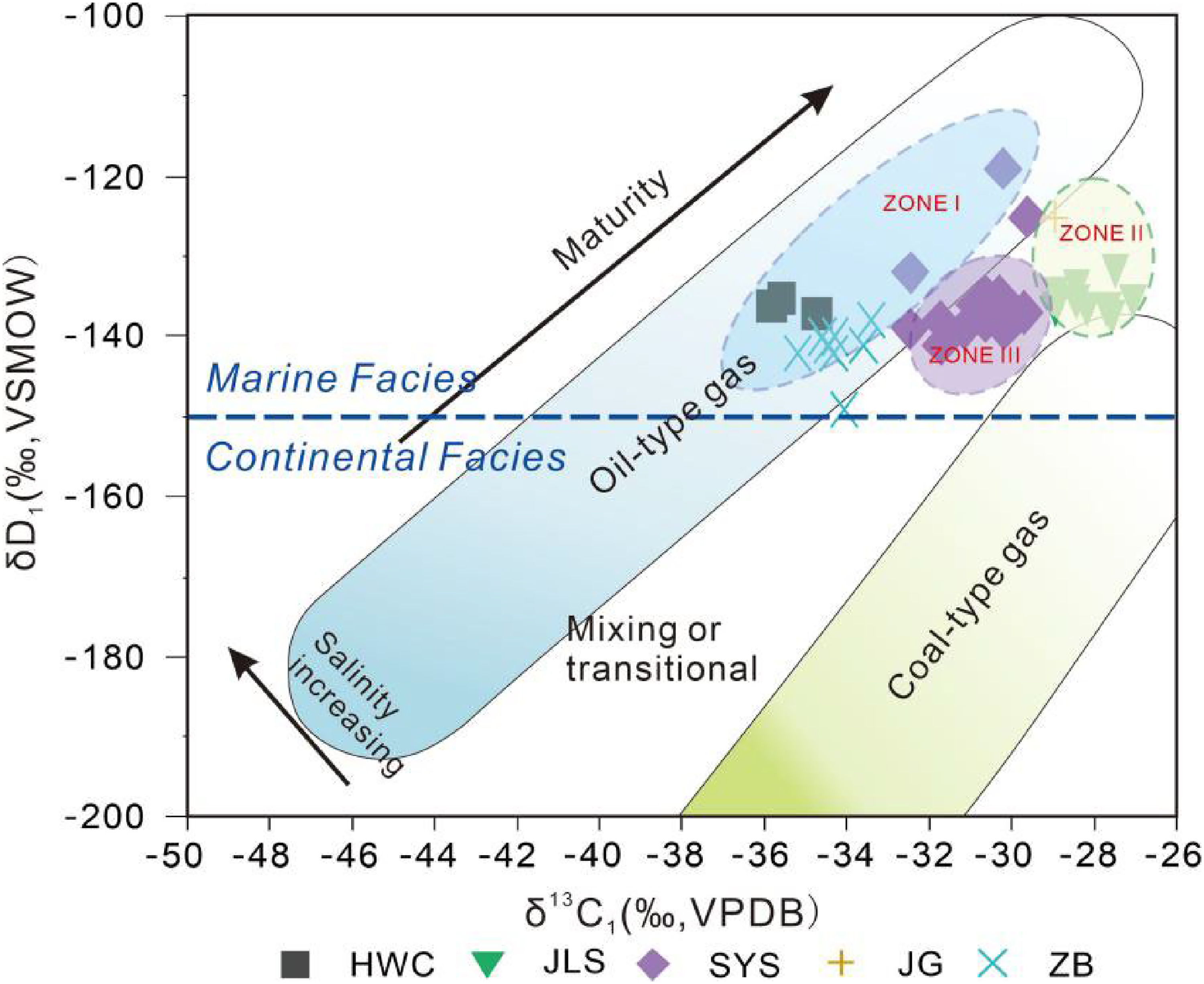
Natural gases distribution characteristics of methane carbon-hydrogen isotope composition of the NW Sichuan Basin (adapted from Wang et al. (2015)).
The NW Sichuan Basin has significant differences in the carbon and hydrogen isotope composition of alkyl gas among its various gas fields (Figures 7 and 12). Based on the classification diagram, natural gases are classified into three types, HWC, WJB, KSL, and ZB; SYS; JG and JLS, respectively. The δ13C1 values from the HWC, WJB, KSL, and ZB are the lowest (ranging from −35.7‰ to −31.0‰), while δ13C2 values vary widely from −35.2‰ to −28.0‰. SYS gas field has moderate δ13C1 and δ13C2 values, ranging from −32.3‰ to −29.3‰ (average = −30.6‰), and from −29.9‰ to −26.6‰ (average = −28.3‰), respectively. The JLS and JG gas fields have the heaviest δ13C1 values, ranging from −29.1‰ to −27.3‰, which are nearly the same as the δ13C2 values (from −28.50‰ to −26.4‰). The differences in carbon and hydrogen isotope values indicate that there may be some differences in the organic matter of natural gas in the NW Sichuan Basin.
Discussion
The genetic type of gases
It is critical to evaluate the genetic type of natural gases in NW Sichuan Basin. Isotopic composition information is commonly utilized as a parameter for classifying natural gas (Dai et al., 2007; Tilley and Muehlenbachs, 2006). The carbon isotope composition is primarily controlled by source material, while sedimentary environment is the major governing factor for hydrogen isotopes. Along with mass-dependent kinetic isotope effect, secondary processes such as TSR and diffusion can increase carbon and hydrogen isotope values. In sedimentary basins, the identification of gas origins can be challenging due to gas mixing from multiple sources and/or secondary processes (Liu et al., 2019).
The δ13C2 value of thermogenic gases, which are produced by sapropelic source rocks, is typically lower than −28‰ (Chen et al., 2000). Conversely, gases originating from humic source rocks have carbon isotopic values that are heavier than −28‰ (Dai et al., 2005). The δ13C1 versus δ13C2 cross plot is widely used method for classifying the origin and maturity trends of natural gas (Berner and Faber, 1996). Isotope data falls into the overlapping zone of thermogenic and abiotic gases, with some samples approaching the boundary between late-mature shale-sourced and coal-sourced gas (Figure 5; Milkov, 2021), indicating that they are oil-associated gases. The Middle-Upper Permain source rocks in SYS, JG, and JLS contain a higher proportion of humic organic matter, including mixtures of sapropelic-humic or humic-sapropelic, resulting in oil-associated gases with a distinctive distribution of higher δ13C2 values (−29.9‰∼−28‰). A few samples from SYS, JSL, and JG fall with the coal-sourced gas area, likely due to the mixing of coal-derived gas from the Upper Permian Longtan Fm coal-bearing shale.
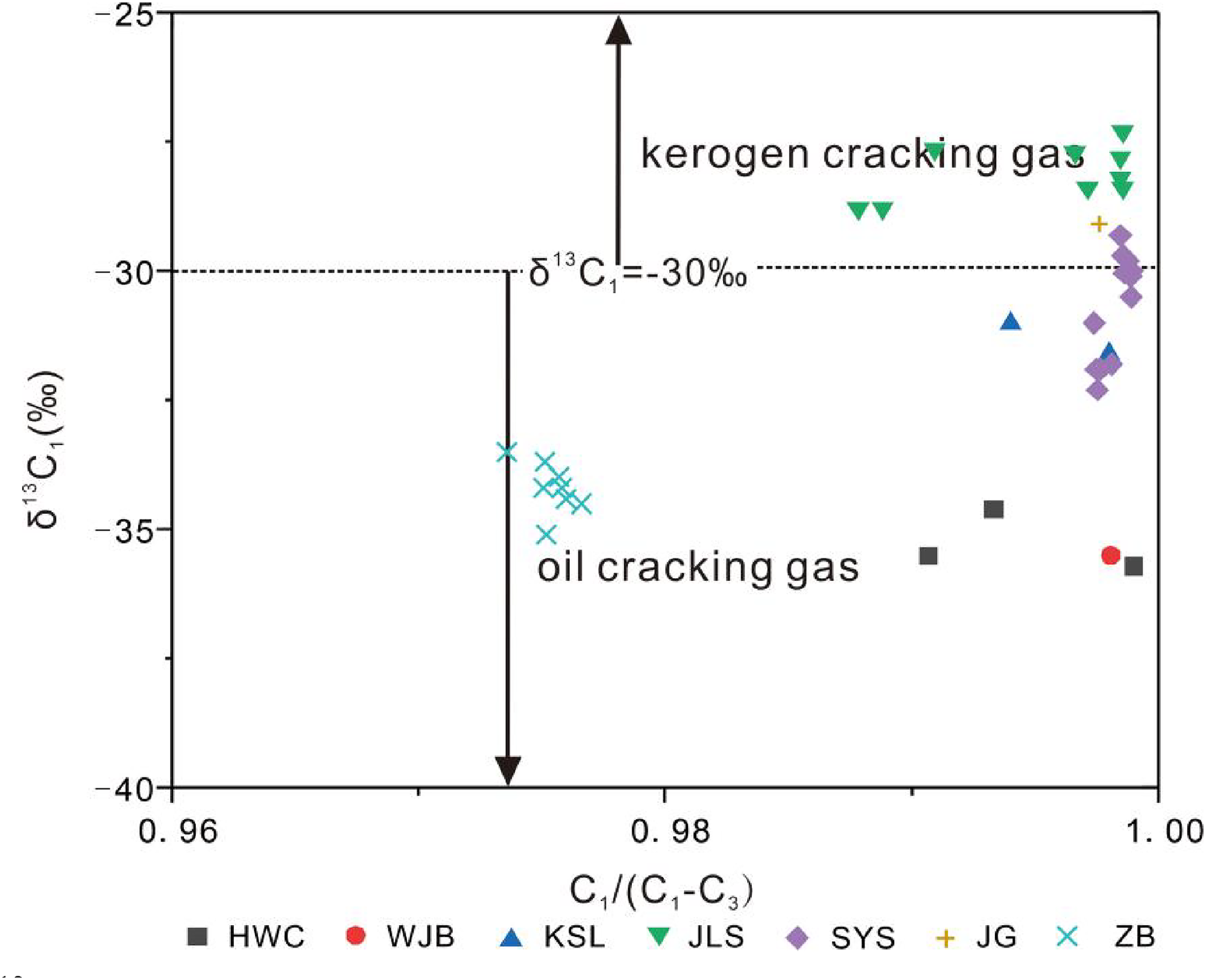
Cross-plot of δ13C1 vs. C1/Σ(C1- C3) reflecting genetic variation from various gas fields in the NW Sichuan Basin (Adapted after Clayton (1991)).
Bernard has previously used the C1/(C2 + C3) ratio and δ13C1 to examine the origin and maturation of gas generation process (Bernard et al., 1978). Gas samples, with the exception of the T2l3 gases in ZB, are primarily characterized by late-mature thermogenic gas, even though all of the natural gas data do not follow the increasing maturity trend exactly (Figure 6). Gases data from HWC, WJB, KSL, SYS, and JG gas fields all follow the trend of gases generated from type II kerogen, indicating that they were yielded from type II kerogen, further confirming their sapropelic origin. However, gases from JLS, ZB gas fields plot between the type II and type III kerogen areas. ZB natural gas underwent a heavy-hydrocarbon-gas-dominated stage of TSR (the detailed analysis is presented in The gas from Cambrian source rock section; Figure 13A–D), resulting in low C1/C2 + 3 values, whereas the reason for the high δ13C1 value of JLS data may be related to thermal maturity history (the detailed analysis is presented in The gas from the Upper Permian and Middle Permian source rocks section; Figure 14A and B), the secondary alterations make the data to be basis. Additionally, all the gases data in this study have relatively constant methane δ13C1 but widely variable C1/(C2 + C3) ratios (Figure 6). The phenomenon can be explained by the fact that the gas is so dry that the ethane and propane content is quite low, making the C1/(C2 + C3) ratio sensitive to the changes in methane carbon isotope. Milkov and Etiope (2018) proposed a similar plot of C1/(C2 + C3) ratio and δ13C1 to determine the stage of thermogenic gas, and all of the data belong to late-mature thermogenic gas (Milkov and Etiope, 2018; Milkov et al., 2020). As the source rocks mature thermally, the expelled C1 becomes 13C-enriched, which is applied to the high δ13C1 value of JLS.
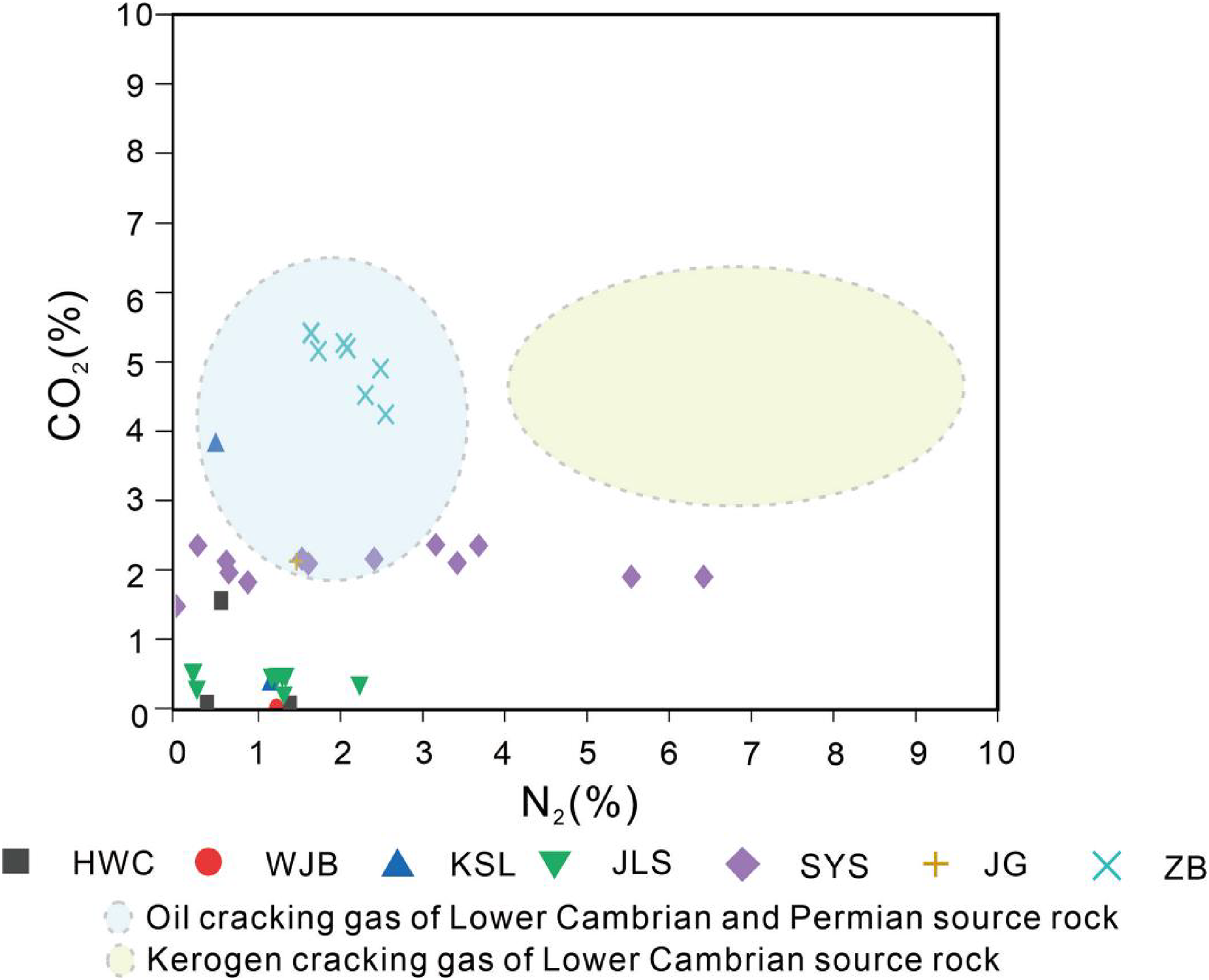
N2 versus CO2 plot for gases from the gas fields in the NW Sichuan Basin. The colored regions represent typical oil and kerogen cracking gases from lower Cambrian source rocks or Permian source rock, respectively (Adapted after Li et al., 2022c)).
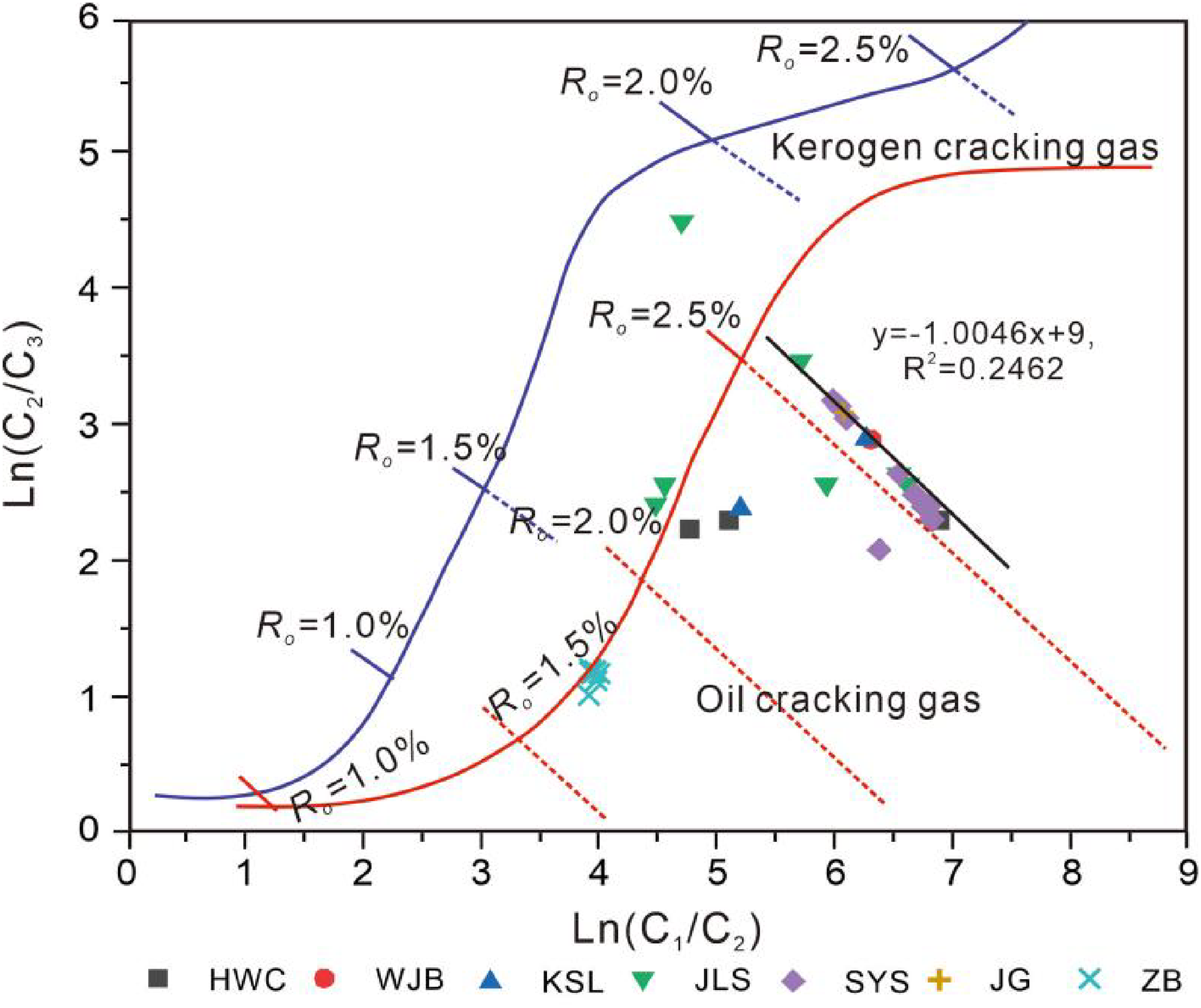
Variation of ln(C2/C3) with ln(C1/C2) for gases from the NW Sichuan Basin's marine carbonate reservoirs (Adapted from Xie et al. (2016)).
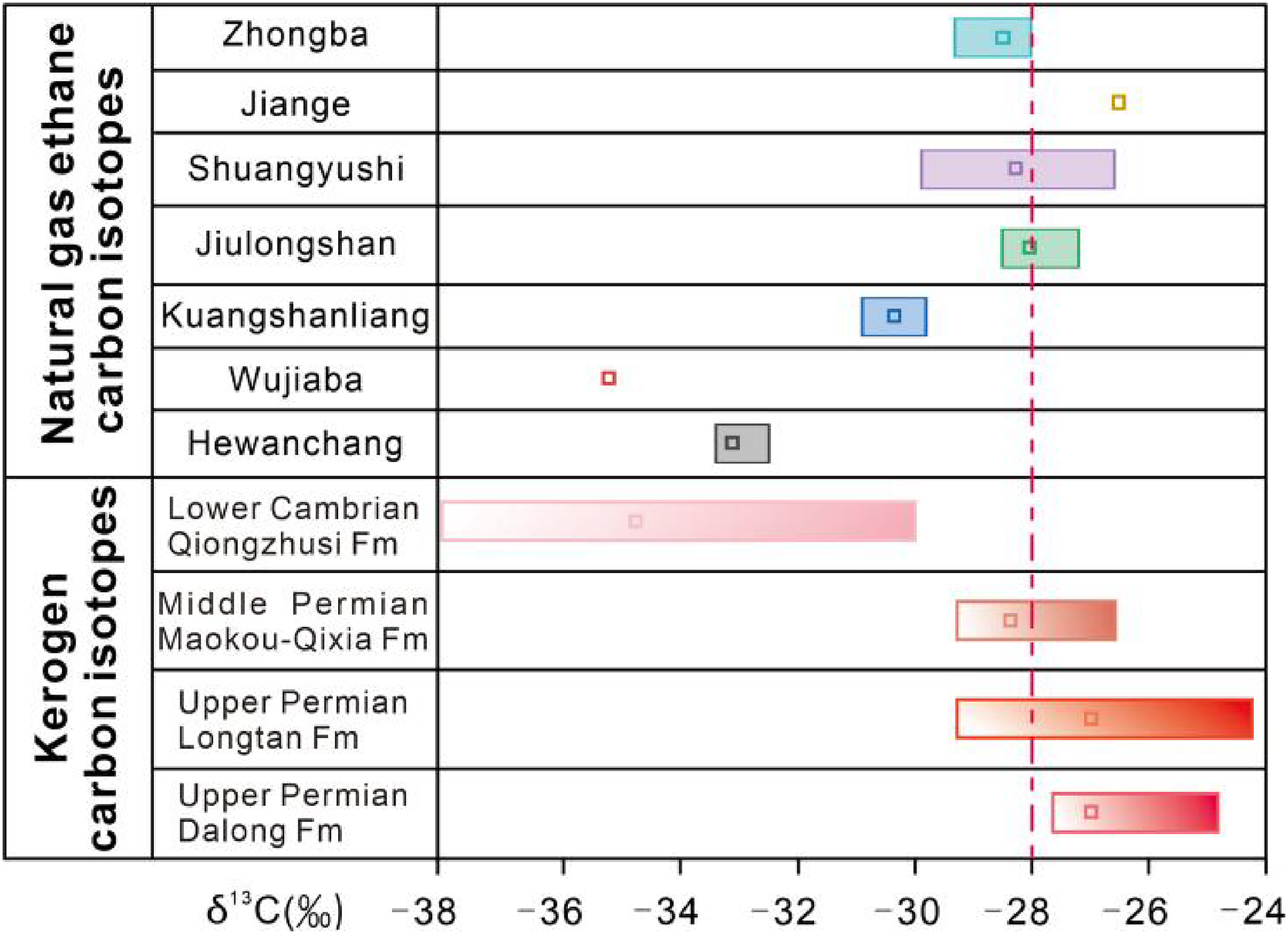
Stable ethane carbon isotope compositions of gas in the various gas fields of the NW Sichuan Basin and potential source rocks (data of source rock were taken from Hu et al., (2021)).
Methane carbon and hydrogen isotopes diagram can be used to distinguish sedimentary environment and organic matter types of natural gases in several Chinese basins (Cai et al., 2005), including the Sichuan Basin (Cai et al., 2003, 2004; Wang et al., 2015). According to the data collected, only HWC, ZB, SYS, JLS, and JG had δD1 values, natural gases exhibit a narrow range of δD1 values but a wide range of δ13C1 value. Both δD1 and δ13C1 become heavier as maturity increases, all samples have reached high-over mature stage (C1/(C1–3) > 0.97), therefore, the differences between samples come from the type of organic matter and secondary alterations. According to the δ13C1–δD1 correlation diagram (Figure 7), natural gases from the marine carbonate reservoirs (P2m-P2q, T1f, D2g, T2l3) in the NW Sichuan Basin plot in the marine facies area with δD1 heavier than −150‰. The δ13C1–δD1 correlation diagram implicated that HWC, ZB, and a portion of SYS were oil-type gas, while the other data from SYS, JG, and JLS were mixing/transitional organic matter. Additionally, a few samples from JLS fall into the coal-type gas category.
The formation process of natural gas pool
Oil cracking gas or kerogen cracking gas
When the maturity of the sapropelic organic matter reaches over maturity stage, it will generate pyrolysis gas and reservoir solid bitumen. Abundant solid bitumen is a significant indicator of ancient crude oil cracking in oil reservoirs. In the gas fields of the NW Sichuan Basin, the P2m-P2q and Є1q reservoirs were found to contain a substantial amount of solid bitumen (Li et al., 2019b; Li et al., 2020; Xie et al., 2018). Oil-associated gas is produced by sapropelic organic matter and can be classified into two types, kerogen cracking (primary cracking) gas and oil cracking (secondary cracking) gas (Behar et al., 1992; Prinzhofer and Huc, 1995). Although the molecular composition of natural gases and their carbon isotope composition are effective parameters for distinguishing between kerogen cracking gas and oil cracking gas, they do not provide a direct distinction (Wang et al., 2018).
According to the plot of δ13C1 versus C1/Σ(C1-C3) (Figure 8), the natural gas data from the ZB, HWC, WJB, KSL, and the majority of SYS are decidedly oil cracking gas, while gases data from the JLS, JG, and the minor data from SYS fall into kerogen cracking gas area. The distribution of thin coal-bearing shale in the SYS, JG, and JLS region suggests the presence of kerogen cracking gas (Figure 3E). However, if all the P2m-P2q and T1f natural gases from SYS and JLS are kerogen cracking gases, it would not fully account for the widespread residual solid bitumen found in the reservoirs (Xiao et al., 2020). Therefore, it is inferred that a significant amount of gas was produced through the thermal cracking of previously accumulated crude oil. The reasons for the δ13C1 deviation of JSL and SYS are not entirely the same. For JLS, the natural gas was severely dry gas in late-mature stage, resulting in a higher δ13C1 value. Additionally, water soluble gas desorption may have occurred during the uplift of the reservoirs (P2m-P2q, T1f) in JLS (the detailed analysis is presented in The gas from the Upper Permian and Middle Permian source rocks section; Figure 14A and B). In contrast, the heavier δ13C1 deviation observed in SYS may be attributed to the mixing of organic matter.
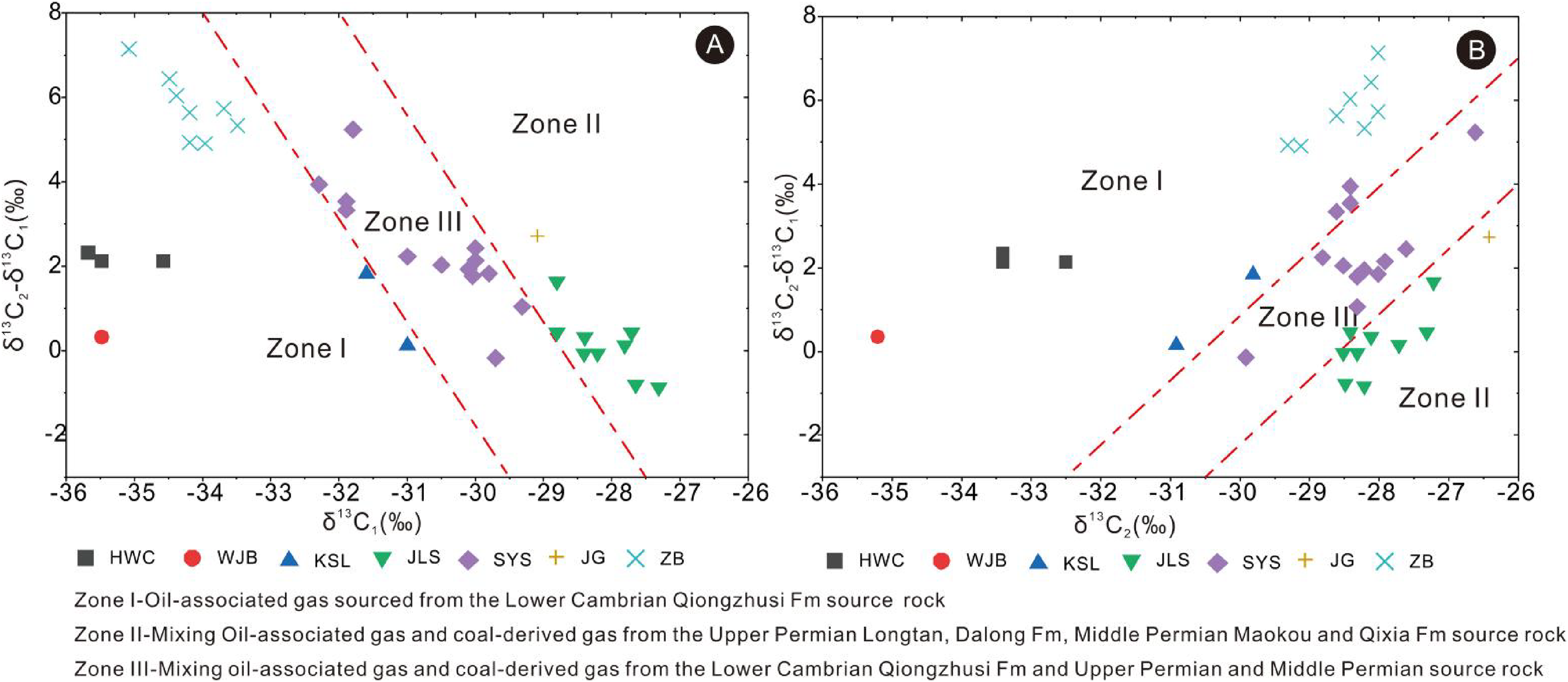
Natural gas types classification of typical gas fields in the NW Sichuan Basin reflecting the complexity of gas sources and secondary alterations.
Meanwhile, the N2 content of natural gases should be taken into consideration as well. Higher N2 content is indicative of kerogen cracking gas since shale is a rich source of nitrogen-containing compounds. As kerogen undergoes thermal maturation, the denitrification process causes an enrichment of N2 in kerogen cracking gas compared to oil cracking gas (Littke et al., 1995; Lu et al., 2014; Wang et al., 2018). Earlier studies have indicated that the gas in the Dengying Formation of the Weiyuan Gas Field is believed to have originated from cracking of the lower Cambrian source rocks kerogen (Wei et al., 2008, 2014; Zheng et al., 2021), while gas in the Changxing-Feixianguan Formation in Yuanba and Longgang Gas Field was derived from typical cracking of oil from Permian source rocks (Hu et al., 2014; Qin et al., 2016; Xie et al., 2018; Dai et al., 2018). The gas in the Dengying Formation of the Gaoshi-Moxi Gas Field is derived from typical cracking of oils from Lower Cambrian source rocks (Huang et al., 1984; Zheng et al., 2014, 2021; Wei et al., 2014; Zhu et al., 2015; Chu et al., 2023; Figure 9). The data from the NW Sichuan Basin shows a low N2 content of 0 to 6.42 wt% (average = 1.69 wt%) and a low CO2 content of 0 to 5.42 wt% (average = 2.13 wt%). This is significantly lower than typical gas generated by kerogen cracking in Lower Cambrian source rocks, demonstrating that the natural gases in the NW Sichuan Basin belong to oil cracking gas. Gas from ZB has higher CO2 and H2S contents, which could be related to TSR alteration (Figures 9 and 13).
The stage of oil cracking gas
The ln(C1/C2)–ln(C2/C3) plot can be used to differentiate between oil cracking and kerogen cracking gases, based on the differing variability in the C1/C2 and C2/C3 ratios, respectively (Behar et al., 1992). According to the principle, primary cracking of hydrocarbon gas, which is associated with kerogen cracking, is characterized by progressive increases in C1/C2 ratios and relatively constant C2/C3 ratios, whereas secondary cracking, associated with oil cracking, is characterized by significant increases in C2/C3 ratios and nearly constant C1/C2 ratios (Prinzhofer and Huc, 1995).
Data from marine carbonates reservoirs in the NW Sichuan Basin shows ln(C1/C2) values ranging from 3.91 and 6.88 and ln(C2/C3) values ranging 1.01 from 4.48, as is shown in Figure 10, the gases from HWC, WJB, and KSL follow positively correlated trend of ln(C1/C2) values and ln(C2/C3) values, while the gases from SYS, JLS, and JG follow the trend of increasing ln(C1/C2) values and decreasing ln(C2/C3) values (ln[C2/C3] = −1.0046ln[C1/C2] + 9, R2 = 0.02462). The trend observed is atypical for both primary-cracking and secondary-cracking gases. The consumption rate of C2 appears to be faster than that of C1 and C3, resulting in a negative correlation between ln(C2/C3) and ln(C1/C2). According to the analysis of natural gas genesis, this trend of decreasing ln(C2/C3) with increasing ln(C1/C2) can be explained by the mixing of secondary-cracking gases with varying proportions of primary-cracking gases.
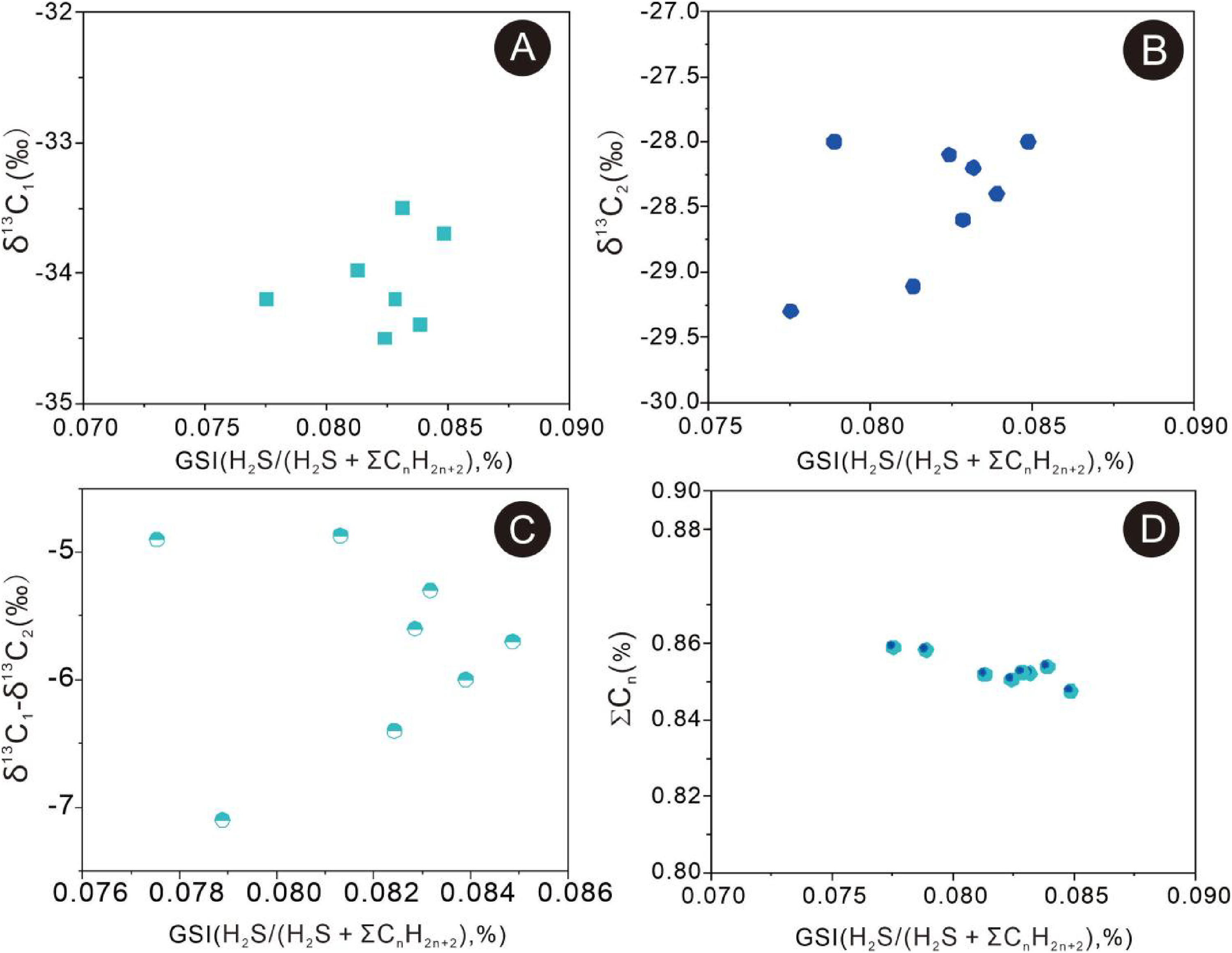
Variation of δ13C1 (A), δ13C2 (B), δ13C1–δ13C2(C) and Cn (D), with gas souring index (GSI) for natural gases from marine carbonate reservoirs in the NW Sichuan Basin, GSI = H2S/(H2S+Cn).
The ln(C1/C2)–ln(C2/C3) plot indicates that the majority of the hydrocarbon gases emitted by marine carbonates in the NW Sichuan Basin should be regarded as secondary-cracking products. The natural gases in the ZB originate primarily from late cracking of oil or wet gas (Ro = 1.8%) (Hu et al., 2022), while the natural gases in the other gas fields originate from over-mature stage oil cracking gas (Ro = 2.2%∼2.5%).
The differences and origin of natural gases
Classification of natural gases
Based on the previous analysis about genetic type of gases, the natural gases found in most of the gas fields are mainly oil-associated gas, with only a few samples from SYS, JG, and JLS having coal-derived gas characteristics. However, there still present dispute regarding the contribution of each source layer. It is high time to determine the extent to which source rocks from the Upper/Middle Permian and Lower Cambrian have contributed to gas fields in NW Sichuan Basin. As illustrated in Figure 11, each set of source rocks can be distinguished by its stable carbon isotope distribution, with the kerogen carbon isotope becoming heavier from old strata to new strata, reflecting an increase in higher plant input from the early Paleozoic to the late Paleozoic. The source rock from the Lower Cambrian Qiongzhusi Fm has the widest δ13C2 distribution, with the lowest δ13C2 minimum value, while the source rock from Upper Permian Longtan Fm has the highest δ13C2 maximum value.
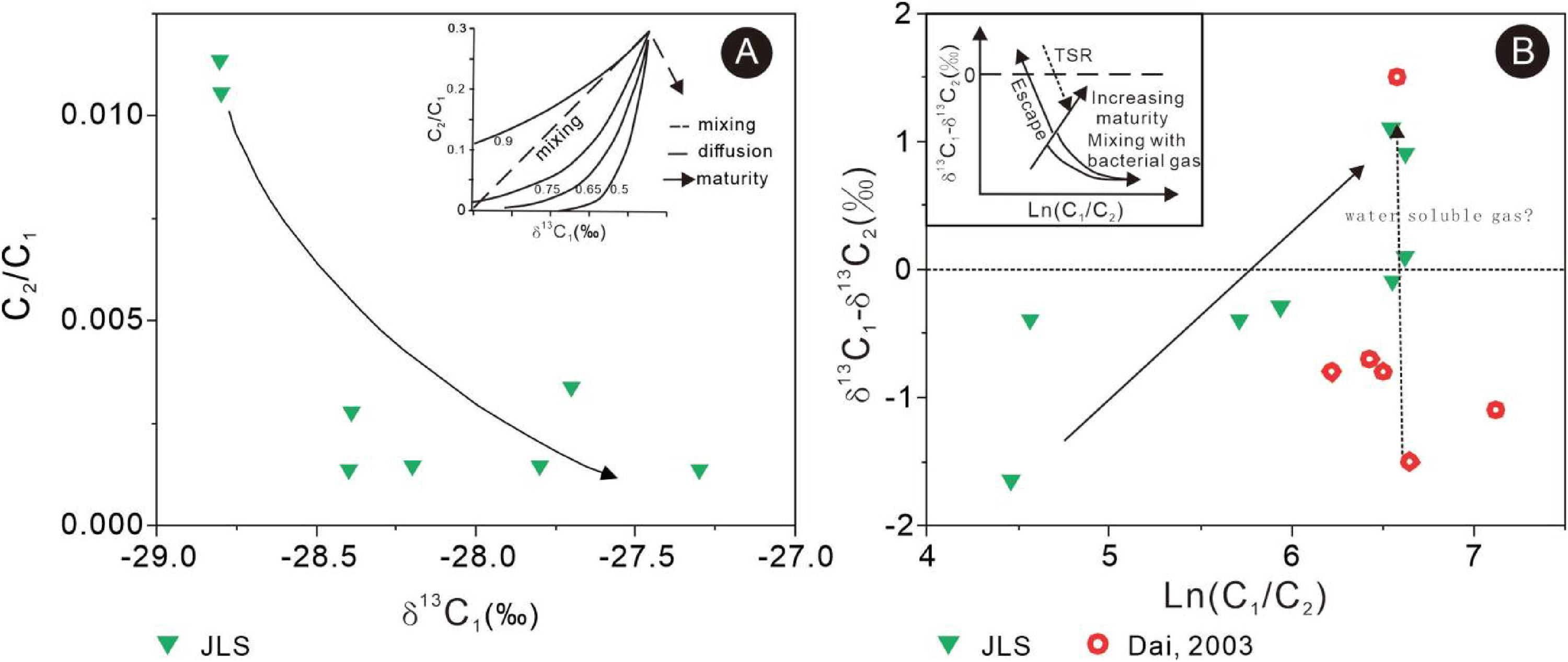
Correlation diagram between C2/C1 and δ13C1 (A) and that between δ13C2-δ13C1 and Ln(C1/C2) (B) of the natural gases from marine carbonate reservoirs in the NW Sichuan Basin (modified after Prinzhofer and Pernaton (1997) and Prinzhofer and Huc (1995)). Previous data from Dai (2003) is used.
The δ13C2 values of natural gases have a strong hereditary of their parent material type (Schoell, 1983; Stahl, 1977; Stahl and Carey, 1975). Generally, natural gases have lower δ13C2 values than δ13Ckerogen about 1‰∼2‰ (Isaksen, 2004; Zhao et al., 2014), while natural gases’δ13C1 values are affected by various factors such as maturity and secondary alteration (mixing, migration, biodegradation, etc.) (Dai et al., 2014). Comparing the kerogen carbon isotopes with ethane carbon isotopes in natural gas is an effective method to determine their genetic connection. Natural gases from HWC, WJB, and KSL has a strong affinity with source rocks from the Qiongzhusi Fm, while the δ13C2 distribution in ZB, JG, and JLS natural gases is more similar to the δ13Ckerogen of the Middle-Upper Permian source rocks, the δ13C2 values in SYS range between two sets of source rocks, with a closer resemblance to the Permian rocks, indicating a contribution from both sets of strata.
The δ13C1-Ro regression equation δ13C1= 27.55lgRo-47.22 demonstrates the variation of oil-associated gas with thermal maturation. The natural gases from each gas field in NW Sichuan Basin have a Ro distribution ranging from 2.62% to 5.29%, which belong to over-mature stage. The situation leads to both δ13C1 value and δ13C2 value being relatively high, the influence of secondary alterations cause greater isotopic deviation, it is ambiguous to tell apart the samples in the plot of δ13C1 versus δ13C2, however, the δ13C2-δ13C1 decreases as Ro increases gradually. Therefore, the diagram of δ13C2-δ13C1 versus δ13C1 and δ13C2-δ13C1 versus δ13C2 are applied to this study.
The natural gases from marine carbonate reservoirs (P2m-P2q, T1f, D2g, T2l3) in the NW Sichuan Basin have been classified in Figure 12. The diagrams of δ13C2-δ13C1 versus δ13C1 and δ13C2-δ13C1 versus δ13C2 for these natural gases reveal the variety of carbon isotope compositions. Based on the comparison of natural gas ethane carbon isotope and kerogen isotope of source rocks, the difference in contribution of two sets of source rocks, the diagram can be divided into three zones (Table 2), containing zone I (oil-associated gas sourced from the Lower Cambrian Qiongzhusi Fm source rock), zone II (mixing oil-associated gas and coal-derived gas from the Upper Permian Longtan and Dalong Fm and Middle Permian Maokou and Qixia Fm source rock), zone III (mixing oil-associated gas and coal-derived gas from the Lower Cambrian Qiongzhusi Fm and the Middle-Upper Permian source rock). It should be noted that the ZB natural gas is more closely related to the gas from Lower Cambrian source rock in the diagram, δ13C2-δ13C1 can better exclude the interference of secondary alteration. The sources of three types of natural gases and the reasons for their differences will be analyzed in the following text.
The gas from Cambrian source rock
The first type consists of gases derived from sapropelic source rock in the Lower Cambrian Qiongzhusi Fm, and is characterized by relatively low δ13C1 value (from −35.7‰ to −31.0‰) and low δ13C2 value (from −35.2‰ to −28.0‰) (Figure 12). This type includes P2m-P2q natural gases from HWC, WJB, KSL, and three samples from Middle Devonian Guanwushan Fm (D2g) and T2l3 natural gas from ZB. By comparing the gases and rocks (Figure 11), the δ13C2 in HWC, WJB, and KSL are so light that they were incompatible with the Middle and Upper Permian Fm source rock. Whereas, the source rock from the Lower Cambrian Fm shows a strong correlation with gases from HWC, WJB, and KSL.
Furthermore, there is a large amount of solid bitumen found in the reservoirs of P2m and P2q Fms located in the fold and thrust belt where HWC, WJB, and KSL gas fields are situated (Lu et al., 2017). Likewise, extensive exposure of bitumen in the Lower Cambrian Qiongzhusi Fm indicates that the paleo-oil reservoirs have undergone oil cracking reactions (Li et al., 2019b, 2020). In addition, the structural interpretation results (Chen et al., 2019; Figure 1C and D) suggests that the fractures are well-developed in HWC, WJB, and KSL, and mostly extend through the bottom Presinian source rocks, providing an advantageous pathway for gaseous hydrocarbons, such as Lower Cambrian deep gas, to migrate upwards.
Nevertheless, the natural gas in ZB does not follow the first type distribution. Its δ13C2 composition tends to be heavier than that of HWC, WJB, and KSL, δ13C2-δ13C1 (approximately ranges from 4.87 to 7.1) increases accordingly, while the majority of δ13C2-δ13C1 value in other gas fields is <3. The situation results in unreliable gas-source correlation, the δ13C2 composition of ZB does not match with Lower Cambrian Qiongzhusi Fm kerogen carbon isotopic composition. Interestingly, according to the regression δ13C1= 27.55lgRo-47.22 (Dai, 2011), Ro ranges from 2.75% to 3.15% in ZB, it ranges from 2.62% to 2.87% in HWC and WJB, however, it is about 1.8% in ZB (Figure 10.), significantly lower than the calculated value, indicating that maturity is not key affecting factor in this case.
In fact, its high maturity is related to the TSR alteration. TSR is the only source of high H2S concentrations in gas composition (>10%) in the majority of deeply buried reservoirs (Orr, 1977; Machel et al., 1995; Cai et al., 2003). The gas souring index (GSI, H2S/(H2S + ΣCnH2n + 2)) is a practical method for determining the degree of TSR (Worden et al., 1997; Cai et al., 2003, 2004). ZB natural gas has a high dryness coefficient (>0.97), low content of heavy hydrocarbon gas (Table 1), Additionally, there was a linear correlation between the increase in GSI and the decrease in total hydrocarbon gas content, indicating that the alkane gas has been consumed by TSR (Figure 13D).
During TSR, relative oxidation order begins with long chain isoalkanes, followed by n-alkanes, cycloalkanes, C2-C4 alkanes, and finally methane (Cai et al., 2022). The weaker bond strengths of 12C hydrocarbons, resulted in the preferential loss of 12C-rich C2+ gases (Worden and Smalley, 1996). As a consequence, an increase in GSI triggered an elevation in the 13C of ethane, which indicates that TSR has occurred in the C2+ gases (Krouse et al., 1988; Cai et al., 2003, 2013; Hao et al., 2008; Liu et al., 2013, 2014; Li et al., 2019a). The δ13C1 remains relatively stable with changes in GSI, while the δ13C2 increases and δ13C1-δ13C2 decreases as GSI increases (Figure 13A–C). Additionally, this stage is characterized by GSI values that are below 0.1 (0.078∼0.085). The δ13C2 value increases with increasing GSI under barely increased δ13C1 value, suggesting that TSR was dominated by heavy-hydrocarbon-gas, and no significant methane-dominated TSR occurred.
The gas from the Upper Permian and Middle Permian source rocks
The second type of natural gas is characterized by relatively high δ13C1 value (from −29.1‰ to −27.3‰) and high δ13C2 value (from −28.5‰ to −26.4‰) (Figures 11 and 12). Particularly, the gas in JG has a δ13C2 value of −26.4‰, which definitely belongs to coal-derived gas. This shows that the δ13C values of the natural gas from zone II (JLS and JG) are relatively heavier than those of the zones I and III, indicating that little natural gas derived from the Lower Cambrian source rock. The distribution of the δ13C2 values is close to that of the P3l, P3d, and P2m-P2q source rocks (Figure 11). Meanwhile, in accordance with the genetic identification diagram (Figures 7 and 12), JLS and JG belong to mixing coal-derived gas and oil-associated gas. Moreover, the JLS gas field is in the weak anticline deformation region and minimally affected by compression as a result that there contain no thrust faults (Xiao et al., 2021; Figure 1C). Because of undeveloped faults and fractures, there are no favorable pathways for hydrocarbon migration. Consequently, the reservoirs in this area are mostly filled with hydrocarbons from the Upper and Middle Permian source rocks (Figure 1D).
The relatively heavy δ13C1 composition in JLS implies that the natural gas has undergone complex secondary alterations, for instance, thermal maturation, mixing, and leakage (Dai et al., 2014; Rooney et al., 1995). The regression equation δ13C1= 25.55lgRo-40.76 states that the maturity of JLS natural gas ranges from 2.94% to 3.36% based on the δ13C1 composition. However, the outcome is inconsistent with Ro value deduced from burial history and thermal evolution history (2%∼3%) and measured Ro value of the Middle Permian Dalong Fm source rock (1.02%∼1.08%, average = 1.05%) and Longtan Fm (1.02%∼1.04%, average = 1.03%). Fluid inclusions homogenization temperature in L16 and L17 to the history of hydrocarbon generation and expulsion diagram suggest that Middle and Upper Permian marine carbonate reservoir underwent one period of dry gas filling (Hu et al., 2021; Li et al., 2021; Lu et al., 2017); currently, the Upper Permian hydrocarbon source rocks have reached over-mature stage. According to the model proposed by Prinzhofer and Pernaton (1997), it can also be inferred that the natural gas in JLS gas field conforms to the trend of thermal maturation (Figure 14A). Due to the late-mature stage production of Upper Permian Dalong-Longtan Fm marine shale has been mainly captured, its molecular components were dry, the carbon isotope were heavy. Moreover, by report, desorption-diffusion fractionation and the effect of groundwater dissolution may have occurred when tectonic uplift happened, the natural gas released from water often exhibit a heavier carbon isotopic composition of methane (Qin, 2012; Wei et al., 2022; Dai, 2003). Seven test wells were drilled in the Maokou Fm, of which three produced water, in the Qixia Fm, one out of three test wells produced water (Yang et al., 2021b), which indicates the Permian strata of the JLS structure is known to have abundant formation water, and it is highly likely that gas dissolution occurred during the Himalayan uplift period, resulting in the release of dissolved gases from the water mixed with previously formed over-matured gas, making the natural gases’carbon isotopic composition become heavier.
Almost half of gas samples of JLS show a reversal of methane and ethane carbon isotopes (Table 2; Figure 12). According to previous scholars reported, five probably reasons for carbon isotopes reversal are as follows (Dai et al., 2014; Wei et al., 2019), (1) mixing of organic and inorganic natural gas; (2) natural gas sourced from various rocks or generated from same source but at various periods; (3) mixing of oil-associated gas and coal-derived gas; (4) primary or secondary microbial natural gas; and (5) natural gas generated under high temperature and pressure conditions. The burial depth of Middle and Upper Permian source rocks (P2m-P2q, P3w, and P3d) is beyond 7000 m, resulting in high pressure and temperature conditions causing natural gas to reach over-mature stage. δ13C2-δ13C1 decreases when natural gas reach late-mature stage, then δ13C1>δ13C2 can happen easily (Rooney et al., 1995). Considering that four sets of source rocks (P2m, P2q, P3w/l, and P3d) (Figure 3B–D and F) make contribution to JLS gas field, mixing of natural gas sourced from various rocks or mixing of coal-derives gas and oil-associated gas may be the main reason for reversal phenomenon.
The mixing gas from Cambrian, Upper Permian and Middle Permian Formation source rocks
The natural gas from SYS, as the third type, was derived from the Lower Cambrian gas and Upper Permian and Middle Permian gas. It has a distribution of δ13C1 = −32.3‰ to −29.3‰ between second and third type and a moderate range of δ13C2 value (from −29.9‰ to −26.6‰, average= −28.3‰). Similarly, the δ13C2 distribution of natural gases in SYS falls between the Upper and Middle Permian Fm and the lower Cambrian Fm, except for the contribution from Dalong Fm (Figure 3), indicating that gas in SYS is predominantly a mixture of gases from different sources. Although there exist some structures in SYS, they are confined to the Permian strata and do not extend to the deeper Sinian source rocks (Figure 1C).

Computation of contribution proportion for mixing hydrocarbon source in Shuangyushi gas field.
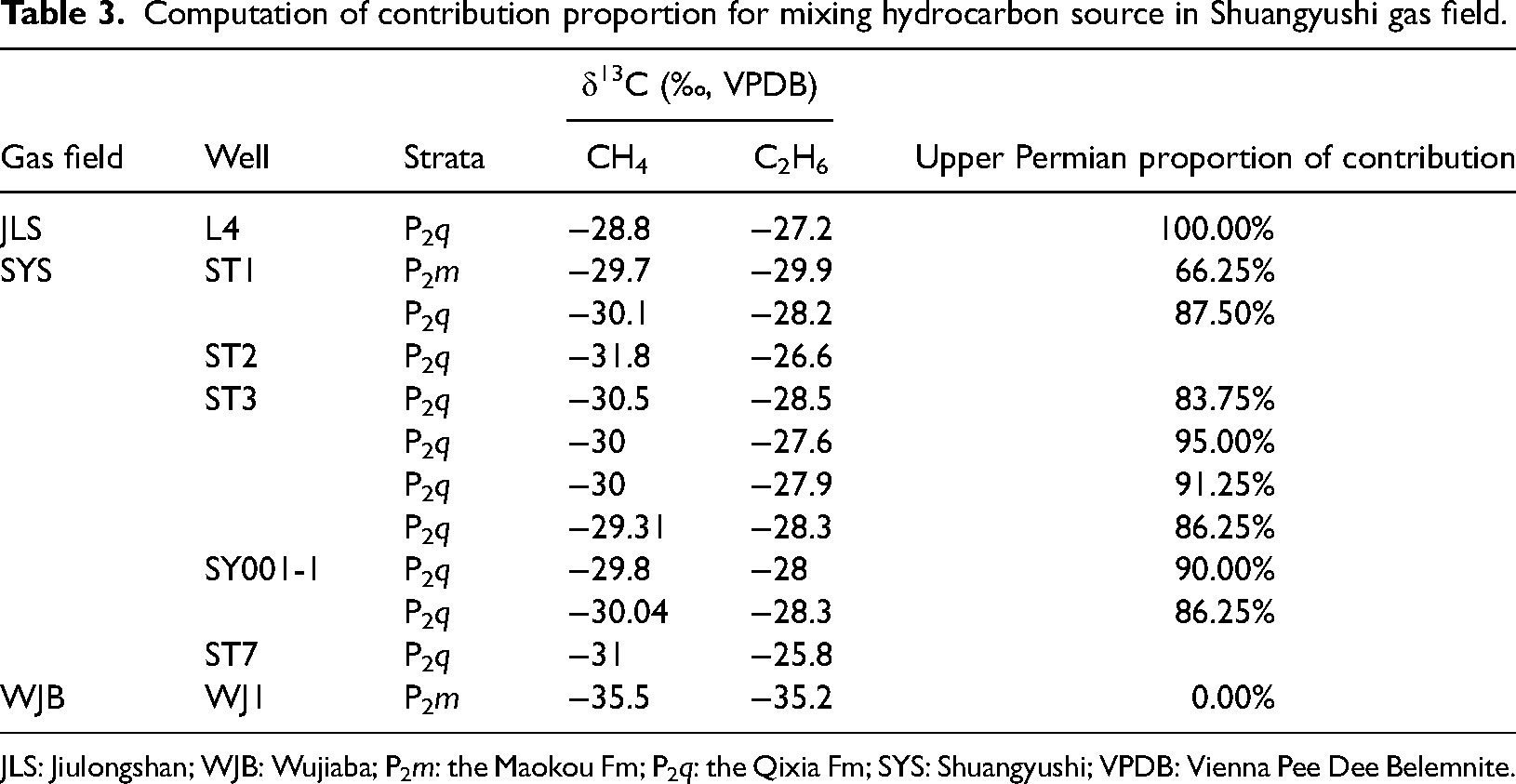
JLS: Jiulongshan; WJB: Wujiaba; P2m: the Maokou Fm; P2q: the Qixia Fm; SYS: Shuangyushi; VPDB: Vienna Pee Dee Belemnite.
Conclusion
The differences and origin of natural gases from the P2m-P2q, T1f, and T2l3 marine carbonate reservoirs from the seven gas fields in the northwestern Sichuan Basin have been discussed at length. The main conclusions of this study are as follows.
The natural gases are mainly hydrocarbon gases, with a trace amount of CO2 and N2 and extremely high dryness (C1/∑C1-C5 > 0.99). The gases from Zhongba gas field have higher contents of CO2 and H2S and high dryness (C1/∑C1-C5 = 0.97), indicating that it has undergone TSR alteration. Geochemical characteristics, especially carbon isotope, vary in each gas field in NW Sichuan Basin. According to the distribution of carbon and hydrogen isotopes and the contribution of different source rocks, natural gases are classified into three types. Type I is derived from the Lower Cambrian Qiongzhusi Fm source rocks. Type II is mixing gases produced by four sets of source rocks from the Middle-Upper Permian. Type III is mixing gases produced by the Lower Cambrian Qiongzhusi Fm and Middle-Upper Permian source rocks. The natural gases in the NW Sichuan Basin are mostly oil cracking gas, with a few samples from SYS, JG, and JLS have mixing of kerogen cracking gas. Owing that Middle-Upper Permain source rocks consist of higher proportion of humic organic matter (include mixing sapropelic-humic or humic-sapropelic), oil-associated gases from SYS, JG, and JLS have distinctive heavier δ13C2 distribution (−29.9‰∼ −28‰). From the structure developed thrust belt to undeveloped area in gas-bearing area, the contribution of mixing sapropelic-humic organic matter in Middle-Upper Permian notably increases. The different geochemical characteristics of natural gas in the NW Sichuan Basin can be attributed to three factors, the contribution of different source rocks, diversified fracture evolution, and various secondary alterations (TSR alteration, thermal maturity effect, and mixing of gas). The characteristic of natural gas and the contribution proportion of different source rocks are determined by the development of fractures, while secondary alterations transform the gas further.
Highlights
Natural gases in northwestern Sichuan Basin were originated from cracking of both oil and kerogen.
Natural gases show differences due to source rocks and structure development.
Natural gas chemical and isotopic compositions were altered by thermochemical sulfate reduction (TSR) and other secondary processes.
Footnotes
Acknowledgements
The authors extend their gratitude to the Research Institute of Exploration and Development, PetroChina Southwest Oil & Gas field Company for providing essential data for this study. The authors also thank Professor Qiang Wei and Professor Jizhen Zhang for their valuable advice.
Authors’ contributions
CG was involved in conceptualization, methodology, software, investigation, visualization, and writing—original draft; GH in conceptualization, methodology, and writing—review & editing; XT in resources, data curation, and formal analysis; LT in methodology, software, and writing-review & editing; JG in resources, data curation, and writing—review & editing; and XL in resources and writing—review & editing. All authors contributed to the article and approved the submitted version.
Declaration of conflicting interests
The author(s) declared no potential conflicts of interest with respect to the research, authorship, and/or publication of this article.
Funding
The author(s) disclosed receipt of the following financial support for the research, authorship, and/or publication of this article: This work was supported by the National Natural Science Foundation of China (U22B6002 and 42172184), PetroChina Science and Technology Projects (No. 2021DJ0601).
