




Abstract
Haerwusu Surface Mine of the Jungar Coalfield is a large coal mine. Its coal formation environments have not been reported in detail. In order to reconstruct the paleoenvironment of the peat formation, nine samples were collected, and were analyzed using microscope, column chromatography, gas chromatography (GC), and gas chromatography–mass spectrometry (GC–MS). According to the results of the microscopic analysis, the average random vitrinite reflectance (Rr) is 0.73%, indicating a low rank bituminous coal. Vitrinite group is the predominant macerals with an average content of 54.54%, followed by inertinite group with an average of 35.99%. The higher inertinite contents indicate widespread wildfire events during the peat formation. The distribution pattern of n-alkanes, the cross plot between Pr/n-C17 and Ph/n-C18, the lower saturated/aromatic hydrocarbon ratios (0.22–0.68) and the presence of cadalene, retene, simonellite indicates that the organic matter is predominantly terrestrial higher plants with a small amount of aquatic organisms. The ternary diagram of Pr/Ph, Pr/n-C17 and Ph/n-C18 and the relative abundance of fluorene, dibenzofuran and dibenzothiophene indicate a continental–oceanic alternative facies. The higher contents of combustion-derived PAHs are also indicative of widespread wildfire events during peat formation.
Introduction
Coal is key to understand the history of the Earth, with a high-resolution record of past environmental changes. Numerous researchers have used maceral composition and different discrete indicators or combinations of proxies, aiming to extract geological information from coal on paleoenvironmental, paleoclimatic, and paleobotanical aspects during the evolution of swamp→peat →coal (Dai et al., 2020; Diessel, 1982; Liu et al., 2022a, 2022c; Vu et al., 2009; Zieger and Littke, 2019).
Maceral compositions have been used to estimate coal formation environments (Diessel, 1982; Kalkreuth et al., 1991; Singh et al., 2010, 2012, 2017, 2019; Sun et al., 1998; Rajak et al., 2019). Organic geochemical characteristics of coals, especially the composition of biomarkers have become a useful tool for evaluating the origin of organic matter, thermal maturity, depositional environment, and paleoclimate (Liu et al., 2022b; Naafs et al., 2019; Qin et al., 2016; Sun et al., 2013a; Zhao et al., 2021a, 2023). For example, Sun et al. (2002) studied the formation environments of the Carboniferous-Permian coals in the Xingtai Coalfield using maceral parameters. Singh et al. (2010) studied the coal formation environments in the Tarakan basin, East Kalimantan according to the petrographic characteristics. Liu et al. (2018) used organic geochemistry to investigate the formation environments of lignite samples from the Jinsuo Basin, China, and to reconstruct the environmental changes that occurred during the peat depositional process. Cai et al. (2022) studied various biomarkers in coals of different ages, grades and sources to establish the relationship between biomarker characteristics and depositional environments of coals.
The Carboniferous-Permian period is an important coal accumulation period in the geological history of China. Abundant coal reserves were formed in North China. The coal-bearing measure of the Jungar coalfield was developed in this period. The stratigraphy, petrographic paleogeography, coal accumulation patterns, and trace elements of the Jungar coalfield have been studied by numerous scholars, and many insights have been gained (Hao et al., 2022; Jin et al., 2013; Li et al., 2016; Liu et al., 2021; Sun et al., 2013b, 2016). However, the geological significance of organic geochemistry during coal formation and its application as a biomarker of paleoenvironmental and paleoclimate changes over time in the Jungar Basin have not been investigated in detail. Therefore, this study was carried out to investigate the composition of maceral, saturated and aromatic hydrocarbons in coal, thermal maturity, and to reconstruct paleoenvironments and climate changes of the No. 6 coal seam from the Haerwusu mine, Jungar coalfield.
Geological setting
The Jungar coalfield is located in the southwestern area of Inner Mongolia Autonomous Region (Figure 1(a)) (Dai et al., 2008; Sun et al., 2013b; Xiao et al., 2020). The length of the Jungar coalfield from north to south is 65 km, while its width from west to east is 26 km, with an area of about 1700 km2 and coal reserves of 36.24 billion tons (Sun et al., 2013b). The Haerwusu mine is located in the central part of the Jungar coalfield (Figure 1(b)), with a length (W-E) of 9.59 km and a width (N-S) of 7.03 km. The total area is 67.17 km2 (Chu et al., 2015; Wang et al., 2011a).
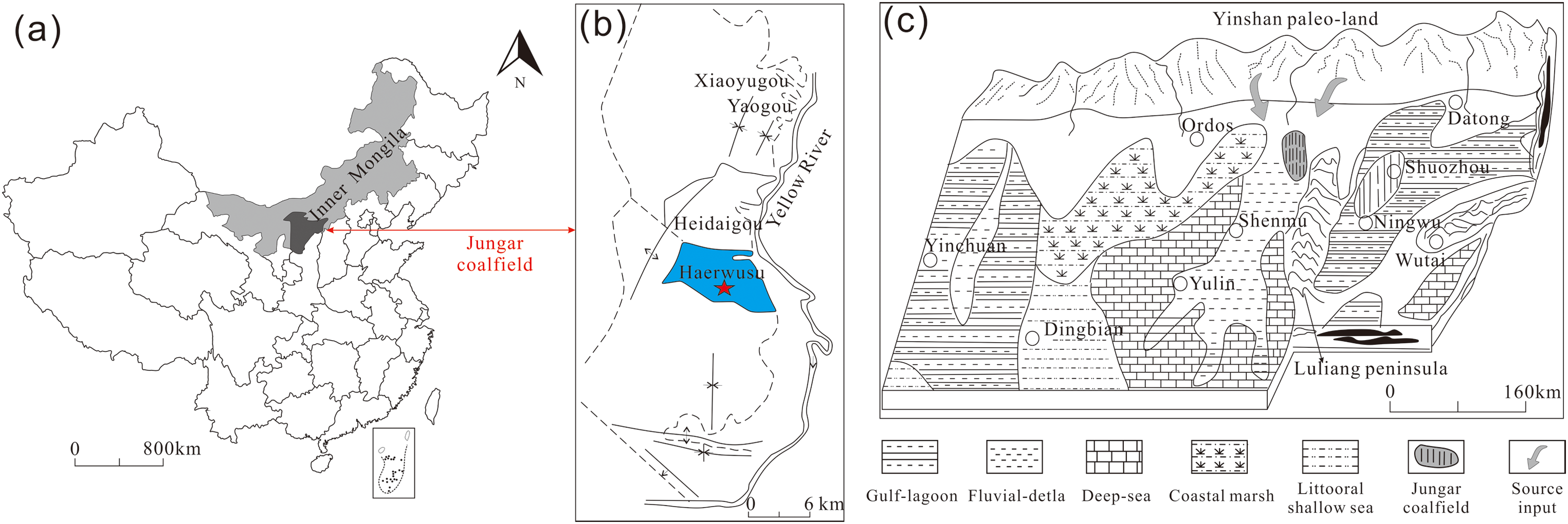
(a) Location of the Jungar Coalfield in Inner Mongolia, China, (b) Location of the Haerwusu Surface Mine (modified after Dai et al., 2008), (c) Paleogeographic map of the Late Paleozoic in northern China (modified after Sun et al., 2013a, 2013b).
The geological location of the Jungar coalfield is along the eastern margin of the Ordos syncline on the North China platform. The overall structural form is a monoclinic structure with a nearly north-south trend, a tendency to the west, and a dip angle of less than 10° (Sun et al., 2016; Yang et al., 2011). Inside the coalfield, a series of small-scale wavy fold structures develop, with normal faults which are sparse and of small scale (Figure 1(b)) (Wang et al., 2011b). Coal-bearing strata consist of the Benxi Formation of the Pennsylvanian, the Taiyuan Formation of the Pennsylvanian-Permian, and the Shanxi Formation of the Lower Permian (Figure 2). The total thickness is 110–160 m (Liu et al., 1991).
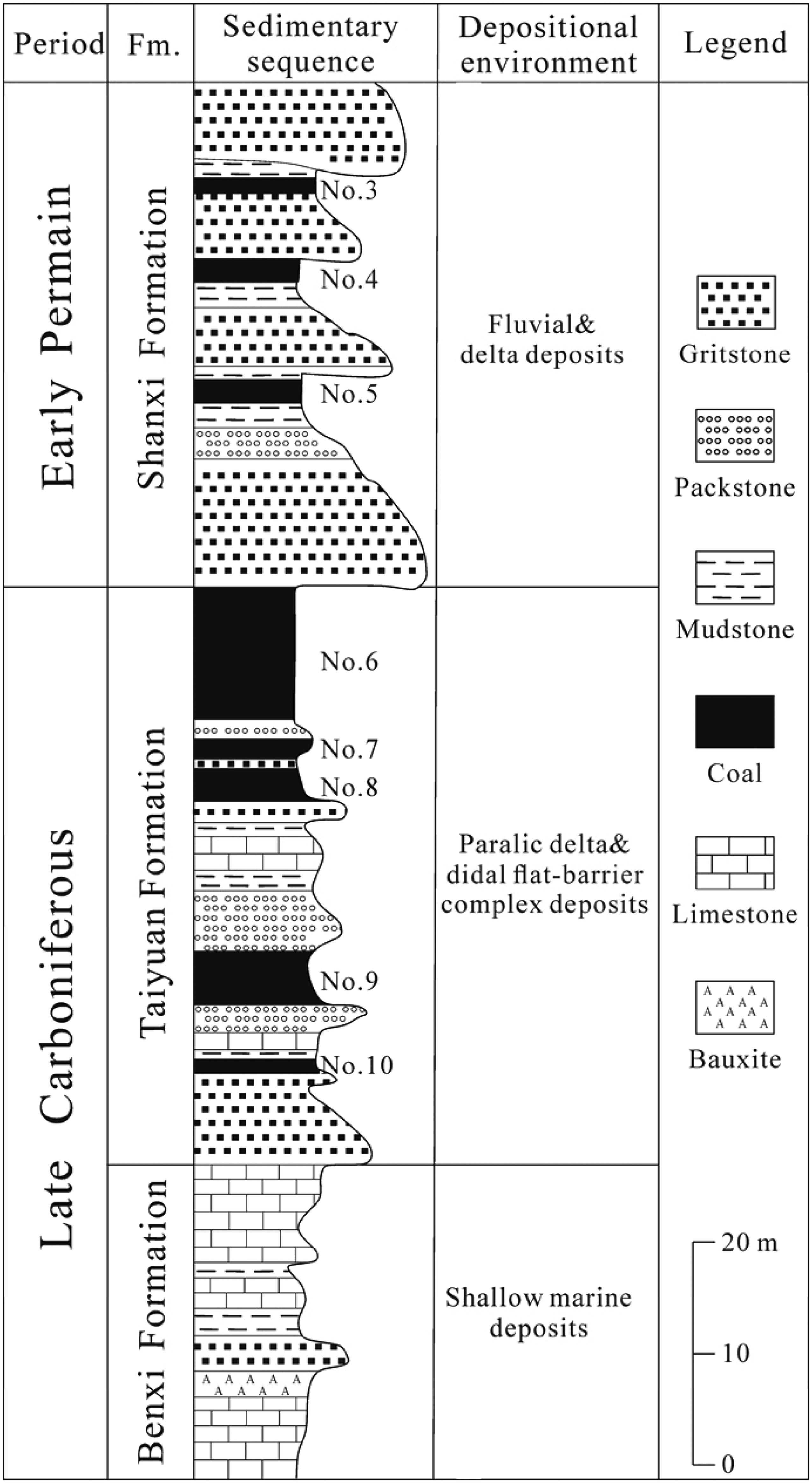
Stratigraphic section of the Haerwusu surface mine.
The northern and eastern sections of Jungar coalfield (Yinshan ancient land section are the source areas of sediments (Figure 1(c)) (Liu et al., 2021; Sun et al., 2016; Wang et al., 2011b). The Middle Ordovician Majiagou Formation is unconformably overlain by the Benxi Formation with a thickness of 15–35 m (Wang et al., 2011a). The Benxi Formation was formed in a shallow marine environment, and the sediments were predominantly composed of bauxite, sandstone, mudstone, and siltstone, with thin and non-mine coal seams partially interbedded. The lowest section consists of a layer of gray bauxite, which was generated by weathering (Dai et al., 2008).
The total thickness of Taiyuan Formation is 21–95 m, mainly composed of gray and off-white quartz sandstone, mudstone, siltstone and several coal seams (numbered 6#, 7#, 8#, 9#, 10#). 6# coal seam is located at the top of Taiyuan Formation, the thickness of coal seam is 12–18 m (average 15 m), which accounts for approximately 80% of the surface mine's total coal reserves. The distribution of coal-bearing strata in the upper and lower sections is the main driving factor of the depositional environment. The lower section of Taiyuan Formation is mainly formed in shallow marine environment, and the upper section is formed in shallow marine delta and tidal flat-barrier complex environments (Li et al., 2016).
The Shanxi Formation has a total thickness of 45–90 m. It is dominated by thick-bedded quartz sandstone, feldspathic sandstone, sandy mudstone and mudstone. Formed in fluvial and deltaic environments. Shanxi Formation contains five coal seams (1#, 2#, 3#, 4#, 5#), but only 3# and 5# coal seams are partially mineable. The non-coal-bearing Upper Shihezi Formation, Lower Shihezi Formation, Shiqianfeng Formation, and Liujiagou Formation overlie the coal-bearing sequence (Sun et al., 2016).
Materials and methods
Sample collection
Nine samples, comprising two partings (6-3-P and 6-8-P) and seven coal samples were collected from the No. 6 coal seam of the Haerwusu Surface Mine for this study. To avoid contamination and oxidation, all samples were stored in airtight plastic bags for sealed storage immediately after collection.
All analyses were completed at the Key Laboratory of Resource Exploration Research in Hebei.
Petrographic analysis
The coal samples were crushed into particles which grained-size between 18 and 40 mesh after air-dried to prepare epoxy bonded pellets. Then grounded and polished according to the method described by Qin et al. (2016). Coal petrological analysis was carried out on polished blocks using a Leica DM2500P polarizing microscope with a × 50 oil objective. The classification and nomenclature of coal macerals follow the ICCP classification 1994 system. More than 500 effective points were counted with fixed intervals between each measurement point for each coal sample.
The reflectance of random vitrinite was measured by CRAIC 20/30PV micro spectrophotometer. The reflectance value was calibrated by dual reference method before measurement, and the reflectance standard sample Cubic-zirconia (Roil = 0.41%, λ = 546 nm) and Yttrium aluminum garnet (Roil = 0.903%, λ = 546 nm) were selected to correct the accuracy of the reflectance value. The measurement error of the standard sample is less than 2%. At least 50 points are counted for each coal sample.
Extraction and separation
For organic biomarker analyses, finely grinded (<0.2 mm) samples were extracted for 48 h using a Soxhlet extractor. Extract yields were determined gravimetrically after the removal of the solvent. Saturated hydrocarbons (Alk), aromatic hydrocarbons (Aro) and polar compounds (Het) were separated from the extracts by column chromatography over prewashed silica gel (70–230 mesh, 50 × 1 cm). The Alk, Aro, and Het were eluted with n-hexane, dichloromethane, and methanol, respectively. Each fraction was eluted with 40 mL solvent.
GC and GC-MS method
The analysis of saturated hydrocarbon and aromatic hydrocarbon fraction was performed by gas chromatography (Agilent 7820A) and gas chromatography-mass spectrometry (Agilent GC 7890B-5977A MSD). Gas chromatograph equipped with HP-5MS UI fused silica column (30 m × 0.25 mm i.d.) coated, the carrier gas is high purity hydrogen. The GC temperature was programmed from 60 to 300°C at 4°C min-1 and hold for 15 min. Gas chromatography-mass spectrometry equipped with HP-5MS UI (30 m × 0.25 mm inner diameter, 0.25 μm film thickness) chromatographic column; high purity helium as carrier gas. Detailed description of this method was presented by Zhao et al. (2021a, 2021b).
Data were acquired and processed using the Chemstation chemistry station system and Agilent Mass Hunter Qualitative Analysis browser software The chromatographic peaks were identified based on GC retention time, comparisons of mass spectra with literature and library data, along with interpretations of mass spectrometric fragmentation patterns.
Results
Coal petrology
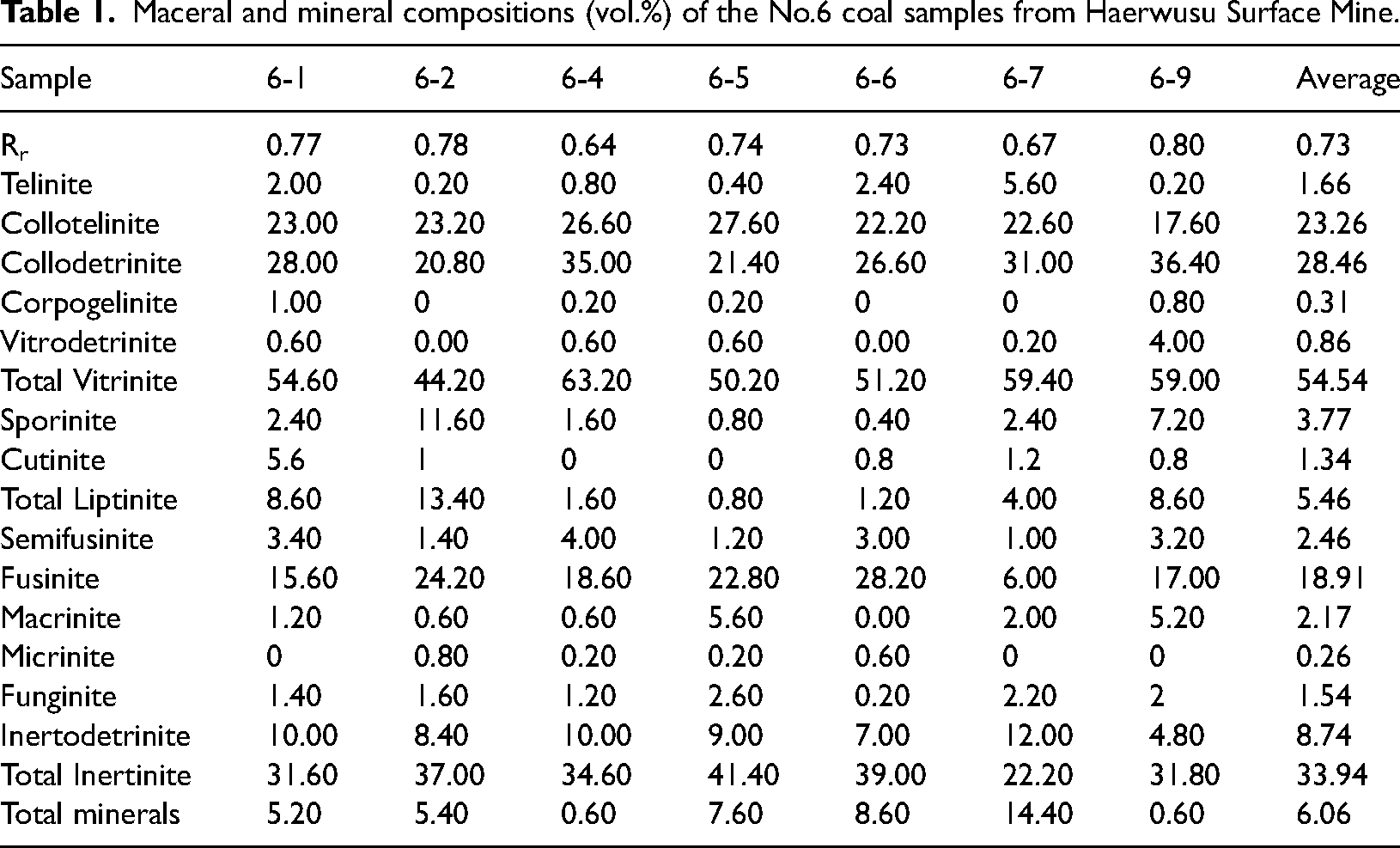
The average ash content is 15.23%, and the average sulfur content is 0.15%. The average random vitrinite reflectance is 0.73% Rr. Based on the data, the coal was classified as a middle ash, low sulfur and high volatile bituminous coal (Uribe and Pérez, 1985). The vitrinite content varies from 44.2% to 63.2%, with an average of 54.54%, mainly collotelinite and collodetrinite. The inertinite content varies from 11.6% to 59.6%, with an average of 35.99%; mostly fusinite and inertodetrinite (Figure 3). The content of the liptinite is relatively low, with an average of 5.46%, and dominated by sporinite and cutinite(ICCP, 1998; ICCP, 2001). Minerals are mainly clay minerals, followed by calcite (Table 1).
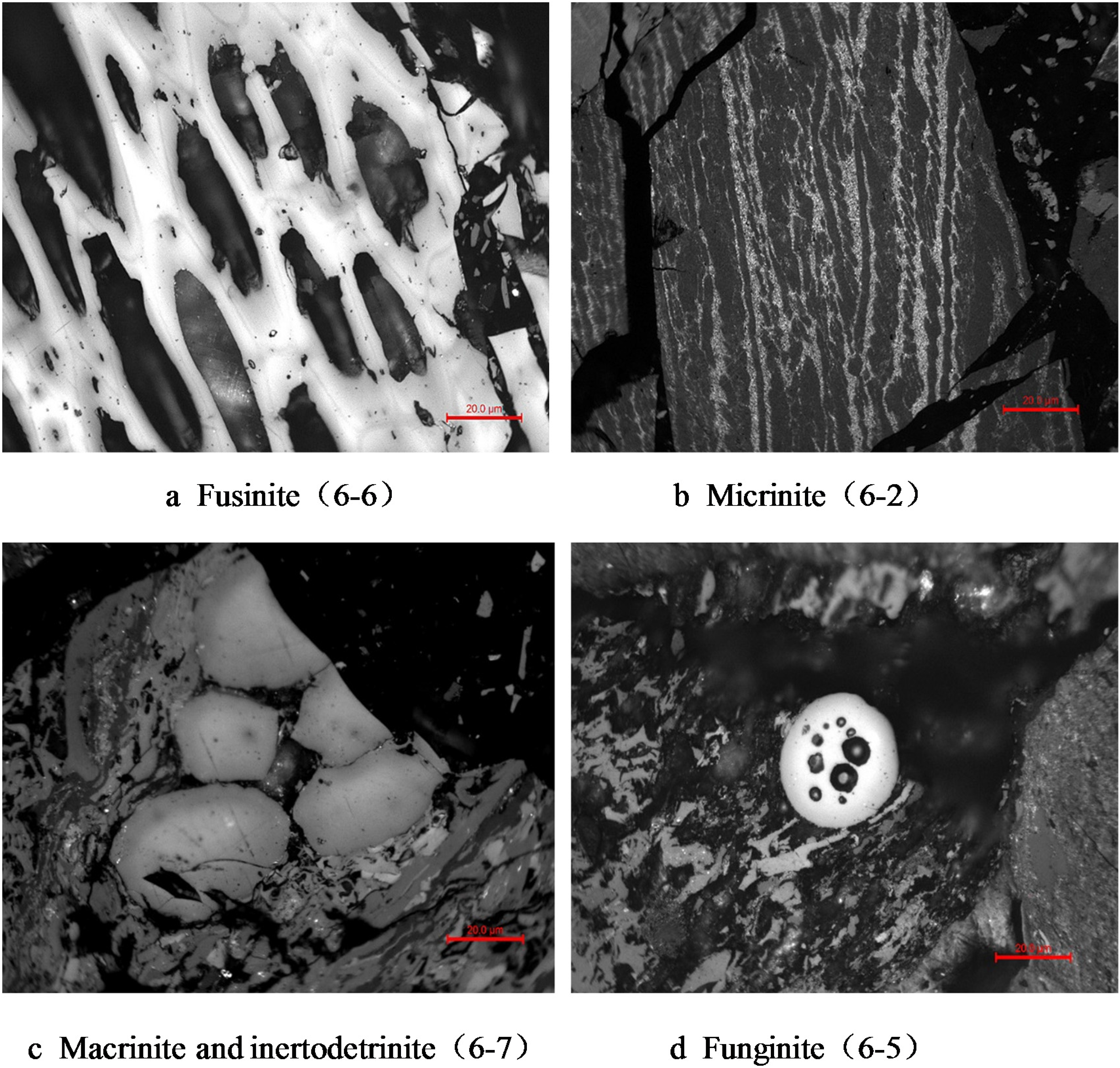
Photomicrographs of inertinite macerals of Permian Coals from the Haerwusu mine (polished surface, oil immersion, reflected light microscopy).
Maceral and mineral compositions (vol.%) of the No.6 coal samples from Haerwusu Surface Mine.
Extract composition
The soluble organic matter extract (EOM) yields of the samples from the Haerwusu surface mine are 0.45% on average (Table 2). The percentage of Alk is lower at 16.97%, while the percentage of Aro is higher at 42.41%. Aro and asphaltenes are generally considered to be abundant in higher plants, whereas Alk and Het are abundant in lower phytoplankton. Therefore, the ratio of Alk/Aro hydrocarbons can be used as a marker to distinguish coal-forming parent material. The ratio of ranged from 0.22 to 0.68, which is the typical signature of terrestrial-derived organic matter input in coal.
Compositions (rel.%) of the total extracts of No. 6 coal samples from the Haerwusu Surface Mine.
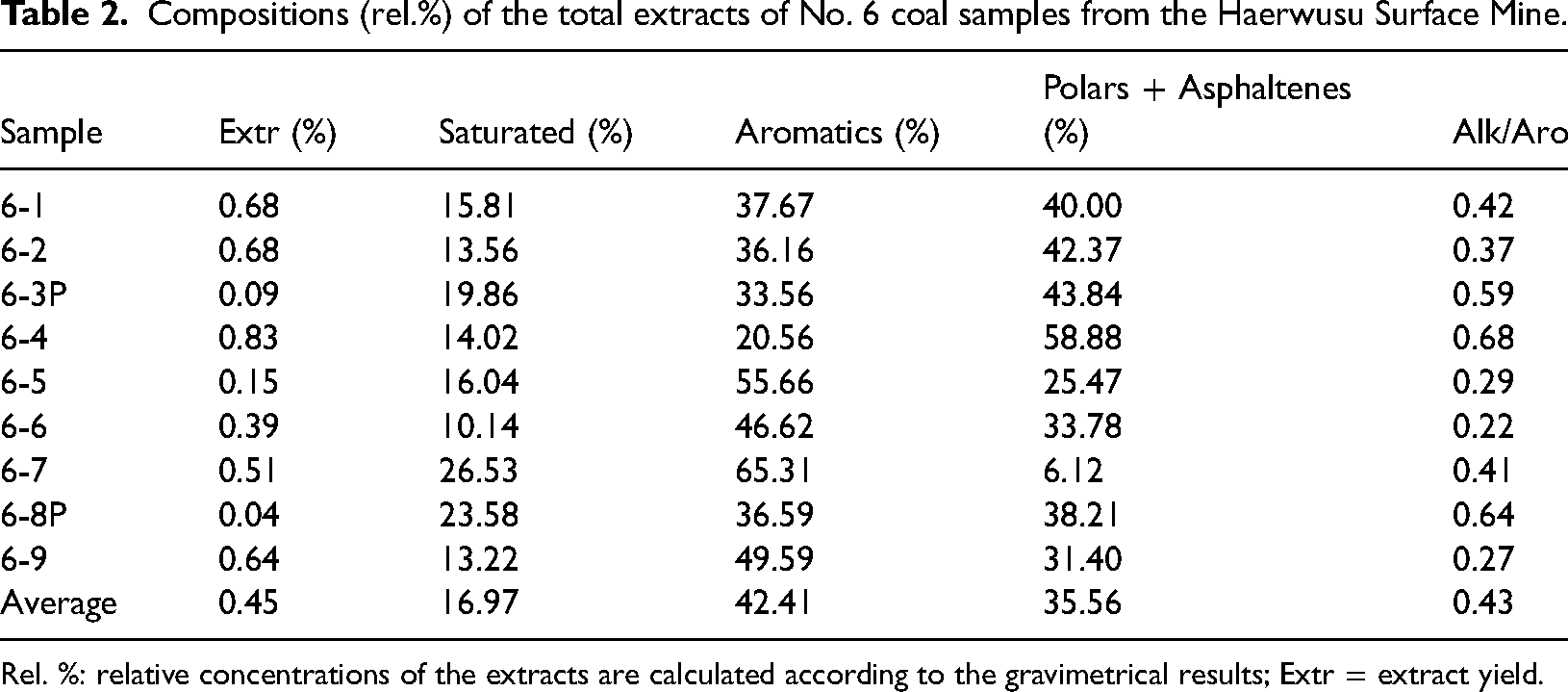
Rel. %: relative concentrations of the extracts are calculated according to the gravimetrical results; Extr = extract yield.
Compositions of saturated hydrocarbon fraction
The m/z 85 mass chromatograms show the occurrence of n-alkanes and isoprenoids in the saturated hydrocarbon fraction of the No. 6 coal seam samples from the Haerwusu surface mine (Figure 4(a)). The n-alkane profiles of samples have unimodal patterns. The carbon number of samples varied between n-C14 and n-C31 with maxima in the n-C21 to n-C27 range.
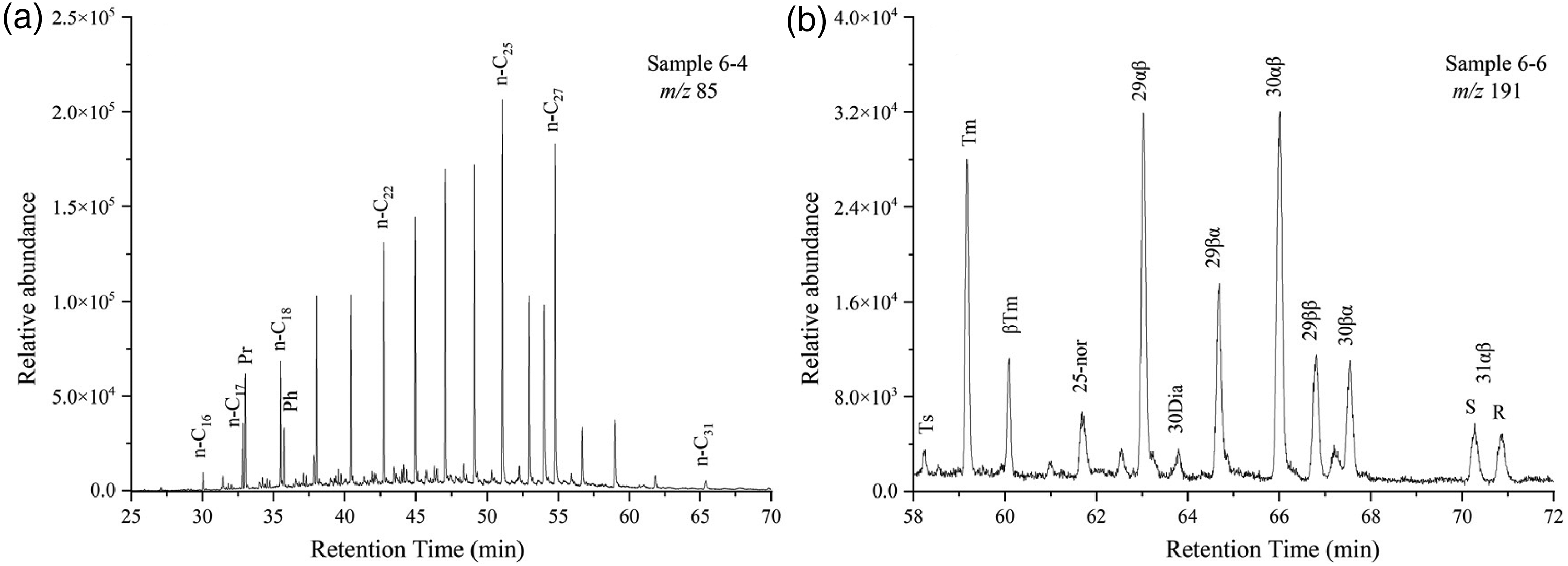
Partial m/z 85 (a) and m/z 191 (b) mass chromatograms exhibiting the n-alkane, isoprenoids and hopane in the saturated fractions of the No. 6 coal sample from the Haerwusu surface mine. Abbreviations: Pr = pristane; Ph = phytane; Ts = C2718α(H)-22,29,30-trisnorneohopane; Tm = C2717α(H)-22,29,30-trisnorhopane; βTm = C27 17β(H)-22,29,30-trisnorhopane; 25-nor = C29 17α(H),21β(H)-25-norhopane; C29αβ = 17α(H), 21β(H)-C29 hopane; 30Dia = C3017α(H)-diahopane; C29βα = 17β(H), 21α(H)-C30 moretane; C30αβ = 17α(H), 21β(H)-C30 hopane; C30βα = 17β(H),21α(H)-C29 moretane; 17α(H),21β(H)-C31 homohopane(22S); 17α(H), 21β(H)-C31 homohopane(22R).
The n-alkane patterns are dominated by mid-chain n-alkanes (n-C21–n-C25; average abundance of 54.5% of total n-alkanes) (Figure 5) and long-chain n-alkanes (n-C26–n-C31; average abundance = 33.5%), with low proportions of short-chain n-alkanes (n-C14–n-C21; average abundance = 12.0%). The ratio of n-alkanes is widely used to determine the variation in the relative amounts of terrestrial and aquatic organic matter in sediments or rock extracts, such as the carbon preference index (CPI), wax index and odd-to-even predominance (OEP) (Peters et al., 2005). Most samples showed a slight odd to even predominance characterized by an odd-even dominance (OEP) between 0.98 and 2.14. The carbon preference index (CPI20–30) ranged from 1.14 to 2.10. The wax index [calculated from (n − C21 + n − C22)/(n − C28 + n − C29)] was high (>1.44) for all samples except samples 6-1 and 6-3P. Pr/Ph were >1.25 for all samples analyzed, with average value of 2.35 (Table 3).
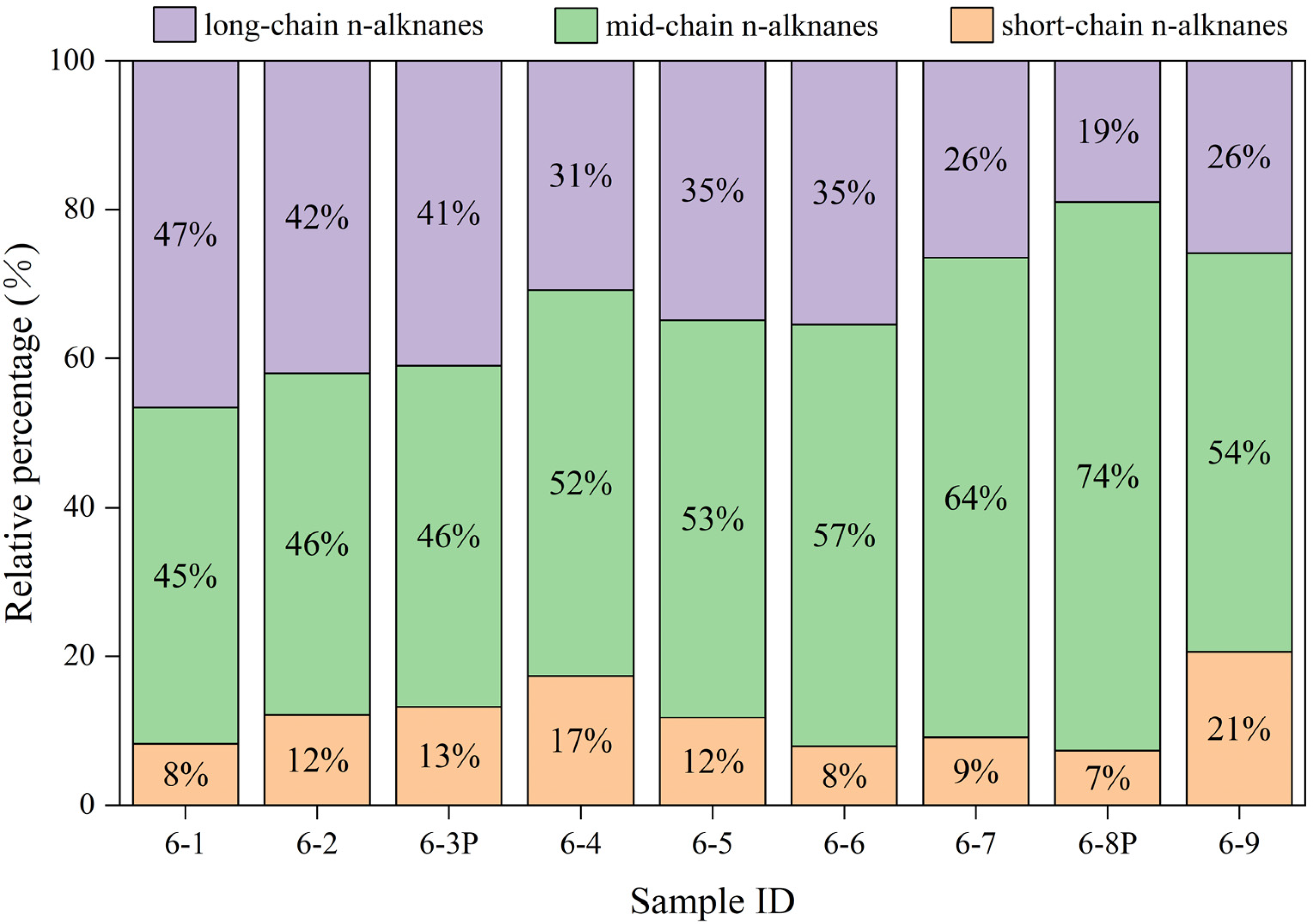
The bar diagram showed the distribution of short-chain (<n-C21), mid-chain (n-C21-n-C25) and long-chain (>n-C25) n-alkanes of the No. 6 coal samples from the Haerwusu surface mine.
Saturated and aromatic parameters of the of the No. 6 coal samples from the Haerwusu Surface Mine.
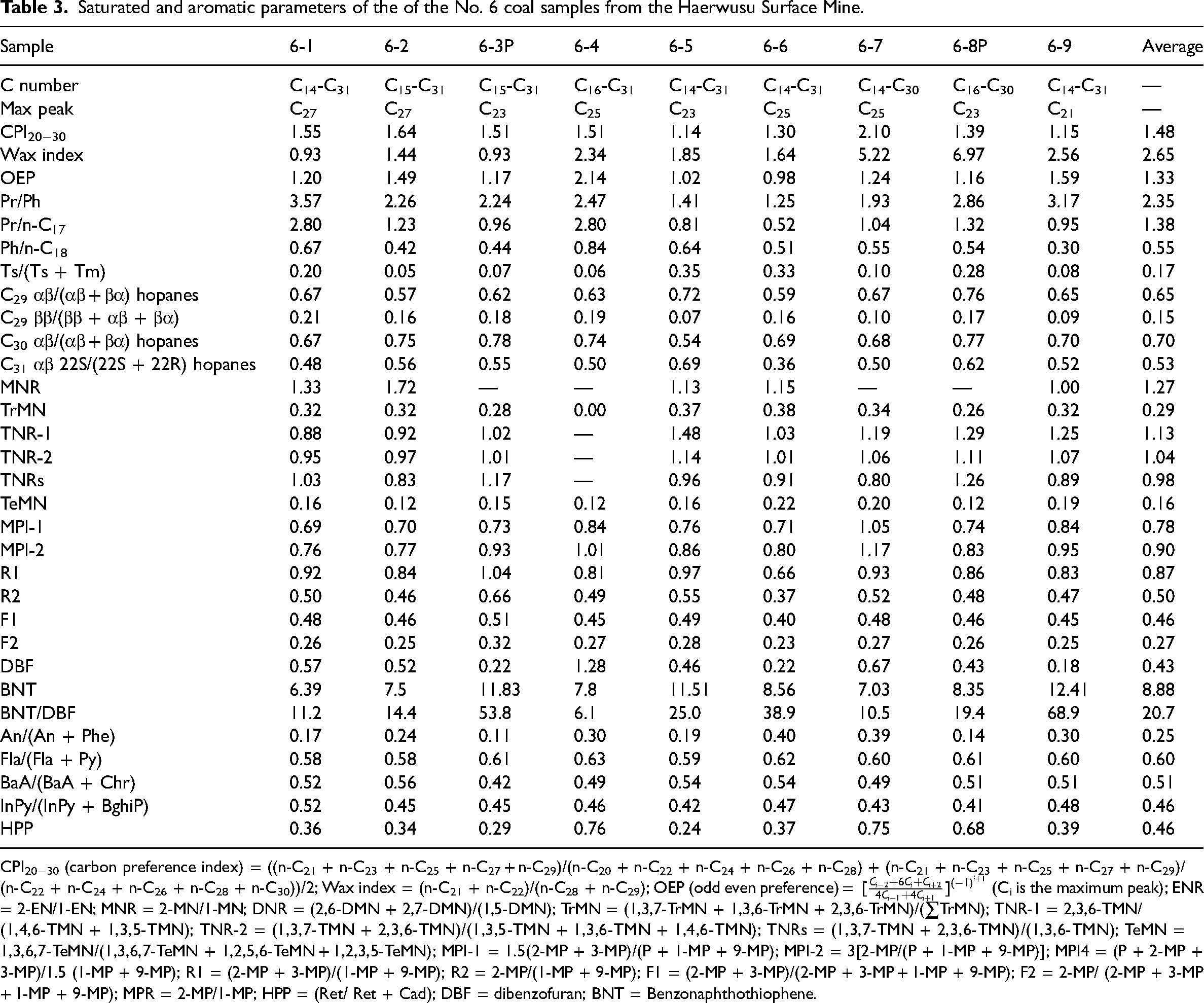
CPI20−30 (carbon preference index) = ((n-C21 + n-C23 + n-C25 + n-C27 + n-C29)/(n-C20 + n-C22 + n-C24 + n-C26 + n-C28) + (n-C21 + n-C23 + n-C25 + n-C27 + n-C29)/(n-C22 + n-C24 + n-C26 + n-C28 + n-C30))/2; Wax index = (n-C21 + n-C22)/(n-C28 + n-C29); OEP (odd even preference) =
Hopanoids (pentacyclic terpenoid) were identified using m/z 191 ion chromate-grams (Figure 4(b)). The distribution of hopanoids is characterized by 17α(H),21β(H) (αβ) hopanes from C27 to C30, with C28 being absent. C31 homohopanes with both S and R epimers are present. The C27 hopanes include 17α(H)-22,29,30-trisnorhopane (Tm), 17β(H)-22,29,30-trisnorhopane (βTm), and minor amounts of 18α(H)-22,29,30-trisnorneohopane (Ts), with very low Ts/(Ts + Tm) ratios (0.05–0.20), indicating a very low maturity stage. Thermally unstable moretanes with 17β(H),21α(H) (βα)-stereochemistry from C29 to C30 occur in high and quite variable relative abundances, as shown by the C29 and C30 αβ/(αβ + βα) hopane ratios of 0.57–0.77 and 0.54–0.78, respectively. Thermally unstable hopanes with biological 17β(H), 21β(H) (ββ)-stereochemistry are present in all samples. The C29 ββ/(ββ + αβ + βα) ratio ranges from 0.07 to 0.21. The C31 αβ 22S/(22S + 22R) homohopane ratios vary from 0.36 to 0.69 (Table 3).
Compositions of aromatic hydrocarbon fraction
Polycyclic aromatic compounds (PACs) consist of polycyclic aromatic hydrocarbons (PAHs), oxygen-containing aromatic compounds (O-PACs), and sulfur-containing aromatic compounds (S-PACs) (Achten and Andersson, 2015). The concentration order of PACs shows the following relative distributions: 2- and 3-ring PAHs (>50%) > 4-ring PAHs > 5-ring PAHs > 6-ring PAHs (Figures 6 and 7). The 2- and 3-ring PACs are predominant and mainly include naphthalene (Nap), biphenyl (Bp), fluorine (F), phenanthrene (Phe), anthracene (Ant), cadalene (Cad), retene (Ret), simonellite (Sim), dibenzothiophene (DBT), dibenzofuran (DBF), and their alkyl derivatives. The 4-ring PACs in the samples include fluoranthene (Fla), pyrene (Py), chrysene (Chr), triphenylene (Trip) benzo[a]anthracene (BaA) and their alkylated homologues. The 5-ring PACs include benzo[b]fluoranthenes (BkF), benzo[k]fluoranthenes (BbF), benzo[a]pyrene (BaP), benzo[e]pyrene (BeP). The identified 6-ring PACs are benzo[ghi]perylene (BghiP) and indeno[12,3-cd] pyrene (InPy). Compared to the 4-ring PACs, both 5-ring and 6-ring PACs are in relatively low ratios.
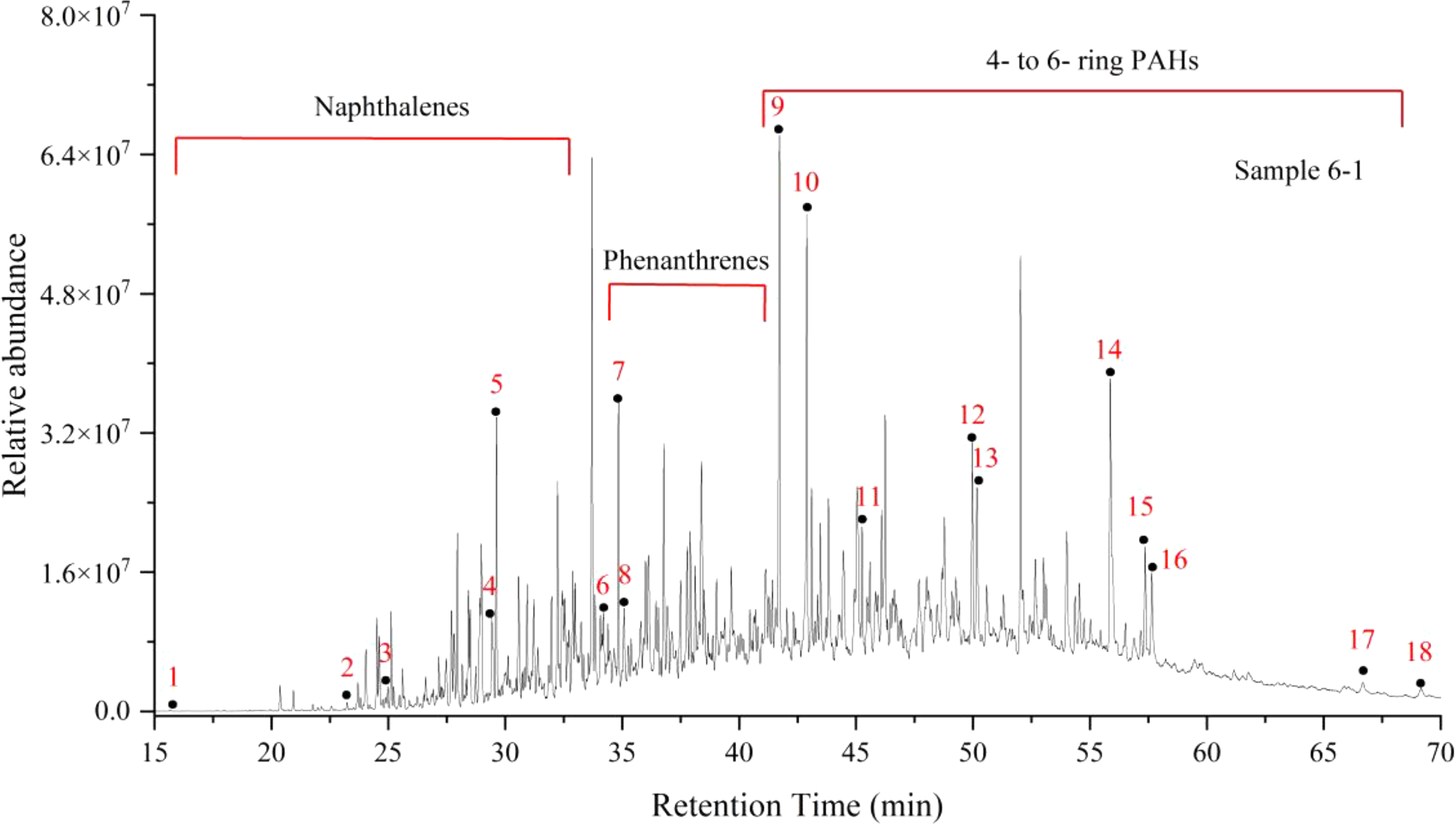
Total ion chromatograms (TICs) of aromatic hydrocarbons of representative sample in No. 6 coal seam from the Haerwusu surface mine.1. Nap; 2. Bp, 3. DBF; 4. F; 5. Cad; 6. DBT; 7. Phe; 8. Ant; 9. Sim; 10. Fla; 11. Py; 12. Ret; 13. BaA; 14. Chr + Trip; 15. BkF + BbF; 16. BeP; 17. BaP; 18. = InPy; 19. BghiP.
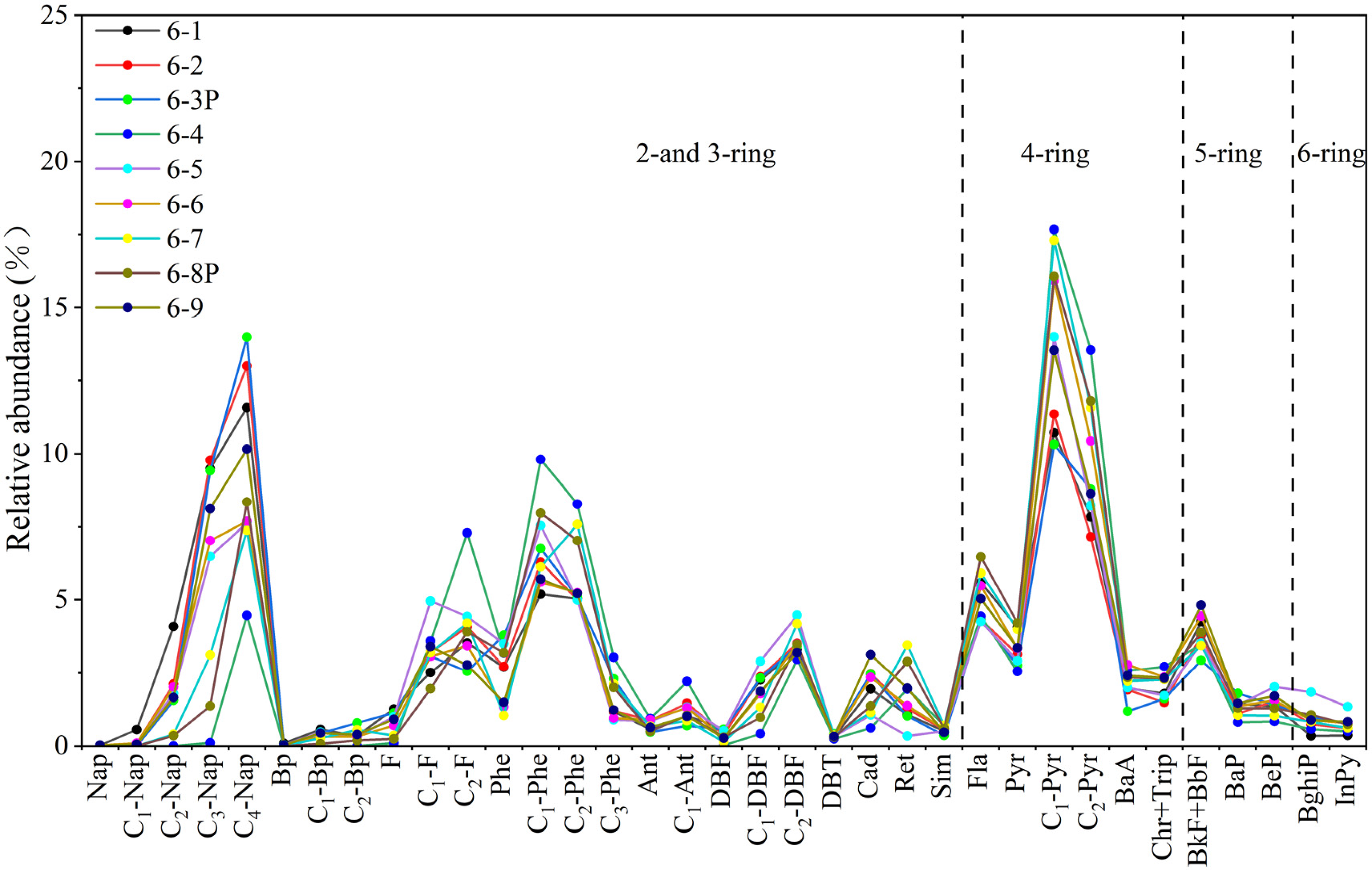
Aromatic hydrocarbon profiles of the No. 6 coal samples from the Haerwusu Surface Mine. Relative abundance is based on peak areas in mass chromatograms. For example, the relative abundance of Nap; m/z 128 is defined as (Nap/Sum of all aromatic compounds) × 100%.
Discussion
Thermal maturity assessment
Various geochemical parameters such as vitrinite reflectance and biomarker ratios provide a maturity measurement. (Cai et al., 2022; Peters et al., 2005; Singh et al., 2016). For low degrees of metamorphism (Chosson et al., 1991; Frey and Robinson, 1999), vitrinite reflectance (Rr%) represents one of the best maturity parameters. As shown in Table 1, measured Rr values averaged 0.73% are indicative of the low maturity of the No. 6 coal seam from the Haerwusu mine.
The principle of biomarker ratio dependence is that the more stable isomeric configuration increases with advancing thermal maturity, as isomers epimerize or are preferentially generated or destroyed (Naafs et al., 2018; Peters et al., 2005).
The Ts/(Ts + Tm), C29 ββ/(ββ + αβ + βα) hopane, C29βα/(βα + αα) hopane and C30βα/(βα + αα) hopane ratios were used as thermal maturity parameters (Li et al., 2021). These lower ratios indicate a relatively low maturity for this sample (Table 3). With increasing thermal maturity, the relative concentration of βTm decreases, so the occurrence of βTm usually indicates an early diagenetic stage (Hong et al. 1986). In this study, βTm presents in all samples investigated, indicating a low thermal maturity stage of the samples(Jiang and George, 2018).
Aromatic maturity parameters have been widely used in the maturity assessment of crude oils and coal (Jiang and George, 2019; Li et al., 2021; Radke, 1988). Radke et al. (1982) proposed MNR, TNR, TrMN, TeMNr, MPI-1, and MPI-2 to determine the maturity of organic matter. The MPI increases with the degree of development during the thermal evolution and decreases when the thermal evolution reaches its maximum (Radke et al., 1986). Kvalheim et al. (1987) analyzed 15 coal samples with specular reflectance ranging from 0.53% to 1.2%, proposed four methyl phenanthrene indices, R1, R2, F1, and F2, and classified the maturity of the samples according to the magnitude of the F1 and F2 values. Low maturity zones are defined when F1 < 0.40 and F2 < 0.27, maturity zones are defined when F1 values are between 0.40 and 0.55 and F2 values are between 0.27 and 0.35, and high maturity zones are defined when F1 > 0.56 and F2 > 0.35. According to the above biomarker maturity parameters, the Haerwusu No. 6 coal samples are in the early mature and early diagenetic stage.
Sources of organic matter
The different distribution patterns of n-alkane could indicate different origins of organic matter (Liu et al., 2022a, 2022c; Moldowan et al., 1985). For example, terrestrial plants-derived organic matter commonly contains more n-alkanes than aquatic matter (Peters et al., 2005; Zhang et al., 2023). The alkane profiles of most samples are dominated by mid- or long-chain n-alkanes, indicating a greater contribution from terrestrial higher plants in this study (Bechtel et al., 2012; Ficken et al., 2000; Nott et al., 2000). It is generally considered that the coal-forming parent material of n-alkanes before C21 is mainly aquatic organism, and after C21 is mainly terrestrial higher plants. As can be seen from Table 3, the wax index values range from 0.93 to 6.97, indicating that the coal-forming parent material contains both aquatic and terrestrial higher plants. The cross plot between Pr/n-C17 and Ph/n-C18 similarly indicates mixed source organic matter (Figure 8(a)).
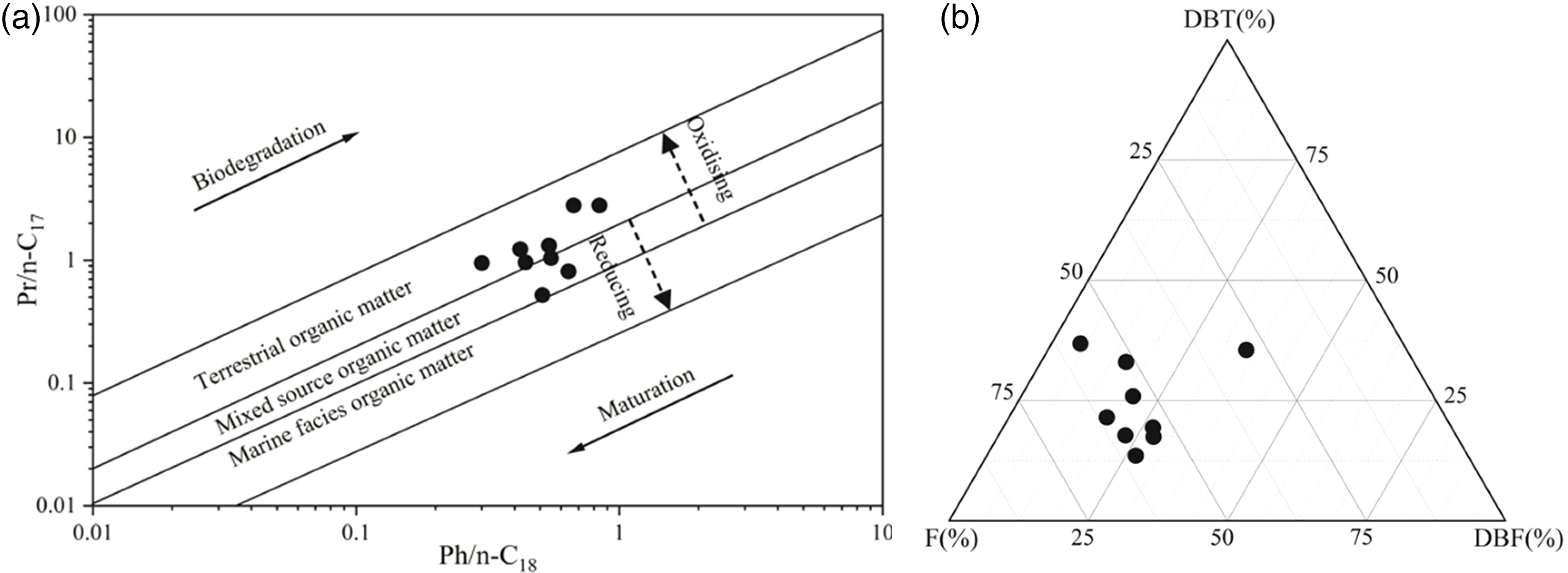
(a) Cross plot between Pr/n-C17 and Ph/n-C18; (b) Ternary diagram of the relative abundance of fluorene (F), dibenzofuran (DBF) and dibenzothiophene (DBT) of the No. 6 coal samples from the Haerwusu Surface Mine.
The Haerwusu No. 6 coal seam contains abundant Cad, Ret, Sim. These aromatic hydrocarbons are typical signatures of terrestrial higher plant inputs (Jiang et al., 1998; Sun et al., 2002). However, Fla, Py, BaA have also been detected in the samples and is thought to be a possible origin associated with combustion (Huang et al., 2015; Lima et al., 2005; Xu et al., 2020). Compound ratios are widely used to identify whether PAHs are formed by combustion/pyrolysis or by diagenetic processes. Therefore, the ratios of PAH isomers are quoted in this paper to determine the origin. Yunker et al. (2002) and Huang et al. (2015) proposed that Ant/(Ant + Phe), Fla/(Fla + Py), BaA/(BaA + Chr) and InPy /(InPy + BghiP) can be used to distinguish the relative contributions of combustion-derived and petrogenic-derived PACs. Ratios of Ant/(Ant + Phe) > 0.1 are from combustion-related sources, whereas ratios < 0.1 are from petrogenic sources. The boundary values of the Fla/(Fla + Py) ratio for petrogenic and combustion inputs are <0.4 and >0.5, respectively. The boundary values of the BaA/(BaA + Chr) ratios for petrogenic and combustion inputs are <0.2 and >0.35, respectively. The boundary values of the InPy/(InPy + BghiP) ratios for combustion inputs and petrogenic are >0.2 and <0.5, respectively.
The Ant/(Ant + Phe) ratios of the No. 6 coal seam from the Haerwusu surface mine range from 0.11 to 0.40, with an average of 0.25, while the Fla/(Fla + Py), BaA/(BaA + Chr) and InPy/(InPy + BghiP) ratios are in the ranges of 0.58–0.63, 0.42–0.54, and 0.42–0.54, respectively (Table 3). Therefore, it can be generally concluded that Ant, Fla, Py and BaA are of combustion origin (Figure 9(a)), while InPy and BghiP are a possible mixture of combustion and petrogenic origin (Figure 9(b)).
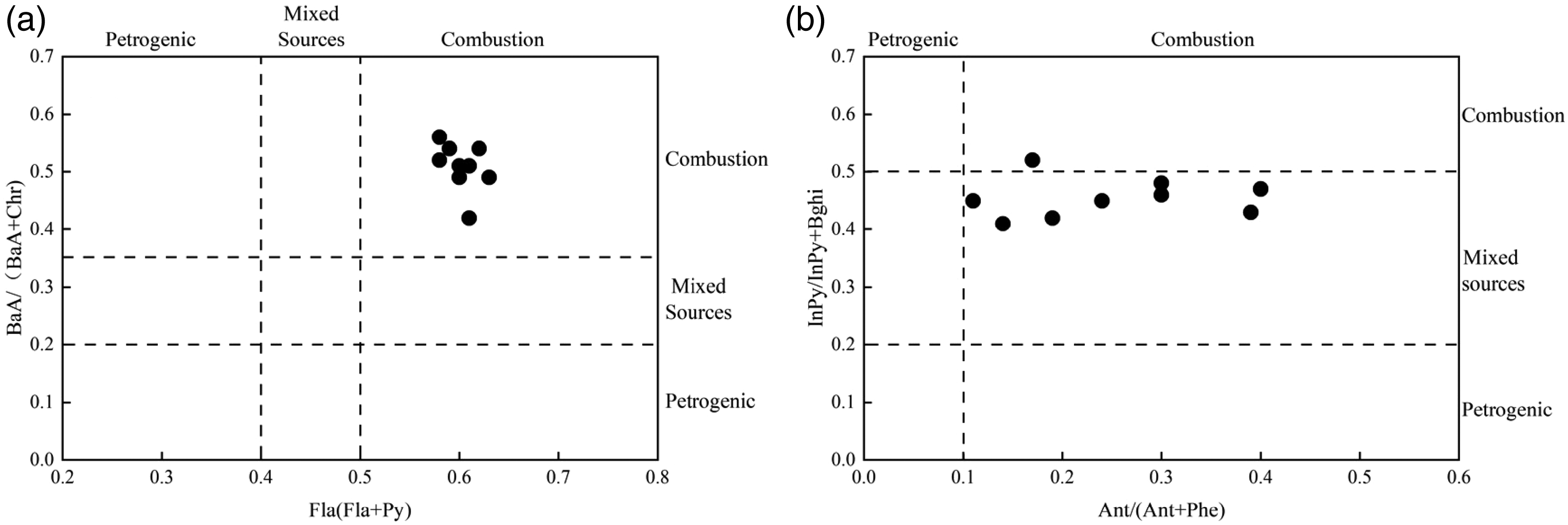
Cross-plots of: (a) Fla/(Fla + Py) vs BaA/(BaA + Chr), (b) Ant/(Ant + Phe) vs InPy/(InPy + Bghi) of the No. 6 coal samples from the Haerwusu surface mine.
Depositional environment
The relative ratios of Pr and Ph in saturated hydrocarbon fractions are used as indicators of depositional environments (Didyk et al., 1978). High Pr/Ph values (>3.0) indicate deposition of terrestrial organic matter in an oxic environment, and low Pr/Ph values (<1.0) indicate anoxic environments. Combined with the Pr/n-C17 and Ph/n-C18 cross-plots (Figure 8(a)), it is clear that the Haerwusu No. 6 coal seam oscillates between oxygen-rich and oxygen-poor conditions. The combination of Pr/Ph, Pr/n-C17 and Ph/n-C18 can determine the environmental characteristics of the coal-forming environment, and the dominance from Pr/Ph to Ph/n-C18 is a transition from lacustrine swamp, freshwater swamp, brackish-saline environment, and saline lacustrine due to its chemical characteristics.
F, DBT, DBF and their alkylated homologues are important PACs and widely distributed in different types of sediments and coals. Their relative abundances in different depositional environments vary distinctly (Huang et al., 2020; Hughes et al., 1995; Zhang et al., 2012). The relative abundance of F in the three compounds (F, DBT, DBF) from the Haerwusu No. 6 coal ranges from 28.9 to 60.0%, and the relative abundance of DBF and DBT vary from 13.5% to 36.8% and from 0.05% to 35.6%, respectively. Ternary diagram of F, DBF, and DBT (Figure 8(b)) shows that most of the samples are dominated by F, indicating a freshwater depositional environment.
According to Zhao et al. (2021a, 2023), contents of sulfur-containing polycyclic aromatic compounds (SPACs) are higher in marine influenced peat/coal. In this study, the benzonaphthothiophene contents are higher than the dibenzofuran contents (Table 3), indicating that the No. 6 coal seam could be affected by marine water. In addition, Jin et al. (2013) studied the elements in the Haerwusu No. 6 coal seam, which showed that the salinity of the sediment water medium was generally stable, with higher ratios in individual samples, suggesting that the coal may have been influenced by sea flooding during its formation. In summary, the Haerwusu No. 6 coal is developed in a brackish - freshwater deltaic plain, which is constantly influenced by both sea and terrestrial during its formation, indicating continental–oceanic interaction deposits. This result is consistent with the geological environments of the North China Basin (Li et al., 2001, 2006, 2018).
Wildfire and paleoclimate
Charcoal has been considered to be the direct evidence of wildfire in geological time (Liu et al., 2022a, 2022c; Scott, 2000; Sun et al., 2017). Inertinite of coal macerals are equivalent to charcoal, which has also been used as indicators for wildfire (Xu et al., 2020). In this study, the content of inertinite is high, with an average of 33.94%, and a large number of fusinite of pyrolysis origin have been observed under the microscope, indicating a widespread wildfire environment. However, Hower et al. (2009, 2013a, 2013b, 2013c) proved that some macrinite, secretinite, and funginite can be formed by the microbial and fungal oxidation of organic matter. Eble and Greb (2018) and Hower et al. (2022) have separated micrinite from inertinite and calculated it as a separate maceral group. Generally, the total average ratios of macrinite, secretinite, funginite, and micrinite in coal samples are less than 5%. Therefore, the most inertinite macerals can be used as evidences of wildfire.
The distribution and changes in abundance of combustion-derived polycyclic aromatic hydrocarbons in sediments are widely used to trace wildfire events in geological history (Naik, 2019; Schootbrugge et al., 2009; Sun et al., 2017; Xiao et al., 2020). Combustion-derived PAHs may be alkylated during subsequent diagenesis, so that the sensitive PAHs may disappear during diagenesis. Jiang et al. (1998) has shown that BFla and BeP have a high resistance to oxidation and are not affected readily during diagenesis by investigating the proportion of alkylated and unsubstituted polycyclic aromatic hydrocarbons in samples. BFla and BeP were detected in all samples in this study. Combined with the combustion-derived Ant, Fla, Py, BaA, and higher inertinite content discussed above, it is proposed that the widespread wildfire events occurred during the deposition of the Haerwusu No. 6 coal seam.
Plant-derived biomarkers are important tools for reconstructing paleoclimate changes. The plant-derived biomarkers identified in this study, such as Ret and Cad, indicate not only the input of terrestrial sediments into the environment but also a favourable regional paleoclimate. The higher plant parameter (HPP) calculated as Ret/(Ret + Cad) is an indicator of paleoclimate variations. The lower values of HPP, where cadalene dominate above retene, indicate arid paleoclimate (Van Aarssen et al., 2000). Higher HPP values range from 0.5 to 0.8, suggesting a warm/hot paleoclimate with seasonal humidity (Zakrzewski and Kosakowski, 2021). The lower HPP (varying from 0.24 to 0.76, with an average of 0.46) indicates a relatively arid paleoclimate (Table 3).
Conclusions
The analysis results revealed the thermal maturity, sources of organic matter and depositional environment of the No. 6 coal seam.
The average vitrinite random reflectance is 0.73%. The results from saturated and aromatic hydrocarbon thermal maturity parameters such as Ts/(Ts + Tm), C29 ββ/(ββ + αβ + βα) hopane, C29βα/(βα + αα) hopane, C30βα/(βα + αα) hopane ratios, MNR, TNR, TrMN, TeMNr, methyl phenanthrene index and the presence of C27 17β(H)-22,29,30-trisnorhopane (βTm) indicate the samples in the early diagenetic stage and have a relatively low maturity. The distribution patterns of n-alkanes, the low ratios (0.22–0.68) of Alk/Aro, the presence of Cad, Ret, Sim and the cross plot between Pr/n-C17 and Ph/n-C18 indicate the organic matter was dominated by terrigenous higher plants, with a small amount of aquatic organisms. The ternary diagram of Pr/Ph, Pr/n-C17, and Ph/n-C18 and ternary diagram of the relative abundance of F, DBF and DBT indicate continental–oceanic interaction deposits. The higher inertinite contents and combustion-derived PAHs indicate widespread wildfire events, and the lower HPP parameter indicate a relatively arid paleoclimate.
Footnotes
Acknowledgments
This research was supported by the National Natural Science Foundation of China (No. 41872173)
Declaration of conflicting interests
The author(s) declared no potential conflicts of interest with respect to the research, authorship, and/or publication of this article.
Funding
The author(s) received no financial support for the research, authorship, and/or publication of this article.
