




Abstract
Wildfire episodes have implications on reshaping life on earth. This article emphasises on the fate and facts of wildfire during Permo-Carboniferous coal-forming period. Charcoal refers to an incomplete combustion or carbonised solid residue of plant material. Inertinite (group of coal macerals) is synonym of charcoal at microscopic scale but its origin is debatable. Moreover, inertinite has been used to predict levels of atmospheric oxygen, as it forms when plant material is subjected to intense heat and oxygen-rich conditions. In addition, soot and polycyclic aromatic hydrocarbons (PAHs) are recognized as additional evidence of palaeo-wildfires. A total number of fourteen (14) countries reported data are summarised here and the research gap has been focused particularly on the occurrences of palaeo-wildfire. These areas are also obstructed by different geological processes which are also described in detail. The several studies point out towards the global wildfire events during the Permo-Carboniferous period. These wildfires were proved by charcoals (remnants of burned plant material), inertinite macerals (microscopic components of coal) and PAHs (complex organic molecules) in the coal measures. In the same time, the large amounts of greenhouse gases have released by wildfires, and must have led to long-term changes in the atmospheric composition, which could have affected the palaeoclimate.
Introduction
In present days, wildfire is gaining continuous attention due to its frequencies and impacts on the ecosystem and atmosphere (Gajendiran et al., 2024; Page et al., 2002; Scott et al., 2016). Palaeo-wildfire study increasingly gained popularity in order to know the occurrences of wildfire and its role in earth system evolution (Brown et al., 2012; Cai et al., 2021; Du et al., 2024; Glasspool et al., 2015; Jasper et al., 2013; Rajak et al., 2019; Scott, 2000; Shen et al., 2023; Zhao et al., 2023). Palaeo-wildfire study has provided a better understanding of its potential impact on the present ecosystem and climate (Rimmer et al., 2015).
Wildfire is a smouldering fire of vegetation, and may be denoted as forest fire, grass fire, peat fire and bush fire depending on the type of vegetation being burnt. Wildfire event may occur from local to global scale and affects the economic, social and environmental conditions of the region (Stracher and Taylor, 2004). Distribution of wildfire and its occurrences can help researchers to bring several facts and possibilities in the forefront. Wildfire study is not a specific discipline because of its wide range of importance in varied field (Rein, 2009; Sun, 2024; Zhang et al., 2023).
Throughout the geological history of Earth, wildfire affects the evolution and dynamics of various ecosystems, and the development of the climate system (Bowman et al., 2009; Brown et al., 2012; Cai et al., 2021; Glasspool et al., 2015; Jasper et al., 2013; Rajak et al., 2019; Scott, 2000; Scott and Jones, 1994a; Shao et al., 2024; Sun et al., 2002; Wang et al., 2023a; Zhang et al., 2020). The volatiles and particulate matters released by wildfire can bring changes in the atmospheric constitution (Bowman et al., 2009; Page et al., 2002; Xu et al., 2020). Palaeo-wildfire also had similar impact on the Earth's ecosystem and environmental pattern. The global wildfire during the Permo-Carboniferous period caused severe changes in the climate and environment causing mass extinction of several species (e.g., Arzadún et al., 2017; Cai et al., 2021; Jasper et al., 2013; Shen et al., 2011; Shivanna et al., 2017; Sun et al., 2017; Vajda et al., 2020; Wan et al., 2016; Yan et al., 2016; Zhang et al., 2016; Zhang et al., 2023). Several attempts have been made to assess the nature and extent of wildfire during the Permo-Carboniferous period, in terms of formation and occurrences of charcoal and inertinite, which are not uniform (Sun, 2024).
For wildfire, the controlling factors include source of fuel, heat, topography and oxygen. Studies reveal that during Late Palaeozoic, the palaeo-atmospheric oxygen (O2) levels fluctuated significantly (Berner, 2006). The O2 level particularly dropped by almost 13% in the early Late Devonian before its gradual ascending by fag end of the Late Devonian and it crossed the present atmospheric level (PAL). The O2 level continued throughout the rest of the Carboniferous and Permian and reached at 30% in the early Guadalupian (Scott and Glasspool, 2006).
Fossil charcoal can be represented by fusain (appearing as ‘bands’, ‘layers’ or ‘lenses’) and inertinite (a coal maceral observed under a microscope) are hypothesised to be a synonym for charcoal (Glasspool and Scott, 2013; Moroeng et al., 2025; Scott, 2024; Scott and Glasspool, 2006; Shen et al., 2023 and references there in). Formation of inertinite is controlled by factors, such as types of plant materials and peat mires, rate of sedimentation, climate, biochemical reactions, tectonic and magmatic activities. The origin of some inertinite macerals, such as fusinite and semifusinite, is often attributed to wildfires, suggesting a direct link to charcoal formation (Crelling et al., 2000). However, other inertinite macerals, like macrinite and inertodetrinite, are thought to derive from different oxidative processes, potentially involving fungal decay or dry oxidation in peat environments, thus raising questions about the universality of a charring pathway (Teichmüller, 1989). The precise relationship between inertinite and charcoal is further complicated by the fact that both can exhibit a range of reflectance values and morphological features, making their differentiation challenging in some cases (Scott and Jones, 1994b). This ambiguity raises questions about the degree to which different formation pathways overlap and whether all inertinite represents a form of fossilized charcoal or if it encompasses a broader range of oxidized plant materials. Detailed study may reveal the relationship between the formation of charcoal and inertinite maceral (Bustin and Guo, 1999; Guo and Bustin, 1998; Rajak et al., 2019; Scott and Damblon, 2010; Scott and Glasspool, 2007; Xiao et al., 2020). Some factors are believed to ignite the process; such as volcanic activities, spontaneous combustion, meteorite falls, sparks due to rock fall and lighting strikes (Chaloner, 1989; Clark and Russell, 1981; Cope and Chaloner, 1980). Hydrological conditions of the concerned area also control its production.
The biggest mass extinction occurred at the Permian-Triassic boundary (PTB). Besides the PTB mass extinction, several small mass extinctions occurred in the Permian (Stevens et al., 2011). Therefore, the wildfire and palaeoclimate study of the Permo-Carboniferous period is of great significance for today's tackling climate change. The objective of this paper is to review the occurrence and distribution of wildfires world-wide, and to ascertain the origin and possible source of charcoal, inertinite and PAHs, and their effects on the palaeoclimate during the Permo-Carboniferous period.
Recognition of wildfire products
Burning is an oxidation reaction and it is self-propagating until favourable circumstances prevail. Evidence of palaeo-wildfire can be preserved in sediments as fossil records such as charcoal, soot and polycyclic aromatic hydrocarbons (PAHs) (Figure 1) (Glasspool and Scott, 2010; Han et al., 2024; Knicker, 2011; Murthy et al., 2020; Sun et al., 2017; Wang et al., 2021; Xiao et al., 2020; Xu et al., 2020). The presence of charcoal within coal or sedimentary deposits provides compelling evidence of palaeo-wildfires in ancient environments. Inertinite, a distinct category of macerals found within coal. While the term ‘charcoal’ typically denotes the macroscopic, visible remnants of burned plant matter, inertinite encompasses the microscopic equivalent of charcoal as it undergoes the process of coalification (the transformation of plant material into coal). Essentially, charcoal is one of the fossil substances of solid residue of plant tissues subjected to pyrolysis (in an inert atmosphere) or incomplete combustion. Charcoal may be natural and synthetic; natural charcoal is formed by natural process; namely (a) volcanic charcoal formed by magmatic process; (b) wildfire charcoal produced by natural burning; (c) hearth charcoals produced by anthropogenic (Cope, 1980) process as the result of local burning. However, synthetic charcoal can be produced in the laboratory or industry under controlled laboratory conditions.
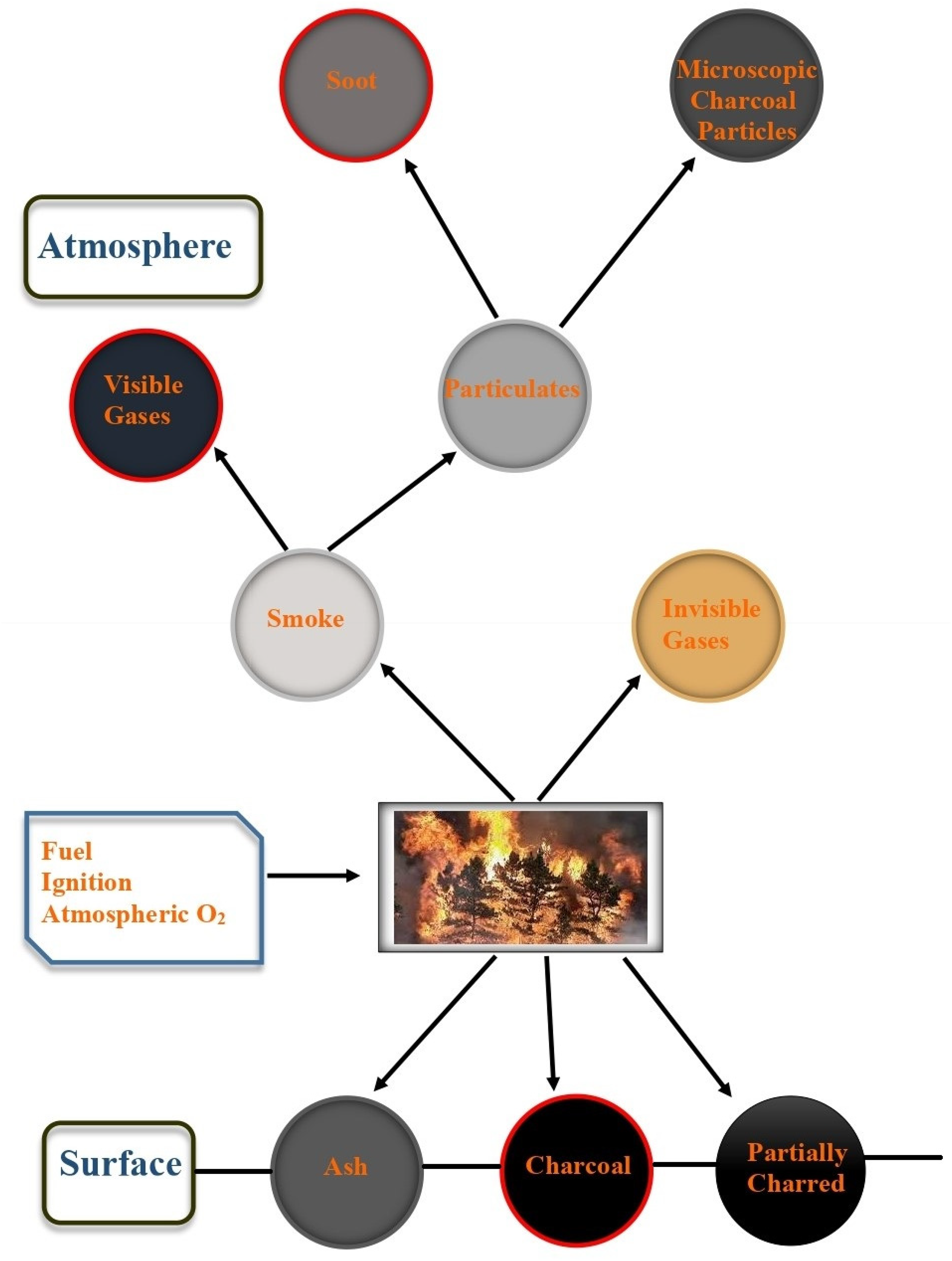
Schematic relationships between wildfire products (modified after Jones et al., 1997).
All the wildfire products remain intact in the sediments (Finklestein et al., 2005). Throughout charcoalification (process of converting woody material into charcoal), volatile compounds like PAHs are released which are generated primarily during the incomplete combustion of organic matter and degradation of organic material by microorganisms (Simoneit, 2002; Spokas et al., 2011; Xiao et al., 2020). Volatile compounds may recombine and after cooling, they form soot (Pyne et al., 1996). The morphology of the soot may be specified for different fuel source (Harvey et al., 2008). Different types of transportation and transformation processes can affect the formation of the PAHs (Figure 2).
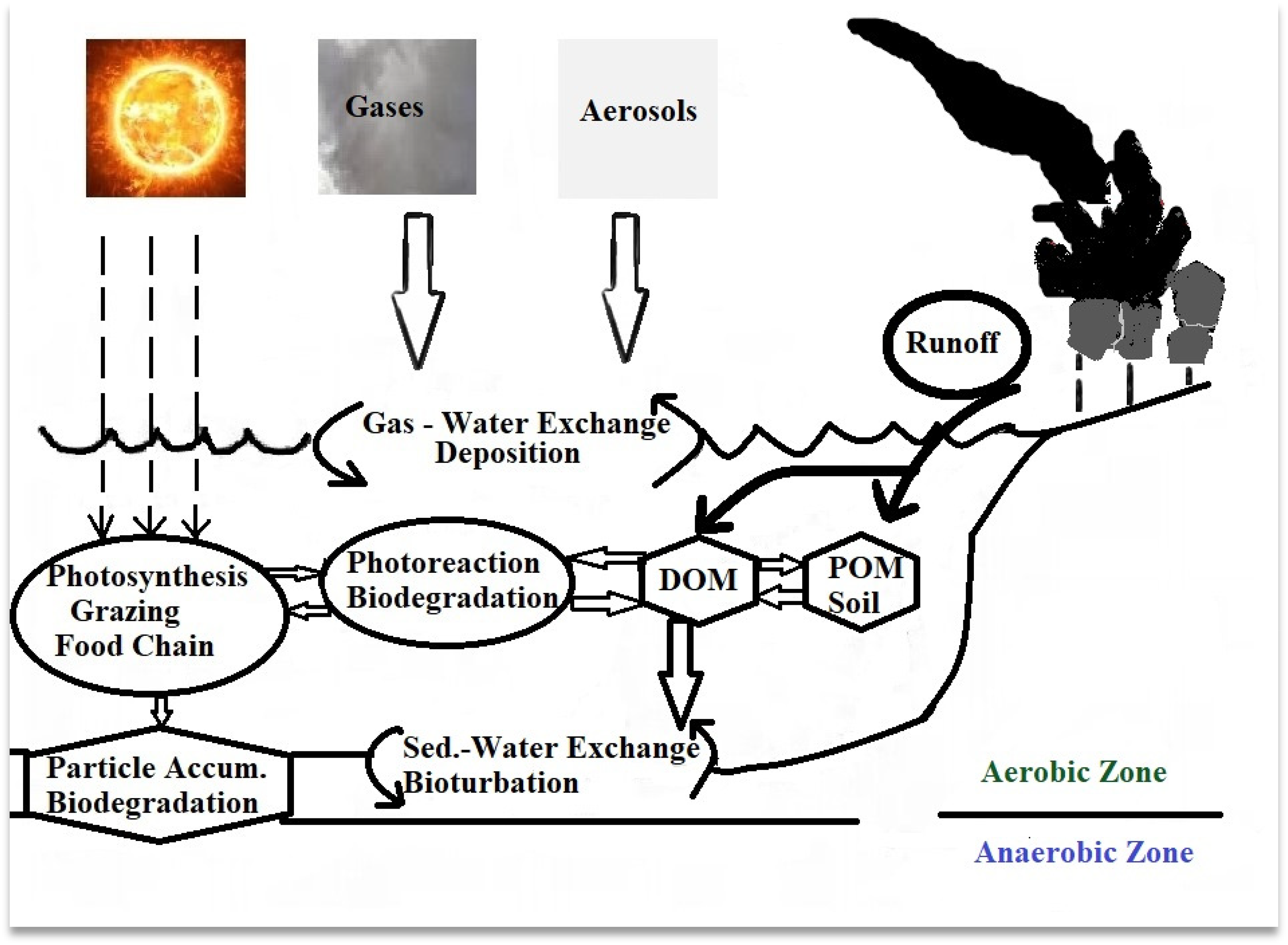
Different pathways illustrating the PAHs’ transportation and transformation (modified after Zepp and Macko, 1997).
Regionally and stratigraphically the charcoals are persistent and homogenously distributed in Upper Palaeozoic terrestrial sediments. Charcoal is recorded in terrestrial to marine sediments (Glasspool et al., 2004; Scott, 2010). Typically, larger charcoal fragments (mesoscopic, 125 microns to 1 mm and macroscopic, >1 mm) are formed largely by surface fire which are more frequently studied than the others (Scott, 2010). During Permian, different sequences with distinct stratigraphic intervals bear macroscopic charcoal [e.g., Paraná Basin (Sakmarian/Artinskian of Brazil), Karoo Basin (Artinskian of South Africa), Damodar Basin (Lopingian of India) and Dead Sea area (Changhsingian of Jordan)]. The deposition took place throughout post-glacial to warm climatic system during the Permian.
Most of these Permian charcoals from Gondwana were gymnospermous and found from coal-bearing strata or coal seam where inertinite macerals of coal are commonly considered as charcoal by some researchers (Bustin and Guo, 1999; Cohen et al. 1987; Cope and Chaloner, 1985; Guo and Bustin, 1998; Jones, 1993; Scott, 1989; Scott and Glasspool, 2007). Mishra et al. (1990) and Navale and Saxena (1989) studied Raniganj and Jharia coalfields of India, and believed that the higher content of inertinites in Permian coals could be attributed to fire. Moreover, Jharia and Raniganj coals are affected by multiple igneous intrusions (Chakravarty et al., 2020; Ghosh, 2002; Mishra et al., 2016; Mishra et al., 2018; Singh et al., 2008), and those could also be the source of heat rather than wildfire only, for high inertinite content in Permian coal. However, some researchers consider wildfire as the only reason for the origin of the inertinite macerals in coal (Scott, 1989, 2002). Hower et al. (2013) and O'Keefe et al. (2013) reported that biotic (bacterial, fungal, or invertebrate) or abiotic connection (aerobic exposure or biochemical alteration) can lead to the formation of sub maceral of inertinite group, specially macrinite. However, for several of the inertinites, that is, fusinite, semifusinite and inertodetrinite, a pyrogenic origin is widely accepted (e.g., Benicio et al., 2019a; Brown et al., 2012; Diessel, 2010; Scott and Glasspool, 2007). Hence, pathways of inertinite formation other than wildfire cannot be ruled out and not all inertinites are charcoal.
PAHs have been used as evidences of wildfires (Jiao et al., 2024; Schootbrugge et al., 2009; Shen et al., 2023; Sun et al., 2017). PAHs derived from pyrolysis or combustion mainly consist of 3–6 ring PAHs which are predominantly unbranched, while diagenetic PAHs often have 2–4 ring PAHs with a branched or substituted structure (Denis et al., 2012; Page et al., 1999; Yunker et al., 2011). PAHs with 5–6 rings are less likely to be affected during diagenesis (Denis et al., 2012). Studies show that benzo[e]pyrene is the most stable PAH among the 5-ring C20H12 PAHs (Jiang et al., 1998; Sullivan et al., 1989). Benzo[ghi]perylene (five-ring) and coronene (six-ring) generally have origins in combustion, and have been reported from high intensity palaeo-vegetation fires (Denis et al., 2012; Jiang et al., 1998; Zakir Hossain et al., 2013). The occurrence of diverse pyrogenic PAHs (incomplete combustion of organic matter) also indicates a wide range of ancient wildfires (Denis et al., 2012; Xiao et al., 2020; Xu et al., 2020).
Palaeo-wildfire evidences in Permo-Carboniferous deposits
Figure 3 provides a valuable snapshot of global research efforts on wildfire occurrences during the Permo-Carboniferous period. It highlights the uneven distribution of research, with most studies conducted particularly in North America, Europe, and parts of Asia, while others have very few or none. This suggests potential areas for future investigations. Figure 4 provides an overview of inertinite variation during the Permo-Carboniferous periods, whereas increase in inertinite/charcoal percentage towards the end of the Carboniferous and into the Permian. This could suggest an overall trend of increasing fire activity or changes in vegetation and depositional environments. In Permian time inertinite or Charcoal percentages continue to increase, with a particularly sharp rise in the Cisuralian and Lopingian. This indicates a significant escalation in wildfire activity during these times. A gradual drying trend during the Carboniferous and Permian, particularly the intensification of aridity in the later Permian, could have increased the frequency and intensity of wildfires. Moreover, the rise of gymnosperms and the decline of coal forests during the late Palaeozoic could have led to more flammable vegetation, contributing to an increase in wildfires. The percentage of inertinite and charcoal components in Permo-Carboniferous deposits is summarized in Table 1, along with supporting evidence.
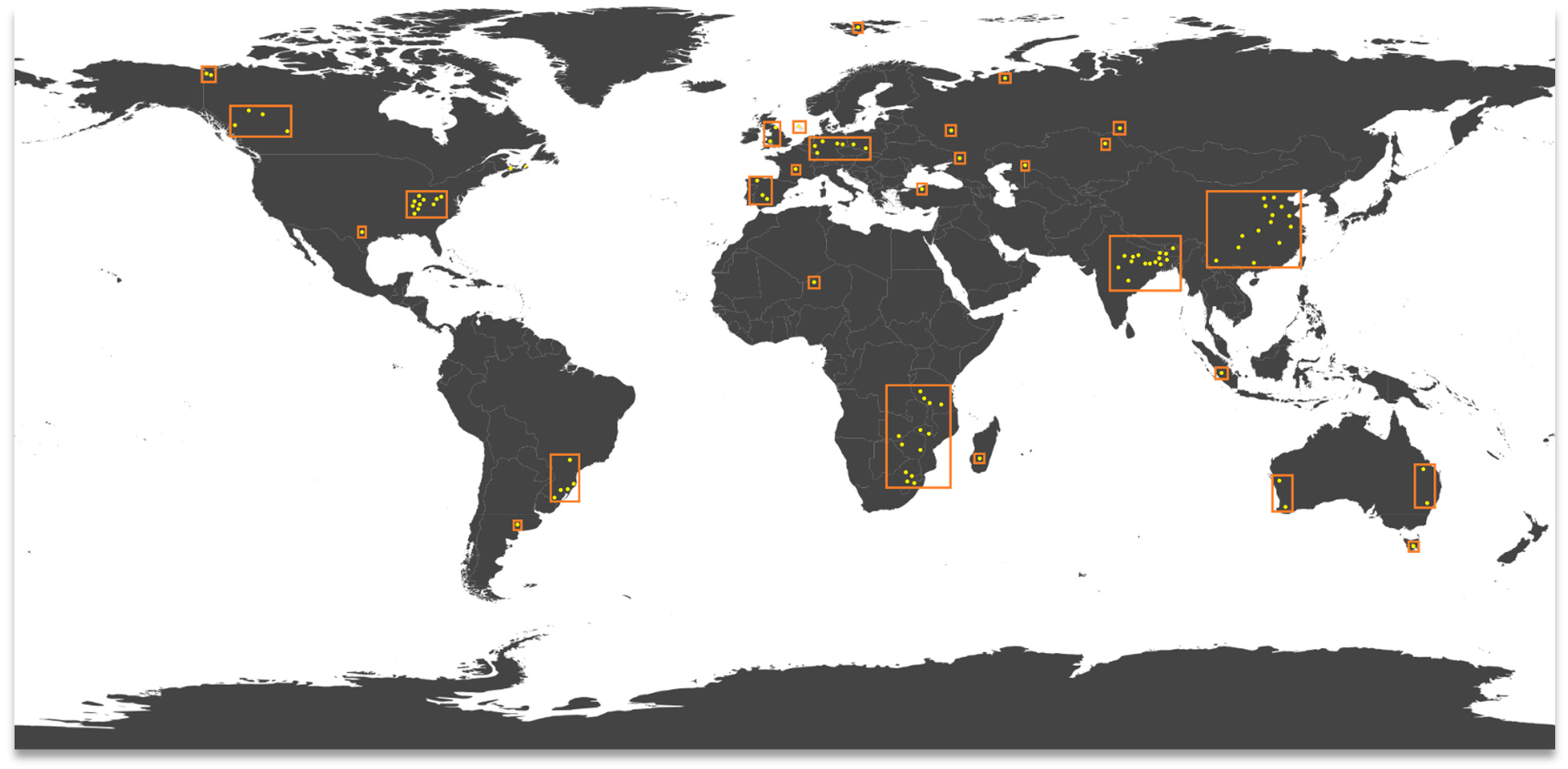
A global map illustrating the spatial distribution of wildfire occurrence in Permo-Carboniferous sedimentary deposits.
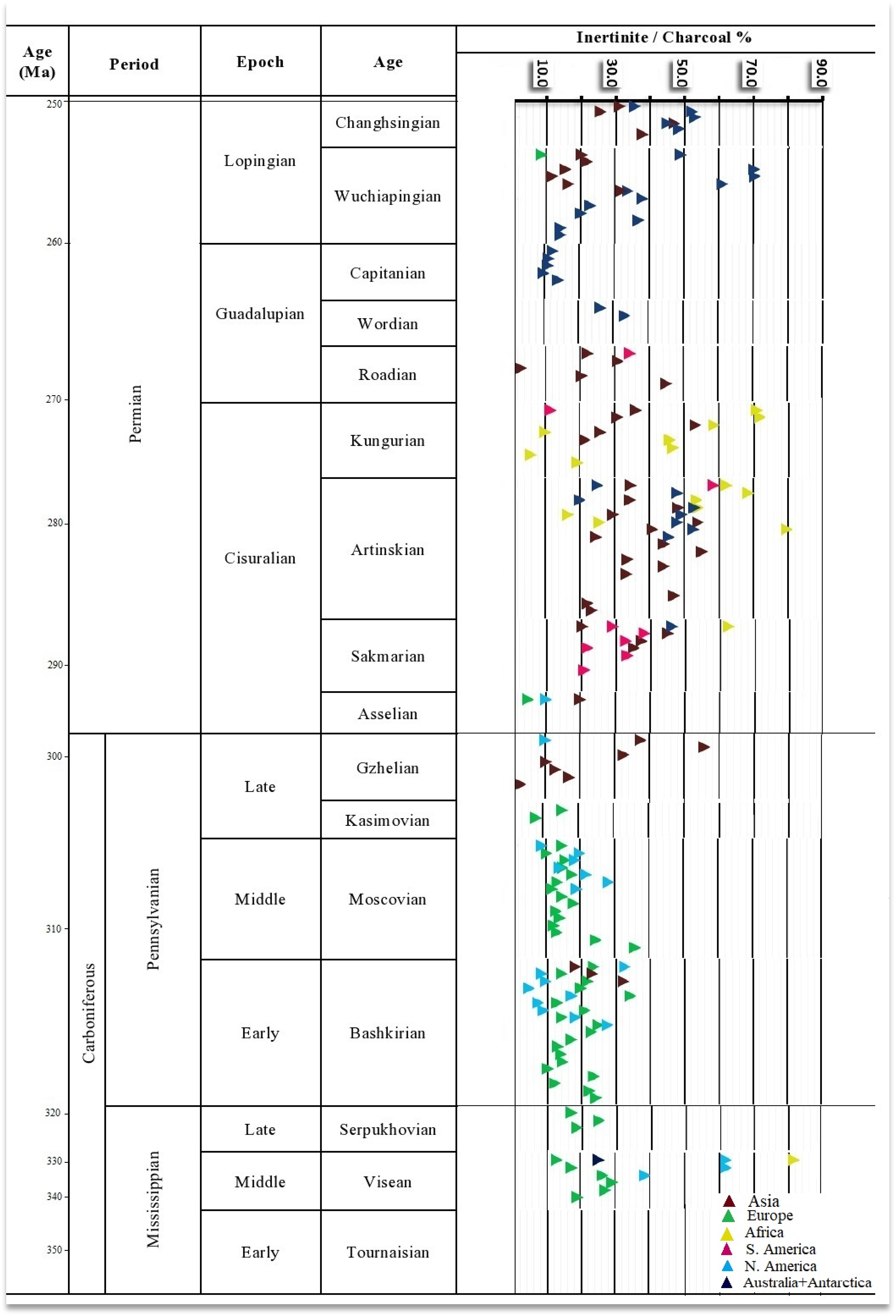
Inertinite variability across the Permo-Carboniferous period.
Distribution of inertinite and diverse wildfire products of palaeo-wildfire in Permo-Carboniferous deposits.

Note: Updated data after Diessel (2010) and Sun (2024).
IAVG: Average value of inertinite in percent; NA: not available.
Glasspool (2000) considered charcoal as direct evidence of palaeo-wildfire in Gondwana samples from Sydney Basin of Australia. While working on the South African coals, Glasspool (2003a) studied the coal samples from two coalfields of Karoo basin of Vryheid Formation and assumed that the inertinite macerals specifically semifusinite were the chief evidence of palaeo-wildfire.
In Argentina, Arzadun et al. (2017) assumed that the presence of inertinite in the analysed coal samples were the product of Permian wildfire in the Tunas Formation of Claromeco basin, but they likewise reported the occurrences of algal mats in Tunas Formation consecutively. They concluded that this wildfire was related to the high concentration of O2 during Permian period and might be associated with climatic and tectonic changes.
From Brazil, meaningful works have been reported on the occurrences of wildfire during Permo-Carboniferous. Manfroi et al. (2015) and Kauffmann et al. (2016) studied the Rio do Rasto Formation of the Parana Basin and Motuca Formation of the Parnaiba Basin, respectively. Jasper et al. (2008) have worked on coal samples of Rio Bonito Formation and they considered the charcoals as the evidence of palaeo-wildfire. Jasper et al. (2011a) found well preserved fossil charcoals in tonstein layer of Faxinal Coalfield and also reported the macroscopic fossil charcoals in different sediments (Jasper et al., 2011b). Filho et al. (2013) and Simas et al. (2013) also examined the macroscopic fossil charcoals from the sediments of Rio Bonito Formation of Parana Basin respectively. However, the dating of the tonsteins supported the volcanic activities in the respective basin (Simas et al., 2013). Furthermore, Benicio et al. (2019a, 2019b) reported the presence of the macro-charcoal from Parana Basin. Charred logs and branches were also recorded in Rio Bonito Formation by Degani-Schmidt and Guerra-Sommer (2016), which confirmed the occurrences of palaeowildfire in this region. Moreover, Parana basin is a large cratonic sedimentary basin and the depositions of the sediments took place in different environments, that is, marine, deltaic, lacustrine, fluvial, glacial and desert.
In Canada, the charcoal particles from different formations of the Permo-Carboniferous sediments of Nova Scotia were studied. Falcon-Lang (1999) studied Joggins Formation and Falcon-Lang and Scott (2000) continued it through Springhill Mines Formation, Port Hood Formation and Inverness Formation, Mabou; Sydney Mines Formation. Further, Falcon-Lang (2003) considered the cordaite from Joggins Formation as palaeo-wildfire evidence.
In China, research on Permo-Carboniferous wildfire was carried out by Shen et al. (2011). They found PAH and black carbons from sediments in Meishan section of South China as the evidence of palaeo-wildfire. In 2016, Wan et al. (2016), Yan et al. (2016) and Zhang et al. (2016) worked on this subject wherein Wan et al. (2016) found, the charred wood in the conglomerate bed of Wutonggou Formation of Junggar basin, as the evidence of palaeo-wildfire. Junggar basin in Northwest China, ‘flexural’ or ‘orogenic’ basin caused by Variscan or Hercynian orogenic incident and the occurrences of various tectonic movements can be expected there. Both Yan et al. (2016) and Zhang et al. (2016) have reported fossil charcoals from coal beds and sediments from north and south China, respectively. Cheng et al. (2017) have found charcoalified sphenopterid mesofossils from Serpukhovian Jingyuan Formation of Gansu Province as the proof of palaeo-wildfire. In North China, Sun et al. (2017) also found fossil charcoals and >4-ring PAHs from the pillars of Huainan, Yanzhou, Juye, Han-Xing, Ningwu, Datong and Jungar coalfields of Shanxi Formation. They also considered inertinites and >4-ring PAHs as the sign of palaeo-wildfire. Similarly, Xiao et al. (2020) found charcoal and >4-ring PAHs in coal core sediments as the direct evidence of palaeowildfire from Hanxing Coalfield, North China Basin. Hou et al. (2022) studied the repeated wildfires in the Middle Jurassic Xishanyao Formation (Aalenian and Bajocian ages) in northwestern China. Liu et al. (2022) found the evidence for the repeated occurrence of wildfires in an upper Pliocene lignite deposit from Yunnan, SW China. Moreover, particle size of the charcoal/inertinite indicates both local and regional wildfires in the peat-forming environment. Recent studies by Shen et al. (2023) have revealed that intense wildfire activity occurred during the Asselian period.
Peatland wildfires in the Lower Cretaceous Damoguaihe Formation, Hailar Basin, Northeast China have been reported by Wang et al. (2023b) and Lü et al. (2024).
Similarly, from India, the occurrences of wildfire have been reported from Godavari, Wardha, Damodar, Mand–Raigarh and Kashmir coalfields. Some of the authors considered the charcoal as well as inertinite maceral from coal samples as the chief substantiation of palaeo-wildfire (Jasper et al., 2017; Mahesh et al., 2014, 2015; Rajak et al., 2019; Seetharam and Ramakrishna, 2017). Besides, Jasper et al. (2012; 2016), Jha et al. (2014), Shivanna et al. (2017), Aggarwal et al. (2018) and Murthy et al. (2020) studied the charcoal fragments from the sediments of Gondwana basin and reported the occurrences of wildfire. Mishra (2018) observed char in core samples of coal from Ib valley and postulated that the heat source was the exothermic decomposition and reactions by fungi and bacteria. Few Indian Gondwana coal basins are affected by tectonic and igneous intrusive activities. They are characterized by extensional faulting, rift basins and grabens that formed different sub basins.
In Europe, the wildfire occurrences of Permo-Carboniferous period were mostly reported from Germany, Poland, Ireland, Scotland and Durham. Except inertinite maceral, charred plant remains and fossil charcoal particles from sediments are also considered as the evidence of palaeo-wildfire by Uhl and Kerp (2003) and Uhl et al. (2004) from Zechstein of Central European and Saar–Nahe Basin, respectively. Marynowski et al. (2011) found PAHs in black shale from Kowala Quarry of Holy Cross Mountains of Poland and considered it not the only evidence of the palaeo-wildfire, indeed some other factors were also responsible for the incident. In Ireland, the charred logs and charcoal were reported from sedimentary beds of early Carboniferous of Creevagh Head and were considered as important signature of the palaeo-wildfire (Falcon-Lang, 1998). Even though a more detailed fossil record from the Lower Carboniferous (Mississippian) period has been found in the Pettycur Limestone of Scotland (Scott, 2024).
In addition to China and India, Jordan and Russia were also affected by Permo-Carboniferous wildfire. In Jordan, Uhl et al. (2007) found that the charcoals from Um Irna Formation which is situated at the north-eastern rim of the Dead Sea. In Russia, Hudspith et al. (2012) considered the inertinite macerals as true evidence of a palaeo-wildfire in their studied area (Kuznetsk Basin). In the USA, megafossils, charcoal and PAHs were reported from cave sediments and were considered as palaeo-wildfire evidence by Plotnick et al. (2009) and Scott et al. (2010) from Central Limestone Quarry of Illinois. Cave sediments are of three types viz. Exogenetic (allochthonous), Endogenetic (autochthonous) and Biological.
Scientifically, the genesis of inertinite and their comparison with charcoal are still disputed owing to various reasons. Inertinization is attributed to varying plant materials, climatic variability, exposure of the peat to premature oxidation, tectonic settings (Hunt and Smyth, 1989), geochemistry, mineral chemistry and role of microbial mat. Furthermore, research indicates that a diverse array of fungal metabolic capabilities, including the capacity to degrade intricate plant matter, had already emerged in fungi during the Late Palaeozoic period (Cai et al., 2024). Diessel (2010) summarized and studied all inertinite data, and concluded that although various mechanisms for the generation of inertinite have been proposed in the past, the overall pattern in its stratigraphic distribution supports the notion of incomplete combustion as the main source of inertinite in coal. This viewpoint is accepted by most coal geologists (e.g., Benicio et al., 2019b; Brown et al., 2012; Cai et al., 2021; Glasspool et al., 2015; Hudspith et al., 2012; Jasper et al., 2013; Rajak et al., 2019; Scott, 2000; Scott and Glasspool, 2007; Sun, 2024; Xiao et al., 2020; Xu et al., 2020).
Permo-Carboniferous climate and wildfire
The Carboniferous-Permian transition (CPT) is notable as the protracted Phanerozoic glaciation lasted for nearly 90 m.y. (Crowell, 1978; Scheffler et al., 2003). The glaciation was at its peak across the Gondwana throughout the Late Pennsylvanian (Gzhelian) to Early Permian (Sakmarian) (Fielding et al., 2008a, 2008b; Isbell et al., 2003, 2008a, 2008b; Isbell et al., 2012; Martin et al., 2008; Melvin et al., 2010; Mory et al., 2008; Rocha-Campos et al., 2008; Stollhofen et al., 2008), and ice caps melted before the end of the Permian (Glasspool et al., 2015). The last pre-Quaternary icehouse–greenhouse transition around 315–272 m.y. ago is associated with major climate changes (Pardo et al., 2019; Tabor and Poulsen, 2008). The end of late Palaeozoic glaciation is marked as the beginning of extreme warming and intense aridification. The transition experienced a globally drying atmosphere as soon as the formation of Pangea reached its final phase (DiMichele et al., 2008; Montañez and Poulsen, 2013; Tabor and Poulsen, 2008). The Late Carboniferous and Permian is worldwide acclaimed as a cold climatic zone (DiMichele et al., 2001; Fischer, 1982; Glasspool et al., 2015). Empirical evidence from recent icehouse periods indicates a temporal association between periods of elevated fire activity and significant deposition of black carbon on ice. This phenomenon has been implicated in accelerated ice melt processes (Glasspool et al., 2015). In the southern hemispherical Gondwana supercontinent, the atmospheric CO2 level substantially dropped by the end of Carboniferous and cold climate prevailed (Berner, 1994, 1998; Scheffler et al., 2003). The tropics also experienced cold climate during Late Carboniferous (Crowley et al., 1996; Crowley and Baum 1992). Studies on the sediments from Pennsylvanian Dwyka group of Karoo basin, South Africa reveal depletion of the atmospheric CO2 at the end of the Carboniferous which caused drastic climatic changes from polar to equatorial regimes (Scheffler et al., 2003). Radiometric dating and geochemistry play significant role in providing basic information regarding provenance and climate changes. In Pennsylvanian Dwyka and Lower Permian Ecca Group of the Karoo Basin, the cyclic climate change from glacial to interglacial phase has been visualized with a variation of Zr/Ti ratio. The interstadial phase was characterized by a higher Zr value, which denotes the supply of ample sediments from the granitic source regions located in nearby Southern magmatic arc associated with subduction along the palaeo-Pacific plate margin (Visser, 1997). The δ13C also provides information on major climate perturbations. A –ve δ13C data implies full glacial environment and vice versa (Scheffler et al., 2003). The transition from the upper Dwyka Group (mean δ13C of −22.75‰) into postglacial Ecca Group (mean δ13C of −22.25‰) is characterized by a noticeable expedition to lighter δ13C values of −26.5‰ which subsequently correlates with enhanced tectonic and volcanic activities. This phenomenon is documented by a decreasing 87Sr/86Sr ratio ca. 290 Ma (Scheffler et al., 2003; Veizer et al., 1999). The record of volcanic activity has also been noticed in North China, Taiyuan Formation (Late Palaeozoic) in the form of tuffites (Wang and Pfefferkorn, 2013). There are likewise studies from NE German basin through the SHRIMP (Sensitive High-Resolution Ion-Microbe) dating techniques which support the events of SiO2-rich calc-alkaline magmatism that happened throughout the NE German basin close to the Carboniferous-Permian transition period (according to the chronostratigraphic timescale of Breitkreuz and Kennedy, 1999; Menning, 1995). These volcanic activities might have contributed to the enhanced CO2 concentration in the atmosphere during the CPT period. Facts like higher chemical weathering index (CIA), marine transgression, base level fall (França et al., 1996; Holz et al., 2010), higher V/Cr ratio (an indication of anoxia condition) etc. and in sea water, increasing salinity, deficient of O2 and the preservation of the organic carbon, reinforce the transition from icehouse to greenhouse during the CPT zone (Scheffler et al., 2003). In course of time, the widespread Late Palaeozoic glaciation demarcated strong regression phases which in time lowered the mean sea level and the carbonate weathering predominated as CO2 fixing carbonate-complexes and they were exposed above the sea level. This ultimately raised the pCO2 and the addition of various tectonic activities which had favoured the increment of the atmospheric CO2 thereby emanating the initiation of greenhouse conditions. Oxygen levels in the Permian exhibited a bimodal pattern. They reached a peak of approximately 28% during the Middle-to-Late Cisuralian, followed by a modest decline in the Guadalupian. Subsequently, oxygen levels rebounded in the Lopingian (Figure 5).
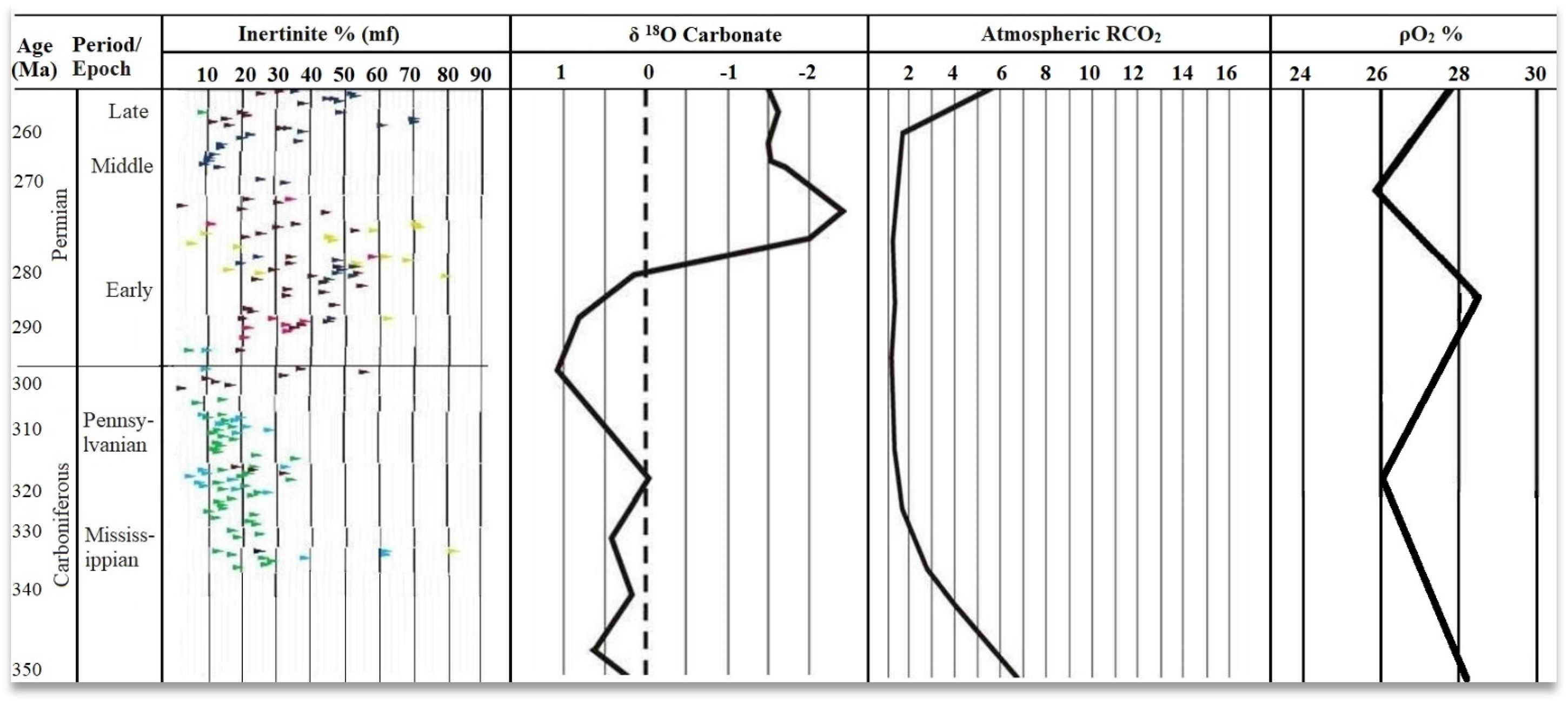
Variation in paleoclimatic parameters during the Permo-Carboniferous (modified after Diessel, 2010).
The comprehensive studies on the biodiversity of the CPT zone edify the adaption of the continental faunas to the sensitive changes of the environment in diverse ways (Olson and Vaughn, 1970; Pardo et al., 2019; Vaughn, 1966). Evidences of these major shifts during CPT have been witnessed by prolonged changes in the aquatic to terrestrial dominated environment and in response to these climatic changes, there has been alteration of the habitats from aquatic to continental environment. Studies from western Pangaea, exemplifies the dominance of the amniotes (Dunne et al., 2018; Olson and Vaughn, 1970; Pardo et al., 2019) throughout the CPT with the extension of the tetrapod crown group which supports this ecological diversification (Pardo et al., 2019). Majority of the tetrapod assemblages from Carboniferous localities record the aquatic affinities whereas the Permian ones are more prone to dry land terrestrial ambiance (Pardo et al., 2019). Permian flora from the Carboniferous prescribes the foremost climate change like cool-temperate, periglacial to monsoonal and flood plain (Parrish, 1990) throughout the period. Studies of the palynomorph from the Itarare Group of Parana basin of Brazil show glaciogenic sedimentation which began in Moskovian/Bashkirian (Late Carboniferous) and continued up to Permian times (Sakmarian) (Holz et al., 2010; Souza, 2006).
Wildfire is a possible phenomenon that occurred during the Permo-Carboniferous transition period, which might have continued throughout the Permian. The role of wildfire at the PTB also got attention (Cai et al., 2021; Sun et al., 2017; Xiao et al., 2020; and references therein). Shen et al. (2011) worked on wildfire close to the PTB, and concluded that wildfire played a significant role in PTB mass extinction.
A recent investigation by Gong et al. (2024) offers significant understanding of the intricate connections between climate change, volcanic eruptions and the development aquatic ecosystems in deep time. The research demonstrates a clear chronological relationship between the formation of the earliest known alkaline lake deposit and a period of warmer temperatures between ice ages during the transition from the Carboniferous to the Permian periods. This finding suggests that climate shifts were a primary factor in establishing the conditions required for the emergence of such an environment. According to Sun et al. (2017, 2024), the wildfires could discharge massive quantities of pollutants and increase ambient temperatures, which could be the reasons for the floral extinctions that occurred at the Middle Permian (Stevens et al., 2011). One quantitative example of hazardous gas emissions of wildfires was given by Xu et al. (2020). According to their calculation methods, the huge amount of hazardous gas could have released by forest wildfires into the peat swamp systems because the Permo-Carboniferous was the most important peat-/coal-forming period worldwide. Rising global temperatures, exacerbated by greenhouse gases, are causing more frequent and severe forest fires (Gajendiran et al., 2024). The hazardous gas (methane, nitrogen oxides (NO x ), CO2 and chlorofluorocarbons (CFCs) was sharply released into the atmosphere in a short time and affected the palaeoclimate.
Recent scientific findings have revealed that ancient wildfires played a significant role in shaping the Earth's ecosystems, particularly in peat- and coal-forming systems. These findings provide valuable insights into the long-term consequences of wildfires and their potential impacts on future climate change (Van der Werf et al., 2017). Ancient peatland fires demonstrate the critical role of fire in carbon cycling. Peat, a precursor to coal, stores vast amounts of organic carbon and fires release this stored carbon into the atmosphere. Peatlands, while acting as significant natural sinks for toxic metals and metalloids (TMMs), face a growing threat to their long-term sequestration capacity (McCarter et al., 2024). Climate change intensifies peatland fires, mirroring historical events like those in Indonesia and Malaysia (Grosvenor et al., 2024; Kiely et al., 2019). These modern fires not only release substantial amounts of greenhouse gases into the atmosphere but may also disrupt the natural processes that sequester TMMs within peatlands, potentially leading to their release and further environmental contamination. Understanding the conditions that led to extensive ancient peat fires helps predict and manage carbon emissions in contemporary fire-prone peatlands (Reisen et al., 2025; Turetsky et al., 2015 and references there in).
A key discovery is the long-term preservation of charcoal in sediments. This fire-derived material resists decomposition, providing a unique and invaluable record of ancient wildfire activity spanning millions of years. Several studies found that charcoal deposits in peatlands can provide a detailed record of past fire activity, including the timing, frequency and severity of fires (Marlon, 2020; Sun, 2024 and references there in). This information can be leveraged to refine our understanding of how climate change influences wildfire dynamics within peatlands, vital carbon reservoirs, thereby aiding in the development of more effective mitigation strategies. In addition to their scientific value, ancient wildfire records offer valuable insights for contemporary wildfire management. By examining the factors that shaped past fire regimes, we can enhance our ability to predict future fire behaviour and develop more effective strategies for fire prevention and suppression.
Frequency of wildfire in Late Carboniferous was considered to be higher than present-day (Beerling et al., 1998) because of higher oxygen concentration in the atmosphere during that time (Berner et al., 2000). This was deduced from the research on fossil wood in the upland ecosystems (Falcon-Lang and Scott, 2000). The evidence of palaeo-wildfire is also used to predict the level of atmospheric oxygen (Chaloner, 1989; Gao et al., 2023; Glasspool et al., 2015; Shen et al., 2023b; Wildman et al., 2004) during that time. Though, quite a few models are available to recreate the oxygen concentration in the palaeo-atmosphere, but they give different results with contradictions (Berner, 2006; Glasspool et al., 2015; Mills et al., 2023; Tappert et al., 2013). Glasspool and Scott (2010) provided an equation to predict the palaeo-atmospheric oxygen level where they considered that the total inertinite macerals are related to the atmospheric oxygen and hence, came only from palaeo-wildfire. The available works from different researchers offer opportunity to further consider the reconstruction of previous models, for predicting the level of atmospheric oxygen from new observation and experiments.
Conclusions
This article reviews the historical significance of wildfires during the Permo-Carboniferous period and their connection to charcoal, inertinite and polycyclic aromatic hydrocarbons (PAHs). Widespread charcoal and inertinite deposits, along with elevated PAH levels, provide compelling evidence for frequent global wildfires during these periods. On the other hand, this research provides insights into the potential for abiotic factors, such as igneous intrusions and geological interruptions, to contribute to the formation of inertinite in Permian coals. This challenges the long-held assumption that all inertinite exclusively originates from wildfires. Within the Earth system, the decomposition of woody material is facilitated by a diverse microbial community comprising thousands of species. This underscores the critical significance of microbial pathways in the processes of charcoalification and inertinization. Addressing these unresolved questions requires a multidisciplinary approach involving microscopy, spectroscopy and chromatography to characterize the chemical and structural properties of different inertinite macerals and compare them with various types of charcoal. Additionally, simulating different alteration processes, such as charring, oxidation and fungal degradation, under controlled laboratory conditions to investigate the resulting products and their similarities to inertinite macerals.
Wildfires likely consumed substantial amounts of oxygen and released significant greenhouse gases, potentially altering the atmospheric composition and contributing to climate change. Inertinite content in coal has been used to estimate fluctuations in oxygen levels, revealing a bimodal pattern during the Permian period. The peak oxygen levels during the Middle-to-Late Cisuralian were approximately 28%.
The Permo-Carboniferous period, marked by intense wildfire activity, coincides with several mass extinction events, including the Permian-Triassic mass extinction. This raises the possibility that wildfires may have played a role in these catastrophic events.
Understanding the Permo-Carboniferous wildfire history is crucial for addressing contemporary climate change. However, several key questions remain unanswered, such as the precise origins of inertinite, its relationship to charcoal and the formation mechanisms of PAHs during wildfires. Additionally, the quantification of greenhouse gas emissions from these ancient wildfires and their impact on the palaeoclimate requires further investigation.
The Permo-Carboniferous period serves as a valuable case study for exploring the complex interplay between fire, climate and ecosystems. By examining the distribution and characteristics of wildfire-related materials, researchers can gain insights into the factors driving these events and their long-term consequences.
Recommendations
On review of the above reports, the authors try to disclose that all type of possibilities for charcoal and fusain/inertinite formation. This paper helps to all students or researchers who have worked and continuing their studies on this subject. Moreover, the authors advocate for greater collaboration among researchers to extend this work across countries. This includes investigating the mechanism of PAH formation during wildfires, quantifying greenhouse gas emissions from these ancient wildfires and precisely determining the origin of inertinite and its relation to charcoal. This collaborative effort will contribute to better optimization and advancement of knowledge in the field of science.
Footnotes
Acknowledgements
The authors would like to express their sincere gratitude to the National Natural Science Foundation of China (Project No. 41872173) for the financial support.
Declaration of conflicting interests
The authors declared no potential conflicts of interest with respect to the research, authorship and/or publication of this article.
Funding
The authors received no financial support for the research, authorship and/or publication of this article.
